10.2 المناهج التفسيرية عند المفسِّرين
10.2 The Exegetical Approaches Of Mufassirun
كان الصحابة رضي الله عنهم يفسّرون آيات القرآن الكريم إما باجتهادهم الشخصي في التفسير، وإما بما سمعوه من رسول الله ﷺ. وكثيراً ما كانوا يبيّنون سبب نزول الآية، أو يوضّحون فيمن نزلت. وكانوا في تفسير الآية يقتصرون على بيان المعنى اللغوي الذي فهموه من الآية، بأوجز الألفاظ، كقولهم: غير متجانف لإثم (غير مائل إلى الإثم)، أي غير مائل إليه ولا متعرّض له. وكذلك قولهم في قوله تعالى:
The Sahabah made tafsīr for the verses of the Noble Qur’ān either as their own Ijtihād in tafsīr or by hearing it from the Messenger of Allah . Many a time they would explain the cause of revelation for a verse or explain with respect to whom it had been revealed. In explaining a verse they would restrict themselves to elucidating the linguistic meaning which they understood from the verse with the most concise of words like their saying: ghayr mutajanif li ithm (not inclined to sin) i.e, not predisposed to sin (ghayr muta'arrid li ma'siyya). Similarly their statement regarding His saying:
"(ممنوع) وكذلك استعمال السهام طلبا للحظ أو للقرار" [TMQ Mā’idah: 3]
“(Forbidden) also is to use arrows seeking luck or decision” [TMQ Mā’idah: 3]
كان أهل الجاهلية إذا أراد أحدهم أن يخرج (في سفر) أخذ سهمًا وقال: هذا يأمرني أن أخرج. فإن خرج في سفره لقي خيرًا وحظًّا. ثم يأخذ سهمًا آخر ويقول: هذا يأمرني أن أمكث، فلن يوفَّق في سفره. والسهم المشؤوم أحد السهمين. فنهاهم الله عن هذه العادة. ومثال ذلك ما رُوي عن ابن عباس في قوله تعالى:
The people of jahiliyya when one of them wanted to go out (on a journey) he would take an arrow and say: This one orders me to go out. So if he goes out on his journey will meet good luck. And he will take another arrow and say: This one orders me to stay, so he will not be lucky in his journey. The unlucky arrow is one of the two arrows. So Allah forbade them from this practice. An example would be what has been narrated about Ibn 'Abbas regarding His saying:
إِنَّ الَّذِي فَرَضَ عَلَيْكَ الْقُرْآنَ لَرَادُّكَ إِلَىٰ مَعَادٍ [TMQ Qasas: 85]
“ He will surly bring you back to the ma'ad (place of return)” [TMQ Qasas: 85]
قال: إلى مكة. ولو أضافوا إلى ذلك شيئاً لكان ما رُوي في سبب النزول وفيمن نزلت الآية بشأنه. وقد رُوي عن أبي هريرة في قوله
He said: to Makkah. If they added anything to that it would be what has been narrated about the cause of revelation and with regards to whom the verse in question was revealed. It has been narrated about Abu Hurairah regarding His saying:
إِنَّكَ لَا تَهْدِي مَنْ أَحْبَبْتَ [TMQ Qasas: 56]
“Verily ! You (O Muhammad (saw)) guide not whom you like” [TMQ Qasas: 56]
أنه قال إن الآية نزلت في رسول الله ﷺ حين حاول أن يستميل عمه أبا طالب إلى الإسلام. ثم جاء التابعون بعد الصحابة، فنقلوا كل ما ذكره الصحابة على هذا النحو. ومن التابعين من بيّن معاني آيات القرآن الكريم أو ذكر أسباب النزول، إما باجتهاده الشخصي في التفسير وإما بسماعه من غيره. وبعد التابعين جاء العلماء فوسّعوا التفسير ونقلوا روايات عن اليهود والنصارى. وتعاقب المفسرون في كل عصر وجيل، فبيّنوا القرآن ووسّعوا التفسير في كل عصر بناءً على ما سبقهم. ثم أخذ المفسرون يُعنون بالآيات لاستنباط الأحكام منها، وبيان مذاهبهم في الاختيار والجبر، وراحوا يفسّرون الآيات الدالة على آرائهم بحسب ميولهم في التشريع وعلم الكلام والبلاغة والصرف والنحو وغير ذلك. والظاهر من النظر في كتب التفسير عبر العصور المختلفة منذ زمن الصحابة إلى يومنا هذا أن تفسير القرآن في كل عصر تأثر بالحركة العلمية السائدة فيه، فقد عكس تفسيرُه آراءَ ذلك الزمن ونظرياتِه ومذاهبَه الفكرية. ونادرًا ما خلت التفاسير من تأثير آراء الزمان وأفكاره وقواعده.
that he said the verse had been revealed concerning the Messenger of Allah when he tried to win over his uncle Abu Talib to Islam. Then came the Tabi'un after the Sahabah who reported everything the Sahabah mentioned in this manner. From among the Tabi'un there were those who explained the verses of the Noble Qur’ān or stated the cause of revelation, either as their own Ijtihād in tafsīr or by hearing it from (other authorities). After the Tabi'un the 'Ulama came and expanded the tafsīr and quoted reports from the Jews and Christians. The mufassirun succeeded one after another in every age and generation, who explained the Qur’ān and expanded the tafsīr in each age on what had come before. The mufassirun began to give their attention to the verses to deduce rulings from them and explain their schools of thought in terms of freewill (ikhtiyar) and predestination (jabr). And they began to explain verses proving their opinions according to their inclinations in legislation, scholasticism ('ilm al-Kalam), rhetorics (balaagha), declension (sarf) and grammar etc. What is apparent from an examination of the tafaseers through the different ages since the time of the Sahabah until now is that the tafsīr of the Qur’ān in every age was influenced by the scholarly movement of the time, it presented a picture which reflected the views, theories and schools of thought of the time. Seldom were there tafsīrs that were free from the influence of opinions, thoughts and rules of the time.
لیکن یہ تمام تفسیریں ابتدا ہی سے کتابوں کی صورت میں مدوّن نہیں ہوئیں، جس دن سے مفسّرین وجود میں آئے، یعنی صحابہ کرامؓ کے زمانے سے۔ بلکہ زمانے کے ساتھ حالات کے مطابق ان کی صورت بدلتی رہی۔ ابتدا میں تفسیر حدیث کا ایک حصہ اور اس کا ایک باب ہوا کرتی تھی۔ حدیث وہ وسیع موضوع تھا جس میں تمام اسلامی علوم شامل تھے۔ چنانچہ جس طرح حدیث کا راوی کسی فقہی حکم پر مشتمل حدیث روایت کرتا تھا، اسی طرح وہ کسی ایسی حدیث کو بھی روایت کرتا تھا جس میں کسی قرآنی آیت کی تفسیر ہوتی تھی۔ پھر عباسی دور کے ابتدائی زمانے میں اور اموی دور کے اواخر میں، یعنی دوسری صدی ہجری کے آغاز میں، مصنّفین نے ملتی جلتی اور متعلقہ احادیث کو ایک موضوع کے تحت جمع کرنا شروع کیا اور انہیں دوسرے موضوعات سے الگ کر دیا۔ اس طرح حدیث میں موجود علوم، جیسے تفسیر اور فقہ، ایک دوسرے سے جدا ہو گئے۔ علوم کے ساتھ وہی ہوا جو حدیث، سیرت، فقہ اور تفسیر کے ساتھ ہوا۔ یوں علمِ تفسیر وجود میں آیا اور ایک مستقل علم بن گیا جو اپنے طور پر پڑھا جانے لگا۔ تاہم تفسیروں نے ابھی کوئی منظم شکل اختیار نہیں کی تھی، یعنی قرآنی آیات کو مصحف کی ترتیب کے مطابق یکے بعد دیگرے ذکر کر کے ان کی تفسیر نہیں کی جاتی تھی۔ بلکہ روایت کی گئی تفسیریں جگہ جگہ منتشر تھیں۔ وہ حدیث ہی کی طرح مختلف آیات کی متفرق تفسیریں تھیں۔ یہ صورتِ حال اس وقت تک جاری رہی جب تک تفسیر حدیث سے جدا نہ ہو گئی اور ایک مستقل علم کے طور پر کھڑی نہ ہو گئی۔ پھر قرآن کی ہر آیت یا آیت کے کسی حصے کی تفسیر لکھی گئی، اور ان آیات کو مصحف کی ترتیب کے مطابق رکھا گیا۔ قرآن کی تفسیر آیت بہ آیت، ایک کے بعد دوسری آیت نقل کر کے اور انہیں یکے بعد دیگرے بیان کرنے کا کام سب سے پہلے الفرّاء (م 207 ہجری) نے کیا۔ ابن النّدیم اپنی کتاب الفہرست میں روایت کرتے ہیں کہ:
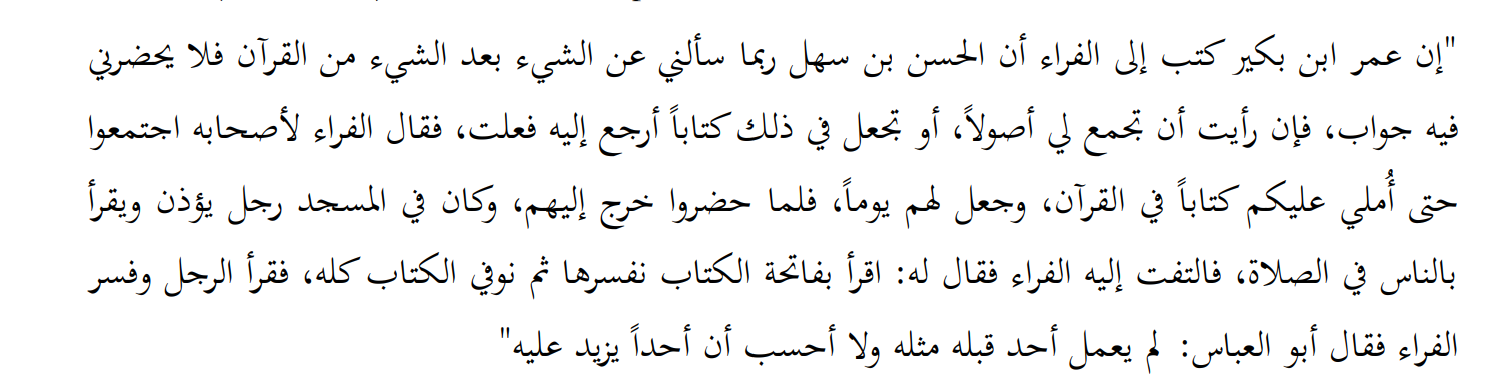
عمر بن بُكير كتب إلى الفرّاء: إن الحسن بن سهل ربما سألني الواحدة تلو الأخرى من القرآن، ولن أستطيع أن أستحضر كل الأجوبة. أرى أن تجمع النقاط الأساسية وتؤلف كتابًا أرجع إليه. فقال الفرّاء لتلاميذه: اجتمعوا حتى أُملي عليكم كتابًا في القرآن. فأعطاهم يومًا. فلما جاؤوا ذهب إليهم، وكان في المسجد رجل يؤذّن ويقرأ القرآن بالناس في الصلاة. فالتفت الفرّاء إليه وقال: اقرأ فاتحة الكتاب، سنشرحها ثم نتكلم بالتفصيل عن الكتاب كله. فقرأ الرجل، وفسّر الفرّاء. قال أبو العباس: لم يصنع أحد قبله مثل ما صنع، ولا أظن أحدًا يستطيع أن يزيد على ذلك.
“Umar ibn Bukayr wrote to al-Farra' that al-Hasan ibn Sahl perhaps may ask me one thing after another from the Qur’ān but I will not be able to recall all the answers. I think you should bring together the essential points and compile them in a book I will refer to it, so al-Farra' said to his students; gather together so that I can dictate to you a book about the Qur’ān. He gave them a day. When they came he went to them, in the mosque there was man giving azan and reciting the Qur’ān with the people in prayer. Al-Farra' turned to him and said: recite the opening chapter of the Qur’ān (fatihatul kitab), we will explain it and then we will speak fully about the whole book. The man recited and al-Farra' made tafsīr. Abu al-'Abbas said: no one did anything like him before and I don't think anyone can add to that.'
ثم جاء بعده ابن جرير الطبري (المتوفى سنة 310 هـ) فألّف تفسيره المشهور. وقبل أن يشتهر تفسير ابن جرير كانت هناك تفاسير عديدة، مثل تفسير ابن جريج. وكان حاله حال المحدّثين الأوائل الذين جمعوا كل ما وصلهم دون تمييز بين الصحيح والضعيف من الروايات. قالوا: «لم يكن قصد ابن جريج الصحة، بل كان ينقل كل ما نُقل في كل آية، سواء كان صحيحاً أو ضعيفاً (سقيماً)». ومن هذه التفاسير أيضاً تفسير السدي (المتوفى سنة 127 هـ) وتفسير مقاتل (المتوفى سنة 150 هـ). وقال عبد الله بن المبارك في تفسير مقاتل: «ما أحسن تفسيره، لو كان ثقةً!». ومنها كذلك تفسير محمد بن إسحاق، وكان ينقل عن اليهود والنصارى، ويورد أقوال وهب بن منبه وكعب الأحبار وغيرهما، ممن نقلوا عن التوراة والإنجيل وشروحهما. ولم تصل إلينا هذه التفاسير، وإن كان ابن جرير الطبري قد جمع أكثرها وأدرجها في كتابه. ثم جاء المفسّرون من بعده واحداً تلو الآخر، يشرحون القرآن شرحاً تامّاً منظّماً في كتب كاملة ومرتّبة.
Then, after him came Ibn Jarir al-Tabari (d.310 A.H.) who wrote his famous tafsīr. A number of tafsīrs before the tafsīr of Ibn Jarir became well known such as the tafsīr of Ibn Jurayj. His situation was the situation of the first muhaddithin who compiled everything that reached them without differentiating between the correct (Sahih) and incorrect reports. They said 'that Ibn Jurayj's aim was not authenticity; rather he reported everything that was reported about every ayah whether it was correct (Sahih) or weak (saqim).' Also from these tafsīrs is the tafsīr of al-Suddi (d.127 A.H.) and the tafsīr of Muqatil (d.150 A.H.). 'Abd Allah ibn al-Mubarak said about the tafsīr of Muqatil: How excellent is his tafsīr, if only he were reliable (thiqa).' Amongst them is also the tafsīr of Muhammad ibn Ishaq. He used to transmit from the Jews and Christians and he used to quote sayings of Wahb ibn Munabbih, Ka'b al-Ahbar and others, who reported thing from the Torah, Bible and their commentaries. These tafsīrs have not reached us, although Ibn Jarir al-Tabari has collected most of it and included it in his book. Then came mufassirun one after another explaining the Qur’ān in an complete and well-ordered manner in books that were complete and systematic.
ومَن يتأمّل التفاسيرَ يجد أنّ المفسّرين تناولوا التفسيرَ من جهات شتّى. فمنهم مَن عُني بالنظر في أساليب الكتاب ومعانيه وما فيه من وجوه البلاغة، ليعرفوا أعلى الكلام وأرفعه بالنسبة إلى غيره من أنواع الكلام، فغلب الجانبُ البلاغيُّ على تفاسيرهم. ومن هؤلاء محمدُ بنُ عمر الزمخشريُّ في تفسيره المسمّى بالكشّاف. ومنهم مَن نظر في أصول العقيدة، ومجادلةِ المبطلين، والمناظرةِ لمن خالف الإسلامَ، كفخرِ الدين الرازيّ في تفسيره المشهور: التفسيرِ الكبير. ومنهم مَن درس أحكامَ الشريعة وعُني باستنباطها من الآيات، فوجّه اهتمامه إلى آيات الأحكام، كأبي بكر الرازيّ المعروف بالجصّاص في تفسيره المشهور أحكامِ القرآن. ومنهم مَن تتبّع القصصَ، وأضاف إلى قصص القرآن ما في كتب التاريخ والإسرائيليّات، فجمع كلَّ ما سمعه قليلًا كان أو كثيرًا، دون أن يُمحِّص ما خالف الشريعةَ أو لم يوافق العقلَ أو ناقض آياتِ القرآن القطعيةَ المعنى. ومن هؤلاء علاءُ الدين عليُّ بنُ محمدٍ البغداديُّ الصوفيُّ المعروفُ بالخازن، الذي فعل ذلك في تفسيره لباب التأويل في معاني التنزيل. ومنهم مَن اهتم بنصرة مذهبه وتفسيرِ الآيات وفق ما يؤيّد فرقته، كتفسيرِ "مجمع البيان" للشيخ الطبرسيّ، و"التبيان" للشيخ الطوسيّ؛ فقد نصر كلٌّ منهما آراءَ الشيعة ومذهبَهم في العقائد والأحكام. ومنهم مَن لم يُعنَ إلا ببيان الآيات وأحكام القرآن دون النظر إلى وجهة معيّنة. هم المفسرون الذين تُعدّ تفاسيرهم لبّ كتب التفسير، وهم أئمة التفسير وغيره من العلوم، مثل تفسير ابن جرير الطبري، وتفسير أبي عبد الله محمد القرطبي، وتفسير النسفي وغيرهم. أما التفاسير التي كُتبت في هذا العصر وفي آخر عهد الانحطاط، كتفسير محمد عبده، وتفسير طنطاوي جوهري، وتفسير أحمد مصطفى المراغي وغيرهم، فلا تُعدّ من أدبيات التفسير، ولا يُوثق بها أصلاً، وذلك لأن فيها خطراً على دين الله في بيان كثير من الآيات، كتفسير محمد رشيد رضا للآية:
However, anyone who inspects the tafaseer will find that the mufassirun approached the tafsīr from various perspectives. Some were interested in looking at the styles and meanings of the Book and whatever it included in terms of the forms of rhetorics (balaagha) to know the highest and distinguished forms of speech as compared to other types of speech. So the rhetorical aspect prevailed in their tafsīrs. One of those people is Muhammad ibn al-Zamakhshari in his tafsīr entitled al-Kashaf. There were those who looked into the foundations of belief, the fighting of pretenders and debating those who disagreed (with Islam) like Fakhr al-Din al-Razi in his famous tafsīr: al-Tafsīr al-Kabir. And some of them studied the Sharī’ah rules and were interested in deducing them from the verses. So they channelled their interest towards the verses of ahkām like Abu Bakr al-Razi commonly known as al-Jassas in his well known tafsīr Ahkām al-Qur’ān. There were those who went after stories and added to the Qur’ānic stories from the books of history and israiliyyat (Judaica) and began to collect everything they heard however meagre or abundant without revising the things that contradicted the Sharī’ah, did not agree with the mind or contradicted Qur’ānic ayāt which are definite in meaning. One such person is 'Ala' al-Din 'Ali ibn Muhammad al-Baghdadi, the sufi otherwise known as al-Khazin who did this in his tafsīr Bab al ta'weel fi ma'ani al-tanzeel. And there were those that concerned themselves with supporting their mazhab (school) and explaining the verses in accordance with whatever supports their faction like the tafsīr al-Bayan of al-Shaykh al-Tibrisi and the tafsīr al-Tibyan of al-Shaykh al-Tusi. Both of them supported the views of the Shi'a and their mazhab regarding belief ('aqaid) and ahkām. And there were those that were only concerned with the tafsīr in order to explain the verses and rulings of the Qur’ān regardless of any perspective. They are the mufassirun whose tafsīrs are considered the essence of the books of tafsīr. And they are considered the imams of tafsīr and other topics. Like the tafsīr of Ibn Jarir al-Tabari, the tafsīr of Abu 'Abd Allah Muhammad al-Qurtubi, and the tafsīr of al-Nasafi and others. As for the tafsīrs written in this age and towards the end of the period of decline like the tafsīr of Muhammad 'Abduh, the tafsīr of Tantawi Jawhari and the tafsīr of Ahmad Mustafa al-Muraghi and others, they are not considered part of the tafsīr literature and nor is there any trust put in them. This is because there is a risk in the deen of Allah in the explanation of many verses like Muhammad Rasheed Ridha’s tafsīr of the verse:
﴿وَمَن لَّمْ يَحْكُم بِمَا أَنزَلَ اللَّهُ فَأُولَٰئِكَ هُمُ الْفَاسِقُونَ﴾ [TMQ Mā’idah: 44]
“And whosoever does not judge by what Allahhas revealed, such are the Fasiqun (transgressors)” [TMQ Mā’idah: 44]
وأجاز لمسلمي الهند تبنّي القوانين الإنجليزية والخضوع لأحكام القضاة الإنجليز. وقد ذكر الشيخ محمد رشيد رضا في الجزء السادس من تفسير القرآن الكريم المعروف بالمنار، في تفسير سورة المائدة عند بيانه لقوله تعالى:
He permitted the Muslims of India to adopt English laws and submit to the rulings of English judges. Shaykh Muhammad Rasheed Ridha mentioned in volume six of the Tafsīr of the Noble Qur’ān widely known as al-Manar in the tafsīr of sura al- Mā’idah when he explained His saying:
﴿وَمَن لَّمْ يَحْكُم بِمَا أَنزَلَ اللَّهُ فَأُولَٰئِكَ هُمُ الْفَاسِقُونَ﴾ [TMQ Mā’idah: 44]
“And whosoever does not judge by what Allah has revealed, such are the Fasiqun (transgressors)” [TMQ Mā’idah: 44]
في الصفحات ٤٠٦-٤٠٩ سُئل:
In pages 406-409 he was asked:
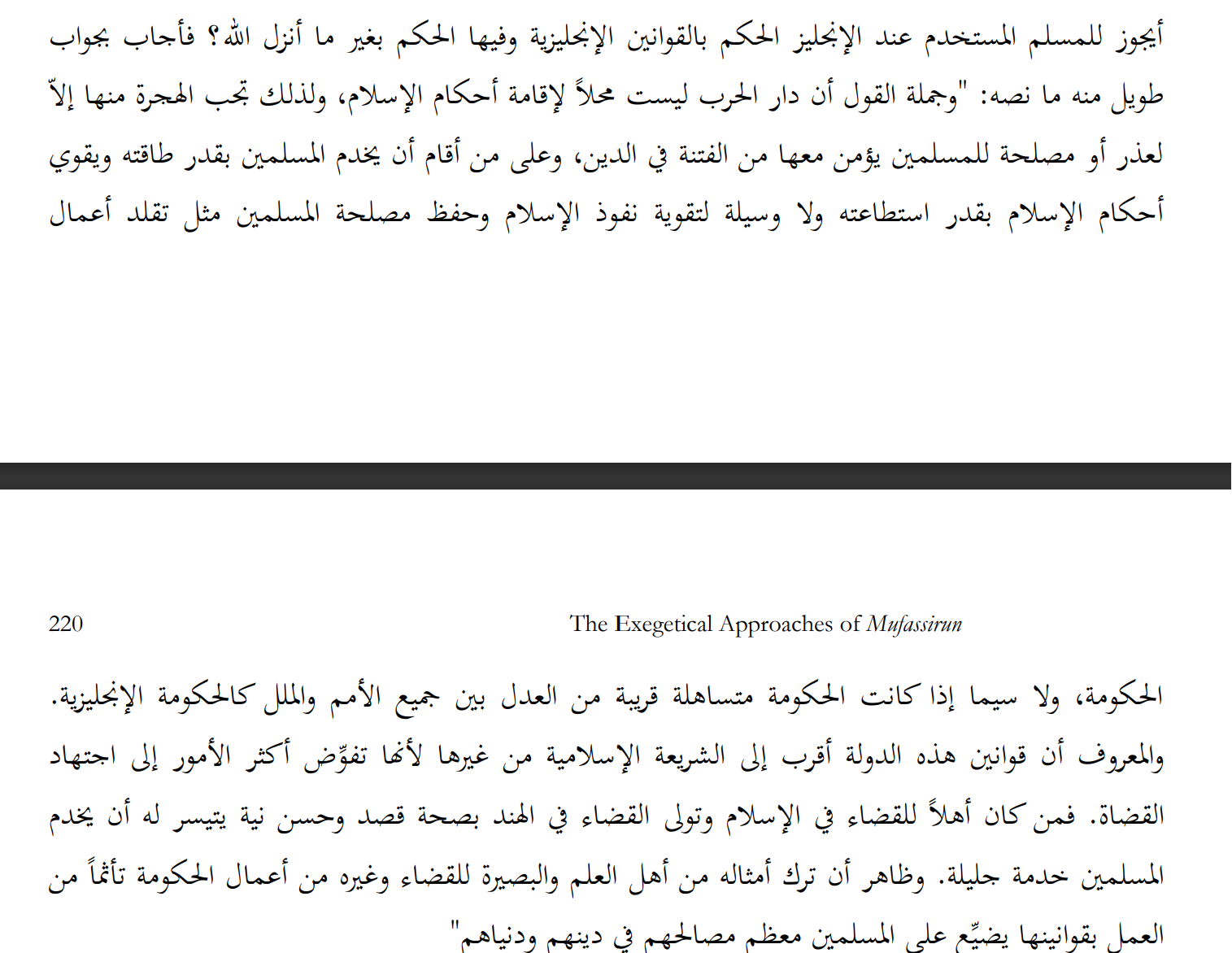
هل يجوز للمسلم أن يعمل لدى الإنجليز ليحكم بقوانينهم الإنجليزية، وبعضها يشكّل حكمًا بغير ما أنزل الله؟ فأجاب بجواب طويل: "باختصار، إن دار الحرب ليست مكانًا لإقامة أحكام الإسلام، ولذلك يجب الهجرة منها ما لم يكن هناك عذر أو مصلحة للمسلمين يأمن معها على دينه من الفتنة. وعلى من يقيم (في الهند) أن يخدم المسلمين بحسب طاقته، وأن يقوّي أحكام الإسلام بقدر ما يستطيع. وليس هناك وسيلة لتقوية نفوذ الإسلام وحماية مصالح المسلمين إلا بتولّي المناصب الحكومية، خاصة إذا كانت الحكومة لينة، عادلة إلى حد ما بين جميع الناس والأديان، كالحكومة الإنجليزية. ومن المعلوم أن قوانين هذا البلد أقرب إلى الشريعة الإسلامية من غيرها، لأنها تفوّض أكثر المسائل إلى اجتهاد القضاة. فمن كان أهلًا للقضاء في الإسلام، وتولّى منصبًا في القضاء بالهند بالقصد الصحيح والنية الحسنة، فيمكنه أن يقدّم خدمة عظيمة للمسلمين. ومن الواضح أن ترك القضاء وسائر المناصب الحكومية من قِبل أهل العلم والبصيرة، بدعوى الإثم في العمل بقوانينهم (أي الإنجليز)، سيفوّت مصالح المسلمين في دينهم ودنياهم."
Is it permitted for a Muslim to be employed by the English to rule by English laws some of which constitutes ruling by other than what Allah has revealed ? He gave a long reply: 'In short, the abode of war (dar al-harb) is not a place for the establishment of the rules of Islam, therefore it is obligatory to make hijra unless there is an excuse or benefit for the Muslims due to which he will be safe from the fitna (test) on his deen. It is incumbent on the one who resides (in India) to serve the Muslims according to the best of his abilities and to strengthen the rules of Islam as much as he can. And there is no means of strengthening the influence of Islam and protecting the interests of the Muslims except by assuming the government posts especially if the government is lenient and fairly just between all people and religions like the English government. It is well known that the laws of this country are closer to the Islamic Sharī’ah than others because it delegates most matters to the Ijtihād of judges. So whoever is qualified to be a judge in Islam and takes up a post in the judiciary in India with the correct aim and good intention, it is possible for him to do a great service for the Muslims. It is obvious that the abandonment of the judiciary and other government posts by the people of knowledge and insight due to being sinful for working according to their (i.e The English) laws will forfeit the interests of the Muslims in their deen and dunya.'
ثُمَّ قَالَ:
Then he said:
من الواضح من كل ذلك أن قبول المسلم العمل في حكومة الإنجليز في الهند «وأي عمل مماثل آخر» والحكم بموجب قوانينهم رخصةٌ (رخصة) تندرج تحت قاعدة ارتكاب أخف الضررين، إذا لم يكن هناك عزيمةٌ يُقصد بها نصرة الإسلام وحفظ مصالح المسلمين…
“It is obvious from all of this that the Muslim's acceptance to work in the English government in India 'and any other similar work' and his ruling according to their laws is a dispensation (rukhsa) which comes under the principle of doing the lesser of two evils if there is no 'azeema by which support of Islam and protecting the interests of Muslims is intended…”
ومثل ذلك تفسير الطنطاوي الجوهري، حيث ذكر أن في القرآن العلوم والفنون الحديثة، وملأ تفسيره بصور الطيور والحيوانات ليبيّن أن القرآن قد بيّن مثل تلك الأشياء. وكذلك تفسير مصطفى زيد، الذي فسّر ونفى وجود الملائكة والشياطين. فقد وقع في الكفر بتفسيره، وأخرج نفسه من الإسلام. وهذه التفاسير ومثيلاتها لا يعدّها المسلمون كتب تفسير، ولا يُلتفت إلى تفسيراتها.
Much similar is the tafsīr of Tantawi Jawhari where he mentioned that there are modern sciences and disciplines in the Qur’ān and he filled his tafsīr with pictures of birds and animals to demonstrate that the Qur’ān did explain such things. And the tafsīr of Mustafa Zayd in which he interpreted and rejected the existence of angels and Shayateen. So he committed kufr by his tafsīr and took himself outside of Islam. These tafsīrs and their likes are not considered books of tafsīr by the Muslims and nor are their explanations given any consideration