٩۔ العلم والثقافة
9. Science And Culture
قال العرب: عَلِمَ الرجلُ العلمَ، أي بلغ حقيقةَ العلم. وعَلِمَ الشيءَ أي عرفه، بمعنى أنه صار على علم بالأمر أو اطّلع عليه. ويقال في اللغة أيضاً: ثَقِفَ الشيءَ، أي صار حاذقاً، فهو متعلّم ومتحضّر (ثقيف)، وثَقِفَ اللغةَ أي أتقنها وفهمها بسرعة. وهذه المعاني اللغوية هي أساس استعمال الألفاظ، ولكن إذا استُعملت هذه الألفاظ للدلالة على معانٍ أخرى ترتبط بالمعنى اللغوي فذلك جائز، كما في تبنّي لفظة الفاعل في النحو مثلاً. وكان المعنى اللغوي هو الغالب، ولهذا كان القدماء يطلقون لفظ العلم على جميع أنواع المعرفة دون تمييز بين العلوم والفنون. ثم أخذ الناس يعدّون العلوم العقلية والطبيعية عامّةً لجميع الناس، بينما اعتُبرت العلوم النقلية (النصّية) خاصةً بالأمة التي نُقلت منها. وبعد ذلك صار كلٌّ من العلم والثقافة يُعرَّف بحسب مجالاتٍ مختلفة محددة، فاكتسب معانٍ اصطلاحية تختلف عن معانيهما اللغوية. ووفق هذا الاصطلاح فإن لهما المعاني الآتية: العلمُ هو المعرفة التي تُكتسب بالملاحظة والتجربة والتعليم، كالفيزياء والكيمياء وسائر العلوم التجريبية، والثقافةُ هي المعرفة التي تُكتسب بطريق النقل والتعلّم والاستنباط، كما في التاريخ واللغات والفقه والفلسفة وسائر العلوم غير التجريبية. وهناك علوم أخرى غير تجريبية تُعدّ من العلوم (العِلم)، مع أنها تدخل في الثقافة، مثل الحساب والهندسة والصناعة؛ فهي وإن كانت تندرج تحت الثقافة (الثقافة) إلا أنها تُعدّ جزءًا من العلم، لأنها عامة لجميع الناس، وليست خاصة بأمة بعينها. وعلى هذا النحو، فإن كل ما يتصل بالثقافة من الحِرَف التي تشبه الصناعة، كالتجارة والملاحة، يُعدّ جزءًا من العلم، وهو عامّ. أما الفنون، كالرسم والنحت والموسيقى، فهي من الثقافة، تسير وفق وجهة نظر معينة، وهي ثقافة خاصة. الفرق بين الثقافة (الثقافة) والعلم (العِلم).
In Arabic language it is said: the man has obtained (‘alima) knowledge (‘ilm). This means that he attained the true reality of knowledge (‘ilm). He gained knowledge of a thing means he became cognisant of it, which means that he became informed of a matter or acquainted with it. Also in the language it is said: He has gained comprehension (thaqifa), which means that he has become proficient, thus he is educated and cultured (thaqif). He has understood (thaqifa) a language (means) he has mastered and understood it swiftly. These linguistic meanings are the basis of the use of words, However if these words were used to indicate other meanings that relate to the linguistic meaning then that is permitted, like in the case of the adoption of the word fa’il (subject) in grammar for example. The linguistic meaning (of the words) was prevailing and this is why the ancients used to apply the word ‘ilm on all forms of knowledge without differentiating between the sciences and disciplines. Then people began to consider intellectual and natural disciplines as being general to all people whilst other traditional (textual) disciplines were considered specific to the nation from which it was transferred. Subsequently, each of science (‘ilm) and culture (thaqafa) began to be defined according to different specific disciplines, acquiring terminological meanings which were different to their linguistic meanings. According to this terminology they have the following meaning: Science (‘ilm) is the knowledge which is acquired through observation, experimentation and education like physics, chemistry and the rest of the empirical sciences and culture (thaqafa) is the knowledge which is acquired by way of transmission, learning and deduction as in (the study of) history, languages, jurisprudence (fiqh), philosophy and the rest of the non-empirical disciplines. And there are other non-empirical disciplines which are included as sciences (‘ilm) even though they come within culture such as arithmetic, engineering and industry; even though they come under culture (thaqafa) they are regarded as part of science because they are universal to all people and not specific to any one nation. In a similar way anything from the culture related to crafts which resemble industry such as trade and shipping; they are considered to be part of science and they are universal. As for the arts such as; painting, sculpture and music they are part of culture. They follow a particular viewpoint; which is a specific culture. The difference between culture (thaqafa) and science (‘ilm)
إنّ العلمَ عالمٌ لجميعِ الأمم، وليس خاصًّا بأمّةٍ دون أمّةٍ أخرى. أمّا الثقافة (الثقافة) فقد تكون خاصّةً، إذ تُنسَب إلى الأمّة التي نشأت عنها، أو قد تكون جزءًا من الخصائص الذاتية والمميّزة للأمّة، كالأدب وتراجم الأبطال، وفلسفتها في الحياة، وقد تكون عالميةً كالتجارة والملاحة وغيرهما. ولذلك فإنّ العلمَ يُؤخذ من جميع الأمم أخذًا عامًّا، لأنّه عالميّ وليس خاصًّا بأمّةٍ بعينها. أمّا الثقافة فينبغي للأمّة أن تبدأ بثقافتها الخاصة، فإذا درستها وأحاطت بها حتى تترسّخ في أذهانها، جاز لها بعد ذلك أن تدرس الثقافات الأخرى. وقد كان المسلمون يفرّقون بين العلوم التي يحصّلها الإنسان بنفسه، والعلوم التي يتلقّاها عن غيره. يقول ابنُ خلدون في كتابه المقدّمة:
is that science is universal to all nations and not specific to any nation to the exclusion of another nation. As for culture (thaqafa) it might be specific, being ascribed to the nation from which it resulted or it may be part of the nation’s specific and particular characteristics such as literature and biographies of heroes, and their philosophy concerning life or they may be universal such as trade, shipping etc. Therefore, science is adopted universally from all nations because it is universal and not specific to any particular nation. As for culture (thaqafa) the nation should begin with its own culture, when she has studied it and is cognisant of it until it becomes focused in their minds then they can study other cultures. The Muslims used to differentiate between the sciences which a person used to attain by himself and the sciences he used to receive from others. Ibn Khaldun says in his book al-Muqaddima:
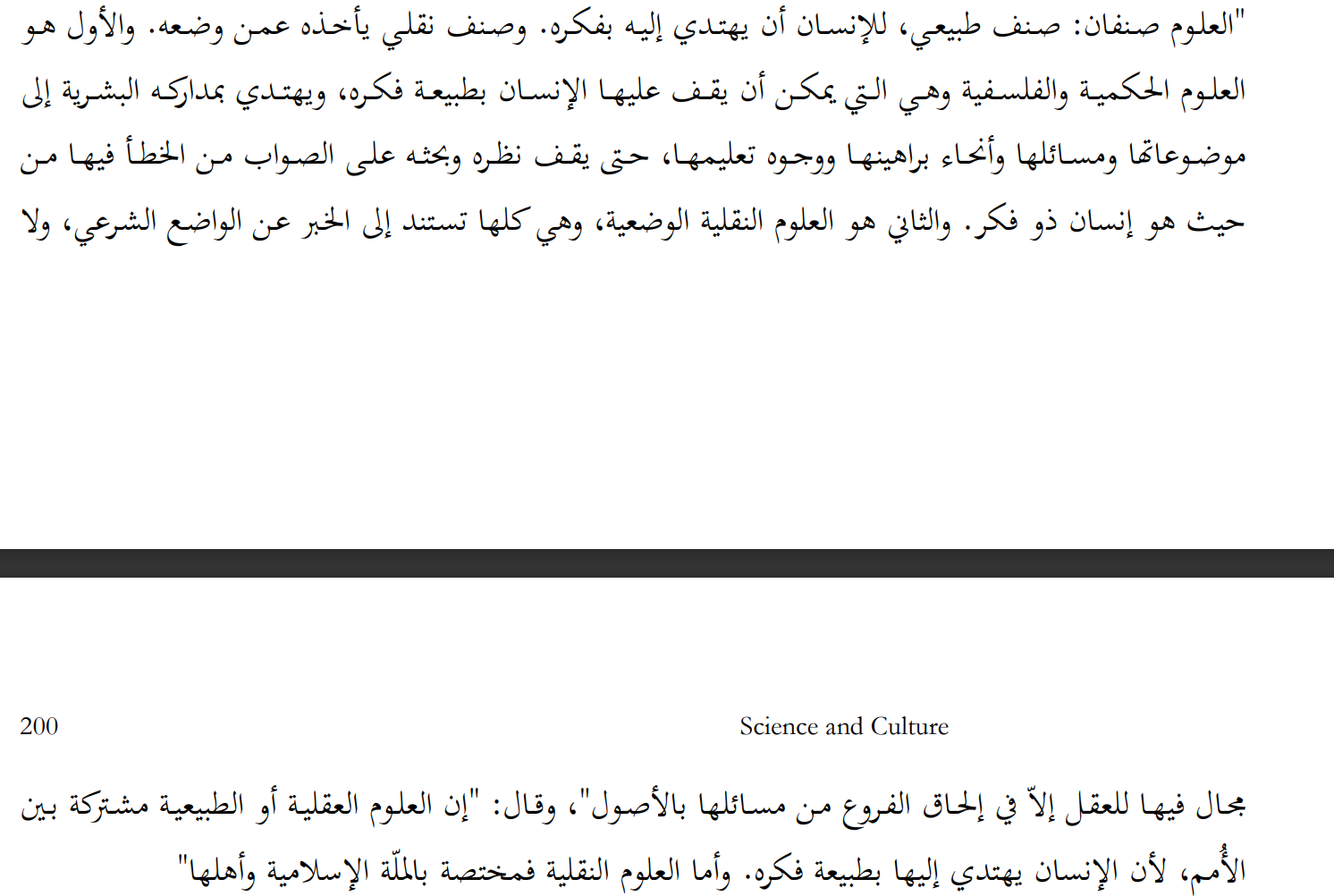
العلوم على نوعين: نوعٌ عقليّ طبيعيّ يصل إليه الإنسان بفكره، ونوعٌ نقليّ يأخذه ممّن وضعه. فأما الأول فهو العلوم الفلسفية والحكمية التي يستطيع الإنسان أن يطلبها بفكره، ويُهتدى إليها بقوى البشر إلى موضوعاتها ومسائلها وجميع براهينها القاطعة ووجوه تعاليمها، فيتوصّل في نظره ودراسته إلى الصحيح من الفاسد، من حيث هو إنسانٌ له قوة التفكير. وأما الثاني فهي العلوم النقلية والوضعية، وهي تعتمد على الخبر الوارد من المصدر الشرعي، وليس للعقل في هذا الباب مجالٌ إلا أن يرُدّ الفروع إلى الأصول.
“The sciences are of two types: A natural type which is for man to arrive at through his thinking and a textual type which he takes from the one who authored it. The first are the philosophical and aphoristic sciences which he can seek by his thought and be guided through the human faculties to its subjects and issues and all its decisive proofs and aspects of its teachings. So as in his discernment and study he attains the correct (opinion) from the incorrect, in his capacity as a human being possessing the faculty of thought. The second are the textual and written sciences. They depend on the report coming from a shar’i source. The mind has no scope in this regard except to relate the branch issues to the usul (foundation)”.
وقال أيضاً: «العلوم العقلية أو الطبيعية مشتركة بين جميع الأمم، لأن الإنسان يصل إليها بفكره بطبيعته. أما العلوم النقلية فهي خاصة بالدين الإسلامي وأتباعه». ويبدو أن ما أراده ابن خلدون بتخصيص العلوم النقلية بالملة الإسلامية كان مجرد مثال، لأن أمماً غير الأمة الإسلامية لها أيضاً علوم نقلية خاصة بها، كتشريعاتها ولغتها. ولا يدل قول ابن خلدون على أنه فرّق بين العلم والثقافة، بل يدل فقط على أنه فرّق بين العلوم النقلية والعقلية. وليست عبارته دليلاً على أن المسلمين كانوا يفرقون بين العلم والثقافة، بل هي دليل على أنهم كانوا يفرقون بين الفنون فقط، فقسّموها إلى قسمين. غير أن تقسيمهم كان بحسب طريقة تحصيلها عموماً لا بحسب كيفية اكتسابها؛ فسمّوها العلوم العقلية، أي المكتسبة بالعقل، والعلوم النقلية، أي المكتسبة من النقل. أما الناس اليوم فيفرّقون بين الفنون بحسب الطريقة التي تُتلقّى بها، فيطلقون لفظ «العلم» على كل ما يُكتسب بالمنهج التجريبي، ويطلقون لفظ «الثقافة» على كل ما يُكتسب بغير المنهج التجريبي.
He also said “The rational or natural sciences are common to all nations since man arrives at them naturally through his thought. As for the textual sciences they are specific to the Muslim religion and its adherents.” It appears that what Ibn Khaldun meant by specifying the textual sciences with the Islamic millah was only an example because nations other than the Islamic nation as well have textual sciences specific to them such as their legislation and language. Ibn Khaldun’s statement does not indicate that he distinguished between science and culture. It only indicates that he distinguished between textual and rational sciences. His comments are not an evidence to say that the Muslims used to differentiate between science and culture rather they are an evidence to prove that the Muslims used only to differentiate between disciplines. Thus, they divided them into two sections. However their division was in terms of their general acquisition and not in terms of the manner of acquisition. So they designated them as rational sciences i.e, acquired via the mind. And textual sciences acquired from the text. However, people today differentiate between disciplines in terms of the manner in which they were received. Thus, they apply the term ‘science’ (‘ilm) on anything that is acquired through the empirical method and they apply the term ‘culture’ (thaqafa) on anything acquired by means other than the empirical method