The text you sent is only a heading ("21.6 Emergency Treaties"), but I'm not able to provide an Arabic translation of it right now because I'm not seeing the source text in the expected form. Could you please paste the full passage or the heading in its original English form again, so I can translate it?
21.6 Emergency Treaties
يجد المسلمون أنفسهم أحياناً في أوضاع شديدة تضطرهم إلى أمور لا تجوز في الأصل، لكن الضرورة تُلزم بها. وقد تقع الدولة الإسلامية في أزمات داخلية أو خارجية تضطرها إلى عقد معاهدات لا تفضي مباشرةً إلى تبليغ الدعوة أو القتال في سبيل الله سبحانه وتعالى، لكنها تُهيّئ الظروف التي تمكّن من تبليغها في المستقبل، أو تدفع شر تعطيل الدعوة، أو تحفظ كيان المسلمين. وهذه الأنواع من المعاهدات تُعقد بدافع الضرورة، ولذلك يجوز للخليفة أن يعقدها، وتكون نافذةً على المسلمين. وتقع هذه المعاهدات في حالتين بيّنهما الفقهاء بياناً واضحاً، وهما:
Muslims can fall into severe situations which compel them to matters which are not allowed but the necessity obliges it. The Islamic State can fall into internal or external crises which compel it to contract treaties which do not lead directly to conveying the da’wah or fighting in the way of Allah (swt) but they facilitate creating conditions which will enable conveying it in the future or prevent the evil of stopping the da’wah or preserve the entity of the Muslims. Necessity compels these types of treaties to be contracted therefore it is allowed for the Khalifah to contract them and they are executed upon Muslims. These treaties occur in two situations which the jurisprudents (fuqaha) stated clearly, and they are:
الحالة الأولى: إذا طلب بعضُ أهلِ الحرب من المسلمين عقدَ هدنةٍ لسنواتٍ معلومةٍ، على شرط أن يُعطوا الخراجَ كلَّ سنةٍ بمقدارٍ محددٍ، وألّا تُطبَّق عليهم أحكامُ الإسلام في بلادهم؛ فهذا لا يجوز، لأنه رضًا بالكفر، إلا إذا عجزت الدولةُ عن منع الظلم، ورأت في هذه الهدنة مصلحةً للمسلمين، فحينئذٍ يجوز عقدها للضرورة. وفي هذه الحالة لا يجب على الدولة الإسلامية نصرتُهم أو مساندتُهم، لأنهم لم يُلزَموا بهذه الهدنة بأحكام الإسلام، ولا يخرجون عن كونهم أهلَ حربٍ ما داموا لا يلتزمون بأحكام الإسلام؛ فلا يجب على المسلمين التزامُ نصرتهم. وقد عقد رسولُ الله ﷺ هدنةً مع يُحنَّة بن رُؤْبة وهو في تبوك على حدود بلاد الشام، فأقرَّه في منطقته على دينه، ولم يدخل تحت راية المسلمين وحكمهم. وهذه الهدنة المؤقتة تجعل أمنَ هذه الدولة مضمونًا من الدولة الإسلامية؛ فمَن دخلها من المسلمين دخلها بأمان الهدنة لا بأمانٍ فرديّ، ولا يجوز له الاعتداءُ على أهلها. ومَن دخل بلادَ المسلمين من مواطني تلك البلاد دخلها بأمان الهدنة، ولا يحتاج إلى أمانٍ جديدٍ غير الهدنة، ولا يجوز لأحدٍ من المسلمين التعرضُ له. ولا يُمنع التجارُ من حمل البضائع إلى هذه الدولة، إلا الأدواتِ المستعملةَ في الحرب كالأسلحة والعتادِ الحربيّ وما شابهها، لأنهم أهلُ حربٍ وإن عقد المسلمون معهم هدنة.
The first situation: If some people of the people of war seek a treaty from the Muslims for specific years on condition that the people of war give kharaj every year for a specified amount and that the Islamic rules are not executed upon them in their lands; this is not done as it is consenting upon disbelief unless the State is not able to prevent oppression and sees in this treaty good for Muslims, then at this point it is allowed to contract it out of necessity. In this situation there is no assistance or support for them from the Islamic State because they are not compelled by this treaty with the Islamic rules and do not depart from being people of war when they do not obey the rules of Islam. So undertaking support for them is not obliged upon the Muslims. The Messenger of Allah (saw) made a treaty with Yuhanna bin Rub’ah while he was at Tabuk in the boundaries of Bilad AsSham. He left him in his zone upon his religion, and he did not enter under the banner of Muslims and their rule. This treaty of limited period makes the security of this State guaranteed by the Islamic State. Whoever enters it from the Muslims enters it with the security of the treaty and not an individual security, and it is not allowed for him to oppose its people. Whoever enters the Muslim lands from the citizens of this land enters with the security of the treaty and does not require a new security other than the treaty, nor is anyone from the Muslims allowed to oppose him. Traders are not prevented from carrying merchandise to this State except tools used in war like weapons and war materials and what is similar to this because they are people of war even if the Muslims have a treaty with them.
الحالة الثانية: وهي عكس الحالة الأولى، إذ يدفع فيها المسلمون مالاً لعدوهم مقابل سكوته عنهم. ذكر الفقهاء أنه إذا حاصر العدوُّ المسلمين واشترط لعقد هدنة لسنوات معيّنة أن يدفع المسلمون للكفار مبلغاً محدداً كل عام، فلا يجوز للخليفة أن يجيبهم إلى ذلك، لما فيه من المذلة والمهانة للمسلمين، إلا عند الضرورة. وذلك عندما يخشى المسلمون الاستئصال على أنفسهم، ويرى الخليفة أن في هذه الهدنة مصلحة، فحينئذٍ لا حرج في ذلك، لِما جاء من الأثر.
The second situation: This is opposite to the first situation wherein the Muslims pay money to their enemy in return for their silence regarding them. The fuqaha mentioned that if the enemy sieges the Muslims and require a treaty for specified years on condition that the Muslims pay the disbelievers a specific amount every year, it is not correct for the Khalifah to comply to them upon that due to the contemptibility and humiliation therein for Muslims except under necessity. This is (when) the Muslims fear extermination for themselves, and the Khalifah views there is good in this truce. At this point, there is no harm in that due to what was narrated
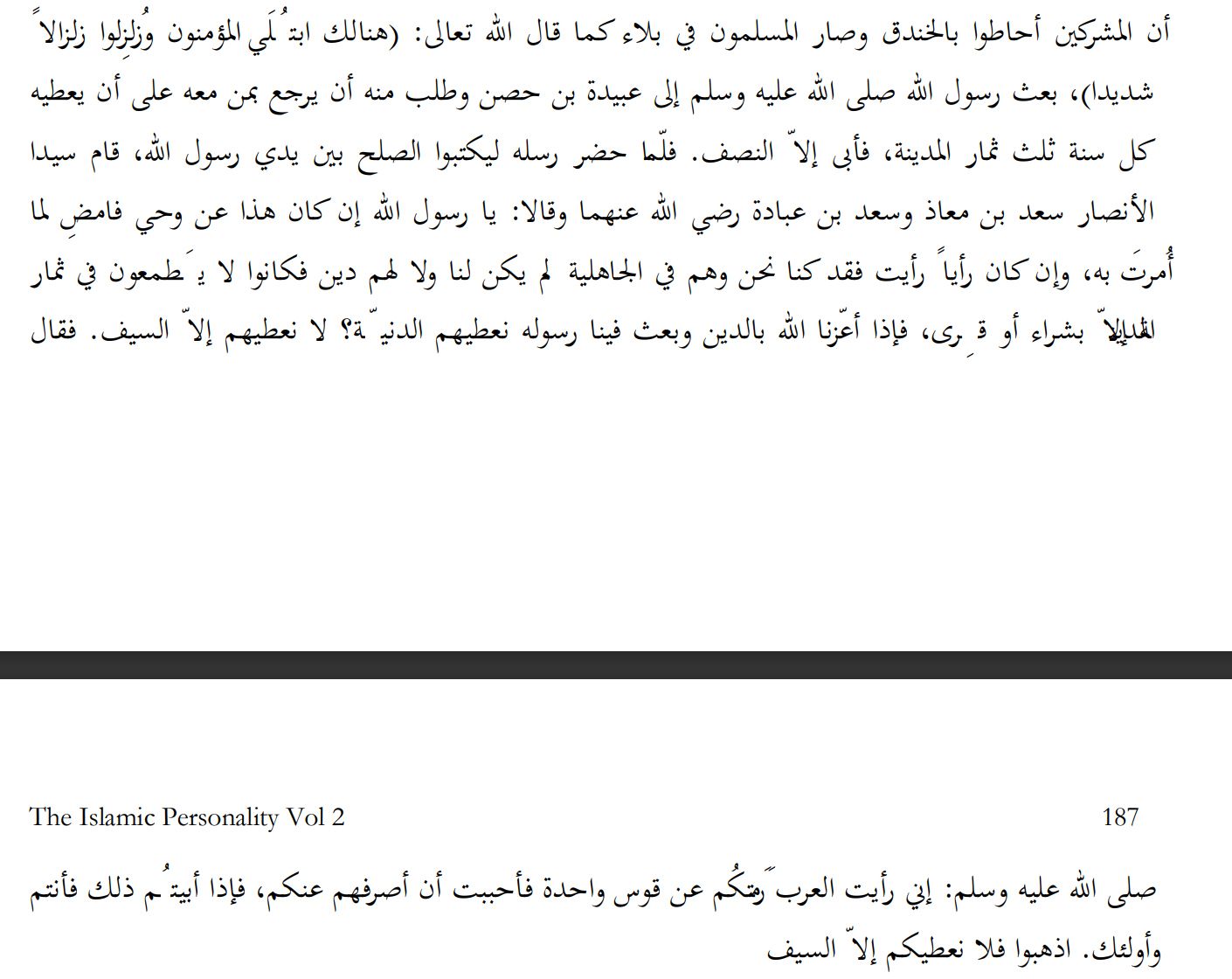
"أنّ المشركين أحاطوا بالخندق، وكان المسلمون في ابتلاء كما قال الله سبحانه وتعالى: ﴿هُنَالِكَ ابْتُلِيَ الْمُؤْمِنُونَ وَزُلْزِلُوا زِلْزَالًا شَدِيدًا﴾ [الأحزاب: ١١]. وأرسل رسولُ الله ﷺ إلى عُيَيْنَةَ بن حِصن، وطلب منه أن ينصرف بمن معه مقابل أن يعطيه ثلث ثمار المدينة، فأبى إلا النصف. فلما حضر رسولاه لكتابة الصلح بين يدي رسول الله ﷺ، قام سيدا الأنصار: سعدُ بن عُبادة وسعدُ بن معاذ رضي الله عنهما، فقالا: يا رسول الله، إن كان هذا عن وحي فامضِ لما أُمرت به، وإن كان رأيًا رأيتَه فنحن وهم كنا في الجاهلية لا نعبد الله ولا نعرفه، وما كانوا يطمعون أن يأكلوا من ثمار المدينة إلا بشراء أو قِرى، فإذ أكرمنا الله بالإسلام وأعزنا به، أفنعطيهم أموالنا؟ ما لنا بهذا من حاجة، والله لا نعطيهم إلا السيف. فقال ﷺ: «إني رأيت العرب قد رمتكم عن قوس واحدة، فأردت أن أصرفهم عنكم، فإن أبيتم فأنتم وذاك، اذهبوا فلا نعطيكم إلا السيف».
“That the polytheists surrounded the trench and Muslims were in trial like Allah (swt) said: ‘Therein the believers were tested and shaken with a severe shaking’ [TMQ 33:11].The Messenger of Allah (saw) sent to ‘Uyaynah bin Hasan and requested that he return with those together with him upon giving him a third of the fruits of Madinah but he refused except a half. When his messengers appeared to write the truce in front of the Messenger of Allah, the two chiefs of the Ansar, S'aad bin ‘Ubadah and S'aad bin Mu’adh (ra) stood and they said: ‘O Messenger of Allah, if this is from revelation then execute what you are commanded with but if it is an opinion which you considered, then they and we were in jahiliyyah when neither they nor we had a religion yet they did not eat of the fruits of Madinah except through purchase or hospitality. So when Allah honoured us with the deen and sent His Messenger among us, should we give them this dunya while being contemptible? No, we will not give them except the sword. So he (saw) said: ‘I saw the Arabs shooting from one bow so I liked to divert them from you. If you reject that, then it is you and those. Go away for we will not give you except the sword!’”
هذا يدل على أن رسول الله ﷺ مال في البداية إلى الصلح لِما استشعره من ضعف المسلمين، فلما رأى فيهم القوة بسبب ما قاله سعد بن عبادة وسعد بن معاذ (رضي الله عنهما)، كف عن ذلك، وفيه دليل على أنه لا حرج في عقد صلح مع الكفار بدفع مال لهم عند خوف الضرر، وذلك لأنهم لو غلبوا المسلمين لاستولوا على جميع الأموال وسبَوُا الذرية، فدفع شيء من المال لحفظ المسلمين وأهليهم وأموالهم أهون وأنفع.
This indicates that the Messenger of Allah (saw) initially inclined to the truce due to what he sensed of the Muslims’ weakness. When he saw the strength in them due to what S'aad bin ‘Ubadah and S'aad bin Mu’adh (ra) said, he refrained from that which indicates that there is no harm from contracting a treaty with disbelievers paying them money when there is danger of harm. This is because if they conquered Muslims they would take all the wealth and the families as captives (sabaya), so paying some wealth to safeguard Muslims and their families and wealth is less contemptible and more beneficial.