20.3 الشهيد
20.3 The Martyr
الشهداءُ ثلاثةُ أنواعٍ: شهيدُ الآخرةِ دون أحكامِ الدنيا، وشهيدُ الدنيا فقط، وشهيدُ الدنيا والآخرةِ. أما شهيدُ الآخرةِ فقط دون الدنيا، فقد ذُكروا في الأحاديثِ. ففي بعضِ الرواياتِ هم سبعةٌ، وفي بعضِها ثمانيةٌ، وفي بعضِها تسعةٌ، وفي بعضِها أحدَ عشرَ. والثابتُ الصحيحُ بما جاء في صحيحِ مسلمٍ أنهم خمسةٌ، وهم: المَطْعونُ، وهو الذي يموتُ بالطاعونِ أي الوباءِ المعروفِ، والمَبْطونُ، وهو صاحبُ الإسهالِ، والغريقُ الذي يموتُ بسببِ الماءِ، وصاحبُ الهَدْمِ، أي البناءِ المنهارِ، والذي يموتُ في سبيلِ إعلاءِ كلمةِ اللهِ خارجَ ساحةِ القتالِ. رَوى مسلمٌ عن أبي هريرةَ رضيَ اللهُ عنه أنَّ رسولَ اللهِ ﷺ قال:
Martyrs (shuhadaa) are of three types; the shaheed of the Akhirah but not by the rules of the world; the shaheed of the world only and the shaheed of the world and Akhirah. As for the shaheed of the Akhirah only and not of this world, they are mentioned in the ahadith. In some narrations they are seven, in some eight, in some nine and in some eleven. The authentic (position) as what came in Muslim is that they are five who are: (al-mat’un) who is the one who dies in the plague i.e. the famous pestilence, the (mabtun) who is the one with diarrhoea, the drowned person who dies because of water, the one who dies of (al-hadm) i.e. the collapsed building, and the one who dies in the way of raising the word of Allah outside the battlefield. Muslim narrated from Abu Hurayra (ra) that the Messenger of Allah (saw) said:
"رجلٌ يمشي في الطريق وجد غصن شوكٍ في الطريق فأزاله، فشكر الله له فغفر له". وقال النبي ﷺ: "الشهداء خمسة: المطعون، والمبطون، والغريق، وصاحب الهدم، والشهيد في سبيل الله عز وجل".
“A man walking along the road found a thorn-branch in the road and removed it. Allah was grateful to him and forgave him. He (saw) said: The martyrs (shuhadaa) are five: (al-mat’un), (al-mabtun), the drowned one, the one who died in a collapsed (building) and the shaheed in the way of Allah ‘azza wa jalla.”
رَوَى مُسْلِمٌ عَنْ أَبِي هُرَيْرَةَ رَضِيَ اللهُ عَنْهُ قَالَ: قَالَ رَسُولُ اللهِ ﷺ:
Muslim narrated from Abu Hurairah (ra) who said: The Messenger of Allah (saw) said:
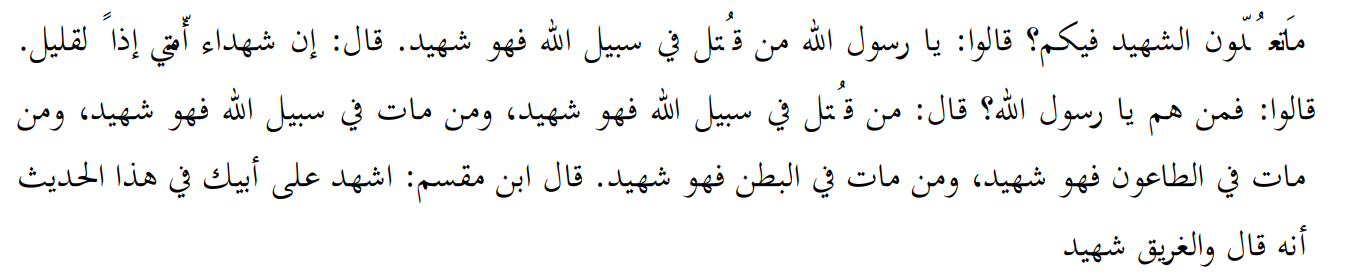
"مَنْ تَعُدُّونَ الشَّهِيدَ فِيكُمْ؟" قَالُوا: يَا رَسُولَ اللَّهِ، الْمَقْتُولُ فِي سَبِيلِ اللَّهِ شَهِيدٌ. قَالَ: "إِنَّ شُهَدَاءَ أُمَّتِي إِذًا لَقَلِيلٌ". قَالُوا: فَمَنْ هُمْ يَا رَسُولَ اللَّهِ؟ قَالَ: "الْمَقْتُولُ فِي سَبِيلِ اللَّهِ شَهِيدٌ، وَالْمَيِّتُ فِي سَبِيلِ اللَّهِ شَهِيدٌ، وَالْمَطْعُونُ شَهِيدٌ، وَالْمَبْطُونُ شَهِيدٌ (قَالَ ابْنُ مِقْسَمٍ: أَشْهَدُ عَلَى أَبِيكَ فِي هَذَا الْحَدِيثِ أَنَّهُ قَالَ)، وَصَاحِبُ الْهَدْمِ شَهِيدٌ".
“Whom do you consider a shaheed among you? They said: O Messenger of Allah, the one killed in the way of Allah is a shaheed. He said: Then the shuhadaa among my Ummah would be few. They said: Then who are they, O Messenger of Allah? He said: The one killed in the way of Allah is a shaheed, the one who dies in the way of Allah is a shaheed, the one killed in pestilence is a shaheed, the one killed due to the stomach is a shaheed (ibn Muqsim said: I testify that upon your father in this hadith that he said) and the drowned person is a shaheed.”
معنى هؤلاء الشهداء أنّ لهم في الآخرة أجرَ الشهداء، وأما في الدنيا فإنهم يُغسَّلون ويُصلَّى عليهم. وإذا قيل لفظ «الشهيد» مقترنًا بالثواب والحديث الوارد فيه، فيصحّ تعميمه على هؤلاء؛ أما إذا استُعمل لفظ «الشهيد» مطلقًا دون أي قرينة، فلا يُحمل على هؤلاء، وإنما يُراد به المقتول في سبيل الله وحده.
The meaning of these shuhadaa is that there is for them in the Akhirah the reward of the shuhadaa; as for this world, they are washed and prayed over. When the word “shaheed” is said in connection with reward and the hadith about that, it is correct to generalize it to these (persons). However, if the word “shaheed” is used in an unrestricted manner without any connotation, then it is not taken to denote these (persons) but rather to denote only those killed in the way of Allah.
أما الشهيد في الدنيا لا في الآخرة، فهو الذي يُأخذ بأحكام شهيد الدنيا، من حيث إنه لا يُغسَّل ولا يُصلّى عليه، بل يُدفن في ثيابه. غير أنه لا ينال في الآخرة أجر الشهيد الذي قاتل لتكون كلمة الله هي العليا. وهذا هو الذي يقاتل في غير سبيل الله، كمن يقاتل طلباً للشهرة أو الغنيمة وحدها، أو يقاتل وهو منهزم. وذلك لأن الأحاديث بيّنت أجر الشهيد الذي يقاتل في سبيل الله ﷻ، والذي يقاتل مُقبلاً غير مُدبر. رواه مسلم عن أبي موسى الأشعري.
As for the shaheed of the world not the Akhirah, he is the one who takes the rules of the shaheed of the world in so far as he is not washed nor prayed over but rather buried in his clothes. However he does not take in the Akhirah the reward of the shaheed who fought to raise the word of Allah the highest. This is the one who fights in other than the way of Allah such as fighting for fame or booty alone or while retreating. This is because the ahadith specified the shaheed’s reward for the shaheed who fights in the way of Allah (swt), and the one fighting advancing not retreating. Muslim narrated from Abu Musa al-Ash’ari
أنَّ رجلاً جاء إلى النبيِّ ﷺ فقال: يا رسولَ اللهِ، الرجلُ يقاتلُ للمغنمِ، والرجلُ يقاتلُ ليُذكَر، والرجلُ يقاتلُ ليُرى مكانُه، فأيُّهم في سبيلِ اللهِ؟ فقال رسولُ اللهِ ﷺ: «مَن قاتلَ لتكونَ كلمةُ اللهِ هي العُليا فهو في سبيلِ اللهِ».
“That a man came to the Prophet (saw) and said: O Messenger of Allah, the man who fights for booty, the man who fights to be mentioned and the man who fights so that his rank is seen. Which one is in the way of Allah? The Messenger of Allah (saw) said: ‘The one who fights so that the word of Allah be highest is the one in the way of Allah.”
رواه مسلم عن أبي موسى
Muslim narrated from Abu Musa
سُئِلَ رسولُ اللهِ ﷺ عن الرجلِ يُقاتِلُ شجاعةً، ويُقاتِلُ غضبًا، ويُقاتِلُ رِياءً. فقال رسولُ اللهِ ﷺ: مَن قاتَلَ لتكونَ كلمةُ اللهِ هي العُليا فهو في سبيلِ اللهِ.
“The Messenger of Allah (saw) was asked about the man who fights (to show his) courage, the one who fights out of anger, and the one who fights to show off (hypocritically). The Messenger of Allah (saw) said: The one who fights so that the word of Allah is highest is in the way of Allah.”
جعل الرسول ﷺ من شروط غفران الذنوب للشهيد أن يقاتل مقبلاً غير مدبر. رواه مسلم عن عبد الله بن أبي قتادة، عن أبيه قتادة، أنه سمع رسول الله ﷺ يحدّث.
The Messenger made a condition of the shaheed being forgiven his sins that he fights advancing not retreating. Muslim narrated from Abdullah bin Abi Qatadah from Qatadah that he heard it being narrated from the Messenger of Allah
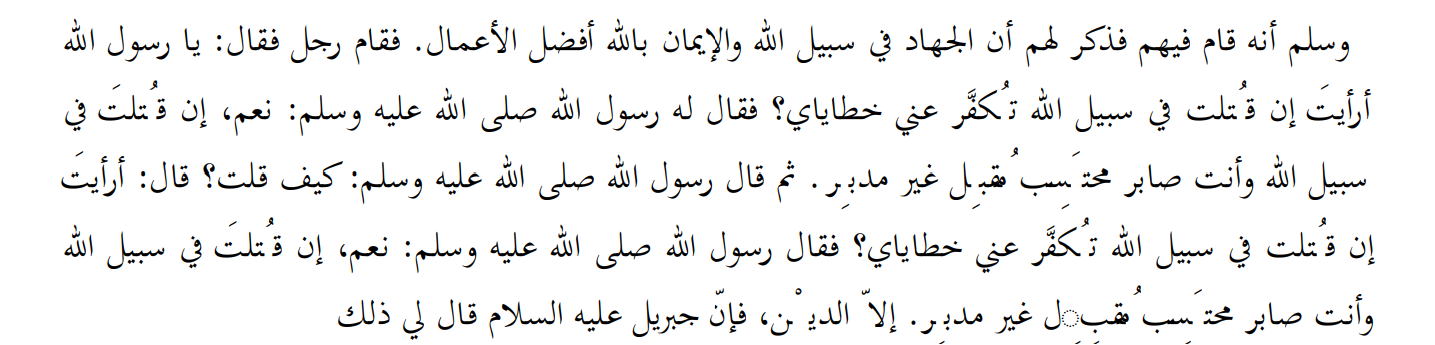
أنه قام فيهم فذكّرهم أن الجهاد في سبيل الله والإيمان الجازم بالله أفضل الأعمال. فقام رجل فقال: يا رسول الله، أرأيت لو قاتلتُ في سبيل الله أتُكفَّر عني خطاياي؟ فقال له رسول الله ﷺ: نعم، إن قاتلتَ في سبيل الله وأنت صابر محتسب مقبل غير مدبر. ثم قال رسول الله ﷺ: ماذا قلتَ؟ قال: أرأيت لو قاتلتُ في سبيل الله أتُكفَّر عني ذنوبي؟ فقال رسول الله ﷺ: نعم، إن كنتَ صابرًا محتسبًا مقبلًا غير مدبر، إلا الدَّين، فإن جبريل (عليه السلام) قال لي ذلك.
“That he stood among them and reminded them that jihad in the way of Allah and decisive belief in Allah is the best deeds. So a man stood up and said: O Messenger of Allah, do you see that if I fought in the way of Allah that all my errors would be forgiven? The Messenger of Allah (saw) said to him: Yes, if you fought in the way of Allah and you are patient, hopeful, advancing and not retreating. Then the Messenger of Allah (saw) said: What did you say? He said: Do you see that if I fought in the way of Allah that all my sins would be forgiven? The Messenger of Allah (saw) said: Yes, if you are patient, hopeful, advancing and not retreating except for debts as Jibril (AS) told me that.”
يُفهم من ذلك أنّ الفارّ من القتال لا تُغفر ذنوبه، ولا يكون له أجر الشهيد. أمّا المقاتل رياءً وطلبًا للسمعة، فقد بيّن رسول الله ﷺ أنه يُعذَّب، ومع ذلك سمّاه شهيدًا. روى مسلم عن سليمان بن يسار قال: تفرّق الناس عن أبي هريرة رضي الله عنه، فقال له نَاتِل، وكان من أهل الشام: يا شيخُ، حدّثنا حديثًا سمعتَه من رسول الله ﷺ. فقال: نعم، سمعتُ رسول الله ﷺ يقول:
The understanding of this is that the retreating fighter’s sins are not forgiven nor does he have the reward of the shaheed. As for the one fighting for fame, the Messenger (saw) clarified that he would be punished and (yet) called him shaheed. Muslim narrated from Sulayman bin Yasar who said: People dispersed about Abu Hurairah (ra) and Natil who was from the people of Sham said to him: O Sheikh related to us a hadith you heard from the Messenger of Allah (saw). He said: Yes, I heard the Messenger of Allah (saw) saying:
إِنَّ أَوَّلَ النَّاسِ يُقْضَى يَوْمَ الْقِيَامَةِ عَلَيْهِ رَجُلٌ اسْتُشْهِدَ، فَأُتِيَ بِهِ، فَعَرَّفَهُ نِعَمَهُ فَعَرَفَهَا، قَالَ: فَمَا عَمِلْتَ فِيهَا؟ قَالَ: قَاتَلْتُ فِيكَ حَتَّى اسْتُشْهِدْتُ. قَالَ: كَذَبْتَ، وَلَكِنَّكَ قَاتَلْتَ لِأَنْ يُقَالَ: جَرِيءٌ، فَقَدْ قِيلَ. ثُمَّ أُمِرَ بِهِ فَسُحِبَ عَلَى وَجْهِهِ حَتَّى أُلْقِيَ فِي النَّارِ
“Verily the first person(s) to be judged on the Day of Judgement is a man who was killed as a shaheed. He is brought to Him (Allah) and He informs him of the bounties (of Allah) and he acknowledges them. He (swt) says: What did you do with them? He answers: I fought for you until I was killed as a shaheed. He says: You lied. Rather you fought so that it be said ‘(he is) brave’ and it has been said. Then He commands regarding him and he is dragged upon his face until he is thrown into the Fire”
حتى نهاية الحديث. وهذا يدل على أن من قُتل للشهرة، وإن أخذ أحكام الشهيد في الدنيا، فلن ينال أجر الشهيد يوم القيامة، بل سيُعاقَب.
Till the end of the hadith. This indicates that the one killed for fame, even if he takes the rules of the shaheed in this world, will not gain the reward of the shaheed on the Day of Judgement but would be punished.
أما الشهيد في الدنيا والآخرة، فهو من يقاتل الكفار لإعلاء كلمة الله، وقُتل في ساحة المعركة بين المسلمين والكفار، سواء كان القتال في دار الحرب أو في أرض الإسلام. قال الله تعالى:
As for the shaheed of the world and the Akhirah, he is the one who fights the disbelievers to raise the word of Allah and was killed in the battle (field) between Muslims and disbelievers, whether the fighting was in the land of war or the Islamic land. Allah (swt) said:
{وَلَا تَحْسَبَنَّ الَّذِينَ قُتِلُوا فِي سَبِيلِ اللَّهِ أَمْوَاتًا ۚ بَلْ أَحْيَاءٌ عِندَ رَبِّهِمْ يُرْزَقُونَ} [آل عمران: ۱٦٩]
“Do not think that those killed in the way of Allah are dead. Rather they are alive and receiving sustenance before their Lord” [TMQ 3:169].
هذا الشهيد هو الذي وردت في شأنه أحكام الشريعة. وقد خُصّ بأنه القتيل في الحرب مع الكفار، وكذلك من أُصيب في ساحة المعركة ثم مات من الجرح الذي أصابه فيها، فهو بمنزلة القتيل في ساحة المعركة. أما من عدا هؤلاء فلا يُعدّ شهيدًا. وعلى هذا فإن القتيل في القتال مع البغاة لا يُعدّ شهيدًا، ولا الجريح في ساحة المعركة ثم برئ من جرحه ثم مات بسببه. والشهيد الذي له أحكام خاصة، والذي أخبر الله تعالى أنه حيّ، خُصّ بالقتيل في ساحة المعركة مع الكفار لإعلاء كلمة الله، وبالجريح في ساحة المعركة ثم مات بسبب هذا الجرح.
This shaheed is the one upon whose rights came in the Shari’ah rules. He is specified as the one killed in the war with disbelievers; similarly the one who was wounded in the battlefield then died of the wound he received in the battlefield is also considered like the one killed in the battlefield. As for other than these, they are not considered shaheed. Accordingly the one killed in fighting with rebels (bughat) is not considered shaheed nor the one wounded in the battlefield then recovered from the wound then died because of it. The shaheed who has specific rules, and the one about whom Allah stated that he is alive, is specified to the one killed in the battlefield with the disbelievers to raise the word of Allah and the one injured in the battlefield then died due to this wound.
القاعدة المذكورة هنا أن الشهيد لا يُغسَّل ولا يُكفَّن في أكفان الموت، بل يُدفن في دمه وثيابه، وذلك لأن الشهيد يُبعث يوم القيامة وريح دمه كالمسك في أطيب ريحه. أما عدم غسل الشهيد فيستدل له بما رواه البخاري عن جابر أنه قال:
The rule of this mentioned shaheed is that he is neither washed nor shrouded in burial shrouds; rather he is buried in his blood and clothes because the shaheed is resurrected on the Day of Judgement with the smell of his blood like the sweetest-smelling musk. As for not washing the shaheed, this is due to what Al-Bukhari narrated from Jabir who said:
كان رسول الله ﷺ يجمع بين الرجلين من شهداء أحد في ثوب واحد، ثم يقول: أيُّهما كان أكثر أخذًا للقرآن؟ فإذا أُشير إلى أحدهما قدّمه في اللحد وقال: أنا شهيدٌ على هؤلاء. وأمر بدفنهم في دمائهم، ولم يُصلِّ عليهم ولم يغسلهم.
“The Messenger of Allah (saw) would collect two men of those killed in Uhud in one cloth, and then he would say: Which one of them knew more of the Qur’an? If one of the two was indicated to him, he brought him forward in the grave-niche (lihd) and said: I am a witness over these. He commanded their burial with their blood and did not pray over them nor wash them.”
وَرَوَى أَحْمَدُ أَنَّ النَّبِيَّ ﷺ قَالَ فِي شُهَدَاءِ أُحُدٍ:
And Ahmad (narrated) that the Prophet (saw) said about those killed in Uhud:
لَا تُغَسِّلُوهُمْ، فَإِنَّ كُلَّ جُرْحٍ أَوْ (كُلَّ قَطْرَةِ) دَمٍ يَفُوحُ مِسْكًا يَوْمَ الْقِيَامَةِ، وَلَمْ يُصَلِّ عَلَيْهِمْ.
“Do not wash them because each wound or (each drop of) blood will diffuse musk on the Day of Judgement and he did not pray over them.”
روي أن النبي ﷺ قال في شهداء أحد:
It is narrated that the Prophet (saw) said about those killed in Uhud:
قال: «زَمِّلُوهُمْ بِدِمَائِهِمْ، فَإِنَّهُ لَيْسَ جُرْحٌ يُجْرَحُ فِي سَبِيلِ اللهِ إِلَّا يَأْتِي يَوْمَ الْقِيَامَةِ وَجُرْحُهُ يَثْعَبُ دَمًا، لَوْنُهُ لَوْنُ الدَّمِ، وَرِيحُهُ رِيحُ الْمِسْكِ».
“Cover them in their blood and do not wash them as there is no wound wounded in the way of Allah save that it will come on the Day of Judgement with its jugular vein flowing blood whose colour is the colour of blood and the odour is the odour of musk.”
روي عن أنسٍ
It has been narrated from Anas
أنَّ النَّبِيَّ ﷺ لَمْ يُصَلِّ عَلَى الَّذِينَ قُتِلُوا فِي أُحُدٍ، وَلَمْ يُصَلِّ عَلَيْهِمْ.
“That the Prophet (saw) did not pray over those killed in Uhud or pray over them.”
وكما أنه ﷺ لم يغسّل الذين قُتلوا في أُحد، لم يغسّل شهداءَ بدرٍ؛ وكذلك لم يغسّل شهداءَ الخندق وخيبر. فاتضح أنّ الشهيد لا يُغسَّل. وكذلك لا يُكفَّن الشهيد كما يُكفَّن الميت، بل يُكفَّن في الثياب التي عليه، وذلك لقوله ﷺ في الذين قُتلوا في أُحد:
Just as he did not wash those killed in Uhud, he did not wash the shuhadaa of Badr; similarly he did not wash the shuhadaa of Khandaq and Khayber. So it became clear that the shaheed is not washed. Similarly the shaheed is not enshrouded as the dead person is shrouded; rather he is shrouded in the clothes that he has due to the Messenger of Allah (saw)’s statement about those killed in Uhud:
"زملوهم بكلومهم ودمائهم" (رواه أحمد)
“Cover them in their wounds and blood” (narrated by Ahmad)
وَأَيْضًا بِمَا رَوَاهُ ابْنُ عَبَّاسٍ رَضِيَ اللهُ عَنْهُ
And also due to what ibn Abbas (ra) narrated
أَنَّ رَسُولَ اللَّهِ ﷺ أَمَرَ فِي شُهَدَاءِ أُحُدٍ أَنْ يُنْزَعَ عَنْهُمُ الْحَدِيدُ وَالْجُلُودُ، وَأَنْ يُدْفَنُوا بِدِمَائِهِمْ وَثِيَابِهِمْ. (رواه أبو داود)
“That the Messenger of Allah (saw) commanded about those killed in Uhud that the iron and skins be removed from them and that they be buried with their blood and clothes” (narrated by Abu Dawud).
أمّا الصلاة على الشهيد، فيجوز الصلاة عليه، ويجوز ترك الصلاة عليه. أمّا جواز الصلاة عليه، فلِما جاء من الروايات أنّ رسول الله ﷺ صلّى على قتلى أُحد بعد دفنهم، وصلّى على حمزة وعلى رجلٍ قُتل في المعركة. وفي صحيح البخاري عن عقبة بن عامر
As for the prayer over the shaheed, it is allowed to pray over them and it is allowed not to pray over them. As for the permissibility of prayer over them, this is due to the narrations which came that the Messenger (saw) prayed over those killed in Uhud after their burial and prayed over Hamza and a man killed in the battlefield. In Al-Bukhari it is narrated from Uqbah bin ‘Amir
صَلَّى ﷺ على شُهَداءِ أُحُدٍ بعد ثمانِ سنين، فكانت صلاتُه عليهم كالوَداعِ للأحياءِ والأموات.
“He (saw) prayed over those killed in Uhud after eight years, the prayer over the dead was like a farewell to those alive and those dead.”
وَعَنْ أَبِي دَاوُدَ عَنْ مَالِكٍ الْغِفَارِيِّ
And from Abu Dawud from Malik al-Ghiffari
صلّى ﷺ على قتلى أُحُد في كل عشرةٍ وفيهم حمزة، حتى صلّى عليه سبعين مرةً.
“He (saw) prayed over those killed in Uhud in groups of ten with Hamza in each ten until he prayed seventy times over him.”
رَوَى أَبُو دَاوُدَ عَنْ أَبِي سَلَامٍ عَنْ رَجُلٍ مِنْ أَصْحَابِ النَّبِيِّ ﷺ أَنَّهُ قَالَ:
Abu Dawud narrated from Abu Salim from a man of the Prophet (saw)’s Sahabah who said:

غزونا قوماً من جهينة على غرة، فطلب رجل من المسلمين رجلاً منهم ليضربه، فأخطأه وأصاب نفسه. فقال رسول الله ﷺ: «أخوكم يا معشر المسلمين». فأسرع الناس فوجدوه قد مات. فكفنه رسول الله ﷺ في ثيابه ودمه، وصلى عليه ودفنه. فقالوا: أشهيد هو يا رسول الله؟ قال: «نعم، وأنا له شهيد».
“We attacked by surprise a tribe from Juhainah. A man of the Muslims sought a man of them to strike him, but he missed and struck himself. The Messenger of Allah (saw) said: Your brother, O community of Muslims so the people hastened and found him dead. The Messenger of Allah (saw) covered him in his clothes and blood, prayed over him and buried him. They said: Is he a shaheed? He said: Yes, and I am a witness for him.”
قال: «أَغَرْنَا عَلَى قَوْمٍ مِنْ جُهَيْنَةَ عَلَى غِرَّةٍ»، فَطَلَبَ رَجُلٌ مِنَ الْمُسْلِمِينَ رَجُلًا مِنْهُمْ لِيَضْرِبَهُ، فَأَخْطَأَهُ وَأَصَابَ نَفْسَهُ. قَالَ: فَقَالَ رَسُولُ اللهِ ﷺ: «أَخُوكُمْ يَا مَعْشَرَ الْمُسْلِمِينَ». فَأَسْرَعَ النَّاسُ، فَوَجَدُوهُ قَدْ مَاتَ. فَكَفَّنَهُ رَسُولُ اللهِ ﷺ فِي ثِيَابِهِ وَدِمَائِهِ، وَصَلَّى عَلَيْهِ وَدَفَنَهُ. فَقَالُوا: أَشَهِيدٌ هُوَ يَا رَسُولَ اللهِ؟ فَقَالَ: «نَعَمْ، وَأَنَا لَهُ شَهِيدٌ».
“We attacked by surprise a tribe from Juhainah. A man of the Muslims sought a man of them to strike him, but he missed and struck himself. The Messenger of Allah (saw) said: Your brother, O community of Muslims so the people hastened and found him dead. The Messenger of Allah (saw) covered him in his clothes and blood, prayed over him and buried him. They said: Is he a shaheed? He said: Yes, and I am a witness for him.”
أَنَّ النَّبِيَّ ﷺ لَمْ يُصَلِّ عَلَى الَّذِينَ قُتِلُوا فِي أُحُدٍ، وَلَمْ يُغَسِّلْهُمْ.
“That the Prophet (saw) did not pray over those killed in Uhud or wash them.”
وَرَوَى أَحْمَدُ عَنْ أَنَسٍ
And Ahmad narrated from Anas
لم يُغسَّل شهداءُ أُحُدٍ، بل دُفنوا في ثيابهم، ولم يُصلَّ عليهم.
“The shuhadaa of Uhud were not washed. They were buried in their clothes and not prayed over.”
روى البخاريُّ عن جابر بن عبد الله رضي الله عنه قال:
Al-Bukhari narrated from Jabir bin Abdullah (ra) who said:

كان النبي ﷺ يجمع بين رجلين من القتلى في أحد، ثم يقول: أيُّهما كان أكثر أخذًا للقرآن؟ فإذا أُشير إلى أحدهما قدّمه في اللحد، وقال: أنا شهيد على هؤلاء يوم القيامة، وأمر بدفنهم في دمائهم، ولم يغسّلهم ولم يصلِّ عليهم.
“The Prophet (saw) would combine between two men of those killed in Uhud then say: Which one of them memorized more of the Qur’an? When one of the two was indicated to him, he would bring him forward in the grave-niche and he said: I am the witness over these on the Day of Judgement, commanded their burial in their blood and did not wash them or pray over them.”
هذه الأحاديث ثابتة، وفيها دلالة صريحة على أن الشهيد لا يُصلّى عليه. وقد ردّ الشافعي على حديث ابن عباس رضي الله عنهما، وما جاء في معناه من الصلاة على شهداء أحد قبل دفنهم، فقال: "إن الخبر جاء كأنه خاص في أعيان، في مقابلة المتواتر أن النبي ﷺ لم يصلِّ على شهداء أحد." وكل هذه الأحاديث ثابتة، سواء ما رُوي أن النبي ﷺ صلّى على الشهداء، أو ما رُوي أنه لم يصلِّ عليهم. ولا سبيل إلى ردّ شيء منها لأجل صحته، فهي من الأحاديث المحتج بها رواية ومعنى. ولا وجه لترجيح أحدها على الآخر، فإن بعيدٌ أن يكون الصحابة نسوا الصلاة على أولئك الشهداء، كما أن بعيدٌ أن يتركوا أمراً مخالفاً لما ثبت عنه ﷺ من الصلاة على الموتى. فكيف يُرجَّح أحدها على الآخر؟ ولا يصح أن يقال إن الصلاة الواردة في الأحاديث المثبتة للصلاة على الشهيد هي الدعاء، حتى يكون قوله "صلّى" بمعنى دعا. ولا يصح هذا القول، لأن الحقائق الشرعية مقدّمة على الحقائق اللغوية ما لم توجد قرينة صارفة، وهنا لا قرينة، فيتعين أن يكون المراد بالصلاة الصلاة الشرعية على الميت. ولا يصح أيضاً أن يقال إن أحاديث الصلاة على الميت تنسخ أحاديث عدم الصلاة عليهم، لأن أحدها، وهو الصلاة على شهداء أحد بعد ثماني سنين، جاء متأخراً عن جميع الأحاديث، إذ ورد في رواية ابن حبان.
These ahadith are established and of explicit indication that the shaheed is not prayed over. Ash Shafi’ responded to the hadith of ibn Abbas (ra) and what came of its meaning regarding praying over those killed in Uhud before their burial “that the information came as if it were specific ones in the face of mutawatirah that the Messenger did not pray over those killed in Uhud.” All these ahadith are established whether those narrated that the Messenger (saw) prayed over the shuhadaa or those narrated that he didn’t pray over them. There is no way to reject any of them due to their authenticity, and because they are of those used as proofs in narration and meaning. There is no way to outweigh one over the other as it is remote that the Sahabah forgot to pray over those shuhadaa, just as it is also remote for them to leave an issue which is opposite of what is established about him (saw) of praying over the dead. So how can one be outweighed over the other? Nor should one say that the prayer in the ahadith which established the prayer over the shaheed is the du’a so that his saying “prayed” means made du’a. One cannot say this since the Shari’ah realities precede the linguistic (realities) as long as there is no connotation. Here there is no connotation so it is inevitable that the meaning of prayer is the Shari’ah prayer over the dead. Nor should one say that the ahadith of praying over the dead abrogates the ahadith of not praying over them since one of them, which is the prayer over those killed in Uhud after eight years is prayed to later than all the ahadith since it came in the narration of ibn Hibban
ثُمَّ دَخَلَ بَيْتَهُ وَلَمْ يَخْرُجْ حَتَّى تَوَفَّاهُ اللهُ.
“Then he entered his house and did not go out until Allah caused him to die.”
لا ينبغي أن يُقال ذلك، لأن تأخُّر الحديث وحده ليس دليلًا كافيًا على النسخ؛ بل لا بد من قرينة أخرى يُفهم منها النسخ. وهنا لا توجد قرينة كهذه، فلا نسخ فيه. فتبقى جميع الروايات معمولًا بها، ويُحمل ذلك على أن ترك الصلاة على الشهيد جائز. ولم يُروَ أن رسول الله ﷺ صلّى على قتلى بدر أو الخندق أو خيبر. ويُحمل ذلك أيضًا على أنه إن صُلّي على الشهيد فلا حرج في ذلك، ولا يُمنع الناس من الصلاة عليهم. وإنما سُمّي الشهيد شهيدًا (أي شاهدًا)، لأن الجنة يشهد له بها النص الصريح من القرآن الكريم. قال الله سبحانه وتعالى:
One should not say that because the lateness of the hadith alone is not sufficient indication of abrogation; rather there must be another connotation from which abrogation is understood. Here no connotation is present so there is no abrogation in it. So all the narrations remain recognized and are taken to mean that not praying over the shaheed is allowed. It is not narrated that the Messenger (saw) prayed over those killed in Badr, Khandaq or Khayber. They are also taken to mean that if one prays over the shaheed there is nothing (wrong) in that and people are not prevented from praying over them. The shaheed is named shaheed (witness) as Paradise is witnessed for him by the explicit text of the Qur’an. Allah (swt) said:
إِنَّ اللَّهَ اشْتَرَىٰ مِنَ الْمُؤْمِنِينَ أَنفُسَهُمْ وَأَمْوَالَهُم بِأَنَّ لَهُمُ الْجَنَّةَ ۚ يُقَاتِلُونَ فِي سَبِيلِ اللَّهِ فَيَقْتُلُونَ وَيُقْتَلُونَ [التوبة: ١١١]
“Verily Allah purchased from the believers there souls and wealth in return for paradise. They fight in the way of Allah, killing and being killed” [TMQ 9:111].
رَوَى مُسْلِمٌ عَنْ جَابِرٍ قَالَ:
Muslim narrated from Jabir who said:
قال رجل: أين أنا يا رسول الله إن قُتلت؟ قال: في الجنة. فألقى التمرات التي في يده وقاتل حتى قُتل. وفي حديث سويد: قال رجل للنبي ﷺ يوم أحد.
“A man said: Where am I, O Messenger of Allah, if I am killed? He said: In Paradise. So he threw the dates that were in his hands and fought until he was killed and in the hadith of Suwaid. A man said to the Prophet (saw) on the day of Uhud.”
رُوِيَ عَنْ أَنَسِ بْنِ مَالِكٍ (رضي الله عنه) أَنَّ رَسُولَ اللَّهِ ﷺ خَرَجَ مَعَ أَصْحَابِهِ حَتَّى سَبَقُوا الْمُشْرِكِينَ إِلَى بَدْرٍ، فَجَاءَ الْمُشْرِكُونَ، فَقَالَ رَسُولُ اللَّهِ ﷺ:
It is narrated from Anas bin Malik (ra) that the Messenger of Allah (saw) went with his Sahabah until they preceded the polytheists to Badr. The polytheists came and the Messenger of Allah (saw) said:
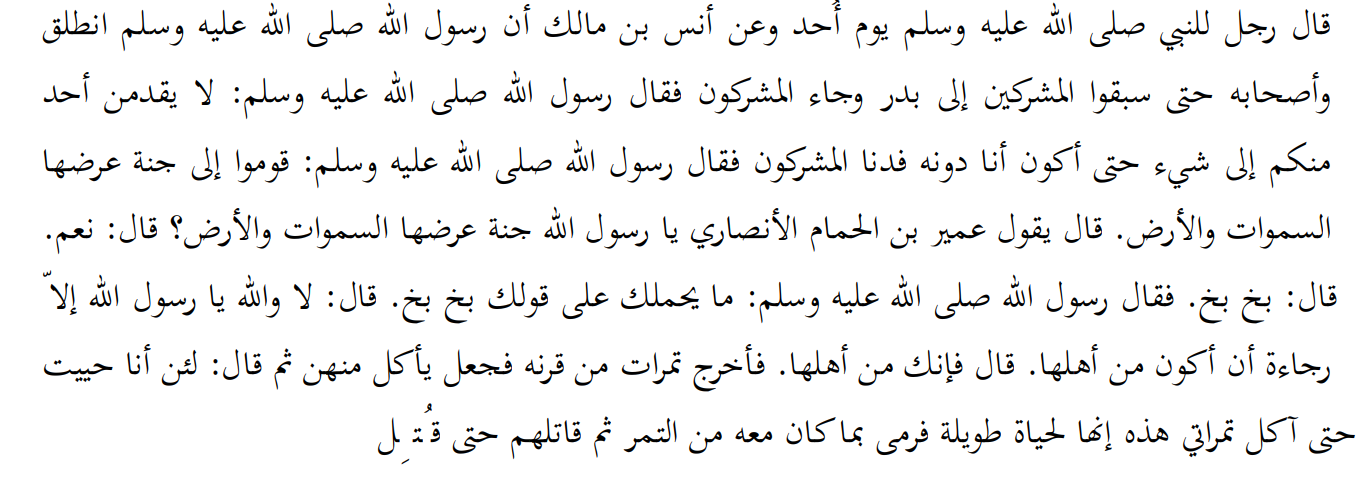
«لا يتقدمنَّ أحدكم إلى شيء حتى أكون أنا دونه». دنا المشركون، فقال رسول الله ﷺ: «قوموا إلى جنة عرضها السماوات والأرض». قال: فقال عمير بن الحمام الأنصاري: يا رسول الله، جنة عرضها السماوات والأرض؟ قال: «نعم». قال: (بخٍ بخٍ). فقال له رسول الله ﷺ: «ما يحملك على قولك: بخٍ بخٍ؟» قال: لا والله يا رسول الله، إلا رجاء أن أكون من أهلها. قال: «فإنك من أهلها». فأخرج تمرات من قَرَنه فجعل يأكل منهن، ثم قال: لئن أنا حييت حتى آكل تمراتي هذه إنها لحياة طويلة! فرمى بما كان معه من التمر، ثم قاتلهم حتى قُتل. (رواه مسلم)
“Let none of you precede to anything without my being. The polytheists came close so the Messenger of Allah (saw) said: Stand forth to a Paradise whose breadth is that of the heavens and the earth. He said: ‘Umayr bin al-Hammam al-Ansari said: O Messenger of Allah, a Paradise whose breadth is that of the heavens of the earth? He said: (Bakh! Bakh!). So the Messenger of Allah (saw) said: What carried you to your statement, (Bakh! Bakh!). He said: Nothing, by Allah, except the hope that I be one of its people. He said: Verily you are one of its people. He removed dates from his (qaran) and began eating from them. Then he said: If I were to live until I ate these dates, it would then be a long life! He threw the dates that had then fought them until he was killed” (Narrated by Muslim).
فَقَدْ شَهِدَ اللهُ وَرَسُولُهُ ﷺ لِلشَّهِيدِ بِالْجَنَّةِ. أَمَّا حَيَاةُ الشَّهِيدِ فَقَدْ ثَبَتَتْ بِنَصِّ الْقُرْآنِ الصَّرِيحِ، قَالَ اللهُ تَعَالَى:
So Allah (swt) and the Messenger of Allah (saw) have witnessed the Paradise for the shaheed. As for the life of the shaheed, it is established by the explicit text of the Qur’an. Allah (swt) said:
لَا تَحْسَبَنَّ الَّذِينَ قُتِلُوا فِي سَبِيلِ اللَّهِ أَمْوَاتًا ۚ بَلْ أَحْيَاءٌ عِندَ رَبِّهِمْ يُرْزَقُونَ فَرِحِينَ بِمَا آتَاهُمُ اللَّهُ مِن فَضْلِهِ وَيَسْتَبْشِرُونَ بِالَّذِينَ لَمْ يَلْحَقُوا بِهِم مِّنْ خَلْفِهِمْ أَلَّا خَوْفٌ عَلَيْهِمْ وَلَا هُمْ يَحْزَنُونَ يَسْتَبْشِرُونَ بِنِعْمَةٍ مِّنَ اللَّهِ وَفَضْلٍ وَأَنَّ اللَّهَ لَا يُضِيعُ أَجْرَ الْمُؤْمِنِينَ
“Do not think that those killed in the way of Allah are dead, rather (they are) alive with sustenance before their Lord. Pleased with what Allah gave them of His favours and with good tidings for those behind them who have not met them, that there is no fear for them nor do they grieve. They have glad tidings of blessings from Allah and His favour, and verily Allah does not cause the reward of the believers to be lost” [TMQ 3:169].
هذه الحياة الخاصة بالشهداء غيبيةٌ لا نفهمها ولا ندركها على حقيقتها في الدار الآخرة. ومع أننا لا نفهم هذه الحياة الخفية ولا ندركها، فإننا نؤمن بوجودها، لكننا لا نفهم حقيقتها. وإيماننا بوجودها أمرٌ لا مناص منه، لأنه ثابتٌ بنصٍّ قرآنيٍّ قطعيّ. قال الله سبحانه وتعالى:
This life for the shuhadaa is unseen which we do not understand nor perceive as it is in the eternal abode. Although we do not understand this hidden life nor perceive it, nevertheless we believe in its existence but do not understand its reality. Our conviction in its existence is an inevitable matter as it is established by a definite Qur’anic text. Allah (swt) said:
"وَلَا تَقُولُوا لِمَنْ يُقْتَلُ فِي سَبِيلِ اللَّهِ أَمْوَاتٌ ۚ بَلْ أَحْيَاءٌ وَلَٰكِن لَّا تَشْعُرُونَ" [البقرۃ: ١٥٤]
“Do not say of those killed in the way of Allah (are) ‘dead’... Rather they are alive but you do not know” [TMQ 2:154].
حياةُ الشهداءِ من الغيبِ الذي يجبُ الإيمانُ به. أما فضلُ الشهداءِ فهو فضلٌ عظيمٌ لا نظيرَ له، وقد بيّنه النبيُّ ﷺ في أحاديثَ كثيرةٍ. روى البخاريُّ عن قتادةَ قال: سمعتُ أنسَ بنَ مالكٍ (رضي الله عنه) يقولُ عن النبيِّ ﷺ أنه قال:
The life of the shuhadaa is from the unseen (matters) in which iman is obliged. As for the virtue of the shuhadaa, it is a great virtue without an equivalent and he (saw) clarified it in numerous ahadith. Al-Bukhari narrated from Qatadah who said: I heard Anas bin Malik (ra) from the Prophet (saw) who said:
لا يرغب أحدٌ يدخل الجنة في أن يعود إلى الدنيا ليحصل على كل ما في الدنيا، إلا الشهداء، فإنهم يتمنون أن يعودوا إلى الدنيا فيُقتلوا عشر مرات، لما يرون من الكرامة.
“No one who enters Paradise would like to return to the world to obtain all that is upon the world except the shuhadaa who would wish to return to the world to be killed ten times due to what he sees of the honour (karamah).”
وفي صحيح البخاري:
And in Al-Bukhari:
قال المغيرة بن شعبة: أخبرنا نبيُّنا ﷺ عن رسالة ربِّنا أنَّ من قُتل منَّا دخل الجنة، فقال عمر للنبي ﷺ: ألسنا في الجنة وقتلانا في الجنة، وقتلاهم في النار؟ قال: نعم.
“Al-Mughira bin Shu’bah said that our Prophet (saw) informed us of the message of our Lord that whoever is killed among us goes to Paradise and Umar said to the Prophet (saw): ‘Are not our dead in Paradise and their dead in the Fire. He said: Yes.”
وعن عبد الله بن عمرو بن العاص أن رسول الله ﷺ قال:
And from Abdullah bin ‘Amru bin al-‘Aas that the Messenger of Allah (saw) said:
"يُغْفَرُ لِلشَّهِيدِ كُلُّ ذَنْبٍ إِلَّا الدَّيْنَ" (رواه مسلم).
“All the shaheed’s sins are forgiven except the debt” (narrated by Muslim).
"يُغْفَرُ لِلشَّهِيدِ كُلُّ ذَنْبٍ إِلَّا الدَّيْنَ" (رواه مسلم).
“All the shaheed’s sins are forgiven except the debt” (narrated by Muslim).
"المقتول في سبيل الله يُكفَّر عنه كل ذنوبه إلا الدَّين."
“The one killed in the way of Allah has all his sins wiped out except the debt.”
وَرَوَى البُخَارِيُّ وَمُسْلِمٌ عَنْ أَبِي هُرَيْرَةَ رَضِيَ اللهُ عَنْهُ، عَنِ النَّبِيِّ ﷺ أَنَّهُ قَالَ:
And Al-Bukhari and Muslim narrated from Abu Hurairah (ra) from the Prophet (saw) who said:
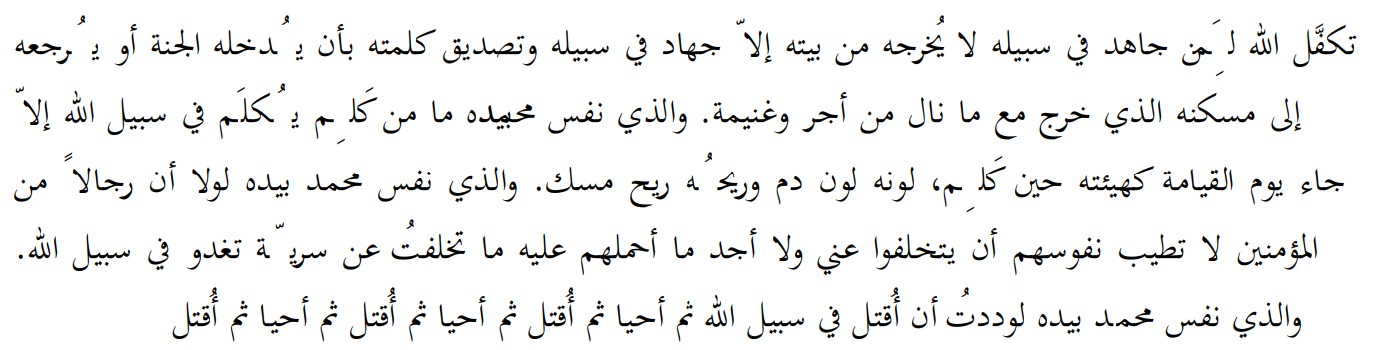
قال رسول الله ﷺ: «ضَمِنَ اللهُ لِمَنْ خَرَجَ فِي سَبِيلِهِ، لَا يُخْرِجُهُ إِلَّا الجِهَادُ فِي سَبِيلِهِ، وَتَصْدِيقُ كَلِمَاتِهِ، أَنْ يُدْخِلَهُ الجَنَّةَ أَوْ يَرُدَّهُ إِلَى مَسْكَنِهِ الَّذِي خَرَجَ مِنْهُ، مَعَ مَا نَالَ مِنْ أَجْرٍ أَوْ غَنِيمَةٍ». وَالَّذِي نَفْسُ مُحَمَّدٍ ﷺ بِيَدِهِ، لَا يُكْلَمُ أَحَدٌ فِي سَبِيلِ اللهِ – وَاللهُ أَعْلَمُ بِمَنْ يُكْلَمُ فِي سَبِيلِهِ – إِلَّا جَاءَ يَوْمَ القِيَامَةِ وَلَوْنُهُ لَوْنُ الدَّمِ، وَرِيحُهُ رِيحُ المِسْكِ. وَالَّذِي نَفْسُ مُحَمَّدٍ ﷺ بِيَدِهِ، لَوْلَا أَنْ يَشُقَّ عَلَى المُؤْمِنِينَ، مَا قَعَدْتُ خِلَافَ سَرِيَّةٍ تَغْزُو فِي سَبِيلِ اللهِ أَبَدًا، وَلَكِنْ لَا أَجِدُ سَعَةً فَأَحْمِلَهُمْ، وَلَا يَجِدُونَ سَعَةً، وَيَشُقُّ عَلَيْهِمْ أَنْ يَتَخَلَّفُوا عَنِّي. وَالَّذِي نَفْسُ مُحَمَّدٍ ﷺ بِيَدِهِ، لَوَدِدْتُ أَنِّي أُقْتَلُ فِي سَبِيلِ اللهِ، ثُمَّ أُحْيَا، ثُمَّ أُقْتَلُ، ثُمَّ أُحْيَا، ثُمَّ أُقْتَلُ، ثُمَّ أُحْيَا، ثُمَّ أُقْتَلُ».
“Allah guarantees security for the one who dies jihad in His way, not leaving his house for any other reason except jihad in His way and believing in His words, that He will enter him into Paradise or return him to his abode from which he left together with what he achieved of reward or booty. By the One in whose hand lies the should of Muhammad, whoever is wounded in the way of Allah will not come on the Day of Judgement except in his form when he was wounded, his colour the colour of blood and his odour the odour of musk. By the one in whose hand lies the soul of Muhammad, were it not that there were men among the believers whose souls are not pleased to stay behind me (when I go) nor do I find that could carry them upon, I would not stay behind any expedition that goes out in the way of Allah in the morning. By the One in whose hand lies the soul of Muhammad, I would love to die in the way of Allah then I am resurrected then killed, then resurrected then killed, then resurrected then killed.”