17.9 لم يُعيّن الشرع شخصًا بعينه للخلافة
17.9 The Shar'a Did Not Designate A Specific Person For The Khilafah
القول بأن الرسول ﷺ عيّن شخصًا بعينه ليكون خليفةً من بعده يخالف نصوص الشرع. وأما القول بأن الرسول ﷺ عيّن أشخاصًا بأعيانهم ليكونوا خلفاء من بعده إلى يوم القيامة فهو أشد مخالفةً لنصوص الإسلام.
The view that the Messenger (saw) designated a specific person to be the Khalifah after him contradicts the Shari’ah texts. And the statement that the Messenger (saw) nominated certain persons to be Khulafaa after him until the Day of Judgement is even more contradictory to the Islamic texts.
أمّا إبطالُ قولِ مَن زعم أنّ الرسولَ ﷺ عيّنَ الخلافةَ لأحدٍ بعدَه، فإنّ ذلك ظاهرٌ من وجوهٍ كثيرة.
As for invalidating (the opinion) that the Messenger (saw) nominated the Khilafah for someone after him, this is apparent in numerous ways:
أولًا: هذا يناقض البيعة، إذ إن تعيين الشخص يعني إعلام المسلمين بمن سيكون الخليفة عليهم، فيصبح الخليفة معلومًا، فلا يبقى حاجة إلى تشريع البيعة، لأن البيعة هي الطريقة لتنصيب الخليفة. وإذا كان قد عُيّن مسبقًا، فلا يبقى حاجة لبيان طريقة تنصيبه، إذ إنه قد تم تعيينه أصلًا. ولا يمكن القول إن البيعة هي بيعة الطاعة للخليفة، لأن الشرع قد بيّن وجوب طاعة الخليفة وأولي الأمر في نصوص كثيرة مستقلة عن نص البيعة. فقد طُلبت الطاعة من المسلمين طلبًا صريحًا، أما البيعة فقد طُلبت من المسلمين في طلب آخر غير معتبر من حيث إنه طاعة فحسب، وإن كان يتضمن معنى الطاعة، بل معتبرًا من حيث إنه عقد على الخلافة. فمعناها في جميع الأحاديث التي ذكرتها ليس الطاعة، بل هو إعطاء الإمارة لمن يُبايَع والاستعداد للخضوع لهذه الإمارة. فجعل البيعة شرطًا لانعقاد الخلافة يناقض تعيين رسول الله ﷺ شخصًا بعينه ليكون خليفة من بعده. ثم إن ألفاظ البيعة التي وردت في الأحاديث الصحيحة وردت بصيغة عامة غير مخصصة، ومطلقة غير مقيدة، لكل أحد؛ ولو كانت تعني البيعة لشخص بعينه لما كانت عامة ومطلقة. وألفاظ الأحاديث هي:
First: This contradicts the pledge (bay’ah) since nominating a person means informing the Muslims as to who will be the Khalifah over them. Hence the Khalifah would be known so there would remain no need for legislating (tashri’) the pledge as the pledge is the method of appointing the Khalifah. So if he has already been appointed in advance, there remains no need to demonstrate the method of appointing him as, in fact, he has already been appointed. Nor can it be said that the pledge is the pledge of obedience to the Khalifah since the Shar’a has enunciated the obedience to the Khalifah and those in charge (ulu al-amr) in many other texts distinct from the text of the pledge. Obedience has been explicitly requested from Muslims; as for the pledge, it has been requested from Muslims in other request(s) not in consideration as being (merely) obedience, though it does include the meaning of obedience, but in consideration as being a contract for the Khilafah. Its meaning in all the ahadith that mentioned it is not obedience, rather it is about giving leadership to the one who is pledged and preparing to submit to this leadership. So making the pledge a condition for appointing the Khilafah contradicts the Messenger (saw) nominating a specific person to be Khalifah after him. Moreover, the words of the pledge which came in the correct (Saheeh) ahadith came in a general manner (‘aam) without specification (takhsees), and unrestricted (mutlaq) without any restriction (taqyeed), for anyone. Were they to mean the pledge for a specific person they would not have been general and unrestricted. The word(s) of the ahadith are:
مَنْ مَاتَ وَلَيْسَ فِي عُنُقِهِ بَيْعَةٌ
“He who dies without a pledge on his neck,”
"مَنْ بَايَعَ إِمَامًا"
“Whosoever pledges an Imam,”
و
And
رَجُلٌ يُبَايِعُ إِمَامًا
“A man who pledges an Imam.”
وإن القول بأن الرسول ﷺ عيّن شخصًا بعينه ليكون خليفة من بعده يناقض ويبطل عموم البيعة وإطلاقها، ولذلك لا يصح أن يقال إن هذا يعني أن البيعة هي عين طريقة نصب الخليفة، بينما يكون نصب الخليفة منفصلًا عن البيعة، ولهذا يُنصب الخليفة أولًا ثم تُعطى له البيعة؛ فلا ينبغي أن يُقال ذلك، لأن البيعة هي طريقة نصب الخليفة، وهذا لا يعني أنها عين نصبه. ولا ينبغي أن يُقال إنه يجب أولًا نصب الخليفة وإقرار نصبه قبل إعطائه البيعة، لأن ذلك يعني أن هناك طريقة أخرى لنصب الخليفة، وأن البيعة لا تكون إلا للطاعة فقط، بينما الأحاديث الواردة في البيعة كلها تدل على أنها طريقة نصب الخليفة، وليس هناك طريق غيرها. فلينظر في قوله ﷺ:
The opinion that the Messenger (saw) designated a specific person to become Khalifah after him contradicts and invalidates the generality and unrestricted nature of the pledge. Therefore, it cannot be said that this means that the ba’yah is the very way of appointing the Khalifah while the appointment of the Khalifah is separate to the ba’yah, this is why the Khalifah is appointed first & then the ba’yah is given to him; one should not say this because the ba’yah is the method of appointing the Khalifah and this does not mean that it is exactly the same as his appointment. Nor should one say that it is compulsory to first appoint the Khalifah and acknowledge his appointment before giving him the ba’yah as this would mean that there is another method for appointing the Khalifah such that the ba’yah is merely for his obedience, whereas the ahadith about the ba’yah all indicate that it is the method to appoint the Khalifah and there is no other way. Consider his (saw) statement:
"مَنْ مَاتَ وَلَيْسَ فِي عُنُقِهِ بَيْعَةٌ"
“Whoever dies without a pledge on his neck”;
من مات ولم يبايع إماماً فقد مات ميتةً جاهليةً، وهذا الحديث واضح المعنى في أنّ المقصود منه: من مات ولم يبايع إماماً، ولا يعني ذلك بأي وجه من الوجوه: من مات ولم يطع إماماً. وهذا يدل على أنّ المراد في هذا الحديث هو طريقة تنصيب الخليفة، لا مجرد الطاعة. وتأمل أيضاً قوله ﷺ:
It is quite explicit in meaning that whoever dies without appointing his Imam via the pledge and it does not mean in any way whoever dies without obeying an Imam. This indicates that in this hadith the Prophet means the method of appointing the Khalifah and does not mean mere obedience. Also consider his (saw) statement:
"إِذَا بُويِعَ لِخَلِيفَتَيْنِ فَاقْتُلُوا الْآخِرَ مِنْهُمَا"
“When the pledge is given to two Khalifahs, kill the latter”;
وهذا صريحٌ في أنّه إذا بُويع خليفتان فاقتلوا الآخر منهما. وكذلك جميع الأحاديث عن النبي ﷺ صريحةٌ في أنّها طريقةُ تنصيب الخليفة. وأحاديثُ النبي ﷺ صريحةٌ في أنّها لا تعني مجرّدَ الطاعة أو الطاعةَ المطلقة (المُطلَقة)، بل تعني اتّباعَ من نُصِب خليفةً، مع بيان أنّ هذه هي طريقة تنصيب الخليفة. وأكثر من ذلك، ليس فيها حديثٌ واحدٌ صحيحٌ، روايةً أو معنًى، يدلّ على طريقةٍ لتنصيب الخليفة غيرِ البيعة.
This is explicit that if two Khalifahs are appointed, kill the later of them. Likewise all ahadith of the Prophet are explicit that it is the method of appointing the Khalifah. The ahadith of the Prophet are explicit in not meaning mere obedience or unrestricted (mutlaq) obedience; rather, they mean following the one appointed as the Khalifah with their meaning that this is the method of appointing the Khalifah. Further, there is not even one authenticated hadith, whether in narration or meaning, which demonstrates a method of appointing the Khalifah other than the ba’yah.
ثانیًا: رُوِيَت أحاديثُ عن رسولِ اللهِ ﷺ تدلُّ على أنه سيقعُ بين الناسِ خلافٌ ونزاعٌ حولَ الخلافةِ وتنافسٌ عليها. ولو كان هناك نصٌّ من رسولِ اللهِ ﷺ بشأنِ تعيينِ شخصٍ بعينه، لما نشأ خلافٌ في وجودِ ذلك النصِّ، أو لبيّنَ رسولُ اللهِ ﷺ أن الناسَ سيتنازعون مع ذلك الشخصِ. والنصوصُ جاءت تقولُ إن الناسَ سيتنازعون فيما بينهم، وقد بيّنتْ أيضًا طريقةَ حلِّ هذا النزاعِ وتسويةِ مسألةِ الخلافة. فقد روى مسلمٌ في صحيحه: حدثني وهبُ بنُ بقيّةَ الواسطيُّ، حدثنا خالدُ بنُ عبدِ اللهِ الجُزَيْرِيُّ، عن أبي نضرةَ، عن أبي سعيدٍ الخدريِّ، قال: قال رسولُ اللهِ ﷺ:
Second: Ahadith have been narrated from the Messenger (saw) indicating that there will be disputes and contentions among people about the Khilafah and competition over it. If there was a text from the Messenger (saw) concerning the appointment of a (specific) person, there would not arise a dispute in the presence of that text or the Messenger (saw) would state that people would dispute with that person. Whereas the texts came saying that people would dispute between themselves and it also clarified the method to resolve this dispute and settle the issue of the Khilafah. Muslim narrated in his Saheeh: Wahab bin Baqiyyat al-Wasiti narrated to me that Khalid bin Abdullah al-Juzairi told us from Abu Nadhra from Abu Saeed al-Khudri who said: The Messenger of Allah (saw) said:
«إِذَا بُويِعَ لِخَلِيفَتَيْنِ، فَاقْتُلُوا الآخِرَ مِنْهُمَا».
“If the pledge is given to two Khalifahs, kill the latter of them.”
قال مسلم أيضاً في صحيحه: حدثني زهير بن حرب وإسحاق بن إبراهيم، واللفظ لإسحاق، قال: أخبرنا، وقال زهير: حدثنا جرير، عن الأعمش، عن زيد بن وهب، عن عبد الرحمن بن عبد ربّ الكعبة، قال: دخلتُ المسجد فإذا عبد الله بن عمرو بن العاص ﷺ جالسٌ في ظلّ الكعبة، والناس مجتمعون عليه، فجلستُ إليه، فقال: كنا مع رسول الله ﷺ في سفر، فنزلنا منزلاً، فنادى منادي رسول الله ﷺ: الصلاةَ جامعة، فاجتمعنا إلى رسول الله ﷺ، فقال:
Muslim also said in his Saheeh: Zuhayr bin Harb and Ishaq bin Ibrahim narrated to me, with Ishaq saying we were informed and Zuhayr said it was narrated to us by Jareer, from Al-‘Amash from Zaid bin Wahhab from Abdurrahman bin Abdurrabb al-Ka’aba who said: I entered the mosque and Abdullah bin ‘Amru bin al-‘Aas was seated in the shade of the Ka’aba with people gathered around him. So I joined them and sat with him. He said: We were with the Messenger of Allah (saw) in a voyage and we stopped at an encampment when an announcer (mu’adhin) of the Messenger of Allah (saw) announced the collective prayer. So we all gathered before the Messenger of Allah (saw) who said:

ما من نبيٍّ قبلي إلا كان حقًّا عليه أن يدلَّ أمَّته على خيرِ ما يعلمه لهم، وأن يحذِّرهم من شرِّ ما يعلمه لهم، حتى قال: مَن بايع إمامًا فأعطاه صفقةَ يده وثمرةَ فؤاده، فليُطِعْه ما استطاع، فإن جاء آخرُ ينازعه، فاضربوا عنقَ الآخر.
“There was no Prophet before me except that it was obligatory upon him to guide his Ummah to the best that he knew for them and warn them of the worst he knew for them until he said: Whoever pledged an Imam, giving him the clasp of his hand and the fruit of his heart, should obey him as much as he can. If another comes to dispute with him, strike the neck of the other person.”
رواه مسلم أيضاً في صحيحه: حدثنا محمد بن بشار، قال: حدثنا محمد بن جعفر، قال: حدثنا شعبة، عن فرات القزاز، عن أبي حازم، قال: صحبتُ أبا هريرة خمس سنين، فسمعته يحدّث عن النبي ﷺ أنه قال:
Muslim also narrated in his Saheeh: Muhammad bin Bashar narrated to us that Muhammad bin Ja’far narrated to us that Shu’ba narrated to us from Furrat al-Qazzaz from Abu Hazm who said: I remained with Abu Hurayra for five years and heard him narrate from the Prophet (saw) who said:
كان بنو إسرائيل تسوسهم الأنبياء، كلما هلك نبيٌّ خلفه نبيٌّ، وإنه لا نبيَّ بعدي، وسيكون خلفاءُ فيكثرون. قالوا: فما تأمرنا؟ قال: فُوا ببيعة الأول فالأول، وأعطوهم حقَّهم، فإن الله سائلهم عما استرعاهم.
“The children of Israel had Prophets taking care of their affairs as politicians (tasusuhum). Whenever one Prophet died, another followed him. However, there will be no Prophet after me but there will be Khulafaa who will be many. They said: What do you command us? He said: Fulfil the pledge one after the other.”
رَوَى مُسْلِمٌ فِي صَحِيحِهِ: حَدَّثَنَا عُثْمَانُ بْنُ أَبِي شَيْبَةَ، حَدَّثَهُمْ يُونُسُ بْنُ أَبِي يَعْفُورٍ، عَنْ أَبِيهِ، عَنْ عَرْفَجَةَ، قَالَ: سَمِعْتُ رَسُولَ اللَّهِ ﷺ يَقُولُ:
Muslim narrated in his Saheeh: Uthman bin Abu Shayba narrated to us that Yunus bin Abu Ya’fur narrated to them from his father from Arfaja who said he heard the Messenger of Allah (saw) saying:
«مَنْ وَجَدْتُمُوهُ قَدْ أُجْمِعَ أَمْرُكُمْ عَلَى رَجُلٍ وَاحِدٍ، يُرِيدُ أَنْ يَشُقَّ عَصَاكُمْ أَوْ يُفَرِّقَ جَمَاعَتَكُمْ، فَاقْتُلُوهُ».
“Whoever finds when all your affairs have been united under one man, intending to incite rebellion or divide your unity, kill him.”
هذا يعني أنّ الخلافة حقٌّ لجميع المسلمين بحيث يمكن لأيّ واحدٍ منهم أن ينازع فيها. وهذا يناقض القولَ بأنّ الرسولَ ﷺ عيّنَ شخصًا بعينه ليكون خليفةً من بعده.
This means that the Khilafah is the right of all Muslims such that anyone can contend for it. This contradicts the (saying that) the Messenger (saw) nominated a specific person to be the Khalifah after him.
الثالث: الأحاديث التي وردت بلفظ الإمام دالاً على الخليفة وردت بهذا اللفظ على صورة النكرة، وإذا وردت على صورة المعرفة فإما أن ترد معرفة بـ"أل" للجنس أو مضافة إلى اسم جمع. وفيما ورد معرفاً بـ"أل" فإنه كان "أل" الجنسية بدلالة سياق الكلام. قال رسول الله ﷺ:
Third: The ahadith which came with the word Imam denoting the Khalifah came with this word in an unspecified form; and when it came in an specified one, it either came specified with “the” (“al”) of the species or related to a collective noun. In the possibilities which came specified with “al”, it was the “al” of species by evidence of the sentence. The Messenger said:
"مَنْ بَايَعَ إِمَامًا"،
“Whoever pledges an Imam”,
"…قَامَ فِي وَجْهِ إِمَامٍ ظَالِمٍ"
“…stood against an unjust Imam”,
سَيَكُونُ بَعْدِي أَئِمَّةٌ
“there will be Imams after me.”
وَقَالَ:
And he said:
"الإمامُ راعٍ على الناسِ، وهو مسؤولٌ عن رعيتِه"
“The Imam is the one who is a guardian (ra’i) over the people and he is responsible for his citizens”,
إِنَّمَا الْإِمَامُ جُنَّةٌ يُقَاتَلُ مِنْ وَرَائِهِ وَيُتَّقَى بِهِ
“Verily the Imam is a shield from behind whom they fight and by whom they are protected”
وَقَالَ:
and he said:
"…إلى إمام المسلمين"،
“…to the Imam of the Muslims”,
"خَيْرُ أَئِمَّتِكُمْ"،
“The best of your Imams”,
"…شِرارُ أئمَّتِكُم."
“…the worst of your Imams.”
كل هذا يدل على أن الرسول ﷺ ترك مسألة من يكون الخليفة من بعده مُبهمة غير مُعيَّنة لشخص بعينه. وهذا صريح في دلالته على أن الرسول ﷺ لم يُعيِّن شخصًا معينًا للخلافة، بل تركها حقًّا لجميع المسلمين. وإذا أضفتَ إلى ذلك أن بعض النصوص وردت بصيغة الجمع (جمع)، صار هذا نصًّا واضحًا في نفي أن يكون الإمام شخصًا معينًا.
All this indicates that the Messenger (saw) left the issue concerning who would be the Khalifah after him unspecified without specifying him. This is explicit in its indication that the Messenger (saw) did not designate a specific person for the Khilafah but rather left it as a right for all Muslims. When you add to this that some texts came with the collective (jam’u) language, this becomes a clear text in negating the Imam being a specific person.
الرابع: اختلف الصحابة (رض) في زمانهم في الأشخاص الذين يكونون خليفةً من بينهم. وهذا الاختلاف بين الأشخاص دليلٌ على أن الرسول (ﷺ) لم يُعيّن شخصًا معينًا للخلافة. ومن بين أولئك الذين اختلفوا أناسٌ يُقال إن الرسول (ﷺ) نصّ على خلافتهم، وهم: أبو بكر (رض) وعلي (رض). ومع اختلافهم، لم يحتجّ أيٌّ منهم بأن هناك نصًّا من الرسول (ﷺ) بأن الخلافة له، ولم يحتجّ أحدٌ من الصحابة (رض) بأن هناك نصًّا لأشخاصٍ معينين بعامة. ولو كان هناك نصٌّ لاحتجّوا به عليهم؛ فعدم احتجاجهم بأي نصٍّ يعني أنه لا يوجد نصٌّ لشخصٍ معيّن للخلافة. ولا ينبغي لأحدٍ أن يقول إن هناك نصًّا عُلم بعدهم ولكنه لم يبلغهم، لأننا نأخذ ديننا عن الصحابة (رض)، فهم الذين نقلوا إلينا القرآن، وروَوْا لنا الحديث. فإن لم يكن هناك نصٌّ أو أيُّ نصٍّ عن الصحابة (رض)، فإنه لا يُعتدّ به بأي وجه. نأخذ ما جاء عنهم، ونطرح ما لم يأتِ عنهم. وفيما يتعلق بمسألة النص على خليفةٍ بعد الرسول (ﷺ)، نجد أن الصحابة (رض) جميعًا دون استثناء، ومنهم أبو بكر (رض) وعلي (رض)، قد اتفقوا على عدم وجود نصٍّ لشخصٍ معيّن للخلافة، لعدم ذكرهم لذلك مع وجود الحاجة إلى الكلام وضرورة ذكر النص لو كان موجودًا. وهذا يدل على بطلان أن يكون الرسول (ﷺ) قد عيّن شخصًا للخلافة. ولا ينبغي أن يقال إن عدم ذكر النص كان احتياطًا للحفاظ على وحدة المسلمين، لأن هذا يعني كتمان حكمٍ من أحكام الله وعدم تبليغه في الوقت الذي كانت الحاجة إليه ملحّة، لا سيما في أمرٍ بالغ الأهمية للمسلمين. لا يُتصوَّر أن يصدر هذا الإخفاء في دين الله عن الصحابة رضي الله عنهم، أصحابِ رسول الله ﷺ.
Fourth: The Sahabah (ra) differed in their time about the persons to be the Khalifah among them. This difference among persons is evidence that the Messenger (saw) did not designate a specific person for the Khilafah. Among the very people who differed are those of whom it is said that the Messenger enunciated upon their Khilafah, namely: Abu Bakr (ra) and Ali (ra). Despite their differences, none of them ever argued that there was a text from the Messenger (saw) that the Khilafah is for him nor did any of the Sahabah (ra) argue that there was a text for certain people in general. Were there any text, they would have argued with them; so their failure to argue using any text means that there is no text for a specific person for the Khilafah. Nor should anyone say that there is a text which was known after them but it did not reach them, because we take our deen from the Sahabah (ra). They are the ones who conveyed the Qur’an, and narrated the hadith, to us. So if there is no text or any text from the Sahabah (ra), then it is not recognised in any way. We take whatever came from them while throwing away whatever did not come from them. In relation to the issue of a text for a Khalifah after the Messenger (saw), we find that all the Sahabah (ra) without exception including Abu Bakr (ra) and Ali (ra) agreed upon the absence of any text for a specific person for the Khilafah due to their failure to mention this despite the need for speaking and the necessity for mentioning the text if it existed. This indicates the invalidity of the Messenger (saw) designating a person for the Khilafah. Nor should one say that the failure to mention the text was due to the precaution to preserve the unity of the Muslims for this means hiding a rule of Allah and not delivering it at the very time it was urgently required, particularly in such an important matter for the Muslims. This hiding in the deen of Allah is not possible to come from the Sahabah (ra) of the Messenger of Allah (saw).
«إِنْ أَسْتَخْلِفْ فَقَدِ اسْتَخْلَفَ مَنْ هُوَ خَيْرٌ مِنِّي، يَعْنِي أَبَا بَكْرٍ، وَإِنْ لَا أَسْتَخْلِفْ فَقَدْ لَمْ يَسْتَخْلِفْ مَنْ هُوَ خَيْرٌ مِنِّي، يَعْنِي رَسُولَ اللهِ ﷺ.»
“If I appoint a Khilafah, verily one better than me did appoint a Khalifah i.e. Abu Bakr. And if I do not, then one better than me did not i.e. the Messenger of Allah (saw).”
رَوَى مُسْلِمٌ عَنِ ابْنِ عُمَرَ أَنَّ عُمَرَ بْنَ الْخَطَّابِ (رضي الله عنه) قَالَ:
Muslim narrated from bin Umar that Umar bin al-Khattab (ra) said:
إِنَّ اللَّهَ عَزَّ وَجَلَّ سَيَحْفَظُ الدِّينَ. إِنْ لَمْ أُعَيِّنْ خَلِيفَةً، فَإِنَّ رَسُولَ اللَّهِ ﷺ لَمْ يُعَيِّنْ؛ وَإِنْ عَيَّنْتُ، فَإِنَّ أَبَا بَكْرٍ قَدْ عَيَّنَ.
“Verily Allah ‘azza wa jall will preserve the deen. If I do not appoint a Khalifah, verily the Messenger of Allah (saw) did not appoint; and if I do appoint, verily Abu Bakr did appoint.”
هذا نصٌّ صريحٌ في أنَّ رسولَ اللهِ ﷺ لم يستخلِفْ خليفةً. ولا يصحُّ أن يُقالَ: إنَّ هذا رأيُ عمرَ، فإنَّ الصحابيَّ إذا قال: «فعلَ رسولُ اللهِ ﷺ كذا، أو لم يفعلْ كذا، أو كنَّا في زمنِ رسولِ اللهِ ﷺ على كذا، أو كان في زمنِه كذا»، فهذا حديثٌ يُحتجُّ به، لا مجرَّدُ رأيٍ للصحابيِّ. ثم إنَّ عمرَ قال هذا بمسمعٍ ومرأًى من الصحابةِ (رضي الله عنهم)، وكان عليٌّ (رضي الله عنه) حاضرًا، وقد بلغه هذا القولُ فلم يعترضْ عليه، وهذا يدلُّ على اتفاقِهم على ما رواه عمرُ (رضي الله عنه).
This is a clear text that the Messenger (saw) did not appoint a Khalifah. Nor should one say that this is Umar’s opinion for when a companion says, ‘The Messenger (saw) did this or did not do this or we were in his time like this or there was in his time such and such’, this is a hadith used as evidence not merely a companion’s view. Moreover, Umar said this within the hearing and sight of the Sahabah (ra), and Ali (ra) was present and this statement reached him and he did not oppose it, which indicates their agreement upon what Umar (ra) narrated.
هذا كله في ظل عدم وجود نص معيّن يدل على تعيين شخص بعينه للخلافة. أما النصوص التي يأتي بها القائلون بوجود نصوص تعيّن شخصاً معيناً، فمن بينها ما أُورد للدلالة على أن الرسول ﷺ عيّن أبا بكر (رضي الله عنه) خليفةً من بعده، ومنها ما أُورد للدلالة على أنه ﷺ عيّن علياً (رضي الله عنه) خليفةً من بعده. ويجب علينا عرضها وبيان مضمونها.
This is all with respect to the absence of any specific text designating a specific person for the Khilafah. As for the texts brought by those who say that there are texts designating a specific person, among these texts are those brought to indicate that the Messenger appointed Abu Bakr (ra) to become Khalifah after him whereas others are brought to indicate that he appointed Ali (ra) as the Khalifah after him. We must present them and explain their contents.
أما النصوص التي يأتي بها القائلون بأن الرسول ﷺ استخلف أبا بكر رضي الله عنه، فهي على قسمين: قسم يثني فيه الرسول ﷺ على أبي بكر رضي الله عنه، وليس فيه ما يدل على أن الرسول ﷺ استخلفه. والقسم الآخر ما يستنبط منه بعضهم بطريق الاستدلال أن الرسول ﷺ استخلف أبا بكر رضي الله عنه، ويستنبط آخرون منه أنه نصّ على أبي بكر رضي الله عنه. وسنعرض نموذجهم بعرض بعض تلك النصوص، مع التنبيه إلى أن أياً منها لا يتجاوز معنى الثناء.
As for the texts brought by those who say the Messenger (saw) appointed Abu Bakr (ra), they are divided into two: One portion in which the Messenger (saw) praises Abu Bakr (ra) wherein there is nothing to indicate that the Messenger (saw) appointed him. The other portion is one wherein some deduce by deduction that the Messenger (saw) appointed Abu Bakr (ra) while others deduce that he nominated Abu Bakr (ra). We will present their model by presenting some of them, noting that none of them exceed the meaning of praise.
إِنَّ أَمَنَّ النَّاسِ عَلَيَّ فِي صُحْبَتِهِ وَمَالِهِ أَبُو بَكْرٍ، وَلَوْ كُنْتُ مُتَّخِذًا خَلِيلًا غَيْرَ رَبِّي لَاتَّخَذْتُ أَبَا بَكْرٍ خَلِيلًا، وَلَكِنْ أُخُوَّةُ الْإِسْلَامِ وَمَحَبَّتُهُ، لَا يَبْقَى فِي الْمَسْجِدِ بَابٌ إِلَّا سُدَّ إِلَّا بَابُ أَبِي بَكْرٍ ﷺ.
“Verily the most gracious of people to me in his companionship and wealth is Abu Bakr. Were I to take an intimate friend (khaleel) other than my Lord, I would have taken Abu Bakr (ra) but instead there is the brotherhood of Islam and its love. There should not remain in the mosque any door but that it should be closed except for the door of Abu Bakr.”
مسلم نقل هذا الحديث أيضًا، لكن بلفظ مختلف، وإن كان قريبًا من هذه الألفاظ. وليس في هذا الحديث ما يدل على أن النبي ﷺ عيّن أبا بكر رضي الله عنه خليفةً. كل ما فيه هو الثناء على أبي بكر رضي الله عنه من رسول الله ﷺ، وقد أثنى النبي ﷺ على كثير من الصحابة بأسمائهم. وقد جاءت أحاديث فيها الثناء على عمر رضي الله عنه، وعثمان رضي الله عنه، وعلي رضي الله عنه، وسعد بن أبي وقاص رضي الله عنه، وطلحة رضي الله عنه، والزبير رضي الله عنه، وأبي عبيدة بن الجراح رضي الله عنه، والحسن رضي الله عنه والحسين رضي الله عنه، وزيد بن حارثة رضي الله عنه، وأسامة بن زيد رضي الله عنه، وعبد الله بن جعفر رضي الله عنه، وخديجة رضي الله عنها، وعائشة رضي الله عنها، وفاطمة بنت النبي ﷺ رضي الله عنها، وأم سلمة رضي الله عنها، وبلال رضي الله عنه وغيرهم. والثناء وحده لا يدل بأي وجه من الوجوه على التعيين للخلافة.
Muslim also narrated this hadith but with different wording, although similar to these ones. There is nothing in this hadith to make a person say that he appointed Abu Bakr (ra) as Khalifah. All that it contains is praise for Abu Bakr (ra) from the Messenger (saw), and the Messenger (saw) praised many companions by name. There have come ahadith with praise for Umar (ra), Uthman (ra), Ali (ra), Sa’d bin Abu Waqqas (ra), Talha (ra), Az-Zubayr (ra), Abu ‘Ubaydah bin al Jarrah (ra), Al-Hassan (ra) and Al-Hussein (ra), Zayd bin Haritha (ra), Usama bin Zayd (ra), Abdullah bin Ja’far (ra), Khadija (ra), Aisha (ra), Fatima (ra) daughter of the Prophet (saw), Umm Salamah (ra), Bilal (ra) and others. Praise by itself does not in any way whatsoever indicate appointment to be Khalifah.
أما الأحاديث التي استدل بها بعضهم على خلافة أبي بكر رضي الله عنه، فهي أربعة أحاديث نعرضها ونوضح كل ما تتضمنه. وهذه الأحاديث هي:
As for the ahadith from which some deduced the Khilafah of Abu Bakr (ra), they are four ahadith which we will present and clarify all that they contain. These ahadith are:
أولاً: رَوَى البخاريُّ عن القاسمِ بنِ محمدٍ رضي الله عنه أنه قال:
First: Al-Bukhari narrated from Al-Qasim bin Muhammad (ra) who said:
قالت عائشة: وا رأساه! فقال رسول الله ﷺ: «لو كان ذلك وأنا حي فاستغفرت لك ودعوت لك». قالت عائشة: «وا ثكلياه! والله إني لأظنك تحب موتي، ولو كان ذلك لظللت آخر يومك معرّسًا ببعض أزواجك». فقال النبي ﷺ: «بل أنا وا رأساه، لقد هممت - أو أردت - أن أرسل إلى أبي بكر وابنه فأعهد أن يقول القائلون، أو يتمنى المتمنون، ثم قلت: يأبى الله ذلك والمؤمنون - أو يدفع الله ويأبى المؤمنون».
“Aisha said: O my head so the Messenger of Allah (saw) said: If it were to happen and I were alive, I would ask for you to be forgiven and pray for you. Aisha said: That is a serious matter. By Allah, I believe that you would like my death so that it if happened, you would spend the rest of your days wedded happily with some of your wives. The Prophet (saw) said: Rather it is my head which is heavy. I intended or planned to send for Abu Bakr and his son so as to give him a promise (‘ahd) so that no person will speak or a wisher wish. Then I said that Allah will reject and the believers prevent that or Allah will prevent and the believers reject.”
رواه مسلم عن عائشة رضي الله عنها بهذا اللفظ عنها: قال لي رسول الله ﷺ في مرضه:
Muslim narrated this hadith from Aisha (ra) in this wording from her: The Messenger of Allah (saw) said to me in his illness:
قال النبي ﷺ: «ادعي لي أباك أبا بكر وأخاك حتى أكتب كتابًا، فإني أخاف أن يتمنى متمنٍّ، ويقول قائل: أنا أولى، ويأبى الله والمؤمنون إلا أبا بكر».
“Call for me your father, Abu Bakr, and your brother so that I write a book for I fear that a wisher will wish or a speaker say: I am better (or take precedence). But Allah will reject, and so the believers, except for Abu Bakr.”
ثانياً: روى البخاري عن محمد بن جبير بن مطعم عن أبيه قال: ﷺ
Secondly: Al-Bukhari narrated from Muhammad bin Jubayr bin Mut’im from his father who said:
جاءت امرأةٌ إلى النبيِّ ﷺ فكلَّمته في أمرٍ، فأمرها أن ترجِعَ إليه. قالت: يا رسولَ اللهِ، أرأيتَ إن جئتُ ولم أجِدْكَ، كأنَّها تعني الموتَ، فقال: إن لم تجديني فأتي أبا بكرٍ.
“A woman came to the Prophet (saw) and spoke to him about something; and he commanded her to return to him. She said: O Messenger of Allah, what if I came and did not find you—as if she meant death—so he said: If you do not find me, then go to Abu Bakr.”
رَوَى مُسْلِمٌ هٰذَا الْحَدِيثَ عَنْ مُحَمَّدِ بْنِ جُبَيْرِ بْنِ مُطْعِمٍ عَنْ أَبِيهِ بِلَفْظِهِ.
Muslim narrated this hadith from Muhammad bin Jubayr bin Mut’im from his father in the words:
جاءت امرأةٌ إلى رسول الله ﷺ فسألته حاجةً، فأمرها أن ترجع إليه، فقالت: يا رسول الله، أرأيتَ إن جئتُ ولم أجدك؟ — قال: كأنها تعني الموت — فقال: إن لم تجديني فائتي أبا بكر.
“A woman asked the Messenger of Allah (saw) something and he commanded her to return to him. She said: O Messenger of Allah, what if I come and do not find you—My father said: As if she meant death—so he said: If you do not find me, then go to Abu Bakr.”
ثالثًا: روى البخاريّ عن عائشةَ (رضي الله عنها)، أمِّ المؤمنين،
Thirdly: Al-Bukhari narrated from Aisha (ra), the mother of the believers,
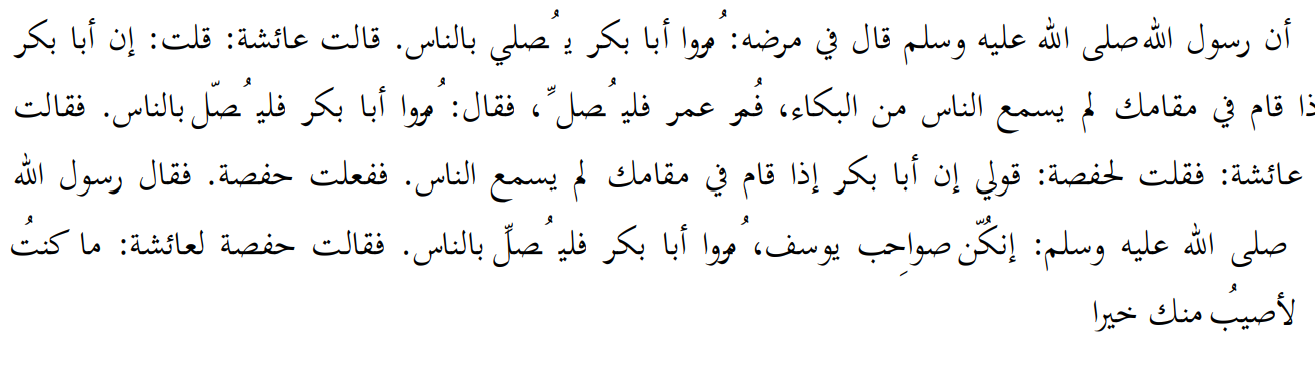
أنَّ رسولَ اللهِ ﷺ قالَ لي في مرضِه: مُرِي أبا بكرٍ أن يُصلِّيَ بالناسِ. قالتْ عائشةُ: قلتُ: إنَّ أبا بكرٍ رجلٌ رقيقٌ، إذا قامَ مقامَكَ لم يُسمِعِ الناسَ من البكاءِ، فمُرْ عمرَ فليُصلِّ بالناسِ. قال: مُرِي أبا بكرٍ أن يُصلِّيَ بالناسِ. قالتْ عائشةُ: فقلتُ لحفصةَ: قولي له: إنَّ أبا بكرٍ إذا قامَ مقامَكَ لم يُسمِعِ الناسَ من البكاءِ، فمُرْ عمرَ فليُصلِّ بالناسِ، ففعلتْ. فقالَ رسولُ اللهِ ﷺ: إنَّكُنَّ لأنتنَّ صواحبُ يوسفَ، مُرُوا أبا بكرٍ فليُصلِّ بالناسِ. فقالتْ حفصةُ لعائشةَ: ما كنتُ لأصيبَ منكِ خيرًا أبدًا!
“That the Messenger of Allah (saw) told me during his illness: Command Abu Bakr to lead the people in prayer. Aisha said: I said: When Abu Bakr stands in your place, people do not hear him for his crying so command Umar to lead prayers. He said: Command Abu Bakr to lead people in prayer. Aisha said: I said to Hafsa: Say that when Abu Bakr stands in your place, the people do not hear, and she did that. The Messenger of Allah (saw) said: You are like the companions of Yusuf. Command Abu Bakr to lead the people in prayer. Hafsa said to Aisha: I will never achieve any good through you!”
رابعًا: رَوَى مُسْلِمٌ عَنِ ابْنِ أَبِي مُلَيْكَةَ أَنَّهُ قَالَ:
Fourthly: Muslim narrated from bin Abu Mulkiyya who said:

سمعتُ عائشةَ تُسأل: مَن كان رسولُ اللهِ ﷺ يستخلفُ بعده لو استخلف؟ قالت: أبو بكر. قيل لها: ثم مَن بعد أبي بكر؟ قالت: عمر. قيل لها: ثم مَن بعد عمر؟ قالت: أبو عبيدةَ بن الجراح، ثم وقفت عند ذلك.
“I heard Aisha being asked: Whom would the Messenger of Allah (saw) have appointed as Khalifah after him had he so appointed? She said: Abu Bakr. She was asked: Then whom after Abu Bakr? She said: Umar. She was then asked: Then whom after Umar? She said: Abu ‘Ubaydah bin al-Jarrah, and she stopped at that.”
لا تصلح هذه الأحاديث كدليل على أن الرسول ﷺ عيّن أبا بكر (رضي الله عنه) خليفةً. ويُرَدّ الحديث الأول لسببين: الأول أن النبي ﷺ قال:
All these ahadith are not suitable evidence for the Messenger (saw) appointing Abu Bakr (ra) as Khalifah. The first hadith is rejected for two reasons: The first is that the Messenger (saw) said:
«أَرَدْتُ أَوْ نَوَيْتُ»
“I wished or intended”
لكنه لم يفعل ذلك، فلا يكون هذا دليلًا. فالدليل هو قول الرسول ﷺ أو فعله أو تقريره، وما عدا ذلك لا يُعتبر دليلًا شرعيًا. ثانيًا، عائشة (رضي الله عنها) ابنة أبي بكر، فلو كان هذا الحديث موجودًا لأخبرت به أبا بكر (رضي الله عنه). ثم كان سيحتج به حين ذهب إلى السقيفة يجادل الأنصار لما اجتمعوا لمبايعة خليفة منهم. ولذلك فهذا الحديث مردود، ولا يصلح أن يكون دليلًا على تعيين أبي بكر (رضي الله عنه) خليفة.
But he did not do so, so this is not an evidence. For the evidence is the Messenger’s (saw) saying, action or silent consent; anything other than these is not considered Shari’ah evidence. Secondly, Aisha (ra) is Abu Bakr’s daughter so were this hadith present she would have informed Abu Bakr (ra). Then he would have argued with it when he went to the courtyard (saqeefa) to contend with the Ansar when they gathered to pledge allegiance to a Khalifah amongst them. Therefore this hadith is rejected (mardud) and is unsuitable to be an evidence for the appointment of Abu Bakr (ra) as Khalifah.
أما الحديث الثاني فلا يدل على تعيين أبي بكر (رضي الله عنه) خليفة، لأن المرأة قالت: «فإن لم أجدك»، فيصح أن يكون معناه أنها لم تجده لغيابه في حرب أو أمر آخر، وليس فيه ما يدل على أنها أرادت بقولها «فإن لم أجدك» أنك قد مت. أما قوله في الحديث «كأنها تعني الموت» فهو من كلام جبير وفهمه، فأمر الرسول ﷺ لها بأن تأتي أبا بكر (رضي الله عنه) إن جاءت ولم تجده ليس دليلاً على تعيين أبي بكر (رضي الله عنه) خليفة بعد رسول الله ﷺ. ولو سلمنا أن فهمها هو الموت، فإن هذه الألفاظ لا تدل مع ذلك على تعيين أبي بكر خليفة بعده ﷺ. وأما الحديث الثالث فهو تقديم في الصلاة فقط، ولا يدل على شيء غيرها. والتقديم في الصلاة لا يعني التقديم في الحكم والولاية، فليس كل من يصلح أن يكون إماماً في الصلاة يصلح أن يكون حاكماً. ثم إن النص خاص بالصلاة فلا يتناول غيرها، ولا يجوز أن يُحمل على غيرها لخصوصية النص. وأما قولهم: «رضيه رسول الله ﷺ في أمر الدين، أفلا نرضاه في أمر الدنيا»، فهذا فهمٌ منهم، وهو فهم خاطئ، لأن بين الصلاة والحكم فرقاً كبيراً.
As for the second hadith, it does not indicate the appointment of Abu Bakr (ra) as Khalifah because the woman said: “If I did not find you”; so it is correct that she failed to find him due to his absence in a war or any other matter. There is nothing in it to indicate that she meant by her words “If I did not find you” that you had died. The words which came in the hadith “As if she meant death” are the words of Jubayr and his understanding. So the Messenger’s command for her to go to Abu Bakr (ra) if she came and did not find him is no proof for the appointment of Abu Bakr (ra) as Khalifah after the Messenger (saw). Even if we were compelled to take her understanding to mean death, these words still would not designate Abu Bakr as Khalifah after him (saw). As for the third hadith, this is the appointment over prayer and nothing else. Appointment over prayer does not mean appointment in authority (hukm). As for their statement: “The Messenger of Allah was pleased with him in a matter of the deen, so should we not be pleased with him in a matter of the world (dunya)”; this is their understanding, and it is erroneous because there is a large difference between prayer and ruling. Not all who are suitable to become a leader (Imam) in prayer are suitable to be a leader in ruling. Moreover, the text is specific to prayer so it does not encompass other things, nor should it be taken to mean other things due to the specificity (khususiyya) of the text.

أنَّ رسولَ اللهِ ﷺ قال: «لأُعطِيَنَّ الرايةَ غداً رجلاً يفتحُ اللهُ على يديه». قال: فباتَ الناسُ يدوكونَ ليلتَهم أيُّهم يُعطاها، فلما أصبحَ الناسُ غدَوا على رسولِ اللهِ ﷺ كلُّهم يرجو أن يُعطاها، فقال: «أينَ عليُّ بنُ أبي طالبٍ؟». فقالوا: هو يا رسولَ اللهِ يشتكي عينيه. قال: «فأرسِلوا إليه». فأُتيَ به، فبصقَ في عينيه ودعا له، فبرأَ كأن لم يكن به وجعٌ، فأعطاه الراية.
“That the Messenger of Allah (saw) said: I will give the flag (rayah) tomorrow to someone by whose hands Allah will conquer. He said: So the people spent the night thinking which one of them it would be given to. When people woke up, they went early in the morning to the Messenger of Allah (saw) hoping it would be given to them, but he said: Where is Ali bin Abi Talib? They said: His eyes are paining O Messenger of Allah. He said: Send for him to come to me. When he came, he spit in his eyes and prayed for him. He was cured as if he never had pain, and he gave him the flag.”
رَوَى مُسْلِمٌ هَذَا الْحَدِيثَ عَنْ أَبِي هُرَيْرَةَ بِلَفْظِ:
Muslim narrated this hadith from Abu Hurairah with the words:

قال رسول الله ﷺ يوم خيبر: «لأُعطينّ هذه الراية رجلاً يحبّ الله ورسوله، يفتح الله على يديه». قال عمر بن الخطاب: ما أحببتُ الإمارة إلا يومئذ. قال: فتطاولتُ لها رجاءَ أن أُدعى لها. قال: فدعا رسول الله ﷺ عليَّ بن أبي طالب فأعطاه إياها.
“The Messenger of Allah (saw) said on the day of Khayber: I will give this flag to someone who loves Allah and His Messenger by whose hands Allah will conquer. Umar bin al-Khattab said: I had never wished for leadership except for that day. He said: I visualised it hoping that i would be called for it. He said: The Messenger of Allah (saw) called Ali bin Abi Talib and gave him the flag.”
روى البخاری في باب مناقب علی (رضی الله عنه) أن رسول الله ﷺ قال لعلی (رضی الله عنه):
Al-Bukhari narrated in the chapter of virtues of Ali (ra) that the Messenger of Allah (saw) said to Ali (ra):
أَنْتَ مِنِّي وَأَنَا مِنْكَ.
“You are of me and I am of you.”
رواه مسلم عن عامر بن سعد بن أبي وقاص رضي الله عنه، عن أبيه، قال: أمر معاويةُ بن أبي سفيان رضي الله عنه سعدًا رضي الله عنه فقال: ما منعك أن تسبَّ أبا تراب رضي الله عنه؟ فقال: أما ما ذكرتُ ثلاثًا قالهنّ له رسولُ الله ﷺ، فلن أسبّه، لأن تكون لي واحدةٌ منهنّ أحبُّ إليّ من حُمْرِ النَّعم. سمعتُ رسولَ الله ﷺ خلّفه في بعض مغازيه، فقال له علي رضي الله عنه: يا رسول الله ﷺ، أتخلّفني مع النساء والصبيان؟ فقال له رسولُ الله ﷺ:
Muslim narrated from ‘Amir Bin S’ad bin Abi Waqqas (ra) from his father who said: Muawiya bin Abu Sufyan (ra) commanded S’aad (ra) saying: What has prevented you from insulting Abu Turab (ra)? He said: When I remember three (things) which the Messenger of Allah (saw) said of him, I will never insult him. That I should have even one of these is more beloved to me than red camels. The Messenger of Allah (saw) left him behind in some of his war expeditions, so Ali (ra) said to him: O Messenger of Allah (saw), have you left me behind with women and children? The Messenger of Allah (saw) said to him:
"أَمَا تَرْضَى أَنْ تَكُونَ مِنِّي بِمَنْزِلَةِ هَارُونَ مِنْ مُوسَىٰ، إِلَّا أَنَّهُ لَا نَبِيَّ بَعْدِي؟" ﷺ
“Are you not pleased to be in the same status next to me like the status of Harun next to Musa, except that there is no Prophet after me.”
وَسَمِعْتُهُ أَيْضًا يَقُولُ يَوْمَ خَيْبَرَ:
I also heard him say on the day of Khayber:
"لَأُعْطِيَنَّ الرَّايَةَ غَدًا رَجُلًا يُحِبُّ اللهَ وَرَسُولَهُ، وَيُحِبُّهُ اللهُ وَرَسُولُهُ ﷺ"
‘I will give the flag to a man who loves Allah and His Messenger, and whom Allah and His Messenger love.
قال: تحرّكنا لذلك، وقال:
He said: We moved for it and he said:
فَدَعَا عَلِيًّا، فَأُتِيَ بِهِ وَبِهِ رَمَدٌ، فَبَصَقَ فِي عَيْنَيْهِ وَأَعْطَاهُ الرَّايَةَ، فَفَتَحَ اللَّهُ عَلَى يَدَيْهِ.
“Call Ali, so he was brought and he had sore eyes. He spit in his eyes and gave him the flag, and Allah conquered through him.’
ولَمَّا نَزَلَتْ هذِهِ الآيَةُ
And when this verse was revealed:
قُلْ تَعَالَوْا نَدْعُ أَبْنَاءَنَا وَأَبْنَاءَكُمْ [آل عمران: ٦١]
Say: Come and let us call our sons and your sons [TMQ 3:61],
قال رسول الله ﷺ: دعا علياً وفاطمة والحسن والحسين، ثم قال:
The Messenger of Allah (saw) called Ali (ra), Fatima (ra), Hassan (ra) and Husain (ra) and said:
"اللَّهُمَّ هٰذَا أَهْلِي"
‘O Allah, this is my family.’”
رَوَى مُسْلِمٌ عَنْ سَهْلِ بْنِ سَعْدٍ رَضِيَ اللهُ عَنْهُ قَالَ: أَنَّ رَجُلًا مِنْ آلِ مَرْوَانَ أُمِّرَ عَلَى الْمَدِينَةِ، فَدَعَا سَهْلَ بْنَ سَعْدٍ فَأَمَرَهُ أَنْ يَشْتِمَ عَلِيًّا رَضِيَ اللهُ عَنْهُ، فَأَبَى سَهْلٌ، فَقِيلَ لَهُ: إِنْ أَبَيْتَ فَقُلْ: لَعَنَ اللهُ أَبَا تُرَابٍ رَضِيَ اللهُ عَنْهُ. فَقَالَ سَهْلٌ: مَا كَانَ لِعَلِيٍّ رَضِيَ اللهُ عَنْهُ اسْمٌ هُوَ أَحَبُّ إِلَيْهِ مِنْ أَبِي تُرَابٍ رَضِيَ اللهُ عَنْهُ، وَكَانَ يَفْرَحُ إِذَا دُعِيَ بِهَا. فَقِيلَ لَهُ: أَخْبِرْنَا عَنْ قِصَّتِهِ لِمَ كُنِّيَ أَبَا تُرَابٍ؟ فَقَالَ: جَاءَ رَسُولُ اللهِ ﷺ بَيْتَ فَاطِمَةَ فَلَمْ يَجِدْ عَلِيًّا فِي الْبَيْتِ، فَقَالَ:
Muslim narrated from Sahl bin S’aad who said: A man from the family of Marwan was appointed (as ruler) over Madinah. He said: He called Sahl bin S’aad and commanded him to insult Ali (ra). He said: Sahl refused, so it was said to him: If you refuse, then say: Allah curse Abu Turab (ra). Sahl said: Ali (ra) has no name more beloved to me than Abu Turab (ra), and he would be pleased when called by it. It was said to him: Inform us of the incident as to why he was called Abu Turab (ra), so he said: The Messenger of Allah (saw) came to Fatima’s house and did not find him in the house, so he said:
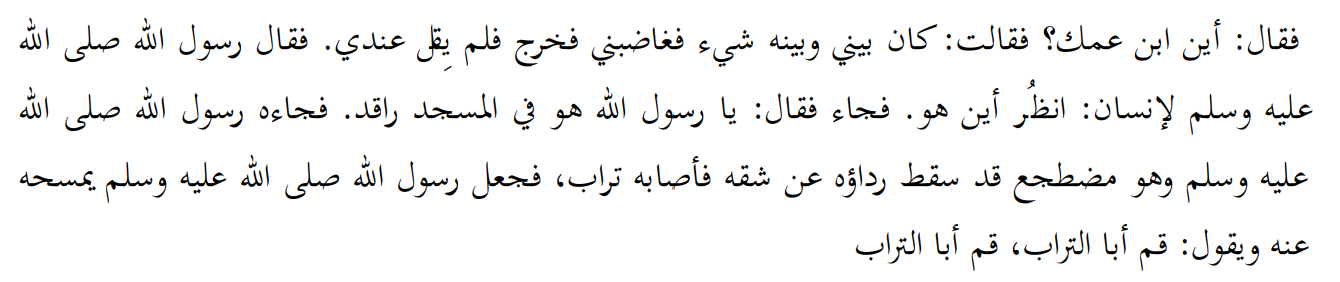
«أَيْنَ ابْنُ عَمِّكِ؟» قَالَتْ: كَانَ بَيْنِي وَبَيْنَهُ شَيْءٌ، فَأَغْضَبَنِي وَخَرَجَ مِنْ غَيْرِ أَنْ يُخْبِرَنِي. فَقَالَ رَسُولُ اللَّهِ ﷺ لِبَعْضِ أَصْحَابِهِ: «اذْهَبْ فَانْظُرْ أَيْنَ هُوَ». فَجَاءَ فَقَالَ: يَا رَسُولَ اللَّهِ، هُوَ رَاقِدٌ فِي الْمَسْجِدِ. فَجَاءَهُ رَسُولُ اللَّهِ ﷺ وَهُوَ مُضْطَجِعٌ، وَقَدْ سَقَطَ رِدَاؤُهُ عَنْ جَسَدِهِ وَأَصَابَهُ التُّرَابُ، فَجَعَلَ رَسُولُ اللَّهِ ﷺ يَمْسَحُ التُّرَابَ عَنْهُ وَيَقُولُ: «قُمْ يَا أَبَا تُرَابٍ».
“Where is the son of your paternal uncle?” She said: There was something between him and me, and he made me angry and left without telling me. So the Messenger of Allah (saw) said to someone: “Go find out where he is.” He came back and said: O Messenger of Allah, he is resting in the mosque. So the Messenger of Allah (saw) came to him while he was reclining. His cloak had fallen from his body and dirt had touched him, so the Messenger of Allah (saw) began wiping it off him while saying: “Stand up, O Abu Turab.”
رَوَى مُسْلِمٌ عَنْ عَدِيِّ بْنِ ثَابِتٍ عَنْ ذَرٍّ، قَالَ: قَالَ عَلِيٌّ:
Muslim narrated from ‘Adiyy bin Thabit from Dharr who said: Ali said:
والَّذِي فَلَقَ الحَبَّةَ وبَرَأَ النَّسَمَةَ، إنَّهُ لَعَهْدُ النَّبِيِّ ﷺ إلَيَّ: أنَّهُ لا يُحِبُّنِي إلَّا مُؤْمِنٌ، ولا يُبْغِضُنِي إلَّا مُنَافِقٌ.
“By Him Who split up the seed and created something living, the Prophet (may peace and blessings be upon him) gave me a promise that no one but a believer would love me, and none but a hypocrite would nurse grudge against me..”
ليس في هذه الأحاديث ما يدفع أحدًا إلى القول بأن الرسول ﷺ عيّن عليًّا رضي الله عنه خليفةً من بعده. وحديث خيبر ثناءٌ من رسول الله ﷺ. وقول الرسول ﷺ لعليٍّ رضي الله عنه:
There is nothing in these ahadith to make someone say that the Messenger (saw) appointed Ali (ra) to be Khalifah after him. The hadith of Khayber is praise from the Messenger of Allah. The Messenger’s (saw) statement to Ali (ra):
أَنْتَ مِنِّي وَأَنَا مِنْكَ
“You are of me and I am of you”
هو ثناءٌ من رسول الله ﷺ. وأما حديث سعدٍ الذي جاء فيه:
Is a praise from the Messenger of Allah (saw). As for the hadith of S’aad in which came:
"أَمَا تَرْضَى أَنْ تَكُونَ مِنِّي بِمَنْزِلَةِ هَارُونَ مِنْ مُوسَىٰ؟"
“Are you not pleased to have the status before me as that of Harun with Musa”,
سيُبحث هذا الموضوع في الفئة الثانية من الأحاديث الواردة في الباب. وفيها أيضًا حديث خيبر، وهو منقبة، وفيه أن علي (رضي الله عنه)، وفاطمة (رضي الله عنها)، والحسن (رضي الله عنه)، والحسين (رضي الله عنه) هم أهل بيته ﷺ، وهذه منقبة، وحديث سهل بن سعد منقبة أيضًا. وكما مدح رسول الله ﷺ عليًا (رضي الله عنه)، فقد مدح غيره من صحابته (رضي الله عنهم). ومدحُ الرسول ﷺ لشخصٍ لا يدل بأي وجه على تعيينه.
This subject will be discussed in the second category of the ahadith on the topic. In it is also the hadith of Khayber which is a praise and in it is that Ali (ra), Fatima (ra), Hassan (ra) and Husain (ra) are his family which is a praise, and the hadith of Sahl bin S’ad is a praise. Just like the Messenger of Allah (saw) praised Ali (ra), he also praised others among his Sahabah (ra). The Messenger’s praise for a person does not in any way indicate his appointment.
أما الصنف الثاني من الأحاديث، وهي التي استنبط منها بعضهم أن الرسول ﷺ صرّح نصًّا بأن علي بن أبي طالب سيكون الخليفة من بعده، فهي مُلخَّصة في هذه النصوص الأربعة:- 1- روى البخاري عن مصعب بن سعد عن أبيه
As for the second category of ahadith which are those from which some deduced that the Messenger (saw) stated textually that Ali would be the Khalifah after him, they are summarised in these four texts:- 1- Al-Bukhari narrated from Mus’ab bin S’ad from his father
أنّ رسول الله ﷺ خرج إلى تبوك واستخلف علياً، فقال: أتخلّفني في الصبيان والنساء؟ فقال: أما ترضى أن تكون مني بمنزلة هارون من موسى، إلا أنه لا نبي بعدي؟
“That the Messenger of Allah (saw) left for Tabuk and appointed Ali, so he said: Do you leave me behind along with women and children? He said: Are you not pleased to have the same status with me as Harun had with Musa, except that there is no Prophet after me?”
روى مسلم عن عامر بن سعد بن أبي وقاص رضي الله عنه، عن أبيه رضي الله عنه قال: قال رسول الله ﷺ لعلي رضي الله عنه:
Muslim narrated from ‘Amir bin S’ad bin Abi Waqqas (ra) from his father who said: The Messenger of Allah (saw) said to Ali (ra):
"أَنْتَ مِنِّي بِمَنْزِلَةِ هَارُونَ مِنْ مُوسَى، إِلَّا أَنَّهُ لَا نَبِيَّ بَعْدِي ﷺ."
“You are to me of the same status as Harun was to Musa, except that there is no Prophet after me.”
وَرَوَى مُسْلِمٌ مِنْ طَرِيقِ إِبْرَاهِيمَ بْنِ سَعْدٍ، عَنْ سَعْدٍ، أَنَّ النَّبِيَّ ﷺ قَالَ لِعَلِيٍّ رَضِيَ اللهُ عَنْهُ:
And Muslim narrated from Ibrahim bin S’ad from S’ad that the Prophet (saw) said to Ali (ra):
أَلَا تَرْضَى أَنْ تَكُونَ مِنِّي بِمَنْزِلَةِ هَارُونَ مِنْ مُوسَى ﷺ
“Are you not pleased to have the same relation with me as Harun had with Musa”
قال ابن إسحاق: خلَّف رسولُ اللهِ ﷺ عليَّ بنَ أبي طالبٍ (رضي الله عنه) ليقوم على أهلِه ويُشرِف عليهم، فأخذ المنافقون يُشيعون الأكاذيب ويقولون له: إنه ﷺ لم يُخلِّفه إلا لأنه ثقُل عليه، ولِيَتخلَّص منه. فلما قال المنافقون ذلك، أخذ عليُّ بنُ أبي طالبٍ (رضي الله عنه) سلاحَه وخرج حتى لحِق برسول الله ﷺ وهو نازلٌ بالجُرف، فقال: يا نبيَّ الله ﷺ، إن المنافقين يزعمون أنك إنما خلَّفتني لأنني ثقلٌ عليك وأردتَ التخلُّص مني. فقال ﷺ:
Ibn Ishaq narrated by saying: The Messenger of Allah (saw) left behind Ali bin Abi Talib (ra) to look after and supervise his family. The hypocrites started spreading false rumors and said to him that: He (saw) did not leave him behind except for the reason that it was hard on him and so that it could become easy for him. When the hypocrites said that, Ali bin Abi Talib (ra) took his weapons and moved out until he met the Messenger of Allah (saw) who was encamped at Al-Jarf and said: O Prophet of Allah (saw), the hypocrites claimed that you left me behind because it was hard for me and to make it easy for me. He said:

"كَذَبُوا، بَلْ خَلَّفْتُكَ لِمَا خَلَّفْتُ وَرَاءِي، فَارْجِعْ وَاخْلُفْنِي فِي أَهْلِي وَأَهْلِكَ". أَمَا تَرْضَى يَا عَلِيُّ أَنْ تَكُونَ مِنِّي بِمَنْزِلَةِ هَارُونَ مِنْ مُوسَى، إِلَّا أَنَّهُ لَا نَبِيَّ بَعْدِي؟ ﷺ
“They lied; rather I left you behind due to what I left behind me so return and supervise my family and your family on my behalf. Are you not pleased, O Ali, to have the same status before me as Harun had before Musa except that there is no Prophet after me?”
فَرَجَعَ عَلِيٌّ إِلَى الْمَدِينَةِ، وَمَضَى رَسُولُ اللَّهِ ﷺ فِي سَفَرِهِ. وَقَدْ ذَكَرَ السَّيِّدُ عَبْدُ الْحُسَيْنِ شَرَفُ الدِّينِ فِي كِتَابِ «الْمُرَاجَعَاتِ» مَا يَلِي: «حَدِيثُ جَابِرِ بْنِ عَبْدِ اللَّهِ، قَالَ: قَالَ رَسُولُ اللَّهِ ﷺ:
So Ali returned to Madinah and the Messenger of Allah (saw) continued on his journey. As-Sayyid Abd al-Husain Sharaf ud-Deen mentioned the following in the book “Al-Muraja’at ”: “The hadith of Jabir bin Abdullah who said: The Messenger of Allah (saw) said:
يَا عَلِيُّ، إِنَّهُ يَحِلُّ لَكَ فِي الْمَسْجِدِ مَا يَحِلُّ لِي، وَمَنْزِلَتُكَ مِنِّي مَنْزِلَةُ هَارُونَ مِنْ مُوسَى، إِلَّا أَنَّهُ لَا نَبِيَّ بَعْدِي ﷺ
O Ali, verily it is allowed for you in the mosque what is allowed for me, and your relation with me is that of Harun with Musa except that there is no Prophet after me.”
٢۔ روى مسلم عن يزيد بن حيّان قال: انطلقتُ أنا وحصين بن سبرة وعمر بن مسلم إلى زيد بن أرقم (رضي الله عنه)، فلما جلسنا إليه قال له حصين: لقد لقيتَ يا زيد خيرًا كثيرًا، رأيتَ رسول الله ﷺ، وسمعتَ حديثه، وغزوتَ معه، وصليتَ خلفه، لقد لقيتَ يا زيد خيرًا كثيرًا، فحدِّثنا يا زيد ما سمعتَ من رسول الله ﷺ. قال: يا ابن أخي، والله لقد كبِرتُ وقَدُم عهدي، ونسيتُ بعضَ الذي كنتُ أعي من رسول الله ﷺ، فما حدّثتُكم فاقبلوا، وما لا فلا تُكلِّفونيه. ثم قال: قام رسول الله ﷺ يومًا فينا خطيبًا بماءٍ يُدعى خُمًّا بين مكة والمدينة، فحمد الله، وأثنى عليه، ووعظ وذكّر، ثم قال:
2. Muslim narrated from Yazid bin Hayyan who said: I left with Husain bin Sabra and Umar bin Muslim to Zayd bin Arqam (ra). When we sat with him, Husain said to him: “Verily, O Zayd, you met a great deal of good. You saw the Messenger of Allah (saw), heard his hadith, fought with him and prayed behind him. Verily, O Zayd, you met a great deal of good. So relate to us, O Zayd, of what you heard from the Messenger of Allah (saw). He said: O son of my brother, by Allah I have become old and my time has approached. I have forgotten some of that, which I understood from the Messenger of Allah (saw), so accept whatever I relate to you and do not force me on that which I do not relate. Then he said: The Messenger of Allah (saw) stood one day before us speaking at the waters known as Khum between Makkah and Madinah. He thanked Allah, praised Him, exhorted and reminded then said:
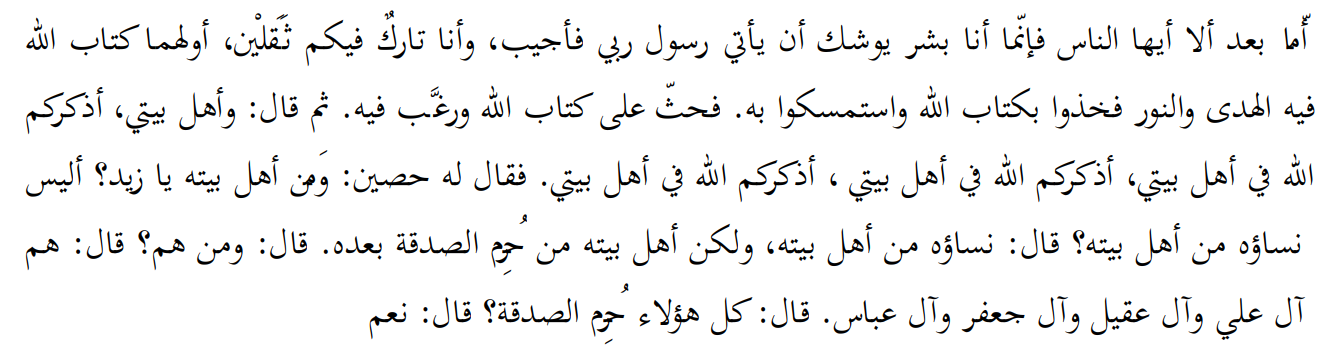
أمّا بعد، أيها الناس، فإنما أنا بشر، يوشك أن يأتيني رسولُ ربي فأُجيب، وأنا تاركٌ فيكم ثقلين: أولهما كتابُ الله، فيه الهدى والنور، فخذوا بكتاب الله واستمسكوا به. فحثَّ على كتاب الله ورغّب فيه، ثم قال: وأهلُ بيتي، أُذكّركم الله في أهل بيتي، أُذكّركم الله في أهل بيتي. فقال له حصينٌ: ومن أهل بيته يا زيد؟ أليس نساؤه من أهل بيته؟ قال: نساؤه من أهل بيته، ولكنّ أهل بيته مَن حُرِّمت عليهم الصدقةُ بعده. قال: ومَن هم؟ قال: هم آلُ علي، وآلُ عقيل، وآلُ جعفر، وآلُ عباس. قال: كلُّ هؤلاء حُرِّمت عليهم الصدقة؟ قال: نعم.
" Now to our purpose. O people, I am a human being. I am about to receive a messenger (the angel of death) from my Lord and I, in response to Allah's call, (would bid good-bye to you), but I am leaving among you two weighty things: the one being the Book of Allah in which there is right guidance and light, so hold fast to the Book of Allah and adhere to it. He exhorted (us) (to hold fast) to the Book of Allah and then said: The second are the members of my household I remind you (of your duties) to the members of my family. He (Husain) said to Zaid: Who are the members of his household? Aren't his wives the members of his family? Thereupon he said: His wives are the members of his family (but here) the members of his family are those for whom acceptance of Zakat is forbidden. And he said: Who are they? Thereupon he said: 'Ali and the offspring of 'Ali, 'Aqil and the offspring of 'Aqil and the offspring of Ja'far and the offspring of 'Abbas. Husain said: These are those for whom the acceptance of Zakat is forbidden. Zaid said: Yes.”
قال السيد عبد الحسين شرف الدين في كتابه «المراجعات»: إن الطبراني روى هذا الحديث بسند أجمعت الأمة على صحته، عن زيد بن أرقم رضي الله عنه، قال: خطب رسول الله ﷺ في غدير خم تحت أشجار، فقال:
As-Sayyid Abd al-Husain Sharaf ud-Deen mentioned in his book “Al-Muraja’at” this hadith via the following narration which At-Tabarani narrated through a chain whose authenticity is unanimously accepted from Zayd bin Arqam (ra) who said: The Messenger of Allah (saw) spoke at Ghadeer Khum underneath some trees and said:
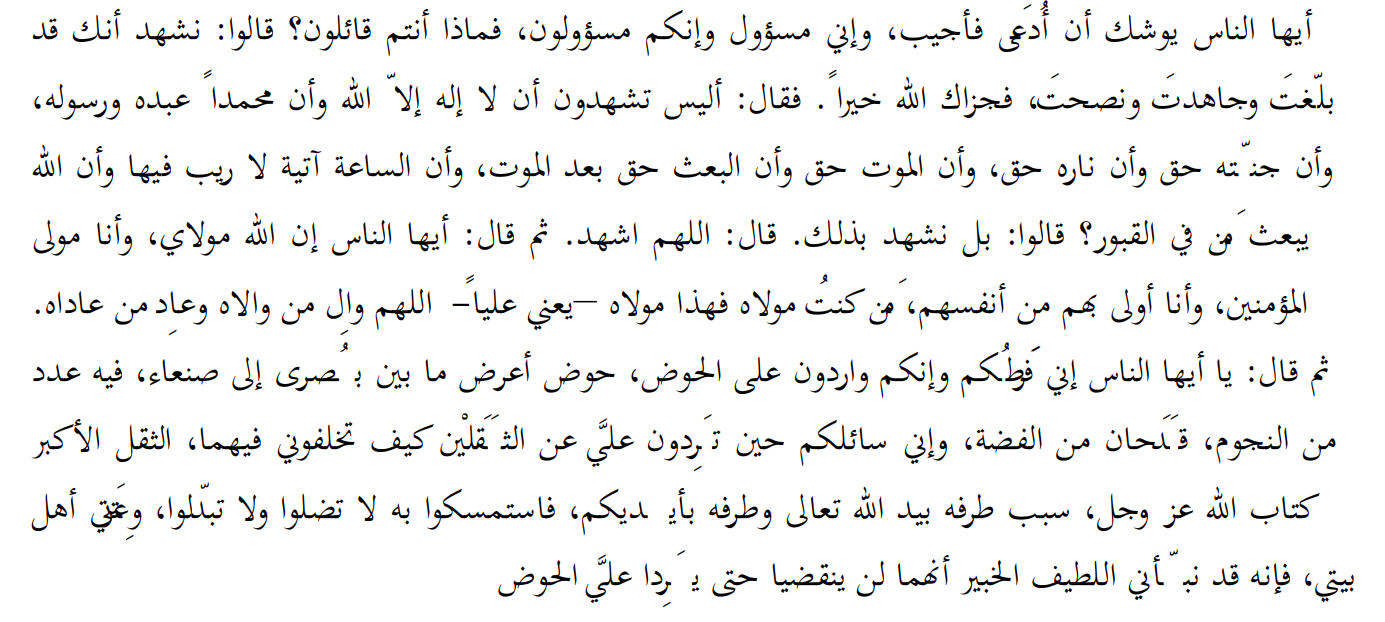
"يَا أَيُّهَا النَّاسُ، إِنَّهُ يُوشِكُ أَنْ أُدْعَى فَأُجِيبَ" (يُشِيرُ إِلَى الْمَوْتِ). "إِنِّي تَارِكٌ فِيكُمُ الثَّقَلَيْنِ، إِنِّي مَسْؤُولٌ وَأَنْتُمْ مَسْؤُولُونَ، فَمَاذَا أَنْتُمْ قَائِلُونَ؟" قَالُوا: نَشْهَدُ أَنَّكَ قَدْ بَلَّغْتَ وَجَاهَدْتَ وَنَصَحْتَ، فَجَزَاكَ اللهُ خَيْرًا. فَقَالَ: "أَلَسْتُمْ تَشْهَدُونَ أَنْ لَا إِلَهَ إِلَّا اللهُ، وَأَنَّ مُحَمَّدًا عَبْدُهُ وَرَسُولُهُ ﷺ، وَأَنَّ الْجَنَّةَ حَقٌّ، وَالنَّارَ حَقٌّ، وَأَنَّ الْمَوْتَ حَقٌّ، وَالْبَعْثَ بَعْدَ الْمَوْتِ حَقٌّ، وَأَنَّ السَّاعَةَ آتِيَةٌ لَا رَيْبَ فِيهَا، وَأَنَّ اللهَ يَبْعَثُ مَنْ فِي الْقُبُورِ؟" قَالُوا: بَلَى، نَشْهَدُ بِذَلِكَ. ثُمَّ قَالَ: "يَا أَيُّهَا النَّاسُ، إِنَّ اللهَ مَوْلَايَ، وَأَنَا وَلِيُّ الْمُؤْمِنِينَ، أَوْلَى بِهِمْ مِنْ أَنْفُسِهِمْ، فَمَنْ كُنْتُ مَوْلَاهُ فَهَذَا مَوْلَاهُ" يَعْنِي عَلِيًّا. "اللَّهُمَّ وَالِ مَنْ وَالَاهُ، وَعَادِ مَنْ عَادَاهُ." ثُمَّ قَالَ: "يَا أَيُّهَا النَّاسُ، إِنِّي فَرَطُكُمْ، وَإِنَّكُمْ وَارِدُونَ عَلَيَّ الْحَوْضَ، حَوْضٌ أَعْرَضُ مِنْ مَا بَيْنَ بُصْرَى إِلَى صَنْعَاءَ، فِيهِ أَقْدَاحٌ مِنْ فِضَّةٍ عَدَدَ النُّجُومِ. وَإِنِّي سَائِلُكُمْ حِينَ تَرِدُونَ عَلَيَّ عَنِ الثَّقَلَيْنِ، فَانْظُرُوا كَيْفَ تَخْلُفُونِي فِيهِمَا: الثَّقَلُ الْأَكْبَرُ كِتَابُ اللهِ عَزَّ وَجَلَّ، سَبَبٌ طَرَفُهُ بِيَدِ اللهِ، وَطَرَفُهُ بِأَيْدِيكُمْ، فَتَمَسَّكُوا بِهِ لَنْ تَضِلُّوا وَلَنْ تَبِيدُوا، وَعِتْرَتِي أَهْلُ بَيْتِي. فَإِنَّ اللَّطِيفَ الْخَبِيرَ قَدْ أَخْبَرَنِي أَنَّهُمَا لَنْ يَفْتَرِقَا حَتَّى يَرِدَا عَلَيَّ الْحَوْضَ."
“O people, it is about to be that I am called and I will respond (indicating death). Verily, I am accountable and you are accountable, so what will you say? They said: We will testify that you conveyed, struggled and advised so may Allah recompense you well. He said: Do you not bear witness that there is no deity but Allah and Muhammad is His slave and Messenger, that Paradise is true and Hellfire is true, that death is true and resurrection after death is true, that the Hour (of Judgement) will come without any doubt, and that Allah will resurrect all those in their graves? They said: Yes, we do bear witness. Then he said: O people, verily Allah is my Patron and I am the patron of the believers such that I take precedence before them over their own selves. Whoever takes me as his patron then this one is his patron—meaning Ali. O Allah, befriend whoever befriends him and take as enemy whoever takes him as an enemy. Then he said: O people, verily I will leave you and you will find me at the Cistern, a cistern wider than the distance from Basra to Sana’a. In it are tumblers of silver the number of stars. Verily I will ask you when you come before me on the two weighty things, how you took care of them after me. The weightier and greater one is the Book of Allah ‘azza wa jalla, a (sabab) of which one end is in the hands of Allah and the other in your hands. Hold tightly to it so that you do not go astray or change, and my Utra (household), the people of my house. Verily The Kind & All-Knowing (swt) has informed me that they will never seperate until they come before me at the cistern (fountain)”
(هذا هو آخر ما ذكره السيد عبد الحسين شرف الدين.) وقال الشيخ عبد الحسين أحمد الأميني النجفي في كتابه «الغدير»: «ولما أتمّ مناسكه، أي النبي ﷺ، وانصرف إلى المدينة، مع من ذكرناه من الفئام من الناس، بلغ غدير خم في الجحفة حيث تتشعب الطرق لأهل المدينة ومصر والعراق. وكان ذلك اليوم الخامس عشر من ذي الحجة، فنزل عليه جبريل الأمين من الله تعالى بقوله:
(This is the end of what As-Sayyid Abd al-Husain Sharaf ud-Deen mentioned). And Shaikh Abd al-Husain Ahmad Al-Ameeni An-Najafi stated the following in his book “Al Ghadeer”: “When he finished his rites of worship i.e. the Prophet (saw) and left for Madinah, together with the mentioned group(s) of people, he reached Ghadeer Khum in Al-Jahfa where the roads branch for the people of Madinah, Egypt and Iraq. This was the 15th day of Dhul-Hijja and Jibril, the trustworthy, descended to him from Allah (swt) with His saying:
"يَا أَيُّهَا الرَّسُولُ بَلِّغْ مَا أُنزِلَ إِلَيْكَ مِن رَّبِّكَ" [TMQ 5:67]
‘O Messenger, deliver what was revealed to you from your Lord” [TMQ 5:67]
وأمره أن يقيم عليًّا (رضي الله عنه) ليُعلم الناس ويُبلِّغ ما أُنزل فيه من ولايته ووجوب طاعته على كل أحد. وكان أوائل الناس قد قاربوا الجحفة، فأمر رسول الله ﷺ من تقدم بالرجوع، وضمّ من تأخر إلى ذلك المكان، ونهى الناس أن ينزلوا تحت الشجرات الخمس الكبار. فلما نزل الناس، وقام من كان تحتها حتى أُذّن لصلاة الظهر، توجّه إليهم فصلّى بهم تحتها. وكان يومًا شديد الحر، حتى إن الرجل كان يضع بعض ردائه على وجهه وبعضه تحت قدميه من شدة الحرّ، وكان رسول الله ﷺ مظلَّلًا بثوب على شجرة السَّمُرة من الشمس. فلما فرغ ﷺ من صلاته قام فيهم خطيبًا في وسط الناس على حدب رحل بعير، فرفع صوته حتى سمعه كل من حضر، فقال ﷺ
And He commanded him to cause Ali (ra) to stand to let the people know and inform what was revealed regarding his patronage and the obligation of obedience upon every one. The first of the people were close to Al-Jahfa so the Messenger of Allah (saw) commanded those who had proceeded to return and enclosed those who had delayed at that place, and he prohibited people from encamping beneath the five large trees. When the people took camp and those underneath them (the trees) stood until the dhuhr prayer was announced, he headed for them and prayed beneath them. It was a sizzling day where a man placed some of his cloak upon his face and some under his feet due to the severe heat, and the Messenger of Allah was shaded by a garment upon the sumra tree due to the sun. When he (saw) finished his prayer, he stood to speak in the middle of the people on the hump of a camel and he spoke with a raised tone with every one hearing him and he (saw) said
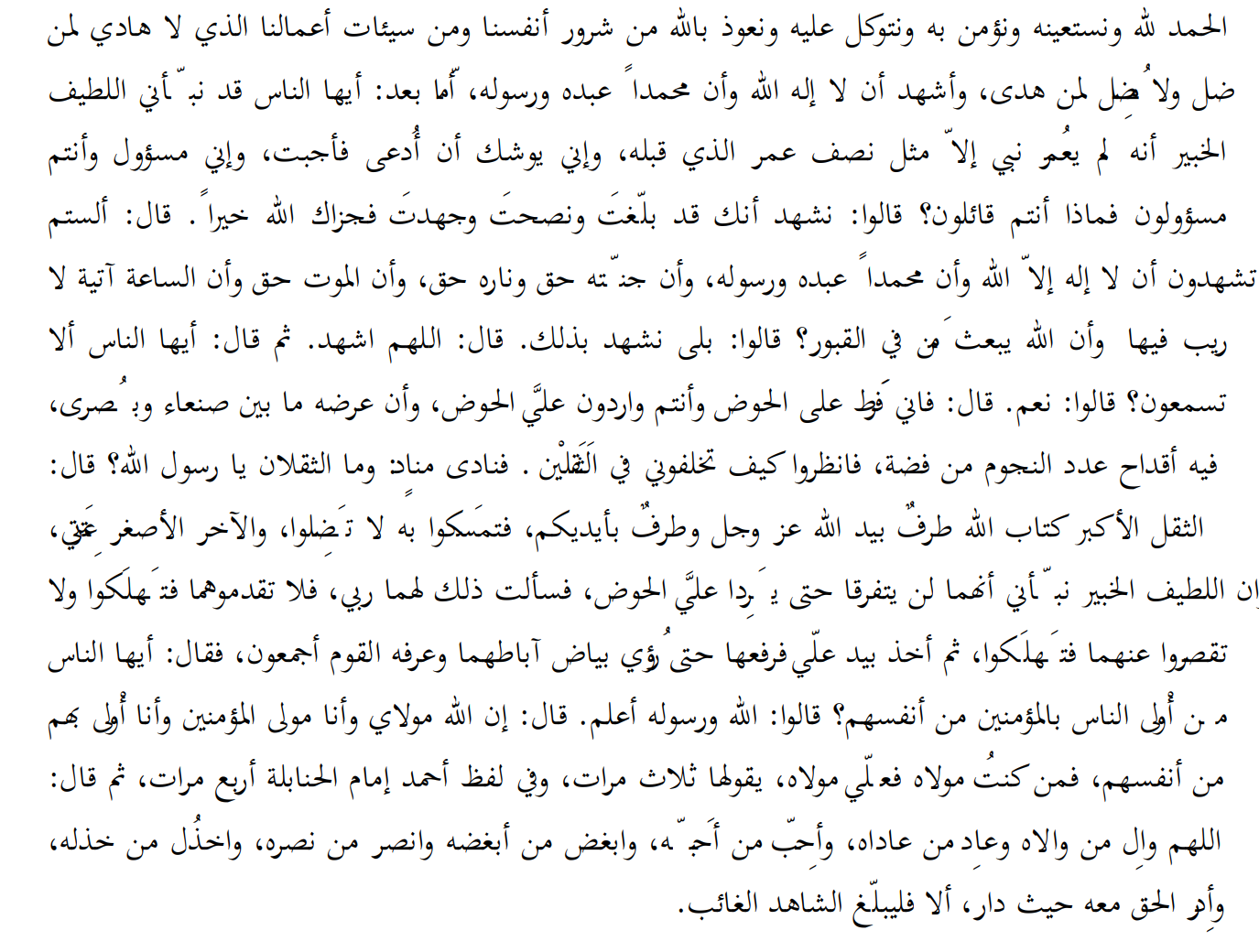
الْحَمْدُ لِلَّهِ نَسْتَعِينُهُ وَنُؤْمِنُ بِهِ وَنَتَوَكَّلُ عَلَيْهِ، وَنَعُوذُ بِاللَّهِ مِنْ شُرُورِ أَنْفُسِنَا وَمِنْ سَيِّئَاتِ أَعْمَالِنَا، مَنْ يَهْدِهِ اللَّهُ فَلَا مُضِلَّ لَهُ، وَمَنْ يُضْلِلْ فَلَا هَادِيَ لَهُ. وَأَشْهَدُ أَنْ لَا إِلَٰهَ إِلَّا اللَّهُ، وَأَشْهَدُ أَنَّ مُحَمَّدًا ﷺ عَبْدُهُ وَرَسُولُهُ. أَمَّا بَعْدُ: أَيُّهَا النَّاسُ، فَإِنَّ اللَّطِيفَ الْخَبِيرَ (جَلَّ جَلَالُهُ) أَخْبَرَنِي أَنَّهُ لَمْ يُعَمِّرْ نَبِيًّا إِلَّا نِصْفَ مَا عَمَّرَ الَّذِي قَبْلَهُ، وَإِنَّهُ أَوْشَكَ أَنْ أُدْعَى فَأُجِيبَ، وَإِنِّي مَسْئُولٌ وَإِنَّكُمْ مَسْئُولُونَ، فَمَاذَا أَنْتُمْ قَائِلُونَ؟ قَالُوا: نَشْهَدُ أَنَّكَ قَدْ بَلَّغْتَ وَنَصَحْتَ وَجَاهَدْتَ، فَجَزَاكَ اللَّهُ خَيْرًا. فَقَالَ: أَلَسْتُمْ تَشْهَدُونَ أَنْ لَا إِلَٰهَ إِلَّا اللَّهُ، وَأَنَّ مُحَمَّدًا ﷺ عَبْدُهُ وَرَسُولُهُ، وَأَنَّ جَنَّتَهُ حَقٌّ، وَأَنَّ نَارَهُ حَقٌّ، وَأَنَّ الْمَوْتَ حَقٌّ، وَأَنَّ السَّاعَةَ آتِيَةٌ لَا رَيْبَ فِيهَا، وَأَنَّ اللَّهَ يَبْعَثُ مَنْ فِي الْقُبُورِ؟ قَالُوا: بَلَى، نَشْهَدُ بِذَلِكَ. قَالَ: اللَّهُمَّ فَاشْهَدْ. ثُمَّ قَالَ: أَيُّهَا النَّاسُ، أَلَا تَسْمَعُونَ؟ قَالُوا: نَعَمْ. قَالَ: فَإِنِّي فَرَطُكُمْ عَلَى الْحَوْضِ، وَإِنَّكُمْ وَارِدُونَ عَلَيَّ الْحَوْضَ، وَعَرْضُهُ مَا بَيْنَ صَنْعَاءَ وَبُصْرَى، فِيهِ أَقْدَاحٌ مِنْ فِضَّةٍ عَدَدُ النُّجُومِ، فَانْظُرُوا كَيْفَ تَخْلُفُونِي فِي الثَّقَلَيْنِ. فَنَادَى مُنَادٍ: وَمَا الثَّقَلَانِ يَا رَسُولَ اللَّهِ؟ قَالَ: الثَّقَلُ الْأَكْبَرُ كِتَابُ اللَّهِ، سَبَبٌ طَرَفُهُ بِيَدِ اللَّهِ وَطَرَفُهُ بِأَيْدِيكُمْ، فَتَمَسَّكُوا بِهِ لَنْ تَضِلُّوا. وَالْآخَرُ الْأَصْغَرُ عِتْرَتِي أَهْلُ بَيْتِي، فَإِنَّ اللَّطِيفَ الْخَبِيرَ (جَلَّ جَلَالُهُ) أَخْبَرَنِي أَنَّهُمَا لَنْ يَفْتَرِقَا حَتَّى يَرِدَا عَلَيَّ الْحَوْضَ، وَقَدْ سَأَلْتُ ذَلِكَ لَهُمَا مِنْ رَبِّي، فَلَا تَقَدَّمُوهُمَا فَتَهْلِكُوا، وَلَا تُقَصِّرُوا عَنْهُمَا فَتَهْلِكُوا، وَلَا تُعَلِّمُوهُمْ فَإِنَّهُمْ أَعْلَمُ مِنْكُمْ. ثُمَّ أَخَذَ بِيَدِ عَلِيٍّ فَرَفَعَهَا حَتَّى رُئِيَ بَيَاضُ إِبْطَيْهِمَا، وَعَرَفَهُ النَّاسُ كُلُّهُمْ، فَقَالَ: "أَيُّهَا النَّاسُ، مَنْ أَوْلَى بِالْمُؤْمِنِينَ مِنْ أَنْفُسِهِمْ؟" قَالُوا: اللَّهُ وَرَسُولُهُ أَعْلَمُ. فَقَالَ: "إِنَّ اللَّهَ مَوْلَايَ، وَأَنَا مَوْلَى الْمُؤْمِنِينَ، وَأَنَا أَوْلَى بِهِمْ مِنْ أَنْفُسِهِمْ، فَمَنْ كُنْتُ مَوْلَاهُ فَعَلِيٌّ مَوْلَاهُ." قَالَهَا ثَلَاثَ مَرَّاتٍ، وَفِي رِوَايَةِ الْإِمَامِ أَحْمَدَ، إِمَامِ الْحَنَابِلَةِ، أَرْبَعَ مَرَّاتٍ. ثُمَّ قَالَ: "اللَّهُمَّ وَالِ مَنْ وَالَاهُ، وَعَادِ مَنْ عَادَاهُ، وَأَحِبَّ مَنْ أَحَبَّهُ، وَأَبْغِضْ مَنْ أَبْغَضَهُ، وَانْصُرْ مَنْ نَصَرَهُ، وَاخْذُلْ مَنْ خَذَلَهُ، وَأَدِرِ الْحَقَّ مَعَهُ حَيْثُ دَارَ." أَلَا فَلْيُبَلِّغِ الشَّاهِدُ الْغَائِبَ.
"All praise is due to Allah whom we ask for help, believe in and depend upon. We ask Allah to protect us from the evils of our souls and bad deeds, the One whom none can guide whom He causes to go astray or misguide whom He guides. I bear witness that there is no god but Allah and Muhammad is His slave and Messenger. As for what follows: O people, verily the The Kind & All-Knowing (swt) has informed me that He does not grant longevity to a Prophet except half the like of the one before him. Verily it is about to be that I will be called and I will respond. Verily I am accountable and you are accountable, so what will you say? They said: We bear witness that verily you have conveyed, advised and struggled so may Allah reward you well. He said: Do you not bear witness that there is no god but Allah and that Muhammad is His slave and Messenger that His paradise is true and His hellfire is true, that death is true, that the Hour will come without any doubt and that Allah will resurrect those in the graves? They said: Yes, we bear witness to this. He said: O Allah, do bear witness. Then he said: O people, will you not listen? They said: Yes. He said: Verily I will go to the cistern (alkauthar) and you will be presented at the cistern, whose breadth is that between Sana’a and Basra, before me. In it are cups of silver the number of which are the number of stars, so look how you take care of the two weighty things after me. An announcer announced: And what are the two weighty things, O Messenger of Allah? He said: The greater of the two weighty things is the Book of Allah, one end of which is in the hand of Allah and the other in your hands so hold fast to it and you will not go astray. The other smaller one is my household (‘utra). Verily the Kind & All-Knowing (swt) informed me that they will not go away until Ali reaches the cistern and I asked that from my Lord. So do not precede them or neglect them and if you do so you will perish. Then he took the hand of Ali and raised it until their armpits were seen and everyone recognised him and he said: O people, who takes precedence before the believers over their own selves? They said: Allah and His Messenger know best. He said: Verily Allah is my Patron (mawla) and I am the patron of the believers such that I take precedence before them over their own selves. So whoever has me as his patron then Ali is his patron. He said this three times, and in the words of Imam Ahmad, Imam of the Hanbalis, four times. Then he said: O Allah, befriend whoever befriends him and become an enemy to whoever takes him as an enemy. Love whoever loves him and hate whoever hates him, support whoever supports him and abandon whoever abandons him, and let the truth be with him wherever he is resides. Verily, let the witness who is present inform the (one who is) absent.’”
3. الذين يقولون إن الرسول ﷺ نصّ صراحةً على خلافة علي رضي الله عنه رَوَوا أحاديث في كتبهم. وأما هذه الأحاديث، فلن نجعل محلّ البحث فيها روايتَها، مع أن الشيخين البخاري ومسلماً لم يروياها، ولم تُروَ بأسانيد موثوقة، وأكثرها من الأحاديث الموضوعة. ولن نجعل روايتها موضوعَ البحث، بحيث يقولون: إن هذه الأحاديث لم يرِدْ بها رواةٌ ثقات عندكم، لكنها وردت بها رواةٌ ثقات عندنا، ليستدلّ بها من صحّ عنده الحديث. ولن نجعل ذلك مجالَ البحث، بل نجعل موضوعَ البحث نفسَ النصوص كما وردت في الروايات. وهذه هي النصوص التي استنبطوا منها أن الرسول ﷺ عيّن عليّاً خليفةً من بعده، وهي المعروفة بأحاديث «الولاية»، ونذكر منها بعضها، وما بقي يحمل المعنى نفسه بل الألفاظ نفسها أحياناً.
3. Those who say that the Messenger (saw) clearly announced the Khilafah of Ali (ra) narrated ahadith in their books. As for these ahadith, we will not make the place of research in them their narrations, despite the fact that the two sheikhs Al-Bukhari and Muslim did not narrate them, nor were they narrated via any trustworthy narrators and most of them are among the fabricated ahadith. We will not make their narrations the subject of research such that they say that these ahadith were not narrated by trustworthy narrators before you but were narrated by trustworthy narrators before us so that the one for whom the hadith is authenticated uses it as an evidence. We will not make that the domain of research; rather we will make the matter of research the texts themselves as they came in the narrations. These are the texts from which they deduced that the Messenger (saw) appointed Ali to be the Khalifah after him—and these ahadith are known as the ahadith of “wilayah”—from which we will present some of them and the rest carry the same meaning and even the same wordings.
أ) رَوَى أَبُو دَاوُدَ الطَّيَالِسِيُّ عَنِ ابْنِ عَبَّاسٍ (رضي الله عنه) أَنَّ رَسُولَ اللهِ ﷺ قَالَ لِعَلِيِّ بْنِ أَبِي طَالِبٍ (رضي الله عنه):
a) Abu Dawud At-Tayalisi narrated from ‘Ibn Abbas (ra) that the Messenger of Allah (saw) said to Ali ibn Abi Talib (ra):
أَنْتَ وَلِيُّ كُلِّ مُؤْمِنٍ بَعْدِي ﷺ
“You are the waliy of all believers after me.”
ب) رُوِيَ في كنز العمال عن عمران بن حصين قال: بعث رسول الله ﷺ سريةً وأمّر عليهم علي بن أبي طالب، فأخذ جارية من الخمس، فتعاقد أربعةٌ منهم أن يشكوه إلى النبي ﷺ، فلما قدموا قام أحدهم فقال: يا رسول الله ﷺ، ألا ترى أن عليًّا فعل كذا وكذا؟ فأعرض عنه. وقام الثاني فقال مثل ذلك، فأعرض عنه. وقام الثالث فقال مثل ذلك، فأعرض عنه. وقام الرابع فقال مثل ما قالوا. فأقبل رسول الله ﷺ عليهم وفي وجهه الغضب، فقال:
b) It has been narrated in Kanz al-’Ammal from Imran bin Husain who said that the Messenger of Allah (saw) sent an expedition and appointed Ali bin Abi Talib (ra) over them. He chose for himself a slave girl from the fifth (khums) and they rejected this from him. Four of them agreed to complain about him to the Prophet (saw) so, when they came, one of the four stood and said: O Messenger of Allah (saw), do you not see that Ali (ra) did such and such, and he (saw) turned away from him. The second stood and said the same, so he turned away from him. The third stood and said the same, so he turned away from him. And the fourth stood and said the same as they had said. The Messenger of Allah (saw) turned towards them with anger visible in his face and said:
ما الذي تريده لي فيما يتعلق بعلي؟ إن عليًّا مني وأنا منه، وهو وليّ كل مؤمن بعدي.
What do you want for me with regards to Ali? Verily Ali is from me and I am from him, and he is the waliy of every believer after me.”
ج) وفي حديثٍ طويلٍ عن عمرو بن ميمون عن ابن عباسٍ رضي الله عنهما قال: بعث رسولُ الله ﷺ فلانًا بسورة التوبة، ثم أرسل عليًّا رضي الله عنه في أثره ليأخذها منه، وقال:
c) And in a long hadith from ‘Amru bin Maymun from ‘Ibn Abbas (ra) who said: The Messenger of Allah (saw) sent so and so with Surah At-Tawbah. He then sent Ali (ra) after him to take it from him and said:
لَا يَأْخُذُهُ أَحَدٌ إِلَّا رَجُلٌ مِنِّي وَأَنَا مِنْهُ ﷺ
“No one should take it except a man who is from me and I am from him.”
د) كنز العمال، عن وهب بن حمزة، قال: سافرتُ مع علي (رض)، فرأيتُ منه غِلظةً، فقلتُ: إذا رجعتُ لأشكونَّه. فرجعتُ فذكرتُ عليًّا (رض) عند رسول الله ﷺ، فقال:
d) IKanz al-’Ammal from Wahhab bin Hamza who said: I travelled with Ali (ra) and I saw harshness from him, so I said that when I will return I will complain about it. So I returned and mentioned Ali (ra) to the Messenger of Allah (saw) and he said:
لَا تَقُلْ هَذَا لِعَلِيٍّ، فَإِنَّهُ وَلِيُّكَ بَعْدِي.
“Do not say this for Ali, as he is your waliy after me.”
ه) في كنز العمال عن ابن عباس رضي الله عنهما قال: قال رسول الله ﷺ:
e) In Kanz al-’Ammal from ‘ibn Abbas who said: The Messenger of Allah (saw) said:
"من أحبّ أن يحيا حياتي، ويموت مماتي، ويسكن جنّة عدن التي غرسها ربّي، فليتولَّ عليّاً من بعدي ولیًّا ﷺ" Note: the ﷺ belongs after the Prophet's own mention, so I should place it there instead. "من أحبّ أن يحيا حياتي، ويموت مماتي، ويسكن جنّة عدن التي غرسها ربّي ﷺ، فليتولَّ عليّاً من بعدي ولیًّا"
“Whoever is pleased to live my life, die my death and to reside in the paradise of Eden irrigated by my Lord then let him befriend Ali as a waliy after me.”
(و) في "منتخب الكنز" عن زياد بن مطرف قال: سمعت رسول الله ﷺ يقول:
f) In Muntakhab al-Kanz from Zayyad bin Mutarraf who said: I heard the Messenger of Allah (saw) saying:
مَنْ أَحَبَّ أَنْ يَحْيَا حَيَاتِي، وَيَمُوتَ مِيتَتِي، وَيَدْخُلَ الْجَنَّةَ الَّتِي وَعَدَنِيهَا رَبِّي، وَهِيَ جَنَّةُ الْخُلْدِ، فَلْيَتَوَلَّ عَلِيًّا وَذُرِّيَّتَهُ مِنْ بَعْدِي، فَإِنَّهُمْ لَنْ يُخْرِجُوكُمْ مِنْ بَابِ الْهُدَى، وَلَنْ يُدْخِلُوكُمْ فِي بَابِ الضَّلَالَةِ.ﷺ
“Whoever would like to live my life, die my death, and enter the paradise promised to me by my Lord—and it is an eternal paradise—then let him befriend Ali and his descendants after me. Verily they will never remove you from the door of guidance nor enter you into the gate of misguidance.”
ز) في كنز العمال عن عمار بن ياسر قال: قال رسول الله ﷺ:
g) In Kanz al-’Ammal from Ammar bin Yasir who said: The Messenger of Allah (saw) said:
"أُوصِي مَنْ آمَنَ بِي وَصَدَّقَنِي بِوِلَايَةِ عَلِيِّ بْنِ أَبِي طَالِبٍ، فَمَنْ وَالَاهُ فَقَدْ وَالَانِي، وَمَنْ وَالَانِي فَقَدْ وَالَى اللَّهَ. وَمَنْ أَحَبَّهُ فَقَدْ أَحَبَّنِي، وَمَنْ أَحَبَّنِي فَقَدْ أَحَبَّ اللَّهَ. وَمَنْ أَبْغَضَهُ فَقَدْ أَبْغَضَنِي، وَمَنْ أَبْغَضَنِي فَقَدْ أَبْغَضَ اللَّهَ."ﷺ
“I bequeath whoever believes in me and trusts me with the wilayah of Ali bin Abi Talib. Whoever befriends him has befriended me and whoever befriends me has befriended Allah. Whoever loves him has loved me, and whoever loves me has loved Allah. Whoever hates him has hated me, and whoever hates me has hated Allah.”
ح) وقد روي أيضاً في الكنز عن عمّار مرفوعاً حديثٌ:
h) Also in Al-Kanz from Ammar it has been narrated in a marfu hadith :
"اللَّهُمَّ مَنْ آمَنَ بِي وَصَدَّقَنِي، فَلْيُوَالِ عَلِيَّ بْنَ أَبِي طَالِبٍ، فَإِنَّ وَلَايَتَهُ وَلَايَتِي، وَوَلَايَتِي وَلَايَةُ اللَّهِ تَعَالَى"
“O Allah, whoever believes and trusts in me, let him befriend Ali bin Abi Talib. Verily his wilayah is my wilayah and my wilayah is the wilayah of Allah ta’ala.”
4. هناك أحاديث يرويها قوم يقولون إن الرسول ﷺ أعلن صراحةً خلافة علي رضي الله عنه. وهذه الأحاديث لم يروها أحد من الثقات، وأكثرها أحاديث موضوعة. ولا نوردها لنبحث في أسانيدها حتى يُزعم أنها صحيحة عند من يرويها، بل نوردها لنبحث في متونها على ما جاء فيها. وهذه الأحاديث تتضمن أخوّة الرسول ﷺ مع علي رضي الله عنه، وجعله الوارث له من بعده. ونورد منها بعضها، والباقي يحمل المعنى نفسه بل والألفاظ نفسها.
4. There are ahadith narrated by those who say that the Messenger (saw) openly declared the Khilafah of Ali (ra). These ahadith have not been narrated by any trustworthy person and most of them are fabricated ahadith. We present them not to research them from the angle of their narration so that they are claimed to be authenticated for those who narrate them. Rather we present them to make the point of research their texts according to what came in their texts. These ahadith contain the brotherhood of the Messenger (saw) with Ali (ra), and making him the heir after him. We present a few of them with the remainder carrying the same meaning and even the same wordings.
أخى النبيُّ ﷺ بين المهاجرين، واختار علياً لنفسه. وفي ما جاء من حديث المؤاخاة الأولى: «فقال علي: يا رسول الله ﷺ، لقد ذهبت نفسي وانكسر ظهري حين رأيتك تصنع ما صنعت بأصحابك غيري. فإن كان هذا علامة غضبك عليّ، فإني أشكو إليك وأستعتبك. فقال رسول الله ﷺ:
a) The Prophet (saw) established a brotherhood between the Muhajirin and chose Ali (ra) for himself. In what came of the hadith of the first brotherhood, “so Ali said: O Messenger of Allah (saw), verily my soul left me and my spine has been broken when I saw you do what you did with your companions other than me. If this is a sign of your anger with me, then I complain only to you and beg your pardon. The Messenger of Allah (saw) said:
والذي بعثني بالحق، ما تركتُكَ إلا لنفسي، أنتَ مني بمنزلة هارونَ من موسى، إلا أنه لا نبيَّ بعدي، أنتَ أخي ووارثي. قال: ماذا أرثُ منك؟ قال: ما ورثتِ الأنبياءُ قبلي، كتابَ ربهم وسنةَ أنبيائهم ﷺ.
By the One who sent me with truth, I only left you for myself. You are to me of the status of Harun to Musa except that there is no Prophet after me. You are my brother and inheritor. He said: What will I inherit from you. He said: What did the Prophets inherit before me, the Book of their Lord and the Sunnah of their Prophets.”
ب) أخّى النبي ﷺ بين المهاجرين والأنصار بعد الهجرة بخمسة أشهر، ولم يؤاخِ بين علي (رضي الله عنه) وأحدٍ من الأنصار، بل اختاره لنفسه. وقد جاء ذلك في حديث المؤاخاة الثانية.
b) The Prophet (saw) made a brotherhood between the Muhajirin and the Ansar five months after the hijrah, but he did not make a brotherhood between Ali (ra) and any of the Ansar; rather he chose him (Ali) for himself. It came in the hadith of the second brotherhood
أنَّ رسولَ اللهِ ﷺ قال لعليٍّ: «أَمَا تَرْضَى أَنْ تَكُونَ مِنِّي بِمَنْزِلَةِ هَارُونَ مِنْ مُوسَى، إِلَّا أَنَّهُ لَا نَبِيَّ بَعْدِي؟»
“That the Messenger (saw) said to Ali: Did you become angry at me when I made a brotherhood between the Muhajirin and Ansar but did not make a brotherhood between you and any of them? Are you not pleased to be similar to the status of Harun to Musa for me except that there is no Prophet after me”
ج) رُوِيَ أَنَّ الرَّسُولَ ﷺ خَرَجَ ذَاتَ يَوْمٍ إِلَى أَصْحَابِهِ وَوَجْهُهُ مُشْرِقٌ، فَسَأَلَهُ عَبْدُ الرَّحْمَنِ بْنُ عَوْفٍ رضي الله عنه، فَقَالَ ﷺ:
c) It is narrated that the Messenger (saw) went out one day to his companions with his face brightened so Abdurrahman bin Awf (ra) asked him and he said:
«جاءَنِي خبرٌ من ربِّي ﷺ عن أخي وابنِ عمِّي وابنتي، أنَّ اللهَ يُزوِّجُ عليًّا بفاطمةَ».
“Good news came to me from my Lord about my brother and paternal uncle’s son and my daughter, that Allah will marry Ali with Fatima.”
لَمَّا جَرَى النَّظَرُ فِي الزَّوْجِ الْمُسْتَحِقِّ لِسَيِّدَةِ النِّسَاءِ لِلزَّوَاجِ مِنْهَا، قَالَ النَّبِيُّ ﷺ:
When the sayyid Annisa’s (leader of the women) deserving groom for her marriage was being considered, the Prophet (saw) said:
يَا أُمَّ أَيْمَنَ، ادْعِي لِي أَخِي. قَالَتْ: هُوَ أَخُوكَ وَأَنْتَ تُزَوِّجُهُ (ابْنَتَكَ)؟ قَالَ: نَعَمْ يَا أُمَّ أَيْمَنَ. فَدَعَتْ عَلِيًّا فَجَاءَ.
“O Umm Ayman, call my brother for me. She said: He is your brother yet you are marrying him (to your daughter)? He said: Yes, O Umm Ayman. So she called Ali and he came.”
وَتَكَلَّمَ مَعَهُ النَّبِيُّ ﷺ يَوْمًا فِي شَأْنِ حُكْمٍ بَيْنَهُ وَبَيْنَ أَخِيهِ جَعْفَرٍ وَزَيْدِ بْنِ حَارِثَةَ، قَائِلًا:
And the Prophet (saw) spoke to him one day regarding a judgement between him, his brother Ja’far (saw) and Zayd bin Haritha (saw), saying:
أَمَّا أَنْتَ يَا عَلِيُّ فَأَنْتَ أَخِي، وَأَبُو وَلَدِي، وَمِنِّي وَلِي.ﷺ
“As for you, O Ali, (you are) my brother, the father of my son, and from me and for me.”
د) وَعَدَ الرَّسُولُ ﷺ عَلِيًّا رَضِيَ اللَّهُ عَنْهُ يَوْمًا قَائِلًا:
d) The Messenger (saw) promised to Ali (ra) one day saying:
"أنتَ أخي ووزيري. تَقضي عني ديوني، وتَفي بعهودي، وتُتِمُّ واجباتي."
“You are my brother and my wazeer. You will repay my debts, fulfill my commitments and complete my responsbilities.”
3) في كنز العمال، قال ﷺ
3) In Kanz al-’Ammal, he (saw) said
كُتِبَ على باب الجنة: لا إله إلا الله، محمدٌ ﷺ رسولُ الله، عليٌّ أخو رسولِ الله ﷺ.
“It is written on the gate of Paradise: There is no god but Allah, Muhammad is the Messenger of Allah, Ali is the brother of the Messenger of Allah.”
هذه النصوص الأربعة، وهي النصوص التي قال فيها الرسول ﷺ لعليٍّ منزلةَ هارونَ من موسى، والنصُّ الذي ترك فيه كتابَ الله وعترتَه، ونصُّ الولاية، ونصُّ الأخوّة، هي النصوص التي استنبط منها بعضُ المسلمين أنّ الرسول ﷺ نصّبَ عليّاً (رضي الله عنه)، أي جعله خليفةً من بعده. فلنأخذها نصّاً نصّاً.
These four texts, which are the texts in which the Messenger (saw) made him (Ali) of the status of Harun to Musa, the text that he left the Book of Allah and His progeny, the text of wilayah, and the text of brotherhood, are the texts from which some Muslims deduced that the Messenger (saw) appointed Ali (ra) i.e. made him the Khalifah after him. Let us take them text by text:
أما النص الأول، وهو النص الذي جعل عليًّا بمنزلة هارون من موسى عند الرسول ﷺ، فإن معناه يتضح من خلال دراسة المناسبة التي قيل فيها، ودراسة صيغته. أما المناسبة، فإن النبي ﷺ قال هذا الحديث في يوم غزوة تبوك. فقد استخلف النبي ﷺ في المدينة محمد بن مسلمة رضي الله عنه ليتولى شؤون المسلمين ويدير الحكم، واستخلف سيدنا علي رضي الله عنه على أهله وأمره أن يتولى أمرهم. فأرجف به المنافقون وقالوا: ما خلّفه إلا لأنه ثقُل عليه، أراد أن يخفف عنه. فلما قال المنافقون هذا، أخذ علي رضي الله عنه سلاحه وخرج حتى لحق برسول الله ﷺ وهو نازل بالجرف، فقال:
As for the first text, which is the text which made Ali at the status of Harun to Musa before the Messenger (saw), its meaning is clarified though studying the occcasion in which it was said and studying its wording. As for the occasion, the Messenger (saw) said this hadith on the day of the battle of Tabuk. Therein the Messenger (saw) appointed in Madinah in his place Muhammad bin Maslamah (ra) to supervise the Muslims’ affairs and administer the rule, and appointed our master Ali (ra) over his family and commanded him to supervise them. The hypocrites shook him and said: He did not leave him behind except because it had become hard on him he wanted to make it easy for him. When the hypocrites said this, Ali (ra) took his weapon and left until he met the Messenger (saw) who was encamped at Al-Jarf and said:
"يا نبيَّ الله، إنَّ المنافقين يزعمون أنَّك خلَّفتني لأنَّك وجدتَ بي ثِقلًا، وأردتَ أن تُخفِّفه عنِّي!" فقال ﷺ: "كذَبوا، بل خلَّفتُك لِما تركتُ ورائي، فارجِعْ فاخلُفْني في أهلي وأهلِك، أفلا ترضى يا عليُّ أن تكون منِّي بمنزلة هارونَ من موسى، إلَّا أنَّه لا نبيَّ بعدي؟"
“O Prophet of Allah, the hypocrites claimed that you left me behind because you found a burden on meand wished to make it light for me. He (saw) said: They lied, rather I left you behind due to what I left behind me. So return and take my place over my family and your family. Are you not pleased, O Ali, that you are of the same status to me as Harun to Musa except that there is no Prophet after me?”
فَاسْتَمَرَّ رَسُولُ اللَّهِ ﷺ فِي سَفَرِهِ. وَحَدِيثُ عَلِيٍّ رَضِيَ اللَّهُ عَنْهُ بِأَنَّهُ بِمَنْزِلَةِ هَارُونَ مِنْ مُوسَى، يَتَعَلَّقُ بِاسْتِخْلَافِ رَسُولِ اللَّهِ ﷺ إِيَّاهُ عَلَى أَهْلِهِ، بِدَلِيلِ قَوْلِ عَلِيٍّ رَضِيَ اللَّهُ عَنْهُ نَفْسِهِ.
So the Messenger of Allah (saw) continued on his travel. The hadith about Ali (ra) being the same status for the Messenger (saw) as Harun for Musa concern to his (saw)’s appointing him over his (saw) family by the evidence of Ali’s (ra) own statement:
"أَتَتْرُكُنِي مَعَ النِّسَاءِ وَالصِّبْيَانِ؟"
“Do you leave me behind with women and children?”
حقيقة الواقعة أنه استُخلف على أهله، فلا يجوز أن يُحمل ذلك على أنه استُخلف على الخلافة، لا سيما وأنه معلوم أن النبي ﷺ استخلف محمد بن مسلمة على الحكم في مكانه، وخصّ عليًّا (رضي الله عنه) بالإشراف على أهله حين قال له: «أما ترضى أن تكون مني بمنزلة هارون من موسى»؟ ... ، بل قال له: «أهلي وأهلك». وعلاوة على ذلك، فإن استخلاف النبي ﷺ أحدَ أصحابه على الحكم عند خروجه للغزو لا يعني أن هذا المستخلَف هو الخليفة من بعده، والدليل على ذلك أن النبي ﷺ استخلف كثيرًا من الصحابة في الغزوات؛ ففي غزوة العشيرة استخلف أبا سلمة بن عبد الأسد على المدينة، وفي غزوة سفوان استخلف زيد بن حارثة (رضي الله عنه) على المدينة، وفي غزوة بني لحيان استخلف ابن أم مكتوم (رضي الله عنه) على المدينة، وهكذا. فاستخلاف النبي ﷺ لأحد على المدينة ليحكمها حتى يعود من غزوته لا يدل على أنه استخلفه على الخلافة، فما المانع أن يكون قد استخلفه على أهله فقط، واستخلف غيره على الحكم حتى يعود من غزوته؟
The reality of the incident is that he was appointed over his family so it cannot be taken to mean that he was appointed over the Khilafah, particularly when it is known that he (saw) appointed Muhammad bin Maslamah as the ruler in his place and specified Ali (ra) to supervise over his family when he said to him, “my family and your family.” Moreover, the Messenger’s (saw) appointment of one of his companions over the rule when he left for battle does not mean that this appointed person is the Khalifah in his place by the evidence that the Messenger (saw) appointed many in the battles. In the battle of Al-‘Asheera he appointed Abu Salamah bin Abd al-Asad over Madinah, in the battle of Safwan he appointed Zayd bin Haritha (ra) over Madinah, in the battle Banu Lahyan he appointed ibn Umm Maktum (ra) over Madinah, and so on. The appointment by the Messenger (saw) of someone to rule over Madinah until he returns from his battles does not indicate that means his appointment over the Khilafah, so what if he appointed him only over his family while appointing another in authority until he returns from his battle.
هذا متعلق بالتعيين. وأما قول الرسول ﷺ:
This is in relation to the appointment. As for the saying of the Messenger (saw):
أَلَا تَرْضَى أَنْ تَكُونَ مِنِّي بِمَنْزِلَةِ هَارُونَ مِنْ مُوسَىٰ؟ ﷺ
“Are you not pleased to be similar to the status of Harun with Musa?”
أَلَا تَرْضَى أَنْ يَكُونَ لَكَ، مِنْ حَيْثُ أَنْتَ مُسْتَخْلَفٌ عَلَيْهِ، مَا كَانَ هَارُونُ لِمُوسَى؟ وَهُوَ تَشْبِيهُ عَلِيٍّ (رضي الله عنه) بِهَارُونَ فِي وَجْهِ الشَّبَهِ، وَهُوَ الِاسْتِخْلَافُ، أَيْ إِنَّ تَشْبِيهَكَ فِي اسْتِخْلَافِي إِيَّاكَ (أَوْ تَرْكِي إِيَّاكَ خَلْفِي) يُشْبِهُ اسْتِخْلَافَ مُوسَى لِهَارُونَ. وَهَذَا مَعْنَى أَلْفَاظِ الْحَدِيثِ، وَلَيْسَ لِهَذِهِ الْأَلْفَاظِ مَعْنًى آخَرُ. وَقَدْ تَعَيَّنَ هَذَا الْمَعْنَى وَصَارَ هُوَ الْمَعْنَى الْوَحِيدَ بِسَبَبِ قَوْلِ عَلِيٍّ (رضي الله عنه) لِلرَّسُولِ ﷺ:
The meaning of its words is: Are you not pleased that there is for you, in what you are appointed over, what Harun supervised for Musa. It is the resemblance of Ali (ra) with Harun in the way of resemblance being the appointment i.e. your similitude in my appointing you (or leaving you behind) is similar to that of Harun when Musa appointed him. This is the meaning of the words of the hadith and these words do not have any other meaning. This meaning is specified and becomes the only meaning due to Ali’s (ra) saying to the Messenger:
"أَتَتْرُكُنِي مَعَ الصِّبْيَانِ وَالنِّسَاءِ؟"
“Do you leave me behind with children and women?”
بقول الرسول ﷺ:
With the Messenger’s statement:
"أَمَا تَرْضَى أَنْ تَكُونَ مِنِّي بِمَنْزِلَةِ هَارُونَ مِنْ مُوسَىٰ؟" ﷺ
“Are you not pleased to be related to me similar to the status of Harun with Musa?”
جاء هذا ردًّا على سؤال علي (رضي الله عنه) وجوابًا على قوله. ولفهم المقصود من هذا الحديث، لا بد من الرجوع إلى القرآن الكريم، لنرى في مسألة استخلاف موسى لهارون ما هي. وبالرجوع إلى القرآن الكريم، نجد أن هذه الواقعة مذكورة فيه بالنص الآتي:
This came in response to this question of Ali (ra) and as a response to his statement. To understand what is meant by this hadith one must return to the Glorious Qur’an to see within the issue of Musa’s appointing Harun to see what it is. Returning to the Glorious Qur’an, we find that this event is mentioned in the Qur’an in the following text:
وَوَاعَدْنَا مُوسَىٰ ثَلَاثِينَ لَيْلَةً وَأَتْمَمْنَاهَا بِعَشْرٍ فَتَمَّ مِيقَاتُ رَبِّهِ أَرْبَعِينَ لَيْلَةً ۚ وَقَالَ مُوسَىٰ لِأَخِيهِ هَارُونَ اخْلُفْنِي فِي قَوْمِي وَأَصْلِحْ وَلَا تَتَّبِعْ سَبِيلَ الْمُفْسِدِينَ [الأعراف: ١٤٢]
“And we appointed for Mûsâ (Moses) thirty nights and added (to the period) ten (more), and he completed the term, appointed by his Lord, of forty nights. And Mûsâ (Moses) said to his brother Hârûn (Aaron): "Replace me among my people, act in the right way (by ordering the people to obey Allâh and to worship Him Alone) and follow not the way of the Mufsidûn (mischief-makers)” [TMQ 7:142].
فيصبح معنى الحديث: أما ترضى أن أستخلفك على أهلي كما استخلف موسى هارون على قومه، لتكون مني بمنزلة هارون من موسى بسبب الاستخلاف؟ فيكون مقصد الحديث تطييب خاطر سيدنا علي إذ جاء مستاءً من هذا الاستخلاف، وفي الوقت نفسه يُعلم عليًّا رضي الله عنه أنه سيخلف النبي ﷺ على أهله عند غيبته كما خلف هارون موسى على قومه عند غيبته. وأما قوله
So the hadith’s meaning becomes: Are you not pleased that I appoint you over my family like Musa appointed Harun over his people, so that you become before me of the status of Harun to Musa due to the appointment? So the hadith’s intent is to pacify our master Ali’s heart as he came displeased by this appointment, and at the same time it informs Ali (ra) that he will take his (saw) place over his family when he is absent just like Harun took Musa’s place over his people when he was absent. As for his saying:
إلَّا أنَّهُ لا نَبِيَّ بَعْدِي ﷺ
“Except that there is no Prophet after me”
هذا يُبطل المشابهة في النبوة، لأن هارون كان نبيًّا، فكان نبيًّا يخلف نبيًّا آخر حين غاب عنه. فاستثنى الرسولُ ﷺ النبوةَ دفعًا لأي توهّمٍ بأنه في منزلته في النبوة. ولا ينبغي أن يُقال إن قولَه،
This negates the resemblance of Prophethood because Harun was a Prophet (saw) so he was a Prophet (saw) taking the place of another Prophet (saw) when he was absent. So the Messenger (saw) excluded Prophethood to remove any imagination that he is of the same status in Prophethood. Nor should one say that his statement,
«لا نبيَّ بعدي» ﷺ
“No Prophet after me”
معنى ذلك: بعد موتي. وذلك لأن الكلام يتعلق بالاستخلاف في حياته. فإن هارون كان نبيًّا مع موسى في حياته لا بعد موته، وكان خليفته على قومه حال غيبته عنهم في حياته لا بعد وفاته. ولذلك لم يقل الرسول ﷺ إلا: «إلا أنه لا نبيَّ بعدي»، لأن هارون كان نبيًّا في غيبة موسى حال حياته، فقال ذلك لنفي النبوة عن علي رضي الله عنه. يضاف إلى ذلك أن رسول الله ﷺ أخبرنا في حديث صحيح رواه الحاكم أن هارون مات في حياة موسى. فلا يرد القول بالاستخلاف بعد الموت، إذ لم يكن موجودًا في هارون وموسى، وهما المشبَّه بهما، فلا يكون موجودًا في النبي ﷺ وعلي رضي الله عنه، وهما المشبِّهان.
Means after my death as the words are related to appointment during his life. This is because Harun was a Prophet along with Musa during his life not after his death; he was his deputy (khalifa) over his people while he (Musa) was absent during his life not after his death. So the Messenger only made his statement: “Except that there is no Prophet after me” because Harun was a Prophet during Musa’s absence while he lived; so he made this statement in order to negate Prophethood from Ali (ra). Moreover, the Messenger of Allah (saw) informed us in an authenticated hadith narrated by Al-Hakim that Harun died during Musa’s life. So there does not raise the issue of appointment after death as it did not exist in Harun and Musa, who are those with whom resemblance is made, thus it does not exist in the Prophet (saw) and Ali (ra) who are the resemblers.
هذا ليس معنى الحديث، ولا يتضمن أي دلالة على التعيين للخلافة، ولا يمكن أن يُفهم بأي وجه أن رسول الله ﷺ قصد بهذا الحديث أن يبيّن بوضوح ويجعل عليًّا (رضي الله عنه) خليفةً على المسلمين بعد وفاة رسول الله ﷺ. فالحديث المبحوث يتعلق بتعيين عليٍّ (رضي الله عنه) على أهل النبي ﷺ أثناء غيابه بسبب غزوة تبوك. أما بقية الروايات الواردة في هذا الحديث، أي قوله ﷺ:
This is the hadith’s meaning nor does it contain any indication to appointment for the Khilafah nor can it be understood in any way that the Messenger (saw) intended by this hadith to clearly state and make Ali (ra) the Khalifah over the Muslims after the Messenger’s (saw) death. The hadith discussed is related to the appointment of Ali (ra) over the Messenger’s (saw) family during his absence due to the battle of Tabuk. As for the remaining narrations which came in this hadith i.e. his (saw) saying:
أَمَا تَرْضَى أَنْ تَكُونَ مِنِّي بِمَنْزِلَةِ هَارُونَ مِنْ مُوسَىٰ؟ ﷺ
“Are you not please to be before me of the status of Harun with Musa?”
بعضها أحاديث صحيحة، كالتي رواها البخاري ومسلم في صحيحيهما عن عامر وإبراهيم ابني سعد، بينما بعضها غير صحيح، لكنها جميعًا جاءت بنفس النص. وهذا يعني أن الحديث قيل في تبوك وفي أوقات أخرى. والجواب على هذا أن الروايات الصحيحة هي رواية تُعدّ جزءًا من الواقعة، أي الروايات التي تتضمن أقوال الرسول ﷺ وحدها مفصولةً عن الواقعة، ولا يعني ذلك أنها واقعة أخرى غير واقعة تبوك. فإن الرواة وجامعي الحديث كثيرًا ما يروون جزءًا من حديث أو جزءًا من واقعة، مختصرين إياه إلى موضع الاستدلال. ولو سلّمنا أن الحديث لم يكن خاصًا بواقعة تبوك وحدها، بل قيل فيها وفي أوقات أخرى، فإن ذلك يعني أن الرسول ﷺ استخلف علي بن أبي طالب (رضي الله عنه) على أهله في تبوك وفي غيرها، ولا يعني ذلك أنه استخلفه بصفة دائمة، ولا أنه تعيينه (كرّم الله وجهه) للخلافة بعد وفاة الرسول ﷺ. وكل ما يدل عليه شرح لفظ الحديث ومعناه هو: ألا ترضى أن أستخلفك على أهلي في غيبتي، كما استخلف هارون موسى في غيبته، إلا أن هارون كان نبيًّا وأنت لست بنبي، لأنه لا نبي بعدي. وقد جاء هذا في رواية مسلم عن عامر بن سعد عن أبيه.
Some of them are authenticated narrations like those by Al-Bukhari and Muslim in their hadith from ‘Amir and Ibrahim, the two sons of S’ad, while others are not authenticated, but all of them came with the same text. This means that the hadith was said in Tabuk and at other times. The response to this is that the authentic narrations are a narration which is a part of the incident i.e. narrations with the Messenger’s (saw) words alone separated from the incident which does not mean that it is an incident other than the incident of Tabuk. Narrators and collectors of hadith frequently narrate a part of a hadith or a part of an incident, shortening it to the place of evidence. Even if we accept that the hadith was not only about the incident of Tabuk but was said in Tabuk and other times, then this would mean that the Messenger (saw) appointed our master Ali (ra) over his family permanently during Tabuk and at other times; nor would it mean his appointment (may Allah ennoble his face) over the Khilafah after the Messenger’s (saw) death. All that the explanation of the hadith’s word and meaning indicate is: Are you not pleased that I appointed you over my family during my absence just like Harun supervised for Musa during his absence, except that Harun was a Prophet and you are not a Prophet because there is no Prophet after my Prophethood. This came in Muslim’s narration from Amir bin S’ad from his father:
«أَمَا تَرْضَى أَنْ تَكُونَ مِنِّي بِمَنْزِلَةِ هَارُونَ مِنْ مُوسَى، إِلَّا أَنَّهُ لَا نَبِيَّ بَعْدِي؟» ﷺ
“Are you not pleased that you become before me of the status of Harun with Musa except that there is no Prophet after me”
i.e. بعد نبوّتي. هذا هو التشبيه الذي شبّه به رسولُ الله ﷺ عليًّا (رضي الله عنه) بالنسبة إليه، كما كان هارون بالنسبة إلى موسى، أي الاستخلاف، ولا شيء غيره؛ استخلافٌ في غيبته، ولا شيء غيره، واستخلافٌ على أهله، كما جاء في نص الحديث بتمامه. إن تكرار الحديث في عدد من الروايات لا يغيّر معناه ولا يمنحه معنًى آخر. فالاستخلاف في غزوة تبوك كان على أهل رسول الله ﷺ وحدهم، وهذا ثابتٌ بلا شك، أما الروايات الأخرى التي وردت في غير تبوك فقد نقلت النص نفسه الوارد في تبوك لفظًا ومعنًى دون أن تذكر ذلك التقييد الخاص بحادثة تبوك، أي تقييده بالأهل. بل إنها لا تذكر أي تقييد البتة، ولذلك نحكم عليها بما ورد في رواية تبوك، لأن رواية تبوك مقيّدة بالأهل بينما الروايات الأخرى خالية من أي تقييد في الاستخلاف، فنحمل المطلق على المقيّد. ولا يصح أن يقال إن الروايات الأخرى عامة، لأن ألفاظ الحديث ليست من الألفاظ العامة، فنصوص جميع الروايات، سواء قوله: «ألا ترضى» أو قوله: «إنك» أو قوله: «أنت» ونحوها مما فيه منزلة هارون من موسى، كل هذه الألفاظ خاصة بمنزلة معيّنة هي منزلة هارون من موسى، وليست منزلة عامة. غير أن منزلة هارون من موسى وردت في بعض الروايات مطلقة لم يقيّدها أي قيد، ووردت في بعضها مقيّدة بالأهل، فنحمل المطلق على المقيّد، بحيث تكون جميع الروايات مقيّدة بالأهل.
i.e. after my Prophethood. This is the similitude with which the Messenger (saw) compared Ali (ra) in relation to him just like Harun in relation to Musa i.e. the appointment and nothing else, appointment during his absence and nothing else, and appointment over his family as came in the hadith’s text in its entirety. The frequency with which a hadith is repeated does not change its meaning to give it an alternative meaning. So the appointment in Tabuk was only over the Messenger’s (saw) family as is proven without doubt, while the other narrations in other than Tabuk conveyed the same text mentioned in Tabuk in words and meaning without mentioning the restriction in the incident of Tabuk i.e. the family. Rather, they do not mention any restriction at all thus we measure them upon what was mentioned in the narration of Tabuk. This is because the narration of Tabuk is restricted to the family while the other narrations are free of any restriction in the appointment so we measure the unrestricted upon the restricted. Nor should one say that the other narrations are general as the words of the hadith are not from the general words as the texts of all the narrations whether the narration: “Are you not pleased” or the narration: “Verily you” or the naration: “You” and the similar which is of the weightage of Harun with Musa; all these words are specific to a specific status which is of the status of Harun with Musa which is not of the general status. Except that the status of Harun to Musa came unrestricted in some of the narrations which were not restricted by any restriction, while they were restricted to the family in some of the narrations so we measure the unrestricted upon the restricted such that all the narrations are restricted to the family.
وأما بقية الأمور التي سأل موسى ربه فيها بقوله:
وَاجْعَلْ لِي وَزِيرًا مِّنْ أَهْلِي * هَارُونَ أَخِي * اشْدُدْ بِهِ أَزْرِي * وَأَشْرِكْهُ فِي أَمْرِي
“And appoint for me a helper from my family, Hârûn (Aaron), my brother. Increase my strength with him, And let him share my task (of conveying Allâh's Message and Prophethood” [TMQ 20:29].
لا مكان لهم فيما يتعلق بمنزلة هارون من موسى ولا في استخلافه، لأنه دعاءٌ دعا به موسى ربَّه أن يجعل أخاه وزيرًا له، وأن يشركه معه في النبوة، لأن الأمرين اللذين سأل موسى ربَّه (سبحانه وتعالى) أن يشرك هارون معه فيهما هما النبوة والرسالة، فكانت المشاركة فيهما فقط لا في الحكم، إذ لم يكن موسى حاكمًا وإنما كان نبيًّا فقط. وفضلًا عن ذلك، فإن الطلب كان طلبَ عونٍ له ومشاركةً له في أمره، لا طلبَ تولية (في الحكم).
There is no place for them in relation to the status of Harun to Musa nor the appointment as the Khalifa since it is a prayer which Musa Made to Allah to make his brother an assistant to him and to give him the Prophethood along with him because the matters which Musa prayed to Allah (swt) to associate Harun with him upon were Prophethood and the Message so the association was only in these matters not the rule, as Musa was not a ruler but only a Prophet. Moreover, the request was a request for assistance for him and associating him in his matter, not a request for his appointment (in rule).
وفوق كل هذا، فإن هذه الأمور ليست دلالةً على منزلة موسى من هارون؛ بل الدلالة على منزلة موسى من هارون هي استخلافه إياه على قومه في غيبته؛ فمنزلته منه أنه قام برعاية قومه في غيبته. ولا وجود لمعنى المؤازرة والمشاركة في النبوة في قول الرسول ﷺ: «بمنزلة هارون من موسى»، بل المعنى مقصورٌ على الاستخلاف على القوم، والنصوص لا تحمل معنًى غير هذا.
Above all this, these matters are not an indication to the status of Musa to Harun; rather an indication for the status of Musa to Harun is his appointing him over his people during his absence; so his status before him is that he took care of his people during his absence. There is no existence for assistance and association in the Prophethood in the statement of the Messenger: “of the status of Harun to Musa” infact the meaning is restricted to the appointment over the people and the texts do not carry any meaning other than this.
قيل إن موسى كان حاكماً، لأنه أُنزلت عليه شريعةٌ يُحكم بها، ففيها الأحكام والعقوبات، وكان قائداً لجيشٍ أراد دخول بيت المقدس، حين قال له قومه:
It has been said that Musa was a ruler because a Shari’ah was revealed to him to rule by ,as there are solutions and punishments within it, and he was a leader of an army which intended to occupy Bait al-Maqdis when his people said to him:
فَاذْهَبْ أَنتَ وَرَبُّكَ فَقَاتِلَا [سورۃ المائدہ: ٢٤]
You and your Lord go and fight” [TMQ 5:24],
فَيَكُونُ تَعْيِينُهُ هَارُونَ عَلَى قَوْمِهِ تَعْيِينًا فِي النُّبُوَّةِ وَفِي السُّلْطَةِ أَيْضًا۔ وَالرَّدُّ عَلَى ذَلِكَ أَنَّ مُوسَى ﷺ لَمْ يَكُنْ حَاكِمًا، وَلَا وَرَدَ فِي الْقُرْآنِ أَوْ فِي غَيْرِهِ أَنَّهُ كَانَ يُنَفِّذُ الْأَحْكَامَ عَلَى بَنِي إِسْرَائِيلَ بِالْقُوَّةِ وَالسُّلْطَانِ، أَوْ أَنَّهُ كَانَ حَاكِمًا عَلَيْهِمْ۔ وَالَّذِينَ حَكَمُوا بَنِي إِسْرَائِيلَ بِشَرِيعَةِ مُوسَى ﷺ لَمْ يَكُونُوا مُوسَى نَفْسَهُ، وَلَا فِي حَيَاتِهِ، بَلْ هُمُ الْأَنْبِيَاءُ الَّذِينَ جَاءُوا بَعْدَهُ كَدَاوُدَ وَسُلَيْمَانَ وَغَيْرِهِمَا مِنَ الْمُلُوكِ۔ أَمَّا قِيَادَةُ مُوسَى ﷺ لِلْجُيُوشِ فَلَمْ تَقَعْ أَبَدًا۔ فَإِنَّ الْآيَاتِ الَّتِي فِي سُورَةِ الْمَائِدَةِ مِنَ الْآيَةِ 19 إِلَى الْآيَةِ 26 لَيْسَ فِيهَا شَيْءٌ يَدُلُّ عَلَى قِيَادَةِ مُوسَى لِلْجَيْشِ، بَلْ فِيهَا أَنَّ مُوسَى ﷺ طَلَبَ مِنْ قَوْمِهِ دُخُولَ الْأَرْضِ الْمُقَدَّسَةِ، فَأَبَوْا وَقَالُوا لَهُ إِنَّ فِيهَا قَوْمًا جَبَّارِينَ عُتَاةً فَلَنْ يَدْخُلُوهَا حَتَّى يَخْرُجَ هَؤُلَاءِ الْجَبَّارُونَ مِنْهَا، وَطَلَبُوا مِنْهُ وَمِنْ رَبِّهِ أَنْ يَذْهَبَا فَيُقَاتِلَا، فَلَمْ يَذْهَبْ، فَكَانَتْ عُقُوبَتُهُمُ التِّيهَ أَرْبَعِينَ سَنَةً فِي الصَّحْرَاءِ۔ وَأَمَّا نُزُولُ الشَّرِيعَةِ عَلَى مُوسَى ﷺ بِالْأَحْكَامِ وَالْعُقُوبَاتِ، فَلَا يَعْنِي أَنَّ مُوسَى ﷺ حَكَمَ بِهَا، بَلِ الْحَقِيقَةُ أَنَّهُ جَاءَ بِهَا وَبَلَّغَهَا بَنِي إِسْرَائِيلَ۔ وَقَدْ سَعَى إِلَى أَنْ يَأْخُذَهُمْ إِلَى بَيْتِ الْمَقْدِسِ، لَكِنَّهُمْ ضَلُّوا فِي الصَّحْرَاءِ وَلَمْ يَسْتَقِرُّوا حَتَّى انْقَضَتْ مُدَّتُهُ۔ وَبَعْدَ انْتِهَاءِ عُقُوبَتِهِمْ بِالتِّيهِ انْتَقَلُوا، فَحَكَمَهُمْ مُلُوكٌ وَأَنْبِيَاءُ مِنْهُمْ بِشَرِيعَةِ مُوسَى ﷺ، وَهَذَا مَا ذَكَرَهُ الْقُرْآنُ فِي أَكْثَرَ مِنْ سُورَةٍ۔ وَعِلَاوَةً عَلَى ذَلِكَ، فَإِنَّ الْآيَاتِ الَّتِي تَمَّ فِيهَا تَعْيِينُ هَارُونَ صَرِيحَةٌ فِي أَنَّهُ كَانَ تَعْيِينًا نِيَابَةً عَنْ مُوسَى ﷺ فِي النُّبُوَّةِ حِينَ ذَهَبَ مُوسَى ﷺ لِمُلَاقَاةِ اللهِ سُبْحَانَهُ وَتَعَالَى، وَذَلِكَ فِي سُورَةِ الْأَعْرَافِ مِنَ الْآيَةِ 141۔
So his appointment of Harun over his people was an appointment in Prophethood and also in authority. The response to this is that Musa was not a ruler, nor is it narrated in the Qur’an or elsewhere that he would execute the rules upon the children of Israel (Banu Israil) by strength and the authority or that he was a ruler over them. Those who ruled Banu Israil with the Shari’ah of Musa were not Musa himself or in his lifetime, rather it was those Prophet who came after him like Dawud, Sulayman and other kings. As for Musa’s leadership over the armies, it never occurred. The ayaat which are in Surah Al-Maidah from ayah 19 to ayah 26 do no have anything within them which indicates Musa’s leadership over the army; rather what is within them is that Musa (as) requested his people to enter the Holy Land. They refused and said to him that there are giant aggressive people within it so they would never enter until these giants left; they asked him and his Lord to go and fight but he did not go so the result was their exile for fourty years in the wilderness. As for the revelation of the Shari’ah to Musa (as) with solutions and punishments, this does not mean that Musa (as) ruled with these; rather the reality is that he came with it and conveyed it to Banu Israil. He tried to take them to Bait al-Maqdis but they strayed in the wilderness and they did not stabilise until his period had ended. After their punishment with the exile ended, they moved and were ruled by kings and Prophets among them by the Shari’ah of Musa, which is stated by the Qur’an in more than one Surah. Moreover, the ayaat in which Harun was appointed are explicit that it was an appointment on behalf of Musa in Prophethood when Musa went to meet Allah (swt), which is in Surah Al-‘Araf from ayah 141:
وَوَاعَدْنَا مُوسَىٰ ثَلَاثِينَ لَيْلَةً وَأَتْمَمْنَاهَا بِعَشْرٍ فَتَمَّ مِيقَاتُ رَبِّهِ أَرْبَعِينَ لَيْلَةً ۚ وَقَالَ مُوسَىٰ لِأَخِيهِ هَارُونَ اخْلُفْنِي فِي قَوْمِي وَأَصْلِحْ وَلَا تَتَّبِعْ سَبِيلَ الْمُفْسِدِينَ [الأعراف: ١٤٢]
“And we appointed for Mûsâ (Moses) thirty nights and added (to the period) ten (more), and he completed the term, appointed by his Lord, of forty nights. And Mûsâ (Moses) said to his brother Hârûn (Aaron): "Replace me among my people, act in the right way (by ordering the people to obey Allâh and to worship Him Alone) and follow not the way of the Mufsidûn (mischief-makers)” [TMQ 7:142].
وَاخْتَارَ مُوسَىٰ قَوْمَهُ سَبْعِينَ رَجُلًا [سورة الأعراف: ١٥٥]
“And Musa chose from his people seventy men” [TMQ 7:155].
كُلُّ ذٰلِكَ يَتَعَلَّقُ بِالنُّبُوَّةِ وَتَعْيِينِهَا فِيهِ، وَبِإِلْقَاءِ الأَلْوَاحِ (مِنْ مُوسَىٰ)، وَاتِّخَاذِ بَنِي إِسْرَائِيلَ الْعِجْلَ مَعْبُودًا، وَمَا شَابَهَ ذٰلِكَ؛ وَلَيْسَ فِيهَا شَيْءٌ يَمُتُّ بِأَدْنَى صِلَةٍ إِلَى الْحُكْمِ وَالسُّلْطَانِ. وَلَا يُمْكِنُ الظَّنُّ بِأَنَّهُ مُرْتَبِطٌ بِالْحُكْمِ وَالسُّلْطَانِ، فَلَا دَلِيلَ عَلَىٰ أَنَّ مُوسَىٰ كَانَ حَاكِمًا، وَلَمْ يُعَيِّنْ هَارُونَ فِي الْحُكْمِ أَلْبَتَّةَ.
All of these are related to the Prophethood and appointment in it, and the throwing of the tablets (by Musa), and the Banu Israil taking to worship the calf and the like; there is nothing within them with the slightest relationship to rule and authority. It is not possible to suspect that it is related with the rule and authority, so there is no evidence that Musa was a ruler and he never appointed Harun in the rule at all.
هذا هو معنى جميع الأحاديث المرويّة التي وردت سواءٌ جاءت بسبب، كحادثة تبوك، أو جاءت دون أن يكون لها سبب، وهي تدلّ على أنّ الرسول ﷺ جعل عليّاً (رضي الله عنه) يقوم على أهله في غيبته في حياته، كما جعل موسى هارونَ يقوم على قومه في غيبته في حياته. وبهذا التكليف، أي تعيين الرسول ﷺ لعليّ (رضي الله عنه)، صار عليّ بمنزلة هارون من موسى بالنسبة إلى الرسول ﷺ. وليس في هذه الأحاديث دلالةٌ على أنّ الرسول ﷺ قال إنّ عليّاً (رضي الله عنه) سيصير خليفةً على المسلمين في الحكم بعد وفاة رسول الله ﷺ.
This is the meaning of all the revealed ahadith whether they came with a cause like the incident of Tabuk or without any cause, which indicate that the Messenger (saw) made Ali (ra) supervise his family while he was absent during his lifetime similar to how Musa made Harun supervise his people while he was absent during his lifetime. With this action i.e. the Messenger’s (saw) appointment of Ali (ra), Ali became to the Messenger (saw) comparable to the status of Harun to Musa. There is no indication in these ahadith that the Messenger (saw) stated that Ali (ra) would become the Khalifah over the Muslims in ruling after the Messenger of Allah (saw)’s death.
وأما النص الثاني وحديث غدير خم، ففي الرواية الصحيحة، أي رواية مسلم، يحث المسلمين على التمسك بكتاب الله وأهل بيت نبيه ﷺ، وعلى الإحسان إليهم وإكرامهم وعدم إيذائهم. وليس فيه أي دلالة على أن الرسول ﷺ عيّن أهل بيته للخلافة. ويقول الحديث: "أما أهل بيتي فأذكركم الله في أهل بيتي"، وليس في هذا ما يدل على أنه جعل أهل بيته خلفاء يحكمون الناس بعد وفاته. فالألفاظ واضحة في منطوقها ومعناها، بحيث لا يمكن أن يُفهم منها أنه عيّن أهل بيته، أو أحدًا منهم، للحكم بالخلافة على المسلمين من بعده. وأما الرواية الثانية والثالثة، وكل ما شابههما من الروايات، فلا تغيّر ما ورد فيها. وفي هذه الروايات أمران: الأول جعل الله وليًّا في قوله ﷺ
As for the second text and the hadith of Ghadeer Khum, in the authenticated narration i.e. the narration of Muslim, it exhorts Muslims to hold fast to the Book of Allah and the family of his (saw) house, to be gracious to them, to honour and not to hurt them. There is no indication within it that the Messenger (saw) appointed his family over the Khilafah. The hadith states: “As for the people of my house, I exhort you before Allah in the people of my house”; there is nothing in this that indicates that he made the family of his house the Khulafaa in the rule over the people after his death. The words are clear in their stated text (mantuq) and meaning such that it can never be understood that he appointed the family of his house, or any one of them, to rule Muslims via the Khilafah after him. As for the second and third narrations, and all narrations similar to them, they do not change what came within it. There are two matters in these narrations. First, making Allah the patron in his statement:
إِنَّ اللهَ مَوْلَايَ، وَأَنَا وَلِيُّ الْمُؤْمِنِينَ، أَوْلَى بِهِمْ مِنْ أَنْفُسِهِمْ. فَمَنْ كُنْتُ مَوْلَاهُ فَهَذَا مَوْلَاهُ، يَعْنِي عَلِيًّا. اللَّهُمَّ وَالِ مَنْ وَالَاهُ، وَعَادِ مَنْ عَادَاهُ. ﷺ
“Verily Allah is my Patron, and I am the patron of the believers such that I am dearer to them than their own souls. So the one for whom I am his patron, then this is his patron meaning Ali. O Allah, befriend whoever befriends him and be an enemy to whoever is an enemy to him.”
أَمَّا الأَمْرُ الثَّانِي، فَهُوَ أَنَّهُ أَوْصَى ذُرِّيَّتَهُ بِالْعَمَلِ الصَّالِحِ، فَقَالَ:
As for the second matter, this is that he advised his progeny to undertake good deeds by saying:
"وَذُرِّيَّتِي وَأَهْلُ بَيْتِي، فَإِنَّ اللَّطِيفَ الْخَبِيرَ أَخْبَرَنِي أَنَّهُمَا لَنْ يَفْتَرِقَا حَتَّى يَرِدَا عَلَيَّ الْحَوْضَ"
“And my progeny, the people of my house, for verily the kind and All knowing informed me that they will never end until they arrive at the cistern.”
ولا يوجد في جميع هذه الأحاديث، على كثرتها واختلاف رواياتها، سوى هذين الأمرين. أما الأمر الأول، وهو الولاية، فسنتناوله في أثناء البحث في الأحاديث الواردة في الولاية مباشرة بعد هذا النص. وأما الأمر الثاني، فلا يختلف عن كونه وصية للمسلمين بالإحسان إلى ذريته، أي أهل بيته، بالرفق بهم وإكرامهم وعدم إيذائهم، لأنهم سيُسألون عنهم. وكذلك أن أهل البيت وكتاب الله ﷻ سيبقيان متصلين إلى يوم القيامة. ليس في هذا الحديث، ولا في حديث غدير خم، أكثر من الوصية للمسلمين بالإحسان إلى ذريته؛ ليس فيه ما يدل على تنصيب علي رضي الله عنه، أو أهل بيته، للخلافة بعد وفاة رسول الله ﷺ. فأين التنصيب في قول الرسول ﷺ، وفق جميع الروايات السابقة الواردة في حديث غدير خم؟
There is nothing other than these two matters in all these ahadith, despite all their number and differing narrations. As for the first matter, which is the friendship, we shall discuss it during the discussion upon the ahadith of (wilayat) directly after this text. As for the second matter, it does not differ from being an advice to Muslims to be good to his progeny,, the people of his house, by being gracious to them, honouring and not annoying them as they will be questioned about them. Also that the family of the house and the Book of Allah (swt) will remain linked until the Day of Judgement. There exists nothing in this ahadith and the ahadith of Ghadeer Khum more than advising Muslims to do good to his progeny; there is nothing within in it indicating the appointment of Ali (ra), or the people of his house, over the Khilafah after the death of the Messenger of Allah (saw). Where is the appointment in the Messenger’s (saw) statement according to all previous narrations narrated in the hadith of Ghadeer Khum:
إِنِّي سَأَسْأَلُكُمْ حِينَ تَرِدُونَ عَلَيَّ عَنِ الثَّقَلَيْنِ: كِتَابِ اللهِ، وَعِتْرَتِي أَهْلِ بَيْتِي ﷺ
“Verily I will question you when you reach me about the two weighty matters, the Book of Allah and my (‘utra), the family of my house”
أو قوله:
Or his statement:
"إِنِّي قَدْ تَرَكْتُ فِيكُمْ أَمْرَيْنِ ثَقِيلَيْنِ: كِتَابَ اللهِ تَعَالَى وَعِتْرَتِي" ﷺ
“Verily I have left for you two weighty matters, the Book of Allah ta’ala and my progeny (‘utra)”
أو
Or
إِنِّي تَارِكٌ فِيكُمُ الثَّقَلَيْنِ: كِتَابَ اللَّهِ وَعِتْرَتِي، أَهْلَ بَيْتِي
“Verily I leave for you two weighty things, the Book of Allah and my progeny (‘utra), the family of my house”
Or:
Or:
"احْذَرْ أَنْ تَأْخُذَ مَكَانِي فِي الْأَمْرَيْنِ"
"Be careful how you take my place over the two matters”
Or:
Or:
لَا تَتَقَدَّمُوا عَلَيْهِمْ فَتَهْلِكُوا، وَلَا تَتَخَلَّفُوا عَنْهُمْ فَتَهْلِكُوا.
“Do not go ahead of them so that you perish nor neglect them so that you perish.”
هل في هذه النصوص أكثر من تذكير المسلمين بذريته (ﷺ) وحثّهم على الإحسان إليهم؟ وهل يفهم أحد من ذلك أن المقصود أنهم الخلفاء في الحكم على المسلمين بعد وفاة رسول الله ﷺ؟ ومن أين يُؤخذ ذلك؟ أمن نص الألفاظ المذكورة أم من معانيها؟ وعليه فلا دليل في حديث غدير خم على تعيين علي (رضي الله عنه)، ولا على أهل بيته، للخلافة؛ فالاستدلال به غير صحيح.
Is there more in these texts than reminding the Muslims about his progeny (saw) and exhorting them to be good to them? Does anyone understand from this that this means that they are the Khulafaa in ruling over Muslims after the Messenger of Allah (saw)’s death? From where is this taken? From the stated text of the words or their meanings? Thus there is no evidence in the hadith of Khum for the appointment of Ali (ra), or the people of his family, over the Khilafah; so deducing through it fails.
أما النص الثالث، وهو أحاديث (الولاية)، فإن هذه الأحاديث بهذه الألفاظ لم يروها الشيخان البخاري ومسلم. وعلاوة على ذلك، فحتى لو صحّت هذه الأحاديث عند من يعتمد عليها دليلاً على تنصيب علي، فإن النصوص التي تُقدّمها لا يمكن أن تُستخدم استنباطاً لمثل ذلك التنصيب. وكل ما فيها لا يعدو أن يكون…
As for the third text, which is the ahadith of (wilayah), these ahadith by these words were not narrated by the two Sheikhs Al-Bukhari and Muslim. Moreover, even if these ahadith are authenticated before those who rely upon them as evidence for Ali’s appointment, the texts they present cannot possibly be used to deduce such appointment. All their words are no more than
"ولیُّ كلِّ مؤمنٍ بعدي"،
“The waliy of every believer after me”,
"وليّك بعدي"،
“Your waliy after me”,
"أنتَ وليُّ كلِّ مؤمنٍ بعدي"
“You are the waliy of every believer after me”,
"ولِيُّ المؤمنين بعدي"،
“The waliy of the believers after me”,
"إِنَّهُ وَلِيُّكُمْ بَعْدِي"
“Verily he is your waliy after me”,
"فليتخذ عليًّا وليًّا من بعدي"،
“Let him take Ali as waliy after me”,
"فليتخذ علياً وذريته ولياً من بعدي"
“Let him take Ali and his descendants as waliy after me”,
"من اتخذه وليًّا فقد اتخذني وليًّا"،
“Whoever takes him as waliyy has taken me as waliy”,
"إِنَّ وِلَايَتَهُ وِلَايَتِي"،
“Verily his wilayah is my wilayah”,
«وَالِ مَنْ وَالَاهُ»
“Befriend whoever befriends him.”
وهذه الألفاظ وأمثالها من سائر الروايات لا تختلف عن لفظ «الولي» و«المولى» و«الموالاة»؛ فيُعرف بحديث «الولاية». وتفسير جميعها في حديث غدير خم.
All these words and their like from all the rest of the narrations do not differ from the word al waliyy, al-mawla and al-muwalat; so they are known as the hadith of (al-wilayah). The interpretation of all of them is in the hadith of Ghadeer Khum:
"اللَّهُمَّ وَالِ مَنْ وَالَاهُ، وَعَادِ مَنْ عَادَاهُ"
“O Allah, be a waliyy for those who take him as waliy, and be an enemy for those who take him as an enemy.”
المعنى هنا هو نصرتهم، وأن يكونوا معه، وأن يتحلّى بالموالاة (الولاء) ومحبتهم. وقد وردت كلمتا «وليّ» و«تولّى» في القرآن الكريم. قال الله سبحانه وتعالى:
The meaning here is their support and that they be with him and bear friendship (al-wala) and love for them. The word “waliyy” and “tawallaa” have come in the Qur’an. Allah (swt) said:
إِنَّهُ (سبحانه وتعالى) يَتَوَلَّى الصَّالِحِينَ [TMQ 7:196]
“He (swt) protects (yatawalla) the righteous (as-saliheen)” [TMQ 7:196]
And:
And:
﴿وَمَن يَتَوَلَّ اللَّهَ وَرَسُولَهُ وَالَّذِينَ آمَنُوا فَإِنَّ حِزْبَ اللَّهِ هُمُ الْغَالِبُونَ﴾
“And whoever protects (yatawalla) Allah and His Messenger and the beleivers, verily the party of Allah are the victorious”
And:
And:
إِنَّمَا وَلِيُّكُمُ اللَّهُ وَرَسُولُهُ وَالَّذِينَ آمَنُوا [TMQ 5:55]
“Verily your only waliy is Allah and His Messenger and those who believe” [TMQ 5:55]
And:
And:
إِنَّمَا سُلْطَانُهُ عَلَى الَّذِينَ يَتَوَلَّوْنَهُ [TMQ 16:100]
“His (Satan) only authority is over those who take him as waliy” [TMQ 16:100]
And:
And:
الله وليُّ المؤمنين [TMQ 2:257]
“Allah is the waliy of the believers” [TMQ 2:257]
And:
And:
لَيْسَ لَهُمْ مِنْ دُونِهِ وَلِيٌّ [TMQ 6:70]
“They do not have against Him any waliy” [TMQ 6:70]
And:
And:
ومَن يَتَّخِذِ الشَّيْطَانَ وَلِيًّا [TMQ 4:119]
“And whoever takes Satan as his waliy” [TMQ 4:119]
And:
And:
لَا تَتَّخِذُوا الْيَهُودَ وَالنَّصَارَىٰ أَوْلِيَاءَ [TMQ 5:51]
“Do not take the Jews and Christians as awliyaa” [TMQ 5:51]
And:
And:
"وَمَنْ قَالَ إِنَّا قَدْ جَعَلْنَا لِوَلِيِّهِ سَبِيلًا" Note: the original line is not a direct Qur'an quotation as written; the wording above reflects the standard Arabic phrasing that matches the English. If you can share the source or the surrounding text, I can translate it more precisely. [TMQ 17:33]
“Verily We have ordained for his waliy a way” [TMQ 17:33]
And:
And:
إِنَّ وَلِيِّيَ اللَّهُ [TMQ 7:196]
“Verily my waliy is Allah” [TMQ 7:196]
And:
And:
{ذٰلِكَ بِأَنَّ اللّٰهَ مَوْلَى الَّذِينَ آمَنُوا وَأَنَّ الْكَافِرِينَ لَا مَوْلَىٰ لَهُمْ} [TMQ 47:11]
“That is because Allah is the waliy of those whose believe and the disbelievers had no waliyy” [TMQ 47:11].
في اللغة العربية: الوليُّ هو الصديق، وهو نقيض العدو، فيقال: اتخذه وليًّا. والمولى هو الناصر والسيِّد. والموالاة نقيض المعاداة. والوليُّ هو من يتولى شؤون القاصر كالأب والجد. ووليُّ عقد النكاح، وولي المال، واليتيم، هو من يتولى الأمر ويكون كفيله. وفي معجم لسان العرب: «الوليُّ من أسماء الله تعالى، وهو الناصر، وهو المتولي لأمور العالم والخلائق، القائم عليهم». وقال: «الوليُّ الصادق، والناصر، والتابع، والمحب». وقال أبو العباس في قوله ﷺ: «من كنتُ مولاه فعليٌّ مولاه»، أي: من أحبّني وواليتُه فليوالِ عليًّا. وليس شيء من هذا معنى الحكم والسلطان. وحتى الذين يفسّرون هذا الحديث بأنه نصٌّ صريح في خلافة علي رضي الله عنه، لم يستطيعوا أن يأتوا بمعنى صريح في اللغة يدلّ على أن لفظ «مولى» بمعنى الحكم والسلطان. فمثلًا يقول الشيخ عبد الحسين أحمد الأميني النجفي في كتابه «الغدير» في شرح حديث الغدير: «وعند هذا لا يبقى للباحث مَلاذٌ من الانتحار بأن «المولى» جاء بمعنى الأَولى المناسب في شيء، حتى لو تنازلنا بأن هذا أحد معانيه، وأنه في اللغة لفظٌ ذو معانٍ متعددة». وقد جاء لفظ «المولى» بسبعة وعشرين معنًى، دون أن يُذكر الحكم والسلطان فيها. قال: بعد أن عرفنا معاني «المولى» التي تصل إلى سبعة وعشرين معنى، لا يُمكن أن يَرِد في الحديث معنى إلا ما يوافقه من تلك المعاني، وهي:
In the (Arabic) language: the friend (al-waliyy) is opposite to the enemy so it is said: He took him as a friend. The (mawla) is the supporter and the master (as-sayyid). Friendship is opposite to enemity. And the waliy: One who takes care of affairs of the minor like the father and grandfather. The waliy of the marriage contract, the properties and the orphan is the one who takes care of the affair and becomes his sponsor. In the Mu’jam Lisan al-‘Arab (an Arabic dictionary): “Al-waliy is among the names of Allah (swt) who is the Helper (An-Nasir) and he is the One in Charge (Al-Mutawalli) of the affairs of the universe and all creatures, the Supervisor (Al-Qaim) over them.” And it said: “The waliy is the truthful (as-siddiq), the Helper, the follower (at-tab’i) and the beloved.” Abu Al-‘Abbas said about his statement (saw): “The one for whom I am his (mawla), then Ali is his (mawla)”i.e. whoever loves and befriends me should befriend him. None of this is the meaning of rule (hukm) and authority (sultan). Even the interpreters of this hadith who say that it is a clear text for the Khilafah of Ali (ra) are unable to come with any clear meaning in the language that the word “mawla” means the rule and authority linguistically. For example, Sheikh Abd al-Husain Ahmad Al-Amini An-Najafi says the following in his book “Al Ghadeer” in explaining the hadith of Al-Ghadeer: “At this point there no longer remains for the researcher any refuge from committing suicide that “mawla” came with the meaning of the foremost suitable in something even if we condescend that this is one of its meaning and that linguistically it is a word with several meanings.” The word “mawla” came with twenty seven meanings without mentioning the rule and authority among them. He said: After we know about the meanings of “mawla” which reach up to twenty seven meanings, it is not possible that it comes with a meaning in the hadith except with that which conforms to it in meaning, (and these meanings) are:
إنَّ الذي نرجِّحه في هذه المسألة، بعد البحث في غزارة اللغة، وكتب الأدب، ومعاجم العربية، أنَّ حقيقة معنى «المولى» لا يمكن أن تكون إلا الأَولى بالمناسبة فيما يجمع هذه المعاني مجتمعةً، ويُؤخذ من كلٍّ منها على وجهِ الاعتبار.
“Verily that which we consider in this specific issue after researching in the deluge of the language, the dictionaries of literature and the dictionaries of Arabic is that the reality of the meaning of “al-mawla” cannot be but the foremost suitable in something which collect these meanings collectively and is taken from each one of them with a manner of attention.”
یہ بات اس سے واضح ہو جاتی ہے کہ لفظ "ولی" نہ قرآن میں، نہ حدیث میں، اور نہ ہی زبان میں حاکم کے معنی میں آیا ہے، اور "الموالاۃ" بھی حکومت کے معنی میں نہیں آیا۔ الفاظ کی تفسیر یا تو ان کے لغوی معنی سے کی جاتی ہے یا شرعی معنی سے۔ تو پھر ان احادیث کی یہ تشریح کہ "ولی" اور "موالاۃ" سے مراد علی رضی اللہ عنہ اور ان کی اولاد کو خلافت دینا ہے، کہاں سے لی گئی؟ جو لوگ ان احادیث سے "ولی" یا "موالاۃ" کے کسی بھی معنی کو اخذ کرتے ہیں، ان کے کلام میں کسی بھی نص میں حکومت کی نگرانی کا معنی نہیں آتا۔ یہ درست ہے کہ اگر لفظ "ولی" کو لفظ "امر" کے ساتھ ملایا جائے تو اس کا معنی حاکم بن جاتا ہے اور کہا جاتا ہے "ولی الأمر"۔ لیکن جن احادیث کو وہ "احادیثِ الولایۃ" کہتے ہیں، ان کی کسی بھی روایت میں لفظ "ولی" کے ساتھ لفظ "امر" نہیں آیا، نہ ان روایات میں اور نہ کسی اور روایت میں، اور یہ بات احادیث سے رسول اللہ ﷺ کے بعد خلافت کی دیکھ بھال کے معنی کی نفی کرتی ہے۔
So it is apparent from this that the word did not come with the meaning of ruler and that “al muwalat” did not come with the meaning of rule, neither in the Qur’an or Hadith or the language. Words are interpreted either by their linguistic or Shari’ah meanings, so from where was the explanation of this ahadith taken that the “waliy” and “muwalat” means giving the Khilafah to Ali (ra) and his family? When we follow those who deduced by these ahadith in any of the meanings of “waliy” and “muwalat”, there never comes the meaning of supervising the rule in any of the texts. It is true that if we relate the word “waliy” with the word “amr”, then its meaning becomes the ruler and it is said “waliyy al-amr”. In the ahadith which they call the ahadith of “al-wilayah”, the word “amr” never comes together with the word “waliy” in any of their narrations, or any other narrations, which negates the meaning of taking care of the Khilafah after the Messenger of Allah (saw) from the ahadith.
صحيحٌ أن لفظة «الولاية» وحدها، لا لفظتا «المولى» أو «الولي» أو «الموالاة»، لفظٌ له معانٍ كثيرة، منها النُّصرة والسلطان أي الحكم. وفي الأحاديث التي رَوَوْها الحديثُ المذكور في كنز العمال الذي وردت فيه لفظة «الولاية»، فيجوز أن يقال إن المقصود بها الحكم وفق ما تدل عليه اللغة. والجواب أن هذه اللفظة وردت في الحديث بمعنى الاتخاذ للولاية والمودة، وهو ما يدل عليه نصُّ الحديث. وهذا نصُّه كما يرويه من يحتجّ به:
It is true that the word “wilayah” alone not the words “mawla” or “waliy” or “muwalat” is a word with many meanings including support (nusra) and authority i.e. the rule. In the ahadith which they narrated is the hadith mentioned in Kanz al-’Ammal which came with the word “wilayah” so one may say this means rule according to what the language states. The response is that this word came in the hadith by the meaning of taking as a friend which is indicated by the hadith’s text. Its text, according to what is narrated by those who use it as evidence, is:
"اللَّهُمَّ، مَنْ آمَنَ بِي وَصَدَّقَنِي، فَلْيُوَالِ عَلِيَّ بْنَ أَبِي طَالِبٍ، فَإِنَّ وِلَايَتَهُ وِلَايَتِي، وَوِلَايَتِي وِلَايَةُ اللهِ تَعَالَى"ﷺ
“O Allah, whoever believes in me and trusts me, let him befriend Ali bin Abi Talib for verily his wilayah is my wilayah and my wilayah is the wilayah of Allah ta’ala.”
يُبيِّن هذا النصُّ أنَّ معنى الولاية هو النُّصرة، إذ طلب الرسول ﷺ من كلِّ من آمن به أن يتولَّى عليًّا رضي الله عنه، لأنَّ من نصره فقد نصر الرسول ﷺ، ومن نصر الرسول ﷺ فقد نصر الله سبحانه وتعالى. وهذا هو معنى لفظ «الولاية»، ولهذا عُبِّر عنه بلفظ «الفاء».
This text specifies that its meaning is support as the Messenger (saw) requested that whoever believes in him (saw) to befriend Ali (ra) because whoever supports him supports the Messenger (saw) and whoever supports the Messenger (saw) supports Allah (swt). This is the meaning of the word “wilayah” and this is why it was expressed by the word “faa”:
إِنَّ وِلَايَتَهُ وِلَايَتِي
“For verily his wilayah is my wilayah.”
لا يمكن أن يُفهم أن إعطاءه السلطان (السلطة) هو إعطاءٌ لي أنا (ذاتي)؛ بل الفهم الوحيد هو أن من نصره فقد نصرني. ومن ثم يتضح أن جميع الأحاديث الواردة بأن علياً (رضي الله عنه) هو "وليّ" كل مؤمن بعد الرسول ﷺ، و"مولاهم"، وأنه يجب عليهم أن يعطوه "الموالاة" وأن يتولّوه لأن "ولايته" هي "الولاية"، كل هذه الأحاديث لا يمكن، بحسب اللغة والنصوص القرآنية، أن تُحمل على تولّي زمام الحكم، سواء بالنظر إلى معنى اللفظ أو إلى موضعه في الجملة (الجمل) الواردة في الأحاديث المذكورة. فهي إذن ليست دليلاً على أن الرسول ﷺ نصّب علياً (رضي الله عنه) للخلافة من بعده، فيبطل بذلك احتجاجهم بهذه النصوص. وههنا ينبغي أن نلتفت إلى أمرين. الأول منهما أن اللفظ يُشتق من مادة واحدة، ولا يعني ذلك أن جميع تصاريف هذه المادة متحدة في المعنى حتى يأخذ أحدها معنى الآخر. فقد يكون للمعنى الواحد أكثر من لفظ في اللغة، وقد لا يُعطي اللفظ إلا المعنى الموضوع له دون أن يُعطي هذا المعنى لغيره، بحسب ما وضعته العرب. فتشابه الألفاظ في التصريف لا يدل على تشابهها في المعنى؛ بل يأخذ اللفظ المعنى الذي وضعته له العرب دون أن يلتفت إلى صيغة التصريف. فكلمة "جاء" و"أجاء" من مادة واحدة، ومع ذلك فمعنى "جاء" الإتيان، ومعنى "أجاء" الإلجاء إلى الشيء أو الإجارة (الإجاء بمعنى الإجارة والاستجارة). و"النَّضُوُ" بكسر النون هو البعير المهزول، وبضم النون هو الثوب. وأما لفظ "المولى" فلا يعني ذلك لأن من معانيه الوكيل والمتولي للأمر والأولى بالناس، ومن ثم فإن ذلك يعني الحكم والسلطة، لأن عبارة "ولي الأمر" تعني الحكم والسلطة بسبب الاشتقاق نفسه. و"المولى" يختلف في معناه عن "ولي الأمر" كما يختلف الوكيل والمتولي للأمر في معناه عن "ولي الأمر". فـ"ولي الأمر" خاص بالحاكم، أما "المولى" فله معانٍ كثيرة ليس من بينها الحاكم. فالوكيل في الأمور يعني المتولي لكل أمر، لا الحاكم على وجه الخصوص، ولا يُفهم منه الحاكم لأن اللغة لم تضع له هذا المعنى. والأمر في ذلك مردّه إلى ما وضعه العرب للفظ، لا إلى ما قد يفهمه أحدٌ من مجموع الكلام أو من قرائن متفرقة. ولذلك، ما دام العرب لم يضعوا استعمال لفظ "المولى" بمعنى الحكم والسلطة، فلا يصح أن يُفسَّر به أبدًا. هذا أولًا. وأما ثانيًا فهو السياق والقرائن عمومًا، ولكنهم لا يستطيعون أن يعطوا اللفظ معنى غير ما وضعه العرب له في كلامهم الصريح. فالقرائن تُعيّن أحد معاني اللفظ المشترك، أو تصرف اللفظ عن غيره، لكنها لا تُنشئ للفظ معنى جديدًا لم يضعه العرب له. وقد ورد لفظ "المولى" في الحديث المعروف بحديث الثقلين أو حديث غدير خم، وجاءت في الكلام قرائن تدل على حثّ المسلمين على الثقة بعلي رضي الله عنه استنادًا إلى ثقتهم برسول الله ﷺ، لكن ذلك لا يمنح اللفظ معنى جديدًا بأن يصير علي رضي الله عنه حاكمًا بعد رسول الله ﷺ، ما دامت اللغة لم تضع له هذا المعنى. من هنا يتضح أن حديث غدير خم وغيره مما ورد بلفظي "مولى" و"ولي" لا يصح أن يُستدل به على أن علياً (رضي الله عنه) هو الخليفة، لأن العرب لم يضعوا هذا المعنى صراحةً لهذين اللفظين.
It is not possible to understand that giving him authority (sultan) is giving me (the same); rather the only understanding is whoever supports him supports me. So it becomes clear that all the ahadith which came (saying) that Ali (ra) is the “waliy” of every believer after the Messenger (saw) and their “mawla”, and that they must give him “muwalat” and befriend him because his “wilayah” is the “wilayah”, all these ahadith according to the language and Qur’anic texts cannot possibly be taken (as meaning) taking charge of the rule whether in respect to the meaning of the word or its position in the sentence(s) which came in the aforementioned ahadith. So these are not evidence that the Messenger (saw) appointed Ali (ra) to the Khilafah after him thus their arguing with these texts fails. Here we must take note of two issues. First among the two is the fact that the word is conjugated from a specific article and it does not mean that all conjugations of this article are unified in meaning so that one of them takes the other’s meaning. The language can have more than one word for a meaning or it may give only one meaning laid down for a word without giving this meaning to any other word, according to how the Arabs laid it down. The similarity of words in conjugation does not mean similarity in meaning; rather the word takes the meaning for which the Arabs laid down for it without taking note of the article of conjugation. The word “ja’a” and the word “aja’a” are from one article; despite that, the meaning of “ja’a” is he came and the meaning of “aja’a” is to give refuge to (alja’a). “An-nadhuw” with a “kasra” on the “nun” means emaciated camel, whereas with a “dhumma” on the “nun” it means garment. As for the word “mawla”, it does not mean that because one of its meanings is the agent, and the one in charge, of the affair and the foremost of the people then this means the rule and authority because the word “waliy al-amr” means the rule and authority due to the same conjugation. The “mawla” differs in meaning from “waliy al-amr” just like the agent and one in charge of the affair differs in meaning from “waliy al-amr.” “Waliy al-amr” is specific for the ruler, whereas “mawla” has many meanings none of which is the ruler. The agent in the affairs means the one in charge in every affair and not the ruler specifically and the ruler is not understood from it because the language did not place this meaning for it. The matter is one of acceptance according to what the Arabs placed for the word, not what someone may understand from a collection of words or various indications. Therefore, as long as the Arabs did not place the use of the word “mawla” to mean rule and authority then it can never be interpreted as such. This is first, as for the second it is the contextual connotation in general, however they, cannot give a word a meaning other than what the Arabs place for it in their explicit speech. Connotations specify one of the meanings of a collective word or contrastive to the word, and divert it from another, but it does not create a new meaning for this word which the Arabs did not place for it. The word “mawla” came in the hadith called the hadith of two weighty matters or the hadith of Khum, and there came connotations in the sentence(s) indicating encouragement to Muslims to trust based upon their trust of the Messenger (saw), does not give it a new meaning that Ali (ra) becomes the ruler after the Messenger (saw), as long as the language did not place for it this meaning. From this it becomes clear that the hadith of Khum and others which came with the words “mawla” and “waliy” cannot lead to the deduction that Ali (ra) is the Khalifah due to the Arabs not explicitly placing this meaning for this word.
"أَنْتَ أَخِي وَوَارِثِي"،
“You are my brother and inheritor”,
"أخي وابن عمي"،
“My brother and paternal uncle’s son”,
"أخي وأبو ابني"،
“My brother and father of my son”,
"من عندي ولأجلي"،
“From me and for me”,
أَخِي وَوَزِيرِي الَّذِي يَقْضِي دَيْنِي، وَيُنْجِزُ وَعْدِي، وَيُخَلِّصُنِي مِنْ تَبِعَاتِي
“My brother and assistant (wazeer) who repays my debts, fulfills my promise and frees me from by responsibilities”
علیٌّ أخو رسول الله ﷺ.
“Ali is the brother of the Messenger of Allah.”
كل هذه كلمات وجمل لا يمكن بأي وجه أن يُستنبط منها التعيين، لأنها لا تتجاوز أمورًا مرتبطة بين اثنين، فالأولى تعبّر عن شدة قرب الثاني منه بقوله (إنه) أخوه. وقد عبّر الرسول ﷺ عن شدة قربه من علي رضي الله عنه بأن سمّاه أخاه، وقال إنه منه، وإنه وزيره، وإنه يقضي دينه. وليس هذا شأنًا عامًّا، ولا يتعلق بالحكم أو الخلافة. وحتى لو أصررنا على أن علي رضي الله عنه أخو الرسول ﷺ أو ابنه، فإن ذلك لا يدل على أن معناه أنه الخليفة من بعده. وأما قوله ﷺ لعلي:
All of these are words and sentences from which one cannot possibly deduce the appointment in any way. This is because they do not go beyond matters linked between a pair, the first expressing the extreme closeness of the second to him by (saying he is) his brother. The Messenger (saw) expressed his extreme closeness to Ali (ra) to him by calling him his brother and saying that he is from him, is his assistant and repays his debts. This is not any general matter nor does it relate to the rule or Khilafah. Even if we insist that Ali (ra) is the Messenger’s (saw) brother or his son, this does not indicate its meaning to be that he is the Khalifah after him. His statement to Ali that:
"أنتَ أخي أو ابني أو مساعدي"
“You are my brother or son or assistant”
أو أمور مشابهة لها لا تتعلق بأي وجه من الوجوه، لا في اللغة ولا في الشريعة، بالقاعدة، ولا تدل على شيء يتصل بالتولية على الخلافة. وهذه الأحاديث لا تصلح لأن تكون دليلاً على أن الرسول ﷺ وعد عليّاً (رضي الله عنه) بالخلافة من بعده، وبناءً على ذلك فهي لا تصلح دليلاً. أما النوع الثالث، وهو ما جاءت فيه نصوص صريحة بأن الرسول ﷺ عيّن علياً (رضي الله عنه) ليكون خليفة من بعده، فهما حديثان: الأول هو إحدى روايات حديث غدير خم، في رواية ذكرها صاحب كتاب «الغدير»، والثاني هو الحديث الذي يسمونه حديث الدار. أما رواية صاحب كتاب «الغدير»، فقد أورد رواية في أول كتابه دون ذكر عبارة «وصيي وخليفتي»، ثم أورد بعد ذلك رواية أخرى نسبها إلى الطبري جاءت فيها عبارة «وصيي وخليفتي» صراحة. فقال الشيخ عبد الحسين أحمد الأميني النجفي، صاحب كتاب «الغدير»، في كتابه تحت باب «الغدير في كتاب العزيز»: «قال الحافظ أبو جعفر محمد بن جرير الطبري المتوفى سنة 310 هـ في روايته في كتاب «الولاية» من طرق حديث الغدير عن زيد بن أرقم (رضي الله عنه) قال: لما نزل رسول الله ﷺ بغدير خم في رجوعه من حجة الوداع في وقت الضحى، وكانت الشمس شديدة الحر، أمر بالدوحات فقُمّ ما تحتهن، ثم قال: إن الله تعالى أوحى إليّ...»
Or other similar things have no relationship in any way whatsoever, either in the language or the Shari’ah, to the rule or carry any indication relating to the appointment over the Khilafah. These ahadith are not suitable to be evidence that the Messenger (saw) promised Ali (ra) the Khilafah after him, and accordingly they do not fulfil as evidence. As for the third type in which clear texts(s) came that the Messenger (saw) appointed Ali (ra) to become Khalifah after him, they are two ahadith: the first is one of the narrations of the hadith of Ghadeer in one narration by the writer of the book “Al-Ghadeer” and the second is the hadith which they call the hadith of the house. As for the narration of the writer of the book of “Al Ghadeer”, he mentioned a narration in the beginning of his book without mentioning the words “my heir and Khalifah” and then mentioned another later narration which he ascribed to At Tabari which came with the words “my heir and Khalifah” explicitly. So he, Sheikh Abd al Husain Ahmad Al-Amini An-Najafi, the writer of the book “Al-Ghadeer” said in his book under the chapter “Al-Ghadeer in the Book of Al-‘Aziz”: “Al-Hafidh Abu Ja’far Muhammad bin Jareer At Tabari who died in 310 Hijri narrated in his narration in the book of “Al-Wilayah” among the chains of the hadith of Al-Ghadeer from Zayd bin Arqam (ra) who said: ‘When the Prophet (saw) stopped at Ghadeer Khum in his return from the farewell pilgrimage at the time of forenoon when the sun was very hot, he commanded to assemble the tents around the lofty trees which were assembled. He called for the collective prayer so we gathered. He gave a lengthy khutbah and said: “Verily Allah (swt) revealed to me:
بَلِّغْ مَا أُنزِلَ إِلَيْكَ مِن رَّبِّكَ ۖ وَإِن لَّمْ تَفْعَلْ فَمَا بَلَّغْتَ رِسَالَتَهُ ۚ وَاللَّهُ يَعْصِمُكَ مِنَ النَّاسِ ۗ [TMQ 5:67]
‘Convey what has been revealed to you from your Lord And if you don’t then you have not delivered his message and Allah will protect you from the people’ [TMQ 5:67]
قال: «إنّ جبريل أمرني عن ربي أن أقف في هذا الموقف الشريف وأبلّغ كلّ أحمر وأسود من الناس أن عليّ بن أبي طالب أخي ووارثي وخليفتي والإمام من بعدي».
Jibril commanded me ob behalf of my Lord that I stand at this witness point and inform all white and black persons (i.e. all people) that Ali bin Abi Talib is my brother, heir, Khalifah and the Imam after me.’”
هذه إحدى روايات حديث غدير خُم، وبسبب معنى متنها فإنها مردودة، فما يُذكر فيها من الوصية والتعيين والإمامة بعد الرسول ﷺ باطلٌ لا أصل له، وذلك لأسباب كثيرة منها:
This is one of the narrations of the hadith of Ghadeer Khum, and due to the meaning of its text it is rejected so that what is said within it of the bequest, appointment and leadership after the Messenger is void without any basis for many causes such as:
١. لم تُنزَل هذه الآية في حجة الوداع، بل نزلت بعد سورة الفتح في سنة الحديبية. وهذه الآية من سورة المائدة التي نزلت بعد سورة الفتح، وسورة الفتح نزلت أثناء رجوع النبي ﷺ من صلح الحديبية. ويتبين لمن نظر في المصحف زمنُ نزول الآية بوضوح، فقوله تعالى: {يَا أَيُّهَا الرَّسُولُ بَلِّغْ مَا أُنْزِلَ إِلَيْكَ} يدل على أنها نزلت بعد الفتح. فالآية نزلت قبل حجة الوداع بأربع سنين، ولا علاقة لها بحديث غدير خم، إذ جميع الروايات في حديث غدير خم تذكر أنه كان في حجة الوداع. وهذا وحده كافٍ في رد هذا الحديث، والحكم ببطلان ما يُدَّعى فيه من الوصية والتنصيب.
1. This ayah was not revealed in the farewell pilgrimage, rather it was revealed after Surah Al Fath in the year of Hudaybiyya. This ayah is from Surah Al-Maidah which was revealed after Surah Al-Fath, and Surah Al-Fath was revealed during his (saw) return from the Treaty of Hudaybiyya. One glance to the Mushaf shows clearly the time of the revelation of the ayah: “O Prophet, convey what has been revealed to you” and shows it was revealed after Al-Fath. So the ayah was revealed four years before the farewell pilgrimage and has no relationship with the hadith of Ghadeer Khum in all the narrations since all narrations of the hadith of Ghadeer Khum say that it happened in the farewell pilgrimage. This alone is enough to reject this hadith and certify its invalidity of what is claimed within it about the testament and appointment.
2. معنى الآية واضح في نصها المذكور، وهو أن الرسول مأمور بتبليغ ما أُنزل إليه من ربه، وما أُنزل إليه من ربه هو الرسالة الإسلامية. وقد تعيّن ذلك وجُعل هو المعنى المقصود وحده دون غيره بقوله تعالى في الآية نفسها: ﴿وَإِن لَّمْ تَفْعَلْ فَمَا بَلَّغْتَ رِسَالَتَهُ﴾، أي إن لم تُبلّغ ما أُنزل إليك فإنك ما بلّغت رسالته. وهذا نصٌّ صريح في أن المقصود بقوله ﴿مَا أُنزِلَ إِلَيْكَ﴾ هو رسالة الله لا غير. وفضلاً عن ذلك، فإن لفظ «بلّغ» حيثما ورد في القرآن فإنما يعني تبليغ رسالة الله سبحانه وتعالى، ولم يأتِ في القرآن قط بمعنى غير ذلك. قال الله تعالى:
2. The meaning of the ayah is clear in its stated text and understanding that the Messenger is commanded to convey what was revealed to him from his Lord, and that which was revealed to him from his Lord was the Islamic Message. This is designated and made the sole meaning intended, nothing else, by His statement in the same ayah: “And if you do not, then you have not conveyed His Message” i.e. if you do not convey what was revealed to you then verily you have not conveyed His message. This is a clear text that the intention of the ayah “What was revealed to you” is the message of Allah and nothing else. Moreover, whenever the word deliver (balligh) comes in the Qur’an it means conveying the message of Allah (swt) and it has never come with any other meaning in the Qur’an. Allah (swt) said:
وَبَلَّغُوا رِسَالَةَ اللهِ [TMQ 33:39]
“And they conveyed the message of Allah” [TMQ 33:39]
And:
And:
أُبَلِّغُكُمْ رِسَالَاتِ رَبِّي [TMQ 7:62]
“I convey to you the message of my Lord” [TMQ 7:62]
And:
And:
أُبَلِّغُ رِسَالَاتِ رَبِّي [TMQ 72:28]
“I convey the message of my Lord” [TMQ 72:28]
Also, whenever the words
Also, whenever the words
ما أُنزل إليك [TMQ 5:64]
“What was revealed to you” [TMQ 5:64]
نَزَلَت هذه الآيات في القرآن، والمقصود بها الشريعة، ولا تأتي بأي معنى آخر في القرآن. قال الله تعالى:
These ayat were revealed in the Qur’an, the purpose is the Shari’ah and it does not come with any other meaning in the Qur’an. Allah (swt) said:
وَالَّذِينَ يُؤْمِنُونَ بِمَا أُنْزِلَ إِلَيْكَ وَمَا أُنْزِلَ مِنْ قَبْلِكَ ﷺ [TMQ 2:4]
“And those who believe in what was revealed to you and what was reveeld before you” [TMQ 2:4]
And:
And:
﴿وَالَّذِينَ يُؤْمِنُونَ بِمَا أُنزِلَ إِلَيْكَ﴾ [البقرة: 291
“We believe in what was revealed to you” [TMQ 2:91
And:
And:
آمَنَّا بِاللَّهِ وَمَا أُنزِلَ إِلَيْنَا وَمَا أُنزِلَ إِلَىٰ إِبْرَاهِيمَ [TMQ 2:136]
“We believed in Allah and what was revealed to us and what was revealed to Ibrahim” [TMQ 2:136]
And:
And:
وَإِنَّ مِنْ أَهْلِ الْكِتَابِ لَمَنْ يُؤْمِنُ بِاللَّهِ وَمَا أُنْزِلَ إِلَيْكُمْ وَمَا أُنْزِلَ إِلَيْهِمْ [TMQ 3:199]
“And verily among the people of the Book are those who believe in Allah and what was revealed to you and what was revealed” [TMQ 3:199]
And:
And:
هَلْ تَنْقِمُونَ مِنَّا إِلَّا أَنْ آمَنَّا بِاللَّهِ وَمَا أُنْزِلَ إِلَيْنَا وَمَا أُنْزِلَ مِن قَبْلُ [TMQ 5:59]
“Are you angry with us except that we believed in Allah and what was revealed to us and what was revealed earlier?” [TMQ 5:59]
And:
And:
لَوْ أَنَّهُمْ أَقَامُوا التَّوْرَاةَ وَالْإِنْجِيلَ وَمَا أُنْزِلَ إِلَيْهِم مِّن رَّبِّهِمْ [TMQ 5:66]
“If only they had established the Torah and Gospel and what was revealed to them from their Lord” [TMQ 5:66]
And:
And:
حَتَّىٰ تُقِيمُوا التَّوْرَاةَ وَالْإِنجِيلَ وَمَا أُنزِلَ إِلَيْكُم مِّن رَّبِّكُمْ ۗ وَلَيَزِيدَنَّ كَثِيرًا مِّنْهُم مَّا أُنزِلَ إِلَيْكَ مِن رَّبِّكَ طُغْيَانًا وَكُفْرًا [TMQ 5:68]
“Until you establish the Torah and Gospel and what was revealed to you from your Lord. But what was revealed to you from your Lord will only increase the excess and disbelief of many of them” [TMQ 5:68]
And:
And:
وَإِذَا سَمِعُوا مَا أُنْزِلَ إِلَى الرَّسُولِ تَرَىٰ أَعْيُنَهُمْ تَفِيضُ مِنَ الدَّمْعِ [TMQ 5:83]
“When they heard what was revealed to the Messenger you see their eyes flowing with tears” [TMQ 5:83]
وكذلك في جميع آيات القرآن. أما الآية:
And so in all the ayat of the Qur’an. As for the ayah:
﴿بَلِّغْ مَا أُنزِلَ إِلَيْكَ﴾ [المائدة: ٦٧]
“Convey what was revealed to you” [TMQ 5:67 ],
في الآية التي قبلها والآية التي بعدها ورد لفظ «ما أُنزل» بمعنى واحد، أي الشريعة. وحتى الألفاظ في الآية التي تليها هي نفسها.
In the ayah before and in the ayah after it was mentioned the words “what was revealed” with one meaning i.e. the Shari’ah. Even the words in the following ayah are the same:
﴿وَمَا أُنزِلَ إِلَيْكَ مِن رَّبِّكَ﴾ [المائدة: ٦٧]
“What was revealed from your Lord” [TMQ 5:67].
ومن هذا كله يتبين أن المقصود بقوله تعالى: ﴿بَلِّغْ مَا أُنْزِلَ إِلَيْكَ﴾ [المائدة: 67] هو الشريعة الإسلامية، وهذا واضح لكل من يتتبع هاتين الكلمتين: «بَلِّغْ» و«مَا أُنْزِلَ إِلَيْكَ» في جميع آيات القرآن الكريم.
All this goes to specify the meaning of “what was revealed to you” in His saying: “Convey what was revealed to you” [TMQ 5:67] to be the Islamic Shari’ah. This is clear to all who follow these two words, “convey” and “what was revealed to you”, in all the ayat of the Qur’an.
3. لفظ «أُنزل» في قوله تعالى: «مَا أُنزِلَ إِلَيْكَ» فعلٌ ماضٍ مبنيٌّ للمجهول، والمراد منه تبليغُ جميع ما أُنزل إليه من ربّه، أي ما جاء به الوحيُ وأُوحي إلى الرسول ﷺ؛ فأمر اللهُ سبحانه رسولَه ﷺ أن يبلّغ الناسَ ما أُنزل إليه من قبل. فيكون المعنى تبليغَ شيءٍ قد أُنزل قبل نزول الآية، لا تبليغَ أمرٍ معيّن جاء مع نزول الآية بحيث نزلت الآيةُ بسببه وأُمر بتبليغه؛ ولذلك فسّره الرسولُ ﷺ بأنه الوصيةُ والتعيين. وعليه فلا يصحّ جعلُ الحديث بيانًا للآية، إذ إن الحديث الذي صار سببًا لنزول الآية يقول إن الآية نزلت عند الحادثة المذكورة في الحديث، فنزلت بشيءٍ في وقت وقوعه، بينما الآية صريحة في أنها تبليغٌ لشيءٍ وقع قبل نزولها. ولذلك لا يصلح الحديثُ أن يكون سببًا للنزول.
3. The word “revealed” in His saying: “what was revealed to you” is a past participle verb built upon an ambigous (f’il madhi mubni li al-majhul) which means that what is intended from him is to convey all that has already been revealed to him from his Lord i.e. what came to him from the revelation and revealed to the Messenger (saw); so Allah (swt) commands the Messenger (saw) to convey to the people what has previously been revealed to him. So the meaning becomes to convey something revealed before the ayah’s revelation not to convey a specific matter which came with the ayah’s revelation such that the ayah was revealed because of it and he was commanded to convey it so the Messenger translated it to mean the testament and appointment. Therefore it is not possible to make the hadith an explanation for the ayah as the hadith which became the cause of the ayah’s revelation says that the ayah was revealed upon the incident mentioned by the hadith, so it was revealed upon something at the time of its happening. Whereas the ayah is explicit that it is the conveyance of something that occurred before the ayah was revealed. Therefore the hadith is not suitable to be the cause of the revelation.
٤۔ إنّ لفظ "ما" في قوله تعالى: "ما أُنزل إليك" اسمٌ موصول أو نكرةٌ مقصودة، مما يجعل ما أُنزل إليه أمراً واحداً وحكماً واحداً، أو أموراً كثيرة وأحكاماً كثيرة، أي أن معناه قد يكون تبليغ الحكم المنزل إليك، أو تبليغ كل ما أنزلناه إليك من الأمور والأحكام المختلفة. والذي يُعيّن أحد هذين المعنيين هو السياق المعنوي، ومجرد تلاوة الآية، فضلاً عن تدبرها، يوضح أن قوله تعالى: "فما بلّغتَ رسالته" يُراد بقوله "رسالته" أن معنى "ما" هو كل ما أُنزل إليك، وهو رسالة الله تعالى. وهذا يَنفي قطعاً أن يكون معنى "ما" حكماً واحداً أُنزل إليك؛ بل إن لفظ "رسالته" قد بيّن أن معنى "ما أُنزل إليك" هو رسالة الله.
4. The word “what (ma)” in His saying: “what was revealed to you” is a relative pronoun (ism mawsul) noun or intended indefinite noun (nakira maqsuda) which makes it suitable that what was revealed to him is one matter and one rule or many matters and many rules i.e. its meaning could be to convey the rule revealed to you or deliver everything which We (swt) revealed to you from the various matters and rules. That which would specify either of these two meanings is the contextual connotation and the mere reading of the ayah, let alone its scrutiny, clarifies that His saying: “Then you have not revealed His message” designates by His statement “His message” that the meaning of “what” is all what was revealed to you which is the message of Allah (swt). This decisively negates that the meaning of “what” is one rule revealed to you; moreover, the word “His message” has clarified the meaning of “what was revealed to you” to be the message of Allah.
الله يَعْصِمُكَ مِنَ النَّاسِ ۗ إِنَّ اللَّهَ لَا يَهْدِي الْقَوْمَ الْكَافِرِينَ [TMQ 5:67]
“Allah will protect you from the people. Verily Allah does not guide the disbelieving folk” [TMQ 5:67]
هُوَ ضَمَانٌ مِنَ اللهِ لِلرَّسُولِ ﷺ وَأَمَانٌ لَهُ مِنَ الضَّرَرِ الَّذِي سَيَلْحَقُهُ نَتِيجَةَ تَبْلِيغِهِ رِسَالَةَ رَبِّهِ. وَهَذَا الضَّمَانُ لَيْسَ لِأَجْلِ ضَرَرٍ يَلْحَقُهُ بِسَبَبِ تَبْلِيغِ حُكْمٍ وَاحِدٍ، بَلْ لِأَجْلِ تَبْلِيغِ الرِّسَالَةِ كُلِّهَا لِلْكَافِرِينَ، وَخَاصَّةً حِينَ يَكُونُ تَبْلِيغُهَا مُصَاحَبًا بِالْقِتَالِ. وَمَعْنَى آخِرِ الْآيَةِ: أَنَّ اللهَ سَيَحْمِيكَ فِي تَبْلِيغِ هَذِهِ الرِّسَالَةِ بِالْجِهَادِ مِنْ أَذَى النَّاسِ، لِأَنَّ الْآيَةَ لَمَّا نَزَلَتْ كَانَ طَرِيقُ تَبْلِيغِ الرِّسَالَةِ هُوَ الْجِهَادَ، أَيِ الْقِتَالَ بِالسُّيُوفِ. وَلَا يُمْكِنُ أَنْ يُرَادَ أَنَّهُ سُبْحَانَهُ سَيَحْمِيهِ مِنَ الَّذِينَ حَسَدُوا عَلِيًّا (رضي الله عنه) فِي جَعْلِ الْخِلَافَةِ لَهُ، أَيْ يَحْمِيهِ بِحَسَبِ زَعْمِهِمْ مِنْ أَبِي بَكْرٍ (رضي الله عنه) وَعُمَرَ (رضي الله عنه) وَعُثْمَانَ (رضي الله عنه) وَأَمْثَالِهِمْ، لِأَنَّ الْحِمَايَةَ فِي الْآيَةِ هِيَ مِنَ النَّاسِ لَا مِنَ الْمُؤْمِنِينَ. وَقَدْ تَحَدَّدَ مَعْنَى «النَّاسِ» بِأَنَّهُمُ الْكَافِرُونَ بِقَوْلِهِ سُبْحَانَهُ فِي خَاتِمَةِ الْآيَةِ:
Is an assurance from Allah to the Messenger (saw) and safety to him from the harm which will affect him as a result of delivering His (swt) message. This assurance is not because of harm which will affect him from delivering one rule, rather from conveying the entire message to the disbelievers and particularly where its conveyance is accompanied by fighting. The meaning of the end of ayah is that Allah will protect you in conveying this message by jihad from the harm of the people because when the ayah was revealed, the method of delivering the message was jihad i.e. fighting with swords. It is not possible that it is meant that He (swt) will protect you from those envious of Ali (ra) in making the Khilafah for him i.e. protect you according to their view from Abu Bakr (ra), Umar (ra), Uthman (ra) and their like as the protection in the ayah is from the people not believers. The meaning of “the people” is specified to be the disbelievers by His statement in concluding the ayah:
{إِنَّ اللَّهَ لَا يَهْدِي الْقَوْمَ الْكَافِرِينَ} [المائدة: 67]
“Verily Allah will not guide the disbelieving folk” [TMQ 5:67].
فيكون هذا الوعد من الله سبحانه وتعالى لرسوله ﷺ بالحفظ والعصمة من أذى الكافرين في تبليغ ما أُنزل إليه دالًا على أن المراد بالتبليغ في الآية هو تبليغ رسالة الإسلام. وقد قيل: لا معنى لقوله تعالى: ﴿يَا أَيُّهَا الرَّسُولُ بَلِّغْ مَا أُنزِلَ إِلَيْكَ﴾ والنبي ﷺ يبلّغ في الواقع. والجواب على ذلك أن هذا الأمر بالتبليغ لا يخلو من أحد أمرين: إما أن يكون الرسول ﷺ قد كتم الرسالة فلم يبلّغها، وإما أن يكون هناك أناس لم تُبلَّغ إليهم الرسالة، فيُعدّ عدم التبليغ إليهم كأنه عدم تبليغ للعالم. ومن المحال أن يكون المراد بهذا الأمر كتمانه حكمًا معينًا أُنزل إليه ولم يبلّغه، أو تبليغ حكم واحد لا تتم الرسالة بدونه، لأن كتمان حكم واحد يُنقص من نبوة الرسول ﷺ ورسالته كما يُنقص كتمانُ الرسالة كلها، فلا يصح أن يكون المراد كتمان حكم بعينه. ثم إن الآية تقول:
So this promise from Allah (swt) to His Messenger (saw) to protect and preserve him from the harm of disbelievers in conveying what was revealed to him specifies that the meaning of the conveyance in the ayah is the conveyance of the message of Islam. It has been said that there is no meaning in His statement: “Convey what was revealed to you” while he is conveying in practice. The response to this is that this command to convey does not depart from one of two matters: Either the Messenger has concealed the message without conveying it, or there are people to whom the message has not been conveyed so the absence of conveyance to them is considered the absence of conveyance to the world. It is impossible for this command to mean his concealing a specific rule revealed to him which he did not convey or conveyance of one rule without which the message is not complete because the concealment of one rule will denigrate the Messenger’s (saw) Prophethood and his message like the concealment of the entire message, so it is impossible for it to mean the concealment of one specific rule. Also the ayah says:
﴿فَمَا بَلَّغْتَ رِسَالَتَهُ﴾ [المائدۃ: ٦٧]
“Then you would not have conveyed His message” [TMQ 5:67].
هذا لا ينفي التبليغ الذي يعني أنه لم يُبلِّغ الرسالة، وإنما ينفي أنه لم يُبلِّغ حكمًا بعينه؛ فإن تبليغ الحكم الواحد يُعدّ تبليغًا للرسالة. وقد كان رسول الله ﷺ منذ اليوم الأول يُبلِّغ الأحكام بحسب نزولها، بحيث يُعدّ تبليغ كل حكم تبليغًا. ومن ثَمّ يستحيل أن يكون معنى الآية أنه لم يُبلِّغ حكمًا واحدًا بعينه، بل معنى الجملة أنه لم يُبلِّغ الرسالة. ولما كان يستحيل أن لا يُبلِّغ الرسالة، وقد ثبت أنه كان قبل الآية يُبلِّغ، صار معنى نزول الآية أن هناك أناسًا لم تبلغهم الرسالة، بحيث يُعدّ عدمُ تبليغهم عدمَ تبليغ العالم. ولا يُعدّ تبليغ الرسالة تبليغًا إلا إذا كان تبليغًا للعالم. ولهذا أمره الله تعالى أن يُبلِّغ الرسالة إلى من لم تصل إليهم، أي أن يُبلِّغها إلى العالم حتى يُعدّ تبليغًا، وأن يكون هذا التبليغ بطريق الجهاد. ويتأيّد هذا المعنى بأن الآية نزلت على رسول الله ﷺ بعد صلح الحديبية. فقد كانت قريش هي العدو الرئيس الذي جاهده رسول الله ﷺ في نشر الدعوة حتى ذلك الوقت، فقد يُفهم من الصلح معها توقفُ التبليغ بطريق الجهاد. فأمره الله أن يستمر في التبليغ بطريق الجهاد إلى سائر الناس الذين لم يُبلِّغهم من العرب والروم والفرس والقبط وغيرهم، حتى يصير تبليغه تبليغًا للرسالة إلى العالم، فيكون تبليغ هذه الرسالة عالميًا. وهذا ما وقع في الواقع. بعد نزول هذه الآية غزا الرسولُ ﷺ اليهودَ في خيبر، وجهّز غزوةَ مؤتة، وخرج بجيشٍ كبيرٍ إلى تبوك وأقام بها، وفتح مكةَ، وكتب إلى ملوك فارسَ والقبطِ والروم وغيرهم من الملوك، فبيّن لهم بذلك ما أراده من معنى قوله تعالى:
This negates the conveyance which means that he has not delivered the message not that he has not conveyed a specific rule, in particular the conveyance of one rule is considered the conveyance of the message. The Messenger (saw) from the first day onwards conveyed the rules according to their revelation such that the conveyance of each rule was considered the conveyance. Thus it is impossible for the meaning to be not conveying one specific rule; rather the sentence’s meaning is that he has not conveyed the message. Since it is impossible for him to not convey the message, and it has been proven that before the ayah he was (already) conveying, the meaning of the ayah’s revelation becomes that there are people to whom the message has not been conveyed such that the absence of conveyance to them is considered absence of conveyance to the world. And the message’s conveyance is not considered conveyance except if it is conveyance to the world. Due to this Allah (swt) commanded him to convey the message to the people whom it has not reached i.e. convey it to the world until it is considered conveyance and that this conveyance be by the method of jihad. This meaning is strengthened (by the fact) that the ayah was revealed to the Messenger (saw) after the Treaty of Hudaybiyya. Quraysh used to be the chief enemy whom the Messenger (saw) fought with in spreading the da’wa until that time, so the treaty with them would perhaps lead one to understand the stopping of conveyance via jihad. So Allah commanded him to continue the conveyance via the method of jihad to the rest of the people whom he has not conveyed to among the Arabs, Romans, Persians, Copts and others such that his conveyance becomes conveyance of the message to the world so that the conveyance of this message is considered universal. This is what occurred in practice. After the revelation of this ayah the Messenger (saw) fought the Jews at Khayber, prepared the battle of Mu’tah, went with a large army to Tabuk and remained there, conquered Makkah, and wrote to the kings of Persia, the Copts, Rome and other kings which clarified from him the meaning of the revelation of His statement:
﴿يَا أَيُّهَا الرَّسُولُ بَلِّغْ مَا أُنزِلَ إِلَيْكَ﴾ [المائدة: ٦٧]
“Convey what was revealed to you” [TMQ 5:67].
And:
And:
﴿فَمَا بَلَّغْتَ رِسَالَتَهُ﴾ [المائدۃ: ٦٧]
“Then you would not have conveyed His message” [TMQ 5:67].
And:
And:
﴿وَاللَّهُ يَعْصِمُكَ مِنَ النَّاسِ﴾ [المائدة: ٦٧]
“Allah will protect you from the people” [TMQ 5:67].
And:
And:
﴿إِنَّ اللَّهَ لَا يَهْدِي الْقَوْمَ الْكَافِرِينَ﴾ [تفسیر ترجمۂ قرآن 5:67]
“Verily Allah will not guide the disbelieving folk”. [TMQ 5:67].
أما حديث الدار كما ورد في كنز العمال وكما شرحه في نهج البلاغة، فيُلخَّص على النحو التالي: لَمَّا
As for the hadith of the house as narrated in Kanz al-‘Ammal and as explained in Nahj al-Balagha, it is summarised as followed: When
﴿وَأَنْذِرْ عَشِيرَتَكَ الْأَقْرَبِينَ﴾ [TMQ 26:214]
“And warn your nearest kinsfolk" [TMQ 26:214]
فَلَمَّا نَزَلَتْ، دَعَا رَسُولُ اللَّهِ ﷺ عَلِيًّا رَضِيَ اللَّهُ عَنْهُ، فَأَمَرَهُ أَنْ يُعِدَّ طَعَامًا وَيَدْعُوَ أَهْلَ عَبْدِ الْمُطَّلِبِ، فَنَفَّذَ عَلِيٌّ رَضِيَ اللَّهُ عَنْهُ هَذِهِ الأَوَامِرَ. فَلَمَّا اطْمَأَنَّ النَّاسُ وَاسْتَرَاحُوا، قَامَ رَسُولُ اللَّهِ ﷺ فِيهِمْ خَطِيبًا.
was revealed, The Messenger (saw) called Ali (ra) to prepare food and call the family of Abd al-Muttalib so Ali (ra) executed these commands. After the people had become satisfied and relaxed, the Messenger stood before them speaking:
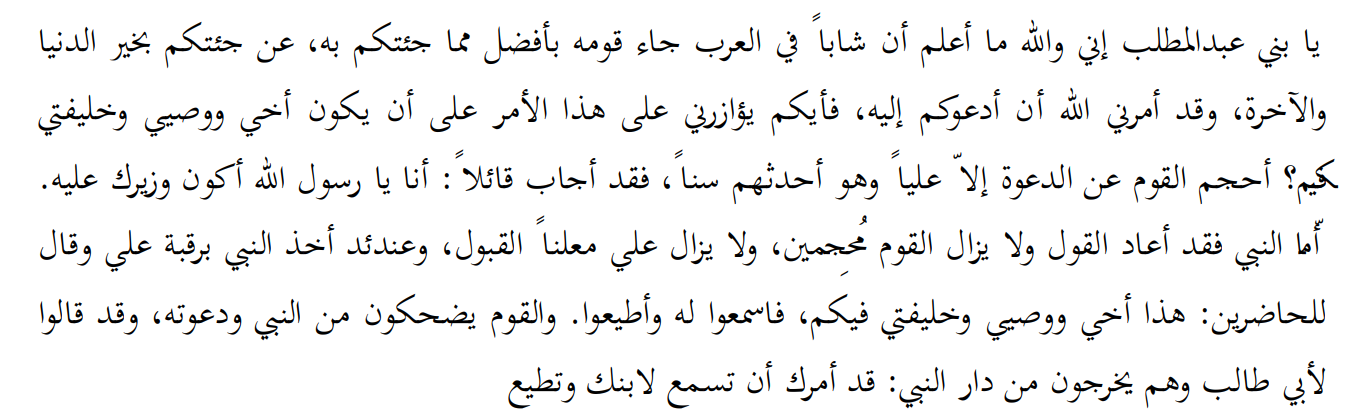
يا بني عبد المطلب، والله ما أعلم شابًا في العرب جاء قومه بأفضل مما جئتكم به، إني قد جئتكم بخير الدنيا والآخرة، وقد أمرني الله تعالى أن أدعوكم إليه، فأيكم يؤازرني على هذا الأمر، فيكون أخي ووارثي وخليفتي فيكم؟ فأحجم القوم عن الدعوة إلا عليًّا، وهو أصغرهم، فقال: أنا يا رسول الله أؤازرك على هذا الأمر. فكرر رسول الله ﷺ قوله، وبقي القوم ممسكين، وعلي يعلن قبوله، فأخذ رسول الله ﷺ بعنق علي، وقال لمن حضر: هذا أخي ووارثي وخليفتي فيكم، فاسمعوا له وأطيعوه. فضحك القوم من النبي ﷺ ومن دعوته، وقالوا لأبي طالب وهم منصرفون من بيت رسول الله ﷺ: "قد أمرك أن تسمع لابنك وتطيع."
O Banu Abd al-Muttalib, by Allah I do not know any youth among the Arabs who has come to his people with a thing better than what I have come to you with. Verily I have come to you with the good of this world and the Hereafter. Allah has commanded me to call you to Him, so which one of you will assist me in this matter so that he may become my brother, inheritor and my Khalifah among you? The people kept away from the da’wa except Ali, the youngest among them, who responded saying: I, O Messenger of Allah, will be your assistant upon this matter. The Messenger repeated his statement and the people remained away while Ali continued announcing his acceptance. So the Messenger took the neck of Ali and said to those present: This is my brother, inheritor and my Khalifah among you so listen to him and obey. The people laughed at the Prophet and his invitation, and said to Abu Talib while leaving the Messenger’s house: ‘He has commanded you to listen to your son and obey him.’”
هذا ملخص حديث الكساء كما رواه من يعتمدون عليه في الاستدلال.
This is the summary of the hadith of the house as narrated by those who depend upon it as evidence.
روى البخاري حادثة اليوم الذي
Al-Bukhari narrated the incident of the day when
وَأَنْذِرْ عَشِيرَتَكَ الْأَقْرَبِينَ [TMQ 26:214]
“And warn your nearest kinsfolk” [TMQ 26:214]
نزلت (بقوله): أن الرسول ﷺ قام على الصفا، دون أن يذكر إعداد الطعام. وروى أحمد بن حنبل في مسنده حديثين: أحدهما عن إعداد الطعام دون أن يذكر أنه كان في اليوم الذي نزلت فيه ﴿وَأَنذِرْ عَشِيرَتَكَ الْأَقْرَبِينَ﴾، والآخر يذكر أن إعداد الطعام كان في اليوم الذي نزلت فيه الآية. سنعرض هذه النصوص أولًا، ثم نبيّن ما تتضمنه.
Was revealed (saying) that the Messenger (saw) stood upon (Mount) Safa, without mentioning the preparation of food. Ahmad bin Hanbal narrated in his Musnad two hadiths, one about the preparation of food without mentioning it was the day in which “And warn your nearest kinsfolk” was revealed and another mentioning that the preparation of food was on the day the ayah was revealed. We will show these texts first then explain what they contain.
روى البخاري عن ابن عباس (رضي الله عنه) قال: لما
Al-Bukhari narrated from Ibn ‘Abbas (ra) who said: When
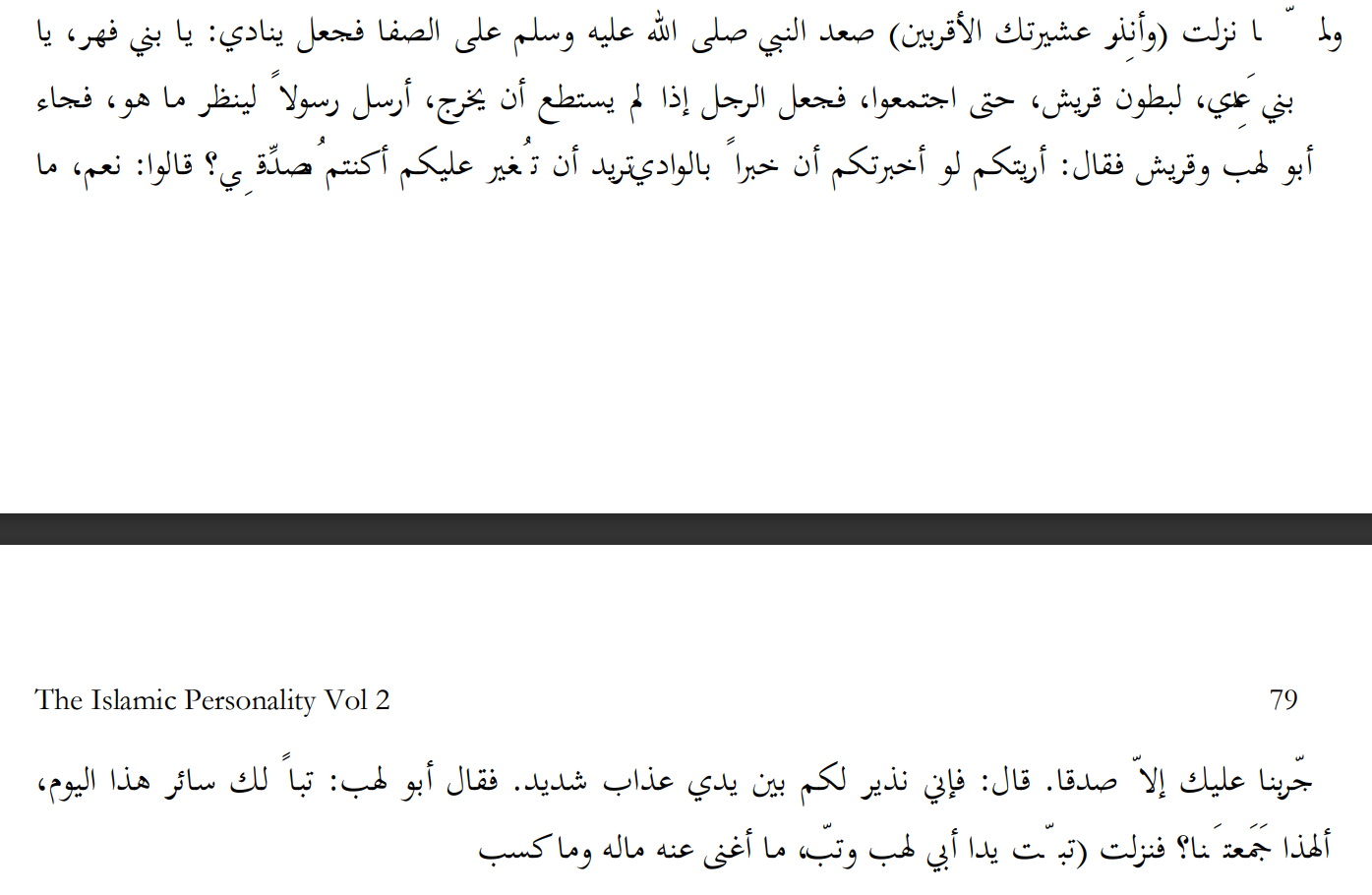
"وَأَنذِرْ عَشِيرَتَكَ الْأَقْرَبِينَ" نزلت، فقام رسول الله ﷺ على الصفا فجعل ينادي: يا بني فِهْر، يا بني عَدِيّ، لبطون قريش، حتى اجتمعوا، فمن لم يستطع أن يخرج أرسل رسولاً لينظر ما هو، فجاء أبو لهب وقريش، فقال ﷺ: «أرأيتكم لو أخبرتكم أن خيلاً بالوادي تريد أن تغير عليكم، أكنتم مصدقيّ؟» قالوا: نعم، ما جربنا عليك كذباً. قال: «فإني نذير لكم بين يدي عذاب شديد». فقال أبو لهب: تباً لك سائر اليوم، ألهذا جمعتنا؟ فنزلت: ﴿تَبَّتْ يَدَا أَبِي لَهَبٍ وَتَبَّ * مَا أَغْنَىٰ عَنْهُ مَالُهُ وَمَا كَسَبَ﴾ [تفسير القرآن ١١١:١-٢]
“And when And warn your nearest kinsfolk was revealed, the Messenger stood upon Safa and started announcing: O Banu Fihr, O Banu Adiyy for all the (butun) of Quraysh until they gathered together. Whoever was unable to go had sent a messenger to see what was happening. Abu Lahab and Quraysh came and he said: ‘If I told you there were horses (men) in the valley intending to attack you suddenly, would you believe me?’ They said: Yes, we have not tried you in anything except to find you saying the truth. He said: Verily, I am a warner to you before a severe punishment! Abu Lahab said: Woe be upon you for the rest of the day. Is it because of this that you gathered us? So “Perish the two hands of Abû Lahab (an uncle of the Prophet [sal-Allâhu 'alayhi wa sallam]) and perish he!, His wealth and his children will not benefit him!” [TMQ 111:1-2] was revealed”
هٰذا يدلّ على أنّ واقعة إعداد الطعام لم تكن في اليوم الذي نزلت فيه {وَأَنذِرْ عَشِيرَتَكَ الْأَقْرَبِينَ}، لأنّها لا تتّفق مع ما جرى في نصّ الحديث. قال أحمد بن حنبل في مسنده: حدّثنا عفّان، قال: حدّثنا أبو عوانة، عن عثمان بن المغيرة، عن أبي صادق، عن ربيعة بن ناجذ، عن علي رضي الله عنه، قال: جمع رسولُ الله ﷺ، أو دعا، بني عبد المطلب في كلّ فِرقهم ليأكلوا ويشربوا، فقدّم لهم صاعًا من طعام، فأكلوا حتى شبعوا، وقال: فبقي الطعامُ كأنّه لم يُمَسّ. ثم دعا بشرابٍ من زعفران فشربوا حتى رَوُوا، وبقي الشرابُ كأنّه لم يُمَسّ. ثم قال ﷺ:
This indicates that the incident of the preparation of food was not on the day in which “And warn your nearest kinsfolk” was revealed as it does not concur with what occurred in the hadith’s text. Ahmad bin Hanbal said in his Musnad: ‘Affan related to us that Abu Awana related to us from Uthman bin al-Mughira from Abu Sadiq from Rabi’a bin Najidh from Ali (ra) who said: The Messenger of Allah (saw) gathered or called Banu Abd al-Muttalib in all their groups to eat and drink. He prepared for them a quantity of food which they ate until they were satisfied. He said: The food remained as if it had not been touched. Then he called for a saffron drink which they drank until they will full, and the drink remained as if it had not been touched. Then he (saw) said:

"يَا بَنِي عَبْدِ الْمُطَّلِبِ، إِنِّي قَدْ بُعِثْتُ إِلَيْكُمْ خَاصَّةً، وَإِلَى النَّاسِ عَامَّةً، وَقَدْ رَأَيْتُمْ مِنْ هَذِهِ الْآيَةِ مَا رَأَيْتُمْ، فَأَيُّكُمْ يُبَايِعُنِي عَلَى أَنْ يَكُونَ أَخِي وَصَاحِبِي؟ ﷺ" قَالَ: فَلَمْ يَقُمْ مِنْهُمْ أَحَدٌ، فَقُمْتُ إِلَيْهِ، وَكُنْتُ أَصْغَرَ الْقَوْمِ، فَقَالَ: "اجْلِسْ". فَكَرَّرَ ذَلِكَ ثَلَاثَ مَرَّاتٍ، فَكُنْتُ أَقُومُ إِلَيْهِ، فَيَقُولُ: "اجْلِسْ"، حَتَّى إِذَا كَانَتِ الثَّالِثَةُ ضَرَبَ بِيَدِهِ عَلَى يَدِي ﷺ.
“O Banu Abd al-Muttalib, I have been sent specifically to you and to humanity in general. You have now seen of this sign (ayah) what you saw, so which one of you will give me a pledge in order to become my brother and companion?’ He said: None of them stood, so I stood for him though I was the youngest of the group and he said: Sit down. He repeated it three times following which I stood for him and he said ‘Sit down’, until the third time he struck my hand with his hand.”
هذا يوضّح أنه لا يوجد في هذه الواقعة ما يدلّ على نزول قوله تعالى: {وَأَنذِرْ عَشِيرَتَكَ الْأَقْرَبِينَ}، وأن رسول الله ﷺ عرض الإسلام عليهم، فمن أسلم منهم كان أخاه وصاحبه، ولم يقل شيئًا لعليّ (رضي الله عنه).
This clarifies that there is no moment in this incident of the revelation of “And warn your nearest kinsfolk”, and that the Messenger (saw) offered Islam to them so that whoever became a Muslim would become his brother and companion and that he did not say anything to Ali (ra).
أما الرواية الثانية، فقد روى أحمد بن حنبل في مسنده: «حدثنا الأسود بن عامر، قال: حدثنا شريك، عن الأعمش، عن المنهال، عن عباد بن عبد الله الأسدي، عن علي قال: لما نزلت هذه الآية: ﴿وَأَنذِرْ عَشِيرَتَكَ الْأَقْرَبِينَ﴾ جمع رسول الله ﷺ أهل بيته، فاجتمع ثلاثون رجلاً، فأكلوا وشربوا، ثم قال لهم ﷺ:
As for the second narration, Ahmad bin Hanbal narrated in his Musnad: “Aswad bin Amir related to us that Shareek related to us from Al-‘Amash from Al-Minhal from ‘Ibad bin Abdullah al Asadi from Ali who said: When the ayah “And warn your nearest kinsfolk” was revealed, the Messenger (saw) gathered the family of his house. Thirty people gathered; they ate and drank then he (saw) said to them:
"من يتكفل بديوني ووعودي فيكون معي في الجنة، ويكون خليفتي على أهلي؟" فقال رجل لم يسمه شريك: يا رسول الله، كنتَ بحرًا فمن يقوم بهذا؟ ثم قال آخر (مثل ذلك؟). فعرض ذلك على أهل بيته، فقال علي رضي الله عنه: أنا.
"Which one will guarantee my debts and promises so as to be with me in Paradise, and he will be my Khalifah over my family? A man, whom Shareek did not name, said: O Messenger of Allah, you were an ocean (bahr) so who could take care of this? Then another said (the same?). He offered that to the family of his house, so Ali (RA) said: I (will).”
لم ترد كلمة الوصيّ أو الخليفة في هذين النصّين بأي وجه من الوجوه إطلاقاً. وإنما ورد فقط لفظ «خليفة» مقيّداً بأهل بيته، والخلافة على الأهل ليست الخلافة في منصب الحكم والإمارة، ولا علاقة لها بذلك البتة. وهذان النصّان جاءا في كتب الصحيح بروايات كثيرة بألفاظ متقاربة ومعانٍ متّحدة، ولم يرد في شيء منها لفظ الوصيّ أو الخلافة. ولم يثبت قط، لا عن أحد من جامعي كتب الصحيح ولا عن أحد من الرواة الثقات، في حديث واحد لفظ الوصيّ أو الخليفة بأي وجه من الوجوه، لا في حق علي ولا في حق غيره، فيسقط الاستدلال لعدم وجود دليل عليه في كتب الصحيح.
The word inheritor or Khalifah does not appear in these two texts in any way at all. Rather it is only the word Khalifah which appears restricted to his family, and the Khilafah over the family is not the Khilafah in the post of rule or leadership nor does it have any relationship with that. These are the texts which came in the Saheeh books, and they came in numerous narrations with similar wordings and unified meanings, and there did not appear in any of them the words inheritor or Khilafah. There has never appeared, either via any of the compilers of the Saheeh (books of ahadith) or any of the trustworthy narrators, in even one hadith the word(s) inheritor of Khalifah in any way at all either in relation to Ali or anyone else, so the evidence falls due to the absence of any evidence for it in the Saheeh books.
أما ما يرويه المتنازعون في شأن تعيين علي، والذي يسمّونه حديث الدار، فهذا النص بهذه الرواية مردود من جهة معناه (دراية). والحديث يُردّ من جهة درايته بناءً على معناه، ويُردّ من جهة روايته بناءً على سنده. فإذا رُدّ من جهة سنده أو من جهة معناه فلا يُعتدّ به، ولا يصلح للاستدلال. وأما ردّ معناه فلأسباب كثيرة، منها:
As for the text narrated by those who contend about the appointment of Ali which they named the hadith of the house, this text with this narration (riwayah) is rejected in its meaning (Dirayah).A hadith is rejected in its dirayah based on its meaning, and its narration based on its chain. So if it is rejected in its chain or meaning then it cannot be considered and it falls as evidence. As for rejecting its meaning, this is due to many reasons including:
أولاً: يظهر في هذا الحديث أن الرسول ﷺ طلب مساعدة آل عبد المطلب في دعوته بشرط أن يكون الحكم لهم من بعده. وهذا باطل من وجهين: أولهما أن هذا يناقض قول الرسول ﷺ وفعله في الواقعة التي رفض فيها طلب القبيلة أن يكون الحكم لها من بعده إن أسلمت، حيث أجابها ﷺ بقوله:
Firstly: In this hadith it appears that the Messenger (saw) sought the assistance of the family of Abd al-Muttalib in his da’wa with the condition that the rule became theirs after them. This is void from two aspects: firstly, this contradicts the Messenger’s statement and action in the incident in which he refused the request from the tribe that the rule becomes theirs after him if they become Muslims to which he replied:
«الأمرُ لله وحده، وهو يضعُه حيثُ يشاء».
“Authority is a matter which belongs to Allah, and He (swt) will place it where He wishes.”
ابن هشام روى في كتابه سيرة النبي ﷺ: قال ابن إسحاق: وحدّثني الزهري أنه لقي بني عامر بن صعصعة فدعاهم إلى الله عز وجل، وعرض نفسه عليهم. فقال له رجل منهم يقال له بيحرة بن فراس: والله لو أني أخذت هذا الفتى من قريش لأكلت به العرب. ثم قال له: أرأيت إن نحن بايعناك على أمرك، ثم أظهرك الله على من خالفك، أيكون لنا الأمر من بعدك؟ قال: «الأمر إلى الله يضعه حيث يشاء». قال: فقال له: أنهدف نحورنا للعرب دونك، فإذا أظهرك الله كان الأمر لغيرنا؟ لا حاجة لنا بأمرك، فأبوا عليه. فكيف يقول رسول الله ﷺ: «الأمر لله يضعه حيث يشاء» أي أمر الخلافة والحكم من بعده، ثم يقول لبني عبد المطلب:
Ibn Hisham narrated in his book of the Sirah of the Prophet (saw): Ibn Ishaq said that Az-Zuhri narrated that he met Banu Amr bin Sa’sa’ah so he invited them to Allah ‘azza wa jalla and offered himself to them. One man among them, whom they called Bayjirat bin Furra, said to him: By Allah, if I were to take this youth from the Quraysh, I will eat (i.e. conquer) the Arabs through him. Then he said: What if we were to pledge to support your matter then Allah will grant you victory over those who oppose you. Will the rule be with us after you? He said: “The rule is for Allah and He places it where He wills.” He said: So he said to him: Will we sacrifice our throats for you, then when Allah (swt) grants you victory the rule becomes for someone else? Then we have no need of your matter, and they rejected him.” How can the Messenger (saw) say: “The matter belongs to Allah and He will place it where He wills” i.e. the matter of the Khilafah and the rule after him, yet he says to Banu Abd al-Muttalib:
أَيُّكُمْ يُؤَازِرُنِي عَلَى هَذَا الْأَمْرِ، فَيَكُونَ أَخِي وَوَصِيِّي وَخَلِيفَتِي فِيكُمْ؟
“Which one of you will assist me upon this matter so that he may become my brother, inheritor and Khalifah among you?”
أليس هذا تناقضًا واضحًا؟ لا محالة، يجب أن يُرفض أحد هذين القولين. إذ يُقال في حديث البيت إنه وقع حين
Is this not a clear contradiction? Inevitably, it is necessary that one of these two statements be rejected. Since it is said of the hadith of the house that it occurred when
أَنْذِرْ عَشِيرَتَكَ الْأَقْرَبِينَ [TMQ 26:214]
“Warn your nearest kinsfolk” [TMQ 26:214]
نزلت أي في السنة الثالثة من بعثة الرسول ﷺ، والحديث:
Was revealed i.e. the third year of the messenger ship and the hadith:
الأمرُ للهِ، وهو يضعُهُ حيثُ يشاء
“The matter belongs to Allah and He places it where He wills”
لما عرض الرسول ﷺ نفسه على القبائل، أي في السنة العاشرة من البعثة، وبالتالي بعد حديث الدار؛ فحديث الدار مردود. أما الجانب الثاني، فهو أن الرسول ﷺ في هذا الحديث قدّم للكفار شيئاً ليُسلموا، بل قدّم لهم أعظم شيء وهو الخلافة من بعده على جميع المسلمين ثمناً لدخولهم في الإسلام. وهذا يتعارض مع فعل الرسول ﷺ في دعوته وأحكام الشريعة. فقد كان الرسول ﷺ يدعو الناس إلى الإسلام لأنه الدين الصحيح، ولم يُنقل عنه ولو في حديث ضعيف أنه عرض شيئاً، قليلاً كان أم كثيراً، على كافر مقابل دخوله في الإسلام. أما المؤلفة قلوبهم، فهم مسلمون يُعطون من الزكاة ليتقوى بهم الدولة، لا كفار يُعطون ليدخلوا في الإسلام. ولا يجوز كذلك إعطاء الكفار شيئاً مقابل دخولهم في الإسلام.
when the Messenger (saw) offered himself to the tribes i.e. in the tenth year after the messenger ship and therefore after the hadith of the house; so it is the hadith of the house which is rejected. As for the second side, it is that the Messenger (saw) in this hadith offered something to the disbelievers so that they may become Muslims, rather he offered them the greatest thing which is the Khilafah after him over all Muslims as the price for their entering into Islam. This contradicts the Messenger’s action in his da’wa and the Shari’ah rules. The Messenger would invite people to Islam because it is the correct deen and it has never been narrated from him, even through a weak hadith that he offered anything whether small or large to a kafir in exchange for his entering into Islam. As for those whose hearts are to be reconciled, they are Muslims who are given from the zakat in order to strengthen the State through them, not kuffar who are given so that they enter Islam. Nor is it allowed to give something to kuffar in exchange for their entering Islam.
ثانياً: يذكر الحديث أن الرسول ﷺ أعدّ وليمة طعام للكفار ليدعوهم إلى الإسلام، فجمعهم حول طعام ليدخلوا في الإسلام، ولم يُعدّ طعاماً لعليّ (رضي الله عنه) الذي كان قد أسلم من قبل. فإذا رفض هؤلاء الإسلام، ورفضوا أن يكون الأمر لهم من بعده مقابل الإسلام، فلا مكان هناك لعليّ (رضي الله عنه) ليُعطي قبوله، إذ لم يُدعَ إلى الإسلام لأنه مسلم بالفعل، ولا يوجد خطاب موجّه إليه؛ ولهذا لا مكان له في هذا المجلس بحيث يقول له:
Secondly: The hadith mentions that the Messenger (saw) prepared a wedding feast and meal for kuffar in order to invite them to Islam, and he gathered them around a meal so that they may enter Islam and he did not prepare food for Ali (ra) who had already accepted Islam. So if these people reject Islam and reject that the rule becomes theirs after him in exchange for Islam, there is no place there for Ali (ra) for giving his acceptance as he is not being invited to Islam because he is already a Muslim, and there is no speech addressed to him. This is why there is no place in this gathering such that he says to him:
هَذَا أَخِي وَوَصِيِّي وَخَلِيفَتِي فِيكُمْ فَاسْمَعُوا لَهُ وَأَطِيعُوا
“This is my brother, inheritor and my Khalifah among you so listen to him and obey”
لأنه ليس هو المخاطَب ولا المفاوَض. ثالثًا: يذكر الحديث أن القوم رفضوا الإسلام، وأنهم مع تكرار عرضه عليهم أصرّوا على رفض الإسلام، ورفضوا أن يصير لهم الحكم من بعده مقابل دخولهم في الإسلام. فبقوا كفارًا، فكيف يقول لهم رسول الله ﷺ في خطابه إياهم:
Since he is not the target of the address or the negotiation. Thirdly: The hadith mentions that the group rejected Islam, and despite him repeating his offer they persisted in rejecting Islam and rejecting that the rule becomes theirs after him in exchange for entering Islam. They remained kuffar so how could the Messenger (saw) say to them in addressing them:
هَذَا خَلِيفَتِي فِيكُمْ
“This is my Khalifah among you”
وكيف يأمرهم بالسمع والطاعة له وهو يعلم أنهم كفار قد رفضوا الإسلام؟ وكيف يكون خليفةً عليهم وهم كفار؟
Commanding them with hearing and obeying him while he knows they are kuffar who have rejected Islam? And how could he be the Khalifah among them while they are kuffar?
رابعًا: وأما الحديث الذي يستدلون به فيقولون فيه:
Fourthly: The narration they narrate says:
هَذَا أَخِي وَوَصِيِّي وَخَلِيفَتِي فِيكُمْ فَاسْمَعُوا لَهُ وَأَطِيعُوا
“This is my brother, inheritor and my Khalifah among you so listen to him and obey”
هذا خطاب لأهل بني عبد المطلب، لأنّ الكلام بدأ بقوله: «يا بني عبد المطلب»، فهو خاصّ بهم، إذ جعله خليفةً عليهم، أي على أهل بني عبد المطلب، لا خليفةً للمسلمين، لأنه قال: «وخليفتي فيكم». فهو بحسب النص الصريح ليس خليفةً للمسلمين. ولا يصحّ أن يُقال هنا إنّ العبرة بعموم اللفظ لا بخصوص السبب، لأنّ هذه واقعةٌ معيّنة لا سبب (سبب النزول)، هذا مع أنّ الألفاظ نفسها خاصّة لا عامّة: «يا بني عبد المطلب»، و«خليفتي فيكم»، فالتخصيص لازم، لكونه واقعةً معيّنة، ولانعدام الألفاظ العامّة.
This is an address to the family of Abd al-Muttalib since the words started with his saying “O Banu Abd al-Muttalib.” So it is specific to them as he made him a Khalifah over them i.e. over the family of Abd al-Muttalib not the Khalifah of the Muslims since he said, “and my Khalifah over you.” Thus he is not the Khalifah for the Muslims as is depicted by the explicit text. Nor can one say here that the lesson is by the generality of the text not the specificity of the cause since this is a specific incident not a cause (sabab) not mentioning that the words are also specific and not general: “O Banu Abd al-Muttalib”, “my Khalifah among you” so the specification is demanded due to this being a specific incident not a cause, and also due to the absence of general words.
بمجرد واحدٍ من هذه الأمور الأربعة يتبيّن كذبُ هذا الحديث وتناقضُه، ويجب رفضُ روايته (دراية). ولذلك يتضح أن الرسول ﷺ لم يصرّح بجعل علي (رض) خليفةً بعده. ومن كل ذلك يتبين أن الأحاديث التي يحتج بها من يزعم أن الرسول ﷺ عيّن شخصًا للخلافة بعده أحاديثُ مردودة، غيرُ صالحةٍ للاعتماد عليها دليلًا، فتسقط. ولم يبقَ دليلٌ على أن الرسول ﷺ عيّن أحدًا ليتولى الخلافة بعده، بل ثبت الدليل على خلاف ذلك، أي أن الرسول ﷺ ترك الأمر للمسلمين يختارون من يريدون لهذا المنصب، لكنه بيّن لهم الطريقة في تعيين الخليفة.
Just one of these four matters suffices to reveal the falsehood of this hadith and its contradiction, and it is obligatory to reject its narration (dirayah). Therefore it is clarified that the Messenger (saw) did not explicitly state making Ali (ra) the Khalifah after him. From all this it becomes clear that the ahadith narrated by those who argue that the Messenger (saw) designated a person for the Khilafah after him are rejected ahadith unsuitable to depend upon as evidence so they fall. There remains no evidence that the Messenger (saw) designated anyone to be in charge of the Khilafah after him; rather the evidence has been established contrary to that i.e. that the Messenger (saw) left the matter to the Muslims to choose whom they want in relation to the person but he specified for them the method for appointing the Khalifah.
أما الخطأ في الآراء القائلة بأن الرسول ﷺ عيّن الأشخاص الذين سيكونون خلفاء من بعده، فيتضح من عدم وجود الدليل في الأحاديث التي يزعمون أنها عيّنت علياً رضي الله عنه لذلك. فالذين يقولون إن الخلافة لهم وحدهم إنما يقولون ذلك لأنهم من ذرية علي رضي الله عنه، فإذا لم ينطبق دليلهم على علي رضي الله عنه، فإنه لا ينطبق بالضرورة على ذريته أيضاً لعدم انطباق الدليل عليه. وفضلاً عن ذلك، فإن الأحاديث التي يرويها هؤلاء في اعتبارها دليلاً على خلافة ذرية علي رضي الله عنه بنصٍّ صريح من الله ورسوله ﷺ، هي الأحاديث الواردة في أهل البيت، وكلها تدل على الثناء والفضل لا أكثر من ذلك. أما حديث الثقلين، أي حديث غدير خم، فيُعدّ عمدةً لهم، وقد تبيّن بوضوح عدم صحة استدلالهم به، فسائر الأحاديث تبعٌ له.