26. موالاۃ المؤمن للکفار
26. The Believer's Befriending The Disbelievers
قال الله سبحانه وتعالى:
Allah (swt) said:
لَا يَتَّخِذِ الْمُؤْمِنُونَ الْكَافِرِينَ أَوْلِيَاءَ مِنْ دُونِ الْمُؤْمِنِينَ ۖ وَمَن يَفْعَلْ ذَٰلِكَ فَلَيْسَ مِنَ اللَّهِ فِي شَيْءٍ إِلَّا أَن تَتَّقُوا مِنْهُمْ تُقَاةً ۗ وَيُحَذِّرُكُمُ اللَّهُ نَفْسَهُ ۗ وَإِلَى اللَّهِ الْمَصِيرُ [آل عمران: 28]
“Let not the believers take the disbelievers as friends instead of believers, and whoever does that is not of Allah in anything except if you fear from them something to be feared. And Allah warns you against Himself and to Allah is the return” [TMQ 3:28].
يَقرأ يعقوب وسهل (تُقيَّةً) وهي قراءة الحسن ومجاهد، بينما يقرؤها الباقون (تُقاةً). وقد جاء في القاموس المحيط: ‘(التَّوْقِيَةُ) الكَلاءَةُ والحِفْظُ. وَ(اتَّقَيْتُ) الشيءَ وتَقَيْتُهُ (تُقًى) و(تُقاةً) وَ(تُقيَّةً) أَيْ خِفْتُهُ’. وهذا النص في الآية يحدد موضوعها، ويحدد هذا المعنى اللغوي لكلمة (تقية) معناها في هذه الآية، إذ لم يثبت لها معنى شرعي. فيتعين تفسيرها بمعناها اللغوي، وعلى هذا الأساس وحده تُفهم الآية في عمومها وتفاصيلها. أما ما جاء في الأحاديث عن أسباب نزولها، إن صحّ سنده، فهو يرشد إلى تفاصيل ما ورد في الآية، لكنه لا يغيّر موضوعها ولا معنى جملها وفقًا للغة والشرع. وموضوع الآية واضح في جملتها، وهو موالاة المؤمنين للكافرين، أي اتخاذهم أولياء. ونص الآية: {لَا يَتَّخِذِ الْمُؤْمِنُونَ الْكَافِرِينَ أَوْلِيَاءَ مِنْ دُونِ الْمُؤْمِنِينَ ۖ وَمَن يَفْعَلْ ذَٰلِكَ فَلَيْسَ مِنَ اللَّهِ فِي شَيْءٍ إِلَّا أَن تَتَّقُوا مِنْهُمْ تُقَاةً ۗ وَيُحَذِّرْكُمُ اللَّهُ نَفْسَهُ ۗ وَإِلَى اللَّهِ الْمَصِيرُ}
Ya’qub and Sahl recite it as (taqiyyah) which is the recitation of Al-Hasan and Mujahid, while the rest (recite it) as (tuqat). It is said in Al-Qamus Al-Muheet: ‘(At-tawqiyya) is (al-kalau) and protection. I do (taqa) something and I did (taqa) it and do (taqi) it (taqa) and he (taqi) it (tiqa) like (kisa) is I feared it.’ This text in the ayah specifies its subject and this linguistic meaning of the word (taqiyyah) specifies what this word means in this ayah in meaning since no Shari’ah meaning was established for it. So it specifies interpreting it with its linguistic meaning. Upon this basis alone is the ayah understood in its generality and details. As for what came in the ahadith of the circumstances of its revelation, if authenticated, guides to the details of what came in the ayah but would not change its subject neither the meaning of its sentences according to the language and Shar’a. The subject of the ayah is clear in its sentence which is believers befriending the disbelievers i.e. treating them as friends. The text is:
لَا يَتَّخِذِ الْمُؤْمِنُونَ الْكَافِرِينَ أَوْلِيَاءَ مِنْ دُونِ الْمُؤْمِنِينَ [سورة آل عمران: 28]
“Let not the believers take the disbelievers as friends instead of believers” [TMQ 3:28].
إذا كانت الآية أو الحديث قد نزل في موضوع معيّن، فهو خاصٌّ بهذا الموضوع ولا يشمل غيره. والمسألة هنا مسألة موالاة المؤمنين للكافرين، والتي نزلت فيها الآية التي تحرّمها تحريمًا قاطعًا. ولم تكن هذه الآية وحدها في هذا الباب؛ بل جاءت آيات كثيرة كقول الله تعالى:
If the ayah or ahadith came about a specific subject, then it is specific to this subject and does not include anything else. The issue is the issue of believers befriending disbelievers for which came the ayah decisively prohibiting it. Nor is this the only ayah upon this subject; there have come numerous ayahs like Allah’s statement:
بَشِّرِ الْمُنَافِقِينَ بِأَنَّ لَهُمْ عَذَابًا أَلِيمًا * الَّذِينَ يَتَّخِذُونَ الْكَافِرِينَ أَوْلِيَاءَ مِن دُونِ الْمُؤْمِنِينَ [تَفْسِيرُ الْقُرْآنِ الْمَجِيدِ 4:138-139]
“Give tidings to the hypocrites that for them is a painful punishment. Those who take the disbelievers as (awliya) instead of believers” [TMQ 4:138-139].
وَقَوْلُ اللَّهِ تَعَالَى:
And Allah’s statement:
يَا أَيُّهَا الَّذِينَ آمَنُوا لَا تَتَّخِذُوا الْكَافِرِينَ أَوْلِيَاءَ مِن دُونِ الْمُؤْمِنِينَ [TMQ 4:144]
“O you who believe, do not take the disbelievers as (awliya) instead of disbelievers” [TMQ 4:144]
وَقَوْلُهُ (سبحانه وتعالى):
And His (swt) statement:
لَا تَجِدُ قَوْمًا يُؤْمِنُونَ بِاللَّهِ وَالْيَوْمِ الْآخِرِ يُوَادُّونَ مَنْ حَادَّ اللَّهَ وَرَسُولَهُ [TMQ 58:22]
“You will not find a people who believe in Allah and the Day of Judgement loving those who oppose Allah and His Messenger” [TMQ 58:22]
وَقَوْلُهُ (سبحانه وتعالى)
And His (swt) statement
لَا تَتَّخِذُوا الْيَهُودَ وَالنَّصَارَىٰ أَوْلِيَاءَ [TMQ 5:51]
“Do not take the Jews and Christians as (awliya)” [TMQ 5:51]
وقوله تعالى:
And His statement:
لَا تَتَّخِذُوا عَدُوِّي وَعَدُوَّكُمْ أَوْلِيَاءَ [TMQ 60:1]
“Do not take my enemy and your enemy as (awliya)” [TMQ 60:1]
الموضوع هو موضوع موالاة المؤمنين للكافرين، وبقية الآية تفصّل هذا الموضوع. ذلك أن الله سبحانه نهى المؤمنين عن اتخاذ الكافرين أولياء، وربط هذا النهي بحسم وقطع، بأن من يفعل ذلك ويتخذ الكافرين أولياء فإن الله بريء منه. ثم استثنى من هذا النهي الحاسم حالةً واحدة، وهي أن يخاف المؤمن ضررًا من الكافر، فيجوز له حينئذٍ أن يوالي الكافرين لدفع هذا الضرر. وذلك إذا كان المسلم تحت سلطة الكفار مغلوبًا على أمره، أي أن خوف الكافر يبيح موالاته. فإذا زال الخوف صارت الموالاة محرّمة. وعليه فالمسألة ليست إظهار الموالاة وإخفاء غيرها، وإنما هي استثناء حالة خوف المؤمن من الكافر حين يُغلب على أمره من عموم النهي عن موالاته. ومعنى الآية: النهي القاطع للمؤمنين عن اتخاذ الكافرين أولياء لهم، بأن يستنصروهم ويعتمدوا عليهم، ويحبوهم ويكون بينهم وبينهم مودة. فنهى المؤمنين عن موالاة الكافرين دون المؤمنين، ثم استثنى حالةً واحدة منه، وهي حالة وجود الخوف منهم حين يكونون تحت سلطتهم. فيجوز حينئذٍ إظهار المودة لهم وموالاتهم لدفع شرهم وضررهم، أي يجوز اتخاذهم أولياء في حالة وجود الخوف منهم حين يكونون تحت سلطانهم. وما عدا ذلك فغير جائز البتة. وهذا الحكم خاصٌّ بالكفار في علاقتهم بالمؤمنين، إذ نزلت الآية في شأن المؤمنين الذين كانت لهم علاقات صداقة مع المشركين في مكة. نهى هذا النصُّ أهلَ المدينة عن موالاة المشركين في مكة، ونهى جميعَ المؤمنين، واستثنى من ذلك المؤمنين الذين كانوا في مكة وقد غُلبوا على أمرهم، فاستثناهم لوجود الخوف من أذى الكفار القريبين منهم. هذا هو موضوع الآية ومعناها، وهذا هو الحكم الشرعي المستنبط منها، وهو النهيُ عن موالاة المؤمنين للكافرين في كل أنواع الموالاة، من نُصرة ومحبة ومعاونة وغيرها، إذ جاءت لفظة (أولياء) عامةً في الآية تشمل جميع معانيها، وإباحةُ موالاتهم في حال الخوف منهم، أي الخوف من بطشهم وأذاهم، حين يكون الكفار غالبين على المسلمين والمسلمون مغلوبين على أمرهم، تماماً كحال المسلمين في مكة مع المشركين. ليس في الآية معنى آخر، ولا حكمٌ آخر غير هذا الحكم المستنبط منها. أما ما يقوله بعضهم من أن "التقية" هي أن يُظهر المسلم خلاف ما يُبطن أمام من يخاف منه الضرر، أو يخاف أن يعرف حقيقته وما في نفسه، سواء كان ذلك الشخص كافراً أو مؤمناً، فهذا القول خطأٌ محض؛ إذ لا تدل الآية على شيء من ذلك، فإن معنى قوله: "إلا أن تتقوا منهم تقاةً" أي إلا أن تخافوا منهم شيئاً يُخاف، فمعنى "اتقيتُ" الشيء أي خفته، و"تُقاة" و"تَقِيَّة" بمعنى واحد. وهذا استثناءٌ من النهي عن موالاة المؤمنين للكافرين دون المؤمنين، فهو خاصٌّ بما استُثني منه.
The subject is the subject of believers befriending disbelievers and the rest of the ayah is detailing the subject. This is because Allah (swt) prohibited the believers from taking the disbelievers as friends, and linked this prohibition with a definite decisiveness that the one who does that and takes the disbelievers as friends then Allah is absolved from him. The he excluded from this decisive prohibition one situation which is the believer fearing harm from the disbeliever, wherein it is allowed for him to befriend the disbelievers to prevent this harm. This is if the Muslim were under the disbelievers’ authority defeated in his affair i.e. the fear of the disbeliever permits his befriending. If the fear disappears then the befriending is forbidden. Accordingly the situation is not displaying befriending and hiding something else, but the issue is excluding the situation of the believer’s fear of the disbeliever when the Muslim is defeated in his affair from the generality of forbidding his befriending him. The meaning of the ayah is the decisive prohibition for the believers from taking the disbelievers as friends for them, and that they seek their assistance and depend upon them, and that they befriend them and there be love between them. So it forbade the believers from befriending disbelievers instead of believers then excluded one situation from this, which is in the situation where there exists fear from them when they are under their authority. Then it is allowed to display love for them and to befriend them to prevent their evil and harm. That is, it is allowed to take them as i.e. friends in the situation where there exists fear from them when they are under their rule. Apart from that, it is absolutely not allowed. This is for the disbelievers only in relation with the believers as the ayah was revealed in the affair of the believers who had relations friendship with the polytheists in Makkah. It prohibited those in Madinah from befriending the polytheists in Makkah and it prohibited all believers but excluded from that the believers who were in Makkah who were defeated in their affair. So it excluded them due to the existence of fear of the harm of the disbelievers near to them. This is the subject of the ayah and this is its meaning, and this is the Shari’ah rule deduced from it which is the forbidding of the believers befriending the disbelievers in all types of befriending, for support, friendship, assistance etc as the word (awliya) came general in the ayah covering all its meanings, and the permission of befriending them in the situation of fearing them i.e. fearing their violence and harm when the disbelievers are victorious over Muslims and the Muslims are defeated in their affair exactly like the situation of the Muslims in Makkah with the polytheists. There does not exist any other meaning in the ayah nor any rule other than this rule deducted from it. As for what some say that “taqiyyah” is that a Muslim displays opposite to what is hidden before any person from whom he fears harm or fears his knowing his reality and what is in his soul whether that person is a disbeliever or believer, this statement is pure error. The ayah does not indicate anything of this since the meaning of: “Except if you fear from them (tuqat)” i.e. except if you fear from them something to be frightened of as the meaning of “atqaytu” something “taqiyyah” is I feared it, and (tuqat) and (taqiyyah) are of one meaning. This is excluded from the prohibition of believers befriending disbelievers instead of believers so it is specific to what is excluded of it.
لَا تَجِدُ قَوْمًا يُؤْمِنُونَ بِاللَّهِ وَالْيَوْمِ الْآخِرِ يُوَادُّونَ مَنْ حَادَّ اللَّهَ وَرَسُولَهُ [TMQ 58:22]
‘You will not find a people who believe in Allah and the Last Day loving those who oppose Allah and His Messenger’ [TMQ 58:22]
وَقَوْلُهُ (سبحانه وتعالى):
And His (swt) statement:
لَا تَتَّخِذُوا الْيَهُودَ وَالنَّصَارَىٰ أَوْلِيَاءَ [TMQ 5:51]
‘Do not take the Jews and Christians as friends’ [TMQ 5:51]
وَقَوْلُهُ (سبحانه وتعالى):
And His (swt) statement:
لَا تَتَّخِذُوا عَدُوِّي وَعَدُوَّكُمْ أَوْلِيَاءَ [TMQ 60:1]
‘Do not take my enemy and your enemy as friends.’ [TMQ 60:1]
وَقَوْلُهُ (سبحانه وتعالى):
And His (swt) statement:
لَا تَتَّخِذُوا عَدُوِّي وَعَدُوَّكُمْ أَوْلِيَاءَ [TMQ 60:1]
‘Do not take my enemy and your enemy as friends.’ [TMQ 60:1]
قَوْلُهُ (سبحانه وتعالى):
His (swt) statement:
بدلاً من المؤمنين [TMQ 28:53]
‘Instead of believers’ [TMQ 28:53]
معنی یہ ہے کہ دوستی اہلِ ایمان کے ساتھ لازم ہے، اور یہ کافروں سے دوستی کرنے اور مومنوں کے خلاف ان کی مدد کرنے سے ممانعت ہے۔ اور کہا گیا ہے کہ (یہ) کافروں کے ساتھ مہربانی اور دوستانہ برتاؤ کرنے کی ممانعت ہے۔ حضرت ابن عباسؓ سے روایت ہے: "أولیاء" (دوست) "ولیّ" کی جمع ہے، اور ولی وہ ہے جو اس شخص کا، جو اس کے عمل سے راضی ہو، مدد اور پشت پناہی کے ساتھ سرپرستی کرے، اور یہ دو طرح سے ہوتا ہے۔ پہلا، مدد کرنے والا سرپرست جو مدد کرے، اور دوسرا وہ جس کی مدد کی جائے۔ پس اللہ تعالیٰ (سبحانہ وتعالیٰ) کا فرمان:
Means that friendship is obliged with believers, and this is a prohibition from befriending disbelievers and assisting them against believers. And it is said (that it is) a prohibition of treating the disbelievers with kindness and friendliness. It is narrated from ibn Abbas: "friends" (awliya) is the plural of "friend (waliyy) who is the one who commands the one pleased with his action with assistance and support, and it occurs in two ways. Firstly, the designated supporter with support and the other who is the supported. So His (swt) statement:
﴿اللَّهُ وَلِيُّ الَّذِينَ آمَنُوا﴾ [TMQ 2:257
‘Allah is the friend of those who believe’ [TMQ 2:257
يعني: أنصارهم وأعوانهم بنصره، ويقال: إن المؤمن وليّ الله، أي: المؤيَّد بنصره. وقوله: «ومن يفعل ذلك» يعني: من يتخذ الكافرين أولياء بدلاً من المؤمنين «فليس من الله في شيء» أي: ليس من أولياء الله تعالى، والله تعالى بريء منه، ويقال: ليس من ولاية الله في شيء. ثم استثنى فقال:
Means their helpers and supporters by His support, and it is said that the believer is the friend of Allah i.e. one assisted by His support. His statement: ‘whoever does that’ means whoever takes disbelievers as friends instead of believers ‘then he is not of Allah in anything’ i.e. he is not from the friends of Allah (swt) and Allah (swt) is absolved of him, and it is said he is not from the friendship (wilayah) of Allah in anything. Then He excluded and said:
إِلَّا أَنْ تَخَافُوا مِنْهُمْ تُقَاةً
‘except if you fear from them something to be feared’
إلا أن يكون الكفار غالبين والمؤمنون مغلوبين، فيخاف المؤمن منهم إن لم يُظهر موافقتهم أو يُحسن صحبتهم. ففي تلك الحال يجوز له أن يُظهر محبته لهم بلسانه وانقياده لهم اتقاءً منهم وحفظاً لنفسه، من غير أن يعتقد ذلك. وفي هذه الآية دلالة على جواز التقية في الدين عند الخوف على النفس، وقد قال أصحابنا إنها جائزة في كل شيء عند الضرورة، وقد تصير واجبة كثيراً في صنوف الإحسان والمصالحة، ولكنها لا تجوز في الأفعال التي فيها قتل مؤمن، أو ما يُعلم أو يغلب على الظن أنه إفساد في الدين. وقال المفيد: إنها تكون واجبة في بعض الأحوال فتصير فرضاً، وتكون جائزة في بعض الأحوال فتصير مندوبة، وتكون جائزة في وقت من غير وجوب، وتكون في بعض الأوقات أفضل من تركها، وقد يكون تركها في بعض الأوقات أفضل، وإن كان فاعلها معذوراً ومغفوراً له بترك الإثم فيها. وقال الشيخ أبو جعفر الطوسي: إن ظاهر الروايات يدل على أنها واجبة عند الخوف على النفس، وقد رُوي التخفيف في إجازة النطق بالحق صراحةً في ذلك. وروى الحسن
means except that if the disbelievers are victorious and the believers defeated so the believer fears them if he does not show his agreement with them or make good his companionship with them. At that time, it is allowed for him to show his affection for them with his tongue and compliance to them as a precaution (taqiyyah) from them and protection for himself without believing that. In this ayah there is an indication that taqiyyah is permitted in the deen when there is fear over oneself and our companions say it is permitted in all matter at times of necessity and often it becomes obligatory for the variety of kindness and reconciliation, but it is not permitted from the actions in killing a believer or what is known or he considers most probable that it is spoiling (istifsad) in the deen. Al-Mufid said that it is obligatory at times and becomes fard, and it is permitted at times and becomes recommended. And it is permitted at time without obligation and it becomes at times better than leaving it; and it could at times be better to leave it even though its performer is excused and forgiven over it by leaving the blame over it. Sheikh Abu Ja’far At-Tusi said that the apparent meaning of the narrations indicate that it is obligatory during fear of one’s life, and it has been narrated that a dispensation in allowing speaking clearly the truth thereupon. Al-Hasan narrated
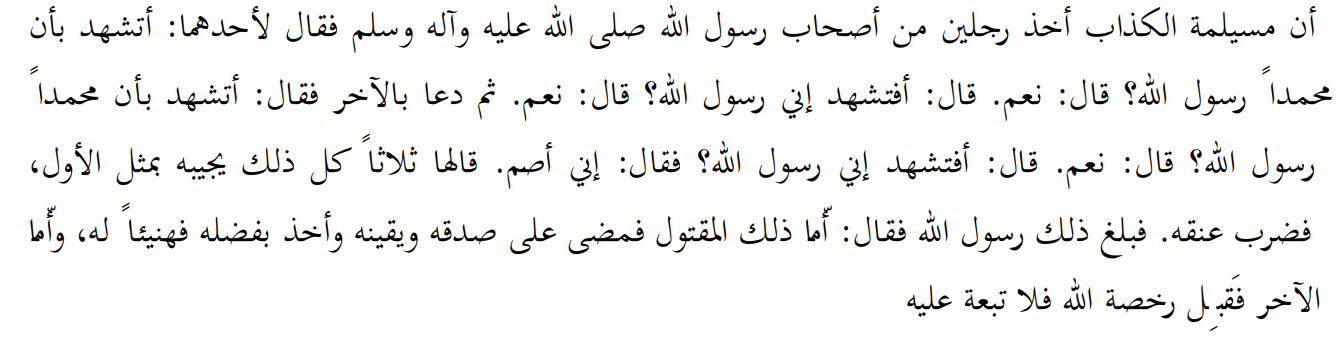
قال: إنّ مُسَيْلِمَةَ الكَذّابَ أخذ رجلين من أصحاب رسول الله ﷺ، فقال لأحدهما: أتشهد أنّ محمّدًا رسول الله ﷺ؟ قال: نعم. قال: أتشهد أنّي رسول الله؟ قال: نعم. ثم دعا الآخر فقال: أتشهد أنّ محمّدًا رسول الله ﷺ؟ قال: نعم. فقال: أتشهد أنّي رسول الله؟ قال: إنّي أصمّ. قالها ثلاثًا، وكان يجيبه كالأول، فقتله. فبلغ ذلك رسول الله ﷺ فقال: أمّا هذا المقتول فقد صدع بالحق واعتزّ به، فطوبى له. وأمّا الآخر فقد قبل رخصة الله فلا تبعة عليه.
‘That Musaylimah the liar took two men of the Sahabah of the Messenger of Allah (saw) and said to one of them: Do you bear witness that Muhammad is a Messenger of Allah? He said: Yes. He said: Then do you bear witness that I am a Messenger of Allah? He said: Yes. Then he called for the other and said: Do you bear witness that Muhammad is a Messenger of Allah? He said: Yes. Then he said: Then do you bear witness that I am a Messenger of Allah? He said: I am deaf (to that). He said it thrice each time answering him like the first so he struck off his neck. This was conveyed to the Messenger of Allah who said: As for the one killed, he executed his truth and conviction, and he took his virtue so may it be good for him. As for the other, he accepted the concession of Allah so there is no liability on him.’
وبناءً على ذلك فإن التقية رخصة، وإن إظهار الحق صراحةً فضيلة." (ينتهي كلام الطبرسي).
Accordingly taqiyyah is a dispensation and speaking clearly the truth is a virtue” (At-Tabarsi’s speech ends).
وبناءً على ذلك يتبيّن من كلام المفسّرَين الطبري والطبرسي، وهما من مذهبين مختلفين، اتفاقهما على بيان معنى الآية كما وردت، وأنها نهيٌ للمؤمنين عن موالاة الكافرين، واستثنت من هذا النهي حالةَ خوف المؤمنين من أذى الكافرين. فانظر إلى كلام الطبري: «إلا أن تتقوا منهم تقاةً» (أي) إلا أن تكونوا في سلطانهم فتخافوهم على أنفسكم، فتُظهروا لهم الموالاة بألسنتكم. وانظر إلى كلام الطبرسي: «ثم استثنى فقال: إلا أن تتقوا منهم تقاة»، ومعناه: إلا أن يكون الكفار ظاهرين والمؤمنون مغلوبين، فيخاف المؤمن منهم إن لم يُظهر موافقتهم ولم يُحسن موالاتهم؛ فحينئذٍ يُباح له أن يُظهر محبتهم بلسانه وموافقتهم احتياطًا وحفظًا لنفسه. واتفق المفسّران على أن موضوع الاستثناء هو نفي النهي عن موالاة المؤمنين للكافرين، وأنه مقصورٌ على ذلك. غير أن الطبرسي تجاوز ذلك إلى ما هو خارج الموضوع، فجعل الآية دليلًا على جواز التقية في الدين طوال الحياة، وهذا غير موجود في الآية، لأن موضوعها هو النهي عن موالاة المؤمنين للكافرين، والاستثناء لحالة خوف الكافرين إذا غلبوا المسلمين، فيُباح في هذه الحال إظهار الموالاة، وليس ذلك تقيةً في الدين، ولا هو مقصورٌ على الخوف على النفس، لأن الاستثناء عامٌّ: «إلا أن تتقوا منهم تقاة»، أي: إلا أن تخافوا منهم ما يُخاف منه. قال الزمخشري في الكشاف:
Accordingly it is shown from the words of the two mufasireen, At-Tabari and At-Tabarsi, who are of two different schools of thought, their agreement upon explaining the meaning of the ayah as it came in that it is a prohibition for believers befriending disbelievers and excluding the situation of believers fearing the harm of the disbelievers from this prohibition. Look at the words of At Tabari: “except if you fear from them something to be feared (tuqat)’ (i.e.) except if you are in their authority and you fear them over your lives so you show them friendship with your tongues.” And look at the words of At-Tabarisi: “Then He excluded and said: ‘except if you fear from them something to be feared’ and the meaning is except if the disbelievers are victorious and believers defeated so the believer fears them if he does not show his agreement with them and does not make good his friendship with them. At that time it is allowed for him to show his love for them by his tongue and compliance to them as a precaution and in protection of his soul.” The two mufasireen agree that the subject is excluding the prohibition of believers befriending disbelievers and that it is limited to that. Except that At-Tabarisi followed upon that which is outside the subject and made the ayah an evidence that taqiyyah is permitted in the deen during for one’s life which is not present in the ayah since its subject is the prohibition of believers befriending disbelievers and excluding the situation of fear of the disbelievers when they defeat the Muslims in allowing their friendship in this situation. It is not taqiyyah in the deen nor is it specified to fear over life because the exclusion is general “except if you fear from them something to be feared” (i.e.) except if you fear from them what is to be feared from. Az-Zamakhshari said in Al Kashaf
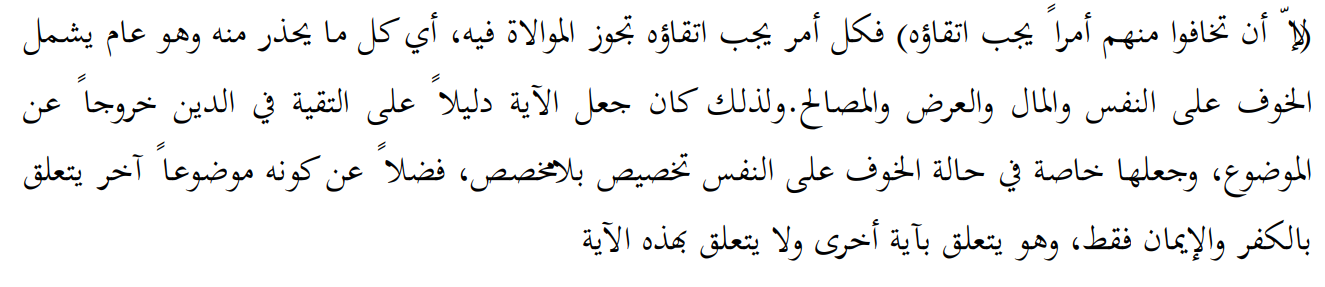
"إلا أن تتقوا منهم تقاة" فيكون كل أمر يُتقى منه جائزًا معه موالاتهم، أي كل ما تخافونهم فيه، عامًّا يشمل الخوف على النفس والمال والعرض والمصالح. وبناءً عليه يُجعل الآية دليلًا على (التقية) في الدين خارج موضوعها، ويُجعل تخصيصها بحالة الخوف على النفس تخصيصًا بلا مخصِّص (دليل). هذا فضلًا عن أنها موضوع آخر يتعلق بالكفر والإيمان فقط، وهو متعلق بآية أخرى، ولا علاقة له بهذه الآية.
“Except if you fear from them a matter which requires protection from” so any matter which must be protected from permits befriending it i.e. all that you fear them which is general covering fear over life, wealth, honour and interests. Accordingly making the ayah an evidence for (taqiyyah) in the deen outside the subject, and making it specific in the situation of fear over life is specification without a specifying (evidence). This is besides it being another subject relating to kufr and iman only which is related to another ayah and it is not related to this ayah.
وأما قول الطبرسي: "قال أصحابنا: يجوز ذلك في كل شيء عند الضرورة"، فإن ما ينقله عن المفيد من كونه واجباً أو غير واجب إلى آخر ما ذكره، كلامٌ مجرد لا دليل عليه. والآية لا تدل على ذلك بوجه، حتى على تفسير الطبرسي نفسه، ولم يأتِ بأي دليل آخر لا من الكتاب ولا من السنة ولا من إجماع الصحابة، ولذلك فهو مردود ساقط عن درجة الاعتبار. ولا يقال إنه إذا جازت موالاة الكفار عند الخوف منهم، فالانقياد للحاكم الظالم أو الفاسق المتسلط أَوْلى بالجواز؛ فهذا لا يُقال، لأن الأَوْلى هو معنى الكلام، وهذا ليس منه، ولا فيه أي تعلق به. وليس الأمر كقول الله تعالى:
As for the statement of At-Tabarisi: “Our companions said (it is) permitted in all matters during necessity” then what he quotes from Al-Mufid of its being obligatory or not obligatory to the last of what he mentioned is abstract speech of any evidence. The ayah does not indicate this in any way even according to At-Tabarisi’s own tafsir, nor did he come with any other evidence neither from the Book or Sunnah or Ijma’a of the Sahabah, hence it is rejected and falls from the rank of consideration. Nor is it said that if befriending disbelievers in the situation of fear of them is allowed then compliance with the unjust or transgressor ruler with power is of greater precedent. This is not said because that which is of greater precedent is the sense of the speech and this is not from it nor is their any extention of any connection with it. It is not like Allah’s statement:
من بينهم من إن ائتمنته على دينار لا يؤدّه إليك [TMQ 3:75]
“Among them is one whom if you entrust him with a Dinar would not return it to you” [TMQ 3:75]
ولَيْسَ ذٰلِكَ كقَوْلِ اللهِ تعالى:
Nor is it like Allah’s statement:
وَمِنْ أَهْلِ الْكِتَابِ مَنْ إِنْ تَأْمَنْهُ بِقِنْطَارٍ يُؤَدِّهِ إِلَيْكَ [آل عمران: 75]
“And of the People of the Book is one whom if you entrusted with a qintar will return it to you” [TMQ 3:75].
لأنّ الظالم المتعدّي ليس من جنس الكافر ولا من صنفه، ولأنّ الموالاة المنهيّ عنها في هذه الآية هي موالاة الكافرين لا موالاة المؤمنين. والحاكم الظالم المتعدّي الذي له سلطان هو من المؤمنين، والظلم الصادر عنه أو التعدّي الذي يشمله لا يسلب عنه وصف الإيمان. ولذلك لا يدخل هذا الموضوع في بحث الحكم الأكبر، فلا يدخل الحكم الأكبر فيه بحيث يُستشهد به عليه.
This is because the transgressor is not from the category of the disbeliever or from their class, and because the friendship prohibited in this ayah is befriending instead of the believers. The unjust and transgressor ruler with power is among the believers injustice occurring from him or the transgression covering him does not negate the description of iman from him. Hence this subject does not enter in the research of greater precedent, so accordingly the greater precedent does not come into it such that it is used as a witness.
ويجوز كذلك موالاة الحاكم الظالم الفاجر صاحب السلطان في حال الأمن وفي حال الخوف على حد سواء، لأنه مؤمن، وموالاة المؤمنين جائزة قطعًا، لأن لفظ "المؤمنين" في قوله تعالى: {من دون المؤمنين} عامٌّ يشمل جميع المؤمنين. ولم يرد أي نص يحرّم موالاة الحاكم الظالم أو الفاجر، أو موالاة الفجار والأشرار؛ بل جاءت النصوص خاصّةً بالنهي عن موالاة الكفار. بل إن طاعة الحاكم الظالم واجبة فيما عدا المعصية، والجهاد واجب تحت رايته، ويجوز الصلاة خلف الإمام إذا كان فاجرًا، وهذه من أقوى الدلائل على جواز موالاته. وإنما المحرّم هو الرضا بظلم الحاكم وفجور الفاجر. وعليه فإن التقية مردودة إذا كان المؤمن يُظهر خلاف ما يُضمر أمام الحاكم الظالم القوي أو الفاجر أو المخالف في الرأي أو نحو ذلك، وفعلها حرام لأنها نفاق، وكل نفاق محرّم.
Moreover the befriending of the unjust and transgressor ruler with power is allowed in the situation of security and the situation of fear equally because he is a believer and befriending believers is definitely allowed because the word “believers” in His statement: “instead of believers” is general covering all believers. There did not come any text prohibiting befriending the unjust or transgressor ruler or befriending transgressors and the wicked (fujjar); rather the texts are specific in prohibiting the befriending of disbelievers. More than that, the obedience to the unjust ruler is obliged in other than sin and jihad is obliged under his banner and it is allowed to pray behind the Imam in prayer if he is a transgressor which are of the greatest indication regarding permitting their friendship. What is prohibited is the pleasure with the injustice of the ruler and the transgression of the transgressor. Accordingly taqiyyah is rejected when it is a believer showing opposite to what he hides in front of powerful unjust or transgressor ruler or opponent in the opinion or similar, and doing it is haram as it is hypocrisy and all hypocrisy is forbidden.
فوق كل ذلك، فإن محاسبة الحاكم الظالم على ظلمه واجبة، ولا يجوز تركها خوفًا من الحاكم على مال أو مصلحة أو ضرر، ولا تجوز التقية فيها. والإعلان عليه بالحرب إذا رُئي منه كفرٌ بواح بعد أن كان يحكم بالإسلام واجبٌ، وحرامٌ الامتناع عن القيام به. والأمر بالمعروف والنهي عن المنكر أمام الحاكم أو غيره من أهل الفسق أو الظلم قد أوجبه الله سبحانه على المسلمين. وهذا ينفي القول بالتقية ويناقضه تمامًا، فقد نهى سبحانه نهيًا قاطعًا عن السكوت على الحاكم الظالم والفاسق، بينما توجب التقية السكوت عن ذلك في أوقات، وتجعله مستحبًا في أوقات أخرى، وتبيحه في أوقات غيرها، وهذا يناقض آية الأمر بالمعروف والنهي عن المنكر، ويناقض الأحاديث الصحيحة الواردة في رفض الأئمة والحكام إذا كانوا ظالمين أو فاسقين، والأحاديث الصحيحة الواردة في وجوب محاسبتهم على أفعالهم، ويعارض وجوب إظهار الحق دون مراعاة، ابتغاء وجه الله سبحانه، شكوى المشتكي. وعليه، فإن التقية من الحاكم الظالم الفاسق، أو المتسلط القوي من الفجّار، أو المخالف لك في الرأي، قد جاءت فيها آياتٌ ونصوصٌ من أحاديث صحيحة تردّ ذلك وتحضّ على وجوب خلافه، مما يؤكد تحريمها، فضلًا عن كونها نفاقًا لا يجوز للمسلمين.
﴿إِلَّا مَنْ أُكْرِهَ وَقَلْبُهُ مُطْمَئِنٌّ بِالْإِيمَانِ﴾ [النحل: ١٠٦]
“Except the one who is compelled and his heart is content upon iman” [TMQ 16:106].
قال بعض المفسرين إنّ ذلك متعلّق بقوله تعالى: ﴿إِلَّا أَن تَتَّقُوا مِنْهُمْ تُقَاةً﴾، فاستنبطوا منه دخول إظهار الكفر وإخفاء الإيمان في باب الموالاة، وأدخلوا فيه ما يسمّونه (التقيّة)، وذهب بعضهم إلى أنّ استنباط ذلك يقتضي جواز الموالاة في حال الخوف على النفس فقط دون غيرها. وهذا خطأ محض، لأنّ قوله تعالى: ﴿إِلَّا مَنْ أُكْرِهَ وَقَلْبُهُ مُطْمَئِنٌّ بِالْإِيمَانِ﴾ له حالٌ مختلفة وموضوعٌ مختلف، إذ موضوعه الارتداد عن الإسلام في حال وجود خوفٍ من القتل المحقَّق المتيقَّن لا المحتمل، أمّا موضوع قوله تعالى: ﴿إِلَّا أَن تَتَّقُوا مِنْهُمْ تُقَاةً﴾ فهو النهي عن موالاة الكفار بجميع أنواعها، واستثناء جواز هذه الموالاة في حال وجود ما يُخاف، سواء كان الخوف على النفس أو المال أو المصلحة أو أيّ ضررٍ كان. فالآيتان تفرّقان بين حالين وموضوعين، فلا يدخل أحدهما في الآخر ولا يتعلّقان به لاختلاف الحال والموضوع. وإذا كان المسلم تحت سلطان كفارٍ قد غُلب أمره أمامهم، فلا يجوز له أن يرتدّ عن الإسلام إظهارًا للموافقة لهم، بل يجب عليه الهجرة إن عجز عن إقامة شرائع دينه، وذلك بخلاف موالاتهم التي هي جائزة. أمّا إذا خاف المسلمون على نفسه هلاكًا محقّقًا وأُكره على الكفر، فيجوز له حينئذٍ أن يُظهر الكفر ويُخفي الإيمان، وأمّا فيما عدا ذلك فلا يجوز، لدلالة نصّ الآية:
Some mufasireen link it with the ayah: “except if you fear from them something to be feared” and deduce from it the entering of showing kufr and hiding iman in the category of friendship and making it to enter what they call (taqiyyah), with some deducing from it that friendship is allowed in the situation of fearing for one’s life only but not in other (situations). This is pure error because the ayah: “except the one who is compelled and his heart is content upon iman” has a different situation and a different subject as its subject is apostasy from Islam in the situation where there exists fear of definite, confirmed killing not probable and the subject of the ayah: “except if you fear from them something to be feared” is prohibiting befriending disbelievers in all its types and excluding the permissibility of this befriending in the situation of there existing what is feared from whether it was fear over life, wealth, interest or any harm. It distinguishes between the two situations and two subjects such that one does not enter into the other nor are they linked with it due to the difference in situation and subject. When the Muslim is under the authority of disbelievers defeated over his matter before them, it is not permitted for him to apostatise from Islam as a show of compliance to them; rather it is obligatory upon him to emigrate if he is unable to perform the rules of his deen contrary to befriending them which is allowed. However if the Muslims fear over his life a confirmed death and he is forced upon kufr then it is permitted for him to show kufr and hide iman, and other than that it is not permitted because of the text of the ayah:
مَنْ كَفَرَ بِاللَّهِ مِنْ بَعْدِ إِيمَانِهِ إِلَّا مَنْ أُكْرِهَ وَقَلْبُهُ مُطْمَئِنٌّ بِالْإِيمَانِ [سورة النحل: 106].
“Whoever disbelieves in Allah after his iman except the one who is compelled and his heart is content upon iman.” [TMQ 16:106].
الموضوع هو موضوع الكفر بعد الإيمان، أي موضوع الردة عن الإسلام، والحال هي حال الخوف من الموت. وهذا ما يسميه الفقهاء الإكراه الملجئ، وهو الإكراه الوحيد الذي يعتبره الشرع في جميع الأحوال التي يرتفع فيها الحكم عن المُكرَه. والإكراه الذي استثناه الشرع هو الإكراه بالإلجاء، أي حال الخوف من الهلاك المحقق. ويتأكد هذا بالآية التي نزلت في المسلمين الذين ارتدوا خوفًا من الموت. وقد رُوي أن هذه الآية نزلت في عمار بن ياسر. قال الطبري: "حدثني محمد بن سعد، قال: حدثني عمي، قال: حدثني أبي، عن أبيه، عن ابن عباس في قوله: {مَن كَفَرَ بِاللَّهِ مِن بَعْدِ إِيمَانِهِ إِلَّا مَنْ أُكْرِهَ وَقَلْبُهُ مُطْمَئِنٌّ بِالْإِيمَانِ} إلى آخر الآية. وذلك أن المشركين عذّبوا عمار بن ياسر وعذّبوه ثم تركوه، فرجع إلى رسول الله ﷺ فأخبره بما لقي من قريش وبما قال، فأنزل الله عز وجل عذره: {مَن كَفَرَ بِاللَّهِ مِن بَعْدِ إِيمَانِهِ} حتى بلغ {عَذَابٌ عَظِيمٌ}." حدثنا بشر، قال: حدثنا يزيد، قال: حدثنا سعيد، عن قتادة: {مَن كَفَرَ بِاللَّهِ مِن بَعْدِ إِيمَانِهِ إِلَّا مَنْ أُكْرِهَ وَقَلْبُهُ مُطْمَئِنٌّ بِالْإِيمَانِ} قال: ذُكر لنا أنها نزلت في عمار بن ياسر، أخذه بنو المغيرة فغطّوه في بئر ميمون وقالوا: اكفر بالله، ففعل ذلك وقلبه مكره، فأنزل الله: {إِلَّا مَنْ أُكْرِهَ وَقَلْبُهُ مُطْمَئِنٌّ بِالْإِيمَانِ}. وقال الطبري: حدثنا ابن عبد الأعلى، قال: حدثنا محمد بن ثور، عن معمر، عن عبد الكريم الجزري، عن أبي عبيد بن محمد بن عمار بن ياسر، قال:
So the subject is the subject of kufr after iman i.e. the subject of apostasy from Islam, and the situation is the situation of fearing death. This is what the fuqaha term as alikrah almulji (compulsion of refuge) which is the only compulsion considered by the Shar’a in all situations in which the rule is lifted from the one compelled. The compulsion which the Shar’a excluded is the compulsion by refuge i.e. the situation of fearing definite death. This is strengthened in the ayah that was revealed about Muslims who apostatised fearing death. It was narrated that this ayah was revealed about Ammar bin Yasir. At-Tabari said: “Muhammad bin S’aad related to me and said: My paternal uncle related to me and said: My father related to me from his father from ibn Abbas that His statement: ‘Whoever disbelieves in Allah after his belief except the one who is compelled and his heart is content upon iman’ to the end of the ayah. This was because the polytheists struck Ammar bin Yasir and punished him then left him. So he returned to the Messenger of Allah (saw) and informed him about what he met with from Quraysh and what he said. So Allah (swt) revealed his mention of his excuse: ‘Whoever disbelieves in Allah after his iman’ until His statement ‘great punishment.’ Bashr related to us and said: Yazid related to us and said: Saeed related to us from Qatadah: ‘Whoever disbelieves in Allah after his belief except the one who is compelled and his heart is content upon iman’ and said: It was mentioned to us that it was revealed about Ammar bin Yasir whom Banu Al-Mughira captured and covered him in the well of Maymun and said: Disbelieve in Allah, so he followed them in that and his heart was compelled. So Allah (swt) revealed His statement: ‘except the one who is compelled and his heart is content upon iman.’ And At-Tabari said: Ibn Abd al-‘Ala related to us and said: Muhammad bin Thawr related to us from Mu’ammar from Abdulkareem Al-Juzri from Abu Ubayd bin Muhammad bin Ammar bin Yasir who said:
وأخذ المشركون عمار بن ياسر وعذّبوه حتى قال لهم بعض ما أرادوا. فذكر ذلك للنبي ﷺ، فقال النبي ﷺ: كيف وجدت قلبك؟ قال: مطمئنًا بالإيمان. فقال النبي ﷺ: إن عادوا فعُد.
The polytheists took Ammar bin Yasir and punished him until he said to them in some of what they wished. He mentioned that to the Prophet (saw) and the Prophet (saw) said: How did you find your heart? He said: Secured upon iman. The Prophet (saw) said: If they repeat, then you repeat.”
هذه الأحاديث تدل على أن سبب نزول الآية هو قصة عمار، وأن موضوعها الارتداد عن الإسلام. والحال الخاصة بها هي الخوف الأكيد من القتل، وهذا وحده كافٍ في تأكيد أنها لا علاقة لها بالآية: ﴿إِلَّا أَن تَتَّقُوا مِنْهُمْ تُقَاةً﴾. أما الآية: ﴿إِلَّا مَنْ أُكْرِهَ وَقَلْبُهُ مُطْمَئِنٌّ بِالْإِيمَانِ﴾ فقد نزلت بمكة في موضوع الإيمان، والآية: ﴿إِلَّا أَن تَتَّقُوا مِنْهُمْ تُقَاةً﴾ مدنية نزلت في موضوع استثناء حال خوف ما يُخاف من النهي عن موالاة المؤمنين للكافرين. وبناءً على ذلك فإن هذه الآية لا تنطبق على ذلك الموضوع.
These ahadith indicate that the circumstance of revelation of the ayah is the incident of Ammar and its subject is apostasy from Islam. The situation specific to it is the definite fear of killing which alone is sufficient to strengthen that it has no relationship with the ayah: “except if you fear from them something to be feared.” The ayah: “except the one who is compelled and his heart is content upon iman” was revealed in Makkah on the subject of iman, and the ayah: “except if you fear from them something to be feared” is Madinan revealed on the subject of excluding the situation of fearing what is to be feared from the prohibition of believers befriending disbelievers. Accordingly this ayah is not applicable on that subject.
بقي الحكم المتعلق بمن هُدِّد بالقتل المحقَّق: هل الأفضل أن يُظهر الكفر ويُخفي الإيمان ليسلَم من القتل، أم أن يثبت على إيمانه ولو أدّى ذلك إلى قتله؟ والجواب: أن الثبات على الإيمان ولو أدّى إلى القتل أفضل، لأن إباحة إظهار الكفر رخصة ورفعٌ للحرج، وأما حفظ الإيمان فهو العزيمة وهو الأصل، ولذلك كان أفضل. وقد رُوي
There remains the rule regarding the one threatened with confirmed killing: Is it more virtuous to show kufr and hide iman so as to be safe from death or is it better to persevere upon his iman even if it leads to death? The answer is that persevering to iman even if it leads to death is better because the permissibility of showing kufr is a dispensation and lifts difficulty, and preserving the iman is (‘azeemah) which is the principle therefore it is better. It is narrated

"أَنَّ مُسَيْلِمَةَ أَخَذَ رَجُلَيْنِ، فَقَالَ لِأَحَدِهِمَا: مَا تَقُولُ فِي مُحَمَّدٍ ﷺ؟ فَقَالَ: رَسُولُ اللهِ ﷺ. قَالَ: فَمَا تَقُولُ فِيَّ؟ قَالَ: وَأَنْتَ أَيْضًا. فَخَلَّى سَبِيلَهُ. وَقَالَ لِلْآخَرِ: مَا تَقُولُ فِي مُحَمَّدٍ ﷺ؟ فَقَالَ: رَسُولُ اللهِ ﷺ. قَالَ: فَمَا تَقُولُ فِيَّ؟ قَالَ: إِنِّي أَصَمُّ. فَكَرَّرَ ذَلِكَ عَلَيْهِ ثَلَاثًا، وَكَرَّرَ جَوَابَهُ، فَقَتَلَهُ. فَبَلَغَ ذَلِكَ رَسُولَ اللهِ ﷺ، فَقَالَ: أَمَّا الْأَوَّلُ فَأَخَذَ بِرُخْصَةِ اللهِ، وَأَمَّا الْآخَرُ فَصَدَعَ بِالْحَقِّ فَهَنِيئًا لَهُ."
“That Musaylimah took two men and said to one of them: What do you say about Muhammad? He said: A Messenger of Allah. He said: Then what do you say of me? You as well. So he left him free. He said to the other: What do you say of Muhammad? He said: A Messenger of Allah. He said: Then what do you say of me? He said: I am dumb. He repeated it thrice and he repeated his answer, so he killed him. That reached the Messenger of Allah (saw) so he said: As for the first, he took the dispensation of Allah. As for the second, he exposed the truth so blessed be he.”
هذا صريح في تفضيل من صبر وثبت على الإيمان على من أخذ برخصة الله تعالى وأظهر الكفر خوفاً على نفسه من قتل محقق.
This is explicit in preferring the one who was patient and stuck to iman over the one who took the dispensation of Allah (swt) and showed kufr fearing for his life from a confirmed killing.
هذا في مَن يُطلَب منه الكفر. أما مَن يُطلَب منه ما دون ذلك، كترك الدعوة الإسلامية أو ارتكاب معصية أو نحو ذلك، فلا يُؤخذ جواز ذلك من هذه الآية. وعليه لا يُقال: إن كان الله قد أباح للمسلم إظهار الكفر، فما دون الكفر أولى بالجواز. ولا يُقال هذا، لأن المعصية ليست من جنس الكفر، فلا تدخل في البحث بطريق الأولوية. وكذلك لا يُجرى قياس بين الكفر والمعصية، إذ لا توجد علة تجيز القياس. أما من خاف على نفسه القتل المتيقَّن، وطُلب منه معصية أو فعل ما دون الكفر، فيجوز له أن يفعل ذلك لإنقاذ نفسه، ولا إثم عليه، وذلك لقول النبي ﷺ:
This is regarding the one from whom kufr is demanded. As for the one from whom is sought less than that like leaving the Islamic da’wah or performing a sin or something similar; permissibility is not taken from this ayah. Accordingly it is not said that if Allah permitted the Muslim to show kufr, then what is lesser than kufr is of greater precedent. This is not said because disobedience is not from the species of kufr, so it does not enter the research by greater precedent. Similarly an analogy between kufr and sin is not performed since there does not exist a reason until analogy occurs. However as for the one who fears for his life over confirmed killing and it is sought from him sin or doing less than kufr, it is permitted for him to do so to save his life and there is no sin upon him. This is due to his (saw) statement:
رُفِعَ عَنْ أُمَّتِي الْخَطَأُ وَالنِّسْيَانُ وَمَا اسْتُكْرِهُوا عَلَيْهِ ﷺ
“Lifted from my Ummah is the mistake, forgetfulness and what is compelled upon it”
أي: يُرفع الإثم والحرج، ويُرفع الحكم، أي جواز فعله. لكن ذلك إنما يكون في حالة واحدة، وهي حالة القتل المحقق المتيقن، وهو ما سمّاه الفقهاء الإكراه الملجئ، وهو الإكراه الوحيد الذي يعتبره الشرع في جميع الأحوال، فيُرفع به عن المكره ما يُرفع كالطلاق والنكاح والبيع وغيرها من التصرفات والعقود. وقوله: «وما استكرهوا عليه» هو الإكراه الملجئ.
I.e. the blame and sin is lifted, and the rule is lifted, which means the permissibility of doing it. However (this is) only in one situation which is the situation of definite, confirmed killing which is what the fuqaha called alikrah almulji (compulsion by refuge) which is the only compulsion considered by the Shar’a in all conditions in which there is lifted from the one compelled like divorce, marriage, trade and other actions and contracts. His statement “and what is forced upon it” which is alikrah almulji (compulsion by refuge).