2.15 الوحي
2.15 The Revelation
يجب على كل مسلم أن يؤمن بالوحي، فهو ركن أساسي من أركان الإيمان. غير أن الدليل على الوحي ليس دليلاً عقلياً، بل يُقبل استناداً إلى النصوص الصحيحة. ولما كان الوحي لا يملك حقيقة محسوسة ملموسة، فإن العقل لا يستطيع التحقق من صحته. ولذلك فكل محاولة لإثبات الوحي بالعقل تكون خاطئة، إذ لا يمكن استخدام العقل لإثبات شيء لا حقيقة محسوسة له.
Each and every Muslim must believe in revelation, as it is a fundamental aspect of belief. However, the evidence for revelation is not rational, rather it is accepted on the basis of authentic texts. Since revelation does not have a tangible sensation or reality, the mind cannot verify its validity. Therefore every attempt to prove revelation by means of the intellect will be incorrect, as it is not possible to use the mind to prove something without a tangible reality.
لہذا، جیسا کہ پہلے ذکر کیا گیا، وحی کی دلیل عقلی نہیں ہے، بلکہ وہ صحیح روایات کی بنیاد پر قائم ہے۔ قرآن کی قطعی نص اس بات کی تصدیق کرتی ہے کہ رسول محمد ﷺ پر وحی نازل ہوئی۔ اللہ تعالیٰ فرماتا ہے،
Hence, as mentioned earlier, the evidence for revelation is not intellectual; rather it is established on the basis of authentic narrations. The Definite text of the Qur’ān verifies that the messenger Muhammad recieved revelation. Allah says,
وَكَذَٰلِكَ يُوحِي إِلَيْكَ وَإِلَى الَّذِينَ مِنْ قَبْلِكَ اللَّهُ الْعَزِيزُ الْحَكِيمُ [TMQ Shura: 3]
"Likewise Allah, the Honourable, the all-wise, reveals to you and to those before you." [TMQ Shura: 3]
وَكَذَٰلِكَ أَوْحَيْنَا إِلَيْكَ رُوحًا مِّنْ أَمْرِنَا [TMQ Shura:52]
"And likewise we have revealed to you an invigorate thing by our command." [TMQ Shura:52]
وَمَا يَنْطِقُ عَنِ الْهَوَىٰ إِنْ هُوَ إِلَّا وَحْيٌ يُوحَىٰ [TMQ Najm: 3]
"And he doesn't utter from his own desire. Indeed it is an inspired inspiration" [TMQ Najm: 3]
إِنَّا أَوْحَيْنَا إِلَيْكَ كَمَا أَوْحَيْنَا إِلَىٰ نُوحٍ وَالنَّبِيِّينَ مِن بَعْدِهِ Note: this is the Qur'anic verse (An-Nisa 4:163), which is enclosed in curly braces in the source rules... Here is the translation as requested: "لَا شَكَّ، يَا نَبِيُّ! إِنَّا أَوْحَيْنَا إِلَيْكَ كَمَا أَوْحَيْنَا إِلَىٰ نُوحٍ وَالنَّبِيِّينَ مِن بَعْدِهِ" [TMQ Nisa: 163]
"Undoubtedly, O prophet! We have sent revelation to you as we sent it to Noah and the prophets after him." [TMQ Nisa: 163]
وَاتَّبِعْ مَا يُوحَىٰ إِلَيْكَ وَاصْبِرْ حَتَّىٰ يَحْكُمَ اللَّهُ ۚ وَهُوَ خَيْرُ الْحَاكِمِينَ [TMQ 10:109]
"And follow that which is revealed to you and have patience until Allah decrees and He is the best of judges." [TMQ 10:109]
أُوحِيَ إلى الرسول ﷺ الوحيُ على ثلاث حالات، ولم يتلقَّ الأنبياءُ قبله الوحيَ إلا من خلال هذه الحالات، لا غيرها. وهذه الحالات كلها داخلة تحت الوحي الذي يبيّنه الله في القرآن الكريم، حيث يقول:
The revelation that descended on the messenger had three states, all prophets before him recieved the revelation through these only and not another. These states are all categorised under the revelation which Allah explains in the Qur’ān. He says,
وَمَا كَانَ لِبَشَرٍ أَنْ يُكَلِّمَهُ اللَّهُ إِلَّا وَحْيًا أَوْ مِنْ وَرَاءِ حِجَابٍ أَوْ يُرْسِلَ رَسُولًا فَيُوحِيَ بِإِذْنِهِ مَا يَشَاءُ [TMQ Shura: 51]
"And it is not fit for any man that Allah should speak to him but through revelation, or that the man may be at the other side of the veil of grandeur, or by sending messengers and inspiring whom he wills." [TMQ Shura: 51]
أي أن الله لا يكلّم الإنسان إلا بالوحي، أو من وراء حجاب، أو بإرسال رسول. وقد كان للوحي النازل على الرسول ﷺ حالان، وقد أخبر ﷺ عنهما حين سُئل مرة: «كيف يأتيك الوحي؟» فقال:
That is, Allah only communicates with man through inspiration, through verbal contact via a veil or by sending messengers. The revelation that descended upon the messenger had two states. He informed about them when he was once asked, "How does the revelation come to you?" He replied,
أحياناً يأتيني مثلَ صلصلة الجرس، وهو أشدُّ عليّ، فيفصِمُ عني وقد وعيتُ ما قال، وأحياناً يتمثّلُ لي الملَكُ رجلاً فيكلّمني فأعي ما يقول. [Bukhari]
"Sometimes it comes like the clattering or the jingling of a bell which is severest on me and when it leaves me, I have absorbed everything. And sometimes the angel comes to me in a form of a man and speaks to me and I am aware of what is being said." [Bukhari]
هاتان الحالتان على النحو التالي: أولاً: أن يُلقي الملَك الوحي إلى النبي ﷺ بالإشارة دون أن يستعمل كلاماً أو لغة، فيُلقى الوحي في قلب النبي ﷺ، كما قال النبي ﷺ:
These two states are as follows: Firstly- the angel inspires the prophet by indication and without using words or language. The revelation is inspired into the mind of the prophet , just as he said,
إِنَّ رُوحَ القُدُسِ (جِبْرِيلَ) أَلْقَى فِي رَوْعِي أَنَّهُ لَنْ تَمُوتَ نَفْسٌ حَتَّى تَسْتَكْمِلَ رِزْقَهَا وَأَجَلَهَا، فَاتَّقُوا اللَّهَ أَيُّهَا النَّاسُ، وَأَجْمِلُوا فِي الطَّلَبِ. [Extraced by AlHakim]
"Ruh Al-Quds (Jibril) inspired in to me that no soul shall die until it has completed its Rizq and its Ajal. Therefore fear Allah O people and acquire the means to do good" [Extraced by AlHakim]
وكان الرسول ﷺ يرى في منامه رؤى يتلقاها من الله، سواء في حال اليقظة أو في حال النوم. فكان بعض ما يوحى إليه وهو مستيقظ، وكانت له رؤى في منامه، وكل ذلك كان وحيًا. وقالت أم المؤمنين عائشة رضي الله عنها:
Also the messenger whilst dreaming had visions that he received from Allah both in the states of consciousness and sleep. Some of it was inspired to him whilst he was awake and he would have certain visions in his dreams all of which were revelation. As the mother of the believers, Aisha said,
أولاً، بدأ الرسولُ ﷺ يرى رؤى صادقة في منامه، فكانت كل رؤيا يراها واضحةً كوضوح ضوء الصباح.
"Firstly, the messenger began seeing true visions in his sleep. Every vision he had was true as clear as the morning."
كان الرسول ﷺ يشعر أيضًا بأن نوعًا من الوحي على وشك أن ينزل، ولكنه لم ينزل. وروت عائشة رضي الله عنها أن الحارث بن هشام رضي الله عنه سأل الرسول ﷺ قائلًا: «يا رسول الله، كيف يأتيك الوحي؟» فقال ﷺ:
The messenger would also feel that some form of revelation was about to come, but it didn't come. Aisha narrated that Harith ibn Hashim asked the messenger , "O messenger, how does the revelation come to you?" The messenger said,
وَأَحْيَانًا يَأْتِينِي كَصَلْصَلَةِ الْجَرَسِ، وَهِيَ أَشَدُّ عَلَيَّ، فَإِذَا فَارَقَنِي وَعَيْتُ عَنْهُ كُلَّ مَا قَالَ. [Bukhari]
"Sometimes it comes like the clattering /jingling of a bell which is severest on me and when it leaves me, I have absorbed everything." [Bukhari]
جميع هذه الصور المختلفة، أي الإلهام والرؤيا والوحي دون كلام وما شابهها، تُعدّ حالةً واحدةً وتدخل في قول الله تعالى،
All these variations i.e. inspiration, dream, revelation without talk and everything similar constitute one state and fall within the saying of Allah ,
إِلَّا وَحْيٌ [TMQ Shura: 51]
"Nothing but revelation" [TMQ Shura: 51]
لأنه لغوياً، عندما يُستعمل الفعل "أوحى إلى أحدٍ" فإنه يعني الإشارة أو تحريك الرأس. وهكذا فإن الله يوحي إليه ويُلهمه. يقول الله تعالى،
Because linguistically when the verb "to reveal to someone" is used it means to indicate or shake ones head. Thus Allah reveals to him and inspires him. Allah says,
﴿وَأَوْحَىٰ رَبُّكَ إِلَى النَّحْلِ﴾ [TMQ Nahl: 68]
"And your lord inspired the bee", [TMQ Nahl: 68]
وهكذا فإنّ الإلهام للنحلة هو: الإلهام والعلم الفطري الذي في قلب النحلة.
Thus the inspiration to the bee is: the inspiration and the innate knowledge within the bee’s heart.
الحالة الثانية هي الوحي الذي يُلقى بطريق الكلام الشفهي من الملَك، فيُبلَّغ إلى النبي ﷺ شفهياً بعد أن يعلم بالدليل القاطع أن هذا وحيٌ وأن حامل الرسالة هو الملَك، أي جبريل. قال الله تعالى:
The second state is the revelation inspired by means of oral communication from the angel. It is transmitted orally to the prophet after he learns through decisive evidence that this is revelation and the message bearer is the angel, i.e. Jibril. Allah says,
نَزَلَ بِهِ الرُّوحُ الْأَمِينُ عَلَىٰ قَلْبِكَ لِتَكُونَ مِنَ الْمُنْذِرِينَ [TMQ Shuara: 193]
"The trusted spirit has descended with it. On your heart that you may warn." [TMQ Shuara: 193]
أي أنّ الله يرسل جبريل فيكلّم الرسول، فيسمع كلامه ويحفظه في الوقت نفسه. وقد روت عائشة رضي الله عنها أنّ النبي ﷺ قال:
In other words, Allah sends Jibril who speaks with the messenger who simultaneously both hears and preserves his words. Aisha narrated that the prophet said,
"وَأَحْيَانًا يَأْتِينِي الْمَلَكُ فِي صُورَةِ رَجُلٍ فَيُكَلِّمُنِي فَأَعِي مَا يَقُولُ"ﷺ [Bukhari]
"And sometimes the angel comes to me as a man and he talks to me and I am conscious of what he is saying." [Bukhari]
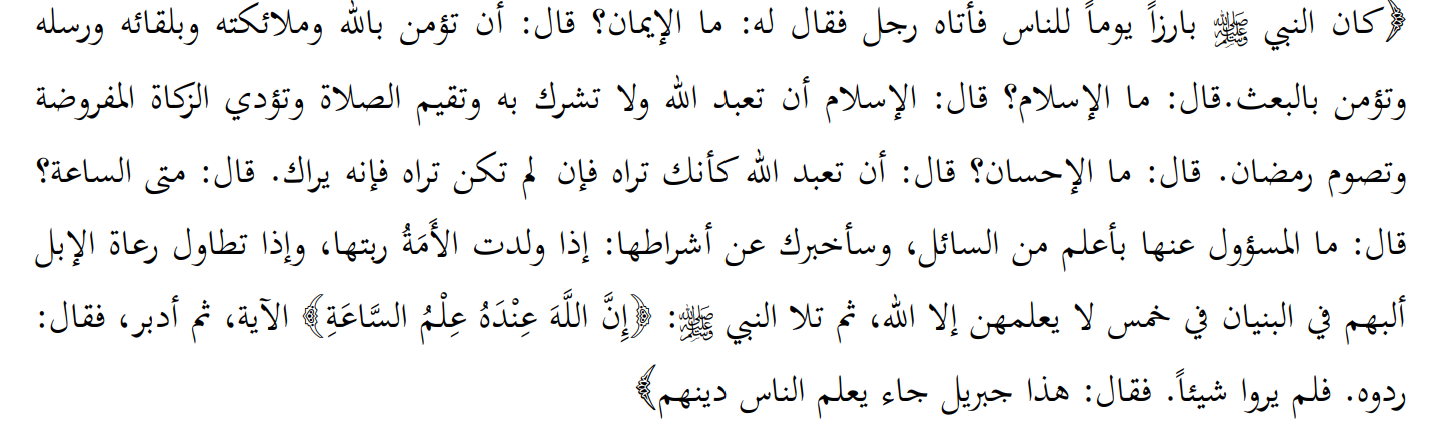
عن أبي هريرة رضي الله عنه قال: كان النبي ﷺ بارزًا للناس يومًا، فأتاه رجل فقال: ما الإيمان؟ فقال ﷺ: «الإيمان أن تؤمن بالله، وملائكته، ولقائه، ورسله، وتؤمن بالبعث». قال: ما الإسلام؟ قال ﷺ: «الإسلام أن تعبد الله ولا تشرك به شيئًا، وتقيم الصلاة، وتؤدي الزكاة المفروضة، وتصوم رمضان». قال: ما الإحسان؟ قال ﷺ: «أن تعبد الله كأنك تراه، فإن لم تكن تراه فإنه يراك». قال: متى الساعة؟ قال ﷺ: «ما المسؤول عنها بأعلم من السائل، وسأحدثك عن أشراطها: إذا ولدت الأمةُ ربَّتَها، وإذا تطاول رعاة الإبل البهم في البنيان، في خمس لا يعلمهن إلا الله». ثم تلا النبي ﷺ قوله تعالى: {إن الله عنده علم الساعة}. ثم أدبر الرجل فقال ﷺ: «ردوه»، فلم يروا شيئًا، فقال ﷺ: «هذا جبريل، جاء يعلم الناس دينهم». [Bukhari]
Abu Hurairah narrated that the prophet was with the people one day when a person came and asked him, "What is Emaan?" He said, "It is the belief in Allah , his angels, in the meeting with him , his messengers and the resurrection." He asked, "What is Islam?" He said, "Islam is that you worship Allah and do not commit Shirk, establish the prayer, pay the enjoined Zakat and you fast in Ramadan." He said, "What is Ihsaan?" He said, "That you worship Allah as if you see him, and if you can not see him, surely he sees you." He said, "When is the hour?" He said, "The one questioned about it knows no better then the questioner. I will tell you of its signs. When the mother will give birth to her Master and when the shepherd will build tall buildings. It is one of the five things that no one will know them except Allah ." Then the prophet recited the Ayat, "Indeed Allah has the knowledge of the hour." Then the man turned and left. The prophet said to the Sahaba call him but they didn't see anything. He said, "This was Jibril, he came to teach people their Deen." [Bukhari]
وَقَدْ وَرَدَ فِي أَحَادِيثَ عِدَّةٍ أَنَّ جِبْرِيلَ نَزَلَ وَتَحَدَّثَ مَعَ النَّبِيِّ ﷺ فَكَانَ يَسْتَمِعُ إِلَيْهِ، وَكَانَ ذَلِكَ نَوْعًا مِنَ الْوَحْيِ لِلرَّسُولِ ﷺ، إِذْ كَانَ الْمَلَكُ يُبَلِّغُهُ الْمَعَانِيَ فِي صُورَةِ حَدِيثٍ. أَمَّا الْوَحْيُ بِاللَّفْظِ وَالْمَعْنَى فَمُخْتَصٌّ بِالْقُرْآنِ الْكَرِيمِ. وَأَمَّا الْوَحْيُ بِالْمَعْنَى فَكَانَ الرَّسُولُ ﷺ يُعَبِّرُ عَنْهُ بِكَلَامِهِ الْخَاصِّ، أَوْ بِالتَّطْبِيقِ أَيْ بِأَفْعَالِهِ، أَوْ بِالسُّكُوتِ، وَهَذَا هُوَ السُّنَّةُ.
There are a number of incidents mentioned in Ahadith in which Jibril descended and talked to the prophet and he would listen. This was a form of revelation for the messenger, as the angel would tell the messenger the meanings in the form of a conversation. The revelation by words and meaning is restricted to the Noble Qur’ān. As for revelation by meaning, the messenger would express this by using his own words, through application i.e. his actions, or by silence and this is the Sunnah.
يُعدّ الحديث القدسي من السنّة لأنّ معناه وإن كان موحًى به من الله تعالى، فإنّ ألفاظه من النبيّ ﷺ. وليست ألفاظ الحديث القدسي من الله تعالى، لأنّ الألفاظ التي هي من الله تعالى مختصّةٌ بالقرآن الكريم، ويدلّ على ذلك إعجازه. وإنّ السنّة، وإن كانت تأتي على صور الوحي من الإلهام والمنام وإلقاء المعنى في القلب مباشرةً، فإنها تأتي أيضًا في اليقظة، وكذلك في صورة المحاورة بين جبريل ﷺ والرسول ﷺ.
The Hadith Qudsi is regarded as Sunnah because although its meaning is revealed from Allah its words are from the prophet . The words of the Hadith Qudsi are not from Allah because the words that are from Allah are specifically for the Qur’ān and this is proven by its inimitability. Although the Sunnah comes in the forms of inspiration, dream and is cast directly in the heart, it also comes both in wakefulness and as a dialogue between Jibril and the messenger .
إنما يُنزَّل القرآنُ على الرسول لأن ألفاظه من الله. وفيه آياتٌ كثيرةٌ تُفصِّل نزولَ القرآن. قال الله تعالى:
The Qur’ān is only revealed through the messenger because its words are from Allah . There are numerous ayats detailing the revelation of the Qur’ān. Allah says,
وَإِنَّا أَنْزَلْنَاهُ قُرْآنًا عَرَبِيًّا [TMQ Shura:7]
"And we have revealed the Quran to you in Arabic" [TMQ Shura:7]
"وَالَّذِي أَوْحَيْنَا إِلَيْكَ مِنَ الْكِتَابِ هُوَ الْحَقُّ" ﷺ [TMQ Fatir: 31]
" And what We have revealed to you (O Muhammad [saw]) of the Book, it is the (very) truth " [TMQ Fatir: 31]
الكتاب المقصود هو القرآن الكريم، و«مِنْ» هنا للدلالة على التمثيل (البيان).
The book referred to is the Qur’ān and “min” here is to indicate representation.
وَأُوحِيَ إِلَيَّ هَٰذَا الْقُرْآنُ لِأُنذِرَكُم بِهِ وَمَن بَلَغَ ﷺ [TMQ An’aam: 6]
“This Qur'ân has been revealed to me that I may therewith warn you and whomsoever it may reach " [TMQ An’aam: 6]
"نَقُصُّ عَلَيْكَ أَحْسَنَ الْقَصَصِ بِمَا أَوْحَيْنَا إِلَيْكَ هَٰذَا الْقُرْآنَ" [TMQ Yoosuf: 3]
" We relate to you (Muhammad [sal-Allâhu 'alayhi wa sallam]) the best of stories through Our Revelations to you, of this Qur'ân" [TMQ Yoosuf: 3]
{وَاتْلُ مَا أُوحِيَ إِلَيْكَ مِنَ الْكِتَابِ رَبِّكَ لَا مُبَدِّلَ لِكَلِمَاتِهِ}" — وَاتْلُ مَا أُوحِيَ إِلَيْكَ مِنَ الْكِتَابِ رَبِّكَ لَا مُبَدِّلَ لِكَلِمَاتِهِ." [TMQ alKahf: 27]
" And recite what has been revealed to you (O Muhammad PBUH) of the Book (the Qur'ân) of your Lord. None can change His Words, " [TMQ alKahf: 27]
وهو القرآن. وهناك آيات أخرى تذكر الوحي بوجه عام، بما في ذلك السنة. فمن ذلك قول الله تعالى:
It is the Qur’ān. There are other ayats as well, which mention the revelation in general including the Sunnah. For example, Allah says,
"إِنِ اهْتَدَيْتُ فَبِمَا يُوحِي إِلَيَّ رَبِّي" [TMQ As-saba: 50]
" If I remain guided, it is because of the Revelation of my Lord to me” [TMQ As-saba: 50]
وَيَقُولُ اللَّهُ تَعَالَى،
And He says,
"إِنَّا أَوْحَيْنَا إِلَيْكَ كَمَا أَوْحَيْنَا إِلَى نُوحٍ وَالنَّبِيِّينَ مِنْ بَعْدِهِ" [TMQ Nisa: 163]
" Verily, We have sent the Revelation to you (O Muhammad [saw]) as We sent the Revelation to Nûh (Noah) and the Prophets after him" [TMQ Nisa: 163]
وَيَقُولُ اللَّهُ تَعَالَى،
And He says,
{وَاتَّبِعْ مَا يُوحَىٰ إِلَيْكَ مِن رَّبِّكَ ۚ إِنَّ اللَّهَ كَانَ بِمَا تَعْمَلُونَ خَبِيرًا} [TMQ Ahzaab: 2]
"And follow that which is revealed to you from your Lord. Verily, Allâh is Well-Acquainted with what you do" [TMQ Ahzaab: 2]
هاتان الحالتان المذكورتان قد ورد الحديث عنهما في النصوص، أما الحالة الثالثة فقد ذُكرت في قوله تعالى:
These two mentioned states have been discussed in the texts, The third state is mentioned in His saying,
أَوْ مِن وَرَاءِ حِجَابٍ [TMQ Shura: 51]
"Or from behind a veil” [TMQ Shura: 51]
هذا ما حدث مع موسى ﷺ؟ لا، بل هذه الآية تشير إلى الواقعة التي كلّم الله فيها موسى من وراء حجاب، أي كما يكلّم المحجوب بعض الأكابر وأهل الشرف، فيتكلّم من وراء حجاب، فيُسمع صوت المتكلّم ولا يُرى، وهكذا كلّم الله موسى ﷺ.
This is what happened with Musa . This Ayat is indicating to the incident in which Allah spoke to Musa from behind a veil. That is, just as the veiled person speaks with some dignitaries and with people of distinction. He speaks from behind a veil and although one hears the other person’s voice, he does not see him. This is the manner in which Allah spoke with Musa .
لم يقع مثل هذا الحدث مع النبي ﷺ إلا مرة واحدة في الإسراء والمعراج، وقد ورد ذلك لا في حديث صحيح فحسب، بل أشارت إليه أيضاً سورة النجم. قال الله تعالى:
Such an incident only occurred once with the prophet during the al-Isra wal-Miraj, which has not only been mentioned in an authentic Hadith, but has also been indicated by Sura al-Najm. Allah says,
إِنْ هُوَ إِلَّا وَحْيٌ يُوحَى عَلَّمَهُ شَدِيدُ الْقُوَى ذُو مِرَّةٍ فَاسْتَوَى وَهُوَ بِالْأُفُقِ الْأَعْلَى ثُمَّ دَنَا فَتَدَلَّى فَكَانَ قَابَ قَوْسَيْنِ أَوْ أَدْنَى فَأَوْحَى إِلَى عَبْدِهِ مَا أَوْحَى [جبريل] — ﷺ: فَأَوْحَى إِلَى عَبْدِهِ ﷺ مَا أَوْحَى Note: The original English text is a rendering of the Qur'anic verses (An-Najm 53:4–10). The translation above presents the Qur'anic verses in their Arabic form, with the translator's bracketed elucidations rendered as they appear in the source. [TMQ Najm: 4-10]
"It is only a Revelation revealed.He has been taught (this Qur'ân) by one mighty in power [Jibril].One free from any defect in body and mind then he (Jibrîl) rose and became stable.While he [Jibrîl)] was in the highest part of the horizon, Then he [Jibrîl] approached and came closer, And was at a distance of two bows' length or (even) nearer. So (Allâh) revealed to His slave [Muhammad [saw] through Jibrîl [as]] whatever He revealed." [TMQ Najm: 4-10]
باستثناء هذه الحادثة، أي الإسراء والمعراج، نزل الوحي على النبي ﷺ على هيئة إلهام وعن طريق رسول.
With the exception of this event i.e. al-Isra wal-Miraj, the revelation descended upon the prophet in the form of an inspiration and through a messenger.
جميع أنواع الوحي أدلّةٌ، فالتواصل بين الملَك والرسول بالكلام أو الإشارة أو المحادثة وحيٌ واضح، والإلهام والرؤى وحيٌ واضح، وكلام الله للأنبياء أيضًا نوعٌ من الوحي. وهذا الوحي دليلٌ قطعيٌّ، لأنه قد ورد في أصحّ النصوص وأقطعها دلالةً.
All the types of revelation are forms of evidence. The communication between the angel and the messenger by talk or indication or conversation is a clear revelation. The inspiration and visions are clear revelations and Allah speaking to the prophets is also a form of revelation. This revelation is a categorical proof as it has been reported in the most authentic and definite texts of definite meaning.