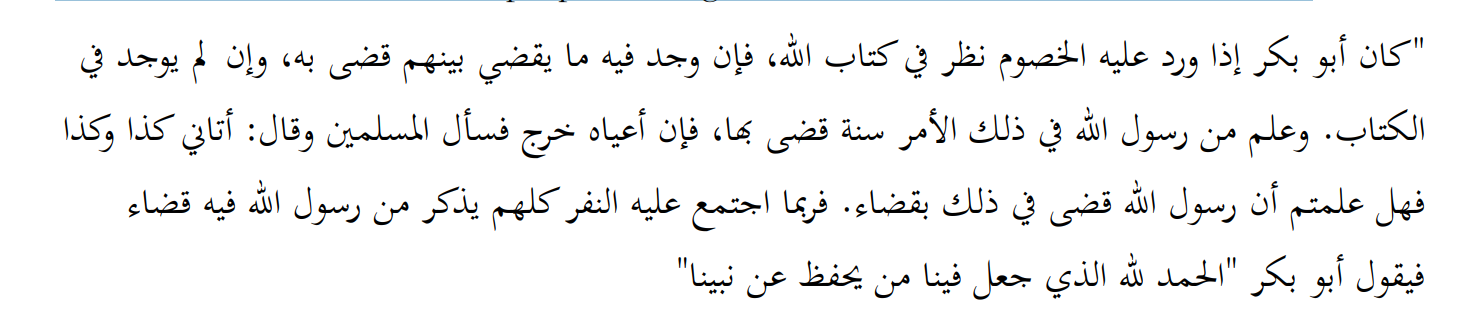
وإذا لم يجد سنةً لرسول الله ﷺ جمع رؤوسَ الناس وخيارَهم فاستشارهم، فإن اجتمع رأيهم على أمرٍ حكم به. وقد رُوي أن عمرَ كان يستشير الصحابةَ مع علمه بالفقه، حتى إذا عُرضت عليه قضيةٌ قال: ادعوا لي عليّاً، ادعوا لي زيداً، فكان يستشيرهم ويفصل النزاعَ بما يتفقون عليه. ولأنّ الصحابةَ كانوا يرجعون بعضهم إلى بعض، كان الاختلافُ بينهم قليلاً، لأن كلَّ صحابيٍّ كان يبيّن لصاحبه وجهةَ نظره والأدلةَ التي استنبطها. وكان رأيهم في الجملة صواباً وصحيحاً، وكان كلُّ واحدٍ منهم يرجع إلى الآخر. وإن اختلفت آراؤهم في بعض الأحكام، فإن خلافهم كان نادراً، وكان في فهمهم لا في منهج الفهم.
If he failed to find a Sunnah of the Messenger of Allah he gathered the heads of people and the best amongst them and consulted them. If they had a consensus on a matter he would judge with that. It has been reported that ‘Umar used to consult the Sahabah despite his knowledge of fiqh to the extent that when an incident would be refered to him he would say: Call ‘Ali for me, call Zayd. He used to consult them and settle the dispute with whatever they were agreed upon. Due to the Sahabah’s reference to each other differences of opinion between them were rare because each Sahābi expressed to another Sahābi his own perspective and the evidences he educed. Their view on the whole was true and correct and each one referred to the other. And even though their views differed in certain rules but their differences were rare and it was in their understanding and not in the method of understanding.
لَمَّا اتَّسَعَتِ الفُتُوحُ وَتَفَرَّقَ الصَّحَابَةُ فِي المُدُنِ المُخْتَلِفَةِ، وَصَعُبَ عَلَيْهِمُ الِاجْتِمَاعُ، كُلَّمَا وَقَعَتْ حَادِثَةٌ لَا نَصَّ فِيهَا، أَبْدَى كُلُّ صَحَابِيٍّ رَأْيَهُ دُونَ أَنْ يُعَبِّرَ عَنْهُ لِغَيْرِهِ أَوْ يَرْجِعَ إِلَى غَيْرِهِ، لِصُعُوبَةِ الِالْتِقَاءِ لِبُعْدِ المُدُنِ بَعْضِهَا عَنْ بَعْضٍ، وَكَذَلِكَ لِحَاجَةِ الحَادِثَةِ الوَاقِعَةِ فِي المَدِينَةِ إِلَى رَأْيٍ يُقْضَى بِهِ فِيهَا. وَكَانَ فِي كُلِّ مَدِينَةٍ مُسْلِمَةٍ صَحَابِيٌّ أَوْ أَكْثَرُ، وَكَانُوا مَرْجِعًا لِلْفَتْوَى، يَسْتَنْبِطُونَ الأَحْكَامَ فِيمَا لَا نَصَّ فِيهِ، وَيَتَوَلَّوْنَ بَيَانَ النَّصِّ وَتَوْضِيحَهُ، كَمَا يَتَوَلَّوْنَ تَعْلِيمَ النَّاسِ القُرْآنَ وَالسُّنَّةَ. وَلَمْ تَكُنِ السُّنَّةُ قَدْ دُوِّنَتْ بَعْدُ، فَاخْتَلَفَتْ آرَاءُ الصَّحَابَةِ فِي الحَادِثَةِ الوَاحِدَةِ، وَكَانَ لِكُلِّ وَاحِدٍ دَلِيلٌ عَلَى الرَّأْيِ الَّذِي اسْتَنْبَطَهُ، وَأَفْتَى بِهِ. وَمَعَ ذَلِكَ كَانَتْ هَذِهِ الآرَاءُ كُلُّهَا أَحْكَامًا شَرْعِيَّةً، وَكَانَتْ مَقْبُولَةً عِنْدَ جَمِيعِهِمْ، لِأَنَّ خِلَافَهُمْ إِنَّمَا كَانَ فِي الفَهْمِ فَقَطْ. أَمَّا مَنْهَجُهُمْ فِي الِاجْتِهَادِ فَكَانَ النَّظَرَ فِي نَصِّ القُرْآنِ وَالحَدِيثِ، وَفَحْصَ النُّصُوصِ، وَالتَّأَكُّدَ أَنَّ المَصَالِحَ المُعْتَبَرَةَ هِيَ الَّتِي دَلَّتْ عَلَيْهَا الشَّرِيعَةُ فَقَطْ، وَالقِيَاسَ عَلَى المَسَائِلِ وَالمَصَالِحِ. وَكَانَ وَحْدَةُ المَنْهَجِ فِي الِاجْتِهَادِ مَانِعًا أَنْ يَكُونَ لِاخْتِلَافِ الفَهْمِ أَثَرٌ سَيِّئٌ، بَلْ كَانَ مِنْ أَسْبَابِ نُمُوِّ الفِقْهِ وَاتِّسَاعِهِ. وَكَانَتْ فَتَاوَاهُمْ بِحَسَبِ الحَوَادِثِ وَالمَسَائِلِ الَّتِي تَقَعُ. وَلَمْ يَتَّسِعْ نِطَاقُ خِلَافِهِمْ، وَلَمْ يَتَجَاوَزِ الفُرُوعَ الفِقْهِيَّةَ. وَيَرْجِعُ خِلَافُ الصَّحَابَةِ فِي الفُرُوعِ إِلَى سَبَبَيْنِ:
When the conquests expanded and the Sahabah became separated in various cities and it became difficult for these Sahabah to meet, every time an incident occurred which had no text, each Sahabah gave his own opinion without expressing it to others or referring to others due to the difficulty in meeting since the cities were distant from each other and also due to the need of giving an opinion on an incident occurring in the city in order pass judgement by it. In every Muslim city there was one or more Sahabah. They were the reference point for rulings. They used to deduce rules which had no text and assume the task of clarifying and explaining the text just as they took the responsibility of teaching the people the Qur’ān and Sunnah. The Sunnah had still not been written down, therefore the opinions of Sahabah differed about a single incident and each one had an evidence for the opinion he had educed and gave legal verdicts with. However, all of these opinions were Sharī’ah rules and were acceptable to all of them since their disagreement was only in their understanding. As for their method of Ijtihād it was one which is to consider the text of the Qur’ān and hadīth and examine the texts, and ensure that the accredited maslahas (benefit) are the ones only indicated by the Sharī’ah and make analogy to issues and maslahas. The unity of the methodology in Ijtihād did not allow the difference in understanding to have any effect. On the contrary it was one of the reasons for the growth and expansion of fiqh. Their legal verdicts (fatwas) were according to the incidents and issues that took place. The range of their disagreement did not widen and nor did it overstep the furu’ (branches of fiqh). The disagreement of the Sahabah in furu’ is attributable to two reasons:
أولاً: أنَّ أكثر نصوص القرآن والسنّة ليست قطعيةً في الدلالة على المراد، بل هي ظنيّة الدلالة، وذلك لأنّها تحتمل هذا المعنى أو ذاك بسبب أنّ اللفظ يشترك بين معنيين لغويين أو أكثر، أو لأنّ النص عامٌّ يقبل التخصيص. وقد حاول كلُّ مجتهدٍ أن يفهم النص بحسب ما ترجّح لديه من القرائن.
First: That most of the texts of the Qur’ān and Sunnah are not definite in indicating what is meant rather they are of speculative meaning (zanniyya al-dalāla). Also they are liable to indicate this or that meaning due to the text sharing two or more linguistic meanings or the text being general such that it is open to specification. Each Mujtahid attempted to understand the text according to what was preponderant from the qara’in (indications).
ثانياً: لم تكن السنّة قد دُوّنت بعدُ في صورة مكتوبة. ولم يكن هناك اتفاقٌ على مجموعة من الأحاديث منتشرةٍ بين المسلمين بحيث تكون مرجعاً مشتركاً. بل كان الحديث يتداوله الناس بالرواية والحفظ. فربما كان مجتهدٌ في مصر يعرف حديثاً ما، بينما لم يكن مجتهدٌ في دمشق يعرفه. وكثيراً ما رجع بعض المجتهدين عن فتوى مجتهدٍ آخر حين علموا أن غيره يعرف سنّةً لم يكونوا يعرفونها. وقد أدّى ذلك إلى الاختلاف في الفروع الفقهية، لكنّ الأدلة والأصول المتعلقة بها لم تختلف، ولذلك لم يختلف منهجهم في الاجتهاد.
Second: The Sunnah had not yet been recorded in the written form. There was no unanimity on the body of hadīth which had spread among Muslims so as to be a common reference. Rather, the hadīth was circulated via transmission and memory. Perhaps a mujtahid in Egypt would know a hadīth but a mujtahid in Damascus did not know it. Many a times certain mujtahidin would retract from another mujtahid’s fatwa when they came to know that someone else knew of a Sunnah that they did not know. This led to disagreements in furu’ (branches of fiqh) but the evidences and principles concerning them did not differ therefore their method of Ijtihād did not differ.
باختصار، كان الصحابة (رضي الله عنهم) علماء بالشريعة. تعلّموا القرآن، وحصّلوا الحديث، وتولّوا تطبيق أحكام الإسلام بملازمة صاحب الرسالة، سيدنا محمد ﷺ. كانوا يحكمون الناس، ويفصلون بينهم، ويعلّمونهم دينهم. كانوا نوراً لأهل البلاد التي يقيمون فيها، وأمناء على الشريعة، وكانوا في دعوة الناس إلى الإسلام مؤمنين حقاً. كانوا يتلون القرآن على الناس، ويعلّمونهم الأحكام والقواعد. وفي تعليم الناس الإسلام كانوا يسلكون منهجاً عملياً؛ فعلّموا الناس الإسلام وأحكامه، وطريقة الانتفاع بتلك الأحكام في حل مشكلات الحياة. كانوا حكاماً، وفي الوقت نفسه كانوا معلمين. كان الناس يقصدون الصحابة فيتلقون عنهم الثقافة، ويأخذون الإسلام ويفهمون الأحكام. وتُسمّى الآراء التي بيّنوها في الأحكام "الفتاوى". وقد حُفظت فتاوى نحو مائة وثلاثين صحابياً من صحابة رسول الله ﷺ (من بينهم رجال ونساء). وكان سبعة منهم أعلم الناس وأكثرهم فتوى، وقد سُمّوا بـ"المُكثرين"، وهم: عمر، وعلي، وابن مسعود، وعائشة، وزيد بن ثابت، وابن عباس، وابن عمر. وكان الخلفاء والولاة وسائر الحكام فقهاء في الأحكام، وعلماء بالشريعة، ومشتغلين بإصدار الفتاوى؛ ولهذا تجسّد الإسلام فيهم، امتلأت عقولهم بثقافته، وانبثقت أفكارهم من هذه الثقافة، وصدرت عن هذه الأفكار المفاهيمُ التي آمنوا بها. وهم الذين نفّذوا هذه الأوامر والنواهي والأحكام. فكان الخليفة والوالي هما الشخص نفسه الذي يفكّر ويعمل ويفهم ويحكم. لِذلك كانت أفعالهم مستقيمةً، وأمورهم على جادّة الصواب، وحياتهم سامية، وطريقتهم في مخاطبة الناس صادقة، وأحكامهم متمسّكة بطريق الإسلام بدقّة بالغة. فقد لزمت جماعةٌ من التابعين الصحابةَ، فتعلّموا القرآن منهم، ونقلوا عنهم السنّة، وحفظوا فتاواهم، واتبعوا مناهجهم في استنباط الأحكام. وكان منهم من يُفتي في حياة الصحابة، كسعيد بن المسيّب في المدينة، وسعيد بن جبير في الكوفة. ولهذا نجد أنه بعد وفاة الصحابة جميعًا خلفهم التابعون في الفقه والاستنباط، فكانوا يستنبطون الأحكام بحسب اجتهادهم، فينظرون أولًا في كتاب الله وسنّة رسول الله ﷺ، فإن لم يجدوا فيهما شيئًا درسوا فتاوى الصحابة. وكانت لهم آراء في فتاوى الصحابة من حيث الفقه، فكانوا يرجّحون قولًا على قول، ويأخذون بأقوال بعضهم، وربما خالفوا الصحابة. وكان منهج التابعين في استنباط الأحكام هو منهج الصحابة نفسه؛ ولذلك جاءت فتاواهم تابعةً للوقائع والمسائل التي تقع، من غير أن تكون فيها افتراضات مسبقة، بل تجد الفتوى بحسب الواقعة نفسها. ولم يتّسع الخلاف بينهم، ولم تتجاوز أسباب الخلاف التي وقع فيها الصحابة حدَّها، وكانت متعلّقةً بفهم النص لا بأدلّة الشريعة نفسها. ولذلك لم يقع بين المسلمين خلافٌ يمسّ شؤون حياتهم.
In short, the Sahabah (may Allah be pleased with them) were scholars of the Sharī’ah. They learnt the Qur’ān and acquired the hadīth and took it upon themselves to implement the rules of Islam by mixing with the one responsible for the Message, our master Muhammad . They used to rule the people, judge between them and teach them their deen. They used to be a light for the inhabitants of the country who lived there and trustees of the Sharī’ah and in calling people to Islam they were true believers. They would recite the Qur’ān to the people and teach them the laws and rules. In teaching people Islam they use to follow a practical course. So they taught the people Islam and its rules and the method by which they would benefit in solving the problems of life with those rules. They were rulers and at the same time they were teachers. The people approached the Sahabah and recieved the culture from them, taking Islam and understanding the rules. The opinions in ahkām that they clarified were termed as ‘legal verdicts’ (fatawa). The fatwa of about one hundred and thirty companions of the Messenger of Allah (among which there are men and women) have been preserved. Seven of them were the most knowledgeable and gave the most opinions. They have been called the al-mukaththirun (those who were prolific in giving opinions). And they are: ‘Umar, ‘Ali, Ibn Mas’ud, ‘A’isha, Zayd ibn Thabit, Ibn ‘Abbas and Ibn ‘Umar. The Khalifahs, Walis and the rest of the rulers were fuqaha in ahkām, scholars of the Sharī’ah and busy in passing fatwa (legal verdicts), that is why Islam was embodied in them. Their minds were filled with its culture and their thoughts originated from this culture and the concepts they believed in emanated from these thoughts. They are the ones who implemented these orders, prohibition and rules. So the Khalifah and the Wali were the same people who thought, acted, understood and ruled. That is why their actions used to be correct and their affairs were on the right path and their lives were elevated and their manner of speaking with the people was honest and their rules adherent to the path of Islam with extreme precision. A group from the Tabi’in stuck to the Sahabah and learnt Qur’ān from them, reported the Sunnah from them, memorised their legal verdicts and underwent their methods of deduction of ahkām. There were those who used to give legal verdicts in the lifetime of the Sahabah like Said ibn al Musayyab in Madinah and Sa’id ibn Jubayr in Kufa. Thus, we find after all the Sahabah had passed away, the Tabi’in succeeded them in fiqh and istinbat (inference of rules). They used to deduce rules according to their own Ijtihād. They used to first look at the Book of Allah and the Sunnah of the Messenger of Allah , if they did not find anything there then they would study the fatwa (legal verdicts) of the Sahabah. They used to have opinions concerning the Fatwas of Sahabah from a jurisprudential perspective and they used to outweigh one statement over another. They used to take the opinions of some of them or sometimes they even differed with the Sahabah. The Tabi’ins method of inferring rules was the same method of the Sahabah. That is why their fatwas were according to the incidents and issues that took place without the presence of any assumptions. Rather it is according to the incident that you will find the fatwas. The range of disagreement did not become wide between them and nor did the reasons for disagreement on which the Sahabah disagreed overstep the mark which used to relate to the understanding of the text and not to the Sharī’ah evidences. Therefore, there were no disagreements amongst Muslims which affected life.