Artigo 14
Article 14
As ações são, originalmente, sujeitas às normas da Shari'ah. Por isso, nenhuma ação deve ser realizada sem que se conheça a sua norma. Já as coisas do lado oposto são originalmente permitidas (mubah), desde que não haja nenhuma evidência que estabeleça a proibição.
Actions are originally bound by the Shari’ah rules. Hence, no action should be undertaken unless its rule is known. The things on the other side are originally Mubah (permitted) as long as there is no evidence that stipulates prohibition.
O muçulmano é ordenado a conduzir suas ações de acordo com as regras da Shari'ah. Allah (SWT) diz
The Muslim is commanded to conduct his actions according to the Shari’ah rules. Allah (swt) says

“Mas não, por teu Senhor, eles não crerão [verdadeiramente] até que te tomem por juiz nas disputas que surgirem entre eles” (Alcorão 4:65)[ﷺ]. Ele (SWT) também diz,
“But no, by your Lord, they will not [truly] believe until they make you, [O Muhammad], judge concerning that over which they dispute among.” (TMQ 4:65). He (swt) also says,

"E tudo o que o Mensageiro ﷺ vos trouxer, tomai-o; e do que vos proibir, abstende-vos." (Alcorão 59:7).
“And whatever the Messenger (pbuh) has given you - take; and what he has forbidden you - refrain from.” (TMQ 59:7).
Portanto, o princípio de base é que o muçulmano se limite às regras da Shari'ah. Além disso, o princípio da Shari'ah afirma: "Não há regra antes da vinda da Shari'ah". Em outras palavras, nenhuma coisa deve receber qualquer regra antes da vinda da regra de Allah (swt) a seu respeito. Assim, antes da vinda da regra de Allah (swt), nenhuma coisa deve receber regra alguma. Isso significa que não se deve atribuir a ela a regra de permissibilidade, pois a ibaha é uma regra da Shari'ah que deve ser estabelecida através do discurso do Legislador; caso contrário, não pode ser considerada uma regra da Shari'ah. Isso se deve ao fato de que a regra da Shari'ah é o discurso do Legislador relacionado às ações dos adoradores. Portanto, aquilo que não foi mencionado no discurso do Legislador não pode ser considerado uma regra da Shari'ah. Logo, a permissibilidade não é a ausência de uma proibição; ao contrário, é a vinda de uma evidência da Shari'ah que estipula o mubah (permitido), ou seja, a vinda da escolha do Legislador entre praticar ou abster-se. Portanto, a base é a submissão ao discurso do Legislador, e não a ibahah, porque a própria regra de ibahah exige uma confirmação no discurso do Legislador. Este princípio é geral, abrangendo as ações e as coisas. Assim, se um muçulmano quiser realizar qualquer ação, é obrigatório que ele se submeta à regra de Allah (swt) referente a essa ação. Portanto, deve buscar essa regra até conhecê-la e segui-la. Do mesmo modo, se um muçulmano quiser tomar ou dar qualquer coisa, seja ela qual for, é obrigatório que ele se submeta à regra de Allah (swt) relativa a esse objeto. Assim, deve buscar essa regra até conhecê-la e segui-la. É isso que os versículos e os hadiths indicam em sua indicação literal e em sua compreensão. Portanto, é proibido para um muçulmano empreender qualquer ação ou agir em relação a qualquer coisa fora da regra da Shari'ah; ao contrário, ele é obrigado a obedecer à regra da Shari'ah em toda ação que empreender e em todo assunto. Depois que Allah (swt) revelou
Therefore, the origin is that the Muslim restricts himself to the Shari’ah rules. Besides that the Shari’ah principle states: “No rule before the advent of Shari’ah”. In other words, no matter should be given any rule whatsoever before the advent of the rule of Allah (swt) pertaining it. Hence, before the advent of Allah’s (swt) rule, no matter should be given any rule. This means that it should not be given the rule of permissibility, for the Ibaha is a Shari’ah rule that must be established through the address of the Legislator; otherwise it cannot be considered a Shari’ah rule. This is so because the Shari’ah rule is the speech of the Legislator related to the actions of the worshippers. Therefore, anything that has not been mentioned in the address of the Legislator cannot be considered a Shari’ah rule. Therefore, permissibility is not the non-advent of a prohibition, it is rather the advent of Shari’ah evidence stipulating the Mubah (permitted); in other words, the advent of the choice from the Legislator to either undertake or abstain. Therefore, the origin is the abidance by the speech of the Legislator, not the Ibahah; because the rule of Ibahah itself requires a confirmation from the speech of the Legislator. This principle is general, covering the actions and the things. So if a Muslim wanted to perform any action, it would be incumbent upon him to abide by the rule of Allah (swt) pertaining that action. Therefore, he must search for that rule until he knows it and abides by it. In the same manner if a Muslim wanted to take or give anything, whatever that object may be, it is incumbent upon him to abide by the rule of Allah (swt) regarding that object. So he must search for that rule until he knows it and abides by it. This is what the verses and the hadith have indicated in their literal indication and their understanding. Therefore, it is forbidden for a Muslim to undertake any action or to act towards anything upon other than the Shari’ah rule; rather he is obliged to abide by the Shari’ah rule in every action he undertakes and in every matter. After Allah (swt) revealed

"Hoje Eu aperfeiçoei para vós a vossa religião, completei sobre vós a Minha graça e aprovei para vós o Islã como religião." (TMQ 5:3), e depois Ele (swt) diz,
“This day I have perfected for you your religion and completed My favor upon you and have approved for you Islam as religion.” (TMQ 5:3), and after He (swt) says,
“E Nós fizemos descer sobre ti o Livro como esclarecimento para todas as coisas.” (TMQ 16:89). Não resta nenhuma ação, nem um único objeto, sem que Allah (swt) tenha explicado a evidência de sua norma. É proibido a qualquer pessoa que tenha compreendido esses dois versículos alegar que algumas ações, algumas coisas ou algumas situações estão desprovidas de norma da Shari’ah, ou seja, que a Shari’ah as ignorou por completo e, portanto, deixou de designar uma evidência ou um sinal que chamasse a atenção do obrigado para a presença dessa norma, isto é, a presença de uma ‘Illah que indicasse ao obrigado a norma pela qual deve se pautar: é Wajib, Mandub, Haram, Makruh ou Mubah? Tal alegação, e qualquer coisa semelhante, é considerada uma calúnia contra a Shari’ah. Portanto, é proibido a qualquer pessoa afirmar que determinada ação é permitida porque não foi mencionada nenhuma norma da Shari’ah a seu respeito, sob o princípio de que, se nenhuma norma da Shari’ah é mencionada, ela deve ser permitida. Do mesmo modo, não é permitido a ninguém dizer que este objeto é permitido porque não há evidência da Shari’ah a seu respeito, de modo que a origem é a permissão na ausência de evidência da Shari’ah. É proibido alegar isso, porque toda ação e tudo mais tem sua evidência na Shari’ah; deve-se buscar a norma de Allah (swt) referente à ação ou ao objeto, para adotá-la e aplicá-la, e não torná-los permitidos sob o pretexto de que não há evidência para eles.
“And We have sent down to you the Book as clarification for all things.” (TMQ 16:89), neither one single action, nor one single object has been left except that Allah (swt) has explained the evidence for its rule, and it is forbidden for anyone, having understood these two verses, to claim that some actions, some things or some situations are devoid of the Shari’ah rule; meaning that Shari’ah has completely ignored it and ,therefore, it failed to designate an evidence or a sign to draw the attention of the obligated to the presence of this Shari’ah rule, in other words, the presence of an Illah that indicated the rule to the person obligated to abide by it; is it Wajib, or Mandub, or Haram, or Makruh or Mubah? Such a claim and anything similar is considered a slander against Shari’ah. Therefore, it is forbidden for anyone to claim that such action is permitted because no Shari’ah rule related to it has been mentioned and the principle is that if no Shari’ah rule is mentioned it must be permitted, and in the same way it is not permitted for anyone to say that this object is permitted because there is no Shari’ah evidence related to it so the origin is permissibility if there is no Shari’ah evidence. It is forbidden to claim this because every action and everything has its evidence in Shari’ah; one must search for the rule of Allah (swt) pertaining to the action or the object to take it and apply it as opposed to making it permitted under the pretext that there is no evidence for it.
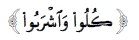
"Comei e bebei" (TMQ 2:60), ou ela vem em relação ao objeto sem qualquer menção à ação, como quando Allah (SWT) diz
“Eat and drink” (TMQ 2:60), or it has come regarding the object without any mention of the action whatsoever, such as Allah (swt) saying

"Proibidos vos são os animais mortos, o sangue e a carne de porco." (TMQ 5:3). Assim, a regra de proibição nessas três coisas diz respeito apenas à ação do adorador quanto a comer, comprar, vender e alugar, e outras ações. Portanto, a regra da Shari'ah trata da ação do adorador, quer seja ela uma regra para a ação ou uma regra para o objeto. É por isso que a origem nas ações deve ser restrita (à regra da Shari'ah), pois o endereçamento se relaciona somente à ação do adorador.
“Prohibited to you are dead animals, blood, the flesh of swine.” (TMQ 5:3). Accordingly, the rule of prohibition in these three things is only in relation to the action of the worshipper in terms of eating, buying, selling and hiring and other actions. Therefore, the Shari'ah rule deals with the action of the worshipper, whether this were a rule for the action or a rule for the object. This is why the origin in actions is to be restricted (to the Shari’ah rule) because the address is only related to the action of the worshipper.
Entretanto, ao examinar minuciosamente as evidências detalhadas das regras da Shari'ah, torna-se claro que, dentro dos textos que servem como evidências das regras, a forma como o discurso é dirigido difere entre o texto que serve de evidência para a ação e o texto que serve de evidência para o objeto. No texto relacionado à ação, o discurso é dirigido somente à ação, quer o objeto seja mencionado ou não. Por exemplo, Allah (SWT) diz:
However, by scrutinising the elaborated evidences of the Shari’ah rules, it becomes clear that within the texts which have come as evidences of the rules, the state of the text that acts as an evidence for the action is different to the state of the text that acts as evidence for the object, in terms of the manner in which the address is directed. In the text related to the action, the address is directed to the action alone, regardless of whether the object is mentioned or not. For instance, Allah (swt) says,

"Allah permitiu o comércio e proibiu a usura." (TMQ 2:275) E Ele (SWT) diz,
“Allah has permitted trade and has forbidden interest.” (TMQ 2:275) And He (swt) says,

“Ó vós que credes, combatei os descrentes que estão próximos de vós.” (TMQ 9:123) E Ele (swt) diz,
“O you who have believed, fight those adjacent to you of the disbelievers.” (TMQ 9:123) And He (swt) says,
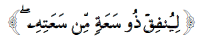
"Que o homem de posses gaste de acordo com a sua riqueza." (TMQ 65:7) E Ele (SWT) diz,
“Let a man of wealth spend from his wealth.” (TMQ 65:7) And He (swt) says,
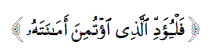
“E se um de vós confiar algo a outro, que aquele em quem se confiou cumpra sua confiança [com fidelidade].” (TMQ 2:283) E Allah (SWT) diz,
“And if one of you entrusts another, then let him who is entrusted discharge his trust [faithfully].” (TMQ 2:283) And Allah (swt) says,
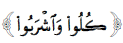
"Comei e bebei" (TMQ 2:60). E o Mensageiro de Allah ﷺ disse.
“Eat and drink” (TMQ 2:60). And the Messenger of Allah (pbuh) said.
.» الْبَ يِّ عَانِ بِالْخِيَارِ مَا لَمْ يَ تَ فَرَّقَا «.
.» الْبَ يِّ عَانِ بِالْخِيَارِ مَا لَمْ يَ تَ فَرَّقَا «.
“Ambas as partes numa transação comercial têm o direito (de optar pela anulação) enquanto não se tiverem separado.” Acordado por Ibn Umar e outros. E ele disse.
“Both parties in a business transaction have the righ (the choice to annul it) so long as they have not separated.” agreed upon through Ibn Umar and others. And he said.
.» أَعْطُوا الأَجِيرَ أَجْرَه «.
.» أَعْطُوا الأَجِيرَ أَجْرَه «.
“Dê ao trabalhador o seu salário”, relatado por Ibn Maja através de Ibn Umar, e por Al-Bayhaqi através de Abu Hurayrah, com uma cadeia de transmissão que foi considerada Hasan por Al-Baghawi. Em todos esses textos, a exortação é dirigida à ação, e o objeto não é mencionado. E em outros exemplos, Allah (SWT) diz,
“Give the worker his wage” reported by Ibn Maja through Ibn Umar and Al-Bayhaqi through Abu Hurayrah with a chain that was deemed as Hasan by Al-Baghawi. In all of these texts, the address has been directed at the action, and the object has not been mentioned. And in other examples, Allah (swt) says,

"E de cada um deles comeis carne tenra." (TMQ 35:12). E Ele (swt) diz,
“And from each you eat tender meat.” (TMQ 35:12). And He (swt) says,
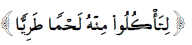
"Para comerdes dela carne tenra." (TMQ 16:14). E Ele (SWT) diz,
“To eat from it tender.” (TMQ 16:14). And He (swt) says,

"E fez brotar dela grãos, e deles eles se alimentam." (TMQ 36:33). E Ele (SWT) diz,
“And brought forth from it grain, and from it they eat.” (TMQ 36:33). And He (swt) says,

“Por certo, aqueles que devoram injustamente os bens dos órfãos.” (TMQ 4:10). E Allah (SWT) diz,
“Indeed, those who devour the property of orphans unjustly.” (TMQ 4:10).And Allah (swt) says,
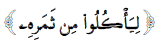
“Para que comam de Seus frutos.” (TMQ 36:35). O discurso em todos estes casos também se dirige à ação, embora o objeto tenha sido mencionado, e isto é semelhante ao discurso relacionado diretamente à ação do adorador. Este estado é diferente do estado do texto relacionado ao objeto, em que o discurso se dirige exclusivamente ao objeto, independentemente de a ação ter sido mencionada junto a ele ou não. Por exemplo, Allah (swt) diz
“That they may eat of His fruit.” (TMQ 36:35). The address in all these is also directed at the action, although the object has been mentioned and this is similar to the address related directly to the action of the worshipper. This state is different to the state of the text related to the object, where the address is directed exclusively towards the object, regardless of whether the action was mentioned alongside it or not. For instance Allah (swt) says
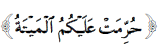
"Proibidos a vós são os animais mortos." (TMQ 5:3). Allah (SWT) também diz
“Prohibited to you are dead animals.” (TMQ 5:3). Allah (swt) also says

Ele apenas vos proibiu os animais mortos, o sangue e a carne de porco." (AAM 2:173). Allah (SWT) também diz
He has only forbidden to you dead animals, blood, the flesh of swine.” (TMQ 2:173). Allah (swt) also says
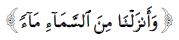
"E Nós fizemos descer do céu uma água na medida certa." (TMQ 23:18). Allah (SWT) também diz
“And We have sent down rain from the sky.” (TMQ 23:18).Allah (swt) also says

“E fizemos de a água toda coisa viva.” (TMQ 21:30). Também, o dito do Mensageiro de Allah ﷺ acerca da água do mar:
“And made from water every living thing.” (TMQ 21:30). Also, the saying of the Messenger of Allah (pbuh) (saw) pertaining the sea water:

“Ó vós que credes, na verdade, as bebidas intoxicantes, o jogo de azar, [o sacrifício sobre] altares de pedra [a outro que não Allah] e as flechas adivinhatórias são apenas impureza, obra de Satanás; evitai-as, para que possais prosperar.” (TMQ 5:90). Allah (SWT) diz
“O you who have believed, indeed, intoxicants, gambling, [sacrificing on] stone alters [to other than Allah], and divining arrows are but defilement from the work of Satan, so avoid it that you may be successful.” (TMQ 5:90). Allah (swt) says

"Já viram a água que bebem?" (TMQ 56:68). Allah (SWT) diz
“Have you seen the water that you drink?” (TMQ 56:68). Allah (swt) says

"Vocês já viram o fogo que acendem?" (TMQ 56:71). Allah (SWT) diz
“Have you seen the fire that you kindle?” (TMQ 56:71). Allah (swt) says

"E dos frutos das tamareiras e das videiras vocês extraem bebida inebriante." (TMQ 16:67). Allah (SWT) diz
“And from the fruits of the palm trees and grapevines you take intoxicant.” (TMQ.16:67). Allah (swt) says

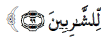
"E, em verdade, há para vós nos rebanhos uma lição. Damo-vos de beber do que há em seus ventres, entre o excremento e o sangue, leite puro, saboroso para os que bebem." (TMQ 16:66).
“And indeed, for you in grazing livestock is a lesson. We give you drink from what is in their bellies - between excretion and blood - pure milk, palatable to drinkers.” (TMQ 16:66).
O endereçamento em todos estes textos é dirigido ao objeto, ainda que a ação tenha sido mencionada. Tal endereçamento está relacionado ao objeto; assim, é uma explicitação de uma regra pertinente a esse objeto. Contudo, a relação da regra com o objeto se reflete no fato de que ela explicita sua regra em relação à ação do adorador, e não em relação ao objeto desvinculado da ação do servo, pois é inconcebível que um objeto tenha uma regra sem que esteja relacionado ao servo. Portanto, a diferença no estado do texto torna-se clara no que diz respeito à maneira como o endereçamento é direcionado.
The address in all of these texts is directed at the object, though the action has been mentioned. Such an address is related to the object; thus it is an outlining of a rule pertaining to that object. However, the rule’s relation to the object is reflected in the fact that it outlines its rule vis-à-vis the action of the worshipper, not vis-à-vis the object detached from the action of the servant, since it is inconceivable for a object to have a rule unless it is related to the servant. Therefore, the difference in the state of the text becomes clear with regard to the manner in which the address is targeted.
Essa diferença indica que, embora a regra da Shari'ah seja a fala do Legislador relacionada às ações dos adoradores, algumas regras específicas para coisas vieram, todavia, delinear a regra dessas coisas de maneira irrestrita, ainda que a sua regra estivesse relacionada ao adorador, em vez de isolada do adorador. Através do exame, essa indicação nos delineia que as regras das coisas vieram por meio de uma evidência geral, a qual, por sua vez, veio delinear a evidência das ações, e que tudo o que veio especificamente relacionado às coisas é, de fato, uma exceção à regra geral que tinha vindo como evidência para elas por meio da evidência das ações. Isso se dá porque o estudo detalhado revelou que o texto da Shari'ah, no qual o endereçamento foi diretamente dirigido à ação, veio em termos gerais. Portanto, todas as coisas relacionadas a ele seriam permitidas, pois a solicitação de realizar ou a escolha era geral, abrangendo tudo o que é permitido em relação a essa solicitação, e a proibição de algo requer um texto. Por exemplo, Allah (SWT) diz
This difference indicates that although the Shari’ah rule is the speech of the Legislator related to the actions of the worshippers some rules specified to things have however come to outline the rule of these things in an unrestricted manner, even though their rule was in relation to the worshipper as opposed to being isolated from the worshipper. Through scrutiny, this indication outlines to us that the rules of things have come through a general evidence, which in turn has come to outline the evidence of the actions, and that whatever came specifically related to things is in fact an exception from the general rule which had come as evidence for them through the evidence of the actions. This is so because detailed study has revealed that the Shari’ah text in which the address was directly targeted at the action has come in general terms. Therefore, all the things related to it would be permitted because the request to perform or the choice was general, encompassing all that which is permitted vis-à-vis this request, and the prohibition of something requires a text. For instance, Allah (swt) says

“E Ele vos submeteu tudo o que está nos céus e tudo o que está na terra - tudo vem d'Ele.” (TMQ 45:13). Isto significa que as coisas dos céus e da terra foram criadas por Allah para nós e, portanto, são permitidas. Allah (swt) também diz
“And He has subjected to you whatever is in the heavens and whatever is on the earth - all from Him.” (TMQ 45:13). This means that the things in the skies and the earth have been created for us by Allah, and ,therefore, are permitted. Allah (swt) also says
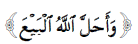
“Allah permitiu o comércio e proibiu a usura.” (TMQ 2:275) Isso significa que Allah (SWT) tornou permitidas a compra e a venda de todas as coisas; assim, a permissão de vender e comprar qualquer uma dessas coisas não requer evidência, pois a evidência geral abrange tudo. Portanto, a proibição de vender algo, como o álcool, por exemplo, requer evidência. Além disso, Allah (SWT) diz:
“Allah has permitted trade and has forbidden interest (usury).” (TMQ 2:275) which means that Allah (swt) has made the buying and selling of all things permitted; thus the ibahah of selling and buying any of these things does not require an evidence, because the general evidence comprises everything. So, the prohibition of selling something, such as alcohol for instance, requires evidence. Also, Allah (swt) says
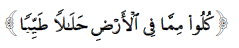
“Ó humanidade, comei do que há na terra, [que seja] lícito e bom.” (TMQ 2:168), o que significa que comer tudo é halal (lícito); assim, a ingestão de um item específico não requer evidência para torná-lo halal, pois a evidência geral já o tornou halal. A proibição de comer algo, como a carne de animal morto, por exemplo, requer evidência. Allah (SWT) diz
“O mankind, eat from whatever is on earth [that is] lawful and good.” (TMQ 2:168) which means that eating everything is Halal (lawful); thus the eating of a specific item does not require an evidence to make it Halal, because the general evidence has made it Halal. The prohibition of eating something, such as dead meat for instance, requires evidence. Allah (swt) says
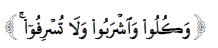
“E comei e bebei, mas não sejais excessivos (extravagantes).” (TMQ 7:31) o que significa que beber qualquer coisa é permitido; assim, beber um item específico não requer uma evidência para torná-lo permitido, pois a evidência geral já o tornou permitido. No entanto, a proibição de beber um item específico, como as bebidas intoxicantes, por exemplo, requer evidência.
“And eat and drink, but be not excessive (extravagant).” (TMQ 7:31) which means that the drinking of everything is permitted; thus the drinking of a specific item does not require an evidence to make it permitted, because the general evidence has made it permitted. However, the prohibition of drinking a specific item, such as intoxicants for instance, requires evidence.
De modo semelhante, encontram-se evidências gerais que permitem tudo o que se relaciona com ações como falar, andar, brincar, cheirar, inspirar, olhar e outras ações que o ser humano realiza; assim, a permissão de qualquer coisa relacionada a elas não exige uma evidência, mas a proibição de qualquer coisa relacionada a essas ações exige uma evidência para que ela seja considerada proibida.
Similar to these, general evidences are found permitting everything related to actions such as talking, walking, playing, smelling, inhaling, looking and other actions which man performs; thus the permission of anything related to them does not require an evidence, but the prohibition of anything related to these actions does require an evidence to make it forbidden.
Portanto, as evidências trazidas pelos textos e direcionadas às ações estabeleceram a regra das coisas de maneira geral e irrestrita; portanto, elas não necessitam de outros textos para estabelecer suas regras. Assim, o surgimento de textos específicos relativos às coisas, uma vez já estabelecida a regra geral dessas coisas, serve como evidência de que essas regras específicas vieram para excluir a regra dessas coisas da regra geral. Logo, os textos da Shari'ah vieram para estabelecer a regra legal relativa às coisas, indicando que são permitidas; portanto, são permitidas, a menos que exista um texto que as proíba. É dessa maneira que se deriva o princípio da Shari'ah "A origem das coisas é a ibahah". Essas são as evidências para este artigo.
Therefore, the evidences brought by the texts and targeted at the actions have outlined the rule of things in a general and unrestricted manner; ,therefore, they do not require other texts to outline their rules. Thus, the advent of specific texts related to things, once the general rule of these things had been outlined, serves as evidence that these specific rules have come to exclude the rule of these things from the general rule. Hence, the Shari’ah texts have come to outline the Shari’ah rule pertaining things, denoting that they are permitted; hence, they are permitted unless a text exists to prohibit them. It is in this manner that the Shari’ah principle “The origion of things is ibahah” is derived. These are the evidences for this article.