10.2 د مفسرینو تفسیري طریقې
10.2 The Exegetical Approaches Of Mufassirun
صحابه کرامؓ نے قرآنِ کریم کی آیات کی تفسیر یا تو اپنے اجتہاد سے کی یا پھر اسے خود رسول اللہ ﷺ سے سن کر بیان کیا۔ اکثر اوقات وہ کسی آیت کا سببِ نزول بیان کر دیتے یا یہ واضح کرتے کہ وہ آیت کن کے بارے میں نازل ہوئی تھی۔ کسی آیت کی وضاحت کرتے وقت وہ اکثر اس کے لغوی معنی کی توضیح تک محدود رہتے، جو وہ آیت سے سمجھتے تھے، اور اس کے لیے نہایت مختصر الفاظ استعمال کرتے، جیسے ان کا یہ کہنا: غیر متجانف لإثم (گناہ کی طرف مائل نہ ہونے والا)، یعنی گناہ کی طرف میلان نہ رکھنے والا (غیر متعرض لمعصیۃ)۔ اسی طرح اللہ تعالیٰ کے اس فرمان کے بارے میں ان کا قول بھی ہے:
The Sahabah made tafsīr for the verses of the Noble Qur’ān either as their own Ijtihād in tafsīr or by hearing it from the Messenger of Allah . Many a time they would explain the cause of revelation for a verse or explain with respect to whom it had been revealed. In explaining a verse they would restrict themselves to elucidating the linguistic meaning which they understood from the verse with the most concise of words like their saying: ghayr mutajanif li ithm (not inclined to sin) i.e, not predisposed to sin (ghayr muta'arrid li ma'siyya). Similarly their statement regarding His saying:
"(حرام) دی هم دا چې د بخت یا پریکړې غوښتلو لپاره تیر وکاروي" [TMQ Mā’idah: 3]
“(Forbidden) also is to use arrows seeking luck or decision” [TMQ Mā’idah: 3]
د جاهلیت خلک داسې کول چې کله یو له دوی څخه د سفر (وتلو) اراده کوله نو یو تیر به یې اخیست او ویبه ویل: دا ما ته امر کوي چې ووځم. نو که هغه په خپل سفر ووځي نو ښه بخت به ورسره وي. او بل تیر به یې اخیست او ویل به یې: دا ما ته امر کوي چې پاتې شم، نو په خپل سفر کې به بخت ورسره ونهي. بدبخته تیر د دوو تیرو څخه یو دی. نو الله دوی له دې عمل څخه منع کړل. یوه بیلګه هغه ده چې د ابن عباس رضي الله عنهما څخه د الله تعالیٰ د دې ارشاد په اړه روایت شوې ده:
The people of jahiliyya when one of them wanted to go out (on a journey) he would take an arrow and say: This one orders me to go out. So if he goes out on his journey will meet good luck. And he will take another arrow and say: This one orders me to stay, so he will not be lucky in his journey. The unlucky arrow is one of the two arrows. So Allah forbade them from this practice. An example would be what has been narrated about Ibn 'Abbas regarding His saying:
«یقیناً هغه به تاسو بیرته معاد (د بیرته راستنیدو ځای) ته راوړي» [TMQ Qasas: 85]
“ He will surly bring you back to the ma'ad (place of return)” [TMQ Qasas: 85]
هغه وویل: مکې ته. که دوی دې ته یو څه اضافه کړي وای، نو هغه به هغه څه وای چې د نزول د سبب او دې په هکله روایت شوي دي چې دا آیت د چا په هکله نازل شوی. د ابوهریره رضي الله عنه څخه روایت شوي دي د هغه د قول په هکله:
He said: to Makkah. If they added anything to that it would be what has been narrated about the cause of revelation and with regards to whom the verse in question was revealed. It has been narrated about Abu Hurairah regarding His saying:
بېشکه تاسو (اې محمده ﷺ) هغه څوک نه شئ سمون کولی چې تاسو یې خوښ کړئ. [TMQ Qasas: 56]
“Verily ! You (O Muhammad (saw)) guide not whom you like” [TMQ Qasas: 56]
هغه وویل چې دا آیت د الله رسول ﷺ په اړه نازل شوی و، کله چې هغه د خپل مامی ابوطالب د اسلام په لور راوړلو هڅه کوله. بیا تابعین راغلل، چې د صحابه کرامو څخه وروسته راځي، او هر هغه څه یې روایت کړل چې صحابه کرامو په دې ډول بیان کړي وو. د تابعینو ترمنځ داسې کسان هم وو چې د قرآن کریم آیتونه یې تفسیر کړل یا د نزول سبب یې بیان کړ، یا د تفسیر په اجتهاد سره یا له نورو اهلو کسانو څخه د اورېدو له لارې. د تابعینو څخه وروسته علماء راغلل او تفسیر یې پراخ کړ او د یهودو او نصرانیانو څخه یې روایتونه نقل کړل. مفسرین په هره زمانه او نسل کې یو له بل پسې راغلل، چې قرآن یې تفسیر کړ او په هره دوره کې یې د مخکنیو څخه وروسته تفسیر پراخ کړ. مفسرینو د آیتونو په لور توجه وکړه ترڅو پرې احکام استنباط کړي او د خپلو مذهبونو تشریح یې د اختیار او جبر په اړه وکړه. دوی داسې آیتونه تفسیر کړل چې د خپلو نظریاتو د ثابتولو لپاره یې د خپلو تمایلاتو سره سم، په تشریع، علم الکلام، بلاغت، صرف او نحو وغیره کې استعمال کړل. د اصحابو د دورې له وخته تر اوسه د مختلفو دورو تفاسیرو څیړل څرګندوي چې د قرآن تفسیر په هره دوره کې د هغې زمانې علمي خوځښت څخه متاثر شوی و، او د هغې وخت نظریات، تیوریاوې او مذهبي افکار یې انځور کړل. لږ تفسیرونه داسې وو چې د هغه وخت له نظریاتو، افکارو او قواعدو څخه متاثر نه وو.
that he said the verse had been revealed concerning the Messenger of Allah when he tried to win over his uncle Abu Talib to Islam. Then came the Tabi'un after the Sahabah who reported everything the Sahabah mentioned in this manner. From among the Tabi'un there were those who explained the verses of the Noble Qur’ān or stated the cause of revelation, either as their own Ijtihād in tafsīr or by hearing it from (other authorities). After the Tabi'un the 'Ulama came and expanded the tafsīr and quoted reports from the Jews and Christians. The mufassirun succeeded one after another in every age and generation, who explained the Qur’ān and expanded the tafsīr in each age on what had come before. The mufassirun began to give their attention to the verses to deduce rulings from them and explain their schools of thought in terms of freewill (ikhtiyar) and predestination (jabr). And they began to explain verses proving their opinions according to their inclinations in legislation, scholasticism ('ilm al-Kalam), rhetorics (balaagha), declension (sarf) and grammar etc. What is apparent from an examination of the tafaseers through the different ages since the time of the Sahabah until now is that the tafsīr of the Qur’ān in every age was influenced by the scholarly movement of the time, it presented a picture which reflected the views, theories and schools of thought of the time. Seldom were there tafsīrs that were free from the influence of opinions, thoughts and rules of the time.
However, all of these tafsīrs were not compiled in books from the first day mufassirun came to exist, i.e., from the time of the Sahabah. Rather, they changed from situation to situation through the ages. In the beginning, tafsīr used to be a part of the hadīth and one of its chapters. The hadīth was the all-encompassing topic which included all the Islamic disciplines. So the transmitter of a hadīth, just as he would narrate a hadīth containing a legal ruling, would also narrate a hadīth which contained the tafsīr of a Qur'ānic verse. Then writers, at the beginning of the Abbasid era and towards the end of the Umayyad era, i.e., at the beginning of the second century Hijrī, began to bring together all the similar and relevant ahadīth under a topic and separate them from other topics. So the disciplines such as tafsīr and fiqh which the hadīth contains were separated from each other. What resulted from these sciences is what resulted in terms of hadīth, Sīrah, jurisprudence and tafsīr. Thus, the science of tafsīr came into existence and became an independent science which was studied on its own. However, the tafsīrs did not take any organised form, in that verses of the Qur'ān were not mentioned in an ordered manner like the arrangement found in the mushaf, followed by their tafsīr. Rather, the tafsīrs narrated were scattered here and there. They were tafsīr for miscellaneous verses, as was the case with the hadīth. This situation continued until tafsīr became separated from the hadīth and began to stand up as a science in its own right. Tafsīr was written for each āyah of the Qur'ān or part of an āyah, arranging these verses according to the order in the mushaf. The first one to undertake the tafsīr of the Qur'ān, quoting āyah after āyah and explaining them one after another, was al-Farrā' (d. 207 AH). Ibn al-Nadīm reports in his book al-Fihrist that:
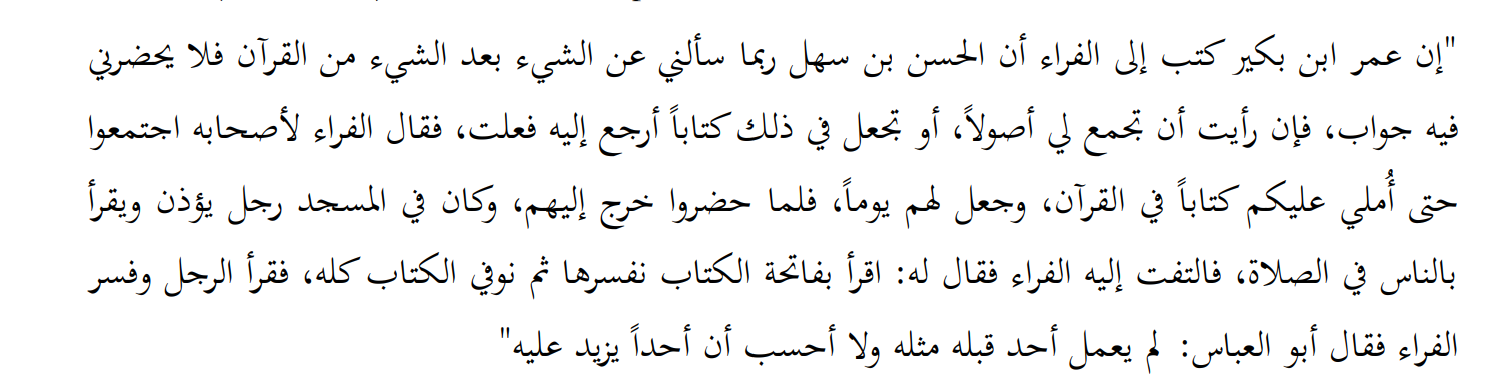
عمر بن بُکیر نے الفراء کو لکھا کہ الحسن بن سہل شاید مجھ سے قرآن کے بارے میں یکے بعد دیگرے ایک کے بعد ایک سوال کرے گا، اور میں سب کے جوابات یاد نہیں رکھ سکوں گا۔ میرا خیال ہے کہ آپ کو چاہیے کہ اہم نکات جمع کریں اور ان کو ایک کتاب میں مرتب کریں، جس کی طرف میں رجوع کر سکوں۔ چنانچہ الفراء نے اپنے شاگردوں سے کہا: جمع ہو جاؤ تاکہ میں تمہیں قرآن کے بارے میں ایک کتاب لکھوا سکوں۔ اس نے انہیں ایک دن دیا۔ جب وہ آئے تو وہ ان کے پاس گیا۔ مسجد میں ایک شخص اذان دے رہا تھا اور لوگوں کے ساتھ نماز میں قرآن کی تلاوت کر رہا تھا۔ الفراء اس کی طرف متوجہ ہوا اور کہا: قرآن کی پہلی سورت (فاتحۃ الکتاب) کی تلاوت کرو، ہم اس کی تفسیر کریں گے اور پھر پورے قرآن کے بارے میں مفصل گفتگو کریں گے۔ اس شخص نے تلاوت کی اور الفراء نے تفسیر بیان کی۔ ابو العباس نے کہا: اس جیسا کام پہلے کسی نے نہیں کیا، اور میرا خیال نہیں کہ کوئی اس پر کچھ اضافہ کر سکے۔
“Umar ibn Bukayr wrote to al-Farra' that al-Hasan ibn Sahl perhaps may ask me one thing after another from the Qur’ān but I will not be able to recall all the answers. I think you should bring together the essential points and compile them in a book I will refer to it, so al-Farra' said to his students; gather together so that I can dictate to you a book about the Qur’ān. He gave them a day. When they came he went to them, in the mosque there was man giving azan and reciting the Qur’ān with the people in prayer. Al-Farra' turned to him and said: recite the opening chapter of the Qur’ān (fatihatul kitab), we will explain it and then we will speak fully about the whole book. The man recited and al-Farra' made tafsīr. Abu al-'Abbas said: no one did anything like him before and I don't think anyone can add to that.'
بیا وروسته ابن جریر الطبری (د ۳۱۰ هجری) راغی چې خپله مشهوره تفسیر یې ولیکه. د ابن جریر له تفسیر مخکې یو شمېر تفسیرونه مشهور شول، لکه د ابن جریج تفسیر. د هغه حال د لومړیو محدثینو حال و چې هغه هرڅه راټول کړل چې دوی ته رسیدل، پرته لدې چې صحیح او غلط روایتونه سره توپیر کړي. دوی ویلي دي چې د ابن جریج هدف صحت نه و؛ بلکې هرڅه یې نقل کړل چې د هر آیت په اړه روایت شوي وو، که صحیح وو که ضعیف (ساقم). همدارنګه د دغو تفسیرونو له جملې څخه د السدي (د ۱۲۷ هجری) تفسیر او د مقاتل (د ۱۵۰ هجری) تفسیر دي. عبدالله بن مبارک د مقاتل د تفسیر په اړه ویلي دي: ډېر ښه دی د هغه تفسیر، که یوازې هغه ثقه وای. د دغو کې د محمد بن اسحاق تفسیر هم دی. هغه له یهودو او عیسویانو نقل کاوه، او د وهب بن منبه، کعب الاحبار او نورو اقوال یې نقلول، څوک چې له تورات، انجیل او د هغوی له تفسیرونو څخه خبرې نقلولې. دا تفسیرونه موږ ته نه دي رسېدلي، که څه هم ابن جریر الطبری د هغې ډېره برخه راټوله کړې او په خپل کتاب کې یې شامل کړې ده. بیا مفسرین یو په بل پسې راغلل او قرآن یې په بشپړ او منظم ډول په داسې کتابونو کې تشریح کړ چې بشپړ او سیستماتیک وو.
Then, after him came Ibn Jarir al-Tabari (d.310 A.H.) who wrote his famous tafsīr. A number of tafsīrs before the tafsīr of Ibn Jarir became well known such as the tafsīr of Ibn Jurayj. His situation was the situation of the first muhaddithin who compiled everything that reached them without differentiating between the correct (Sahih) and incorrect reports. They said 'that Ibn Jurayj's aim was not authenticity; rather he reported everything that was reported about every ayah whether it was correct (Sahih) or weak (saqim).' Also from these tafsīrs is the tafsīr of al-Suddi (d.127 A.H.) and the tafsīr of Muqatil (d.150 A.H.). 'Abd Allah ibn al-Mubarak said about the tafsīr of Muqatil: How excellent is his tafsīr, if only he were reliable (thiqa).' Amongst them is also the tafsīr of Muhammad ibn Ishaq. He used to transmit from the Jews and Christians and he used to quote sayings of Wahb ibn Munabbih, Ka'b al-Ahbar and others, who reported thing from the Torah, Bible and their commentaries. These tafsīrs have not reached us, although Ibn Jarir al-Tabari has collected most of it and included it in his book. Then came mufassirun one after another explaining the Qur’ān in an complete and well-ordered manner in books that were complete and systematic.
البته هر چاته چې د تفسیرونو ته وګوري، هغه به وویني چې مفسرینو تفسیر ته له بېلابېلو نظرونو څخه کتنه کړې ده. ځینو د کتاب د سبکونو او معنیو ته، او هغه بلاغي شکلونو ته چې په کې شامل دي، پام اړولی و، ترڅو د کلام لوړ او ممتاز ډولونه له نورو ډولونو سره پرتله کړي. له همدې امله په دوی تفسیرونو کې بلاغي اړخ غالب شو. له دغو کسانو یو محمد بن زمخشري دی چې د خپل تفسیر «الکشاف» په نوم یې تألیف کړ. ځینې نور د عقیدې بنسټونو، د دروغجنو ردولو او د مخالفینو سره په بحث کې پام کاوه، لکه فخرالدین رازي چې د خپل مشهور تفسیر «التفسیر الکبیر» په نوم یې لیکنه کړې. ځینو نورو د شریعت احکام مطالعه کړل او غوښتل یې چې له آیتونو یې استنباط کړي. نو دوی خپل پام د احکامو آیتونو ته واړاوه، لکه ابوبکر رازي چې په «احکام القرآن» نوم مشهور جصاص یادیږي، د خپل مشهور تفسیر په توګه. ځینې کسان د قرآني قصو پسې ولاړل او له تاریخي کتابونو او اسرائیلیاتو څخه یې قصې ورزیاتې کړې، او هر هغه څه یې راټول کړل چې اورېدلي یې و، که لږ وو که ډېر، پرته لدې چې هغه خبرې بیاکتنه کړي چې له شریعت سره سمون نه لري، له عقل سره نه برابرېږي، یا له هغو قرآني آیتونو سره ټکر لري چې معنا یې قطعي ده. له دې ډلې یو علاءالدین علي بن محمد بغدادي دی، چې د صوفي په نوم د خازن په نوم مشهور دی، او په خپل تفسیر «لباب التأویل فی معاني التنزیل» کې یې همداسې کړي دي. او ځینې کسان داسې وو چې د خپل مذهب ملاتړ او آیتونه د هغه څه سره سم تشریح کول چې د دوی ډلې ته ګټه رسوي، لکه د شیخ طبرسي «مجمع البیان» تفسیر او د شیخ طوسي «التبیان» تفسیر. دواړو د شیعه مذهب او د دوی عقایدو او احکامو ملاتړ کړی دی. او ځینې نور یوازې د دې لپاره تفسیر ته ملا تړلي وو چې د قرآن آیتونه او حکمونه تشریح کړي، پرته له کومې ځانګړې نظریې څخه. دوی هغه مفسرین دي چې تفسیرونه یې د تفسیر د کتابونو خلاصه ګڼل کیږي. دوی د تفسیر او نورو علومو ائمه هم ګڼل کیږي. لکه د ابن جریر الطبري تفسیر، د ابو عبدالله محمد القرطبي تفسیر، د النسفي تفسیر او نور. اما هغه تفسیرونه چې په دې عصر کې او د انحطاط د دورې په پای کې لیکل شوي، لکه د محمد عبده تفسیر، د طنطاوي جوهري تفسیر او د احمد مصطفی المراغي تفسیر او نور، دوی د تفسیر ادب کې شمیرل نه کیږي او نه پرې کوم باور کیږي. دا ځکه چې د ډیرو آیتونو په تشریح کې د الله دین ته خطر شتون لري، لکه د محمد رشید رضا تفسیر د دې آیت په اړه: ...
However, anyone who inspects the tafaseer will find that the mufassirun approached the tafsīr from various perspectives. Some were interested in looking at the styles and meanings of the Book and whatever it included in terms of the forms of rhetorics (balaagha) to know the highest and distinguished forms of speech as compared to other types of speech. So the rhetorical aspect prevailed in their tafsīrs. One of those people is Muhammad ibn al-Zamakhshari in his tafsīr entitled al-Kashaf. There were those who looked into the foundations of belief, the fighting of pretenders and debating those who disagreed (with Islam) like Fakhr al-Din al-Razi in his famous tafsīr: al-Tafsīr al-Kabir. And some of them studied the Sharī’ah rules and were interested in deducing them from the verses. So they channelled their interest towards the verses of ahkām like Abu Bakr al-Razi commonly known as al-Jassas in his well known tafsīr Ahkām al-Qur’ān. There were those who went after stories and added to the Qur’ānic stories from the books of history and israiliyyat (Judaica) and began to collect everything they heard however meagre or abundant without revising the things that contradicted the Sharī’ah, did not agree with the mind or contradicted Qur’ānic ayāt which are definite in meaning. One such person is 'Ala' al-Din 'Ali ibn Muhammad al-Baghdadi, the sufi otherwise known as al-Khazin who did this in his tafsīr Bab al ta'weel fi ma'ani al-tanzeel. And there were those that concerned themselves with supporting their mazhab (school) and explaining the verses in accordance with whatever supports their faction like the tafsīr al-Bayan of al-Shaykh al-Tibrisi and the tafsīr al-Tibyan of al-Shaykh al-Tusi. Both of them supported the views of the Shi'a and their mazhab regarding belief ('aqaid) and ahkām. And there were those that were only concerned with the tafsīr in order to explain the verses and rulings of the Qur’ān regardless of any perspective. They are the mufassirun whose tafsīrs are considered the essence of the books of tafsīr. And they are considered the imams of tafsīr and other topics. Like the tafsīr of Ibn Jarir al-Tabari, the tafsīr of Abu 'Abd Allah Muhammad al-Qurtubi, and the tafsīr of al-Nasafi and others. As for the tafsīrs written in this age and towards the end of the period of decline like the tafsīr of Muhammad 'Abduh, the tafsīr of Tantawi Jawhari and the tafsīr of Ahmad Mustafa al-Muraghi and others, they are not considered part of the tafsīr literature and nor is there any trust put in them. This is because there is a risk in the deen of Allah in the explanation of many verses like Muhammad Rasheed Ridha’s tafsīr of the verse:
او څوک چې د هغه څه له مخې فیصله نه کوي چې الله نازل کړي دي، نو دغه کسان فاسقان (ګمراه کوونکي) دي۔ [TMQ Mā’idah: 44]
“And whosoever does not judge by what Allahhas revealed, such are the Fasiqun (transgressors)” [TMQ Mā’idah: 44]
هغه د هندوستان مسلمانانو ته اجازه ورکړه چې د انګلیسي قوانینو ته غاړه کیږدي او د انګلیسي قاضیانو فیصلو ته تسلیم شي. شیخ محمد رشید رضا د "تفسیر المنار" په نوم مشهور، د قرآن کریم د تفسیر په شپږمه ټوک کې، د سورت المائدہ په تفسیر کې یادونه کړې، کله چې د الله تعالیٰ دا ارشاد یې تشریح کړ:
He permitted the Muslims of India to adopt English laws and submit to the rulings of English judges. Shaykh Muhammad Rasheed Ridha mentioned in volume six of the Tafsīr of the Noble Qur’ān widely known as al-Manar in the tafsīr of sura al- Mā’idah when he explained His saying:
او چاچا چې د الله نازل کړي حکم سره فیصله ونه کړي، نو دغه کسان فاسقان دي. [TMQ Mā’idah: 44]
“And whosoever does not judge by what Allah has revealed, such are the Fasiqun (transgressors)” [TMQ Mā’idah: 44]
په پاڼو ۴۰۶-۴۰۹ کې هغه څخه پوښتنه وشوه:
In pages 406-409 he was asked:
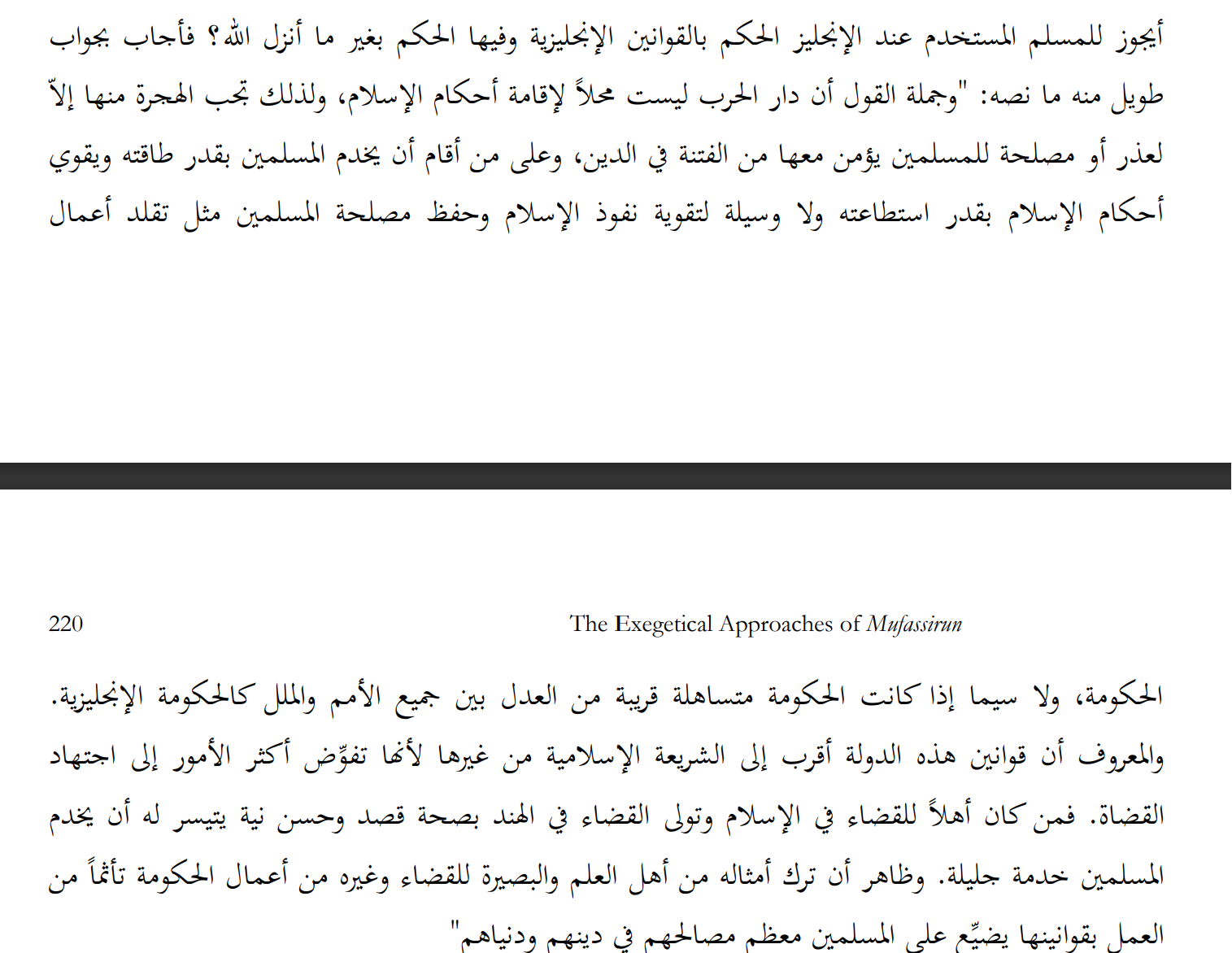
کیا یو مسلمان لپاره دا جائز دی چې انګریزانو سره په دندې ولګیږي او د انګریزي قوانینو له مخې حکومت وکړي، چې ځینې یې د هغه څه له مخې حکم کول دي چې الله نازل کړي نه دي؟ هغه اوږد ځواب ورکړ: «لنډه دا چې دار الحرب د اسلامي احکامو د قائمولو ځای نه دی، له همدې امله هجرت واجب دی، مګر کله چې عذر یا د مسلمانانو لپاره داسې ګټه وي چې په دین کې د فتنې څخه خوندي شي. په هغه څوک چې (هندوستان کې) اوسیږي دا واجب دی چې د خپلو وسائلو تر حده مسلمانانو ته خدمت وکړي او د اسلامي احکامو د ټینګښت لپاره هڅه وکړي. او د اسلام د نفوذ د ځواکمنولو او د مسلمانانو د ګټو د ساتنې لپاره د حکومتي دندو په ترلاسه کولو پرته بله لاره نشته، په ځانګړې توګه که حکومت د انګریزي حکومت په څیر د ټولو خلکو او دینونو تر منځ نرم او په انصاف سره عادل وي. دا ښکاره ده چې د دې هیواد قوانین د نورو په پرتله اسلامي شریعت ته نږدې دي، ځکه چې ډیری مسائل یې د قاضیانو اجتهاد ته سپاري. نو هغه څوک چې په اسلام کې د قاضي کیدو وړ وي او په هندوستان کې د عدلیې یا نورو حکومتي دندو کې په سمه نیت او ښه هدف سره دنده قبلوي، د مسلمانانو لپاره لوی خدمت کولی شي. ښکاره ده چې د پوهانو او بصیرت لرونکو خلکو لخوا د عدلیې او نورو حکومتي دندو پرېښودل، د دې له امله چې د دوی (یعنې انګریزانو) په قوانینو سره کار کول ګناه ده، د مسلمانانو د دین او دنیا ګټې به له لاسه ورکړي.»
Is it permitted for a Muslim to be employed by the English to rule by English laws some of which constitutes ruling by other than what Allah has revealed ? He gave a long reply: 'In short, the abode of war (dar al-harb) is not a place for the establishment of the rules of Islam, therefore it is obligatory to make hijra unless there is an excuse or benefit for the Muslims due to which he will be safe from the fitna (test) on his deen. It is incumbent on the one who resides (in India) to serve the Muslims according to the best of his abilities and to strengthen the rules of Islam as much as he can. And there is no means of strengthening the influence of Islam and protecting the interests of the Muslims except by assuming the government posts especially if the government is lenient and fairly just between all people and religions like the English government. It is well known that the laws of this country are closer to the Islamic Sharī’ah than others because it delegates most matters to the Ijtihād of judges. So whoever is qualified to be a judge in Islam and takes up a post in the judiciary in India with the correct aim and good intention, it is possible for him to do a great service for the Muslims. It is obvious that the abandonment of the judiciary and other government posts by the people of knowledge and insight due to being sinful for working according to their (i.e The English) laws will forfeit the interests of the Muslims in their deen and dunya.'
بيا يې وفرمايل:
Then he said:
دا ټول وړاندې ښودل شوي خبرې ښکاره کوي چې د مسلمان لپاره په انګریزي حکومت کې په هندوستان کې (او د ورته نورو کارونو کې) کار قبلول او د هغوی د قوانینو له مخې حکم کول یوه رخصت دی (رخصه)، چې د دوو بدیو څخه د کمې بدۍ د کولو په اصل پورې اړه لري، که چېرې عزیمت نه وي چې په هغه کې د اسلام ملاتړ او د مسلمانانو د ګټو ساتنه موخه وي…
“It is obvious from all of this that the Muslim's acceptance to work in the English government in India 'and any other similar work' and his ruling according to their laws is a dispensation (rukhsa) which comes under the principle of doing the lesser of two evils if there is no 'azeema by which support of Islam and protecting the interests of Muslims is intended…”
دغه شان د طنطاوي جوهري تفسیر دی چې هغه ويلي دي چې په قرآن کې عصري علوم او فنونه شتون لري، او خپل تفسیر یې د مرغانو او حیواناتو په انځورونو ډک کړی ترڅو وښيي چې قرآن دغه شیان بيان کړي دي. همدارنګه د مصطفى زيد تفسیر دی چې په هغه کې هغه د ملايکو او شیاطینو شتون تفسیر او رد کړی دی. نو هغه د خپل تفسیر په سبب کفر وکړ او خپل ځان له اسلام څخه بهر کړ. دا تفسیرونه او د دوی په شان نور تفسیرونه د مسلمانانو په نزد د تفسیر کتابونه نه ګڼل کیږي، او نه د دوی تشریحاتو ته کومه پاملرنه کیږي.
Much similar is the tafsīr of Tantawi Jawhari where he mentioned that there are modern sciences and disciplines in the Qur’ān and he filled his tafsīr with pictures of birds and animals to demonstrate that the Qur’ān did explain such things. And the tafsīr of Mustafa Zayd in which he interpreted and rejected the existence of angels and Shayateen. So he committed kufr by his tafsīr and took himself outside of Islam. These tafsīrs and their likes are not considered books of tafsīr by the Muslims and nor are their explanations given any consideration