۲۱.۲ جاسوسي
21.2 Spying
جاسوسي د معلوماتو تحقیق کول دي. په ژبه کې داسې ویل کېږي: "تجسّس الخبر و تجسّس عنه" یعنې د خبر تجسّس وکړ او د هغه په اړه تحقیق وکړ، او له همدې کلمې څخه جاسوس راځي. که یو سړی د معلوماتو تحقیق کوي، نو هغه یې جاسوسي کړې ده او هغه جاسوس دی، پرته لدې چې دا معلومات ښکاره وي یا پټ. د معلوماتو په تحقیق کې دا شرط نه دی چې معلومات پټ وي، تا چې جاسوسي وګرځي؛ بلکې جاسوسي د خبرونو تحقیق دی، پټ وي که ښکاره، یعنې پټ او غیر پټ دواړه. خو که یو سړی په طبیعي ډول شیان ګوري، پرته له تحقیق څخه او پرته لدې چې عمل یې د خبرونو تحقیق یا د معلوماتو راټولول وي ترڅو هغه خپاره کړي یا خبرونو سره اړیکه ولري، دا ټول جاسوسي نه ده، تر دې چې هغه د خبرونو تحقیق نه وي او د خبرونو تحقیق د هغه د کړنو برخه نه وي. که په دې حالاتو کې هم هغه خبرونه تعقیبوي، باز هم جاسوسي نه ده، ځکه د معلوماتو تحقیق چې جاسوسي ده، یوازې هغه ځای دی چېرې چې تعقیب او کتنه د دې لپاره وي چې هغه وڅیړل شي. خو هغه څوک چې معلومات د راټولولو لپاره تعقیبوي، هغه یې د ډیرې څیړنې لپاره نه تعقیبوي، بلکې راټولوي ترڅو هغه خلکو ته خپور کړي. له همدې امله هغه څوک چې خبرونه تعقیبوي او راټولوي، لکه د جریدو او خبري اژانسونو خبریالان، نو ویل کېږي نه چې دوی جاسوسان دي، پرته لدې چې د دوی کار جاسوسي وي او د جریدو او اژانسونو خبریالي د پوښ په توګه وکاروي. په دې حالت کې هغه جاسوس دی، نه د دې لپاره چې خبریال دی او خبرونه تعقیبوي، بلکې د دې لپاره چې کار یې جاسوسي دی او خبریالي یې د پټولو وسیله ګرځولې ده، لکه د ډیرو خبریالانو حال، په ځانګړې توګه د هغو جنګیالي کافرانو چې ځینې دي. خو د تحقیقي ادارو او تحقیقاتي دفتر افسران او د دوی ورته کسان چې خبرونه تحقیقوي، جاسوسان دي، ځکه د دوی کار جاسوسي دی.
Spying is investigating information. It is said in the language “spied the news and spying it (is) investigating regarding it” and from it is the spy. If the man investigates information then he has spied it and he is a spy, whether he investigates open or hidden information. It is not a condition in investigating information that it be hidden i.e. secret so that it is spying; rather spying is investigating news whether secret or open i.e. secret and non-secret. Whereas if he sees things naturally without investigation and without his action being investigation of news, or collection of information to publish it or is concerned with news, all this is not spying as long at it is not investigating news and investigating news is not part of his actions. Even if he follows news in these situations, it is not spying because investigating of information which is spying is only where following and scrutinising it is for the objective of examining it. As for the one who follows information to collect it, he does not scrutinize it for the objective of examining it but rather he collects it to publish it to the people. Accordingly it is not said about the one who follows news and collects it like the correspondents of gazettes and news agencies that they are spies, except if their work is spying and they take the correspondence of gazettes and agencies as a tool. In this situation he is a spy not because of his being a correspondent who is following the news but rather because his work is spying and he takes correspondence as a tool for cover as is the situation with many correspondents and particularly the belligerent disbelievers among them. As for the officers of investigative departments and the investigative office and their like who investigate news, they are spies because their work is spying.
حقیقت د جاسوسۍ او د جاسوس دا دی. د جاسوسۍ حکم د هغو کسانو له مخې توپیر لري چې ورباندې جاسوسي کېږي. که جاسوسي د مسلمانانو یا د ذمیانو باندې وي چې د مسلمانانو په شان د دولت اتباع دي، نو دا حرام او ناروا ده. که جاسوسي د جنګي کافرانو باندې وي، که دوی په حقیقت کې جنګي وي یا د حکم له مخې، دا د مسلمانانو لپاره جایز او د خلیفه باندې واجبه ده. اما د مسلمانانو او د اسلامي دولت د اتباعو باندې جاسوسي حرام ده، او دا په قرآن کریم کې په صراحت سره ثابت دي. الله (سبحانه و تعالیٰ) فرمایي:
This is the reality of spying and the reality of the spy. As for the rule of spying, it differs according to those spied upon. If it is spying upon Muslims or dhimmis who are citizens like Muslims, then it is haram and not allowed. If it is spying upon belligerent disbelievers, whether they are belligerent in actual fact or by rule, this is allowed for Muslims and obligatory upon the Khalifah. As for spying upon Muslims and citizens of the Islamic State being haram, this is established by the Qur’an explicitly. Allah (swt) said:
اے ایمان والو! ډیر گمان (ظن) څخه ځان وساتئ، ځکه ځینې گمانونه ګناه دي، او تجسس مه کوئ. [TMQ 49:12]
“O you who believe avoid much suspicion (dhann) as some suspicion is sin and do not spy” [TMQ 49:12]
الله تعالیٰ نے آیت میں تجسس (جاسوسی) سے منع فرمایا ہے۔ یہ ممانعت عام ہے، اور ہر قسم کی جاسوسی کو شامل ہے، خواہ جاسوسی اپنے لیے ہو یا کسی دوسرے کے لیے، خواہ حکومت کے لیے ہو یا افراد یا جماعتوں کے لیے، اور خواہ اسے کرنے والا حکمران ہو یا رعایا۔ کلام عام ہے اور ہر اس چیز پر لاگو ہوتا ہے جو جاسوسی کہلائے۔
So Allah prohibited spying in the ayah. This prohibition is general covering all spying whether it is spying for himself or anyone, whether it is for the State or individuals or groups, and whether the one performing it i.e. the spying is the ruler or the ruled. The speech is general covering everything applying upon it that it is spying.
سوال پیدا ہوتا ہے: کیا مسلمان کے لیے تفتیشی یا تحقیقاتی محکمے یا دیگر ایسے محکموں میں افسر بننا جائز ہے جن کا کام، یا اس کا کچھ حصہ، جاسوسی ہو؟ جواب اس پر منحصر ہے۔ اگر یہ دفتر مسلمانوں یا ان ذمیوں کی جاسوسی کے لیے ہو جو مسلمانوں کی طرح شہری ہیں، تو قرآن کی صریح نص کی رو سے یہ حرام ہے۔ ذمی کے لیے بھی یہ اسی طرح ممنوع ہے جس طرح مسلمان کے لیے، کیونکہ دار الاسلام میں ذمی کو اپنے آپ پر اسلامی احکام نافذ کرنے کا مکلف کیا گیا ہے، سوائے ان امور کے جو عقائد اور عبادات سے متعلق ہیں، اور یہ معاملہ ان میں شامل نہیں۔ اگر دفتر کا کام ان محارب کافروں کی جاسوسی ہو جو ہماری سرزمین میں داخل ہوتے ہیں، خواہ وہ امان یافتہ ہوں یا معاہدے کے تحت ہوں، تو یہ جائز ہے، جیسے محارب کافروں کی جاسوسی جائز ہے، خواہ وہ عملاً محارب ہوں یا حکماً، اور خواہ وہ اپنے ملک میں ہوں یا ہمارے ملک میں۔ اس بنا پر تفتیشی یا تحقیقاتی محکموں اور ان جیسے اداروں کا وجود حرام نہیں بلکہ واجب ہے، اور ان میں جو چیز حرام ہے وہ مسلمانوں یا مسلمانوں کے شہری ذمیوں کی جاسوسی ہے۔ ریاست کے لیے یہ جائز نہیں کہ وہ مسلمانوں اور باقی شہریوں کی جاسوسی کا کوئی محکمہ رکھے، بلکہ یہ ان کے حق میں حرام ہے۔ اور یہ کہنا بھی درست نہیں کہ ریاست کے مفاد کا تقاضا ہے کہ شہریوں کی معلومات حاصل کی جائیں تاکہ سازشیں بے نقاب ہوں اور مجرم پکڑے جائیں، کیونکہ ریاست یہ کام پولیس اور رات کی گشت کے ذریعے کر سکتی ہے، جاسوسی کے ذریعے نہیں۔ محض عقل کسی چیز میں فائدہ دیکھے یا نہ دیکھے، اس سے نہ حرمت ثابت ہوتی ہے نہ حلت؛ فائدہ وہی ہے جسے شریعت فائدہ قرار دے۔ جب قرآن کی آیات کسی چیز کو صریحاً حرام ٹھہرا دیں تو اس میں بحث کی کوئی گنجائش باقی نہیں رہتی کہ اس میں کوئی فائدہ ہے جس کی بنا پر اسے حلال کیا جائے، کیونکہ صریح قرآنی نص کے سامنے ایسے فائدے کی کوئی قدر نہیں۔ قرآن کریم فرمائی: «وَلَا تَجَسَّسُوا» یعنی جاسوسی مه کوئ، او د دې آیت د معنیٰ بل هیڅ طریقه نشته پرته لدې چې آیت څه بیانوي او د هغه د الفاظو واضحه معنیٰ څه ده. د دې آیت عمومیت ته تخصیص ورکولو یا ځینې شیان له هغه څخه ایستلو لپاره هیڅ دلیل نه دی راغلی، نو هغه خپل عمومیت باقي ساتي او ټول جاسوسي شامل کوي، نو د ولسوالۍ/هیواد د وګړو باندې ټوله جاسوسي حرام ده.
Here a question arises: Is it allowed for the Muslim to work as an officer in an inquiry department or an investigative department or other departments whose work, or some of it, is spying? The response depends. If it is an office to spy upon Muslims or dhimmmis who are citizens like Muslims, then it is haram by the explicit Qur’anic text. It is prevented for the dhimmi like it is prevented for the Muslim as the dhimmi in Dar al-Islam is addressed to implement the Islamic rules upon himself except what relates to creeds and worships, and this is not part of that. If the office is spying upon belligerent disbelievers who enter our lands from the ones who have been granted security or the ones under covenant, then it is allowed as it is allowed to spy upon belligerent disbelievers whether they are belligerent in practice or by the rule and whether they are in their lands or ours. Accordingly the existence of inquiry or investigative departments and their like is not haram but obligatory and what is prohibited (haram) in them is spying upon Muslims or dhimmis who are citizens of Muslims. It is not allowed for the State to have a department to spy upon Muslims and the rest of the citizens; rather this is forbidden against them. Nor is it said that the State’s interest requires knowing the citizens’ information so as to expose conspiracies and lead to criminals because the State can know this via the method of police and night patrol not via the method of spying. Just because the mind sees benefit or not in something it is not a reason for forbiddance or allowance; only what the Shar’a sees as benefit is benefit. When the Qur’anic ayat come explicitly forbidding anything there remains no place for discussion whether there is benefit in it to reason it into making it halal, as there is no value in that in front of the explicit Qur’anic text. The Qur’an says: “Do not spy” meaning prohibition of spying, and there is no way to understand other than what the ayah indicates and the clear meaning of its words. There came no evidence specifying the generality of this ayah or excluding something from it, so it remains in its generality covering all spying so all spying upon the citizens is haram.
کله چې تاسو زما دې کتاب ته وګورئ، نو تر هغه وخته لاړ شئ تر څو چې د مکې او طائف ترمنځ د نخلې ځای ته ورسیږئ. د قریشو په تعقیب کې پاتې شئ او زموږ لپاره د دوی خبرونه ترلاسه کړئ.
“When you look into this book of mine, go until you descend upon Nakhlah between Makkah and Taif. Lie in wait for Quraysh and find out their news for us.”
په دې کتاب کې راځي چې رسول الله ﷺ عبدالله بن جحش ته امر وکړ چې د قریشو د خبرونو د راوړلو لپاره د دوی په لور جاسوسي وکړي او هغه ته یې د دوی خبرونه ورسوي. خو رسول الله ﷺ خپلو ملګرو ته د سفر کولو یا نه کولو اختیار ورکړ، مګر عبدالله ته دا کار په ټینګ ډول لازم وګرځاوه. نو رسول الله ﷺ ټولو ته د جاسوسي کولو غوښتنه وکړه، خو عبدالله ته یې دا کار لازم کړ او نورو ته یې اختیار ورکړ. دا دلیل دی چې د یوې ډلې مشر ته غوښتنه قاطعه وي، او د هغه سره نورو ته غوښتنه غیر قاطعه وي. دا هم دلیل دی چې مسلمانانو لپاره د دښمن په اړه جاسوسي کول جایز دي. د دښمن جاسوسي کول هغه کارونه دي چې د اسلامي لښکر لپاره یې پرته له دې بل چاره نشته. د جګړې لپاره د لښکر جوړول پرته له دې ممکن نه دي چې د دښمن په اړه جاسوسان ولري، نو په لښکر کې د جاسوسي شتون د دولت لپاره د (من باب) له کټګورۍ څخه واجب کیږي.
In this book the Messenger (saw) command Abdullah bin Jahsh to spy for him upon Quraysh and to inform him of their news. However he gave a choice to his companions whether to travel or not; as for him (Abdullah), it was obliged upon him to execute the operation. So the Messenger had requested all to perform spying but obliged Abdullah and gave a choice to the rest. This is evidence that the request in relation to the leader of a group is a decisive request, and in relation to the rest together with him it is an indecisive request. It is also evidence that spying by Muslims upon the enemy is allowed. Spying upon the enemy is from the matters which the Islamic army cannot do without. It is not possible to accomplish the formation of an army for war without there being spies for it upon the enemy, so the presence of spying in the army becomes obligatory upon the State from the category (min bab) of
هغه څه چې پرته له هغه فرض نشي ادا کیدای، هغه هم فرض دی.
“That without which an obligation cannot be fulfilled is obligatory.”
دا د جاسوسی د حکم په اړه دی چې حرام دی، جایز دی یا واجب دی. څه پورې چې د جاسوس د سزا حکم دی چې هغه د دښمنو کافرانو لپاره جاسوسي کوي، دا د جاسوس د تابعیت او د هغه د دین له مخې توپیر لري. څه پورې چې د جنګي کافر حربي کافر په صورت کې جاسوس وي، د هغه حکم وژل دي چې یو قطعي حکم دی او د دې پرته د هغه لپاره بل حکم نشته. هغه یوازې د دې له امله وژل کیږي چې هغه جاسوس دی، یعنې یوازې د دې ثابتولو سره چې هغه جاسوس دی. دا د هغه چا له روایت له امله دی چې البخاري د سلمة بن الأكوع څخه روایت کړی، چې هغه ویلي:
This is the rule of spying in relation to it being haram or allowed or obligatory. As for the rule on punishing the spy who spies for the belligerent disbelievers, this differs in relation to the citizenship of the spy and his deen. As for the belligerent disbeliever when he is a spy, his rule is killing as one decisive word and there is no rule for him other than that. He is killed merely upon knowing he is a spy i.e. upon mere proving that he is a spy. This is due to what Al-Bukhari narrated from Salamah bin Al-Akwa’ who said:
په سفر کې د مشرکانو یو جاسوس د نبي ﷺ په خدمت کې راغی. هغه د خپلو صحابهوو سره ناست و او خبرې یې کولې، بیا ډیر ژر راوتلو. نبي ﷺ وفرمایل: ده ته ولاړ شئ او هغه ووژنئ. زه د نورو مخکې هغه ته ورسېدم او هغه مې ووژ، نو هغه ما ته خپل مال وبښه.
“There came to the Prophet (saw) a spy of the polytheists while he was travelling. He sat with his (saw) Sahabah discussing then he hastened. The Prophet (saw) said: Seek him and kill him. I preceded them to him and killed him, so he gifted me his booty.”
او په مسلم کې له عکرمې نه روایت شوي دي په دې الفاظو سره:
And in Muslim it has been narrated from Ikrimah with the words:
هغه د اوښ د کجاوې (زین کمربند) څخه د چرمو یوه ټوټه واخیسته، هغه یې د اوښ سره وتړله، بیا یې د خلکو سره خواړه خوړل شروع کړل او په ګوتو سره (ګوته په ګوته) شاوخوا وکتل. موږ په ستونزمنه حالت کې وو، ځکه چې ځینې موږ پیاده وو (د سپاره کیدو لپاره هیڅ حیوان نه درلودو). ناڅاپه هغه موږ څخه په چټکۍ سره لاړ.
“He took a strip of leather from its girth and tethered the camel with it and then he began to take food with the people and look (curiously around). We were in a poor condition as some of us were on foot (being without any riding animals). All of a sudden, he left us hurriedy”
او د ابو نعیم په روایت کې چې په المستخرج کې د یحیی بن الحمانی له لارې د ابو العمیس څخه نقل شوی
And in the narration of Abu Nu’aym in Al-Mustakhraj via the way of Yahya bin Al-Hamani from Abu Al-‘Umays
"هغه ته ور ورسره شه، ځکه هغه جاسوس دی."
“Overtake him for he is a spy.”
په دې خبره کې ډاډمن دلیل دا دی چې رسول الله ﷺ، یوازې د دې لپاره چې دې ته د جاسوس په توګه شک شوی و، هغه ته داسې وویل.
The is explicit in that the Messenger (saw) on the basis of merely being established before him that he is a spy said
"هغه ومومئ او ووژنئ"
“Find him and kill him”
دا د دې معنا ده چې غوښتنه یوه قاطع غوښتنه ده. نو د دې حکم دا کیږي چې یو قاطع کلمه ده، او دا د ټولو محاربو کافرانو لپاره عمومي ده، که هغه د تړون لاندې وي، یا د امان ژمنه ولري، یا له معاهد او مستأمن پرته وي. ټول محارب کافران دي چې حکم یې دا دی چې که جاسوسان وي، وژل کیږي.
This is a connotation that the request is a decisive request. So its rule becomes killing as one decisive word and it is general for all belligerent disbelievers whether he is under a covenant or with a pledge of security or other than a mu’ahid or musta’man. All are belligerent disbelievers whose rule is to be killed if they are spies.
جہاں تک ذمی کفار کا تعلق ہے جب وہ جاسوسی کرے تو اس معاملے کو دیکھا جائے گا۔ اگر ذمہ میں داخل ہوتے وقت اس پر یہ شرط رکھی گئی ہو کہ وہ جاسوسی نہیں کرے گا اور اگر وہ جاسوسی کرے گا تو قتل کیا جائے گا، تو اس شرط پر عمل کیا جائے گا۔ چنانچہ اگر وہ جاسوس بن جائے تو شرط کے مطابق اسے قتل کیا جائے گا۔ تاہم اگر اس پر یہ شرط نہ رکھی گئی ہو تو خلیفہ کے لیے جائز ہے کہ وہ اس کی سزا قتل مقرر کرے، لہٰذا اگر وہ جاسوس بنے تو قتل کیا جائے گا، اور یہ حکم اس بنا پر ہے جو احمد نے فرات بن حیان سے روایت کیا۔
As for the dhimmi disbelievers when he is a spy, then it is looked into. If it was made a condition when he entered into the dhimma that he should not spy and if he spied he will be killed, then the condition is acted upon. So if he became a spy, he is killed according to the condition. However, if that is not made a condition upon him then it is allowed for the Khalifah to make killing as his punishment so he is killed if he becomes a spy due to what Ahmad narrated from Furrat bin Hayyan

هغه چې پیغمبر (saw) د هغه د وژلو امر وکړ او هغه یو ذمي و. هغه د ابوسفیان جاسوس و او یو متحد و. نو هغه د انصارو یوې ډلې ته تیر شو او وې ویل: «زه مسلمان یم.» هغوئ وویل: «هغه وایي چې مسلمان دی.» نو د الله رسول ﷺ وفرمایل: «ستاسو په منځ کې داسې سړي شته چې موږ د دوی په عقیده باندې باور لرو. په دوی کې فرات بن حیان هم شامل دی.»
“That the Prophet (saw) commanded his killing and he was a dhimmi. He was a spy for Abu Sufyan and an ally. So he passed by a circle of the Ansar and said: ‘I am a Muslim.’ They said: ‘He claims he is a Muslim’ so the Messenger of Allah (saw) said: ‘There are men among you whom we trust to their belief. Among them is Furrat bin Hayyan.”
دا خبره واضحه ده چې رسول الله ﷺ د یوه ذمي جاسوس د وژلو حکم وکړ. په دې سره سره دا حکم د امام لپاره جواز لري او په هغه باندې واجب نه دی، برخلاف هغه وخت چې جاسوس حربي کافر وي. دې ته دلیل دا دی چې دا حدیث د قاطعیت د ښکاره کولو کوم قرینه نه لري، نو دا یوه غیر قاطعه غوښتنه ده. د غوښتنې د غیر قاطع والی یوه قرینه دا ده چې د حدیث متن ښیي چې رسول الله ﷺ د فرات د وژلو لپاره دې ته ژر نه و چې یوازې د هغه د جاسوس والی معلوم شو، په داسې حال کې چې د سلمه بن اکوع د حدیث د حربي کافر په هکله، پیغمبر ﷺ هغه وخت د وژلو حکم وکړ چې د هغه جاسوس والی یوازې د هغه په وړاندې ثابت شو، او ویې فرمایل: "هغه ولټوئ او ووژنئ." دا چې هغه ژر نه و د هغه د وژلو لپاره، دلیل دا دی چې رسول الله ﷺ هغه پیژندی، څرګندیږي په دې خبره کې چې "هغه ذمي و او جاسوس و" یعنې هغه پیژندل شوی و، او همدارنګه د رسول الله ﷺ قول: "د دوی څخه فرات بن حیان دی." سربیره پردې، رسول الله ﷺ د حربي کافر په اړه وفرمایل: "هغه ولټوئ او ووژنئ"، پداسې حال کې چې د فرات بن حیان په اړه ده هغه د وژلو حکم وکړ، مګر مسلمانانو ته یې دا امر ونه کړ چې هغه ولټوي. له دې څخه څرګنده شوه چې دواړو ترمنځ توپیر دا دی: د حربي د وژلو غوښتنه قاطعه غوښتنه ده، او د ذمي د وژلو غوښتنه غیر قاطعه ده، چې د ذمي جاسوس د وژلو جواز او د هغه د نه وژلو جواز دواړه ښيي.
This is explicit that the Messenger commanded the killing of a dhimmi spy. However this is allowed for the Imam and not obligatory upon him as is the case when the spy if he is a belligerent disbeliever. The evidence that the killing of a dhimmi spy by the State is allowed and not obligatory is that the hadith is not associated with a connotation indicating decisiveness so it is an indecisive request. There is a connotation which indicates the non-decisiveness in the request which is that the text of the hadith indicates that the Messenger (saw) did not hasten to kill Furrat after the mere knowledge that he is a spy whereas the belligerent disbeliever mentioned in the hadith of Salama bin Al-Akwa’, the Prophet had commanded his killing upon it being merely established before him that he is a spy and he said to the Muslims: “Seek him and kill him.” The evidence that he did not hasten to kill him is that the Messenger (saw) used to know him, which appears in the saying of the hadith “he was a dhimmi and he was a spy” i.e. he was known, and (also) the saying of the Messenger “of them is Furrat bin Hayyan.” In addition to that, the Messenger said in the matter of the belligerent disbeliever: “Seek him and kill him” whereas in the matter of Furrat bin Hayyan he commanded his killing but did not request the Muslims to seek him. It is clear therein the distinction between both of them in that the request to kill the belligerent is a decisive request and the request to kill the dhimmi is an indecisive request which indicates the permissibility of killing the dhimmi spy and the permissibility of not killing him.
هغه مسلمان جاسوس چې د دښمن لپاره د مسلمانانو او ذمیانو په تجسس کې ښکیل وي، هغه نه وژل کیږي، ځکه رسول اللہ ﷺ د ذمي د وژلو امر کړی و، مګر کله چې د هغه په اړه دا ثابته شوه چې هغه اسلام قبول کړی او مسلمان شوی دی، نو هغه یې له وژلو څخه ډډه وکړه. ځکه هغه د فرات بن حیان د وژلو امر کړی و، څوک چې ذمي او جاسوس و، مګر کله چې دوی وویل: یا رسول اللہ، هغه وايي چې زه مسلمان یم، نو هغه وفرمایل:
په تاسو کې داسې سړي دي چې موږ د هغوی عقیدې ته د اعتماد وړ ګڼو، او فرات بن حیان هم له هغوی څخه دی۔
“Among you are men whom we trust them to their belief, and Furrat bin Hayyan is among them”
دا نو د (علّت) یعنی د حکم سبب د هغه د وژلو څخه د ډډه کولو مسلمان کیدل دي. امام البخاري د علي بن ابي طالب (رض) څخه روایت کړی چې ويې ويل:
So the reason (‘illah) abstaining from killing him is his becoming a Muslim. Al-Bukhari narrated from Ali bin Abu Talib (ra) said:
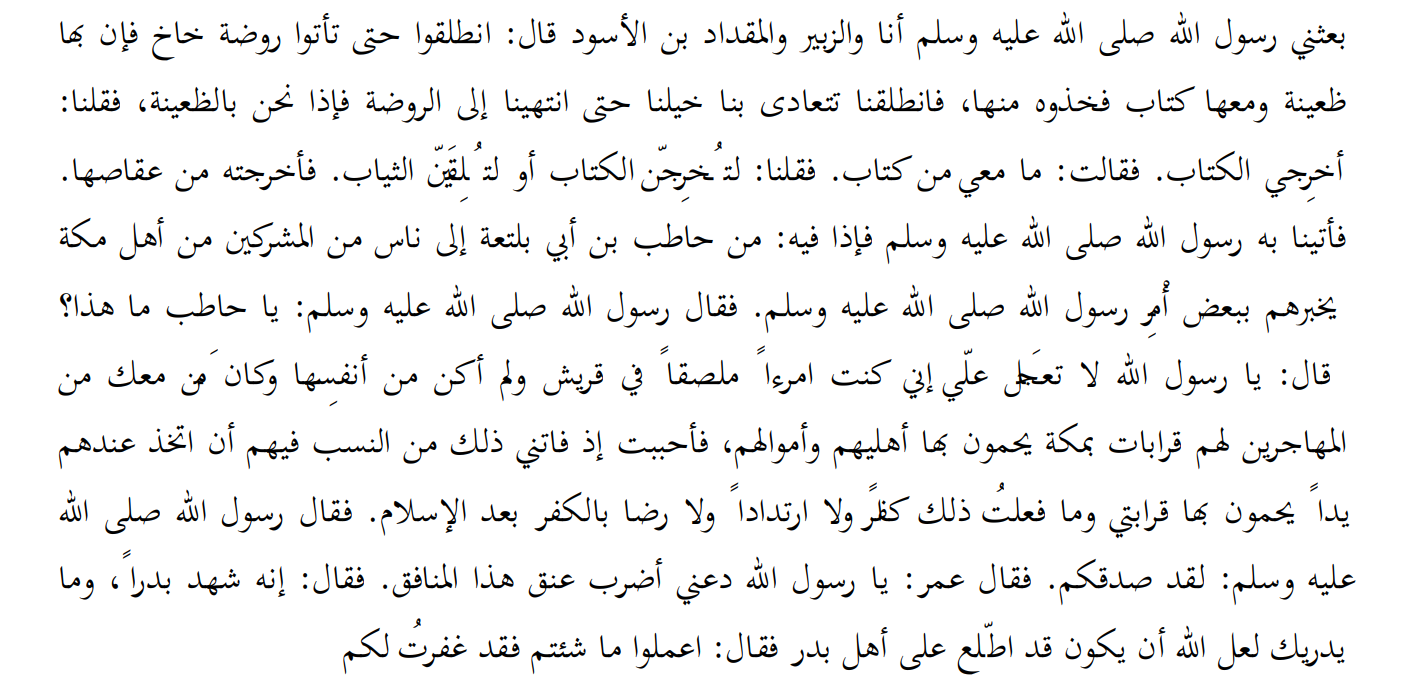
رسول الله ﷺ ما را استازولی، زبیر بن العوام او مقداد بن الاسود ته و فرمایل: "لاړ شئ تر هغه چې د خاخ باغ ته ورسیږئ. هلته به یوه ښځه وي چې د ښځو یوه ډولۍ (کجاوه) او سره یې یو لیک دی، نو هغه لیک له هغې واخلئ." نو موږ د آسونو په چټکه تګ سره لاړو، تر دې چې د هغه باغ ته ورسیدو چې هلته د ښځې یوه ډولۍ وه. موږ وویل: "لیک راوباسه." هغې وویل: "زما سره هیڅ لیک نشته." نو موږ وویل: "یا به لیک راوباسې یا به جامې دې ولرو." نو هغې هغه د خپلو ویښتو له شملې راوایست. موږ هغه رسول الله ﷺ ته راوړ، او په هغې کې دا لیکلي و: "له حاطب بن ابي بلتعه څخه د مکې د ځینو خلکو ته، چې د رسول الله ﷺ د ځینو کارونو خبر ورکوي." نو رسول الله ﷺ وفرمایل: "ای حاطبه، دا څه دي؟" هغه وویل: "ای د الله رسوله، زما په اړه پرله پسې عجله مه کوه. زه د قریشو سره متحد سړی وم، او زه د دوی له ټبر نه نه وم. ستا سره مهاجرین شته چې په مکه کې یې خپلوان دي، چې د دوی کورنۍ او مال ساتي. نو ما وغوښتل چې کله چې د هغوی سره خپلوي له لاسه ورکړم، یو لاس ولرم چې په هغه سره خپل خپلوان وساتم. نه مي کفر کړی و او نه ارتداد، او نه مي د اسلام له وروسته د کفر څخه خوښي وه." نو رسول الله ﷺ وفرمایل: "هغه تاسو ته رښتیا وویل." عمر وویل: "ای د الله رسوله، ما پریږده چې د دې منافق غاړه ووهم." هغه وفرمایل: "هغه د بدر په غزا کې حاضر و، او ته نه پوهیږې، شاید الله تعالی د بدر د خلکو څخه تېر شوی وي او ویلي یې وي: هر څه چې غواړئ وکړئ، زه مو بخښلی یئ."
“The Messenger of Allah (saw) sent me, Az-Zubayr bin Al-‘Awwam and Al-Miqdad bin Al-Aswad and said: ‘Go forth until you reach the garden of Khakh. There will be a woman’s litter and with her is a book, so take it from her.’ So we went with our horses in a rapid gait until we ended in the garden where there was a woman’s litter. We said: ‘Remove the book’ and she said: ‘There is no book with me.’ So we said: ‘You will remove the book or we will remove the clothes’ so she removed it from her plaits. We brought it to the Messenger of Allah (saw) and therein was: ‘From Hatib bin Abu Balta’ah to some people of the people of Makkah informing them with some of the matter of the Messenger of Allah (saw). So the Messenger of Allah (saw) said: ‘What is this, O Hatib?’ He said: ‘O Messenger of Allah, do not be hasty with me. I was a man allied to Quraysh, and I was not from her body (i.e. tribe). Those with you from the Muhajirin have relatives in Makkah who protect their families and property. So I wished if the relation with them escaped me that I take a hand with which to protect my relatives. Nor did I commit disbelief or apostasy nor was I pleased with disbelief after Islam. So the Messenger of Allah (saw) said: ‘He has spoken the truth to you.’Umar said: ‘O Messenger of Allah, leave me to strike the neck of this hypocrite.’ He said: “He witnessed Badr, and you do not know but that Allah may have overlooked the people of Badr and said: ‘Do whatever you wish for I have forgiven you.’”
د حاطب په حدیث کې دا ثابته شوې ده چې هغه د مسلمانانو په وړاندې جاسوس وو او رسول الله ﷺ هغه ونه وژلو، او دا د دې دلیل دی چې مسلمان جاسوس نه وژل کیږي. داسې نه باید وویل شي چې دا حکم یوازې د بدر خلکو پورې ځانګړی دی، ځکه حدیث د هغه د بدر د خلکو څخه کیدو په سبب معلل دی. دا خبره هم نه باید وشي، ځکه که متن داسې څه راولي چې علت ته اړتیا لري، او سیاق یې داسې وي چې له هغې علت پوهیدل کیږي، بیا هم د احمد په حدیث کې د فرات بن حیان په اړه، هغه څخه وژل پورته شوي ځکه هغه ذمي وو بیا مسلمان شو، چې دا د دې حدیث د علت باطلوي او دا یوه واقعیت بیانوونکی کیږي، ځکه فرات بن حیان د بدر له خلکو نه وو. او داسې هم نه باید وویل شي چې د فرات بن حیان حدیث په ابو داود کې د سند په لړ کې ابو همام الدلال محمد بن محبب دی او د هغه احادیث د دلیل په توګه نه منل کیږي، او هغه د سفیان ثوري څخه روایت کوي. دا خبره هم نه باید وشي، ځکه احمد دا حدیث د سفیان بن بشر بن السري البصري څخه روایت کړی، او هغه له هغو کسانو څخه دی چې بخاري او مسلم د هغه د حدیث د دلیل منلو په اړه اتفاق کړی. نو حدیث ثابت دی او پرې استدلال کیږي، او دا دلیل دی چې مسلمان جاسوس نه وژل کیږي، بلکه د قاضي یا خلیفه د نظر له مخې په بند یا بل ډول سزا ورکول کیږي.
It was established in this hadith about Hatib that he was a spy against the Muslims and the Messenger did not kill him, which indicates that the Muslim spy is not killed. One should not say that the rule is specific to the people of Badr because the hadith is reasoned (mu’allil) on his being of the people of Badr. This should not be said became even if the text came with what requires reasoning and its context was in a way that reasoning is understood from it; nevertheless (in) the hadith of Ahmad about Furrat bin Hayyan, killing was lifted from him because he became a Muslim after he was a dhimmi which invalidates the reasoning of this hadith and makes it a description of a reality because Furrat bin Hayyan was not from the people of Badr. Nor should one say that the hadith of Furrat bin Hayyan in Abu Dawud has Abu Hammam Ad-Dalal Muhammad bin Muhabbib in its chain and his hadith are not considered as proofs, and he is narrating from Sufyan Ath-Thawri. One should not say this because Ahmad has narrated this hadith from Sufyan bin Bushr bin As-Sirri Al-Basri, and he is from those whom Al-Bukhari and Muslim agreed to consider as proof with his hadith. So the hadith is established and is extrapolated upon, and it is an evidence that the Muslim spy is not killed but is punished with imprisonment or something else according to the view of the judge or Khalifah.
دا ټول د مسلمانانو او ذمیانو د جاسوسۍ په اړه دی چې د هغه محارب کافر دښمن لپاره کیږي. او هغه جاسوسي چې د مسلمانانو په اړه وي خو د دښمن لپاره نه وي، یعنې د محارب کافر لپاره نه وي، بلکې د جاسوسۍ د ځان لپاره یا د مسلمانانو یا د دولت لپاره وي؛ که څه هم دا حرام دی، خو شریعت د دې ګناه لپاره ځانګړې سزا نه ده ټاکلې، نو د دې سزا تعزیر (د قاضي په صوابدید سزا) ګرځي.
All this is about the spying upon Muslims and dhimmis for the belligerent disbeliever enemy. As for spying upon Muslims (but) not for the enemy i.e. not for the belligerent disbeliever, rather for the sake of spying or for Muslims or the State; although it is haram the Shar’a has not specified a specific punishment for this sin so its punishment becomes a discretionary punishment (ta’zeer).