د بیړني معاهدو
21.6 Emergency Treaties
مسلمانان ممکن است در شرایط سخت قرار گیرند که آنان را به اموری وادار کند که جایز نیستند، اما ضرورت آن را لازم میگرداند۔ دولت اسلامی ممکن است دچار بحرانهای داخلی یا خارجی شود که آن را وادار کند معاهداتی منعقد کند که مستقیماً به ابلاغ دعوت یا جهاد در راه الله (سبحانه و تعالیٰ) نمیانجامند، بلکه شرایطی را فراهم میآورند که در آینده ابلاغ آن را ممکن سازند، یا شر توقف دعوت را دفع کنند، یا موجودیت مسلمانان را حفظ نمایند۔ ضرورت این گونه معاهدات را لازم میگرداند، بنابراین برای خلیفه جایز است که آنها را منعقد کند و بر مسلمانان اجرای آنها واجب است۔ این گونه معاهدات در دو حالت پدید میآیند که فقها آنها را بهروشنی بیان کردهاند، و آن دو حالت ایناند:
Muslims can fall into severe situations which compel them to matters which are not allowed but the necessity obliges it. The Islamic State can fall into internal or external crises which compel it to contract treaties which do not lead directly to conveying the da’wah or fighting in the way of Allah (swt) but they facilitate creating conditions which will enable conveying it in the future or prevent the evil of stopping the da’wah or preserve the entity of the Muslims. Necessity compels these types of treaties to be contracted therefore it is allowed for the Khalifah to contract them and they are executed upon Muslims. These treaties occur in two situations which the jurisprudents (fuqaha) stated clearly, and they are:
پهلې صورت: که د جګړې د خلکو ځینې کسان د مسلمانانو څخه د ټاکلو کلونو لپاره تړون وغواړي، په دې شرط چې د جګړې خلک هر کال د ټاکلې اندازې خراج ورکړي او د اسلامي احکامو د پلي کیدو په دوی د دوی په خپلو سیمو کې ونه شي؛ دا کار نه کېږي، ځکه دا د کفر پر منلو موافقه ده، مګر دا چې دولت د ظلم مخنیوی ونشي کولی او دې تړون کې د مسلمانانو لپاره ښېګڼه وینې، نو په دې حال کې اضطرار له امله د تړون کول روا دي. په دې صورت کې اسلامي دولت د دوی لپاره نه مرسته کوي او نه ملاتړ، ځکه دوی دې تړون له امله د اسلامي احکامو پابند نه کېږي او کله چې د اسلام احکامو ته غاړه ږدي نه، نو د جګړې د خلکو له حالته نه وځي. له همدې امله د دوی ملاتړ مسلمانانو باندې فرض نه دی. رسول الله ﷺ د یوحنا بن رؤبه سره هغه وخت تړون وکړ چې هغه د بلاد الشام په سرحدونو کې د تبوک په ځای کې و. هغه یې په خپل سیمه کې د خپل دین پر بنسټ پرېښود، او هغه د مسلمانانو د بیرغ او د دوی د حکومت لاندې نه داخلېده. دا د ټاکلې مودې تړون دې دولت ته امنیت ورکوي چې د اسلامي دولت لخوا تضمین شوی وي. له مسلمانانو هر هغه چا چې دې ته داخلېږي، د تړون د امنیت سره داخلېږي نه د انفرادي امنیت سره، او د دې خلکو مخالفت له هغه سره روا نه دی. د دې هېواد له اتباعو هر هغه چا چې د مسلمانانو سیمو ته ننوځي، د تړون د امنیت سره ننوځي او د تړون پرته بل نوی امنیت ته اړتیا نه لري، او د مسلمانانو له جملې هېچا ته د هغه مخالفت روا نه دی. تجارت کونکي له دې دولت ته د سوداګرۍ توکي له بېوړلو نه منع نه کېږي، پرته له هغو وسیلو څخه چې په جګړه کې کارول کېږي لکه وسلې او د جګړې توکي او د دې په شان شیان، ځکه دوی د جګړې خلک دي، که څه هم مسلمانان له دوی سره تړون ولري.
The first situation: If some people of the people of war seek a treaty from the Muslims for specific years on condition that the people of war give kharaj every year for a specified amount and that the Islamic rules are not executed upon them in their lands; this is not done as it is consenting upon disbelief unless the State is not able to prevent oppression and sees in this treaty good for Muslims, then at this point it is allowed to contract it out of necessity. In this situation there is no assistance or support for them from the Islamic State because they are not compelled by this treaty with the Islamic rules and do not depart from being people of war when they do not obey the rules of Islam. So undertaking support for them is not obliged upon the Muslims. The Messenger of Allah (saw) made a treaty with Yuhanna bin Rub’ah while he was at Tabuk in the boundaries of Bilad AsSham. He left him in his zone upon his religion, and he did not enter under the banner of Muslims and their rule. This treaty of limited period makes the security of this State guaranteed by the Islamic State. Whoever enters it from the Muslims enters it with the security of the treaty and not an individual security, and it is not allowed for him to oppose its people. Whoever enters the Muslim lands from the citizens of this land enters with the security of the treaty and does not require a new security other than the treaty, nor is anyone from the Muslims allowed to oppose him. Traders are not prevented from carrying merchandise to this State except tools used in war like weapons and war materials and what is similar to this because they are people of war even if the Muslims have a treaty with them.
دوسره حالت: دا لومړۍ حالت برعکس دی چېرې چې مسلمانان خپل دښمن ته د هغه د خاموشۍ په بدل کې پیسې ورکوي. فقهاوو یادونه کړې ده چې که دښمن مسلمانانو ته محاصره وکړي او د ټاکلو کلونو لپاره داسې تړون وغواړي چې مسلمانان به هر کال مشرکانو ته یوه ټاکلې اندازه پیسې ورکوي، نو د خلیفه لپاره دا جائز نه دی چې پر دې شرط تړون وکړي، ځکه چې په دې کې مسلمانانو ته سپکاوی او ذلت دی، مګر د اضطرار په صورت کې. دا هغه وخت دی کله چې مسلمانان د خپل ځان د له منځه تللو ویره ولري او خلیفه وګوري چې په دې آتش بندۍ کې ښېګڼه ده. په دې حالت کې، د هغه روایت له مخې چې نقل شوی، په دې کې هیڅ زیان نشته.
The second situation: This is opposite to the first situation wherein the Muslims pay money to their enemy in return for their silence regarding them. The fuqaha mentioned that if the enemy sieges the Muslims and require a treaty for specified years on condition that the Muslims pay the disbelievers a specific amount every year, it is not correct for the Khalifah to comply to them upon that due to the contemptibility and humiliation therein for Muslims except under necessity. This is (when) the Muslims fear extermination for themselves, and the Khalifah views there is good in this truce. At this point, there is no harm in that due to what was narrated
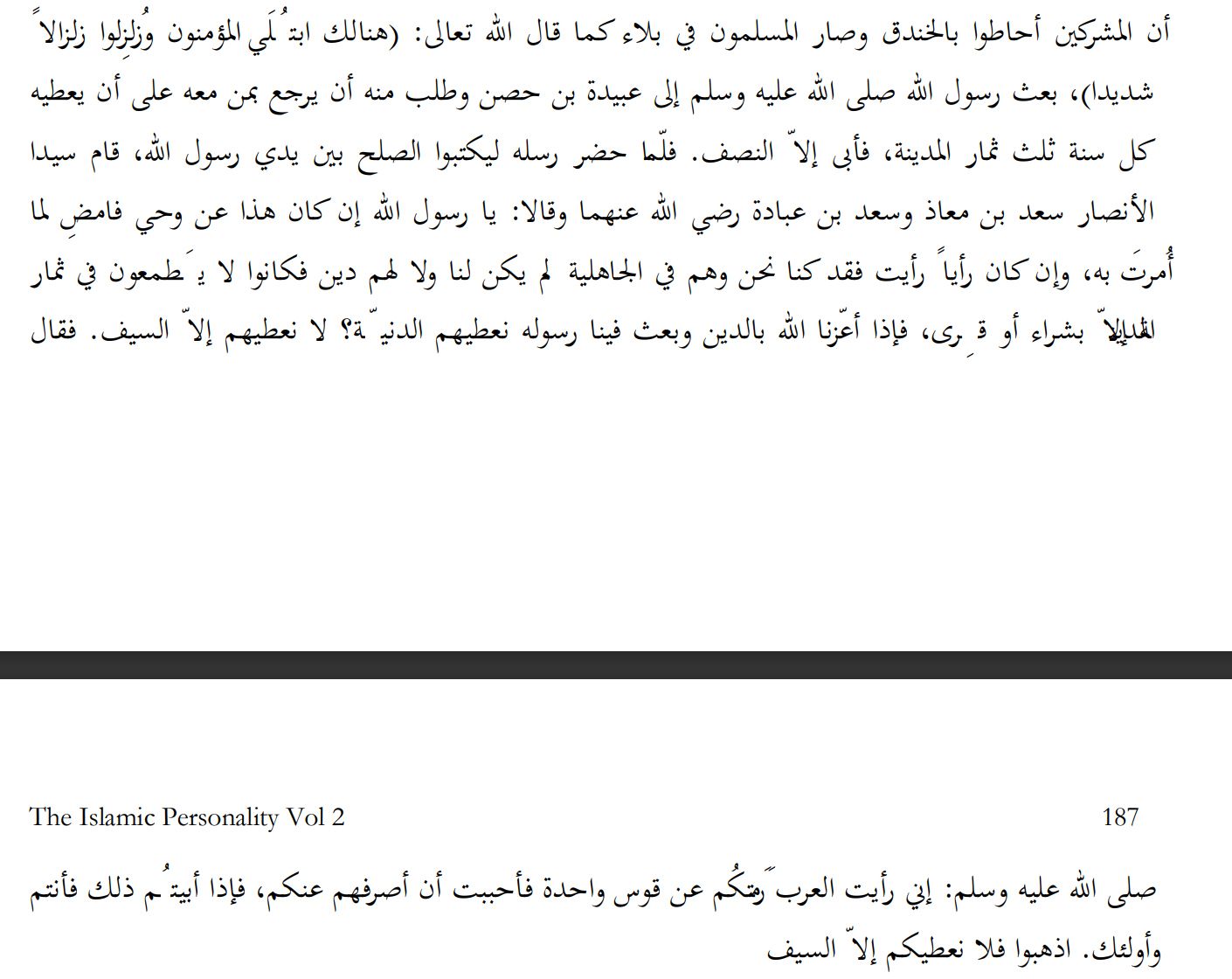
هغه وخت چې مشرکانو د خندق محاصره کړه، مسلمانان په یوه سخته ازموینه کې اخته شول، لکه څنګه چې الله (ج) فرمایي: ‘هلته مؤمنان وازمول شول او په سخت ډول وخوځول شول’ [TMQ 33:11]. د الله رسول ﷺ عُیینة بن حصن ته پیغام ولیږه او له هغه څخه یې وغوښتل چې د خپلو ملګرو سره بیرته ستون شي، په دې شرط چې د مدینې د میوو دریمه برخه به ورکول کیږي. خو هغه له نیمایي پرته بل څه ونه منل. کله چې د هغه استازي د رسول الله ﷺ په حضور کې د تړون لیکلو لپاره حاضر شول، د انصارو دوه مشران، سعد بن عبادة او سعد بن معاذ (رض) ودریدل او وې ویل: ‘ای د الله رسوله ﷺ، که دا د وحي له لارې راغلي، نو هغه څه وکړه چې ته ته حکم شوی یې، خو که دا یوه رایه ده چې ته یې ګورې، نو موږ او دوی د جاهلیت په وخت کې وو، کله چې نه دوی او نه موږ کومه دین درلود، او دوی د مدینې له میوو پرته بل څه نه خوړل، یا پیرود له لارې یا میلمستیا له لارې. نو کله چې الله موږ د دین سره عزت ورکړ او خپل رسول موږ ته راولیږه، ایا باید دا دنیا دوی ته ورکړو په داسې حال کې چې موږ ذلیل یو؟ نه، موږ به دوی ته له توري پرته بل څه ونه ورکړو.’ نو رسول الله ﷺ وفرمایل: ‘ما ولیدل چې عربان د یوې کمانې څخه تیر ویشتي، نو ما خوښه کړه چې دوی له تاسو څخه واړوم. که تاسو دا رد کړئ، نو دا ستاسو خبره ده او دوی. لاړ شئ، ځکه موږ به تاسو ته له توري پرته بل څه ونه درکړو!’
“That the polytheists surrounded the trench and Muslims were in trial like Allah (swt) said: ‘Therein the believers were tested and shaken with a severe shaking’ [TMQ 33:11].The Messenger of Allah (saw) sent to ‘Uyaynah bin Hasan and requested that he return with those together with him upon giving him a third of the fruits of Madinah but he refused except a half. When his messengers appeared to write the truce in front of the Messenger of Allah, the two chiefs of the Ansar, S'aad bin ‘Ubadah and S'aad bin Mu’adh (ra) stood and they said: ‘O Messenger of Allah, if this is from revelation then execute what you are commanded with but if it is an opinion which you considered, then they and we were in jahiliyyah when neither they nor we had a religion yet they did not eat of the fruits of Madinah except through purchase or hospitality. So when Allah honoured us with the deen and sent His Messenger among us, should we give them this dunya while being contemptible? No, we will not give them except the sword. So he (saw) said: ‘I saw the Arabs shooting from one bow so I liked to divert them from you. If you reject that, then it is you and those. Go away for we will not give you except the sword!’”
دا په ګوته کوي چې د الله رسول ﷺ لومړی د ښکلو خبرو لپاره په اړه مائل شو، ځکه چې هغه د مسلمانانو په کمزورتیا پوه شو. کله چې هغه د سعد بن عبادۀ او سعد بن معاذ (رض) د خبرو له امله په مسلمانانو کې ځواک ولید، نو هغه له هغه کار څخه ډډه وکړه. دا په دې ډول هم ښیي چې کافرانو سره د داسې تړون کولو کې هیڅ زیان نشته چې په هغه کې د زیان ډار وي او کافرانو ته د پیسو ورکول کیږي. دا ځکه چې که دوی مسلمانان ماتې کړي، نو ټول مال او کورنۍ به یې د بندیانو (سبایا) په توګه ونیسي، نو د مسلمانانو، د دوی د کورنیو او مال د ساتلو لپاره یو څه مال ورکول لږ سپک او ډیر ګټور دي.
This indicates that the Messenger of Allah (saw) initially inclined to the truce due to what he sensed of the Muslims’ weakness. When he saw the strength in them due to what S'aad bin ‘Ubadah and S'aad bin Mu’adh (ra) said, he refrained from that which indicates that there is no harm from contracting a treaty with disbelievers paying them money when there is danger of harm. This is because if they conquered Muslims they would take all the wealth and the families as captives (sabaya), so paying some wealth to safeguard Muslims and their families and wealth is less contemptible and more beneficial.