۱۷. خلافت
17. The Khilafah
خلافت د ټولو مسلمانانو لپاره په نړۍ کې عمومي یا ټوله مشرتوب دی، ترڅو د اسلامي شریعت احکام تطبیق شي او د اسلام دعوت نړۍ ته ورسول شي۔ دا د امامت سره ورته ده، ځکه امامت او خلافت یو معنا لري۔ ډیری صحیح احادیث دواړه په یوه معنا ذکر کړي دي۔ د شریعت په هیڅ نص کې، یعنی قرآن یا سنت کې، دا دوه اصطلاحې هیڅکله یو له بل سره بېلې معنا نه دي راوړې، ځکه دا دواړه یوازینۍ شرعي سرچینې دي۔ د خلافت یا امامت اصطلاح ساتل فرض نه دي، مګر د اصطلاح معنا ساتل فرض دي۔
The Khilafah is the general or overall leadership for all the Muslims in the world in order to establish the laws of the Islamic Shari’ah and to carry the da’wa of Islam to the world. It is the same as the Imamah, as the Imamah and Khilafah have the same meaning. Several saheeh ahadith mention them with the same meaning. Neither of the two terms has ever come with any meaning different from the other in any Shari’ah text i.e. the Qur’an or the Sunnah, as these two (sources) are the only Shari’ah sources. It is not compulsory to hold to the term of Khilafah or Imamah, but rather it is compulsory to hold to the meaning of the term.
د خلافت قائمول د ټولو مسلمانانو لپاره د ځمکې په ټولو سیمو کې یو فرض دی. دا فرض، لکه د هغو نورو فرایضو چې الله (جل جلاله) مسلمانانو ته لازم کړي دي، د ادا کولو په څیر، یو حتمي امر دی چې په کې نه انتخاب شته او نه نرمي. د دې په ادا کولو کې غفلت د هغو لویو ګناهونو له جملې دی چې الله (جل جلاله) د سختو عذابونو سره سزا ورکوي.
Establishing the Khilafah is an obligation upon all Muslims in all regions of the world. Establishing it, like the performing of any obligation that Allah (swt) obliged upon Muslims, is an inevitable matter without choice or leniency in it. Negligence in performing it is one of the worst sins for which Allah (swt) punishes with the strictest of the punishments.
د خلافت د قیام دلیل چې ټولو مسلمانانو باندې قائم شي، (دا دلیلونه) له قرآن، سنت او اجماع الصحابہ څخه راځي۔
The evidence for establishing the Khilafah upon all Muslims (come from): The Qura'n, The Sunnah and Ijmaa as-Sahabah.
جہاں تک قرآن کا تعلق ہے، اللہ (سبحانہ و تعالیٰ) نے رسول (ﷺ) کو حکم دیا ہے کہ مسلمانوں کے درمیان اُس سب کے مطابق فیصلہ کریں جو اُس نے اُن پر نازل کیا ہے، اور اُس کا یہ حکم اُن کے لیے قطعی انداز میں تھا۔ اللہ (سبحانہ و تعالیٰ) نے نبی (ﷺ) سے خطاب کرتے ہوئے فرمایا: Note: the instruction says to output only Pashto, so I should correct that. Here is the Pashto translation: جہ څه پہ قرآن کې راځي، الله (سبحانہ و تعالیٰ) رسول (ﷺ) ته حکم کړی چې د مسلمانانو ترمنځ هغه ټول څه سره فیصلې وکړي چې هغه ته یې نازل کړي دي، او د هغه حکم چې الله (سبحانہ و تعالیٰ) هغه ته کړی و، په قطعي ډول و. الله (سبحانہ و تعالیٰ) د نبي (ﷺ) سره خطاب کوې او ویلي یې:
As for the Qura'n, Allah (swt) has ordered the Messenger (saw) to rule between Muslims by all that He (swt) revealed to him (saw), and His order (swt) to him was in a decisive manner. Allah (swt) addressed the Prophet (saw) saying:
او په دوی کې هغه څه سره حکم وکړه چې الله نازل کړي دي، او د دوی خواهشاتو پسې مه ځه چې له هغه حق څخه لیرې وي چې تا ته راغلی دی. [TMQ 5:48]
"And rule between them by that which Allah revealed to you, and do not follow their vain desires away from the truth which came to you" [TMQ 5:48]
او هغه (سبحانه وتعالیٰ) وفرمایل:
And He (swt) said:
او په هغه څه سره فیصله وکړه چې الله تعالی درباندې نازل کړي دي، او د دوی خواهشاتو پسې مه ځه، او خبردار اوسه چې دوی له هغه څه څخه چې الله تعالی درباندې نازل کړي، حتی یوې برخې څخه هم تا مخکې نه ږدي. [TMQ 5:49]
"And rule between them by that which Allah revealed to you and do not follow their whims, and beware (be on the alert) that they may deviate you away from even some part of what Allah revealed to you" [TMQ 5:49]
د الله (ج) خبرې چې د رسول الله ﷺ سره کوي، د ده ﷺ د امت لپاره خبرې دي، مګر که داسې دلیل موجود وي چې خبرې یوازې د ده ﷺ سره محدودې کړي. په دې ځای کې داسې دلیل نشته، نو خطاب ټولو مسلمانانو ته دی چې حکم قایم کړي. د خلافت قایمول له حکم او واکمنۍ د قایمولو پرته بل معنا نه لري. سربیره پردې، الله (ج) مسلمانانو ته د واکمنانو، یعنې د حاکم اطاعت فرض کړی دی، چې دا ښيي چې د واکمن شتون مسلمانانو باندې واجب دی. الله (ج) فرمایلي دي:
The speech of Allah (swt) to the Prophet (saw) is a speech to his Ummah unless there is evidence which limits the speech to him (saw). In this case there is no such evidence, so the address is to all the Muslims to establish the rule (hukm). The establishment of the Khalifah does not mean other than the establishment of the rule and the authority. Moreover, Allah (swt) made it obligatory upon Muslims to obey those in authority i.e. the ruler, which indicates that the existence of the one in authority is obligatory upon Muslims. Allah (swt) said:
اے ایمان والو! اللہ کی اطاعت کرو، اور رسول ﷺ کی اطاعت کرو، اور اپنے میں سے اولی الامر کی۔ [TMQ 4:59]
"O you who believe obey Allah and obey the Messenger and those in authority amongst you" [TMQ 4:59]
الله (سبحانه وتعالی) کسی ایسے شخص کی اطاعت کا حکم نہیں دیتا جو موجود ہی نہ ہو۔ اس سے یہ واضح ہوتا ہے کہ صاحبِ اختیار شخص کا وجود واجب ہے۔ جب الله (سبحانه وتعالی) صاحبانِ اختیار کی اطاعت کا حکم دیتا ہے تو درحقیقت وہ ان کے قیام کا حکم دے رہا ہوتا ہے۔ حاکم کے قائم ہونے کا نتیجہ شرعی حکم کا قائم ہونا ہے، اور اس کے قائم نہ ہونے کا نتیجہ شرعی حکم کو نظرانداز کرنا ہے۔ پس اس کا وجود واجب ہے، کیونکہ اسے قائم نہ کرنے کا نتیجہ ان ممنوعہ امور میں سے ہوگا، یعنی شرعی حکم کو نظرانداز کرنا۔
Allah (swt) does not order obedience to someone who does not exist. This indicates that the existence of the person in authority is obligatory. When Allah (swt) commands obedience to those in authority then He (swt) is commanding their establishment. The result of establishing the ruler is the establishment of the Shari’ah rule (hukm shar’i) and the failure to establish it will result in neglecting the Shari’ah rule (hukm shar’i). Thus his existence is obligatory as the result of the failure to establish it is will be from the prohibited matters i.e. the neglect of the Shari’ah rule (hukm shar’i).
رسولالله ﷺ څخه د سنت په اړه، نافع روایت کوي چې عبدالله بن عمر ماته وویل چې هغه د پیغمبر ﷺ داسې فرمایلي اوریدلي دي:
As for the Sunnah, Nafi‘ reported saying: Abdullah bin ‘Umar said to me that he heard the Prophet (saw) saying:
هغه څوک چې خپل لاس د اطاعت څخه واخلي، د قیامت په ورځ به الله سره داسې حال کې وګوري چې د هغه لپاره هیڅ دلیل نه لري، او هغه څوک چې داسې حال کې مړ شي چې په غاړه یې د بیعت (بیعت) قلاده نه وي، نو د جاهلیت په مرګ مړ شوی دی.
“Whoever removes his hand from obedience will meet Allah on the Day of Resurrection without having any proof for him, and whoever dies without a pledge of allegiance (bay’ah) on his neck dies a death of ignorance (jahiliyyah).”
پس پیغمبر ﷺ هر مسلمان ته دا فرض کړی دی چې د غاړې پر سر بیعت ولري، او داسې بیان کړي دي چې څوک داسې مړ شي چې د غاړې پر سر بیعت نه لري، نو هغه د جاهلیت په مرګ مړ شوی دی. بیعت د خلیفه پرته د بل چا لپاره نشي کیدای. پیغمبر ﷺ هر مسلمان ته دا لازم کړی دی چې د یوه خلیفه بیعت د غاړې پر سر ولري، مګر هغه ﷺ دا هر مسلمان ته لازم نه دی کړی چې د خلیفه بیعت وکړي. فرض دا دی چې د هر وړ مسلمان په غاړه کې یو بیعت موجود وي، یعنې داسې یو خلیفه موجود وي چې په دې ترتیب د هر مسلمان د غاړې بیعت ته مستحق وي. نو دا د خلیفه شتون دی چې د هر مسلمان په غاړه بیعت اچوي، که څه هم مسلمان په حقیقت کې (په ذات سره) هغه ته بیعت کړی وي یا نه. له همدې امله د پیغمبر ﷺ دا حدیث دلیل دی چې د خلیفه تاکل فرض دي، نه دا چې بیعت ورکول واجب دي. دا ځکه چې پیغمبر ﷺ هغه څه ته ملامته کړی و چې د مسلمان په غاړه د بیعت نه موجودیت وي تر دې چې مړ شي، خو هغه ﷺ د بیعت نه ورکولو ملامت نه دی کړی. مسلم د العرج له لارې، هغه د ابوهریرہ (رض) څخه روایت کړی، چې پیغمبر ﷺ فرمایلي دي:
So the Prophet (saw) made it compulsory upon every Muslim to have a bay’ah on his neck, and described that whoever dies without a bay’ah on his neck that he dies a death of jahiliyyah. The bay’ah cannot be for anyone except the Khalifah. The Prophet (saw) made it obligatory upon every Muslim to have on his neck a bay’ah to a Khalifah, yet he did not make it an obligation upon every Muslim to give bay’ah to a Khalifah. The duty is the existence of a bay’ah on the neck of every eligible Muslim i.e. the existence of a Khalifah who accordingly deserves a bay’ah upon the neck of every Muslim. So it is the presence of the Khalifah which places a bay’ah on the neck of every Muslim, whether the Muslim actually gave a bay’ah to him (in person) or not. Therefore, this hadith of the Prophet (saw) is evidence that the appointment of the Khalifah is an obligation and not a proof that giving the bay’ah is obligatory. This is so because what was rebuked by the Prophet (saw) was the absence of a bay’ah on the neck of a Muslim until he dies, but he did not rebuke the absence of the bay’ah. Muslim narrated from Al-’Araj from Abu Hurairah (ra) from the Prophet (saw) who said:
په دې خبره ځیر شئ: امام یوه ډال دی چې خلک د هغه شا ته جنګیږي او د هغه په واسطه ځانونه ساتي.
“Behold, the Imam is a shield from behind whom the people fight and by whom they protect themselves.”
او مسلم د ابوحازم څخه روایت کړی چې هغه وویل:
And Muslim reported from Abu Hazim who said:
زه د پنځو کلونو لپاره له ابوهریره سره ملګری وم، او هغه د نبي ﷺ څخه روایت کوله، چې هغه فرمایلي: «بني اسرائیلو ته پیغمبران حکومت کاوه. کله چې یو پیغمبر مړ شو، بل پیغمبر د هغه ځای ناستی شو، مګر زما څخه وروسته هیڅ پیغمبر نشته. خلیفګان به وي او ډېر به وي.» صحابه وپوښتل: «نو ته موږ ته څه امر کوې؟» هغه وفرمایل: «د هغو بیعت یو په پسې یو پوره کړئ، او د هغوی حق یې ورکړئ. بې شکه الله تعالی به له هغوی څخه د هغو امانتونو په اړه پوښتنه کوي چې هغه یې دوی ته سپارلي دي.»
“I accompanied Abu Hurairah for five years and heard him reporting from the Prophet who said: The Prophets ruled over the children of Israel. Whenever a Prophet died another Prophet succeeded him, but there will be no Prophet after me. There will be Khulafaa and they will number many. They asked: What then do you order us? He said: Fulfil the bay’ah to them one after the other and give them their due right. Surely Allah will ask them about what He entrusted them with.”
او د ابن عباسؓ څخه روایت دی، هغه د پیغمبر ﷺ څخه روایت کوي چې فرمایي:
And from bin ‘Abbas from the Prophet (saw) who said:
څوک چې په خپل امیر کې داسې څه وویني چې هغه ته ناخوښ وي، نو هغه باید صبر وکړي. ځکه چې، ښه پوه شه، څوک چې له سلطان (د اسلام د واک) څخه یوه لاس په اندازه هم جلا شي او په همدې حال مړ شي، هغه د جاهلیت په مرګ مړ شوی دی.
“If anyone sees in his Amir something that displeases him let him remain patient. For, behold, he who separates himself from the sultan (authority of Islam) by even so much as a hand span and dies thereupon, has died a death of jahiliyyah”.
په دې احادیثو کې پیغمبر ﷺ خبر راکوي چې امیران به د مسلمانانو کارونه چلوي، او په دې کې د خلیفه تشریح هم شامله ده چې هغه د ډال (یعنې ساتنې) په توګه بیان شوې ده. نو امام ته د ډال په توګه تشریح د امام د شتون د ګټو خبر ورکوي، پس دا د عمل د امر په معنا ده. دا ځکه چې که د الله ﷻ او رسول ﷺ له خوا ورکړل شوې خبره ملامتي وي، نو دا د منعې امر دی، او که ستاینه وي، نو دا د عمل د امر په معنا ده. که دغه امر شوی عمل د یو شرعي حکم د تطبیق لپاره ضروري وي، یا د هغې د غفلت په سبب شرعي حکم ضایع کیږي، نو دا امر قطعي دی. په دې احادیثو کې دا خبره هم شته چې د مسلمانانو کارونه هغه کسان چلوي چې خلفا دي، او دا د دې امر ښکارندوی دی چې دوی ټاکل پکار دي. همدارنګه، دوی د دې منع هم لري چې مسلمانان له واک (ولایت) څخه جلا شي، او دا د مسلمانانو لپاره په دې باندې د واک (حکومت) د ټاکلو د واجب کیدو ښکارندوی دی. سربیره پردې، پیغمبر ﷺ مسلمانانو ته امر وکړ چې خلیفه ته اطاعت وکړي او هغو کسانو سره جنګ وکړي چې د هغه د خلافت په واک شک کوي، او دا د خلیفه د ټاکلو او د هغه د خلافت د ساتلو لپاره د هغه سره د جنګ کولو د امر ښکارندوی دی. مسلم روایت کړي دي چې پیغمبر ﷺ وفرمایل:
In these ahadith, the Prophet (saw) informs us that leaders will run the affairs of Muslims, and they include the description of the Khalifah as a shield i.e. a protection. So the description of the Imam as a shield is informative of the benefits of the presence of the Imam, thus it is a command for action. This is because if the information conveyed by Allah (swt) and the Prophet (saw) contained rebuke then it is a command of prohibition, and if it contained praise then it is a command for action. If the ordered action is necessary to implement a hukm shari’ (Shari’ah rule), or by its negligence a hukm shar‘i will be neglected, then this command is decisive. In these ahadith there is information also that those who run the affairs of Muslims are Khulafaa, which indicates an order to appoint them. They also include a prohibition for Muslims to separate from the authority, which indicates the obligation upon Muslims to appoint an authority for themselves i.e. ruling. Moreover, the Prophet (saw) ordered the Muslims to obey the Khalifah and to fight those who dispute his authority as Khalifah, which indicates an order to appoint a Khalifah and to protect his Khilafah by fighting against whosoever disputes with him. Muslim reported that the Prophet (saw) said:
هغه څوک چې یو امام ته بیعت وکړي، خپل لاس یې ورکړي او د زړه میوه یې ورکړې وي، نو باید تر هغه وړتیا پورې د هغه اطاعت وکړي، او که بل څوک د هغه سره د اختلاف لپاره راشي، نو تاسو باید د هغه سړي غاړه ووهئ.
“He who pledged allegiance to an Imam giving him the clasp of his hand and the fruit of his heart shall obey him as long as he can, and if another comes to dispute with him you have to strike the neck of that man.”
د امام اطاعت کولو حکم د هغه د قائم کولو امر دی، او د هغو کسانو سره د جنګ کولو حکم چې د هغه سره نزاع کوي دا ښيي چې دا حکم د یوه خلیفه د شتون د ساتلو لپاره قطعي دی.
So the command to obey the Imam is an order to establish him, and the command to fight those who dispute with him is evidence that this command is decisive in maintaining the presence of one Khalifah.
د صحابه کرامو (رض) اجماع په دې برخه کې چې د نبي کریم ﷺ له وفات وروسته د خلیفې یا جانشین ټاکل ضروري دي، ټول متفق وو، او دوی ټولو د ابوبکر، بیا د عمر، بیا د عثمان (رض) له وفات وروسته د هر یو لپاره د جانشین ټاکلو باندې اتفاق وکړ۔ د صحابه کرامو (رض) د خلیفه ټاکلو اجماع په ډیر واضح ډول په دې کې څرګنده شوه چې دوی د نبي کریم ﷺ له وفات وروسته د هغه دفن ځنډول، په داسې حال کې چې د مړي دفن فرض دی، او دا حرام دی چې هغه کسان چې د دفن تیارولو مکلف دي، تر دې چې دفن بشپړ نه شي، په بل کار بوخت شي۔ صحابه کرام (رض) مکلف وو چې د نبي کریم ﷺ د دفن تیارولو کې بوخت شي، خو ځینو له دوی څخه د دفن پر ځای د خلیفه ټاکلو کې بوخت شول، او ځینو نورو له دې بوختیا څخه چپ پاتې شول او د دوو شپو لپاره د دفن په ځنډولو کې یې ګډون وکړ، سره لدې چې دوی د ځنډ مخنیوی کولی شو او د نبي کریم ﷺ دفن کولی شو۔ نو دا د مړي د دفن پر ځای د خلیفه ټاکلو کې د بوختیا اجماع وه۔ دا کار یوازې په هغه صورت کې جائز کیدای شو چې د خلیفې ټاکل د مړي له دفن څخه زیات فرض وي۔ همدارنګه ټولو صحابه کرامو (رض) د خپلو ژوند په اوږدو کې د خلیفې ټاکلو په وجوب اتفاق وکړ۔ که څه هم دوی د خلیفه ټاکل شوي کس په اړه اختلاف وکړ، خو د خلیفې د ټاکلو په اړه یې هیڅکله اختلاف ونکړ، نه کله چې نبي کریم ﷺ وفات شو، او نه کله چې د خلفاو راشدینو څخه کوم یو وفات شو۔ له همدې امله د صحابه کرامو (رض) اجماع د خلیفې د ټاکلو د وجوب واضح او قوي دلیل دی۔
As for the Ijma’a of the Sahabah (ra) they all agreed upon the necessity to establish a successor or Khalifah to the Prophet (saw) after his death, and they all agreed to appoint a successor to Abu Bakr, then to ‘Umar, then to ‘Uthman, after the death of each one of them. The Ijma’a of the Sahabah (ra) to establish a Khalifah manifested itself emphatically when they delayed the burial of the Prophet (saw) after his death while engaged in appointing a successor to him, despite the fact that the burial of the dead person is fard, and that it is haram upon those who are supposed to prepare for his burial to engage themselves in anything else until they complete the burial. The Sahabah (ra) were obliged to engage themselves in preparing the burial of the Prophet (saw), instead some of them engaged themselves in appointing a Khalifah rather than carrying out the burial, and some others kept silent on this engagement and participated in delaying the burial for two nights despite their ability to deny the delay and their ability to bury the Prophet (saw). So this was an Ijma’a to engage themselves in appointing a Khalifah rather than to bury the dead. This could not be legitimate unless the appointment of a Khalifah is more obligatory than the burial of the dead. Also, all the Sahabah (ra) agreed throughout their lives upon the obligation of appointing a Khalifah. Although they disagreed upon the person to be elected as a Khalifah, they never disagreed upon the appointment of a Khalifah, neither when the Prophet (saw) died, nor when any of the Khulafaa ar-Rashidun died. Therefore the Ijma’a of the Sahabah is clear and strong evidence that the appointment of a Khalifah is obligatory.
«هغه شی چې د واجب د پوره کولو لپاره ضروري وي، پخپله هم واجب دی»
‘What is necessary to accomplish a wajib (duty) is itself a wajib’
دې الهي اصل له مخې د خلافت قائمول هم فرض دي.
So the establishment of a Khalifah is also compulsory according to this divine principle.
لہٰذا، ان دلیلونو څخه څرګنده ده چې په مسلمانانو کې د حکومت او واک قائمول فرض دي، او همدارنګه څرګنده ده چې د خلیفه ټاکل چې د حکومت او واک چارې په غاړه واخلي، مسلمانانو باندې واجب دي، ترڅو د شریعت احکام پلي شي، نه دا چې یوازې د حکومت او واک د ځان لپاره وي. په هغه حدیث باندې غور وکړئ چې مسلم د عوف بن مالک له لارې د رسول الله ﷺ له فرمان څخه روایت کړی:
Therefore, it is clear from these evidences that the establishment of the rule and the authority amongst Muslims is fard, and it is also clear that the appointment of a Khalifah who takes the charge of the rule and the authority is compulsory upon Muslims in order to implement the Shari’ah rules and not merely for the sake of rule and authority in themselves. Reflect upon what Muslim narrated of his saying (saw) via ‘Awf bin Malik:
په تاسو کې غوره امامان (مشران) هغه دي چې تاسو هغوی سره مینه کوئ او هغوی له تاسو سره مینه لري، چې تاسو لپاره دعا کوي او تاسو د هغوی لپاره دعا کوئ، او بد امامان هغه دي چې تاسو هغوی څخه کرکه کوئ او هغوی له تاسو څخه کرکه کوي، او تاسو هغوی ته لعنت وايئ او هغوی تاسو ته لعنت وايي. د الله رسول ﷺ څخه وپوښتل شو: ایا موږ دې د هغوی سره په تورو مخامخ نه شو؟ هغه وفرمایل: نه، تر هغه وخته پورې چې هغوی په تاسو کې لمونځ (یعنې اسلام) قایم کوي.
“The best of your Imams (leaders) are those whom you love and they love you, who pray for you and you pray for them; and the worst of your Imams are those whom you hate and they hate you and you curse them and they curse you. The Messenger of Allah (saw) was asked: Should we not face them with the swords? He said: No, not as long as they establish salat (meaning Islam) among you.”
دا حدیث د ښو او بدو مشرانو په اړه واضح خبرې کوي، او دا هم واضح منع کوي چې ترڅو چې دوی دین قایموي، تر تورې لاندې د دوی سره مخالفت ونه شي، ځکه چې لمونځ قایمول د دین د ساتلو او د هغه سره د حکم کولو نښه ده.
This hadith is clear in informing about the good and bad leaders, and clear in prohibiting confronting them with the sword as long as they establish the deen, since establishing the salat (prayer) indicates upholding of the deen and ruling by it.
د مسلمانانو لپاره د خلیفه تعیینول چې د اسلام قوانین تطبیق کړي او د اسلام دعوت ورسوي، داسې یو لازمي حکم دی چې د شریعت په صحیح نصوصو کې د یقیني والي له پلوه هیڅ شک نلري. سربیره پر دې، دا یو واجب دنده ده، ځکه الله (ج) د مسلمانانو باندې فرض کړې چې د اسلام حکومت قائم کړي او د مسلمانانو عزت وساتي. خو دا دنده یوه اجتماعي دنده ده، نو که د امت یوې ډلې دا کار ترسره کړ، فرض ادا شو او د نورو امت څخه مسؤلیت لیرې شو. او که د امت یوه برخه د فرض د ترسره کولو توان ونلري، که څه هم هغه کارونه کوي چې دا فرض قائموي، نو مسؤلیت د ټولو مسلمانانو په غاړه پاتې دی، او فرض په هر مسلمان باندې تر هغه وخته پاتې دی څو چې مسلمانان خلیفه نلري.
So the obligation upon Muslims to appoint the Khalifah who establishes the laws of Islam and conveys its call is a matter which has no doubt with regard to its certainty in the sound texts of Shari’ah. Moreover, it is an obligatory duty due to the fact that Allah (swt) made it fard upon Muslims to establish the rule of Islam and to protect the honour of Muslims. However, this duty is a collective one, so if some people of the Ummah accomplished it, the fard is fulfilled and thus responsibility drops from the rest of the Ummah. And if part of the Ummah was unable to achieve the fard, though they carried out the actions which establish it, then the responsibility remains upon all the Muslims, and the fard remains upon every Muslim as long as Muslims are without a Khalifah.
د مسلمانانو لپاره خلافت قائم نه کول له لويو ګناهونو څخه دي، ځکه دا د اسلام له هغو مهمو فرضونو څخه ډډه کول دي چې پر هغې د دین پلي کول پورې اړه لري؛ بلکې د ژوند په میدان کې د اسلام شتون هم پر همدې پورې ټینګ دی. نو مسلمانان په ټولیز ډول د مسلمانانو لپاره د خلافت د قائم کولو څخه ډډه کولو سره لوی ګناه کوي. او که ټول مسلمانان په دې راضي شي چې پرته له خلافت پاتې شي، نو ګناه به ټولو مسلمانانو ته په ټولو آباده سیمو (ټول نړۍ) کې ورسیږي. په هرصورت، که د مسلمانانو یوه ډله د خلافت د قائم کولو په کار پیل وکړي او نور یې ونکړي، نو ګناه له هغو کسانو څخه لیرې کیږي چې د خلافت د قائم کولو کار یې پیل کړی، که څه هم دا فرض تر هغه وخته پر دوی پاتې دی تر څو خلافت وټاکل شي. دا ځکه چې د فرض په قائم کولو کې ښکیلتیا د هغه ځنډ ګناه له منځه وړي چې په خپل وخت کې د قائم کولو کې راځي، او د هغه د نه قائم کیدو ګناه هم، د دې له امله چې انسان د قائم کولو لپاره کار کوي او د هغه شی څخه کرکه لري چې د قائم کولو مخه نیسي.
To refrain from establishing a Khalifah for the Muslims is among the greatest sins because it is abstaining from carrying out among the most important obligations of Islam upon which the implementation of the deen depends; nay even the very existence of Islam in the battlefield of life depends upon it as well. So Muslims as a whole commit a great sin by refraining from establishing a Khalifah for all Muslims. And if they all agreed to remain without a Khalifah the sin would befall all Muslims in all inhabited regions (entire world). However, if some of the Muslims embarked on working to establish a Khalifah and the others did not, the sin will drop from the shoulders of those who started to work to establish the Khalifah though the fard remains upon them until the Khalifah is appointed. (This is so) because the involvement in establishing the fard removes the sin for the delay in establishing it in its proper time, and for its non-establishment, due to one’s work to establish it and his hatred of that which prevents him from establishing it.
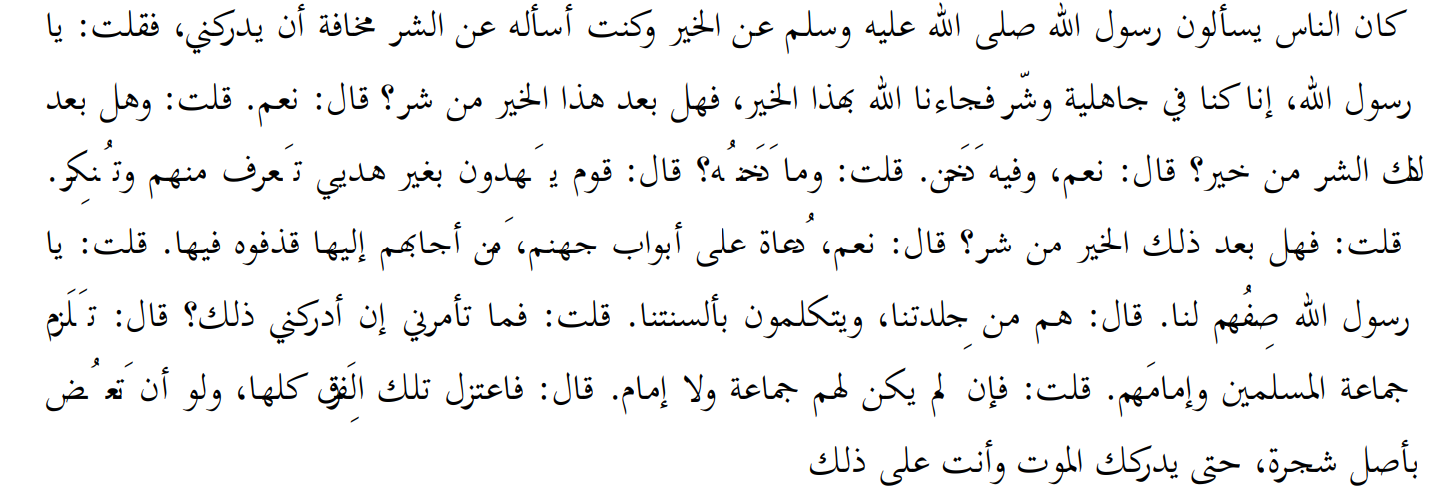
روایت دی چې خلک د رسول الله ﷺ څخه د ښو شیانو په اړه پوښتنه کوله، او زه د ښایست له ویرې د بدو شیانو په اړه پوښتنه کوله. ما وویل: ای د الله رسوله! مونږ د جاهلیت او شر په دوره کې وو، بیا الله تعالیٰ موږ ته دا خیر راولیږه؛ نو آیا له دې خیر وروسته هم کوم شر شته؟ هغه ﷺ وفرمایل: هو. ما وویل: آیا له هغه شر وروسته بیا هم کوم خیر شته؟ هغه وفرمایل: هو، او په هغه کې دوکان (دود) دی. ما وپوښتل: د هغه دود څه شی دی؟ هغه وفرمایل: داسې خلک چې زما د لارښوونې پرته بل لاره ښیې؛ ته ځینې ښه بولې او ځینې بد. ما وویل: آیا له هغه خیر وروسته بیا هم شر شته؟ هغه وفرمایل: هو، د جهنم د دروازو ته د بلنې کونکي (دعات) دي؛ چا چې د دوی بلنه ومنله، دوی به هغه په جهنم کې وغورزوي. ما وویل: ای د الله رسوله! دوی راته بیان کړه. هغه وفرمایل: دوی زموږ د پوستکي (زموږ د خلکو) څخه دي او زموږ په ژبه خبرې کوي. ما وویل: که دا شر ماته ورسیږي نو ته ماته څه امر کوې؟ هغه وفرمایل: د مسلمانانو جماعت او د هغوی امام ته ملاؤ شه. ما وویل: که مسلمانانو کوم جماعت او امام نه وي؟ هغه وفرمایل: نو له دې ټولو ډلو څخه جلا شه، که دا هم وي چې د یوې ونې ريښه دې په غاښونو ونیسې تر دې چې مرګ دې ورسیږي.
“The people used to ask the Prophet of Allah (saw) about the good and I used to ask him about the bad in fear that it might catch me. So I said: O Prophet of Allah! We were in times of jahiliyyah and mischief then Allah brought us this good, so is there any mischief after this good? He (saw) said: Yes. I said: Will there be any good after that mischief? He said: Yes, and it has smoke (dukhan). I said: What is its smoke? He said: People guiding but not on my guidance. You recognise some (from them) and deny some. I said: Will there be any mischief after that good? He said: Yes, callers (du’at) who invite at the doors of Hellfire. They throw him into it (hell) whoever accepted their invitation. I said: O Prophet of Allah, describe them to us. He said: They are of our own skin (of our people) and talk our language. I said: What do you order me to do if that (matter) caught me? He said: Adhere to the jama‘ah of Muslims and their Imam. I said: What if the Muslims have no jama‘ah nor an Imam? He said: Then separate from all those groups, even if you (have to) bite the root of a tree till death comes to you as such.”
دا حدیث په خپل مفهوم کې واضح دی چې پیغمبر ﷺ مسلمانانو ته امر کړی چې د مسلمانانو جماعت سره وابستګي وساتي او د هغوئ امام ته تابع شي، او هغه کسان پرېږدي چې خلک د دوزخ دروازو ته بلنه ورکوي. پوښتونکي له هغه څخه پوښتنه وکړه چې هغه باید د دوزخ د دروازو هغو بلونکو سره څه وکړي، په داسې حال کې چې مسلمانانو ته نه امام شته او نه جماعت؛ نو پیغمبر ﷺ هغه ته امر وکړ چې له ټولو دغو ډلو څخه جلا شي، نه دا چې له مسلمانانو څخه بېل شي او نه دا چې د امام د تاکلو له کار څخه ډډه وکړي. نو د هغه امر واضح دی: "له دغو ټولو ډلو څخه جلا شه"، او هغه د دغو ډلو څخه د بېلتون په ټینګار دومره زور اچولی چې د دې بېلتون په نتیجه کې که هغه ته د مرګ تر راتګه د یوې ونې تنه نیولو ته اړتیا پیدا شي، نو هغه دې ونه ونیسي. د دې مطلب دا دی چې په خپل دین ټینګ شه او د دوزخ د دروازو هغو ګمراه بلونکو څخه لرې اوسه. په دې حدیث کې د خلیفې د تاکلو له کار څخه د ډډې کولو لپاره هیڅ عذر یا اجازه نشته؛ دا یوازې د دین په ساتلو او د دوزخ د دروازو بلونکو پرېښودلو امر پورې محدود دی، او که څوک د خلیفې د تاکلو لپاره کار ونه کړي، ګناه به یې په غاړه وي. نو هغه ته امر شوی چې د ګمراه ډلو څخه ځان وژغوري ترڅو خپل دین د ګمراهۍ له بلونکو وساتي، که څه هم دا ته اړ شي چې د یوې ونې تنه ونیسي، مګر دا نه چې له مسلمانو ټولنې څخه لرې شي او د دین د احکامو د تطبیق او د مسلمانانو د امام د تاکلو له کار څخه لاس واخلي.
This hadith is clear in its expression that the Prophet (saw) ordered the Muslims to adhere to the jama‘ah of Muslims and to adhere to their Imam, and to leave those who invite people to the doors of hell. The questioner asked him what he has should do in relation to those callers at the doors of Hellfire in the situation wherein the Muslims have no Imam and no jama‘ah; thereupon the Prophet (saw) ordered him to separate from all these groups, not to disassociate himself from the Muslims nor to abstain from the action for establishing an Imam. So his order is clear “Separate from all those groups”, and he emphasised the separation from those groups even to the extent that his isolation from them would make him clench to the trunk of a tree until death comes to him. Its meaning is to adhere to your deen and keep away from the misguiding callers who are at the doors of Hellfire. In this hadith there is no excuse or permission (for anybody) to abandon the work for establishing a Khalifah, it is, rather, confined to the command of adhering to the deen and abandoning the callers at the doors of hell, and the sin will remain on him if he does not work to establish a Khalifah. So he is ordered to abandon the misguiding groups in order to save his deen from the callers of the misguidance, even if he had to bite the root of a tree, but not to distance himself from the Muslim community and abandon the work for establishing the laws of the deen and establishing an Imam for Muslims.
یو بل مثال هغه روایت دی چې البخاری د ابو سعید الخدری څخه روایت کړی، چې هغه ویلي:
Another example is what al-Bukhari narrated from Abu Said al-Khudri, who said:
د الله رسول ﷺ وفرمایل: داسې وخت به راشي چې د یو مسلمان غوره مال به هغه پسونه وي چې هغه به د غرونو په سرونو او د باران د اوبو په ځایونو (وادیو) کې بیایي، ترڅو خپل دین د فتنو څخه وژغوري.
“The Messenger of Allah (saw) said: A time will come that the best property of a Muslim will be sheep which he will take on the top of mountains and the places of rainfall (valleys) so as to flee with his religion from afflictions (fitan)”
دا دا معنا نه لري چې انسان باید د مسلمانانو له ټولنې څخه ځان جلا کړي، د دین د احکامو عمل پرېږدي، او کله چې په ځمکه کې خلافت نه وي، د مسلمانانو لپاره خلافت قائم کولو څخه لاس واخلي. دا خبره یوازې دا بیانوي چې د فتنو په وخت کې د مسلمان غوره مال څه دی؛ دا د مسلمانانو څخه د بېلېدو او د خلکو څخه د ځان ګوښه کولو ترغیب نه کوي.
This does not mean that one should isolate oneself from the Muslim community, abandon practising the laws of the deen and establishing a Khalifah for Muslims when there is no Khilafah on earth. All that it contains is an explanation of what is the best wealth of the Muslim at the times of affliction; it does not encourage separation from the Muslims and isolation from the people.
په دې اساس د ځمکې پر مخ هیڅ مسلمان لره دا عذر نشته چې هغه دین قائموه کولو فریضه پرېږدي چې الله (ج) امر کړی دی، یعنې د مسلمانانو لپاره د خلافت قائموول کله چې په ځمکه کې خلافت نه وي، کله چې داسې هیڅوک نه وي چې د الله (ج) حدود ټاکل شوي سزاګانې پرې عملي کړي ترڅو د الله (ج) حرمتونه وساتي، او داسې هیڅوک نه وي چې د دین احکام پلي کړي او مسلمان امت د لا إله إلا الله، محمد رسول الله ﷺ د بیرغ لاندې متحد کړي. په اسلام کې دا اجازه نشته چې تر هغه وخته پورې چې دا فریضه په حقیقت کې بشپړه نشي، د دې فریضې د کار پرېښودل جائز وي.
Accordingly, no Muslim on the face of this earth has an excuse to abandon the duty of establishing the deen which Allah (swt) has ordered, that is, the establishment of a Khalifah for Muslims when there is no Khilafah on the earth, when there is no one to implement the punishments (hudood) of Allah (swt) to protect the sanctities of Allah (swt), and no one to implement the laws of the deen and unify the Muslim community under the banner of La ilaha illa Allah, Muhammad ur-Rasul Allah. There is no permission in Islam to abandon the work for this duty until it is indeed completed.