۱۷.۳ بیعت
17.3 The Pledge (bay’ah)
بیعت هر مسلمان باندې فرض ده، او دا هر مسلمان، نارینه یا ښځې، ته یو حق دی. د دې فرض کیدو دلیل د نبي ﷺ ډیری احادیث دي، چې په هغو کې هغه فرمایلي دي:
Bay’ah is an obligation upon all Muslims, and it is a right for every Muslim, man or woman. The evidence for it being an obligation is in many ahadith of the Prophet (saw), in which he said:
هرچا چې په داسې حال کې مړ شي چې د هغه په غاړه بیعت نه وي، نو هغه د جاهلیت په مرګ مړ شوی دی.
“Whosoever dies without having a bay’ah upon his neck dies a death of jahiliyyah.”
د بیعت له پلوه مسلمانانو ته حق دی، څرنګه چې خپله بیعت دا څرګندوي، ځکه بیعت مسلمانان خلیفې ته کوي، نه خلیفه مسلمانانو ته. د مسلمانانو بیعت رسول الله ﷺ ته په احادیثو کې تایید شوی دی. امام البخاري روایت کړی چې عبادة بن الصامت (رض) وویل:
As for being a right for Muslims, the bay’ah itself indicates that, because the bay’ah is offered by the Muslims to the Khalifah, and not by the Khalifah to the Muslims. The bay’ah of the Muslims to the Prophet (saw) was confirmed in the ahadith. Al-Bukhari reported that ‘Ubadah bin as-Samit (ra) said:
ہغوی ویل: «موږ د نبي ﷺ سره بیعت وکړ چې د هغه خبرې به اوروو او منو به یې، په هغه څه کې چې خوښ وي او هغه څه کې چې ناخوښ وي، او دا چې د واکمنانو په امر به نه شخه کوو، او دا چې هرچیرې یو وو حق به وایو، او د الله په لاره کې د هیچا د ملامت څخه به نه ویریږو.»
“We made a bay’ah to the Prophet (saw) to hear and to obey in whatever pleases and displeases us, and that we would not dispute the order of those in charge, that we would speak the truth wherever we are, and that we would not fear the blame of anyone when acting or speaking for the sake of Allah.”
البخاری د ایوب څخه، هغه د حفصہ څخه، هغه د ام عطیہ څخه روایت کوي، چې هغې ویل:
Al-Bukhari reported from Ayyub from Hafsa from Umm ‘Atiyyah who said:
مونږ د نبي ﷺ سره بیعت وکړ، او هغه ماته د هغه آیت تلاوت وکړ: {چې دوی به د الله سره هیڅ شی شریک نه کوي} (TMQ 60.12)۔ او هغه موږ ته د مړو په وړاندې چیغې وهلو او ویر کولو څخه هم منع کړل۔ زموږ له ډلې یوې ښځې خپل لاس وغزاوه او وې ویل: «فلانه ښځه زما د کورنۍ یو مړی ژړلی و، او زه غواړم هغه ژړا ته بدله ورکړم»۔ نبي ﷺ هېڅ ځواب ونه ورکړ، نو هغه ښځه لاړه او بیرته راغله۔
“We gave a bay’ah to the Prophet (saw) and he recited to me the verse That they will not associate anything in worship with Allah (TMQ 60.12). And he also prevented us from wailing and lamenting over the dead. A woman from us held her hand out and said, "Such-and-such a woman cried over a dead person belonging to my family and I want to compensate her for that crying" The Prophet did not say anything in reply and she left and returned.”
او په البخاري کې د ابو هريره (رضي الله عنه) څخه روایت دی، چې هغه وویل: نبي ﷺ وفرمایل:
And in Al-Bukhari from Abu Hurairah (ra) who said: The Prophet (saw) said:
«درې کسان داسې دي چې قيامت په ورځ الله به له هغوي سره خبرې ونه کړي، نه به هغوي پاکوي، او د هغوي لپاره دردناک عذاب دی: هغه سړی چې په لاره کې د اوبو زيات مقدار لري او مسافر ته يې نه ورکوي؛ هغه سړی چې د يو امام سره يوازې د دنيوي ګټو لپاره بيعت کوي، نو که امام هغه ته هغه څه ورکړل چې غواړي، بيعت پوره کوي، که نه ورکړل نو بيعت نه پوره کوي؛ او هغه سړی چې د عصر وروسته يو توکی بل ته پلورې او په الله قسم کوي چې دومره بيه ورته وړاندې شوې ده، حال دا چې داسې نه وه، او هغه سړی ورباور کوي او اخلي.»
“(There are) three persons to whom Allah will not talk on the Resurrection Day, nor purify them, and for them is a severe punishment: A person who has an excess of water on the road and prevents the wayfarer from it; a person who gives bay’ah to an Imam for his worldly affairs only, so if the Imam gave him that which he wants he fulfilled (the bay’ah) to him, otherwise he would not; and a person trading a commodity to another after asr (late afternoon) and he swore by Allah that he was offered so and so for it, although he was not, and the person believed him and bought it.”
البخاری د عبدالله بن عمر (رضي الله عنهما) څخه روایت کوي چې هغه وویل:
Al-Bukhari narrated from ‘Abdullah bin ‘Umar (ra) who said:
کله چې موږ د نبي ﷺ سره د اورېدو او اطاعت په اړه بیعت کاوه، هغه به موږ ته فرمایل: ستاسو د وس تر کچې پورې۔
“When we gave a bay’ah to the Prophet (saw) to hear and obey, he would say to us: As much as you are capable of”
کله چې موږ د نبي ﷺ سره د اورېدو او اطاعت بیعت وکړ، نو هغه به موږ ته فرمایل: هومره چې تاسو وسائل لرئ."
“When we gave a bay’ah to the Prophet (saw) to hear and obey, he would say to us: As much as you are capable of”
زه د نبي ﷺ سره د اوريدو او اطاعت کولو لپاره بیعت وکړ، او هغه ﷺ ماته وفرمایل: "د خپلې وسې په اندازه، او هر مسلمان ته ښه نصیحت کول."
“I gave bay’ah to the Prophet (saw) to hear and obey and he instructed me: As much as you are able, and to give good advice to every Muslim.”
د جنادہ بن ابی امیہ څخه روایت دی، هغه وویل:
Al-Bukhari narrated from Junada bin Abu Umayyah who said:
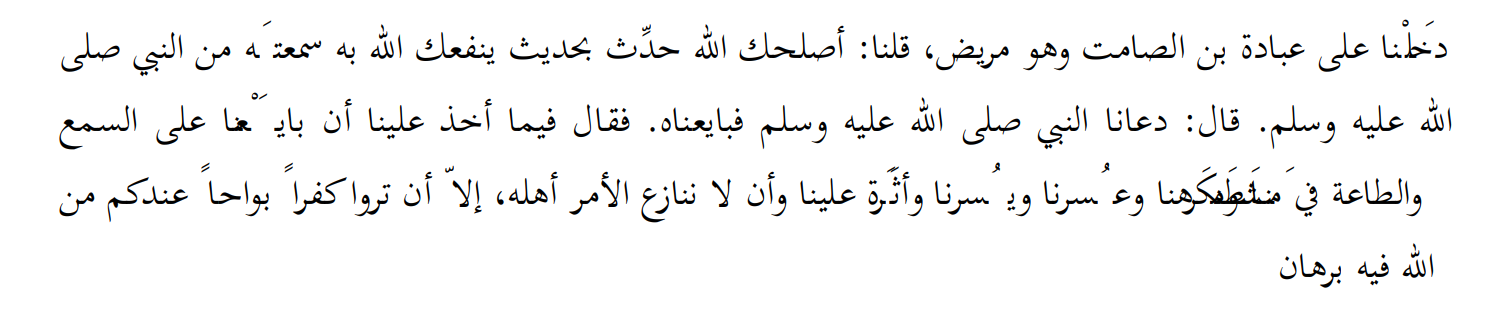
ما د عبادة بن الصامت کور ته ورننوتو په داسې حال کې چې هغه ناروغ و، مونږ ورته وویل: الله دې تاسو ته روغتیا راکړي، یوه حدیث راته بیان کړئ چې تاسو د پیغمبر ﷺ څخه اوریدلی وي، چې الله (ج) ته دې د هغې په وسیله ګټه ورسوي. هغه وفرمایل: پیغمبر ﷺ مونږ ته بلنه راکړه او مونږ د بیعت لاس ورکړ. هغه شرطونه چې پیغمبر ﷺ د بیعت پر وخت له مونږ څخه واخیستل، دا وو: چې مونږ به د امر اوريدل او اطاعت کوو، په هغه وخت کې هم چې مونږ فعال یو او هم چې ستړي یو، په آسانۍ او سختۍ کې هم، او په هغه حالت کې هم چې مونږ د نورو په پرتله ځانګړتیا (ترجیح) ووینو، او د هغو کسانو سره چې دې کار ته سپارل شوي دي، د واک په اړه نه جګړه کوو، او دا وایو: مګر دا چې تاسو ښکاره کفر ووینئ چې د هغه په اړه تاسو ته د الله له لوري څرګند دلیل وي.
“We entered the house of ‘Ubadah bin as-Samit while he was ill and we said: May Allah make you healthy, inform us of a hadith you heard from the Prophet (saw) by which Allah (swt) may benefit you. He said: The Prophet (saw) invited us and we gave him our bay’ah (pledge of Allegiance). And among the conditions on which he took the pledge from us, was that we were to listen and obey (the orders) both at the time when we were active and when we were tired , and in the times of ease and hardship and when we see preference (for others over us), and not to dispute the authority of those who are entrusted with it saying: Unless you see open disbelief (kufr bawah) upon which you have a clear proof from Allah.”
د خلیفې بیعت د مسلمانانو په لاس کې دی، او دا د دوی حق دی؛ دوی دي چې بیعت ورکوي، او د دوی بیعت دی چې د خلافت عقد د یوه خلیفې لپاره تړي. بیعت د لاس په ورکولو سره هم کیدی شي او د لیک په ذریعه هم. عبدالله بن دینار روایت کوي چې ویې ویل:
The bay’ah for the Khalifah is in the hands of the Muslims, and it is their right; it is they who give the bay’ah, and it is their bay’ah which makes the Khilafah contracted for a Khalifah. The bay’ah can be by shaking hand or by writing. ‘Abdullah bin Dinar narrated saying:
ما د ابن عمر شاهد وم چې خلک د عبدالملک بن مروان په شاوخوا کې راټول شوي وو. هغه ولیکل: زه د الله بنده، عبدالملک امیر المؤمنین ته د الله د سنت او د هغه د رسول ﷺ د سنت له مخې، لکه څنګه چې زه توان لرم، د اورېدو او اطاعت کولو موافقه کوم.
“I witnessed bin ‘Umar where the people gathered around ‘Abdulmalik bin Marwan. He wrote: I agree to listen and obey to the slave of Allah, ‘Abdulmalik the Amir al-Mu’mineen, according to the Sunnah of Allah and the Sunnah of His Prophet as much as I am able.”
مزید برآں، بیعت ہر طریقے (وسیلے) سے درست ہے۔ البتہ بیعت بالغ شخص کو دینی چاہیے، اس لیے نابالغ کا بیعت دینا درست نہیں۔ ابو عقیل زہرہ بن معبد اپنے دادا عبداللہ بن ہشام سے روایت کرتے ہیں، جنہوں نے نبی ﷺ کا زمانہ پایا تھا، کہ ان کی والدہ زینب بنت حمید انہیں نبی ﷺ کے پاس لے گئیں اور کہا: اے اللہ کے نبی، ان سے بیعت لے لیجیے۔ نبی ﷺ نے فرمایا:
Moreover, the bay’ah is correct by any means (waseelah). However, the bay’ah has to be given by the mature person, so it is improper to be given by the young. Abu Aqeel Zahra bin Ma‘bed reported from his grandfather ‘Abdullah bin Hisham--who witnessed the Prophet (saw)--that his mother Zaynab, the daughter of Hameed, took him to the Prophet (saw) and said: O Prophet of Allah, take a pledge from him. The Prophet (saw) said:
هغه یو ماشوم دی، هغه د هغه سر ومساږه کړ او د هغه لپاره یې دعا وکړه.
“He is a child, wiped his head and made a du‘a for him.”
د بیعت الفاظ په ځانګړو کلمو پورې محدود نه دي. خو باید دا ولري: د خلیفه لخوا د الله کتاب او د هغه د رسول ﷺ سنت پر بنسټ عمل، همدارنګه په سختۍ او اسانۍ کې اطاعت، او هغه هر څه چې د بیعت کوونکي په حق کې خوښ یا ناخوښ وي (د خلیفه سره اطاعت). کله چې بیعت کوونکي خلیفه ته بیعت ورکړی وي، یا د نورو مسلمانانو د بیعت له امله خلافت خلیفه ته تړل شوی وي، نو بیعت د بیعت ورکوونکي په غاړه امانت شو او هغه ته اجازه نه ده چې بیرته یې واخلي. دا د خلافت د عقد حق دی تر هغه چې هغه ورکړی شي، او کله چې ورکړی شي، نو باید پرې عمل وکړي. هغه ته اجازه نه ده چې له هغې څخه بیرته شي. امام بخاري د جابر بن عبدالله (رض) څخه روایت کړی چې یو بدوي د رسول ﷺ ته د اسلام پر بیعت وکړ، بیا هغه ته یوه ناروغي ورسیده، نو هغه رسول ﷺ ته وویل: «زما بیعت بیرته راکړه»، خو رسول ﷺ انکار وکړ، او سړی لاړ. بیا رسول ﷺ وفرمایل:
As for the words of the bay’ah they are not restricted to specific terms. However they must include acting according to the Book of Allah (swt) and the Sunnah of His Prophet (saw) by the Khalifah, and obedience in hardship and ease and obedience, and whatever pleases and displeases on the part of the person who gives the bay’ah (to the Khalifah). Whenever the one who pledges has given his bay’ah to the Khalifah or the Khilafah is contracted to the Khalifah by the bay’ah of other Muslims, then the bay’ah has become a trust on the neck of the one who gives the bay’ah and he is not allowed to retract it. It is a right for the contract of the Khilafah until he has given it, and once he has given it he must abide by it. He is not allowed to retract from it. Al-Bukhari narrated from Jabir bin ‘Abdullah (ra) that a Bedouin gave the Prophet (saw) his pledge on Islam, and an illness struck him so he said to the Prophet (saw): “Let me withdraw my bay’ah but the Prophet (saw) refused, and the man left. The Prophet (saw) then said:
مدینه د یوې کوره په شان ده، دا ناپاکۍ بهر اچوي او ښې شیان غوره کوي او کامل یې کوي۔
“Medina is like a furnace, it expels out the impurities and selects the good ones and makes them perfect.”
او نافع څخه روایت دی، هغه وویل: ابن عمر رضی الله عنه ماته وویل چې هغه د رسول الله ﷺ څخه اورېدلي چې فرمایل:
And it is narrated from Nafi‘a who said: Ibn ‘Umar (ra) said to me that he heard the Prophet (saw) saying:
څوک چې د امیر له اطاعت څخه خپل لاس واخلي، هغه به د قیامت په ورځ چې د الله تعالیٰ په وړاندې ودریږي، د ځان د دفاع لپاره هیڅ دلیل ونه مومي.
“Whoever withdraws his hand from obedience (to the Amir) will find no argument (in his defense) when he stands before Allah on the Day of Resurrection.”
د خلیفې د بیعت ماتول د الله (سبحانه وتعالی) د اطاعت څخه د یو چا د لاس اخیستل دي. دا هغه صورت دی چې که د هغه بیعت د خلیفې سره د عقد بیعت وي یا د هغه خلیفې د اطاعت بیعت وي چې مسلمانانو هغه ومنلی او د هغه سره یې بیعت کړی وي. خو که څوک په پیل کې د یوه خلیفې سره بیعت وکړي او دا بیعت بشپړ نشي، ځکه چې مسلمانانو په مجموعي توګه هغه د خلیفې په توګه ونه منل، نو هغه د دې بیعت د ختمولو حق لري. هغه منع چې په حدیث کې یاده شوې ده، د هغه بیعت د ماتولو پورې اړه لري چې یو خلیفې ته ورکړل شوی وي، نه د هغه سړي ته چې د هغه لپاره خلافت بشپړ شوی نه وي.
To break the bay’ah of the Khalifah is withdrawing of one’s hand from the obedience of Allah (swt). This is the case if his bay’ah to the Khalifah is a bay’ah of contract or it is a bay’ah of obedience to a Khalifah whom the Muslims accepted and gave their bay’ah to. However, if he gave his bay’ah in the beginning to a Khalifah and it was not completed because the Muslims as a whole did not accept him as Khalifah, then he has the right to withdraw from that bay’ah. The prohibition mentioned in the hadith is focused on the withdrawal of a bay’ah to a Khalifah, not to a man for whom the Khilafah was not accomplished