2.7 القضاء والقدر
2.7 Al-qadā’ Wa‘l-qadar
القضاء والقدر، بهذا الاسم، أي بضمّ كلمتين معاً لمعنى واحد، له مدلول محدد؛ وهو أن القضاء مقترن بالقدر، بحيث يجعلهما أمرين متلازمين لا ينفك أحدهما عن الآخر، ولهما معنى خاص بهما. ولا يصح أن يُدرج فيه غير هذا المعنى الذي لم يستعمله الصحابة ولا التابعون. وبدراسة النصوص الشرعية واللغوية، ودراسة أقوال الصحابة والتابعين ومن جاء بعدهم من العلماء، يتبيّن أن لفظي القضاء والقدر مجتمعين لم يُستعملا من أيٍّ من الصحابة أو التابعين بمعنى اصطلاحي محدد، ولم يردا مجتمعين بمعنى اصطلاحي محدد في القرآن ولا في الحديث؛ وإن كانا قد وردا مجتمعين بمعناهما اللغوي فيما رواه البزّار من حديث جابر بسند حسن عن النبي ﷺ أنه قال:
Al-qadā’ wa‘l-qadar, with this name, that is, by connecting two words together for one meaning, has a specific referent; that is, al-qadā’ linked to al-qadar, by making them two concomitant matters whereby one is not separable from the other, and they have a meaning that is exclusive to them. It is not correct to include in it other than this meaning which has not been used by the Sahabah or the Tabi’een. By studying the shar’i and linguistic texts and studying the sayings of the Sahabah, Tabi’een and those who came after them from the Ulama’, it is apparent that the terms al qadā’ wa‘l-qadar together, have not been used with a specific technical [istilāhī] meaning by any of the Sahabah or Tabi’een, nor have they come together with a specific technical meaning in the Qur’ān or the Hadīth; though they have come together in their linguistic meaning in what al Bazzār reported from the hadīth of Jabir with a hasan chain on the authority of the Prophet (PBUH) that he said:
زما د امت ډیری خلک د الله د قضا او د هغه د قدر له مخې، د ځانونو (انفس) سره مری.
“Most of my Ummah die after the qadā’ of Allaah and his qadar with the souls [anfūs].”
لہٰذا وہ اصطلاحی معنی جو اس نام کی طرف اشارہ کرتا ہے، صرف متکلمین کے ہاں ملتا ہے، پہلی صدی گزرنے کے بعد اور یونانی فلسفے کے ترجمے کے بعد۔ صحابہ کرامؓ کے زمانے میں یہ معنی موجود نہ تھا، اور نہ ہی ان دونوں الفاظ کے بارے میں ایک خاص اصطلاحی مفہوم کے لیے ایک نام کے طور پر کوئی اختلاف یا بحث تھی۔ صحابہ کے دور میں مسلمان ’القضاء والقدر‘ کو نہیں جانتے تھے، اگرچہ لفظ ’قضاء‘ الگ سے آیا تھا اور لفظ ’قدر‘ بھی احادیث میں الگ سے آیا تھا، جیسا کہ جابرؓ کی مذکورہ حدیث میں دونوں ایک ساتھ آئے تھے، لیکن ان تمام صورتوں میں وہ لغوی معنی میں آئے تھے، اصطلاحی معنی میں نہیں۔ لفظ ’قضاء‘ قنوت کی حدیث میں آیا ہے۔ حسنؓ نے کہا: رسول اللہ ﷺ نے مجھے وہ کلمات سکھائے جو میں وتر کے قنوت میں کہتا ہوں، پھر آپ نے قنوت کی دعا ذکر کی، جن میں سے یہ ہے:
Therefore this terminological meaning which alludes to this name is not found except from the Mutakallimūn, after the first century had passed and after the translation of the Greek philosophy. It did not exist in the time of the Sahabah nor was there any dispute or discussion of those two terms as one name for a specific technical meaning. Throughout the era of the Sahabah the Muslims did not know of ‘al-qadā’ wa‘l-qadar’ though the word qadā’ had come on its own and the word qadar had come on its own in the ahadīth just as the two had come together in the aforementioned hadīth of Jabir, but in all of these cases they had come in the linguistic meaning. They have not come in the technical meaning. The word qadā’ has come in the hadīth of al-qunut. Al-Hasan said, the Messenger of Allah (PBUH) taught me words I say in the qunut of the witr, then he mentioned the du’a of qunut, of which is,
"...او ما د هغه څه له شره وژغوره چې ته يې حکم کړی، ځکه ته حکم کوونکی يې او په تا باندې حکم نه کيږي." [Reported by al-Darimi , Narrated by al-Hasan ibn Ali]
“...and save me from what You have decreed, for You are the one Who Decrees and you are not decreed upon,” [Reported by al-Darimi , Narrated by al-Hasan ibn Ali]
دا یې معنا ده، زما د هغه شر څخه وساته چې ته یې حکم کړی یې، ځکه ته هغه څه حکم کوې چې غواړې، او ستا په اړه هیڅوک حکم نه کوي۔ کلمه «قدر» د جبرئیل علیه السلام په حدیث کې د ځینو روایتونو کې راغلې ده: هغه وویل،
Its meaning is, protect me from the evil of what you have judged, for you judge what you wish and no one judges over you. The word qadar has come in the hadīth of Jibrīl in some of its narrations: He said,
او په قدر ایمان لرل، د هغه ښه او بده دواړه. [Reported by Muslim, Narrated by Umar ibn al-Khattab]
“And to believe in al-qadar, the good and the bad thereof”, [Reported by Muslim, Narrated by Umar ibn al-Khattab]
او د هغه په قول کې
And in his saying
…که تاسو ته کوم مصیبت ورسیږي نو ونه وایاست: «که ما داسې کړي وای، نو داسې به شوي وای»، بلکه ووایاست: «الله تعالی تقدیر وټاکه او هغه څه یې وکړل چې اراده یې وکړه»۔ [Reported by Muslim, Narrated by Abu Hurairah]
“…If anything befalls you do not say, ‘had I done (this), it would have been such-and-such, but rather say, ‘Allah determined [qaddara] and He did what He willed,’”[Reported by Muslim, Narrated by Abu Hurairah]
په دواړو احادیثو کې د «قدر» کلمې معنا تقدیر او د الله علم دی، یعنې باید داسې عقیده ولرئ چې شیان الله په لوح محفوظ کې لیکلي دي او هغه دا شیان پیدا کیدو دمخه، که بنه وي که بد، پوهیږي؛ او وایئ چې الله دا په لوح محفوظ کې لیکلي دي، او هغه دا پیدا کیدو دمخه پوهیدلی و، او هغه هغه څه وکړل چې یې غوښتل. د «قضاء» کلمه هغه معنا کې چې په دې حدیث کې یا په نورو ځایونو کې راغلې ده، د مسلمانانو تر منځ شخړه نه وه؛ دوی د هغې د لفظ یا د مفهوم په اړه بحثونه نه کول.
The meaning of the word qadar in these two ahadīth is the Determination [taqdīr] and Knowledge of Allah , that is, that you should believe that the things have been written by Allah in the Lawh al-Mahfūdh and He knows of them before they come into existence, whether they be good or bad; and say Allah has written this in the Lawh al-Mahfūdh and he knew it before it came into being and he did what he wished. The word al-qadā’ in the meaning which it came in this hadīth or anywhere else it came was not disputed by the Muslims; they did not have discussions with regards to its wording or its import.
ال قدر کی وہ معنی چې په دواړو حدیثونو کې ذکر شوې ده، مسلمانانو د یونانی فلسفې له راتګ دمخه د هغې په لفظ یا مفهوم کې نه اختلاف کاوه او نه یې بحث کاوه۔ مګر د یونانی فلسفې له راتګ وروسته د مسلمانانو په منځ کې د کوفې یوه ډله راپورته شوه او وې ویل: قدر نشته، یعنې داسې څوک نشته چې مقدر کړي، او ټول شیان پرته له کومې مخکینۍ تقدیر څخه پیښیږي؛ دوی ته قدریه ویل شوي او دوی هغه کسان دي چې قدر انکار کوي او وايي چې الله ﷻ د شیانو اصولي حقایق پیدا کړل او بیا یې پرېښودل، نو هغه د دوی جزئیاتو [جزئیات] علم نه لري۔ دا د قرآن کریم د هغه واضح متن خلاف دی کوم چې ښيي چې الله ﷻ د ټولو شیانو خالق دی، وړوکی وي یا لوی، اصلي وي یا فرعي، او دا چې هغه د هر شي وجود نه مخکې ټول شیان مقدر کړي، يعنې هغه يې په لوح محفوظ کې ليکلي، يعنې هغه د دې نه مخکې پوهیده چې دا به پیښ شي۔ هغه فرمايي:
As for the word qadar in the meaning mentioned in those two ahadīth, the Muslims, before the presence of Greek philosophy, did not disagree about it or have discussions with regards to its wording or import. But after the presence of the Greek philosophy amongst the Muslims, a group from Kufa arose and said: there is no qadar, that is, there is no one who (pre)determines and everything occurs without any previous determination; they were called the Qadariyyah and they are the ones who deny the qadar and say that Allah created the fundamentals of things and then left them, so He does not have knowledge of their particulars [juz'iyāt]. This is contrary to what has come in the clear text of the Qur’ān which states that Allah is the Creator of all things, small or big, fundamental or branchial, and that He determined everything before its existence, that is, He wrote it in the Lawh al-Mahfūdh, that is, He knew it before it came to be. He said:
هغه ټول شیان پیدا کړي دي او هغه د هرڅه ښه پوهیدونکی دی. [TMQ-An’ām: 101]
“He created all things and He is the All-Knower of everything” [TMQ-An’ām: 101]
او
And
او هغه پوهیږي هرڅه چې په ځمکه او په سمندر کې دي؛ هیڅ پاڼه نه غورځیږي، مګر هغه پوهیږي پرې. په ځمکې د تیارو کې هیڅ دانه نشته، او نه هیڅ تازه یا وچ شی دی، مګر دا ټول په یوه ښکاره کتاب کې لیکل شوي دي. [TMQ-An’ām: 59]
“And He knows whatever there is in the Earth and in the sea: not a leaf falls, but He knows it. There is not a grain in the darkness of the Earth nor anything fresh or dry, but is written in a Clear Record.” [TMQ-An’ām: 59]
دا اختلاف او بحث یوازې د «د الله تعالیٰ قدر» په اړه دی، یعنی د هغه د علم په لحاظ. قدریانو ادعا وکړه چې الله تعالیٰ د شیانو اصلي خواوې پیژني، خو د هغو جزئي خواوې نه پیژني، په داسې حال کې چې اسلام بیانوي چې الله تعالیٰ د شیانو اصلي خواوې هم پیژني او جزئي خواوې هم. نو د الله تعالیٰ د قدر، یعنی د هغه د علم په اړه بحث د الله تعالیٰ د علم د موضوع په اړه دی. دا د القضاء والقدر له موضوع څخه بله موضوع ده. دا یو بل بحث دی، د القضاء والقدر له بحث څخه جلا. د دې واقعي حقیقت هم همدا دی، یعنی دا د القضاء والقدر له موضوع څخه بله موضوع ده.
However, this disagreement and discussion is only with respect to the ‘qadar of Allah’ in terms of His Knowledge. So the Qadariyyah claimed that Allah knows the fundamentals of things but not their partial aspects, whilst Islam states that Allah knows the fundamentals of things as well as their partial aspects. Thus, the discussion with respect to the qadar of Allah , that is, His Knowledge, is about the subject of Allah's Knowledge. It is a subject different to that of al-qadā’ wa‘l-qadar. It is a different discussion, separate from the discussion of al-qadā’ wa‘l-qadar. Its reality that took place is the same, that is, it is a different subject to that of al-qadā’ wa‘l-qadar.
پس، دا بالکل ښکاره ده چې الفاظ القضاء او القدر هر یو په ځان سره راغلي دي او هر یو خپل ځانګړی معنا لري. دوی د القضاء والقدر د موضوع له مطالعې سره هیڅ اړیکه نه لري. په بل عبارت، لفظ القضاء په ټولو لغوي او شرعي معنا کې چې له شارع څخه راغلي دي، او لفظ القدر په ټولو لغوي او شرعي معنا کې چې له شارع څخه راغلي دي، د دې اصطلاحاتو سره، که جلا ذکر شي که یوځای، د القضاء والقدر په بحث کې هیڅ اړیکه نه لري. د معنا له پلوه دوی یوازې هغه معنا لري چې د لغت او شرع له پلوه له ځانه سره راوړي.
Thus, it is plainly apparent that the words al-qadā’ and al-qadar have each come on their own with each having a specific meaning. They do not have any relation with the study of al-qadā’ wa‘l qadar. In other words, the word al-qadā’ in all its linguistic and shar’i meanings that have come from the Legislator, and the word al-qadar in all its linguistic and shar’i meanings that have come from the Legislator, have no relation to any of these terms, whether mentioned alone or together, in the discussion of al-qadā’ wa‘l-qadar. They are confined with regards to their meaning, to that what they come with from the linguistic and shar'i meanings.
هغه آیتونه چې د الله تعالیٰ د علم د ثبوت لپاره راغلي دي، هغه دي چې د الله د علم د هرې شيء احاطه کوونکې والي ښيي، لکه د هغه ارشاد:
The ayāt which have come in demonstrating the Knowledge of Allah are the ones that indicate the all-encompassing nature of Allah's Knowledge with regards to all things, thus His saying:
په ځمکه کې او په خپلو ځانونو کې هیڅ مصیبت نه رسیږي، مګر دا چې مخکې لدې نه چې موږ هغه پیدا کړو، په یوه کتاب کې ثبت دی. بې شکه، دا د الله لپاره آسانه ده. [TMQ-Hadīd: 22]
“No calamity befalls on the Earth or in yourselves but is inscribed in a Book, before We bring it into existence. Indeed, that, upon Allah, is easy” [TMQ-Hadīd: 22]
او د هغه ویناوه،
And His saying,
ووایه: «ووایه: "هیڅ شی زموږ لپاره پیښ نه کیږي مګر هغه څه چې الله زموږ لپاره لیکلي دي. هغه زموږ مولا دی." او بیا باید مؤمنان یوازې په الله توکل وکړي» [TMQ Tawba: 51]
“Say: ‘Nothing shall ever happen to us except what Allah has ordained for us. He is our Mawla.’ Then in Allah let the believers put their trust” [TMQ Tawba: 51]
او د هغه ویناوه،
And His saying,
په آسمانونو او ځمکه کې د یوه ذرې په وزن هم هغه (الله) د خپل علم څخه نه پټیږي، نه کم او نه زيات، خو دا ټول د یوې ښکاره کتاب کې دي. [TMQ Saba: 3]
“Escapes not from His Knowledge even the weight of an atom, in the Heavens or in the Earth, or less than that, or greater, but it is in a Clear Book” [TMQ Saba: 3]
او د هغه ویناوه،
And His saying,
دا هغه ذات دی چې د شپې مو روحونه اخلي، او هغه پوهیږي چې تاسو په ورځ کې څه کوئ، بیا بیرته تاسو را ژوندي کوي ترڅو مقرر وخت پوره شي، بیا هم د هغه په لور ستاسو بیرته ستنیدل دي. بیا به هغه تاسو ته خبر کړي چې تاسو څه کول. [TMQ An’ām: 60]
“It is He, Who takes your souls by night, and (Who) has knowledge of all that you have done by day, then He raises (wakes) you up again that a term appointed be fulfilled, then unto Him will be your return. Then He will inform you what you used to do” [TMQ An’ām: 60]
دا آیتونه رسول الله ﷺ ته نازل شوي وو او صحابه کرامو يې یاد کړل او پوه شول، او هیڅ داسې فکر يې نه کاوه چې د القضاء والقدر په اړه بحث وکړي. سربیره پردې، د دې آیتونو الفاظ، مفهوم او دلالت دا بیانوي چې دا د الله تعالیٰ د علم په اړه وضاحت دی، او د القضاء والقدر د مطالعې سره هیڅ اړیکه نه لري. همداسې هغه آیت چې
These verses were revealed to the Messenger (PBUH) and they were memorised and understood by the Sahabah, it did not occur to them to discuss al-qadā’ wa‘l-qadar. Furthermore, the wording, understanding and indication of these verses states that they are a clarification about the Knowledge of Allah and have no relation to the study of al-qadā’ wa‘l-qadar. Similarly the ayah,
او که دوی ته کومه ښېګڼه ورسېږي، وایي: "دا له الله دی"، او که ورباندې کومه بدي راشي، وایي: "دا له تا دی". ووایه: "ټول شیان له الله دي"؛ نو دا خلک څه شی دي چې داسې یو خبره هم نه پوهیږي؟ [TMQ-Nisā’: 78]
“And if some good reaches them, they say, ‘This is from Allah’, but if some evil befalls them, they say, ‘This is from you’. Say: ‘All things are from Allah’; so what is wrong with these people that they fail to understand any word?’ [TMQ-Nisā’: 78]
دا د القضاء والقدر د بحث سره هیڅ تعلق نلري، ځکه دا د هغو کفارو ردّ دی چې د بدۍ او نېکۍ ترمنځ توپیر یې کاوه. دوی داسې ویل چې بدي د رسول ﷺ له لوري رائې او نېکي د الله ﷻ له لوري. نو الله ﷻ دوی ردّ کړل او اعلان یې وکړ چې هرڅه د الله ﷻ له لوري دي. بحث د هغې نېکۍ په اړه نه دی چې انسان یې کوي او د هغې بدۍ په اړه نه دی چې هغه پسې ځي؛ بلکې بحث د جنګ او مرګ په اړه دی. خود آیت او هغه څه چې د دې مخکې دي دا څرګندوي.
It has nothing to do with the discussion of al-qadā’ wa‘l-qadar because it is a refutation of the kuffār who differentiated between bad and good. Thus, they made bad to come from the Messenger and good from Allah . So Allah refuted them by declaring that everything is from Allah . The discussion is not about the good that a human being does and the evil that he pursues; rather the discussion is about fighting and death. The ayah itself and that what precedes it clarifies this:
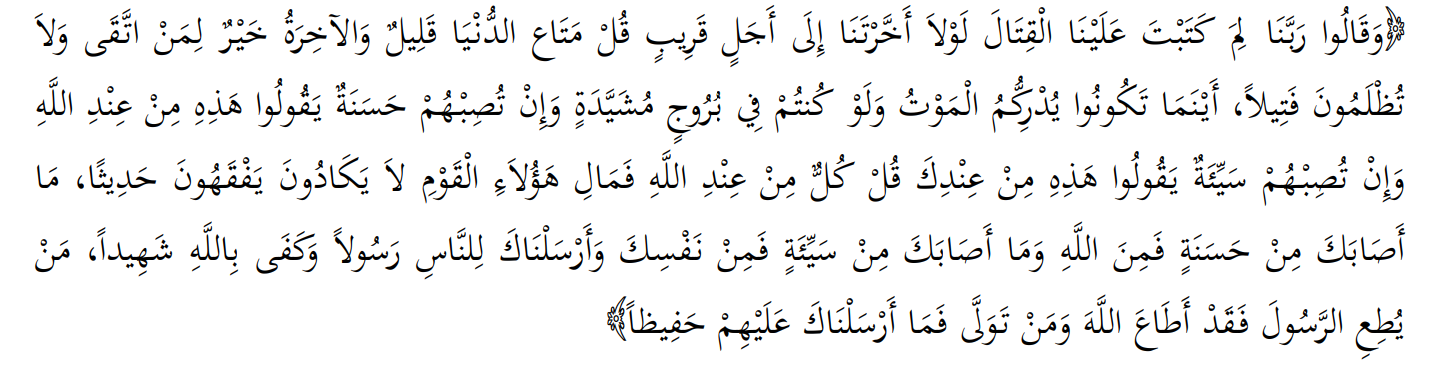
دوی وایی: اې زموږ ربه! ولې ته په موږ د جنګ فرض کړی؟ ای کاشکې چې موږ ته یوه لنډه مهلت راکړې وای! ووایه: د دنیا ګټه لنډه ده، او آخرت د هغه چا لپاره ښه دی څوک چې له الله څخه ویره لري، او تاسو په یوه کوچني اندازه هم ظلم نه کیږئ. تاسو هر چیرې چې یاست، مرګ به تاسو ته ورسیږي، که څه هم تاسو په مضبوطو او لوړو کلاګانو کې یاست! او که دوی ته کوم ښه شی ورسیږي، وایي: دا له الله دی، او که کوم بد پیښ شي، وایي: دا له تا (یعنې له تا اې محمد ﷺ) دی. ووایه: ټول شیان له الله دي، نو دا خلک څه شوي دي چې یوه خبره هم نه پوهیږي؟ هر هغه ښه شی چې تاسو ته ورسیږي، له الله دی، او هر هغه بد شی چې تاسو ته پیښیږي، له ځان څخه دی. او موږ تاسو (اې محمد ﷺ) د ټولو انسانانو لپاره رسول ولیږلئ، او الله د شاهد په توګه بس دی. څوک چې رسول ﷺ ته اطاعت وکړي، په حقیقت کې یې الله ته اطاعت کړی دی، او څوک چې مخ واړوي، نو موږ تا ﷺ د دوی په ساتونکي باندې نه یې ولیږلې. [TMQ-Nisā’: 77-80]
“They say: Our Lord! Why have you ordained for us fighting? Would that you have granted us respite for a short period?’ Say: ‘Short is the enjoyment of this world. The Hereafter is (far) better for him who fears Allah, and you shall not be dealt with unjustly in the least. Wheresoever you may be, death will overtake you even if you are in fortresses built up strong and high! And if some good reaches them, they say, ‘This is from Allah,’ but if some evil befalls them, they say, ’This is from you.’ Say: ‘All things are from Allah’, so what is wrong with these people that they fail to understand any word? Whatever of good reaches you, is from Allah, but whatever of evil befalls you, is from yourself. And We have sent you (O Muhammad) as a Messenger to mankind, and Allah is sufficient as Witness. He who obeys the Messenger, has indeed obeyed Allah, but he who turns away, then we have not sent you as a watcher over them.” [TMQ-Nisā’: 77-80]
دلته مضمون هغه څه دی چې پیښیږي هغوی ته، نه هغه څه چې دوی یې کوي. نو دا د القضاء والقدر د مطالعې سره هیڅ تعلق نه لري.
So the subject is what befalls them and not what they are doing. Thus it has nothing to do with the study of al-qadā’ wa‘l-qadar.
له همدې ټول کومه چې پورته یاده شوې، د القضاء والقدر د مطالعې سره هیڅ تعلق نلري؛ دا خبرې د هغه د معنا لاندې نه راځي او د پورته ذکر شویو خبرو سره هیڅ ډول اړیکه نلري. بلکې القضاء والقدر د یوې معنا په توګه د یوناني فلسفې څخه راغلی دی، چې معتزله یې نقل کړه او د هغې په اړه یې خپله رایه ورکړه. اهل السنت او جبریه د هغوی ردّ وکړ، او اهل السنت د جبریه ردّ هم وکړ. بحث په همدې معنا محدود پاتې شو او په همدې مقدمې ولاړ و. نو دا مسئله هغه معنا ده چې د یوناني فلسفې څخه راغلې ده، او د هغه بحث په ترڅ کې ښکاره شوه چې په مسلمانانو او هغو کافرانو تر منځ کیده چې د یوناني فلسفې سره وسله وال وو. دا داسې معنا ده چې د عقیدې سره اړیکه لري، نو هدف دا دی چې د دې معنا په اړه د اسلام رایه بیان شي. معتزله یوه رایه ورکړه، جبریه د هغوی ردّ وکړ او بله رایه یې ورکړه. اهل السنت ټولو ردّ کړل، خپله رایه یې ورکړه، او ویې ویل چې دا دریمه رایه ده چې له دوو رایو څخه راووتې ده؛ او دوی دا د "هغه خالص شیدو په توګه بیان کړ چې خوږه ده څښل یې، چې د ګوه او وینې په منځ څخه راوځي".
Therefore, all that has been mentioned above has nothing to do with the study of al-qadā’ wa‘l qadar; they do not come under its meaning and have no relation whatsoever with what has been mentioned above. Rather, al-qadā’ wa‘l-qadar as a meaning has come from Greek philosophy which was transmitted by the Mu'tazilah who gave an opinion with regards to it. Ahl al-Sunnah and the Jabriyyah refuted them and Ahl al-Sunnah (also) made a refutation of the Jabriyyah. The discussion was confined to the same meaning and preceded upon the same premise. Thus the issue is a meaning/sense that came from Greek philosophy and it came to the fore in the debate which used to take place between the Muslims and the kuffar who used to be armed with the Greek philosophy. It is a meaning which has a relevance to the ‘aqīdah (creed), thus what is desired is to give Islam's opinion regarding this meaning. The Mu'tazilah gave an opinion and the Jabriyyah refuted them and gave another opinion. Ahl al-Sunnah refuted all of them and gave an opinion, and said about it that it is a third opinion which has come out from the two opinions and they described it as ‘the pure milk, sweet to drink, that comes out from between excrement and blood’.
لہٰذا، یونانی فلسفے سے آنے والا زیرِ بحث موضوع معروف ہوگیا، اور چونکہ یہ عقیدے (عقیدہ) سے متعلق ہے، اس لیے مسلمان کو واضح ہونا چاہیے کہ اس موضوع کے بارے میں اس کا عقیدہ کیا ہے۔ مسلمانوں نے واقعی اپنی رائے بیان کی اور تین مکاتبِ فکر پیدا ہوئے۔ چنانچہ قضاء و قدر کے مسئلے کو اس معنیٰ کی طرف لوٹانا جائز نہیں جو قضاء یا قدر کے لغوی اور شرعی معنیٰ سے نکالا گیا ہو، اور نہ ہی یہ جائز ہے کہ قضاء یا قدر کے لیے محض گمان، تصور یا تخیل سے کوئی معنیٰ گھڑا جائے، اور یہ کہنا کہ مثلاً قضاء کلیات پر کلی حکم ہے اور قدر جزئیات اور ان کی تفصیلات پر کلی حکم ہے، یا یہ کہنا کہ قدر چیزوں کے لیے ازلی منصوبہ ہے اور قضاء اس پہلے سے طے شدہ تقدیر اور منصوبے کے مطابق عمل درآمد اور تخلیق ہے۔ بلاشبہ یہ جائز نہیں، کیونکہ یہ محض تخیل اور مفروضہ ہے، اور بعض لغوی اور شرعی الفاظ کو ایسے معنوں پر منطبق کرنے کی ناکام کوشش ہے جن پر وہ منطبق نہیں ہوتے، بلکہ وہ عمومی معانی پر دلالت کرتے ہیں۔ پھر ان دو الفاظ کو بغیر دلیل کے ان مخصوص معانی تک محدود کرنا ایک من مانی کارروائی ہوگی۔
"هر نفس د هغه چا په بدل کې ګروی دی چې هغه یې کمائی کړی،" [TMQ Muddathir: 38]
“Every soul is a pledge for what it earns,” [TMQ Muddathir: 38]