د شهید حکم
20.3 The Martyr
شهیدان درې ډوله دي: هغه شهید چې د آخرت شهید دی مګر د دنیا د قاعدو له مخې نه دی؛ هغه شهید چې یوازې د دنیا شهید دی؛ او هغه شهید چې د دنیا او آخرت شهید دی. څوک چې یوازې د آخرت شهید دي او د دنیا شهید نه دي، دوی په احادیثو کې ذکر شوي دي. په ځینو روایتونو کې دوی اوه، په ځینو کې اته، په ځینو کې نهه او په ځینو کې یوولس دي. هغه صحیح موقف چې د مسلم په روایت کې راغلی دا دی چې دوی پنځه دي، هغه کسان دي: (المطعون) یعنې هغه څوک چې د طاعون، یعنې هغه مشهور ناروغۍ له امله مړ شي، (المبطون) یعنې هغه څوک چې د اسهال ناروغۍ څخه مړ شي، هغه غرق شوی چې د اوبو له امله مړ شي، هغه څوک چې د (الهدم) یعنې د راپرېوتې ودانۍ له امله مړ شي، او هغه څوک چې د الله تعالیٰ د کلمې د لوړولو په لاره کې د جنگ له میدان بهر مړ شي. مسلم د ابو هریره (رض) څخه روایت کړی چې رسول الله ﷺ وفرمایل:
Martyrs (shuhadaa) are of three types; the shaheed of the Akhirah but not by the rules of the world; the shaheed of the world only and the shaheed of the world and Akhirah. As for the shaheed of the Akhirah only and not of this world, they are mentioned in the ahadith. In some narrations they are seven, in some eight, in some nine and in some eleven. The authentic (position) as what came in Muslim is that they are five who are: (al-mat’un) who is the one who dies in the plague i.e. the famous pestilence, the (mabtun) who is the one with diarrhoea, the drowned person who dies because of water, the one who dies of (al-hadm) i.e. the collapsed building, and the one who dies in the way of raising the word of Allah outside the battlefield. Muslim narrated from Abu Hurayra (ra) that the Messenger of Allah (saw) said:
یو سړی چې په لاره روان و، په لاره کې یوه د ګوډ ټنې (د اوښ د ځنګل) ټنه وموندله او لیرې یې کړه. الله ورباندې راضي شو او وې بښله. نبي ﷺ وفرمایل: شهیدان پنځه دي: طاعون ځپلی، د شکم ناروغۍ ځپلی، ډوب شوی، هغه څوک چې د ډیوال یا ودانۍ د ړنګیدو په سبب مړ شي، او هغه شهید چې د الله عزوجل په لاره کې وي۔
“A man walking along the road found a thorn-branch in the road and removed it. Allah was grateful to him and forgave him. He (saw) said: The martyrs (shuhadaa) are five: (al-mat’un), (al-mabtun), the drowned one, the one who died in a collapsed (building) and the shaheed in the way of Allah ‘azza wa jalla.”
مسلم د ابوهریره (رض) څخه روایت کوي، هغه وویل: رسول الله ﷺ وفرمایل:
Muslim narrated from Abu Hurairah (ra) who said: The Messenger of Allah (saw) said:
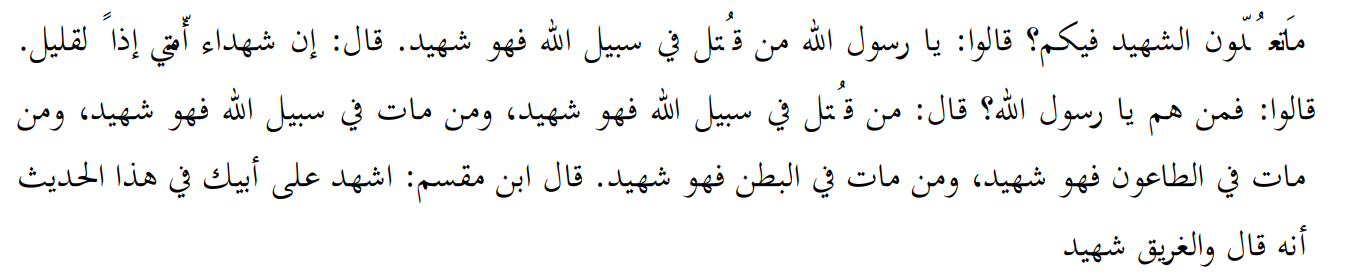
تاسو په خپلو منځو کې چا ته شهید وایئ؟ دوی وویل: ای د الله رسوله، هغه څوک چې د الله په لاره کې وژل شي شهید دی. ده وفرمایل: بیا به زما د امت شهیدان لږ وي. دوی وویل: نو هغوی څوک دي، ای د الله رسوله؟ ده وفرمایل: هغه څوک چې د الله په لاره کې وژل شي شهید دی، هغه څوک چې د الله په لاره کې مري شهید دی، هغه څوک چې د طاعون له امله وژل شي شهید دی، هغه څوک چې د معدې له امله وژل شي شهید دی (ابن مقسم وویل: زه په دې حدیث کې ستا د پلار په اړه شاهدي ورکوم چې ده ویلي و) او هغه څوک چې غرق شي شهید دی.ﷺ
“Whom do you consider a shaheed among you? They said: O Messenger of Allah, the one killed in the way of Allah is a shaheed. He said: Then the shuhadaa among my Ummah would be few. They said: Then who are they, O Messenger of Allah? He said: The one killed in the way of Allah is a shaheed, the one who dies in the way of Allah is a shaheed, the one killed in pestilence is a shaheed, the one killed due to the stomach is a shaheed (ibn Muqsim said: I testify that upon your father in this hadith that he said) and the drowned person is a shaheed.”
دې شهیدانو مطلب دا دی چې آخرت کې د شهیدانو اجر به ورته وي، خو دنیا کې دوی ته غسل نه ورکول کیږي او جنازه پرې کیږي. کله چې د "شهید" کلمه د اجر او په دې اړه د حدیث سره یوځای ذکر شي، نو دا صحیح ده چې دې کسانو ته عمومي کړل شي. خو که کلمه "شهید" پرته له کومې قید او مفهوم څخه په مطلق ډول وکارول شي، نو دا په دوی باندې نه حمل کیږي، بلکې یوازې هغو کسانو ته اطلاق کیږي چې د الله تعالی په لاره کې وژل شوي وي.
The meaning of these shuhadaa is that there is for them in the Akhirah the reward of the shuhadaa; as for this world, they are washed and prayed over. When the word “shaheed” is said in connection with reward and the hadith about that, it is correct to generalize it to these (persons). However, if the word “shaheed” is used in an unrestricted manner without any connotation, then it is not taken to denote these (persons) but rather to denote only those killed in the way of Allah.
پہ دنیا کا شہید، نہ کہ آخرت کا، هغه څوک دی چې د دنیا د شهید احکام اخلي، یعنې داسې چې نه ورته غسل ورکول کیږي او نه پرې جنازه کیږي، بلکې په خپلو جامو کې دفن کیږي۔ خو په آخرت کې هغه د شهید ثواب نه اخلي چې د الله د کلمې د لوړولو لپاره جهاد کوي۔ دا هغه څوک دي چې د الله د لاري پرته بل لپاره جنګ کوي، لکه یوازې د شهرت یا غنیمت لپاره، یا داسې چې شاتګ کوي۔ دا ځکه چې احادیثو د هغه شهید ثواب بیان کړی دی چې د الله (ج) په لاره کې جنګ کوي، او هغه چې پرمخ ځي نه شاتګ کوي۔ مسلم د ابو موسی الاشعري له لارې روایت کړی دی۔
As for the shaheed of the world not the Akhirah, he is the one who takes the rules of the shaheed of the world in so far as he is not washed nor prayed over but rather buried in his clothes. However he does not take in the Akhirah the reward of the shaheed who fought to raise the word of Allah the highest. This is the one who fights in other than the way of Allah such as fighting for fame or booty alone or while retreating. This is because the ahadith specified the shaheed’s reward for the shaheed who fights in the way of Allah (swt), and the one fighting advancing not retreating. Muslim narrated from Abu Musa al-Ash’ari
هغه سړی د پیغمبر ﷺ په خدمت کې راغی او وې ویل: اے د الله رسوله ﷺ! هغه سړی چې د غنیمت لپاره جنګ کوي، هغه سړی چې د دې لپاره جنګ کوي چې یاد شي، او هغه سړی چې د دې لپاره جنګ کوي چې د هغه مقام ولیدل شي، دا څوک دی چې د الله په لاره کې دی؟ د الله رسول ﷺ وفرمایل: "هغه څوک چې د دې لپاره جنګ کوي چې د الله کلمه لوړه شي، هغه د الله په لاره کې دی."
“That a man came to the Prophet (saw) and said: O Messenger of Allah, the man who fights for booty, the man who fights to be mentioned and the man who fights so that his rank is seen. Which one is in the way of Allah? The Messenger of Allah (saw) said: ‘The one who fights so that the word of Allah be highest is the one in the way of Allah.”
مسلم د ابو موسی له لارې روایت کوي
Muslim narrated from Abu Musa
د الله رسول ﷺ څخه وپوښتل شو چې هغه سړی څه حکم لري چې د زړورتیا د ښودلو لپاره جنګیږي، هغه چې د غصې له کبله جنګیږي، او هغه چې د ریاکارۍ (د ښکاره کولو) لپاره جنګیږي. د الله رسول ﷺ وفرمایل: هغه څوک چې د دې لپاره جنګیږي چې د الله کلمه لوړه شي، هغه د الله په لاره کې دی.
“The Messenger of Allah (saw) was asked about the man who fights (to show his) courage, the one who fights out of anger, and the one who fights to show off (hypocritically). The Messenger of Allah (saw) said: The one who fights so that the word of Allah is highest is in the way of Allah.”
پیغمبر ﷺ د شهید د ګناهونو د بخښل کېدو لپاره دا شرط ګرځولی و چې هغه په پرمخ تلو سره جګړه وکړي، نه د شا ګرځولو سره. مسلم د عبدالله بن ابي قتاده څخه روایت کړی، هغه د قتاده څخه، چې هغه د رسول الله ﷺ څخه اورېدلی وایي.
The Messenger made a condition of the shaheed being forgiven his sins that he fights advancing not retreating. Muslim narrated from Abdullah bin Abi Qatadah from Qatadah that he heard it being narrated from the Messenger of Allah
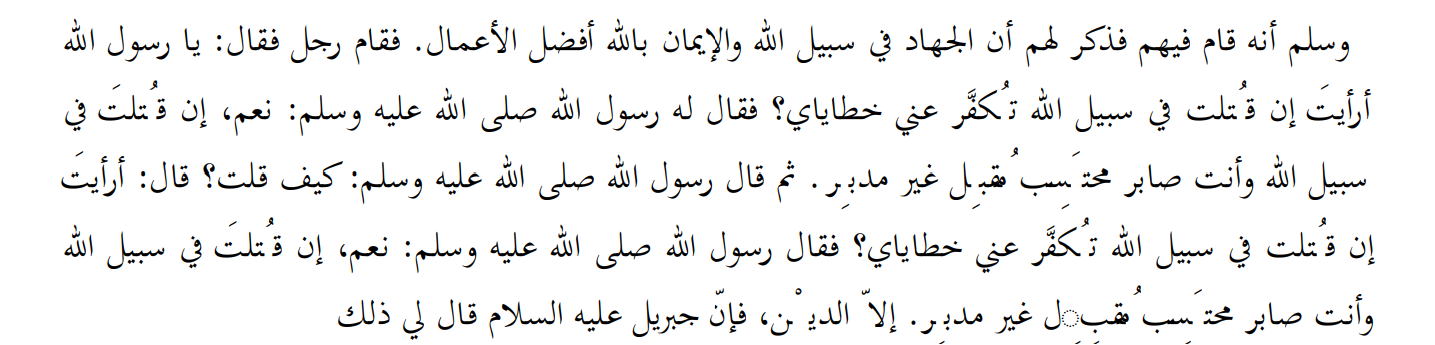
هغه د دوی په منځ کې ودریده او دوی ته یې یادونه وکړه چې د الله په لاره کې جهاد او د الله په اړه قاطع ایمان غوره عملونه دي. نو یو سړی ودرېد او وې ویل: اې د الله رسوله، ته وینې که زه د الله په لاره کې وجنګیږم نو ټول تېروتنې به می وبښل شي؟ د الله رسول ﷺ ورته وویل: هو، که ته د الله په لاره کې وجنګېږې او صبر کوونکی، امید لرونکی، پرمخ تلونکی او شاته نه تلونکی یې. بیا د الله رسول ﷺ وفرمایل: ته څه وویل؟ هغه وویل: ته وینې که زه د الله په لاره کې وجنګیږم نو ټول ګناهونه به می وبښل شي؟ د الله رسول ﷺ ورته وویل: هو، که ته صبر کوونکی، امید لرونکی، پرمخ تلونکی او شاته نه تلونکی یې، پرته له پوروالي څخه، لکه څنګه چې جبرئیل (AS) ما ته دا وویل.
“That he stood among them and reminded them that jihad in the way of Allah and decisive belief in Allah is the best deeds. So a man stood up and said: O Messenger of Allah, do you see that if I fought in the way of Allah that all my errors would be forgiven? The Messenger of Allah (saw) said to him: Yes, if you fought in the way of Allah and you are patient, hopeful, advancing and not retreating. Then the Messenger of Allah (saw) said: What did you say? He said: Do you see that if I fought in the way of Allah that all my sins would be forgiven? The Messenger of Allah (saw) said: Yes, if you are patient, hopeful, advancing and not retreating except for debts as Jibril (AS) told me that.”
دا پوهه داده چې هغه جنګیالي چې له میدانه ډډه کوي، نه د هغه ګناهونه بخښل کېږي او نه هغه د شهید اجر لري. څه د هغه چا په اړه چې د شهرت لپاره جنګېږي، رسول الله ﷺ څرګنده کړې چې هغه به سزا وګوري، او سره له دې هغه ته شهید ویل شوي دي. مسلم د سلیمان بن یسار څخه روایت کړی چې ویلي یې دي: خلک د ابوهریرې (رض) له شا وېښتل، او نتیل چې د شام له خلکو څخه و، هغه ته وویل: ای شیخه! راته هغه حدیث بیان کړه چې ته یې له رسول الله ﷺ څخه اورېدلی یی. هغه وویل: هو، ما د رسول الله ﷺ څخه اورېدلي دي چې وایي:
The understanding of this is that the retreating fighter’s sins are not forgiven nor does he have the reward of the shaheed. As for the one fighting for fame, the Messenger (saw) clarified that he would be punished and (yet) called him shaheed. Muslim narrated from Sulayman bin Yasar who said: People dispersed about Abu Hurairah (ra) and Natil who was from the people of Sham said to him: O Sheikh related to us a hadith you heard from the Messenger of Allah (saw). He said: Yes, I heard the Messenger of Allah (saw) saying:
هغه په حقیقت کې د قیامت په ورځ د حساب لومړی کس دی چې شهید شوی وي۔ هغه ته به راولی شي او الله ورته خپلې نعمتونه بیان کړي، هغه به یې اقرار وکړي۔ الله به فرمایي: دې نعمتونو سره دې څه وکړل؟ هغه به ووايي: ستا لپاره مې جهاد وکړ تر دې چې شهید شوم۔ الله به فرمایي: ته دروغ وايې، بلکې ته جنګ دې دې لپاره وکړ چې ووايي شي "هغه زړه ور دی" او دا ووییل شو۔ بیا به د هغه په اړه حکم وشي او هغه به په مخ ښکته کش شي تر دې چې اور ته وغورځول شي۔
“Verily the first person(s) to be judged on the Day of Judgement is a man who was killed as a shaheed. He is brought to Him (Allah) and He informs him of the bounties (of Allah) and he acknowledges them. He (swt) says: What did you do with them? He answers: I fought for you until I was killed as a shaheed. He says: You lied. Rather you fought so that it be said ‘(he is) brave’ and it has been said. Then He commands regarding him and he is dragged upon his face until he is thrown into the Fire”
تر حدیث پای پورې. دا په دې دلالت کوي چې هغه څوک چې د شهرت لپاره وژل شوی وي، که څه هم په دې دنیا کې د شهید احکام ورسره معامله کیږي، په قیامت کې به د شهید ثواب ونه مومي بلکې عذاب ته به مخ شي.
Till the end of the hadith. This indicates that the one killed for fame, even if he takes the rules of the shaheed in this world, will not gain the reward of the shaheed on the Day of Judgement but would be punished.
جہاں تک دنیا و آخرت کے شہید کا تعلق ہے، وہ ہے جو کافروں سے جہاد کرتا ہے تاکہ اللہ کا کلمہ بلند ہو، اور مسلمانوں اور کافروں کے درمیان میدانِ جنگ میں قتل ہو جاتا ہے، خواہ جنگ دارالحرب میں ہو یا دارالاسلام میں۔ اللہ سبحانہ و تعالیٰ فرماتا ہے:
As for the shaheed of the world and the Akhirah, he is the one who fights the disbelievers to raise the word of Allah and was killed in the battle (field) between Muslims and disbelievers, whether the fighting was in the land of war or the Islamic land. Allah (swt) said:
«زما مه گڼئ هغو کسانو ته چې د الله په لاره کې وژل شوي دي، مړه؛ بلکې دوی ژوندي دي او په خپل رب کې روزي ترلاسه کوي»۔ [TMQ 3:169]
“Do not think that those killed in the way of Allah are dead. Rather they are alive and receiving sustenance before their Lord” [TMQ 3:169].
دا شهید هغه دی چې د هغه په حقونو کې د شریعت احکام راغلي دي. هغه د کافرانو سره په جنګ کې وژل شوی کس ته ځانګړی شوی دی؛ همدارنګه هغه کس چې په میدان جنګ کې ټپي شو او بیا د میدان جنګ کې ترلاسه شوي ټپ له امله مړ شو، هغه هم د میدان جنګ کې وژل شوي کس په څیر ګڼل کیږي. په دې دواړو پرته نور کسان شهید نه ګڼل کیږي. په همدې توګه هغه څوک چې د باغیانو (بغاة) سره په جنګ کې وژل شي شهید نه ګڼل کیږي، او نه هغه کس چې په میدان جنګ کې ټپي شو، بیا له ټپ څخه روغ شو او بیا د هغې له امله مړ شو. هغه شهید چې ځانګړي احکام لري، او هغه چې الله تعالی ژوندی بللی دی، د هغه کس سره ځانګړی دی چې د کافرانو سره په میدان جنګ کې د الله تعالی د کلمې د لوړولو لپاره وژل شوی وي، او هغه کس چې په میدان جنګ کې ټپي شوی وي او بیا د همدې ټپ له امله مړ شوی وي.
This shaheed is the one upon whose rights came in the Shari’ah rules. He is specified as the one killed in the war with disbelievers; similarly the one who was wounded in the battlefield then died of the wound he received in the battlefield is also considered like the one killed in the battlefield. As for other than these, they are not considered shaheed. Accordingly the one killed in fighting with rebels (bughat) is not considered shaheed nor the one wounded in the battlefield then recovered from the wound then died because of it. The shaheed who has specific rules, and the one about whom Allah stated that he is alive, is specified to the one killed in the battlefield with the disbelievers to raise the word of Allah and the one injured in the battlefield then died due to this wound.
د دې ذکر شوي شهید حکم دا دی چې هغه نه غسل ورکول کیږي او نه ورته کفن اچول کیږي، بلکې په خپلو وینو او جامو کې خاورې ته سپارل کیږي، ځکه شهید د قیامت په ورځ د خپلې وینې د بوی سره راپورته کیږي، داسې چې د خوشبویه مشک په شان خوشبوی لري. اما د شهید غسل نه ورکول، دا د هغه حدیث له مخې دی چې امام البخاري د جابر رضي الله عنه څخه روایت کړی، چې هغه وویل:
The rule of this mentioned shaheed is that he is neither washed nor shrouded in burial shrouds; rather he is buried in his blood and clothes because the shaheed is resurrected on the Day of Judgement with the smell of his blood like the sweetest-smelling musk. As for not washing the shaheed, this is due to what Al-Bukhari narrated from Jabir who said:
رسول الله ﷺ د احد په جګړه کې شهید شوو دوو سړو ته په یوه کفن کې ځای ورکاوه، بیا به یې فرمایل: دا دواړه څوک د قرآن ډیر علم لري؟ کله چې یو یې ورته اشاره وشوه، نو هغه یې په قبر (لحد) کې مخکې کړ او ویې فرمایل: زه پر دوی شاهد یم. هغه یې د دوی له وینو سره دفن کول امر کړل او نه یې ورباندې جنازه وکړه او نه یې غسل ورکړ.
“The Messenger of Allah (saw) would collect two men of those killed in Uhud in one cloth, and then he would say: Which one of them knew more of the Qur’an? If one of the two was indicated to him, he brought him forward in the grave-niche (lihd) and said: I am a witness over these. He commanded their burial with their blood and did not pray over them nor wash them.”
او احمد روایت کرے چې پیغمبر ﷺ د احد په شهیدانو کې وفرمایل:
And Ahmad (narrated) that the Prophet (saw) said about those killed in Uhud:
"دې ته مه ورېږدئ، ځکه هر زخم یا (هر څاڅکی) وینه به د قیامت په ورځ مُشک خوشبو کوي،" او هغه (پیغمبر ﷺ) د دوی لپاره لمونځ ونه کړ.
“Do not wash them because each wound or (each drop of) blood will diffuse musk on the Day of Judgement and he did not pray over them.”
روایت شوی چې پیغمبر ﷺ د احد په شهیدانو په اړه وفرمایل:
It is narrated that the Prophet (saw) said about those killed in Uhud:
هغه یې په خپلو وینو کې پټ کړئ او نه یې مینځئ، ځکه په الله کې د جهاد په لاره کې هیڅ زخمی نه شته چې هغه به د قیامت په ورځ داسې راځي چې د ستنې رګ یې وینه بهوي؛ رنګ یې د وینې رنګ وي او بوی یې د مشک بوی وي.
“Cover them in their blood and do not wash them as there is no wound wounded in the way of Allah save that it will come on the Day of Judgement with its jugular vein flowing blood whose colour is the colour of blood and the odour is the odour of musk.”
له انس څخه روایت شوی دی
It has been narrated from Anas
هغه چې نبي ﷺ په هغو کسانو باندې جنازه ونه لوسته چې په احد کې ووژل شوي وو او نه يې هغوي باندې دعا وکړه.
“That the Prophet (saw) did not pray over those killed in Uhud or pray over them.”
ځکه چې هغه په أحد کې وژل شوي کسان هم نه وو مينځلي، هم دغسې د بدر شهيدان هم ونه مينځل، همدارنګه د خندق او خيبر شهيدان هم ونه مينځل. نو دا خرګنده شوه چې شهيد نه مينځل کيږي. همدارنګه شهيد هم داسې کفن نه کيږي لکه څنګه چې مړی کفن کيږي، بلکه هغه په هماغو جامو کې کفن کيږي چې ده ته يې لري، د رسول الله ﷺ دې ارشاد له مخې چې په أحد کې وژل شويو ته يې فرمايلي وو:
Just as he did not wash those killed in Uhud, he did not wash the shuhadaa of Badr; similarly he did not wash the shuhadaa of Khandaq and Khayber. So it became clear that the shaheed is not washed. Similarly the shaheed is not enshrouded as the dead person is shrouded; rather he is shrouded in the clothes that he has due to the Messenger of Allah (saw)’s statement about those killed in Uhud:
"هغوی یې په خپلو زخمونو او وینو کې کفن کړئ" (روایت یې کړی دی احمد)
“Cover them in their wounds and blood” (narrated by Ahmad)
او همچنان د ابن عباس (رضی الله عنهما) له روایت له امله
And also due to what ibn Abbas (ra) narrated
هغه چې رسول الله ﷺ د احد په شهیدانو کې امر وکړ چې له هغوی څخه اوسپنه او پوستکي لرې کړای شي او دوی د خپلو وینو او جامو سره ښخ کړای شي۔ (ابو داؤد روایت کړی دی)
“That the Messenger of Allah (saw) commanded about those killed in Uhud that the iron and skins be removed from them and that they be buried with their blood and clothes” (narrated by Abu Dawud).
د شهید جنازې ته لمونځ کول جائز دي او نه کول هم جائز دي. د دې لپاره چې د دوی جنازې ته لمونځ جائز دی، دا د هغو روایتونو له امله دی چې راغلي دي، چې رسول الله ﷺ د احد په شهیدانو د خاورو تر ورکولو وروسته لمونځ وکړ، او د حمزې او د جګړې په ډګر کې وژل شوي یو سړي لپاره یې لمونځ وکړ. په صحیح البخاري کې د عقبه بن عامر څخه روایت دی
As for the prayer over the shaheed, it is allowed to pray over them and it is allowed not to pray over them. As for the permissibility of prayer over them, this is due to the narrations which came that the Messenger (saw) prayed over those killed in Uhud after their burial and prayed over Hamza and a man killed in the battlefield. In Al-Bukhari it is narrated from Uqbah bin ‘Amir
هغه ﷺ د اُحُد په شهیدانو باندې اته کاله وروسته لمونځ وکړ، د مړو باندې لمونځ د ژوندیو او مړو لپاره د خداحافظۍ په څیر و.
“He (saw) prayed over those killed in Uhud after eight years, the prayer over the dead was like a farewell to those alive and those dead.”
او د ابو داود څخه د مالک الغفاري څخه
And from Abu Dawud from Malik al-Ghiffari
هغه ﷺ د احد په شهیدانو د لمانځه جنازه د لس لس کسانو په ډلو کې وکړه، او په هر لس کې حمزه (رضي الله عنه) وو، تر دې چې هغه ﷺ د هغه (حمزه) په اړه اویا ځله جنازه وکړه.
“He (saw) prayed over those killed in Uhud in groups of ten with Hamza in each ten until he prayed seventy times over him.”
ابوداود د ابوسالم څخه روایت کوي، هغه د یوه سړي څخه چې د پیغمبر ﷺ د صحابهوو څخه و، روایت کوي چې هغه وویل:
Abu Dawud narrated from Abu Salim from a man of the Prophet (saw)’s Sahabah who said:

د جهینه له قبیلې سره موږ په ناڅاپه برید وکړ. د مسلمانانو یو سړي د دوی یو سړي ته لاس واچاوه چې هغه وژني، خو هغه ځای ته ونه رسیده او ځان یې ووهلو. د الله رسول ﷺ وفرمایل: "ستاسو ورور دی، ای د مسلمانانو ټولنه!" نو خلک ورته ګړندي شول او هغه یې مړ وموند. د الله رسول ﷺ هغه په خپلو جامو او وینو کې وپوښاوه، پر هغه لمونځ وکړ او ښخ یې کړ. خلکو وویل: ایا هغه شهید دی؟ هغه وفرمایل: "هو، او زه د هغه شاهد یم."
“We attacked by surprise a tribe from Juhainah. A man of the Muslims sought a man of them to strike him, but he missed and struck himself. The Messenger of Allah (saw) said: Your brother, O community of Muslims so the people hastened and found him dead. The Messenger of Allah (saw) covered him in his clothes and blood, prayed over him and buried him. They said: Is he a shaheed? He said: Yes, and I am a witness for him.”
په جهينه قبيلې باندې موږ په ناڅاپه حمله وکړه. د مسلمانانو يو سړی د دوی يو سړی وموند چې ووهي، خو هغه خطا شو او پخپله ځان ته ووهل شو. د الله رسول ﷺ وفرمايل: «ستا ورور، ای د مسلمانانو ټولنې!» نو خلک ژر راغلل او هغه يې مړ وموند. د الله رسول ﷺ هغه په خپلو جامو او وينو کې وپېچه، په هغه باندې لمونځ وکړ او ښخ يې کړ. وې ويل: ايا هغه شهيد دی؟ هغه وفرمايل: هو، او زه د هغه شاهد يم.
“We attacked by surprise a tribe from Juhainah. A man of the Muslims sought a man of them to strike him, but he missed and struck himself. The Messenger of Allah (saw) said: Your brother, O community of Muslims so the people hastened and found him dead. The Messenger of Allah (saw) covered him in his clothes and blood, prayed over him and buried him. They said: Is he a shaheed? He said: Yes, and I am a witness for him.”
هغه چې نبي ﷺ د احد په شهیدانو جنازه ونه کړه او نه یې هغوی غسل کړل.
“That the Prophet (saw) did not pray over those killed in Uhud or wash them.”
او احمد د انس څخه روایت کړی دی
And Ahmad narrated from Anas
د احد شهيدان نه غسل ورکړل شوي، بلکه په خپلو جامو کې دفن کړل شول او د دوی جنازه ونه لوستل شوه۔
“The shuhadaa of Uhud were not washed. They were buried in their clothes and not prayed over.”
البخاری د جابر بن عبدالله (رض) څخه روایت کوي چې هغه وویل:
Al-Bukhari narrated from Jabir bin Abdullah (ra) who said:

نبي ﷺ به احد د جګړې د شهیدانو څخه دوه کسان په یوه قبر کې یو ځای کول، بیا به یې ویل: له دې دواړو څوک د قرآن ډیر یاد لرونکی دی؟ کله چې یو یې ورته اشاره کېده، نو هغه به یې په قبر کې مخکې کړ او ویې ویل: زه د قیامت په ورځ پر دوی شاهد یم. هغه د دوی د ټپونو سره د وینو په حالت کې د دفن کولو امر وکړ، او دوی ته یې غسل ورنه کړ او نه یې پرې جنازه وکړه۔
“The Prophet (saw) would combine between two men of those killed in Uhud then say: Which one of them memorized more of the Qur’an? When one of the two was indicated to him, he would bring him forward in the grave-niche and he said: I am the witness over these on the Day of Judgement, commanded their burial in their blood and did not wash them or pray over them.”
دا احادیث ثابت دي او په دې ښکاره دلالت لري چې شهید ته جنازه نه لوستل کیږي. الشافعي د ابن عباس رضي الله عنهما د حدیث په اړه ځواب ورکړ، او د هغه معنا چې د احد په شهیدانو د دفن څخه مخکې د جنازې لوستلو په اړه راغلې ده، ویلي یې دي: "دا خبره داسې راغلې لکه دا چې یوازې ځینې کسان مراد دي، په داسې حال کې چې د تواتر سره ثابته ده چې رسول الله ﷺ د احد شهیدانو جنازه نه ده لوستلې." دا ټول احادیث، ځکه چې هغه احادیث چې دا روایت کوي چې رسول الله ﷺ د شهیدانو جنازه لوستې ده او هغه احادیث چې دا روایت کوي چې نه ده لوستې، دواړه ثابت دي. د دوی د صحت له مخې د هیڅ یو رد کولو لاره نشته، ځکه دا دواړه د روایت او معنا په لحاظ د دلیلونو څخه دي. یو د بل پر مخ د ترجیح لاره هم نشته، ځکه دا بعیده ده چې صحابه کرام د احد د شهیدانو جنازه هیره کړي وي، لکه څنګه چې دا هم بعیده ده چې دوی د مړو د جنازې لوستلو په اړه د رسول الله ﷺ څخه ثابت شوي عمل په خلاف یوه مسئله پرې ږدي. نو یو د بل پر مخ څنګه ترجیح ورکړل شي؟ او داسې هم نه شو ویلای چې هغه احادیث چې د شهید د جنازې لوستل ثابتوي، د "صلاة" څخه مراد دعا ده، تر دې چې د هغه ویینا "صلى" د دعا کولو معنا ورکړي. دا خبره نه شي کیدای، ځکه شرعي حقیقتونه له لغوي حقیقتونو څخه مقدم دي، تر هغه چې کومه قرینه موجوده وي. دلته قرینه نشته، نو په ضرورت سره د "صلاة" معنا د مړي د شرعي جنازې لمونځ ده. داسې هم نه شو ویلای چې د مړو د جنازې لوستلو احادیث د هغه احادیثو ناسخ دي چې د جنازې نه لوستلو ته اشاره کوي، ځکه له دې ټولو احادیثو څخه د احد شهیدانو په اړه هغه روایت چې د اتو کاله وروسته جنازه لوستل ثابتوي، د ابن حبان په روایت کې راغلی دی، او دا د ټولو نورو احادیثو څخه وروسته دی.
These ahadith are established and of explicit indication that the shaheed is not prayed over. Ash Shafi’ responded to the hadith of ibn Abbas (ra) and what came of its meaning regarding praying over those killed in Uhud before their burial “that the information came as if it were specific ones in the face of mutawatirah that the Messenger did not pray over those killed in Uhud.” All these ahadith are established whether those narrated that the Messenger (saw) prayed over the shuhadaa or those narrated that he didn’t pray over them. There is no way to reject any of them due to their authenticity, and because they are of those used as proofs in narration and meaning. There is no way to outweigh one over the other as it is remote that the Sahabah forgot to pray over those shuhadaa, just as it is also remote for them to leave an issue which is opposite of what is established about him (saw) of praying over the dead. So how can one be outweighed over the other? Nor should one say that the prayer in the ahadith which established the prayer over the shaheed is the du’a so that his saying “prayed” means made du’a. One cannot say this since the Shari’ah realities precede the linguistic (realities) as long as there is no connotation. Here there is no connotation so it is inevitable that the meaning of prayer is the Shari’ah prayer over the dead. Nor should one say that the ahadith of praying over the dead abrogates the ahadith of not praying over them since one of them, which is the prayer over those killed in Uhud after eight years is prayed to later than all the ahadith since it came in the narration of ibn Hibban
بیا هغه خپل کور ته ننوت او تر هغه وخته پورې یې کور پریږدی نه و، تر څو چې الله هغه ته مرګ ورکړ.
“Then he entered his house and did not go out until Allah caused him to die.”
نباید وویل شي چې د حدیث وروستی والی یوازې د منسوخیت د ښودلو لپاره کافی نه دی؛ بلکه باید بل داسې مفهوم وي چې له هغې منسوخیت پوهیدل کیږي. دلته هیڅ داسې مفهوم نشته، نو په دې کې هیڅ منسوخیت نشته. نو ټولې روایات منل شوي پاتې کیږي او دا معنا ورکوي چې د شهید جنازه نه لوستل جایز دي. دا هم روایت نه دی شوی چې رسول الله ﷺ د بدر، خندق یا خیبر په شهیدانو جنازه لوستې وي. دا معنا هم ورکوي چې که څوک د شهید جنازه ولولي نو په دې کې هیڅ حرج نشته او خلک د جنازې له لوستلو نه منع نه کیږي. شهید ته شهید ځکه ویل کیږي چې د قرآن کریم صریح نص له مخې جنت د هغه لپاره شاهد کیږي. الله ﷺ فرمايي:
One should not say that because the lateness of the hadith alone is not sufficient indication of abrogation; rather there must be another connotation from which abrogation is understood. Here no connotation is present so there is no abrogation in it. So all the narrations remain recognized and are taken to mean that not praying over the shaheed is allowed. It is not narrated that the Messenger (saw) prayed over those killed in Badr, Khandaq or Khayber. They are also taken to mean that if one prays over the shaheed there is nothing (wrong) in that and people are not prevented from praying over them. The shaheed is named shaheed (witness) as Paradise is witnessed for him by the explicit text of the Qur’an. Allah (swt) said:
بې شکه الله له مؤمنانو نه د جنت په بدل کې د دوی جانونه او مالونه واخیستل. دوی د الله په لاره کې جنګ کوي، وژني او وژل کیږي. [TMQ 9:111]
“Verily Allah purchased from the believers there souls and wealth in return for paradise. They fight in the way of Allah, killing and being killed” [TMQ 9:111].
مسلم د جابر څخه روایت کوي چې هغه وویل:
Muslim narrated from Jabir who said:
یو سړي وویل: ای د الله رسول! که زه ووژل شم، زه چېرته یم؟ هغه وفرمایل: په جنت کې. نو هغه هغه کجورې چې په لاس کې یې وې وغورځولې او جنګ یې وکړ تر دې چې ووژل شو. او د سُوید په حدیث کې دي: یو سړي د احد په ورځ نبي ﷺ ته وویل.
“A man said: Where am I, O Messenger of Allah, if I am killed? He said: In Paradise. So he threw the dates that were in his hands and fought until he was killed and in the hadith of Suwaid. A man said to the Prophet (saw) on the day of Uhud.”
د انس بن مالک (رض) څخه روایت دی چې د الله رسول ﷺ خپلو صحابه کرامو سره وروزل تر دې چې د بدر ځای ته د مشرکانو څخه مخکې ورسېدل. مشرکان راغلل، نو د الله رسول ﷺ وفرمایل:
It is narrated from Anas bin Malik (ra) that the Messenger of Allah (saw) went with his Sahabah until they preceded the polytheists to Badr. The polytheists came and the Messenger of Allah (saw) said:
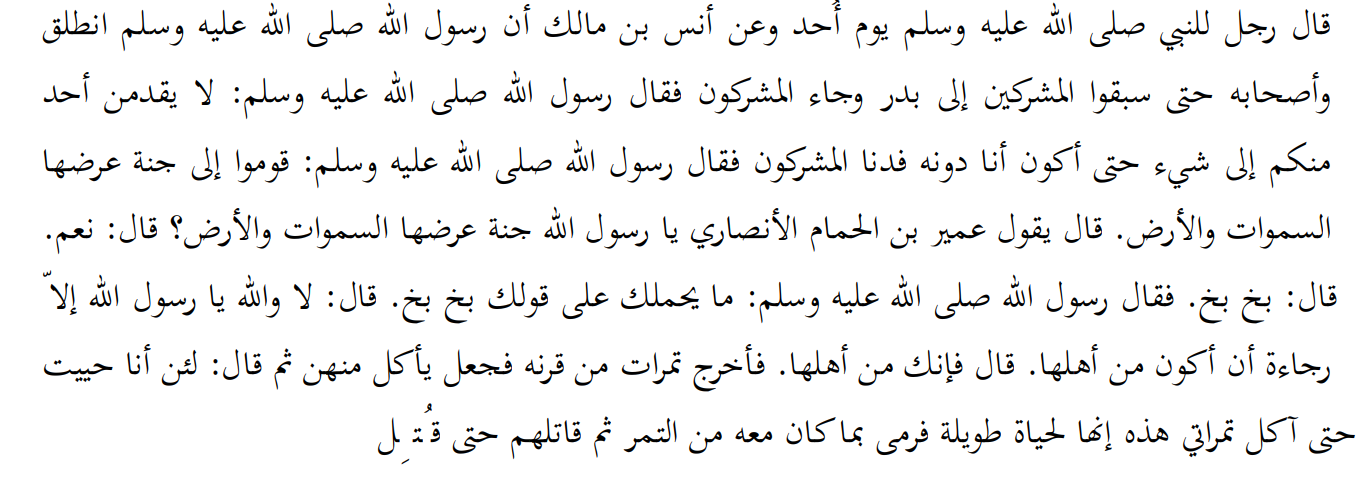
ان څوک هم زما له اجازې پرته د هیڅ شي په لور مه ځئ۔ مشرکان نږدې راغلل نو د الله رسول ﷺ وفرمایل: هغه جنت ته ولاړ شئ چې پراخوالی یې د آسمانونو او ځمکې په اندازه دی۔ هغه وویل: د انصارو عمیر بن الحمام وویل: ای د الله رسوله! هغه جنت چې پراخوالی یې د آسمانونو او ځمکې په اندازه دی؟ هغه وفرمایل: (بخ! بخ!)۔ نو د الله رسول ﷺ وپوښتل: ته ولې وایې (بخ! بخ!)؟ هغه وویل: نه، د الله په قسم، مګر دا هیله چې زه د هغه د خلکو څخه شم۔ هغه وفرمایل: بیشکه ته د هغه د خلکو څخه یې۔ هغه د خپل ترکش څخه خرما وویستلې او خوړل یې پیل کړل۔ بیا یې وویل: که زه تر دې وخته ژوندی پاتې شم چې دا خرمې وخورم، نو دا به د اوږدې ژوند وي! بیا یې هغه خرمې چې په لاس کې یې وې، پرېښودې او جنګ ته ولاړ، تر دې چې شهید شو۔ (روایت یې مسلم کړی دی)۔
“Let none of you precede to anything without my being. The polytheists came close so the Messenger of Allah (saw) said: Stand forth to a Paradise whose breadth is that of the heavens and the earth. He said: ‘Umayr bin al-Hammam al-Ansari said: O Messenger of Allah, a Paradise whose breadth is that of the heavens of the earth? He said: (Bakh! Bakh!). So the Messenger of Allah (saw) said: What carried you to your statement, (Bakh! Bakh!). He said: Nothing, by Allah, except the hope that I be one of its people. He said: Verily you are one of its people. He removed dates from his (qaran) and began eating from them. Then he said: If I were to live until I ate these dates, it would then be a long life! He threw the dates that had then fought them until he was killed” (Narrated by Muslim).
دی، الله (سبحانه و تعالیٰ) او د الله رسول ﷺ د شهید لپاره جنت گواهي ورکړې ده. او د شهید ژوند د قرآن کریم په صریح نص سره ثابت دی. الله (سبحانه و تعالیٰ) فرمایي:
So Allah (swt) and the Messenger of Allah (saw) have witnessed the Paradise for the shaheed. As for the life of the shaheed, it is established by the explicit text of the Qur’an. Allah (swt) said:
{هځهئ ټهئپهښالهئ لـهيهئتهي لـهئټ هئيان هئټهئ لهجالةئ انهئتهئ بيهالهئ ابهئ بهئ نهئ ربهئ هئ ودانهئتهئ} Ahead of the translation: the Qur'an verse is set between curly brackets as in the original. Here is the Pashto translation of the passage: د الله په لاره کې وژل شوي کسان مه ګڼئ چې مړه دي، بلکې دوی ژوندي دي او د خپل رب په نږدې روزي ورکول کیږي. دوی د هغه څه څخه خوشحاله دي چې الله له خپل فضل څخه ورکړي دي، او هغو کسانو ته چې تر دوی وروسته دي او لا دوی سره نه دي یوځای شوي، زیری ورکوي چې هغوی لپاره نه ویره ده او نه خفګان. دوی د الله له نعمت او فضل څخه زیری لري، او بیشکه الله د مؤمنانو اجر ضایع نه کوي. [TMQ 3:169]
“Do not think that those killed in the way of Allah are dead, rather (they are) alive with sustenance before their Lord. Pleased with what Allah gave them of His favours and with good tidings for those behind them who have not met them, that there is no fear for them nor do they grieve. They have glad tidings of blessings from Allah and His favour, and verily Allah does not cause the reward of the believers to be lost” [TMQ 3:169].
دا د شهیدانو ژوند دی چې ناښکاره دی، هغه ژوند چې موږ یې نه پوهیږو او نه یې ادراک کولی شو لکه څنګه چې دا د ابدي کور کې دی. که څه هم موږ دا پټ ژوند نه پوهیږو او نه یې ادراک کولی شو، بیا هم موږ د هغه د شتون باور لرو، خو د هغه حقیقت نه پوهیږو. د هغه د شتون باور زموږ لپاره یو حتمي خبره ده، ځکه چې دا د یو قطعي قرآني متن په واسطه ثابت دی. الله (ج) فرمایلي دي:
This life for the shuhadaa is unseen which we do not understand nor perceive as it is in the eternal abode. Although we do not understand this hidden life nor perceive it, nevertheless we believe in its existence but do not understand its reality. Our conviction in its existence is an inevitable matter as it is established by a definite Qur’anic text. Allah (swt) said:
د الله په لاره کې وژل شوو ته مه وایاست "مړي دي"... بلکې دوی ژوندي دي، مګر تاسو نه پوهیږئ {کوم ۲:۱۵۴}.
“Do not say of those killed in the way of Allah (are) ‘dead’... Rather they are alive but you do not know” [TMQ 2:154].
د شهیدانو ژوند له هغو غیبی امورو څخه دی چې پر ایمان راوړل فرض دي. او د شهیدانو فضیلت یو لوی فضیلت دی چې بل ورسره برابر نه دی، او پیغمبر ﷺ د ډیرو احادیثو په ذریعه دا وضاحت کړی دی. امام بخاري له قتادة څخه روایت کوي چې ویې ویل: ما له انس بن مالک (رض) څخه واورېدل، هغه د پیغمبر ﷺ څخه روایت کاوه چې ویې فرمایل:
The life of the shuhadaa is from the unseen (matters) in which iman is obliged. As for the virtue of the shuhadaa, it is a great virtue without an equivalent and he (saw) clarified it in numerous ahadith. Al-Bukhari narrated from Qatadah who said: I heard Anas bin Malik (ra) from the Prophet (saw) who said:
هیڅ څوک چې جنت ته داخل شي هغه به دا نه غواړي چې دنیا ته بیرته راستانه شي او د دنیا ټول شیان ترلاسه کړي، پرته له شهیدانو څخه چې دا به غوښتل چې دنیا ته بیرته راستانه شي ترڅو لس ځله ووژل شي، د هغه عزت (کرامت) له امله چې هغه ويني.
“No one who enters Paradise would like to return to the world to obtain all that is upon the world except the shuhadaa who would wish to return to the world to be killed ten times due to what he sees of the honour (karamah).”
او په البخاري کې
And in Al-Bukhari:
المغیرہ بن شعبہ روایت کرتے ہیں کہ ہمارے نبی ﷺ نے ہمیں ہمارے رب کا پیغام بتایا کہ جو شخص ہم میں سے قتل کیا جائے وہ جنت میں جائے گا۔ پس عمر نے نبی ﷺ سے کہا: کیا ہمارے مقتول جنت میں نہیں اور ان کے مقتول دوزخ میں؟ آپ ﷺ نے فرمایا: ہاں۔
“Al-Mughira bin Shu’bah said that our Prophet (saw) informed us of the message of our Lord that whoever is killed among us goes to Paradise and Umar said to the Prophet (saw): ‘Are not our dead in Paradise and their dead in the Fire. He said: Yes.”
او له عبدالله بن عمرو بن العاص نه روایت دی چې رسول الله ﷺ فرمایلي:
And from Abdullah bin ‘Amru bin al-‘Aas that the Messenger of Allah (saw) said:
"د شهید ټول ګناهونه بخښل کیږي، پرته له پور څخه" (روایت شوی د مسلم له خوا).
“All the shaheed’s sins are forgiven except the debt” (narrated by Muslim).
"د شهید ټول ګناهونه بخښل کیږي، پرته له پور څخه" (روایت شوی د مسلم له خوا).
“All the shaheed’s sins are forgiven except the debt” (narrated by Muslim).
هغه څوک چې د اللہ په لاره کې وژل شي، د هغه ټول ګناهونه بخښل کېږي، پرته له پور څخه.
“The one killed in the way of Allah has all his sins wiped out except the debt.”
او البخاری او مسلم د ابوهریره (رض) څخه روایت کوي، هغه د نبي ﷺ څخه روایت کوي چې فرمایې:
And Al-Bukhari and Muslim narrated from Abu Hurairah (ra) from the Prophet (saw) who said:
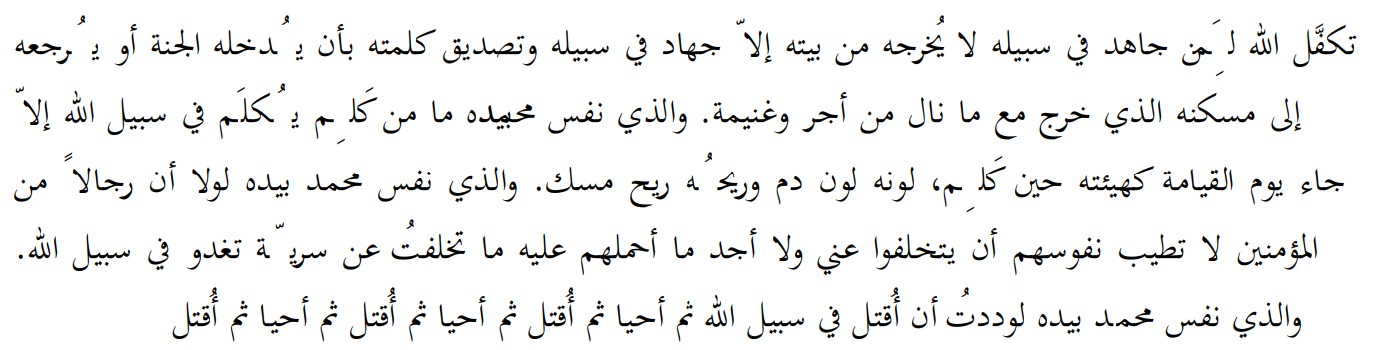
الله تعالیٰ د هغه چا امنیت ضمانت کوي چې د هغه په لاره کې جهاد کوي، او له خپل کور نه بل هیڅ سبب نه وځي پرته له دې چې د الله په لاره کې جهاد وکړي او د هغه خبرو باندې ایمان ولري، چې هغه به ورته جنت ته داخل کړي یا به یې د هغه ځای ته بېرته راولي چې له هغه ځایه وتلی و، د هغه اجر او غنیمت سره چې ترلاسه کړي دي. هغه ذات قسم چې د هغه په لاس کې د محمد ﷺ ځان دی، هر هغه څوک چې د الله په لاره کې زخمی شي، د قیامت په ورځ به داسې نه راځي مګر په هغه حالت کې چې کله زخمي شوی و، د هغه رنګ د وینې رنګ وي او د هغه بوی د مشکو بوی وي۔ هغه ذات قسم چې د هغه په لاس کې د محمد ﷺ روح دی، که دا نه وای چې د مؤمنانو کې داسې سړي دي چې د هغوی روحونه دا نه خوښوي چې زما له تللو وروسته پاتې شي او زه هم هغوی ته د سپرلي وسیله نه پیدا کوم، نو زه به هیڅ هغه لښکر نه پریږدم چې سهار د الله په لاره کې وځي۔ هغه ذات قسم چې د هغه په لاس کې د محمد ﷺ روح دی، زه غواړم چې د الله په لاره کې مړ شم، بیا ژوندی شم، بیا وژل شم، بیا ژوندی شم، بیا وژل شم، بیا ژوندی شم او بیا وژل شم۔
“Allah guarantees security for the one who dies jihad in His way, not leaving his house for any other reason except jihad in His way and believing in His words, that He will enter him into Paradise or return him to his abode from which he left together with what he achieved of reward or booty. By the One in whose hand lies the should of Muhammad, whoever is wounded in the way of Allah will not come on the Day of Judgement except in his form when he was wounded, his colour the colour of blood and his odour the odour of musk. By the one in whose hand lies the soul of Muhammad, were it not that there were men among the believers whose souls are not pleased to stay behind me (when I go) nor do I find that could carry them upon, I would not stay behind any expedition that goes out in the way of Allah in the morning. By the One in whose hand lies the soul of Muhammad, I would love to die in the way of Allah then I am resurrected then killed, then resurrected then killed, then resurrected then killed.”