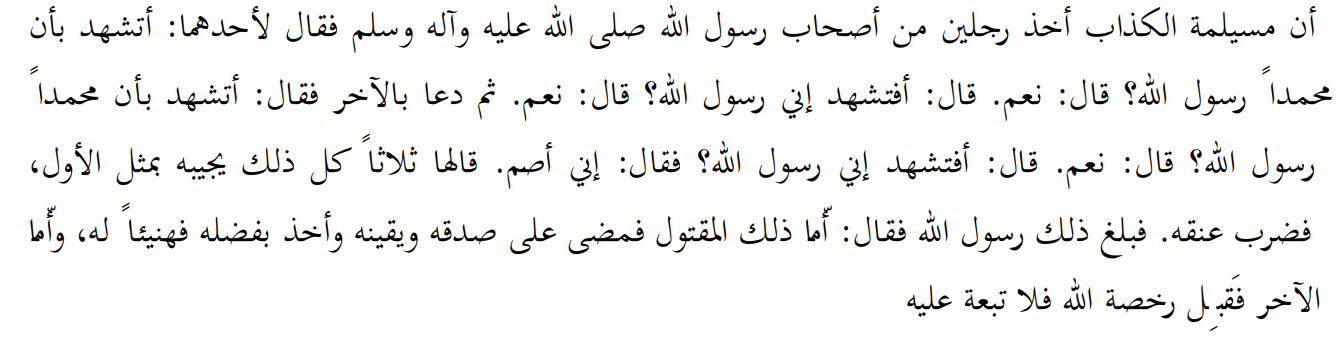
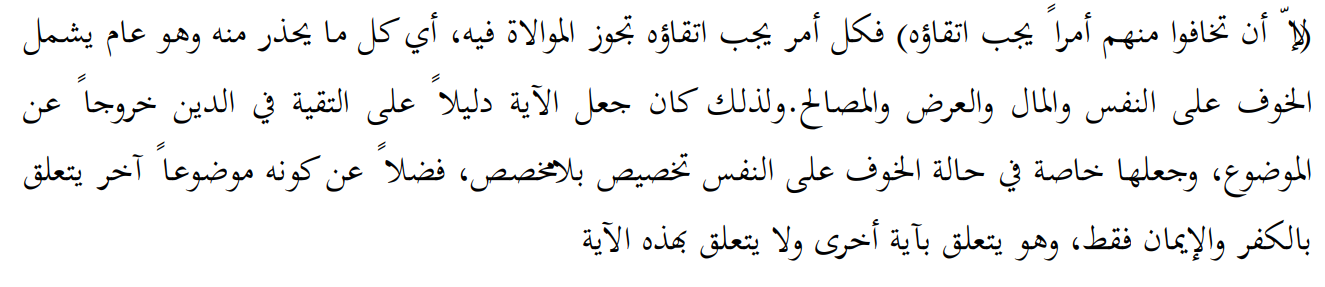
دا خبرہ د مؤمنانو د کافرانو سره د دوستۍ کولو په اړه ده، او ټوله آیت هم د دې موضوع تفصیل بیانوي۔ الله (سبحانه و تعالی) مؤمنانو ته د کافرانو د دوست نیولو منع کړې ده، او دې منع سره یې دا قطعي ټاکنه نښلولې ده چې څوک داسې کوي او کافران دوستان نیسي، نو الله له هغه څخه بری دی۔ بیا یې له دې قطعي منع څخه یوه حالت مستثنی کړی دی، هغه دا چې مؤمن له کافر څخه د زیان ویره ولري، نو په داسې حالت کې د دې لپاره چې دا زیان مخنیوی شي، د کافرانو سره دوستي کول جائز دي۔ دا هغه وخت دی کله چې مسلمان د کافرانو په واک کې وي او په خپل کار کې مغلوب وي، یعنې د کافر ویره د دوستۍ اجازه ورکوي۔ که ویره له منځه لاړه شي، نو دوستي کول بیا حرام دي۔ له همدې امله دا موضوع د یو شي ښکاره کولو او بل شي پټولو نه ده، بلکه موضوع دا ده چې د مؤمن د ویرې حالت د کافر له ویرې څخه، کله چې مسلمان په خپل کار کې مغلوب وي، د دوستۍ د عمومي منع څخه مستثنی شوی دی۔
د آیت معنی دا ده: مؤمنانو ته د کافرانو د دوست نیولو قطعي منع ده، چې دوې ته مرستې وغواړي، په دوې تکیه وکړي، دوې سره دوستي وکړي او د دوې په مینه کې ښکیل شي۔ نو الله مؤمنانو ته د مؤمنانو پر ځای د کافرانو سره د دوستۍ کولو منع کړې، بیا یو حالت له دې څخه مستثنی کړی، هغه دا چې کله د دوې له طرفه ویره وي او مسلمان د دوې په واک کې وي۔ په داسې حالت کې د دوې د شر او زیان د دفع کولو لپاره د دوې سره مینه ښکاره کول او دوستي کول جائز دي۔ له دې پرته بیا بالکل جائز نه دي۔ دا حکم یوازې د مؤمنانو سره د کافرانو په اړوند دی، ځکه آیت د هغو مؤمنانو په اړه نازل شوی چې په مکه کې د مشرکانو سره دوستي اړیکې لرلې۔ دا حکم د مدینې د مسلمانانو لپاره و چې د مکې د مشرکانو سره دوستي ونه کړي، او دا حکم ټولو مؤمنانو ته و، خو له دې حکم څخه هغه مؤمنان مستثنیٰ شول چې په مکه کې وو او د خپل کار یا حال له مخې مغلوب وو. دا د دې لپاره مستثنیٰ شول چې هغوی ته د هغو کافرانو د ضرر د ویرې موجودیت و چې ورسره نږدې وو. دا د آیت موضوع ده او دا د هغې معنا ده، او دا هغه شرعي حکم دی چې له هغې څخه استنباط کیږي، یعنې مؤمنانو ته د کافرانو سره د دوستۍ په ټولو ډولونو کې منع کول، یعنې مرستې، ملګرتیا، همکارۍ او نورو کې، ځکه چې کلمه (اولیاء) په آیت کې عمومي راغلې ده او ټولې معناوې یې شاملې دي. او د هغو کافرانو سره د دوستۍ اجازه هغه حالت کې ده چې ویره وي، یعنې د هغوی د تشدد او ضرر ویره وي کله چې کافران مسلمانانو باندې غالب وي او مسلمانان په خپل کار کې مغلوب وي، ښه دا د مکې د مسلمانانو د حال په شان چې د مشرکانو په منځ کې وو. په آیت کې له دې معنا او له دې حکم پرته بله هیڅ معنا او بل حکم نشته. او هغه څه چې ځینې وایي چې "تقیه" دا ده چې مسلمان د هغه څه خلاف ښکاره کړي چې په زړه کې یې دي، د هغه هر څوک په وړاندې چې ضرر یې ویره وي یا ویره وي چې هغه د هغه حقیقت او د زړه په حال پوه شي، که دا څوک کافر وي یا مؤمن، دا خبره محض غلطي ده. آیت د دې څخه هیڅ نه بناي، ځکه چې د "إلا أن تتقوا منهم تقاة" معنا دا ده: مګر که تاسو له دوی څخه داسې شي څخه ویره وکړئ چې ویره یې وړ وي، لکه څنګه چې "اتقیت" معنا لري "ما ویره لرلې"، او "تقاة" او "تقیة" یوه معنا لري. دا د مؤمنانو د کافرانو سره د دوستۍ د منع کولو څخه هغه ځای ته مستثنیٰ دي چې مؤمنان پرځای کافرانو سره دوستي وکړي، نو دا یوازې د هغه څه لپاره خاص دی چې له هغې څخه مستثنیٰ شوي دي.
The subject is the subject of believers befriending disbelievers and the rest of the ayah is detailing the subject. This is because Allah (swt) prohibited the believers from taking the disbelievers as friends, and linked this prohibition with a definite decisiveness that the one who does that and takes the disbelievers as friends then Allah is absolved from him. The he excluded from this decisive prohibition one situation which is the believer fearing harm from the disbeliever, wherein it is allowed for him to befriend the disbelievers to prevent this harm. This is if the Muslim were under the disbelievers’ authority defeated in his affair i.e. the fear of the disbeliever permits his befriending. If the fear disappears then the befriending is forbidden. Accordingly the situation is not displaying befriending and hiding something else, but the issue is excluding the situation of the believer’s fear of the disbeliever when the Muslim is defeated in his affair from the generality of forbidding his befriending him. The meaning of the ayah is the decisive prohibition for the believers from taking the disbelievers as friends for them, and that they seek their assistance and depend upon them, and that they befriend them and there be love between them. So it forbade the believers from befriending disbelievers instead of believers then excluded one situation from this, which is in the situation where there exists fear from them when they are under their authority. Then it is allowed to display love for them and to befriend them to prevent their evil and harm. That is, it is allowed to take them as i.e. friends in the situation where there exists fear from them when they are under their rule. Apart from that, it is absolutely not allowed. This is for the disbelievers only in relation with the believers as the ayah was revealed in the affair of the believers who had relations friendship with the polytheists in Makkah. It prohibited those in Madinah from befriending the polytheists in Makkah and it prohibited all believers but excluded from that the believers who were in Makkah who were defeated in their affair. So it excluded them due to the existence of fear of the harm of the disbelievers near to them. This is the subject of the ayah and this is its meaning, and this is the Shari’ah rule deduced from it which is the forbidding of the believers befriending the disbelievers in all types of befriending, for support, friendship, assistance etc as the word (awliya) came general in the ayah covering all its meanings, and the permission of befriending them in the situation of fearing them i.e. fearing their violence and harm when the disbelievers are victorious over Muslims and the Muslims are defeated in their affair exactly like the situation of the Muslims in Makkah with the polytheists. There does not exist any other meaning in the ayah nor any rule other than this rule deducted from it. As for what some say that “taqiyyah” is that a Muslim displays opposite to what is hidden before any person from whom he fears harm or fears his knowing his reality and what is in his soul whether that person is a disbeliever or believer, this statement is pure error. The ayah does not indicate anything of this since the meaning of: “Except if you fear from them (tuqat)” i.e. except if you fear from them something to be frightened of as the meaning of “atqaytu” something “taqiyyah” is I feared it, and (tuqat) and (taqiyyah) are of one meaning. This is excluded from the prohibition of believers befriending disbelievers instead of believers so it is specific to what is excluded of it.
همدې ډول د مسلمان واکمن سره د هغه د زیان د ویره له امله مینه ښودل، کله چې هغه ظالم، سرغړونکی او د کفر په واسطه حکومت کوونکی وي، حرام دي. همدارنګه د هغه مسلمان سره مینه ښودل چې په رایه کې ستاسو مخالف وي، پداسې حال کې چې د هغه په وړاندې کینه پټه ساتل، حرام دي، او د کافر یا سرغړونکي په مخ کې د اسلام د محدودیتونو کمزورې ښودل یا د هغه پروا نه کول، روا نه دي. دا ټول او هغه څه چې ورته وي، منافقت دي چې شریعت د مسلمانانو لپاره حرام کړی دی؛ ځکه د "مګر کله چې تاسو د دوی څخه د ویرې وړ شی ته ویره ولرئ (تقاة)" خبره د هغه مسلمانانو حالت پورې محدوده ده چې په مکه کې د مشرکانو په منځ کې وو، یعنې د مسلمانانو د کافرانو د واک لاندې د شتون حالت پورې محدوده ده، او د دوی د واک د له مینځه وړلو توان نه لري، یعنې په خپل کار کې مغلوب وي. نو په دې صورت کې دوی ته اجازه ده چې د کافرانو سره دوستي وکړي، د هغه څه له ویرې چې د دوی څخه یې ویره لري، که دا د خپلو ژوندونو، مالونو، عزت یا ګټو په اړه وي. یوازې په دې حالت کې روا ده چې د مؤمنانو پر ځای کافران دوست ونیول شي. هر هغه شی چې د دې حالت لاندې راځي، د مؤمنانو پر ځای د کافرانو د دوستۍ اجازه ورکوي. موضوع هغه حالت روښانه کول دي چې په کې د مؤمنانو لپاره د کافرانو سره دوستي روا ده، او هغه حالت دی چې مسلمانان د کافرانو په وړاندې په خپل کار کې مغلوب وي، لکه چې د دوی د واک یا حکومت لاندې وي؛ دا بل هیڅ نه دی.
Accordingly displaying affection for the Muslim ruler due to fearing his harm when he is an oppressor, a transgressor, ruling by disbelief is haram. Similarly displaying affection for the Muslim contradicting you in the opinion while hiding hate for him is haram, and to show lack in restriction by Islam or not caring for it in front of the disbeliever or transgressor is not permitted. All of that and what is similar to that is hypocrisy which the Shar’a made haram upon Muslims since the subject of “Except if you fear from them something to fear (tuqat)” is restricted to the reality of Muslims who were in Makkah between polytheists i.e. restricted to the situation of the existence of Muslims under the authority of disbelievers and there is no capability for them to remove their authority i.e. defeated in their affair. Then it is allowed for them to befriend the disbelievers in fear over what is feared from them whether over their lives, wealth, honour or interests. In this situation alone it is allowed to take disbelievers as friends instead of believers. Everything that enters under this situation allows taking disbelievers as friends instead of believers. The issue is clarifying the situation wherein it is allowed for believers to befriend disbelievers which is where Muslims are defeated in their affair before disbelievers like where they are under their authority or rule; it is absolutely nothing else.
محمد بن جریر الطبری نے اپنی تفسیر میں کہا: «اللہ تعالیٰ کے اس فرمان کی تفسیر میں قول یہ ہے: ﴿لَا يَتَّخِذِ الْمُؤْمِنُونَ الْكَافِرِينَ أَوْلِيَاءَ مِن دُونِ الْمُؤْمِنِينَ﴾ یہاں تک کہ اس کا فرمان ﴿إِلَّا أَن تَتَّقُوا مِنْهُمْ تُقَاةً﴾ تک۔» ابو جعفر نے کہا: یہ اللہ تعالیٰ کی طرف سے اہلِ ایمان کو اس بات سے منع کرنا ہے کہ وہ کافروں کو اپنا مددگار، حامی اور معاون بنائیں۔ چنانچہ اس نے «يتخذ» میں «ذال» پر زیر (کسرہ) دیا تاکہ ممانعت پختہ ہو، اور «ذال» پر کسرہ اس لیے دیا کہ دو ساکن جمع ہو رہے تھے۔ اس کا مطلب یہ ہے: اے ایمان والو! مسلمانوں کو چھوڑ کر کافروں کو اپنا مددگار اور حامی نہ بناؤ، ان سے دوستی نہ کرو، ان کے دین پر ہوتے ہوئے ان کی مدد نہ کرو، اور مسلمانوں کے خلاف ان کی رہنمائی نہ کرو کہ وہ مسلمانوں کی کمزوریوں کا فائدہ اٹھائیں۔ جو شخص ایسا کرے گا وہ کسی بھی چیز میں اللہ کی طرف سے نہیں ہے، یعنی وہ اللہ سے بری ہو گیا اور اللہ اس سے بری ہو گیا، کیونکہ اس نے اللہ کے دین سے نکل کر کفر اختیار کر لیا۔ ﴿إِلَّا أَن تَتَّقُوا مِنْهُمْ تُقَاةً﴾ یعنی مگر یہ کہ تم ان کے قبضے میں ہو اور اپنی جانوں کا خوف ہو، تو زبان سے دوستی ظاہر کر سکتے ہو اور دل میں ان سے دشمنی چھپاؤ، مگر ان کے کفر کی حمایت نہ کرو اور عملاً کسی مسلمان کے مقابلے میں ان کی مدد نہ کرو، جیسا کہ
Muhammad bin Jareer At-Tabari said in his tafseer: “The view in interpreting His statement: ‘Let not the believers take the disbelievers as friends instead of believers’ until His statement ‘except if you fear from them something to be feared (tuqat).’ Abu Ja’far said: This is a prohibition from Allah (swt) for the believers not to take disbelievers as helpers and supporters and assisters. Accordingly He made (kasr) for “yatakhidhu” (to take) in the position of making the prohibition decisive but He made (kasr) for the “dhal” together with it due to the “sakina” which meets a “sakina”. The meaning of this is "Do no take, O you believers, the disbelievers as assisters and supporters befriending them, instead of Muslims, upon their religion and assist them against Muslims and direct them to their (Muslims’) weaknesses. For whoever does that then he is not from Allah (swt) in anything which means that he has been absolved from Allah (swt) and Allah (swt) is absolved from him by his apostasy from His deen and his entering into kufr ‘except if you fear from them something to be feared (tuqat)’ (i.e.) except if you are in their authority and fear them for your lives then show friendship by your tongues and hide your enmity from them but do not be partisans for what they are upon of kufr and do not help them against a Muslim by action" just as:
الْمُثَنَّى نے مجھ سے روایت کیا: عبداللہ بن صَحر نے کہا: معاویہ بن صالح نے مجھے علی (رض) سے خبر دی، انہوں نے ابن عباس (رض) سے، کہ اللہ (سبحانہ وتعالیٰ) کا یہ فرمان: "مومنین، مومنوں کو چھوڑ کر کافروں کو دوست نہ بنائیں" — مگر یہ کہ کافر غالب ہوں تو ان کے ساتھ نرمی کا برتاؤ کیا جائے، لیکن ان کے دین میں ان کی مخالفت کی جائے۔ اور اللہ (سبحانہ وتعالیٰ) کا یہ فرمان: "مگر یہ کہ تم ان سے کسی ایسی چیز کا خوف کرو جس کا خوف کیا جانا چاہیے (تُقاۃ)" یہاں تک کہ انہوں نے فرمایا:
Al-Muthni narrated to me: Abdullah bin Sahr said: Mu’awiyya bin Salih informed me from Ali (ra) from ibn Abbas (ra) that His (swt) statement: “Let not the believers take disbelievers as friends instead of believers” except if the disbelievers become victorious so they shown them kindness but contradict them in their deen and that His (swt) statement: ‘except if you fear from them something to be feared (tuqat)’ until he said:
الحسن بن یحییٰ نے مجھ سے بیان کیا کہ عبدالرزاق نے ہمیں خبر دی کہ معمر نے ہمیں خبر دی، اللہ تعالیٰ کے اس فرمان کے بارے میں: {لَا یَتَّخِذِ الْمُؤْمِنُونَ الْکَافِرِینَ أَوْلِیَاءَ} کہ قتادہ نے کہا: کسی مومن کے لیے جائز نہیں کہ وہ اپنے دین کے معاملے میں کسی کافر کو دوست بنائے۔ اور اللہ تعالیٰ کے اس فرمان: {إِلَّا أَن تَتَّقُوا مِنْهُمْ تُقَاةً} کے بارے میں کہ: یعنی تمہارے اور اس کے درمیان رشتہ داری ہو تو تم اسی وجہ سے اس سے دوستی کرو۔
ابو جعفر نے کہا: قتادہ نے اپنی تفسیر میں جو کچھ کہا وہ صرف اسی کے لیے ہے، اور آیت کے واضح ظاہری مفہوم کی طرف یہ رخ نہیں جاتا، سوائے اس کے کہ {إِلَّا أَن تَتَّقُوا مِنْهُمْ تُقَاةً} یعنی اگر تم کافروں سے کسی ایسے خطرے کا خوف کرو جس سے بچنا ضروری ہو۔ ان الفاظ میں زیادہ مضبوط معنی یہی ہے کہ {إِلَّا أَن تَتَّقُوا مِنْهُمْ تُقَاةً}۔ اس آیت میں اللہ تعالیٰ نے جس تقیہ کا ذکر کیا وہ کافروں سے تقیہ ہے، دوسروں سے نہیں، اور قتادہ نے اسے اس معنی میں لیا کہ {إِلَّا أَن تَتَّقُوا مِنْهُمْ تُقَاةً} یعنی تمہارے اور ان کے درمیان رشتہ داری کی وجہ سے اللہ کا خوف ہو، تو اس نے رشتہ داری کے خون کے تعلق کو جوڑ دیا، حالانکہ یہ کلام کے معنی کے لحاظ سے اتنا مضبوط نہیں۔ قرآن کی تفسیر عربوں کے معروف کلام کے زیادہ مضبوط ظاہری مفہوم پر ہوتی ہے، جیسا کہ ان کے درمیان مستعمل تھا۔ (طبری کے الفاظ ختم ہوئے)
Al-Hasan bin Yahya narrated to me that Abdurraziq informed us that Mu’ammar informed us from His (swt) statement: ‘Let not the believers take the disbelievers as friends’ that Qatadah said: It is not allowed for a believer to take a disbeliever as a friend in his deen. And His (swt) statement: ‘Except if you fear from them something to be feared’: that there is between you and him kinship so you befriend him for that. Abu Ja’far said: That which was said by Qatadah in his interpretation is for him alone nor is it the direction which the clear apparent meaning of the ayah indicates except if you fear from the disbelievers something to be feared. The stronger of the meanings of these words is except if you fear from them something to be feared. The (taqiyyah) which Allah (swt) mentioned in this ayah is the (taqiyyah) from the disbelievers not others and Qatadah took it to mean except if you fear Allah (swt) because of the kinship between you and them something to be feared so you united its blood-relationship which is not stronger in relation to the meaning of the speech. The interpretation in the Qur’an is upon the stronger apparent (meaning) of the known speech of the Arabs as was used among them” (At-Tabari’s words ends).
اور ابوعلی الفضل بن الحسن الطبرسی نے اپنی کتاب «مجمع البیان فی تفسیر القرآن» میں کہا: اللہ تعالیٰ کا یہ فرمان: «مومنوں کو چاہیے کہ مومنوں کے سوا کافروں کو دوست نہ بنائیں، اور جو ایسا کرے گا اُس کا اللہ سے کوئی تعلق نہیں، سوائے اس کے کہ تم اُن سے کسی خطرے سے بچاؤ چاہو (تُقاۃ)۔ اور اللہ تمہیں اپنی ذات سے ڈراتا ہے، اور اللہ ہی کی طرف لوٹنا ہے» — یعقوب اور سہل نے اسے «تقیۃ» پڑھا ہے، جبکہ حسن اور مجاہد کی قراءت یہی ہے، اور باقی قراء اسے «تُقاۃ» پڑھتے ہیں۔
جب اللہ تعالیٰ واضح فرماتا ہے کہ وہ دنیا و آخرت کا بادشاہ ہے، اور عزت دینے اور ذلیل کرنے پر قادر ہے، تو اُس نے مومنوں کو ایسے لوگوں سے دوستی کرنے سے منع فرمایا جن کے پاس نہ عزت ہے نہ ذلت، یعنی اُس کے دشمنوں سے، تاکہ رغبت اُسی چیز کی ہو جو اُس کے پاس ہے، اور اُس کے دوستوں یعنی مومنوں کی ہو، نہ کہ اُس کے دشمنوں یعنی کافروں کی۔ پس فرمایا: «مومنوں کو چاہیے کہ کافروں کو دوست/مددگار (اَولیاء) نہ بنائیں»، یعنی مومنوں کے لیے مناسب نہیں کہ وہ کافروں کو اپنا دوست بنائیں، ان سے مدد مانگیں، ان کی پناہ لیں اور ان سے محبت کا اظہار کریں، جیسا کہ اللہ سبحانہ وتعالیٰ نے قرآن مجید کے متعدد مقامات پر فرمایا، جیسے اُس کا فرمان:
And Abu Ali Al-Fadhl bin Al-Hasn At-Tabarsi said in his ‘Majmu Al-Bayan fi tafseer Al-Qur’an’ that Allah’s statement: ‘Let not the believers take the disbelievers as friends instead of believers, and whoever does that is not of Allah in anything except if you fear from them something to be feared (tuqat). And Allah warns you against Himself and to Allah is the return’ that Yaqub and Sahl recited it as (taqiyyah) which is the recitation of Al-Hasan and Mujahid with the rest as (tuqat)…When Allah clarifies that He is the King of the world and Hereafter, and All-Capable (Al-Qadir) to honour and humble, He prohibited believers from befriending those who have no honour nor humiliation from His enemies so that the eagerness becomes for what is with Him and His friends, the believers, not His enemies i.e the disbelievers. So He said: ‘Let not the believers take the disbelievers as friends/supporters (awliya)’ i.e. it does not suit the believers to take disbelievers as friends for themselves, seek assistance from them, seek refuge with them and show love for them like He (swt) said in numerous places of the Qur’an like His (swt) statement: