۱۷.۹ شریعت د خلافت لپاره کوم ځانګړی شخص نه دی ټاکلی
17.9 The Shar'a Did Not Designate A Specific Person For The Khilafah
هغه نظر چې رسول الله ﷺ د خپل وروسته د خلیفې په توګه یو ځانګړی شخص ټاکلی و، د شریعت نصوصو سره ټکر لري. او هغه قول چې رسول الله ﷺ د قیامت تر ورځې پورې د خلفاوو په توګه ځینې کسان نومول، د اسلامي نصوصو سره نور هم ډیر ټکر لري.
The view that the Messenger (saw) designated a specific person to be the Khalifah after him contradicts the Shari’ah texts. And the statement that the Messenger (saw) nominated certain persons to be Khulafaa after him until the Day of Judgement is even more contradictory to the Islamic texts.
د دې خبرې په ردولو کې چې رسول الله ﷺ د خلافت لپاره د ده وروسته یو چا ته نومزدګي کړې وه، دا څو لارو سره ښکاره دی:
As for invalidating (the opinion) that the Messenger (saw) nominated the Khilafah for someone after him, this is apparent in numerous ways:
اول: یہ بیعت کے خلاف ہے، کیونکہ کسی شخص کو نامزد کرنا مسلمانوں کو یہ بتا دینا ہے کہ ان پر خلیفہ کون ہوگا۔ لہٰذا خلیفہ معلوم ہو جائے گا، اور پھر بیعت کو تشریع کرنے کی کوئی ضرورت باقی نہیں رہتی، کیونکہ بیعت ہی خلیفہ کے تقرر کا طریقہ ہے۔ پس اگر وہ پہلے ہی سے مقرر ہو چکا ہے تو اس کے تقرر کے طریقے کو بیان کرنے کی ضرورت باقی نہیں رہتی، کیونکہ حقیقت میں وہ پہلے ہی مقرر ہو چکا ہے۔ اور یہ بھی نہیں کہا جا سکتا کہ بیعت، خلیفہ کی اطاعت کی بیعت ہے، کیونکہ شریعت نے خلیفہ اور اولی الامر کی اطاعت کو بیعت کے متن کے علاوہ دوسرے بہت سے نصوص میں بیان کیا ہے۔ اطاعت کا مسلمانوں سے صراحتاً مطالبہ کیا گیا ہے؛ جہاں تک بیعت کا تعلق ہے، تو اس کا مسلمانوں سے دوسرے مطالبے میں مطالبہ کیا گیا ہے، اس حیثیت سے نہیں کہ وہ محض اطاعت ہے، اگرچہ اس میں اطاعت کا مفہوم بھی شامل ہے، بلکہ اس حیثیت سے کہ وہ خلافت کا ایک معاہدہ ہے۔ وہ احادیث جن میں بیعت کا ذکر آیا ہے، ان سب میں اس کا مفہوم اطاعت نہیں، بلکہ یہ ہے کہ جس شخص سے بیعت کی جا رہی ہے اسے قیادت سونپی جائے اور اس قیادت کے آگے سرِ تسلیم خم کرنے کے لیے تیار رہا جائے۔ پس بیعت کو خلافت کے تقرر کی شرط بنانا، رسول اللہ ﷺ کے اپنے بعد ایک خاص شخص کو خلیفہ نامزد کرنے کے خلاف ہے۔ مزید یہ کہ صحیح احادیث میں بیعت کے جو الفاظ آئے ہیں وہ عام (عام) ہیں، بغیر تخصیص (تخصیص) کے، اور مطلق (مطلق) ہیں، بغیر کسی قید (تقیید) کے، ہر شخص کے لیے۔ اگر ان سے کسی خاص شخص کی بیعت مراد ہوتی تو وہ عام اور مطلق نہ ہوتے۔ احادیث کے الفاظ یہ ہیں:
First: This contradicts the pledge (bay’ah) since nominating a person means informing the Muslims as to who will be the Khalifah over them. Hence the Khalifah would be known so there would remain no need for legislating (tashri’) the pledge as the pledge is the method of appointing the Khalifah. So if he has already been appointed in advance, there remains no need to demonstrate the method of appointing him as, in fact, he has already been appointed. Nor can it be said that the pledge is the pledge of obedience to the Khalifah since the Shar’a has enunciated the obedience to the Khalifah and those in charge (ulu al-amr) in many other texts distinct from the text of the pledge. Obedience has been explicitly requested from Muslims; as for the pledge, it has been requested from Muslims in other request(s) not in consideration as being (merely) obedience, though it does include the meaning of obedience, but in consideration as being a contract for the Khilafah. Its meaning in all the ahadith that mentioned it is not obedience, rather it is about giving leadership to the one who is pledged and preparing to submit to this leadership. So making the pledge a condition for appointing the Khilafah contradicts the Messenger (saw) nominating a specific person to be Khalifah after him. Moreover, the words of the pledge which came in the correct (Saheeh) ahadith came in a general manner (‘aam) without specification (takhsees), and unrestricted (mutlaq) without any restriction (taqyeed), for anyone. Were they to mean the pledge for a specific person they would not have been general and unrestricted. The word(s) of the ahadith are:
هر څوک چې داسې مړ شي چې د ده په غاړه کې هیڅ بیعت نه وي،
“He who dies without a pledge on his neck,”
"څوک چې امام ته بیعت کوي،"
“Whosoever pledges an Imam,”
او
And
هغه سړی چې د امام بیعت کوي.
“A man who pledges an Imam.”
دا نظریه چې رسول اللہ ﷺ د خپل وروسته د خلیفه کیدو لپاره یو ځانګړی شخص مقرر کړی و، د بیعت عمومیت او بې قیده والی ته مخالف او باطله ده. نو دا نه شي ویل کېدای چې بیعت د خلیفه د ټاکلو همدا طریقه ده، مګر د خلیفه ټاکل بیعت څخه جلا دي، او له همدې امله لومړی خلیفه ټاکل کېږي او بیا ورته بیعت ورکول کېږي. دا خبره هم نه شي کېدای، ځکه بیعت د خلیفه د ټاکلو طریقه ده، او دا دا نه ده چې په حقیقت کې د هغه د ټاکلو سره مطلقاً یو شي وي. او نه شي ویل کېدای چې لومړی خلیفه ټاکل او د هغه ټاکل منل لازم دي، مخکې له دې چې ورته بیعت ورکړل شي؛ ځکه داسې به دا معنا ورکړل شي چې د خلیفه د ټاکلو بل طریقه هم شته، او بیعت یوازې د هغه د اطاعت لپاره وي، په داسې حال کې چې د بیعت په اړه ټولې احادیث دلالت کوي چې بیعت د خلیفه د ټاکلو طریقه ده او بله هیڅ لاره نشته. د رسول اللہ ﷺ دا ارشاد وګورئ:
The opinion that the Messenger (saw) designated a specific person to become Khalifah after him contradicts and invalidates the generality and unrestricted nature of the pledge. Therefore, it cannot be said that this means that the ba’yah is the very way of appointing the Khalifah while the appointment of the Khalifah is separate to the ba’yah, this is why the Khalifah is appointed first & then the ba’yah is given to him; one should not say this because the ba’yah is the method of appointing the Khalifah and this does not mean that it is exactly the same as his appointment. Nor should one say that it is compulsory to first appoint the Khalifah and acknowledge his appointment before giving him the ba’yah as this would mean that there is another method for appointing the Khalifah such that the ba’yah is merely for his obedience, whereas the ahadith about the ba’yah all indicate that it is the method to appoint the Khalifah and there is no other way. Consider his (saw) statement:
«هرڅوک چې په داسې حال کې مړ شي چې په غاړه یې د بیعت کوم تړون نه وي»
“Whoever dies without a pledge on his neck”;
دا ډیر واضح دی چې هر هغه څوک چې پرته له دې مړ شي چې د بیعت له لارې خپل امام وټاکي، دا هیڅ شان دا معنا نه لري چې هر هغه څوک چې د یوه امام اطاعت پرته له دې مړ شي. دا په دې دلالت کوي چې په دې حدیث کې پیغمبر ﷺ د خلیفه د ټاکلو لاره مراد کړې ده او یوازې اطاعت مراد نه دی. همدارنګه د هغه ﷺ دا ارشاد هم په پام کې ونیسئ:
It is quite explicit in meaning that whoever dies without appointing his Imam via the pledge and it does not mean in any way whoever dies without obeying an Imam. This indicates that in this hadith the Prophet means the method of appointing the Khalifah and does not mean mere obedience. Also consider his (saw) statement:
"کله چې د دوو خلیفو لپاره بیعت وشي، نو وروستی یې ووژنئ"
“When the pledge is given to two Khalifahs, kill the latter”;
دا څرګنده ده چې که دوه خلیفې وټاکل شي، نو وروستی یې ووژنئ. همدارنګه د پیغمبر ﷺ ټول احادیث څرګندوي چې دا د خلیفې د ټاکلو طریقه ده. د پیغمبر ﷺ احادیث د ساده اطاعت یا بې قیده (مطلق) اطاعت معنا نه لري؛ بلکه دا معنا لري چې هغه څوک چې د خلیفې په توګه ټاکل شوی وي، باید ورپسې شي، او دا د خلیفې د ټاکلو طریقه ده. سربیره پردې، په روایت یا معنا کې یو هم صحیح حدیث نشته چې د ټاکلو بل طریقه ښیې پرته له بیعت څخه.
This is explicit that if two Khalifahs are appointed, kill the later of them. Likewise all ahadith of the Prophet are explicit that it is the method of appointing the Khalifah. The ahadith of the Prophet are explicit in not meaning mere obedience or unrestricted (mutlaq) obedience; rather, they mean following the one appointed as the Khalifah with their meaning that this is the method of appointing the Khalifah. Further, there is not even one authenticated hadith, whether in narration or meaning, which demonstrates a method of appointing the Khalifah other than the ba’yah.
دوهم: د رسول الله ﷺ څخه احادیث روایت شوي چې دا ښيي چې د خلافت په اړه به د خلکو ترمنځ اختلافات او شخړې رامینځ ته کیږي، او د دې په اړه به سیالي وي. که د رسول الله ﷺ څخه د یوه ځانګړي شخص د ټاکلو په اړه کوم نص وای، نو د هغه نص په شتون کې به اختلاف نه رامنځ ته کیده، یا به رسول الله ﷺ دا بیان کړی وای چې خلک به له هغه شخص سره جنجال کوي. په داسې حال کې چې نصوص راغلي چې خلک به ترمنځ خپلو کې اختلاف کوي، او دا یې هم روښانه کړه چې دغه اختلاف څنګه حل کیږي او د خلافت مسئله څنګه فیصله کیږي. مسلم په خپل صحیح کې روایت کړی: وهب بن بقیة الواسطي ما ته روایت وکړ، وویل: خالد بن عبدالله الجزیري موږ ته د ابونضره څخه، هغه د ابوسعید الخدري څخه روایت کړ، چې وې: رسول الله ﷺ وفرمایل:
Second: Ahadith have been narrated from the Messenger (saw) indicating that there will be disputes and contentions among people about the Khilafah and competition over it. If there was a text from the Messenger (saw) concerning the appointment of a (specific) person, there would not arise a dispute in the presence of that text or the Messenger (saw) would state that people would dispute with that person. Whereas the texts came saying that people would dispute between themselves and it also clarified the method to resolve this dispute and settle the issue of the Khilafah. Muslim narrated in his Saheeh: Wahab bin Baqiyyat al-Wasiti narrated to me that Khalid bin Abdullah al-Juzairi told us from Abu Nadhra from Abu Saeed al-Khudri who said: The Messenger of Allah (saw) said:
که چیرې بیعت دوه خلیفګانو ته وشي، نو وروستی یې ووژنئ.
“If the pledge is given to two Khalifahs, kill the latter of them.”
امام مسلم په خپل صحیح کې همدا روایت داسې نقل کړی: ماته زهیر بن حرب او اسحاق بن ابراهیم حدیث بیان کړ، اسحاق وویل: مونږ ته خبر ورکړل شو، او زهیر وویل: مونږ ته جریر روایت کړ، هغه له الاعمش څخه، هغه له زید بن وهب څخه، هغه له عبدالرحمن بن عبدالرب الکعبه څخه، چې وې ویل: زه مسجد ته ننوتم او عبدالله بن عمرو بن العاص د کعبې په سیوری کې ناست و او خلک یې شاوخوا راټول وو. نو زه هم ورسره یوځای شوم او د هغه سره کېناستم. هغه وویل: مونږ د رسول الله ﷺ سره په یوه سفر کې وو، او یوه ځای کې مو درېدنه وکړه، کله چې د رسول الله ﷺ مؤذن د جماعت لپاره اذان وکړ. نو ټول د رسول الله ﷺ په مخ کې راټول شو، او رسول الله ﷺ وفرمایل:
Muslim also said in his Saheeh: Zuhayr bin Harb and Ishaq bin Ibrahim narrated to me, with Ishaq saying we were informed and Zuhayr said it was narrated to us by Jareer, from Al-‘Amash from Zaid bin Wahhab from Abdurrahman bin Abdurrabb al-Ka’aba who said: I entered the mosque and Abdullah bin ‘Amru bin al-‘Aas was seated in the shade of the Ka’aba with people gathered around him. So I joined them and sat with him. He said: We were with the Messenger of Allah (saw) in a voyage and we stopped at an encampment when an announcer (mu’adhin) of the Messenger of Allah (saw) announced the collective prayer. So we all gathered before the Messenger of Allah (saw) who said:

پیغمبر ﷺ وفرمایل: «زما څخه مخکې هیڅ نبي نه و مګر دا چې په هغه باندې لازمه وه چې خپل امت ته هغه څه ښودلی وي چې د دوی لپاره یې غوره بولي، او هغه بدی یې ور خبر کړی وي چې د دوی لپاره یې ناوړه بولي، تر دې چې وفرمایل: څوک چې امام ته بیعت وکړي، خپل لاس او د زړه میوه ورکړي، نو هغه باید د خپل توان په اندازه ورپسې وکړي. که بل څوک راشي چې د هغه سره جنجال وکړي، نو د بل کس غاړه ووهئ.»
“There was no Prophet before me except that it was obligatory upon him to guide his Ummah to the best that he knew for them and warn them of the worst he knew for them until he said: Whoever pledged an Imam, giving him the clasp of his hand and the fruit of his heart, should obey him as much as he can. If another comes to dispute with him, strike the neck of the other person.”
مسلم په خپل صحیح کې هم روایت کړی دی: محمد بن بشار ما ته روایت وکړ چې محمد بن جعفر ما ته روایت وکړ چې شعبه ما ته روایت وکړ له فرات القزاز څخه، هغه له ابو حازم څخه چې وې ویل: زه پنځه کاله له ابو هریره سره پاتې شوم او اوریدل یې چې له پیغمبر ﷺ څخه روایت کوي، چې هغه فرمایلي:
Muslim also narrated in his Saheeh: Muhammad bin Bashar narrated to us that Muhammad bin Ja’far narrated to us that Shu’ba narrated to us from Furrat al-Qazzaz from Abu Hazm who said: I remained with Abu Hurayra for five years and heard him narrate from the Prophet (saw) who said:
بني اسرائیلو کې انبیاء وو چې د دوی چارې سیاسي ډول سمبالول (تَسُوسُهُمُ). کله چې یو نبي وفات شو، بل نبي د هغه ځای ناسته کوله. خو زما نه وروسته هیڅ نبي نشته، مګر خلیفې به ډېر وي. صحابه وویل: ته موږ ته څه امر کوې؟ هغه وفرمایل: بیعت پوره کړئ، یو وروسته بل.ﷺ
“The children of Israel had Prophets taking care of their affairs as politicians (tasusuhum). Whenever one Prophet died, another followed him. However, there will be no Prophet after me but there will be Khulafaa who will be many. They said: What do you command us? He said: Fulfil the pledge one after the other.”
مسلم په خپل صحیح کې روایت کوي: عثمان بن ابي شیبه ما ته روایت وکړ چې یونس بن ابي یعفور دوی ته د خپل پلار څخه روایت وکړ، هغه د عرفجه څخه چې ویلي یې دي: ما د رسول الله ﷺ څخه اورېدلي دي چې فرمایل یې:
Muslim narrated in his Saheeh: Uthman bin Abu Shayba narrated to us that Yunus bin Abu Ya’fur narrated to them from his father from Arfaja who said he heard the Messenger of Allah (saw) saying:
څوک چې وویني چې ستاسو ټول کارونه د یو سړي په لاس کې راټول شوي، او په دې نیت چې فتنه پاڅوي یا ستاسو یووالی ویشي، نو هغه ووژنئ.
“Whoever finds when all your affairs have been united under one man, intending to incite rebellion or divide your unity, kill him.”
دا معنا لري چې خلافت د ټولو مسلمانانو حق دی، څوک چې هم د دې لپاره سیالي وکړي. دا د هغې خبرې سره په ټکر کې دی چې رسول ﷺ یو ځانگړی سړی د خپل وروسته خلیفه په توگه ټاکلی و.
This means that the Khilafah is the right of all Muslims such that anyone can contend for it. This contradicts the (saying that) the Messenger (saw) nominated a specific person to be the Khalifah after him.
ثالثاً: هغه احادیث چې د خلیفه په معنا د امام کلمه راغلې ده، په غیر معین (نکره) بڼه راغلې دي؛ او کله چې په معین بڼه راغلې، نو یا د "ال" سره راغلې چې د جنس لپاره ده، یا د یوه جمعي اسم سره تړلې راغلې ده. هغه صورتونه چې د "ال" سره معین راغلي، په جملې د سیاق له قرینې سره دا "ال" د جنس لپاره دی. رسول الله ﷺ فرمایلي دي:
Third: The ahadith which came with the word Imam denoting the Khalifah came with this word in an unspecified form; and when it came in an specified one, it either came specified with “the” (“al”) of the species or related to a collective noun. In the possibilities which came specified with “al”, it was the “al” of species by evidence of the sentence. The Messenger said:
«څوک چې امام ته بیعت وکړي»،
“Whoever pledges an Imam”,
"…یو ظالم امام ته مخالفت وکړه"،
“…stood against an unjust Imam”,
زما څخه وروسته به امامان وي.
“there will be Imams after me.”
او هغه وفرمایل:
And he said:
«امام هغه څوک دی چې د خلکو باندې ساتونکی (راعي) دی او هغه د خپلو رعیت په اړه مسؤل دی»
“The Imam is the one who is a guardian (ra’i) over the people and he is responsible for his citizens”,
په حقیقت کې امام یو ډال دی چې د هغه تر شا جنګ کیږي او د هغه په واسطه ساتنه کیږي.
“Verily the Imam is a shield from behind whom they fight and by whom they are protected”
او هغه وویل:
and he said:
"…د مسلمانانو امام ته"،
“…to the Imam of the Muslims”,
د ستاسو د اماموlet ښه ترینو
“The best of your Imams”,
"…د ستاسو بدترین امامان."
“…the worst of your Imams.”
دې ټولو څرګندونو ښیي چې رسول الله ﷺ د خپل وروسته خلیفه ټاکلو مسئله په ډاګه نه ده کړې او د یو ځانګړي کس نوم یې نه دی اخیستی. دا ډېره څرګنده ده چې رسول الله ﷺ د خلافت لپاره یو ځانګړی کس نه دی ټاکلی، بلکې دا یې د ټولو مسلمانانو حق ګرځولی دی. کله چې دې ته دا هم اضافه شي چې ځینې متنونه د جمع (جَمْع) په لفظ راغلي دي، نو دا د دې څرګنده متن ده چې امام یو ځانګړی کس نه دی.
All this indicates that the Messenger (saw) left the issue concerning who would be the Khalifah after him unspecified without specifying him. This is explicit in its indication that the Messenger (saw) did not designate a specific person for the Khilafah but rather left it as a right for all Muslims. When you add to this that some texts came with the collective (jam’u) language, this becomes a clear text in negating the Imam being a specific person.
چارم: صحابه کرام (رض) په خپل وخت کې د دوی په منځ کې د خلیفه کېدو د کسانو په اړه اختلاف وکړ. د کسانو ترمنځ دا اختلاف دا ثبوت دی چې رسول الله ﷺ د خلافت لپاره کوم ځانګړی شخص نه دی ټاکلی. هغه خلک چې اختلاف یې وکړ، د هغو په منځ کې دي هغه کسان چې د دوی د خلافت په اړه رسول الله ﷺ څه ویلي دي، یعنې: ابوبکر (رض) او علي (رض). د دوی د اختلاف سره سره، د دوی هیڅ یو هم دا دلیل نه دی راوړی چې د رسول الله ﷺ څخه یو نص موجود دی چې خلافت د هغه لپاره دی، او نه د صحابه کرامو څخه هیڅ یو داسې استدلال کړی چې د ځینو خاصو کسانو لپاره عموماً نص شتون لري. که کوم نص وای، نو دوی به ورسره استدلال کړی وای؛ نو د دوی د کومه نص په واسطه استدلال نه کولو دا معنا لري چې د خلافت لپاره د ځانګړي شخص لپاره نص نشته. او هیڅ څوک دا ونه وایي چې یو داسې نص شتون درلود چې د دوی وروسته معلوم شو، خو دوی ته ونه رسید، ځکه موږ خپل دین د صحابه کرامو څخه اخلو. دوی هغه کسان دي چې موږ ته یې قرآن رسولی او حدیثونه یې روایت کړي دي. نو که د صحابه کرامو څخه هیڅ نص یا کوم نص نشته، نو په هیڅ ډول نه پیژندل کیږي. موږ هغه هر څه اخلو چې د دوی څخه راغلي دي، او هغه څه پریږدو چې د دوی څخه نه دي راغلي. د رسول الله ﷺ څخه وروسته د خلیفه د نص په اړه، موږ وینو چې ټول صحابه کرام، پرته له کومې استثنا، په دې متفق وو چې د خلافت لپاره د ځانګړي شخص په اړه هیڅ نص نشته، ځکه دوی دا ذکر نه کړ سره له دې چې د خبرو اترو ضرورت او د نص یادولو اړتیا وه که چیرې موجود وای. دا د رسول الله ﷺ لخوا د خلافت لپاره د یو شخص ټاکلو د ناسم کېدو ښکاره کوي. نه باید څوک دا وایي چې د نص ذکر نه کېدل د مسلمانانو د یووالي د ساتلو د احتیاط له امله وو، ځکه دا د الله تعالیٰ د حکم پټول او هغه په هغه وخت کې نه رسول دي چې د ډېر ضرورت وخت وو، په ځانګړي ډول د مسلمانانو لپاره په داسې مهم موضوع کې. دين الله کې دا پټول د رسول الله ﷺ د صحابه کرامو (رضي الله عنهم) څخه نه شي کېدای.
Fourth: The Sahabah (ra) differed in their time about the persons to be the Khalifah among them. This difference among persons is evidence that the Messenger (saw) did not designate a specific person for the Khilafah. Among the very people who differed are those of whom it is said that the Messenger enunciated upon their Khilafah, namely: Abu Bakr (ra) and Ali (ra). Despite their differences, none of them ever argued that there was a text from the Messenger (saw) that the Khilafah is for him nor did any of the Sahabah (ra) argue that there was a text for certain people in general. Were there any text, they would have argued with them; so their failure to argue using any text means that there is no text for a specific person for the Khilafah. Nor should anyone say that there is a text which was known after them but it did not reach them, because we take our deen from the Sahabah (ra). They are the ones who conveyed the Qur’an, and narrated the hadith, to us. So if there is no text or any text from the Sahabah (ra), then it is not recognised in any way. We take whatever came from them while throwing away whatever did not come from them. In relation to the issue of a text for a Khalifah after the Messenger (saw), we find that all the Sahabah (ra) without exception including Abu Bakr (ra) and Ali (ra) agreed upon the absence of any text for a specific person for the Khilafah due to their failure to mention this despite the need for speaking and the necessity for mentioning the text if it existed. This indicates the invalidity of the Messenger (saw) designating a person for the Khilafah. Nor should one say that the failure to mention the text was due to the precaution to preserve the unity of the Muslims for this means hiding a rule of Allah and not delivering it at the very time it was urgently required, particularly in such an important matter for the Muslims. This hiding in the deen of Allah is not possible to come from the Sahabah (ra) of the Messenger of Allah (saw).
«که زه خلیفه وټاکم، نو په حقیقت کې زما څخه غوره ذات (ابوبکر) هم خلیفه وټاکه، او که زه خلیفه ونه ټاکم، نو زما څخه غوره ذات (یعنی د الله رسول ﷺ) هم خلیفه نه و ټاکلی.»
“If I appoint a Khilafah, verily one better than me did appoint a Khalifah i.e. Abu Bakr. And if I do not, then one better than me did not i.e. the Messenger of Allah (saw).”
مسلم د ابن عمر رضي الله عنهما څخه روایت کوي چې عمر بن الخطاب رضي الله عنه وویل:
Muslim narrated from bin Umar that Umar bin al-Khattab (ra) said:
بې شکه الله عزوجل دین محفوظ کوي. که زه خلیفه مقرر نه کړم، بې شکه د الله رسول ﷺ هم مقرر نه کړ؛ او که زه مقرر کړم، بې شکه ابوبکر هم مقرر کړ.
“Verily Allah ‘azza wa jall will preserve the deen. If I do not appoint a Khalifah, verily the Messenger of Allah (saw) did not appoint; and if I do appoint, verily Abu Bakr did appoint.”
دا یو واضح متن دی چې رسول الله ﷺ خلیفه نه دی ټاکلی. او دا هم نه باید وویل شي چې دا د عمر رضی الله عنه رایه ده، ځکه کله چې یو صحابي وایي: «رسول الله ﷺ دا وکړ یا دا ونه کړ، یا موږ د هغه په زمانه کې داسې وو، یا د هغه په زمانه کې فلانه شي وو»، دا یو حدیث دی چې د دلیل په توګه کارول کېږي، نه یوازې د یو صحابي نظر. سربیره پردې، عمر رضی الله عنه دا خبره د صحابه کرامو رضی الله عنهم د اوریدو او لیدو په ځای کې وکړه، او علي رضی الله عنه هم حاضر و، او دا خبره ته ورسېده او هغه مخالفت ونه کړ، چې دا د هغه څه په اړه د دوی د موافقت دلالت کوي چې عمر رضی الله عنه یې روایت کړی دی.
This is a clear text that the Messenger (saw) did not appoint a Khalifah. Nor should one say that this is Umar’s opinion for when a companion says, ‘The Messenger (saw) did this or did not do this or we were in his time like this or there was in his time such and such’, this is a hadith used as evidence not merely a companion’s view. Moreover, Umar said this within the hearing and sight of the Sahabah (ra), and Ali (ra) was present and this statement reached him and he did not oppose it, which indicates their agreement upon what Umar (ra) narrated.
دا ټول د هغه نص په نشتون کې دي چې د خلافت لپاره یو ځانګړی کس وټاکي. څه چې د هغو کسانو دلیلونه دي چې وایي چې د ځانګړي کس د ټاکلو نصوص شتون لري، په دې نصوصو کې هغه دي چې د دې څرګندولو لپاره راوړل شوي چې رسول الله ﷺ ابوبکر (رض) د خپل وروسته خلیفه کولو لپاره وټاکه، او نور داسې دي چې د دې څرګندولو لپاره راوړل شوي چې هغه علي (رض) د خپل وروسته خلیفه په توګه وټاکه. موږ باید دا نصوص وړاندې کړو او د محتوا تشریح یې کړو.
This is all with respect to the absence of any specific text designating a specific person for the Khilafah. As for the texts brought by those who say that there are texts designating a specific person, among these texts are those brought to indicate that the Messenger appointed Abu Bakr (ra) to become Khalifah after him whereas others are brought to indicate that he appointed Ali (ra) as the Khalifah after him. We must present them and explain their contents.
جو خلاصے ہم ابوبکر رضی اللہ عنہ کو رسول اللہ ﷺ کی جانب سے مقرر کیے جانے کے قائلین کی پیش کردہ روایات کے بارے میں بیان کرتے ہیں، وہ دو حصوں میں تقسیم ہیں۔
As for the texts brought by those who say the Messenger (saw) appointed Abu Bakr (ra), they are divided into two: One portion in which the Messenger (saw) praises Abu Bakr (ra) wherein there is nothing to indicate that the Messenger (saw) appointed him. The other portion is one wherein some deduce by deduction that the Messenger (saw) appointed Abu Bakr (ra) while others deduce that he nominated Abu Bakr (ra). We will present their model by presenting some of them, noting that none of them exceed the meaning of praise.
البخاری د ابو سعید الخدری څخه روایت کوي چې نبي ﷺ فرمایلي:
بې شکه د ټولو خلکو هغه څوک چې په ملګرتیا او مال کې ماته ډېر مهربان دی ابوبکر دی. که زه د خپل رب پرته بل یو خلیل نیولی وای، نو ابوبکر به مې نیولی وای، خو دا چې (ابوبکر ته) د اسلام اخوت او د هغه مینه شته. په مسجد کې باید هېڅ دروازه پاتې نه شي چې پرانستې وي، مګر د ابوبکر دروازه.
“Verily the most gracious of people to me in his companionship and wealth is Abu Bakr. Were I to take an intimate friend (khaleel) other than my Lord, I would have taken Abu Bakr (ra) but instead there is the brotherhood of Islam and its love. There should not remain in the mosque any door but that it should be closed except for the door of Abu Bakr.”
مسلم نے بھی یہی حدیث کچھ مختلف الفاظ کے ساتھ روایت کی ہے، اگرچہ معنی میں ان کے مشابہ ہے۔ اس حدیث میں کوئی ایسی بات نہیں جو کسی شخص کو یہ کہنے پر مجبور کرے کہ رسول اللہ ﷺ نے ابوبکر (رضی اللہ عنہ) کو خلیفہ مقرر کیا تھا۔ اس میں صرف رسول اللہ ﷺ کی طرف سے ابوبکر (رضی اللہ عنہ) کی تعریف ہے، اور رسول اللہ ﷺ نے بہت سے صحابہ کا نام لے کر ان کی تعریف فرمائی ہے۔ عمر (رضی اللہ عنہ)، عثمان (رضی اللہ عنہ)، علی (رضی اللہ عنہ)، سعد بن ابی وقاص (رضی اللہ عنہ)، طلحہ (رضی اللہ عنہ)، زبیر (رضی اللہ عنہ)، ابو عبیدہ بن الجراح (رضی اللہ عنہ)، حسن (رضی اللہ عنہ) اور حسین (رضی اللہ عنہ)، زید بن حارثہ (رضی اللہ عنہ)، اسامہ بن زید (رضی اللہ عنہ)، عبداللہ بن جعفر (رضی اللہ عنہ)، خدیجہ (رضی اللہ عنہا)، عائشہ (رضی اللہ عنہا)، رسول اللہ ﷺ کی بیٹی فاطمہ (رضی اللہ عنہا)، ام سلمہ (رضی اللہ عنہا)، بلال (رضی اللہ عنہ) اور دوسروں کی تعریف میں بھی احادیث آئی ہیں۔ تعریف اپنی ذات میں کسی بھی طرح خلافت کے لیے تقرر کی دلیل نہیں ہوتی۔
Muslim also narrated this hadith but with different wording, although similar to these ones. There is nothing in this hadith to make a person say that he appointed Abu Bakr (ra) as Khalifah. All that it contains is praise for Abu Bakr (ra) from the Messenger (saw), and the Messenger (saw) praised many companions by name. There have come ahadith with praise for Umar (ra), Uthman (ra), Ali (ra), Sa’d bin Abu Waqqas (ra), Talha (ra), Az-Zubayr (ra), Abu ‘Ubaydah bin al Jarrah (ra), Al-Hassan (ra) and Al-Hussein (ra), Zayd bin Haritha (ra), Usama bin Zayd (ra), Abdullah bin Ja’far (ra), Khadija (ra), Aisha (ra), Fatima (ra) daughter of the Prophet (saw), Umm Salamah (ra), Bilal (ra) and others. Praise by itself does not in any way whatsoever indicate appointment to be Khalifah.
هغه احادیث چې ځینو علماؤ د ابوبکر (رض) د خلافت په استدلال کې ترې استفاده کړې ده، څلور احادیث دي چې موږ به یې ذکر کړو او هغه ټول مفهومونه به یې روښانه کړو چې دا احادیث یې لري. دا احادیث دا دي:
As for the ahadith from which some deduced the Khilafah of Abu Bakr (ra), they are four ahadith which we will present and clarify all that they contain. These ahadith are:
لومړی: البخاري د القاسم بن محمد (رضي الله عنه) څخه روایت کړی، چې هغه ویلي:
First: Al-Bukhari narrated from Al-Qasim bin Muhammad (ra) who said:
عائشہ رضی اللہ عنہا نے فرمایا: ہائے میرا سر! تو رسول اللہ ﷺ نے فرمایا: اگر ایسا ہو جائے اور میں زندہ ہوں تو میں تمہارے لیے مغفرت طلب کروں گا اور تمہارے لیے دعا کروں گا۔ عائشہ نے کہا: یہ تو بڑی سنجیدہ بات ہے۔ اللہ کی قسم! میرا خیال ہے کہ آپ میری موت چاہتے ہیں تاکہ اگر ایسا ہو جائے تو آپ اپنی بقیہ زندگی اپنی بعض بیویوں کے ساتھ خوشی سے گزاریں۔ نبی ﷺ نے فرمایا: بلکہ یہ میرا سر ہے جو بھاری ہو رہا ہے۔ میں نے ارادہ کیا یا منصوبہ بنایا کہ ابوبکر اور ان کے بیٹے کو بلاؤں تاکہ ان کو ایک عہد (عہد) دے دوں، تاکہ کوئی شخص بات نہ کرے اور کوئی خواہش کرنے والا خواہش نہ کرے۔ پھر میں نے سوچا کہ اللہ انکار کرے گا اور مومنین اسے روک دیں گے، یا اللہ روک دے گا اور مومنین انکار کریں گے۔
“Aisha said: O my head so the Messenger of Allah (saw) said: If it were to happen and I were alive, I would ask for you to be forgiven and pray for you. Aisha said: That is a serious matter. By Allah, I believe that you would like my death so that it if happened, you would spend the rest of your days wedded happily with some of your wives. The Prophet (saw) said: Rather it is my head which is heavy. I intended or planned to send for Abu Bakr and his son so as to give him a promise (‘ahd) so that no person will speak or a wisher wish. Then I said that Allah will reject and the believers prevent that or Allah will prevent and the believers reject.”
مسلم د عایشې (رضي الله عنها) څخه دا حدیث داسې روایت کړی: رسول الله ﷺ زما په مخ کې د خپلې ناروغۍ په وخت کې وفرمایل:
Muslim narrated this hadith from Aisha (ra) in this wording from her: The Messenger of Allah (saw) said to me in his illness:
زما لپاره خپل پلار ابوبکر او خپل ورور راوبولئ، ترڅو زه یو لیک ولیکم، ځکه زه ویرېږم چې یو هیلمن به هیله وکړي یا یو ویونکی به ووایي: زه ښه یم (یا لومړیتوب لرم). خو الله به رد کړي، او مؤمنان هم، پرته له ابوبکره.ﷺ
“Call for me your father, Abu Bakr, and your brother so that I write a book for I fear that a wisher will wish or a speaker say: I am better (or take precedence). But Allah will reject, and so the believers, except for Abu Bakr.”
دویمه: بخاري روایت کوي له محمد بن جبیر بن مطعم څخه، هغه له خپل پلار څخه چې ویلي یې دي:
Secondly: Al-Bukhari narrated from Muhammad bin Jubayr bin Mut’im from his father who said:
یوه ښځه د رسول الله ﷺ په لور راغله او له هغه سره یوه خبره وکړه؛ نو هغه ورته امر وکړ چې بیرته راشه. هغې وویل: ای د الله رسوله، که زه راغلم او تا مې ونه موندی—لکه چې د مرګ اراده یې درلوده—نو هغه وفرمایل: که ته ما ونه مومې، نو ابوبکر ته لاړه شه۔
“A woman came to the Prophet (saw) and spoke to him about something; and he commanded her to return to him. She said: O Messenger of Allah, what if I came and did not find you—as if she meant death—so he said: If you do not find me, then go to Abu Bakr.”
مسلم دا حدیث د محمد بن جبیر بن مطعم څخه، هغه د خپل پلار څخه روایت کړی، په دې الفاظو سره:
Muslim narrated this hadith from Muhammad bin Jubayr bin Mut’im from his father in the words:
یوه ښځه د الله رسول ﷺ څخه یو شی وپوښتل، نو هغه ﷺ ورته امر وکړ چې بیرته ورشي. هغې وویل: ای د الله رسوله! که زه راشم او تاسو ونه مومم؟ زما پلار وویل: گویا هغې د مرگ مطلب اخیستی و. نو هغه ﷺ وفرمایل: که ما ونه مومې، نو ابوبکر ته ورشه.
“A woman asked the Messenger of Allah (saw) something and he commanded her to return to him. She said: O Messenger of Allah, what if I come and do not find you—My father said: As if she meant death—so he said: If you do not find me, then go to Abu Bakr.”
دريمه: بخاري د مؤمنانو مور عايشه (رضي الله عنها) څخه روايت کوي،
Thirdly: Al-Bukhari narrated from Aisha (ra), the mother of the believers,
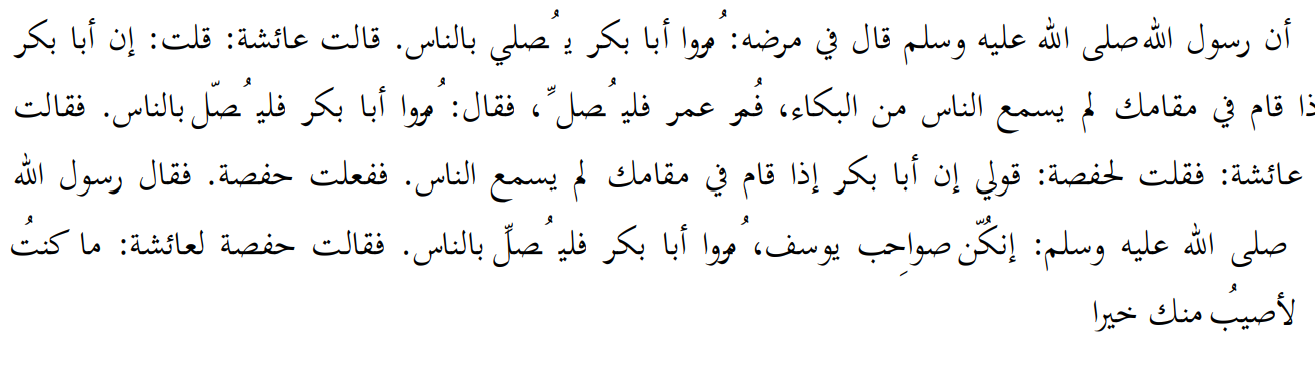
روایت کې دی چې رسول الله ﷺ د خپل مرض پر مهال ماته وفرمایل: ابوبکر ته ووایه چې خلکو ته لمونځ وکړي. عایشې وویل: ما وویل: کله چې ابوبکر ستاسو په ځای ودریږي، نو د ژړا له امله خلک هغه نه اوري، نو عمر ته امر وکړه چې لمونځ وکړي. هغه وفرمایل: ابوبکر ته امر وکړه چې خلکو ته لمونځ وکړي. عایشې وویل: ما حفصې ته وویل: ووایه چې کله ابوبکر ستاسو په ځای ودریږي، خلک نه اوري، هغې همداسې وکړل. رسول الله ﷺ وفرمایل: تاسو د یوسف د ملګرو په شان یاست، ابوبکر ته امر وکړئ چې خلکو ته لمونځ وکړي. حفصې عایشې ته وویل: زه به هیڅکله له تا څخه کومه ښېګڼه ونه مومم!
“That the Messenger of Allah (saw) told me during his illness: Command Abu Bakr to lead the people in prayer. Aisha said: I said: When Abu Bakr stands in your place, people do not hear him for his crying so command Umar to lead prayers. He said: Command Abu Bakr to lead people in prayer. Aisha said: I said to Hafsa: Say that when Abu Bakr stands in your place, the people do not hear, and she did that. The Messenger of Allah (saw) said: You are like the companions of Yusuf. Command Abu Bakr to lead the people in prayer. Hafsa said to Aisha: I will never achieve any good through you!”
څلورم: مسلم د ابن ابي مُلَيْکَه څخه روایت کوي چې هغه وویل:
Fourthly: Muslim narrated from bin Abu Mulkiyya who said:

ما اوریدلي چې عایشې ته پوښتنه وشوه: رسول الله ﷺ به له ځانه وروسته څوک خلیفه ټاکلی وای که چیرې یې ټاکلی وای؟ هغې وویل: ابوبکر. ورته وویل شول: نو د ابوبکر له وروسته څوک؟ هغې وویل: عمر. بیا ورته وویل شول: نو د عمر له وروسته څوک؟ هغې وویل: ابوعبیده بن الجراح، او په همدې ځای کې ودریده.
“I heard Aisha being asked: Whom would the Messenger of Allah (saw) have appointed as Khalifah after him had he so appointed? She said: Abu Bakr. She was asked: Then whom after Abu Bakr? She said: Umar. She was then asked: Then whom after Umar? She said: Abu ‘Ubaydah bin al-Jarrah, and she stopped at that.”
دې ټولو احادیثو د ابوبکر (رض) د خلافت د ټاکلو لپاره د رسول الله ﷺ د ټاکلو دلیل ګرځیدای نشي. لومړی حدیث په دوو دلیلونو رد کیږي: لومړی دا چې رسول الله ﷺ وفرمایل:
All these ahadith are not suitable evidence for the Messenger (saw) appointing Abu Bakr (ra) as Khalifah. The first hadith is rejected for two reasons: The first is that the Messenger (saw) said:
زه غوښتل یا نیت مې کړی و
“I wished or intended”
لیکن انھوں نے ایسا نہیں کیا، لہٰذا یہ دلیل نہیں ہے۔ کیونکہ دلیل تو رسول اللہ ﷺ کا قول، فعل یا تقریر ہے؛ ان کے علاوہ کوئی بھی چیز شرعی دلیل شمار نہیں ہوتی۔ دوسری بات یہ ہے کہ عائشہ (رضی اللہ عنہا) ابوبکر (رضی اللہ عنہ) کی بیٹی ہیں، پس اگر یہ حدیث موجود ہوتی تو وہ ابوبکر (رضی اللہ عنہ) کو ضرور بتا دیتیں۔ پھر جب وہ سقیفہ کی طرف گئے تاکہ انصار سے بحث کریں جب وہ اپنے میں سے ایک خلیفہ کی بیعت کے لیے جمع ہوئے تھے، تو وہ اس کے ساتھ ضرور استدلال کرتے۔ لہٰذا یہ حدیث مردود ہے اور ابوبکر (رضی اللہ عنہ) کے خلیفہ مقرر ہونے کی دلیل بننے کے لائق نہیں ہے۔
But he did not do so, so this is not an evidence. For the evidence is the Messenger’s (saw) saying, action or silent consent; anything other than these is not considered Shari’ah evidence. Secondly, Aisha (ra) is Abu Bakr’s daughter so were this hadith present she would have informed Abu Bakr (ra). Then he would have argued with it when he went to the courtyard (saqeefa) to contend with the Ansar when they gathered to pledge allegiance to a Khalifah amongst them. Therefore this hadith is rejected (mardud) and is unsuitable to be an evidence for the appointment of Abu Bakr (ra) as Khalifah.
دوهم حدیث په اړه، دا د ابوبکر (رض) د خلافت د ټاکنې دلیل نه شي کیدای، ځکه ښځې وویل: «که زه تا ونه مومم»؛ نو سمه ده چې هغه د هغه د نه موندلو پر وخت د جنګ یا بل کوم کار له امله د هغه په نه شتون کې وه. په دې کې داسې هیڅ نشته چې په دې وینا سره یې «که زه تا ونه مومم» مراد دا وي چې تاسو مړ شوي یاست. هغه الفاظ چې په حدیث کې راغلي «که څه هم هغه د مړینې اراده درلوده» د جبیر خبرې او د هغه پوهه ده. نو د پیغمبر ﷺ امر چې که هغه راشي او ابوبکر ونه مومي، هغه ته لاړ شي، د پیغمبر ﷺ له وفات وروسته د ابوبکر (رض) د خلافت د ټاکنې لپاره دلیل نه دی. که هم موږ مجبور شو چې د هغې پوهه مړینه وګڼو، بیا هم دا خبرې ابوبکر د پیغمبر ﷺ له وروسته خلیفه نه ټاکي. دریم حدیث، دا د لمانځه په مشرۍ ټاکنه ده او بل هیڅ نه. د لمانځه په مشرۍ ټاکنه د واک (حکم) په مشرۍ ټاکنه معنا نه لري. د دوی دا وینا چې: «رسول الله ﷺ د دین په یوه کار کې ده نه خوښ وو، نو ایا موږ باید د دنیا په یوه کار کې ده نه خوښ شو؟» دا د دوی پوهه ده او غلطه ده، ځکه چې د لمانځه او د واک تر منځ ډیر توپیر دی. هرڅوک چې د لمانځه د امام کیدو وړ وي، د واک د مشر کیدو وړ نه وي. سربیره پردې، متن په لمانځه پورې ځانګړی دی، نو په نورو شیانو باندې نه شي پراخیدای، او د متن د ځانګړتیا (خصوصیت) له امله هم نور معنا نه شي ورکول کیدای.
As for the second hadith, it does not indicate the appointment of Abu Bakr (ra) as Khalifah because the woman said: “If I did not find you”; so it is correct that she failed to find him due to his absence in a war or any other matter. There is nothing in it to indicate that she meant by her words “If I did not find you” that you had died. The words which came in the hadith “As if she meant death” are the words of Jubayr and his understanding. So the Messenger’s command for her to go to Abu Bakr (ra) if she came and did not find him is no proof for the appointment of Abu Bakr (ra) as Khalifah after the Messenger (saw). Even if we were compelled to take her understanding to mean death, these words still would not designate Abu Bakr as Khalifah after him (saw). As for the third hadith, this is the appointment over prayer and nothing else. Appointment over prayer does not mean appointment in authority (hukm). As for their statement: “The Messenger of Allah was pleased with him in a matter of the deen, so should we not be pleased with him in a matter of the world (dunya)”; this is their understanding, and it is erroneous because there is a large difference between prayer and ruling. Not all who are suitable to become a leader (Imam) in prayer are suitable to be a leader in ruling. Moreover, the text is specific to prayer so it does not encompass other things, nor should it be taken to mean other things due to the specificity (khususiyya) of the text.

هغه چې د الله رسول ﷺ وفرمایل: سبا به زه علَم (رایه) یوه داسې سړي ته درکوم چې د هغه په لاسونو به الله فتح ورکړي. هغه وفرمایل: نو خلکو هغه شپه داسې تېره کړه چې دوی به د دې فکر کاوه چې علم به د دوی له ډلې کوم یو ته ورکړل شي. کله چې خلک راویښ شول، سهار وختې د الله رسول ﷺ ته لاړل په دې هیله چې علم به دوی ته ورکړل شي، خو هغه وفرمایل: علي بن ابي طالب چېرته دی؟ دوی وویل: د هغه سترګې درد کوي اې د الله رسوله. هغه وفرمایل: هغه ماته راوغواړئ. کله چې هغه راغی، رسول ﷺ د هغه په سترګو کې تف وکړ او د هغه لپاره دعا وکړه. هغه داسې روغ شو لکه چې هېڅ درد یې نه وی درلودلی، او رسول ﷺ هغه ته علم ورکړ.
“That the Messenger of Allah (saw) said: I will give the flag (rayah) tomorrow to someone by whose hands Allah will conquer. He said: So the people spent the night thinking which one of them it would be given to. When people woke up, they went early in the morning to the Messenger of Allah (saw) hoping it would be given to them, but he said: Where is Ali bin Abi Talib? They said: His eyes are paining O Messenger of Allah. He said: Send for him to come to me. When he came, he spit in his eyes and prayed for him. He was cured as if he never had pain, and he gave him the flag.”
مسلم دا حدیث د ابوهریره په روایت سره داسې نقل کړی دی:
Muslim narrated this hadith from Abu Hurairah with the words:

رسول الله ﷺ د خیبر په ورځ وفرمایل: زه به دا بیرغ هغه سړي ته ورکړم چې الله او د هغه رسول سره مینه لري، او الله به د هغه په لاس فتح ورکړي۔ عمر بن الخطاب وویل: ما د دې ورځې څخه بغیر هیڅکله د مشرۍ هیله نه وه کړې۔ هغه وویل: ما ځان ته دا تصور کاوه، په دې امید چې زه به ورته وبللی شم۔ هغه وویل: رسول الله ﷺ علي بن ابي طالب ته وبللو او بیرغ یې ورکړ۔
“The Messenger of Allah (saw) said on the day of Khayber: I will give this flag to someone who loves Allah and His Messenger by whose hands Allah will conquer. Umar bin al-Khattab said: I had never wished for leadership except for that day. He said: I visualised it hoping that i would be called for it. He said: The Messenger of Allah (saw) called Ali bin Abi Talib and gave him the flag.”
د امام البخاري په روایت کې د علي (رض) د فضیلتونو په باب کې راغلي چې د الله رسول ﷺ علي (رض) ته وفرمایل:
Al-Bukhari narrated in the chapter of virtues of Ali (ra) that the Messenger of Allah (saw) said to Ali (ra):
تا زما څخه یې او زه ستا څخه یم.
“You are of me and I am of you.”
مسلم د عامر بن سعد بن ابي وقاص رضي الله عنه څخه روایت کوي، هغه خپل پلار څخه نقل کوي چې ويې ویل: معاویه بن ابي سفیان رضي الله عنه سعد رضي الله عنه ته امر وکړ او ورته ويې ویل: څه شي تا منع کړی چې ته ابو تراب رضي الله عنه ته سپکاوی ونه کړې؟ هغه وویل: کله چې زه هغه درې خبرې یادوم چې رسول الله ﷺ د هغه په اړه فرمایلي دي، نو زه هیڅکله هغه ته سپکاوی نه کوم. زما لپاره دا چې دا درې خبرې یوه هم را ته وي، د سرو اوښانو څخه ډیرې محبوبې دي. رسول الله ﷺ هغه د ځینو خپلو جنګونو څخه شاته پرېښود، نو علي رضي الله عنه ورته وویل: ای د الله رسوله ﷺ، ته ما د ښځو او ماشومانو سره شاته پرېږدې؟ رسول الله ﷺ ورته وفرمایل:
Muslim narrated from ‘Amir Bin S’ad bin Abi Waqqas (ra) from his father who said: Muawiya bin Abu Sufyan (ra) commanded S’aad (ra) saying: What has prevented you from insulting Abu Turab (ra)? He said: When I remember three (things) which the Messenger of Allah (saw) said of him, I will never insult him. That I should have even one of these is more beloved to me than red camels. The Messenger of Allah (saw) left him behind in some of his war expeditions, so Ali (ra) said to him: O Messenger of Allah (saw), have you left me behind with women and children? The Messenger of Allah (saw) said to him:
«آیا تاسو خوشحاله نه یاست چې زما سره هغه مقام ولرۍ لکه د موسیٰ سره د هارون مقام، پرته لدې چې زما وروسته هیڅ نبي نشته.» ﷺ
“Are you not pleased to be in the same status next to me like the status of Harun next to Musa, except that there is no Prophet after me.”
ما د خیبر په ورځ هم هغه ته وریدلي وو چې ویل:
I also heard him say on the day of Khayber:
زه به علم هغه سړي ته ورکوم چې الله او د هغه رسول سره مينه لري، او الله او د هغه رسول هغه سره مینه لري.
‘I will give the flag to a man who loves Allah and His Messenger, and whom Allah and His Messenger love.
هغه وویل: موږ د هغه لپاره حرکت وکړ او هغه وویل:
He said: We moved for it and he said:
ً علی ته ووایۍ، نو هغه راوړل شو او هغه سترګې درې وې. هغه په سترګو کې تف وکړ او بیرغ یې ورکړ، او الله د هغه په واسطه فتح ورکړه.
“Call Ali, so he was brought and he had sore eyes. He spit in his eyes and gave him the flag, and Allah conquered through him.’
او کله چې دا آیت نازل شو:
And when this verse was revealed:
راځئ چې زموږ زامن او ستاسو زامن راوبلو [TMQ 3:61]
Say: Come and let us call our sons and your sons [TMQ 3:61],
د الله رسول ﷺ علي، فاطمه، حسن او حسين (رضي الله عنهم) وغوښتل او ويې فرمایل:
The Messenger of Allah (saw) called Ali (ra), Fatima (ra), Hassan (ra) and Husain (ra) and said:
«اے اللہ، دا زما کورنۍ ده.»
‘O Allah, this is my family.’”
مسلم نے سہل بن سعد سے روایت کیا، انہوں نے کہا: مروان کے خاندان کا ایک شخص مدینہ پر (حاکم) مقرر کیا گیا۔ اس نے سہل بن سعد کو بلایا اور حکم دیا کہ علی (رضی اللہ عنہ) کو برا کہیں۔ انہوں نے کہا: سہل نے انکار کیا، تو ان سے کہا گیا: اگر تم انکار کرتے ہو تو کہو: اللہ ابو تراب (رضی اللہ عنہ) پر لعنت کرے۔ سہل نے کہا: علی (رضی اللہ عنہ) کے نزدیک ابو تراب سے زیادہ محبوب کوئی نام نہیں تھا، اور جب انہیں اس نام سے پکارا جاتا تو وہ خوش ہوتے۔ ان سے کہا گیا: ہمیں وہ واقعہ بتائیے کہ انہیں ابو تراب کیوں کہا گیا، تو انہوں نے کہا: رسول اللہ ﷺ فاطمہ کے گھر تشریف لائے اور علی کو گھر میں نہ پایا، تو آپ ﷺ نے فرمایا:
Muslim narrated from Sahl bin S’aad who said: A man from the family of Marwan was appointed (as ruler) over Madinah. He said: He called Sahl bin S’aad and commanded him to insult Ali (ra). He said: Sahl refused, so it was said to him: If you refuse, then say: Allah curse Abu Turab (ra). Sahl said: Ali (ra) has no name more beloved to me than Abu Turab (ra), and he would be pleased when called by it. It was said to him: Inform us of the incident as to why he was called Abu Turab (ra), so he said: The Messenger of Allah (saw) came to Fatima’s house and did not find him in the house, so he said:
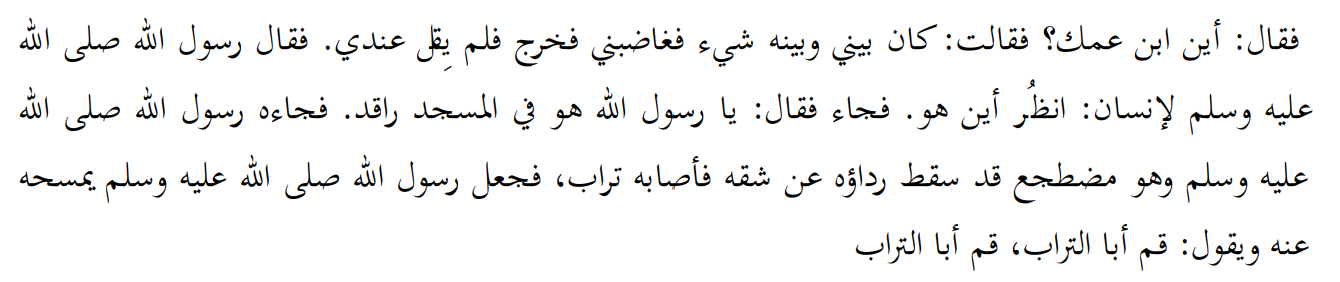
«د تا د چچا زوی چیرته دی؟» هغې وویل: د هغه او زما ترمنځ یو څه وشول، هغه ما خفه کړه او پرته له دې چې راته ووایي لاړ. نو د الله رسول ﷺ یو چا ته وفرمایل: «لاړ شه وګوره چیرته دی.» هغه راستون شو او وویل: ای د الله رسوله ﷺ، هغه په مسجد کې استراحت کوي. نو د الله رسول ﷺ هغه ته راغی پداسې حال کې چې هغه پرېوتی و. د هغه چادر د بدن څخه لوېدلی و او خاورې ورته لګېدلې وې، نو د الله رسول ﷺ هغه له خاورو پاکول پیل کړل او داسې یې ویل: «پاڅه، ای ابو تراب.»
“Where is the son of your paternal uncle?” She said: There was something between him and me, and he made me angry and left without telling me. So the Messenger of Allah (saw) said to someone: “Go find out where he is.” He came back and said: O Messenger of Allah, he is resting in the mosque. So the Messenger of Allah (saw) came to him while he was reclining. His cloak had fallen from his body and dirt had touched him, so the Messenger of Allah (saw) began wiping it off him while saying: “Stand up, O Abu Turab.”
مسلم د عدي بن ثابت څخه روایت کوي، هغه د ذر څخه نقل کوي چې ويې ويل: علي وويل:
Muslim narrated from ‘Adiyy bin Thabit from Dharr who said: Ali said:
په هغه ذات قسم چې دانه یې وشلوله او ژوندی شی یې پیدا کړ، پیغمبر ﷺ ماته ژمنه راکړه چې زما سره به یوازې مؤمن مینه کوي او زما سره به یوازې منافق کینه لري.
“By Him Who split up the seed and created something living, the Prophet (may peace and blessings be upon him) gave me a promise that no one but a believer would love me, and none but a hypocrite would nurse grudge against me..”
په دې احادیثو کې داسې هیڅ شی نشته چې څوک دې ته مخ کړي چې رسول الله ﷺ علي رضی الله عنه خپل وروسته خلیفه وټاکه. د خیبر حدیث د رسول الله ﷺ ستاینه ده. د رسول الله ﷺ هغه خبره چې علي رضی الله عنه ته یې وفرمایل:
There is nothing in these ahadith to make someone say that the Messenger (saw) appointed Ali (ra) to be Khalifah after him. The hadith of Khayber is praise from the Messenger of Allah. The Messenger’s (saw) statement to Ali (ra):
تا زما څخه یی او زه ستا څخه یم
“You are of me and I am of you”
دا د رسول الله ﷺ ستاینه ده. څرنګه چې د سعد حدیث کې راغلي دي:
Is a praise from the Messenger of Allah (saw). As for the hadith of S’aad in which came:
«آیا تاسو ته دا خوښه نه ده چې زما په نزد هغه مقام ولرئ چې هارون د موسی سره درلود؟»
“Are you not pleased to have the status before me as that of Harun with Musa”,
دا موضوع به د احادیثو په دوهمه کټګوري کې بحث کیږي. په دې کې د خیبر حدیث هم دی چې یو ستاینه ده، او په کې دا راغلي دي چې علی (رض)، فاطمه (رض)، حسن (رض) او حسین (رض) د هغه کورنۍ دي، چې دا هم یوه ستاینه ده، او د سهل بن سعد حدیث هم ستاینه ده. لکه څنګه چې رسول الله ﷺ علی (رض) ستاینه کړې، همدارنګه د خپلو صحابه کرامو (رض) نورو کسانو هم ستاینه کړې ده. د رسول الله ﷺ د یوه کس ستاینه په هیڅ ډول د هغه د ټاکنې څرګندونه نه کوي.
This subject will be discussed in the second category of the ahadith on the topic. In it is also the hadith of Khayber which is a praise and in it is that Ali (ra), Fatima (ra), Hassan (ra) and Husain (ra) are his family which is a praise, and the hadith of Sahl bin S’ad is a praise. Just like the Messenger of Allah (saw) praised Ali (ra), he also praised others among his Sahabah (ra). The Messenger’s praise for a person does not in any way indicate his appointment.
په دویمه ډله احادیثو کې هغه احادیث راځي چې ځینو علماؤ له هغې څخه استدلال کړی دی چې رسول الله ﷺ په صریح ډول بیان کړی وو چې علي ﷺ به د هغه وروسته خلیفه وي. دا احادیث په دې څلورو متنونو کې لنډ شوي دي:- 1- البخاري د مصعب بن سعد څخه، هغه د خپل پلار څخه روایت کوي
As for the second category of ahadith which are those from which some deduced that the Messenger (saw) stated textually that Ali would be the Khalifah after him, they are summarised in these four texts:- 1- Al-Bukhari narrated from Mus’ab bin S’ad from his father
هغه چې رسول الله ﷺ تبوک ته لاړ او علي یې وروسته پریښود، نو هغه وویل: ایا زه د ښځو او ماشومانو سره ماته پریږدې؟ هغه وفرمایل: ایا ته دې خوښ نه یې چې ستا هغه مقام وي زما سره لکه چې د موسی سره د هارون مقام و، پرته له دې چې زما وروسته هیڅ نبي نشته؟
“That the Messenger of Allah (saw) left for Tabuk and appointed Ali, so he said: Do you leave me behind along with women and children? He said: Are you not pleased to have the same status with me as Harun had with Musa, except that there is no Prophet after me?”
مسلم د عامر بن سعد بن ابي وقاص (رض) څخه روایت کوي، هغه د خپل پلار څخه روایت کوي چې ويې ویل: رسول الله ﷺ علي (رض) ته وفرمایل:
Muslim narrated from ‘Amir bin S’ad bin Abi Waqqas (ra) from his father who said: The Messenger of Allah (saw) said to Ali (ra):
"تاسو زما سره هغه مقام لرئ لکه څنګه چې هارون د موسی سره درلود، مګر زما نه وروسته هیڅ نبي نشته."
“You are to me of the same status as Harun was to Musa, except that there is no Prophet after me.”
او مسلم د ابراهيم بن سعد څخه روايت کوي، هغه له سعد څخه، چې نبي ﷺ علي (رض) ته وفرمايل:
And Muslim narrated from Ibrahim bin S’ad from S’ad that the Prophet (saw) said to Ali (ra):
ایا تاسو به خوشحاله نه یاست چې زما سره ستاسو هماغه اړیکه وي لکه چې هارون د موسی سره درلوده؟ ﷺ
“Are you not pleased to have the same relation with me as Harun had with Musa”
ابن اسحاق روایت کوي چې ويلي يې: رسول الله ﷺ علي بن ابي طالب (رض) د کورنۍ د ساتنې او څارنې لپاره پاتې کړ. منافقانو د دروغجنو خبرو خپرول پیل کړل او ده ته يې وویل چې: هغه (ﷺ) هغه يوازې په دې سبب پاتې نه کړ چې دا (ﷺ) ته ګران ؤ او د دې لپاره چې هغه ته اسانه شي. کله چې منافقانو دا وویل، علي بن ابي طالب (رض) خپلې وسلې واخستې او روان شو تر دې چې رسول الله ﷺ ته ورسېد، څوک چې په الجرف کې کېږدل شوی ؤ، او وې ویل: اې د الله نبي ﷺ، منافقانو ادعا وکړه چې تاسو ما پریښود ځکه چې دا زما لپاره ګران ؤ او زما لپاره د اسانتیا لپاره. هغه وویل:
Ibn Ishaq narrated by saying: The Messenger of Allah (saw) left behind Ali bin Abi Talib (ra) to look after and supervise his family. The hypocrites started spreading false rumors and said to him that: He (saw) did not leave him behind except for the reason that it was hard on him and so that it could become easy for him. When the hypocrites said that, Ali bin Abi Talib (ra) took his weapons and moved out until he met the Messenger of Allah (saw) who was encamped at Al-Jarf and said: O Prophet of Allah (saw), the hypocrites claimed that you left me behind because it was hard for me and to make it easy for me. He said:

دوی دروغ وویل؛ بلکه ما تاسو ځان پشانه پریښودل ځکه چې زه د خپل شاته پریښودل شوي شیانو له امله مخ ته تلی وم، نو بیرته ستانه شه او زما د کورنۍ او خپل کورنۍ څارنه زما په استازیتوب وکړه. ایا ته ځان نه خوښوې، ای علي، چې زما په وړاندې هماغه مقام ولرې کوم مقام چې هارون د موسی په وړاندې درلود، پرته له دې چې زما وروسته هیڅ پیغمبر نشته؟
“They lied; rather I left you behind due to what I left behind me so return and supervise my family and your family on my behalf. Are you not pleased, O Ali, to have the same status before me as Harun had before Musa except that there is no Prophet after me?”
نو علي مدینې ته بېرته راستون شو، او د الله رسول ﷺ خپل سفر ته دوام ورکړ. السید عبد الحسین شرف الدین د "المراجعات" په کتاب کې دا حدیث ذکر کړی دی: د جابر بن عبدالله حدیث، چې ویلي یې دي: د الله رسول ﷺ وفرمایل:
So Ali returned to Madinah and the Messenger of Allah (saw) continued on his journey. As-Sayyid Abd al-Husain Sharaf ud-Deen mentioned the following in the book “Al-Muraja’at ”: “The hadith of Jabir bin Abdullah who said: The Messenger of Allah (saw) said:
اے علی! بے شکہ تمہارے لیے مسجد میں وہی کچھ جائز ہے جو میرے لیے جائز ہے، اور تمہارا میرے ساتھ تعلق وہی ہے جو ہارون کا موسیٰ کے ساتھ تھا، سوائے اس کے کہ میرے بعد کوئی نبی نہیں ہوگا۔ ﷺ
O Ali, verily it is allowed for you in the mosque what is allowed for me, and your relation with me is that of Harun with Musa except that there is no Prophet after me.”
2. مسلم د یزید بن حیان څخه روایت کوي، هغه وویل: زه د حصین بن سبره او عمر بن مسلم سره زید بن ارقم رضی الله عنه ته لاړم. کله چې موږ د هغه سره کېناستو، حصین ورته وویل: «په یقین سره، ای زیده، ته ډېر خیر ته ورسېدې. ته د رسول الله ﷺ لیدونکی شوی، د هغه حدیث دې اوریدلی، د هغه سره جهاد کړی او د هغه شا ته لمونځ کړی دی. په یقین سره، ای زیده، ته ډېر خیر ته ورسېدې. نو موږ ته هغه څه بیان کړه چې له رسول الله ﷺ څخه دې اوریدلي دي.» هغه وویل: ای د ورور زویه، په الله قسم زه زوړ شوی یم او زما وخت نږدې شوی دی. زه د هغه څه څه برخه هېره کړې یمه چې له رسول الله ﷺ څخه مې پوه شوی وم، نو هغه څه ومنه چې درته بیانوم او زه هغه څه ته مجبور مه کوه چې نه یې بیانوم. بیا وویل: یوه ورځ رسول الله ﷺ زموږ په وړاندې د «خم» په نوم یادېدونکو اوبو په سر، چې د مکې او مدینې ترمنځ دي، ودرېد او وعظ یې وکړ. هغه د الله تعالی حمد او ثنا وویل، ښیګڼې یې وکړې، نصیحت یې وکړ او یادونه یې وکړه، بیا یې وویل:
2. Muslim narrated from Yazid bin Hayyan who said: I left with Husain bin Sabra and Umar bin Muslim to Zayd bin Arqam (ra). When we sat with him, Husain said to him: “Verily, O Zayd, you met a great deal of good. You saw the Messenger of Allah (saw), heard his hadith, fought with him and prayed behind him. Verily, O Zayd, you met a great deal of good. So relate to us, O Zayd, of what you heard from the Messenger of Allah (saw). He said: O son of my brother, by Allah I have become old and my time has approached. I have forgotten some of that, which I understood from the Messenger of Allah (saw), so accept whatever I relate to you and do not force me on that which I do not relate. Then he said: The Messenger of Allah (saw) stood one day before us speaking at the waters known as Khum between Makkah and Madinah. He thanked Allah, praised Him, exhorted and reminded then said:
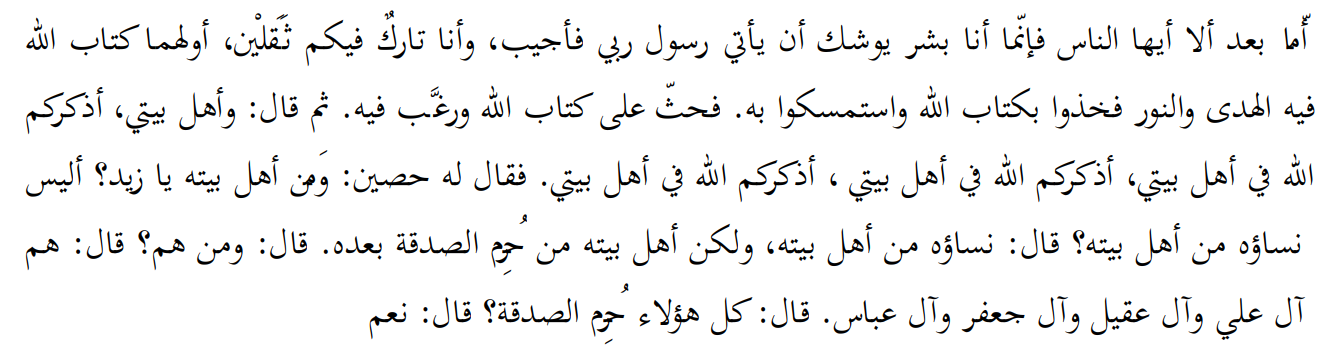
اب، خو د مقصد ته راځو. اے خلکو! زه یو انسان یم. زه سمدستي د خپل رب له لوري یو پیغامبر (د مرګ فرښته) ترلاسه کوونکی یم، او د الله د غوښتنې په ځواب کې (ستاسو څخه رخصتي اخلم)، خو زه ستاسو په منځ کې دوه درنې شیان پریږدم: یو د الله کتاب دی چې په هغې کې سمه لارښوونه او رڼا ده، نو د الله کتاب ته ټینګ ونیسئ او پرې عمل وکړئ. هغه (موږ) د الله کتاب ته د ټینګ نیولو هڅول وکړل، بیا یې وویل: دویم زما د کورنۍ غړي دي؛ زه تاسو ته د خپلې کورنۍ غړو په اړه (ستاسو د دندو) یادونه کوم. حصین زید ته وویل: د هغه د کورنۍ غړي څوک دي؟ ایا د هغه ښځې د هغه د کورنۍ غړي نه دي؟ هغه وویل: د هغه ښځې هم د هغه کورنۍ غړي دي، خو دلته د هغه کورنۍ غړي هغه کسان دي چې د زکات منل پرې حرام دي. وې ویل: دوي څوک دي؟ هغه وویل: علي او د علي اولاد، عقیل او د عقیل اولاد، د جعفر اولاد او د عباس اولاد. حصین وویل: دا هغه کسان دي چې د زکات منل پرې حرام دي. زید وویل: هو.
" Now to our purpose. O people, I am a human being. I am about to receive a messenger (the angel of death) from my Lord and I, in response to Allah's call, (would bid good-bye to you), but I am leaving among you two weighty things: the one being the Book of Allah in which there is right guidance and light, so hold fast to the Book of Allah and adhere to it. He exhorted (us) (to hold fast) to the Book of Allah and then said: The second are the members of my household I remind you (of your duties) to the members of my family. He (Husain) said to Zaid: Who are the members of his household? Aren't his wives the members of his family? Thereupon he said: His wives are the members of his family (but here) the members of his family are those for whom acceptance of Zakat is forbidden. And he said: Who are they? Thereupon he said: 'Ali and the offspring of 'Ali, 'Aqil and the offspring of 'Aqil and the offspring of Ja'far and the offspring of 'Abbas. Husain said: These are those for whom the acceptance of Zakat is forbidden. Zaid said: Yes.”
سید عبدالحسین شرف الدین په خپل کتاب "المراجعات" کې دا حدیث د هغه روایت له مخې ذکر کوي چې طبراني یې د یوې داسې سلسلې له لارې روایت کړی چې د صحت په اړه یې ټول علماء متفق دي، له زید بن ارقم (رض) څخه، هغه وویل: د الله رسول ﷺ د غدیر خم په ځای د یو شمیر ونو لاندې خبرې وکړې او وې فرمایل:
As-Sayyid Abd al-Husain Sharaf ud-Deen mentioned in his book “Al-Muraja’at” this hadith via the following narration which At-Tabarani narrated through a chain whose authenticity is unanimously accepted from Zayd bin Arqam (ra) who said: The Messenger of Allah (saw) spoke at Ghadeer Khum underneath some trees and said:
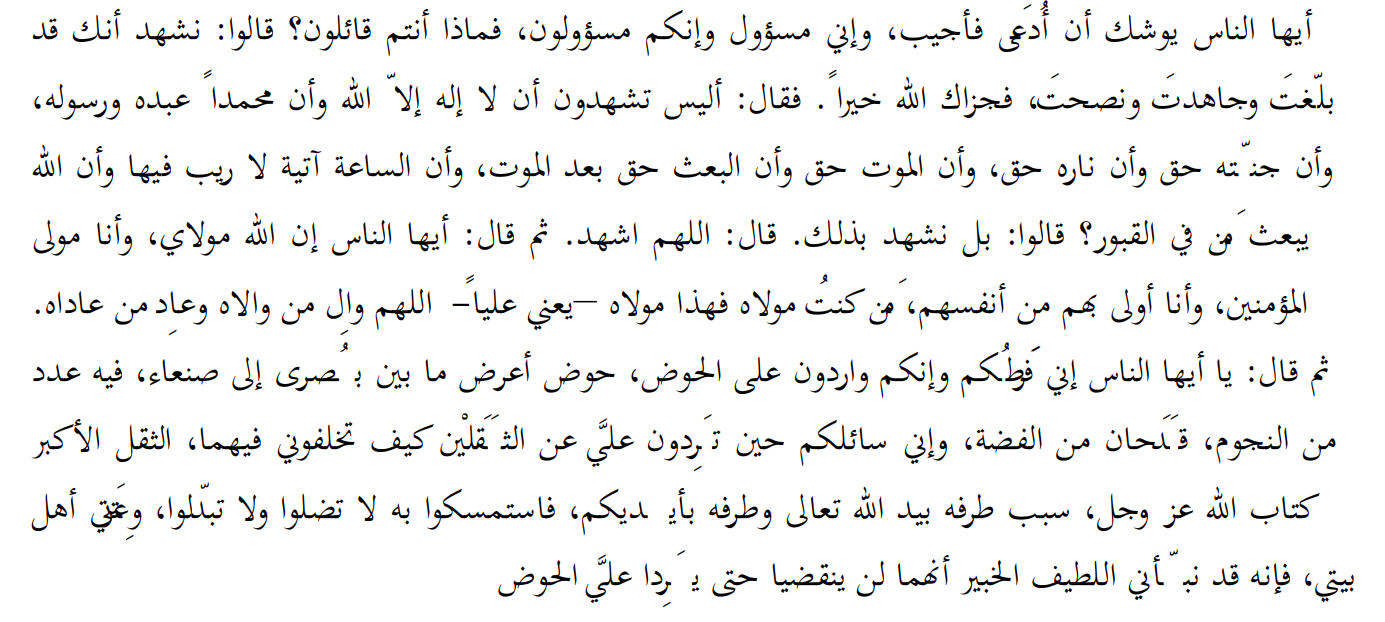
ای خلکو، نږدې ده چې زه وبلل شم او ځواب به ووایم (دا د مرګ اشاره ده). بې شکه زه مسؤل یم او تاسو هم مسؤل یاست، نو تاسو به څه وایاست؟ دوی وویل: موږ به شهادت ورکړو چې تاسو پیغام ورساوه، جهاد وکړ او نصیحت وکړ، نو الله دې تاسو ته ښه بدل درکړي. هغه وفرمایل: ایا تاسو شهادت نه ورکوئ چې له الله پرته بل معبود نشته، او محمد د هغه بنده او رسول دی، چې جنت حق دی او دوزخ حق دی، چې مرګ حق دی او د مرګ وروسته بیا راژوندی کیدل حق دي، چې قیامت بې شکه راځي او الله ټول هغه کسان په قبرونو کې راپاڅوي؟ دوی وویل: هو، موږ شهادت ورکوو. بیا هغه وفرمایل: ای خلکو، بې شکه الله زما ولي دی، او زه د مؤمنانو ولي یم، داسې چې زه د دوی په نفسونو باندې هم د دوی څخه ډیر حق لرم. چا چې زه ولي ونیولم، نو دا (علي) هم د هغه ولي دی. ای الله، هغه چې علي سره دوستي وکړي ته دوست ونیسه، او هغه چې د علي سره دښمني وکړي ته دښمن ونیسه. بیا هغه وفرمایل: ای خلکو، بې شکه زه تاسو پرېږدم او تاسو به ما د حوض سره ومومئ، هغه حوض چې له بصرې څخه تر صنعا پورې ډیر پراخ دی. په هغه کې د ستورو په شمېر د سپینو زرو پیالې دي. بې شکه زه به له تاسو څخه د دوو درنو شیانو په اړه پوښتنه وکړم، چې کله به زما مخې ته راشئ، چې تاسو زما له وروسته دوی سره څه ډول چلند وکړ. لوی او درنه یو یې د الله کتاب دی، چې عزّ وجلّ د هغه یوه سره (سبب) دی، یوه سره یې د الله په لاس کې دی او بله یې ستاسو په لاس کې ده. په کلکه ورسره ونښلئ تر څو ګمراه نه شئ او بدل نه کړئ، او زما عترت، یعنې زما د کورنۍ خلک. بې شکه لطیف او ټول خبر (جل جلاله) ماته خبر راکړی دی چې دا دواړه به هېڅکله یو له بله جلا نه شي تر څو چې زما مخې ته د حوض په غاړه راشي.
“O people, it is about to be that I am called and I will respond (indicating death). Verily, I am accountable and you are accountable, so what will you say? They said: We will testify that you conveyed, struggled and advised so may Allah recompense you well. He said: Do you not bear witness that there is no deity but Allah and Muhammad is His slave and Messenger, that Paradise is true and Hellfire is true, that death is true and resurrection after death is true, that the Hour (of Judgement) will come without any doubt, and that Allah will resurrect all those in their graves? They said: Yes, we do bear witness. Then he said: O people, verily Allah is my Patron and I am the patron of the believers such that I take precedence before them over their own selves. Whoever takes me as his patron then this one is his patron—meaning Ali. O Allah, befriend whoever befriends him and take as enemy whoever takes him as an enemy. Then he said: O people, verily I will leave you and you will find me at the Cistern, a cistern wider than the distance from Basra to Sana’a. In it are tumblers of silver the number of stars. Verily I will ask you when you come before me on the two weighty things, how you took care of them after me. The weightier and greater one is the Book of Allah ‘azza wa jalla, a (sabab) of which one end is in the hands of Allah and the other in your hands. Hold tightly to it so that you do not go astray or change, and my Utra (household), the people of my house. Verily The Kind & All-Knowing (swt) has informed me that they will never seperate until they come before me at the cistern (fountain)”
(دا د السید عبدالحسین شرف الدین هغه خبره پای ته رسوي چې ده یادونه کړې وه). او شیخ عبدالحسین احمد الامیني النجفي په خپل کتاب "الغدیر" کې دا خبره کړې ده: "کله چې پیغمبر ﷺ خپل عبادتونه بشپړ کړل، یعنی حج یې ترسره کړ، او د یادو شویو ډلو سره یې مدینې ته لاره ونیوله، نو هغه د غدیر خم ته ورسید چې په الجحفه کې دی، چیرې چې د مدینې، مصر او عراق خلکو ته لارې یوځای کیږي. دا د ذوالحجې د میاشتې پنځلسمه ورځ وه، او جبرئیل امین د الله ﷻ له لوري دا خبره ورته راوړه:"
(This is the end of what As-Sayyid Abd al-Husain Sharaf ud-Deen mentioned). And Shaikh Abd al-Husain Ahmad Al-Ameeni An-Najafi stated the following in his book “Al Ghadeer”: “When he finished his rites of worship i.e. the Prophet (saw) and left for Madinah, together with the mentioned group(s) of people, he reached Ghadeer Khum in Al-Jahfa where the roads branch for the people of Madinah, Egypt and Iraq. This was the 15th day of Dhul-Hijja and Jibril, the trustworthy, descended to him from Allah (swt) with His saying:
"اے پیغمبره! هغه څه ورسوه چې ستا رب دې ته نازل کړي دي" [TMQ 5:67]
‘O Messenger, deliver what was revealed to you from your Lord” [TMQ 5:67]
او هغه ته امر وکړ چې علي (رضي الله عنه) ودروي ترڅو خلکو ته خبر ورکړي او هغه څه ورته ووائي چې د هغه د سرپرستۍ او د هرچا باندې د اطاعت د فرض کېدو په اړه نازل شوي وو. لومړي خلک د الجحفه سره نږدې وو، نو رسول الله ﷺ هغو کسانو ته امر وکړ چې مخ په وړاندې تللي وو، بېرته راشي، او هغو کسانو ته چې په هغه ځای کې ځنډ شوي وو، ټول شو، او هغه خلکو ته منع کړل چې د پنځو لوی ونو لاندې کېږدي. کله چې خلکو خېمې ووهلې او هغه کسان چې د ونو لاندې وو ودرېدل تر دې چې د ظهر لمانځنه اذان وشو، هغه د دوی په لور روان شو او د ونو لاندې ېې لمونځ وکړ. دا د داسې سخت ګرمې ورځ وه چې يو سړی د سختې ګرمۍ له امله د خپلې جامې يوه برخه په مخ او يوه برخه د پښو لاندې کېښوده، او د رسول الله ﷺ په سر د لمر د ځای لپاره د سمرې ونې باندې د يوې جامې سيوری وو. کله چې ﷺ خپل لمونځ پای ته ورساوه، هغه د يوه اوښ په کوهان ودرېد ترڅو د خلکو په منځ کې وينا وکړي، او په لوړ غږ يې خبرې وکړې چې ټول يې واورېدل، او ويې فرمايل:
And He commanded him to cause Ali (ra) to stand to let the people know and inform what was revealed regarding his patronage and the obligation of obedience upon every one. The first of the people were close to Al-Jahfa so the Messenger of Allah (saw) commanded those who had proceeded to return and enclosed those who had delayed at that place, and he prohibited people from encamping beneath the five large trees. When the people took camp and those underneath them (the trees) stood until the dhuhr prayer was announced, he headed for them and prayed beneath them. It was a sizzling day where a man placed some of his cloak upon his face and some under his feet due to the severe heat, and the Messenger of Allah was shaded by a garment upon the sumra tree due to the sun. When he (saw) finished his prayer, he stood to speak in the middle of the people on the hump of a camel and he spoke with a raised tone with every one hearing him and he (saw) said
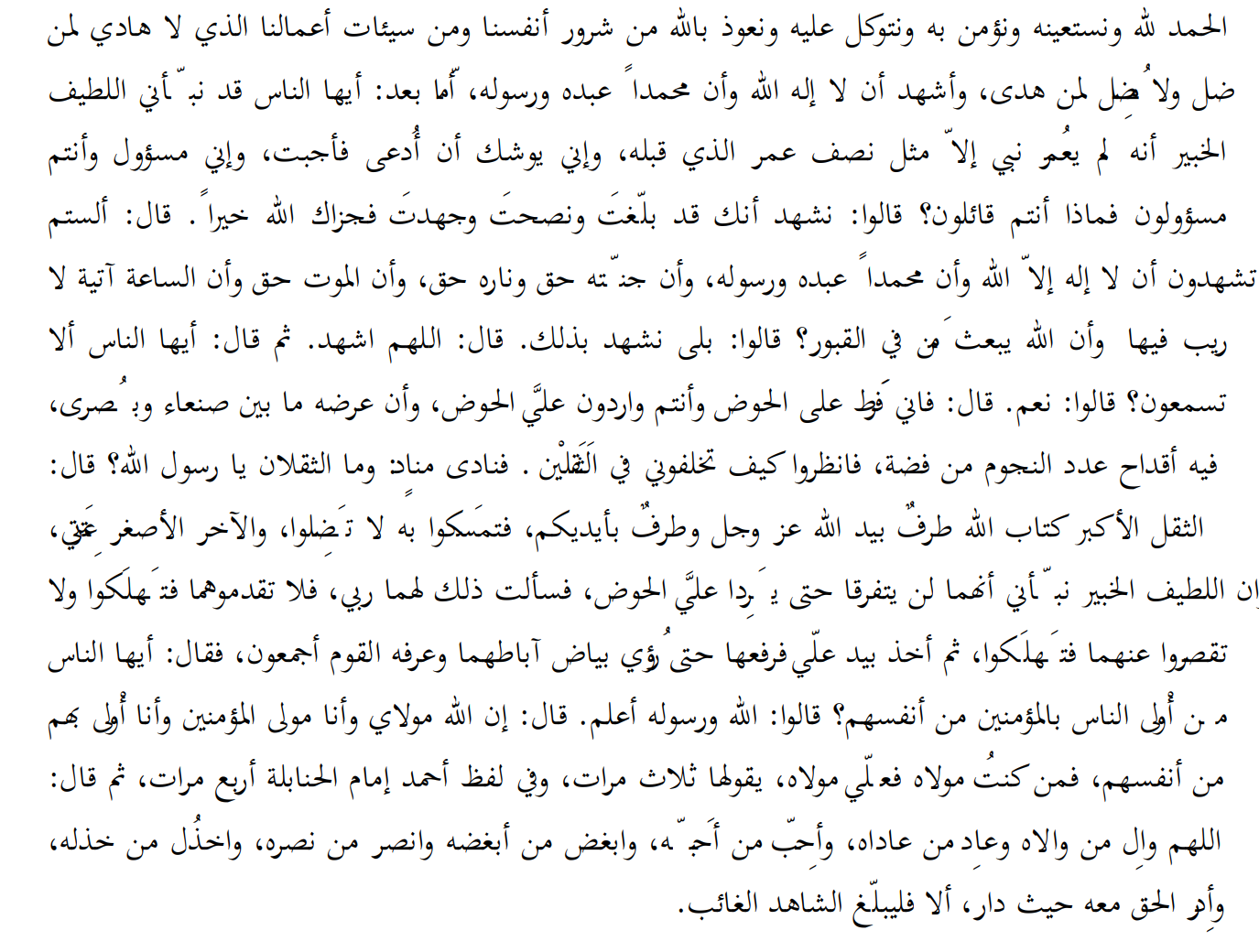
ټول ستاینې الله لپاره دي، چې له هغه نه مرسته غواړو، په هغه ایمان لرو او په هغه تکیه کوو. له الله نه غواړو چې موږ د خپلو نفسونو له شړونو او د بدو عملونو له بدیو وساتي. هغه څوک چې الله یې گمراه کړي هیڅوک یې لار ښودونکی نشي، او هغه څوک چې الله یې لار ښکاره کړي هیڅوک یې گمراه کوونکی نشي. شاهدي ورکوم چې له الله پرته بل معبود نشته، او محمد ﷺ د هغه بنده او رسول دی. وروسته له دې، ای خلکو! الله، چې ډېر مهربان او ډېر پوهیدونکی دی، ماته خبر راکړی چې هغه هیڅ پیغمبر ته له هغه سړي نیمایي عمر نه ورکوي چې د هغه څخه مخکې وي. بې شکه نږدې ده چې زه وبلل شم او ځواب ووایم. بې شکه زه هم مسؤل یم او تاسو هم مسؤل یاست، نو تاسو به څه وایاست؟ هغوئ وویل: موږ شاهدي ورکوو چې تاسو په حقیقت کې پیغام رسولی، نصیحت کړی او جهاد یې کړی، نو الله تاسو ته ښه بدله درکړي. هغه وفرمایل: ایا تاسو شاهدي نه ورکوئ چې له الله پرته بل معبود نشته، او محمد ﷺ د هغه بنده او رسول دی، چې د هغه جنت حق دی، د هغه دوزخ حق دی، مرګ حق دی، قیامت له شکه پرته راتلونکی دی، او الله به قبرونو کې پروت خلک بیا ژوندي کوي؟ هغوئ وویل: هو، موږ پدې شاهدي ورکوو. هغه وفرمایل: ای الله، ته شاهد اوسه. بیا یې وفرمایل: ای خلکو، ایا نه اوریږئ؟ هغوئ وویل: هو. هغه وفرمایل: بې شکه زه حوض (کوثر) ته ځم، او تاسو به زما مخې ته د هغه حوض ته راوړل کیږئ، چې پراخوالی یې د صنعاء او بصرې ترمنځ فاصله ده. په هغه کې د سپینې زرې پیالې دي چې شمېر یې د ستورو په شمېر دی، نو وګورئ چې زما وروسته له دوو درنو شیانو سره څنګه چلند کوئ. یو اعلان کوونکي اعلان وکړ: ای د الله رسوله، دوه درندې شیان کوم دي؟ هغه وفرمایل: لوی د دواړو درندو شیانو کتاب دی، د الله کتاب چې یوه سر یې د الله په لاس کې دی او بل سر یې ستاسو په لاس کې دی، نو په هغه کلک ونیسئ، نو بیا به گمراه نشئ. بل کوچنی یې زما اهل بیت (عترت) دي. بې شکه ډېر مهربان او ډېر پوهیدونکي (الله) ماته خبر راکړی چې دوي به تر هغه نه جلا کیږي تر څو علي حوض ته ورسیږي، او ما له خپل رب نه دا غوښتي دي. نو په دوي له مخکې کیدو او دوي له پامه غورځولو سره کار مه کوئ، که داسې وکړئ نو هلاک به شئ. بیا هغه د علي لاس ونیو او تر دې چې کښېکي یې ولیدل شي پورته یې کړ، څو ټول وپېژندل شول، او وې فرمایل: ای خلکو، چا د مؤمنانو ته د دوی د ځانونو څخه زیات حق لري؟ دوی وویل: الله او د هغه رسول ښه پوهیږي. هغه وفرمایل: بېشکه الله زما مولا دی، او زه د مؤمنانو مولا یم، داسې چې زه د دوی ځانونو څخه زیات حق لرم. نو هر هغه څوک چې ما ځان مولا ګڼي، نو علي هم د هغه مولا دی. دا خبره یې درې ځله وفرمایله، او د امام احمد په وینا، د حنبلیانو امام، څلور ځله. بیا وفرمایل: ای الله، څوک چې علي ته دوستي کوي، ته هم د هغه دوست شه، او څوک چې د هغه دښمن دی، ته هم د هغه دښمن شه. څوک چې علي سره مینه کوي هغه سره مینه وکړه، او څوک چې علي سره کرکه لري هغه سره کرکه وکړه، څوک چې د علي مرسته کوي هغه ته مرسته ورکړه، او څوک چې د علي پرېښودونکی دی هغه پرېږده، او حق دې د هرچیرته چې هغه وي د هغه سره وي. بېشکه، هغه څوک چې حاضر دی دا خبره دې غایب ته ورسوي. ﷺ
"All praise is due to Allah whom we ask for help, believe in and depend upon. We ask Allah to protect us from the evils of our souls and bad deeds, the One whom none can guide whom He causes to go astray or misguide whom He guides. I bear witness that there is no god but Allah and Muhammad is His slave and Messenger. As for what follows: O people, verily the The Kind & All-Knowing (swt) has informed me that He does not grant longevity to a Prophet except half the like of the one before him. Verily it is about to be that I will be called and I will respond. Verily I am accountable and you are accountable, so what will you say? They said: We bear witness that verily you have conveyed, advised and struggled so may Allah reward you well. He said: Do you not bear witness that there is no god but Allah and that Muhammad is His slave and Messenger that His paradise is true and His hellfire is true, that death is true, that the Hour will come without any doubt and that Allah will resurrect those in the graves? They said: Yes, we bear witness to this. He said: O Allah, do bear witness. Then he said: O people, will you not listen? They said: Yes. He said: Verily I will go to the cistern (alkauthar) and you will be presented at the cistern, whose breadth is that between Sana’a and Basra, before me. In it are cups of silver the number of which are the number of stars, so look how you take care of the two weighty things after me. An announcer announced: And what are the two weighty things, O Messenger of Allah? He said: The greater of the two weighty things is the Book of Allah, one end of which is in the hand of Allah and the other in your hands so hold fast to it and you will not go astray. The other smaller one is my household (‘utra). Verily the Kind & All-Knowing (swt) informed me that they will not go away until Ali reaches the cistern and I asked that from my Lord. So do not precede them or neglect them and if you do so you will perish. Then he took the hand of Ali and raised it until their armpits were seen and everyone recognised him and he said: O people, who takes precedence before the believers over their own selves? They said: Allah and His Messenger know best. He said: Verily Allah is my Patron (mawla) and I am the patron of the believers such that I take precedence before them over their own selves. So whoever has me as his patron then Ali is his patron. He said this three times, and in the words of Imam Ahmad, Imam of the Hanbalis, four times. Then he said: O Allah, befriend whoever befriends him and become an enemy to whoever takes him as an enemy. Love whoever loves him and hate whoever hates him, support whoever supports him and abandon whoever abandons him, and let the truth be with him wherever he is resides. Verily, let the witness who is present inform the (one who is) absent.’”
٣۔ هغه کسان چې وایي رسول الله ﷺ د علي (رضی الله عنه) د خلافت څرګند اعلان کړی و، په خپلو کتابونو کې احادیث روایت کړي دي۔ څرنګه چې دا احادیث به مونږ د پلټنې ځای نه ګرځوو، د دې سره سره چې دوه شیخان البخاري او مسلم دا روایت نه دي کړي، نه له کوم باوري راویانو څخه روایت شوي دي، او ډیری یې له جعلي احادیثو څخه دي۔ مونږ به د دوی روایتونه د پلټنې موضوع نه ګرځوو، داسې نه چې وواياست دا احادیث ستاسو مخکې له باوري راویانو څخه نه دي روایت شوي، مګر زموږ مخکې له باوري راویانو څخه روایت شوي دي، ترڅو هغه څوک چې حدیث یې صحیح ګڼي، هغه د دلیل په توګه وکاروي۔ مونږ به پلټنه په دې کې نه کوو؛ بلکې پلټنې موضوع به د متنونو پخپله وي لکه څنګه چې په روایتونو کې راغلي دي۔ دا هغه متنونه دي چې له هغو څخه دوی استنباط کوي چې رسول الله ﷺ علي (رضی الله عنه) د ځای ناستي په توګه د خپل وروسته مقرر کړی و، او دې احادیثو ته د "ولایت" احادیث ویل کیږي، چې له هغو څخه به مونږ ځینې وړاندې کړو او پاتې هم همدا معنا او حتی همدا الفاظ لري۔
3. Those who say that the Messenger (saw) clearly announced the Khilafah of Ali (ra) narrated ahadith in their books. As for these ahadith, we will not make the place of research in them their narrations, despite the fact that the two sheikhs Al-Bukhari and Muslim did not narrate them, nor were they narrated via any trustworthy narrators and most of them are among the fabricated ahadith. We will not make their narrations the subject of research such that they say that these ahadith were not narrated by trustworthy narrators before you but were narrated by trustworthy narrators before us so that the one for whom the hadith is authenticated uses it as an evidence. We will not make that the domain of research; rather we will make the matter of research the texts themselves as they came in the narrations. These are the texts from which they deduced that the Messenger (saw) appointed Ali to be the Khalifah after him—and these ahadith are known as the ahadith of “wilayah”—from which we will present some of them and the rest carry the same meaning and even the same wordings.
(أ) ابوداؤد الطیالسی د ابن عباس (رضی الله عنه) څخه روایت کوي چې رسول الله ﷺ علي بن ابي طالب (رضی الله عنه) ته وفرمایل:
a) Abu Dawud At-Tayalisi narrated from ‘Ibn Abbas (ra) that the Messenger of Allah (saw) said to Ali ibn Abi Talib (ra):
تاسو زما وروسته د ټولو مؤمنانو ولي یاست۔
“You are the waliy of all believers after me.”
ب) په کنز العمال کې د عمران بن حصین څخه روایت شوي چې هغه وویل: د الله رسول ﷺ یوه لښکر ولېږه او علي بن ابي طالب (رضي الله عنه) یې د دوی مشر وټاكه. هغه د خمس څخه یوه لونۍ د ځان لپاره وټاکله، او دوی دا د هغه څخه ونه منله. څلور تنو دا فیصله وکړه چې د هغه په اړه د پیغمبر ﷺ ته شکایت وکړي، نو کله چې راغلل، له څلورو څخه یو ودرېد او وې ویل: اې د الله رسوله ﷺ، ایا تا نه وینې چې علي (رضي الله عنه) داسې او داسې وکړل؟ او هغه ﷺ له هغه څخه مخ واړاوه. دویم ودرېد او همدا خبره یې وکړه، نو هغه ﷺ له هغه څخه مخ واړاوه. دریم ودرېد او همدا خبره یې وکړه، نو هغه ﷺ له هغه څخه مخ واړاوه. او څلورم ودرېد او هغه خبره یې وکړه چې دوی ویلې وې. د الله رسول ﷺ په غوسه شوی مخ د دوی په لور واړاوه او وې فرمایل:
b) It has been narrated in Kanz al-’Ammal from Imran bin Husain who said that the Messenger of Allah (saw) sent an expedition and appointed Ali bin Abi Talib (ra) over them. He chose for himself a slave girl from the fifth (khums) and they rejected this from him. Four of them agreed to complain about him to the Prophet (saw) so, when they came, one of the four stood and said: O Messenger of Allah (saw), do you not see that Ali (ra) did such and such, and he (saw) turned away from him. The second stood and said the same, so he turned away from him. The third stood and said the same, so he turned away from him. And the fourth stood and said the same as they had said. The Messenger of Allah (saw) turned towards them with anger visible in his face and said:
د علي په اړه تاسو څه غواړئ؟ بې شکه علي زما څخه دی او زه د هغه څخه یم، او هغه زما وروسته د هر مؤمن ولي دی۔ ﷺ
What do you want for me with regards to Ali? Verily Ali is from me and I am from him, and he is the waliy of every believer after me.”
ج) او یوه اوږده حدیث کې چې له عمرو بن میمون څخه روایت دی، هغه له ابن عباس رضی الله عنهما څخه نقل کوي، چې هغه وویل: رسول الله ﷺ فلاني سړی د سورة التوبة سره ولېږه. بیا یې علي رضی الله عنه د هغه پسې ولېږه ترڅو دا سورت له هغه څخه واخلي، او وفرمایل:
c) And in a long hadith from ‘Amru bin Maymun from ‘Ibn Abbas (ra) who said: The Messenger of Allah (saw) sent so and so with Surah At-Tawbah. He then sent Ali (ra) after him to take it from him and said:
"هېڅوک دې دا ونه نیسي مګر هغه سړی چې له ما څخه دی، او زه له هغه څخه یم."
“No one should take it except a man who is from me and I am from him.”
د) کنز العمال کې د وهاب بن حمزه څخه روایت دی، چې وویل: ما له علي (رضي الله عنه) سره سفر وکړ، او ما د هغه څخه سختۍ ولیدله، نو ما وویل چې کله چې بیرته راستون شم نو د دې په اړه به شکایت وکړم. نو زه راستون شوم او د علي (رضي الله عنه) یادونه مې د رسول الله ﷺ ته وکړه، نو هغه وفرمایل:
d) IKanz al-’Ammal from Wahhab bin Hamza who said: I travelled with Ali (ra) and I saw harshness from him, so I said that when I will return I will complain about it. So I returned and mentioned Ali (ra) to the Messenger of Allah (saw) and he said:
«دا د علی لپاره مه وایه، ځکه هغه ستا ولی دی وروسته له ما.»
“Do not say this for Ali, as he is your waliy after me.”
ه) په کنز العمال کې د ابن عباس رضي الله عنه څخه روایت دی، هغه وویل: رسول الله ﷺ وفرمایل:
e) In Kanz al-’Ammal from ‘ibn Abbas who said: The Messenger of Allah (saw) said:
څوک چې خوښ وي چې زما ژوند وکړي، زما مرګ ومري او د رب زما په اوبو مشروبه شوې د عدن په جنت کې اوسیږي، نو هغه دې د زما وروسته علي رضیاللهعنه سره د ولي په توګه دوستي وکړي۔ ﷺ
“Whoever is pleased to live my life, die my death and to reside in the paradise of Eden irrigated by my Lord then let him befriend Ali as a waliy after me.”
f) په منتخب الکنز کې د زیاد بن مطرف څخه روایت دی، هغه وویل: ما د الله رسول ﷺ ته اورېدل چې فرمایل:
f) In Muntakhab al-Kanz from Zayyad bin Mutarraf who said: I heard the Messenger of Allah (saw) saying:
هرکه بخواهد زندگی مرا زندگی کند، مرگ مرا بمیرد، و به آن بهشتی داخل شود که پروردگارم به من وعده داده است — و آن بهشت جاویدان است — پس باید علی و اولاد او را پس از من دوست بدارد. زیرا ایشان هرگز شما را از درِ هدایت بیرون نمیکنند و به دروازهٔ گمراهی داخل نمیسازند.
“Whoever would like to live my life, die my death, and enter the paradise promised to me by my Lord—and it is an eternal paradise—then let him befriend Ali and his descendants after me. Verily they will never remove you from the door of guidance nor enter you into the gate of misguidance.”
ز) په کنز العمال کې د عمار بن یاسر څخه روایت دی چې هغه وویل: رسول الله ﷺ وفرمایل:
g) In Kanz al-’Ammal from Ammar bin Yasir who said: The Messenger of Allah (saw) said:
زه هغه چا ته وصیت کوم چې په ما باور لري او ماته ډاډ لري، چې د علي بن ابي طالب ولایت ومني. هغه څوک چې له هغه سره دوستي وکړي، ما سره یې دوستي کړې ده، او هغه څوک چې ما سره دوستي وکړي، د الله سره یې دوستي کړې ده. هغه څوک چې هغه سره مینه وکړي، ما سره یې مینه کړې ده، او هغه څوک چې ما سره مینه وکړي، د الله سره یې مینه کړې ده. هغه څوک چې هغه سره کرکه وکړي، ما سره یې کرکه کړې ده، او هغه څوک چې ما سره کرکه وکړي، د الله سره یې کرکه کړې ده.ﷺ
“I bequeath whoever believes in me and trusts me with the wilayah of Ali bin Abi Talib. Whoever befriends him has befriended me and whoever befriends me has befriended Allah. Whoever loves him has loved me, and whoever loves me has loved Allah. Whoever hates him has hated me, and whoever hates me has hated Allah.”
ه) همچنان په الکنز کې د عمار څخه په یوه مرفوع حدیث کې روایت شوی دی:
h) Also in Al-Kanz from Ammar it has been narrated in a marfu hadith :
اې الله! هغه څوک چې زما په ذات ایمان لري او زما پر لارښوونو باور لري، هغه باید علي بن ابي طالب سره دوستي وکړي. بېشکه د هغه ولایت زما ولایت دی، او زما ولایت د الله تعالیٰ ولایت دی۔ ﷺ
“O Allah, whoever believes and trusts in me, let him befriend Ali bin Abi Talib. Verily his wilayah is my wilayah and my wilayah is the wilayah of Allah ta’ala.”
۴۔ کچھ احادیث ایسی ہیں جنہیں وہ لوگ روایت کرتے ہیں جو کہتے ہیں کہ رسول اللہ ﷺ نے علی (رض) کی خلافت کا کھلم کھلا اعلان فرمایا تھا۔ ان احادیث کو کسی قابلِ اعتماد شخص نے روایت نہیں کیا، اور ان میں سے بیشتر گھڑی ہوئی احادیث ہیں۔ ہم انہیں اس نظر سے پیش نہیں کر رہے کہ ان کی روایت کے لحاظ سے ان کی تحقیق کی جائے تاکہ انہیں ان لوگوں کے لیے مستند قرار دیا جائے جو انہیں روایت کرتے ہیں۔ بلکہ ہم انہیں اس غرض سے پیش کرتے ہیں کہ ان کے متون کی تحقیق اس نقطۂ نظر سے کی جائے کہ جو کچھ ان کے متون میں آیا ہے وہ کیا ہے۔ ان احادیث میں رسول اللہ ﷺ کی علی (رض) کے ساتھ بھائی چارگی اور ان کا آپ ﷺ کے بعد وارث بنایا جانا مذکور ہے۔ ہم ان میں سے چند پیش کرتے ہیں، جبکہ باقی اسی مفہوم بلکہ انہی الفاظ کے ساتھ ہیں۔
4. There are ahadith narrated by those who say that the Messenger (saw) openly declared the Khilafah of Ali (ra). These ahadith have not been narrated by any trustworthy person and most of them are fabricated ahadith. We present them not to research them from the angle of their narration so that they are claimed to be authenticated for those who narrate them. Rather we present them to make the point of research their texts according to what came in their texts. These ahadith contain the brotherhood of the Messenger (saw) with Ali (ra), and making him the heir after him. We present a few of them with the remainder carrying the same meaning and even the same wordings.
(الف) نبي ﷺ د مهاجرینو ترمنځ ورورولۍ قایمه کړه او علي ﷺ یې د ځان لپاره وټاکه. د لومړۍ ورورولۍ د حدیث په هغه برخه کې چې راغلې ده، علي وویل: ای د الله رسول! زما روح ما پریښود او ملا می مات شوه، کله چې ما وليدل چې تاسو له ما پرته نورو ملګرو سره هغه څه وکړل چې وکړل. که دا ستاسو د غضب نښه ده زما په اړه، نو زه یوازې تاسو ته شکایت کوم او ستاسو بخښنه غواړم. د الله رسول ﷺ وفرمایل:
a) The Prophet (saw) established a brotherhood between the Muhajirin and chose Ali (ra) for himself. In what came of the hadith of the first brotherhood, “so Ali said: O Messenger of Allah (saw), verily my soul left me and my spine has been broken when I saw you do what you did with your companions other than me. If this is a sign of your anger with me, then I complain only to you and beg your pardon. The Messenger of Allah (saw) said:
هغه ذات قسم دی چې ما یې په حق سره لیږلی یم، ما تاسو پرېنښودی نه یم مګر د ځان لپاره. ته زما په نزد د هارون د مقام په شان یې د موسی سره، مګر زما څخه وروسته هېڅ نبي نشته. ته زما ورور او وارث یې. هغه وویل: زه له تا څخه څه میراث وګرځوم؟ هغه وفرمایل: هغه څه چې د مخکینیو انبیاؤ میراث وو، د خپل رب کتاب او د خپلو نبیانو سنت.
By the One who sent me with truth, I only left you for myself. You are to me of the status of Harun to Musa except that there is no Prophet after me. You are my brother and inheritor. He said: What will I inherit from you. He said: What did the Prophets inherit before me, the Book of their Lord and the Sunnah of their Prophets.”
ب) نبي ﷺ د هجرت له پنځو میاشتو وروسته د مهاجرینو او انصارو ترمنځ ورورولۍ جوړه کړه، خو علي (رض) يې د انصارو له هيچا سره ورورولۍ نه ده جوړه کړې؛ بلکې هغه يې په ځان لپاره وټاکه. دا خبره د دويمې ورورولۍ په حديث کې راغلې ده.
b) The Prophet (saw) made a brotherhood between the Muhajirin and the Ansar five months after the hijrah, but he did not make a brotherhood between Ali (ra) and any of the Ansar; rather he chose him (Ali) for himself. It came in the hadith of the second brotherhood
داسې روایت دی چې رسول الله ﷺ علي ته وفرمایل: ایا ته زما څخه په دې خفه شوی یې چې ما د مهاجرینو او انصارو ترمنځ ورور ولي جوړ کړ، خو ستا او د دوی د کومه یو ترمنځ مې ورور ولي نه جوړ کړ؟ ایا ته دې ته راضي نه یې چې زما لپاره ستا مقام داسې وي لکه د هارون مقام د موسی لپاره، سواد دې پورې چې زما څخه وروسته هېڅ نبي نشته؟
“That the Messenger (saw) said to Ali: Did you become angry at me when I made a brotherhood between the Muhajirin and Ansar but did not make a brotherhood between you and any of them? Are you not pleased to be similar to the status of Harun to Musa for me except that there is no Prophet after me”
ج) روایت کیږي چې رسول الله ﷺ یوه ورځ خپلو صحابهوو ته داسې حال کې راووت چې مخ یې خوښۍ سره ځلیدلی و، نو عبدالرحمن بن عوف (رضی الله عنه) ورڅخه وپوښتل او هغه وفرمایل:
c) It is narrated that the Messenger (saw) went out one day to his companions with his face brightened so Abdurrahman bin Awf (ra) asked him and he said:
زما رب لخوا زما د ورور او د تره زوی او زما د لور په اړه ما ته ښه خبر راغی، چې الله به علي د فاطمې سره واده کړي.
“Good news came to me from my Lord about my brother and paternal uncle’s son and my daughter, that Allah will marry Ali with Fatima.”
کله چې د ښځو سیدې (د ښځو مشرې) فاطمې الزهراء لپاره د واده وړ ماشوم په پام کې نیول کیده، نبي ﷺ وفرمایل:
When the sayyid Annisa’s (leader of the women) deserving groom for her marriage was being considered, the Prophet (saw) said:
«ای ام ایمن، زما ورور راته وبولئ.» هغې وویل: هغه ستا ورور دی، خو ته یې خپلې لور سره واده کوې؟ هغه وویل: هو، ای ام ایمن. نو هغې علي ته غږ وکړ او هغه راغی.
“O Umm Ayman, call my brother for me. She said: He is your brother yet you are marrying him (to your daughter)? He said: Yes, O Umm Ayman. So she called Ali and he came.”
او نبي کریم ﷺ یوه ورځ د هغه سره د هغه د ورور جعفر او زید بن حارثه په منځ کې د یوې قضیې په اړه خبرې وکړې، او وې فرمایل:
And the Prophet (saw) spoke to him one day regarding a judgement between him, his brother Ja’far (saw) and Zayd bin Haritha (saw), saying:
ای علی، تا ستا ورور یې، د زما د زوی پلار یې، او له ما څخه او زما لپاره یې.
“As for you, O Ali, (you are) my brother, the father of my son, and from me and for me.”
د) رسول الله ﷺ په یوه ورځ علي (رض) ته وعده وکړه او وې ویل:
d) The Messenger (saw) promised to Ali (ra) one day saying:
"تاسو زما ورور او زما وزیر یاست. تاسو به زما قرضونه ورکړئ، زما ژمنې پوره کړئ او زما مسؤلیتونه بشپړ کړئ."
“You are my brother and my wazeer. You will repay my debts, fulfill my commitments and complete my responsbilities.”
۳) په کنز العمال کې، هغه ﷺ وفرمایل
3) In Kanz al-’Ammal, he (saw) said
په جنت د دروازې باندې ليکلي دي: لا إله إلا الله، محمد رسول الله، علي د رسول الله ﷺ ورور دی.
“It is written on the gate of Paradise: There is no god but Allah, Muhammad is the Messenger of Allah, Ali is the brother of the Messenger of Allah.”
دا څلور متنونه، چې په هغو کې رسول الله ﷺ علي (رض) د هارون مقام په موسی باندې ورکړی، هغه متن چې هغه کتاب الله او د هغه اهل بیت پرېښودی، د ولایت متن، او د اخوت متن، هغه متنونه دي چې د ځینو مسلمانانو له هغو څخه دا استنباط کړی چې رسول الله ﷺ علي (رض) ټاکلی، یعنې هغه یې د هغه وروسته خلیفه ګرځولی دی. راځئ چې دوی یو په یو واخلو.
These four texts, which are the texts in which the Messenger (saw) made him (Ali) of the status of Harun to Musa, the text that he left the Book of Allah and His progeny, the text of wilayah, and the text of brotherhood, are the texts from which some Muslims deduced that the Messenger (saw) appointed Ali (ra) i.e. made him the Khalifah after him. Let us take them text by text:
جہاں تک پہلی روایت کا تعلق ہے، جس میں علیؓ کو رسول اللہ ﷺ کے نزدیک موسیٰؑ کے لیے ہارونؑ کے مقام پر رکھا گیا، اس کا مفہوم اس موقع کے مطالعے اور اس کے الفاظ پر غور کرنے سے واضح ہوتا ہے۔ جہاں تک موقع کا تعلق ہے، رسول اللہ ﷺ نے یہ حدیث غزوۂ تبوک کے دن فرمائی۔ اس میں رسول اللہ ﷺ نے مدینہ میں اپنی جگہ محمد بن مسلمہؓ کو مقرر کیا تاکہ وہ مسلمانوں کے معاملات کی نگرانی کریں اور حکومت کا انتظام چلائیں، جبکہ ہمارے آقا علیؓ کو اپنے اہل خانہ پر مقرر کیا اور انہیں ان کی دیکھ بھال کا حکم دیا۔ منافقین نے انہیں تنگ کیا اور کہا: رسول اللہ ﷺ نے ان کو پیچھے اس لیے نہیں چھوڑا مگر اس لیے کہ وہ ان پر بوجھ بن گئے تھے اور وہ ان سے جان چھڑانا چاہتے تھے۔ جب منافقین نے یہ بات کہی تو علیؓ نے اپنا ہتھیار لیا اور نکل گئے یہاں تک کہ رسول اللہ ﷺ سے جا ملے، جو الجرف میں پڑاؤ ڈالے ہوئے تھے، اور عرض کیا۔
As for the first text, which is the text which made Ali at the status of Harun to Musa before the Messenger (saw), its meaning is clarified though studying the occcasion in which it was said and studying its wording. As for the occasion, the Messenger (saw) said this hadith on the day of the battle of Tabuk. Therein the Messenger (saw) appointed in Madinah in his place Muhammad bin Maslamah (ra) to supervise the Muslims’ affairs and administer the rule, and appointed our master Ali (ra) over his family and commanded him to supervise them. The hypocrites shook him and said: He did not leave him behind except because it had become hard on him he wanted to make it easy for him. When the hypocrites said this, Ali (ra) took his weapon and left until he met the Messenger (saw) who was encamped at Al-Jarf and said:
«اے د اللہ رسوله، منافقانو وویل چې تا ما پرېښی ځکه چې ما د ځان لپاره یو بوج وموند او تا غوښتل چې زه ور سبک کړم۔» هغه ﷺ وفرمایل: «دوی دروغ وویل، بلکې ما تا پرېښی د هغه شي له امله چې زه ېې پشا پرېږدم۔ نو بېرته ستانه شه او زما په ځای زما د کورنۍ او ستا د کورنۍ سرپرستي وکړه۔ ایا ته خوښ نه یې، اې علي، چې ستا مقام زما په نزد هغسې دی لکه د هارون مقام د موسی سره، پرته لدې چې زما وروسته هېڅ نبي نشته؟»
“O Prophet of Allah, the hypocrites claimed that you left me behind because you found a burden on meand wished to make it light for me. He (saw) said: They lied, rather I left you behind due to what I left behind me. So return and take my place over my family and your family. Are you not pleased, O Ali, that you are of the same status to me as Harun to Musa except that there is no Prophet after me?”
پس د الله رسول ﷺ خپل سفر ته دوام ورکړ. هغه حدیث چې علي (رض) د رسول الله ﷺ لپاره د موسی لپاره د هارون په شان وګرځید، د رسول الله ﷺ لخوا د هغه د خپل کورنۍ باندې د ټاکلو پورې اړه لري، د علي (رض) د خپل قول په شاهدۍ سره.
So the Messenger of Allah (saw) continued on his travel. The hadith about Ali (ra) being the same status for the Messenger (saw) as Harun for Musa concern to his (saw)’s appointing him over his (saw) family by the evidence of Ali’s (ra) own statement:
"ایا تاسو ما د ښځو او ماشومانو سره پرېږدئ؟"
“Do you leave me behind with women and children?”
حقیقت واقعے کا یہ ہے کہ وہ (ﷺ کے) گھر والوں پر مقرر کیے گئے تھے، لہٰذا اسے یہ معنی نہیں دیا جا سکتا کہ وہ خلافت پر مقرر تھے، خصوصاً جب یہ معلوم ہے کہ رسول اللہ ﷺ نے محمد بن مسلمہ کو اپنی جگہ حاکم مقرر کیا تھا اور علی (رضی اللہ عنہ) کو اپنے گھر والوں پر نگران مقرر فرماتے ہوئے ان سے یہ کہا: "میرے گھر والے اور تمہارے گھر والے۔" مزید یہ کہ رسول اللہ ﷺ کا کسی صحابی کو جنگ پر روانہ ہوتے وقت حکومت پر مقرر کرنا اس بات کی دلیل نہیں کہ یہ مقرر شخص آپ ﷺ کی جگہ خلیفہ ہے، کیونکہ آپ ﷺ نے کئی جنگوں میں متعدد اصحاب کو مقرر فرمایا۔ غزوۂ العشیرہ میں آپ ﷺ نے ابو سلمہ بن عبد الأسد کو مدینہ پر مقرر کیا، غزوۂ صفوان میں زید بن حارثہ (رضی اللہ عنہ) کو مدینہ پر مقرر کیا، غزوۂ بنی لحیان میں ابن ام مکتوم (رضی اللہ عنہ) کو مدینہ پر مقرر کیا، اور اسی طرح دیگر مواقع پر بھی۔ رسول اللہ ﷺ کا کسی کو اپنی جنگوں سے واپسی تک مدینہ پر حکومت کرنے کے لیے مقرر کرنا خلافت پر ان کے تقرر کی دلیل نہیں ہے، پس اگر آپ ﷺ نے انہیں صرف اپنے گھر والوں پر مقرر کیا ہو اور دوسرے کو اپنی جنگ سے واپسی تک اقتدار سونپا ہو تو اس میں کیا حرج ہے؟
The reality of the incident is that he was appointed over his family so it cannot be taken to mean that he was appointed over the Khilafah, particularly when it is known that he (saw) appointed Muhammad bin Maslamah as the ruler in his place and specified Ali (ra) to supervise over his family when he said to him, “my family and your family.” Moreover, the Messenger’s (saw) appointment of one of his companions over the rule when he left for battle does not mean that this appointed person is the Khalifah in his place by the evidence that the Messenger (saw) appointed many in the battles. In the battle of Al-‘Asheera he appointed Abu Salamah bin Abd al-Asad over Madinah, in the battle of Safwan he appointed Zayd bin Haritha (ra) over Madinah, in the battle Banu Lahyan he appointed ibn Umm Maktum (ra) over Madinah, and so on. The appointment by the Messenger (saw) of someone to rule over Madinah until he returns from his battles does not indicate that means his appointment over the Khilafah, so what if he appointed him only over his family while appointing another in authority until he returns from his battle.
دا د ټاکلو (تقرر) په اړه دی. څخه د رسول الله ﷺ ارشاد دی:
This is in relation to the appointment. As for the saying of the Messenger (saw):
ایا تاسو به خوښ نه یاست چې ستاسو د مقام هارون د موسی سره ورته وي؟
“Are you not pleased to be similar to the status of Harun with Musa?”
آیا تو راضی نیستی که برای تو، در آنچه بر آن تعیین شدهای، همان مقامی باشد که هارون برای موسیٰ داشت؟ معنای الفاظش این است: علی (رض) کی هارون سره مشابهت لري، په دې معنا چې مشابهت د تعیین او پریښودو (یا پرېښودلو) په لاره کې دی؛ یعنی زما د تعیین کولو په وخت کې ستا مشابهت دهغه هارون سره دی کله چې موسیٰ هغه ټاکلی و. دا د حدیث د الفاظو معنا ده، او دې الفاظو بل هیڅ معنا نلري. دا معنا ځانګړې ده او یوازینۍ معنا کیږي، ځکه د علي (رض) دغه خبرې له املله سره کیږي چې رسول الله ﷺ ته وویل:
The meaning of its words is: Are you not pleased that there is for you, in what you are appointed over, what Harun supervised for Musa. It is the resemblance of Ali (ra) with Harun in the way of resemblance being the appointment i.e. your similitude in my appointing you (or leaving you behind) is similar to that of Harun when Musa appointed him. This is the meaning of the words of the hadith and these words do not have any other meaning. This meaning is specified and becomes the only meaning due to Ali’s (ra) saying to the Messenger:
"آیا تا به مې د ماشومانو او ښځو سره پرېږدې؟"
“Do you leave me behind with children and women?”
د رسول الله ﷺ د فرمان سره:
With the Messenger’s statement:
ایا تاسو دې ته خوشحاله نه یاست چې زما سره داسې اړیکه ولرئ لکه د هارون اړیکه د موسی سره؟ ﷺ
“Are you not pleased to be related to me similar to the status of Harun with Musa?”
دا د علیؓ د پوښتنې او د هغه د خبرې په ځواب کې راغلی دی. دې حدیث مطلب د پوهیدو لپاره باید د قرآن کریم ته رجوع وشي، ترڅو د موسیٰ علیه السلام د هارون علیه السلام د ټاکلو مسئله کې وګورو چې دا څه شی دی. د قرآن کریم ته رجوع کولو سره موندل کېږي چې دا پېښه په قرآن کې په لاندې متن کې ذکر شوې ده:
This came in response to this question of Ali (ra) and as a response to his statement. To understand what is meant by this hadith one must return to the Glorious Qur’an to see within the issue of Musa’s appointing Harun to see what it is. Returning to the Glorious Qur’an, we find that this event is mentioned in the Qur’an in the following text:
«او موږ موسی ته دېرش شپې وټاکلې، او دې ته لس نورې زیاتې کړې، نو د هغه رب ټاکلې موده د څلوېښتو شپو بشپړه شوه. او موسی خپل ورور هارون ته وویل: زما د ځای ناستی شه زما په قوم کې، سمه لاره ونیسه (د ټولو لپاره دا امر کړه چې د الله اطاعت وکړي او یوازې هغه عبادت کړي) او د مفسدینو لاره مه نیسه.» [TMQ 7:142]
“And we appointed for Mûsâ (Moses) thirty nights and added (to the period) ten (more), and he completed the term, appointed by his Lord, of forty nights. And Mûsâ (Moses) said to his brother Hârûn (Aaron): "Replace me among my people, act in the right way (by ordering the people to obey Allâh and to worship Him Alone) and follow not the way of the Mufsidûn (mischief-makers)” [TMQ 7:142].
پس د حدیث معنا داسې کیږي: ایا ته خوښ نه یې چې زه تا په خپل کورنۍ باندې داسې مقرروم لکه څنګه چې موسیٰ هارون په خپلو قوم باندې مقرر کړ، ترڅو ته زما په وړاندې د هارون هغه مقام ولرې چې موسیٰ ته یې درلود، د مقرر کېدو له امله؟ نو د حدیث مقصد دا دی چې د علي رضی الله عنه زړه ته تسلي ورکړي، ځکه هغه د دې ټاکنې له امله خفه شوی و، او په ورته وخت کې علي رضی الله عنه ته خبر ورکوي چې هغه به د ﷺ په غیاب کې د هغه ځای په کورنۍ کې ونیسي، لکه څنګه چې هارون د موسیٰ په غیاب کې د هغه ځای په خپل قوم کې ونیو. او د هغه قول لپاره چې...
So the hadith’s meaning becomes: Are you not pleased that I appoint you over my family like Musa appointed Harun over his people, so that you become before me of the status of Harun to Musa due to the appointment? So the hadith’s intent is to pacify our master Ali’s heart as he came displeased by this appointment, and at the same time it informs Ali (ra) that he will take his (saw) place over his family when he is absent just like Harun took Musa’s place over his people when he was absent. As for his saying:
مگر دا چې زما څخه وروسته هېڅ نبي نشته ﷺ
“Except that there is no Prophet after me”
دا د نبوت د ورته والي نفي کوي، ځکه هارون هم نبي و او هغه د بل نبي ځای ناست و کله چې هغه نه و. نو رسول الله ﷺ نبوت له دې نفي کړ ترڅو د دې تصور له منځه لاړ شي چې هغه د نبوت په مقام کې د هغه سره همرتبه دی. او نه باید دا وویل شي چې د هغه خبره،
This negates the resemblance of Prophethood because Harun was a Prophet (saw) so he was a Prophet (saw) taking the place of another Prophet (saw) when he was absent. So the Messenger (saw) excluded Prophethood to remove any imagination that he is of the same status in Prophethood. Nor should one say that his statement,
زما په وروسته هېڅ پېغمبر نشته ﷺ
“No Prophet after me”
مطلب دا دی چې د مرگ وروسته تعیین نه، ځکه د دې الفاظو اړیکه د ژوند په دوران کې د تعیین سره ده. دا ځکه چې هارون د موسیٰ سره د ژوند په وخت کې نبی و، د ده ژوند په وخت کې نه وروسته، او هغه د خپلو قوم باندې د موسیٰ خلیفه و، کله چې موسیٰ (علیه السلام) غائب و، نه د ده له مرگ وروسته. نو رسول الله ﷺ یوازې دا خبره وکړه: «پرته لدې چې زما نه وروسته نبی نشته»، ځکه هارون د موسیٰ د غیبت په وخت کې نبی و، نو ده دا خبره د دې لپاره وکړه چې علي (رضی الله عنه) څخه نبوت نفي کړي. سربیره پردې، رسول الله ﷺ زموږ ته په یوه صحیح حدیث کې چې الحاکم روایت کړی، خبر راکړی چې هارون د موسیٰ په ژوند کې مړ شو. نو د مرگ وروسته د تعیین مسئله نه پیدا کیږي، ځکه دا شی په هارون او موسیٰ کې نه و، چې د دواړو سره مشابهت ورکړل شوی، نو په نبي ﷺ او علي (رضی الله عنه) کې هم نشته، چې دوی مشابهت ورکوونکي دي.
Means after my death as the words are related to appointment during his life. This is because Harun was a Prophet along with Musa during his life not after his death; he was his deputy (khalifa) over his people while he (Musa) was absent during his life not after his death. So the Messenger only made his statement: “Except that there is no Prophet after me” because Harun was a Prophet during Musa’s absence while he lived; so he made this statement in order to negate Prophethood from Ali (ra). Moreover, the Messenger of Allah (saw) informed us in an authenticated hadith narrated by Al-Hakim that Harun died during Musa’s life. So there does not raise the issue of appointment after death as it did not exist in Harun and Musa, who are those with whom resemblance is made, thus it does not exist in the Prophet (saw) and Ali (ra) who are the resemblers.
دا حدیث معنا نه لري او نه داسې کومه اشاره لري چې د خلافت د ټاکلو لپاره وي، او نه داسې څه ترې ځانګړی کېدای شي چې رسول الله ﷺ دې په دې حدیث سره په دې ځای ناست کړی وي چې د خپل وفات وروسته مسلمانانو باندې علي (رضي الله عنه) خلیفه وګرځوي. هغه حدیث چې دلته بحث کېږي د علي (رضي الله عنه) د ټاکلو په اړه دی چې د تبوک د غزا له امله د رسول الله ﷺ په غیاب کې د هغه د کورنۍ باندې وټاکل شي. او نور روایات چې په دې حدیث کې راغلي، یعنې د هغه ﷺ قول...
This is the hadith’s meaning nor does it contain any indication to appointment for the Khilafah nor can it be understood in any way that the Messenger (saw) intended by this hadith to clearly state and make Ali (ra) the Khalifah over the Muslims after the Messenger’s (saw) death. The hadith discussed is related to the appointment of Ali (ra) over the Messenger’s (saw) family during his absence due to the battle of Tabuk. As for the remaining narrations which came in this hadith i.e. his (saw) saying:
آیا تاسو په دې نه خوشحاله یاست چې زما په نزد ستاسو مقام د موسی سره د هارون د مقام په شان وي؟ﷺ
“Are you not please to be before me of the status of Harun with Musa?”
یو شمیر د اهل حدیثو روایات دي لکه د امام البخاري او مسلم هغه روایات چې په خپل صحیح کې د عامر او ابراهیم، د سعد دوو زامنو څخه نقل کړي دي، او نور روایات یې صحیح نه دي، مګر ټول یو شان متن لري. دا پدې معنا ده چې دا حدیث په تبوک او نورو وختونو کې ویل شوی و۔ په دې باندې ځواب دا دی: صحیح روایات هغه روایات دي چې د پېښې یوه برخه وي، یعنې هغه روایات چې یوازې د رسول اللہ ﷺ خبرې د پېښې څخه جلا بیانوي، دا نه پدې معنا ده چې دا د تبوک له پېښې پرته بله پېښه ده۔ روایت کوونکي او د حدیثو راټولوونکي ډېرځله د یوې حدیث یا پېښې یوه برخه نقلوي، او هغه د استدلال ځای ته لنډوي۔ که دا هم ومنو چې دا حدیث یوازې د تبوک د پېښې په اړه نه، بلکې په تبوک او نورو وختونو کې ویل شوی و، نو دا به دې معنا وي چې رسول اللہ ﷺ په تبوک او نورو وختونو کې زموږ مشر علي (رض) د خپل کورنۍ باندې د دایمي حاکم په توګه مقرر کړ؛ او نه دا معنا لري چې هغه (د الله ﷺ مخ ته عزت ورکړي) د رسول اللہ ﷺ له وفات وروسته د خلافت لپاره ټاکل شوی و۔ د حدیث د لفظ او معنا تشریح یوازې دا بیانوي: "ایا تاسو په دې نه خوښ یاست چې زه ستاسو په غیاب کې ستاسو د کورنۍ باندې مقرر شوی یم، لکه هارون چې د موسی ﷺ په غیاب کې د هغه کار وکړ، پرته لدې چې هارون نبی و او ته نبی نه یې، ځکه زما له نبوت وروسته هیڅ نبی نشته۔" دا خبره د مسلم په روایت کې د عامر بن سعد څخه، هغه د خپل پلار څخه روایت کړې ده۔
Some of them are authenticated narrations like those by Al-Bukhari and Muslim in their hadith from ‘Amir and Ibrahim, the two sons of S’ad, while others are not authenticated, but all of them came with the same text. This means that the hadith was said in Tabuk and at other times. The response to this is that the authentic narrations are a narration which is a part of the incident i.e. narrations with the Messenger’s (saw) words alone separated from the incident which does not mean that it is an incident other than the incident of Tabuk. Narrators and collectors of hadith frequently narrate a part of a hadith or a part of an incident, shortening it to the place of evidence. Even if we accept that the hadith was not only about the incident of Tabuk but was said in Tabuk and other times, then this would mean that the Messenger (saw) appointed our master Ali (ra) over his family permanently during Tabuk and at other times; nor would it mean his appointment (may Allah ennoble his face) over the Khilafah after the Messenger’s (saw) death. All that the explanation of the hadith’s word and meaning indicate is: Are you not pleased that I appointed you over my family during my absence just like Harun supervised for Musa during his absence, except that Harun was a Prophet and you are not a Prophet because there is no Prophet after my Prophethood. This came in Muslim’s narration from Amir bin S’ad from his father:
ایا تاسو به خوښ نه یاست چې زما په نظر کې د موسی سره د هارون مقام لرئ، پرته له دې چې زما وروسته هیڅ نبي نشته؟ ﷺ
“Are you not pleased that you become before me of the status of Harun with Musa except that there is no Prophet after me”
یعنی زما له نبوت وروسته. دا هغه تمثیل دی چې رسول الله ﷺ د علي (رضی الله عنه) په اړه د هغه سره په تړاو کې ورسره پرتله کړ، لکه هارون د موسی سره، یعنی یوازې ټاکل کېدل او بل هیڅ نه، د غیابت په وخت کې ټاکل کېدل او بل هیڅ نه، او د خپل کورنۍ باندې ټاکل کېدل، لکه چې دا حدیث په خپل ټول متن کې راغلی دی. د یوه حدیث د تکرار شمېر د هغه معنا نه بدلوي، ترڅو ورته بل معنا ورکړل شي. نو په تبوک کې ټاکل کېدل یوازې د رسول الله ﷺ د کورنۍ باندې وو، لکه څنګه چې پرته له شکه ثابت دی، پداسې حال کې چې نور روایات چې په تبوک پرته نورو ځایونو کې راغلي، هماغه متن یې په الفاظو او معنا کې بیان کړی دی، پرته له دې چې د تبوک د پېښې محدودیت (یعنی کورنۍ) یادونه وکړي. بلکې دوی هیڅ محدودیت نه یادوي، نو مونږ هغه د تبوک د روایت په هغه څه تولېږو چې بیان شوي دي. دا ځکه چې د تبوک روایت د کورنۍ سره محدود دی، پداسې حال کې چې نور روایات د ټاکنې په هیڅ محدودیت نه لري، نو مونږ غیر محدود د محدود باندې تولو. او دا هم نه ویل کېدای شي چې نور روایات عام دي، ځکه چې د حدیث الفاظ له عامو الفاظو نه نه دي، ځکه د ټولو روایاتو متنونه، که هغه "آیا ته راضي نه یې" وي، یا "بېشکه ته" وي، یا "ته" وي او نور ورته، چې د هارون د منزلت د موسی سره وزن لري، دا ټول الفاظ د یوې ځانګړې منزلت سره ځانګړي دي چې د هارون د موسی سره منزلت دی، کوم چې عام منزلت نه دی. پرته له دې چې د هارون منزلت د موسی سره په ځینو روایاتو کې بې محدودیته راغلی، پداسې حال کې چې په ځینو روایاتو کې کورنۍ ته محدود شوی و، نو مونږ غیر محدود د محدود باندې تولو، ترڅو ټول روایات د کورنۍ سره محدود شي.
i.e. after my Prophethood. This is the similitude with which the Messenger (saw) compared Ali (ra) in relation to him just like Harun in relation to Musa i.e. the appointment and nothing else, appointment during his absence and nothing else, and appointment over his family as came in the hadith’s text in its entirety. The frequency with which a hadith is repeated does not change its meaning to give it an alternative meaning. So the appointment in Tabuk was only over the Messenger’s (saw) family as is proven without doubt, while the other narrations in other than Tabuk conveyed the same text mentioned in Tabuk in words and meaning without mentioning the restriction in the incident of Tabuk i.e. the family. Rather, they do not mention any restriction at all thus we measure them upon what was mentioned in the narration of Tabuk. This is because the narration of Tabuk is restricted to the family while the other narrations are free of any restriction in the appointment so we measure the unrestricted upon the restricted. Nor should one say that the other narrations are general as the words of the hadith are not from the general words as the texts of all the narrations whether the narration: “Are you not pleased” or the narration: “Verily you” or the naration: “You” and the similar which is of the weightage of Harun with Musa; all these words are specific to a specific status which is of the status of Harun with Musa which is not of the general status. Except that the status of Harun to Musa came unrestricted in some of the narrations which were not restricted by any restriction, while they were restricted to the family in some of the narrations so we measure the unrestricted upon the restricted such that all the narrations are restricted to the family.
او زما لپاره زما د کورنۍ څخه یو مرستندوی وټاکه، هارون، زما ورور، زه د هغه په ذریعه زما ځواک زیات کړه، او هغه زما په کار (د الله د پیغام او نبوت په رسولو) کې شریک کړه۔ [طه ۲۰:۲۹]
“And appoint for me a helper from my family, Hârûn (Aaron), my brother. Increase my strength with him, And let him share my task (of conveying Allâh's Message and Prophethood” [TMQ 20:29].
په هارون ؑ باندې د موسیٰ ؑ د مقام او د خلیفه کېدو په اړه دوی ته هېڅ ځای نشته، ځکه دا هغه دعا ده چې موسیٰ ؑ د الله تعالیٰ څخه وغوښته چې خپل ورور د ده مرستندوی وګرځوي او د پیغمبرۍ په کې ورسره شریک کړي، ځکه هغه څه چې موسیٰ ؑ د الله تعالیٰ (ج) څخه وغوښتل چې هارون ؑ ورسره شریک کړي، پیغمبرۍ او پیغام وو، نو شریکتوب یوازې په دې کارونو کې و، نه په واکمنۍ کې، ځکه موسیٰ ؑ واکمن نه و، بلکې یوازې پیغمبر و. سربېره پردې، غوښتنه د ده د مرستې او د ده په کار کې د شریکولو غوښتنه وه، نه د ده د ټاکلو (په واکمنۍ کې) غوښتنه.
There is no place for them in relation to the status of Harun to Musa nor the appointment as the Khalifa since it is a prayer which Musa Made to Allah to make his brother an assistant to him and to give him the Prophethood along with him because the matters which Musa prayed to Allah (swt) to associate Harun with him upon were Prophethood and the Message so the association was only in these matters not the rule, as Musa was not a ruler but only a Prophet. Moreover, the request was a request for assistance for him and associating him in his matter, not a request for his appointment (in rule).
دې ټولو خبرو سره سره، دا خبرې د موسیٰ او هارون علیهما السلام د مقام په اړه دلیل نه دي؛ بلکه د موسیٰ او هارون د مقام دلیل هغه دی چې موسیٰ هارون ته د خپل غیاب په وخت کې د قوم باندې خلیفه وټاکه، نو د هغه مقام دا و چې هغه د موسیٰ په غیاب کې د قوم ساتنه او پاملرنه کوله. د پیغمبرۍ کې د مرستې او شریکتوب کومه شتون نه لري په دې قول کې چې د پیغمبر ﷺ وویل: «د هارون مقام د موسیٰ سره»، بلکه معنا یوازې د قوم باندې د ټاکلو پورې محدوده ده، او نصوص له دې پرته بله معنا نه لري.
Above all this, these matters are not an indication to the status of Musa to Harun; rather an indication for the status of Musa to Harun is his appointing him over his people during his absence; so his status before him is that he took care of his people during his absence. There is no existence for assistance and association in the Prophethood in the statement of the Messenger: “of the status of Harun to Musa” infact the meaning is restricted to the appointment over the people and the texts do not carry any meaning other than this.
داسې ویل شوي دي چې موسیٰ یو واکمن و، ځکه چې هغ ته یوه شریعت نازل شوه چې په هغې کې د حکم کولو لپاره حلونه او سزاګانې شتون لري، او هغه د یوه لښکر مشر و چې اراده یې درلوده بیت المقدس ونیسي، کله چې د هغه قوم ورته وویل:
It has been said that Musa was a ruler because a Shari’ah was revealed to him to rule by ,as there are solutions and punishments within it, and he was a leader of an army which intended to occupy Bait al-Maqdis when his people said to him:
«تَو او ستا رب دواړه لاړ شئ او جنګ وکړئ» [TMQ 5:24]،
You and your Lord go and fight” [TMQ 5:24],
دا چې موسیٰ ﷺ د هارون کومه ټاکنه د خپل قوم په سر وکړه، دا د نبوت او د واک دواړو په ټاکنه وه. ځواب دا دی چې موسیٰ ﷺ هیڅکله واکمن نه و، نه په قرآن کریم کې او نه بل ځای کې دا روایت شوي دي چې هغه به د بني اسرائیلو په منځ کې احکام د ځواک او واک په زور تطبیقول، یا دا چې هغه د دوی واکمن و. هغه کسان چې د موسیٰ ﷺ د شریعت له مخې بني اسرائیلو باندې واکمني کوله، موسیٰ ﷺ پخپله یا د هغه په ژوندۍ کې نه وو، بلکه هغه نبیان وو چې د هغه څخه وروسته راغلل، لکه داودﷺ، سلیمانﷺ او نور پاچاهان. د لښکرو مشرۍ چې موسیٰ ﷺ ته منسوب کیږي، هیڅکله واقع نه ده شوې. د سورة المائدة د ۱۹ څخه تر ۲۶ آیتونو پورې کې داسې هیڅ شی نشته چې د موسیٰ ﷺ د لښکرو د مشرۍ پر دې دلالت وکړي؛ بلکه پکې دا راغلي چې موسیٰ ﷺ خپل قوم ته امر وکړ چې مقدسه ځمکې ته ننوځي. دوی انکار وکړ او ویې ویل چې هلته ډیر زورور او ظالم خلک دي، نو تر هغې به هلته نه ننوځو څو چې دوی له هغې ځایه ووځي؛ دوی موسیٰ ﷺ او د هغه رب ته وویل چې ته او ستا رب لاړ شئ او جنګ وکړئ، خو موسیٰ ﷺ ونه تلل، نو پایله یې د څلورویښتو کلونو لپاره د دښتو په ګوښه کې ګرځیدل وو. د شریعت هغه نازلېدل چې د سزاګانو او حلونو سره موسیٰ ﷺ ته نازل شوي، دا دا نه ده چې موسیٰ ﷺ به په دې سره واکمني کوله؛ بلکه حقیقت دا دی چې هغه دا راوړه او بني اسرائیلو ته یې ورسوله. هغه غوښتل چې دوی بیت المقدس ته بوځي، خو دوی په دښته کې لاره ورکه کړه او تر هغې ثبات ونه موند څو چې د هغه دوره پای ته ورسیده. د سزا له پای ته رسیدو وروسته، دوی بیا حرکت وکړ او د دوی په منځ کې پاچاهانو او نبیانو د موسیٰ ﷺ د شریعت له مخې واکمني وکړه، لکه څنګه چې قرآن کریم په یو سورت څخه زیات کې بیان کړی دی. سربیره پردې، هغه آیتونه چې په کې هارون ټاکل شوی، واضح دي چې دا د موسیٰ ﷺ په استازیتوب د نبوت ټاکنه وه، کله چې موسیٰ ﷺ د الله تعالیٰ سره د ملاقات لپاره لاړ، او دا د سورة الاعراف د ۱۴۱ آیت څخه دی.
So his appointment of Harun over his people was an appointment in Prophethood and also in authority. The response to this is that Musa was not a ruler, nor is it narrated in the Qur’an or elsewhere that he would execute the rules upon the children of Israel (Banu Israil) by strength and the authority or that he was a ruler over them. Those who ruled Banu Israil with the Shari’ah of Musa were not Musa himself or in his lifetime, rather it was those Prophet who came after him like Dawud, Sulayman and other kings. As for Musa’s leadership over the armies, it never occurred. The ayaat which are in Surah Al-Maidah from ayah 19 to ayah 26 do no have anything within them which indicates Musa’s leadership over the army; rather what is within them is that Musa (as) requested his people to enter the Holy Land. They refused and said to him that there are giant aggressive people within it so they would never enter until these giants left; they asked him and his Lord to go and fight but he did not go so the result was their exile for fourty years in the wilderness. As for the revelation of the Shari’ah to Musa (as) with solutions and punishments, this does not mean that Musa (as) ruled with these; rather the reality is that he came with it and conveyed it to Banu Israil. He tried to take them to Bait al-Maqdis but they strayed in the wilderness and they did not stabilise until his period had ended. After their punishment with the exile ended, they moved and were ruled by kings and Prophets among them by the Shari’ah of Musa, which is stated by the Qur’an in more than one Surah. Moreover, the ayaat in which Harun was appointed are explicit that it was an appointment on behalf of Musa in Prophethood when Musa went to meet Allah (swt), which is in Surah Al-‘Araf from ayah 141:
«او موږ موسی ته دېرش شپې وټاکلې، او دې ته لس نورې زیاتې کړې، نو د هغه رب ټاکلې موده د څلوېښتو شپو بشپړه شوه. او موسی خپل ورور هارون ته وویل: زما د ځای ناستی شه زما په قوم کې، سمه لاره ونیسه (د ټولو لپاره دا امر کړه چې د الله اطاعت وکړي او یوازې هغه عبادت کړي) او د مفسدینو لاره مه نیسه.» [TMQ 7:142]
“And we appointed for Mûsâ (Moses) thirty nights and added (to the period) ten (more), and he completed the term, appointed by his Lord, of forty nights. And Mûsâ (Moses) said to his brother Hârûn (Aaron): "Replace me among my people, act in the right way (by ordering the people to obey Allâh and to worship Him Alone) and follow not the way of the Mufsidûn (mischief-makers)” [TMQ 7:142].
او موسیٰ د خپلې قوم څخه اوه ګڼ سړي وټاکل [تفسیر: سورت ۷:۱۵۵]
“And Musa chose from his people seventy men” [TMQ 7:155].
دا ټول د پیغمبرۍ او په هغې کې د ټاکلو، د تختیو د اچولو (د موسیٰ لخوا)، د بني اسرائیلو د سپین غوټي د عبادت کولو او نورو پورې اړه لري؛ په دوی کې د واکمنۍ او واک سره لږترلږه تړاو نشته. دا ګومان نشي کیدای چې دا د واکمنۍ او واک سره تړلي وي، نو د دې لپاره هیڅ دلیل نشته چې موسیٰ واکمن و، او هغه هارون هیڅکله په واکمنۍ کې نه و ټاکلی.
All of these are related to the Prophethood and appointment in it, and the throwing of the tablets (by Musa), and the Banu Israil taking to worship the calf and the like; there is nothing within them with the slightest relationship to rule and authority. It is not possible to suspect that it is related with the rule and authority, so there is no evidence that Musa was a ruler and he never appointed Harun in the rule at all.
دا د ټولو هغو وحي شوو احادیثو معنا ده، که هغه د تبوک د پېښې په څېر یو سبب درلود یا بې له کومه سببه راغلي وو، چې ښيي پېغمبر (ﷺ) په خپل ژوند کې د خپلې غیبت پر مهال علي (رضي الله عنه) د خپل کور د سرپرستۍ مسؤولیت ورکړی و، ورته لکه څنګه چې موسی د غیبت پر مهال خپلو خلکو باندې هارون ته د سرپرستۍ مسؤولیت ورکړی و. د دې عمل سره، يعنې د پېغمبر (ﷺ) له خوا د علي (رضي الله عنه) ټاکل کېدو سره، علي د پېغمبر (ﷺ) په وړاندې د موسی سره د هارون د مقام په شان شو. په دې احادیثو کې داسې هېڅ اشاره نشته چې پېغمبر (ﷺ) ويلي وي چې علي به د پېغمبر د وفات وروسته د مسلمانانو په واکمنۍ کې خليفه شي.
This is the meaning of all the revealed ahadith whether they came with a cause like the incident of Tabuk or without any cause, which indicate that the Messenger (saw) made Ali (ra) supervise his family while he was absent during his lifetime similar to how Musa made Harun supervise his people while he was absent during his lifetime. With this action i.e. the Messenger’s (saw) appointment of Ali (ra), Ali became to the Messenger (saw) comparable to the status of Harun to Musa. There is no indication in these ahadith that the Messenger (saw) stated that Ali (ra) would become the Khalifah over the Muslims in ruling after the Messenger of Allah (saw)’s death.
د دوهمې متن او د غدیر خم حدیث په اړه، په صحیح روایت کې یعنې د مسلم روایت کې، مسلمانان دا هڅوي چې د الله کتاب او د پیغمبر ﷺ د کور کورنۍ ته ټینگ ونیسي، ورسره نیکه معامله وکړي، د دوی درناوی وکړي او دوی ته تکلیف ونه رسوي. په دې کې هیڅ داسې اشاره نشته چې پیغمبر ﷺ د خپلې کورنۍ کسان د خلافت ټاکلي وي. حدیث دا وایي: «اما اهل بیتي، اُذکّرکم اللہ في أهل بیتي» (زه تاسو ته د خپل کور د خلکو په اړه د الله په نوم نصیحت کوم)؛ په دې کې هیڅ داسې شی نشته چې دې ته اشاره وکړي چې پیغمبر ﷺ د خپل کور کورنۍ د خپل وفات وروسته د خلکو په حکومت کې خلیفګان ګرځولي وي. د دې خبرو متن (منطوق) او معنا دومره واضح ده چې د دې څخه دا نه شي فهمیدلی چې پیغمبر ﷺ د خپل کور کورنۍ یا د دوی له یو کس څخه د خپل وروسته د خلافت له لارې د مسلمانانو د حکومت ټاکلی وي. د دوهمې او دریمې روایت او د دوی په شان ټولو روایاتو په دې خبره کې هیڅ بدلون نه راولي چې په دې کې راغلې. په دې روایاتو کې دوه مسائل دي. لومړی، د الله ولي ګرځول په دې خبره کې چې...
بې شکه الله زما ولي دی، او زه د مؤمنانو ولي یم، داسې چې زه د دوی لپاره د دوی له ځانونو څخه هم ډېر نږدې یم. نو هر هغه څوک چې زه یې ولي یم، نو دا (علي) د هغه ولي دی، یعنې علي. ای الله، هغه څوک دوست کړه چې علي دوست لري، او هغه څوک دښمن کړه چې علي دښمن لري.
“Verily Allah is my Patron, and I am the patron of the believers such that I am dearer to them than their own souls. So the one for whom I am his patron, then this is his patron meaning Ali. O Allah, befriend whoever befriends him and be an enemy to whoever is an enemy to him.”
دوهمه خبره دا ده چې هغه خپلو اولادونو ته نصیحت وکړ چې نیک عملونه وکړي، کله چې ويې ویل:
As for the second matter, this is that he advised his progeny to undertake good deeds by saying:
او زما اولاد، زما د کور خلک، ځکه چې ډېر مهربانه او ډېر ښه پوهېدونکی (الله) ماته خبر راکړی دی چې دوی به هېڅکله ختم نه شي تر دې چې حوض ته ورسېږي۔
“And my progeny, the people of my house, for verily the kind and All knowing informed me that they will never end until they arrive at the cistern.”
په دې ټولو احادیثو کې، د دوی له ډیری شمېر او د روایتونو له توپیر سره سره، له دوو مسئلو پرته بل هېڅ نشته. لومړۍ مسئله، یعنې دوستۍ، هغه به د دې متن سمدستي وروسته د (ولایت) احادیثو په بحث کې وڅېړل شي. دوهمه مسئله هم د مسلمانانو لپاره د یوه نصیحت څخه بل څه نه ده، چې د رسول الله ﷺ د اولاد، یعنې د ده د کورنۍ خلکو سره ښه چلند وکړي، د دوی سره مهربانه وي، د دوی درناوی وکړي او دوی ته تکلیف ورنکړي، ځکه چې دوی به د دوی په اړه پوښتنه کېږي. همدارنګه دا هم چې د کورنۍ اړیکه او د الله (ج) کتاب تر قیامت پورې سره نښلول شوي پاتې دي. په دې حدیث او د غدیر خم په حدیث کې د مسلمانانو ته د ده د اولاد سره د ښه کولو له نصیحت پرته بل هېڅ نشته؛ په دې کې د علي (رض) یا د ده د کورنۍ خلکو د خلافت لپاره د ټاکلو هېڅ اشاره نشته، د رسول الله ﷺ د وفات وروسته. د غدیر خم د حدیث ټولو پخوانیو روایتونو سره سم، د رسول الله ﷺ په قول کې ټاکنه چېرته ده؟
There is nothing other than these two matters in all these ahadith, despite all their number and differing narrations. As for the first matter, which is the friendship, we shall discuss it during the discussion upon the ahadith of (wilayat) directly after this text. As for the second matter, it does not differ from being an advice to Muslims to be good to his progeny,, the people of his house, by being gracious to them, honouring and not annoying them as they will be questioned about them. Also that the family of the house and the Book of Allah (swt) will remain linked until the Day of Judgement. There exists nothing in this ahadith and the ahadith of Ghadeer Khum more than advising Muslims to do good to his progeny; there is nothing within in it indicating the appointment of Ali (ra), or the people of his house, over the Khilafah after the death of the Messenger of Allah (saw). Where is the appointment in the Messenger’s (saw) statement according to all previous narrations narrated in the hadith of Ghadeer Khum:
بې شکه زه به تاسو څخه پوښتنه وکړم کله چې تاسو ما ته راورسیږئ، د دوو لوی شیانو په اړه: د الله کتاب، او زما عترت، د زما د کور اهل بیت.
“Verily I will question you when you reach me about the two weighty matters, the Book of Allah and my (‘utra), the family of my house”
یا د هغه قول:
Or his statement:
په حقیقت کې ما تاسو ته دوه ستر شیان پرېښي دي، د الله تعالیٰ کتاب او زما اهل بیت (عترت)۔ ﷺ
“Verily I have left for you two weighty matters, the Book of Allah ta’ala and my progeny (‘utra)”
Or
Or
بې شکه زه تاسو ته دوه ارزښتناک شیان پرېږدم، د الله کتاب او زما اولاد (عترت)، د زما د کور کورنۍ ﷺ.
“Verily I leave for you two weighty things, the Book of Allah and my progeny (‘utra), the family of my house”
Or:
Or:
"د دواړو کارونو په اړه زما ځای ناستی کولو کې محتاط اوسئ"
"Be careful how you take my place over the two matters”
Or:
Or:
دوی څخه مخکې مه تلئ چې هلاک شئ، او نه دوی پریږدئ چې هلاک شئ۔
“Do not go ahead of them so that you perish nor neglect them so that you perish.”
آیا په دې متنونو کې د دې څخه زیات څه شتون لري چې مسلمانانو ته د هغه د اولاد (ﷺ) یادونه وشي او دې ته هڅول شي چې له هغوئ سره نیک چلند وکړي؟ ایا څوک له دې څخه دا پوهیږي چې دا خلک د رسول الله (ﷺ) له وفات وروسته د مسلمانانو په واکمنۍ کې خلیفه دي؟ دا خبره له کومه اخیستل شوې؟ له ښکاره متن څخه یا له معنا څخه؟ نو د خم د حدیث کې د علي (رض) یا د هغه د کورنۍ د خلکو د خلافت لپاره د ټاکلو هیڅ دلیل نشته؛ نو له دې څخه استدلال ناکام دی.
Is there more in these texts than reminding the Muslims about his progeny (saw) and exhorting them to be good to them? Does anyone understand from this that this means that they are the Khulafaa in ruling over Muslims after the Messenger of Allah (saw)’s death? From where is this taken? From the stated text of the words or their meanings? Thus there is no evidence in the hadith of Khum for the appointment of Ali (ra), or the people of his family, over the Khilafah; so deducing through it fails.
دریم متن، یعنی د (ولایت) احادیثو په اړه، دا احادیث په دې الفاظو سره د دوو شیخانو البخاري او مسلم لخوا روایت شوي نه دي. سربیره پردې، حتی که دا احادیث هغو کسانو په وړاندې صحیح وګڼل شي چې دوی د علي د ټاکلو د دلیل په توګه تکیه پرې کوي، بیا هم هغه متنونه چې دوی وړاندې کوي، په هیڅ ډول د داسې ټاکلو د استنباط لپاره کارول کیدای نشي. د دوی ټول الفاظ له دې نه زیات نه دي چې
As for the third text, which is the ahadith of (wilayah), these ahadith by these words were not narrated by the two Sheikhs Al-Bukhari and Muslim. Moreover, even if these ahadith are authenticated before those who rely upon them as evidence for Ali’s appointment, the texts they present cannot possibly be used to deduce such appointment. All their words are no more than
د هر مؤمن ولي زما له وفات وروسته
“The waliy of every believer after me”,
«ستاسو ولي زما څخه وروسته»
“Your waliy after me”,
«تاسو د هر مؤمن ولي یاست وروسته له ما څخه»
“You are the waliy of every believer after me”,
«د مؤمنانو ولي زما وروسته»
“The waliy of the believers after me”,
«بیشکه هغه ستاسو ولي دی زما له وروسته»
“Verily he is your waliy after me”,
«علی کو میرے بعد ولی بنائے»،
“Let him take Ali as waliy after me”,
«له علي ولذريته من بعدي ولي»
“Let him take Ali and his descendants as waliy after me”,
«څوک چې هغه ته ولي ونیسي، هغه ما ته ولي نیولی دی»ﷺ
“Whoever takes him as waliyy has taken me as waliy”,
«بې شکه د هغه ولایت زما ولایت دی»
“Verily his wilayah is my wilayah”,
"هغه څوک دوست ونیسه څوک چې هغه دوست ونیسي."
“Befriend whoever befriends him.”
دې ټولو کلمو او نورو هغو ټولو روایتونو کې چې دې ته ورته دي، د «الولي»، «المولی» او «الموالاة» له کلمو څخه توپیر نه لري؛ له همدې امله دا احادیث د (الولایة) د حدیثونو په نامه یادیږي. د دې ټولو تفسیر د غدیر خم د حدیث په کې دی.
All these words and their like from all the rest of the narrations do not differ from the word al waliyy, al-mawla and al-muwalat; so they are known as the hadith of (al-wilayah). The interpretation of all of them is in the hadith of Ghadeer Khum:
"اے اللہ، جو اس کو دوست بنائے تو اس کا دوست ہوجا، اور جو اس کو دشمن بنائے تو اس کا دشمن ہوجا۔"
“O Allah, be a waliyy for those who take him as waliy, and be an enemy for those who take him as an enemy.”
دې ځای کې مقصد د دوی ملاتړ دی، او دا چې څوک دوی سره وي او د دوستۍ (الولاء) او د دوی سره محبت وساتي. په قرآن کې "ولي" او "تولّى" کلمې راغلي دي. الله (سبحانه و تعالیٰ) فرمایي:
The meaning here is their support and that they be with him and bear friendship (al-wala) and love for them. The word “waliyy” and “tawallaa” have come in the Qur’an. Allah (swt) said:
"هغه (سبحانه وتعالی) صالحینو ساتی (یتولی)" [TMQ 7:196]
“He (swt) protects (yatawalla) the righteous (as-saliheen)” [TMQ 7:196]
اور:
And:
او څوک چې الله او د هغه رسول او مؤمنانو ته ملګرتیا وکړي، نو بېشکه د الله ډله غالبه ده.
“And whoever protects (yatawalla) Allah and His Messenger and the beleivers, verily the party of Allah are the victorious”
اور:
And:
بیشکه ستاسو یوازینی ولي الله دی، او د هغه رسول، او هغه کسان چې ایمان یې راوړی دی۔ [TMQ 5:55]
“Verily your only waliy is Allah and His Messenger and those who believe” [TMQ 5:55]
اور:
And:
په دې کې د شیطان واک یوازې په هغو خلکو باندې دی چې هغه دوست (ولي) نیسي. [TMQ 16:100]
“His (Satan) only authority is over those who take him as waliy” [TMQ 16:100]
اور:
And:
الله د مؤمنانو ولي دی [TMQ 2:257]
“Allah is the waliy of the believers” [TMQ 2:257]
اور:
And:
«هغوی د هغه په مقابل کې هیڅ ولی نلري» [TMQ 6:70]
“They do not have against Him any waliy” [TMQ 6:70]
اور:
And:
«او چاچه چې شیطان یې ولي (دوست) ونیسي» [TMQ 4:119]
“And whoever takes Satan as his waliy” [TMQ 4:119]
اور:
And:
یهودو او عیسائیانو ته دوستان (اولیاء) مه نیسئ [TMQ 5:51]
“Do not take the Jews and Christians as awliyaa” [TMQ 5:51]
اور:
And:
په حقیقت کې موږ د هغه ولي لپاره یوه لاره مقرره کړې ده [TMQ 17:33]
“Verily We have ordained for his waliy a way” [TMQ 17:33]
اور:
And:
بیشکه زما ولی الله دی [TMQ 7:196]
“Verily my waliy is Allah” [TMQ 7:196]
اور:
And:
دا ځکه چې الله د هغو کسانو ولي دی چې ایمان یې راوړی، او کافرانو لره هیڅ ولي نه وي.[TMQ 47:11]
“That is because Allah is the waliy of those whose believe and the disbelievers had no waliyy” [TMQ 47:11].
په عربي ژبه کې: الولي (دوست) د دښمن مخالف دی، نو ويل کيږي: هغه ده ته دوست ونيو. المولى مرستندوی او مالک (السيد) دی. دوستي د دښمنۍ مخالفه ده. او الولي: هغه څوک دی چې د کوچني ځوان کارونو ته پاملرنه کوي، لکه پلار او نيکه. د نکاح، مالونو او يتيم د ولي هغه څوک دی چې کار ته پاملرنه کوي او د هغه ضامن کيږي. په "لسان العرب" (يوه عربي قاموس) کې راغلي دي: "الولي د الله تعالی د نومونو څخه دی، چې هغه مرستندوی (النصير) دی، او هغه د کائناتو او ټولو مخلوقاتو د کارونو متولي (المتولي) او په هغوی باندې نگران (القائم) دی." او ويل شوي دي: "الولي رښتينی (الصديق)، مرستندوی، پيروی کوونکی (التابع) او محبوب دی." ابوالعباس د رسول الله ﷺ د دې ويناه په هکله ويلي دي: "چا چې زه مولا (دوست) يم، نو علي هم د هغه مولا دی"، يعنې: څوک چې ما سره مينه او دوستي لري، هغه باید علي سره هم دوستي وکړي. د دې څخه هيڅ يو معنی د حکم او واک معنی نه ده. حتی هغه مفسرين چې وايي دا حديث د علي (رض) د خلافت صريح ثبوت دی، هم په ژبه کې داسې يوه روښانه معنی نه شي راوړلای چې مولا کلمه په لغت کې د حکم او واک معنی ورکوي. مثال په توګه، شيخ عبدالحسين احمد الاميني النجفي په خپل کتاب "الغدير" کې د غدير د حديث په تشريح کې داسې ليکي: "پدې ځای کې څېړونکي ته د ځان وژنې څخه بل پناه نه پاتې کيږي، چې مولا په يو شي کې د تر ټولو مناسب معنی سره راغلې ده، حتی که مونږ دې ته تسليم شو چې دا د هغې يوه معنی ده، او دا چې لغوي له مخې دا يو کلمه ده چې ډيرې معنې لري." کلمه "مولا" د ۲۷ معنو سره راغلې ده، پرته لدې چې په کې د حکم او واک ذکر وشي. هغه وویل: څرنګه چې موږ د «مولی» د معنو په اړه پوهیږو، کومې چې څه باندې اویا معنې ته رسیږي، نو دا ناممکنه ده چې په حدیث کې دې کلمې ته داسې معنا ورکړل شي مګر هغه معنا چې د حدیث له معنا سره موافقت ولري، (او دا معنې) دا دي:
In the (Arabic) language: the friend (al-waliyy) is opposite to the enemy so it is said: He took him as a friend. The (mawla) is the supporter and the master (as-sayyid). Friendship is opposite to enemity. And the waliy: One who takes care of affairs of the minor like the father and grandfather. The waliy of the marriage contract, the properties and the orphan is the one who takes care of the affair and becomes his sponsor. In the Mu’jam Lisan al-‘Arab (an Arabic dictionary): “Al-waliy is among the names of Allah (swt) who is the Helper (An-Nasir) and he is the One in Charge (Al-Mutawalli) of the affairs of the universe and all creatures, the Supervisor (Al-Qaim) over them.” And it said: “The waliy is the truthful (as-siddiq), the Helper, the follower (at-tab’i) and the beloved.” Abu Al-‘Abbas said about his statement (saw): “The one for whom I am his (mawla), then Ali is his (mawla)”i.e. whoever loves and befriends me should befriend him. None of this is the meaning of rule (hukm) and authority (sultan). Even the interpreters of this hadith who say that it is a clear text for the Khilafah of Ali (ra) are unable to come with any clear meaning in the language that the word “mawla” means the rule and authority linguistically. For example, Sheikh Abd al-Husain Ahmad Al-Amini An-Najafi says the following in his book “Al Ghadeer” in explaining the hadith of Al-Ghadeer: “At this point there no longer remains for the researcher any refuge from committing suicide that “mawla” came with the meaning of the foremost suitable in something even if we condescend that this is one of its meaning and that linguistically it is a word with several meanings.” The word “mawla” came with twenty seven meanings without mentioning the rule and authority among them. He said: After we know about the meanings of “mawla” which reach up to twenty seven meanings, it is not possible that it comes with a meaning in the hadith except with that which conforms to it in meaning, (and these meanings) are:
بې شکه هغه څه چې موږ په دې ځانگړې مسئله کې د ژبې، ادبي قاموسونو او عربي لغتونو په پراخه څیړنه وروسته ګوښه کوو، دا دي: د «المولى» د معنا حقیقت له هغه څه پرته بل نه شي کېدای چې تر ټولو مناسب وي، هغه څه چې دا ټولې معناګانې په ګډه راټولوي او د هرې یوې څخه د پام په ډول اخیستل کېږي.
“Verily that which we consider in this specific issue after researching in the deluge of the language, the dictionaries of literature and the dictionaries of Arabic is that the reality of the meaning of “al-mawla” cannot be but the foremost suitable in something which collect these meanings collectively and is taken from each one of them with a manner of attention.”
دې ته په پام سره ښکاري چې دې کلمې ته د واکمن معنا نه ده ورکړل شوې، او "الموالات" هم د حکومت په معنا نه دی راغلی، نه په قرآن او حدیث کې او نه په ژبه کې. الفاظ یا د لغوي معنا له مخې تفسیریږي یا د شرعي معنا له مخې، نو دا د دې حدیث تشریح له چیرې اخیستل شوې چې "ولي" او "موالات" د علي (رضي الله عنه) او د هغه د کورنۍ ته د خلافت ورکولو معنا لري؟ کله چې موږ هغو کسانو ته ورځو چې له دې احادیثو څخه د "ولي" او "موالات" له کومې یوې معنا استنباط کوي، په هیڅ متن کې د حکومت د نظارت معنا نه راځي. دا سمه ده چې که موږ "ولي" کلمه د "امر" کلمې سره وصل کړو، نو معنا یې واکمن کېږي او ویل کېږي "ولي الامر". خو هغه احادیث چې دوی یې د "الولایة" احادیث بولي، په هیڅ روایت کې "امر" کلمه د "ولي" سره یوځای نه راځي، نه په دوی کې او نه په نورو روایاتو کې، او دا د احادیثو څخه د رسول الله ﷺ څخه وروسته د خلافت د ساتنې معنا نفي کوي.
So it is apparent from this that the word did not come with the meaning of ruler and that “al muwalat” did not come with the meaning of rule, neither in the Qur’an or Hadith or the language. Words are interpreted either by their linguistic or Shari’ah meanings, so from where was the explanation of this ahadith taken that the “waliy” and “muwalat” means giving the Khilafah to Ali (ra) and his family? When we follow those who deduced by these ahadith in any of the meanings of “waliy” and “muwalat”, there never comes the meaning of supervising the rule in any of the texts. It is true that if we relate the word “waliy” with the word “amr”, then its meaning becomes the ruler and it is said “waliyy al-amr”. In the ahadith which they call the ahadith of “al-wilayah”, the word “amr” never comes together with the word “waliy” in any of their narrations, or any other narrations, which negates the meaning of taking care of the Khilafah after the Messenger of Allah (saw) from the ahadith.
دا خبره ریښتیا ده چې یوازې د "ولایت" کلمه، نه د "مولی" یا "ولی" یا "موالات" کلمې، یو داسې لفظ دی چې ډېر معنی لري، پشمول د مرستې (نصرت) او واک یعنې حکومت. په هغو احادیثو کې چې دوی روایت کړي، هغه حدیث چې په "کنز العمال" کې راغلی او په هغې کې کلمه "ولایت" راغلې، نو یو څوک کیدای شي ووايي چې دې کې مراد حکومت دی سره له دې چې ژبه څه بیانوي. ځواب دادی چې دا کلمه په حدیث کې د دوستي د نیولو په معنی راغلې ده، چې د حدیث متن یې په ډاګه کوي. د هغه متن له مخې چې هغو کسانو روایت کړی چې دې ته د دلیل په توګه ګوري، متن داسې دی:
It is true that the word “wilayah” alone not the words “mawla” or “waliy” or “muwalat” is a word with many meanings including support (nusra) and authority i.e. the rule. In the ahadith which they narrated is the hadith mentioned in Kanz al-’Ammal which came with the word “wilayah” so one may say this means rule according to what the language states. The response is that this word came in the hadith by the meaning of taking as a friend which is indicated by the hadith’s text. Its text, according to what is narrated by those who use it as evidence, is:
اې الله! هغه څوک چې زما په خبره ایمان لري او ماته باور کوي، هغه باید علی بن ابي طالب سره دوستي وکړي، ځکه چې د هغه ولایت زما ولایت دی، او زما ولایت د الله تعالیٰ ولایت دی۔ ﷺ
“O Allah, whoever believes in me and trusts me, let him befriend Ali bin Abi Talib for verily his wilayah is my wilayah and my wilayah is the wilayah of Allah ta’ala.”
دا متن په ډاګه کوي چې معنا یې د رسول ﷺ په توګه ملاتړ دی، کله چې رسول ﷺ غوښتل چې هرڅوک چې په هغه ایمان لري، د علي رضي الله عنه سره دوستي وکړي، ځکه هرڅوک چې د علي ملاتړ وکړي، هغه د رسول ﷺ ملاتړ کوي، او هرڅوک چې د رسول ﷺ ملاتړ کوي، هغه د الله تعالی ملاتړ کوي. دا د «ولایت» کلمې معنا ده، او همدا وجه ده چې دا معنا د «فا» کلمې په واسطه بیان شوې ده.
This text specifies that its meaning is support as the Messenger (saw) requested that whoever believes in him (saw) to befriend Ali (ra) because whoever supports him supports the Messenger (saw) and whoever supports the Messenger (saw) supports Allah (swt). This is the meaning of the word “wilayah” and this is why it was expressed by the word “faa”:
«ځکه چې په حقیقت کې د هغه ولایت زما ولایت دی.»
“For verily his wilayah is my wilayah.”
یہ سمجھنا ممکن نہیں کہ اسے اقتدار (سلطان) دینا مجھے (اسی کو) دینا ہے؛ بلکہ اس کا واحد مفہوم یہ ہے کہ جو اس کی مدد کرے وہ میری مدد کرتا ہے۔ پس واضح ہو گیا کہ وہ تمام احادیث جو اس بات پر آئی ہیں کہ علی (رض) رسول اللہ ﷺ کے بعد ہر مومن کے "ولی" اور ان کے "مولیٰ" ہیں، اور یہ کہ ان پر "موالات" لازم ہے اور انہیں دوست رکھنا ضروری ہے کیونکہ ان کی "ولایت" ہی "ولایت" ہے، ان تمام احادیث کو زبان اور قرآنی نصوص کے مطابق کسی بھی صورت حکومت کی باگ ڈور سنبھالنے کے معنی میں نہیں لیا جا سکتا، نہ لفظ کے معنی کے لحاظ سے اور نہ ان جملوں میں اس کے مقام کے لحاظ سے جو مذکورہ احادیث میں آئے ہیں۔ لہٰذا یہ اس بات کی دلیل نہیں کہ رسول اللہ ﷺ نے علی (رض) کو اپنے بعد خلافت پر مقرر کیا تھا، اس لیے ان کا ان نصوص سے استدلال باطل ٹھہرتا ہے۔ یہاں دو باتوں پر توجہ دینا ضروری ہے۔ ان میں سے پہلی یہ ہے کہ یہ لفظ ایک خاص مادّے سے مصرّف ہے، اور اس مادّے کی تمام صیغوں کا معنی ایک جیسا نہیں ہوتا کہ ان میں سے ایک دوسرے کا معنی لے لے۔ زبان میں ایک معنی کے لیے ایک سے زیادہ الفاظ ہو سکتے ہیں، یا ایک لفظ کو صرف ایک ہی معنی دیا جا سکتا ہے جو عربوں نے اس کے لیے وضع کیا ہے، اور یہ معنی کسی دوسرے لفظ کو نہیں دیا جاتا۔ صیغوں میں مشابہت کا یہ مطلب نہیں کہ معنی بھی ایک ہوں؛ بلکہ لفظ وہی معنی رکھتا ہے جو عربوں نے اس کے لیے مقرر کیا، صیغے کے مادّے کا لحاظ کیے بغیر۔ مثلاً "جاء" اور "أجاء" ایک ہی مادّے سے ہیں، اس کے باوجود "جاء" کا معنی آیا ہے اور "أجاء" کا معنی پناہ دینا (الجاء) ہے۔ "النَّضُو" نون کے کسرہ کے ساتھ لاغر اونٹ کو کہتے ہیں، جبکہ نون کے ضمہ کے ساتھ اس کا معنی کپڑا ہے۔ جہاں تک لفظ "مولیٰ" کا تعلق ہے تو یہ اس معنی میں نہیں ہے کہ چونکہ اس کا ایک معنی کسی کام کا کارگزار اور اس کا ذمہ دار، اور لوگوں میں سب سے مقدم ہے، لہٰذا اس سے حکومت اور اقتدار مراد ہے، کیونکہ "ولی الامر" کا لفظ بھی اسی صیغے کی وجہ سے حکومت اور اقتدار کے معنی دیتا ہے۔ "مولیٰ" کا "ولی الامر" سے فرق اسی طرح ہے جس طرح کسی کام کے کارگزار اور اس کے ذمہ دار کا "ولی الامر" سے فرق ہے۔ "ولی الامر" خاص طور پر حاکم کے لیے ہے، جبکہ "مولیٰ" کے بہت سے معانی ہیں جن میں سے کوئی بھی حاکم کا معنی نہیں۔ امور میں کارگزار سے مراد ہر کام کا ذمہ دار ہے، نہ کہ خاص طور پر حاکم، اور اس سے حاکم کا مفہوم نہیں سمجھا جاتا، کیونکہ زبان نے اس کے لیے یہ معنی وضع نہیں کیا۔ یہ معاملہ اس پر مبنی ہے کہ عربوں نے اس لفظ کے لیے جو وضع کیا ہے اسے قبول کیا جائے، نہ کہ جو کوئی الفاظ کے مجموعے یا مختلف قرائن سے سمجھے۔ لہٰذا جب تک عربوں نے "مولیٰ" کا استعمال حکومت اور اقتدار کے معنی میں وضع نہیں کیا، تب تک اسے کبھی بھی اس معنی پر محمول نہیں کیا جا سکتا۔ یہ پہلی بات ہے۔ دوسری بات یہ ہے کہ عمومی طور پر سیاق و سباق کے قرائن (کلام کا موقع و محل) ہیں، تاہم وہ کسی لفظ کو وہ معنی نہیں دے سکتے جو عربوں نے اپنے صریح کلام میں اس کے لیے وضع نہیں کیا۔ قرائن کسی مجموعی لفظ کے معانی میں سے کسی ایک کو متعین کرتے ہیں یا اس لفظ کے مخالف ہوتے ہیں، اور اسے کسی دوسرے معنی سے پھیر دیتے ہیں، لیکن وہ اس لفظ کے لیے کوئی نیا معنی پیدا نہیں کرتے جو عربوں نے اس کے لیے وضع نہ کیا ہو۔ لفظ "مولیٰ" "حدیثِ ثقلین" یا "حدیثِ غدیرِ خم" کہلانے والی حدیث میں آیا ہے، اور اس جملے (یا جملوں) میں ایسے قرائن موجود ہیں جو مسلمانوں کو اس بات پر ابھارتے ہیں کہ وہ رسول اللہ ﷺ پر اپنے اعتماد کی بنیاد پر (علی رضی اللہ عنہ پر) اعتماد کریں، لیکن یہ قرائن اس لفظ کو یہ نیا معنی نہیں دیتے کہ علی رضی اللہ عنہ رسول اللہ ﷺ کے بعد حاکم بن جاتے ہیں، جب تک زبان نے اس کے لیے یہ معنی وضع نہیں کیا۔ له دې څخه ښکاره کیږي چې د غدیر خم حدیث او نور هغه احادیث چې د «مولى» او «ولي» الفاظو سره راغلي، دا نشي کولی دې ته لار هواره کړي چې علي (رض) خلیفه دی، ځکه چې عربو دې لفظ ته دا معنا په صراحت سره نه ده ټاکلې.
"تَ تَ تَ تَ"
“You are my brother and inheritor”,
زما ورور او د پلار مور ترور زوی،
“My brother and paternal uncle’s son”,
"زما ورور او زما د زوی پلار"
“My brother and father of my son”,
"له ما او د ما لپاره"
“From me and for me”,
زما ورور او زما مرستیال (وزیر) چې زما پور ادا کوي، زما وعده پوره کوي او زه له مسؤلیتونو خلاصوي
“My brother and assistant (wazeer) who repays my debts, fulfills my promise and frees me from by responsibilities”
علي د رسول الله ﷺ ورور دی.
“Ali is the brother of the Messenger of Allah.”
دا ټول داسې الفاظ او جملې دي چې له دوی څخه هیڅ ډول ټاکنه (د خلافت ټاکل) په هیڅ ډول نه شي استنباط کیدای، ځکه دوی له یوې جوړې ترمنځ تړلو مسایلو څخه بهر نه ځي، لومړی یې د دویم سره د هغه د ډیر نږدې والي څرګندونه کوي په دې ځواب چې (هغه) د ده ورور دی. پیغمبر ﷺ د علي (رضی الله عنه) سره خپل ډیر نږدې والی د هغه ته د ورور په نوم یادولو او دا ویلو سره څرګند کړ چې هغه له ما څخه دی، زما مرستندوی دی او زما پورونه ادا کوي. دا هیڅ عمومي مسله نه ده او نه د حکومت یا خلافت سره اړیکه لري. که موږ دا هم ټینګار وکړو چې علي (رضی الله عنه) د پیغمبر ﷺ ورور یا زوی دی، دا هم د دې معنا نه ښیي چې هغه د ده وروسته خلیفه دی. د پیغمبر ﷺ هغه خبره چې علي ته یې وفرمایل چې
All of these are words and sentences from which one cannot possibly deduce the appointment in any way. This is because they do not go beyond matters linked between a pair, the first expressing the extreme closeness of the second to him by (saying he is) his brother. The Messenger (saw) expressed his extreme closeness to Ali (ra) to him by calling him his brother and saying that he is from him, is his assistant and repays his debts. This is not any general matter nor does it relate to the rule or Khilafah. Even if we insist that Ali (ra) is the Messenger’s (saw) brother or his son, this does not indicate its meaning to be that he is the Khalifah after him. His statement to Ali that:
تاسو زما ورور یا زوی یا مرستیال یاست.
“You are my brother or son or assistant”
یا یا نور هیڅ تړاو نلري، نه په ژبه کې او نه په شریعت کې، د واک په ټاکلو پورې د اړوندې قاعدې سره، او نه داسې کومه اشاره لري چې د خلافت په ټاکلو پورې اړه ولري. دا احادیث د دې دلیل ګرځیدو لپاره مناسب نه دي چې رسول الله ﷺ علي (رض) ته د خو وروسته د خلافت ژمنه کړې وه، له همدې امله دا د دلیل په توګه نه پوره کیږي. د دریم ډول په هغو کې چې څرګند نصوص راغلي چې رسول الله ﷺ علي (رض) د خپل وروسته خلیفه ټاکلی و، دوه احادیث دي: لومړی د غدیر خم د حدیث یوه روایت دی، چې د "الغدیر" کتاب لیکوال یې یوه روایت کړی دی، او دوهم هغه حدیث دی چې دوی ورته د کور حدیث وایي. د "الغدیر" کتاب لیکوال یې روایت د خپل کتاب په پیل کې یاد کړی، پرته له دې چې د "زما وارث او خلیفه" الفاظ ذکر کړي، بیا وروسته یو بل روایت ذکر کړی چې هغه یې طبري ته منسوب کړی او په هغې کې دغه الفاظ په څرګنده راغلي دي. نو هغه، شیخ عبدالحسین احمد الامیني النجفي، د "الغدیر" کتاب لیکوال، په خپل کتاب کې د "الغدیر في کتاب العزیز" په باب کې ویلي دي: "الحافظ ابوجعفر محمد بن جریر طبري چې په ۳۱۰ هجري کې مړ شو، د "الولایة" په کتاب کې د غدیر د حدیث د سندونو په منځ کې د زید بن ارقم (رض) څخه روایت کوي چې ویلي یې دي: کله چې نبي ﷺ د حجة الوداع له سفره په بیرته راستنیدو کې غدیر خم ته ورسید، د ورځې په منځ کې چې لمر ډیر تود و، امر یې وکړ چې د لوړو ونو شاوخوا خیمې ټولې کړل شي. هغه د جماعت لمانځنې ته بلنه ورکړه، نو موږ راټول شو. هغه اوږده خطبه وویله او وې ویل: یقیناً الله (سبحانه و تعالی) ماته وحي وکړه: ..."
Or other similar things have no relationship in any way whatsoever, either in the language or the Shari’ah, to the rule or carry any indication relating to the appointment over the Khilafah. These ahadith are not suitable to be evidence that the Messenger (saw) promised Ali (ra) the Khilafah after him, and accordingly they do not fulfil as evidence. As for the third type in which clear texts(s) came that the Messenger (saw) appointed Ali (ra) to become Khalifah after him, they are two ahadith: the first is one of the narrations of the hadith of Ghadeer in one narration by the writer of the book “Al-Ghadeer” and the second is the hadith which they call the hadith of the house. As for the narration of the writer of the book of “Al Ghadeer”, he mentioned a narration in the beginning of his book without mentioning the words “my heir and Khalifah” and then mentioned another later narration which he ascribed to At Tabari which came with the words “my heir and Khalifah” explicitly. So he, Sheikh Abd al Husain Ahmad Al-Amini An-Najafi, the writer of the book “Al-Ghadeer” said in his book under the chapter “Al-Ghadeer in the Book of Al-‘Aziz”: “Al-Hafidh Abu Ja’far Muhammad bin Jareer At Tabari who died in 310 Hijri narrated in his narration in the book of “Al-Wilayah” among the chains of the hadith of Al-Ghadeer from Zayd bin Arqam (ra) who said: ‘When the Prophet (saw) stopped at Ghadeer Khum in his return from the farewell pilgrimage at the time of forenoon when the sun was very hot, he commanded to assemble the tents around the lofty trees which were assembled. He called for the collective prayer so we gathered. He gave a lengthy khutbah and said: “Verily Allah (swt) revealed to me:
«ستا رب له جانبه تاسو ته جې څه نازل شوي دي هغه ورسوه، که چیرې داسې ونه کړې نو تا د هغه پیغام نه دی رسولی، او الله به تا د خلکو له شره وساتي۔» [TMQ 5:67]
‘Convey what has been revealed to you from your Lord And if you don’t then you have not delivered his message and Allah will protect you from the people’ [TMQ 5:67]
جبرائیل زما د رب په استازیتوب ما ته امر وکړ چې زه د دې شاهدۍ ځای ته ودریږم او ټولو سپینو او تورو خلکو ته (یعنې ټولو انسانانو ته) خبر ورکړم چې علي بن ابي طالب زما ورور، وارث، خلیفه او زما وروسته امام دی.
Jibril commanded me ob behalf of my Lord that I stand at this witness point and inform all white and black persons (i.e. all people) that Ali bin Abi Talib is my brother, heir, Khalifah and the Imam after me.’”
دا د غدیر خم د حدیث یوه روایت دی، او د هغې د متن د معنا له امله دا مردود ګرځي، نو په هغې کې چې د وصیت، تعیین او د رسول ﷺ له وروسته د مشرۍ څخه یادونه شوې، هغه ډیرو دلایلو له امله بې بنسټه او باطل ده، لکه:
This is one of the narrations of the hadith of Ghadeer Khum, and due to the meaning of its text it is rejected so that what is said within it of the bequest, appointment and leadership after the Messenger is void without any basis for many causes such as:
1. یہ آیت حجۃ الوداع میں نازل نہیں ہوئی، بلکہ حدیبیہ کے سال میں، سورۃ الفتح کے بعد نازل ہوئی۔ Wait—the target language is Pashto, so I must write this in Pashto, not Urdu. 1. دا آیت د حجۃ الوداع پر نازل نه ده شوې، بلکې د حدیبیې په کال کې، د سورۃ الفتح نه وروسته نازله شوې وه۔ دا آیت د سورۃ المائدہ دی، چې د سورۃ الفتح نه وروسته نازله شوې، او سورۃ الفتح د نبي ﷺ د حدیبیې د صلح نه د بېرته راستنیدو پر مهال نازله شوه۔ د مصحف یوه کتنه دا واضحه بڼېي چې آیت "اې پیغمبره! هغه څه ورسوه چې تا ته نازل شوي دي" د نزول وخت ښئې او دا چې د فتح نه وروسته نازل شوې دی۔ نو دا آیت د حجۃ الوداع نه څلور کاله مخکې نازل شوې، او د غدیر خم د حدیث سره هېڅ تعلق نلري، ځکه ټول روایات د غدیر خم حدیث وایي چې دا د حجۃ الوداع پر مهال پېښ شوی وو۔ یوازې دا خبره د دې حدیث د ردولو لپاره کافي ده، او د دې دعوې د ناسمو والي تصدیق کوي چې په کې د وصیت او تعیین په اړه ویل شوي دي۔
1. This ayah was not revealed in the farewell pilgrimage, rather it was revealed after Surah Al Fath in the year of Hudaybiyya. This ayah is from Surah Al-Maidah which was revealed after Surah Al-Fath, and Surah Al-Fath was revealed during his (saw) return from the Treaty of Hudaybiyya. One glance to the Mushaf shows clearly the time of the revelation of the ayah: “O Prophet, convey what has been revealed to you” and shows it was revealed after Al-Fath. So the ayah was revealed four years before the farewell pilgrimage and has no relationship with the hadith of Ghadeer Khum in all the narrations since all narrations of the hadith of Ghadeer Khum say that it happened in the farewell pilgrimage. This alone is enough to reject this hadith and certify its invalidity of what is claimed within it about the testament and appointment.
2. د آیت معنا د هغې څرګندې متن له مخې روښانه ده، او دا چې رسول ته امر شوی چې هغه څه ورسوي چې د هغه رب له خوا ده ده ته نازل شوي، او هغه څه چې د هغه رب له خوا ده ده ته نازل شوي، هغه د اسلامي پیغام و. دا په هماغه آیت کې د الله تعالیٰ د دې ارشاد له مخې ټاکل شوی او یوازینۍ مقصده ګرځول شوی دی، بل هیڅ: "او که ته ونه کړې، نو ته د هغه پیغام نه دی رسولی"، یعنی که ته هغه څه ونه رسوې چې تا ته نازل شوي، نو بیشکه ته د الله پیغام نه دی رسولی. دا یو څرګند متن دی چې د "چې تا ته نازل شوي" له الفاظو مراد د الله پیغام دی، او بل هیڅ نه. سربیره پردې، هرکله چې د "تبلیغ" (رسول) لفظ په قرآن کې راځي، نو د الله تعالیٰ پیغام رسول مراد دي، او په قرآن کې هیڅکله بل معنا سره نه دی راغلی. الله تعالیٰ فرمایي:
او دوی د الله پیغام ورساوه [TMQ 33:39]
“And they conveyed the message of Allah” [TMQ 33:39]
اور:
And:
زه تاسو ته د خپل رب پیغام رسوم. [TMQ 7:62]
“I convey to you the message of my Lord” [TMQ 7:62]
اور:
And:
زه د خپل رب پیغام رسوونکی یم [TMQ 72:28]
“I convey the message of my Lord” [TMQ 72:28]
Also, whenever the words
Also, whenever the words
څه چې تاسو ته نازل شوي [TMQ 5:64]
“What was revealed to you” [TMQ 5:64]
دا آیتونه په قرآن کې نازل شوي، مقصد یې شریعت دی، او په قرآن کې دې ته بل معنا نه ورکول کېږي. الله (ج) فرمایي:
These ayat were revealed in the Qur’an, the purpose is the Shari’ah and it does not come with any other meaning in the Qur’an. Allah (swt) said:
او هغه کسان چې په هغه څه باور لري کوم چې تا ته نازل شوي دي او هغه څه چې ستا نه مخکې نازل شوي وو [TMQ 2:4]
“And those who believe in what was revealed to you and what was reveeld before you” [TMQ 2:4]
اور:
And:
"دُ زمونږ باور دی په هغه څه چې تاسو ته نازل شوي دي" [TMQ 2:91
“We believe in what was revealed to you” [TMQ 2:91
اور:
And:
مونږ الله ته ایمان راوړی دی او هغه څه ته چې زموږ ته نازل شوي دي، او هغه څه ته چې ابراهیم ته نازل شوي وو. [TMQ 2:136]
“We believed in Allah and what was revealed to us and what was revealed to Ibrahim” [TMQ 2:136]
اور:
And:
او په حقیقت کې د کتاب والو ځینې داسې دي چې په الله او هغه څه باور لري چې تاسو ته نازل شوي او هغه څه چې نازل شوي وو [TMQ 3:199]
“And verily among the people of the Book are those who believe in Allah and what was revealed to you and what was revealed” [TMQ 3:199]
اور:
And:
ایا تاسو زموږ څخه یوازې دا لامل لرئ چې موږ الله او هغه څه ته ایمان راوړی دی چې موږ ته نازل شوي دي او هغه څه ته چې دمخه نازل شوي وو؟ [TMQ 5:59]
“Are you angry with us except that we believed in Allah and what was revealed to us and what was revealed earlier?” [TMQ 5:59]
اور:
And:
که دوی تورات او انجیل او هغه څه قائم کړي وای چې د دوی رب له لوري دوی ته نازل شوي وای [TMQ 5:66]
“If only they had established the Torah and Gospel and what was revealed to them from their Lord” [TMQ 5:66]
اور:
And:
تر هغه وخته پورې چې تاسو تورات، انجیل او هغه څه قائم نه کړئ چې ستاسو د رب له لوري تاسو ته نازل شوي دي. خو په حقیقت کې هغه څه چې ستاسو د رب له لوري تاسو ته نازل شوي دي، د دوی د ډیری کسانو سرکشي او کفر زیاتوي. [TMQ 5:68]
“Until you establish the Torah and Gospel and what was revealed to you from your Lord. But what was revealed to you from your Lord will only increase the excess and disbelief of many of them” [TMQ 5:68]
اور:
And:
کله چې دوی هغه څه واوریدل چې رسول ته نازل شوي دي، ته به وینې چې د دوی سترګې د اوښکو سره بهیږي [TMQ 5:83]
“When they heard what was revealed to the Messenger you see their eyes flowing with tears” [TMQ 5:83]
او همدا راز د قرآن په ټولو آیتونو کې. ځsa چې د آیت په اړه:
And so in all the ayat of the Qur’an. As for the ayah:
«هغه څه ورسوه چې تا ته نازل شوي دي» [TMQ 5:67]،
“Convey what was revealed to you” [TMQ 5:67 ],
په هغه آیت کې چې دمخه وو او په هغه آیت کې چې وروسته راځي، د «هغه څه چې نازل شوي» الفاظ یو معنا لري، یعنې شریعت. حتی په راتلونکي آیت کې هم همغه الفاظ دي.
In the ayah before and in the ayah after it was mentioned the words “what was revealed” with one meaning i.e. the Shari’ah. Even the words in the following ayah are the same:
د دې ځای د ژباړې څخه: «هغه څه چې ستا د رب له لوري نازل شوي دي» [TMQ 5:67].
“What was revealed from your Lord” [TMQ 5:67].
ان ټولو خبرو موخه دا ده چې د الله تعالیٰ د دې ارشاد: «بلغ ما أنزل إليك» [المائدة: ۶۷] کې د «ما أنزل إليك» معنا اسلامي شریعت وي. دا خبره هغه ټولو ته څرګنده ده چې د قرآن کریم په ټولو آیتونو کې د «بلغ» او «ما أنزل إليك» دواړو الفاظو پیروي کوي.
All this goes to specify the meaning of “what was revealed to you” in His saying: “Convey what was revealed to you” [TMQ 5:67] to be the Islamic Shari’ah. This is clear to all who follow these two words, “convey” and “what was revealed to you”, in all the ayat of the Qur’an.
۳۔ په دې ارشاد کې چې «ما أُنزِلَ إِلَيْكَ» کې «أُنزِلَ» کلمه د فعل ماضي مجهول دی، چې مراد يې دا دی چې هغه ټول څه ورسوي چې له هغه ته د هغه له رب څخه مخکې نازل شوي دي، يعني هغه وحي چې رسول الله ﷺ ته رارسيدلې وه؛ نو الله تعالیٰ رسول الله ﷺ ته امر کوي چې هغه څه خلکو ته ورسوي چې مخکې ورته نازل شوي دي. پس معنا دا کيږي چې د آيت له نزول مخکې نازل شوي شی ورسول، نه دا چې په آيت سره راغلې يوه ځانګړې مسئله ورسول، ترڅو آيت د هغې په سبب نازل شوی وي او هغه ته د رسولو امر شوی وي. نو رسول الله ﷺ دې ته د وصيت او د تقرر په معنا کې ورځ ورکړه. له همدې امله حديث د آيت تفسير جوړول ممکن نه دي، ځکه هغه حديث چې د آيت د نزول سبب گرځيدلی دی، وايي چې آيت د هغې پيښې پر وخت نازل شو چې حديث يې يادوي، يعني په هغه شی نازل شو چې د پيښې په وخت کې واقع شوی و. حال دا چې آيت صريحاً دا بيانوي چې دا د هغه شی رسول دي چې د آيت له نزول مخکې واقع شوی و. له همدې امله حديث د نزول د سبب د ګرځيدو وړ نه دی.
3. The word “revealed” in His saying: “what was revealed to you” is a past participle verb built upon an ambigous (f’il madhi mubni li al-majhul) which means that what is intended from him is to convey all that has already been revealed to him from his Lord i.e. what came to him from the revelation and revealed to the Messenger (saw); so Allah (swt) commands the Messenger (saw) to convey to the people what has previously been revealed to him. So the meaning becomes to convey something revealed before the ayah’s revelation not to convey a specific matter which came with the ayah’s revelation such that the ayah was revealed because of it and he was commanded to convey it so the Messenger translated it to mean the testament and appointment. Therefore it is not possible to make the hadith an explanation for the ayah as the hadith which became the cause of the ayah’s revelation says that the ayah was revealed upon the incident mentioned by the hadith, so it was revealed upon something at the time of its happening. Whereas the ayah is explicit that it is the conveyance of something that occurred before the ayah was revealed. Therefore the hadith is not suitable to be the cause of the revelation.
4. د ﴿مَا﴾ لفظ په «ما أنزل إليك» کې یا اسم موصول دی یا نکره مقصوده، نو مناسب دا دی چې «ما أنزل إليك» یو امر او یو حکم وي یا ډیرې شیان او ډیرې احکام وي، یعنې معنا یې دا کیدای شي چې هغه حکم رسولي چې تاسو ته نازل شوی، یا هغه ټول شیان رسولي چې الله ﷻ له مختلفو امرونو او احکامو څخه تاسو ته نازل کړي دي. هغه څه چې د دې دواړو معنا وړاندې کوي، هغه سیاقي مفهوم دی، او د آیت یوازې لوستل، چې د هغې څېړنه خو بیا هم له ځانه ډیره ده، دا څرګندوي چې د ﴿فَمَا بَلَّغْتَ رِسَالَتَهُ﴾ ویناوې کې «رسالته» د الله ﷻ د رسالت په توګه ده، او دا د «ما» معنا ټوله هغه څه ټاکي چې تاسو ته نازل شوي دي، او دا د الله ﷻ رسالت دی. دا په ډاګه نفي کوي چې د «ما» معنا یو حکم وي چې تاسو ته نازل شوی؛ سربیره پر دې، د «رسالته» لفظ د «ما أنزل إليك» معنا دا څرګنده کړې چې دا د الله ﷻ رسالت دی.
4. The word “what (ma)” in His saying: “what was revealed to you” is a relative pronoun (ism mawsul) noun or intended indefinite noun (nakira maqsuda) which makes it suitable that what was revealed to him is one matter and one rule or many matters and many rules i.e. its meaning could be to convey the rule revealed to you or deliver everything which We (swt) revealed to you from the various matters and rules. That which would specify either of these two meanings is the contextual connotation and the mere reading of the ayah, let alone its scrutiny, clarifies that His saying: “Then you have not revealed His message” designates by His statement “His message” that the meaning of “what” is all what was revealed to you which is the message of Allah (swt). This decisively negates that the meaning of “what” is one rule revealed to you; moreover, the word “His message” has clarified the meaning of “what was revealed to you” to be the message of Allah.
الله به تاسو د خلکو له شره وساتي. بې شکه الله کافر قوم ته لاره نه ښيي. [TMQ 5:67]
“Allah will protect you from the people. Verily Allah does not guide the disbelieving folk” [TMQ 5:67]
یہ اللہ کی طرف سے رسول اللہ ﷺ کو دی گئی ایک یقین دہانی اور ان نقصانات سے حفاظت کی ضمانت ہے جو اللہ تعالیٰ کا پیغام پہنچانے کے نتیجے میں آپ ﷺ کو پہنچ سکتے تھے۔ یہ یقین دہانی کسی ایک حکم کو پہنچانے سے پیش آنے والے نقصان کی وجہ سے نہیں ہے، بلکہ پورے پیغام کو کافروں تک پہنچانے کی وجہ سے ہے، خاص طور پر جب اس کے پہنچانے کے ساتھ جنگ بھی ہو۔ آیت کے آخر کا مطلب یہ ہے کہ اللہ تعالیٰ اس پیغام کو جہاد کے ذریعے پہنچانے میں لوگوں کے نقصان سے آپ کی حفاظت فرمائے گا، کیونکہ جب یہ آیت نازل ہوئی تو پیغام پہنچانے کا طریقہ جہاد یعنی تلواروں کے ساتھ لڑائی تھا۔ یہ مراد لینا ممکن نہیں کہ اللہ تعالیٰ آپ ﷺ کو ان لوگوں سے بچائے گا جو علی رضی اللہ عنہ کے لیے خلافت بنانے پر حسد کرتے تھے، یعنی ان کے نظریے کے مطابق ابوبکر رضی اللہ عنہ، عمر رضی اللہ عنہ، عثمان رضی اللہ عنہ اور ان جیسے لوگوں سے حفاظت، کیونکہ آیت میں حفاظت لوگوں سے ہے، مومنوں سے نہیں۔ "لوگوں" کا مفہوم آیت کے اختتام میں اللہ تعالیٰ کے اس فرمان سے کافروں کے ساتھ خاص کیا گیا ہے۔
Is an assurance from Allah to the Messenger (saw) and safety to him from the harm which will affect him as a result of delivering His (swt) message. This assurance is not because of harm which will affect him from delivering one rule, rather from conveying the entire message to the disbelievers and particularly where its conveyance is accompanied by fighting. The meaning of the end of ayah is that Allah will protect you in conveying this message by jihad from the harm of the people because when the ayah was revealed, the method of delivering the message was jihad i.e. fighting with swords. It is not possible that it is meant that He (swt) will protect you from those envious of Ali (ra) in making the Khilafah for him i.e. protect you according to their view from Abu Bakr (ra), Umar (ra), Uthman (ra) and their like as the protection in the ayah is from the people not believers. The meaning of “the people” is specified to be the disbelievers by His statement in concluding the ayah:
بیشکه الله تعالیٰ کافر قوم ته هدایت نه ورکوي {بیشکه الله د کافرو قوم ته هدایت نه ورکوي} [TMQ 5:67]
“Verily Allah will not guide the disbelieving folk” [TMQ 5:67].
د الله (جل جلاله) دا وعده چې خپل پیغمبر (ﷺ) ته به د کافرانو له زیان څخه ساتي او ژغوري کله چې هغه هغه څه رسوي چې ورته نازل شوي دي، دا په دې دلالت کوي چې د آیت کې د رسولو مراد د اسلام د پیغام رسول دي. ویل شوي دي چې د هغه د قول "هغه څه ورسوه چې تا ته نازل شوي دي" معنا نه لري کله چې هغه په عمل کې رسوي. په دې ځواب ورکول کیږي چې د رسولو دا امر له دوو خبرو څخه بهر نه دی: یا پیغمبر (ﷺ) پیغام پټ کړی او نه یې دی رسولی، یا داسې خلک دي چې ورته پیغام نه دی رسیدلی، نو په هغوی کې د نه رسولو ته د نړۍ د نه رسولو په توګه کتل کیږي. دا امر نشي کیدی چې دا معنا ولري چې هغه یو ځانګړی حکم چې ورته نازل شوی وي پټ کړي او نه یې رسوي، یا د یو حکم رسول چې پرته له هغه پیغام بشپړ نه وي، ځکه د یو حکم پټول د پیغمبر (ﷺ) د نبوت او د هغه د پیغام سپکاوی کوي، لکه د ټول پیغام پټول، نو دا ناشونې ده چې معنا یې د یو ځانګړي حکم پټول وي. همدارنګه آیت وایي:
So this promise from Allah (swt) to His Messenger (saw) to protect and preserve him from the harm of disbelievers in conveying what was revealed to him specifies that the meaning of the conveyance in the ayah is the conveyance of the message of Islam. It has been said that there is no meaning in His statement: “Convey what was revealed to you” while he is conveying in practice. The response to this is that this command to convey does not depart from one of two matters: Either the Messenger has concealed the message without conveying it, or there are people to whom the message has not been conveyed so the absence of conveyance to them is considered the absence of conveyance to the world. It is impossible for this command to mean his concealing a specific rule revealed to him which he did not convey or conveyance of one rule without which the message is not complete because the concealment of one rule will denigrate the Messenger’s (saw) Prophethood and his message like the concealment of the entire message, so it is impossible for it to mean the concealment of one specific rule. Also the ayah says:
«او که تاسو داسې ونه کړئ نو تاسو د هغه پیغام نه دی رسولی» [TMQ 5:67].
“Then you would not have conveyed His message” [TMQ 5:67].
دا د رسالت د رسولولو نفي نه ده، بلکه د یوه ځانګړي حکم د رسولو نفي ده؛ ځکه یو حکم رسول کول د رسالت رسول کول ګڼل کیږي. رسول الله ﷺ له لومړي ورځې څخه احکام د نازلیدو سره سم رسول کول، نو د هر حکم رسول کول د رسالت رسول ګڼل کیده. له همدې امله دا ممکنه نده چې د آیت معنا د یوه ځانګړي حکم رسول کول نه وي؛ بلکه د جملې معنا دا ده چې هغه رسالت نه دی رسول کړی. او چې هغه د رسالت د رسولو نه کولو توان نه لري، او دا ثابت دی چې د آیت نازلیدو دمخه هغه رسول کوه، نو د آیت د نازلیدو معنا داسې کیږي چې یو داسې خلک شته چې ته یې رسالت نه دی رسولی، د هغوی ته د نه رسولو په سبب د نړۍ ته د نه رسولو حکم لګیږي. او د رسالت رسول کول هغه وخت رسول ګڼل کیږي چې نړۍ ته ورسیږي. د همدې له امله الله تعالی هغه ته امر وکړ چې دا رسالت هغو خلکو ته ورسوي چې ته یې نه دی رسیدلی، یعنې نړۍ ته یې ورسوي تر دې چې رسول کول ګڼل شي، او دا رسول کول د جهاد له لارې وي. دا معنا دې حقیقت سره پیاوړې کیږي چې دا آیت د حدیبیې د صلحې وروسته رسول الله ﷺ ته نازل شو. تر دې وخته پورې قریش د دعوت د خپرولو په برخه کې د رسول الله ﷺ اصلي دښمنان وو چې هغه له هغوی سره جګړه کوله، نو د هغوی سره صلحه شاید دا فکر پیدا کړي چې جهاد له لارې رسول کول ودرول شوي. نو الله تعالی هغه ته امر وکړ چې جهاد له لارې د نورو خلکو ته رسالت ورسوي، له هغو عربو، رومیانو، فارسیانو، قبطیانو او نورو څخه چې هغه ورته نه دی رسولی، تر دې چې د هغه رسول کول د نړۍ ته د رسالت رسول وګڼل شي، او د دې پیغام رسول کول عمومي وي. عملاً هم همداسې وشول. د دې آیت د نازلیدو وروسته رسول ﷺ په خیبر کې د یهودو سره جنګ وکړ، د مؤتې جنګ ته یې چمتووالی ونیوه، د لوی لښکر سره تبوک ته لاړ او هلته پاتې شو، مکې ته یې فتح وکړه، او د فارس، قبطیانو، روم او نورو پاچاهانو ته یې لیکونه ولیږل، چې په هغو کې د الله تعالیٰ د فرمان د مفهوم هغه تشریح وه چې له هغه څخه یې بیان شوې وه.
This negates the conveyance which means that he has not delivered the message not that he has not conveyed a specific rule, in particular the conveyance of one rule is considered the conveyance of the message. The Messenger (saw) from the first day onwards conveyed the rules according to their revelation such that the conveyance of each rule was considered the conveyance. Thus it is impossible for the meaning to be not conveying one specific rule; rather the sentence’s meaning is that he has not conveyed the message. Since it is impossible for him to not convey the message, and it has been proven that before the ayah he was (already) conveying, the meaning of the ayah’s revelation becomes that there are people to whom the message has not been conveyed such that the absence of conveyance to them is considered absence of conveyance to the world. And the message’s conveyance is not considered conveyance except if it is conveyance to the world. Due to this Allah (swt) commanded him to convey the message to the people whom it has not reached i.e. convey it to the world until it is considered conveyance and that this conveyance be by the method of jihad. This meaning is strengthened (by the fact) that the ayah was revealed to the Messenger (saw) after the Treaty of Hudaybiyya. Quraysh used to be the chief enemy whom the Messenger (saw) fought with in spreading the da’wa until that time, so the treaty with them would perhaps lead one to understand the stopping of conveyance via jihad. So Allah commanded him to continue the conveyance via the method of jihad to the rest of the people whom he has not conveyed to among the Arabs, Romans, Persians, Copts and others such that his conveyance becomes conveyance of the message to the world so that the conveyance of this message is considered universal. This is what occurred in practice. After the revelation of this ayah the Messenger (saw) fought the Jews at Khayber, prepared the battle of Mu’tah, went with a large army to Tabuk and remained there, conquered Makkah, and wrote to the kings of Persia, the Copts, Rome and other kings which clarified from him the meaning of the revelation of His statement:
«هغه څه ورسوه چې تا ته نازل شوي دي» [TMQ 5:67].
“Convey what was revealed to you” [TMQ 5:67].
اور:
And:
«او که تاسو داسې ونه کړئ نو تاسو د هغه پیغام نه دی رسولی» [TMQ 5:67].
“Then you would not have conveyed His message” [TMQ 5:67].
اور:
And:
"الله به تاسو د خلکو له شره وساتي" [TMQ 5:67].
“Allah will protect you from the people” [TMQ 5:67].
اور:
And:
بیشکه الله تعالی کافر قوم ته هدایت نه ورکوي. [تفسیر: 5:67]
“Verily Allah will not guide the disbelieving folk”. [TMQ 5:67].
څرنګه چې د کنز العمال کې روایت شوې او د نهج البلاغہ کې تشریح شوې د کور حدیث، نو لنډیز یې داسې دی: کله چې
As for the hadith of the house as narrated in Kanz al-‘Ammal and as explained in Nahj al-Balagha, it is summarised as followed: When
او خپلو نږدې خپلوانو ته ویره ورکړه [TMQ 26:214]
“And warn your nearest kinsfolk" [TMQ 26:214]
... نازل شو، نو رسول الله ﷺ علي (رض) ته امر وکړ چې خواړه تیار کړي او د عبدالمطلب کورنۍ ته وبولي، نو علي (رض) دغه امرونه تر سره کړل. کله چې خلک ډوډۍ خوړلې او آرام شول، رسول الله ﷺ د دوی په مخ کې ولاړ او وینا یې وکړه.
was revealed, The Messenger (saw) called Ali (ra) to prepare food and call the family of Abd al-Muttalib so Ali (ra) executed these commands. After the people had become satisfied and relaxed, the Messenger stood before them speaking:
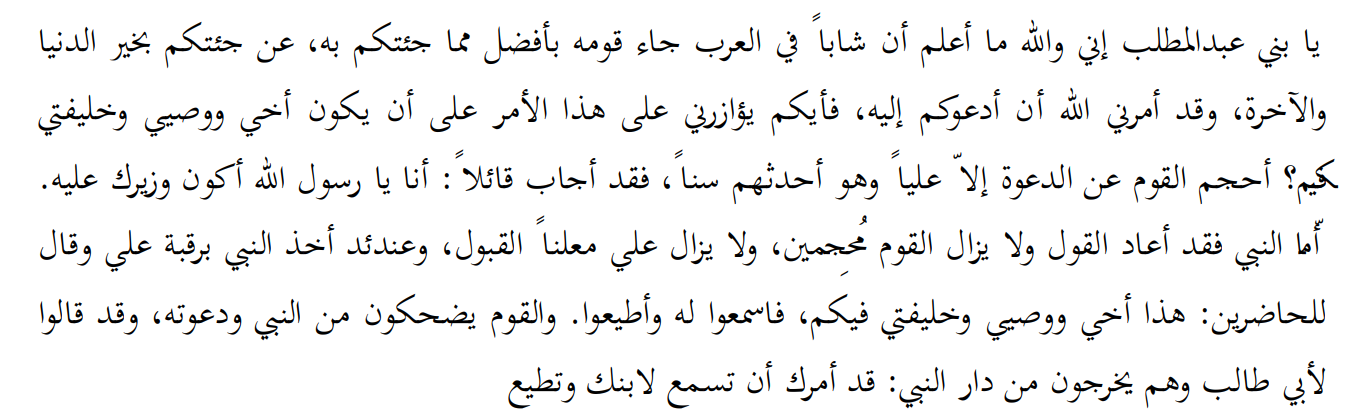
اے د عبدالمطلب اولاده! په الله قسم زه د عربو په منځ کې داسې کوم ځوان نه پیژنم چې خپلو خلکو ته هغه څه راوړي وي چې زه ستاسو لپاره راوړم. په یقین سره زه تاسو ته د دنیا او آخرت خیر راوړم. الله تعالیٰ ماته امر کړی چې تاسو هغه ته بللی شم، نو تاسو کوم یو به زما سره په دې کار کې مرسته وکړي تر څو زما ورور، وارث او ستاسو په منځ کې زما خلیفه وګرځي؟ خلک د دعوت څخه لرې شول، پرته له علي څخه، چې د دوی تر ټولو کشر و، هغه ځواب ورکړ: اې د الله رسوله! زه به ستا د دې کار مرسته کوونکی یم ﷺ. رسول الله ﷺ خپله خبره تکرار کړه او خلک بیا هم لرې پاتې شول، خو علي خپل قبول اعلانول ته دوام ورکړ. نو رسول الله ﷺ د علي غاړه ونیوله او حاضرینو ته یې وویل: دا زما ورور، وارث او ستاسو په منځ کې زما خلیفه دی، نو د هغه خبرې واوریئ او ورسره اطاعت وکړئ. خلکو د پیغمبر ﷺ او د هغه د دعوت پر مزاق وکړ، او د رسول الله ﷺ د کور څخه د وتلو پر mحال یې ابوطالب ته وویل: "هغه تا ته امر کړی چې خپل زوی واوري او ورسره اطاعت وکړې."
O Banu Abd al-Muttalib, by Allah I do not know any youth among the Arabs who has come to his people with a thing better than what I have come to you with. Verily I have come to you with the good of this world and the Hereafter. Allah has commanded me to call you to Him, so which one of you will assist me in this matter so that he may become my brother, inheritor and my Khalifah among you? The people kept away from the da’wa except Ali, the youngest among them, who responded saying: I, O Messenger of Allah, will be your assistant upon this matter. The Messenger repeated his statement and the people remained away while Ali continued announcing his acceptance. So the Messenger took the neck of Ali and said to those present: This is my brother, inheritor and my Khalifah among you so listen to him and obey. The people laughed at the Prophet and his invitation, and said to Abu Talib while leaving the Messenger’s house: ‘He has commanded you to listen to your son and obey him.’”
دا د هغه حدیث لنډیز دی چې د کور د حدیث په نامه یادیږي، لکه څنګه چې هغه کسان یې د دلیل په توګه تکیه ورباندې کوي.
This is the summary of the hadith of the house as narrated by those who depend upon it as evidence.
البخاری روایت کرتے ہیں هغه واقعه چې هغه ورځ پېښه شوه کله چې Note: the user's text was "Al-Bukhari narrated the incident of the day when", which I translated into Pashto as requested. Note that I rendered the output in Pashto script with Arabic-style names; the final rendering above should be corrected to proper Pashto as follows: البخاری روایت کوي هغه پېښه چې په هغه ورځ وشوه کله چې
Al-Bukhari narrated the incident of the day when
او خپلو نږدې خپلوانو ته وویروه [TMQ 26:214]
“And warn your nearest kinsfolk” [TMQ 26:214]
نازل شده ده (دا چې) رسول الله ﷺ د صفا په غر ودرېد، د خواړو د تیارولو ذکر پرته. احمد بن حنبل په خپل مسند کې دوه احادیث روایت کړي، یو هغه چې د خواړو د تیارولو څخه یادونه کوي پرته لدې چې ویلي شي دا هغه ورځ وه چې ﴿وَأَنذِرْ عَشِيرَتَكَ الْأَقْرَبِينَ﴾ نازل شو، او بل هغه چې ښيي چې د خواړو تیارول د هغې ورځې په کې وو چې دا آیت نازل شو. موږ لومړی دا متنونه ښيو، بیا به یې هغه څه تشریح کړو چې دا متنونه پکې دي.
Was revealed (saying) that the Messenger (saw) stood upon (Mount) Safa, without mentioning the preparation of food. Ahmad bin Hanbal narrated in his Musnad two hadiths, one about the preparation of food without mentioning it was the day in which “And warn your nearest kinsfolk” was revealed and another mentioning that the preparation of food was on the day the ayah was revealed. We will show these texts first then explain what they contain.
البخاری روایت کوی، له ابن عباس (رض) څخه، چې هغه وویل: کله چې
Al-Bukhari narrated from Ibn ‘Abbas (ra) who said: When
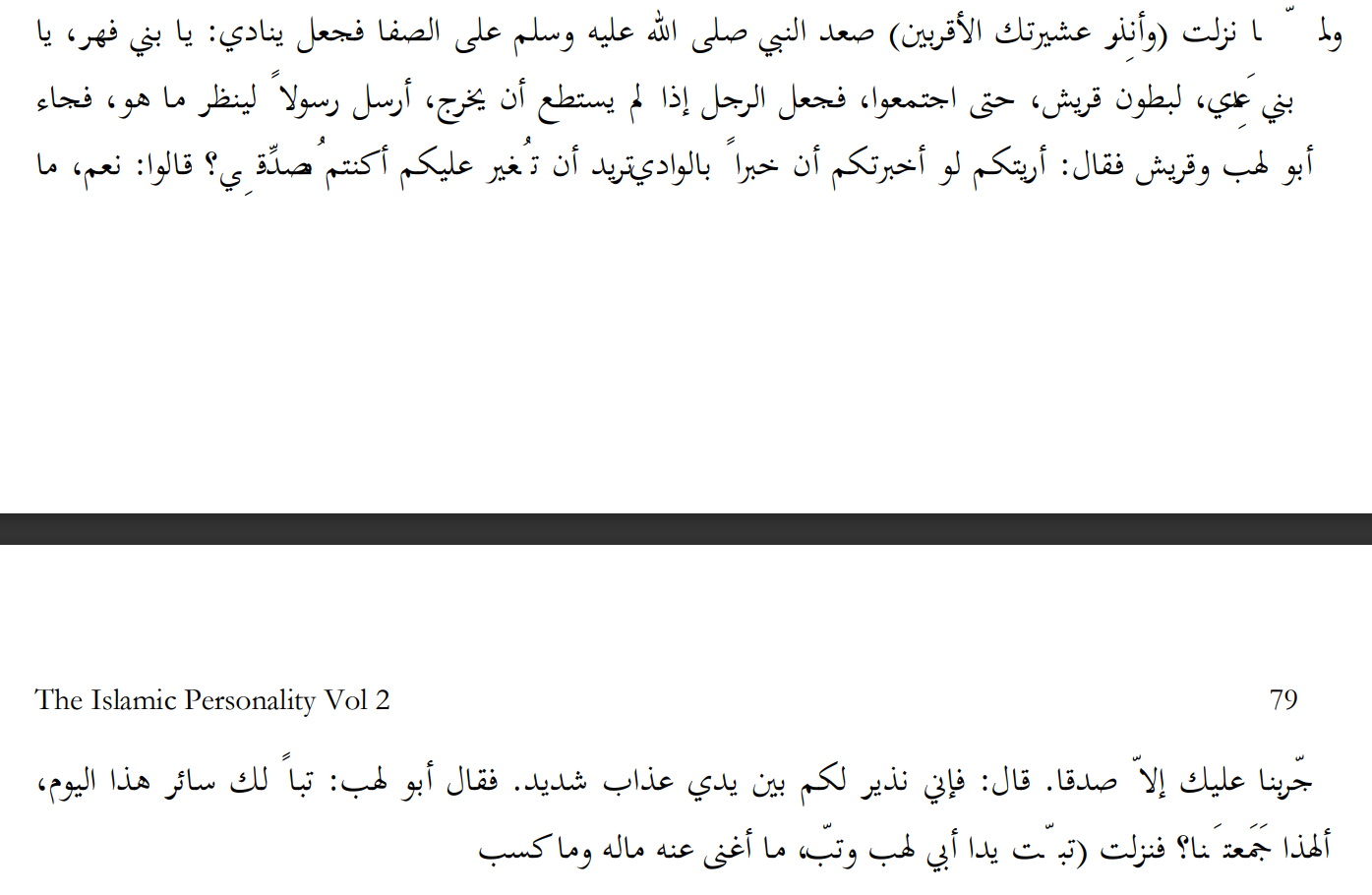
«او کله چې دا آیت نازل شو: {او خپلو نږدې خپلوانو ته خبرداری ورکړه}، رسول الله ﷺ صفا غر ته ودرېد او اعلان یې پیل کړ: اې د بنو فهر، اې د بنو عدي! د قریشو ټول بطنونه یې راوغوښتل، تر دې چې راټول شول. هغه څوک چې نه شو تللی، یو استازی یې لېږلی ؤ ترڅو وګوري چې څه پېښ دی. ابولهب او قریش راغلل. هغه وفرمایل: ‹که زه تاسو ته ووایم چې په دره کې سپاره (سړي) شته چې تاسو په ناڅاپه توګه بریدونه کول غواړي، ایا به تاسو زما باور وکړئ؟› دوی وویل: هو، موږ تا په هېڅ شي کې نه یو ازمېلی، پرته له دې چې تا یې د ریښتیا ویونکی وموندلی. هغه وفرمایل: ځکه زه تاسو ته د یوه سخت عذاب څخه مخکې خبرداری ورکوونکی یم! ابولهب وویل: تا ته د ورځې پاتې برخه تباه شي! ایا د دې لپاره مو راټول کړي وې؟ بیا دا آیت نازل شو: {تباه شي د ابولهب دواړه لاسونه، او هم دی تباه شي! نه یې مال ورته ګټه ورکړه او نه یې اولادونه}.»
“And when And warn your nearest kinsfolk was revealed, the Messenger stood upon Safa and started announcing: O Banu Fihr, O Banu Adiyy for all the (butun) of Quraysh until they gathered together. Whoever was unable to go had sent a messenger to see what was happening. Abu Lahab and Quraysh came and he said: ‘If I told you there were horses (men) in the valley intending to attack you suddenly, would you believe me?’ They said: Yes, we have not tried you in anything except to find you saying the truth. He said: Verily, I am a warner to you before a severe punishment! Abu Lahab said: Woe be upon you for the rest of the day. Is it because of this that you gathered us? So “Perish the two hands of Abû Lahab (an uncle of the Prophet [sal-Allâhu 'alayhi wa sallam]) and perish he!, His wealth and his children will not benefit him!” [TMQ 111:1-2] was revealed”
دا څرګندوي چې د خوړو د چمتو کولو پېښه هغه ورځ نه وه چې په کې «وَأَنْذِرْ عَشِيرَتَكَ الْأَقْرَبِينَ» نازل شو، ځکه چې دا د حدیث په متن کې راغلې پېښې سره سمون نه خوري. احمد بن حنبل په خپل مسند کې وایي: عفان موږ ته روایت کړ چې ابو عوانه موږ ته روایت کړ له عثمان بن المغیره څخه، هغه له ابو صادق څخه، هغه له ربیعه بن ناجد څخه، هغه له علي (رض) څخه چې وې ویل: رسول الله ﷺ د بني عبدالمطلب ټول ډلې راټولې کړې یا یې راوبلل چې خواړه او څښاک وکاروي. هغه د دوی لپاره یو اندازه خواړه چمتو کړل چې دوی یې خوړل تر دې چې ډک شول. هغه وویل: خواړه داسې پاتې شول لکه چې ګوته یې هم نه وه لګولې شوې. بیا هغه د زعفرانو یو څښاک وغوښت چې دوی یې وڅښل تر دې چې ډک شول، او څښاک داسې پاتې شو لکه چې ګوته یې هم نه وه لګولې شوې. بیا ﷺ وفرمایل:
This indicates that the incident of the preparation of food was not on the day in which “And warn your nearest kinsfolk” was revealed as it does not concur with what occurred in the hadith’s text. Ahmad bin Hanbal said in his Musnad: ‘Affan related to us that Abu Awana related to us from Uthman bin al-Mughira from Abu Sadiq from Rabi’a bin Najidh from Ali (ra) who said: The Messenger of Allah (saw) gathered or called Banu Abd al-Muttalib in all their groups to eat and drink. He prepared for them a quantity of food which they ate until they were satisfied. He said: The food remained as if it had not been touched. Then he called for a saffron drink which they drank until they will full, and the drink remained as if it had not been touched. Then he (saw) said:

ای د عبدالمطلب اولادو! زه یوازې ستاسو او د ټولې انسانیت ته د رسول په توګه لیږل شوی یم. تاسو اوس د دې نښې (آیت) څخه هغه وليدل چې وليدل، نو له تاسو څخه به څوک ما ته د ژمنې لاس ورکړي ترڅو زما ورور او ملګری شي؟ هغه وویل: هېڅوک نه ودرېدل، نو زه د هغه لپاره ودرېدم، که څه هم زه د ټولې ډلې تر ټولو کوچنی وم. هغه وویل: کښېن. هغه دا خبره درې ځله تکرار کړه، وروسته زه د هغه لپاره ودرېدم او هغه وویل: کښېن، تر دریمې ځلې پورې چې هغه زما لاس د خپل لاس سره وواهه.
“O Banu Abd al-Muttalib, I have been sent specifically to you and to humanity in general. You have now seen of this sign (ayah) what you saw, so which one of you will give me a pledge in order to become my brother and companion?’ He said: None of them stood, so I stood for him though I was the youngest of the group and he said: Sit down. He repeated it three times following which I stood for him and he said ‘Sit down’, until the third time he struck my hand with his hand.”
دا خبره روښانه کوي چې د دې پېښې په لړ کې د {وَأَنذِرْ عَشِيرَتَكَ الْأَقْرَبِينَ} نازلېدو هېڅ پېښه نشته، او د الله رسول ﷺ هغوئ ته اسلام وړاندې کړ، ترڅو هر هغه څوک چې مسلمان شي هغه به د هغه ورور او ملګری وي، او دا چې هغه ﷺ علي (رض) ته هېڅ ونه ويل.
This clarifies that there is no moment in this incident of the revelation of “And warn your nearest kinsfolk”, and that the Messenger (saw) offered Islam to them so that whoever became a Muslim would become his brother and companion and that he did not say anything to Ali (ra).
دوهمه روایت په اړه، احمد بن حنبل په خپل مسند کې روایت کړي: «اسود بن عامر زموږ ته روایت وکړ، هغه وویل: شریک زموږ ته د العمش څخه روایت وکړ، هغه د المنهال څخه، هغه د عباد بن عبدالله الاسدي څخه، هغه له علي څخه چې وې ویل: کله چې دا آیت ﴿وَأَنذِرْ عَشِيرَتَكَ الْأَقْرَبِينَ﴾ نازل شو، رسول الله ﷺ د خپل کورنۍ افرادو راټول کړل. دېرش تنه راټول شول؛ دوی وخوړل او وڅښل، بیا هغه ﷺ ورته وویل:»
As for the second narration, Ahmad bin Hanbal narrated in his Musnad: “Aswad bin Amir related to us that Shareek related to us from Al-‘Amash from Al-Minhal from ‘Ibad bin Abdullah al Asadi from Ali who said: When the ayah “And warn your nearest kinsfolk” was revealed, the Messenger (saw) gathered the family of his house. Thirty people gathered; they ate and drank then he (saw) said to them:
"کوم یو به زما د پورونو او وعدو ضمانت وکړي ترڅو زما سره جنت کې وي، او دا به زما د کورنۍ خلیفه وي؟" یو سړي، چې شریک نومونه نه دي ذکر کړي، وویل: ای د الله رسوله، ته یو سمندر (بحر) یې، نو دا کار څوک کولی شي؟ بیا یو بل هم همدا ډول وویل. هغه دا د خپل کور کورنۍ ته وړاندې کړه، نو علي (رض) وویل: زه (به یم).
"Which one will guarantee my debts and promises so as to be with me in Paradise, and he will be my Khalifah over my family? A man, whom Shareek did not name, said: O Messenger of Allah, you were an ocean (bahr) so who could take care of this? Then another said (the same?). He offered that to the family of his house, so Ali (RA) said: I (will).”
دا نه ده چې د "وارث" يا "خليفه" کلمه په دې دواړو متنونو کې په هيڅ ډول نه راځي. بلکې يوازې د "خليفه" کلمه راځي چې د هغه د کورنۍ پورې محدوده ده، او د کورنۍ باندې خلافت هغه خلافت نه دی چې د واکمنۍ يا مشرۍ په مقام کې وي، او نه د هغې سره کومه اړيکه لري. دا هغه متنونه دي چې په صحيح کتابونو کې راغلي، او په ډېرو روايتونو کې د ورته الفاظو او يو ډول معنا سره راغلي، او په هيڅ يوه کې هم د "وارث" يا "خلافت" کلمې نه دي راغلې. د صحيح کتابونو د راټولوونکو يا د هيڅ معتبر راويانو له لارې هم په يوه حديث کې، نه د علي رضي الله عنه په اړه او نه د بل چا په اړه، د "وارث" يا "خليفه" کلمه په هيڅ ډول نه ده راغلې، نو دليل د صحيح کتابونو کې د هغه د دليل نه شتوالي له امله ساقط کيږي.
The word inheritor or Khalifah does not appear in these two texts in any way at all. Rather it is only the word Khalifah which appears restricted to his family, and the Khilafah over the family is not the Khilafah in the post of rule or leadership nor does it have any relationship with that. These are the texts which came in the Saheeh books, and they came in numerous narrations with similar wordings and unified meanings, and there did not appear in any of them the words inheritor or Khilafah. There has never appeared, either via any of the compilers of the Saheeh (books of ahadith) or any of the trustworthy narrators, in even one hadith the word(s) inheritor of Khalifah in any way at all either in relation to Ali or anyone else, so the evidence falls due to the absence of any evidence for it in the Saheeh books.
هغه متن چې هغوی یې روایت کوي چې د علي د ټاکلو په اړه یې خبرې کوي او هغه یې د "حدیث الدار" په نوم یادوي، دا متن په دې روایت سره د معنی له پلوه (درایت) رد دی۔ حدیث د درایت له پلوه د معنی له مخې رد کیږي، او د روایت له پلوه د سند له مخې. نو که چیرې سند یا معنی کې رد وي، نو هغه نه شي منل کیدای او د دلیل په توګه نه پاتې کیږي. څرنګه چې د معنی رد کول د ډیرو دلیلونو له امله دی، له هغې جملې څخه:
As for the text narrated by those who contend about the appointment of Ali which they named the hadith of the house, this text with this narration (riwayah) is rejected in its meaning (Dirayah).A hadith is rejected in its dirayah based on its meaning, and its narration based on its chain. So if it is rejected in its chain or meaning then it cannot be considered and it falls as evidence. As for rejecting its meaning, this is due to many reasons including:
لومړی: په دې حدیث کې داسې ښکاري چې رسول ﷺ د عبدالمطلب د کورنۍ څخه د خپل دعوت په کار کې مرستې غوښتې، په دې شرط چې واک به د دوی د وروسته وي. دا خبره له دوو اړخونو څخه باطله ده: لومړی، دا د رسول ﷺ د هغې پېښې د خبرې او عمل سره ټکر خوري چې هغه د یوې قبیلې غوښتنه رد کړه چې که دوی مسلمانان شي نو واک به د هغوی د وروسته د دوی وي، او هغه ﷺ ځواب ورکړ:
Firstly: In this hadith it appears that the Messenger (saw) sought the assistance of the family of Abd al-Muttalib in his da’wa with the condition that the rule became theirs after them. This is void from two aspects: firstly, this contradicts the Messenger’s statement and action in the incident in which he refused the request from the tribe that the rule becomes theirs after him if they become Muslims to which he replied:
«اختیار او حکومت د الله تعالیٰ پورې اړه لري، او هغه دا چې چیرې وغواړي، هلته یې ږدي.»
“Authority is a matter which belongs to Allah, and He (swt) will place it where He wishes.”
ابن هشام د خپل کتاب «سیرۀ النبي ﷺ» کې روایت کوي: ابن اسحاق وویل چې الزهري روایت کړی چې هغه د بني عامر بن صعصعه سره وليدل، نو هغوی ته يې د الله عزوجل ته دعوت ورکړ او ځان يې هغوی ته وړاندې کړ. له هغوی څخه يو سړي، چې هغوی يې بيجرة بن فراس بللو، ورته وويل: په الله قسم، که زه دا د قريشو ځوان واخلم، نو د هغه په واسطه به د عربو خوړل (يعني فتح کول) وکړم. بيا يې وويل: که موږ تاسو سره د خپل کار د ملاتړ ژمنه وکړو او بيا الله تاسو ته د هغو پر وړاندې چې تاسو ته مخالفت کوي بريا درکړي، ايا واک به د تاسو له وروسته زموږ سره وي؟ هغه ﷺ وفرمايل: «واک د الله لپاره دی او هغه يې چېرته چې وغواړي ځای پر ځای کوي.» هغه وويل: نو ده ورته وويل: ايا موږ به خپلې غاړې ستا لپاره قربانۍ کړو، بيا چې الله ستا سره بريا درکړي نو واک بل چا ته ورکول کيږي؟ نو زموږ د کار ته اړتيا نشته، او هغوی هغه رد کړ. نو څنګه کيدای شي چې رسول الله ﷺ ووايي: «کار د الله دی او هغه به يې چېرته چې وغواړي ځای پر ځای کړي» يعني د خلافت او د هغه له وروسته د واک کار، او بيا بني عبدالمطلب ته ووايي:
Ibn Hisham narrated in his book of the Sirah of the Prophet (saw): Ibn Ishaq said that Az-Zuhri narrated that he met Banu Amr bin Sa’sa’ah so he invited them to Allah ‘azza wa jalla and offered himself to them. One man among them, whom they called Bayjirat bin Furra, said to him: By Allah, if I were to take this youth from the Quraysh, I will eat (i.e. conquer) the Arabs through him. Then he said: What if we were to pledge to support your matter then Allah will grant you victory over those who oppose you. Will the rule be with us after you? He said: “The rule is for Allah and He places it where He wills.” He said: So he said to him: Will we sacrifice our throats for you, then when Allah (swt) grants you victory the rule becomes for someone else? Then we have no need of your matter, and they rejected him.” How can the Messenger (saw) say: “The matter belongs to Allah and He will place it where He wills” i.e. the matter of the Khilafah and the rule after him, yet he says to Banu Abd al-Muttalib:
«کوم یو له تاسو به زما په دې کار کې مرسته وکړي، ترڅو هغه زما ورور، وارث او ستاسو په منځ کې زما ځای ناستی (خلیفه) شي؟»
“Which one of you will assist me upon this matter so that he may become my brother, inheritor and Khalifah among you?”
دا څرګنده تناقض نه دی؟ ناگزیره ده چې له دې دوو خبرو څخه یوه رد شي. ځکه چې د کور د حدیث په اړه ویل کیږي چې دا هغه وخت پیښ شو کله چې
Is this not a clear contradiction? Inevitably, it is necessary that one of these two statements be rejected. Since it is said of the hadith of the house that it occurred when
د خپلو نږدې خپلوانو کې ویره ورکړه [TMQ 26:214]
“Warn your nearest kinsfolk” [TMQ 26:214]
نازل شده، یعنی د رسول الله ﷺ د نبوت په دریم کال، او حدیث:
Was revealed i.e. the third year of the messenger ship and the hadith:
د کار اختیار یوازې الله لري، او هغه دا (اختیار) چېرته چې وغواړي ږدي
“The matter belongs to Allah and He places it where He wills”
کله چې پیغمبر ﷺ قبیلو ته ځان وړاندې کاوه، یعنې د نبوت له لسم کال کې، او په دې توګه د "د کور" حدیث وروسته راځي؛ نو دا د "د کور" حدیث دی چې ردّ کېږي. د دوهم اړخ په اړه دا ده چې پیغمبر ﷺ په دې حدیث کې کافرانو ته داسې څه وړاندې کوي چې مسلمانان شي، بلکې هغه ته ترټولو لوی شی وړاندې کوي چې د هغه وروسته د ټولو مسلمانانو باندې خلافت دی، د دې لپاره چې اسلام ته داخل شي. دا د پیغمبر ﷺ د دعوت عمل او د شریعت احکامو سره ټکر لري. پیغمبر ﷺ خلک اسلام ته دې ته رابلل چې دا سم دین دی، او د هغه ﷺ څخه هیڅکله، حتی په ضعیفه حدیث کې هم، نه ده روایت شوې چې هغه د کافر د اسلام په بدل کې کوم شی، وړ یا لوی، ورکړی وي. په هغو خلکو کې چې زړونه یې ترلاسه کېږي، دا هغه مسلمانان دي چې د زکات څخه ورکول کېږي ترڅو د دوی په واسطه دولت پیاوړی شي، نه کافران چې د دې لپاره ورکول کېږي چې اسلام ته داخل شي. او نه دا جایز دی چې د کافر د اسلام په بدل کې هغه ته کوم شی ورکړل شي.
when the Messenger (saw) offered himself to the tribes i.e. in the tenth year after the messenger ship and therefore after the hadith of the house; so it is the hadith of the house which is rejected. As for the second side, it is that the Messenger (saw) in this hadith offered something to the disbelievers so that they may become Muslims, rather he offered them the greatest thing which is the Khilafah after him over all Muslims as the price for their entering into Islam. This contradicts the Messenger’s action in his da’wa and the Shari’ah rules. The Messenger would invite people to Islam because it is the correct deen and it has never been narrated from him, even through a weak hadith that he offered anything whether small or large to a kafir in exchange for his entering into Islam. As for those whose hearts are to be reconciled, they are Muslims who are given from the zakat in order to strengthen the State through them, not kuffar who are given so that they enter Islam. Nor is it allowed to give something to kuffar in exchange for their entering Islam.
دوهم: حدیث ذکر کوي چې رسول الله ﷺ د کفارو لپاره د واده ضیافت او خواړه تیار کړل، ترڅو هغوی ته د اسلام دعوت ورکړي، او هغوی یې د یوې ډوډۍ شاوخوا راټول کړل ترڅو اسلام ته داخل شي، او د علي (رضي الله عنه) لپاره یې خواړه تیار نه کړل، ځکه هغه مخکې له مخکې اسلام قبول کړی و. نو که دا خلک اسلام رد کړي او د دې څخه انکار وکړي چې د هغه له وفات وروسته واکمني د اسلام په بدل کې د دوی ته ورکول کیږي، نو هلته د علي (رضي الله عنه) لپاره د خپل قبول ورکولو ځای نشته، ځکه هغه ته د اسلام دعوت نه کیږي، ځکه هغه دمخه مسلمان دی، او هغه ته هیڅ خبره نه ده خطاب شوې. په همدې وجه په دې مجلس کې داسې ځای نشته چې هغه ورته ووایي:
Secondly: The hadith mentions that the Messenger (saw) prepared a wedding feast and meal for kuffar in order to invite them to Islam, and he gathered them around a meal so that they may enter Islam and he did not prepare food for Ali (ra) who had already accepted Islam. So if these people reject Islam and reject that the rule becomes theirs after him in exchange for Islam, there is no place there for Ali (ra) for giving his acceptance as he is not being invited to Islam because he is already a Muslim, and there is no speech addressed to him. This is why there is no place in this gathering such that he says to him:
دا زما ورور دی، زما وارث او ستاسو په منځ کې زما خلیفه دی، نو له هغه اوریدل او اطاعت وکړئ۔
“This is my brother, inheritor and my Khalifah among you so listen to him and obey”
لکه څنګه چې هغه د خطاب یا خبرو اترو هدف نه و. دريمه: حديث دا ياداوي کړی چې هغه ډله اسلام رد کړ، او د هغه د بيا بيا وړاندیز کولو سره سره دوی په اسلام کې د ننوتلو په بدل کې د دې خبرې په رد کولو کې ټينګار وکړ چې واکمني د هغه له وفات وروسته دوی ته پاتې شي. دوی کافران پاتې شول، نو پيغمبر ﷺ څنګه دوی ته په خطاب کې داسې وويل؟
Since he is not the target of the address or the negotiation. Thirdly: The hadith mentions that the group rejected Islam, and despite him repeating his offer they persisted in rejecting Islam and rejecting that the rule becomes theirs after him in exchange for entering Islam. They remained kuffar so how could the Messenger (saw) say to them in addressing them:
«دا زما خلیفه ده چې ستاسو په منځ کې دی»
“This is my Khalifah among you”
داسې حال کې چې هغه پوهیږي چې دوی کافران دي او اسلام يې ردّ کړی دی، هغوی ته د هغه اوریدو او اطاعت کولو امر کول؟ او هغه څنګه د دوی په منځ کې خليفه کیدای شي حال دا چې دوی کافران دي؟
Commanding them with hearing and obeying him while he knows they are kuffar who have rejected Islam? And how could he be the Khalifah among them while they are kuffar?
څلورم: هغه روایت چې دوی یې نقلوي وايي:
Fourthly: The narration they narrate says:
دا زما ورور دی، زما وارث او ستاسو په منځ کې زما خلیفه دی، نو له هغه اوریدل او اطاعت وکړئ۔
“This is my brother, inheritor and my Khalifah among you so listen to him and obey”
دا خطاب د عبدالمطلب د کورنۍ سره دی، ځکه چې خبرې د "یا بنی عبدالمطلب" په وینا پیل شوې. نو دا خاص دی د دوی لپاره، ځکه چې هغه هغه ته د دوی په اړه خلیفه ګرځولی و، یعنې د عبدالمطلب د کورنۍ باندې، نه د مسلمانانو خلیفه، ځکه چې هغه وفرمایل: "او زما خلیفه ستاسو په منځ کې." نو هغه د مسلمانانو خلیفه نه دی لکه څنګه چې د صریح متن په واسطه بیان شوی. او دلته دا نه شي ویلی چې درس د متن د عمومیت له مخې دی نه د سبب د خاص والي له مخې، ځکه دا یوه خاصه پیښه ده نه سبب (سبب)، سربیره پردې چې خبرې هم خاصې دي نه عامې: "یا بنی عبدالمطلب" او "زما خلیفه ستاسو په منځ کې"، نو تخصیص غوښتنه کوي ځکه چې دا یوه خاصه پیښه ده نه سبب، او همدارنګه د عامو الفاظو نه موجودیت له امله.
This is an address to the family of Abd al-Muttalib since the words started with his saying “O Banu Abd al-Muttalib.” So it is specific to them as he made him a Khalifah over them i.e. over the family of Abd al-Muttalib not the Khalifah of the Muslims since he said, “and my Khalifah over you.” Thus he is not the Khalifah for the Muslims as is depicted by the explicit text. Nor can one say here that the lesson is by the generality of the text not the specificity of the cause since this is a specific incident not a cause (sabab) not mentioning that the words are also specific and not general: “O Banu Abd al-Muttalib”, “my Khalifah among you” so the specification is demanded due to this being a specific incident not a cause, and also due to the absence of general words.
یو له دې څلورو خبرو څخه یوه هم دا حدیث د دروغ او د دې د تناقض څرګندولو لپاره کافي ده، او د دې روایت ردول (د درایت له مخې) واجب دي. له همدې امله دا روښانه شوه چې رسول اللّٰه ﷺ په ښکاره ډول دا نه دي ویلي چې علي (رض) د ده څخه وروسته خلیفه ګرځول شوی دی. له دې ټولو څخه دا څرګنده شوه چې هغه احادیث چې هغه کسان یې روایت کوي څوک چې وايي رسول اللّٰه ﷺ د ده څخه وروسته د خلافت لپاره یو کس ټاکلی و، دا رد شوي احادیث دي چې د دلیل په توګه باور ورباندې نه کیږي، نو هغه ساقط دي. د رسول اللّٰه ﷺ د ده څخه وروسته د خلافت د سرپرستۍ لپاره د چا ټاکلو دلیل نه پاتې کیږي؛ بلکې دلیل پر دې خلاف ثابت دی، یعنې رسول اللّٰه ﷺ دا کار مسلمانانو ته پرېښی دی چې د دې کس په اړه د چا غوښتنه لري هغه وټاکي، خو د خلیفه ټاکلو لاره یې ورته بیان کړې ده.
Just one of these four matters suffices to reveal the falsehood of this hadith and its contradiction, and it is obligatory to reject its narration (dirayah). Therefore it is clarified that the Messenger (saw) did not explicitly state making Ali (ra) the Khalifah after him. From all this it becomes clear that the ahadith narrated by those who argue that the Messenger (saw) designated a person for the Khilafah after him are rejected ahadith unsuitable to depend upon as evidence so they fall. There remains no evidence that the Messenger (saw) designated anyone to be in charge of the Khilafah after him; rather the evidence has been established contrary to that i.e. that the Messenger (saw) left the matter to the Muslims to choose whom they want in relation to the person but he specified for them the method for appointing the Khalifah.