9. علم او کلتور
9. Science And Culture
په عربي ژبه کې ویل کیږي: سړي «عَلِمَ» علم ترلاسه کړ. دا پدې معنا ده چې هغه د علم حقیقي واقعیت ته ورسید. هغه د یوې شۍ علم ترلاسه کړ یعنې هغه ورپوهیده، یا د یوې موضوع څخه خبر شو یا ورسره آشنا شو. همدا راز په ژبه کې ویل کیږي: «ثَقِفَ» یعنې هغه پوه او ماهر شو، نو زده کړې شوی او روزل شوی (ثقیف) دی. «ثَقِفَ اللغةَ» یعنې هغه ژبه ښه زده کړه او په چټکۍ سره یې ومنډله. دا ژبنۍ معناوې د الفاظو د کارونې بنسټ دي. که څه هم که دا الفاظ د دې ژبنۍ معنا سره تړلو نورو معنا وو لپاره وکارول شي، دا جایز دي، لکه د «فاعل» کلمه چې په گرامر کې اخیستل شوې ده. ژبنۍ معنا غالبه وه، او له همدې کبله پخوانیو علماؤ کلمه «علم» د ټولو ډولونو پوهې لپاره کاروله، د علومو او فنونو ترمنځ توپیر نه کاوه. بیا خلکو فکري او طبیعي فنونه د ټولو انسانانو عمومي او نورې روایتي (نقلي) علوم یوې ځانګړې ملت ته منسوب وبلل، چې څخه یې نقل شوي وو. وروسته، هر یو «علم» او «ثقافت» د مختلفو ځانګړو فنونو له مخې تعریف شو، او داسې اصطلاحي معناوې یې ترلاسه کړې چې د ژبنۍ معنا څخه توپیر لري. د دې اصطلاح له مخې دا معناوې لري: علم هغه پوهه ده چې د لیدو، تجربې او روزنې له لارې ترلاسه کیږي، لکه فزیک، کیمیا او نور تجربي علوم. ثقافت هغه پوهه ده چې د نقل، زده کړې او استنباط له لارې ترلاسه کیږي، لکه تاریخ، ژبې، فقه، فلسفه او نور غیرتجربي فنون. اور کچھ دوسرے غیر تجرباتی علوم بھی ہیں جو علم (علم) میں شامل سمجھے جاتے ہیں، حالانکہ وہ ثقافت کے دائرے میں آتے ہیں، جیسے حساب، انجینئرنگ اور صنعت۔ اگرچہ یہ ثقافت (ثقافہ) کے تحت آتے ہیں، پھر بھی انہیں علم کا حصہ مانا جاتا ہے کیونکہ یہ تمام انسانوں کے لیے عالمگیر ہیں اور کسی ایک قوم کے ساتھ خاص نہیں۔ اسی طرح ثقافت سے تعلق رکھنے والی وہ صنعتی نوعیت کی ہنرمندیاں جو صنعت سے مشابہت رکھتی ہیں، جیسے تجارت اور جہاز رانی، انہیں بھی علم کا حصہ سمجھا جاتا ہے اور یہ بھی عالمگیر ہیں۔ رہے فنون، جیسے مصوری، مجسمہ سازی اور موسیقی، تو یہ ثقافت کا حصہ ہیں۔ یہ ایک خاص نقطۂ نظر کی پیروی کرتے ہیں، جو ایک مخصوص ثقافت ہے۔ ثقافت (ثقافہ) اور علم (علم) کے درمیان فرق یہ ہے۔
In Arabic language it is said: the man has obtained (‘alima) knowledge (‘ilm). This means that he attained the true reality of knowledge (‘ilm). He gained knowledge of a thing means he became cognisant of it, which means that he became informed of a matter or acquainted with it. Also in the language it is said: He has gained comprehension (thaqifa), which means that he has become proficient, thus he is educated and cultured (thaqif). He has understood (thaqifa) a language (means) he has mastered and understood it swiftly. These linguistic meanings are the basis of the use of words, However if these words were used to indicate other meanings that relate to the linguistic meaning then that is permitted, like in the case of the adoption of the word fa’il (subject) in grammar for example. The linguistic meaning (of the words) was prevailing and this is why the ancients used to apply the word ‘ilm on all forms of knowledge without differentiating between the sciences and disciplines. Then people began to consider intellectual and natural disciplines as being general to all people whilst other traditional (textual) disciplines were considered specific to the nation from which it was transferred. Subsequently, each of science (‘ilm) and culture (thaqafa) began to be defined according to different specific disciplines, acquiring terminological meanings which were different to their linguistic meanings. According to this terminology they have the following meaning: Science (‘ilm) is the knowledge which is acquired through observation, experimentation and education like physics, chemistry and the rest of the empirical sciences and culture (thaqafa) is the knowledge which is acquired by way of transmission, learning and deduction as in (the study of) history, languages, jurisprudence (fiqh), philosophy and the rest of the non-empirical disciplines. And there are other non-empirical disciplines which are included as sciences (‘ilm) even though they come within culture such as arithmetic, engineering and industry; even though they come under culture (thaqafa) they are regarded as part of science because they are universal to all people and not specific to any one nation. In a similar way anything from the culture related to crafts which resemble industry such as trade and shipping; they are considered to be part of science and they are universal. As for the arts such as; painting, sculpture and music they are part of culture. They follow a particular viewpoint; which is a specific culture. The difference between culture (thaqafa) and science (‘ilm)
دا چې علم د ټولو ملتونو لپاره عمومي دی او د کوم ملت سره خاص نه دی چې د بل ملت شاملیدل ونه کړي. په داسې حال کې چې کلتور (ثقافت) ممکن خاص وي، ځکه چې هغه ته هغه ملت منسوب وي له کوم ځایه چې دا راپیدا شوی، یا دا د ملت د ځانګړو او خاصو صفاتو برخه وي لکه ادب او د قهرمانانو سوانح، او د ژوند په اړه د دوی فلسفه، یا دا عمومي وي لکه سوداګري، کښتۍ چلول او داسې نور. له همدې امله، علم د ټولو ملتونو څخه په عمومي ډول اخیستل کیږي، ځکه چې دا عمومي دی او د کوم ځانګړي ملت پورې خاص نه دی. په اړه د کلتور (ثقافت) ملت باید د خپل کلتور څخه پیل وکړي؛ کله چې هغه دا مطالعه کړي او پرې پوه شي تر هغې چې د دوی په ذهنونو کې متمرکز شي، نو بیا کولی شي د نورو کلتورونو مطالعه وکړي. مسلمانان به د هغه علومو ترمنځ توپیر کاوه چې یو کس پخپله ترلاسه کوي، او د هغو علومو ترمنځ چې له نورو څخه اخلي. ابن خلدون په خپل کتاب المقدمه کې وايي:
is that science is universal to all nations and not specific to any nation to the exclusion of another nation. As for culture (thaqafa) it might be specific, being ascribed to the nation from which it resulted or it may be part of the nation’s specific and particular characteristics such as literature and biographies of heroes, and their philosophy concerning life or they may be universal such as trade, shipping etc. Therefore, science is adopted universally from all nations because it is universal and not specific to any particular nation. As for culture (thaqafa) the nation should begin with its own culture, when she has studied it and is cognisant of it until it becomes focused in their minds then they can study other cultures. The Muslims used to differentiate between the sciences which a person used to attain by himself and the sciences he used to receive from others. Ibn Khaldun says in his book al-Muqaddima:
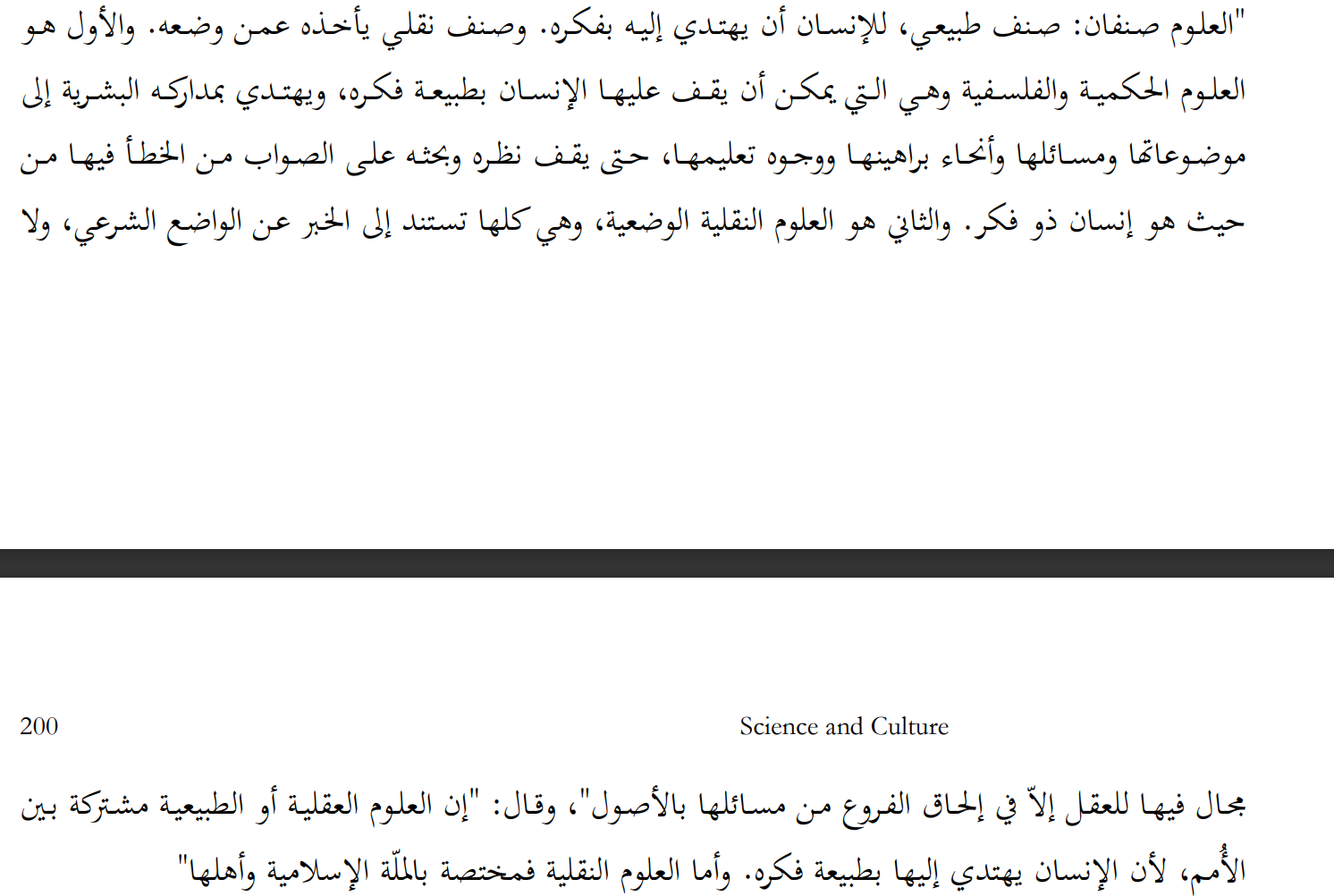
علوم دوه ډوله دي: یو طبیعي ډول دی چې انسان یې د خپل فکر له لارې ترلاسه کوي، او بل نقلي ډول دی چې هغه له هغه چا اخلي چې دا یې تالیف کړی وي. لومړي هغه فلسفي او عقلي علوم دي چې انسان یې د خپل فکر په واسطه لټولی شي او د انساني قواوو په مرسته خپلو موضوعاتو او مسایلو ته، ټولو قطعي دلیلونو ته او د خپلو درسونو ټولو اړخونو ته لاره پیدا کوي. نو هغه د خپل تمیز او مطالعې په ترڅ کې سم نظر له غلط نظر څخه جلا کوي، د هغه انسان په حیث چې د فکر وړتیا لري. دویم هغه نقلي او لیکلي علوم دي. دا علوم په هغه روایت پورې تړلي دي چې له شرعي سرچینې راځي. په دې برخه کې عقل ته یوازې دومره ځای پاتې کیږي چې فرعي مسایل له اصولو سره وصل کړي.
“The sciences are of two types: A natural type which is for man to arrive at through his thinking and a textual type which he takes from the one who authored it. The first are the philosophical and aphoristic sciences which he can seek by his thought and be guided through the human faculties to its subjects and issues and all its decisive proofs and aspects of its teachings. So as in his discernment and study he attains the correct (opinion) from the incorrect, in his capacity as a human being possessing the faculty of thought. The second are the textual and written sciences. They depend on the report coming from a shar’i source. The mind has no scope in this regard except to relate the branch issues to the usul (foundation)”.
ده همدا وینا هم کړې ده چې «عقلي یا طبیعي علوم ټولو ملتونو ته مشترک دي، ځکه انسان دا علوم په خپل فکر سره په طبیعي ډول ترلاسه کوي. څه چې نقلي علوم دي، هغه د اسلامي دین او د هغه د پیروانو لپاره ځانګړي دي.» داسې معلومیږي چې ابن خلدون چې کله نقلي علوم د اسلامي ملت سره ځانګړي کړل، دا یوازې یوه بیلګه وه، ځکه نور ملتونه هم خپل ځانګړي نقلي علوم لري، لکه د دوی قانون او ژبه. د ابن خلدون دا خبره نه ښیي چې هغه د علم او کلتور ترمنځ توپیر کاوه. دا یوازې دومره ښیي چې هغه د نقلي او عقلي علومو ترمنځ توپیر کاوه. د هغه خبرې د دې ثبوت نه دي چې مسلمانان به د علم او کلتور ترمنځ توپیر کاوه، بلکې دا د دې ثبوت دي چې مسلمانان یوازې د علومو ترمنځ توپیر کاوه. نو هغوی دوه برخې کړې وې. خو دا ویش د دې له مخې و چې دا علوم په عموم کې څنګه ترلاسه کیږي، نه دا چې ترلاسه کولو طریقه څه ده. له همدې امله هغوی هغه علوم عقلي، یعنې د عقل له لارې ترلاسه کیدونکي، او نقلي، یعنې له متن څخه ترلاسه کیدونکي، بللي. خو نن ورځ خلک علومو ترمنځ د دې له مخې توپیر کوي چې دوی څنګه ترلاسه شوي. نو هغوی «علم» هغه څه بولي چې د تجربي میتود له لارې ترلاسه شوي، او «کلتور» (ثقافت) هغه څه بولي چې د تجربي میتود پرته له نورو لارو ترلاسه شوي.
He also said “The rational or natural sciences are common to all nations since man arrives at them naturally through his thought. As for the textual sciences they are specific to the Muslim religion and its adherents.” It appears that what Ibn Khaldun meant by specifying the textual sciences with the Islamic millah was only an example because nations other than the Islamic nation as well have textual sciences specific to them such as their legislation and language. Ibn Khaldun’s statement does not indicate that he distinguished between science and culture. It only indicates that he distinguished between textual and rational sciences. His comments are not an evidence to say that the Muslims used to differentiate between science and culture rather they are an evidence to prove that the Muslims used only to differentiate between disciplines. Thus, they divided them into two sections. However their division was in terms of their general acquisition and not in terms of the manner of acquisition. So they designated them as rational sciences i.e, acquired via the mind. And textual sciences acquired from the text. However, people today differentiate between disciplines in terms of the manner in which they were received. Thus, they apply the term ‘science’ (‘ilm) on anything that is acquired through the empirical method and they apply the term ‘culture’ (thaqafa) on anything acquired by means other than the empirical method