2.13 Пророки и посланники
2.13 The Prophets And Messengers
«Пророк» (наби) и «посланник» (расуль) — два противопоставляемых термина, но они сходны в том, что шариат открывается и тому, и другому. Различие между посланником и пророком состоит в том, что первому открывается шариат, и он получает повеление провозглашать его, тогда как пророку тоже открывается, но он получает повеление провозглашать шариат посланников. Иными словами, посланник получает повеление провозглашать сам шариат, тогда как пророк провозглашает шариат посланников.
‘Prophet’ (nabi) and ‘Messenger’ (rasul) are two contrastive terms but they share in the respect that a shari’a is revelaed to both of them. The difference between the Messenger and the prophet is that the former is inspired with a Sharī’ah which he is commanded to propagate, whereas the latter, i.e. the prophet is also inspired, but commanded to propagate the Sharī’ah of the messengers. In other words, the messenger is commanded to propagate the Sharī’ah himself, whilst the prophet propagates the Sharī’ah of the messengers.
Кади аль-Байдави в комментарии к словам Аллаха,
Qadi al-Baydawi in commentary of the saying of Allah ,
«Мы не посылали до тебя ни посланника, ни пророка, без того чтобы, когда он замышлял желание, сатана не вкладывал в его желание [что-то ложное]» {Аль-Хадж: 52}
"Never did we send an apostle or a prophet before thee, but, when he framed a desire" [TMQ Hajj: 52];
Он сказал: «Посланник — это тот, кого Аллах посылает с обновлённым или новым шариатом, к которому он призывает людей, тогда как пророк — тот, кого Аллах посылает для подтверждения предыдущего шариата». Таким образом, Муса ﷺ был пророком, потому что ему было ниспослано откровение с шариатом, и был посланником, потому что этот шариат предназначался для его миссии. С другой стороны, хотя Харун тоже был пророком, поскольку ему было ниспослано откровение с шариатом, он не был посланником, потому что шариат, который был ниспослан ему, не предназначался для его миссии, а был предназначен для миссии Мусы ﷺ. Точно так же Мухаммад ﷺ был и пророком, и посланником, потому что ему было ниспослано откровение с шариатом, который предназначался для его миссии.
Says, ‘The messenger is sent by Allah with a revived or new Sharī’ah which he calls people to, whereas the prophet is sent by Allah to affirm the former Sharī’ah.’ Thus, Musa was a prophet because he was inspired with a Sharī’ah and a messenger because this Sharī’ah was for his mission. On the other hand, although Aaron was also a prophet because he was inspired with a Sharī’ah, he was not a messenger because the Sharī’ah, which was revealed to him was not for his mission, rather it was for the mission of Musa . By the same token, Muhammad was a prophet and a messenger because he was inspired with a Sharī’ah, which was for his mission.
Посланничество — это посредничество между Аллахом и рабами, призванное разъяснить и пояснить путь удовлетворения нужд этого мира и Последней жизни. Мудрость требует отправки посланников, ибо они приносят законы и пользу для людей.
The message is the mediation between Allah and the slaves in order to explain and clarify the method of satisfying the needs of this world and the hereafter. Wisdom necessitates the sending of messengers as they bring laws and benefits for people.
Итак, посылание посланников действительно имело место. Аллах избрал посланников из числа людей и отправил их как благовестников о райском саде и награде для людей веры и покорности, и как предостерегающих о геенне огненной и наказании для людей неверия и непокорности, и они разъяснили человеку потребности и требования этого мира и вечной жизни. Всё это потому, что разум неспособен ни определить добро и зло, ни постичь самого человека и его дела.
Thus, the sending of Messengers has actually occurred. Allah appointed messengers from amongst mankind and sent them as bearers of glad tidings of paradise and reward to the people of belief and obedience. They were warners of the hell fire and punishment to people of disbelief and disobedience and they clarified the needs and requirements of this world and the hereafter for man. All because the mind is incapable of either deciding the good and bad or able to comprehend man himself and his affairs.
Адам нарушил повеление своего Господа, и потому не достиг желаемого. Затем его Господь избрал его, обратился к нему с Своей милостью и указал ему путь к Своей особой близости. [TMQ Tā Hā: 121-2]
"Adam slipped the commandment of his Lord then what he had desired, did not get the way to it. Thereafter his Lord chose him and turned to him with his mercy and showed him the way to his favoured nearness" [TMQ Tā Hā: 121-2]
Значение слова «иджтиба» в данном контексте — избрание его. Коран также доказывает, что Аллах и повелел Адаму, и запретил ему определённые вещи. Поэтому Аллах говорит:
The meaning of Ijtaba in this context means selecting him. The Quran also proves that Allah both commanded and prohibited Adam certain things. Hence Allah says,
{И Мы сказали: «О Адам, живи ты и твоя жена в раю и ешь из него в изобилии, где пожелаете, но не приближайтесь к этому дереву, иначе станете одними из преступников»} [TMQ Baqarah: 35]
"And we said, O Adam, dwell you and your wife in paradise and eat freely thereof where you will, but do not approach this tree lest you become of the transgressors" [TMQ Baqarah: 35]
Это однозначно доказывает, что в его время не было другого пророка. Следовательно, Адам был пророком по откровению и ни по какому иному основанию. Он был пророком, которому было ниспослано откровение с Шариатом, ведь всякое повеление [амр] или запрет [нахй] является Шариатом. Поскольку ему было ниспослано откровение, он является пророком.
This categorically proves that there was no other prophet during his time. Therefore, Adam was a prophet by revelation and nothing else. A prophet who was inspired with a Sharī’ah, as every commandment [amr] or prohibition [nahi] is Sharī’ah. Thus since he received inspiration he is a prophet.
Вторым источником является Сунна. Ат-Тирмизи передал от Абу Саида аль-Худри, что Пророк ﷺ сказал:
The Second source is the Sunnah. Tirmidhi reported from Abu Said al-Khudri that the prophet said,
«Я буду господином сынов Адама в День Воскресения, но не из гордости. В моей руке будет знамя аль-Хамд, но я не горжусь. И в тот день все пророки от Адама будут под моим знаменем».
"I will be the leader of the sons of Adam on the day of resurrection but I do not boast. I will have the banner of al-Hamd in my hand but I do not boast and on that day, all the prophets from Adam will be under my banner."
Наконец, консенсус Сахабов (ра) также доказывает, что Адам (мир ему) был пророком.
Lastly, the consensus of the Sahaba also proves that Adam was a prophet.
Что касается пророческой миссии Мухаммада ﷺ, то поскольку он также заявлял о своём пророчестве и явил чудеса, его пророчество известно через муташаввир-передачи (мутаватир), которые подтверждают его вне всяких сомнений. Что же касается чуда (то есть Корана), то это слово Аллаha, которое бросило вызов красноречивым и великим ораторам Мекки и обессилило их. Они не смогли противостоять даже самой короткой суре Корана, хотя и старались. Тогда, несмотря на то что они были лучшими и most почитаемыми знатоками языка своего времени, они оставили способы противостояния словом и красноречием и прибегли к насилию и мечу. Ни один из неверующих кяфиров не передавал, чтобы кто-либо смог создать что-то подобное Корану, хотя у них были возможности передать эти сведения, если в этом возникла бы необходимость. Всё это категорически доказывает, что Коран, то есть чудо, данное Мухаммаду ﷺ, исходит от Аллаха и без всякого сомнения подтверждает истинность слов пророка ﷺ.
As for the prophethood of Muhammad , as he also claimed prophethood and brought forth miracles, the prophethood is known by Mutawatir narrations, which substantiates it beyond any doubt. As for the miracle (i.e. the Qur’ān) it is the speech of Allah , which challenged and defied the eloquent and great speakers of Mecca. They were unable to oppose the shortest Sura of the Qur’ān, although they strived to do so. They then abandoned their styles of opposition from talk and rhetoric, even though they were the best and most revered linguists of their time, to force and the sword. Not even one of the disbelieving Kuffars ever related that someone was ever able to produce anything similar to the Qur’ān, despite the fact that they had the means to relate this information if required. All this categorically proves that the Qur’ān, i.e. the miracle given to Muhammad is from Allah and without any doubt verifies the true claim of the prophet .
Число пророков и посланников неизвестно, потому что Аллах не сообщил Своему посланнику
The number of prophets and messengers are unknown because Allah informs his messenger,
«Мы посылали посланников до тебя: о некоторых из них Мы рассказали тебе, а о других не рассказали.» [TMQ Ghafir:78]
"We have sent messengers before you, we have mentioned some of their stories to you, whilst we have not mentioned others." [TMQ Ghafir:78]
Хотя это число упоминается в некоторых хадисах, эти хадисы относятся к категории ахад. Поэтому они не имеют никакой ценности в вопросах ‘акыды (вероубеждения), то есть не являются частью ‘акыды. Даже если предположить, что хадис ахад отвечает всем требованиям усуль аль-фикха, он приведёт лишь к предположению, а предположение не может быть принято как часть веры. Поэтому число ограничивается пророками и посланниками, упомянутыми в Коране, поскольку это достоверно. Более того, число пророков не упоминается и в хадисе мутаватир. Что касается пророков, упомянутых в Коране, Аллах говорит:
Although the number has been mentioned in some Ahadith, the Ahadith in question are of the Ahad category. Thus they do not have any value in ‘aqīdah (creed); i.e. they do not form part of the ‘aqīdah (creed). Assuming that the Ahad Hadith met all the pre-requisites of Usul-al-fiqh, it would only lead to conjecture, and conjecture can not be accepted as part of belief. Therefore the number is limited to the prophets and messengers mentioned in the Qur’ān because that is definite. Moreover, the number of prophets is neither mentioned in the Mutawatir Hadith. In respect to the prophets mentioned in the Qur’ān, Allah says,
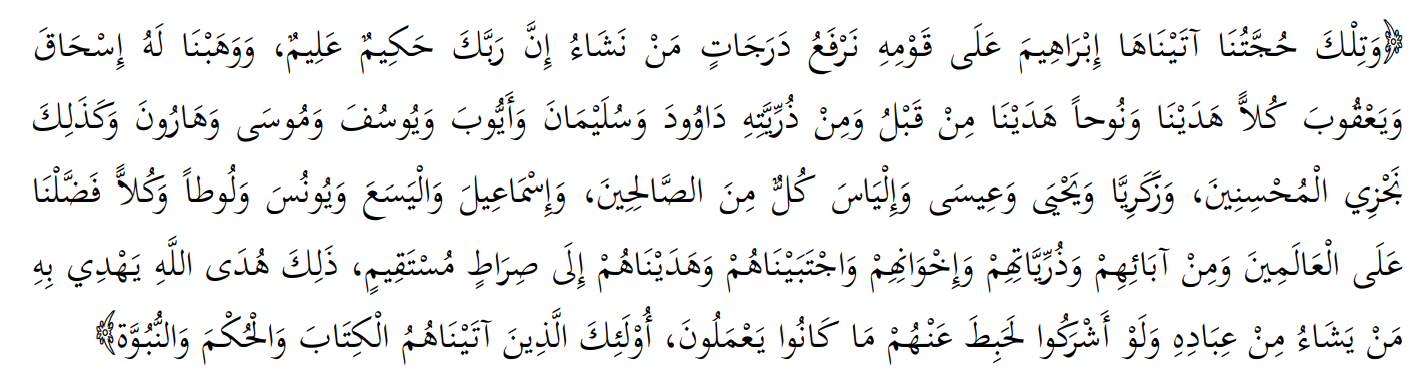
«Таков был Наш довод, который Мы дали Ибрахиму против его народа. Мы возвышаем, кого пожелаем в степенях. Воистину, твой Господь мудр, всезнающ. И Мы даровали ему Исхака и Якуба; каждому из них Мы указали прямой путь. И прежде них Мы указали прямой путь Нуху, а из его потомства — Дауду, Сулейману, Аюбу, Юсуфу, Мусе и Харуну. Так Мы воздаем творящим добро. А также Закарии, Яхье, Исе и Ильясу — все они из праведников. И Исмаилу, Аль-Яса'у, Юнусу и Луту — и каждого из них Мы предпочли мирам. И также некоторым из их отцов, их потомков и их братьев — и Мы избрали их и направили на прямой путь. Это руководство Аллаха: Он направляет по нему, кого пожелает из Своих рабов. Если бы они придавали Ему сотоварищей, то пропало бы у них всё, что они делали. Это те, кому Мы дали Писание, власть и пророчество». [TMQ An’ām: 83-89]
"And this is our argument that we gave to Abraham against his people, we raise in degrees whom we please, undoubtedly, your lord is wise, knowing. And we gave him Ishaq and Yaqub, we showed the path to all of them and showed the path to Nuh before them, and of his progeny, to Daud and Sulaiman and Ayub and Yusuf and musa and Haroon, and thus we recompense the righteous. And to Zakaria, Yahya, Isa and Ilyas. These are all entitled to be our near ones. And to Ismail and Yasa and Yunus and lot, and to each one we preferred above all in his time. And also to some of their fathers and their progeny and some of their brothers, and we chose them and showed them the straight path. This is the guidance of Allah. He gives whom he will of his bondmen, and if they would have committed polytheism, then surely all that they had already done would have been destroyed. These are they to whom we gave the book and order and prophet hood" [TMQ An’ām: 83-89]
И Исмаил, и Идрис, и Зуль-Кифль — все они были из терпеливых, которых Мы ввели в Нашу милость. Воистину, они из праведников. [TMQ Anbiya: 85-86]
"And Ismail and Idrees and Dhul-Kifl all were from the patient ones who we took into our mercy. Indeed they are from the righteous." [TMQ Anbiya: 85-86]
«И к Мадйану Мы послали их брата Шуайба.» [TMQ Araf: 85]
"And to Madyan, we sent their brother Shu'aib." [TMQ Araf: 85]
«И к ثамуд мы отправили их брата Салиха.» Wait, I need to correct that: the translation should be in Russian only, with the Qur'an verse rendered naturally. И к Самуду Мы направили их брата Салиха. [TMQ Araf: 73]
"And to Thamud, we sent their brother Salih." [TMQ Araf: 73]
И к ʿАду Мы отправили их брата Худа. [TMQ Araf:65]
"And to A'ad, we sent their brother Hud." [TMQ Araf:65]
«И сказали Мы: «О Адам, живи ты и жена твоя в раю». [TMQ Baqarah: 35]
"And we said, o Adam dwell you and your wife in paradise." [TMQ Baqarah: 35]
Мухаммад ﷺ — посланник Аллаха. Те, кто с ним, суровы к неверующим и милосердны друг к другу. [TMQ Fath: 29]
"Muhammad is the messenger of Allah. Those with him are severe on the Kuffar and merciful between themselves." [TMQ Fath: 29]
Все пророки и посланники были вестниками от Аллаха, ибо таков смысл пророчества и посланничества. Они правдивы, являются увещевателями творения, дабы миссия и послание не оказались тщетными, и они безгрешны в отношении лжи и ошибки в передаче, как безгрешны они и в совершении какого-либо греха. Далее, в Коране и Сунне Пророка ﷺ нет определённого (катъи) текстуального доказательства, сообщающего о заблуждении пророков после их пророческой и посланнической миссии. Всё, что передаётся об этом, либо содержится в хадисах, неопределённых по своей передаче (зханни ас-subut), либо в аятах, неопределённых по своему доказательству (зханни ад-далаля), а неопределённое (зханни) не может отменить определённого рационального доказательства безгрешности. Что же касается того, что было открыто в Коране об Адаме (мир ему), о том, как он ел от дерева, которое Аллах запретил ему, то это не противоречит требованию безгрешности в передаче послания людям на земле, поскольку то, что произошло с Адамом (мир ему), случилось в Раю, мудрость чего известна только Аллаху. Поэтому это отдельный вопрос (то есть еда Адамом (мир ему) плода дерева), ибо безгрешность связана с передачей послания людям на земле.
All the prophets and messengers were informers from Allah because this is the meaning of prophethood and messengerhood. They are truthful, admonishers to creation lest the mission and message become futile and they are infallible from lying and error in their propagation, just as they are infallible from committing any sin. Further there is no definite [Qati] textual evidence in the Qur’ān or the Sunnah of the prophet informing about the erring of the prophets after their Prophethood of Messengership. Whatever has been reported is either in the ahadith that are indefinite in their transmission [dhanni athuboot] or in the ayat that are indefinite in their evidence [dhanni ad-dalala] and the Indefinite [dhanni] cannot over ride the definite rational evidence on infallibility. As for what was revealed regarding Adam in the Qur’ān about him eating from the tree which Allah had prohibited him to eat from, this does not contradict the requirement of infallibility in the propogation of the message to the people on the earth because what happened from Adam was in the Paradise, the wisdom of which is only known to Allah . Therefore this is separate matter (i.e Adam’s eating of the fruit of the tree) because infallibility is related to the propogation of the message to the people on the earth.