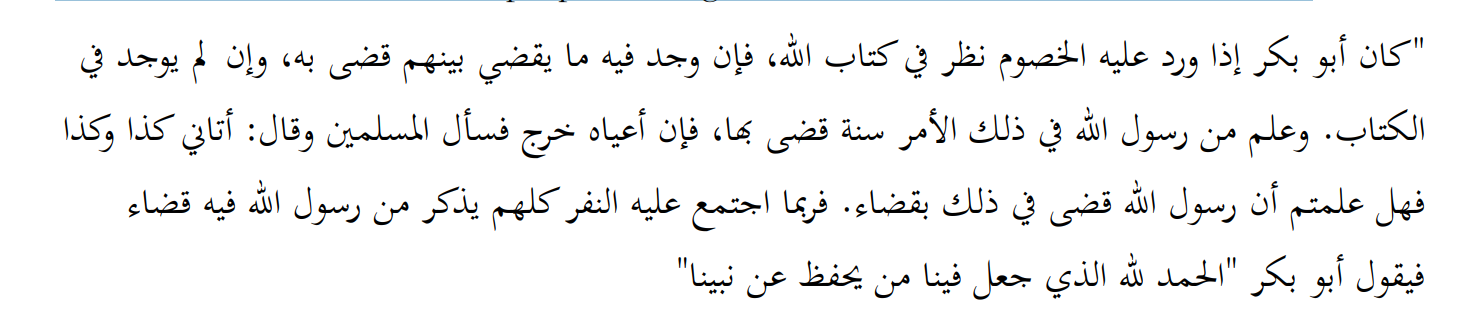
اگر سنّتی از رسولالله ﷺ نمییافت، سران مردم و بهترین آنان را گرد میآورد و با ایشان مشورت میکرد. اگر بر امری اجماع داشتند، بر اساس آن حکم میکرد. روایت شده است که عمر با وجود دانش فقهیاش با صحابه مشورت میکرد، تا آنجا که وقتی حادثهای به او ارجاع داده میشد، میگفت: علی را برای من فراخوانید، زید را فراخوانید. او با آنان مشورت میکرد و نزاع را بر آنچه بر آن توافق داشتند فیصله میداد.
به سبب مراجعه صحابه به یکدیگر، اختلاف نظر میان آنان کم بود، زیرا هر صحابی دیدگاه خود و دلایلی را که استنباط کرده بود، برای صحابی دیگر بیان میکرد. دیدگاه آنان در مجموع درست و صحیح بود و هر یک به دیگری رجوع میکرد. و اگرچه در برخی احکام دیدگاههایشان متفاوت بود، اما اختلاف آنان اندک بود و در فهمشان بود، نه در روش فهم.
If he failed to find a Sunnah of the Messenger of Allah he gathered the heads of people and the best amongst them and consulted them. If they had a consensus on a matter he would judge with that. It has been reported that ‘Umar used to consult the Sahabah despite his knowledge of fiqh to the extent that when an incident would be refered to him he would say: Call ‘Ali for me, call Zayd. He used to consult them and settle the dispute with whatever they were agreed upon. Due to the Sahabah’s reference to each other differences of opinion between them were rare because each Sahābi expressed to another Sahābi his own perspective and the evidences he educed. Their view on the whole was true and correct and each one referred to the other. And even though their views differed in certain rules but their differences were rare and it was in their understanding and not in the method of understanding.
هنگامی که فتوحات گسترش یافت و صحابه در شهرهای گوناگون پراکنده شدند و دیدار این صحابه دشوار گردید، هرگاه حادثهای رخ میداد که نص دربارهاش وجود نداشت، هر صحابی بهسبب دشواری دیدار، از آنرو که شهرها از یکدیگر دور بودند، و نیز بهسبب نیاز به صدور حکم درباره حادثهای که در شهرش رخ میداد تا بر اساس آن داوری کند، نظر خود را بدون آنکه با دیگران در میان گذارد یا به ایشان مراجعه کند، ابراز میداشت. در هر شهر مسلمانان یک یا چند صحابی وجود داشت. آنان مرجع احکام بودند. ایشان احکامی را که نص نداشت استنباط میکردند و همچنین وظیفه روشن ساختن و تبیین نص را بر عهده میگرفتند، همانگونه که مسئولیت آموزش قرآن و سنت به مردم را نیز به دوش داشتند. سنت هنوز نوشته نشده بود، از این رو نظرات صحابه درباره یک حادثه واحد اختلاف مییافت و هر یک دلیلی برای نظری که استنباط کرده بود داشت و بر اساس آن فتوا میداد. با این حال، همه این نظرات از احکام شرعی بودند و برای همه ایشان پذیرفتنی بود، زیرا اختلافشان تنها در فهم ایشان بود. اما روش اجتهادشان چنین بود که متن قرآن و حدیث را بررسی میکردند، نصوص را میسنجیدند و اطمینان حاصل میکردند که مصالح معتبر، تنها آنهایی باشند که شریعت بر آنها دلالت دارد، و مسائل و مصالح را با یکدیگر قیاس میکردند. یکسانی روش در اجتهاد اجازه نمیداد که اختلاف در فهم تأثیری داشته باشد. بلکه، برعکس، یکی از علل رشد و گسترش فقه به شمار میرفت. فتواهای ایشان بر اساس حوادث و مسائلی بود که رخ میداد. دامنه اختلافشان گسترده نمیشد و از فروع فقه فراتر نمیرفت. اختلاف صحابه در فروع دو علت داشت:
When the conquests expanded and the Sahabah became separated in various cities and it became difficult for these Sahabah to meet, every time an incident occurred which had no text, each Sahabah gave his own opinion without expressing it to others or referring to others due to the difficulty in meeting since the cities were distant from each other and also due to the need of giving an opinion on an incident occurring in the city in order pass judgement by it. In every Muslim city there was one or more Sahabah. They were the reference point for rulings. They used to deduce rules which had no text and assume the task of clarifying and explaining the text just as they took the responsibility of teaching the people the Qur’ān and Sunnah. The Sunnah had still not been written down, therefore the opinions of Sahabah differed about a single incident and each one had an evidence for the opinion he had educed and gave legal verdicts with. However, all of these opinions were Sharī’ah rules and were acceptable to all of them since their disagreement was only in their understanding. As for their method of Ijtihād it was one which is to consider the text of the Qur’ān and hadīth and examine the texts, and ensure that the accredited maslahas (benefit) are the ones only indicated by the Sharī’ah and make analogy to issues and maslahas. The unity of the methodology in Ijtihād did not allow the difference in understanding to have any effect. On the contrary it was one of the reasons for the growth and expansion of fiqh. Their legal verdicts (fatwas) were according to the incidents and issues that took place. The range of their disagreement did not widen and nor did it overstep the furu’ (branches of fiqh). The disagreement of the Sahabah in furu’ is attributable to two reasons:
نخست: این که بیشتر متون قرآن و سنت در دلالت بر مقصود قطعی نیستند، بلکه دارای معنای ظنیالدلالهاند. همچنین، به سبب آنکه متن میان دو یا چند معنای لغوی مشترک است، یا به سبب آنکه متن عام است و امکان تخصیص دارد، این متون ممکن است بر این یا آن معنا دلالت کنند. هر مجتهدی کوشید تا متن را بر اساس آنچه از قرائن (نشانهها) که غالب و راجح بود، بفهمد.
First: That most of the texts of the Qur’ān and Sunnah are not definite in indicating what is meant rather they are of speculative meaning (zanniyya al-dalāla). Also they are liable to indicate this or that meaning due to the text sharing two or more linguistic meanings or the text being general such that it is open to specification. Each Mujtahid attempted to understand the text according to what was preponderant from the qara’in (indications).
دوم: سنت هنوز به صورت مکتوب ثبت نشده بود. دربارهٔ مجموعهٔ احادیثی که میان مسلمانان شایع شده بود و بتوان آن را مرجع مشترک دانست، اتفاق نظری وجود نداشت. بلکه حدیث از طریق نقل و حافظه دست به دست میشد. ممکن بود مجتهدی در مصر حدیثی را بداند، اما مجتهدی در دمشق از آن بیخبر باشد. بارها پیش میآمد که برخی مجتهدان، هنگامی که آگاه میشدند کسی دیگر از سنتی خبر دارد که خودشان نمیدانستند، از فتوای مجتهد دیگری عدول میکردند. این امر موجب اختلاف در فروع فقه میشد، اما ادله و اصولی که دربارهٔ آنها وجود داشت یکسان بود و از این رو روش اجتهادشان نیز تفاوتی نداشت.
Second: The Sunnah had not yet been recorded in the written form. There was no unanimity on the body of hadīth which had spread among Muslims so as to be a common reference. Rather, the hadīth was circulated via transmission and memory. Perhaps a mujtahid in Egypt would know a hadīth but a mujtahid in Damascus did not know it. Many a times certain mujtahidin would retract from another mujtahid’s fatwa when they came to know that someone else knew of a Sunnah that they did not know. This led to disagreements in furu’ (branches of fiqh) but the evidences and principles concerning them did not differ therefore their method of Ijtihād did not differ.
خلاصه آنکه صحابه (رضی الله عنهم) دانشمندان شریعت بودند. آنان قرآن را فرا گرفتند، حدیث را دریافتند، و با همنشینی با صاحب رسالت، آقای ما محمد ﷺ، مسئولیت اجرای احکام اسلام را بر دوش گرفتند. آنان بر مردم حکومت میکردند، میان ایشان داوری مینمودند و دینشان را به آنان میآموختند. آنان روشنایی ساکنان سرزمینهایی بودند که در آن زندگی میکردند، امینان شریعت بودند و در دعوت مردم به اسلام، مؤمنانی راستین بودند. قرآن را برای مردم تلاوت میکردند و قوانین و احکام را به آنان میآموختند. در آموزش اسلام به مردم، روشی عملی در پیش میگرفتند. پس اسلام و احکام آن را به مردم یاد میدادند، و نیز شیوهای را که به واسطه آن احکام، در حل مشکلات زندگی سود میبرند. ایشان هم حاکم بودند و هم معلم. مردم به صحابه روی میآوردند و فرهنگ را از ایشان میگرفتند، اسلام را میپذیرفتند و احکام را درک میکردند. نظراتی که ایشان در احکام روشن میساختند، «فتوا» نامیده میشد. فتوای حدود صد و سی تن از اصحاب رسول خدا ﷺ (که میان ایشان مردان و زنان بودند) حفظ شده است. هفت تن از ایشان داناترین و پرفتواترین بودند و «مکثرون» (کسانی که در صدور فتوا پرکار بودند) نامیده شدهاند. ایشان عبارتند از: عمر، علی، ابن مسعود، عایشه، زید بن ثابت، ابن عباس و ابن عمر. خلفا، والیان و دیگر حاکمان، فقیهان در احکام، دانشمندان شریعت و مشغول صدور فتوا بودند؛ از این رو اسلام در وجود ایشان متجسد شده بود. ذهنهایشان از فرهنگ آن پر بود، اندیشههایشان از این فرهنگ سرچشمه میگرفت و مفاهیمی که به آن باور داشتند از این اندیشهها برمیخاست. آنان بودند که این فرمانها، نهیها و احکام را به اجرا درمیآوردند. پس خلیفه و والی همان کسانی بودند که میاندیشیدند، عمل میکردند، درک مینمودند و حکومت میراندند. بنابراین، کردار ایشان همواره درست بود و کارهایشان بر راه راست قرار داشت، زندگیشان والا بود، شیوهی سخن گفتنشان با مردم صادقانه بود و احکامشان با دقتی فوقالعاده پایبند به راه اسلام بود. گروهی از تابعین به صحابه چسبیدند، قرآن را از ایشان آموختند، سنت را از ایشان روایت کردند، فتواهایشان را حفظ کردند و روش استنباط احکام آنان را فراگرفتند. کسانی بودند که در زمان صحابه فتوا میدادند، مانند سعید بن مسیب در مدینه و سعید بن جبیر در کوفه. بنابراین میبینیم که پس از درگذشت همهی صحابه، تابعین در فقه و استنباط جانشین ایشان شدند. آنان بر پایهی اجتهاد خود احکام را استنباط میکردند. نخست به کتاب خدا و سنت رسول خدا ﷺ مینگریستند و اگر در آنها چیزی نمییافتند، به فتاوای صحابه مراجعه میکردند. نسبت به فتاوای صحابه از منظر فقهی نظر میدادند و یک قول را بر قول دیگر ترجیح میدادند. گاه نظر برخی از ایشان را میپذیرفتند و گاه حتی با صحابه اختلاف میکردند. روش استنباط احکام تابعین همان روش صحابه بود. از این رو فتواهای آنان متناسب با رخدادها و مسائلی بود که پیش میآمد، بیآنکه فرضیههای پیشینی در میان باشد. بلکه فتوا را باید با توجه به رخداد مورد نظر جست. دامنهی اختلاف میان ایشان گسترده نشد و علل اختلافی که صحابه در آن اختلاف داشتند، از حد فراتر نرفت؛ آن علل به فهم متن مربوط میشد و نه به دلایل شرعی. از این رو میان مسلمانان اختلافی که بر زندگی اثر بگذارد پدید نیامد.
In short, the Sahabah (may Allah be pleased with them) were scholars of the Sharī’ah. They learnt the Qur’ān and acquired the hadīth and took it upon themselves to implement the rules of Islam by mixing with the one responsible for the Message, our master Muhammad . They used to rule the people, judge between them and teach them their deen. They used to be a light for the inhabitants of the country who lived there and trustees of the Sharī’ah and in calling people to Islam they were true believers. They would recite the Qur’ān to the people and teach them the laws and rules. In teaching people Islam they use to follow a practical course. So they taught the people Islam and its rules and the method by which they would benefit in solving the problems of life with those rules. They were rulers and at the same time they were teachers. The people approached the Sahabah and recieved the culture from them, taking Islam and understanding the rules. The opinions in ahkām that they clarified were termed as ‘legal verdicts’ (fatawa). The fatwa of about one hundred and thirty companions of the Messenger of Allah (among which there are men and women) have been preserved. Seven of them were the most knowledgeable and gave the most opinions. They have been called the al-mukaththirun (those who were prolific in giving opinions). And they are: ‘Umar, ‘Ali, Ibn Mas’ud, ‘A’isha, Zayd ibn Thabit, Ibn ‘Abbas and Ibn ‘Umar. The Khalifahs, Walis and the rest of the rulers were fuqaha in ahkām, scholars of the Sharī’ah and busy in passing fatwa (legal verdicts), that is why Islam was embodied in them. Their minds were filled with its culture and their thoughts originated from this culture and the concepts they believed in emanated from these thoughts. They are the ones who implemented these orders, prohibition and rules. So the Khalifah and the Wali were the same people who thought, acted, understood and ruled. That is why their actions used to be correct and their affairs were on the right path and their lives were elevated and their manner of speaking with the people was honest and their rules adherent to the path of Islam with extreme precision. A group from the Tabi’in stuck to the Sahabah and learnt Qur’ān from them, reported the Sunnah from them, memorised their legal verdicts and underwent their methods of deduction of ahkām. There were those who used to give legal verdicts in the lifetime of the Sahabah like Said ibn al Musayyab in Madinah and Sa’id ibn Jubayr in Kufa. Thus, we find after all the Sahabah had passed away, the Tabi’in succeeded them in fiqh and istinbat (inference of rules). They used to deduce rules according to their own Ijtihād. They used to first look at the Book of Allah and the Sunnah of the Messenger of Allah , if they did not find anything there then they would study the fatwa (legal verdicts) of the Sahabah. They used to have opinions concerning the Fatwas of Sahabah from a jurisprudential perspective and they used to outweigh one statement over another. They used to take the opinions of some of them or sometimes they even differed with the Sahabah. The Tabi’ins method of inferring rules was the same method of the Sahabah. That is why their fatwas were according to the incidents and issues that took place without the presence of any assumptions. Rather it is according to the incident that you will find the fatwas. The range of disagreement did not become wide between them and nor did the reasons for disagreement on which the Sahabah disagreed overstep the mark which used to relate to the understanding of the text and not to the Sharī’ah evidences. Therefore, there were no disagreements amongst Muslims which affected life.