۲۱.۶ معاهدات اضطراری
21.6 Emergency Treaties
مسلمانان ممکن است در شرایط سختی قرار گیرند که آنان را به اموری وادار کند که جایز نیست، اما ضرورت آن را الزامی میسازد. دولت اسلامی ممکن است دچار بحرانهای داخلی یا خارجی شود که آن را وادار کند پیمانهایی ببندد که مستقیماً به ابلاغ دعوت یا جهاد در راه الله (swt) نمیانجامد، اما زمینههایی را فراهم میآورد که در آینده امکان ابلاغ آن را فراهم سازد، یا از شر توقف دعوت جلوگیری کند، یا موجودیت مسلمانان را حفظ نماید. ضرورت این گونه پیمانها را الزامی میکند، از این رو برای خلیفه جایز است که آنها را ببندد و اجرای آنها بر مسلمانان واجب است. این پیمانها در دو وضعیت پدید میآیند که فقها آنها را به روشنی بیان کردهاند، و آن دو عبارتاند از:
Muslims can fall into severe situations which compel them to matters which are not allowed but the necessity obliges it. The Islamic State can fall into internal or external crises which compel it to contract treaties which do not lead directly to conveying the da’wah or fighting in the way of Allah (swt) but they facilitate creating conditions which will enable conveying it in the future or prevent the evil of stopping the da’wah or preserve the entity of the Muslims. Necessity compels these types of treaties to be contracted therefore it is allowed for the Khalifah to contract them and they are executed upon Muslims. These treaties occur in two situations which the jurisprudents (fuqaha) stated clearly, and they are:
پہلی صورت: اگر حربی کفار میں سے کچھ لوگ مسلمانوں سے مخصوص سالوں کے لیے صلح کا مطالبہ کریں، اس شرط پر کہ حربی کفار ہر سال ایک معین مقدار میں خراج ادا کریں اور ان کی سرزمینوں میں اسلامی احکام نافذ نہ کیے جائیں، تو یہ جائز نہیں، کیونکہ یہ کفر پر رضامندی ہے، مگر جب ریاست ظلم کو روکنے کی طاقت نہ رکھتی ہو اور اس صلح میں مسلمانوں کی بھلائی دیکھے، تو اس وقت ضرورت کے تحت اس کا معاہدہ کرنا جائز ہے۔ اس صورت میں اسلامی ریاست کی طرف سے ان کی کوئی مدد یا حمایت نہیں ہوتی، کیونکہ وہ اس معاہدے کے ذریعے اسلامی احکام کے پابند نہیں ہوتے اور جب تک وہ اسلام کے احکام کی اطاعت نہ کریں، وہ حربی ہی رہتے ہیں۔ لہٰذا ان کی حمایت کا ذمہ مسلمانوں پر لازم نہیں۔ رسول اللہ ﷺ نے تبوک میں، بلادِ شام کی حدود میں، یوحنا بن رؤبہ کے ساتھ صلح کی، اور اسے اس کے دین پر اس کے علاقے میں چھوڑ دیا، اور وہ مسلمانوں کے جھنڈے اور ان کی حکومت کے تحت داخل نہ ہوا۔ اس مدت معینہ کی صلح سے اس ریاست کی سلامتی اسلامی ریاست کی طرف سے ضمانت شدہ ہوجاتی ہے۔ مسلمانوں میں سے جو کوئی اس میں داخل ہو وہ صلح کی امان کے ساتھ داخل ہوتا ہے، کسی انفرادی امان کے ساتھ نہیں، اور اس کے لیے جائز نہیں کہ وہ اس کے باشندوں کی مخالفت کرے۔ اس سرزمین کے باشندوں میں سے جو کوئی مسلمانوں کے علاقوں میں داخل ہو وہ صلح کی امان کے ساتھ داخل ہوتا ہے اور اسے صلح کے علاوہ کسی نئی امان کی ضرورت نہیں، اور نہ ہی مسلمانوں میں سے کسی کو اس کی مخالفت جائز ہے۔ تاجروں کو اس ریاست میں سامان لے جانے سے نہیں روکا جاتا، سوائے جنگ میں استعمال ہونے والے آلات، جیسے ہتھیار اور جنگی سامان اور اسی کے مانند چیزوں کے، کیونکہ وہ حربی ہیں، اگرچہ مسلمانوں کا ان کے ساتھ معاہدہ ہو۔
The first situation: If some people of the people of war seek a treaty from the Muslims for specific years on condition that the people of war give kharaj every year for a specified amount and that the Islamic rules are not executed upon them in their lands; this is not done as it is consenting upon disbelief unless the State is not able to prevent oppression and sees in this treaty good for Muslims, then at this point it is allowed to contract it out of necessity. In this situation there is no assistance or support for them from the Islamic State because they are not compelled by this treaty with the Islamic rules and do not depart from being people of war when they do not obey the rules of Islam. So undertaking support for them is not obliged upon the Muslims. The Messenger of Allah (saw) made a treaty with Yuhanna bin Rub’ah while he was at Tabuk in the boundaries of Bilad AsSham. He left him in his zone upon his religion, and he did not enter under the banner of Muslims and their rule. This treaty of limited period makes the security of this State guaranteed by the Islamic State. Whoever enters it from the Muslims enters it with the security of the treaty and not an individual security, and it is not allowed for him to oppose its people. Whoever enters the Muslim lands from the citizens of this land enters with the security of the treaty and does not require a new security other than the treaty, nor is anyone from the Muslims allowed to oppose him. Traders are not prevented from carrying merchandise to this State except tools used in war like weapons and war materials and what is similar to this because they are people of war even if the Muslims have a treaty with them.
حالت دوم: این حالت برعکس حالت اول است که در آن مسلمانان در ازای سکوت دشمن نسبت به ایشان، مبلغی پول به او میپردازند. فقها گفتهاند که اگر دشمن مسلمانان را محاصره کند و خواستار صلحی برای سالهای معین باشد، به این شرط که مسلمانان هر سال مبلغ مشخصی به کافران بپردازند، جایز نیست که خلیفه به این امر تن دهد، زیرا در آن خواری و ذلت برای مسلمانان است، مگر در صورت ضرورت. این در صورتی است که مسلمانان از نابودی خویش بترسند و خلیفه صلاح را در این آتشبس بداند. در این هنگام، به سبب آنچه روایت شده، اشکالی در آن نیست.
The second situation: This is opposite to the first situation wherein the Muslims pay money to their enemy in return for their silence regarding them. The fuqaha mentioned that if the enemy sieges the Muslims and require a treaty for specified years on condition that the Muslims pay the disbelievers a specific amount every year, it is not correct for the Khalifah to comply to them upon that due to the contemptibility and humiliation therein for Muslims except under necessity. This is (when) the Muslims fear extermination for themselves, and the Khalifah views there is good in this truce. At this point, there is no harm in that due to what was narrated
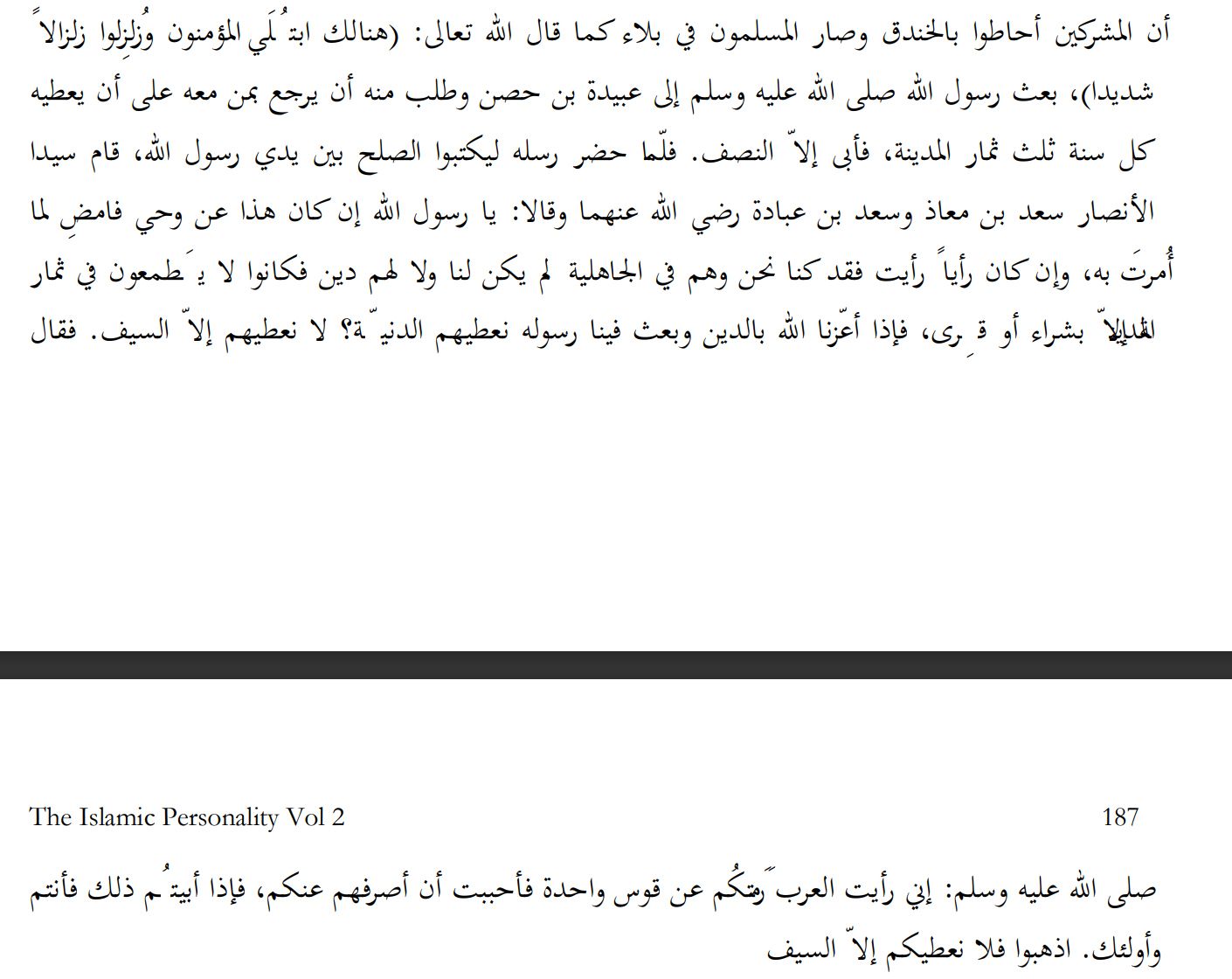
«که مشرکان خندق را محاصره کرده بودند و مسلمانان دچار آزمایشی شده بودند، همانگونه که الله (سبحانه و تعالی) فرمود: ﴿هُنَالِكَ ابْتُلِيَ الْمُؤْمِنُونَ وَزُلْزِلُوا زِلْزَالًا شَدِيدًا﴾ [سوره الأحزاب: ۱۱] رسول الله ﷺ نزد عُیَیْنَةَ بن حِصْن فرستاد و از او خواست که با کسانی که همراهش بودند بازگردد، در ازای آنکه یک سوم میوههای مدینه را به او بدهد، اما او جز به نصف آن راضی نشد. هنگامی که فرستادگانش آمدند تا پیمان آتشبس را در حضور رسول الله ﷺ بنویسند، دو بزرگ انصار، سعد بن عُبادَه و سعد بن مُعاذ (رضی الله عنهما) برخاستند و گفتند: «ای رسول خدا ﷺ، اگر این امری از جانب وحی است، آنچه را به آن فرمان داده شدهای انجام ده، و اگر رأیی است که اندیشیدهای، پس ما و آنان در جاهلیت بودیم، آنگاه که نه ما و نه آنان دینی داشتیم، و جز از راه خرید یا مهمانی، از میوههای مدینه نمیخوردند. اکنون که الله ما را با دین گرامی داشته و پیامبرش را در میان ما فرستاده، آیا باید این دنیا را به آنان بدهیم در حالی که خوار باشیم؟ نه، جز شمشیر چیزی به آنان نخواهیم داد.» پس رسول الله ﷺ فرمود: «من دیدم که عربها از یک کمان تیر میاندازند، پس دوست داشتم که آنان را از شما بازگردانم. اگر آن را نمیپذیرید، پس خودتان و ایشان. بروید که ما جز شمشیر به شما چیزی نخواهیم داد!»»
“That the polytheists surrounded the trench and Muslims were in trial like Allah (swt) said: ‘Therein the believers were tested and shaken with a severe shaking’ [TMQ 33:11].The Messenger of Allah (saw) sent to ‘Uyaynah bin Hasan and requested that he return with those together with him upon giving him a third of the fruits of Madinah but he refused except a half. When his messengers appeared to write the truce in front of the Messenger of Allah, the two chiefs of the Ansar, S'aad bin ‘Ubadah and S'aad bin Mu’adh (ra) stood and they said: ‘O Messenger of Allah, if this is from revelation then execute what you are commanded with but if it is an opinion which you considered, then they and we were in jahiliyyah when neither they nor we had a religion yet they did not eat of the fruits of Madinah except through purchase or hospitality. So when Allah honoured us with the deen and sent His Messenger among us, should we give them this dunya while being contemptible? No, we will not give them except the sword. So he (saw) said: ‘I saw the Arabs shooting from one bow so I liked to divert them from you. If you reject that, then it is you and those. Go away for we will not give you except the sword!’”
این نشان میدهد که رسول الله ﷺ در ابتدا بهخاطر آنچه از ضعف مسلمانان دریافت، به صلح مایل شد. اما چون قدرت آنان را دید، به سبب سخنان سعد بن عبادة و سعد بن معاذ (رضی الله عنهما)، از آن کار خودداری کرد. این امر دلالت دارد بر اینکه اگر خطر آسیب وجود داشته باشد، هیچ اشکالی ندارد که با کافران پیمان بسته شود و به آنان مالی پرداخت گردد. زیرا اگر آنان بر مسلمانان پیروز میشدند، تمام اموال را میگرفتند و خانوادهها را به اسارت (سبایا) میبردند؛ بنابراین پرداخت بخشی از مال برای حفظ مسلمانان و خانوادهها و اموالشان، کمارزشتر و سودمندتر است.
This indicates that the Messenger of Allah (saw) initially inclined to the truce due to what he sensed of the Muslims’ weakness. When he saw the strength in them due to what S'aad bin ‘Ubadah and S'aad bin Mu’adh (ra) said, he refrained from that which indicates that there is no harm from contracting a treaty with disbelievers paying them money when there is danger of harm. This is because if they conquered Muslims they would take all the wealth and the families as captives (sabaya), so paying some wealth to safeguard Muslims and their families and wealth is less contemptible and more beneficial.