۲۶. دوستی مؤمن با کافران
26. The Believer's Befriending The Disbelievers
الله سبحانه و تعالی فرمود:
Allah (swt) said:
«لَا يَتَّخِذِ الْمُؤْمِنُونَ الْكَافِرِينَ أَوْلِيَاءَ مِنْ دُونِ الْمُؤْمِنِينَ ۖ وَمَن يَفْعَلْ ذَٰلِكَ فَلَيْسَ مِنَ اللَّهِ فِي شَيْءٍ إِلَّا أَن تَتَّقُوا مِنْهُمْ تُقَاةً ۗ وَيُحَذِّرُكُمُ اللَّهُ نَفْسَهُ ۗ وَإِلَى اللَّهِ الْمَصِيرُ» [آل عمران، ۲۸ - ترجمهی معانی قرآن کریم، طاهرهی تُرکیـمحسن خان]
“Let not the believers take the disbelievers as friends instead of believers, and whoever does that is not of Allah in anything except if you fear from them something to be feared. And Allah warns you against Himself and to Allah is the return” [TMQ 3:28].
یعقوب و سہل آیت کو «تقیّۃ» پڑھتے ہیں، جو حسن و مجاہد کی قرأت ہے، جبکہ باقی لوگ «تُقاۃً» پڑھتے ہیں۔ القاموس المحیط میں آیا ہے: «التَّوْقِیَۃُ» یعنی «الکَلَاءُ» اور حفاظت۔ میں نے فلاں چیز سے «تَقَیْتُ» کیا، یعنی اس سے بچاؤ کیا، اور «تَقَاہُ» اور «یَتَقِیہِ» اور «تِقَۃً» یعنی «کِسْیَۃً»، یعنی میں اس سے ڈرا۔ آیت میں یہ متن اس کے موضوع کو متعین کرتا ہے، اور لفظ «تقیّہ» کا یہ لغوی معنی آیت میں اس کے مفہوم کو متعین کرتا ہے، کیونکہ اس کے لیے کوئی شرعی معنی ثابت نہیں۔ لہٰذا اس کی تفسیر اس کے لغوی معنی کے مطابق کرنا ضروری ہے۔ اسی بنیاد پر تنہا آیت اپنے عموم اور تفصیلات سمیت سمجھی جاتی ہے۔ رہی وہ احادیث جو آیت کے نزول کے اسباب کے بارے میں آئی ہیں، تو اگر وہ ثابت ہوں تو وہ آیت کی تفصیلات کی طرف رہنمائی کرتی ہیں، لیکن وہ نہ اس کے موضوع کو بدلتی ہیں اور نہ لغت و شریعت کے مطابق اس کے جملوں کے معنی کو۔ آیت کا موضوع اس کے جملے میں واضح ہے، یعنی مومنوں کا کافروں کو دوست بنانا، یعنی انہیں دوست سمجھنا۔ آیت کا متن یہ ہے:
Ya’qub and Sahl recite it as (taqiyyah) which is the recitation of Al-Hasan and Mujahid, while the rest (recite it) as (tuqat). It is said in Al-Qamus Al-Muheet: ‘(At-tawqiyya) is (al-kalau) and protection. I do (taqa) something and I did (taqa) it and do (taqi) it (taqa) and he (taqi) it (tiqa) like (kisa) is I feared it.’ This text in the ayah specifies its subject and this linguistic meaning of the word (taqiyyah) specifies what this word means in this ayah in meaning since no Shari’ah meaning was established for it. So it specifies interpreting it with its linguistic meaning. Upon this basis alone is the ayah understood in its generality and details. As for what came in the ahadith of the circumstances of its revelation, if authenticated, guides to the details of what came in the ayah but would not change its subject neither the meaning of its sentences according to the language and Shar’a. The subject of the ayah is clear in its sentence which is believers befriending the disbelievers i.e. treating them as friends. The text is:
«لَا يَتَّخِذِ الْمُؤْمِنُونَ الْكَافِرِينَ أَوْلِيَاءَ مِن دُونِ الْمُؤْمِنِينَ» [ترجمهی معانی قرآن کریم، ۳:۲۸]
“Let not the believers take the disbelievers as friends instead of believers” [TMQ 3:28].
اگر آیه یا حدیثی درباره موضوعی خاص نازل یا بیان شده باشد، آن حکم مختص همان موضوع است و چیز دیگری را در بر نمیگیرد. مسئله، مسئله دوستی مؤمنان با کافران است که آیهای قاطع در منع آن آمده است. و این تنها آیه درباره این موضوع نیست؛ آیات متعددی آمده است، مانند سخن خداوند:
If the ayah or ahadith came about a specific subject, then it is specific to this subject and does not include anything else. The issue is the issue of believers befriending disbelievers for which came the ayah decisively prohibiting it. Nor is this the only ayah upon this subject; there have come numerous ayahs like Allah’s statement:
«به منافقان بشارت ده که برای ایشان عذابی دردناک است. همانان که کافران را به جای مؤمنان دوستان (اولیاء) خود میگیرند»[TMQ 4:138-139].
“Give tidings to the hypocrites that for them is a painful punishment. Those who take the disbelievers as (awliya) instead of believers” [TMQ 4:138-139].
و سخن الله تعالی:
And Allah’s statement:
«ای کسانی که ایمان آوردهاید، کافران را بهجای مؤمنان به دوستی (اولیاء) نگیرید» [TMQ 4:144]
“O you who believe, do not take the disbelievers as (awliya) instead of disbelievers” [TMQ 4:144]
و قول او (سبحانه و تعالی):
And His (swt) statement:
«نَجِدُ قَوْمًا يُؤْمِنُونَ بِاللَّهِ وَالْيَوْمِ الْآخِرِ يُوَادُّونَ مَنْ حَادَّ اللَّهَ وَرَسُولَهُ» — اگرچه این عبارت به صورت کامل آیه نیست، ترجمهاش چنین است: هرگز نخواهی یافت گروهی را که به خدا و روز قیامت ایمان دارند و کسانی را دوست بدارند که با خدا و فرستادهٔ او دشمنی میکنند. [TMQ 58:22]
“You will not find a people who believe in Allah and the Day of Judgement loving those who oppose Allah and His Messenger” [TMQ 58:22]
و گفتهٔ او (سبحانه و تعالی)
And His (swt) statement
«یہودیوں اور عیسائیوں کو اولیاء نہ بناؤ» — no, correct Persian: «یهودیان و مسیحیان را اولیاء نگیرید» [TMQ 5:51]
“Do not take the Jews and Christians as (awliya)” [TMQ 5:51]
و گفتهٔ او:
And His statement:
«دشمن من و دشمن خود را دوستان (اولیاء) نگیرید» [TMQ 60:1]
“Do not take my enemy and your enemy as (awliya)” [TMQ 60:1]
موضوع این است که مؤمنان با کافران دوستی کنند، و بقیهٔ آیه این موضوع را شرح میدهد. این به آن دلیل است که الله (سبحانه و تعالی) مؤمنان را از گرفتن کافران بهعنوان دوست منع کرده، و این نهی را با قاطعیتی روشن پیوند داده که هر کس چنین کند و کافران را دوست بگیرد، الله از او بری است. سپس از این نهی قاطع یک حالت را استثنا کرده است، و آن حالتی است که مؤمن از آسیب کافر بترسد؛ در این صورت برای او جایز است که برای بازداشتن این آسیب با کافران دوستی کند. این در صورتی است که مسلمان زیر سلطهٔ کافران باشد و در کارش مغلوب باشد، یعنی ترس از کافر دوستی او را مجاز میسازد. اگر ترس از میان برود، دوستی ممنوع خواهد بود. بر این اساس، موضوع نشان دادن دوستی و پنهان داشتن چیز دیگری نیست، بلکه استثنا کردن حالت ترس مؤمن از کافر، هنگامی که مسلمان در کارش مغلوب است، از عمومیت منع دوستی با اوست. معنای آیه این است که نهی قاطع برای مؤمنان از گرفتن کافران بهعنوان دوستان و یاوران خود است، یعنی اینکه از آنان یاری بجویند، به ایشان تکیه کنند، با ایشان دوستی ورزند و میان آنان محبت باشد. پس مؤمنان از دوستی با کافران به جای مؤمنان بازداشته شدهاند، سپس یک حالت از این نهی استثنا شده است، که وقتی از ایشان ترس وجود دارد و مسلمانان زیر سلطهٔ آنانند. در این صورت جایز است که محبت نشان داده شود و با ایشان دوستی شود تا شرّ و آسیبشان دفع گردد. یعنی در حالتی که از ایشان ترس هست و مسلمانان زیر حکم آنانند، جایز است که ایشان را دوست گیرند. جز این، بههیچوجه جایز نیست. این حکم فقط دربارهٔ کافران در رابطه با مؤمنان است، زیرا این آیه در شأن مؤمنانی نازل شد که با مشرکان مکه روابط دوستی داشتند. آن [آیه] مؤمنانِ مدینه را از دوستی با مشرکانِ مکه منع کرد، و همهٔ مؤمنان را منع کرد، اما از این منع، مؤمنانی را که در مکه بودند و در کارشان مغلوب شده بودند استثنا کرد. پس ایشان را به سبب وجودِ ترسِ آسیبِ کافرانی که نزدیکشان بودند مستثنا کرد. این موضوعِ آیه است و این معنای آن است، و این حکمِ شرعیِ استنباطشده از آن است: منعِ مؤمنان از دوست گرفتنِ کافران در همهٔ انواعِ دوستی، برای پشتیبانی، دوستی، یاری و غیر آن، زیرا واژهٔ (اولیاء) در آیه به صورتی عام آمده و همهٔ معانی آن را در بر میگیرد؛ و جواز دوست گرفتنِ ایشان در حالِ ترس از ایشان، یعنی ترس از خشونت و آسیبِ ایشان، هنگامی که کافران بر مسلمانان چیره شوند و مسلمانان در کارشان مغلوب گردند، درست همانند وضعِ مسلمانانِ مکه با مشرکان. در آیه هیچ معنای دیگری و هیچ حکمی جز این حکمِ استنباطشده از آن وجود ندارد. اما آنچه برخی میگویند که «تقیه» آن است که مسلمان در برابرِ هر کسی که از آسیبش میترسد، یا از آگاه شدنش به حقیقتِ او و آنچه در دلش است میترسد، خلافِ آنچه پنهان دارد ظاهر کند، خواه آن کس کافر باشد یا مؤمن، این سخن خطایی محض است. آیه بر هیچیک از این امور دلالت ندارد، زیرا معنای «إِلَّا أَن تَتَّقُوا مِنْهُمْ تُقَاةً» یعنی: مگر آنکه از ایشان چیزی بترسید که باید از آن بیم داشت، همانگونه که معنای «اتَّقَیْتُ» یعنی «از آن ترسیدم»، و «تُقَاة» و «تَقِیَّة» هممعنا هستند. این از منعِ مؤمنان از دوستی با کافران به جای مؤمنان مستثنا است، پس مختص به همان چیزی است که از آن استثنا شده است.
The subject is the subject of believers befriending disbelievers and the rest of the ayah is detailing the subject. This is because Allah (swt) prohibited the believers from taking the disbelievers as friends, and linked this prohibition with a definite decisiveness that the one who does that and takes the disbelievers as friends then Allah is absolved from him. The he excluded from this decisive prohibition one situation which is the believer fearing harm from the disbeliever, wherein it is allowed for him to befriend the disbelievers to prevent this harm. This is if the Muslim were under the disbelievers’ authority defeated in his affair i.e. the fear of the disbeliever permits his befriending. If the fear disappears then the befriending is forbidden. Accordingly the situation is not displaying befriending and hiding something else, but the issue is excluding the situation of the believer’s fear of the disbeliever when the Muslim is defeated in his affair from the generality of forbidding his befriending him. The meaning of the ayah is the decisive prohibition for the believers from taking the disbelievers as friends for them, and that they seek their assistance and depend upon them, and that they befriend them and there be love between them. So it forbade the believers from befriending disbelievers instead of believers then excluded one situation from this, which is in the situation where there exists fear from them when they are under their authority. Then it is allowed to display love for them and to befriend them to prevent their evil and harm. That is, it is allowed to take them as i.e. friends in the situation where there exists fear from them when they are under their rule. Apart from that, it is absolutely not allowed. This is for the disbelievers only in relation with the believers as the ayah was revealed in the affair of the believers who had relations friendship with the polytheists in Makkah. It prohibited those in Madinah from befriending the polytheists in Makkah and it prohibited all believers but excluded from that the believers who were in Makkah who were defeated in their affair. So it excluded them due to the existence of fear of the harm of the disbelievers near to them. This is the subject of the ayah and this is its meaning, and this is the Shari’ah rule deduced from it which is the forbidding of the believers befriending the disbelievers in all types of befriending, for support, friendship, assistance etc as the word (awliya) came general in the ayah covering all its meanings, and the permission of befriending them in the situation of fearing them i.e. fearing their violence and harm when the disbelievers are victorious over Muslims and the Muslims are defeated in their affair exactly like the situation of the Muslims in Makkah with the polytheists. There does not exist any other meaning in the ayah nor any rule other than this rule deducted from it. As for what some say that “taqiyyah” is that a Muslim displays opposite to what is hidden before any person from whom he fears harm or fears his knowing his reality and what is in his soul whether that person is a disbeliever or believer, this statement is pure error. The ayah does not indicate anything of this since the meaning of: “Except if you fear from them (tuqat)” i.e. except if you fear from them something to be frightened of as the meaning of “atqaytu” something “taqiyyah” is I feared it, and (tuqat) and (taqiyyah) are of one meaning. This is excluded from the prohibition of believers befriending disbelievers instead of believers so it is specific to what is excluded of it.
«شما هیچ قومی را که به الله و روز آخرت ایمان دارند، نخواهید یافت که با کسانی که با الله و فرستادهٔ او مخالفت میکنند، دوستی داشته باشند.» [TMQ 58:22]
‘You will not find a people who believe in Allah and the Last Day loving those who oppose Allah and His Messenger’ [TMQ 58:22]
و قول او (سبحانه و تعالی):
And His (swt) statement:
«یہودیوں اور عیسائیوں کو دوست نہ بناؤ» [TMQ 5:51]
‘Do not take the Jews and Christians as friends’ [TMQ 5:51]
و قول او (سبحانه و تعالی):
And His (swt) statement:
«دشمن من و دشمن خودتان را دوست نگیرید.» [TMQ 60:1]
‘Do not take my enemy and your enemy as friends.’ [TMQ 60:1]
و قول او (سبحانه و تعالی):
And His (swt) statement:
«دشمن من و دشمن خودتان را دوست نگیرید.» [TMQ 60:1]
‘Do not take my enemy and your enemy as friends.’ [TMQ 60:1]
گفتار او (سبحانه و تعالی):
His (swt) statement:
«به جای مؤمنان» [TMQ 28:53]
‘Instead of believers’ [TMQ 28:53]
یعنی دوستی با مؤمنان واجب است، و این نهی است از دوستی با کافران و یاری دادن آنان علیه مؤمنان. و گفته شده که این نهی از رفتار با کافران با مهربانی و دوستی است. از ابن عباس روایت شده که: «اولیاء» جمع «ولیّ» است، و ولیّ کسی است که به کسی که از کردارش خشنود است، با یاری و پشتیبانی فرمان میدهد، و این در دو صورت پیش میآید. نخست، یاریگر تعیینشده با پشتیبانی، و دیگری کسی که یاری میشود. پس سخن او (سبحانه):
Means that friendship is obliged with believers, and this is a prohibition from befriending disbelievers and assisting them against believers. And it is said (that it is) a prohibition of treating the disbelievers with kindness and friendliness. It is narrated from ibn Abbas: "friends" (awliya) is the plural of "friend (waliyy) who is the one who commands the one pleased with his action with assistance and support, and it occurs in two ways. Firstly, the designated supporter with support and the other who is the supported. So His (swt) statement:
«الله وليُّ الذين آمنوا» [تمکیو ۲:257
‘Allah is the friend of those who believe’ [TMQ 2:257
منظور از «ولی» در اینجا یاوران و پشتیبانان است، و «ولایت» به معنای یاری و پشتیبانی الهی است. گفته شده که مؤمن دوست خداوند است، یعنی کسی که با یاری او یاری شده است. سخن خداوند: «هرکس چنین کند» یعنی هرکس کافران را به جای مؤمنان به دوستی بگیرد، «پس او از خدا در هیچ چیز نیست»، یعنی او از دوستان خداوند (سبحانه و تعالی) نیست و خداوند از او بیزار است. و گفته شده که او در هیچ چیز از ولایت خداوند برخوردار نیست. سپس استثنا کرد و فرمود:
Means their helpers and supporters by His support, and it is said that the believer is the friend of Allah i.e. one assisted by His support. His statement: ‘whoever does that’ means whoever takes disbelievers as friends instead of believers ‘then he is not of Allah in anything’ i.e. he is not from the friends of Allah (swt) and Allah (swt) is absolved of him, and it is said he is not from the friendship (wilayah) of Allah in anything. Then He excluded and said:
مگر اگر از ایشان چیزی بترسید که باید از آن ترسید.
‘except if you fear from them something to be feared’
مگر اینکه کافران پیروز شوند و مؤمنان شکست بخورند، به گونهای که مؤمن از آنان بترسد، اگر ابراز موافقت با ایشان نکند یا دوستی با ایشان را به خوبی ادا نکند. در آن هنگام، برای او جایز است که با زبان و با پیروی ظاهری از ایشان، از روی تقیه و برای حفظ خویش، محبت خود را نسبت به آنان نشان دهد، بدون اینکه به آن اعتقاد داشته باشد. در این آیه نشانهای است که تقیه در دین جایز است، هنگامی که ترس بر جان انسان وجود دارد؛ و یاران ما میگویند که تقیه در همه امور در هنگامه ضرورت جایز است، و گاه برای گونههای گوناگون مهربانی و آشتی، واجب میشود، اما از اعمالی که به کشتن یک مؤمن میانجامد، یا آنچه معلوم است یا بیشتر گمان میرود که موجب تباهی (افساد) در دین است، جایز نیست. شیخ مفید گفته است که تقیه گاه واجب است و فرض میشود، و گاه جایز است و مستحب میگردد. و گاه بدون وجوب جایز است، و گاه بهتر از ترک آن است؛ و گاه ممکن است ترک آن بهتر باشد، هرچند کسی که آن را انجام میدهد معذور است و با ترک سرزنش از او درگذشته میشود. شیخ ابوجعفر طوسی گفته است که ظاهر روایات دلالت دارد بر اینکه تقیه در هنگام ترس بر جان واجب است، و روایت شده است که در آن، اجازه داده شده است که حق آشکارا بیان نشود. حسن روایت کرده است
means except that if the disbelievers are victorious and the believers defeated so the believer fears them if he does not show his agreement with them or make good his companionship with them. At that time, it is allowed for him to show his affection for them with his tongue and compliance to them as a precaution (taqiyyah) from them and protection for himself without believing that. In this ayah there is an indication that taqiyyah is permitted in the deen when there is fear over oneself and our companions say it is permitted in all matter at times of necessity and often it becomes obligatory for the variety of kindness and reconciliation, but it is not permitted from the actions in killing a believer or what is known or he considers most probable that it is spoiling (istifsad) in the deen. Al-Mufid said that it is obligatory at times and becomes fard, and it is permitted at times and becomes recommended. And it is permitted at time without obligation and it becomes at times better than leaving it; and it could at times be better to leave it even though its performer is excused and forgiven over it by leaving the blame over it. Sheikh Abu Ja’far At-Tusi said that the apparent meaning of the narrations indicate that it is obligatory during fear of one’s life, and it has been narrated that a dispensation in allowing speaking clearly the truth thereupon. Al-Hasan narrated
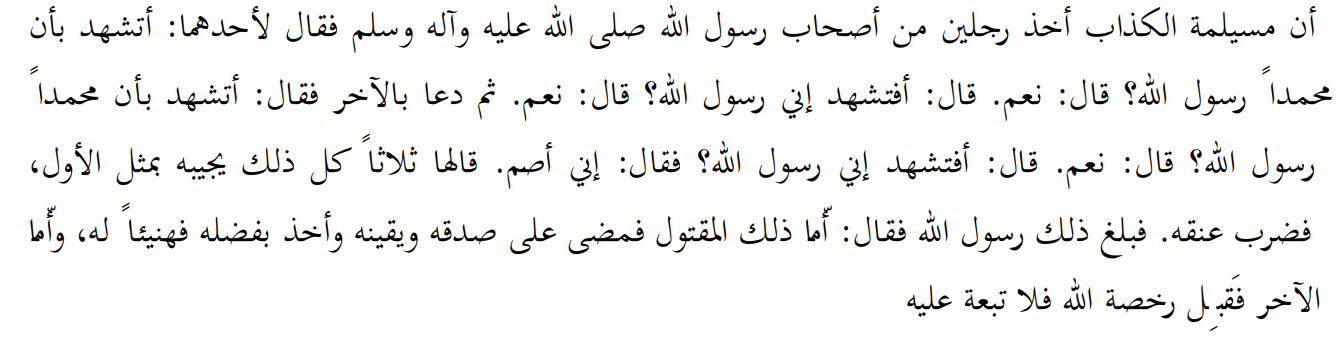
این مسیلمه کذاب دو تن از اصحاب رسول خدا ﷺ را گرفت و به یکی از آن دو گفت: آیا گواهی میدهی که محمد فرستادهٔ خداست؟ او گفت: آری. گفت: پس آیا گواهی میدهی که من فرستادهٔ خدا هستم؟ گفت: آری. سپس دیگری را فراخواند و گفت: آیا گواهی میدهی که محمد فرستادهٔ خداست؟ گفت: آری. سپس گفت: پس آیا گواهی میدهی که من فرستادهٔ خدا هستم؟ گفت: من کر هستم (این را نمیشنوم). او این پرسش را سه بار تکرار کرد و هر بار همان پاسخ نخست را شنید، پس گردن او را زد. این خبر به رسول خدا ﷺ رسید و فرمود: اما آن کسی که کشته شد، بر راستی و باور خود استوار ماند و فضیلت را برگزید، پس برای او گوارا باد. اما آن دیگری، رخصت الهی را پذیرفت، پس بر او گناهی نیست.
‘That Musaylimah the liar took two men of the Sahabah of the Messenger of Allah (saw) and said to one of them: Do you bear witness that Muhammad is a Messenger of Allah? He said: Yes. He said: Then do you bear witness that I am a Messenger of Allah? He said: Yes. Then he called for the other and said: Do you bear witness that Muhammad is a Messenger of Allah? He said: Yes. Then he said: Then do you bear witness that I am a Messenger of Allah? He said: I am deaf (to that). He said it thrice each time answering him like the first so he struck off his neck. This was conveyed to the Messenger of Allah who said: As for the one killed, he executed his truth and conviction, and he took his virtue so may it be good for him. As for the other, he accepted the concession of Allah so there is no liability on him.’
بنابراین تقیه یک رخصت است و آشکارا سخن گفتن از حق فضیلت است» (سخن طبرسی به پایان میرسد).
Accordingly taqiyyah is a dispensation and speaking clearly the truth is a virtue” (At-Tabarsi’s speech ends).
بر این اساس، از سخنان دو مفسّر، طبری و طبرسی، که به دو مکتب فکری متفاوت تعلق دارند، آشکار میشود که آن دو در تبیین معنای آیه، آنگونه که نازل شده، اتفاقنظر دارند که این آیه نهی از دوستی مؤمنان با کافران است و حالت ترسِ مؤمنان از آسیب کافران را از این نهی مستثنا کرده است. به سخن طبری بنگرید: «مگر آنکه از ایشان چیزی بترسید که باید از آن ترسید (تُقاة)»، یعنی: مگر آنکه در قدرت آنان باشید و بر جانهای خود از ایشان بترسید، پس با زبان خود به ایشان ابراز دوستی کنید. و به سخن طبرسی بنگرید: «آنگاه [خداوند] استثنا کرد و فرمود: "مگر آنکه از ایشان چیزی بترسید که باید از آن ترسید" و معنای آن این است: مگر آنکه کافران پیروز شوند و مؤمنان شکست بخورند، پس مؤمن اگر اظهار موافقت با ایشان نکند و دوستی با ایشان را نیکو نگرداند، از ایشان بیم دارد. در آن هنگام برای او جایز است که با زبان خود و با فرمانبرداری ظاهری از ایشان، از روی احتیاط و برای حفظ جان خود، محبت خود را نسبت به ایشان ابراز کند.» این دو مفسّر اتفاق دارند که موضوع آیه، استثنای نهی از دوستی مؤمنان با کافران است و به همان محدود میماند. جز آنکه طبرسی از موضوع آیه فراتر رفته و آن را دلیلی بر جواز تقیه در دین در تمام طول زندگی قرار داده است، در حالی که این معنا در آیه نیست؛ زیرا موضوع آیه نهی از دوستی مؤمنان با کافران است و استثنای حالت ترس از کافران، هنگامی که ایشان بر مسلمانان چیرهاند، را در این حالت به دوستیشان مجاز میشمارد. این تقیه در دین نیست و به ترس بر جان نیز محدود نمیشود، زیرا استثنا عام است: «مگر آنکه از ایشان چیزی بترسید که باید از آن ترسید»، یعنی: مگر آنکه از ایشان از آنچه باید از آن ترسید، بیم داشته باشید. زمخشری در «الکشّاف» گفته است...
Accordingly it is shown from the words of the two mufasireen, At-Tabari and At-Tabarsi, who are of two different schools of thought, their agreement upon explaining the meaning of the ayah as it came in that it is a prohibition for believers befriending disbelievers and excluding the situation of believers fearing the harm of the disbelievers from this prohibition. Look at the words of At Tabari: “except if you fear from them something to be feared (tuqat)’ (i.e.) except if you are in their authority and you fear them over your lives so you show them friendship with your tongues.” And look at the words of At-Tabarisi: “Then He excluded and said: ‘except if you fear from them something to be feared’ and the meaning is except if the disbelievers are victorious and believers defeated so the believer fears them if he does not show his agreement with them and does not make good his friendship with them. At that time it is allowed for him to show his love for them by his tongue and compliance to them as a precaution and in protection of his soul.” The two mufasireen agree that the subject is excluding the prohibition of believers befriending disbelievers and that it is limited to that. Except that At-Tabarisi followed upon that which is outside the subject and made the ayah an evidence that taqiyyah is permitted in the deen during for one’s life which is not present in the ayah since its subject is the prohibition of believers befriending disbelievers and excluding the situation of fear of the disbelievers when they defeat the Muslims in allowing their friendship in this situation. It is not taqiyyah in the deen nor is it specified to fear over life because the exclusion is general “except if you fear from them something to be feared” (i.e.) except if you fear from them what is to be feared from. Az-Zamakhshari said in Al Kashaf
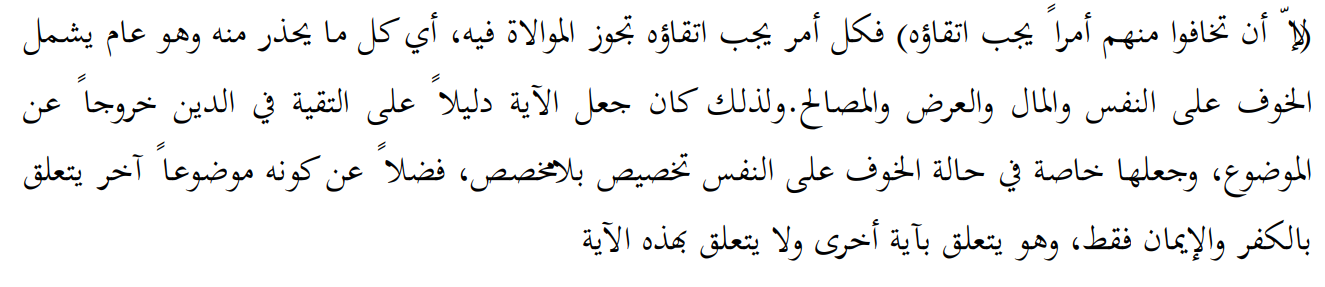
«إِلَّا أَن تَتَّقُوا مِنْهُمْ تُقَاةً» — یعنی: «مگر آنکه از ایشان به چیزی بترسید که باید از آن پرهیز شود». پس هر چیزی که باید از آن پرهیز شود، دوستی با آنان را روا میکند، یعنی هر آنچه از ایشان بیم دارید؛ که این بیم، جان و مال و آبرو و منافع را دربر میگیرد. بنابراین، این آیه را دلیلی بر تقیه در دین، خارج از موضوع، قرار دادن و آن را به وضعیت بیم بر جان محدود کردن، تخصیص بدون مخصِّص (دلیل تخصیصدهنده) است. افزون بر این، این موضوعی دیگر است که تنها به کفر و ایمان مربوط میشود و به آیهای دیگر پیوند دارد و ربطی به این آیه ندارد.
“Except if you fear from them a matter which requires protection from” so any matter which must be protected from permits befriending it i.e. all that you fear them which is general covering fear over life, wealth, honour and interests. Accordingly making the ayah an evidence for (taqiyyah) in the deen outside the subject, and making it specific in the situation of fear over life is specification without a specifying (evidence). This is besides it being another subject relating to kufr and iman only which is related to another ayah and it is not related to this ayah.
قولُ الطبرسي: «قال أصحابنا: إنه يجوز في جميع الأمور عند الضرورة»، فأما ما نقله عن المفيد من أنه واجب أو غير واجب إلى آخر ما ذكره، فهو كلامٌ مجرد عن أي دليل. والآية لا تدل على ذلك بوجه من الوجوه، حتى على تفسير الطبرسي نفسه، ولم يأتِ بأي دليل آخر لا من الكتاب ولا من السنة ولا من إجماع الصحابة؛ ولهذا فهو مردود ساقط عن درجة الاعتبار. ولا يُقال إنه إذا جاز موالاة الكفار عند الخوف منهم، فإن الطاعة للحاكم الظالم المتسلط أولى بالتقديم؛ فليس هذا مقصود الكلام، ولا هو منه، ولا فيه أي امتداد لصلة به. وليس الأمر كقول الله تعالى:
As for the statement of At-Tabarisi: “Our companions said (it is) permitted in all matters during necessity” then what he quotes from Al-Mufid of its being obligatory or not obligatory to the last of what he mentioned is abstract speech of any evidence. The ayah does not indicate this in any way even according to At-Tabarisi’s own tafsir, nor did he come with any other evidence neither from the Book or Sunnah or Ijma’a of the Sahabah, hence it is rejected and falls from the rank of consideration. Nor is it said that if befriending disbelievers in the situation of fear of them is allowed then compliance with the unjust or transgressor ruler with power is of greater precedent. This is not said because that which is of greater precedent is the sense of the speech and this is not from it nor is their any extention of any connection with it. It is not like Allah’s statement:
«و از میان آنان کسی است که اگر دیناری به او بسپاری، آن را به تو باز نمیگرداند» [TMQ 3:75]
“Among them is one whom if you entrust him with a Dinar would not return it to you” [TMQ 3:75]
نه مانند قول الله است:
Nor is it like Allah’s statement:
«و از اهل کتاب کسی است که اگر او را امانتدار یک قنطار کنی، آن را به تو بازمیگرداند» [ترجمه معانی قرآن کریم، 3:75].
“And of the People of the Book is one whom if you entrusted with a qintar will return it to you” [TMQ 3:75].
این به آن دلیل است که ستمگر از جملهٔ کافران یا از طبقهٔ آنان نیست، و نیز به این دلیل که دوستیِ ممنوع در این آیه، دوست گرفتن از غیر مؤمنان است. حاکم ستمگر و متجاوزی که قدرت دارد، از جملهٔ مؤمنان است؛ ستمی که از او سر میزند یا تجاوزی که او را فرا گرفته، وصف ایمان را از او سلب نمیکند. از این رو این موضوع در بحث «کفر اکبر» داخل نمیشود، و بنابراین کفرِ اکبر در آن راه ندارد تا بتوان آن را بهعنوان شاهد به کار برد.
This is because the transgressor is not from the category of the disbeliever or from their class, and because the friendship prohibited in this ayah is befriending instead of the believers. The unjust and transgressor ruler with power is among the believers injustice occurring from him or the transgression covering him does not negate the description of iman from him. Hence this subject does not enter in the research of greater precedent, so accordingly the greater precedent does not come into it such that it is used as a witness.
علاوہ ازیں، طاقتور ظالم و سرکش حکمران سے دوستی رکھنا امن کی حالت میں بھی جائز ہے اور خوف کی حالت میں بھی یکساں طور پر، کیونکہ وہ ایک مومن ہے، اور مومنوں سے دوستی یقینی طور پر جائز ہے، کیونکہ اس کے فرمان: "مومنوں کے بجائے" میں لفظ "مومنین" عام ہے اور تمام مومنوں کو شامل ہے۔ ظالم یا سرکش حکمران سے دوستی، یا فاجروں اور بدکاروں سے دوستی کی ممانعت میں کوئی نص وارد نہیں ہوئی؛ بلکہ نصوص کافروں سے دوستی کی ممانعت کے بارے میں خاص ہیں۔ اس سے بڑھ کر یہ کہ ظالم حکمران کی اطاعت، گناہ اور جہاد کے سوا دیگر امور میں واجب ہے، اور اس کے جھنڈے تلے جہاد واجب ہے، اور اگر امام فاجر ہو تو اس کے پیچھے نماز پڑھنا جائز ہے، اور یہ ان کی دوستی کی اجازت پر سب سے بڑی دلیل ہیں۔ جس چیز سے منع کیا گیا ہے وہ حکمران کے ظلم اور فاجر کی سرکشی پر راضی ہونا ہے۔ اسی بنا پر تقیہ مسترد ہے جب مومن طاقتور ظالم یا سرکش حکمران، یا مخالف کے سامنے رائے وغیرہ میں اس کے برعکس ظاہر کرے جو وہ چھپاتا ہے، اور ایسا کرنا حرام ہے کیونکہ یہ نفاق ہے، اور ہر نفاق حرام ہے۔
Moreover the befriending of the unjust and transgressor ruler with power is allowed in the situation of security and the situation of fear equally because he is a believer and befriending believers is definitely allowed because the word “believers” in His statement: “instead of believers” is general covering all believers. There did not come any text prohibiting befriending the unjust or transgressor ruler or befriending transgressors and the wicked (fujjar); rather the texts are specific in prohibiting the befriending of disbelievers. More than that, the obedience to the unjust ruler is obliged in other than sin and jihad is obliged under his banner and it is allowed to pray behind the Imam in prayer if he is a transgressor which are of the greatest indication regarding permitting their friendship. What is prohibited is the pleasure with the injustice of the ruler and the transgression of the transgressor. Accordingly taqiyyah is rejected when it is a believer showing opposite to what he hides in front of powerful unjust or transgressor ruler or opponent in the opinion or similar, and doing it is haram as it is hypocrisy and all hypocrisy is forbidden.
«مگر آن کس که مجبور شده باشد و دلش بر ایمان مطمئن باشد» {سوره النحل: ۱۰۶}
“Except the one who is compelled and his heart is content upon iman” [TMQ 16:106].
برخی از مفسران این آیه را به آیهٔ «إِلَّا أَنْ تَتَّقُوا مِنْهُمْ تُقَاةً» پیوند میدهند و از آن، ورود اظهار کفر و پنهان داشتن ایمان در دایرهٔ دوستی و داخل کردن آن در آنچه «تقیه» نامیده میشود، استنباط میکنند. و برخی دیگر از آن نتیجه میگیرند که دوستی تنها در حالت ترس از جان روا است و در موارد دیگر روا نیست. این خطایی محض است، زیرا آیهٔ «إِلَّا مَنْ أُكْرِهَ وَقَلْبُهُ مُطْمَئِنٌّ بِالْإِيمَانِ» موقعیت و موضوعی جدا دارد؛ موضوع آن ارتداد از اسلام در حالتی است که ترس از کشتنِ قطعی و یقینی وجود دارد، نه احتمالی. اما موضوع آیهٔ «إِلَّا أَنْ تَتَّقُوا مِنْهُمْ تُقَاةً» بازداشتن از دوستی با کافران در همهٔ انواع آن است و این دوستی را تنها در صورت وجود ترس از چیزی، چه ترس بر جان باشد و چه بر مال، منفعت یا هر زیانی دیگر، استثنا میکند. این دو آیه میان دو موقعیت و دو موضوع تفاوت میگذارند، بهگونهای که یکی در دیگری داخل نمیشود و بهسبب تفاوت در موقعیت و موضوع، با آن پیوندی ندارند. هنگامی که مسلمان زیر سلطهٔ کافرانی قرار دارد که در کار او بر او چیره شدهاند، روا نیست که به نشانهٔ فرمانبرداری از ایشان از اسلام ارتداد کند؛ بلکه اگر نتواند احکام دین خود را بهجا آورد، بر او واجب است که هجرت کند. این با دوستیای که روا است و در تضاد با آن نیست، متفاوت است. اما اگر مسلمانان ترس از مرگ قطعی او داشته باشند و به کفر وادار شود، آنگاه روا است که اظهار کفر کند و ایمان را پنهان دارد. و جز آن، به دلیل متن آیه، روا نیست.
Some mufasireen link it with the ayah: “except if you fear from them something to be feared” and deduce from it the entering of showing kufr and hiding iman in the category of friendship and making it to enter what they call (taqiyyah), with some deducing from it that friendship is allowed in the situation of fearing for one’s life only but not in other (situations). This is pure error because the ayah: “except the one who is compelled and his heart is content upon iman” has a different situation and a different subject as its subject is apostasy from Islam in the situation where there exists fear of definite, confirmed killing not probable and the subject of the ayah: “except if you fear from them something to be feared” is prohibiting befriending disbelievers in all its types and excluding the permissibility of this befriending in the situation of there existing what is feared from whether it was fear over life, wealth, interest or any harm. It distinguishes between the two situations and two subjects such that one does not enter into the other nor are they linked with it due to the difference in situation and subject. When the Muslim is under the authority of disbelievers defeated over his matter before them, it is not permitted for him to apostatise from Islam as a show of compliance to them; rather it is obligatory upon him to emigrate if he is unable to perform the rules of his deen contrary to befriending them which is allowed. However if the Muslims fear over his life a confirmed death and he is forced upon kufr then it is permitted for him to show kufr and hide iman, and other than that it is not permitted because of the text of the ayah:
«هر کس پس از ایمان خود به الله کفر ورزد، مگر آن کس که مجبور شده باشد و قلبش بر ایمان مطمئن باشد.» [TMQ 16:106].
“Whoever disbelieves in Allah after his iman except the one who is compelled and his heart is content upon iman.” [TMQ 16:106].
موضوع، موضوعِ کفرِ پس از ایمان است، یعنی موضوعِ ارتداد از اسلام، و وضعیت، وضعیتِ ترس از مرگ است. این همان چیزی است که فقها آن را اِکراهِ مُلْجِئ (اجبارِ پناهبرنده به کفر، یا اکراهِ همراه با خوف مرگ) مینامند، و تنها اجباری است که شریعت در همهی موقعیتها آن را معتبر دانسته و حکم را از کسی که مجبور شده برمیدارد. اجباری که شریعت استثنا کرده، اجبارِ ملجئ است، یعنی وضعیتی که مرگِ قطعی در آن ترسیده شود. این معنا در آیهای که دربارهی مسلمانانی نازل شد که از ترس مرگ مرتد شدند، تقویت میشود. روایت شده که این آیه دربارهی عمار بن یاسر نازل شد. طبری گفت: «محمد بن سعد برای من روایت کرد و گفت: عمویم برای من روایت کرد و گفت: پدرم از پدرش از ابن عباس برایم روایت کرد که [خداوند فرمود:] "کسی که پس از ایمانش به خدا کفر ورزد، مگر آن کس که مجبور شده و دلش به ایمان آرام است" تا پایان آیه. این به این دلیل بود که مشرکان عمار بن یاسر را زدند و شکنجه کردند و سپس رهایش کردند. پس او نزد پیامبر خدا ﷺ بازگشت و آنچه را از قریش دیده و آنچه را گفته بود به او خبر داد. پس خداوند (سبحانه) عذر او را یادآوری کرد: "کسی که پس از ایمانش به خدا کفر ورزد" تا سخن او "عذابی بزرگ". بِشر برای ما روایت کرد و گفت: یزید برای ما روایت کرد و گفت: سعید از قتاده برای ما روایت کرد: "کسی که پس از ایمانش به خدا کفر ورزد، مگر آن کس که مجبور شده و دلش به ایمان آرام است" و گفت: به ما گفته شد که این آیه دربارهی عمار بن یاسر نازل شد که بنیالمغیره او را اسیر کردند و در چاه میمون پوشاندند و گفتند: به خدا کفر بورز. پس او نیز از ایشان پیروی کرد، در حالی که دلش مجبور بود. پس خداوند این سخن را نازل فرمود: "مگر آن کس که مجبور شده و دلش به ایمان آرام است."» و الطبری گفت: ابن عبدالأعلی برای ما روایت کرد و گفت: محمد بن ثور برای ما روایت کرد از معمر، از عبدالکریم الجزری، از ابو عبید بن محمد بن عمار بن یاسر که گفت:
So the subject is the subject of kufr after iman i.e. the subject of apostasy from Islam, and the situation is the situation of fearing death. This is what the fuqaha term as alikrah almulji (compulsion of refuge) which is the only compulsion considered by the Shar’a in all situations in which the rule is lifted from the one compelled. The compulsion which the Shar’a excluded is the compulsion by refuge i.e. the situation of fearing definite death. This is strengthened in the ayah that was revealed about Muslims who apostatised fearing death. It was narrated that this ayah was revealed about Ammar bin Yasir. At-Tabari said: “Muhammad bin S’aad related to me and said: My paternal uncle related to me and said: My father related to me from his father from ibn Abbas that His statement: ‘Whoever disbelieves in Allah after his belief except the one who is compelled and his heart is content upon iman’ to the end of the ayah. This was because the polytheists struck Ammar bin Yasir and punished him then left him. So he returned to the Messenger of Allah (saw) and informed him about what he met with from Quraysh and what he said. So Allah (swt) revealed his mention of his excuse: ‘Whoever disbelieves in Allah after his iman’ until His statement ‘great punishment.’ Bashr related to us and said: Yazid related to us and said: Saeed related to us from Qatadah: ‘Whoever disbelieves in Allah after his belief except the one who is compelled and his heart is content upon iman’ and said: It was mentioned to us that it was revealed about Ammar bin Yasir whom Banu Al-Mughira captured and covered him in the well of Maymun and said: Disbelieve in Allah, so he followed them in that and his heart was compelled. So Allah (swt) revealed His statement: ‘except the one who is compelled and his heart is content upon iman.’ And At-Tabari said: Ibn Abd al-‘Ala related to us and said: Muhammad bin Thawr related to us from Mu’ammar from Abdulkareem Al-Juzri from Abu Ubayd bin Muhammad bin Ammar bin Yasir who said:
مشرکان عمار بن یاسر را گرفتند و آنقدر شکنجهاش کردند تا آنچه را آنان میخواستند، تا حدی بر زبان آورد. او این ماجرا را برای پیامبر ﷺ بازگو کرد. پیامبر ﷺ فرمود: دلت را چگونه یافتی؟ گفت: آرام و استوار بر ایمان. پیامبر ﷺ فرمود: اگر دوباره چنین کردند، تو هم دوباره همان کن.
The polytheists took Ammar bin Yasir and punished him until he said to them in some of what they wished. He mentioned that to the Prophet (saw) and the Prophet (saw) said: How did you find your heart? He said: Secured upon iman. The Prophet (saw) said: If they repeat, then you repeat.”
این احادیث نشان میدهند که سببِ نزولِ آیه، ماجرای عمّار است و موضوعِ آن ارتداد از اسلام است. قرینهٔ خاصِ آن، ترسِ قطعیِ از کشتهشدن است که بهتنهایی برای تقویتِ این مطلب کافی است که آیه هیچ ارتباطی با این آیه ندارد: «مگر اینکه از ایشان به چیزی که باید از آن بترسید، بیم داشته باشید». آیهٔ «مگر کسی که مجبور شده باشد و دلش بر ایمان آرام باشد» در مکّه و دربارهی ایمان نازل شده است، و آیهٔ «مگر اینکه از ایشان به چیزی که باید از آن بترسید، بیم داشته باشید» آیهای مدنی است که دربارهی استثناکردنِ وضعیتِ ترس از چیزی که باید از آن ترسید، از نهیِ مؤمنان از دوستی با کافران نازل شده است. بر این اساس، این آیه در آن موضوع قابلاجرا نیست.
These ahadith indicate that the circumstance of revelation of the ayah is the incident of Ammar and its subject is apostasy from Islam. The situation specific to it is the definite fear of killing which alone is sufficient to strengthen that it has no relationship with the ayah: “except if you fear from them something to be feared.” The ayah: “except the one who is compelled and his heart is content upon iman” was revealed in Makkah on the subject of iman, and the ayah: “except if you fear from them something to be feared” is Madinan revealed on the subject of excluding the situation of fearing what is to be feared from the prohibition of believers befriending disbelievers. Accordingly this ayah is not applicable on that subject.
باقی ماند حکمِ کسی که به کشته شدنِ قطعی تهدید شده است: آیا نشان دادنِ کفر و پنهان کردنِ ایمان، برای در امان ماندن از مرگ، فضیلتِ بیشتری دارد، یا بهتر است که بر ایمانش پایداری کند، حتی اگر به مرگ بیانجامد؟ پاسخ این است که پایداری بر ایمان، حتی اگر به مرگ بیانجامد، بهتر است؛ زیرا جوازِ نشان دادنِ کفر یک رخصت است که دشواری را برمیدارد، و حفظِ ایمان عزیمت است که اصل محسوب میشود، از این رو [پایداری] بهتر است. و روایت شده است
There remains the rule regarding the one threatened with confirmed killing: Is it more virtuous to show kufr and hide iman so as to be safe from death or is it better to persevere upon his iman even if it leads to death? The answer is that persevering to iman even if it leads to death is better because the permissibility of showing kufr is a dispensation and lifts difficulty, and preserving the iman is (‘azeemah) which is the principle therefore it is better. It is narrated

«اینکه مسیلمه دو مرد را فراخواند و به یکی از آن دو گفت: دربارهٔ محمد ﷺ چه میگویی؟ او گفت: فرستادهٔ خدا. گفت: پس دربارهٔ من چه میگویی؟ تو هم [همان را بگو]. پس او را رها کرد. و به دیگری گفت: دربارهٔ محمد ﷺ چه میگویی؟ او گفت: فرستادهٔ خدا. گفت: پس دربارهٔ من چه میگویی؟ گفت: من لالم. این را سه بار تکرار کرد و او همان پاسخ خود را تکرار کرد، پس او را کشت. این خبر به رسول خدا ﷺ رسید. پس فرمود: اما اولی، رخصت خدا را گرفت. اما دومی، حق را آشکار کرد، پس خوشا به حالش.»
“That Musaylimah took two men and said to one of them: What do you say about Muhammad? He said: A Messenger of Allah. He said: Then what do you say of me? You as well. So he left him free. He said to the other: What do you say of Muhammad? He said: A Messenger of Allah. He said: Then what do you say of me? He said: I am dumb. He repeated it thrice and he repeated his answer, so he killed him. That reached the Messenger of Allah (saw) so he said: As for the first, he took the dispensation of Allah. As for the second, he exposed the truth so blessed be he.”
این [حدیث/حکم] به وضوح کسی را که صبر کرده و بر ایمان پایدار مانده است، بر کسی ترجیح میدهد که رخصت الهی را گرفته و از ترس جانش، در برابر قتلی که قطعی است، کفر آشکار کرده است.
This is explicit in preferring the one who was patient and stuck to iman over the one who took the dispensation of Allah (swt) and showed kufr fearing for his life from a confirmed killing.
این سخن درباره کسی است که از او کفر خواسته میشود. اما کسی که از او کمتر از آن خواسته میشود، مانند ترک دعوت اسلامی یا ارتکاب گناه یا چیزی شبیه به آن، جواز آن از این آیه گرفته نمیشود. بر این اساس گفته نمیشود که اگر خداوند برای مسلمان اجازه داده است کفر را آشکار کند، پس آنچه کمتر از کفر است به طریق اولی جایز است. این سخن گفته نمیشود، زیرا نافرمانی از جنس کفر نیست، بنابراین به واسطه اولویت در این بحث وارد نمیشود. همچنین قیاس میان کفر و گناه انجام نمیگیرد، زیرا علتی که قیاس بر آن مبتنی باشد وجود ندارد. اما کسی که بر جان خود از قتل قطعی میترسد و از او گناه یا انجام کاری کمتر از کفر خواسته میشود، برای او جایز است که برای نجات جانش چنین کند و گناهی بر او نیست. این به دلیل سخن پیامبر ﷺ است:
This is regarding the one from whom kufr is demanded. As for the one from whom is sought less than that like leaving the Islamic da’wah or performing a sin or something similar; permissibility is not taken from this ayah. Accordingly it is not said that if Allah permitted the Muslim to show kufr, then what is lesser than kufr is of greater precedent. This is not said because disobedience is not from the species of kufr, so it does not enter the research by greater precedent. Similarly an analogy between kufr and sin is not performed since there does not exist a reason until analogy occurs. However as for the one who fears for his life over confirmed killing and it is sought from him sin or doing less than kufr, it is permitted for him to do so to save his life and there is no sin upon him. This is due to his (saw) statement:
«از امت من خطا، فراموشی و آنچه به آن مجبور شوند، برداشته شده است»
“Lifted from my Ummah is the mistake, forgetfulness and what is compelled upon it”
یعنی گناه و مؤاخذه برداشته میشود و حکم، یعنی جواز انجام آن، برداشته میشود. با این حال، این [حکم] تنها در یک وضعیت است، و آن وضعیت قتل قطعی و محقق شده است، که فقها آن را «الإکراه الملجئ» (اجبار بیپناهکننده) نامیدهاند، و این تنها اجباری است که شریعت در همه احوال آن را معتبر میداند و بهواسطه آن، از کسی که مجبور شده، احکامی چون طلاق، ازدواج، تجارت و دیگر اعمال و قراردادها برداشته میشود. گفتهی او «و آنچه بر آن اجبار شود» همان «الإکراه الملجئ» (اجبار بیپناهکننده) است.
I.e. the blame and sin is lifted, and the rule is lifted, which means the permissibility of doing it. However (this is) only in one situation which is the situation of definite, confirmed killing which is what the fuqaha called alikrah almulji (compulsion by refuge) which is the only compulsion considered by the Shar’a in all conditions in which there is lifted from the one compelled like divorce, marriage, trade and other actions and contracts. His statement “and what is forced upon it” which is alikrah almulji (compulsion by refuge).