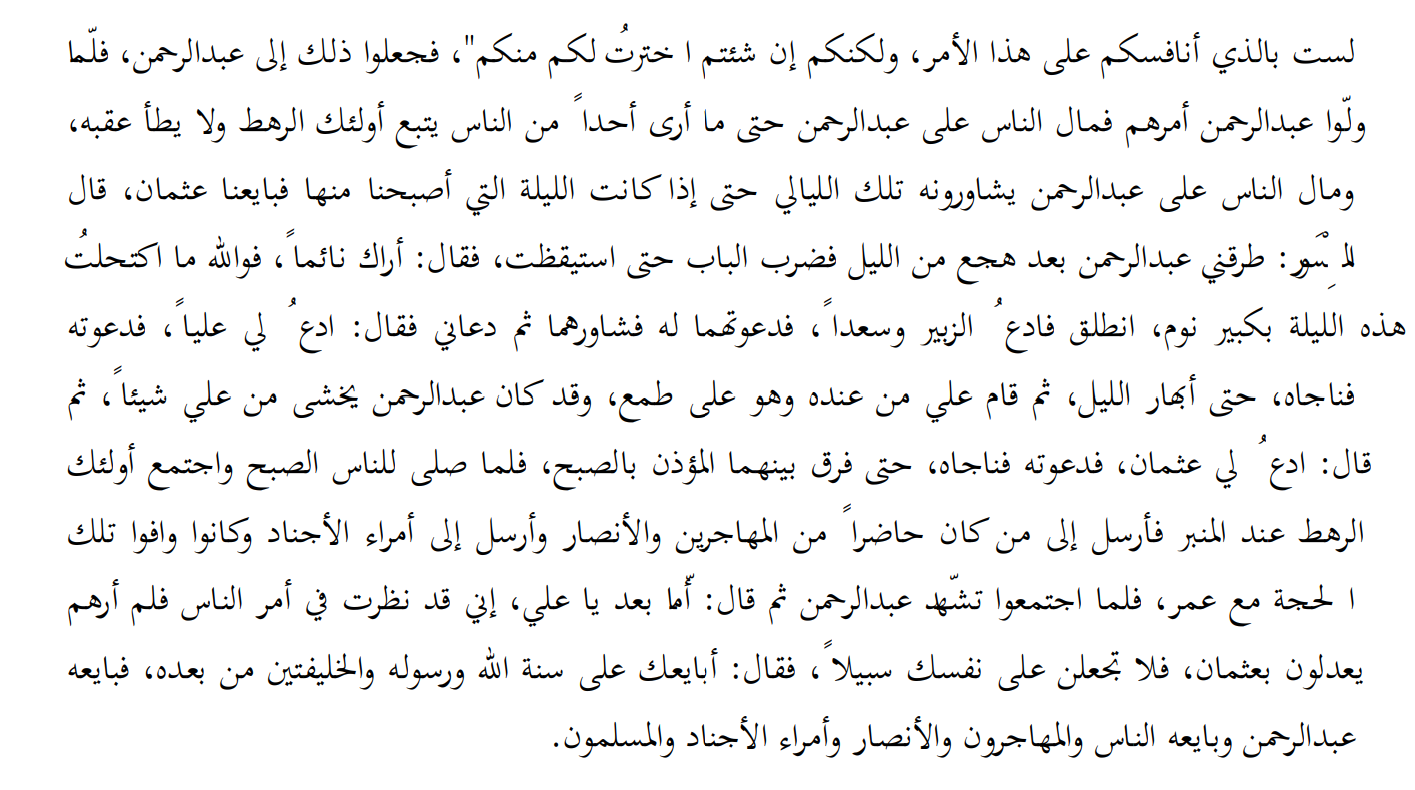
و این حکمی است عمومی برای هر مسلمان. بنابراین، افراد صاحب نفوذ حق انحصاری تعیین خلیفه را ندارند و نمیتوانند سایر مسلمانان را نادیده بگیرند. همچنین هیچ شخص معینی نیز حق انحصاری ندارد. بلکه این حق برای همه مسلمانان بدون استثنا است، و حتی فاجران (افراد فاسق) و منافقین را نیز شامل میشود، به شرط آنکه مسلمانانی بالغ باشند؛ زیرا در این مورد، متن شرعی به صورت عام آمده و چیزی نیامده که آن را محدود کند (یعنی آن را به افراد خاصی اختصاص دهد)، جز امتناع از بیعت توسط نوجوانانی که هنوز به سن بلوغ نرسیدهاند. پس متن باید به صورت عام گرفته شود.
And this is general for every Muslim. Therefore, the influential people do not possess the exclusive right to appoint the Khalifah and cannot ignore the rest of the Muslims. Nor do specific persons have the exclusive right. Rather, this right is for all the Muslims with no exception, it even includes the fajirs (wicked people) and munafiqeen (hypocrites), provided they are mature Muslims because the Shari’ah text came in a general form in this instance and nothing came to limit it (make it specific to certain people) except the refusal of the pledge from the young who have not yet reached the age of puberty. So the text has to be taken generally.
با این حال، شرط نیست که همه مسلمانان این حق را به کار گیرند. اگرچه بیعت فرض است، اما فرض کفایی است و نه فرض عینی. بنابراین، اگر برخی از مسلمانان آن را ادا کنند، این وظیفه از دوش سایر مسلمانان ساقط میشود. اما همه مسلمانان باید توانایی آن را داشته باشند که حق خود را در انتخاب خلیفه به کار گیرند، چه از این حق استفاده کنند و چه نکنند. به عبارت دیگر، هر مسلمان باید بتواند در انتخاب خلیفه شرکت کند. پس مسئله این است که مسلمانان توانمند شوند تا وظیفه برپایی خلافت را که الله (سبحانه و تعالی) بر ایشان مقرر کرده انجام دهند، به گونهای که این وظیفه از دوشِ ایشان برداشته شود. مسئله، شرکت واقعی همه مسلمانان در انجام این وظیفه نیست. زیرا وظیفهای که الله (سبحانه و تعالی) مقرر کرده، برپایی خلافت برای مسلمانان با رضایت ایشان است، و لازم نیست که همه مسلمانان آن را انجام دهند. از این امر دو نتیجه حاصل میشود: یکی آنکه رضایت همه مسلمانان در برپایی خلافت تحقق مییابد. دوم آنکه رضایت همه مسلمانان بر انتصاب حاصل نمیشود. با این همه، در هر دو صورت، مسلمانان توانمند میشوند (تا در انتصاب شرکت کنند).
However, it is not a condition that all Muslims practise this right. While it is a duty, because the bay’ah is fard, it is fard kifayah (obligation of sufficiency) and not fard ain (individual obligation). Thus, if some of the Muslims fulfill it, the duty drops from the rest of the Muslims. But all Muslims must be enabled to practice their right in electing the Khalifah, regardless of whether they use their right or not. In other words, every Muslim must be able to participate in selecting the Khalifah. So the issue is to enable the Muslims to carry out the duty of establishing the Khalifah which Allah (swt) prescribed upon them, in such a way that this duty falls (from their shoulders). The issue is not the actual participation of all the Muslims in conducting this duty. This is because the duty which Allah (swt) has prescribed is to establish the Khalifah for the Muslims by their consent, and it is not a requirement for all Muslims to perform it. Two matters result from this: One of them is that the consent of all the Muslims in the establishment of the Khalifah is achieved. Secondly, the consent of all the Muslims about the appointment is not achieved. The Muslims are however enabled (to participate in the appointment) in both cases.
در مورد نخست، هیچ شرطی درباره تعداد مشخصی که برای نصب خلیفه لازم باشد، وضع نشده است. بلکه هر تعدادی از مسلمانان میتوانند با خلیفه بیعت کنند، و در این بیعت، رضایت بقیه مسلمانان با سکوت آنان، یا با آغاز اطاعت از او، یا با هر چیزی که بر رضایت دلالت کند، حاصل میشود. در این صورت، خلیفه نصبشده خلیفه همه مسلمانان میشود. او حتی اگر تنها سه نفر او را نصب کرده باشند، از نظر شرعی خلیفه خواهد بود، زیرا اجتماع با انجام نصب خلیفه تحقق مییابد. رضایت با سکوت و اطاعت یا هر چیز مشابه آن حاصل میشود، به شرط آنکه این امر با اختیار آزاد و در همه جهات، امکان ابراز نظر را برای همگان فراهم کند. اما اگر رضایت همه مسلمانان حاصل نشده باشد، نصب خلیفه تحقق نمییابد، مگر آنکه به دست گروهی انجام شود که نماینده رضایت اکثریت مسلمانان باشد، صرفنظر از تعداد این گروه. از همینجاست که برخی فقها گفتهاند نصب خلیفه با بیعتی که اهل حل و عقد به او میدهند ثابت میشود، زیرا آنان گروهی میدانند که با بیعتی که به هر مردی که شرایط قراردادی خلافت را داشته باشد میدهند، رضایت مسلمانان را تحقق میبخشند. بنابراین، این بیعت اهل حل و عقد نیست که خلیفه را مستقر میکند، و بیعت آنان شرط مشروعیت نصب خلیفه نیز نیست. بلکه بیعت اهل حل و عقد نشانهای است که دلالت میکند رضایت مسلمانان به این بیعت حاصل شده است، زیرا اهل حل و عقد نماینده مسلمانان به شمار میروند. و هر دلیلی که دلالت کند بر اینکه رضایت مسلمانان با بیعت با خلیفه محقق شود، نصب خلیفه را تکمیل میکند، و نصب خلیفه به این بیعت مشروع خواهد بود.
With regards to the first matter, no condition is set concerning a specific number required to appoint the Khalifah. Rather any number of Muslims can give their bay’ah to the Khalifah and in this bay’ah the consent of the rest of the Muslims is attained by their silence, or by proceeding to obey him, or by anything which implies their consent, then the appointed Khalifah becomes a Khalifah for all the Muslims. He will legally be the Khalifah even if only three people appointed him, because collectivity is achieved by carrying out the appointment of the Khalifah. The consent is achieved by their silence and through obedience or anything similar, on condition that this is accomplished by unfettered choice and in every respect enabling the expression of opinions for all. However, if the consent of all the Muslims was not achieved, then the appointment of the Khalifah would not be accomplished unless it was performed by a group that represents the consent of the majority of the Muslims, regardless of the number in this group. From here some jurists stated that the appointment of the Khalifah is established by the pledge given to him by the people of influence (ahl al-hall wa al-‘aqd), because they consider the influential people as the group which achieves the consent of the Muslims through the pledge they give to any man who fulfils the contractual conditions of the Khilafah. Therefore, it is not the pledge of the influential people which establishes the Khalifah, nor is their pledge a condition for the legality of the appointment of the Khalifah. Rather the pledge of the influential people is evidence indicating that the consent of the Muslims to the pledge has been achieved, because the influential people are considered as representative of the Muslims. And every evidence which indicates that the consent of the Muslims with the pledge to a Khalifah is fulfilled completes the appointment of the Khalifah, and the appointment of the Khalifah by this bay’ah (pledge) would be legal.
بر این اساس، حکم شریعت آن است که خلافت با هر گردهماییای منعقد میشود که انتخاب خلیفه با هر نشانهای که رضایت مسلمانان را ثابت کند، رضایت آنان را جلب کند. فرقی نمیکند که این نشانه، بیعت اکثریت افراد صاحبنفوذ باشد، یا اکثریت نمایندگان مسلمانان، یا پذیرش خاموش مسلمانان نسبت به گروهی که بیعت دادهاند، یا شتاب آنان در ابراز فرمانبرداری در نتیجه بیعت، یا هر وسیله مشابه دیگر، به شرط آنکه امکان کامل برای ابراز آزادانه نظرشان به ایشان داده شده باشد. حکم شریعت این نیست که این گردهمایی تنها از افراد صاحبنفوذ باشد، یا چهار نفر یا چهارصد نفر یا بیشتر باشند، یا ساکنان پایتخت یا مناطق باشند. بلکه حکم شریعت آن است که بیعت ایشان، با هر نشانهای که همراه با امکان کامل ابراز آزادانه نظر باشد، رضایت اکثریت مسلمانان را تأمین میکند.
Accordingly the Shari’ah rule is to establish the Khalifah by any gathering where appointment of the Khalifah achieves the consent of the Muslims by any indication that proves this consent. It is the same whether this indication is the pledge of the majority of the influential people, the majority of the representatives of the Muslims, the silent acceptance of the Muslims regarding the group that gave the pledge, their hurry to show obedience as a result of the pledge or by any similar means, as long as they were provided with the full facility to freely express their opinions. It is not a Shari’ah rule that this gathering must be only from the influential people or that they are four or four hundred or more, or that they must be the residents of the capital or the regions. Rather the Shari’ah rule is that their pledge fulfils the consent of the majority of Muslims by any indication together enabling them to freely express their opinion fully.
منظور از همه مسلمانان، آن مسلمانانیاند که در سرزمینهایی زندگی میکنند که تحت کنترل دولت اسلامی است؛ یعنی کسانی که تبعه خلافت پیشیناند، اگر خلافت موجود باشد، یا کسانی که استقرار دولت اسلامی به دست آنان تحقق مییابد و خلافت با آنان منعقد میشود، در صورتی که دولت اسلامی برپا نشده باشد. اینان همانانند که برای ایجاد آن (خلافت) قیام کردهاند تا از طریق آن، شیوه زندگی اسلامی را از نو برپا دارند. اما برای سایر مسلمانان، بیعت و رضایت ایشان شرط اساسی نیست، زیرا آنان یا مؤمنانیاند که خارج از قلمرو اقتدار اسلامی به سر میبرند، یا در دار الکفر زندگی میکنند و نمیتوانند به دار الاسلام بپیوندند. بنابراین، در بیعت انعقاد خلافت حقی ندارند، اما باید بیعت اطاعت بدهند، چرا که از نظر شرعی کسانی که از اقتدار اسلامی سر باز میزنند، به عنوان یاغی شمرده میشوند. و اما کسانی که در دار الکفر زندگی میکنند، برپایی اقتدار اسلامی به دست ایشان تحقق نمییابد، مگر آنکه در عمل آن را برپا کنند یا به قلمرو آن درآیند. پس مسلمانانی که حق بیعت در انعقاد خلافت را دارند و رضایت ایشان به عنوان شرطی برای صحت نصب قانونی خلیفه به شمار میرود، همان مسلمانانیاند که اقتدار اسلام به دست آنان در واقع برپا میشود.
گفتن اینکه این بحثی عقلی است، یا اینکه هیچ دلیل شرعی ندارد، درست نیست. زیرا این بحثی درباره «مناط» است که حکم شرعی بر آن جاری میشود، نه درباره خود حکم؛ از این رو به دلیل شرعی جداگانهای نیاز ندارد، بلکه باید حقیقت آن را روشن کند. برای نمونه، خوردن مردار به حکم شرع حرام است؛ تشخیص اینکه چه چیزی مردار است، موضوع حکم است، یعنی همان چیزی که حکم به آن مربوط میشود. پس نصب خلیفه به دست مسلمانان حکم شرعی است، و اینکه این نصب باید با رضایت و اختیار باشد نیز حکم شرعی است. این احکاماند که به دلیل شرعی نیاز دارند. اما اینکه چه کسانی مسلمانانیاند که نصب به دست ایشان تکمیل میشود، کداماند؟ و آن چیزی که رضا و اختیار به واسطهی آن تحقق مییابد کدام است؟ اینها (امور) «محل حکم» شرعی نامیده میشوند، یعنی موضوعی که شریعت آمده تا آن را حل کند. اِجرای حکم شرعی بر موضوع، همان تحقق مقصود شریعت است. از این رو، لازم است که موضوع (مناط) را که حکم شرعی برای رسیدگی به آن آمده است، با توضیح حقیقتش مطالعه کرد.
What is meant by all Muslims is those Muslims who live in lands controlled by the Islamic State i.e. those who are subjects of the former Khalifah if the Khilafah exists, or those by whom the Islamic State’s establishment is accomplished and the Khilafah is contracted, in case the Islamic State was not established. They are the ones who stood to create it (the Khilafah) resume the Islamic way of life through it. As for the rest of the Muslims, their pledge and consent are not an essential condition, because they are believers outside the Islamic authority or they live in Dar al-Kufr (land of kufr) and they cannot join Dar al-Islam. So they have no right in the contracting pledge, but they must give the pledge of obedience because legally those who rebel from the Islamic authority are treated as rebels. As for those who live in Dar al-Kufr, the establishment of the Islamic authority is not achieved by them unless they establish it in reality or they enter into its domain. Therefore, the Muslims who have the right in the contracting pledge and their consent is considered a condition to ensure the legal appointment of the Khalifah are those Muslims by whom the authority of Islam is established in reality. It is not true to say that this is a rational study, or to say it has no Shari’ah evidence. This is because it is a study about the subject (manat) upon which the Shari’ah rule applies and not on the law itself, therefore it does not need a Shari’ah rule but rather must explain its reality. For example, the eating of dead meat is prohibited by the Shari’ah rule. Verification of what is the dead meat is the subject of the law i.e. the subject with which the law is related. So appointing of the Khalifah by Muslims is the Shari’ah rule, and that this appointment should be by consent and choice is also the Shari’ah rule. It is these provisions which need the Shari’ah evidence. As for who are the Muslims by whom the appointment is completed? And what is the matter by which the consent and choice are fulfilled? These (matters) are referred to as the subject of the law i.e. the subject which the law came to solve. The application of the Shari’ah rule upon the subject is the achievement of the law. Therefore, it is needed to study the subject (manat) which the Shari’ah rule came to treat by explaining its reality.
اینکه گفته شود موضوع حکم (مناط) همان علت حکم است و از این رو ناگزیر به دلیل شرعی نیاز دارد، نادرست است، زیرا موضوع حکم با علت حکم تفاوت دارد. میان علت (عِلّه) و مناط تفاوتی بزرگ وجود دارد. علت، انگیزهی حکم است؛ یعنی آنچه نشان میدهد که مقصود و هدف شارع (الشارع، یعنی الله) از این حکم چیست، و این باید دلیل شرعی داشته باشد تا فهمیده شود که آن هدف شارع (الله) است. اما موضوع حکم (مناط)، موضوعی است که حکم برای آن آمده است، یعنی مسئلهای که حکم بر آن جاری میشود، نه دلیل آن و نه علت آن. اینکه گفته میشود حکم با آن «معلّق» است یا به آن «آویخته» است، یعنی حکم با آن موضوع مرتبط است و آمده تا آن را حل کند. این به آن معنا نیست که حکم به سبب آن آمده باشد تا علت حکم نامیده شود. پس مناطِ حکم، چیزی است که غیر از جنبهی نقلی (غیر النقلیّة) حکم شرعی است. راه احراز آن با راه احراز علت متفاوت است. احراز علت بر فهم متنی استوار است که همراه با علت آمده، و این فهم آنچه نقل شده است، نه مناط. مناط غیر از آنچه نقل شده است و معنای آن، همان واقعیتی است که حکم شرعی باید بر آن اجرا شود.
It is incorrect to say that the subject (manat) of the law is the ‘illah (reason) of the law so it would necessarily need Shari’ah evidence because the subject of the law is different than the reason of the law. There is a great difference between ‘illah and manat. The ‘illah is the incentive for the law i.e. the thing which indicates the intention (aim) of the Lawgiver (Ash-Shari’ i.e. Allah) for this law, and this must have a Shari’ah evidence so as to understand that it is the aim of the Lawgiver (Allah). Whereas the subject (manat) of the law is the subject for which the law came i.e. the question upon which the law applies, not its evidence or its ‘illah. What is meant by its being the subject with which the law is arrived at is that it is the subject with which the law suspends or hangs i.e. the law was brought to solve it. It does not mean that the law came because of it so as to be called the ‘illah of the law. So the manat of the law is that which is other than the conveyed (ghayr an-naqliyya) aspect of the Shari’ah rule. Its verification is different from the verification of the ‘illah. The verification of the ‘illah turns upon the comprehension of the text which came with a reason, and this is an understanding of what is conveyed and it is not the manat. The manat is other than than what is conveyed; its meaning is the reality upon which the Shari’ah rule is to be applied.
اگر بگویید شراب حرام است، حکم شرعی همان تحریم شراب است. تحقیق درباره این که آیا نوشیدنیای مشخص شراب است یا نه، تا بر اساس آن حکم به حرمت آن داده شود، تحقیق در تحقق مناط است. پس برای گفتن این که آن نوشیدنی حرام است، لازم است بررسی شود که آیا شراب است یا نه. بررسی حقیقت شراب، تحقیق در تحقق مناط است. و اگر بگویید آبی که برای وضو جایز است، آب مطلق است، حکم شرعی آن است که آب مطلق برای وضو جایز است. پس تحقیق در این که آب مطلق است یا مقید، تا بر آن حکم به جواز وضو داده شود، تحقیق در تحقق مناط است. بنابراین لازم است آب بررسی شود تا معلوم گردد آزاد (مطلق) است یا مقید. این بررسی حقیقت آب، تحقیق در تحقق مناط است. و اگر بگویید کسی که حدث (خروج چیزی از عقب یا جلو) از او سر زده باید برای نماز وضو بگیرد، تحقیق در این که آن شخص محدث است یا نه، تحقیق در تحقق مناط است، و همینطور در موارد دیگر.
شاطبی در «الموافقات» گفته است: «این مسائل و امثال آنها که نیازمند تعیین مناطاند، باید دلیل آنها مطابق با حقیقت امر در ارتباط با هر واقعه گرفته شود.» و گفته است: «اجتهاد میتواند به تحقق مناط مرتبط باشد، و این نیازمند شناخت مقاصد شارع (الله) نیست و نیازمند دانش زبان عربی هم نیست، زیرا هدف این اجتهاد شناخت موضوع آنچنان که هست است. پس نیازمند دانشی است که بدون آن این موضوع بر اساس هدف شناخت آن شناخته نمیشود. بنابراین مجتهد از این جهت که برای اجرای حکم شرعی بر آنچه لازم است نظر میکند، باید در آن جهت دانا و مجتهد باشد.» بررسی علت به فهم متنی بازمیگردد که همراه با علتی آمده است. اور یہ مَنَاط کے بجائے، پہنچائی گئی باتوں (المَنْقُولات) کی ایک سمجھ ہے، اور مَنَاط ان پہنچائی گئی باتوں کے علاوہ کوئی اور چیز ہے۔ مَنَاط سے مراد وہ حقیقت ہے جس پر شرعی حکم لاگو ہوتا ہے۔ اگر آپ کہیں کہ شراب حرام ہے، تو یہ تحقیق کرنا کہ کوئی مائع شراب ہے یا نہیں، مَنَاط کی تحقیق ہے۔ اور اگر آپ کہیں کہ مُطلَق پانی وہ ہے جس سے وضو کیا جا سکتا ہے، تو یہ تحقیق کرنا کہ پانی مُطلَق ہے یا نہیں، مَنَاط کی تحقیق ہے۔ اور اگر آپ کہیں کہ مُحدِث پر وضو واجب ہے، تو یہ تحقیق کرنا کہ کوئی شخص مُحدِث ہے یا نہیں، مَنَاط کی تحقیق ہے۔ پس مَنَاط کی تحقیق اُس چیز کی جستجو ہے جو حکمِ شرعی کا موضوع ہے۔ اس بنا پر یہ شرط نہیں کہ مَنَاط کی تحقیق کرنے والا مجتہد ہو یا مسلمان ہو، بلکہ یہ کافی ہے کہ وہ اس معاملے کا جاننے والا ہو۔ چنانچہ یہ مطالعہ کہ وہ مسلمان کون لوگ ہیں جن کی بیعت قبولیت یا رضامندی کی دلیل ہے، مَنَاط کی تحقیق سے متعلق مطالعہ ہے۔
If you say alcohol is haram, the Shari’ah rule is the prohibition of alcohol. Verifying that a certain drink is alcohol or not, so as to judge it as haram or not is a verification of the manat. So it is necessary to study whether the drink is alcohol or not in order to state that it is haram. The investigation of the reality of the alcohol is a verification of the manat. And if you said that the water allowed to use for wudhu is the unrestricted (mutlaq) water then the Shari’ah rule is that the mutlaq water is the one which is allowed for wudhu. So the verification that the water is unrestricted or restricted in order to judge upon it as allowed for wudhu, is a verification of the manat. Therefore, it is necessary to study the water to determine if it is free or restricted. This study of the reality of the water is the verification of the manat. And if you said the person who made hadath (discharged something from back or front) has to make wudhu for the prayer, then the verification that the person is muhdath or not muhdath is a verification of the manat, and so on. Shatebi said in “Al-Muwafaqat”: “These subjects and their like which require defining the manat must take the evidence about it in conformity to the reality in relation to every incident.” And he said: “Ijtihad could be connected with the verification of the manat, and this does not require knowledge of the aims of the Lawgiver (Allah) nor does it require knowledge of the Arabic language, because the aim of this ijtihad is knowing the subject as it is. Thus it requires knowledge without which this subject could not be recognised according to the aim of knowing it. Therefore the mujtahid has to be knowledgeable and mujtahid from this aspect which he considers in order to apply the Shari’ah rule to conform to what is required.” The investigation of the ‘illah returns to understanding the text which came with a reason. And this is an understanding of the conveyed matters and it is not the manat, rather the manat is other than the conveyed matters. It is meant to be the reality upon which the Shari’ah rule applies. If you say that alcohol is haram, the verification of whether a liquid is alcohol or not is the verification of the manat. And if you say the unrestricted (mutlaq) water is that with which wudhu can be performed, then the verification that the water is unrestricted or not is the verification of the manat. And if you said that the muhdath has to make wudhu, then the verification that the person is muhdath or not is the verification of the manat. Thus the verification of the manat is the investigation of the thing that is the subject of the law. Accordingly, it is not a condition that the one who verifies the manat be a mujtahid or a Muslim, but it is enough that he or she be knowledgeable in the matter. So the study of who are the Muslims whose bay’ah is evidence of the acceptance or consent is a study about the verification of the manat.
این بحث مربوط به سؤال اول است. اما در مورد مسئلهٔ دوم، یعنی آنچه امروزه در برگزاری انتخابات با رأی مخفی، استفاده از صندوقهای رأی، توزیع آرا و مانند آن رخ میدهد؛ همهٔ اینها شیوههایی برای انجام گزینش از طریق رضایت هستند. از این رو، این امور داخل در حکم شرعی و همچنین در مسئلهٔ مناط حکم شرعی نمیشوند؛ مناطی که حکم شرعی برای حل آن آمده است. زیرا این موضوع به افعال بندگان مربوط نمیشود و نیز موضوعی نیست که حکم شرعی بر آن جاری شود. بلکه اینها وسایلی برای کنشهای انسانیاند که حکم شرعی برای آن آمده است، یعنی همان فعلی که خطاب شارع (الله سبحانه و تعالی) به آن تعلق دارد؛ و در این مورد، آن فعل عبارت است از برپایی خلافت از طریق رضایت، به شرط آنکه تسهیلات کامل برای بیان نظر فراهم باشد. بنابراین، این شیوهها و وسایل جزو آنچه احکام شرعی برای آن وضع شدهاند نیستند و به عنوان اموری تلقی میشوند که نص عام آنها را مباح کرده است. دلیل خاصی برای منع آنها وجود ندارد، پس مباحاند. مسلمانان حق دارند این شیوهها یا شیوههای دیگر را برگزینند. هر شیوهای که به مسلمانان امکان دهد فریضهٔ نصب خلیفه از طریق رضایت و انتخاب را به جا آورند، استفاده از آن برای ایشان جایز است، مگر آنکه دلیل شرعی بر منع آن آمده باشد.
This is in regard to the first question. As for the second issue, regarding what occurs nowadays in conducting elections by secret ballot, using polling boxes, distributing votes and the like; all these are styles to perform the selection by consent. Therefore, they do not enter under the Shari’ah rule nor the question of manat of the Shari’ah rule which is the subject that the Shari’ah rule came to solve. This is because this matter is not concerned with the actions of the slaves nor the subject upon which the Shari’ah rule applies. Rather they are the means of the human actions to which the Shari’ah rule came i.e. the action which the speech of the Law-giver (Allah (swt)) is related to; which in this instance, is the establishment of the Khalifah by consent, provided there is complete facilitation to enable the expression of opinion. Therefore, these styles and means are not part of what the Shari’ah rules are sought for, and they are treated as matters which the general text has permitted. There is no special evidence to forbid them, so they are mubah. The Muslims have the right to select these or other styles. Any style which leads to enabling the Muslims to carry out the fard of appointing the Khalifah by consent and choice, then the Muslims are allowed to use it unless there came Shari’ah evidence which prohibits it.
این که گفته شود این شیوه یک عمل بشری است و جز بر اساس حکم شرعی و با دلیلی که بر حکم آن دلالت کند، نباید انجام شود، سخن نادرستی است. نادرست است، زیرا عمل بشریای که باید بر اساس حکم شرعی انجام شود و دلیلی داشته باشد که حکم آن را بیان کند، عملی است که خود یک اصل یا فرعِ اصلی باشد که دلیلِ آن اصل، عام نیست بلکه خاص است. نمونهٔ آن نماز است که دلیلش تنها مربوط به برپاداشتن آن است و شامل هر عملی که در نماز انجام میشود نمیگردد. از این رو برای هر یک از اعمال آن باید دلیلی وجود داشته باشد. اما عملی که فرع بر عملی است که دلیل عامی بر اصل آن وارد شده، آن دلیل عام بر همهٔ فروع آن نیز جاری است. منع یک عمل فرعی نیازمند دلیلی است که آن را ممنوع کند و از حکم اصلش خارج سازد و بدین ترتیب حکم جدیدی برای آن قرار دهد. این حکم برای همهٔ شیوهها نیز یکسان است. در مسألهٔ انتخابات، عمل اصلی، نصب خلیفه با رضایت و اختیار است. اما اعمالی که از آن منشعب میشوند، مانند رأیگیری، استفاده از صندوقهای رأی، جداسازی آرا و مانند آنها، همگی زیر حکم اصل داخل میشوند و به دلیل جداگانهای نیاز ندارند. خارج کردن هر یک از آنها از حکم اصل، یعنی ممنوع کردن آن، امری است که به دلیل نیاز دارد. این حکم دربارهٔ همهٔ شیوههایی که عمل بشری هستند صادق است. اما وسایلی مانند صندوقی که برگههای رأی در آن انداخته میشود، حکم اشیاء را دارند، نه حکم اعمالی که قاعدهٔ شرعی بر آنها جاری میشود.
It is incorrect to say that this style is a human act and should not be conducted except according to the Shari’ah rule, with an evidence to indicate its rule. It is incorrect to say so because the human action which must be conducted according to the Shari’ah rule and which must have an evidence that indicates its law, is the action which is considered as an origin (asl) or a branch (far’) of an origin whose evidence for the origin is not general but rather specific (khaas). An example for this is the prayer, whose evidence is only related to establishing it and it does not include every action included in the prayer. Therefore there must be an evidence for every action in it. However the action which is a branch for an action wherein general evidence applies to its origin, that general evidence applies upon all its branches. The prohibition of an action which is a branch requires an evidence to prohibit it, and remove it from the rule of its origin and thus give it a new rule. This is the same for all the styles. In the question of elections, the original action is the appointment of the Khalifah by consent and choice. As for the actions which branch out from that such as polling, using polling boxes, separating of votes and the like, they all enter under the rule of the origin and do not require another evidence. To exclude any of them from the rule of the origin, i.e. to prohibit it, is a matter which requires an evidence. This is the case for all the styles which are human actions. Concerning the means which are tools like the box in which the voting papers are put, these take the rule of things and not the rule for actions upon which applies the Shari’ah principle: