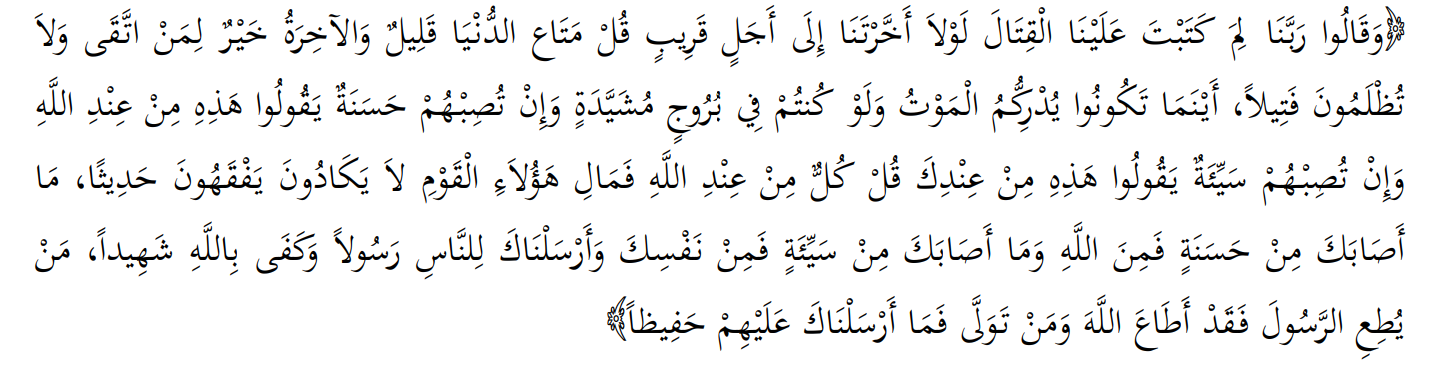
بنابراین موضوع، آنچه بر آنان میرسد است، نه آنچه خودشان انجام میدهند. از این رو ارتباطی با بحث قضا و قدر ندارد.
So the subject is what befalls them and not what they are doing. Thus it has nothing to do with the study of al-qadā’ wa‘l-qadar.
بنابراین، آنچه پیشتر ذکر شد هیچ ربطی به بحث قضا و قدر ندارد؛ در معنای آن نمیگنجد و هیچ نسبتی با آنچه گذشت ندارد. در واقع، قضا و قدر بهعنوان یک مفهوم از فلسفه یونانی برآمده است که معتزله آن را منتقل کردند و دربارهٔ آن نظری ارائه دادند. اهل سنت و جبریه هر دو آنان را رد کردند، و اهل سنت نیز جبریه را نقد کردند. این بحث در همان چارچوب معنا محدود ماند و بر همان مقدمات استوار بود. پس مسئله، مفهومی است که از فلسفهٔ یونانی سرچشمه گرفته و در مناظرهای که میان مسلمانان و کافرانی که به فلسفهٔ یونانی مسلح بودند جریان داشت، مطرح شد. این مفهوم به عقیده (اعتقادات) مربوط است و از این رو، مقصود آن است که دیدگاه اسلام دربارهٔ این مفهوم بیان شود. معتزله نظری دادند، جبریه آنان را رد کرده و نظر دیگری ارائه دادند، و اهل سنت هر دو را رد کرده و نظری بیان داشتند. آنان این نظر را سومین دیدگاهی دانستند که از میان آن دو بیرون آمده، و آن را چنین توصیف کردند: «شیر خالصی که گوارا برای نوشیدن است و از میان سرگین و خون بیرون میآید».
Therefore, all that has been mentioned above has nothing to do with the study of al-qadā’ wa‘l qadar; they do not come under its meaning and have no relation whatsoever with what has been mentioned above. Rather, al-qadā’ wa‘l-qadar as a meaning has come from Greek philosophy which was transmitted by the Mu'tazilah who gave an opinion with regards to it. Ahl al-Sunnah and the Jabriyyah refuted them and Ahl al-Sunnah (also) made a refutation of the Jabriyyah. The discussion was confined to the same meaning and preceded upon the same premise. Thus the issue is a meaning/sense that came from Greek philosophy and it came to the fore in the debate which used to take place between the Muslims and the kuffar who used to be armed with the Greek philosophy. It is a meaning which has a relevance to the ‘aqīdah (creed), thus what is desired is to give Islam's opinion regarding this meaning. The Mu'tazilah gave an opinion and the Jabriyyah refuted them and gave another opinion. Ahl al-Sunnah refuted all of them and gave an opinion, and said about it that it is a third opinion which has come out from the two opinions and they described it as ‘the pure milk, sweet to drink, that comes out from between excrement and blood’.
بنابراین، موضوع بحث که از فلسفه یونانی سرچشمه گرفت، شناخته شد، و از آنجا که به عقیده (ʿaqīdah) مربوط است، مسلمان باید درباره باور خود در این موضوع روشن باشد. مسلمانان در واقع دیدگاه خود را بیان کردند و سه مکتب فکری پدید آمد. بنابراین جایز نیست که مسئله القضاء والقدر را به آنچه از معنای القضاء یا القدر، از نظر لغوی و در شریعت، آمده است ارجاع داد، و همچنین جایز نیست که برای القضاء یا القدر، از راه گمان، تصور یا خیال، معنایی تصور یا تخیل کرد و گفت، برای نمونه، که القضاء حکم کلی تنها بر کلیات است و القدر حکم کلی بر جزئیات و تفصیلات آن است، یا گفت که القدر طرح ازلی برای امور است و القضاء اجرا و آفرینش بر اساس آن تقدیر و طرح. در واقع این کار جایز نیست، زیرا این صرفاً خیال، فرض و تلاشی ناموفق در به کار بستن برخی عبارات لغوی و شرعی است، زیرا این عبارات بر آن منطبق نمیشوند، بلکه معانی کلی را نشان میدهند. در این صورت، محدود کردن این دو واژه به این معانی خاص بدون دلیل، کاری خودسرانه خواهد بود.
Therefore, the subject of discussion, which came from the Greek philosophy, became known, and since it is related to the ‘aqīdah (creed), the Muslim must be clear as to what his belief is regarding this subject. The Muslims did actually state their opinion and three schools of thought arose. Thus it is not allowed to refer the issue of al-qadā’ wa‘l-qadar to what has come of the meaning of al-qadā’ or al-qadar, linguistically and in the Sharī’ah, nor is it allowed to imagine or conceive for al-qadā’ or ‘al-qadar any meaning from mere supposition, conception or imagination, and to say, for example, that al-qadā’ is the universal judgement on only the universals and al qadar is the universal judgement on the partial aspects and its details, or to say that al-qadar is the eternal plan for things and al-qadā’ is the execution and creation according to that predetermination and plan. Indeed, this is not allowed because this is mere imagination, assumption and a failed attempt of applying certain linguistic and shar’i expressions because they do not apply to it, they rather indicate general meanings; . It would then be an arbitrary action to restrict the two words to these specific meanings without evidence.
به همین ترتیب، جایز نیست که ادعا شود قضا و قدر از جمله اسرار الهی است و ما از بحث درباره آن منع شدهایم؛ زیرا هیچ نص شرعی دلالت ندارد بر اینکه قضا و قدر یکی از اسرار الهی است، تا چه رسد به اینکه موضوع آن امری قابل درک حسی است که دربارهاش باید نظر داده شود، پس چگونه گفته میشود که نباید درباره آن مطالعه شود؟! افزون بر اینکه این مسئلهای است عقلی و موضوعی است که به اموری مربوط میشود که عقل آنها را بهعنوان واقعیتی قابل درک حسی بررسی میکند؛ و از آنجا که به ایمان به الله مربوط میشود. بنابراین، قضا و قدر، به معنایی که بهعنوان موضوع بحث قرار گرفته و جزئی از عقیده شده است، باید مورد مطالعه و بررسی قرار گیرد.
Similarly, it is not allowed to claim al-qadā’ wa‘l-qadar is a secret from amongst the secrets of Allah and that we have been forbidden to discuss it, because there is no shar’i text to say that it is one of the secrets of Allah , not to mention the fact that the subject matter is sensorially perceivable, for which an opinion must be given, so how can it be said that it cannot to be studied?! In addition to the fact that it is a rational inquiry and a subject which relates to matters that are studied by the intellect as a reality that is sensorially-perceivable; and since it relates to the imān in Allah . Thus, al-qadā’ wa‘l-qadar, in the meaning placed as the subject matter and which became part of the ‘aqīdah (creed) must be studied.
مسئلهٔ القضاء و القدر، یا به بیان دیگر مسئلهٔ القضاء و القدر، دربارهٔ افعال بندگان و صفات چیزهاست. زیرا مسئلهٔ مطرحشده، افعال بنده و آنچه از این افعال پدید میآید است، یعنی صفاتی که بنده در چیزها پدید میآورد: آیا آنها آفریدهٔ خداوند ﷻاند؟ آیا اوست که آنها را آفریده و به وجود آورده است؟ یا بنده؟ آیا بنده است که آنها را آفریده و به وجود آورده است؟
معتزله، همگی گفتند که بنده خود افعال خویش را میآفریند: اوست که کنش را پدید میآورد و به وجود میآورد. آنان دربارهٔ صفات اختلاف کردند. برخی از ایشان گفتند که بنده آفرینندهی همهٔ صفاتی است که به دست انسان پدید میآید و اوست که آنها را به وجود میآورد. دیگران میان صفات فرق گذاشتند. برخی از اینان آنچه را در چیزها به دست بنده آفریده و به دست او به وجود آمده، و بخشی را که در چیزها به دست خداوند آفریده و به دست او به وجود آمده، قائل شدند.
اما جبریه گفتند که خداوند تمام افعال انسان و همهٔ صفاتی را که به دست انسان در چیزها پدید میآید میآفریند. اوست که آنها را به وجود میآورد؛ بنده را در آفرینش و شکلدهی کنش یا در پدیدآوردن صفت در چیز، هیچ نقشی نیست.
اهل سنت گفتند که افعال بنده و صفاتی که به دست بنده در چیزها پدید میآید، آفریدهٔ خداوند ﷻاند. اما گفتند که خداوند آنها را میآفریند در حالی که بنده کنش را انجام میدهد و بنده صفت را پدید میآورد. پس خداوند آنها را هنگامی میآفریند که بنده توانایی و اراده دارد، نه با توانایی و ارادهی خود بنده.
The question of al-qadā’ wa‘l-qadar, or in other words, the issue of al-qadā’ wa‘l-qadar, is the actions of the servants and the attributes of things. This is because the issue mentioned is the actions of the servant and what arises from these actions, that is, the attributes brought about by the servant in things: are they the creation of Allah ? Is He the one who has created them and brought them into being? Or is it the servant? Is the servant the one who created them and brought them into being? The Mu'tazilah, all of them, said that the servant is the one who creates his own actions: he is the one who creates the action and brings it into being. They differed about the attributes. Some of them said that the servant is the one who creates all of the attributes that are caused by man and he is the one who brings them into existence. Others differentiated between the attributes. Some of these made them as being created in things by the servant and brought into existence by him and part of them made them as being created in things by Allah and brought into existence by Him. As for the Jabriyyah, they said that Allah creates all the actions of man as well as all the attributes caused by man in things. He is the one who brings them into existence; the servant has nothing to do with the creation and formation of the action or in causing the attribute in the thing. Ahl us-Sunnah said that the actions of the servant and the attributes caused in things by the servant are created by Allah . But they said that Allah creates them while the servant performs the action and the servant causes the attribute. So Allah creates them when the servant has the ability and will and not by his own ability and will.
این مسئله، مسئلهٔ القضاء و القدر است و این خلاصهٔ دیدگاههایی است که دربارهاش ابراز شده است. هرکس این دیدگاهها را بررسی میکند باید بداند که بحث بر چه پایهای بنا شده است، تا بحث بر یک مبنای مشترک انجام گیرد. بدین ترتیب نتیجه همان خواهد بود که مبنای بحث اقتضا میکند و نادرست نخواهد بود. مبنای بحث در القضاء و القدر نه کنش بنده از این جهت است که آیا او آن کنش را آفریده یا خداوند آن را آفریده است، و نه ارادهی خداوند از این جهت که این اراده مشروط به کنش بنده است و بنابراین باید با این اراده همراه باشد، و نه علم خداوند از این جهت که او میداند بنده فلان کنش را انجام میدهد، یا علم او بنده را در بر میگیرد، یا این کنش بنده در لوح محفوظ نوشته شده و بنابراین او باید مطابق آنچه نوشته شده عمل کند. در حقیقت، مبنای بحث قطعاً هیچیک از این امور نیست، زیرا از نظر پاداش و کیفر هیچ ارتباطی با موضوع ندارند؛ آنها از این جهت با مسئله مرتبطند که آفرینش از نیستی، پیوند اراده با همهٔ امکانات، علم فراگیر به همهٔ چیزها و لوح محفوظ مطرحاند. این با موضوع پاداش و کیفر برای یک کنش کاملاً متفاوت است. موضوع بحثی که مسئلهٔ القضاء و القدر بر پایهٔ آن بنا شده، مسئلهٔ پاداش و کیفر برای یک کنش است؛ یعنی آیا انسان مکلف است کنشی، نیک یا بد، را انجام دهد، یا او اختیار دارد؟ و آیا انسان اختیار دارد که کنشی را انجام دهد، یا هیچ اختیاری ندارد؟ کسی که در کردارهای بندگان دقت میکند، میبیند که انسان در دو قلمرو زندگی میکند: یکی قلمرویی که او بر آن تسلط دارد، یعنی قلمرو حاضر در محدوده رفتار او، که کردارهایش در آن کاملاً به اختیار خودش انجام میگیرد؛ و دیگری قلمرویی که بر او مسلط است؛ او در محدوده آن زندگی میکند، و کارهایی که در آن رخ میدهد، چه از او سر بزند و چه بر او وارد شود، بدون اختیار او انجام میگیرد.
This is the issue - the issue of al-qadā’ wa‘l-qadar – and this is a summary of the opinions that have been opined about it. Anyone who scrutinises these views must know the basis on which the discussion has been built such that the discussion is on a common basis. Thus the outcome will be as required by the basis of the discussion and it will not be an incorrect one. The basis of the discussion in al-qadā’ wa‘l-qadar is not the action of the servant in terms of whether he created the action or Allah created it, nor is it the will of Allah in that His will is conditional on the action of the servant so it must exist with this will, nor is it the Knowledge of Allah in terms of Him knowing that the servant will do such and such an action or that His Knowledge encompasses the servant, or that this action of the servant is written in the Lawh al-Mahfūdh so he must act according to what has been written. Indeed, the basis of the discussion is definitely none of these things, because they have no relation to the subject from the perspective of reward and punishment; they are related to the question from the perspective of formation from nothing, the connection of the will to all possibilities, the all-encompassing Knowledge of all things and the Lawh al-Mahfūdh. This is quite different from the subject of the reward and punishment for an action.The topic of discussion on whose basis the question of al-qadā’ wa‘l qadar is built is the issue of reward and punishment for an action, that is, is man obliged to perform an action, good or evil, or does he have a choice? And, does man have the choice to perform an action, or does he have no choice? The person who scrutinises the actions of the servants sees that man lives within two spheres: one which he dominates, the sphere that is present within the region of his conduct, and within which his actions happen absolutely by his choice; the other (sphere) dominates him; he exists within its domain, and the actions that occur within it, whether they originate from him or fall upon him, occur without his choice.
بنابراین، کارهایی که در حوزهٔ سلطهٔ انسان قرار دارند، انسان در آنها و در وجودشان هیچ اختیاری ندارد؛ و این کارها دو نوعند: نوعی که مقتضای قوانین جهان است، و نوعی که قوانین عام جهان آن را ایجاب نمیکند، هرچند که همهٔ امور رخداده لزوماً از این قوانین سرچشمه نمیگیرند. اما کارهایی که قوانین جهان ایجاب میکند، انسان کاملاً تسلیم آنهاست؛ بر اساس آنها و از روی اجبار عمل میکند، زیرا با جهان و زندگی همراه است که تابع نظامی مشخص و ثابتاند. بر این اساس، کارهای انسان در این حوزه بدون ارادهاش رخ میدهد، در این کارها مجبور است و اختیاری ندارد. او بدون ارادهاش به این زندگی آمده و بدون ارادهاش آن را ترک خواهد کرد؛ نمیتواند تنها با بهکارگیری بدن خود پرواز کند، و نمیتواند به شکل طبیعی خود بر آب راه برود، و رنگ چشمانش، شکل سرش یا اندازهٔ بدنش را برای خود انتخاب کند. در واقع، این همه را خداوند آفریده، بیآنکه انسان آفریدهشده در آن تأثیر یا ارتباطی داشته باشد؛ زیرا خداوند قوانین جهان را آفرید، آنها را نظامبخش جهان قرار داد و جهان را مطابق آنها به کار انداخت، بیآنکه توانایی تغییر آنها را داشته باشد. اما نوع دوم، کارهایی است که خارج از کنترل انسان رخ میدهند، که او نمیتواند از آنها بپرهیزد و که به قوانین جهان مربوط نیستند؛ اینها کارهاییاند که یا ناخواسته از سوی انسان یا بر او واقع میشوند و او نمیتواند از آنها پرهیز کند، مانند اینکه کسی بر دیگری بیفتد و او را بکشد، یا کسی به سوی پرندهای تیراندازی کند و ناخواسته به انسانی اصابت کند و او را بکشد، یا اتومبیل، قطار یا هواپیمایی سقوط کند، بیآنکه امکانی برای جلوگیری از این حوادث باشد، و در نتیجه سرنشینان آن بمیرند. همهٔ این نمونهها کارهاییاند که از انسان یا بر انسان واقع شدهاند؛ هرچند در چارچوب قوانین جهاناند، بدون ارادهاش و بیرون از توان او برای کنترل آنها رخ دادهاند، و در حوزهٔ سلطهٔ انسان قرار دارند. تمام کارهایی که در قلمرو سلطهٔ انسان واقع میشوند «قضا» نامیده میشوند، زیرا تنها الله آنها را مقرر کرده و در چنین کارهایی اختیار اراده را به بنده نداده است؛ او در قبال آنها هیچ انتخابی ندارد. از این رو، انسان به سبب این کارها مورد محاسبه قرار نمیگیرد، خواه از نظر انسان در آنها سودی باشد یا زیانی، یا مورد پسند باشند یا ناپسند؛ یعنی چه از دید انسان نیک باشند چه بد. تنها الله خوبی و بدی این کارها را میداند، زیرا انسان در آنها تأثیری ندارد؛ او آنها را نمیشناسد و نمیداند چگونه پدید میآیند، و کاملاً ناتوان است از اینکه آنها را از خود دور کند یا پدید آورد. بنابراین برای آنها نه پاداشی هست و نه کیفری. پس این قضاست و از همین رو گفته میشود که آن کار به قضا روی داده است. بر انسان است که به این قضا ایمان داشته باشد و بداند که این قضا از جانب الله، پاک و بلندمرتبه، است.
Thus, the actions that fall within the sphere that dominates man, man has no choice in them or in their existence; they are of two types: a type which is a requirement of the laws of the universe, and a type not necessitated by the universal laws, even though all the things (that occur) may not emanate from these laws. As for the actions necessitated by the laws of the universe, man submits to them totally; he acts according to them as a matter of compulsion, because he moves with the Universe and Life, which are subjected to a specific regulation, which does not change. Subsequently, man's actions in this sphere occur without his will, he is forced in these actions and has no choice. He came to this life without his will and he will leave it without his will; he cannot fly merely by the use of his own body, nor can he walk in his natural form on water, nor choose for himself the colour of his eyes, the shape of his head or the size of his body. Indeed, it was Allah who created all of this without any influence or relation from the created man, because Allah created the laws of the Universe, made them regulate the universe and made the universe act according to them without having the ability to change. As for the second type, they are actions which happen beyond man's control, which he cannot avoid and which are not related to the laws of the universe; they are the actions which occur either unintentionally through him or upon him and which he cannot avoid, such as if someone falls on a person and thus kills him, or if someone shoots at a bird and unintentionally hits a person and kills him, or if a car, train or plane should crash, without any possibility to avoid the incidents, and as a result the passengers die. All these examples are actions which occurred from a man or upon him - though they are bound by the laws of the universe - they happened without his will and outside his ability to control them, and they are within the sphere that dominates man. All the actions which occur within the sphere that dominates man are termed qadā, because Allah alone has decreed them, and has not given the servant the freedom of will in such actions; he has no choice with regards to them. Therefore man is not reckoned on these actions, whether, with respect to man, there is benefit or harm in them or like or dislike, that is, regardless of whether they are, according to man, good or bad; Allah alone knows the good and bad in these actions, because man has no influence on them; he does not know them or how they are brought into existence, and he is absolutely unable to avoid and bring them about. Therefore there is no reward or punishment for them. Thus this is qadā’, and it is therefore said that the action happened by qadā’. It is upon man to have imān in this qadā’ and that this qadā’ is from Allah , the Glorified and Exalted.
در مورد کارهایی که در قلمرویی واقع میشوند که انسان بر آن تسلط دارد، این همان قلمرویی است که در آن انسان بر اساس نظامی که برمیگزیند پیش میرود، خواه شریعت الله باشد یا هر نظام دیگری. این قلمرو همان جایی است که کارهایی که انسان انجام میدهد یا در آنها دخیل است، به ارادهی او واقع میشوند. بنابراین هر زمان که بخواهد راه میرود، میخورد، مینوشد و سفر میکند؛ همچنین هر زمان که بخواهد از انجام هر یک از این کارها خودداری میکند. او با آتش میسوزاند و با چاقو میبرد هرگاه که اختیار کند، و غرایز خود از جمله غریزهی تولیدمثل، مالکیت و گرسنگی را هر طور که بخواهد ارضا میکند. همهی اینها را او به انتخاب خود انجام میدهد یا از آنها خودداری میکند. از این رو، انسان در برابر کارهایی که در این قلمرو واقع میشوند مسئول است. پس برای کاری که شایستهی پاداش است پاداش داده میشود و برای کاری که شایستهی کیفر است کیفر میبیند. این کارها هیچ ربطی به قضاء ندارند و قضاء هم هیچ ربطی به آنها ندارد، زیرا این انسان است که آنها را با اراده و انتخاب خود بر عهده گرفته است. بنابراین کارهای اختیاری زیر عنوان القضاء قرار نمیگیرند.
As for the actions that occur in the sphere that man dominates, it is the sphere in which he proceeds with choice according to the system he chooses, whether it is the Sharī’ah of Allah or any other. This sphere is the one in which actions carried out by man or involving him occur by his will. Thus he walks, eats, drinks and travels anytime he likes; likewise he refrains from doing any of these things whenever he likes; he also burns with fire and cuts with a knife when he chooses, and he satisfies his instincts of procreation, ownership and hunger as he likes. All this he performs or abstains from, by his choice. Therefore, man is accountable on actions which occur within this sphere. Thus, he is rewarded for the action deserving reward and is punished for the action deserving punishment. These actions have nothing to do with qadā’ nor does it have anything to do with them because man is the one who undertook them with his own will and choice. Therefore, actions of choice do not come under al-qadā’.
در مورد القدر، این مفهوم به کنشها مربوط میشود، خواه در حوزهای رخ دهند که انسان بر آن تسلط دارد یا در حوزهای که بر او تسلط دارد؛ کنشهایی که از اشیاء یا بر اشیاء، از طریق ماده جهان، انسان و زندگی روی میدهند و اثری ایجاد میکنند، یعنی از آن کنش، نتیجهای حاصل میشود. پس این سازوکاری که انسان از نظر ویژگیها در اشیاء پدید میآورد، آیا خود انسان آن را آفریده است یا خداوند، همانگونه که خود اشیاء را آفریده است؟ کسی که در این مسئله دقیق بنگرد، درمییابد که این امورِ پدیدآمده در اشیاء، از ویژگیهای خود اشیاء است، نه از کنش انسان؛ دلیلش آن است که انسان نمیتواند این آثار را جز در اشیائی پدید آورد که آن ویژگیِ مربوط در میان صفاتشان باشد. اما در اشیائی که آن ویژگی در میان صفاتشان نیست، انسان نمیتواند آنچه را میخواهد در آنها ایجاد کند. بنابراین این امور از کنشهای انسان نیستند، بلکه از ویژگیهای خود اشیاءاند.
As for al-qadar, it relates to the actions, whether they occur in the sphere which man dominates or in the sphere which dominates him, which occur from or on things through the matter of the universe, man and life, and cause an effect, that is, something results from the action; so this mechanism that man causes in things in terms of attributes, is it created by man or by Allah just as He has created the things themself. The one who scrutinises this issue will find that these matters which are caused in things are from the attributes of the things, not from the action of man, as evidenced by the fact that man is not able to form them (i.e these effects) except in the things which possess the (relevant) attribute amongst its attributes. As for the things which do not have the (relevant) attribute amongst their attributes, man is not able to cause in them what he wants. Therefore these matters are not from the actions of man but from the attributes of the things.
بدین ترتیب، الله اشیا را آفریده و در آنها صفاتی را مقرر کرده است، بهگونهای که از آنها جز آنچه که او در آنها قرار داده، چیز دیگری نمیتواند پدید آید؛ مانند اینکه در هسته خرما، صفت رویش نخل خرما را قرار داده و نه درخت سیب، و همچنین نطفه انسان را چنان قرار داده که انسان از آن پدید آید و نه هیچ حیوان دیگری. الله در اشیا صفات مشخصی آفریده است؛ برای نمونه، در آتش صفت سوزاندن، در چوب صفت آتش گرفتن، و در کارد صفت بریدن را آفرید. او این صفات را بخش ذاتی و همیشگی اشیا قرار داده، مطابق با قوانین عالَم. هنگامی که به نظر میرسد این صفات دیگر وجود ندارند، به این معناست که الله آنها را از آنها سلب کرده است، و چنین رویدادی غیرعادی است؛ تنها برای پیامبران بهعنوان معجزه برای ایشان رخ میدهد.
همچنین، همانگونه که الله برای اشیا صفاتی آفرید، در انسان غرایز و نیازهای جسمانی آفرید و، همانطور که در اشیا صفات آفرید، در غرایز و نیازهای جسمانی نیز صفات مشخصی آفرید. از این رو، در غریزه تولیدمثل، گرایش جنسی را آفرید و در نیازهای جسمانی، صفت گرسنگی را. او این صفات را بر اساس قوانین عالَم به آنها پیوند داد. صفات خاصی که الله متعالی در اشیا، غرایز و نیازهای جسمانی آفریده، «القدر» نامیده میشود، زیرا تنها الله اشیا، غرایز و نیازهای جسمانی را آفرید و صفات آنها را در ایشان مقرر کرد. بنابراین، هنگامی که شهوت جنسی در انسان پدید میآید، وقتی چشم میگشاید و میبیند، و هنگامی که سنگ را به بالا پرتاب میکنند و بالا میرود و به پایین پرتاب میکنند و پایین میآید، همهی اینها به کُنش انسان نیست، بلکه به کُنش الله است؛ یعنی این از طبیعت چیزها است که چنین باشند، یعنی الله آنها را آفریده و در آنها ویژگیهای خاصی قرار داده است. پس آن ویژگیها از الله است و از انسان نیست؛ انسان در آنها هیچ نقشی ندارد و نمیتواند به هیچ شکلی آنها را تأثیر دهد. این است القدر، و چنین گفته میشود که القدر در موضوع القضاء والقدر، همان ویژگیهای چیزهاست که انسان در آنها پدید میآورد. بر انسان است که ایمان داشته باشد که کسی که ویژگیها را در این چیزها مقرر کرده، الله است.
Thus, Allah has created the things and set [qaddara] in them attributes in a manner that nothing else is possible to come from them except what He has set in them, such as setting in the date pit (the attribute) of growing date palm from it and not apple, and such the human sperm to result in humans not any other animal. Allah has created specific attributes in things, for example, He created in fire the attribute of burning, in wood the attribute of catching fire, and in the knife the attribute of cutting. He made the attributes an essential and perpetual part of the objects in accordance with the Laws of the Universe. When it appears that the attributes are no longer present, it means Allah has stripped them off, and such an event would be unusual; it only happens to the prophets as a miracle for them. Likewise, in the manner that Allah created attributes for the objects, He created in man instincts and organic needs and, as He created attributes in objects, He created in the instincts and organic needs specific attributes. Hence, in the procreational instinct Allah created the sexual inclination, and in the organic needs He created the attribute of hunger. He made these attributes adhere to them according to the laws of the universe. The particular attributes that Allah the Exlated has created in objects, instincts and organic needs are called al-qadar, because Allah alone created the things, instincts and organic needs and determined in them their attributes. Thus when the sexual desire occurs in man, when he sees upon opening his eyes and when the stone goes up when thrown upwards and down when thrown downward, all of this is not by man’s action, rather it is by the action of Allah ; meaning that it is from the nature of the things to be so, that is, Allah created them and created particular attributes in them, thus they (the attributes) are from Allah and are not from man; man has nothing to do with them, nor can he effect them in any way. This is al-qadar, and it is thus said that al-qadar in the subject of al-qadā’ wa‘l-qadar is the attributes of the things which man causes in them. It is upon man to have imān in that the one who determined the attributes in these things is Allah .
بنابراین القضاء والقدر عبارت است از کارهایی که در حوزهای رخ میدهد که بر انسان چیره است، خواه این کارها از قوانین جهان ناشی شده باشد یا نباشد، و خواه از او سر بزند یا بر او وارد شود، و نیز صفاتی که در اشیاء پدید میآید و موجب پیدایش آن اشیاء میگردد. معنای ایمان به القضاء والقدر، هم خیر و هم شر آن از جانب الله است، آن است که (انسان) ایمان داشته باشد که کارهایی که از او سر میزند یا بر او وارد میشود بیاختیار او و بدون آنکه توان دفع آن را داشته باشد، و صفاتی که انسان در اشیاء پدید میآورد، همه از جانب الله است و از بنده نیست و او در آنها هیچ دخالتی ندارد. از این رو کارهایی که انسان در آنها اختیار دارد از موضوع القضاء والقدر خارج است، زیرا این کارها به اختیار انسان از او سر میزند یا بر او وارد میشود. و چون الله ﷻ انسان را آفرید و صفات را در اشیاء و در غرایز و نیازهای جسمی قرار داد و در انسان عقل تمییزدهنده را آفرید، به او اختیار داد که آن کار را انجام دهد یا از آن خودداری کند، و او را مجبور نکرد که آن را انجام دهد یا ترک کند. و نیز در صفات اشیاء، یا در غرایز و نیازهای جسمی، چیزی قرار نداد که انسان را به انجام یا ترک آن کار وادار کند. پس انسان به واسطه عقل تمییزدهندهای که الله ﷻ به او عطا کرده، اختیار دارد که کاری را انجام دهد یا از آن خودداری کند، و الله ﷻ عقل سالم را معیار مسئولیت قرار داد. بنابراین برای نیکوکاری پاداش، و برای بدکاری کیفر مقرر فرمود، زیرا عقل انسان انتخاب کرد که فرمانهای الله ﷻ را اجرا کند و از منهیات او دوری گزیند، و نیز برای بدکاری کیفر قرار داد، زیرا عقل او انتخاب کرد که از فرمانهای الله ﷻ سرپیچی کند و آنچه را که منع فرموده مرتکب شود. پس حسابرسی او بر چنین کارهایی درست و عادلانه است، زیرا انسان در انجام آن کارها اختیار دارد و به انجام آن مجبور نیست؛ و القضاء والقدر در این امر دخالتی ندارد، این مسئلهای است که به خود انسان مربوط است که کارش را به اختیار خود انجام میدهد. بنابراین انسان مسئول اعمالی است که کسب میکند،
Hence al-qadā’ wa‘l-qadar are the actions which occur in the sphere that dominates man, irrespective of whether they are a requirement of the Laws of the Universe or not, or if they emanate from him or fall upon him, and the attributes which results in the objects. The meaning of imān in al-qadā’ wa‘l-qadar, both the good and the bad thereof being from Allah , is (having) imān in that the actions which occur from him or upon him against his will, and he has no power to drive them away, and the attributes which man causes in the object are from Allah and are not from the servant, nor does he have anything to do with them. Thus the actions with regards to which man has a choice are excluded from the subject of al-qadā’ wa‘l-qadar, because these actions occur from man or upon him by his choice, and because when Allah created man and created the attributes in the objects and in the instincts and the organic needs, and created in man the distinguishing intellect, He gave him the choice to carry out the action, or abstain from it, and He did not oblige him to do or not do it. Nor did He make in the attributes of things, or in the instincts and organic needs anything that obliges man to do or not to do the action. Therefore man has the choice to carry out the action or abstain from it by way of the distinguishing mind that Allah bestowed him with, and He made the (sound) intellect the criteria of the accountabilty. Therefore He set for man reward for doing good, because his mind chose to carry out the orders of Allah and abstain from his prohibitions, and He also set for him punishment for doing bad, because his mind chose to disobey the the orders of Allah and commit what He had prohibited. So his accounting on such actions is true and just, because man has the choice to carry out the actions and is not compelled to do so; and al qadā’ wa‘l-qadar has nothing to do with this matter, it is a question of the man himself doing his action by choice. Therefore man is accountable for what he earns,