۱۷.۹ شارع برای خلافت شخص مشخصی را تعیین نکرده است
17.9 The Shar'a Did Not Designate A Specific Person For The Khilafah
این دیدگاه که پیامبر ﷺ شخص معینی را به عنوان خلیفه پس از خود تعیین کرده بود، با نصوص شرعی در تضاد است. و این سخن که پیامبر ﷺ عدهای مشخص را تا روز قیامت به عنوان خلفای پس از خود نامزد کرده است، با متون اسلامی تناقض بیشتری دارد.
The view that the Messenger (saw) designated a specific person to be the Khalifah after him contradicts the Shari’ah texts. And the statement that the Messenger (saw) nominated certain persons to be Khulafaa after him until the Day of Judgement is even more contradictory to the Islamic texts.
اما در ابطال این دیدگاه که پیامبر ﷺ خلافت را برای کسی پس از خود تعیین کرده بود، این امر از راههای متعدد آشکار است:
As for invalidating (the opinion) that the Messenger (saw) nominated the Khilafah for someone after him, this is apparent in numerous ways:
اول: این سخن با بیعت در تضاد است، زیرا تعیین شخصی به عنوان جانشین، به معنای آگاه ساختن مسلمانان از این است که چه کسی خلیفهی ایشان خواهد بود. از این رو خلیفه شناخته میشد و دیگر نیازی به تشریع بیعت نبود، چون بیعت همان شیوهی نصب خلیفه است. پس اگر او از پیش نصب شده باشد، دیگر نیازی نیست شیوهی نصب او نشان داده شود، زیرا در واقع پیشتر نصب شده است. همچنین نمیتوان گفت که بیعت، بیعت اطاعت از خلیفه است؛ زیرا شرع اطاعت از خلیفه و اولیالامر را در متون بسیار دیگری غیر از متن بیعت بیان کرده است. اطاعت بهصراحت از مسلمانان خواسته شده است؛ اما بیعت، در درخواستهای دیگری از مسلمانان خواسته شده که نه از آن حیث که اطاعت باشد، هرچند معنای اطاعت را نیز در بر دارد، بلکه از آن حیث که قراردادی برای خلافت است. معنای آن در همهی احادیثی که از آن یاد کردهاند اطاعت نیست، بلکه سپردن رهبری به کسی است که با او بیعت میشود و آمادگی برای تسلیم در برابر این رهبری. بنابراین قرار دادن بیعت به عنوان شرط نصب خلیفه، با فرستادهی خدا ﷺ که شخصی مشخص را پس از خود به خلافت گماشت، در تضاد است. افزون بر این، الفاظ بیعتی که در احادیث صحیح آمده، به صورت عام و بدون تخصیص، و مطلق و بدون هیچ قیدی برای هر کسی آمده است. اگر مراد بیعت برای شخصی معین بود، عام و مطلق نمیبود. الفاظ احادیث چنین است:
First: This contradicts the pledge (bay’ah) since nominating a person means informing the Muslims as to who will be the Khalifah over them. Hence the Khalifah would be known so there would remain no need for legislating (tashri’) the pledge as the pledge is the method of appointing the Khalifah. So if he has already been appointed in advance, there remains no need to demonstrate the method of appointing him as, in fact, he has already been appointed. Nor can it be said that the pledge is the pledge of obedience to the Khalifah since the Shar’a has enunciated the obedience to the Khalifah and those in charge (ulu al-amr) in many other texts distinct from the text of the pledge. Obedience has been explicitly requested from Muslims; as for the pledge, it has been requested from Muslims in other request(s) not in consideration as being (merely) obedience, though it does include the meaning of obedience, but in consideration as being a contract for the Khilafah. Its meaning in all the ahadith that mentioned it is not obedience, rather it is about giving leadership to the one who is pledged and preparing to submit to this leadership. So making the pledge a condition for appointing the Khilafah contradicts the Messenger (saw) nominating a specific person to be Khalifah after him. Moreover, the words of the pledge which came in the correct (Saheeh) ahadith came in a general manner (‘aam) without specification (takhsees), and unrestricted (mutlaq) without any restriction (taqyeed), for anyone. Were they to mean the pledge for a specific person they would not have been general and unrestricted. The word(s) of the ahadith are:
«هر که بمیرد و بیعتی بر گردنش نباشد،»
“He who dies without a pledge on his neck,”
«هر کس با امامی بیعت کند»
“Whosoever pledges an Imam,”
و
And
«مردی که با امام بیعت میکند.»
“A man who pledges an Imam.”
این دیدگاه که پیامبر (ﷺ) شخص معینی را به خلافت پس از خود برگزیده بود، با عمومیت و بیقیدی بیعت در تضاد است و آن را باطل میکند. از این رو نمیتوان گفت که بیعت خود شیوه تعیین خلیفه است، در حالی که تعیین خلیفه جدا از بیعت است و به همین سبب ابتدا خلیفه تعیین میشود و سپس بیعت به او داده میشود. این سخن را نباید گفت، زیرا بیعت شیوه تعیین خلیفه است و این به معنای آن نیست که عین تعیین او باشد. و نیز نباید گفت که واجب است ابتدا خلیفه تعیین شود و تعیین او پذیرفته گردد، سپس بیعت به او داده شود، زیرا این بدان معناست که شیوه دیگری برای تعیین خلیفه وجود دارد و بیعت تنها برای اطاعت از او است، در حالی که احادیث مربوط به بیعت همه دلالت دارند که بیعت شیوه تعیین خلیفه است و هیچ راه دیگری وجود ندارد. سخن پیامبر (ﷺ) را در نظر بگیرید:
The opinion that the Messenger (saw) designated a specific person to become Khalifah after him contradicts and invalidates the generality and unrestricted nature of the pledge. Therefore, it cannot be said that this means that the ba’yah is the very way of appointing the Khalifah while the appointment of the Khalifah is separate to the ba’yah, this is why the Khalifah is appointed first & then the ba’yah is given to him; one should not say this because the ba’yah is the method of appointing the Khalifah and this does not mean that it is exactly the same as his appointment. Nor should one say that it is compulsory to first appoint the Khalifah and acknowledge his appointment before giving him the ba’yah as this would mean that there is another method for appointing the Khalifah such that the ba’yah is merely for his obedience, whereas the ahadith about the ba’yah all indicate that it is the method to appoint the Khalifah and there is no other way. Consider his (saw) statement:
«هر کس بمیرد در حالی که بیعتی بر گردنش نیست»
“Whoever dies without a pledge on his neck”;
واضح است که هر کس بدون آنکه با بیعت امام خود را تعیین کرده باشد بمیرد، معنایش به هیچ وجه این نیست که هر کس بدون اطاعت از امامی بمیرد. این نشان میدهد که پیامبر ﷺ در این حدیث، روش تعیین خلیفه را مراد کرده است و نه صرف اطاعت. همچنین سخن او ﷺ را در نظر بگیرید:
It is quite explicit in meaning that whoever dies without appointing his Imam via the pledge and it does not mean in any way whoever dies without obeying an Imam. This indicates that in this hadith the Prophet means the method of appointing the Khalifah and does not mean mere obedience. Also consider his (saw) statement:
«هرگاه با دو خلیفه بیعت شود، آخرین را بکشید».
“When the pledge is given to two Khalifahs, kill the latter”;
این که اگر دو خلیفه تعیین شوند، آن که بعدی است را بکشید، روشن است. همچنین تمام احادیث پیامبر ﷺ روشناند که این روش تعیین خلیفه است. احادیث پیامبر ﷺ روشناند که منظورشان صرفاً اطاعت یا اطاعت مطلق (مطلق) نیست؛ بلکه منظور پیروی از کسی است که به عنوان خلیفه تعیین شده، با این معنا که این روش تعیین خلیفه است. افزون بر این، حتی یک حدیث صحیح، چه از نظر نقل و چه از نظر معنا، وجود ندارد که روشی غیر از بیعت برای تعیین خلیفه نشان دهد.
This is explicit that if two Khalifahs are appointed, kill the later of them. Likewise all ahadith of the Prophet are explicit that it is the method of appointing the Khalifah. The ahadith of the Prophet are explicit in not meaning mere obedience or unrestricted (mutlaq) obedience; rather, they mean following the one appointed as the Khalifah with their meaning that this is the method of appointing the Khalifah. Further, there is not even one authenticated hadith, whether in narration or meaning, which demonstrates a method of appointing the Khalifah other than the ba’yah.
ثانیاً: از پیامبر (ﷺ) احادیثی روایت شده که نشان میدهد میان مردم بر سر خلافت اختلاف و نزاع خواهد بود و بر سر آن رقابت خواهد شد. اگر نصی از پیامبر (ﷺ) درباره تعیین شخص معینی وجود داشت، در حضور آن نص اختلافی پدید نمیآمد، یا پیامبر (ﷺ) بیان میکرد که مردم با آن شخص اختلاف خواهند کرد. در حالی که نصوص آمدهاند و گفتهاند که مردم میان خود اختلاف خواهند کرد، و همچنین روش حل این اختلاف و فیصله دادن به مسئله خلافت را نیز روشن ساختهاند. مسلم در صحیح خود روایت کرده است: وهب بن بقیة الواسطی برایم روایت کرد که خالد بن عبدالله الجزری از ابونضره، از ابوسعید الخدری برایمان گفت که رسول خدا (ﷺ) فرمودند:
Second: Ahadith have been narrated from the Messenger (saw) indicating that there will be disputes and contentions among people about the Khilafah and competition over it. If there was a text from the Messenger (saw) concerning the appointment of a (specific) person, there would not arise a dispute in the presence of that text or the Messenger (saw) would state that people would dispute with that person. Whereas the texts came saying that people would dispute between themselves and it also clarified the method to resolve this dispute and settle the issue of the Khilafah. Muslim narrated in his Saheeh: Wahab bin Baqiyyat al-Wasiti narrated to me that Khalid bin Abdullah al-Juzairi told us from Abu Nadhra from Abu Saeed al-Khudri who said: The Messenger of Allah (saw) said:
«اگر بیعت با دو خلیفه داده شود، آخرینِ آن دو را بکشید.»
“If the pledge is given to two Khalifahs, kill the latter of them.”
مسلم در صحیح خود نیز گفته است: زُهیر بن حرب و اسحاق بن ابراهیم برای من روایت کردند؛ اسحاق گفت: ما را خبر دادند، و زُهیر گفت: جریر از العَمَش از زید بن وَهب از عبدالرحمن بن عبدالرب کعبه روایت کرد که گفت: وارد مسجد شدم و عبدالله بن عَمرو بن العاص در سایهٔ کعبه نشسته بود و مردم گرد او جمع شده بودند. پس به آنان پیوستم و با او نشستم. او گفت: ما در سفری با رسول خدا ﷺ بودیم و در منزلگاهی توقف کردیم. در این هنگام، مؤذنِ رسول خدا ﷺ نمازِ جماعت را اعلام کرد. پس همگی نزد رسول خدا ﷺ گرد آمدیم و ایشان فرمود:
Muslim also said in his Saheeh: Zuhayr bin Harb and Ishaq bin Ibrahim narrated to me, with Ishaq saying we were informed and Zuhayr said it was narrated to us by Jareer, from Al-‘Amash from Zaid bin Wahhab from Abdurrahman bin Abdurrabb al-Ka’aba who said: I entered the mosque and Abdullah bin ‘Amru bin al-‘Aas was seated in the shade of the Ka’aba with people gathered around him. So I joined them and sat with him. He said: We were with the Messenger of Allah (saw) in a voyage and we stopped at an encampment when an announcer (mu’adhin) of the Messenger of Allah (saw) announced the collective prayer. So we all gathered before the Messenger of Allah (saw) who said:

«هیچ پیامبری پیش از من نبوده، مگر آنکه بر او واجب بوده که امت خود را به آنچه از نیکی برای ایشان میدانست راهنمایی کند، و آنان را از آنچه از بدی برای ایشان میدانست بیم دهد؛ تا آنجا که فرمود: هر کس با امامی بیعت کند، دست خود را به دست او بدهد و میوهی دلش را به او بسپارد، باید تا جایی که میتواند از او فرمان برد. و اگر دیگری آمد تا با او به نزاع برخیزد، گردن آن دیگری را بزنید.ﷺ
“There was no Prophet before me except that it was obligatory upon him to guide his Ummah to the best that he knew for them and warn them of the worst he knew for them until he said: Whoever pledged an Imam, giving him the clasp of his hand and the fruit of his heart, should obey him as much as he can. If another comes to dispute with him, strike the neck of the other person.”
مسلم نیز در صحیح خود روایت کرده است: محمد بن بشار برای ما روایت کرد که محمد بن جعفر برای ما روایت کرد که شعبہ برای ما روایت کرد از فُرات القزّاز از ابوحازم که گفت: من پنج سال با ابوهریره بودم و شنیدم که از پیامبر ﷺ روایت میکرد که فرمود:
Muslim also narrated in his Saheeh: Muhammad bin Bashar narrated to us that Muhammad bin Ja’far narrated to us that Shu’ba narrated to us from Furrat al-Qazzaz from Abu Hazm who said: I remained with Abu Hurayra for five years and heard him narrate from the Prophet (saw) who said:
«بنی اسرائیل را پیامبرانی بود که امور آنان را سیاست میکردند (تَسُوسُهُمُ). هرگاه پیامبری میمرد، پیامبری دیگر جانشین او میشد. اما پس از من پیامبری نخواهد بود، و خلفایی خواهند بود که بسیار خواهند بود.» گفتند: ما را به چه چیزی فرمان میدهی؟ فرمود: «بیعتِ نخستین را به ترتیب وفا کنید؛ یکی پس از دیگری.»
“The children of Israel had Prophets taking care of their affairs as politicians (tasusuhum). Whenever one Prophet died, another followed him. However, there will be no Prophet after me but there will be Khulafaa who will be many. They said: What do you command us? He said: Fulfil the pledge one after the other.”
مسلم در صحیح خود روایت کرده است: عثمان بن ابی شیبه برای ما نقل کرد که یونس بن ابی یعفور از پدرش برای آنان نقل کرد، از عرفجه که گفت: شنیدم رسول خدا ﷺ میفرمود:
Muslim narrated in his Saheeh: Uthman bin Abu Shayba narrated to us that Yunus bin Abu Ya’fur narrated to them from his father from Arfaja who said he heard the Messenger of Allah (saw) saying:
«هر کس دید که کارهای شما زیر نظر یک نفر متحد شده است و قصد دارد شورش برانگیزد یا وحدت شما را تجزیه کند، او را بکشید.»
“Whoever finds when all your affairs have been united under one man, intending to incite rebellion or divide your unity, kill him.”
این بدان معناست که خلافت حقِ همه مسلمانان است، به گونهای که هرکس میتواند برای آن مدعی شود. این با این سخن که پیامبر ﷺ شخص مشخصی را به خلافت پس از خود منصوب کرده، در تضاد است.
This means that the Khilafah is the right of all Muslims such that anyone can contend for it. This contradicts the (saying that) the Messenger (saw) nominated a specific person to be the Khalifah after him.
سوم: احادیثی که در آنها واژهٔ «امام» به معنای خلیفه آمده، به شکل نکره آمدهاند؛ و هرگاه به شکل معرفه آمده، یا با «ال» دربارهٔ جنس آمده یا به اسم جمعی اضافه شده است. در مواردی که با «ال» معرفه آمده، بنا بر قرینهٔ جمله، «ال» از نوع جنس بوده است. پیامبر ﷺ فرمود:
Third: The ahadith which came with the word Imam denoting the Khalifah came with this word in an unspecified form; and when it came in an specified one, it either came specified with “the” (“al”) of the species or related to a collective noun. In the possibilities which came specified with “al”, it was the “al” of species by evidence of the sentence. The Messenger said:
«هر کس با امامی بیعت کند»،
“Whoever pledges an Imam”,
«…در برابر امام ستمگر ایستاد»،
“…stood against an unjust Imam”,
«به زودی پس از من پیشوایانی خواهند آمد.»
“there will be Imams after me.”
و او گفت:
And he said:
«امام همان کسی است که سرپرست (راعی) مردم است و او نسبت به شهروندانش مسئول است»
“The Imam is the one who is a guardian (ra’i) over the people and he is responsible for his citizens”,
بهراستی امام سپری است که از پشت سرش جنگ میکنند و بهواسطه او حفظ میشوند
“Verily the Imam is a shield from behind whom they fight and by whom they are protected”
و او گفت:
and he said:
«…به پیشوای مسلمانان»،
“…to the Imam of the Muslims”,
«بهترین امامان شما»،
“The best of your Imams”,
"…بدترین پیشوایان شما."
“…the worst of your Imams.”
از همه اینها چنین برمیآید که پیامبر ﷺ مسئلهی اینکه چه کسی پس از ایشان خلیفه خواهد بود را بدون تعیین شخص مشخصی رها کرد. این امر بهصراحت نشان میدهد که پیامبر ﷺ شخص معینی را برای خلافت تعیین نکرد، بلکه آن را حقی برای همهی مسلمانان قرار داد. هنگامی که به این مطلب بیفزاییم که برخی از متون با زبان جمع (جمعُ) آمدهاند، این امر متنی روشن در نفی آن است که امام شخص معینی باشد.
All this indicates that the Messenger (saw) left the issue concerning who would be the Khalifah after him unspecified without specifying him. This is explicit in its indication that the Messenger (saw) did not designate a specific person for the Khilafah but rather left it as a right for all Muslims. When you add to this that some texts came with the collective (jam’u) language, this becomes a clear text in negating the Imam being a specific person.
چهارم: صحابه (رض) در زمان خود درباره اشخاصی که از میان ایشان خلیفه شوند، اختلاف داشتند. این اختلاف میان اشخاص، دلیلی است بر اینکه پیامبر (ﷺ) شخص معینی را برای خلافت تعیین نکرد. از جمله کسانی که اختلاف کردند، کسانی هستند که گفته شده پیامبر (ﷺ) درباره خلافت ایشان سخن گفته است، یعنی ابوبکر (رض) و علی (رض). با وجود این اختلاف، هیچ یک از ایشان هرگز استدلال نکرد که نصی از پیامبر (ﷺ) وجود دارد که خلافت از آنِ اوست، و هیچ یک از صحابه (رض) نیز استدلال نکرد که نصی برای اشخاص معینی به طور کلی وجود دارد. اگر نصی وجود داشت، قطعاً با آنان احتجاج میکردند؛ پس اینکه ایشان به هیچ نصی استدلال نکردند، به این معناست که نصی برای شخص معینی در خلافت وجود ندارد. و نباید کسی بگوید که نصی وجود داشته که پس از ایشان شناخته شده، اما به آنان نرسیده است؛ زیرا دین خود را از صحابه (رض) میگیریم. ایشان بودند که قرآن را به ما رساندند و حدیث را برای ما روایت کردند. پس اگر از جانب صحابه (رض) نصی وجود نداشته باشد، هیچ نصی به هیچ وجه شناخته نمیشود. آنچه را از ایشان رسیده میپذیریم و آنچه را از ایشان نرسیده کنار میگذاریم. در رابطه با مسئله نصی برای خلیفه پس از پیامبر (ﷺ)، میبینیم که همه صحابه (رض) بدون استثنا، از جمله ابوبکر (رض) و علی (رض)، بر نبودن هیچ نصی برای شخص معینی در خلافت اتفاق داشتند؛ زیرا با وجود نیاز به سخن گفتن و ضرورت ذکر نص در صورت وجود آن، آن را یاد نکردند. این امر بر بطلان تعیین شخصی برای خلافت از سوی پیامبر (ﷺ) دلالت دارد. و نباید گفت که ترک ذکر نص به سبب احتیاط برای حفظ وحدت مسلمانان بوده است؛ زیرا این کار به معنای پنهان کردن حکمی از احکام خداوند و عدم ابلاغ آن در زمانی است که به شدت بدان نیاز بود، به ویژه در چنین امر مهمی برای مسلمانان. این پنهانکاری در دین خدا از صحابه (رض) رسول خدا ﷺ ممکن نیست که صادر شده باشد.
Fourth: The Sahabah (ra) differed in their time about the persons to be the Khalifah among them. This difference among persons is evidence that the Messenger (saw) did not designate a specific person for the Khilafah. Among the very people who differed are those of whom it is said that the Messenger enunciated upon their Khilafah, namely: Abu Bakr (ra) and Ali (ra). Despite their differences, none of them ever argued that there was a text from the Messenger (saw) that the Khilafah is for him nor did any of the Sahabah (ra) argue that there was a text for certain people in general. Were there any text, they would have argued with them; so their failure to argue using any text means that there is no text for a specific person for the Khilafah. Nor should anyone say that there is a text which was known after them but it did not reach them, because we take our deen from the Sahabah (ra). They are the ones who conveyed the Qur’an, and narrated the hadith, to us. So if there is no text or any text from the Sahabah (ra), then it is not recognised in any way. We take whatever came from them while throwing away whatever did not come from them. In relation to the issue of a text for a Khalifah after the Messenger (saw), we find that all the Sahabah (ra) without exception including Abu Bakr (ra) and Ali (ra) agreed upon the absence of any text for a specific person for the Khilafah due to their failure to mention this despite the need for speaking and the necessity for mentioning the text if it existed. This indicates the invalidity of the Messenger (saw) designating a person for the Khilafah. Nor should one say that the failure to mention the text was due to the precaution to preserve the unity of the Muslims for this means hiding a rule of Allah and not delivering it at the very time it was urgently required, particularly in such an important matter for the Muslims. This hiding in the deen of Allah is not possible to come from the Sahabah (ra) of the Messenger of Allah (saw).
«اگر من خلیفهای تعیین کنم، همانا کسی که از من برتر بود نیز خلیفهای تعیین کرد، یعنی ابوبکر. و اگر تعیین نکنم، کسی که از من برتر بود تعیین نکرد، یعنی رسول الله ﷺ.»
“If I appoint a Khilafah, verily one better than me did appoint a Khalifah i.e. Abu Bakr. And if I do not, then one better than me did not i.e. the Messenger of Allah (saw).”
مسلم روایت کرده است از ابن عمر که عمر بن الخطاب (رضی الله عنه) گفت:
Muslim narrated from bin Umar that Umar bin al-Khattab (ra) said:
بیشک الله عزّ وجلّ دین را حفظ خواهد کرد. اگر من خلیفهای تعیین نکنم، بیشک رسول الله ﷺ [آن را] تعیین نکرد؛ و اگر تعیین کنم، بیشک ابوبکر [آن را] تعیین کرد.
“Verily Allah ‘azza wa jall will preserve the deen. If I do not appoint a Khalifah, verily the Messenger of Allah (saw) did not appoint; and if I do appoint, verily Abu Bakr did appoint.”
این روشنترین دلیل است که پیامبر ﷺ خلیفهای تعیین نکرد. و نباید گفت که این نظرِ عمر است؛ زیرا وقتی یک صحابی میگوید «پیامبر ﷺ چنین کرد یا چنین نکرد، یا در زمان او چنین بود یا چنان بود»، این سخن حدیثی است که بهعنوان دلیل به کار میرود، نه صرفاً نظر یک صحابی. افزون بر این، عمر این سخن را در حضور و در برابر چشم صحابه (رضی الله عنهم) گفت، و علی (رضی الله عنه) نیز حاضر بود و این سخن به او رسید و آن را انکار نکرد، که این نشان میدهد آنان بر آنچه عمر (رضی الله عنه) نقل کرد، توافق داشتند.
This is a clear text that the Messenger (saw) did not appoint a Khalifah. Nor should one say that this is Umar’s opinion for when a companion says, ‘The Messenger (saw) did this or did not do this or we were in his time like this or there was in his time such and such’, this is a hadith used as evidence not merely a companion’s view. Moreover, Umar said this within the hearing and sight of the Sahabah (ra), and Ali (ra) was present and this statement reached him and he did not oppose it, which indicates their agreement upon what Umar (ra) narrated.
این همه با توجه به نبودِ هیچ نصِّ مشخصی که شخص معینی را برای خلافت تعیین کند، گفته میشود. اما در مورد متونی که کسانی که میگویند نصوصی وجود دارد که شخص معینی را تعیین میکند، آوردهاند: از جمله این متون، متونی است که برای نشان دادنِ اینکه پیامبر ﷺ ابوبکر (رض) را پس از خود به خلافت منصوب کرده است آورده شده، و دیگرانی برای نشان دادنِ اینکه او علی (رض) را پس از خود به خلافت گماشته است. باید این متون را ارائه کنیم و محتوای آنها را توضیح دهیم.
This is all with respect to the absence of any specific text designating a specific person for the Khilafah. As for the texts brought by those who say that there are texts designating a specific person, among these texts are those brought to indicate that the Messenger appointed Abu Bakr (ra) to become Khalifah after him whereas others are brought to indicate that he appointed Ali (ra) as the Khalifah after him. We must present them and explain their contents.
آن روایاتی که کسانی به آنها استناد میکنند و میگویند پیامبر ﷺ ابوبکر (رض) را منصوب کرد، به دو دسته تقسیم میشوند: دستهای که در آن پیامبر ﷺ ابوبکر (رض) را ستوده است، و در آنها هیچ نشانهای وجود ندارد که پیامبر ﷺ او را منصوب کرده باشد. دستهی دیگر روایاتی است که برخی از آنها با استنباط نتیجه میگیرند که پیامبر ﷺ ابوبکر (رض) را منصوب کرده است، در حالی که دیگران از آنها استنباط میکنند که او ابوبکر (رض) را تعیین کرده است. ما با ارائهی نمونههایی از آنها، الگوی آنها را نشان خواهیم داد، و توجه داریم که هیچیک از آنها از معنای ستایش فراتر نمیرود.
As for the texts brought by those who say the Messenger (saw) appointed Abu Bakr (ra), they are divided into two: One portion in which the Messenger (saw) praises Abu Bakr (ra) wherein there is nothing to indicate that the Messenger (saw) appointed him. The other portion is one wherein some deduce by deduction that the Messenger (saw) appointed Abu Bakr (ra) while others deduce that he nominated Abu Bakr (ra). We will present their model by presenting some of them, noting that none of them exceed the meaning of praise.
«بیگمان، سخاوتمندترین مردم نسبت به من در همراهی و مالشان ابوبکر است. اگر دوستی صمیمی (خلیل) جز پروردگارم برمیگزیدم، ابوبکر (رض) را برمیگزیدم، اما [اکنون] برادری اسلام و محبت آن [میان ما] است. هیچ دری در مسجد نباید باقی بماند مگر آنکه بسته شود، جز در ابوبکر.» ﷺ
“Verily the most gracious of people to me in his companionship and wealth is Abu Bakr. Were I to take an intimate friend (khaleel) other than my Lord, I would have taken Abu Bakr (ra) but instead there is the brotherhood of Islam and its love. There should not remain in the mosque any door but that it should be closed except for the door of Abu Bakr.”
مسلم نیز این حدیث را با الفاظی متفاوت، هرچند شبیه به اینها، روایت کرده است. در این حدیث هیچ چیزی وجود ندارد که کسی را به این باور برساند که پیامبر ﷺ ابوبکر (رض) را به خلافت منصوب کرده است. آنچه در آن آمده تنها ستایش ابوبکر (رض) از سوی فرستادهی خدا ﷺ است، و فرستادهی خدا ﷺ بسیاری از یارانش را با نام ستوده است. احادیثی با ستایش عمر (رض)، عثمان (رض)، علی (رض)، سعد بن ابی وقاص (رض)، طلحه (رض)، زبیر بن عوام (رض)، ابوعبیده بن جراح (رض)، حسن (رض) و حسین (رض)، زید بن حارثه (رض)، اسامه بن زید (رض)، عبدالله بن جعفر (رض)، خدیجه (رض)، عایشه (رض)، فاطمه (رض) دختر پیامبر ﷺ، ام سلمه (رض)، بلال (رض) و دیگران نیز آمده است. ستایش بهتنهایی به هیچ وجه نشانهی انتصاب به خلافت نیست.
Muslim also narrated this hadith but with different wording, although similar to these ones. There is nothing in this hadith to make a person say that he appointed Abu Bakr (ra) as Khalifah. All that it contains is praise for Abu Bakr (ra) from the Messenger (saw), and the Messenger (saw) praised many companions by name. There have come ahadith with praise for Umar (ra), Uthman (ra), Ali (ra), Sa’d bin Abu Waqqas (ra), Talha (ra), Az-Zubayr (ra), Abu ‘Ubaydah bin al Jarrah (ra), Al-Hassan (ra) and Al-Hussein (ra), Zayd bin Haritha (ra), Usama bin Zayd (ra), Abdullah bin Ja’far (ra), Khadija (ra), Aisha (ra), Fatima (ra) daughter of the Prophet (saw), Umm Salamah (ra), Bilal (ra) and others. Praise by itself does not in any way whatsoever indicate appointment to be Khalifah.
در مورد احادیثی که برخی از آنها خلافت ابوبکر (رضی الله عنه) را استنباط کردهاند، این چهار حدیث است که آنها را ارائه خواهیم داد و تمام آنچه را که در بر دارند توضیح خواهیم داد. این احادیث عبارتند از:
As for the ahadith from which some deduced the Khilafah of Abu Bakr (ra), they are four ahadith which we will present and clarify all that they contain. These ahadith are:
ابتدا: البخاری از القاسم بن محمد (رضی الله عنه) روایت کرده که گفت:
First: Al-Bukhari narrated from Al-Qasim bin Muhammad (ra) who said:
عایشه گفت: «ای سرِ من!» پس پیامبر خدا ﷺ فرمود: «اگر این اتفاق بیفتد و من زنده باشم، برایت آمرزش میخواهم و برایت دعا میکنم.» عایشه گفت: «این یک امر جدی است. به خدا سوگند، گمان میکنم تو مرگ مرا آرزو داری تا اگر چنین شود، بقیه روزهایت را با برخی از همسرانت به خوشی سپری کنی.» پیامبر ﷺ فرمود: «بلکه این سرِ من است که سنگین شده است. قصد داشتم که ابوبکر و پسرش را فرا بخوانم تا به او وعدهای (عهدی) بدهم، تا هیچ کس سخن نگوید و هیچ آرزوکنندهای آرزو نکند. سپس گفتم: خدا (آن را) رد میکند و مؤمنان مانع آن میشوند، یا خدا مانع میشود و مؤمنان آن را رد میکنند.»
“Aisha said: O my head so the Messenger of Allah (saw) said: If it were to happen and I were alive, I would ask for you to be forgiven and pray for you. Aisha said: That is a serious matter. By Allah, I believe that you would like my death so that it if happened, you would spend the rest of your days wedded happily with some of your wives. The Prophet (saw) said: Rather it is my head which is heavy. I intended or planned to send for Abu Bakr and his son so as to give him a promise (‘ahd) so that no person will speak or a wisher wish. Then I said that Allah will reject and the believers prevent that or Allah will prevent and the believers reject.”
مسلم این حدیث را از عایشه (رض) با این لفظ از او روایت کرده است: پیامبر خدا ﷺ در بیماریاش به من فرمود:
Muslim narrated this hadith from Aisha (ra) in this wording from her: The Messenger of Allah (saw) said to me in his illness:
«برای من پدرت ابوبکر و برادرت را فراخوان تا کتابی بنویسم، زیرا میترسم که آرزوکنندهای آرزو کند یا گویندهای بگوید: من سزاوارترم (یا بر دیگران مقدمترم). اما خداوند [آن را] نمیپذیرد و مؤمنان [نیز چنین خواهند کرد]، جز ابوبکر.»
“Call for me your father, Abu Bakr, and your brother so that I write a book for I fear that a wisher will wish or a speaker say: I am better (or take precedence). But Allah will reject, and so the believers, except for Abu Bakr.”
ثانیاً: البخاری از محمد بن جبیر بن مطعم از پدرش روایت کرد که گفت:
Secondly: Al-Bukhari narrated from Muhammad bin Jubayr bin Mut’im from his father who said:
زنی نزد پیامبر ﷺ آمد و با ایشان دربارهی موضوعی سخن گفت؛ و ایشان به او فرمان دادند که بازگردد. او گفت: ای فرستادهی خدا، اگر بیایم و شما را نیابم، — گویی مقصودش مرگ بود — پس فرمود: اگر مرا نیافتی، نزد ابوبکر برو.ﷺ
“A woman came to the Prophet (saw) and spoke to him about something; and he commanded her to return to him. She said: O Messenger of Allah, what if I came and did not find you—as if she meant death—so he said: If you do not find me, then go to Abu Bakr.”
روایت کرده است مسلم این حدیث را از محمد بن جبیر بن مطعم از پدرش با این الفاظ:
Muslim narrated this hadith from Muhammad bin Jubayr bin Mut’im from his father in the words:
یک زن از پیامبر خدا ﷺ چیزی پرسید و ایشان به او فرمود که [بار دیگر] نزد ایشان بازگردد. او گفت: ای پیامبر خدا، اگر بیایم و شما را نیابم [چه؟] — منظورش پدرم [یعنی مرگ] بود — پس ایشان فرمود: اگر مرا نیافتی، نزد ابوبکر برو.
“A woman asked the Messenger of Allah (saw) something and he commanded her to return to him. She said: O Messenger of Allah, what if I come and do not find you—My father said: As if she meant death—so he said: If you do not find me, then go to Abu Bakr.”
ثالثاً: روى البخاري عن عائشة (رضي الله عنها)، أم المؤمنين،
Thirdly: Al-Bukhari narrated from Aisha (ra), the mother of the believers,
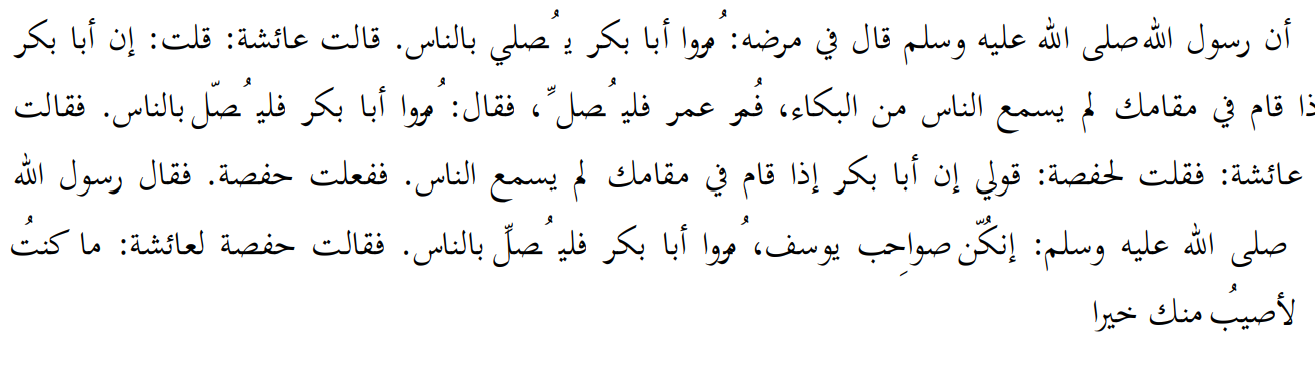
از عائشه رضی الله عنها روایت است که رسول خدا ﷺ در بیماریاش به من فرمود: «ابوبکر را فرمان ده تا مردم را در نماز امامت کند.» عائشه گفت: گفتم: هنگامی که ابوبکر در جای تو بایستد، مردم بهخاطر گریهاش صدای او را نمیشنوند؛ پس به عمر فرمان ده تا نماز را امامت کند. فرمود: «ابوبکر را فرمان ده تا مردم را در نماز امامت کند.» عائشه گفت: به حفصه گفتم: بگو که هنگامی که ابوبکر در جای تو بایستد، مردم صدای او را نمیشنوند، و او چنین کرد. رسول خدا ﷺ فرمود: «شما همانند یاران یوسف هستید. ابوبکر را فرمان ده تا مردم را در نماز امامت کند.» حفصه به عائشه گفت: هرگز از طریق تو به هیچ خیری نخواهم رسید!
“That the Messenger of Allah (saw) told me during his illness: Command Abu Bakr to lead the people in prayer. Aisha said: I said: When Abu Bakr stands in your place, people do not hear him for his crying so command Umar to lead prayers. He said: Command Abu Bakr to lead people in prayer. Aisha said: I said to Hafsa: Say that when Abu Bakr stands in your place, the people do not hear, and she did that. The Messenger of Allah (saw) said: You are like the companions of Yusuf. Command Abu Bakr to lead the people in prayer. Hafsa said to Aisha: I will never achieve any good through you!”
چهارم: مسلم از ابن ابی ملیکہ روایت کرده که گفت:
Fourthly: Muslim narrated from bin Abu Mulkiyya who said:

از عایشه شنیدم که از او پرسیده شد: اگر فرستادهی خدا ﷺ کسی را به خلافت پس از خود برمیگزید، چه کسی را برمیگزید؟ گفت: ابوبکر. پرسیده شد: پس از ابوبکر چه کسی؟ گفت: عمر. سپس پرسیده شد: پس از عمر چه کسی؟ گفت: ابوعبیده بن الجراح، و در همینجا توقف کرد.
“I heard Aisha being asked: Whom would the Messenger of Allah (saw) have appointed as Khalifah after him had he so appointed? She said: Abu Bakr. She was asked: Then whom after Abu Bakr? She said: Umar. She was then asked: Then whom after Umar? She said: Abu ‘Ubaydah bin al-Jarrah, and she stopped at that.”
تمام این احادیث دلیل مناسبی بر این که پیامبر ﷺ ابوبکر (رض) را به خلافت منصوب کرده باشد، نیستند. حدیث نخست به دو دلیل مردود است: اول این که پیامبر ﷺ فرمود:
All these ahadith are not suitable evidence for the Messenger (saw) appointing Abu Bakr (ra) as Khalifah. The first hadith is rejected for two reasons: The first is that the Messenger (saw) said:
«آرزو داشتم یا قصد میکردم»
“I wished or intended”
اما او چنین نکرد، پس این دلیل نیست. زیرا دلیل، گفتار، کردار یا تقریر (سکوت پذیرنده) پیامبر ﷺ است؛ و هر چیزی غیر از اینها به عنوان دلیل شرعی به شمار نمیآید. دوم، عایشه (رضیالله عنها) دختر ابوبکر است، پس اگر این حدیث وجود میداشت، او ابوبکر (رضیالله عنه) را آگاه میکرد. آنگاه ابوبکر هنگامی که به سقیفه رفت تا با انصار که برای بیعت با خلیفهای از میان خودشان گرد آمده بودند، به مناظره بپردازد، با آن استدلال میکرد. بنابراین این حدیث مردود است و شایستگی آن را ندارد که دلیلی برای نصب ابوبکر (رضیالله عنه) به خلافت باشد.
But he did not do so, so this is not an evidence. For the evidence is the Messenger’s (saw) saying, action or silent consent; anything other than these is not considered Shari’ah evidence. Secondly, Aisha (ra) is Abu Bakr’s daughter so were this hadith present she would have informed Abu Bakr (ra). Then he would have argued with it when he went to the courtyard (saqeefa) to contend with the Ansar when they gathered to pledge allegiance to a Khalifah amongst them. Therefore this hadith is rejected (mardud) and is unsuitable to be an evidence for the appointment of Abu Bakr (ra) as Khalifah.
دربارهٔ حدیث دوم، این حدیث دلالتی بر نصب ابوبکر (رض) به خلافت ندارد، زیرا آن زن گفت: «اگر تو را نیابم»؛ پس درست است که او به دلیل غیبتش در جنگ یا هر کار دیگری نتوانسته او را بیابد. در آن چیزی نیست که نشان دهد او از سخنش «اگر تو را نیابم» مرگ آن حضرت را قصد کرده بود. عبارت «گویی مرگ را اراده کرده است» سخن جبیر و برداشت اوست. بنابراین فرمان پیامبر ﷺ به آن زن که اگر آمد و ابوبکر (رض) را نیافت نزد ابوبکر برود، دلیلی بر نصب ابوبکر (رض) به خلافت پس از پیامبر ﷺ نیست. حتی اگر ناچار شویم که برداشت او را به معنای مرگ بگیریم، باز هم این سخنان ابوبکر را پس از او ﷺ به خلافت تعیین نمیکند. اما حدیث سوم، این تعیین در امر نماز است و نه چیز دیگر. تعیین در امر نماز به معنای تعیین در حکومت (حکم) نیست. اینکه آنان میگویند: «رسول خدا ﷺ در امر دین از او خشنود بود، پس چرا ما در امر دنیا از او خشنود نباشیم»؛ این برداشت آنان است و نادرست است، زیرا میان نماز و حکومت تفاوت بسیار است. هر کس که شایستهٔ امامت در نماز باشد، شایستهٔ رهبری در حکومت نیست. افزون بر این، متن دربارهٔ نماز خاص است، پس شامل امور دیگر نمیشود و به سبب خصوصیت متن نباید آن را به معنای امور دیگر گرفت.
As for the second hadith, it does not indicate the appointment of Abu Bakr (ra) as Khalifah because the woman said: “If I did not find you”; so it is correct that she failed to find him due to his absence in a war or any other matter. There is nothing in it to indicate that she meant by her words “If I did not find you” that you had died. The words which came in the hadith “As if she meant death” are the words of Jubayr and his understanding. So the Messenger’s command for her to go to Abu Bakr (ra) if she came and did not find him is no proof for the appointment of Abu Bakr (ra) as Khalifah after the Messenger (saw). Even if we were compelled to take her understanding to mean death, these words still would not designate Abu Bakr as Khalifah after him (saw). As for the third hadith, this is the appointment over prayer and nothing else. Appointment over prayer does not mean appointment in authority (hukm). As for their statement: “The Messenger of Allah was pleased with him in a matter of the deen, so should we not be pleased with him in a matter of the world (dunya)”; this is their understanding, and it is erroneous because there is a large difference between prayer and ruling. Not all who are suitable to become a leader (Imam) in prayer are suitable to be a leader in ruling. Moreover, the text is specific to prayer so it does not encompass other things, nor should it be taken to mean other things due to the specificity (khususiyya) of the text.

که رسول خدا ﷺ فرمودند: فردا پرچم (رایه) را به کسی خواهم داد که خداوند به دست او فتح خواهد کرد. پس مردم آن شب را در این فکر گذراندند که پرچم به کدام یک از ایشان داده خواهد شد. چون مردم صبح کردند، صبحگاهان به سوی رسول خدا ﷺ رفتند و امید داشتند که پرچم به ایشان داده شود، اما آن حضرت ﷺ فرمودند: علی بن ابیطالب کجاست؟ گفتند: ای رسول خدا، چشمانش درد میکند. فرمود: کسی را بفرستید تا نزد من بیاید. چون آمد، آب دهان مبارک خود را در چشمانش افکند و برایش دعا کرد. پس چنان شفا یافت که گویی هرگز دردی نداشته است، و پرچم را به او داد.
“That the Messenger of Allah (saw) said: I will give the flag (rayah) tomorrow to someone by whose hands Allah will conquer. He said: So the people spent the night thinking which one of them it would be given to. When people woke up, they went early in the morning to the Messenger of Allah (saw) hoping it would be given to them, but he said: Where is Ali bin Abi Talib? They said: His eyes are paining O Messenger of Allah. He said: Send for him to come to me. When he came, he spit in his eyes and prayed for him. He was cured as if he never had pain, and he gave him the flag.”
روایت مسلم این حدیث را از ابوهریره نقل کرده است با این الفاظ:
Muslim narrated this hadith from Abu Hurairah with the words:

پیامبر خدا ﷺ در روز خیبر فرمود: این پرچم را به کسی خواهم داد که خدا و پیامبرش را دوست دارد و خداوند به دست او پیروزی خواهد داد. عمر بن الخطاب گفت: من هرگز برای رهبری آرزو نکرده بودم مگر در آن روز. او گفت: من خود را در آن جایگاه تصور میکردم و امید داشتم که مرا برای آن فراخوانند. او گفت: پیامبر خدا ﷺ علی بن ابی طالب را فراخواند و پرچم را به او داد.
“The Messenger of Allah (saw) said on the day of Khayber: I will give this flag to someone who loves Allah and His Messenger by whose hands Allah will conquer. Umar bin al-Khattab said: I had never wished for leadership except for that day. He said: I visualised it hoping that i would be called for it. He said: The Messenger of Allah (saw) called Ali bin Abi Talib and gave him the flag.”
روایت کرد البخاری در باب فضائل علی (رض) که رسول الله ﷺ به علی (رض) فرمود:
Al-Bukhari narrated in the chapter of virtues of Ali (ra) that the Messenger of Allah (saw) said to Ali (ra):
«تو از من هستی و من از تو هستم.»
“You are of me and I am of you.”
مسلم از عامر بن سعد بن ابی وقاص روایت کرده که از پدرش نقل کرد که معاویه بن ابی سفیان به سعد فرمان داد و گفت: چه چیزی تو را از دشنام دادن به ابوتراب بازداشته است؟ او گفت: هرگاه سه چیزی را که رسول خدا ﷺ دربارهٔ او فرمود به یاد میآورم، هرگز به او دشنام نمیدهم. اینکه یکی از اینها برای من باشد، نزد من از شتران سرخموی محبوبتر است. رسول خدا ﷺ او را در برخی از غزوات خود جا گذاشت، پس علی گفت: ای رسول خدا ﷺ، آیا مرا با زنان و کودکان جا گذاشتهای؟ رسول خدا ﷺ به او فرمود:
Muslim narrated from ‘Amir Bin S’ad bin Abi Waqqas (ra) from his father who said: Muawiya bin Abu Sufyan (ra) commanded S’aad (ra) saying: What has prevented you from insulting Abu Turab (ra)? He said: When I remember three (things) which the Messenger of Allah (saw) said of him, I will never insult him. That I should have even one of these is more beloved to me than red camels. The Messenger of Allah (saw) left him behind in some of his war expeditions, so Ali (ra) said to him: O Messenger of Allah (saw), have you left me behind with women and children? The Messenger of Allah (saw) said to him:
«آیا تو راضی نیستی که نسبت به من همان جایگاهی را داشته باشی که هارون نسبت به موسی داشت، جز اینکه پس از من هیچ پیامبری نخواهد بود؟ ﷺ»
“Are you not pleased to be in the same status next to me like the status of Harun next to Musa, except that there is no Prophet after me.”
من همچنین شنیدم که او در روز خیبر میگفت:
I also heard him say on the day of Khayber:
«من این پرچم را به مردی خواهم داد که خدا و پیامبرش را دوست دارد، و خدا و پیامبرش او را دوست دارند.» ﷺ
‘I will give the flag to a man who loves Allah and His Messenger, and whom Allah and His Messenger love.
او گفت: ما برای آن حرکت کردیم و او گفت:
He said: We moved for it and he said:
«علی را صدا بزنید.» پس او را آوردند و چشمانش درد میکرد. آن حضرت در چشمانش آب دهان انداخت و پرچم را به او داد، و الله به دست او پیروزی را نصیب کرد.ﷺ
“Call Ali, so he was brought and he had sore eyes. He spit in his eyes and gave him the flag, and Allah conquered through him.’
و هنگامی که این آیه نازل شد:
And when this verse was revealed:
بگو: بیایید تا پسرانمان و پسرانتان را فرا بخوانیم [قرآن ۳:۶۱]
Say: Come and let us call our sons and your sons [TMQ 3:61],
رسول الله ﷺ علیؓ، فاطمهؓ، حسنؓ و حسینؓ را فراخواند و فرمود:
The Messenger of Allah (saw) called Ali (ra), Fatima (ra), Hassan (ra) and Husain (ra) and said:
«اللهم، این خانوادهی من است.»
‘O Allah, this is my family.’”
مسلم از سهل بن سعد روایت کرده که گفت: مردی از خاندان مروان به حکومت مدینه منصوب شد. او سهل بن سعد را فراخواند و به او دستور داد که علی (رض) را دشنام دهد. گفت: سهل خودداری کرد، پس به او گفته شد: اگر نمیپذیری، پس بگو: خدا ابوتراب (رض) را لعنت کند. سهل گفت: علی (رض) نامی محبوبتر نزد من از ابوتراب ندارد، و هرگاه به آن نام خوانده میشد خوشحال میگشت. به او گفته شد: ما را از ماجرای اینکه چرا او ابوتراب نامیده شد آگاه کن. پس گفت: پیامبر خدا ﷺ به خانه فاطمه آمد و او را در خانه نیافت، پس فرمود:
Muslim narrated from Sahl bin S’aad who said: A man from the family of Marwan was appointed (as ruler) over Madinah. He said: He called Sahl bin S’aad and commanded him to insult Ali (ra). He said: Sahl refused, so it was said to him: If you refuse, then say: Allah curse Abu Turab (ra). Sahl said: Ali (ra) has no name more beloved to me than Abu Turab (ra), and he would be pleased when called by it. It was said to him: Inform us of the incident as to why he was called Abu Turab (ra), so he said: The Messenger of Allah (saw) came to Fatima’s house and did not find him in the house, so he said:
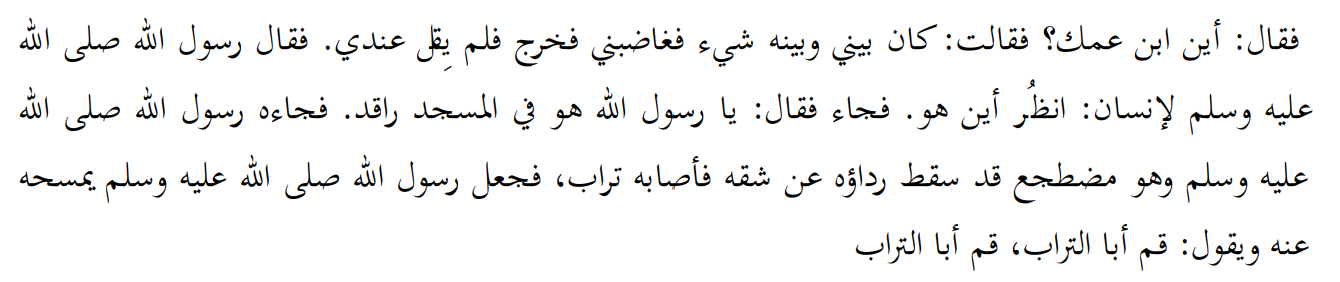
«پسرعموی تو کجاست؟» گفت: میان او و من چیزی پیش آمد، و او مرا خشمگین کرد و بی آنکه به من بگوید رفت. پس رسول خدا ﷺ به کسی فرمود: «برو ببین او کجاست.» او بازگشت و گفت: ای رسول خدا، او در مسجد استراحت میکند. پس رسول خدا ﷺ در حالی که او دراز کشیده بود به نزدش آمد. ردایش از بدنش افتاده بود و خاک به او رسیده بود، پس رسول خدا ﷺ در حالی که میفرمود: «برخیز، ای ابوتراب»، شروع به پاک کردن خاک از او کرد.
“Where is the son of your paternal uncle?” She said: There was something between him and me, and he made me angry and left without telling me. So the Messenger of Allah (saw) said to someone: “Go find out where he is.” He came back and said: O Messenger of Allah, he is resting in the mosque. So the Messenger of Allah (saw) came to him while he was reclining. His cloak had fallen from his body and dirt had touched him, so the Messenger of Allah (saw) began wiping it off him while saying: “Stand up, O Abu Turab.”
مسلم از عدی بن ثابت از ذر روایت کرده که گفت: علی گفت:
Muslim narrated from ‘Adiyy bin Thabit from Dharr who said: Ali said:
به کسی که دانه را شکافت و موجود زندهای آفرید سوگند، پیامبر ﷺ به من عهد داد که جز مؤمن کسی مرا دوست نخواهد داشت، و جز منافق کسی کینهی مرا در دل نخواهد پرورد.
“By Him Who split up the seed and created something living, the Prophet (may peace and blessings be upon him) gave me a promise that no one but a believer would love me, and none but a hypocrite would nurse grudge against me..”
هیچ چیزی در این احادیث نیست که کسی را به این گمان بیندازد که پیامبر ﷺ علی (رض) را پس از خود به خلافت منصوب کرده باشد. حدیث خیبر ستایشی از سوی پیامبر ﷺ است. سخن پیامبر ﷺ خطاب به علی (رض):
There is nothing in these ahadith to make someone say that the Messenger (saw) appointed Ali (ra) to be Khalifah after him. The hadith of Khayber is praise from the Messenger of Allah. The Messenger’s (saw) statement to Ali (ra):
«تو از من هستی و من از تو هستم»
“You are of me and I am of you”
است یک ستایش از پیامبر خدا ﷺ. اما حدیثِ سعد که در آن آمده است:
Is a praise from the Messenger of Allah (saw). As for the hadith of S’aad in which came:
«آیا راضی نیستی که نسبت به من همان منزلتی را داشته باشی که هارون نسبت به موسی داشت؟»
“Are you not pleased to have the status before me as that of Harun with Musa”,
این موضوع در دسته دوم از احادیث این باب بررسی خواهد شد. در آن همچنین حدیث خیبر وجود دارد که ستایش است، و در آن آمده است که علی (رض)، فاطمه (رض)، حسن (رض) و حسین (رض) اهل بیت او هستند که این نیز ستایش است، و حدیث سهل بن سعد نیز ستایش است. همانگونه که پیامبر خدا ﷺ علی (رض) را ستود، ایشان از دیگر اصحاب خود (رض) نیز ستایش کرده است. ستایش پیامبر ﷺ از یک شخص به هیچ وجه نشاندهنده تعیین او (به جانشینی) نیست.
This subject will be discussed in the second category of the ahadith on the topic. In it is also the hadith of Khayber which is a praise and in it is that Ali (ra), Fatima (ra), Hassan (ra) and Husain (ra) are his family which is a praise, and the hadith of Sahl bin S’ad is a praise. Just like the Messenger of Allah (saw) praised Ali (ra), he also praised others among his Sahabah (ra). The Messenger’s praise for a person does not in any way indicate his appointment.
دومین دسته از احادیثی که برخی از آنها استنباط کردهاند که پیامبر ﷺ بهصراحت فرموده است که علی پس از او خلیفه خواهد بود، در این چهار متن خلاصه میشوند: ۱- البخاری از مصعب بن سعد از پدرش روایت کرده است
As for the second category of ahadith which are those from which some deduced that the Messenger (saw) stated textually that Ali would be the Khalifah after him, they are summarised in these four texts:- 1- Al-Bukhari narrated from Mus’ab bin S’ad from his father
که رسول الله ﷺ به سوی تبوک خارج شد و علی را جانشین قرار داد. پس او گفت: آیا مرا با زنان و کودکان به جا میگذاری؟ فرمود: آیا خشنود نیستی که نسبت به من همان جایگاهی را داشته باشی که هارون نسبت به موسی داشت، جز آنکه پس از من پیامبری نخواهد بود؟ ﷺ
“That the Messenger of Allah (saw) left for Tabuk and appointed Ali, so he said: Do you leave me behind along with women and children? He said: Are you not pleased to have the same status with me as Harun had with Musa, except that there is no Prophet after me?”
روایت شده از مسلم، از عامر بن سعد بن ابی وقاص (رض)، از پدرش که گفت: رسول الله ﷺ به علی (رض) فرمود:
Muslim narrated from ‘Amir bin S’ad bin Abi Waqqas (ra) from his father who said: The Messenger of Allah (saw) said to Ali (ra):
«تو نسبت به من همان جایگاهی را داری که هارون نسبت به موسی داشت، جز این که پس از من هیچ پیامبری نخواهد آمد.»ﷺ
“You are to me of the same status as Harun was to Musa, except that there is no Prophet after me.”
و روى مسلم عن إبراهيم بن سعد عن سعد أن النبي ﷺ قال لعلي رضي الله عنه:
And Muslim narrated from Ibrahim bin S’ad from S’ad that the Prophet (saw) said to Ali (ra):
«آیا تو راضی نیستی که نسبت تو با من همان باشد که نسبت هارون با موسی داشت؟»
“Are you not pleased to have the same relation with me as Harun had with Musa”
ابن اسحاق روایت کرده و گفته است: پیامبر خدا ﷺ علی بن ابی طالب (ره) را جانشین خود کرد تا از خانوادهاش نگهداری و سرپرستی کند. منافقان شایعههای دروغ پراکندند و به او گفتند: پیامبر ﷺ او را جز از آن رو پشت سر نگذاشت که برایش دشوار بود و میخواست بار را از دوشش بردارد. هنگامی که منافقان این را گفتند، علی بن ابی طالب (ره) سلاح خود را برداشت و بیرون رفت تا به پیامبر خدا ﷺ رسید که در الجرف فرود آمده بود، و گفت: ای پیامبر خدا ﷺ، منافقان ادعا میکنند که شما مرا از آن رو پشت سر گذاشتید که برای من دشوار بود و میخواستید بار را از دوشم بردارید. پیامبر ﷺ فرمود:
Ibn Ishaq narrated by saying: The Messenger of Allah (saw) left behind Ali bin Abi Talib (ra) to look after and supervise his family. The hypocrites started spreading false rumors and said to him that: He (saw) did not leave him behind except for the reason that it was hard on him and so that it could become easy for him. When the hypocrites said that, Ali bin Abi Talib (ra) took his weapons and moved out until he met the Messenger of Allah (saw) who was encamped at Al-Jarf and said: O Prophet of Allah (saw), the hypocrites claimed that you left me behind because it was hard for me and to make it easy for me. He said:

«آنان دروغ گفتند؛ بلکه من تو را به خاطر آنچه پشت سر گذاشتم [در اینجا] باقی گذاشتم. پس بازگرد و از جانب من بر خانوادهام و خانوادهات نظارت کن.» آیا خشنود نیستی، ای علی، که نسبت به من همان منزلتی را داشته باشی که هارون نسبت به موسی داشت، جز اینکه پس از من پیامبری نخواهد بود؟ ﷺ
“They lied; rather I left you behind due to what I left behind me so return and supervise my family and your family on my behalf. Are you not pleased, O Ali, to have the same status before me as Harun had before Musa except that there is no Prophet after me?”
بنابراین علی به مدینه بازگشت و رسول خدا ﷺ به سفر خود ادامه داد. السید عبدالحسین شرفالدین در کتاب «المراجعات» چنین آورده است: «حدیث جابر بن عبدالله که گفت: رسول خدا ﷺ فرمود:
So Ali returned to Madinah and the Messenger of Allah (saw) continued on his journey. As-Sayyid Abd al-Husain Sharaf ud-Deen mentioned the following in the book “Al-Muraja’at ”: “The hadith of Jabir bin Abdullah who said: The Messenger of Allah (saw) said:
ای علی، همانا آنچه برای من در مسجد روا است، برای تو نیز روا است، و نسبت تو با من همچون نسبت هارون با موسی است، جز اینکه پس از من پیامبری نیست.
O Ali, verily it is allowed for you in the mosque what is allowed for me, and your relation with me is that of Harun with Musa except that there is no Prophet after me.”
۲. مسلم از یزید بن حیان روایت کرده که گفت: من همراه حصین بن سَبره و عمر بن مسلم نزد زید بن أرقم (رضی الله عنه) رفتیم. چون نزد او نشستیم، حصین به او گفت: «ای زید، قطعاً خیر بسیاری به تو داده شده است. تو رسول الله ﷺ را دیدی، حدیث او را شنیدی، همراه او جنگیدی و پشت سر او نماز خواندی. ای زید، قطعاً خیر بسیاری به تو داده شده است. پس ای زید، آنچه را از رسول الله ﷺ شنیدهای برای ما نقل کن.» او گفت: «ای پسر برادرم، به خدا سوگند پیر شدهام و زمان مرگم نزدیک شده است. برخی از آنچه را از رسول الله ﷺ دریافته بودم فراموش کردهام، پس آنچه را برایت نقل میکنم بپذیر و مرا به چیزی که نقل نمیکنم وادار مکن.» سپس گفت: «روزی رسول الله ﷺ در میان ما ایستاد و در آبگاهی به نام خُمّ، میان مکه و مدینه سخنرانی کرد. خدا را ستایش و حمد گفت، موعظه و یادآوری کرد، سپس فرمود:»
2. Muslim narrated from Yazid bin Hayyan who said: I left with Husain bin Sabra and Umar bin Muslim to Zayd bin Arqam (ra). When we sat with him, Husain said to him: “Verily, O Zayd, you met a great deal of good. You saw the Messenger of Allah (saw), heard his hadith, fought with him and prayed behind him. Verily, O Zayd, you met a great deal of good. So relate to us, O Zayd, of what you heard from the Messenger of Allah (saw). He said: O son of my brother, by Allah I have become old and my time has approached. I have forgotten some of that, which I understood from the Messenger of Allah (saw), so accept whatever I relate to you and do not force me on that which I do not relate. Then he said: The Messenger of Allah (saw) stood one day before us speaking at the waters known as Khum between Makkah and Madinah. He thanked Allah, praised Him, exhorted and reminded then said:
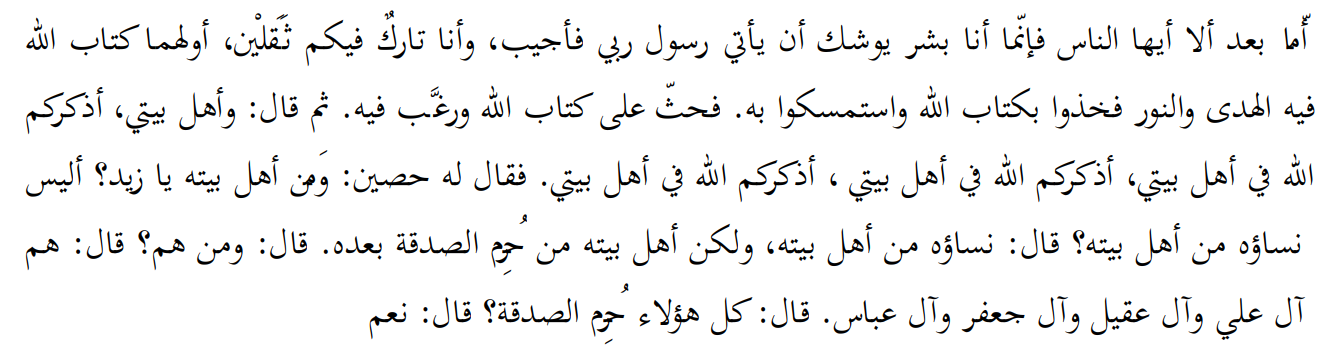
اما بعد، ای مردم! من فقط یک انسان هستم. نزدیک است که فرستادهٔ پروردگارم (فرشتهٔ مرگ) به سراغ من بیاید و من به دعوت خداوند پاسخ دهم و از میان شما بروم، اما در میان شما دو چیز گرانبها به جا میگذارم: نخست کتاب خدا، که در آن هدایت و نور است؛ پس به کتاب خدا چنگ بزنید و به آن پایبند باشید. او مردم را به تمسک به کتاب خدا ترغیب کرد و سپس فرمود: و دیگر اهل بیت من. شما را به رعایت حقوق اهل بیتم سفارش میکنم. حصین به زید گفت: اهل بیت او چه کسانی هستند؟ آیا همسرانش از اهل بیت او نیستند؟ زید گفت: همسرانش از اهل بیت او هستند، امّا اهل بیت او کسانی هستند که دریافت صدقه (زکات) بر ایشان حرام است. حصین پرسید: آنان چه کسانیاند؟ زید گفت: آل علی، و فرزندان عقیل، و فرزندان جعفر، و فرزندان عباس. حصین گفت: آیا اینها کسانی هستند که دریافت زکات بر ایشان حرام است؟ زید گفت: آری.
" Now to our purpose. O people, I am a human being. I am about to receive a messenger (the angel of death) from my Lord and I, in response to Allah's call, (would bid good-bye to you), but I am leaving among you two weighty things: the one being the Book of Allah in which there is right guidance and light, so hold fast to the Book of Allah and adhere to it. He exhorted (us) (to hold fast) to the Book of Allah and then said: The second are the members of my household I remind you (of your duties) to the members of my family. He (Husain) said to Zaid: Who are the members of his household? Aren't his wives the members of his family? Thereupon he said: His wives are the members of his family (but here) the members of his family are those for whom acceptance of Zakat is forbidden. And he said: Who are they? Thereupon he said: 'Ali and the offspring of 'Ali, 'Aqil and the offspring of 'Aqil and the offspring of Ja'far and the offspring of 'Abbas. Husain said: These are those for whom the acceptance of Zakat is forbidden. Zaid said: Yes.”
السيد عبد الحسين شرف الدين ذكر في كتابه «المراجعات» هذا الحديث بالسند التالي الذي رواه الطبراني بسلسلة سندٍ متفقٌ على صحته، عن زيد بن أرقم رضي الله عنه، قال: خطب رسول الله ﷺ في غدير خم تحت أشجار، فقال:
As-Sayyid Abd al-Husain Sharaf ud-Deen mentioned in his book “Al-Muraja’at” this hadith via the following narration which At-Tabarani narrated through a chain whose authenticity is unanimously accepted from Zayd bin Arqam (ra) who said: The Messenger of Allah (saw) spoke at Ghadeer Khum underneath some trees and said:
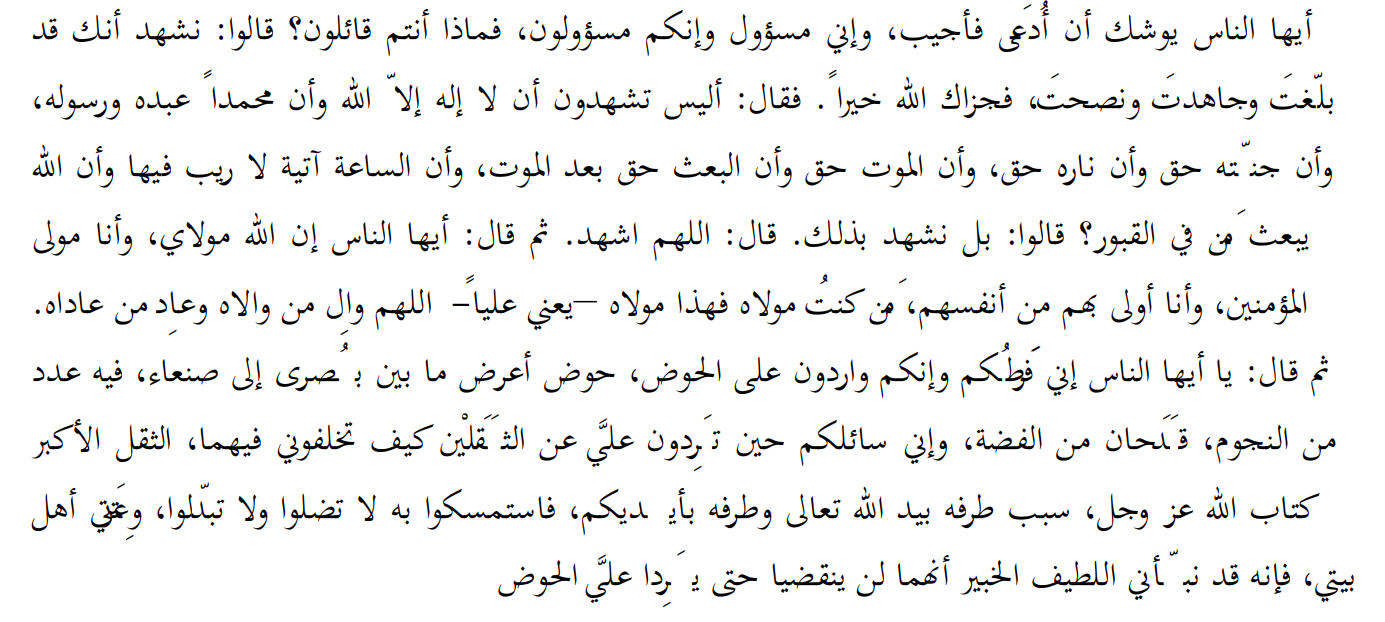
«ای مردم، نزدیک است که مرا فرا خوانند و من پاسخ دهم (اشاره به مرگ). همانا من مسئولم و شما مسئولید، پس چه خواهید گفت؟» گفتند: گواهی میدهیم که ابلاغ کردی، جهاد کردی و خیرخواهی نمودی؛ پس خداوند تو را نیکو پاداش دهد. فرمود: آیا گواهی نمیدهید که معبودی جز الله نیست و محمد ﷺ بنده و فرستاده اوست، و بهشت حق است و دوزخ حق است، و مرگ حق است و رستاخیز پس از مرگ حق است، و قیامت بیهیچ شکی خواهد آمد، و الله همه کسانی را که در گورهایشان هستند برمیانگیزد؟ گفتند: آری، گواهی میدهیم. سپس فرمود: ای مردم، همانا الله سرپرست من است و من سرپرست مؤمنانم، به گونهای که از خودشان به آنان سزاوارترم. هر کس من را سرپرست خود داند، پس این (علی) سرپرست اوست. خدایا، هر که او را دوست بدارد دوست بدار و هر که با او دشمنی ورزد دشمن بدار. سپس فرمود: ای مردم، همانا من شما را ترک خواهم کرد و در حوض کوثر بر من وارد خواهید شد، حوضی که پهنایش از بصره تا صنعاء است. در آن جامهایی از نقره به شماره ستارگان است. همانا آنگاه که بر من وارد شوید، درباره آن دو چیز سنگین از شما خواهم پرسید که پس از من چگونه با آنها رفتار کردهاید. آن سنگینتر و بزرگتر کتاب الله عزّ و جلّ است که یک سر آن در دست الله و سر دیگرش در دست شماست؛ به آن محکم چنگ زنید تا گمراه نشوید و دگرگون نگردید، و (دیگری) عترت من، یعنی اهل خاندانم. همانا الطیف و آگاه (جل جلاله) مرا خبر داده است که این دو هرگز از هم جدا نخواهند شد تا آنکه در کنار حوض بر من وارد شوند.
“O people, it is about to be that I am called and I will respond (indicating death). Verily, I am accountable and you are accountable, so what will you say? They said: We will testify that you conveyed, struggled and advised so may Allah recompense you well. He said: Do you not bear witness that there is no deity but Allah and Muhammad is His slave and Messenger, that Paradise is true and Hellfire is true, that death is true and resurrection after death is true, that the Hour (of Judgement) will come without any doubt, and that Allah will resurrect all those in their graves? They said: Yes, we do bear witness. Then he said: O people, verily Allah is my Patron and I am the patron of the believers such that I take precedence before them over their own selves. Whoever takes me as his patron then this one is his patron—meaning Ali. O Allah, befriend whoever befriends him and take as enemy whoever takes him as an enemy. Then he said: O people, verily I will leave you and you will find me at the Cistern, a cistern wider than the distance from Basra to Sana’a. In it are tumblers of silver the number of stars. Verily I will ask you when you come before me on the two weighty things, how you took care of them after me. The weightier and greater one is the Book of Allah ‘azza wa jalla, a (sabab) of which one end is in the hands of Allah and the other in your hands. Hold tightly to it so that you do not go astray or change, and my Utra (household), the people of my house. Verily The Kind & All-Knowing (swt) has informed me that they will never seperate until they come before me at the cistern (fountain)”
(این پایان سخنی است که السیّد عبدالحسین شرفالدین ذکر کرده است.) و شیخ عبدالحسین احمد الأمینی النجفی در کتاب «الغدیر» چنین گفته است: «چون پیامبر ﷺ مناسک عبادت خود را به پایان برد و همراه با گروهی که یاد شد به سوی مدینه روانه شد، به غدیر خم در الجحفه رسید، جایی که راهها برای مردم مدینه، مصر و عراق از هم جدا میشود. این روز پانزدهم ذیالحجه بود و جبرئیل امین از جانب الله (سبحانه و تعالی) با این سخن بر او فرود آمد:
(This is the end of what As-Sayyid Abd al-Husain Sharaf ud-Deen mentioned). And Shaikh Abd al-Husain Ahmad Al-Ameeni An-Najafi stated the following in his book “Al Ghadeer”: “When he finished his rites of worship i.e. the Prophet (saw) and left for Madinah, together with the mentioned group(s) of people, he reached Ghadeer Khum in Al-Jahfa where the roads branch for the people of Madinah, Egypt and Iraq. This was the 15th day of Dhul-Hijja and Jibril, the trustworthy, descended to him from Allah (swt) with His saying:
«اے رسول، جو کچھ تمہارے رب کی طرف سے تم پر نازل کیا گیا ہے اسے پہنچا دو» ﷺ [TMQ 5:67]
‘O Messenger, deliver what was revealed to you from your Lord” [TMQ 5:67]
و او را فرمان داد که علی (رض) را برپا دارد تا مردم را آگاه سازد و آنچه را که درباره ولایت او و وجوب اطاعت از او بر هر کس نازل شده است، اعلام کند. نخستین گروه مردم نزدیک جحفه بودند، پس رسول خدا ﷺ به کسانی که پیشتر رفته بودند فرمان داد تا بازگردند، و کسانی را که در آن مکان درنگ کرده بودند گرد آورد، و مردم را از فرود آمدن زیر آن پنج درخت بزرگ بازداشت. چون مردم اردو زدند و کسانی که زیر آن درختان بودند برخاستند، تا آنگاه که اذان ظهر گفته شد، ﷺ به سوی آنان رفت و زیر آن درختان نماز گزارد. روزی بسیار گرم بود، چنان که مردی بخشی از ردای خود را بر صورت و بخشی را زیر پای خود نهاده بود، به سبب گرمای سخت. و رسول خدا ﷺ به سبب آفتاب، زیر درخت سَمُرَه با جامهای سایهبان شده بود. چون نمازش را به پایان برد، در میان مردم بر کوهان شتری برخاست تا سخن گوید، و با آواز بلند سخن گفت، به گونهای که همه او را میشنیدند، و فرمود:
And He commanded him to cause Ali (ra) to stand to let the people know and inform what was revealed regarding his patronage and the obligation of obedience upon every one. The first of the people were close to Al-Jahfa so the Messenger of Allah (saw) commanded those who had proceeded to return and enclosed those who had delayed at that place, and he prohibited people from encamping beneath the five large trees. When the people took camp and those underneath them (the trees) stood until the dhuhr prayer was announced, he headed for them and prayed beneath them. It was a sizzling day where a man placed some of his cloak upon his face and some under his feet due to the severe heat, and the Messenger of Allah was shaded by a garment upon the sumra tree due to the sun. When he (saw) finished his prayer, he stood to speak in the middle of the people on the hump of a camel and he spoke with a raised tone with every one hearing him and he (saw) said
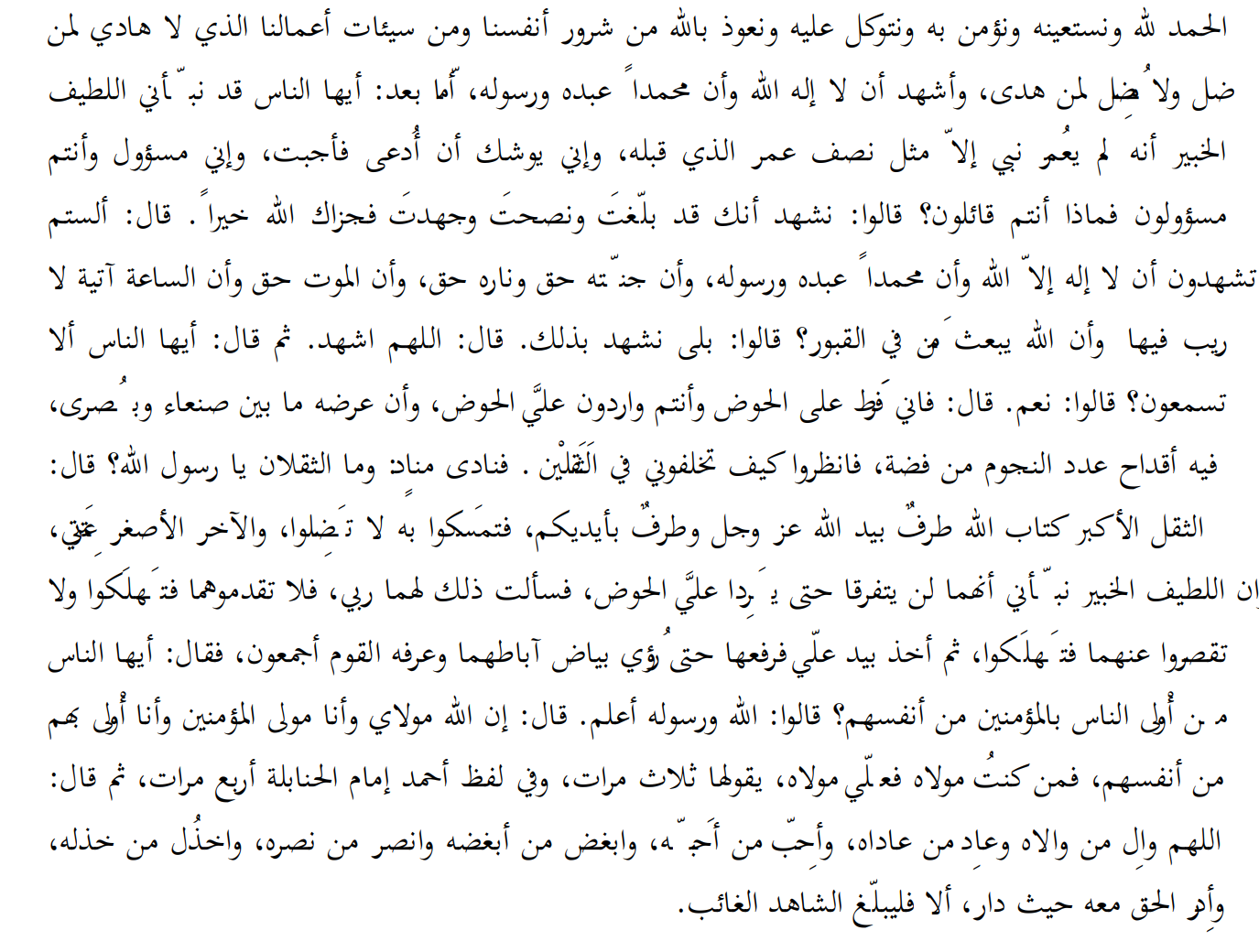
ستایش مخصوص الله است که از او یاری میجوییم، به او ایمان داریم و بر او توکل میکنیم. از الله میخواهیم که ما را از شرّ نفسهایمان و از اعمال بد ما نگه دارد. کسی که الله او را گمراه کند، هیچکس نمیتواند هدایتش کند، و کسی را که هدایت کند، هیچکس نمیتواند گمراهش سازد. گواهی میدهم که معبودی جز الله نیست و محمد ﷺ بنده و فرستادهٔ اوست. اما بعد: ای مردم، همانا الله، مهربانِ دانای [سبحانه و تعالی]، به من خبر داده است که به هیچ پیامبری عمری طولانیتر از نصف عمر پیامبر پیش از خود عطا نمیکند. همانا نزدیک است که من فراخوانده شوم و پاسخ دهم. همانا من مسئولم و شما مسئولید؛ پس چه خواهید گفت؟ گفتند: گواهی میدهیم که حقاً [پیام را] رساندی، خیرخواهی کردی و تلاش نمودی؛ پس الله تو را نیکو پاداش دهد. فرمود: آیا گواهی نمیدهید که معبودی جز الله نیست و محمد ﷺ بنده و فرستادهٔ اوست، و بهشت او حق است و آتش او حق است، و مرگ حق است، و قیامت بیهیچ شکی خواهد آمد و الله کسانی را که در گورهایند زنده خواهد کرد؟ گفتند: آری، ما به این گواهی میدهیم. فرمود: ای الله، تو گواه باش. سپس فرمود: ای مردم، آیا گوش نمیدهید؟ گفتند: آری. فرمود: همانا من پیش از شما به حوض (الکوثر) میروم و بر آن حوض بر من وارد خواهید شد؛ پهنای آن به اندازهٔ فاصلهٔ میان صنعا و بصره است. در آن جامهای نقرهای است که شمارشان به شمار ستارگان است. پس بنگرید که پس از من با آن دو چیز گرانبها چگونه رفتار میکنید. منادی ندا داد: ای فرستادهٔ الله، آن دو چیز گرانبها کداماند؟ فرمود: بزرگتر از آن دو، کتاب الله است که یک سرِ آن در دست الله و سر دیگرش در دست شماست؛ پس به آن چنگ زنید تا گمراه نشوید. و آن دیگری که کوچکتر است، اهل بیت من (عترت) است. همانا الله مهربانِ دانا [سبحانه و تعالی] به من خبر داده است که آنها از هم جدا نخواهند شد تا آنکه علی بر حوض وارد شود، و من این را از پروردگارم خواستم. پس نه بر ایشان پیشی گیرید و نه آنها را وانهید، که اگر چنین کنید، هلاک خواهید شد. سپس او دست علی را گرفت و آن را بالا برد تا زیر بغلهایشان دیده شد و همه او را شناختند، و گفت: ای مردم، چه کسی نسبت به مؤمنان از خودشان سزاوارتر است؟ گفتند: خدا و فرستادهٔ او داناترند. گفت: همانا خدا مولای من است و من مولای مؤمنانم، چنانکه نسبت به ایشان از خودشان سزاوارترم. پس هرکس من مولای او هستم، علی مولای اوست. این سخن را سه بار گفت، و به روایت امام احمد، پیشوای حنبلیان، چهار بار. سپس گفت: خداوندا، دوست بدار هرکس را که او را دوست دارد، و دشمن باش با هرکس که او را دشمن میدارد. دوست بدار هرکس را که او را دوست دارد، و دشمن بدار هرکس را که او را دشمن میدارد، یاری ده هرکس را که او را یاری میکند، و واگذار هرکس را که او را وامیگذارد، و حق را همراه او قرار ده هرجا که باشد. همانا باید آن کس که حاضر است، به غایب خبر دهد.
"All praise is due to Allah whom we ask for help, believe in and depend upon. We ask Allah to protect us from the evils of our souls and bad deeds, the One whom none can guide whom He causes to go astray or misguide whom He guides. I bear witness that there is no god but Allah and Muhammad is His slave and Messenger. As for what follows: O people, verily the The Kind & All-Knowing (swt) has informed me that He does not grant longevity to a Prophet except half the like of the one before him. Verily it is about to be that I will be called and I will respond. Verily I am accountable and you are accountable, so what will you say? They said: We bear witness that verily you have conveyed, advised and struggled so may Allah reward you well. He said: Do you not bear witness that there is no god but Allah and that Muhammad is His slave and Messenger that His paradise is true and His hellfire is true, that death is true, that the Hour will come without any doubt and that Allah will resurrect those in the graves? They said: Yes, we bear witness to this. He said: O Allah, do bear witness. Then he said: O people, will you not listen? They said: Yes. He said: Verily I will go to the cistern (alkauthar) and you will be presented at the cistern, whose breadth is that between Sana’a and Basra, before me. In it are cups of silver the number of which are the number of stars, so look how you take care of the two weighty things after me. An announcer announced: And what are the two weighty things, O Messenger of Allah? He said: The greater of the two weighty things is the Book of Allah, one end of which is in the hand of Allah and the other in your hands so hold fast to it and you will not go astray. The other smaller one is my household (‘utra). Verily the Kind & All-Knowing (swt) informed me that they will not go away until Ali reaches the cistern and I asked that from my Lord. So do not precede them or neglect them and if you do so you will perish. Then he took the hand of Ali and raised it until their armpits were seen and everyone recognised him and he said: O people, who takes precedence before the believers over their own selves? They said: Allah and His Messenger know best. He said: Verily Allah is my Patron (mawla) and I am the patron of the believers such that I take precedence before them over their own selves. So whoever has me as his patron then Ali is his patron. He said this three times, and in the words of Imam Ahmad, Imam of the Hanbalis, four times. Then he said: O Allah, befriend whoever befriends him and become an enemy to whoever takes him as an enemy. Love whoever loves him and hate whoever hates him, support whoever supports him and abandon whoever abandons him, and let the truth be with him wherever he is resides. Verily, let the witness who is present inform the (one who is) absent.’”
۳. کسانی که میگویند پیامبر ﷺ خلافت علی (رض) را آشکارا اعلام کرده است، در کتابهای خود احادیثی روایت کردهاند. ما در بارهی این احادیث، روایات آنها را محل بررسی قرار نمیدهیم، با آنکه دو شیخ، البخاری و مسلم، آنها را روایت نکردهاند و از هیچ راوی موثقی نقل نشدهاند و بیشتر آنها از احادیث جعلیاند. ما روایات آنها را موضوع پژوهش قرار نخواهیم داد، به گونهای که بگویند این احادیث پیش از شما از راویان موثق روایت نشدهاند، اما پیش از ما از راویان موثق روایت شدهاند، تا آنکس که حدیث برایش تصحیح شده است، آن را دلیل قرار دهد. حوزهی پژوهش را این موضوع قرار نمیدهیم؛ بلکه خود متون، آنگونه که در روایات آمدهاند، موضوع پژوهش خواهند بود. این همان متونی است که از آنها استنباط کردهاند که پیامبر ﷺ علی را پس از خود به خلافت گماشته است، و این احادیث به احادیث «ولایت» معروفاند. ما برخی از آنها را ارائه خواهیم کرد و بقیه هممعنا و حتی هملفظ با آنها هستند.
3. Those who say that the Messenger (saw) clearly announced the Khilafah of Ali (ra) narrated ahadith in their books. As for these ahadith, we will not make the place of research in them their narrations, despite the fact that the two sheikhs Al-Bukhari and Muslim did not narrate them, nor were they narrated via any trustworthy narrators and most of them are among the fabricated ahadith. We will not make their narrations the subject of research such that they say that these ahadith were not narrated by trustworthy narrators before you but were narrated by trustworthy narrators before us so that the one for whom the hadith is authenticated uses it as an evidence. We will not make that the domain of research; rather we will make the matter of research the texts themselves as they came in the narrations. These are the texts from which they deduced that the Messenger (saw) appointed Ali to be the Khalifah after him—and these ahadith are known as the ahadith of “wilayah”—from which we will present some of them and the rest carry the same meaning and even the same wordings.
الف) ابوداوود الطیالسی از ابن عباس (رضی الله عنه) روایت کرده که رسول الله ﷺ به علی بن ابی طالب (رضی الله عنه) فرمودند:
a) Abu Dawud At-Tayalisi narrated from ‘Ibn Abbas (ra) that the Messenger of Allah (saw) said to Ali ibn Abi Talib (ra):
«تو پس از من ولیِّ همه مؤمنان هستی.» ﷺ
“You are the waliy of all believers after me.”
ب) در کنز العمال از عمران بن حصین روایت شده که گفت: رسول خدا ﷺ لشکری فرستاد و علی بن ابی طالب را بر ایشان امیر کرد. او کنیزی را از خمس برای خود برگزید و ایشان این کار را بر او ناپسند شمردند. چهار نفر از آنان توافق کردند که از او نزد پیامبر ﷺ شکایت کنند. چون نزد آن حضرت آمدند، یکی از آن چهار نفر برخاست و گفت: ای رسول خدا ﷺ، آیا نمیبینی که علی چنین و چنان کرد؟ و او ﷺ از او روی گرداند. دومی برخاست و همان را گفت، پس او ﷺ از او روی گرداند. سومی برخاست و همان را گفت، پس او ﷺ از او روی گرداند. و چهارمی برخاست و همان را گفت که ایشان گفته بودند. رسول خدا ﷺ با خشمی که در چهرهاش پیدا بود به سوی ایشان روی آورد و فرمود:
b) It has been narrated in Kanz al-’Ammal from Imran bin Husain who said that the Messenger of Allah (saw) sent an expedition and appointed Ali bin Abi Talib (ra) over them. He chose for himself a slave girl from the fifth (khums) and they rejected this from him. Four of them agreed to complain about him to the Prophet (saw) so, when they came, one of the four stood and said: O Messenger of Allah (saw), do you not see that Ali (ra) did such and such, and he (saw) turned away from him. The second stood and said the same, so he turned away from him. The third stood and said the same, so he turned away from him. And the fourth stood and said the same as they had said. The Messenger of Allah (saw) turned towards them with anger visible in his face and said:
این متن را ترجمه میکنم: "You want what from me regarding Ali? Verily Ali is from me and I am from him, and he is the waliy of every believer after me." Note: Persian translation: «شما درباره علی از من چه میخواهید؟ به درستی که علی از من است و من از او هستم، و او پس از من ولیِّ هر مؤمنی است.»
What do you want for me with regards to Ali? Verily Ali is from me and I am from him, and he is the waliy of every believer after me.”
ج) و در حدیثی طولانی از عمرو بن میمون از ابن عباس (رض) که گفت: رسول الله ﷺ فلان شخص را با سورۀ التوبه فرستاد. سپس علی (رض) را پشت سر او فرستاد تا آن را از او بگیرد و فرمود:
c) And in a long hadith from ‘Amru bin Maymun from ‘Ibn Abbas (ra) who said: The Messenger of Allah (saw) sent so and so with Surah At-Tawbah. He then sent Ali (ra) after him to take it from him and said:
«هیچکس نباید آن را بگیرد مگر مردی که از من است و من از او هستم.»
“No one should take it except a man who is from me and I am from him.”
د) كنز العمال از وهب بن حمزه، که گفت: با علی (رض) سفر کردم و از او درشتیای دیدم، پس گفتم که چون بازگردم، از آن شکایت خواهم کرد. پس بازگشتم و علی (رض) را نزد رسول الله ﷺ یاد کردم و او فرمود:
d) IKanz al-’Ammal from Wahhab bin Hamza who said: I travelled with Ali (ra) and I saw harshness from him, so I said that when I will return I will complain about it. So I returned and mentioned Ali (ra) to the Messenger of Allah (saw) and he said:
«این را درباره علی نگو، زیرا او بعد از من ولیّ توست.»
“Do not say this for Ali, as he is your waliy after me.”
ه) در کنز العمّال از ابن عباس روایت شده که گفت: رسول خدا ﷺ فرمود:
e) In Kanz al-’Ammal from ‘ibn Abbas who said: The Messenger of Allah (saw) said:
«هر کس دوست دارد که زندگی مرا زندگی کند، مرگ مرا بمیرد و در بهشت عدن که پروردگارم آن را سیراب کرده است ساکن شود، پس باید علی را پس از من به عنوان ولی خود قرار دهد.»ﷺ
“Whoever is pleased to live my life, die my death and to reside in the paradise of Eden irrigated by my Lord then let him befriend Ali as a waliy after me.”
و) در منتخب الکنز از زیاد بن مطرّف روایت شده که گفت: از رسول الله ﷺ شنیدم که میفرمود:
f) In Muntakhab al-Kanz from Zayyad bin Mutarraf who said: I heard the Messenger of Allah (saw) saying:
«هر کس دوست دارد زندگی مرا زندگی کند، مرگ مرا بمیرد، و وارد بهشتی شود که پروردگارم به من وعده داده—و آن بهشت جاودان است—پس باید علی و فرزندانش را پس از من دوست بدارد. همانا ایشان هرگز شما را از درِ هدایت بیرون نخواهند برد و به دروازه گمراهی داخل نخواهند کرد.»
“Whoever would like to live my life, die my death, and enter the paradise promised to me by my Lord—and it is an eternal paradise—then let him befriend Ali and his descendants after me. Verily they will never remove you from the door of guidance nor enter you into the gate of misguidance.”
ز) در کنز العمال از عمار بن یاسر روایت شده که گفت: رسول الله ﷺ فرمود:
g) In Kanz al-’Ammal from Ammar bin Yasir who said: The Messenger of Allah (saw) said:
«من به کسی که به من ایمان دارد و به من اعتماد میکند، ولایت علی بن ابیطالب را وصیت میکنم. هر کس با او دوستی کند، با من دوستی کرده است و هر کس با من دوستی کند، با الله دوستی کرده است. هر کس او را دوست بدارد، مرا دوست داشته است و هر کس مرا دوست بدارد، الله را دوست داشته است. هر کس با او دشمنی کند، با من دشمنی کرده است و هر کس با من دشمنی کند، با الله دشمنی کرده است.» ﷺ
“I bequeath whoever believes in me and trusts me with the wilayah of Ali bin Abi Talib. Whoever befriends him has befriended me and whoever befriends me has befriended Allah. Whoever loves him has loved me, and whoever loves me has loved Allah. Whoever hates him has hated me, and whoever hates me has hated Allah.”
(ح) و نیز در الکنز از عمار، به صورت حدیث مرفوع روایت شده است:
h) Also in Al-Kanz from Ammar it has been narrated in a marfu hadith :
«اللّهمَّ، هر کس به من ایمان آورد و به من اعتماد کرد، باید علی بن ابی طالب را دوست بدارد. همانا ولایت او ولایت من است و ولایت من ولایت الله تعالی است.»
“O Allah, whoever believes and trusts in me, let him befriend Ali bin Abi Talib. Verily his wilayah is my wilayah and my wilayah is the wilayah of Allah ta’ala.”
۴۔ کچھ احادیث ایسی ہیں جنہیں بیان کرنے والوں کا کہنا ہے کہ رسول اللہ ﷺ نے علیؓ کی خلافت کا برملا اعلان فرمایا تھا۔ ان احادیث کو کسی معتبر راوی نے روایت نہیں کیا، اور ان میں سے بیشتر من گھڑت احادیث ہیں۔ ہم انہیں اس نیت سے پیش نہیں کر رہے کہ ان کی سند کے لحاظ سے تحقیق کی جائے تاکہ ان کے راویوں کے لیے یہ دعویٰ کیا جا سکے کہ وہ مستند ہیں۔ بلکہ ہم انہیں اس غرض سے پیش کر رہے ہیں کہ ان کے متن کی تحقیق کی جائے، جیسا کہ وہ متن میں آئے ہیں۔ ان احادیث میں رسول اللہ ﷺ کا علیؓ کے ساتھ بھائی چارہ اور آپؓ کو اپنے بعد وارث بنانا مذکور ہے۔ ہم ان میں سے چند پیش کرتے ہیں، جبکہ باقی ماندہ انہی معانی بلکہ انہی الفاظ کے ساتھ ہیں۔
4. There are ahadith narrated by those who say that the Messenger (saw) openly declared the Khilafah of Ali (ra). These ahadith have not been narrated by any trustworthy person and most of them are fabricated ahadith. We present them not to research them from the angle of their narration so that they are claimed to be authenticated for those who narrate them. Rather we present them to make the point of research their texts according to what came in their texts. These ahadith contain the brotherhood of the Messenger (saw) with Ali (ra), and making him the heir after him. We present a few of them with the remainder carrying the same meaning and even the same wordings.
الف) پیامبر ﷺ میان مهاجران پیمان برادری بست و علی را برای خود برگزید. در ادامهی حدیث پیمان برادری نخست، علی گفت: «ای فرستادهی خدا ﷺ، بهراستی جانم از من رفت و پشتم شکست، هنگامی که دیدم شما با یارانتان غیر از من آنچه را کردید. اگر این نشانهی خشم شما از من است، تنها به شما شکایت میکنم و از شما پوزش میخواهم.» فرستادهی خدا ﷺ فرمود:
a) The Prophet (saw) established a brotherhood between the Muhajirin and chose Ali (ra) for himself. In what came of the hadith of the first brotherhood, “so Ali said: O Messenger of Allah (saw), verily my soul left me and my spine has been broken when I saw you do what you did with your companions other than me. If this is a sign of your anger with me, then I complain only to you and beg your pardon. The Messenger of Allah (saw) said:
به آن کس که مرا به حق فرستاده است سوگند، من تو را جز برای خودم وا نگذاشتم. تو نسبت به من همان جایگاهی را داری که هارون نسبت به موسی داشت، جز آنکه پس از من پیامبری نیست. تو برادر و وارث من هستی. گفت: از تو چه چیزی به ارث خواهم برد؟ فرمود: آنچه پیامبران پیش از من به ارث گذاشتند، یعنی کتاب پروردگارشان و سنت پیامبرانشان.ﷺ
By the One who sent me with truth, I only left you for myself. You are to me of the status of Harun to Musa except that there is no Prophet after me. You are my brother and inheritor. He said: What will I inherit from you. He said: What did the Prophets inherit before me, the Book of their Lord and the Sunnah of their Prophets.”
ب) پیامبر ﷺ پنج ماه پس از هجرت میان مهاجران و انصار عقد برادری بست، اما میان علی (رض) و هیچ یک از انصار برادری برقرار نکرد؛ بلکه او را برای خود برگزید. این مطلب در حدیثِ برادریِ دوم آمده است.
b) The Prophet (saw) made a brotherhood between the Muhajirin and the Ansar five months after the hijrah, but he did not make a brotherhood between Ali (ra) and any of the Ansar; rather he chose him (Ali) for himself. It came in the hadith of the second brotherhood
که پیامبر ﷺ به علی فرمود: «آیا از من خشمگین شدی که میان مهاجران و انصار برادری برقرار کردم، اما میان تو و هیچیک از آنان برادری نبستم؟ آیا خشنود نیستی که نسبت تو به من همانند نسبت هارون به موسی باشد، جز اینکه پس از من پیامبری نیست؟»
“That the Messenger (saw) said to Ali: Did you become angry at me when I made a brotherhood between the Muhajirin and Ansar but did not make a brotherhood between you and any of them? Are you not pleased to be similar to the status of Harun to Musa for me except that there is no Prophet after me”
ج) روایت شده است که رسولالله ﷺ روزی در حالی که چهرهاش درخشان بود، به سوی یارانش بیرون آمد، پس عبدالرحمن بن عوف رضیالله عنه از ایشان پرسید و ایشان فرمود:
c) It is narrated that the Messenger (saw) went out one day to his companions with his face brightened so Abdurrahman bin Awf (ra) asked him and he said:
«از پروردگارم برای من خبری خوش رسید درباره برادرم و پسرعمویم و دخترم، که خداوند علی را با فاطمه ازدواج خواهد داد.»
“Good news came to me from my Lord about my brother and paternal uncle’s son and my daughter, that Allah will marry Ali with Fatima.”
هنگامی که درباره همسر شایسته برای ازدواج سیده النساء (بانوی زنان) بررسی میشد، پیامبر ﷺ فرمود:
When the sayyid Annisa’s (leader of the women) deserving groom for her marriage was being considered, the Prophet (saw) said:
«ای ام ایمن، برادرم را برایم صدا بزن.» ام ایمن گفت: «او برادر توست، اما تو او را (به دخترت) تزویج میکنی؟» او گفت: «آری، ای ام ایمن.» پس ام ایمن علی را صدا زد و او آمد.
“O Umm Ayman, call my brother for me. She said: He is your brother yet you are marrying him (to your daughter)? He said: Yes, O Umm Ayman. So she called Ali and he came.”
و روزی پیامبر ﷺ درباره داوری میان او، برادرش جعفر و زید بن حارثه، به او فرمود:
And the Prophet (saw) spoke to him one day regarding a judgement between him, his brother Ja’far (saw) and Zayd bin Haritha (saw), saying:
«و اما أنتَ يا علي، فأنتَ أخي، وأبو ولدي، ومنّي ولِي» Note: the Persian rendering should follow the original English. Here it is in Persian: «اما تو، ای علی، برادر من هستی، پدر فرزند من هستی، و از من و برای من.»
“As for you, O Ali, (you are) my brother, the father of my son, and from me and for me.”
د) رسولالله ﷺ روزی به علی (رضیالله عنه) وعدهای داد و فرمود:
d) The Messenger (saw) promised to Ali (ra) one day saying:
«تو برادر من و وزیر من هستی. تو قرضهای مرا ادا خواهی کرد، تعهدات مرا به انجام خواهی رساند و مسئولیتهای مرا تکمیل خواهی کرد.»
“You are my brother and my wazeer. You will repay my debts, fulfill my commitments and complete my responsbilities.”
در کنز العمال، او (ﷺ) فرمود
3) In Kanz al-’Ammal, he (saw) said
«بر دروازهٔ بهشت نوشته شده است: لا إله إلا الله، محمد رسول الله، علی برادر رسول الله است.»
“It is written on the gate of Paradise: There is no god but Allah, Muhammad is the Messenger of Allah, Ali is the brother of the Messenger of Allah.”
این چهار متن، که پیامبر (صلیاللهعلیهوآله) در آنها علی را به منزلت هارون نسبت به موسی قرار داد، متنی که در آن کتاب خدا و عترت خود را به جا گذاشت، متن ولایت، و متن برادری، متنهاییاند که برخی از مسلمانان از آنها استنباط کردهاند که پیامبر ﷺ علی (رضیاللهعنه) را منصوب کرد، یعنی او را پس از خود خلیفه قرار داد. بیایید آنها را متن به متن بررسی کنیم.
These four texts, which are the texts in which the Messenger (saw) made him (Ali) of the status of Harun to Musa, the text that he left the Book of Allah and His progeny, the text of wilayah, and the text of brotherhood, are the texts from which some Muslims deduced that the Messenger (saw) appointed Ali (ra) i.e. made him the Khalifah after him. Let us take them text by text:
دربارۀ متن نخست، یعنی حدیثی که علی را در حضور پیامبر ﷺ به جایگاه هارون نسبت به موسی منزلت داد، معنای آن با بررسی موقعیتی که در آن گفته شده و بررسی الفاظ آن روشن میشود. اما موقعیت: پیامبر ﷺ این حدیث را در روز غزوۀ تبوک فرمود. در آن، پیامبر ﷺ در مدینه، محمد بن مسلمه (رض) را به جای خود گماشت تا امور مسلمانان را سرپرستی کند و حکومت را اداره نماید، و جناب علی (رض) را بر خانوادۀ خود گماشت و او را فرمان داد که ایشان را سرپرستی کند. منافقان او را تضعیف کردند و گفتند: او را جز از این رو پشت سر نگذاشت که بر او سخت شده بود و خواست کار را بر او آسان گرداند. چون منافقان این سخن را گفتند، علی (رض) سلاح خود را برداشت و رفت تا به پیامبر ﷺ رسید که در «الجرف» فرود آمده بود و گفت:
As for the first text, which is the text which made Ali at the status of Harun to Musa before the Messenger (saw), its meaning is clarified though studying the occcasion in which it was said and studying its wording. As for the occasion, the Messenger (saw) said this hadith on the day of the battle of Tabuk. Therein the Messenger (saw) appointed in Madinah in his place Muhammad bin Maslamah (ra) to supervise the Muslims’ affairs and administer the rule, and appointed our master Ali (ra) over his family and commanded him to supervise them. The hypocrites shook him and said: He did not leave him behind except because it had become hard on him he wanted to make it easy for him. When the hypocrites said this, Ali (ra) took his weapon and left until he met the Messenger (saw) who was encamped at Al-Jarf and said:
«ای پیامبر خدا، منافقان ادعا کردند که تو مرا به این دلیل پشت سر گذاشتی که مرا باری سنگین یافتی و خواستی آن را از دوشم برداری.» او ﷺ فرمود: «دروغ گفتند؛ بلکه من تو را به خاطر آنچه پشت سر خود گذاشتهام، بر جای نهادم. پس بازگرد و در میان خانواده من و خانواده خودت جانشین من باش. آیا خشنود نیستی، ای علی، که نسبت به من همان منزلتی را داری که هارون نسبت به موسی داشت، جز اینکه پس از من پیامبری نخواهد بود؟»
“O Prophet of Allah, the hypocrites claimed that you left me behind because you found a burden on meand wished to make it light for me. He (saw) said: They lied, rather I left you behind due to what I left behind me. So return and take my place over my family and your family. Are you not pleased, O Ali, that you are of the same status to me as Harun to Musa except that there is no Prophet after me?”
پیامبر خدا ﷺ به سفر خود ادامه داد. حدیثی که دربارهی علی (رض) مطرح است، یعنی اینکه او نسبت به پیامبر ﷺ همان جایگاهی را دارد که هارون نسبت به موسی داشت، به انتصاب او از سوی پیامبر ﷺ بر خانوادهی ایشان مربوط میشود؛ و این امر بنا بر گفتهی خود علی (رض) ثابت است.
So the Messenger of Allah (saw) continued on his travel. The hadith about Ali (ra) being the same status for the Messenger (saw) as Harun for Musa concern to his (saw)’s appointing him over his (saw) family by the evidence of Ali’s (ra) own statement:
«آیا مرا با زنان و کودکان جا میگذاری؟»
“Do you leave me behind with women and children?”
حقیقتِ این واقعه آن است که او بر خانوادهٔ پیامبر گماشته شد، پس نمیتوان آن را به معنای گماشتن او بر خلافت دانست، به ویژه آنکه معلوم است که پیامبر ﷺ محمد بن مَسلَمه را بهجای خود به حکومت گماشت و علی (رضی الله عنه) را بر خانوادهٔ خود سرپرست قرار داد، آنگاه که به او فرمود: «خانوادهٔ من و خانوادهٔ تو.» افزون بر این، گماشتن یکی از یارانِ پیامبر ﷺ بر حکومت به هنگام رفتن ایشان به جنگ، به این معنا نیست که این شخصِ گماشته، جانشینِ ایشان در خلافت است؛ دلیلش آن است که پیامبر ﷺ در جنگها بسیاری را گماشت. در غزوهٔ العُشَیره ابوسلمه بن عبدالأسد را بر مدینه گماشت، در غزوهٔ صَفوان زید بن حارثه (رضی الله عنه) را بر مدینه گماشت، در غزوهٔ بنی لحیان ابن اُم مکتوم (رضی الله عنه) را بر مدینه گماشت، و همینطور در موارد دیگر. گماشتنِ کسی از سوی پیامبر ﷺ به ادارهی مدینه تا بازگشتنش از جنگ، نشاندهندهٔ گماشتن او بر خلافت نیست؛ پس چه اشکالی دارد که ایشان او را تنها بر خانوادهٔ خود گماشته باشد، و در همان حال فرد دیگری را تا بازگشتنش از جنگ به اقتدار گمارده باشد؟
The reality of the incident is that he was appointed over his family so it cannot be taken to mean that he was appointed over the Khilafah, particularly when it is known that he (saw) appointed Muhammad bin Maslamah as the ruler in his place and specified Ali (ra) to supervise over his family when he said to him, “my family and your family.” Moreover, the Messenger’s (saw) appointment of one of his companions over the rule when he left for battle does not mean that this appointed person is the Khalifah in his place by the evidence that the Messenger (saw) appointed many in the battles. In the battle of Al-‘Asheera he appointed Abu Salamah bin Abd al-Asad over Madinah, in the battle of Safwan he appointed Zayd bin Haritha (ra) over Madinah, in the battle Banu Lahyan he appointed ibn Umm Maktum (ra) over Madinah, and so on. The appointment by the Messenger (saw) of someone to rule over Madinah until he returns from his battles does not indicate that means his appointment over the Khilafah, so what if he appointed him only over his family while appointing another in authority until he returns from his battle.
این سخن در ارتباط با آن انتصاب است. اما دربارهی گفتهی پیامبر ﷺ:
This is in relation to the appointment. As for the saying of the Messenger (saw):
آیا راضی نیستی که نسبت به من همان جایگاهی را داشته باشی که هارون نسبت به موسی داشت؟
“Are you not pleased to be similar to the status of Harun with Musa?”
آیا راضی نیستی که نسبت به آنچه بر آن گمارده شدهای، برای تو همان جایگاهی باشد که هارون برای موسی داشت؟ این، همانندیِ علی (رض) با هارون است از حیث گماشتن؛ یعنی همانندیِ تو با من در گماشتنم تو را (یا باقی گذاشتنت)، همانند همانندیِ هارون است آنگاه که موسی او را گماشت. این است معنای الفاظ حدیث، و این الفاظ معنای دیگری ندارند. این معنا با سخن علی (رض) به رسول خدا ﷺ مشخص و تنها معنای آن میشود.
The meaning of its words is: Are you not pleased that there is for you, in what you are appointed over, what Harun supervised for Musa. It is the resemblance of Ali (ra) with Harun in the way of resemblance being the appointment i.e. your similitude in my appointing you (or leaving you behind) is similar to that of Harun when Musa appointed him. This is the meaning of the words of the hadith and these words do not have any other meaning. This meaning is specified and becomes the only meaning due to Ali’s (ra) saying to the Messenger:
«آیا تو مرا با کودکان و زنان تنها میگذاری؟»
“Do you leave me behind with children and women?”
با گفتهٔ پیامبر ﷺ:
With the Messenger’s statement:
«آیا تو راضی نیستی که با من همان نسبتی را داشته باشی که هارون با موسی داشت؟» ﷺ
“Are you not pleased to be related to me similar to the status of Harun with Musa?”
این (سخن) در پاسخ به این پرسش علی (رض) و در واکنش به گفتهٔ او آمده است. برای فهمیدن مقصود این حدیث باید به قرآن کریم بازگشت تا دریابیم موضوع نصب هارون توسط موسی چیست. با بازگشت به قرآن کریم، درمییابیم که این واقعه در قرآن در متن زیر آمده است:
This came in response to this question of Ali (ra) and as a response to his statement. To understand what is meant by this hadith one must return to the Glorious Qur’an to see within the issue of Musa’s appointing Harun to see what it is. Returning to the Glorious Qur’an, we find that this event is mentioned in the Qur’an in the following text:
«و واعدنا موسی ثلاثین لیلة وأتممناها بعشر فتم میقات ربه أربعین لیلة وقال موسی لأخیه هارون اخلفنی فی قومی وأصلح ولا تتبع سبیل المفسدین» [ترجمه معانی قرآن کریم، ۷:۱۴۲] Wait, I need to correct that: the translation must be in Persian, not Arabic. Here is the proper translation: «و برای موسی سی شب وعده نهادیم و با ده شب دیگر آن را تکمیل کردیم، و میعاد پروردگارش چهل شب تمام شد. و موسی به برادرش هارون گفت: در میان قوم من جانشین من باش، و اصلاح کن (یعنی مردم را به اطاعت از خداوند و پرستش تنها او فرا خوان) و از راه مفسدان پیروی مکن» [ترجمه معانی قرآن کریم، ۷:۱۴۲]
“And we appointed for Mûsâ (Moses) thirty nights and added (to the period) ten (more), and he completed the term, appointed by his Lord, of forty nights. And Mûsâ (Moses) said to his brother Hârûn (Aaron): "Replace me among my people, act in the right way (by ordering the people to obey Allâh and to worship Him Alone) and follow not the way of the Mufsidûn (mischief-makers)” [TMQ 7:142].
پس معنای حدیث این میشود: آیا راضی نیستی که من تو را بر خانوادهام مانند آنچه موسی، هارون را بر قومش گماشت، بگمارم، تا نسبت به من همان جایگاهی را داشته باشی که هارون نسبت به موسی بهسبب این گماشتن داشت؟ بنابراین مقصود حدیث این است که دل علی (رض) را آرام کند، زیرا او از این گماشتن ناخرسند آمده بود، و در همان حال به علی (رض) خبر میدهد که او در غیبت ﷺ جایگزین ایشان بر خانوادهاش خواهد شد، همانگونه که هارون در غیبت موسی جایگزین او بر قومش شد. اما سخن او:
So the hadith’s meaning becomes: Are you not pleased that I appoint you over my family like Musa appointed Harun over his people, so that you become before me of the status of Harun to Musa due to the appointment? So the hadith’s intent is to pacify our master Ali’s heart as he came displeased by this appointment, and at the same time it informs Ali (ra) that he will take his (saw) place over his family when he is absent just like Harun took Musa’s place over his people when he was absent. As for his saying:
جز اینکه بعد از من هیچ پیامبری نخواهد بود
“Except that there is no Prophet after me”
این سخن، شباهت در نبوت را نفی میکند، زیرا هارون پیامبر بود، پس او پیامبری بود که جای پیامبر دیگری را در زمان غیبت او گرفته بود. بنابراین پیامبر ﷺ نبوت را استثنا کرد تا هر گمانی را که او در مقام نبوت با وی برابر است، از میان ببرد. و نباید گفت که سخن او [ﷺ]،
This negates the resemblance of Prophethood because Harun was a Prophet (saw) so he was a Prophet (saw) taking the place of another Prophet (saw) when he was absent. So the Messenger (saw) excluded Prophethood to remove any imagination that he is of the same status in Prophethood. Nor should one say that his statement,
«هیچ پیامبری پس از من نخواهد بود» ﷺ
“No Prophet after me”
یعنی پس از مرگم؛ زیرا آن سخنان مربوط به انتصاب در زمان حیات (پیامبر) است. این به این دلیل است که هارون در زمان حیات موسی همراه او پیامبر بود، نه پس از مرگ او؛ او در زمان حیات موسی و در زمان غیبت او بر قومش جانشین (خلیفه) او بود، نه پس از مرگ او. بنابراین پیامبر ﷺ تنها این سخن را فرمود: «جز این که پس از من هیچ پیامبری نیست»، زیرا هارون در زمان غیبت موسی، در حالی که زنده بود، پیامبر بود؛ پس او با این سخن خواست نبوت را از علی (رضی الله عنه) نفی کند. افزون بر این، پیامبر خدا ﷺ در حدیثی صحیح که حاکم روایت کرده، به ما خبر داد که هارون در زمان حیات موسی درگذشت. پس مسئلهی انتصاب پس از مرگ مطرح نمیشود، زیرا این امر در هارون و موسی که مشبّهبه (کسانی که با آنان تشبیه صورت میگیرد) هستند وجود نداشته است، و بنابراین در پیامبر ﷺ و علی (رضی الله عنه) که مشبّه (کسانی که تشبیه میشوند) هستند نیز وجود ندارد.
Means after my death as the words are related to appointment during his life. This is because Harun was a Prophet along with Musa during his life not after his death; he was his deputy (khalifa) over his people while he (Musa) was absent during his life not after his death. So the Messenger only made his statement: “Except that there is no Prophet after me” because Harun was a Prophet during Musa’s absence while he lived; so he made this statement in order to negate Prophethood from Ali (ra). Moreover, the Messenger of Allah (saw) informed us in an authenticated hadith narrated by Al-Hakim that Harun died during Musa’s life. So there does not raise the issue of appointment after death as it did not exist in Harun and Musa, who are those with whom resemblance is made, thus it does not exist in the Prophet (saw) and Ali (ra) who are the resemblers.
این حدیث، آنگونه که گفته شد، هیچ نشانهای بر نصب برای خلافت ندارد و نمیتوان از آن چنین فهمید که پیامبر ﷺ قصد داشته با این حدیث بهروشنی بیان کند و علی (رض) را پس از وفات پیامبر ﷺ خلیفهی مسلمانان قرار دهد. حدیث مورد بحث مربوط به گماشتن علی (رض) بر خانوادهی پیامبر ﷺ در غیاب ایشان بهسبب غزوهی تبوک است. اما بقیهی روایاتی که در این حدیث آمده، یعنی گفتهی ایشان ﷺ:
This is the hadith’s meaning nor does it contain any indication to appointment for the Khilafah nor can it be understood in any way that the Messenger (saw) intended by this hadith to clearly state and make Ali (ra) the Khalifah over the Muslims after the Messenger’s (saw) death. The hadith discussed is related to the appointment of Ali (ra) over the Messenger’s (saw) family during his absence due to the battle of Tabuk. As for the remaining narrations which came in this hadith i.e. his (saw) saying:
«آیا راضی نیستی که نسبت به من همان منزلتی را داشته باشی که هارون نسبت به موسی داشت؟»
“Are you not please to be before me of the status of Harun with Musa?”
بعضی از آنها روایاتی صحیحاند، مانند روایاتی که بخاری و مسلم در حدیثهایشان از عامر و ابراهیم، دو پسر سعد، نقل کردهاند، و برخی دیگر صحیح نیستند، اما همه آنها با همین متن آمدهاند. این یعنی حدیث در تبوک و در موقعیتهای دیگر گفته شده است. پاسخ به این مطلب آن است که روایات صحیح، روایتی است که بخشی از آن واقعه است، یعنی روایاتی که تنها سخن پیامبر ﷺ را، جدا از واقعه، نقل میکنند، و این به معنای آن نیست که واقعهای غیر از واقعه تبوک باشد. راویان و گردآورندگان حدیث غالباً بخشی از یک حدیث یا بخشی از یک واقعه را نقل میکنند و آن را به قدر محل استدلال کوتاه میسازند. حتی اگر بپذیریم که این حدیث تنها درباره واقعه تبوک نیست، بلکه در تبوک و در زمانهای دیگر گفته شده، باز هم این معنا را نمیدهد که پیامبر ﷺ در تبوک و در زمانهای دیگر، علی (رضی الله عنه) را بهطور دائمی بر خانوادهاش گماشته باشد؛ و نیز این معنا را نمیدهد که او (خدا چهرهاش را گرامی دارد) پس از وفات پیامبر ﷺ بر خلافت گمارده شده باشد. آنچه شرح لفظ و معنای حدیث نشان میدهد این است: آیا خشنود نیستی که من در غیبت خود تو را بر خانوادهام گماشتم، همانگونه که هارون در غیبت موسی جانشین او بود، با این تفاوت که هارون پیامبر بود و تو پیامبر نیستی، زیرا پس از نبوت من پیامبری نیست؟ این سخن در روایت مسلم از عامر بن سعد، از پدرش آمده است.
Some of them are authenticated narrations like those by Al-Bukhari and Muslim in their hadith from ‘Amir and Ibrahim, the two sons of S’ad, while others are not authenticated, but all of them came with the same text. This means that the hadith was said in Tabuk and at other times. The response to this is that the authentic narrations are a narration which is a part of the incident i.e. narrations with the Messenger’s (saw) words alone separated from the incident which does not mean that it is an incident other than the incident of Tabuk. Narrators and collectors of hadith frequently narrate a part of a hadith or a part of an incident, shortening it to the place of evidence. Even if we accept that the hadith was not only about the incident of Tabuk but was said in Tabuk and other times, then this would mean that the Messenger (saw) appointed our master Ali (ra) over his family permanently during Tabuk and at other times; nor would it mean his appointment (may Allah ennoble his face) over the Khilafah after the Messenger’s (saw) death. All that the explanation of the hadith’s word and meaning indicate is: Are you not pleased that I appointed you over my family during my absence just like Harun supervised for Musa during his absence, except that Harun was a Prophet and you are not a Prophet because there is no Prophet after my Prophethood. This came in Muslim’s narration from Amir bin S’ad from his father:
آیا راضی نیستی که نسبت به من همان جایگاهی را داشته باشی که هارون نسبت به موسی داشت، جز این که پس از من پیامبری نخواهد بود؟ ﷺ
“Are you not pleased that you become before me of the status of Harun with Musa except that there is no Prophet after me”
یعنی بعد از نبوتِ من. این تشبیهی است که پیامبر (ﷺ) علی (رض) را در نسبت با خود به آن تشبیه کرد؛ همان گونه که هارون نسبت به موسی بود، یعنی تعیین (جانشینی) و نه چیز دیگر، تعیین در زمان غیبت او و نه چیز دیگر، و تعیین بر خانوادهٔ او، چنان که متن کامل حدیث آمده است. تکرار یک حدیث، معنای آن را تغییر نمیدهد تا معنایی جایگزین به آن داده شود. پس تعیین در تبوک تنها بر خانوادهٔ پیامبر (ﷺ) بود، چنان که بیهیچ تردیدی ثابت است، در حالی که دیگر روایاتِ غیر از تبوک همان متنِ ذکرشده در تبوک را، هم در الفاظ و هم در معنا، بیان کردهاند بیآنکه قیدِ ماجرای تبوک، یعنی خانواده، را ذکر کنند. بلکه اصلاً هیچ قیدی ذکر نکردهاند؛ پس ما آنها را بر آنچه در روایت تبوک آمده میسنجیم. این به این دلیل است که روایت تبوک به خانواده مقید است، در حالی که دیگر روایات در تعیین، فاقد هرگونه قیدند، و بنابراین مطلق را بر مقید حمل میکنیم. و نباید گفت که دیگر روایات عاماند، زیرا الفاظ این حدیث از الفاظ عام نیست؛ متن همهٔ روایات، چه روایت «آیا خشنود نیستی» و چه روایت «همانا تو» یا روایت «تو» و مانند آن که در ارزش و جایگاه هارون نسبت به موسی است، همگی به منزلتی خاص اختصاص دارند، یعنی منزلت هارون نسبت به موسی که منزلتی عام نیست. جز این که منزلت هارون نسبت به موسی در برخی روایات بدون هیچ قیدی آمده، و در برخی روایات به خانواده مقید شده است؛ پس مطلق را بر مقید حمل میکنیم، به گونهای که همهٔ روایات به خانواده مقید میشوند.
i.e. after my Prophethood. This is the similitude with which the Messenger (saw) compared Ali (ra) in relation to him just like Harun in relation to Musa i.e. the appointment and nothing else, appointment during his absence and nothing else, and appointment over his family as came in the hadith’s text in its entirety. The frequency with which a hadith is repeated does not change its meaning to give it an alternative meaning. So the appointment in Tabuk was only over the Messenger’s (saw) family as is proven without doubt, while the other narrations in other than Tabuk conveyed the same text mentioned in Tabuk in words and meaning without mentioning the restriction in the incident of Tabuk i.e. the family. Rather, they do not mention any restriction at all thus we measure them upon what was mentioned in the narration of Tabuk. This is because the narration of Tabuk is restricted to the family while the other narrations are free of any restriction in the appointment so we measure the unrestricted upon the restricted. Nor should one say that the other narrations are general as the words of the hadith are not from the general words as the texts of all the narrations whether the narration: “Are you not pleased” or the narration: “Verily you” or the naration: “You” and the similar which is of the weightage of Harun with Musa; all these words are specific to a specific status which is of the status of Harun with Musa which is not of the general status. Except that the status of Harun to Musa came unrestricted in some of the narrations which were not restricted by any restriction, while they were restricted to the family in some of the narrations so we measure the unrestricted upon the restricted such that all the narrations are restricted to the family.
«و برای من از خاندانم یاوری قرار ده، هارون، برادرم را. با او پشتم را محکم کن، و او را در کارم شریک گردان» [طه: ۲۹-۳۲] (بیان رسالت و نبوت الهی).
“And appoint for me a helper from my family, Hârûn (Aaron), my brother. Increase my strength with him, And let him share my task (of conveying Allâh's Message and Prophethood” [TMQ 20:29].
برای آنان هیچ جایگاهی در ارتباط با منزلت هارون نسبت به موسی یا تعیین او به عنوان خلیفه وجود ندارد، زیرا این دعایی است که موسی به درگاه الله برد تا برادرش را یاور او قرار دهد و نبوت را همراه با او به وی عطا کند؛ چرا که اموری که موسی از الله (سبحانه و تعالی) خواست تا هارون را در آنها با او شریک گرداند، نبوت و رسالت بود، و بنابراین شراکت تنها در همین امور بود نه در حکومت، زیرا موسی حاکم نبود، بلکه تنها پیامبر بود. افزون بر این، درخواست، درخواست یاری و شریک ساختن او در کارش بود، نه درخواست تعیین او (در حکومت).
There is no place for them in relation to the status of Harun to Musa nor the appointment as the Khalifa since it is a prayer which Musa Made to Allah to make his brother an assistant to him and to give him the Prophethood along with him because the matters which Musa prayed to Allah (swt) to associate Harun with him upon were Prophethood and the Message so the association was only in these matters not the rule, as Musa was not a ruler but only a Prophet. Moreover, the request was a request for assistance for him and associating him in his matter, not a request for his appointment (in rule).
علاوه بر این همه، این امور نشانگر منزلت موسی نسبت به هارون نیستند؛ بلکه نشانگر منزلت موسی نسبت به هارون، انتصاب او بر قومش در زمان غیبت اوست؛ پس منزلت او نزد موسی این بود که در زمان غیبتش از قومش مراقبت میکرد. در سخن پیامبر ﷺ که فرمود: «منزلت هارون نسبت به موسی» هیچ وجودی برای یاری و همراهی در نبوت وجود ندارد، بلکه معنا به همان انتصاب بر مردم محدود است و متون جز این معنایی ندارند.
Above all this, these matters are not an indication to the status of Musa to Harun; rather an indication for the status of Musa to Harun is his appointing him over his people during his absence; so his status before him is that he took care of his people during his absence. There is no existence for assistance and association in the Prophethood in the statement of the Messenger: “of the status of Harun to Musa” infact the meaning is restricted to the appointment over the people and the texts do not carry any meaning other than this.
گفته شده است که موسی حاکم بود، زیرا شریعتی بر او نازل شد تا با آن حکم کند، چرا که در آن راهحلها و مجازاتهایی وجود دارد، و او فرمانده لشکری بود که قصد داشت بیت المقدس را تصرف کند، هنگامی که قومش به او گفتند:
It has been said that Musa was a ruler because a Shari’ah was revealed to him to rule by ,as there are solutions and punishments within it, and he was a leader of an army which intended to occupy Bait al-Maqdis when his people said to him:
«تُو اور تیرا رب جاؤ اور لڑو» [TMQ 5:24]،
You and your Lord go and fight” [TMQ 5:24],
پس انتصاب هارون بر قومش بهمعنای انتصاب در نبوت و نیز در امارت بود۔ پاسخ به این ادعا آن است که موسی حاکم نبود، و در قرآن یا جای دیگر روایت نشده که او احکام را با زور و قدرت بر بنی اسرائیل اجرا کرده باشد یا بر آنان فرمانروایی داشته باشد۔ کسانی که بنی اسرائیل را با شریعت موسی حکم میراندند خود موسی نبود و در زمان حیات او نیز نبود، بلکه پیامبرانی بودند که پس از او آمدند، مانند داوود و سلیمان و دیگر پادشاهان۔ اما رهبری موسی بر لشکرها هرگز واقع نشد۔ آیات سوره المائده از آیه ۱۹ تا آیه ۲۶ هیچ چیزی ندارد که بر رهبری موسی بر لشکر دلالت کند؛ بلکه آنچه در آنها هست این است که موسی از قومش خواست که وارد سرزمین مقدس شوند۔ آنان نپذیرفتند و به او گفتند که در آن سرزمین مردمانی غولپیکر و ستیزهجو هستند و تا آنها از آنجا بیرون نروند هرگز وارد نخواهند شد؛ از او و پروردگارش خواستند که بروند و بجنگند، اما او نرفت، و نتیجه آن سرگردانی چهل سال در بیابان بود۔ اما نازل شدن شریعت بر موسی با احکام و کیفرها، این معنا را ندارد که موسی با آنها حکم میراند؛ بلکه واقعیت این است که او آن را آورد و به بنی اسرائیل ابلاغ کرد۔ او کوشید آنان را به بیتالمقدس ببرد، اما در بیابان سرگردان شدند و تا پایان دوران او آرام نگرفتند۔ پس از آنکه مجازات تبعید به پایان رسید، آنان حرکت کردند و پادشاهان و پیامبرانی از میان خودشان با شریعت موسی بر ایشان حکم راندند، و این را قرآن در بیش از یک سوره بیان کرده است۔ افزون بر این، آیاتی که در آنها هارون منصوب شده، صریحاند که این انتصاب از جانب موسی در نبوت بود، هنگامی که موسی برای دیدار با الله (سبحانه و تعالی) رفت، و این در سوره الأعراف از آیه ۱۴۲ است۔
So his appointment of Harun over his people was an appointment in Prophethood and also in authority. The response to this is that Musa was not a ruler, nor is it narrated in the Qur’an or elsewhere that he would execute the rules upon the children of Israel (Banu Israil) by strength and the authority or that he was a ruler over them. Those who ruled Banu Israil with the Shari’ah of Musa were not Musa himself or in his lifetime, rather it was those Prophet who came after him like Dawud, Sulayman and other kings. As for Musa’s leadership over the armies, it never occurred. The ayaat which are in Surah Al-Maidah from ayah 19 to ayah 26 do no have anything within them which indicates Musa’s leadership over the army; rather what is within them is that Musa (as) requested his people to enter the Holy Land. They refused and said to him that there are giant aggressive people within it so they would never enter until these giants left; they asked him and his Lord to go and fight but he did not go so the result was their exile for fourty years in the wilderness. As for the revelation of the Shari’ah to Musa (as) with solutions and punishments, this does not mean that Musa (as) ruled with these; rather the reality is that he came with it and conveyed it to Banu Israil. He tried to take them to Bait al-Maqdis but they strayed in the wilderness and they did not stabilise until his period had ended. After their punishment with the exile ended, they moved and were ruled by kings and Prophets among them by the Shari’ah of Musa, which is stated by the Qur’an in more than one Surah. Moreover, the ayaat in which Harun was appointed are explicit that it was an appointment on behalf of Musa in Prophethood when Musa went to meet Allah (swt), which is in Surah Al-‘Araf from ayah 141:
«و واعدنا موسی ثلاثین لیلة وأتممناها بعشر فتم میقات ربه أربعین لیلة وقال موسی لأخیه هارون اخلفنی فی قومی وأصلح ولا تتبع سبیل المفسدین» [ترجمه معانی قرآن کریم، ۷:۱۴۲] Wait, I need to correct that: the translation must be in Persian, not Arabic. Here is the proper translation: «و برای موسی سی شب وعده نهادیم و با ده شب دیگر آن را تکمیل کردیم، و میعاد پروردگارش چهل شب تمام شد. و موسی به برادرش هارون گفت: در میان قوم من جانشین من باش، و اصلاح کن (یعنی مردم را به اطاعت از خداوند و پرستش تنها او فرا خوان) و از راه مفسدان پیروی مکن» [ترجمه معانی قرآن کریم، ۷:۱۴۲]
“And we appointed for Mûsâ (Moses) thirty nights and added (to the period) ten (more), and he completed the term, appointed by his Lord, of forty nights. And Mûsâ (Moses) said to his brother Hârûn (Aaron): "Replace me among my people, act in the right way (by ordering the people to obey Allâh and to worship Him Alone) and follow not the way of the Mufsidûn (mischief-makers)” [TMQ 7:142].
همهی اینها به نبوت و انتصاب در آن، و انداختن الواح به دست موسی، و گرایش بنیاسرائیل به پرستش گوساله و مانند آن مربوط است؛ و هیچیک از آنها کوچکترین ارتباطی با حکومت و فرمانروایی ندارد. نمیتوان گمان برد که با حکومت و فرمانروایی مرتبط است، پس هیچ دلیلی نیست که موسی فرمانروا بوده باشد و او هرگز هارون را در حکومت منصوب نکرده است.
All of these are related to the Prophethood and appointment in it, and the throwing of the tablets (by Musa), and the Banu Israil taking to worship the calf and the like; there is nothing within them with the slightest relationship to rule and authority. It is not possible to suspect that it is related with the rule and authority, so there is no evidence that Musa was a ruler and he never appointed Harun in the rule at all.
این معنای همه احادیث واردشده است، چه آنها که سببی داشتند، مانند ماجرای تبوک، و چه آنها که بدون سبب بیان شدهاند؛ احادیثی که نشان میدهند رسول خدا ﷺ در زمان حیاتش، علی (رض) را مانند آنچه موسی، هارون را بر قومش گماشت، بر خانوادهاش گماشت تا در زمان غیبت او سرپرستی کند. با این اقدام، یعنی انتخاب علی (رض) از سوی رسول خدا ﷺ، علی نسبت به رسول خدا ﷺ به منزلت هارون نسبت به موسی تشبیه شد. در این احادیث هیچ دلالتی نیست بر اینکه رسول خدا ﷺ گفته باشد علی (رض) پس از وفات رسول خدا ﷺ خلیفهی مسلمانان در حکومت خواهد بود.
This is the meaning of all the revealed ahadith whether they came with a cause like the incident of Tabuk or without any cause, which indicate that the Messenger (saw) made Ali (ra) supervise his family while he was absent during his lifetime similar to how Musa made Harun supervise his people while he was absent during his lifetime. With this action i.e. the Messenger’s (saw) appointment of Ali (ra), Ali became to the Messenger (saw) comparable to the status of Harun to Musa. There is no indication in these ahadith that the Messenger (saw) stated that Ali (ra) would become the Khalifah over the Muslims in ruling after the Messenger of Allah (saw)’s death.
و اما متن دوم و حدیث غدیر خم، در روایت صحیح یعنی روایت مسلم، مسلمانان را به چنگ زدن به کتاب خدا و به خاندان خانهٔ پیامبر ﷺ تشویق میکند، به آنان نیکی کنند، ایشان را گرامی بدارند و آزارشان ندهند. در آن هیچ نشانهای نیست که پیامبر ﷺ خاندانش را بر خلافت گماشته باشد. در حدیث آمده است: «و اما اهل بیت من، شما را در حق اهل بیت من به خدا سفارش میکنم»؛ در این سخن چیزی نیست که نشان دهد او خاندان خانهاش را جانشینان حکومت بر مردم پس از مرگ خود قرار داده است. عبارات، در متن آشکار و در معنای خود چنان روشناند که هرگز نمیتوان فهمید او خاندان خانهاش، یا یکی از ایشان را، برای فرمانروایی بر مسلمانان از راه خلافت پس از خود گماشته است. اما روایت دوم و سوم و همهٔ روایاتی که همانند آنهاست، آنچه را در آن آمده تغییر نمیدهند. در این روایات دو موضوع است. نخست، قرار دادن خداوند به عنوان سرپرست در سخن او:
As for the second text and the hadith of Ghadeer Khum, in the authenticated narration i.e. the narration of Muslim, it exhorts Muslims to hold fast to the Book of Allah and the family of his (saw) house, to be gracious to them, to honour and not to hurt them. There is no indication within it that the Messenger (saw) appointed his family over the Khilafah. The hadith states: “As for the people of my house, I exhort you before Allah in the people of my house”; there is nothing in this that indicates that he made the family of his house the Khulafaa in the rule over the people after his death. The words are clear in their stated text (mantuq) and meaning such that it can never be understood that he appointed the family of his house, or any one of them, to rule Muslims via the Khilafah after him. As for the second and third narrations, and all narrations similar to them, they do not change what came within it. There are two matters in these narrations. First, making Allah the patron in his statement:
«همانا الله ولیّ من است، و من ولیّ مؤمنان هستم، بهگونهای که از جانشان به ایشان نزدیکترم. پس هر که من مولای اویم، این علی مولای اوست. خداوندا، هر که او را دوست بدارد دوست بدار، و با هر که با او دشمنی کند دشمن باش.» ﷺ
“Verily Allah is my Patron, and I am the patron of the believers such that I am dearer to them than their own souls. So the one for whom I am his patron, then this is his patron meaning Ali. O Allah, befriend whoever befriends him and be an enemy to whoever is an enemy to him.”
و اما امر دوم، این است که او فرزندان خود را به انجام کارهای نیک سفارش کرد و گفت:
As for the second matter, this is that he advised his progeny to undertake good deeds by saying:
و ذریّتی و اهل بیتی، فإنّ اللطیف الخبیر أخبرنی أنّهما لن یفترقا حتّی یَرِدا علیّ الحوض. Correction to the above: the translation should be in Persian script throughout, so here it is properly: و ذریّتی و اهل بیتی، فإنّ اللطیف الخبیر أخبرنی أنّهما لن یفترقا حتّی یَرِدا علیّ الحوض.
“And my progeny, the people of my house, for verily the kind and All knowing informed me that they will never end until they arrive at the cistern.”
در تمام این احادیث، با همه شمار و اختلاف روایاتشان، جز این دو موضوع چیزی نیست. اما موضوع نخست، یعنی دوستی، در بحث احادیث ولایت که بلافاصله پس از این متن خواهد آمد، بررسی خواهد شد. و اما موضوع دوم، جز این نیست که توصیهای است به مسلمانان برای نیکی کردن به خاندان او، یعنی اهل بیت او، با مهربانی با ایشان، گرامی داشتن و آزار ندادن آنان، زیرا در قبال ایشان بازخواست خواهند شد. همچنین آنکه پیوند میان اهل خانه و کتاب خدا (سبحانه و تعالی) تا روز قیامت برقرار خواهد ماند. در این حدیث و در حدیث غدیر خم، بیش از توصیه به مسلمانان برای نیکی کردن به خاندان او چیزی نیست؛ هیچ نشانهای در آن وجود ندارد که بر تعیین علی (رضی الله عنه) یا اهل بیت او به خلافت پس از وفات رسول خدا ﷺ دلالت کند. کجاست آن تعیین در سخن پیامبر ﷺ، بر اساس همه روایات پیشین که در حدیث غدیر خم نقل شدهاند:
There is nothing other than these two matters in all these ahadith, despite all their number and differing narrations. As for the first matter, which is the friendship, we shall discuss it during the discussion upon the ahadith of (wilayat) directly after this text. As for the second matter, it does not differ from being an advice to Muslims to be good to his progeny,, the people of his house, by being gracious to them, honouring and not annoying them as they will be questioned about them. Also that the family of the house and the Book of Allah (swt) will remain linked until the Day of Judgement. There exists nothing in this ahadith and the ahadith of Ghadeer Khum more than advising Muslims to do good to his progeny; there is nothing within in it indicating the appointment of Ali (ra), or the people of his house, over the Khilafah after the death of the Messenger of Allah (saw). Where is the appointment in the Messenger’s (saw) statement according to all previous narrations narrated in the hadith of Ghadeer Khum:
«بیگمان من در روز قیامت، هنگامی که نزد من میرسید، دربارهی دو امر سنگین از شما پرسش خواهم کرد: کتاب خدا، و عِتْرَتم، یعنی خاندانِ خانهام.» ﷺ
“Verily I will question you when you reach me about the two weighty matters, the Book of Allah and my (‘utra), the family of my house”
یا اُن کا قول:
Or his statement:
«همانا من دو چیز گرانبها را برای شما به جا گذاشتم: کتاب خداوند متعال و عترت من (عِتْرَت)» ﷺ
“Verily I have left for you two weighty matters, the Book of Allah ta’ala and my progeny (‘utra)”
یا
Or
«همانا من دو چیز گرانبها را در میان شما میگذارم؛ کتاب خدا و عترتم، اهل بیتم»ﷺ
“Verily I leave for you two weighty things, the Book of Allah and my progeny (‘utra), the family of my house”
Or:
Or:
«با احتیاط باشید که در این دو امر جانشین من شوید»
"Be careful how you take my place over the two matters”
Or:
Or:
«از ایشان پیشی نگیرید که هلاک شوید، و ایشان را رها نکنید که هلاک شوید.»
“Do not go ahead of them so that you perish nor neglect them so that you perish.”
آیا در این متون چیزی بیش از یادآوری مسلمانان به نسل پیامبر (ﷺ) و توصیه به نیکی کردن با ایشان وجود دارد؟ آیا کسی از این [سخن] میفهمد که منظور این است که آنان خلفای حکومت بر مسلمانان پس از وفات رسول الله (ﷺ) هستند؟ این [برداشت] از کجا گرفته شده است؟ از متن ظاهری الفاظ یا از معانی آنها؟ بنابراین در حدیث غدیر خم هیچ دلیلی بر نصب علی (رضی الله عنه) یا اهل بیت او برای خلافت وجود ندارد؛ پس استدلال به آن [برای این امر] باطل است.
Is there more in these texts than reminding the Muslims about his progeny (saw) and exhorting them to be good to them? Does anyone understand from this that this means that they are the Khulafaa in ruling over Muslims after the Messenger of Allah (saw)’s death? From where is this taken? From the stated text of the words or their meanings? Thus there is no evidence in the hadith of Khum for the appointment of Ali (ra), or the people of his family, over the Khilafah; so deducing through it fails.
در مورد متن سوم، یعنی احادیث «ولایت»، باید گفت که این احادیث با این الفاظ توسط دو شیخ، البخاری و مسلم، روایت نشدهاند. افزون بر این، حتی اگر این احادیث نزد کسانی که آنها را دلیلی بر نصب علی میدانند صحیح شمرده شوند، متونی که ارائه میدهند به هیچ وجه نمیتوانند برای استنباط چنین نصبی به کار روند. تمام الفاظ آنها چیزی بیش از این نیست که
As for the third text, which is the ahadith of (wilayah), these ahadith by these words were not narrated by the two Sheikhs Al-Bukhari and Muslim. Moreover, even if these ahadith are authenticated before those who rely upon them as evidence for Ali’s appointment, the texts they present cannot possibly be used to deduce such appointment. All their words are no more than
«ولیِّ هر مؤمنی پس از من»
“The waliy of every believer after me”,
«ولیّ شما پس از من»
“Your waliy after me”,
«تو پس از من ولیِّ هر مؤمنی هستی»
“You are the waliy of every believer after me”,
«ولیُّ المؤمنین بعدی»؛
“The waliy of the believers after me”,
«بیشک او بعد از من ولیّ شماست»،
“Verily he is your waliy after me”,
«علی را پس از من ولیّ خود قرار دهد» — (ولیّ ...) Note: a more literal rendering of the bracketed phrase would be better for a faithful translation, so here is the direct translation of your text: «فلیتّخذ علیًّا وليًّا من بعدي»
“Let him take Ali as waliy after me”,
«او باید علی و فرزندان او را پس از من ولیّ خود قرار دهد»،
“Let him take Ali and his descendants as waliy after me”,
«هرکس او را ولی خود بگیرد، مرا ولی خود گرفته است»
“Whoever takes him as waliyy has taken me as waliy”,
«إِنَّ وَلَايَتَهُ وَلَايَتِي»
“Verily his wilayah is my wilayah”,
«با هر که او را دوست بدارد، دوستی کن.»
“Befriend whoever befriends him.”
همه این واژگان و مشابه آنها در سایر روایات، تفاوتی با واژه «الولی»، «المولی» و «الموالاة» ندارند؛ از این رو به حدیث «ولایت» معروفاند. تفسیر و معنای همه آنها در حدیث غدیر خم است.
All these words and their like from all the rest of the narrations do not differ from the word al waliyy, al-mawla and al-muwalat; so they are known as the hadith of (al-wilayah). The interpretation of all of them is in the hadith of Ghadeer Khum:
«خدایا، دوستدار کسانی باش که او را دوست میدارند، و دشمن کسانی باش که او را دشمن میدارند.»
“O Allah, be a waliyy for those who take him as waliy, and be an enemy for those who take him as an enemy.”
منظور از این عبارت، پشتیبانی ایشان و همراهی با آنان و داشتن دوستی (الولاء) و محبت نسبت به ایشان است. واژههای «ولیّ» و «تَوَلّی» در قرآن آمدهاند. خداوند (سبحانه و تعالی) فرموده است:
The meaning here is their support and that they be with him and bear friendship (al-wala) and love for them. The word “waliyy” and “tawallaa” have come in the Qur’an. Allah (swt) said:
«او (سبحانه و تعالی) صالحین را حمایت و سرپرستی میکند» [TMQ 7:196]
“He (swt) protects (yatawalla) the righteous (as-saliheen)” [TMQ 7:196]
و
And:
«و هر کس که خدا و پیامبرش و مؤمنان را یاریگر خود قرار دهد، بیگمان حزب خدا همان پیروزمندانند.»
“And whoever protects (yatawalla) Allah and His Messenger and the beleivers, verily the party of Allah are the victorious”
و
And:
«إِنَّمَا وَلِيُّكُمُ اللَّهُ وَرَسُولُهُ وَالَّذِينَ آمَنُوا» — این آیه از یک قرآن است؛ اما طبق قواعد، متن داخل { } ترجمه نمیشود و ترجمه فارسی آن باید به صورت زیر باشد: «همانا ولیّ شما تنها خداست و پیامبرش و کسانی که ایمان آوردهاند.» [TMQ 5:55]
“Verily your only waliy is Allah and His Messenger and those who believe” [TMQ 5:55]
و
And:
«سلطانِ او (شیطان) تنها بر کسانی است که او را ولیّ خود میگیرند» [TMQ 16:100]
“His (Satan) only authority is over those who take him as waliy” [TMQ 16:100]
و
And:
«الله وليُّ المؤمنين» [TMQ 2:257]
“Allah is the waliy of the believers” [TMQ 2:257]
و
And:
«آنان در برابر او هیچ ولیّی ندارند» [TMQ 6:70]
“They do not have against Him any waliy” [TMQ 6:70]
و
And:
«و هر کس شیطان را ولی خود بگیرد» [TMQ 4:119]
“And whoever takes Satan as his waliy” [TMQ 4:119]
و
And:
«یہود و نصاریٰ کو اولیاء نہ بناؤ» Note: the Arabic term "awliyaa" in this quote is rendered in Persian as "اولیاء". [TMQ 5:51]
“Do not take the Jews and Christians as awliyaa” [TMQ 5:51]
و
And:
«همانا برای ولی او راهی مقرر کردهایم» [TMQ 17:33]
“Verily We have ordained for his waliy a way” [TMQ 17:33]
و
And:
«همانا ولیّ من الله است» [TMQ 7:196]
“Verily my waliy is Allah” [TMQ 7:196]
و
And:
این به آن دلیل است که الله ولیِّ کسانی است که ایمان آوردند، و کافران هیچ ولیّی ندارند. [TMQ 47:11]
“That is because Allah is the waliy of those whose believe and the disbelievers had no waliyy” [TMQ 47:11].
در زبان عربی: الولیّ (دوست) در برابر دشمن است، و از این رو گفته میشود: او را دوست گرفت. المولی یاور و آقا (السیّد) است. دوستی در برابر دشمنی است. و الولیّ کسی است که امور صغیر را سرپرستی میکند، مانند پدر و جد. ولیّ عقد ازدواج، اموال و یتیم کسی است که امور را سرپرستی کرده و سرپرست او میشود. در «معجم لسان العرب» (فرهنگ عربی) آمده است: «الولیّ از نامهای خداوند (سبحانه و تعالی) است که یاریدهنده (النصیر) است و او متولّی امور جهان و همه مخلوقات و ناظر بر آنان (القائم) است.» و گفته شده است: «الولیّ راستگو (الصدیق)، یاریدهنده، پیرو (التابع) و دوستداشتهشده است.» ابوالعباس درباره سخن پیامبر ﷺ که فرمود: «هر کس که من مولای او هستم، پس علی مولای اوست»، گفته است: یعنی هر کس مرا دوست دارد و با من دوستی میکند، باید با او [علی] دوستی کند. هیچیک از این معانی، معنای حکم و سلطنت نیست. حتی مفسرانی که این حدیث را نصّ آشکار بر خلافت علی (رضی الله عنه) میدانند، نمیتوانند هیچ معنای روشنی در زبان بیاورند که بر آن باشد که واژه «مولی» از نظر لغوی به معنای حکم و سلطنت است. برای نمونه، شیخ عبدالحسین احمد الامینی النجفی در کتاب «الغدیر» در توضیح حدیث غدیر چنین میگوید: «در اینجا برای پژوهشگر دیگر هیچ پناهگاهی از این خودکشی باقی نمیماند که "مولی" به معنای سزاوارترین به چیزی آمده باشد، حتی اگر فرض کنیم که این یکی از معانی آن است و اینکه از نظر لغوی واژهای با چند معناست.» واژه «مولی» با بیست و هفت معنا آمده است، بیآنکه حکم و سلطنت در میان آنها ذکر شده باشد. او گفت: پس از آنکه معانی «مولی» را دانستیم که به بیست و هفت معنا میرسد، ممکن نیست که این واژه در حدیث با معنایی بیاید مگر با معنایی که با آن در مفهوم سازگار باشد، و این معانی عبارتاند از:
In the (Arabic) language: the friend (al-waliyy) is opposite to the enemy so it is said: He took him as a friend. The (mawla) is the supporter and the master (as-sayyid). Friendship is opposite to enemity. And the waliy: One who takes care of affairs of the minor like the father and grandfather. The waliy of the marriage contract, the properties and the orphan is the one who takes care of the affair and becomes his sponsor. In the Mu’jam Lisan al-‘Arab (an Arabic dictionary): “Al-waliy is among the names of Allah (swt) who is the Helper (An-Nasir) and he is the One in Charge (Al-Mutawalli) of the affairs of the universe and all creatures, the Supervisor (Al-Qaim) over them.” And it said: “The waliy is the truthful (as-siddiq), the Helper, the follower (at-tab’i) and the beloved.” Abu Al-‘Abbas said about his statement (saw): “The one for whom I am his (mawla), then Ali is his (mawla)”i.e. whoever loves and befriends me should befriend him. None of this is the meaning of rule (hukm) and authority (sultan). Even the interpreters of this hadith who say that it is a clear text for the Khilafah of Ali (ra) are unable to come with any clear meaning in the language that the word “mawla” means the rule and authority linguistically. For example, Sheikh Abd al-Husain Ahmad Al-Amini An-Najafi says the following in his book “Al Ghadeer” in explaining the hadith of Al-Ghadeer: “At this point there no longer remains for the researcher any refuge from committing suicide that “mawla” came with the meaning of the foremost suitable in something even if we condescend that this is one of its meaning and that linguistically it is a word with several meanings.” The word “mawla” came with twenty seven meanings without mentioning the rule and authority among them. He said: After we know about the meanings of “mawla” which reach up to twenty seven meanings, it is not possible that it comes with a meaning in the hadith except with that which conforms to it in meaning, (and these meanings) are:
واقعاً آنچه ما در این مسئلهٔ خاص، پس از تحقیق در انبوه زبانشناسی، فرهنگهای ادبی و فرهنگهای عربی به آن رسیدهایم این است که حقیقت معنای «المولی» جز این نمیتواند باشد که در آن چیزی که این معانی را بهطور جمعی گرد میآورد و از هر یک از آنها با نوعی توجه گرفته میشود، شایستهترین و برترین معنا باشد.
“Verily that which we consider in this specific issue after researching in the deluge of the language, the dictionaries of literature and the dictionaries of Arabic is that the reality of the meaning of “al-mawla” cannot be but the foremost suitable in something which collect these meanings collectively and is taken from each one of them with a manner of attention.”
پس از آنچه گفته شد روشن است که این واژه در قرآن و حدیث و در زبان عربی به معنای حاکم و همچنین «الموالاة» به معنای حکومت نیامده است. واژگان یا بر اساس معنای لغوی خود تفسیر میشوند یا بر اساس معنای شرعیشان؛ پس این تفسیر حدیث که «ولی» و «موالات» به معنای واگذاری خلافت به علی (رض) و خاندان اوست، از کجا گرفته شده است؟ کسانی که از این احادیث در هیچیک از معانی «ولی» و «موالات» استنباط کردهاند، در هیچیک از متون، معنای سرپرستی حکومت به دست نمیآید. درست است که اگر واژه «ولی» را به واژه «امر» پیوند دهیم، معنای آن حاکم میشود و گفته میشود «ولی الامر». اما در احادیثی که آنها «احادیث ولایت» مینامند، واژه «امر» در هیچیک از روایات آنها، و نیز در هیچ روایت دیگری، همراه با واژه «ولی» نیامده است؛ و این امر، معنای سرپرستی خلافت پس از رسول خدا ﷺ را از این احادیث نفی میکند.
So it is apparent from this that the word did not come with the meaning of ruler and that “al muwalat” did not come with the meaning of rule, neither in the Qur’an or Hadith or the language. Words are interpreted either by their linguistic or Shari’ah meanings, so from where was the explanation of this ahadith taken that the “waliy” and “muwalat” means giving the Khilafah to Ali (ra) and his family? When we follow those who deduced by these ahadith in any of the meanings of “waliy” and “muwalat”, there never comes the meaning of supervising the rule in any of the texts. It is true that if we relate the word “waliy” with the word “amr”, then its meaning becomes the ruler and it is said “waliyy al-amr”. In the ahadith which they call the ahadith of “al-wilayah”, the word “amr” never comes together with the word “waliy” in any of their narrations, or any other narrations, which negates the meaning of taking care of the Khilafah after the Messenger of Allah (saw) from the ahadith.
درست است که واژه «ولایت» به تنهایی، نه واژههای «مولی» یا «ولی» یا «موالات»، واژهای با معانی متعدد است، از جمله یاری (نصرت) و اقتدار، یعنی حکومت. در احادیثی که روایت کردهاند، حدیثی که در «کنز العمال» آمده و در آن واژه «ولایت» به کار رفته است، بنابراین میتوان گفت که طبق آنچه زبان بیان میکند، این واژه به معنای حکومت است. پاسخ این است که این واژه در این حدیث به معنای دوست گرفتن آمده است، آنچنان که متن حدیث نشان میدهد. متن آن، چنانکه کسانی که آن را دلیل میآورند روایت میکنند، این است:
It is true that the word “wilayah” alone not the words “mawla” or “waliy” or “muwalat” is a word with many meanings including support (nusra) and authority i.e. the rule. In the ahadith which they narrated is the hadith mentioned in Kanz al-’Ammal which came with the word “wilayah” so one may say this means rule according to what the language states. The response is that this word came in the hadith by the meaning of taking as a friend which is indicated by the hadith’s text. Its text, according to what is narrated by those who use it as evidence, is:
«ای خدا، هر که به من ایمان آورد و بر من توکل کرد، باید با علی بن ابی طالب دوستی کند، زیرا ولایت او ولایت من است و ولایت من ولایت خدای متعال است.»
“O Allah, whoever believes in me and trusts me, let him befriend Ali bin Abi Talib for verily his wilayah is my wilayah and my wilayah is the wilayah of Allah ta’ala.”
این متن بیان میکند که معنای آن حمایت است؛ چنانکه پیامبر ﷺ از هرکس که به او ایمان آورده بود خواست که با علی (رض) دوستی کند، زیرا هرکس که از او حمایت کند، از پیامبر ﷺ حمایت کرده است، و هرکس از پیامبر ﷺ حمایت کند، از الله (سبحانه و تعالی) حمایت کرده است. این همان معنای واژه «ولایت» است و به همین دلیل با حرف «فاء» بیان شده است.
This text specifies that its meaning is support as the Messenger (saw) requested that whoever believes in him (saw) to befriend Ali (ra) because whoever supports him supports the Messenger (saw) and whoever supports the Messenger (saw) supports Allah (swt). This is the meaning of the word “wilayah” and this is why it was expressed by the word “faa”:
«زیرا به یقین ولایت او، ولایت من است.»
“For verily his wilayah is my wilayah.”
یہ سمجھنا ممکن نہیں کہ اس کو اقتدار (سلطان) دینا مجھے (وہی چیز) دینا ہے، بلکہ اس کا صرف یہ مطلب سمجھا جا سکتا ہے کہ جو اس کی مدد کرے وہ میری مدد کرتا ہے۔ اس سے واضح ہو جاتا ہے کہ وہ تمام احادیث جو آئی ہیں اور جن میں کہا گیا ہے کہ علی (رض) رسول اللہ ﷺ کے بعد ہر مومن کے "ولی" اور اُن کے "مولیٰ" ہیں، اور یہ کہ ان پر لازم ہے کہ اُن سے "موالات" کریں اور اُن کے دوست بنیں کیونکہ اُن کی "ولایت" ہی "ولایت" ہے، یہ تمام احادیث زبان و قرآنی نصوص کے مطابق ہرگز اقتدار سنبھالنے کے معنی میں نہیں لی جا سکتیں، نہ لفظ کے معنی کے لحاظ سے اور نہ ان جملوں میں اس کے مقام کے لحاظ سے جو مذکورہ احادیث میں آئے ہیں۔ لہٰذا یہ اس بات کی دلیل نہیں کہ رسول اللہ ﷺ نے علی (رض) کو اپنے بعد خلافت پر مقرر کیا، اس لیے ان نصوص سے ان کا استدلال ناکام ہے۔ یہاں دو باتوں پر توجہ دینا ضروری ہے۔ ان میں سے پہلی یہ کہ ایک لفظ کسی خاص مادّے سے مشتق ہوتا ہے، اور اس کا یہ مطلب نہیں کہ اس مادّے کے تمام صیغے معنی میں یکساں ہیں کہ ان میں سے ایک دوسرے کا معنی لے لے۔ زبان میں ایک معنی کے لیے ایک سے زیادہ الفاظ ہو سکتے ہیں، یا ایک لفظ کو عربوں نے جو معنی دیا ہے صرف وہی ایک معنی دیا جاتا ہے اور وہ معنی کسی دوسرے لفظ کو نہیں دیا جاتا۔ صیغوں کی مشابہت معنی کی مشابہت نہیں؛ بلکہ لفظ وہی معنی لیتا ہے جو عربوں نے اس کے لیے وضع کیا ہے، اس کے صیغے کی طرف دیکھے بغیر۔ مثلاً "جاء" اور "أجاء" ایک ہی مادّے سے ہیں، اس کے باوجود "جاء" کا معنی آنا ہے اور "أجاء" کا معنی پناہ دینا (الجاء) ہے۔ "النَّظُوُ" نون پر کسرہ کے ساتھ لاغر اونٹنی کے معنی میں ہے، جبکہ نون پر پیش کے ساتھ اس کا معنی کپڑا ہے۔ در مورد واژه «مولی»، اینکه [معنای آن] چنین باشد بهدلیل آن نیست که یکی از معانیاش، عامل و متولی امر و سرور مردم است و سپس این به معنای حکومت و اقتدار است، زیرا عبارت «ولیّ الامر» بهسبب همان صیغه، به معنای حکومت و اقتدار است. «مولی» با «ولیّ الامر» در معنا تفاوت دارد، همانطور که عامل و متولی امر با «ولیّ الامر» تفاوت معنایی دارد. «ولیّ الامر» مختص به حاکم است، در حالی که «مولی» معانی بسیاری دارد که هیچیک حاکم نیست. عامل در امور، به معنای متولی هر کاری است و نه حاکم بهطور خاص، و حاکم از آن فهمیده نمیشود، زیرا زبان این معنا را برای آن قرار نداده است. این مسئله، مسئلهای است که باید بر اساس آنچه عرب برای این واژه وضع کرده پذیرفته شود، نه بر اساس آنچه کسی ممکن است از مجموعهای از سخنان یا قرینههای گوناگون برداشت کند. بنابراین، تا زمانی که عرب کاربرد واژه «مولی» را در معنای حکومت و اقتدار وضع نکرده باشد، هرگز نمیتوان آن را بر این معنا حمل کرد. این بخش نخست است. اما بخش دوم، قرینههای عام کلام است. با این حال، آنان نمیتوانند به یک واژه معنایی غیر از آنچه عرب در کلام صریح خود برای آن وضع کرده است بدهند. قرینهها تنها یکی از معانی یک واژه مشترک را مشخص میکنند یا آن را در برابر واژهای دیگر قرار داده و از معنای دیگری منصرف میسازند، اما معنای جدیدی را برای این واژه پدید نمیآورند که عرب برای آن وضع نکرده باشد. واژه «مولی» در حدیثی آمده که به حدیث «ثقلین» یا حدیث «خم» معروف است، و در جملهها قرینههایی وجود دارد که مسلمانان را به اعتماد بر یکدیگر، بر پایه اعتمادشان به پیامبر ﷺ ترغیب میکند. این قرینهها به آن واژه معنای تازهای نمیدهد که علی (ع) پس از پیامبر ﷺ حاکم شود، تا زمانی که زبان این معنا را برای آن وضع نکرده باشد. از اینجا روشن میشود که حدیث غدیر خم و دیگر احادیثی که با واژههای «مولی» و «ولی» آمدهاند، نمیتوانند به این نتیجه برسانند که علی (رض) خلیفه است، زیرا عرب این معنا را برای این واژه بهصراحت وضع نکرده است.
«تو برادر و وارث من هستی»،
“You are my brother and inheritor”,
«برادرم و پسرعموی من»،
“My brother and paternal uncle’s son”,
«برادرم و پدرِ پسرم»،
“My brother and father of my son”,
«از من و برای من»،
“From me and for me”,
برادرم و یاورم (وزیرم) که قرضهایم را ادا میکند، وعدهام را وفا میکند و مرا از مسئولیتهایم آزاد میسازد
“My brother and assistant (wazeer) who repays my debts, fulfills my promise and frees me from by responsibilities”
علی برادر رسول الله ﷺ است.
“Ali is the brother of the Messenger of Allah.”
تمام اینها جملات و عباراتیاند که به هیچ وجه نمیتوان از آنها به تعیین خلیفه پی برد. زیرا آنها از امور مربوط به میان دو نفر فراتر نمیروند؛ اولی با گفتن «برادر» بودن، نزدیکیِ بسیار زیادِ دومی را به او بیان میکند. پیامبر ﷺ نزدیکیِ بسیار زیادِ علی (رض) را به خود، با نامیدن او «برادر» و گفتن اینکه او از اوست، یاور اوست و قرضهایش را ادا میکند، بیان فرمود. این هیچ امر عمومی نیست و به حکومت یا خلافت مربوط نمیشود. حتی اگر اصرار کنیم که علی (رض) برادر پیامبر ﷺ یا پسرِ او باشد، این دلالت نمیکند که معنای آن این باشد که او خلیفه بعد از او است. سخن او ﷺ به علی که:
All of these are words and sentences from which one cannot possibly deduce the appointment in any way. This is because they do not go beyond matters linked between a pair, the first expressing the extreme closeness of the second to him by (saying he is) his brother. The Messenger (saw) expressed his extreme closeness to Ali (ra) to him by calling him his brother and saying that he is from him, is his assistant and repays his debts. This is not any general matter nor does it relate to the rule or Khilafah. Even if we insist that Ali (ra) is the Messenger’s (saw) brother or his son, this does not indicate its meaning to be that he is the Khalifah after him. His statement to Ali that:
«تو برادر من هستی یا فرزند من یا دستیار من»
“You are my brother or son or assistant”
یا چیزهای مشابه دیگر هیچ ارتباطی، نه از نظر زبان و نه از نظر شریعت، با این حکم ندارند و هیچ دلالتی بر امر نصب در خلافت ندارند. این احادیث شایستهٔ آن نیستند که دلیل باشند بر اینکه رسول خدا ﷺ به علی (رض) وعدهٔ خلافت پس از خود را داده است، و بر این اساس، به عنوان دلیل کفایت نمیکنند. اما نوع سوم، که در آن نصوص صریحی آمده که رسول خدا ﷺ علی (رض) را به خلافت پس از خود منصوب کرده است، دو حدیثاند: نخست یکی از روایات حدیث غدیر در روایتی از نویسندهٔ کتاب «الغدیر»، و دوم حدیثی که آن را حدیث «دار» مینامند. اما روایت نویسندهٔ کتاب «الغدیر»، او در آغاز کتابش روایتی آورده بدون ذکر عبارت «وصی و خلیفهٔ من»، سپس روایت دیگری را ذکر کرده که بعداً آورده و آن را به طبری نسبت داده است، و در آن روایت عبارت «وصی و خلیفهٔ من» به صراحت آمده است. پس او، شیخ عبدالحسین احمد الامینی النجفی، نویسندهٔ کتاب «الغدیر»، در کتابش زیر عنوان «الغدیر در کتاب العزیز» گفته است: «حافظ ابوجعفر محمد بن جریر طبری که در سال ۳۱۰ هجری درگذشت، در روایت خود در کتاب «الولایة» از میان سلسلهٔ اسناد حدیث غدیر، از زید بن ارقم (رض) روایت کرده که گفت: چون پیامبر ﷺ در بازگشت از حجة الوداع در غدیر خم توقف کرد، در وقت ضحا که آفتاب بسیار گرم بود، فرمان داد که خیمهها را زیر درختان بلند جمع کنند. سپس برای نماز جماعت ندا داد و ما گرد آمدیم. ایشان خطبهای طولانی ایراد کرد و فرمود: «همانا خداوند (سبحانه) به من وحی فرمود:
Or other similar things have no relationship in any way whatsoever, either in the language or the Shari’ah, to the rule or carry any indication relating to the appointment over the Khilafah. These ahadith are not suitable to be evidence that the Messenger (saw) promised Ali (ra) the Khilafah after him, and accordingly they do not fulfil as evidence. As for the third type in which clear texts(s) came that the Messenger (saw) appointed Ali (ra) to become Khalifah after him, they are two ahadith: the first is one of the narrations of the hadith of Ghadeer in one narration by the writer of the book “Al-Ghadeer” and the second is the hadith which they call the hadith of the house. As for the narration of the writer of the book of “Al Ghadeer”, he mentioned a narration in the beginning of his book without mentioning the words “my heir and Khalifah” and then mentioned another later narration which he ascribed to At Tabari which came with the words “my heir and Khalifah” explicitly. So he, Sheikh Abd al Husain Ahmad Al-Amini An-Najafi, the writer of the book “Al-Ghadeer” said in his book under the chapter “Al-Ghadeer in the Book of Al-‘Aziz”: “Al-Hafidh Abu Ja’far Muhammad bin Jareer At Tabari who died in 310 Hijri narrated in his narration in the book of “Al-Wilayah” among the chains of the hadith of Al-Ghadeer from Zayd bin Arqam (ra) who said: ‘When the Prophet (saw) stopped at Ghadeer Khum in his return from the farewell pilgrimage at the time of forenoon when the sun was very hot, he commanded to assemble the tents around the lofty trees which were assembled. He called for the collective prayer so we gathered. He gave a lengthy khutbah and said: “Verily Allah (swt) revealed to me:
«رَبِّكَ ... بَلِّغْ مَا أُنزِلَ إِلَيْكَ مِن رَّبِّكَ وَإِن لَّمْ تَفْعَلْ فَمَا بَلَّغْتَ رِسَالَتَهُ وَاللَّهُ يَعْصِمُكَ مِنَ النَّاسِ» — این بخشی از آیهای است که میفرماید؟ Actually, you asked for a translation of your text; here it is directly: «آنچه از سوی پروردگارت بر تو نازل شده است را برسان، و اگر چنین نکنی، رسالت او را نرساندهای؛ و خداوند تو را از مردم حفظ خواهد کرد.» [TMQ 5:67]
‘Convey what has been revealed to you from your Lord And if you don’t then you have not delivered his message and Allah will protect you from the people’ [TMQ 5:67]
جبرئیل از جانب پروردگارم به من فرمان داد که در این نقطهی شهادت بایستم و به همهی سیاهپوستان و سفیدپوستان (یعنی به همهی مردم) اعلام کنم که علی بن ابیطالب برادر، وارث، خلیفه و امام پس از من است.»
Jibril commanded me ob behalf of my Lord that I stand at this witness point and inform all white and black persons (i.e. all people) that Ali bin Abi Talib is my brother, heir, Khalifah and the Imam after me.’”
این روایتی از حدیث غدیر خم است، و به سبب معنای متنش مردود است، به گونهای که آنچه در آن درباره وصیت، نصب و امامت پس از پیامبر ﷺ آمده، بیپایه و باطل است، به دلایل بسیاری از جمله:
This is one of the narrations of the hadith of Ghadeer Khum, and due to the meaning of its text it is rejected so that what is said within it of the bequest, appointment and leadership after the Messenger is void without any basis for many causes such as:
این آیه در حجة الوداع نازل نشده، بلکه پس از سوره الفتح در سال حدیبیه نازل شده است. این آیه از سوره المائدہ است که پس از سوره الفتح نازل شد، و سوره الفتح هنگام بازگشت پیامبر ﷺ از صلح حدیبیه نازل گردید. با یک نگاه به مصحف، زمان نزول آیه به روشنی دیده میشود: «یا أیها الرسول بلغ ما أنزل إلیک» و نشان میدهد که پس از الفتح نازل شده است. بنابراین این آیه چهار سال پیش از حجة الوداع نازل شده و هیچ ارتباطی با حدیث غدیر خم ندارد، زیرا همه روایات حدیث غدیر خم میگویند که آن واقعه در حجة الوداع رخ داده است. همین امر به تنهایی برای رد این حدیث و تأیید بیاساس بودن آنچه درباره وصیت و نصب در آن ادعا میشود کافی است.
1. This ayah was not revealed in the farewell pilgrimage, rather it was revealed after Surah Al Fath in the year of Hudaybiyya. This ayah is from Surah Al-Maidah which was revealed after Surah Al-Fath, and Surah Al-Fath was revealed during his (saw) return from the Treaty of Hudaybiyya. One glance to the Mushaf shows clearly the time of the revelation of the ayah: “O Prophet, convey what has been revealed to you” and shows it was revealed after Al-Fath. So the ayah was revealed four years before the farewell pilgrimage and has no relationship with the hadith of Ghadeer Khum in all the narrations since all narrations of the hadith of Ghadeer Khum say that it happened in the farewell pilgrimage. This alone is enough to reject this hadith and certify its invalidity of what is claimed within it about the testament and appointment.
۲. معنای آیه از متن صریح آن روشن است: پیامبر ﷺ مأمور است آنچه را از جانب پروردگارش بر او نازل شده ابلاغ کند، و آنچه از جانب پروردگارش بر او نازل شده، پیام اسلام بود. این معنا با سخن خداوند در همان آیه مشخص و تنها معنای مقصود قرار داده شده، نه چیز دیگر: «و اگر چنین نکنی، پس پیام او را ابلاغ نکردهای»، یعنی اگر آنچه بر تو نازل شده ابلاغ نکنی، به راستی پیام او را ابلاغ نکردهای. این متنی روشن است که مقصود از «آنچه بر تو نازل شده» در آیه، پیام الهی است و جز آن نیست. افزون بر این، هرگاه واژه «بلّغ» (ابلاغ کن) در قرآن آمده، به معنای رساندن پیام خداوند (سبحانه و تعالی) است و در قرآن هرگز با معنای دیگری نیامده است. خداوند فرمود:
2. The meaning of the ayah is clear in its stated text and understanding that the Messenger is commanded to convey what was revealed to him from his Lord, and that which was revealed to him from his Lord was the Islamic Message. This is designated and made the sole meaning intended, nothing else, by His statement in the same ayah: “And if you do not, then you have not conveyed His Message” i.e. if you do not convey what was revealed to you then verily you have not conveyed His message. This is a clear text that the intention of the ayah “What was revealed to you” is the message of Allah and nothing else. Moreover, whenever the word deliver (balligh) comes in the Qur’an it means conveying the message of Allah (swt) and it has never come with any other meaning in the Qur’an. Allah (swt) said:
«و آنان پیام الله را رساندند» [TMQ 33:39]
“And they conveyed the message of Allah” [TMQ 33:39]
و
And:
«أُبَلِّغُكُمْ رِسَالَاتِ رَبِّي» — حقاً، من پیام پروردگارم را به شما میرسانم. [TMQ 7:62]
“I convey to you the message of my Lord” [TMQ 7:62]
و
And:
«أُبَلِّغُكُمْ رِسَالَاتِ رَبِّي» — این بخشی از آیهای از قرآن است که در آن پیامبر ﷺ فرمود: پیام پروردگارم را به شما میرسانم. [TMQ 72:28]
“I convey the message of my Lord” [TMQ 72:28]
Your message ends with "Also, whenever the words" and stops there, so it is incomplete and I have no full sentence to translate. Please send the rest of the text, and I will translate it into Persian.
Also, whenever the words
«آنچه بر تو نازل شد» [TMQ 5:64]
“What was revealed to you” [TMQ 5:64]
این آیات در قرآن نازل شدهاند، مقصود آن شریعت است و در قرآن هیچ معنای دیگری ندارد. الله (سبحانه و تعالی) فرمود:
These ayat were revealed in the Qur’an, the purpose is the Shari’ah and it does not come with any other meaning in the Qur’an. Allah (swt) said:
و کسانی که به آنچه بر تو نازل شده و آنچه پیش از تو نازل شده ایمان میآورند [TMQ 2:4]
“And those who believe in what was revealed to you and what was reveeld before you” [TMQ 2:4]
و
And:
«ما به آنچه بر تو نازل شده ایمان داریم» [سورۀ البقرہ ۲:91
“We believe in what was revealed to you” [TMQ 2:91
و
And:
«ما به الله و آنچه بر ما نازل شده، و آنچه بر ابراهیم نازل شده، ایمان آوردیم» [TMQ 2:136]
“We believed in Allah and what was revealed to us and what was revealed to Ibrahim” [TMQ 2:136]
و
And:
و همانا از میان اهل کتاب کسانی هستند که به الله و به آنچه بر شما نازل شده و به آنچه پیش از شما نازل شده ایمان میآورند [TMQ 3:199]
“And verily among the people of the Book are those who believe in Allah and what was revealed to you and what was revealed” [TMQ 3:199]
و
And:
آیا از ما خشمگین هستی جز اینکه به الله و به آنچه بر ما نازل شده و آنچه پیش از این نازل شده ایمان آوردیم؟ [TMQ 5:59]
“Are you angry with us except that we believed in Allah and what was revealed to us and what was revealed earlier?” [TMQ 5:59]
و
And:
«اگر آنان تورات و انجیل و آنچه از جانب پروردگارشان بر ایشان نازل شده بود را برپا میداشتند» [TMQ 5:66]
“If only they had established the Torah and Gospel and what was revealed to them from their Lord” [TMQ 5:66]
و
And:
«تا آنگاه که تورات و انجیل و آنچه را که از سوی پروردگارتان بر شما نازل شده، برپا دارید. اما آنچه از سوی پروردگارت بر تو نازل شده، بر طغیان و کفر بسیاری از آنان خواهد افزود.» [TMQ 5:68]
“Until you establish the Torah and Gospel and what was revealed to you from your Lord. But what was revealed to you from your Lord will only increase the excess and disbelief of many of them” [TMQ 5:68]
و
And:
«وَإِذَا سَمِعُوا مَا أُنزِلَ إِلَى الرَّسُولِ تَرَىٰ أَعْيُنَهُمْ تَفِيضُ مِنَ الدَّمْعِ» [TMQ 5:83]
“When they heard what was revealed to the Messenger you see their eyes flowing with tears” [TMQ 5:83]
و همینطور در تمام آیات قرآن. اما آیه:
And so in all the ayat of the Qur’an. As for the ayah:
«بَلِّغْ مَا أُنْزِلَ إِلَيْكَ» [سورۃ المائدہ: ۶۷]،
“Convey what was revealed to you” [TMQ 5:67 ],
در آیهٔ پیش از آن و در آیهٔ پس از آن، عبارت «آنچه نازل شده» با یک معنا آمده است، یعنی شریعت. حتی کلمات آیهٔ بعدی نیز همان است:
In the ayah before and in the ayah after it was mentioned the words “what was revealed” with one meaning i.e. the Shari’ah. Even the words in the following ayah are the same:
«وَمَا أُنْزِلَ إِلَيْكَ مِنْ رَبِّكَ» [المائدہ: ۶۷]
“What was revealed from your Lord” [TMQ 5:67].
تمام این توضیحات برای روشن ساختن معنای «آنچه بر تو نازل شده» در سخن خداوند «آنچه از جانب پروردگارت بر تو نازل شده را برسان» [سورۃ المائدہ، ۶۷] است که مراد از آن شریعت اسلامی است. این موضوع برای هر کس که دو واژه «برسان» و «آنچه بر تو نازل شده» را در تمام آیات قرآن دنبال کند، روشن است.
All this goes to specify the meaning of “what was revealed to you” in His saying: “Convey what was revealed to you” [TMQ 5:67] to be the Islamic Shari’ah. This is clear to all who follow these two words, “convey” and “what was revealed to you”, in all the ayat of the Qur’an.
۳. کلمهٔ «أُنْزِلَ» در سخن خداوند: «مَا أُنْزِلَ إِلَيْكَ» فعلی ماضی است که به صورت مبنیٰ للمجهول آمده است، و مقصود از آن این است که پیامبر ﷺ آنچه را که از جانب پروردگارش پیشتر بر او نازل شده، یعنی آنچه از وحی به او رسیده و بر پیامبر ﷺ نازل گردیده، به مردم برساند. پس خداوند متعال به پیامبر ﷺ فرمان میدهد که آنچه را پیشتر بر او نازل شده به مردم ابلاغ کند. بنابراین معنای آیه این میشود که چیزی را که پیش از نزول این آیه نازل شده بود ابلاغ کند، نه اینکه امری خاص را که همراه با نزول این آیه آمده و آیه به سبب آن نازل شده و او به ابلاغ آن مأمور گردیده، ابلاغ نماید. از این رو پیامبر ﷺ آن را به معنای وصیت و تعیین جانشین تفسیر کرد. بنابراین نمیتوان آن حدیث را تفسیری برای آیه قرار داد؛ زیرا حدیثی که سبب نزول آیه شمرده شده، میگوید آیه به سبب واقعهٔ یادشده در حدیث نازل شده است، یعنی آیه در زمان وقوع آن واقعه بر چیزی نازل گردیده است. در حالی که آیه صریح است که مقصود، ابلاغ چیزی است که پیش از نزول آیه واقع شده بود. پس آن حدیث صلاحیت آن را ندارد که سبب نزول این آیه باشد.
3. The word “revealed” in His saying: “what was revealed to you” is a past participle verb built upon an ambigous (f’il madhi mubni li al-majhul) which means that what is intended from him is to convey all that has already been revealed to him from his Lord i.e. what came to him from the revelation and revealed to the Messenger (saw); so Allah (swt) commands the Messenger (saw) to convey to the people what has previously been revealed to him. So the meaning becomes to convey something revealed before the ayah’s revelation not to convey a specific matter which came with the ayah’s revelation such that the ayah was revealed because of it and he was commanded to convey it so the Messenger translated it to mean the testament and appointment. Therefore it is not possible to make the hadith an explanation for the ayah as the hadith which became the cause of the ayah’s revelation says that the ayah was revealed upon the incident mentioned by the hadith, so it was revealed upon something at the time of its happening. Whereas the ayah is explicit that it is the conveyance of something that occurred before the ayah was revealed. Therefore the hadith is not suitable to be the cause of the revelation.
۴. کلمه «ما» در قول او تعالی: «آنچه بر تو نازل شده» یک اسم موصول است یا اسم نکرهای است که مقصود نکره بودنش است؛ و این امر موجب میشود که آنچه بر او نازل شده، یک امر و یک حکم باشد یا امور و احکام متعدد باشد. یعنی معنای آن ممکن است این باشد که حکمی که بر تو نازل شده را برسان، یا اینکه هر آنچه را که خداوند (سبحانه و تعالی) از امور و احکام گوناگون بر تو نازل کرده، ابلاغ کن. آنچه یکی از این دو معنا را مشخص میکند، سیاق کلام است؛ و صرف قرائت آیه، چه رسد به بررسی دقیق آن، روشن میسازد که قول او تعالی: «پس تو پیام او را نرساندهای»، با تعبیر «پیام او» بیان میدارد که مقصود از «ما» همه آن چیزی است که بر تو نازل شده و آن پیام خداوند (سبحانه و تعالی) است. این امر بهطور قطعی نفی میکند که مقصود از «ما» یک حکم نازل شده بر تو باشد؛ افزون بر این، عبارت «پیام او» معنای «آنچه بر تو نازل شده» را روشن کرده که همان پیام خداوند است.
الله تُو را از مردم حفاظت خواهد کرد. همانا الله گروه کافران را هدایت نمیکند. [TMQ 5:67]
“Allah will protect you from the people. Verily Allah does not guide the disbelieving folk” [TMQ 5:67]
این اطمینان دادنِ الله به رسولالله ﷺ و امان دادن به اوست از آسیبی که در نتیجهٔ ابلاغ پیام الهی (جل جلاله) به او میرسد. این اطمینان به خاطر آسیبی نیست که بر اثر ابلاغ یک حکم به او برسد، بلکه به خاطر ابلاغ کل پیام به کافران است، و به ویژه آنجا که ابلاغ آن همراه با جنگ باشد. معنای پایان آیه این است که الله شما را در ابلاغ این پیام از طریق جهاد، از آسیب مردم حفظ خواهد کرد، زیرا هنگام نزول آیه، شیوهٔ ابلاغ پیام جهاد بود، یعنی جنگیدن با شمشیر. ممکن نیست مقصود این باشد که او (جل جلاله) تو را از کسانی که بر خلافت علی (رض) حسد میورزند حفظ میکند؛ یعنی به گمان آنان تو را از ابوبکر (رض)، عمر (رض)، عثمان (رض) و همانندان ایشان حفظ میکند، زیرا حفاظت در آیه از «مردم» است نه از مؤمنان. معنای «مردم» با عبارت پایانی آیه که میفرماید «إِنَّ اللَّهَ لَا يَهْدِي الْقَوْمَ الْكَافِرِينَ» به کافران مشخص میشود.
Is an assurance from Allah to the Messenger (saw) and safety to him from the harm which will affect him as a result of delivering His (swt) message. This assurance is not because of harm which will affect him from delivering one rule, rather from conveying the entire message to the disbelievers and particularly where its conveyance is accompanied by fighting. The meaning of the end of ayah is that Allah will protect you in conveying this message by jihad from the harm of the people because when the ayah was revealed, the method of delivering the message was jihad i.e. fighting with swords. It is not possible that it is meant that He (swt) will protect you from those envious of Ali (ra) in making the Khilafah for him i.e. protect you according to their view from Abu Bakr (ra), Umar (ra), Uthman (ra) and their like as the protection in the ayah is from the people not believers. The meaning of “the people” is specified to be the disbelievers by His statement in concluding the ayah:
«إِنَّ اللَّهَ لَا يَهْدِي الْقَوْمَ الْكَافِرِينَ» [TMQ 5:67].
“Verily Allah will not guide the disbelieving folk” [TMQ 5:67].
بنابراین، این وعدهٔ الهی به پیامبرش (ﷺ) برای حفاظت و صیانت او از آسیب کافران در ابلاغ آنچه بر او نازل شده، دلالت دارد بر این که مقصود از ابلاغ در آیه، ابلاغ پیام اسلام است. گفته شده است که سخن خداوند: «آنچه را از جانب پروردگارت بر تو نازل شده، ابلاغ کن» معنایی ندارد، در حالی که او در عمل ابلاغ میکند. پاسخ به این سخن این است که این فرمان ابلاغ از یکی از دو امر خارج نیست: یا پیامبر (ﷺ) پیام را پنهان کرده و آن را ابلاغ نکرده، یا کسانی هستند که پیام به ایشان نرسیده است، پس نرساندن به آنان، نرساندن به جهان تلقی میشود. محال است که این فرمان به معنای پنهان داشتن حکمی مشخص از احکامی باشد که بر او نازل شده و ابلاغ نکرده، یا به معنای ابلاغ یک حکم باشد که بدون آن پیام کامل نیست؛ زیرا پنهان داشتن یک حکم، مقام نبوت و رسالت پیامبر (ﷺ) را مانند پنهان داشتن کل پیام، خدشهدار میکند؛ پس محال است که معنای آیه پنهان داشتن یک حکم معین باشد. همچنین آیه میفرماید:
So this promise from Allah (swt) to His Messenger (saw) to protect and preserve him from the harm of disbelievers in conveying what was revealed to him specifies that the meaning of the conveyance in the ayah is the conveyance of the message of Islam. It has been said that there is no meaning in His statement: “Convey what was revealed to you” while he is conveying in practice. The response to this is that this command to convey does not depart from one of two matters: Either the Messenger has concealed the message without conveying it, or there are people to whom the message has not been conveyed so the absence of conveyance to them is considered the absence of conveyance to the world. It is impossible for this command to mean his concealing a specific rule revealed to him which he did not convey or conveyance of one rule without which the message is not complete because the concealment of one rule will denigrate the Messenger’s (saw) Prophethood and his message like the concealment of the entire message, so it is impossible for it to mean the concealment of one specific rule. Also the ayah says:
«و اگر چنین نکنی، پیام او را نرساندهای» [TMQ 5:67].
“Then you would not have conveyed His message” [TMQ 5:67].
این سخن، ابلاغ را نفی نمیکند، به این معنا که او پیام را نرسانده است، بلکه به این معناست که او قاعدهای مشخص را ابلاغ نکرده است. ابلاغ یک قاعده، ابلاغ رسالت به شمار میآید. پیامبر ﷺ از روز نخست، احکام را بر اساس نزولشان ابلاغ میکرد، به گونهای که ابلاغ هر حکم، ابلاغ (رسالت) محسوب میشد. بنابراین محال است که معنای آیه این باشد که او یک قاعده مشخص را ابلاغ نکرده است؛ بلکه معنای جمله این است که او رسالت را ابلاغ نکرده است. از آنجا که نرساندن رسالت از سوی او محال است، و ثابت شده که پیش از این آیه او ابلاغ میکرده، معنای نزول آیه این میشود که کسانی هستند که پیام به ایشان نرسیده است، به گونهای که نرساندن به ایشان، نرساندن به جهان به شمار میآید. و ابلاغ پیام، ابلاغ محسوب نمیشود مگر آنکه ابلاغ به جهان باشد. به همین سبب، خداوند متعال او را فرمان داد که پیام را به مردمانی برساند که به ایشان نرسیده است، یعنی آن را به جهان برساند تا ابلاغ محقق شود، و این ابلاغ از راه جهاد باشد. این معنا با این واقعیت تقویت میشود که این آیه پس از صلح حدیبیه بر پیامبر ﷺ نازل شد. قریش تا آن زمان دشمن اصلیای بود که پیامبر ﷺ در گسترش دعوت با آن میجنگید، پس پیمان با ایشان شاید به این فهم منجر شود که ابلاغ از راه جهاد متوقف شده است. از این رو خداوند او را فرمان داد که ابلاغ از راه جهاد را به دیگر مردمانی که در میان عرب، روم، فارس، قبطیان و دیگران به ایشان نرسانده است ادامه دهد، تا ابلاغ او ابلاغ رسالت به جهان گردد و ابلاغ این پیام جهانی به شمار آید. این همان چیزی است که در عمل رخ داد. پس از نزول این آیه، پیامبر ﷺ با یهودیان خیبر جنگید، نبرد موته را آماده کرد، با لشکری بزرگ به تبوک رفت و در آنجا ماند، مکه را فتح کرد، و به پادشاهان ایران، قبطیان، روم و دیگر پادشاهان نامه نوشت؛ و این همه روشنگر معنای آیهای بود که خداوند فرموده است:
This negates the conveyance which means that he has not delivered the message not that he has not conveyed a specific rule, in particular the conveyance of one rule is considered the conveyance of the message. The Messenger (saw) from the first day onwards conveyed the rules according to their revelation such that the conveyance of each rule was considered the conveyance. Thus it is impossible for the meaning to be not conveying one specific rule; rather the sentence’s meaning is that he has not conveyed the message. Since it is impossible for him to not convey the message, and it has been proven that before the ayah he was (already) conveying, the meaning of the ayah’s revelation becomes that there are people to whom the message has not been conveyed such that the absence of conveyance to them is considered absence of conveyance to the world. And the message’s conveyance is not considered conveyance except if it is conveyance to the world. Due to this Allah (swt) commanded him to convey the message to the people whom it has not reached i.e. convey it to the world until it is considered conveyance and that this conveyance be by the method of jihad. This meaning is strengthened (by the fact) that the ayah was revealed to the Messenger (saw) after the Treaty of Hudaybiyya. Quraysh used to be the chief enemy whom the Messenger (saw) fought with in spreading the da’wa until that time, so the treaty with them would perhaps lead one to understand the stopping of conveyance via jihad. So Allah commanded him to continue the conveyance via the method of jihad to the rest of the people whom he has not conveyed to among the Arabs, Romans, Persians, Copts and others such that his conveyance becomes conveyance of the message to the world so that the conveyance of this message is considered universal. This is what occurred in practice. After the revelation of this ayah the Messenger (saw) fought the Jews at Khayber, prepared the battle of Mu’tah, went with a large army to Tabuk and remained there, conquered Makkah, and wrote to the kings of Persia, the Copts, Rome and other kings which clarified from him the meaning of the revelation of His statement:
«آنچه از جانب پروردگارت بر تو نازل شده است به مردم برسان» [سورۀ المائده: ۶۷].
“Convey what was revealed to you” [TMQ 5:67].
و
And:
«و اگر چنین نکنی، پیام او را نرساندهای» [TMQ 5:67].
“Then you would not have conveyed His message” [TMQ 5:67].
و
And:
«خداوند تو را از مردم حفظ خواهد کرد» [TMQ 5:67].
“Allah will protect you from the people” [TMQ 5:67].
و
And:
«إِنَّ اللَّهَ لَا يَهْدِي الْقَوْمَ الْكَافِرِينَ». [تفسیر القرآن الکریم ۵:۶۷]
“Verily Allah will not guide the disbelieving folk”. [TMQ 5:67].
اما حدیثِ خانه، آنگونه که در کنز العمال روایت شده و در نهج البلاغه شرح داده شده، به این صورت خلاصه میشود: هنگامی که
As for the hadith of the house as narrated in Kanz al-‘Ammal and as explained in Nahj al-Balagha, it is summarised as followed: When
«و خویشاوندان نزدیکت را هشدار ده» [TMQ 26:214]
“And warn your nearest kinsfolk" [TMQ 26:214]
... نازل شد، پیامبر ﷺ علی (رض) را فرمان داد که غذا آماده کند و خاندان عبدالمطلب را فرا بخواند. علی (رض) این دستورها را انجام داد. پس از آنکه مردم سیر و آرام شدند، پیامبر ﷺ در برابر ایشان ایستاد و سخن آغاز کرد:
was revealed, The Messenger (saw) called Ali (ra) to prepare food and call the family of Abd al-Muttalib so Ali (ra) executed these commands. After the people had become satisfied and relaxed, the Messenger stood before them speaking:
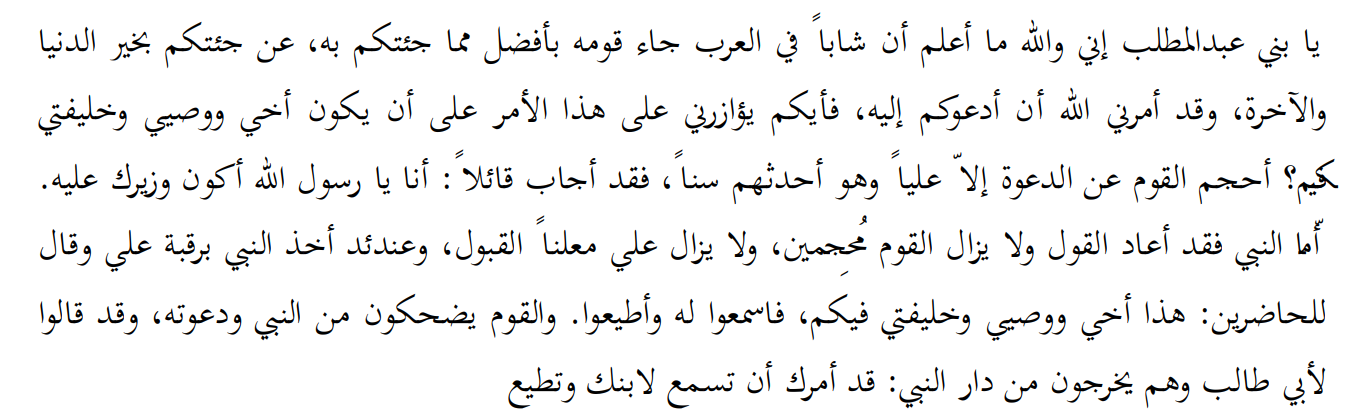
ای بنی عبدالمطلب، به خدا سوگند که من در میان عرب جوانی را نمیشناسم که چیزی بهتر از آنچه من برای شما آوردهام، برای قومش آورده باشد. من به راستی خیر دنیا و آخرت را برای شما آوردهام. خداوند به من فرمان داده که شما را به سوی او فراخوانم؛ پس کدامیک از شما در این کار مرا یاری میکند تا برادر، وارث و جانشین من در میان شما باشد؟ مردم از این دعوت روی برگرداندند، جز علی که کوچکترین آنان بود و پاسخ داد: ای فرستاده خدا، من یاور تو در این کار خواهم بود. پیامبر ﷺ سخن خود را تکرار کرد و مردم دور ماندند، اما علی همچنان اعلام پذیرش میکرد. پس پیامبر ﷺ گردن علی را گرفت و به حاضران فرمود: این برادر من، وارث من و جانشین من در میان شماست؛ پس به سخنش گوش دهید و از او فرمان برید. مردم به پیامبر ﷺ و دعوتش خندیدند و هنگام بیرون رفتن از خانهی پیامبر ﷺ به ابوطالب گفتند: «او به تو فرمان داده که به سخنان پسرت گوش دهی و از او فرمان ببری.»
O Banu Abd al-Muttalib, by Allah I do not know any youth among the Arabs who has come to his people with a thing better than what I have come to you with. Verily I have come to you with the good of this world and the Hereafter. Allah has commanded me to call you to Him, so which one of you will assist me in this matter so that he may become my brother, inheritor and my Khalifah among you? The people kept away from the da’wa except Ali, the youngest among them, who responded saying: I, O Messenger of Allah, will be your assistant upon this matter. The Messenger repeated his statement and the people remained away while Ali continued announcing his acceptance. So the Messenger took the neck of Ali and said to those present: This is my brother, inheritor and my Khalifah among you so listen to him and obey. The people laughed at the Prophet and his invitation, and said to Abu Talib while leaving the Messenger’s house: ‘He has commanded you to listen to your son and obey him.’”
این خلاصهی حدیث «اهل بیت» است، همانگونه که کسانی که به آن بهعنوان دلیل استناد میکنند، روایت کردهاند.
This is the summary of the hadith of the house as narrated by those who depend upon it as evidence.
روى البخاری الحادثة التی وقعت فی یوم
Al-Bukhari narrated the incident of the day when
«و خویشاوندان نزدیک خود را انذار کن» [TMQ 26:214]
“And warn your nearest kinsfolk” [TMQ 26:214]
نازل شد (با این مضمون) که پیامبر ﷺ بر کوه صفا ایستاد، بدون آنکه از آماده کردن غذا سخنی به میان آید. احمد بن حنبل در مسندش دو حدیث روایت کرده است: یکی درباره آماده کردن غذا، بدون اینکه بگوید آن روز روزی بود که آیهٔ «و خویشاوندان نزدیکت را بیم ده» نازل شد، و دیگری که بیان میکند آماده کردن غذا در روزی بود که این آیه نازل شد. ابتدا این متون را نشان میدهیم و سپس آنچه را در بر دارند توضیح میدهیم.
Was revealed (saying) that the Messenger (saw) stood upon (Mount) Safa, without mentioning the preparation of food. Ahmad bin Hanbal narrated in his Musnad two hadiths, one about the preparation of food without mentioning it was the day in which “And warn your nearest kinsfolk” was revealed and another mentioning that the preparation of food was on the day the ayah was revealed. We will show these texts first then explain what they contain.
روایت است از البخاری از ابن عباس (رض) که گفت: هنگامی که
Al-Bukhari narrated from Ibn ‘Abbas (ra) who said: When
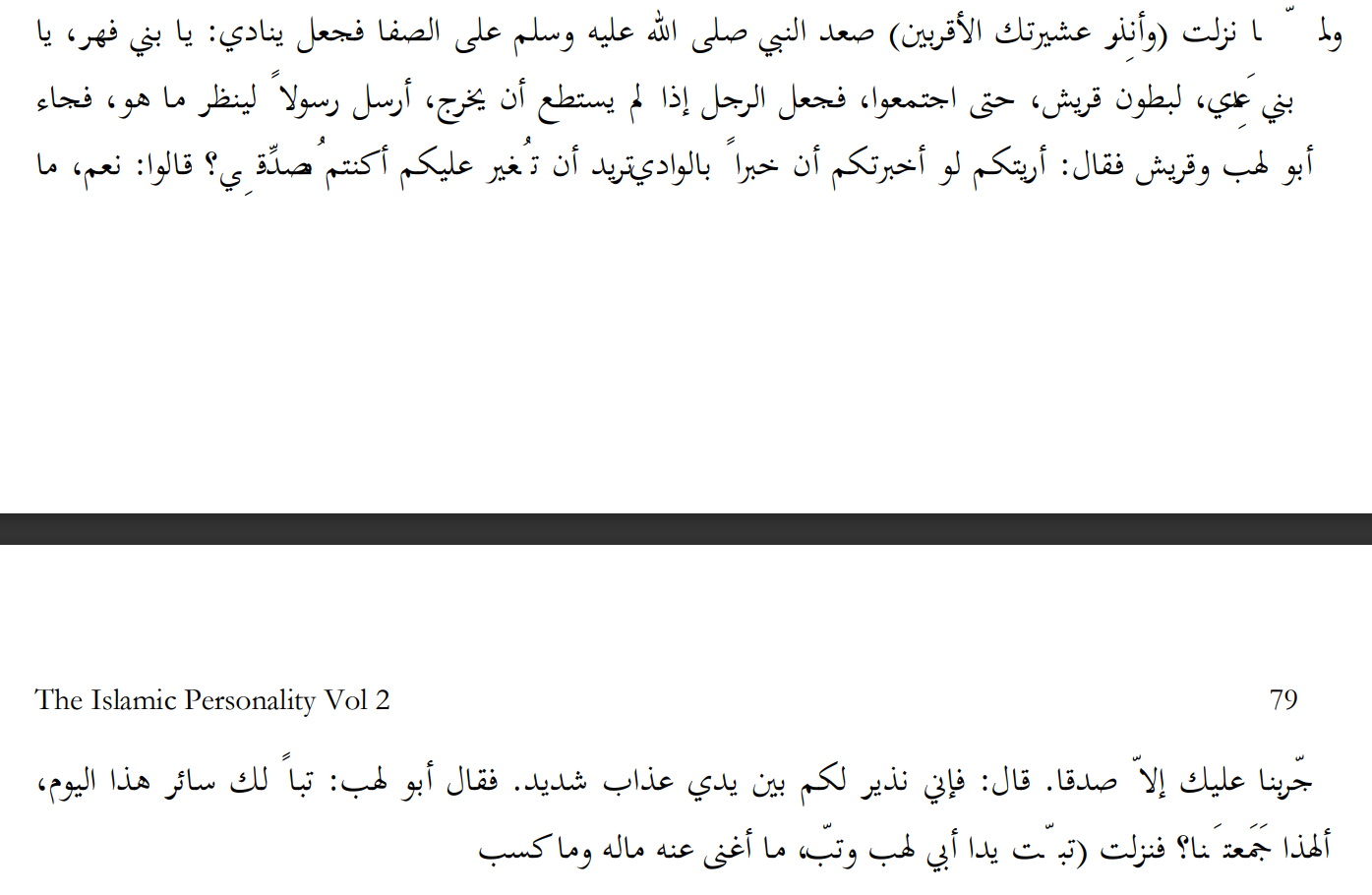
«و چون آیهٔ {وَأَنذِرْ عَشِيرَتَكَ الْأَقْرَبِينَ} نازل شد، پیامبر ﷺ بر صفا ایستاد و آغاز به ندا کرد: ای بنی فهر، ای بنی عدی! – برای همهٔ بطون قریش – تا آنکه گرد آمدند. کسی که نمیتوانست بیاید، فرستادهٔ خود را فرستاد تا ببیند چه خبر است. ابولهب و قریش آمدند و او ﷺ فرمود: "اگر به شما خبر دهم که در آن دره سوارههایی هستند که قصد دارند ناگهان به شما حمله کنند، آیا باور میکنید؟" گفتند: آری، ما تو را در هیچ چیز جز راستگویی نیافتهایم. فرمود: "همانا من برای شما بیمدهندهام پیش از عذابی سخت!" ابولهب گفت: "تباه باد بر تو تا پایان روز! آیا برای همین ما را گرد آوردی؟" آنگاه {تَبَّتْ يَدَا أَبِي لَهَبٍ وَتَبَّ * مَا أَغْنَىٰ عَنْهُ مَالُهُ وَمَا كَسَبَ} نازل شد. [ابولهب (عموی پیامبر ﷺ) و بر او باد!، مال و فرزندانش به او سودی نمیرساند!] [TMQ 111:1-2]»
“And when And warn your nearest kinsfolk was revealed, the Messenger stood upon Safa and started announcing: O Banu Fihr, O Banu Adiyy for all the (butun) of Quraysh until they gathered together. Whoever was unable to go had sent a messenger to see what was happening. Abu Lahab and Quraysh came and he said: ‘If I told you there were horses (men) in the valley intending to attack you suddenly, would you believe me?’ They said: Yes, we have not tried you in anything except to find you saying the truth. He said: Verily, I am a warner to you before a severe punishment! Abu Lahab said: Woe be upon you for the rest of the day. Is it because of this that you gathered us? So “Perish the two hands of Abû Lahab (an uncle of the Prophet [sal-Allâhu 'alayhi wa sallam]) and perish he!, His wealth and his children will not benefit him!” [TMQ 111:1-2] was revealed”
این نشان میدهد که واقعهی آمادهکردن غذا در همان روزی که آیهی «وَأَنْذِرْ عَشِيرَتَكَ الْأَقْرَبِينَ» نازل شد، نبوده است، زیرا با آنچه در متن حدیث آمده همخوانی ندارد. احمد بن حنبل در مسندش گفت: عفان برای ما روایت کرد که ابو عوانه برای ما روایت کرد از عثمان بن مغیره از ابو صادق از ربیعة بن ناجذ از علی (رضی الله عنه) که گفت: رسول الله ﷺ بنی عبدالمطلب را در همهی گروههایشان گرد آورد یا فراخواند تا بخورند و بنوشند. برای آنان مقداری غذا آماده کرد که خوردند تا سیر شدند. گفت: آن غذا چنان باقی ماند که گویی دست به آن نزدهاند. سپس نوشیدنی زعفرانی خواست که نوشیدند تا سیر شدند، و آن نوشیدنی نیز چنان باقی ماند که گویی دست به آن نزدهاند. سپس پیامبر ﷺ فرمود:
This indicates that the incident of the preparation of food was not on the day in which “And warn your nearest kinsfolk” was revealed as it does not concur with what occurred in the hadith’s text. Ahmad bin Hanbal said in his Musnad: ‘Affan related to us that Abu Awana related to us from Uthman bin al-Mughira from Abu Sadiq from Rabi’a bin Najidh from Ali (ra) who said: The Messenger of Allah (saw) gathered or called Banu Abd al-Muttalib in all their groups to eat and drink. He prepared for them a quantity of food which they ate until they were satisfied. He said: The food remained as if it had not been touched. Then he called for a saffron drink which they drank until they will full, and the drink remained as if it had not been touched. Then he (saw) said:

«ای بنی عبدالمطلب، من به طور خاص به سوی شما و به سوی عموم مردم فرستاده شدهام. شما اکنون از این نشانه (آیه) آنچه را دیدید دیدید، پس کدام یک از شما به من بیعت خواهد داد تا برادر و همراه من شود؟» او گفت: هیچیک از آنان برنخاست، پس من که کمسنترین آن گروه بودم برای او برخاستم، و او گفت: بنشین. سه بار این را تکرار کرد و هر بار من برخاستم و او گفت: بنشین، تا آنکه بار سوم دستم را با دست خود زد.
“O Banu Abd al-Muttalib, I have been sent specifically to you and to humanity in general. You have now seen of this sign (ayah) what you saw, so which one of you will give me a pledge in order to become my brother and companion?’ He said: None of them stood, so I stood for him though I was the youngest of the group and he said: Sit down. He repeated it three times following which I stood for him and he said ‘Sit down’, until the third time he struck my hand with his hand.”
این امر روشن میکند که در این واقعه هیچ لحظهای از نزول آیهٔ {وَأَنْذِرْ عَشِيرَتَكَ الْأَقْرَبِينَ} وجود ندارد، و اینکه پیامبر ﷺ اسلام را به ایشان عرضه کرد تا هرکس که مسلمان شود برادر و همراه او باشد، و اینکه ایشان چیزی به علی (رض) نگفت.
This clarifies that there is no moment in this incident of the revelation of “And warn your nearest kinsfolk”, and that the Messenger (saw) offered Islam to them so that whoever became a Muslim would become his brother and companion and that he did not say anything to Ali (ra).
اما روایت دوم: احمد بن حنبل در «المسند» خود روایت کرده است: «اسود بن عامر برای ما نقل کرد که شریک برای ما نقل کرد از العمش، از المنهال، از عباد بن عبدالله الاسدی، از علی که گفت: هنگامی که این آیه نازل شد: {و خویشاوندان نزدیکت را بیم ده}، رسول خدا ﷺ خاندان خانهاش را گرد آورد. سی نفر گرد آمدند؛ خوردند و نوشیدند، سپس ﷺ به ایشان فرمود:
As for the second narration, Ahmad bin Hanbal narrated in his Musnad: “Aswad bin Amir related to us that Shareek related to us from Al-‘Amash from Al-Minhal from ‘Ibad bin Abdullah al Asadi from Ali who said: When the ayah “And warn your nearest kinsfolk” was revealed, the Messenger (saw) gathered the family of his house. Thirty people gathered; they ate and drank then he (saw) said to them:
«چه کسی ضامن قرضها و وعدههای من خواهد شد تا در بهشت با من باشد، و او خلیفهی من بر خانوادهام خواهد بود؟» مردی که شریک نامش را نبرد گفت: ای پیامآور خدا ﷺ، تو دریا (بحر) بودی، پس چه کسی میتواند از این امر مراقبت کند؟ سپس دیگری (همان را) گفت. او آن را به خاندان خانهاش پیشنهاد کرد، پس علی (رضی الله عنه) گفت: من (این کار را خواهم کرد).
"Which one will guarantee my debts and promises so as to be with me in Paradise, and he will be my Khalifah over my family? A man, whom Shareek did not name, said: O Messenger of Allah, you were an ocean (bahr) so who could take care of this? Then another said (the same?). He offered that to the family of his house, so Ali (RA) said: I (will).”
کلمهٔ «وصی» یا «خلیفه» در این دو متن به هیچ شکلی ظاهر نمیشود. بلکه تنها واژهٔ «خلیفه» آمده که به خانوادهٔ او محدود است، و خلافت بر خانواده، خلافت به معنای مقام حکومت یا رهبری نیست و هیچ ارتباطی با آن ندارد. اینها متونی هستند که در کتابهای صحیح آمدهاند و در روایات متعدد با الفاظ مشابه و معنای واحد نقل شدهاند، و در هیچیک از آنها کلمات وصی یا خلافت دیده نمیشود. هرگز نه از طریق هیچیک از گردآورندگان کتب صحیح و نه از هیچ راوی موثقی، حتی در یک حدیث، کلمهٔ وصی یا خلیفه به هیچ شکلی، چه در ارتباط با علی و چه با دیگری، نقل نشده است. پس با نبود هرگونه دلیل برای آن در کتب صحیح، این استدلال فرومیریزد.
The word inheritor or Khalifah does not appear in these two texts in any way at all. Rather it is only the word Khalifah which appears restricted to his family, and the Khilafah over the family is not the Khilafah in the post of rule or leadership nor does it have any relationship with that. These are the texts which came in the Saheeh books, and they came in numerous narrations with similar wordings and unified meanings, and there did not appear in any of them the words inheritor or Khilafah. There has never appeared, either via any of the compilers of the Saheeh (books of ahadith) or any of the trustworthy narrators, in even one hadith the word(s) inheritor of Khalifah in any way at all either in relation to Ali or anyone else, so the evidence falls due to the absence of any evidence for it in the Saheeh books.
اما آن روایتی که کسانی که دربارهی نصب علی بحث میکنند و آن را «حدیث خانه» مینامند، این متن با این روایت از نظر معنا (دِرایه) مردود است. حدیثی از نظر دِرایه بر اساس معنایش رد میشود و از نظر روایت بر اساس سندش. پس اگر از نظر سند یا معنا رد شود، نمیتوان آن را معتبر دانست و به عنوان دلیل ساقط میشود. اما رد معنای آن به دلایل متعددی است، از جمله:
As for the text narrated by those who contend about the appointment of Ali which they named the hadith of the house, this text with this narration (riwayah) is rejected in its meaning (Dirayah).A hadith is rejected in its dirayah based on its meaning, and its narration based on its chain. So if it is rejected in its chain or meaning then it cannot be considered and it falls as evidence. As for rejecting its meaning, this is due to many reasons including:
نخست: در این حدیث چنین به نظر میرسد که پیامبر ﷺ در دعوت خود از خاندان عبدالمطلب یاری خواست، به این شرط که حکومت پس از ایشان از آنِ آنان باشد. این برداشت از دو جهت باطل است: یکم، این برداشت با گفتار و کردار پیامبر ﷺ در ماجرایی که ایشان درخواست قبیلهای را رد کردند، در تعارض است؛ آن قبیله خواسته بودند که اگر مسلمان شوند، حکومت پس از ایشان از آنان باشد، و پیامبر ﷺ در پاسخ آنان فرمودند:
Firstly: In this hadith it appears that the Messenger (saw) sought the assistance of the family of Abd al-Muttalib in his da’wa with the condition that the rule became theirs after them. This is void from two aspects: firstly, this contradicts the Messenger’s statement and action in the incident in which he refused the request from the tribe that the rule becomes theirs after him if they become Muslims to which he replied:
«امر و فرمانروایی از آنِ خداوند است، و او آن را هر جا که بخواهد قرار میدهد.»
“Authority is a matter which belongs to Allah, and He (swt) will place it where He wishes.”
ابن هشام در کتاب «السیرۃ النبویۃ» ﷺ روایت کرده است: ابن اسحاق گفت: الزهری روایت کرد که او با بنی عامر بن صعصعه ملاقات کرد، پس ایشان را به سوی الله عزّ و جلّ دعوت کرد و خودش را به ایشان عرضه نمود. مردی از ایشان که او را بیجیرۃ بن فراس مینامیدند به او گفت: به خدا سوگند، اگر این جوان قریشی را بگیرم، به وسیلهٔ او عربها را خواهم بلعید (یعنی بر آنان پیروز خواهم شد). سپس گفت: اگر با تو پیمان بندیم که امر تو را یاری کنیم، و الله تو را بر کسانی که با تو مخالفت میکنند پیروز گرداند، آیا پس از تو حکومت به ما خواهد رسید؟ او فرمود: «امر حکومت از آنِ الله است و آن را هر جا که بخواهد قرار میدهد.» گفت: پس او به وی گفت: آیا گلوهای خود را برای تو قربانی کنیم، سپس هنگامی که الله تو را پیروز گرداند، حکومت از آنِ دیگری شود؟ ما به امر تو نیازی نداریم، و آنان او را رد کردند. چگونه ممکن است پیامبر ﷺ بفرماید: «امر از آنِ الله است و آن را هر جا که بخواهد قرار میدهد»، یعنی امر خلافت و حکومت پس از خودش، و با این حال به بنی عبدالمطلب میفرماید:
Ibn Hisham narrated in his book of the Sirah of the Prophet (saw): Ibn Ishaq said that Az-Zuhri narrated that he met Banu Amr bin Sa’sa’ah so he invited them to Allah ‘azza wa jalla and offered himself to them. One man among them, whom they called Bayjirat bin Furra, said to him: By Allah, if I were to take this youth from the Quraysh, I will eat (i.e. conquer) the Arabs through him. Then he said: What if we were to pledge to support your matter then Allah will grant you victory over those who oppose you. Will the rule be with us after you? He said: “The rule is for Allah and He places it where He wills.” He said: So he said to him: Will we sacrifice our throats for you, then when Allah (swt) grants you victory the rule becomes for someone else? Then we have no need of your matter, and they rejected him.” How can the Messenger (saw) say: “The matter belongs to Allah and He will place it where He wills” i.e. the matter of the Khilafah and the rule after him, yet he says to Banu Abd al-Muttalib:
«کدام یک از شما در این کار مرا یاری خواهد کرد تا برادر من، وارث من و جانشین من در میان شما باشد؟»
“Which one of you will assist me upon this matter so that he may become my brother, inheritor and Khalifah among you?”
آیا این تناقضی آشکار نیست؟ ناگزیر، لازم است یکی از این دو گفته رد شود. از آنجا که درباره حدیث خانه گفته میشود که در زمانی رخ داد که
Is this not a clear contradiction? Inevitably, it is necessary that one of these two statements be rejected. Since it is said of the hadith of the house that it occurred when
«خویشاوندان نزدیکت را هشدار ده» [TMQ 26:214]
“Warn your nearest kinsfolk” [TMQ 26:214]
نازل شد، یعنی در سال سوم بعثت پیامبر ﷺ، و حدیث:
Was revealed i.e. the third year of the messenger ship and the hadith:
«امر» از آنِ الله است و او آن را هرجا که بخواهد قرار میدهد.
“The matter belongs to Allah and He places it where He wills”
وقتی پیامبر (صلیاللهعلیهوسلم) خود را به قبایل عرضه میکرد، یعنی در سال دهم پس از بعثت، و بنابراین پس از حدیث خانه؛ پس این حدیث خانه است که رد میشود. اما جنبه دوم این است که پیامبر ﷺ در این حدیث چیزی را به کافران پیشنهاد کرد تا مسلمان شوند، بلکه بزرگترین چیز، یعنی خلافت پس از خود بر همه مسلمانان را، به عنوان بهای ورود آنان به اسلام پیشنهاد داد. این با رفتار پیامبر ﷺ در دعوتش و با احکام شریعت در تضاد است. پیامبر ﷺ مردم را به اسلام دعوت میکرد، زیرا آن دین درست است، و هرگز حتی از طریق حدیثی ضعیف نقل نشده که او چیزی، چه کم و چه زیاد، را در برابر ورود کافری به اسلام به او پیشنهاد کرده باشد. اما کسانی که دلهایشان باید به دست آورده شود، مسلمانانی هستند که از زکات به آنان داده میشود تا از این راه دولت تقویت شود، نه کافرانی که به آنان داده میشود تا وارد اسلام شوند. همچنین جایز نیست که به کافران در برابر ورودشان به اسلام چیزی داده شود.
when the Messenger (saw) offered himself to the tribes i.e. in the tenth year after the messenger ship and therefore after the hadith of the house; so it is the hadith of the house which is rejected. As for the second side, it is that the Messenger (saw) in this hadith offered something to the disbelievers so that they may become Muslims, rather he offered them the greatest thing which is the Khilafah after him over all Muslims as the price for their entering into Islam. This contradicts the Messenger’s action in his da’wa and the Shari’ah rules. The Messenger would invite people to Islam because it is the correct deen and it has never been narrated from him, even through a weak hadith that he offered anything whether small or large to a kafir in exchange for his entering into Islam. As for those whose hearts are to be reconciled, they are Muslims who are given from the zakat in order to strengthen the State through them, not kuffar who are given so that they enter Islam. Nor is it allowed to give something to kuffar in exchange for their entering Islam.
ثانیاً: این حدیث بیان میکند که پیامبر (صلی الله علیه وسلم) برای دعوت کافران به اسلام، یک ولیمه و غذا تدارک دید و ایشان را گرد آن غذا جمع کرد تا وارد اسلام شوند، اما برای علی (رضی الله عنه) که پیشتر اسلام آورده بود، غذایی تهیه نکرد. بنابراین اگر این افراد اسلام را نپذیرفته و این را که حکومت پس از او در ازای پذیرش اسلام به ایشان تعلق گیرد، رد کنند، جایی برای علی (رضی الله عنه) در پذیرش آن باقی نمیماند، زیرا او به اسلام دعوت نمیشود، چون پیشتر مسلمان است و خطابی به او نیست. از این رو در این مجلس جایی نیست که [پیامبر] به او بگوید:
Secondly: The hadith mentions that the Messenger (saw) prepared a wedding feast and meal for kuffar in order to invite them to Islam, and he gathered them around a meal so that they may enter Islam and he did not prepare food for Ali (ra) who had already accepted Islam. So if these people reject Islam and reject that the rule becomes theirs after him in exchange for Islam, there is no place there for Ali (ra) for giving his acceptance as he is not being invited to Islam because he is already a Muslim, and there is no speech addressed to him. This is why there is no place in this gathering such that he says to him:
این برادر من است، وارث و جانشین من در میان شما، پس به سخنش گوش دهید و از او اطاعت کنید.
“This is my brother, inheritor and my Khalifah among you so listen to him and obey”
از آنجا که او هدف خطاب یا مذاکره نبود. سوم: حدیث بیان میکند که آن گروه اسلام را رد کردند و با وجود تکرار پیشنهادش، همچنان اسلام را نپذیرفتند و این را که حکومت پس از او به آنان برسد، در ازای ورود به اسلام، رد کردند. آنان کافر باقی ماندند؛ پس چگونه پیامبر ﷺ در خطاب به ایشان میفرمود:
Since he is not the target of the address or the negotiation. Thirdly: The hadith mentions that the group rejected Islam, and despite him repeating his offer they persisted in rejecting Islam and rejecting that the rule becomes theirs after him in exchange for entering Islam. They remained kuffar so how could the Messenger (saw) say to them in addressing them:
این جانشین من در میان شماست
“This is my Khalifah among you”
فرمان دادن به آنان برای شنیدن و اطاعت از او، در حالی که میداند آنان کافرانی هستند که اسلام را رد کردهاند؟ و چگونه او میتواند در میانشان خلیفه باشد، در حالی که آنان کافرند؟
Commanding them with hearing and obeying him while he knows they are kuffar who have rejected Islam? And how could he be the Khalifah among them while they are kuffar?
چهارم: روایتی که آنان نقل میکنند چنین میگوید:
Fourthly: The narration they narrate says:
این برادر من است، وارث و جانشین من در میان شما، پس به سخنش گوش دهید و از او اطاعت کنید.
“This is my brother, inheritor and my Khalifah among you so listen to him and obey”
این خطاب به خاندان عبدالمطلب است، زیرا عبارت با گفتهی او آغاز شده است: «ای بنی عبدالمطلب». پس این خطاب ویژهی ایشان است، چرا که او را بر ایشان خلیفه قرار داد، یعنی بر خاندان عبدالمطلب، نه خلیفهی مسلمانان؛ زیرا گفته است: «و خلیفهی من بر شما». بنابراین، بر اساس متن صریح، او خلیفهی مسلمانان نیست. و در اینجا نمیتوان گفت که این درس از راه عمومیت لفظ است، نه از راه خصوصیت سبب، زیرا این یک رویداد خاص است، نه سبب (شأن نزول)؛ به علاوه، الفاظ آن نیز خاص است و عام نیست: «ای بنی عبدالمطلب» و «خلیفهی من در میان شما». پس به سبب خاص بودن این رویداد و نبودن الفاظ عام، تخصیص ضروری است.
This is an address to the family of Abd al-Muttalib since the words started with his saying “O Banu Abd al-Muttalib.” So it is specific to them as he made him a Khalifah over them i.e. over the family of Abd al-Muttalib not the Khalifah of the Muslims since he said, “and my Khalifah over you.” Thus he is not the Khalifah for the Muslims as is depicted by the explicit text. Nor can one say here that the lesson is by the generality of the text not the specificity of the cause since this is a specific incident not a cause (sabab) not mentioning that the words are also specific and not general: “O Banu Abd al-Muttalib”, “my Khalifah among you” so the specification is demanded due to this being a specific incident not a cause, and also due to the absence of general words.
بنابراین تنها یکی از این چهار مورد برای آشکار کردن نادرستی این حدیث و تناقض آن کافی است، و رد کردن روایت آن از نظر دِرایت واجب است. پس روشن میشود که پیامبر ﷺ به صراحت نگفته است که علی (رض) را پس از خود به خلافت منصوب کند. از همهی اینها روشن میشود که احادیثی که کسانی که استدلال میکنند پیامبر ﷺ پس از خود شخصی را برای خلافت تعیین کرده، روایت میکنند، احادیثی مردود هستند که شایستهی تکیه کردن به آنها به عنوان دلیل نیستند، و بنابراین ساقط میشوند. هیچ دلیلی باقی نمیماند که پیامبر ﷺ کسی را برای سرپرستی خلافت پس از خود تعیین کرده باشد؛ بلکه دلیل خلاف آن ثابت شده است، یعنی اینکه پیامبر ﷺ این امر را به مسلمانان واگذار کرد تا هر کس را که میخواهند برای این مقام برگزینند، اما روش نصب خلیفه را برای ایشان مشخص کرد.
Just one of these four matters suffices to reveal the falsehood of this hadith and its contradiction, and it is obligatory to reject its narration (dirayah). Therefore it is clarified that the Messenger (saw) did not explicitly state making Ali (ra) the Khalifah after him. From all this it becomes clear that the ahadith narrated by those who argue that the Messenger (saw) designated a person for the Khilafah after him are rejected ahadith unsuitable to depend upon as evidence so they fall. There remains no evidence that the Messenger (saw) designated anyone to be in charge of the Khilafah after him; rather the evidence has been established contrary to that i.e. that the Messenger (saw) left the matter to the Muslims to choose whom they want in relation to the person but he specified for them the method for appointing the Khalifah.