۱۷. خلافت
17. The Khilafah
خلافت، رهبری عمومی و فراگیر تمام مسلمانان جهان است به منظور برپایی قوانین شریعت اسلامی و رساندن دعوت اسلام به جهانیان. خلافت همان امامت است، زیرا امامت و خلافت دارای یک معنا هستند. چند حدیث صحیح نیز آن دو را با یک معنا ذکر کردهاند. هیچیک از این دو اصطلاح در هیچ متن شرعی، یعنی قرآن یا سنت، با معنایی متفاوت از دیگری نیامده است، زیرا این دو منبع، تنها منابع شریعت هستند. التزام به اصطلاح خلافت یا امامت واجب نیست، بلکه التزام به معنای این اصطلاح واجب است.
The Khilafah is the general or overall leadership for all the Muslims in the world in order to establish the laws of the Islamic Shari’ah and to carry the da’wa of Islam to the world. It is the same as the Imamah, as the Imamah and Khilafah have the same meaning. Several saheeh ahadith mention them with the same meaning. Neither of the two terms has ever come with any meaning different from the other in any Shari’ah text i.e. the Qur’an or the Sunnah, as these two (sources) are the only Shari’ah sources. It is not compulsory to hold to the term of Khilafah or Imamah, but rather it is compulsory to hold to the meaning of the term.
تأسیس خلافت بر همه مسلمانان در همه مناطق جهان واجب است. تأسیس آن، مانند انجام هر واجبی که خداوند (سبحانه و تعالی) بر مسلمانان واجب کرده، امری حتمی است که در آن اختیار یا تساهل وجود ندارد. کوتاهی در انجام آن از بزرگترین گناهانی است که خداوند (سبحانه و تعالی) با سختترین مجازاتها کیفر میدهد.
Establishing the Khilafah is an obligation upon all Muslims in all regions of the world. Establishing it, like the performing of any obligation that Allah (swt) obliged upon Muslims, is an inevitable matter without choice or leniency in it. Negligence in performing it is one of the worst sins for which Allah (swt) punishes with the strictest of the punishments.
دلیل بر وجوب برپایی خلافت بر همه مسلمانان (از این منابع است): قرآن، سنت و اجماع صحابه.
The evidence for establishing the Khilafah upon all Muslims (come from): The Qura'n, The Sunnah and Ijmaa as-Sahabah.
دربارهی قرآن، الله (سبحانه و تعالی) به پیامبر ﷺ دستور داده است که میان مسلمانان بر اساس آنچه او (سبحانه و تعالی) بر وی نازل کرده است حکم کند، و این دستور او (سبحانه و تعالی) به وی به شکلی قاطع بوده است. الله (سبحانه و تعالی) پیامبر ﷺ را خطاب قرار داده و فرموده است:
As for the Qura'n, Allah (swt) has ordered the Messenger (saw) to rule between Muslims by all that He (swt) revealed to him (saw), and His order (swt) to him was in a decisive manner. Allah (swt) addressed the Prophet (saw) saying:
و میان آنان بدانچه خداوند نازل کرده است حکم کن، و از هوسهای ایشان، دوری از حقی که به تو رسیده پیروی مکن. [TMQ 5:48]
"And rule between them by that which Allah revealed to you, and do not follow their vain desires away from the truth which came to you" [TMQ 5:48]
و او (سبحانه و تعالی) فرمود:
And He (swt) said:
و میان آنان بر اساس آنچه خدا بر تو نازل کرده حکم کن و از هوسهای ایشان پیروی مکن، و بر حذر باش که مبادا تو را از بخشی از آنچه خدا بر تو نازل کرده است منحرف سازند. [TMQ 5:49]
"And rule between them by that which Allah revealed to you and do not follow their whims, and beware (be on the alert) that they may deviate you away from even some part of what Allah revealed to you" [TMQ 5:49]
خطاب خداوند (سبحانه و تعالی) به پیامبر ﷺ، خطابی به امت او است، مگر آنکه دلیلی وجود داشته باشد که آن خطاب را به خود ایشان ﷺ محدود کند. در این مورد هیچ دلیلی چنین محدودیتی را نشان نمیدهد، پس خطاب به همه مسلمانان است تا حکم (حکم شرعی) را برپا دارند. برپایی خلافت جز برپایی حکم و اقتدار معنای دیگری ندارد. افزون بر این، خداوند (سبحانه و تعالی) اطاعت از صاحبان امر، یعنی حاکم، را بر مسلمانان واجب کرده است، و این نشان میدهد که وجود صاحب امر بر مسلمانان واجب است. خداوند (سبحانه و تعالی) میفرماید:
The speech of Allah (swt) to the Prophet (saw) is a speech to his Ummah unless there is evidence which limits the speech to him (saw). In this case there is no such evidence, so the address is to all the Muslims to establish the rule (hukm). The establishment of the Khalifah does not mean other than the establishment of the rule and the authority. Moreover, Allah (swt) made it obligatory upon Muslims to obey those in authority i.e. the ruler, which indicates that the existence of the one in authority is obligatory upon Muslims. Allah (swt) said:
ای کسانی که ایمان آوردهاید، از الله اطاعت کنید و از پیامبر و از صاحبان امر در میان خودتان اطاعت کنید [TMQ 4:59]
"O you who believe obey Allah and obey the Messenger and those in authority amongst you" [TMQ 4:59]
الله (سبحانه و تعالی) به اطاعت از کسی که وجود ندارد، امر نمیکند. این نشان میدهد که وجود صاحب اقتدار واجب است. هنگامی که الله (سبحانه و تعالی) به اطاعت از صاحبان اقتدار امر میکند، در واقع دستور برپاداشتن ایشان را میدهد. نتیجهٔ برپاداشتن حاکم، برپاداشتن حکم شرعی است، و ناتوانی از برپاداشتن او به معنای وانهادن حکم شرعی خواهد بود. بنابراین وجود او واجب است، زیرا نتیجهٔ ترک برپاداشتنش از امور ممنوع، یعنی وانهادن حکم شرعی، خواهد بود.
Allah (swt) does not order obedience to someone who does not exist. This indicates that the existence of the person in authority is obligatory. When Allah (swt) commands obedience to those in authority then He (swt) is commanding their establishment. The result of establishing the ruler is the establishment of the Shari’ah rule (hukm shar’i) and the failure to establish it will result in neglecting the Shari’ah rule (hukm shar’i). Thus his existence is obligatory as the result of the failure to establish it is will be from the prohibited matters i.e. the neglect of the Shari’ah rule (hukm shar’i).
در مورد سنت، نافع روایت کرد که گفت: عبدالله بن عمر به من گفت که او پیامبر ﷺ را شنید که فرمود:
As for the Sunnah, Nafi‘ reported saying: Abdullah bin ‘Umar said to me that he heard the Prophet (saw) saying:
«هر کس دستش را از اطاعت بکشد، روز قیامت در حالی با الله دیدار خواهد کرد که هیچ حجتی برای او نیست، و هر کس بمیرد در حالی که بیعت (بیعۃ) بر گردن ندارد، به مرگ جاهلیت مرده است.»
“Whoever removes his hand from obedience will meet Allah on the Day of Resurrection without having any proof for him, and whoever dies without a pledge of allegiance (bay’ah) on his neck dies a death of ignorance (jahiliyyah).”
پس پیامبر (ﷺ) هر مسلمانی را ملزم کرد که بیعتی بر گردن داشته باشد، و فرمود که هر کس بمیرد بیآنکه بیعتی بر گردنش باشد، به مرگ جاهلیت مرده است. بیعت جز برای خلیفه نمیتواند باشد. پیامبر (ﷺ) بر هر مسلمانی واجب کرد که بیعتی به خلیفه بر گردن داشته باشد، اما واجب نکرد که هر مسلمانی به خلیفه بیعت دهد. تکلیف، وجود بیعتی بر گردن هر مسلمان واجد شرایط است، یعنی وجود خلیفهای که به همین ترتیب سزاوار بیعت بر گردن هر مسلمان است. پس این حضور خلیفه است که بیعت را بر گردن هر مسلمان قرار میدهد، چه آن مسلمان واقعاً (بهصورت حضوری) به او بیعت داده باشد یا نه. بنابراین، این حدیث پیامبر (ﷺ) دلیل بر این است که نصب خلیفه واجب است، و دلیل بر این نیست که دادن بیعت واجب باشد. این بدان سبب است که آنچه پیامبر (ﷺ) بر آن سرزنش کرد، نبودن بیعت بر گردن مسلمان تا زمان مرگ او بود، اما نبودن خود بیعت را سرزنش نکرد. مسلم از عَرَج از ابوهریره (رضی الله عنه) از پیامبر (ﷺ) روایت کرده است که فرمود:
So the Prophet (saw) made it compulsory upon every Muslim to have a bay’ah on his neck, and described that whoever dies without a bay’ah on his neck that he dies a death of jahiliyyah. The bay’ah cannot be for anyone except the Khalifah. The Prophet (saw) made it obligatory upon every Muslim to have on his neck a bay’ah to a Khalifah, yet he did not make it an obligation upon every Muslim to give bay’ah to a Khalifah. The duty is the existence of a bay’ah on the neck of every eligible Muslim i.e. the existence of a Khalifah who accordingly deserves a bay’ah upon the neck of every Muslim. So it is the presence of the Khalifah which places a bay’ah on the neck of every Muslim, whether the Muslim actually gave a bay’ah to him (in person) or not. Therefore, this hadith of the Prophet (saw) is evidence that the appointment of the Khalifah is an obligation and not a proof that giving the bay’ah is obligatory. This is so because what was rebuked by the Prophet (saw) was the absence of a bay’ah on the neck of a Muslim until he dies, but he did not rebuke the absence of the bay’ah. Muslim narrated from Al-’Araj from Abu Hurairah (ra) from the Prophet (saw) who said:
«هان، إمام سپری است که مردم پشت سر او میجنگند و به وسیلهٔ او از خود دفاع میکنند.»
“Behold, the Imam is a shield from behind whom the people fight and by whom they protect themselves.”
و مسلم از ابو حازم روایت کرده که گفت:
And Muslim reported from Abu Hazim who said:
«من پنج سال همراه ابوهریره بودم و شنیدم که او از پیامبر ﷺ روایت میکرد که فرمود: پیامبران بر بنیاسرائیل حکومت میکردند. هرگاه پیامبری وفات مییافت، پیامبر دیگری جانشین او میشد، اما پس از من هیچ پیامبری نخواهد بود. خلفایی خواهند بود و شمارشان بسیار خواهد شد. گفتند: پس به ما چه دستور میدهی؟ فرمود: بیعت هر یک از آنان را پس از دیگری ادا کنید و حق آنان را به ایشان بدهید. بیگمان خداوند درباره آنچه به ایشان سپرده، از آنان بازخواست خواهد کرد.»
“I accompanied Abu Hurairah for five years and heard him reporting from the Prophet who said: The Prophets ruled over the children of Israel. Whenever a Prophet died another Prophet succeeded him, but there will be no Prophet after me. There will be Khulafaa and they will number many. They asked: What then do you order us? He said: Fulfil the bay’ah to them one after the other and give them their due right. Surely Allah will ask them about what He entrusted them with.”
و از ابن عباس، از پیامبر ﷺ که فرمود:
And from bin ‘Abbas from the Prophet (saw) who said:
«هرکس در امیر خود چیزی ببیند که او را ناخوشایند است، باید صبر کند. زیرا هر که به اندازه یک وجب از سلطان (قدرت اسلام) جدا شود و در همان حال بمیرد، به مرگ جاهلیت مرده است.»
“If anyone sees in his Amir something that displeases him let him remain patient. For, behold, he who separates himself from the sultan (authority of Islam) by even so much as a hand span and dies thereupon, has died a death of jahiliyyah”.
در این احادیث، پیامبر ﷺ به ما خبر میدهد که زمامداران امور مسلمانان را اداره خواهند کرد، و توصیف خلیفه به عنوان سپر، یعنی حفاظت، در آنها آمده است. پس توصیف امام به عنوان سپر، بیانگر فایدههای حضور امام است و از این رو امری است برای انجام کار. زیرا اگر خبری که الله (سبحانه و تعالی) و پیامبر ﷺ بیان کردهاند متضمن سرزنش باشد، آن امر نهی است، و اگر متضمن ستایش باشد، آن امر به انجام کار است. و اگر کاری که امر شده برای اجرای یک حکم شرعی ضروری باشد، یا با سهلانگاری در آن، حکم شرعیای تعطیل شود، این امر قاطع است. در این احادیث همچنین خبری آمده که کسانی که امور مسلمانان را اداره میکنند خلفا هستند، و این دلالت بر دستور به نصب ایشان دارد. همچنین شامل نهی مسلمانان از جدا شدن از حاکمیت است، و این دلالت بر وجوب نصب زمامداری برای خود، یعنی حکومت، بر مسلمانان دارد. افزون بر این، پیامبر ﷺ به مسلمانان دستور داد که از خلیفه اطاعت کنند و با کسانی که در خلافت او نزاع میکنند بجنگند، که این دلالت بر دستور به نصب خلیفه و حفظ خلافت او با جنگ با هر کسی که با او مخالفت کند دارد. مسلم روایت کرده است که پیامبر ﷺ فرمود:
In these ahadith, the Prophet (saw) informs us that leaders will run the affairs of Muslims, and they include the description of the Khalifah as a shield i.e. a protection. So the description of the Imam as a shield is informative of the benefits of the presence of the Imam, thus it is a command for action. This is because if the information conveyed by Allah (swt) and the Prophet (saw) contained rebuke then it is a command of prohibition, and if it contained praise then it is a command for action. If the ordered action is necessary to implement a hukm shari’ (Shari’ah rule), or by its negligence a hukm shar‘i will be neglected, then this command is decisive. In these ahadith there is information also that those who run the affairs of Muslims are Khulafaa, which indicates an order to appoint them. They also include a prohibition for Muslims to separate from the authority, which indicates the obligation upon Muslims to appoint an authority for themselves i.e. ruling. Moreover, the Prophet (saw) ordered the Muslims to obey the Khalifah and to fight those who dispute his authority as Khalifah, which indicates an order to appoint a Khalifah and to protect his Khilafah by fighting against whosoever disputes with him. Muslim reported that the Prophet (saw) said:
«هر کس با امامی بیعت کند، دست خود و میوه دلش را به او بدهد، باید تا جایی که بتواند از او اطاعت کند؛ و اگر کسی دیگر برای منازعه با او آید، باید گردن آن مرد را بزنید.»
“He who pledged allegiance to an Imam giving him the clasp of his hand and the fruit of his heart shall obey him as long as he can, and if another comes to dispute with him you have to strike the neck of that man.”
پس امر به اطاعت امام، امری است به برپاداشتن او، و امر به جنگ با کسانی که با او منازعه میکنند، دلیلی است بر اینکه این امر در حفظ وجود یک خلیفه قاطع و تعیینکننده است.
So the command to obey the Imam is an order to establish him, and the command to fight those who dispute with him is evidence that this command is decisive in maintaining the presence of one Khalifah.
در مورد اجماع صحابه (رضی الله عنهم)، همگی بر ضرورت تعیین جانشین یا خلیفه برای پیامبر ﷺ پس از وفات ایشان اتفاق داشتند، و پس از مرگ هر یک از آنان نیز بر تعیین جانشین برای ابوبکر، سپس برای عمر، و سپس برای عثمان اتفاق نظر داشتند. اجماع صحابه (رضی الله عنهم) بر نصب خلیفه با تأخیر در دفن پیامبر ﷺ پس از وفات ایشان به روشنی نمایان شد، زمانی که آنان در حالی که مشغول تعیین جانشین برای ایشان بودند، دفن را به تأخیر انداختند، با آنکه دفن میت فرض است و بر کسانی که مسئول آمادهسازی تدفین هستند حرام است که تا پایان تدفین به کار دیگری بپردازند. صحابه (رضی الله عنهم) موظف بودند به آمادهسازی دفن پیامبر ﷺ بپردازند، اما برخی از ایشان به تعیین خلیفه پرداختند نه به انجام دفن، و برخی دیگر در برابر این اشتغال سکوت کردند و با وجود توانایی انکار این تأخیر و توانایی دفن پیامبر ﷺ، در به تأخیر انداختن دفن به مدت دو شب شرکت داشتند. پس این اجماعی بود بر اشتغال به تعیین خلیفه به جای دفن میت، و این روا نیست مگر آنکه تعیین خلیفه از دفن میت واجبتر باشد. همچنین، همه صحابه (رضی الله عنهم) در طول زندگی خود بر وجوب تعیین خلیفه اتفاق داشتند. اگرچه در مورد شخصی که باید به خلافت برگزیده شود اختلاف داشتند، هرگز در اصل تعیین خلیفه اختلاف نکردند، نه هنگام وفات پیامبر ﷺ و نه هنگام وفات هیچ یک از خلفای راشدین. بنابراین اجماع صحابه دلیلی روشن و قوی است بر اینکه تعیین خلیفه واجب است.
As for the Ijma’a of the Sahabah (ra) they all agreed upon the necessity to establish a successor or Khalifah to the Prophet (saw) after his death, and they all agreed to appoint a successor to Abu Bakr, then to ‘Umar, then to ‘Uthman, after the death of each one of them. The Ijma’a of the Sahabah (ra) to establish a Khalifah manifested itself emphatically when they delayed the burial of the Prophet (saw) after his death while engaged in appointing a successor to him, despite the fact that the burial of the dead person is fard, and that it is haram upon those who are supposed to prepare for his burial to engage themselves in anything else until they complete the burial. The Sahabah (ra) were obliged to engage themselves in preparing the burial of the Prophet (saw), instead some of them engaged themselves in appointing a Khalifah rather than carrying out the burial, and some others kept silent on this engagement and participated in delaying the burial for two nights despite their ability to deny the delay and their ability to bury the Prophet (saw). So this was an Ijma’a to engage themselves in appointing a Khalifah rather than to bury the dead. This could not be legitimate unless the appointment of a Khalifah is more obligatory than the burial of the dead. Also, all the Sahabah (ra) agreed throughout their lives upon the obligation of appointing a Khalifah. Although they disagreed upon the person to be elected as a Khalifah, they never disagreed upon the appointment of a Khalifah, neither when the Prophet (saw) died, nor when any of the Khulafaa ar-Rashidun died. Therefore the Ijma’a of the Sahabah is clear and strong evidence that the appointment of a Khalifah is obligatory.
آنچه برای انجام واجب ضروری است، خود نیز واجب است.
‘What is necessary to accomplish a wajib (duty) is itself a wajib’
بنابراین، تشکیل خلافت نیز بر اساس این اصل الهی واجب است۔
So the establishment of a Khalifah is also compulsory according to this divine principle.
بنابراین، از این دلایل روشن است که برپایی حکومت و اقتدار میان مسلمانان فرض است، و همچنین روشن است که نصب خلیفهای که زمام حکومت و اقتدار را در دست میگیرد، بر مسلمانان واجب است تا احکام شریعت را اجرا کنند، نه صرفاً برای خود حکومت و اقتدار. در آنچه مسلم از قول پیامبر ﷺ از طریق عوف بن مالک روایت کرده، تأمل کنید.
Therefore, it is clear from these evidences that the establishment of the rule and the authority amongst Muslims is fard, and it is also clear that the appointment of a Khalifah who takes the charge of the rule and the authority is compulsory upon Muslims in order to implement the Shari’ah rules and not merely for the sake of rule and authority in themselves. Reflect upon what Muslim narrated of his saying (saw) via ‘Awf bin Malik:
«بهترین پیشوایان شما آنانند که آنان را دوست میدارید و آنان نیز شما را دوست میدارند، برای شما دعا میکنند و شما برای آنان دعا میکنید؛ و بدترین پیشوایان شما آنانند که آنان را دشمن میدارید و آنان نیز شما را دشمن میدارند، و آنان را لعنت میکنید و آنان نیز شما را لعنت میکنند.» از پیامبر خدا ﷺ پرسیده شد: آیا با آنان با شمشیر مقابله نکنیم؟ فرمود: «نه، تا زمانی که در میان شما نماز را برپا دارند (یعنی اسلام را).»
“The best of your Imams (leaders) are those whom you love and they love you, who pray for you and you pray for them; and the worst of your Imams are those whom you hate and they hate you and you curse them and they curse you. The Messenger of Allah (saw) was asked: Should we not face them with the swords? He said: No, not as long as they establish salat (meaning Islam) among you.”
این حدیث در بیان حاکمان نیک و بد روشن است و در نهی از رویارویی با آنان با شمشیر، تا زمانی که دین را برپا میدارند، صریح است؛ زیرا برپا داشتن نماز نشانه پایداری دین و حکمرانی بر اساس آن است.
This hadith is clear in informing about the good and bad leaders, and clear in prohibiting confronting them with the sword as long as they establish the deen, since establishing the salat (prayer) indicates upholding of the deen and ruling by it.
بنابراین، وجوب نصب خلیفهای که قوانین اسلام را برپا میدارد و دعوت آن را میرساند، امری است که در متون صحیح شریعت، از نظر ثبوت، هیچ شک و تردیدی در آن نیست. افزون بر این، این وظیفه واجب است، زیرا خداوند (سبحانه و تعالی) برپا داشتن حکومت اسلام و حفظ حرمت مسلمانان را بر مسلمانان فرض کرده است. با این حال، این وظیفه، فرضِ کفایی است؛ پس اگر گروهی از امت آن را انجام دهند، فریضه ادا شده و مسئولیت از دیگران ساقط میشود. و اگر بخشی از امت نتوانست این فریضه را محقق سازد، اما کارهایی را که آن را برپا میکند انجام داد، مسئولیت همچنان بر همه مسلمانان باقی است و تا زمانی که مسلمانان خلیفهای نداشته باشند، این فریضه بر هر مسلمانی باقی میماند.
So the obligation upon Muslims to appoint the Khalifah who establishes the laws of Islam and conveys its call is a matter which has no doubt with regard to its certainty in the sound texts of Shari’ah. Moreover, it is an obligatory duty due to the fact that Allah (swt) made it fard upon Muslims to establish the rule of Islam and to protect the honour of Muslims. However, this duty is a collective one, so if some people of the Ummah accomplished it, the fard is fulfilled and thus responsibility drops from the rest of the Ummah. And if part of the Ummah was unable to achieve the fard, though they carried out the actions which establish it, then the responsibility remains upon all the Muslims, and the fard remains upon every Muslim as long as Muslims are without a Khalifah.
ترک إقامة خلافةٍ للمسلمين من أعظم المعاصي، لأنه تركٌ لإقامة واجبٍ من أهم واجبات الإسلام الذي يتوقف عليه تطبيق الدين، بل ويتوقف عليه أيضاً وجود الإسلام نفسه في ميدان الحياة. فالمسلمون جميعاً يرتكبون إثماً عظيماً بترك إقامة خلافةٍ لجميع المسلمين. ولو اتفقوا جميعاً على البقاء بلا خلافة لوقع الإثم على جميع المسلمين في كل مناطق المعمورة (العالم بأسره). أما إذا عمل بعضُ المسلمين على إقامة الخلافة، ولم يعمل الآخرون، فإن الإثم يسقط عن الذين شرعوا في العمل لإقامة الخلافة، وإن بقي الفرض عليهم حتى يُنصَّب الخليفة. وذلك لأن الانشغال بإقامة الفرض يرفع الإثم عن التأخير في إقامته في وقته المعيَّن، وعن عدم إقامته، بسبب سعيه لإقامته وكراهته لما يحول دون إقامته.
To refrain from establishing a Khalifah for the Muslims is among the greatest sins because it is abstaining from carrying out among the most important obligations of Islam upon which the implementation of the deen depends; nay even the very existence of Islam in the battlefield of life depends upon it as well. So Muslims as a whole commit a great sin by refraining from establishing a Khalifah for all Muslims. And if they all agreed to remain without a Khalifah the sin would befall all Muslims in all inhabited regions (entire world). However, if some of the Muslims embarked on working to establish a Khalifah and the others did not, the sin will drop from the shoulders of those who started to work to establish the Khalifah though the fard remains upon them until the Khalifah is appointed. (This is so) because the involvement in establishing the fard removes the sin for the delay in establishing it in its proper time, and for its non-establishment, due to one’s work to establish it and his hatred of that which prevents him from establishing it.
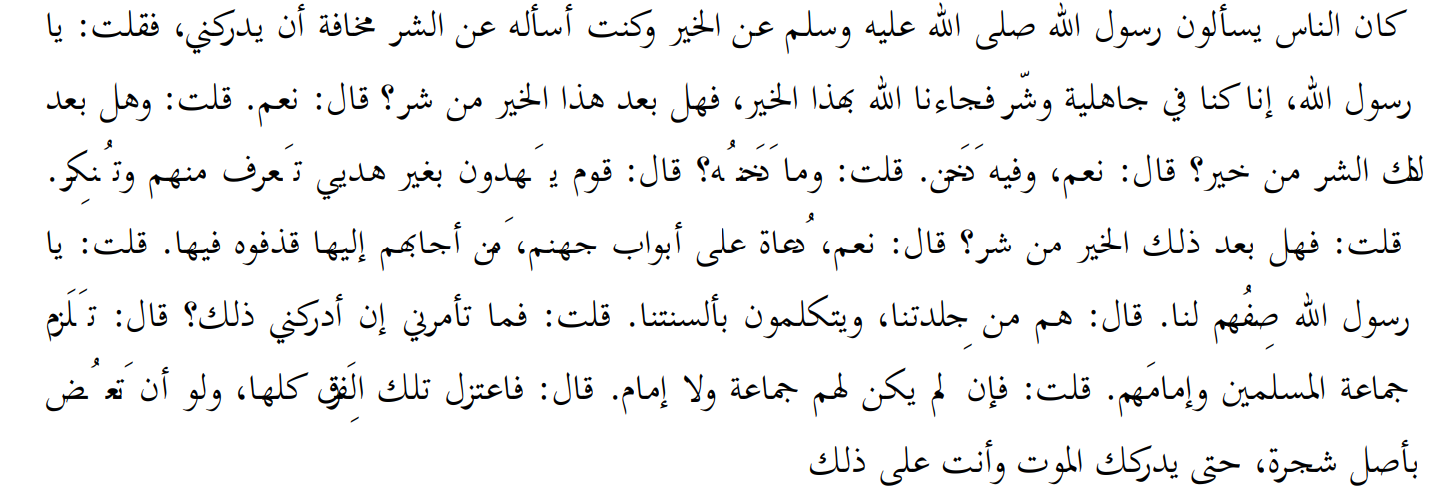
مردم از پیامبر خدا ﷺ دربارهی خیر میپرسیدند و من از او دربارهی شر میپرسیدم، از ترس آنکه مبادا دامنگیرم شود. پس گفتم: ای پیامبر خدا! ما در دوران جاهلیت و گمراهی بودیم، سپس خداوند این خیر را به ما ارزانی داشت؛ آیا پس از این خیر، شرّی هست؟ فرمود: آری. گفتم: آیا پس از آن شر، خیری خواهد بود؟ فرمود: آری، و در آن دودی است. گفتم: دود آن چیست؟ فرمود: مردمی که به غیر هدایت من هدایت میکنند؛ برخی از ایشان را میشناسی و برخی را انکار میکنی. گفتم: آیا پس از آن خیر، شرّی خواهد بود؟ فرمود: آری، دعوتگرانی که بر درهای جهنم فرا میخوانند؛ هر کس دعوتشان را بپذیرد، او را در آتش میافکنند. گفتم: ای پیامبر خدا! آنان را برای ما توصیف کن. فرمود: آنان از پوست خودماناند و به زبان ما سخن میگویند. گفتم: اگر آن (فتنه) مرا دریافت، مرا به چه چیزی فرمان میدهی؟ فرمود: به جماعت مسلمانان و امام ایشان ملتزم باش. گفتم: اگر مسلمانان نه جماعتی داشته باشند و نه امامی؟ فرمود: پس از تمام آن گروهها کناره بگیر، هرچند ناچار شوی ریشهی درختی را بجوی تا آنکه مرگ تو را در همان حال دریابد.
“The people used to ask the Prophet of Allah (saw) about the good and I used to ask him about the bad in fear that it might catch me. So I said: O Prophet of Allah! We were in times of jahiliyyah and mischief then Allah brought us this good, so is there any mischief after this good? He (saw) said: Yes. I said: Will there be any good after that mischief? He said: Yes, and it has smoke (dukhan). I said: What is its smoke? He said: People guiding but not on my guidance. You recognise some (from them) and deny some. I said: Will there be any mischief after that good? He said: Yes, callers (du’at) who invite at the doors of Hellfire. They throw him into it (hell) whoever accepted their invitation. I said: O Prophet of Allah, describe them to us. He said: They are of our own skin (of our people) and talk our language. I said: What do you order me to do if that (matter) caught me? He said: Adhere to the jama‘ah of Muslims and their Imam. I said: What if the Muslims have no jama‘ah nor an Imam? He said: Then separate from all those groups, even if you (have to) bite the root of a tree till death comes to you as such.”
این حدیث در بیانش روشن است که پیامبر ﷺ به مسلمانان دستور داد که به جماعت مسلمانان بپیوندند و از امامشان پیروی کنند، و کسانی را که مردم را به درهای جهنم فرا میخوانند ترک کنند. پرسشگر از ایشان پرسید که اگر در شرایطی که مسلمانان نه امامی دارند و نه جماعتی، او در برابر آن دعوتگران درهای آتش چه کند؛ پس پیامبر ﷺ به او دستور داد که از همه این گروهها جدا شود، نه اینکه خود را از مسلمانان جدا کند یا از کوشش برای برپایی امامی دست بکشد. پس دستور ایشان روشن است: «از همه آن گروهها جدا شو»، و جدایی از آن گروهها را چنان تأکید کرد که حتی اگر این کنارهگیری او را وادار کند که تا مرگ به تنه درختی چنگ زند، باید چنین کند. معنای آن این است که به دینت پایبند بمان و از دعوتگران گمراه که بر درهای جهنماند دوری کن. در این حدیث هیچ عذر یا اجازهای (برای کسی) برای رها کردن کار برپایی خلافت وجود ندارد؛ بلکه حدیث تنها به فرمان پایبندی به دین و ترک دعوتگران درهای دوزخ محدود است، و اگر کسی برای برپایی خلافت نکوشد، گناه بر گردن او باقی خواهد ماند. پس او مأمور است که گروههای گمراه را ترک کند تا دینش را از دعوتگران گمراهی نگاه دارد، حتی اگر ناچار شود به ریشه درختی چنگ زند، اما نباید خود را از جامعه مسلمانان دور کند و کوشش برای برپایی احکام دین و تعیین امامی برای مسلمانان را رها سازد.
This hadith is clear in its expression that the Prophet (saw) ordered the Muslims to adhere to the jama‘ah of Muslims and to adhere to their Imam, and to leave those who invite people to the doors of hell. The questioner asked him what he has should do in relation to those callers at the doors of Hellfire in the situation wherein the Muslims have no Imam and no jama‘ah; thereupon the Prophet (saw) ordered him to separate from all these groups, not to disassociate himself from the Muslims nor to abstain from the action for establishing an Imam. So his order is clear “Separate from all those groups”, and he emphasised the separation from those groups even to the extent that his isolation from them would make him clench to the trunk of a tree until death comes to him. Its meaning is to adhere to your deen and keep away from the misguiding callers who are at the doors of Hellfire. In this hadith there is no excuse or permission (for anybody) to abandon the work for establishing a Khalifah, it is, rather, confined to the command of adhering to the deen and abandoning the callers at the doors of hell, and the sin will remain on him if he does not work to establish a Khalifah. So he is ordered to abandon the misguiding groups in order to save his deen from the callers of the misguidance, even if he had to bite the root of a tree, but not to distance himself from the Muslim community and abandon the work for establishing the laws of the deen and establishing an Imam for Muslims.
یکی دیگر از نمونهها، آنچه البخاری از ابوسعید الخدری روایت کرده است که گفت:
Another example is what al-Bukhari narrated from Abu Said al-Khudri, who said:
رسول الله ﷺ فرمود: زمانی خواهد آمد که بهترین دارایی یک مسلمان گوسفندانی خواهد بود که با آنها به قلههای کوهها و جاهای بارش باران (درهها) میرود تا با دینش از فتنهها بگریزد.
“The Messenger of Allah (saw) said: A time will come that the best property of a Muslim will be sheep which he will take on the top of mountains and the places of rainfall (valleys) so as to flee with his religion from afflictions (fitan)”
این بدان معنا نیست که انسان باید خود را از جامعه مسلمانان جدا کند، عمل به احکام دین را رها سازد و در نبودِ خلافت بر زمین، برای مسلمانان خلیفهای برپا نکند. این سخن تنها بیانگرِ این است که در زمانهای فتنه و سختی، بهترین دارایی و سرمایهٔ مسلمان چیست؛ و تشویقی به جدایی از مسلمانان و کنارهگیری از مردم نیست.
This does not mean that one should isolate oneself from the Muslim community, abandon practising the laws of the deen and establishing a Khalifah for Muslims when there is no Khilafah on earth. All that it contains is an explanation of what is the best wealth of the Muslim at the times of affliction; it does not encourage separation from the Muslims and isolation from the people.
بر این اساس، هیچ مسلمانی بر روی زمین این عذر را ندارد که از انجام وظیفهٔ برپاداشتن دینی که الله (ﷻ) فرمان داده است، سر باز زند؛ یعنی برپاداشتن خلیفه برای مسلمانان، در زمانی که هیچ خلافتی بر روی زمین وجود ندارد، زمانی که کسی نیست تا حدود الهی را اجرا کند و از حرمتهای الهی پاسداری نماید، و کسی نیست تا احکام دین را به اجرا درآورد و جامعهٔ مسلمانان را زیر پرچم «لا إله إلا الله، محمدٌ رسولُ الله» متحد سازد. در اسلام هیچ اجازهای برای رها کردن کار این وظیفه تا زمانی که واقعاً به سرانجام برسد، وجود ندارد.
Accordingly, no Muslim on the face of this earth has an excuse to abandon the duty of establishing the deen which Allah (swt) has ordered, that is, the establishment of a Khalifah for Muslims when there is no Khilafah on the earth, when there is no one to implement the punishments (hudood) of Allah (swt) to protect the sanctities of Allah (swt), and no one to implement the laws of the deen and unify the Muslim community under the banner of La ilaha illa Allah, Muhammad ur-Rasul Allah. There is no permission in Islam to abandon the work for this duty until it is indeed completed.