21.1 A mentira na guerra
21.1 Lying In War
Toda mentira é definitivamente haram por causa de um texto corânico definitivo, e sua proibição está entre as regras conhecidas da religião por necessidade, sem distinção quanto a ser para o benefício dos muçulmanos, os interesses da religião ou o contrário disso. Os textos vieram proibindo-a de forma geral, absoluta e sem justificativa. Allah (SWT) disse:
All lying is definitely haram due to a definite Qur’anic text, and its prohibition is among the rules known from the deen by necessity, without distinction as to whether it is for the benefit of Muslims or the interests of the deen or opposite to that. The texts came forbidding it generally, absolutely and without reasoning. Allah (swt) said:
"Na verdade, aqueles que forjam mentiras são os que descreem nos sinais (āyāt) de Allah." [TMQ 16:105]
“Verily those who fabricate lies are those who disbelieve in the ayat of Allah” [TMQ 16:105]
E Allah (SWT) disse:
And Allah (swt) said:
“Então invoquemos (nabtahil) e façamos recair a maldição de Allah sobre o mentiroso” [TMQ 3:61].
“Then let us invoke (nabtahil) and make the curse of Allah upon the liar” [TMQ 3:61].
Esta decisão, sua absolutez e generalidade não podem ser racionalizadas, restringidas ou especificadas senão por outro texto, e não há espaço para a mente senão compreender o texto e nada além disso. Não veio na Sahih nenhum texto que dê qualquer razão ou restrição, seja no Livro ou na Sunnah. Quanto à especificação do texto, veio um texto a respeito que excluiu da proibição da mentira coisas específicas, que sozinhas foram especificadas; não é permitido ultrapassá-las em hipótese alguma. Nada é excluído da proibição da mentira, exceto aquilo que foi especificado por evidência nos ahadith mencionados, a saber: a situação de guerra, a mulher e a reconciliação entre duas pessoas, devido ao texto sobre elas. Ahmad, Muslim e Abu Dawud narraram de Umm Kulthum bint ‘Uqbah, que disse:
This decision, its absoluteness and generality cannot be reasoned, restricted or specified except by another text, and there is no entry for the mind except to understand the text and nothing else. There did not come in the Sahih any text which gives any reasoning or restriction, whether in the Book or Sunnah. As for specifying the text, there came a text regarding it which excluded from the forbidding of lying specific things which alone were specified; it is not allowed to exceed them in any case whatsoever. Nothing is excluded from the forbidding of lying except what was specified by evidence of the mentioned in the ahadith namely: the situation of war, to the woman and reconciling between two due to the text about them. Ahmad, Muslim and Abu Dawud narrated from Umm Kulthum bint ‘Uqbah who said:
"Não ouvi o Profeta ﷺ permitir nada, sobre o qual as pessoas dizem mentiras, exceto em três situações: na guerra, na reconciliação entre pessoas, e na história do homem com sua esposa e no hadith da mulher com seu marido."
“I did not hear the Prophet (saw) giving permission in anything over which the people say (lies) except in three: in war, reconciling between people, and the story of the man to his wife and the hadith of the woman to her husband.”
De Asma bint Yazid, que disse: O Mensageiro de Allah ﷺ disse:
From Asma bint Yazid who said: The Messenger of Allah (saw) said:
"Ó povo, o que vos chega segue a mentira como as mariposas seguem o fogo? Toda mentira vinda do filho de Adão é haram, exceto em três situações: o homem que mente à sua esposa para agradá-la, o homem que mente na guerra, pois a guerra é engano, e o homem que mente entre os muçulmanos para reconciliá-los."
“O you people, what has carried to you follow lying like the moths following fire? All lying from the son of Adam is haram except in three situations: the man lying to his wife to please her, the man lying in war as war is deceit and the man lying between Muslims to reconcile between them.”
Esses três estão entre os casos excluídos da proibição da mentira por um texto autêntico, portanto a mentira não é permitida em outros casos, pois nada é excluído da generalidade do texto exceto o que a evidência especifica somente. A expressão "na guerra", que consta no hadith, tem apenas um significado e não mais, que é a situação de guerra ativa no âmbito da guerra; assim, a mentira é absolutamente não permitida, exceto na situação de guerra. Quanto ao que é autenticado do Profeta ﷺ
These three are of those excluded from the forbidding of lying by an authentic text, so lying is not allowed in other than that as nothing is excluded from the generality of the text except what the evidence specifies alone. The word “in war” which came in the hadith has only one meaning and no more which is the situation of active war in the matter of war, so lying is absolutely not allowed except in the situation of war. As for what is authenticated from the Prophet (saw)
“Que quando ele pretendia a guerra, ocultava-a com algo diferente disso”;
“That when he intended war, he would conceal in other than that”;
O significado é que, quando ele pretendia um assunto, não o revelava, como quando pretendia lutar em direção ao leste, perguntava sobre um assunto em direção ao oeste, para que quem o ouvisse e o visse pensasse que ele pretendia a direção do oeste. Quanto a dizer claramente que pretendia o oeste quando sua (verdadeira) intenção era o leste, isso jamais ocorreu. Portanto, isso não é informar algo contrário à realidade, mas sim uma dupla intenção (tawriyya). Além disso, isso entra na guerra ativa e no assunto da guerra, pois se trata de ir ao campo de batalha para combater o inimigo ativamente, sendo, portanto, um engano, que veio na declaração dele ﷺ:
The meaning is that when he intended a matter he would not show it, such as when he intended to fight towards the direction of the east he would ask about a matter in the direction of the west so that the one who heard and saw him would think that he intended the direction of the west. As for his saying clearly of his intending the west whereas his (true) intention was the east, this never occurred. So this is not informing contrary to the reality but was rather double- entendre (tawriyya). Moreover, it enters into active war, and the matter of war, since it is going to the battlefield to fight the enemy actively so it is deceit which came in his (saw) statement:
"A guerra é um engano" (narrado por Muslim)
“War is deceit” (narrated by Muslim)
Quanto ao que foi narrado por Jabir, que o Mensageiro de Allah ﷺ disse:
As for what was narrated by Jabir that the Messenger of Allah (saw) said:

“Quem vai cuidar de Ka'b bin Al-Ashraf, pois ele ofendeu Allah e Seu Mensageiro?” Muhammad bin Maslamah disse: “Desejas que eu o mate, ó Mensageiro de Allah?” Ele disse: “Sim.” Ele disse: “Então me dê permissão para dizer (mentiras).” Ele disse: “Eu o fiz.” Ele disse: “Então ele o alcançou e disse: ‘Na verdade, este homem, isto é, o Profeta ﷺ, nos tem colocado em dificuldades e nos tem pedido sadaqah.’” Ele disse: “Por Allah, da mesma forma, nós o seguimos, e não gostamos de deixá-lo até vermos aonde chegará o seu assunto.” Ele disse: “Ele não parou de conversar com ele até ter a oportunidade de dominá-lo e o matou.”
“Who will deal with K’ab bin Al-Ashraf for he has annoyed Allah and His Messenger? Muhammad bin Maslamah: Would you like for me to kill him, O Messenger of Allah? He said: Yes. He said: Then give me permission to tell (lies). He said: I have done so. He said: So he reached him and said: Verily this one i.e. the Prophet (saw)—has put us to task and has asked us for sadaqah. He said: By Allah similarly we have followed him and we dislike leaving him until we see where his matter will reach: He said: He did not stop talking to him until he had a chance to overpower him and killed him.”
Isto também se dava em situação de guerra. Ainda que as palavras do hadith afirmem que as palavras que Muhammad bin Maslamah disse eram verdadeiras, e não falsas, pois se tratava apenas de alusão, Muhammad bin Maslamah pediu permissão para dizer tudo e isso lhe foi permitido. Portanto, nele está incluída a permissão para mentir de forma explícita e metafórica, e isso entra na situação de guerra. Quanto ao que Ahmad e An-Nisai narraram sobre o caso de Al-Hajjaj bin ‘Ilat, quando pediu permissão para dizer sobre ele o que quisesse em benefício próprio, a fim de resgatar seus bens das mãos dos habitantes de Makkah, o Profeta ﷺ lhe deu permissão, e ele informou aos habitantes de Makkah que Khayber havia derrotado os muçulmanos. Isto também entra na situação de guerra, porque os habitantes de Makkah estavam em estado de guerra ativa contra os muçulmanos. Al-Hajjaj bin ‘Ilat era dos muçulmanos e ia até os inimigos descrentes, que estavam em estado de guerra ativa, de modo que a mentira contra eles era permitida. A permissão de mentir não se restringe ao campo de batalha nem aos combatentes; ao contrário, é permitido aos muçulmanos mentir contra seus inimigos, os descrentes, se estiverem em estado de guerra ativa com eles. Quanto ao que foi transmitido por At-Tabarani em Al-Awsat:
This was also in the situation of war. Even if the words of the hadith state that the words which Muhammad bin Maslamah said were true, not false, as it was only allusion but Muhammad bin Maslamah asked permission to say everything and it was permitted to him. So it enters within it the permission to lie explicitly and metaphorically, and it enters into the situation of war. As for what Ahmad and An-Nisai narrated from the tale of Al-Hajjaj bin ‘Ilat in his seeking permission to say about him whatever he wished for his benefit in rescuing his property from the people of Makkah. The Prophet (saw) gave him permission and he informed the people of Makkah that Khayber had defeated the Muslims; this also enters into the situation of war because the people of Makkah were in a situation of active war with the Muslims. Al-Hajjaj bin ‘Ilat was from the Muslims and he was going to the enemy disbelievers who were in the situation of active war, so lying was allowed against them. The permission of lying is not restricted to the battlefield nor to fighters; rather it is allowed for the Muslims to lie against their enemies, the disbelievers, if they are in the situation of active war with them. As for was extracted by At-Tabarani in Al-Awsat:
"Toda mentira é pecaminosa, exceto aquela pela qual um muçulmano obtém benefício ou pela qual defende a sua religião."
“All lying is sinful except that by which a Muslim benefits or by which he defends his deen”
Isto está em Al-Bazzar com as palavras:
This is in Al-Bazzar with the words:
"A mentira é proibida, exceto aquela pela qual um muçulmano obtém benefício ou com a qual defende a si mesmo"
“Lying is written except that by which a Muslim benefits or by which he defends it”,
Foi dito em Majma' Az-Zawa'id: Em sua cadeia de transmissão estão Rushdayn e Abdurrahman bin Ziyad bin An'am, e ambos são fracos, portanto é um hadith fraco, que é rejeitado e não utilizado como prova. Assim, não serve como evidência.
It was said in Majmu’ Al-Zawaid: In its chain is Rushdayn and Abdurrahman bin Ziyad bin An’am, and both are weak so it is a weak hadith which is rejected and not used as a proof. So it is not suitable as evidence.
Portanto, toda mentira é haram e não é permitida, exceto em três casos: na guerra, na reconciliação entre as pessoas, e na fala do homem à sua esposa e da mulher ao seu marido. Tudo o mais é definitivamente haram, pois a proibição da mentira veio de forma geral no Alcorão, abrangendo toda mentira; depois, o hadith veio especificando-a para outros casos que não a guerra, a reconciliação entre as pessoas, e a fala do homem à sua esposa e da mulher ao seu marido. Ele excluiu esses três casos da proibição, de modo que somente eles são permitidos e tudo o mais é haram. Especialmente porque o hadith restringiu a permissibilidade a três e disse:
Accordingly all lying is haram and not allowed except in three (matters): in war, reconciling between people, and the story of the man to his wife and the story of the woman to her husband. Everything else is definitely haram as the forbiddance of lying came generally in the Qur’an covering all lying, then the hadith came specifying it in other than war, reconciling between people, and the story of the man to his wife and the story of the woman to her husband. It excluded these three from the forbidding so they alone are allowed and everything else is haram. Particularly since the hadith restricted the permissibility to three and said:
"Toda mentira do filho de Adão é haram, exceto em três situações."
“All lying from the son of Adam is haram except in three situations”
E
And
"Não ouvi o Profeta ﷺ dar permissão em nada do que as pessoas dizem, exceto em três: a guerra…"
“I did not hear the Prophet giving permission in anything of what the people say except in three: war…”
Etc. Esta restrição significa que tudo o mais é haram. Todos os aḥādīth que chegaram referem-se à situação de guerra ativa; todos os aḥādīth além deles são fracos e não são usados como prova (s)
Etc. This restriction means all other is haram. All the ahadith which came are in the situation of active war; all ahadith other than them are weak and are not used as proof (s)
Quanto ao taqiyya/tawriya (dissimulação/duplo sentido) fora da guerra, se o ouvinte o entende em contradição com a realidade, como quando a palavra não indica a realidade e sim outra coisa, seja linguisticamente ou no uso técnico geral entre o falante e o ouvinte, isso é mentira, o que não é permitido. Por exemplo, quando um grupo específico dá uma definição técnica a uma palavra e depois a diz a alguém que não conhece essa definição técnica, ou quando é uma definição técnica para o falante mas o ouvinte não a conhece, tudo isso é mentira, o que não é permitido. Mesmo que fosse um duplo sentido por parte do falante, mas o ouvinte entendesse da palavra o oposto da realidade, isso não é considerado do tipo de tawriya e não é permitido. Quanto ao caso em que se entende da palavra a realidade e outra coisa, isso pertence à espécie da eloquência (balagha). É verdade e não mentira, como quando se diz ao vesgo: "Quem dera seus dois olhos fossem iguais", o que serve como invocação a favor ou contra ele. A dissimulação consiste em que a palavra tenha dois significados, um próximo e outro distante; o falante pretende o significado distante, enquanto o ouvinte entende o significado próximo. Nessa situação, embora o ouvinte entenda o contrário do que o falante pretende, ele não entende o contrário da realidade indicada pela frase. O Profeta ﷺ usou a dissimulação. No Sahih de Al-Bukhari, Anas bin Malik (ra) disse:
As for dissimulation/double entendre in other than war, if the listener understands it contrary to the reality such as where the word does not indicate the reality and something else linguistically or in technical usage generally with the speaker and listener, it is lying which is not allowed. Such as where a specific group gives a technical definition for a word and then say it to someone who does not know this technical definition or where it is a technical definition for a speaker but the listener does not know it, all of this is lying which is not allowed. Even if it were dissimulation/double entendre by the speaker but the listener understands from the word the opposite to the reality, so it is not considered from the type of double entendre (tawriyya) and is not allowed. As for where it is understood from the word is the reality and something else, this is from the species of eloquence (balagha). It is truth and not lying like their saying to the squint eyed: ‘If only both his eyes were equal’, it is suitable as an invocation for or against him. Dissimulation is that the word has two meanings, one which is near and the other remote; the speaker intends the remote meaning while the listener understands (it as) the near meaning. In this situation, even though the listener understands contrary to what the speaker intends nevertheless he does not understand contrary to the reality indicated by the sentence. The Prophet (saw) used dissimulation. In Sahih Al-Bukhari that Anas bin Malik (ra) said:
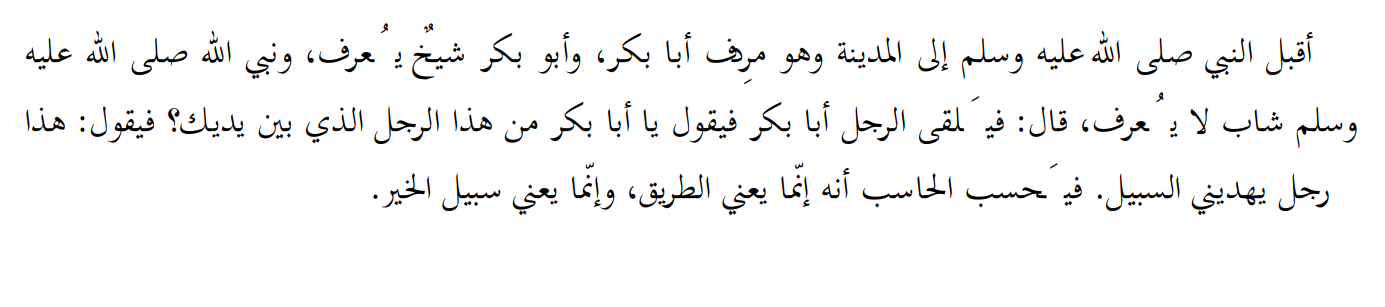
O Profeta de Allah ﷺ dirigiu-se a Madinah, e Abu Bakr o seguia. Abu Bakr era um homem idoso bem conhecido, e o Profeta de Allah ﷺ era um jovem desconhecido. Ele disse: Um homem encontrou Abu Bakr e perguntou: Ó Abu Bakr, quem é este homem à sua frente? Ele respondeu: Este homem está me mostrando o caminho. Ele disse: Um pensador acharia que ele se referia à estrada, quando na verdade queria dizer o caminho para o bem.
“The Prophet of Allah (saw) headed for Madinah and he was followed by Abu Bakr. Abu Bakr was a well known old man and the Prophet of Allah (saw) was an unknown youth. He said: A man met Abu Bakr saying: O Abu Bakr, who is this man before you? He said: This man is showing me the way. He said: A thinker would think that he meant the road whereas he meant the road to goodness.”