2.13 Peygamberler ve Elçiler
2.13 The Prophets And Messengers
‘Peygamber’ (nebi) ve ‘Elçi’ (resul), birbirine karşıt iki terim olmakla birlikte, her ikisine de bir şeriatın vahyedilmiş olması bakımından ortaklık taşırlar. Elçi ile peygamber arasındaki fark şudur: Elçi, tebliğ etmekle emrolunduğu bir şeriatla vahye mazhar kılınmıştır; peygamber ise o da vahye mazhar kılınmıştır, ancak elçilerin şeriatını tebliğ etmekle emrolunmuştur. Başka bir deyişle, elçi şeriatı bizzat tebliğ etmekle emrolunurken, peygamber elçilerin şeriatını tebliğ eder.
‘Prophet’ (nabi) and ‘Messenger’ (rasul) are two contrastive terms but they share in the respect that a shari’a is revelaed to both of them. The difference between the Messenger and the prophet is that the former is inspired with a Sharī’ah which he is commanded to propagate, whereas the latter, i.e. the prophet is also inspired, but commanded to propagate the Sharī’ah of the messengers. In other words, the messenger is commanded to propagate the Sharī’ah himself, whilst the prophet propagates the Sharī’ah of the messengers.
Kadı el-Beydâvî, Allah'ın şu sözünün tefsirinde:
Qadi al-Baydawi in commentary of the saying of Allah ,
Senden önce hiçbir elçi ya da peygamber göndermedik ki, o bir arzuda bulunduğunda, şeytan onun arzusuna (bir şeyler) atmamış olsun.
"Never did we send an apostle or a prophet before thee, but, when he framed a desire" [TMQ Hajj: 52];
"Peygamber (resul), Allah tarafından, kendisinin çağrıda bulunduğu, yenilenmiş veya yeni bir Şeriat ile gönderilendir. Nebi ise, Allah tarafından önceki Şeriatı teyit etmek üzere gönderilendir." Buna göre Musa, bir Şeriat ile vahyedildiği için nebi, bu Şeriat kendi risaletinin Şeriatı olduğu için de resuldür. Öte yandan Harun da bir Şeriat ile vahyedildiği için nebi idi, ancak ona vahyedilen Şeriat kendi risaleti için değil, Musa'nın risaleti için olduğundan resul değildi. Aynı şekilde, Muhammed ﷺ hem nebi hem de resuldür, çünkü kendi risaleti için olan bir Şeriat ile vahyedilmiştir.
Says, ‘The messenger is sent by Allah with a revived or new Sharī’ah which he calls people to, whereas the prophet is sent by Allah to affirm the former Sharī’ah.’ Thus, Musa was a prophet because he was inspired with a Sharī’ah and a messenger because this Sharī’ah was for his mission. On the other hand, although Aaron was also a prophet because he was inspired with a Sharī’ah, he was not a messenger because the Sharī’ah, which was revealed to him was not for his mission, rather it was for the mission of Musa . By the same token, Muhammad was a prophet and a messenger because he was inspired with a Sharī’ah, which was for his mission.
Risâlet, Allah ile kulları arasında, bu dünya ve ahiret ihtiyaçlarını karşılamanın yöntemini açıklayıp netleştirmek amacıyla yapılan bir aracılıktır. Hikmet, peygamberlerin gönderilmesini gerektirir; çünkü onlar insanlara hükümler ve faydalar getirirler.
The message is the mediation between Allah and the slaves in order to explain and clarify the method of satisfying the needs of this world and the hereafter. Wisdom necessitates the sending of messengers as they bring laws and benefits for people.
Böylece, peygamberlerin gönderilmesi gerçekten gerçekleşmiştir. Allah, insanlar arasından elçiler seçti ve onları, iman edip itaat eden insanlara cennet ve sevap müjdesini getiren kişiler olarak gönderdi. Kâfir olan ve isyan eden insanlara ise cehennem ateşi ve azap konusunda uyarıcılar oldular ve insan için bu dünyanın ve ahiretin ihtiyaçlarını ve gereksinimlerini açıkladılar. Bunların hepsi, aklın ne iyi ile kötüyü karar verebilecek ne de insanın kendisini ve işlerini kavrayabilecek güçte olmamasındandır.
Thus, the sending of Messengers has actually occurred. Allah appointed messengers from amongst mankind and sent them as bearers of glad tidings of paradise and reward to the people of belief and obedience. They were warners of the hell fire and punishment to people of disbelief and disobedience and they clarified the needs and requirements of this world and the hereafter for man. All because the mind is incapable of either deciding the good and bad or able to comprehend man himself and his affairs.
"Âdem, Rabbinin emrine karşı geldi, ardından istediğine ulaşamadı. Sonra Rabbi onu seçti, rahmetiyle ona yöneldi ve kendisine lütfettiği yakınlığa giden yolu gösterdi." [TMQ Tā Hā: 121-2]
"Adam slipped the commandment of his Lord then what he had desired, did not get the way to it. Thereafter his Lord chose him and turned to him with his mercy and showed him the way to his favoured nearness" [TMQ Tā Hā: 121-2]
"Ictiba" kelimesinin bu bağlamdaki anlamı onu seçmektir. Kur'an ayrıca Allah'ın Adem'e bazı şeyleri hem emrettiğini hem de yasakladığını kanıtlamaktadır. Nitekim Allah şöyle buyurur:
The meaning of Ijtaba in this context means selecting him. The Quran also proves that Allah both commanded and prohibited Adam certain things. Hence Allah says,
Ve dedik ki: "Ey Âdem, sen ve eşin cennette yerleşin, istediğiniz yerden bol bol yiyin, ancak bu ağaca yaklaşmayın; yoksa zalimlerden olursunuz." [TMQ Baqarah: 35]
"And we said, O Adam, dwell you and your wife in paradise and eat freely thereof where you will, but do not approach this tree lest you become of the transgressors" [TMQ Baqarah: 35]
Bu, onun döneminde başka bir peygamberin bulunmadığını kesin olarak kanıtlamaktadır. Dolayısıyla Âdem, vahiyle peygamber olmuş ve bunun dışında bir şey değildir. Bir şeriatla vahiy alan bir peygamberdir; zira her emir [amr] ve her yasak [nehiy] bir şeriattır. Buna göre o vahiy aldığı için peygamberdir.
This categorically proves that there was no other prophet during his time. Therefore, Adam was a prophet by revelation and nothing else. A prophet who was inspired with a Sharī’ah, as every commandment [amr] or prohibition [nahi] is Sharī’ah. Thus since he received inspiration he is a prophet.
İkinci kaynak Sünnettir. Tirmizi, Ebu Said el-Hudri'den rivayet etmiştir ki Peygamber ﷺ şöyle buyurmuştur:
The Second source is the Sunnah. Tirmidhi reported from Abu Said al-Khudri that the prophet said,
"Kıyamet günü ben Âdem oğullarının efendisi olacağım, ama bununla övünmüyorum. Elimde Hamd sancağı olacak, ama bununla övünmüyorum. O gün Âdem'den başlayarak bütün peygamberler benim sancağımın altında olacak."
"I will be the leader of the sons of Adam on the day of resurrection but I do not boast. I will have the banner of al-Hamd in my hand but I do not boast and on that day, all the prophets from Adam will be under my banner."
Son olarak, Sahabenin icmâı da Âdem'in (aleyhisselam) bir peygamber olduğunu kanıtlar.
Lastly, the consensus of the Sahaba also proves that Adam was a prophet.
Muhammed'in peygamberliğine gelince: Peygamberlik iddiasında bulunmuş ve mucizeler getirmiş olduğu için, peygamberliği Mütevatir rivayetlerle bilinmektedir ve bu da onu hiçbir şüpheye yer bırakmayacak şekilde kanıtlamaktadır. Mucizeye gelince (yani Kur'an'a), o Allah'ın kelamıdır; Mekke'nin fasih ve büyük konuşmacılarına meydan okumuş ve onları aciz bırakmıştır. Kur'an'ın en kısa suresinin benzerini getirmeye çalışmalarına rağmen buna muktedir olamamışlardır. Dillerinin en güzel ve en çok saygı gören dil bilginleri olmalarına rağmen, karşı çıkma yöntemlerini konuşma ve hitabet yerine zora ve kılıca çevirmişlerdir. Kâfirlerden hiçbiri, Kur'an'a benzer bir şeyin birinin tarafından üretildiğini nakletmemiştir; oysa bunu nakletmek için gerekli imkânlara sahiptiler. Bütün bunlar, Muhammed ﷺ'e verilen mucize olan Kur'an'ın Allah'tan olduğunu kesin olarak ortaya koymakta ve Peygamber ﷺ'in doğru iddiasını şüphesiz doğrulamaktadır.
As for the prophethood of Muhammad , as he also claimed prophethood and brought forth miracles, the prophethood is known by Mutawatir narrations, which substantiates it beyond any doubt. As for the miracle (i.e. the Qur’ān) it is the speech of Allah , which challenged and defied the eloquent and great speakers of Mecca. They were unable to oppose the shortest Sura of the Qur’ān, although they strived to do so. They then abandoned their styles of opposition from talk and rhetoric, even though they were the best and most revered linguists of their time, to force and the sword. Not even one of the disbelieving Kuffars ever related that someone was ever able to produce anything similar to the Qur’ān, despite the fact that they had the means to relate this information if required. All this categorically proves that the Qur’ān, i.e. the miracle given to Muhammad is from Allah and without any doubt verifies the true claim of the prophet .
Peygamberlerin ve elçilerin sayısı bilinmemektedir, çünkü Allah, elçisine bunu bildirmemiştir.
The number of prophets and messengers are unknown because Allah informs his messenger,
"Senden önce de elçiler gönderdik; onların bir kısmının kıssalarını sana anlattık, bir kısmını ise sana anlatmadık." [TMQ Ghafir:78]
"We have sent messengers before you, we have mentioned some of their stories to you, whilst we have not mentioned others." [TMQ Ghafir:78]
Bazı hadislerde bu sayıdan söz edilmiş olsa da, söz konusu hadisler "Ahad" kategorisindendir. Bu nedenle akide (itikat) bakımından bir değeri yoktur; yani akidenin bir parçasını oluşturmazlar. Ahad hadisin Usul-ül fıkıh'ın bütün ön şartlarını karşıladığını varsaysak bile, bu yalnızca zanna yol açar ve zann ise inancın bir parçası olarak kabul edilemez. Bu nedenle sayı, Kur'an'da adı geçen peygamber ve elçilerle sınırlıdır, çünkü bu kesindir. Ayrıca peygamberlerin sayısı Mütevatir hadislerde de belirtilmemiştir. Kur'an'da adı geçen peygamberlere gelince, Allah şöyle buyurmaktadır:
Although the number has been mentioned in some Ahadith, the Ahadith in question are of the Ahad category. Thus they do not have any value in ‘aqīdah (creed); i.e. they do not form part of the ‘aqīdah (creed). Assuming that the Ahad Hadith met all the pre-requisites of Usul-al-fiqh, it would only lead to conjecture, and conjecture can not be accepted as part of belief. Therefore the number is limited to the prophets and messengers mentioned in the Qur’ān because that is definite. Moreover, the number of prophets is neither mentioned in the Mutawatir Hadith. In respect to the prophets mentioned in the Qur’ān, Allah says,
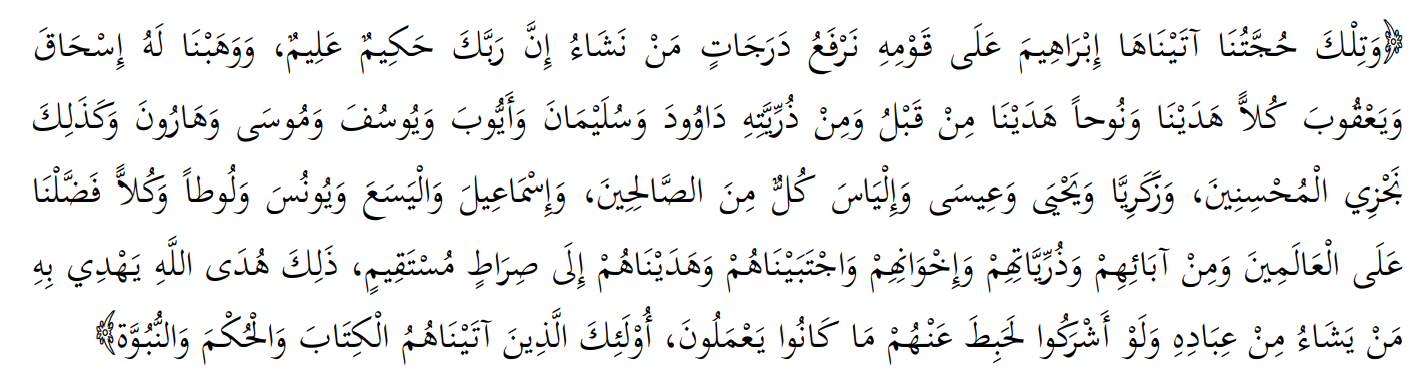
"Ve işte bu, İbrahim'e kavmine karşı verdiğimiz delilimizdir. Dilediğimizi derecelerle yükseltiriz. Şüphesiz Rabbin hikmet sahibidir, bilendir. Ona İshak'ı ve Yakub'u bağışladık; hepsini doğru yola ilettik. Ondan önce Nuh'u da doğru yola iletmiştik; onun soyundan Davud, Süleyman, Eyüp, Yusuf, Musa ve Harun'u da. İşte biz iyilik yapanları böyle ödüllendiririz. Zekeriya, Yahya, İsa ve İlyas'ı da (bağışladık). Bunların hepsi salihlerdendir. İsmail, Elyesa, Yunus ve Lut'u da (doğru yola ilettik). Her birini, kendi çağındaki insanlardan üstün kıldık. Atalarından, soylarından ve kardeşlerinden bazılarını da (doğru yola ilettik). Onları seçtik ve dosdoğru yola ilettik. Bu, Allah'ın hidayetidir; kullarından dilediğini onunla doğru yola iletir. Eğer onlar şirk koşmuş olsalardı, yapmakta oldukları her şey elbette boşa giderdi. İşte onlara kitabı, hükmü ve peygamberliği verdik." [TMQ An’ām: 83-89]
"And this is our argument that we gave to Abraham against his people, we raise in degrees whom we please, undoubtedly, your lord is wise, knowing. And we gave him Ishaq and Yaqub, we showed the path to all of them and showed the path to Nuh before them, and of his progeny, to Daud and Sulaiman and Ayub and Yusuf and musa and Haroon, and thus we recompense the righteous. And to Zakaria, Yahya, Isa and Ilyas. These are all entitled to be our near ones. And to Ismail and Yasa and Yunus and lot, and to each one we preferred above all in his time. And also to some of their fathers and their progeny and some of their brothers, and we chose them and showed them the straight path. This is the guidance of Allah. He gives whom he will of his bondmen, and if they would have committed polytheism, then surely all that they had already done would have been destroyed. These are they to whom we gave the book and order and prophet hood" [TMQ An’ām: 83-89]
"Ve İsmail, İdris ve Zülkifl; hepsi sabredenlerdendi. Onları rahmetimize kattık. Şüphesiz onlar da salihlerdendir." [TMQ Anbiya: 85-86]
"And Ismail and Idrees and Dhul-Kifl all were from the patient ones who we took into our mercy. Indeed they are from the righteous." [TMQ Anbiya: 85-86]
"Ve Med yen'e de kardeşleri Şuayb'ı gönderdik." [TMQ Araf: 85]
"And to Madyan, we sent their brother Shu'aib." [TMQ Araf: 85]
"Semud kavmine de kardeşleri Salih'i gönderdik." [TMQ Araf: 73]
"And to Thamud, we sent their brother Salih." [TMQ Araf: 73]
Ve Âd kavmine, kardeşleri Hud'u gönderdik. [TMQ Araf:65]
"And to A'ad, we sent their brother Hud." [TMQ Araf:65]
"Ve dedik ki: Ey Âdem, sen ve eşin cennette kalın." [TMQ Baqarah: 35]
"And we said, o Adam dwell you and your wife in paradise." [TMQ Baqarah: 35]
Muhammed, Allah'ın elçisidir. Onunla birlikte olanlar kâfirlere karşı serttir, kendi aralarında ise merhametlidir. [TMQ Fath: 29]
"Muhammad is the messenger of Allah. Those with him are severe on the Kuffar and merciful between themselves." [TMQ Fath: 29]
Tüm peygamberler ve elçiler Allah'tan haber getirenlerdir; çünkü peygamberlik ve elçilik bunun anlamıdır. Onlar doğru sözlüdürler, yaratılmışlara uyarıcıdırlar, yoksa görev ve mesaj boşa çıkar. Tıpkı her türlü günahtan masum oldukları gibi, tebliğlerinde yalan söylemekten ve hata etmekten de masumdurlar. Ayrıca Kur'an'da ya da Peygamber'in ﷺ sünnetinde, peygamberlerin peygamberlik ve elçilik görevlerinden sonra sapmalarına dair kesin (qati) bir metinsel delil yoktur. Bu konuda rivayet edilen her şey ya nakil bakımından zanni olan hadislerdedir ya da delalet bakımından zanni olan ayetlerdedir. Zanni olan, masumiyet konusundaki kesin akli delili geçersiz kılamaz. Adem'in (a.s.) Kur'an'da, Allah'ın yemesini yasakladığı ağaçtan yediğine dair anlatılanlar ise, yeryüzündeki insanlara tebliğ konusunda masumiyet gerekliliğiyle çelişmez. Çünkü Adem'den (a.s.) sadır olan şey Cennet'te gerçekleşmiştir ve bunun hikmeti yalnızca Allah'ın bilmesindedir. Dolayısıyla bu ayrı bir meseledir, zira masumiyet yeryüzündeki insanlara mesajın tebliğiyle ilgilidir.
All the prophets and messengers were informers from Allah because this is the meaning of prophethood and messengerhood. They are truthful, admonishers to creation lest the mission and message become futile and they are infallible from lying and error in their propagation, just as they are infallible from committing any sin. Further there is no definite [Qati] textual evidence in the Qur’ān or the Sunnah of the prophet informing about the erring of the prophets after their Prophethood of Messengership. Whatever has been reported is either in the ahadith that are indefinite in their transmission [dhanni athuboot] or in the ayat that are indefinite in their evidence [dhanni ad-dalala] and the Indefinite [dhanni] cannot over ride the definite rational evidence on infallibility. As for what was revealed regarding Adam in the Qur’ān about him eating from the tree which Allah had prohibited him to eat from, this does not contradict the requirement of infallibility in the propogation of the message to the people on the earth because what happened from Adam was in the Paradise, the wisdom of which is only known to Allah . Therefore this is separate matter (i.e Adam’s eating of the fruit of the tree) because infallibility is related to the propogation of the message to the people on the earth.