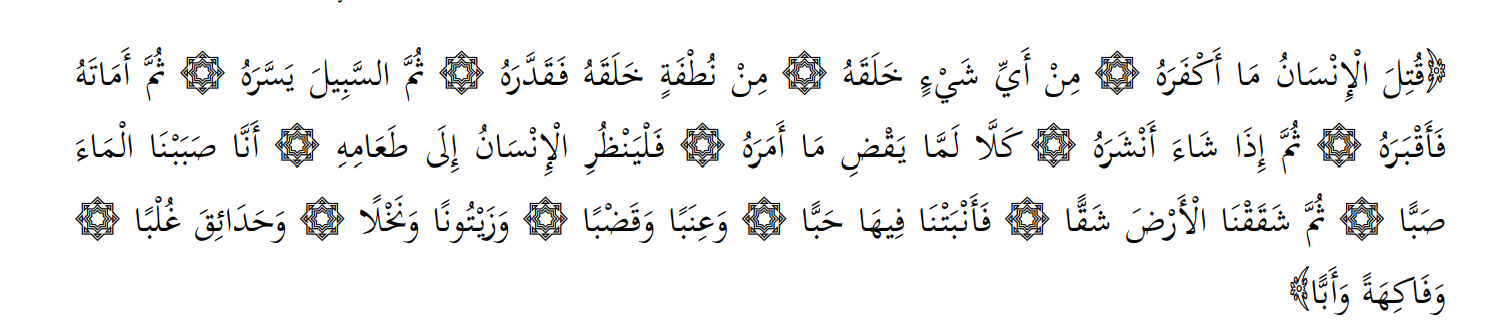
Anlamların aktarımına, anlamları betimleyen bu ifade biçimi eşlik etmekteydi; anlamları kavrarken ve idrak ederken ruhu harekete geçiren bir ahenge sahip kelimelere önem verilmekteydi. Bu yüzden, anlamlarının derinliği ve ifadesinin belagatı sebebiyle, onu kavrayan dinleyicide derin bir hayranlık ve tevazu duygusu uyandırır; öyle ki, Arap'ın belagat sahibi bazı düşünürleri, inkârları ve inatlarına rağmen neredeyse onun önünde secdeye kapanacaklardı.
The rendering of meaning had been accompanied with this manner of expression which depicts the meanings, giving attention to words which have the rhyme that moves the soul when conceiving the meanings and comprehending them. That is why it evokes in the listener who comprehends, due to the depth of its meanings and the eloquence of its expression a deep sense of awe humility until some of the eloquent Arab thinkers almost prostrated before it despite their disbelief and obstinacy.
Öyleyse Kur'an'ın kelimelerini ve cümlelerini inceleyen kimse, Kur'an'ın harfleri birleştirirken, çıkış yerlerinden çıkan seslere dikkat ettiğini görecektir. Bu nedenle çıkış yerleri birbirine yakın olan harfler bir kelime veya cümle içinde birbirine yakın yerleştirilir. Çıkış yerleri arasında bir boşluk olduğunda ise, geçişin garipliğini ortadan kaldıran bir harfle ayrılırlar. Aynı zamanda, müzikteki nakarat gibi tekrarlanan bir harf, telaffuzu hoş ve kulağa hafif gelir hale getirilir. Kur'an "kal ba'iq a-mudfiq" demez, "kasayyib" der. "Al-hu'khu'" da demez, "sundusu khudrin" der. Ayrıca, birbirinden uzak yerlerde yerleşmiş harfler kullanılması gerektiğinde ve o anlamı tam karşılayan başka hiçbir kelime bulunmadığında, örneğin "deeza" kelimesinde olduğu gibi, anlamı bir olsa bile onun yerine "zalima" veya "ja'ira" kelimesini kullanmanın bir anlamı yoktur. Bu kullanımdaki kesinliğe ek olarak, nakarat niteliğindeki harf ayetlerde belirgin bir sıklıkla görülür. Örneğin Ayetü'l-Kürsî'de lam harfi, işitme üzerinde etkisi olan, insanın kulağını dikip daha fazlasını dinlemek isteyeceği hoş bir biçimde 23 kez tekrarlanır.
Then, indeed the one who scrutinises the words of the Qur’ān and its sentences will find that the Qur’ān gives attention to, when placing letters together, the sounds that come out from their places of articulation. So the letters close to each other in articulation are placed close to each other in a word or sentence. And when there is a gap betwen the points of articulation, they are separated with a letter which eliminates the strangeness of the transition. And at the same time it makes a letter pleasant in articulation and light on the ears to be repeated like the chorus in music. It does not say 'kal ba'iq a-mudfiq' but 'kasayyib'. Nor does it say 'al-hu'khu'' but 'sundusu khudrin'. And when it is necessary to use letters which are placed distanced from each other in a meaning which befits it and nothing else gives that meaning like the word 'deeza', there is no point in using the word 'zalima' or 'ja'ira' in its place even though the meaning is one. In additon to this precision in usage, the letter which is in chorus is clearly found in verses with some frequency. The Verse of the Throne (ayatul kursiyy) for example has the letter lam repeated in it 23 times in a pleasant manner which has an impact on the hearing such that it makes people prick up their ears and want to hear more.
Bu şekilde, Kur'ân'ın özel bir tür olduğunu göreceksiniz. Ve onun, kendisine yakışan ifadede, çevresindeki kelimelerde ve yanındaki anlamlarda bütün manalarını ortaya koyduğunu göreceksiniz. Âyetlerinin hiçbirinde bunun eksik olduğunu bulmayacaksınız. Onun i'câzı (mucizeliği), insan sözlerinin hiçbirine benzemeyen ya da insan sözlerinin onun benzerini oluşturamadığı özel bir konuşma türü olması bakımından üslubunda açıktır; kelimelerin ve cümlelerin kendilerine uygun düşen anlamları karşılama biçimi bakımından; belagatini kavrayan ve anlamlarının derinliklerine inen kişinin kulağında kelimelerin bıraktığı etki bakımından da açıktır; öyle ki o kişi neredeyse secde edecek kadar tevazu gösterir. Belagatini kavramayan kimsenin kulağında da bu sözlerin etkisi vardır: Bu kelimelerin ahengi ve sesi onu büyüler ve öyle bir şekilde kendine bağlar ki, anlamlarını anlamasa bile dinleyici kendini zorla ona teslim eder. Bu nedenle o, Kıyamet gününe kadar mucize olarak kalacak bir mucizedir.
In this manner, you will find that the Qur’ān is a special genre. And you will find it reveals all of its meanings in the expression that befits it, in the words around it and the meanings with it. You will not find that missing in any of its ayat. Its miraculousness (i'jaz) is clear in its style in terms of being a special genre of speech which does not resemble any speech of human beings or vice versa, and in terms of the application of meanings in words and sentences which befit them and in terms of the effect/impression of the words on the hearing of the one who comprehends its eloquence and looks deeply into its meanings, so he becomes humble to the point of almost prostating to it. And the effect it has on the hearing of the one who does not comprehend its eloquence, the ring and sound of these words captivate him and hold him spellbound in an incapacitating manner to which the listener humbles himself by force even though he may not understand its meanings. Therefore, it is a miracle which will remain a miracle until the Final Hour.