21.6 Acil Durum Antlaşmaları
21.6 Emergency Treaties
Müslümanlar, zaruret gereği yapılması caiz olmayan şeyleri yapmaya zorlanabilecekleri ağır durumlara düşebilirler. İslam Devleti de, doğrudan davetin tebliğine veya Allah yolunda cihada yol açmayan, ancak gelecekte davetin tebliğini mümkün kılacak şartları oluşturan, davetin durdurulmasının zararını önleyen ya da Müslümanların varlığını koruyan antlaşmalar yapmaya zorlayan iç veya dış krizlere maruz kalabilir. Zaruret bu tür antlaşmaların yapılmasını gerektirir; bu nedenle halifenin bunları akdetmesi caizdir ve Müslümanlar açısından uygulanırlar. Bu tür antlaşmalar, fakihlerin açıkça belirttikleri iki durumda ortaya çıkar; bunlar şunlardır:
Muslims can fall into severe situations which compel them to matters which are not allowed but the necessity obliges it. The Islamic State can fall into internal or external crises which compel it to contract treaties which do not lead directly to conveying the da’wah or fighting in the way of Allah (swt) but they facilitate creating conditions which will enable conveying it in the future or prevent the evil of stopping the da’wah or preserve the entity of the Muslims. Necessity compels these types of treaties to be contracted therefore it is allowed for the Khalifah to contract them and they are executed upon Muslims. These treaties occur in two situations which the jurisprudents (fuqaha) stated clearly, and they are:
Birinci durum: Harp ehlinden bazı kimseler, belirli yıllar için Müslümanlardan bir antlaşma talep ederlerse; bu antlaşmanın şartı, harp ehlinin her yıl belirli bir miktar harac vermesi ve İslam hükümlerinin kendi topraklarında uygulanmamasıdır. Bu, küfrün onaylanması anlamına geldiğinden yapılmaz; ancak Devlet zulmü önleyemiyorsa ve bu antlaşmada Müslümanlar için hayır görüyorsa, o zaman zorunluluk gereği antlaşma yapılabilir. Bu durumda İslam Devleti tarafından onlara herhangi bir yardım veya destek sağlanmaz, çünkü bu antlaşma onları İslam hükümlerine bağlamaz ve İslam'ın kurallarına uymadıkları sürece harp ehli olma niteliklerinden çıkmazlar. Dolayısıyla onlara destek vermek Müslümanlara farz değildir. Allah'ın Resulü ﷺ, Şam sınırlarında Tebük'te iken Yuhanna bin Rube ile bir antlaşma yaptı. Onu kendi bölgesinde, dini üzere bıraktı ve onu Müslümanların sancağı ve yönetimi altına sokmadı. Bu süreli antlaşma, bu Devletin güvenliğini İslam Devleti tarafından garanti altına alır. Müslümanlardan kim bu bölgeye girerse, bireysel bir güvenceyle değil, antlaşmanın güvencesiyle girer ve onun halkına karşı çıkması caiz değildir. Bu topraklardan kim Müslüman topraklarına girerse, antlaşmanın güvencesiyle girer; antlaşmadan başka yeni bir güvenceye ihtiyaç duymaz ve Müslümanlardan hiç kimsenin ona karşı çıkması caiz değildir. Tüccarların bu Devlete mal taşımaları, silah ve savaş malzemeleri ile benzeri savaşta kullanılan araçlar dışında engellenmez; çünkü Müslümanlarla antlaşma olsa bile onlar yine harp ehlidirler.
The first situation: If some people of the people of war seek a treaty from the Muslims for specific years on condition that the people of war give kharaj every year for a specified amount and that the Islamic rules are not executed upon them in their lands; this is not done as it is consenting upon disbelief unless the State is not able to prevent oppression and sees in this treaty good for Muslims, then at this point it is allowed to contract it out of necessity. In this situation there is no assistance or support for them from the Islamic State because they are not compelled by this treaty with the Islamic rules and do not depart from being people of war when they do not obey the rules of Islam. So undertaking support for them is not obliged upon the Muslims. The Messenger of Allah (saw) made a treaty with Yuhanna bin Rub’ah while he was at Tabuk in the boundaries of Bilad AsSham. He left him in his zone upon his religion, and he did not enter under the banner of Muslims and their rule. This treaty of limited period makes the security of this State guaranteed by the Islamic State. Whoever enters it from the Muslims enters it with the security of the treaty and not an individual security, and it is not allowed for him to oppose its people. Whoever enters the Muslim lands from the citizens of this land enters with the security of the treaty and does not require a new security other than the treaty, nor is anyone from the Muslims allowed to oppose him. Traders are not prevented from carrying merchandise to this State except tools used in war like weapons and war materials and what is similar to this because they are people of war even if the Muslims have a treaty with them.
İkinci durum: Bu, Müslümanların düşmanlarına, onların kendileri hakkında sessiz kalması karşılığında para ödediği birinci durumun tersidir. Fakihler, düşmanın Müslümanları kuşatması ve belirli yıllar için, Müslümanların her yıl kâfirlere belirli bir miktar ödemesi koşuluyla bir antlaşma talep etmesi durumunda, bunun Müslümanlar için aşağılayıcı ve küçük düşürücü olması nedeniyle, zorunluluk olmadıkça Halifenin buna uymasının doğru olmadığını belirtmişlerdir. Bu, Müslümanların kendileri için yok olmadan korktukları ve Halifenin bu ateşkeste hayır gördüğü durumdur. Bu noktada, rivayet edildiği üzere, bunda bir sakınca yoktur.
The second situation: This is opposite to the first situation wherein the Muslims pay money to their enemy in return for their silence regarding them. The fuqaha mentioned that if the enemy sieges the Muslims and require a treaty for specified years on condition that the Muslims pay the disbelievers a specific amount every year, it is not correct for the Khalifah to comply to them upon that due to the contemptibility and humiliation therein for Muslims except under necessity. This is (when) the Muslims fear extermination for themselves, and the Khalifah views there is good in this truce. At this point, there is no harm in that due to what was narrated
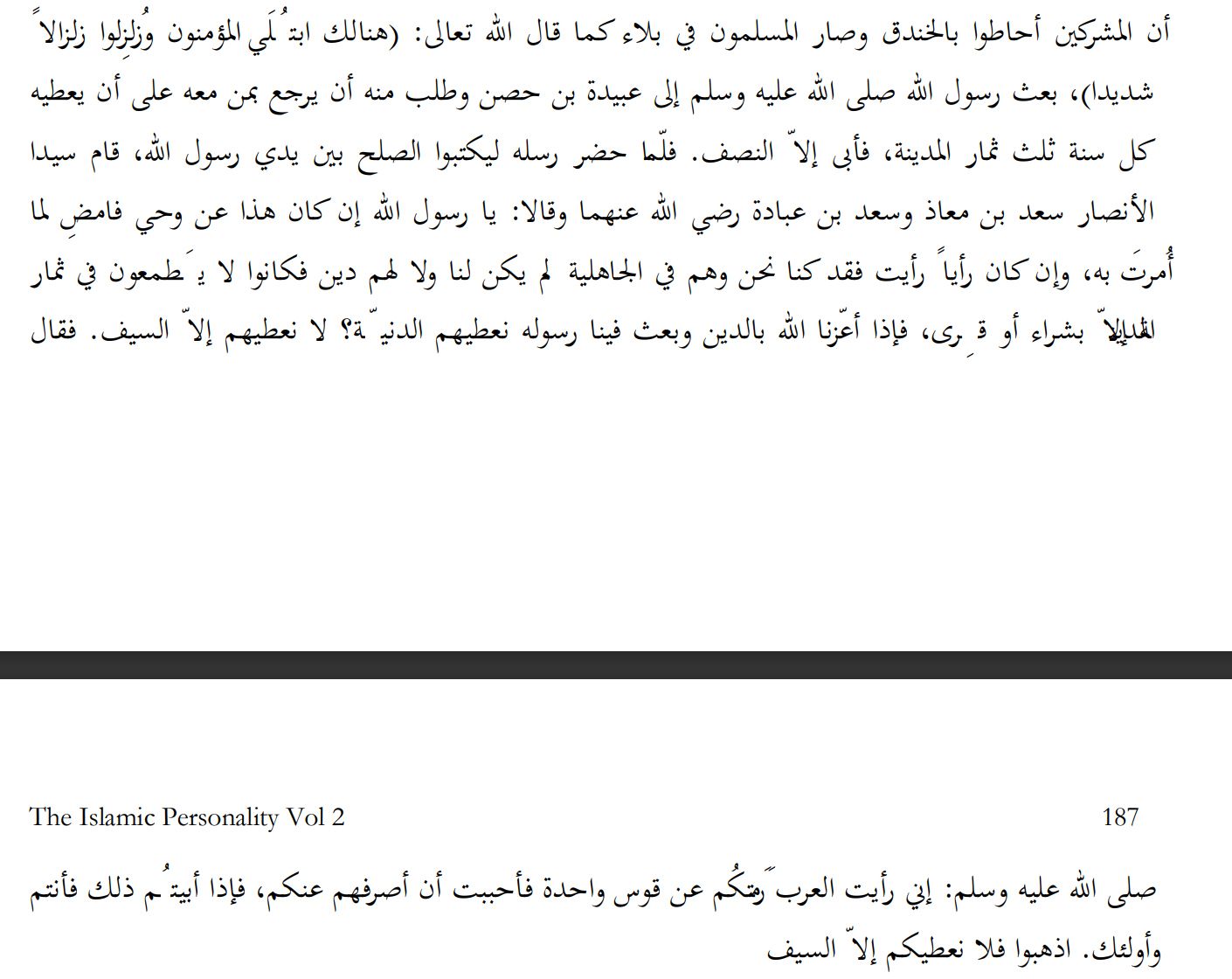
Müşriklerin hendeği kuşattığı ve Müslümanların, Allah'ın (swt) buyurduğu gibi bir imtihanda olduğu anlatılır: "Orada mü'minler sınandılar ve şiddetli bir sarsıntıyla sarsıldılar" [TMQ 33:11]. Allah'ın Resulü ﷺ, Uyeyne bin Hısn'a haber gönderip, beraberindekilerle birlikte geri çekilmesini istedi; ona Medine'nin meyvelerinin üçte birini vermeyi teklif etti. Ancak o, yarısından aşağısını kabul etmedi. Elçileri, Allah'ın Resulü ﷺ'in huzurunda antlaşmayı yazmak için geldiğinde, Ensar'ın iki önderi, Sa'd bin Ubade ve Sa'd bin Muaz (ra) ayağa kalktılar ve dediler ki: "Ey Allah'ın Resulü! Eğer bu vahiyden ise, emrolunduğun şeyi yerine getir. Ama eğer bu, görüşünden kaynaklanan bir karar ise, (bilmelisin ki) biz ve onlar cahiliyye içindeydik; ne onların ne de bizim bir dinimiz vardı. Onlar, Medine'nin meyvelerini ancak satın alarak ya da ikram yoluyla yerlerdi. Şimdi Allah bizi dinle şereflendirdi ve Resulünü aramıza gönderdi; biz bu dünyalığı onlara verip zelil mi olacağız? Hayır, onlara kılıçtan başka bir şey vermeyeceğiz." Bunun üzerine Peygamber ﷺ buyurdu: "Ben Arapların tek bir yaydan ok attığını gördüm; bu yüzden onları sizden uzaklaştırmak istedim. Eğer bunu reddediyorsanız, o zaman siz ve onlar. Gidin, çünkü size kılıçtan başka bir şey vermeyeceğiz!"
“That the polytheists surrounded the trench and Muslims were in trial like Allah (swt) said: ‘Therein the believers were tested and shaken with a severe shaking’ [TMQ 33:11].The Messenger of Allah (saw) sent to ‘Uyaynah bin Hasan and requested that he return with those together with him upon giving him a third of the fruits of Madinah but he refused except a half. When his messengers appeared to write the truce in front of the Messenger of Allah, the two chiefs of the Ansar, S'aad bin ‘Ubadah and S'aad bin Mu’adh (ra) stood and they said: ‘O Messenger of Allah, if this is from revelation then execute what you are commanded with but if it is an opinion which you considered, then they and we were in jahiliyyah when neither they nor we had a religion yet they did not eat of the fruits of Madinah except through purchase or hospitality. So when Allah honoured us with the deen and sent His Messenger among us, should we give them this dunya while being contemptible? No, we will not give them except the sword. So he (saw) said: ‘I saw the Arabs shooting from one bow so I liked to divert them from you. If you reject that, then it is you and those. Go away for we will not give you except the sword!’”
Bu, Allah'ın Elçisi'nin (ﷺ) Müslümanların zayıflığını sezdiği için ilk başta ateşkese yöneldiğini göstermektedir. S'aad bin Ubade ve S'aad bin Muaz (ra)'ın söyledikleri sayesinde Müslümanlarda güç gördüğünde, bundan vazgeçmiştir. Bu da zarar tehlikesi olduğunda, kâfirlere mal ödeyerek bir antlaşma yapmanın bir sakınca doğurmadığını göstermektedir. Çünkü onlar Müslümanlara galip gelirlerse, tüm malları alırlar ve aileleri esir (sebaya) olarak götürürlerdi. Dolayısıyla Müslümanları ve ailelerini ve mallarını korumak için bir miktar mal ödemek, daha az onur kırıcı ve daha faydalıdır.
This indicates that the Messenger of Allah (saw) initially inclined to the truce due to what he sensed of the Muslims’ weakness. When he saw the strength in them due to what S'aad bin ‘Ubadah and S'aad bin Mu’adh (ra) said, he refrained from that which indicates that there is no harm from contracting a treaty with disbelievers paying them money when there is danger of harm. This is because if they conquered Muslims they would take all the wealth and the families as captives (sabaya), so paying some wealth to safeguard Muslims and their families and wealth is less contemptible and more beneficial.