یہ حدیث اچھے اور برے حکمرانوں کے بارے میں خبر دینے میں واضح ہے، اور جب تک وہ دین قائم رکھیں، ان کے خلاف تلوار اٹھانے سے منع کرنے میں بھی واضح ہے، کیونکہ نماز کا قیام دین کی پاسداری اور اس کے مطابق حکم چلانے کی علامت ہے۔
This hadith is clear in informing about the good and bad leaders, and clear in prohibiting confronting them with the sword as long as they establish the deen, since establishing the salat (prayer) indicates upholding of the deen and ruling by it.
چنانچہ مسلمانوں پر ایک ایسے خلیفہ کا تقرر کرنا جو اسلام کے قوانین نافذ کرے اور اس کی دعوت پہنچائے، ایک ایسا معاملہ ہے جس کے بارے میں شریعت کے صحیح نصوص میں اس کے یقینی ہونے کے حوالے سے کوئی شک نہیں ہے۔ مزید برآں، یہ ایک واجب فریضہ ہے کیونکہ اللہ (سبحانہ و تعالیٰ) نے مسلمانوں پر اسلام کا نظام قائم کرنا اور مسلمانوں کی عزت و حرمت کی حفاظت کرنا فرض کر دیا ہے۔ تاہم، یہ فرضِ کفایہ ہے، لہذا اگر امت کے کچھ لوگوں نے اسے انجام دے دیا تو فرض پورا ہو گیا اور اس طرح باقی امت سے ذمہ داری ساقط ہو گئی۔ اور اگر امت کا کچھ حصہ اس فرض کو حاصل کرنے میں ناکام رہا، اگرچہ انہوں نے وہ اقدامات کیے جو اسے قائم کرتے ہیں، تو ذمہ داری تمام مسلمانوں پر باقی رہے گی، اور جب تک مسلمان ایک خلیفہ کے بغیر ہیں، ہر مسلمان پر فرض باقی رہے گا۔
So the obligation upon Muslims to appoint the Khalifah who establishes the laws of Islam and conveys its call is a matter which has no doubt with regard to its certainty in the sound texts of Shari’ah. Moreover, it is an obligatory duty due to the fact that Allah (swt) made it fard upon Muslims to establish the rule of Islam and to protect the honour of Muslims. However, this duty is a collective one, so if some people of the Ummah accomplished it, the fard is fulfilled and thus responsibility drops from the rest of the Ummah. And if part of the Ummah was unable to achieve the fard, though they carried out the actions which establish it, then the responsibility remains upon all the Muslims, and the fard remains upon every Muslim as long as Muslims are without a Khalifah.
مسلمانوں کے لیے خلیفہ کا قیام نہ کرنا بڑے گناہوں میں سے ہے کیونکہ یہ اسلام کے اہم ترین فرائض میں سے ایک کی ادائیگی سے باز رہنا ہے جس پر دین کا نفاذ منحصر ہے؛ بلکہ زندگی کے میدان میں اسلام کا وجود بھی اسی پر منحصر ہے۔ چنانچہ تمام مسلمانوں کے لیے مجموعی طور پر تمام مسلمانوں کے لیے خلیفہ کا قیام نہ کرنا ایک بڑا گناہ ہے۔ اور اگر وہ سب اس بات پر متفق ہو جائیں کہ وہ بغیر خلیفہ کے رہیں گے تو تمام آباد شدہ علاقوں (پوری دنیا) کے تمام مسلمانوں پر گناہ ہوگا۔ تاہم، اگر بعض مسلمان خلیفہ کے قیام کے لیے کام کرنے کی کوشش کریں اور دوسرے نہ کریں، تو خلیفہ کے قیام کے لیے کام شروع کرنے والوں کے کندھوں سے گناہ ختم ہو جائے گا اگرچہ خلیفہ کے مقرر ہونے تک ان پر فرض باقی رہے گا۔ (یہ اس لیے ہے) کیونکہ فرض کے قیام میں مشغولیت اسے اس کے صحیح وقت پر قائم نہ کرنے اور اس کے عدم قیام کے گناہ کو ختم کر دیتی ہے، کیونکہ انسان اس کے قیام کے لیے کوشش کر رہا ہے اور اس چیز سے نفرت کرتا ہے جو اسے اس کے قیام سے روکتی ہے۔
To refrain from establishing a Khalifah for the Muslims is among the greatest sins because it is abstaining from carrying out among the most important obligations of Islam upon which the implementation of the deen depends; nay even the very existence of Islam in the battlefield of life depends upon it as well. So Muslims as a whole commit a great sin by refraining from establishing a Khalifah for all Muslims. And if they all agreed to remain without a Khalifah the sin would befall all Muslims in all inhabited regions (entire world). However, if some of the Muslims embarked on working to establish a Khalifah and the others did not, the sin will drop from the shoulders of those who started to work to establish the Khalifah though the fard remains upon them until the Khalifah is appointed. (This is so) because the involvement in establishing the fard removes the sin for the delay in establishing it in its proper time, and for its non-establishment, due to one’s work to establish it and his hatred of that which prevents him from establishing it.
جہاں تک ان لوگوں کا تعلق ہے جو فرض قائم کرنے کے کام میں مصروف نہ ہوئے، تو خلیفہ کے رخصت ہونے کے تین دن گزر جانے کے بعد سے لے کر نئے خلیفہ کے تقرر تک ان پر گناہ باقی رہے گا، کیونکہ اللہ (سبحانہ و تعالیٰ) نے ان کے ذمہ ایک فرض امانت رکھا تھا جسے انہوں نے نہ تو پورا کیا اور نہ ہی اس کی تکمیل کے لیے ضروری کام میں خود کو مصروف رکھا۔ لہٰذا، وہ گناہ کے مستحق ہیں اور اس دنیا اور آخرت میں اللہ (سبحانہ و تعالیٰ) کے عذاب کے مستحق ہیں۔ خلیفہ کو قائم کرنے سے، یا ان اعمال کو انجام دینے سے جو (شریعت کے مطابق) خلیفہ کو قائم کرتے ہیں، باز رہنے کی وجہ سے ان کا گناہ کا مستحق ہونا اس بات سے بالکل واضح ہے کہ ایک مسلمان اللہ (سبحانہ و تعالیٰ) کے عذاب کا مستحق ہو جاتا ہے جب وہ اپنے اوپر واجب کردہ فرائض میں سے کسی کو بھی نظر انداز کر دیتا ہے، بالخصوص اس فرض کو جس کے ذریعے دیگر فرائض نافذ کیے جاتے ہیں، دین کے احکام قائم کیے جاتے ہیں، اسلام کا پرچم بلند ہوتا ہے اور اسلامی ممالک اور دنیا کے باقی حصوں میں اللہ (سبحانہ و تعالیٰ) کا کلمہ بلند ہوتا ہے۔
As for those who were not engaged in the work to establish the fard, the sin will remain on them after three days have passed from the departure of the Khalifah until the appointment of a new Khalifah, because Allah (swt) has entrusted them with a fard which they did not carry out nor engage themselves in the work which is required for its completion. Therefore, they are deserving of sin and deserve the punishment of Allah (swt) in this life and the hereafter. Their deserving of sin due to their refraining from establishing the Khalifah, or performing the actions which (according to Shari’ah) establish the Khalifah, is explicitly clear in that a Muslim deserves the punishment of Allah (swt) when he ignores any of the duties enjoined upon him, particularly the obligation by which the other obligations are implemented, the rules of the deen are established, the cause of Islam is raised high and the word of Allah (swt) becomes exalted in the Islamic lands and the rest of the world.
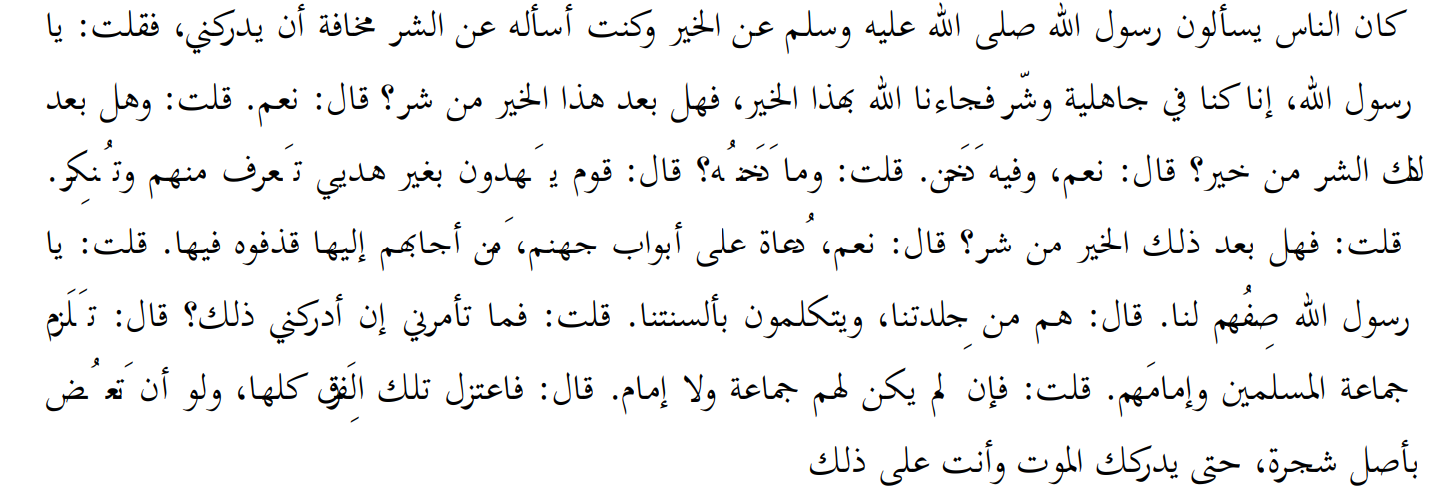
جہاں تک لوگوں سے علیحدگی اختیار کرنے اور دین کے معاملات میں صرف اپنی ذاتی عبادت تک خود کو محدود رکھنے کے بارے میں بعض احادیث میں آیا ہے، تو یہ احادیث خلیفہ کے قیام سے باز رہنے یا اس ترک کی وجہ سے گناہ سے بچنے کے لیے بطورِ دلیل مناسب نہیں ہیں۔ جو شخص ان احادیث کا غور سے مطالعہ کرے گا وہ پائے گا کہ ان کا تعلق دین پر عمل کرنے کے معاملے سے ہے نہ کہ مسلمانوں کے لیے خلیفہ کے قیام سے باز رہنے کی اجازت سے۔ مثال کے طور پر، البخاری نے بسر بن عبید اللہ الحضرمی سے روایت کی ہے کہ انہوں نے ابو ادریس الخولانی کو کہتے ہوئے سنا کہ انہوں نے حذیفہ بن الیمان رضی اللہ عنہ کو فرماتے ہوئے سنا:
As for what came in some of the ahadith regarding isolation from the people, and restricting oneself to adhering only to matters of personal worship of the matters of the deen, these ahadith are not suitable as evidence to refrain from establishing a Khalifah nor removing the sin due to this abstention. Whoever studies these ahadith carefully will find them related to the matter of adhering to the deen rather than permission to refrain from establishing a Khalifah for Muslims. For example, Al-Bukhari narrated about Bisr bin Ubaydullah al-Hadhrami that he heard Abu Idrees al-Khoolani say that he heard Hudhayfah bin al-Yaman saying: