۲۰۔ جہاد
20. Jihad
جہاد سے مراد اللہ (سبحانہ و تعالیٰ) کی راہ میں لڑائی میں اپنی کوشش صرف کرنا ہے، خواہ وہ براہِ راست ہو یا مال، رائے، تعداد میں اضافے یا اس کے علاوہ کسی اور ذریعے سے مدد فراہم کرنا ہو۔ اللہ کا کلمہ بلند کرنے کے لیے لڑنا جہاد ہے۔ جہاں تک اللہ (سبحانہ و تعالیٰ) کی راہ میں کلام کے ذریعے جہاد کا تعلق ہے، تو یہ جہاد تب ہے اگر وہ کلام براہِ راست اللہ کی راہ میں لڑائی سے متعلق ہو۔ اگر وہ براہِ راست اس سے متعلق نہ ہو، تو یہ شرعی جہاد نہیں ہے، خواہ اس میں مشقت شامل ہو اور خواہ اس کے نتائج اللہ (سبحانہ و تعالیٰ) کا کلمہ بلند کرنے میں معاون ثابت ہوں۔ اس کی وجہ یہ ہے کہ شریعت میں جہاد صرف لڑائی کے لیے مخصوص ہے، لہٰذا اس میں وہ تمام چیزیں داخل ہوں گی جن کا براہِ راست لڑائی سے تعلق ہو۔ رائے کی طرح لکھنا اور بولنا بھی ہے؛ یہ جہاد ہیں اگر وہ براہِ راست اللہ (سبحانہ و تعالیٰ) کی راہ میں لڑائی سے متعلق ہوں، جیسے لشکر کو لڑائی کے لیے براہِ راست حوصلہ دینے والا کلام یا دشمنوں سے لڑنے پر اکسانے والے الفاظ۔ اگر ایسا نہ ہو، تو یہ (جہاد) نہیں ہے۔ نہ تو سیاسی جدوجہد اور نہ ہی حکمرانوں کی سرزنش کو جہاد کہا جائے گا، اگرچہ ان کا اجر بہت بلند ہے اور مسلمانوں کے لیے ان کا فائدہ بہت زیادہ ہے۔ معاملہ نہ تو مشقت کا ہے اور نہ ہی فائدے کا، بلکہ اصل بات وہ شرعی مفہوم ہے جس کے ساتھ یہ لفظ آیا ہے۔ شریعت کے مطابق اس کا مفہوم لڑائی ہے اور وہ تمام چیزیں جن کا اس سے تعلق ہے، جیسے رائے، کلام، تحریر، حکمتِ عملی اور دیگر چیزیں۔
Jihad is expending (one’s) effort in fighting in the way of Allah (swt) directly or assisting by wealth or opinion or increasing numbers or other than that. The fighting to raise the word of Allah is jihad. As for jihad by speaking in the path of Allah (swt), this is jihad if the speech relates directly to fighting in the way of Allah. If it does not relate directly to it, it is not Shar’i jihad even if it involves difficulty and even if the results benefit in raising the word of Allah (swt). This is because jihad in Shar’a is specific to fighting, so there enters within it everything related directly to fighting. Similar to the opinion is writing and speaking; they are jihad if they are related directly to fighting in the way of Allah (swt) like the speech to the army to encourage it to fight directly or words inciting fighting the enemies. If not, this is not (jihad). Neither political struggle nor rebuking the rulers is termed jihad though their reward is high and their benefit to the Muslims great. The issue is neither difficulty nor the benefit, but rather it is the Shar’i meaning with which it came for this word. The Shari’ah meaning is fighting and all that it relates to from opinion, speech, writing, strategy and other things.
جہاد کی وجہ جزیہ نہیں ہے، اگرچہ جب وہ جزیہ قبول کر لیں تو ہم (لڑائی) روک دیتے ہیں۔ بلکہ جہاد کی وجہ یہ ہے کہ جن سے ہم لڑ رہے ہیں وہ کافر ہیں جنہوں نے دعوت کو مسترد کر دیا ہے۔ اللہ (سبحانہ و تعالیٰ) نے فرمایا:
The cause of jihad is not jizyah even though we stop (fighting) them when they accept the jizyah. Rather, the cause of jihad is that those whom we fight are disbelievers (kuffar) who rejected the da’wah. Allah (swt) said:
"ان لوگوں سے لڑو جو اللہ اور قیامت کے دن پر ایمان نہیں رکھتے اور نہ ہی اس چیز کو حرام سمجھتے ہیں جسے اللہ اور اس کے رسول ﷺ نے حرام قرار دیا ہے، اور نہ ہی وہ حق کے دین کی پیروی کرتے ہیں، یہاں تک کہ وہ اپنے ہاتھوں سے جزیہ ادا کریں جبکہ وہ ذلیل و خوار ہوں" [TMQ 9:29]۔
Fight those who do not believe in Allah nor the Last Day, nor forbid what Allah and His Messenger have forbidden, nor follow the deen of truth among the People of the Book until they pay the jizyah from their hands while they are humiliated” [TMQ 9:29].
ان سے لڑنے کا حکم ان کی کفر کی صفت کی وجہ سے ہے، یعنی ان سے اس لیے لڑیں کیونکہ وہ اللہ اور یومِ آخرت وغیرہ پر ایمان نہیں رکھتے۔ چنانچہ یہ وصف ایک قید ہے اور اس مقام پر یہ ایک وجہ بن جاتا ہے۔ پس لڑائی کی وجہ کفر ہے۔ یہ ایک دوسری آیت میں آیا ہے:
The command to fight them is (due to) their attribute of disbelief i.e. fight them because they do not believe in Allah and the Last Day etc. So this description is a restriction and at this point it becomes a cause. So the cause of fighting is disbelief. It came in another ayah:
”اے ایمان والو! اپنے اردگرد موجود کافروں سے لڑو اور انہیں اپنے (لہجے اور عمل میں) سختی کا احساس دلاؤ۔“ [TMQ 9:123]
“O you who believe, fight those who encircle you (close to you geographically) of the disbelievers and let them find harshness in you” [TMQ 9:123]
چنانچہ ان سے لڑنے کا حکم کفر کی صفت کی وجہ سے ہے۔ اس جیسی بہت سی آیات موجود ہیں جیسے کہ:
So the command to fight them is due to the attribute of disbelief. There are many similar ayat such as:
"شیطان کے حامیوں سے لڑو" [TMQ 4:76]
“Fight the allies of Satan” [TMQ 4:76]
اور
And
"کفر کے سرداروں سے لڑو" [TMQ 9:12]
“Fight the leaders of disbelief” [TMQ 9:12]
اور
And
”مشرکین سے مکمل طور پر لڑو“ [TMQ 9:36]
“Fight the polytheists altogether” [TMQ 9:36]
یہ تمام آیات ایک مخصوص صفت کی وجہ سے لڑائی کا حکم دیتی ہیں جو کہ جنگ کا سبب ہے، یعنی کفر۔ جہاں تک جزیہ کی ادائیگی کا تعلق ہے، تو قرآن نے اسے ذلت کے ساتھ ملا کر جنگ روکنے کے سبب کے طور پر ذکر کیا ہے نہ کہ جنگ کے سبب کے طور پر۔ یہاں سے یہ سمجھا جاتا ہے کہ جہاد کا سبب کفر ہے۔ جن سے ہم لڑتے ہیں اگر وہ دعوت قبول کر لیں تو وہ مسلمان ہو جاتے ہیں؛ اور اگر وہ اسلام قبول کرنے سے انکار کر دیں (لیکن) جزیہ ادا کرنے اور اسلام کے احکامات کے تحت رہنے پر راضی ہو جائیں، تو یہ ان سے قبول کر لیا جائے گا اور ان سے جنگ نہیں کی جائے گی کیونکہ انہیں اسلام قبول کرنے پر مجبور کرنا جائز نہیں ہے۔ جب تک وہ اسلام کے تحت رہنے اور جزیہ ادا کرنے پر راضی ہیں، وہ دعوت کے تابع ہو گئے ہیں چاہے انہوں نے اسلام قبول نہ کیا ہو۔ چنانچہ، ان سے جنگ کرنا جائز نہیں ہے جب وہ اسلام کے تحت رہنے اور جزیہ ادا کرنے پر راضی ہو جائیں۔ تاہم، اگر وہ جزیہ ادا کرنے پر تو راضی ہوں لیکن اسلام کے تحت رہنے سے انکار کر دیں، تو یہ ان سے قبول کرنا جائز نہیں ہے کیونکہ جنگ کا سبب، یعنی ان کا وہ کافر ہونا جنہوں نے دعوت قبول کرنے سے انکار کیا ہے، برقرار رہتا ہے، لہذا ان سے جنگ کرنا واجب رہتا ہے، یہ وہ واجب ہے جو مسلمانوں کے ذموں سے ساقط نہیں ہوا۔ جہاں تک ہنگامی معاہدوں کا تعلق ہے جن میں خلیفہ ان سے جزیہ قبول کر لیتا ہے جبکہ انہیں کفر کے نظام کے تحت خود مختار چھوڑ دیتا ہے، وہ بھی ظاہری اور باطنی حالات کے مطابقت نہ رکھنے کی وجہ سے، تو شریعت نے ضرورت کی صورت میں اس ہنگامی صورتحال میں رعایت دی ہے، اس لیے اس پر کوئی قیاس نہیں کیا جائے گا۔ لہذا، جہاد کا سبب یہ ہے کہ جن سے ہم لڑتے ہیں وہ کافر ہیں جنہوں نے دعوت قبول کرنے سے انکار کیا ہے اور جہاد کا کوئی دوسرا سبب نہیں ہے۔ جہاں تک جزیہ اور ذلت کا جنگ روکنے کا سبب ہونا ہے، تو یہ صرف غیر مشرک عربوں کے بارے میں ہے۔ رہا مشرک عرب، تو ان سے اسلام کے علاوہ یا جنگ کے سوا کچھ قبول نہیں کیا جائے گا، اللہ کے اس فرمان کی وجہ سے:
All these ayat command the fighting due to a specific attribute which is the cause of fighting i.e. disbelief. As for the payment of jizyah, the Qur’an combined it with humiliation as the cause of stopping the fighting not the cause of fighting. From here it is understood that the cause of jihad is disbelief. If those whom we fight accept the da’wah they become Muslims; if they refuse to accept Islam (but) accept to pay the jizyah and be ruled by Islam, it is accepted from them and they are not fought as it is not permitted to force them to accept Islam. As long as they accept to be ruled by it and pay the jizyah, they have submitted to the da’wah even if they have not accepted Islam. Accordingly, it is not allowed to fight them after they accept to be ruled by it and pay the jizyah. However, if they accept to pay the jizyah but refuse to be ruled by Islam, it is not allowed to accept this from them because the cause of fighting which is that they are disbelievers who have refused to accept the da’wah remains standing so fighting them remains obligatory, an obligation which has not fallen from the Muslims’ necks. As for the emergency treaties in which the Khalifah accepts from them the jizyah while leaving them to rule themselves by the system of disbelief, due to the absence of compliance of the external and internal circumstances for it, the Shar’a gave concession to this emergency situation in the situations of necessity so no analogy is done upon it. Therefore the cause of jihad is that those whom we fight are disbelievers who refused to accept the da’wah and there is no other cause for jihad. As for jizyah together with humiliation being a cause to stop fighting, this is only with non polytheist Arabs. As for polytheist Arabs, it is not accepted from them except Islam or fighting due to Allah’s statement:
"تم ان سے لڑو گے یا وہ مسلمان ہو جائیں گے" [TMQ 48:16]۔
“You will fight them or they will become Muslims” [TMQ 48:16].
قرآن اور حدیث کے صریح نص کے مطابق جہاد فرض ہے۔ اللہ سبحانہ و تعالیٰ نے فرمایا:
Jihad is obligatory by the explicit text of the Qur’an and Hadith. Allah (swt) said:
"ان سے لڑو تاکہ (فتنہ) باقی نہ رہے اور دین صرف اللہ کے لیے ہو جائے۔" [TMQ 8:39]
“Fight them so that there remains no (fitnah) and the deen becomes only for Allah” [TMQ 8:39]
اور اس (سبحانہ و تعالیٰ) نے فرمایا:
And He (swt) said:
"ان لوگوں سے لڑو جو اللہ اور یومِ آخرت پر ایمان نہیں رکھتے، اور نہ وہ کام روکتے ہیں جسے اللہ اور اس کے رسول ﷺ نے منع فرمایا ہے، اور نہ وہ اہل کتاب میں سے حق کے دین کی پیروی کرتے ہیں، یہاں تک کہ وہ اپنے ہاتھوں سے جزیہ ادا کریں جبکہ وہ ذلیل و خوار ہوں" [TMQ 9: 29 ]
“Fight those who don’t believe in Allah nor the Last Day, nor forbid what Allah and His Messenger have forbidden, nor follow the deen of truth among the People of the Book until they pay the jizyah from their hands while they are humiliated” [TMQ 9: 29 ]
اور اللہ (سبحانہ و تعالیٰ) نے فرمایا:
And Allah (swt) said:
”اگر تم نہ نکلو (جہاد کے لیے)، تو وہ تمہیں دردناک عذاب سے سزا دے گا“ [TMQ 9: 39]
“If you do not go out (for jihad), He will punish you with a painful punishment” [TMQ 9: 39]
اور اس (سبحانہ و تعالیٰ) نے فرمایا:
And He (swt) said:
”اے ایمان والو! ان کا مقابلہ کرو جو تمہارے گرد سے کافر ہیں اور دیکھو کہ تمہارے اندر (دین کے معاملے میں) سختی ہو“ [TMQ 9: 123]۔
“O you who believe, fight those who encircle you of the disbelievers and let them find harshness in you” [TMQ 9: 123].
حضرت انس (رضی اللہ عنہ) سے روایت ہے کہ انہوں نے کہا: "رسول اللہ ﷺ نے فرمایا:
It is narrated from Anas (ra) who said: “The Messenger of Allah (saw) said:
"اپنے مال، اپنے ہاتھوں اور اپنی زبانوں کے ذریعے مشرکین سے لڑو" (نسائی کی روایت ہے)۔
“Fight the polytheists with your wealth, your hands and your tongues” (narrated by An-Nisai).
اور حضرت انس رضی اللہ عنہ سے بھی مروی ہے کہ نبی کریم ﷺ نے فرمایا:
Also from Anas that the Prophet (saw) said:
"بے شک! اللہ کی راہ میں جہاد کرنے کے لیے صبح سویرے یا شام کے وقت نکلنا دنیا اور جو کچھ اس میں ہے اس سے بہتر ہے۔" (رواہ البخاری)
“Verily! Setting out in the early morning or in the evening in order to fight in Allah's way is better than the world and what it contains.” (narrated by Al-Bukhari).
انہوں نے یہ بھی روایت کیا ہے کہ آپ ﷺ نے فرمایا:
He also narrated that he (saw) said:
"مجھے لوگوں سے اس وقت تک لڑنے کا حکم دیا گیا ہے جب تک کہ وہ 'لا الہ الا اللہ' نہ کہہ دیں"
“I was commanded to fight the people until they say ‘There is no god but Allah”
امام احمد اور ابو داؤد نے انس رضی اللہ عنہ سے روایت کی ہے کہ انہوں نے کہا: رسول اللہ ﷺ نے فرمایا:
Imam Ahmad and Abu Dawud narrated from Anas who said: The Messenger of Allah (saw) said:
"...جہاد اس دن سے مسلسل جاری رہے گا جس دن اللہ نے مجھے نبی ﷺ بنا کر بھیجا، یہاں تک کہ میری امت کا آخری فرد دجال سے لڑ رہا ہوگا۔ کسی ظالم کا ظلم اور کسی عادل کا عدل اسے (جہاد کو) ختم نہیں کر سکے گا۔"
“…jihad will be performed continuously since the day Allah sent me as a prophet until the day the last member of my community will fight with the Dajjal (Antichrist). The tyranny of any tyrant and the justice of any just (ruler) will not invalidate it.”
زید بن خالد سے روایت ہے کہ انہوں نے کہا: رسول اللہ ﷺ نے فرمایا:
It has been narrated from Zayd bin Khalid who said: The Messenger of Allah (saw) said:
"جس نے اللہ کی راہ میں کسی مجاہد کی تیاری کی، اس نے (بھی) جہاد کیا، اور جس نے اپنے بعد اپنے اہل و عیال کا خیر کے ساتھ خیال رکھا، اس نے (بھی) جہاد کیا۔" (احمد سے روایت ہے)
“Whoever prepares a warrior in the way of Allah has (also) fought, and whoever takes care of his family in goodness (khayr) after him has (also) fought” (narrated by Ahmad).
کہا گیا: اے اللہ کے رسول ﷺ، لوگوں میں سے کون بہتر ہے؟ اللہ کے رسول ﷺ نے فرمایا: 'وہ مومن جو اللہ کی راہ میں اپنے مال اور جان سے جہاد کرتا ہے' (رواہ البخاری)۔
“It was said: O Messenger of Allah, which of the people is better? The Messenger of Allah (saw) said: ‘A believer who does jihad in the way of Allah by his body and wealth” (narrated by Al-Bukhari).
اور انہوں نے ﷺ فرمایا:
And he (saw) said:
"جو شخص لڑائی (جہاد) کے بغیر یا لڑائی کی تمنا کیے بغیر مر جائے، وہ منافقت کی ایک شاخ پر مرا ہے۔"
“Whoever dies without fighting or his soul thinking of fighting has died upon a branch of hypocrisy.”
ابو اوفٰی (رضی اللہ عنہ) سے روایت ہے کہ رسول اللہ ﷺ نے فرمایا:
It has been narrated from Abi Awfa (ra) that the Messenger of Allah (saw) said:
"جان لو کہ جنت تلواروں کے سائے کے نیچے ہے" (رواہ البخاری)
“Know that paradise is beneath the shade of swords” (narrated by Al-Bukhari).
حضرت ابوہریرہ (رضی اللہ عنہ) سے روایت ہے کہ انہوں نے فرمایا:
It is narrated from Abu Hurayra (ra) who said:

رسول اللہ ﷺ کے ایک صحابہ ایک ایسی کھائی کے پاس سے گزرے جس میں میٹھے پانی کے دریا بہہ رہے تھے، وہ اس کے حسن و جمال دیکھ کر حیران رہ گئے، چنانچہ انہوں نے کہا: کیا ہو اگر میں لوگوں سے الگ ہو جاؤں اور اسی کھائی میں قیام کر لوں؟ لیکن میں ایسا ہرگز نہیں کروں گا جب تک کہ میں رسول اللہ ﷺ سے اجازت نہ لے لوں۔ پھر انہوں نے اس کا ذکر رسول اللہ ﷺ سے کیا تو آپ ﷺ نے فرمایا: ایسا نہ کرنا، کیونکہ تم میں سے کسی کا اللہ کی راہ میں کھڑا ہونا اس کے ستر سال تک اپنے گھر میں نماز پڑھنے سے بہتر ہے۔ (اسے التترمذی نے روایت کیا ہے)۔
“One of the Sahabah of the Messenger of Allah (saw) passed by a ravine with rivers of sweet water in it and was astounded by its beauty, so he said: What if I separated from the people and stayed in this ravine? But I will never do it until I seek permission from the Messenger of Allah (saw) so he mentioned that to the Messenger of Allah who said: Do not do (so) for the standing of one of you in the way of Allah is better than his praying in his house for seventy years” (narrated by At-Tirmidhi).
جارحانہ طور پر جہاد فرض کفایہ ہے، اور اس دشمن کے خلاف جو ان پر حملہ کرے فرض عین ہے، جبکہ باقی لوگوں پر یہ فرض کفایہ ہے۔ یہ فرض اس وقت تک ساقط نہیں ہوتا جب تک دشمن کو نکال نہ دیا جائے اور اسلامی سرزمین کو ان کی ناپاکی سے پاک نہ کر دیا جائے۔ جارحانہ طور پر جہاد کے فرض کفایہ ہونے کا مطلب یہ ہے کہ ہم دشمن سے لڑائی کا آغاز کریں خواہ انہوں نے ہم پر حملہ نہ کیا ہو۔ اگر کسی بھی دور میں کوئی مسلمان جارحانہ طور پر لڑائی نہیں کرتا تو وہ اسے چھوڑنے پر گناہ گار ہوں گے۔ اگر مصر کے لوگ جارحانہ جہاد انجام دے دیں تو (اس کی فرضیت) انڈونیشیا کے لوگوں سے ساقط ہو جائے گی، کیونکہ مسلمانوں کی جانب سے جنگجو کفار کے خلاف عملی لڑائی موجود ہے، لہٰذا جہاد کی فرضیت واقع ہو چکی ہے۔ تاہم اگر مسلمانوں اور کفار کے درمیان لڑائی چھڑ جائے لیکن مصر کے لوگوں کے اکیلے کفار سے لڑنے سے کفایہ (مقصد) پورا نہ ہو، تو مصر اور عراق کے لوگوں کے لڑنے سے ہندوستان اور انڈونیشیا کے لوگوں سے اس کی فرضیت ساقط نہیں ہوگی۔ بلکہ یہ قریب ترین (مسلم) پر، پھر دشمن کے قریب ترین شخص پر واجب ہے یہاں تک کہ کفایہ مکمل ہو جائے؛ اور اگر تمام مسلمانوں کے ساتھ مل کر ہی کفایہ مکمل ہو سکتا ہو، تو جہاد تمام مسلمانوں پر اس وقت تک فرض ہو جاتا ہے جب تک دشمن کو مغلوب نہ کر دیا جائے۔ جہاد فرض کفایہ ہے اگر خلیفہ نے اسے آگے بڑھنے کا حکم نہ دیا ہو؛ رہا وہ شخص جسے خلیفہ نے حصہ لینے کا حکم دیا ہے، تو اس پر جہاد واجب ہو چکا ہے اللہ کے اس فرمان کی وجہ سے:
Jihad is an obligation of sufficiency (fard kifayah) offensively, and an individual obligation (fard ‘ayn) against the enemy who attacks them while being a obligation of sufficiency upon the rest. The obligation does not fall until the enemy is expelled and the Islamic land liberated from their filth. The meaning of jihad being an obligation of sufficiency offensively is that we start fighting the enemy even if they do not start (fighting) us. If no Muslim performs the fighting offensively at any period then they will be sinful for leaving it. If the people of Egypt perform the offensive jihad then (its obligation) falls from the people of Indonesia, as there exists practical fighting by Muslims against belligerent disbelievers therefore the obligation of jihad has occurred. However if fighting broke out between Muslims and disbelievers but the sufficiency (kifayah) has not occurred by the people of Egypt fighting the disbelievers alone, then its obligation does not fall from the people of India and Indonesia by the performance of the people of Egypt and Iraq. Rather it is obligatory upon the nearest (Muslim) then the nearest to the enemy until sufficiency occurs; if sufficiency does not occur except with all the Muslims, then jihad becomes obligatory upon all the Muslims until the enemy is subdued. Jihad is an obligation of sufficiency (fard kifayah) if the Khalifah has not told him to advance; as for the one whom the Khalifah has told him to take part, then jihad has become obligatory upon him due to Allah’s statement:
"اے ایمان والو! تمہیں کیا ہوا ہے کہ جب تم سے کہا جاتا ہے کہ 'اللہ کی راہ میں نکلو' تو تم زمین سے چمٹ جاتے ہو"
“O you who believe, what is wrong with you that when it is said: ‘Go forth in the way of Allah’ you hold firm to the earth”
اور آپ ﷺ کا فرمان:
And his (saw) statement:
"اور اگر تم سے آگے بڑھنے کو کہا جائے، تو آگے بڑھ جاؤ۔" (بخاری و مسلم)
“And if you are asked to advance, then advance.” (Narrated by Bukhari & Muslim)
اسلامی ریاست میں جہاد میں کفایت (کفایتی فرض ہونے) کا مطلب یہ ہے کہ جہاد کے لیے ایسے لوگ موجود ہوں جن کی لڑائی کافی ہو؛ خواہ وہ ایک ایسی فوج ہو جس کے لیے حساب کتاب کی کتابیں (دواوین) موجود ہوں جیسا کہ عمر (رضی اللہ عنہ) کے زمانے میں تھا، یا انہوں نے خود کو جہاد کے لیے آزادانہ طور پر تیار کیا ہو جیسا کہ ابوبکر (رضی اللہ عنہ) کے زمانے میں تھا۔ یہ بات ایک جیسی ہے خواہ وہ پہلے والے ہوں یا بعد والے یا یہ دونوں مل کر ہوں، اس طرح کہ اگر دشمن ان پر حملہ کرے تو وہ دفاع کرنے کے قابل ہوں، چنانچہ یہ ان پر کفایتی فرض ہے۔ اگر وہ دفاع کرنے کے قابل نہ ہوں، تو خلیفہ جہاد کے لیے دوسروں کو تیار کرتا ہے اور اسی طرح سلسلہ جاری رہتا ہے۔ جہادِ طلبہ (حملہ آور جہاد) کا مطلب یہ نہیں ہے کہ ہم دشمن سے براہِ راست لڑائی کا آغاز کریں؛ بلکہ ہمیں پہلے انہیں اسلام کی طرف بلانا چاہیے۔
The meaning of the sufficiency in jihad in the Islamic State is that there arise for jihad a people whose fighting is sufficient; whether they are an army for whom there are books of accounts (dawawin) for this as was the case in the time of Umar (ra), or they had prepared themselves for jihad freely as was the case in the time of Abu Bakr (ra). It is the same whether the first ones or the latter ones or both of them together such that if the enemy targets them they are able to defend so it is a obligation of sufficiency upon them. If they are unable to defend, then the Khalifah prepares others for jihad and so on. Offensive jihad does not mean that we initiate fighting the enemy directly; rather we must first call them to Islam.
اگر مسلمانوں کے لیے ان لوگوں سے لڑنا جائز نہیں جن تک اسلامی دعوت نہیں پہنچی؛ بلکہ پہلے کفار کو اسلام کی طرف بلایا جائے گا۔ اگر وہ انکار کر دیں، تو ان سے جزیہ دینے کو کہا جائے گا؛ اور اگر وہ بھی انکار کر دیں، تو ہم ان سے لڑیں گے۔ مسلم نے سلیمان بن بریدہ سے، انہوں نے اپنے والد سے روایت کی ہے:
If is not allowed for Muslims to fight those whom the Islamic da’wah has not reached; rather, the disbelievers must first be called to Islam. If they reject, then they are asked to pay the jizyah; and if they reject, we fight them. Muslim narrated from Sulayman bin Buraydah from his father:
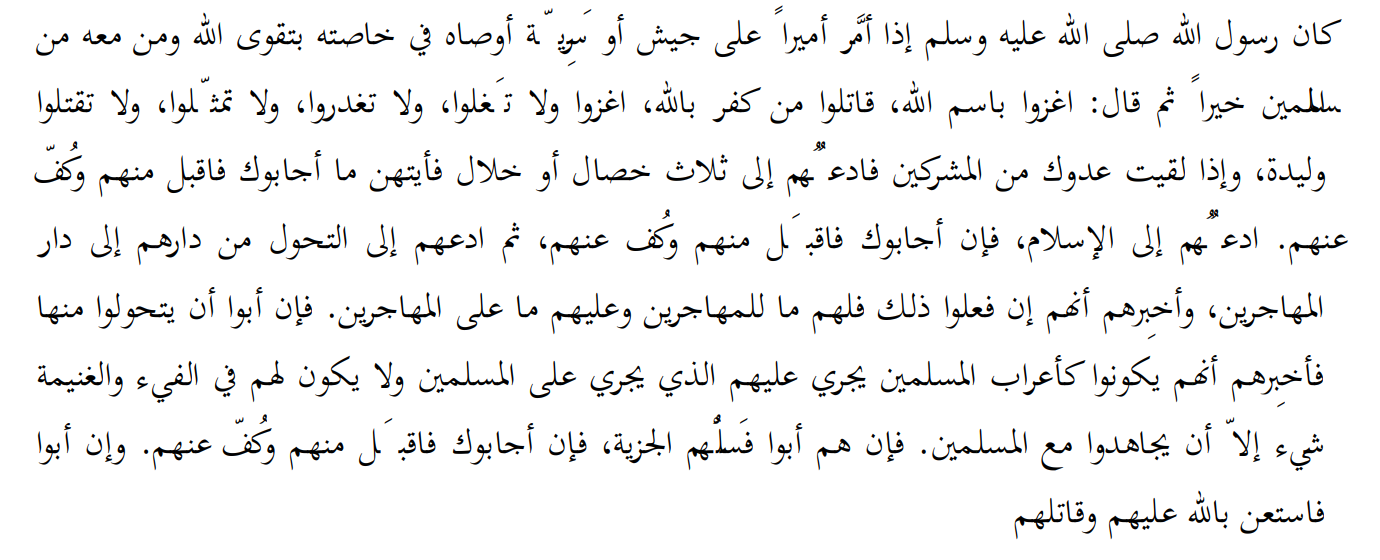
"جب بھی وہ کسی شخص کو فوجی دستے کی قیادت کے لیے مقرر فرماتے، تو اللہ کے رسول ﷺ اسے خاص طور پر اللہ سے ڈرنے اور اس کے ساتھ موجود مسلمانوں کے ساتھ حسنِ سلوک کرنے کی نصیحت فرماتے۔ آپ ﷺ نے فرمایا: 'اللہ کے نام پر اور اللہ کی راہ میں لڑو۔ ان سے لڑو جو اللہ کا انکار کرتے ہیں۔ لڑو لیکن خیانت نہ کرو، مالِ غنیمت میں سے چوری نہ کرو، اعضاء نہ کاٹو اور بچوں کو قتل نہ کرو۔ جب تمہارا مقابلہ مشرکین میں سے کسی دشمن سے ہو، تو انہیں تین چیزوں میں سے کسی ایک کی طرف بلاؤ۔ ان میں سے جس پر بھی وہ عمل کر لیں، اسے ان سے قبول کر لو اور ان سے لڑنے سے باز رہ جاؤ۔ انہیں اسلام قبول کرنے کی دعوت دو، اور اگر وہ اس پر عمل کر لیں تو اسے ان سے قبول کر لو اور ان سے لڑنے سے باز رہ جاؤ۔ پھر انہیں دعوت دو کہ وہ اپنی زمین چھوڑ کر مشرکین کی زمین میں منتقل ہو جائیں۔ انہیں بتا دو کہ اگر وہ ایسا کرتے ہیں، تو انہیں وہی حقوق اور فرائض حاصل ہوں گے جو مشرکین کے ہیں۔ اگر وہ انکار کر دیں، تو انہیں بتا دو کہ وہ بدوی مسلمانوں کی طرح ہوں گے، اور ان پر بھی وہی احکام لاگو ہوں گے جو مومنوں پر ہیں، لیکن انہیں فئے یا مالِ غنیمت میں کوئی حصہ نہیں ملے گا، الا یہ کہ وہ مسلمانوں کے ساتھ مل کر لڑیں۔ اگر وہ اسلام میں داخل ہونے سے انکار کر دیں، تو ان سے جزیہ لینے کا مطالبہ کرو۔ اگر وہ ایسا کر لیں، تو اسے ان سے قبول کر لو اور ان سے لڑنے سے باز رہ جاؤ۔ لیکن اگر وہ انکار کر دیں، تو پھر ان کے خلاف اللہ سے مدد حاصل کرو اور ان سے لڑو۔'"
“Whenever he appointed a man to lead a military detachment, the Messenger of Allah (saw) would advise him especially to fear Allah and treat the Muslims with him well. He (saw) said: ‘Fight in the Name of Allah and in the cause of Allah. Fight those how disbelieve in Allah. Fight but do not be treacherous, do not steal from the spoils of war, do not mutilate and do not kill children. When you meet your enemy from among the polytheists, call them to one of three things. Whichever of them they respond to, accept it from them and refrain from fighting them. Invite them to accept Islam, and if they respond then accept it from them and refrain from fighting them. Then invite them to leave their land and move to the land of the polytheists. Tell them that if they do that, then they will have the same rights and duties as the polytheists. If they refuse, then tell them that they will be like the Muslim Bedouins (who live in the desert), subject to the same rulings of Allah as the believers. But they will have no share of Fay’ or war spoils, unless they fight alongside the Muslims. If they refuse to enter Islam, then ask them to pay the Poll-tax. If they do that, then accept it from them and refrain from fighting them. But if they refuse, then seek the help of Allah against them and fight them”
اور ابن عباس (رضی اللہ عنہ) سے روایت ہے:
And from ibn Abbas (ra):
"رسول اللہ ﷺ نے کبھی جنگ نہیں کی مگر یہ کہ آپ ﷺ نے انہیں (اسلام کی طرف) دعوت دی" (روايت احمد)۔
“The Messenger of Allah (saw) never fought except that he invited them” (Narrated by Ahmad).
اور فروت بن مسیک سے روایت ہے کہ انہوں نے کہا:
And from Furwat bin Maseek who said:
میں نے رسول اللہ ﷺ سے پوچھا کہ کیا میں اپنے ان لوگوں سے لڑوں جو (دشمن کے سامنے سے) بھاگ رہے ہوں؟ آپ ﷺ نے فرمایا: ہاں۔ جب میں مڑا تو آپ ﷺ نے مجھے پکارا اور فرمایا: ان سے اس وقت تک نہ لڑو جب تک تم انہیں اسلام کی دعوت نہ دے دو۔
“I said to the Messenger of Allah, should I fight with those of my people advancing (against) those of them fleeing? He said: Yes. When I turned (to go), he called me and said: Do not fight them until you invite them to Islam.”