9. سائنس اور ثقافت
9. Science And Culture
عربی زبان میں کہا جاتا ہے: آدمی نے علم حاصل کر لیا (عَلِمَ)۔ اس کا مطلب یہ ہے کہ اس نے علم کی حقیقی حقیقت کو پا لیا۔ کسی چیز کا علم حاصل کرنے کا مطلب یہ ہے کہ وہ اس سے واقف ہو گیا، یعنی وہ کسی معاملے سے باخبر یا اس سے آشنا ہو گیا۔ نیز زبان میں یہ بھی کہا جاتا ہے: اس نے فہم حاصل کر لیا (ثَقِفَ)، جس کا مطلب یہ ہے کہ وہ ماہر ہو گیا، چنانچہ وہ تعلیم یافتہ اور مہذب (ثَقِف) ہے۔ اس نے ایک زبان کو سمجھ لیا (ثَقِفَ) یعنی اس پر مہارت حاصل کر لی اور اسے تیزی سے سمجھ لیا۔ یہ لغوی معانی الفاظ کے استعمال کی بنیاد ہیں۔ تاہم، اگر یہ الفاظ ایسے دیگر معانی کی طرف اشارہ کرنے کے لیے استعمال ہوں جن کا تعلق لغوی معنی سے ہو تو یہ جائز ہے، جیسا کہ مثلاً نحو (گرامر) میں لفظ 'فاعل' کا استعمال۔ لغوی معنی ہی غالب تھے اور یہی وجہ ہے کہ متقدمین تمام اقسام کے علم پر لفظ 'علم' کا اطلاق کرتے تھے اور علوم و فنون کے درمیان فرق نہیں کرتے تھے۔ پھر لوگوں نے ذہنی اور فطری علوم کو تمام انسانوں کے لیے عام سمجھنا شروع کر دیا، جبکہ دیگر روایتی (نقلی) علوم کو اس امت کے لیے مخصوص سمجھا جس سے وہ منتقل ہوئے تھے۔ بعد ازاں، علم اور ثقافت (ثقافہ) میں سے ہر ایک کی تعریف مختلف مخصوص علوم کے مطابق ہونا شروع ہو گئی، اور انہوں نے ایسے اصطلاحی معانی اختیار کر لیے جو ان کے لغوی معانی سے مختلف تھے۔ اس اصطلاح کے مطابق ان کے درج ذیل معانی ہیں: علم وہ علم ہے جو مشاہدہ، تجربہ اور تعلیم کے ذریعے حاصل کیا جاتا ہے جیسے کہ طبیعیات، کیمیا اور دیگر تجرباتی علوم؛ اور ثقافت وہ علم ہے جو روایت، تعلم اور استدلال کے ذریعے حاصل کیا جاتا ہے جیسے کہ (مطالعہ) تاریخ، زبانیں، فقہ، فلسفہ اور دیگر غیر تجرباتی علوم۔ اور دیگر غیر تجرباتی شعبے بھی ہیں جنہیں علوم کے طور پر شامل کیا جاتا ہے اگرچہ وہ ثقافت کے دائرہ کار میں آتے ہیں، جیسے کہ حساب، انجینئرنگ اور صنعت؛ اگرچہ وہ ثقافت (ثقافہ) کے تحت آتے ہیں، پھر بھی انہیں علم کا حصہ سمجھا جاتا ہے کیونکہ وہ تمام لوگوں کے لیے عالمگیر ہیں اور کسی ایک قوم کے مخصوص نہیں ہیں۔ اسی طرح ثقافت سے متعلقہ وہ تمام چیزیں جو صنعت سے مشابہت رکھتی ہیں جیسے کہ تجارت اور جہاز رانی؛ انہیں علم کا حصہ سمجھا جاتا ہے اور وہ عالمگیر ہیں۔ جہاں تک فنون کا تعلق ہے جیسے کہ مصوری، مجسمہ سازی اور موسیقی، تو وہ ثقافت کا حصہ ہیں۔ وہ ایک خاص نقطہ نظر کی پیروی کرتے ہیں جو کہ ایک مخصوص ثقافت ہے۔ ثقافت (ثقافہ) اور علم کے درمیان فرق۔
In Arabic language it is said: the man has obtained (‘alima) knowledge (‘ilm). This means that he attained the true reality of knowledge (‘ilm). He gained knowledge of a thing means he became cognisant of it, which means that he became informed of a matter or acquainted with it. Also in the language it is said: He has gained comprehension (thaqifa), which means that he has become proficient, thus he is educated and cultured (thaqif). He has understood (thaqifa) a language (means) he has mastered and understood it swiftly. These linguistic meanings are the basis of the use of words, However if these words were used to indicate other meanings that relate to the linguistic meaning then that is permitted, like in the case of the adoption of the word fa’il (subject) in grammar for example. The linguistic meaning (of the words) was prevailing and this is why the ancients used to apply the word ‘ilm on all forms of knowledge without differentiating between the sciences and disciplines. Then people began to consider intellectual and natural disciplines as being general to all people whilst other traditional (textual) disciplines were considered specific to the nation from which it was transferred. Subsequently, each of science (‘ilm) and culture (thaqafa) began to be defined according to different specific disciplines, acquiring terminological meanings which were different to their linguistic meanings. According to this terminology they have the following meaning: Science (‘ilm) is the knowledge which is acquired through observation, experimentation and education like physics, chemistry and the rest of the empirical sciences and culture (thaqafa) is the knowledge which is acquired by way of transmission, learning and deduction as in (the study of) history, languages, jurisprudence (fiqh), philosophy and the rest of the non-empirical disciplines. And there are other non-empirical disciplines which are included as sciences (‘ilm) even though they come within culture such as arithmetic, engineering and industry; even though they come under culture (thaqafa) they are regarded as part of science because they are universal to all people and not specific to any one nation. In a similar way anything from the culture related to crafts which resemble industry such as trade and shipping; they are considered to be part of science and they are universal. As for the arts such as; painting, sculpture and music they are part of culture. They follow a particular viewpoint; which is a specific culture. The difference between culture (thaqafa) and science (‘ilm)
کیا یہ کہ سائنس تمام اقوام کے لیے عالمگیر ہے اور کسی ایک قوم کے لیے مخصوص نہیں ہے کہ وہ دوسری قوم کو اس سے محروم کر دے۔ جہاں تک ثقافت کا تعلق ہے تو یہ مخصوص ہو سکتی ہے، یعنی اس قوم سے منسوب ہو جس سے اس کا ظہور ہوا، یا یہ کسی قوم کی مخصوص اور انفرادی خصوصیات کا حصہ ہو سکتی ہے جیسے کہ ادب اور ہیروز کے حالاتِ زندگی، اور زندگی کے بارے میں ان کا فلسفہ، یا یہ عالمگیر بھی ہو سکتی ہے جیسے کہ تجارت، جہاز رانی وغیرہ۔ لہٰذا، سائنس تمام اقوام سے عالمگیر طور پر اپنائی جاتی ہے کیونکہ یہ عالمگیر ہے اور کسی خاص قوم کے لیے مخصوص نہیں ہے۔ جہاں تک ثقافت کا تعلق ہے تو قوم کو اپنی ہی ثقافت سے آغاز کرنا چاہیے، جب وہ اس کا مطالعہ کر لے اور اس سے واقف ہو جائے یہاں تک کہ وہ ان کے ذہنوں میں راسخ ہو جائے، پھر وہ دوسری ثقافتوں کا مطالعہ کر سکتے ہیں۔ مسلمان ان علوم کے درمیان فرق کرتے تھے جو ایک شخص خود حاصل کرتا تھا اور وہ علوم جو وہ دوسروں سے حاصل کرتا تھا۔ ابن خلدون اپنی کتاب المقدمہ میں فرماتے ہیں:
is that science is universal to all nations and not specific to any nation to the exclusion of another nation. As for culture (thaqafa) it might be specific, being ascribed to the nation from which it resulted or it may be part of the nation’s specific and particular characteristics such as literature and biographies of heroes, and their philosophy concerning life or they may be universal such as trade, shipping etc. Therefore, science is adopted universally from all nations because it is universal and not specific to any particular nation. As for culture (thaqafa) the nation should begin with its own culture, when she has studied it and is cognisant of it until it becomes focused in their minds then they can study other cultures. The Muslims used to differentiate between the sciences which a person used to attain by himself and the sciences he used to receive from others. Ibn Khaldun says in his book al-Muqaddima:
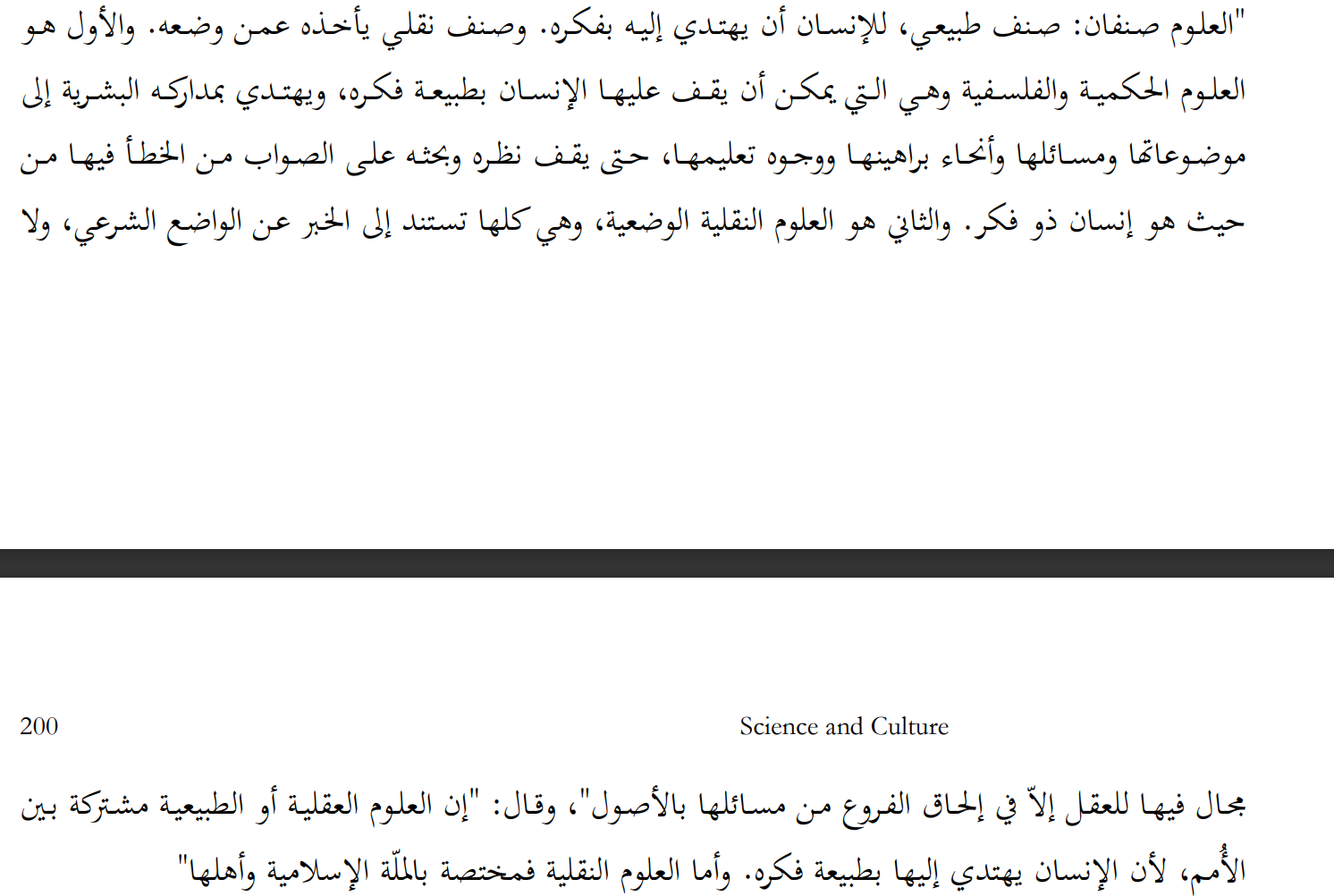
"علوم کی دو قسمیں ہیں: ایک فطری قسم جو انسان اپنی فکر و تدبر کے ذریعے حاصل کرتا ہے، اور دوسری نقلی قسم جو وہ اس شخص سے لیتا ہے جس نے اسے مرتب کیا ہو۔ پہلی قسم فلسفیانہ اور حکیمانہ علوم ہیں جنہیں وہ اپنی فکر کے ذریعے تلاش کر سکتا ہے اور انسانی صلاحیتوں کے ذریعے ان کے موضوعات، مسائل اور ان کے تمام فیصلہ کن دلائل اور تعلیمات کے پہلوؤں تک رہنمائی حاصل کر سکتا ہے۔ چنانچہ اپنی بصیرت اور مطالعہ کے دوران وہ صحیح (رائے) کو غلط سے الگ کر لیتا ہے، کیونکہ وہ فکر کی صلاحیت رکھنے والا ایک انسان ہے۔ دوسری قسم نقلی اور تحریری علوم ہیں۔ یہ ایک شرعی ماخذ سے آنے والی روایت پر منحصر ہوتے ہیں۔ اس سلسلے میں عقل کی کوئی گنجائش نہیں سوائے اس کے کہ وہ فروعی مسائل کو اصول سے جوڑ دے۔"
“The sciences are of two types: A natural type which is for man to arrive at through his thinking and a textual type which he takes from the one who authored it. The first are the philosophical and aphoristic sciences which he can seek by his thought and be guided through the human faculties to its subjects and issues and all its decisive proofs and aspects of its teachings. So as in his discernment and study he attains the correct (opinion) from the incorrect, in his capacity as a human being possessing the faculty of thought. The second are the textual and written sciences. They depend on the report coming from a shar’i source. The mind has no scope in this regard except to relate the branch issues to the usul (foundation)”.
انہوں نے یہ بھی کہا: "عقلی یا فطری علوم تمام اقوام کے لیے مشترک ہیں کیونکہ انسان اپنی فکر کے ذریعے فطری طور پر ان تک پہنچ جاتا ہے۔ جہاں تک نقلی علوم کا تعلق ہے، تو وہ مسلم مذہب اور اس کے پیروکاروں کے لیے مخصوص ہیں۔" ایسا معلوم ہوتا ہے کہ ابن خلدون کی مراد نقلی علوم کو اسلامی ملت کے ساتھ مخصوص کرنے سے محض ایک مثال لینا تھی، کیونکہ اسلامی امت کے علاوہ دیگر اقوام کے بھی اپنے مخصوص نقلی علوم ہوتے ہیں جیسے کہ ان کی شریعت اور زبان۔ ابن خلدون کا یہ بیان اس بات کی طرف اشارہ نہیں کرتا کہ انہوں نے علم اور ثقافت کے درمیان فرق کیا، بلکہ یہ صرف اس بات کی نشاندہی کرتا ہے کہ انہوں نے عقلی اور نقلی علوم کے درمیان فرق کیا تھا۔ ان کی یہ باتیں اس بات کی دلیل نہیں ہیں کہ مسلمان علم اور ثقافت کے درمیان فرق کرتے تھے، بلکہ یہ اس بات کا ثبوت ہیں کہ مسلمان صرف علوم کے شعبوں کے درمیان فرق کرتے تھے۔ چنانچہ انہوں نے انہیں دو حصوں میں تقسیم کیا۔ تاہم ان کی تقسیم ان کے عمومی حصول کے لحاظ سے تھی نہ کہ حصول کے طریقے کے لحاظ سے۔ چنانچہ انہوں نے انہیں عقلی علوم قرار دیا یعنی وہ جو عقل کے ذریعے حاصل کیے جائیں، اور نقلی علوم وہ جو متن سے حاصل کیے جائیں۔ تاہم، آج کے لوگ علوم کے شعبوں کے درمیان ان کے حاصل کرنے کے طریقے کے لحاظ سے فرق کرتے ہیں۔ چنانچہ وہ 'علم' کی اصطلاح ہر اس چیز پر لاگو کرتے ہیں جو تجرباتی طریقے سے حاصل کی جائے، اور 'ثقافت' کی اصطلاح ہر اس چیز پر لاگو کرتے ہیں جو تجرباتی طریقے کے علاوہ دیگر ذرائع سے حاصل کی جائے۔
He also said “The rational or natural sciences are common to all nations since man arrives at them naturally through his thought. As for the textual sciences they are specific to the Muslim religion and its adherents.” It appears that what Ibn Khaldun meant by specifying the textual sciences with the Islamic millah was only an example because nations other than the Islamic nation as well have textual sciences specific to them such as their legislation and language. Ibn Khaldun’s statement does not indicate that he distinguished between science and culture. It only indicates that he distinguished between textual and rational sciences. His comments are not an evidence to say that the Muslims used to differentiate between science and culture rather they are an evidence to prove that the Muslims used only to differentiate between disciplines. Thus, they divided them into two sections. However their division was in terms of their general acquisition and not in terms of the manner of acquisition. So they designated them as rational sciences i.e, acquired via the mind. And textual sciences acquired from the text. However, people today differentiate between disciplines in terms of the manner in which they were received. Thus, they apply the term ‘science’ (‘ilm) on anything that is acquired through the empirical method and they apply the term ‘culture’ (thaqafa) on anything acquired by means other than the empirical method