17.3 بیعت
17.3 The Pledge (bay’ah)
بیعت تمام مسلمانوں پر ایک فریضہ ہے، اور یہ ہر مسلمان مرد یا عورت کا حق ہے۔ اس کے واجب ہونے کی دلیل نبی ﷺ کی بہت سی احادیث میں موجود ہے، جن میں آپ ﷺ نے فرمایا:
Bay’ah is an obligation upon all Muslims, and it is a right for every Muslim, man or woman. The evidence for it being an obligation is in many ahadith of the Prophet (saw), in which he said:
"جس شخص کا انتقال اس حال میں ہو کہ اس کی گردن پر بیعت نہ ہو، وہ جاہلیت کی موت مرتا ہے۔"
“Whosoever dies without having a bay’ah upon his neck dies a death of jahiliyyah.”
جہاں تک مسلمانوں کے حق ہونے کا تعلق ہے، تو بیعت بذاتِ خود اس بات کی نشاندہی کرتی ہے، کیونکہ بیعت مسلمانوں کی جانب سے خلیفہ کو دی جاتی ہے، نہ کہ خلیفہ کی جانب سے مسلمانوں کو۔ نبی ﷺ کے ہاتھ پر مسلمانوں کی بیعت کی تائید احادیث میں ملتی ہے۔ البخاری نے روایت کیا ہے کہ عبادہ بن صامت (رضی اللہ عنہ) نے فرمایا:
As for being a right for Muslims, the bay’ah itself indicates that, because the bay’ah is offered by the Muslims to the Khalifah, and not by the Khalifah to the Muslims. The bay’ah of the Muslims to the Prophet (saw) was confirmed in the ahadith. Al-Bukhari reported that ‘Ubadah bin as-Samit (ra) said:
"ہم نے نبی ﷺ سے اس بات پر بیعت کی کہ ہم ہر اس معاملے میں جو ہمیں پسند ہو یا ناپسند، سنیں گے اور اطاعت کریں گے، اور ہم ذمہ داروں کے حکم میں اختلاف نہیں کریں گے، اور ہم جہاں کہیں بھی ہوں گے سچ بولیں گے، اور اللہ کی خاطر عمل کرنے یا بات کرنے کے وقت ہم کسی کی ملامت سے نہیں ڈریں گے۔"
“We made a bay’ah to the Prophet (saw) to hear and to obey in whatever pleases and displeases us, and that we would not dispute the order of those in charge, that we would speak the truth wherever we are, and that we would not fear the blame of anyone when acting or speaking for the sake of Allah.”
امام بخاریؒ نے ایوب سے، انہوں نے حفصہ سے، انہوں نے ام عطیہ رضی اللہ عنہا سے روایت کی ہے کہ انہوں نے کہا:
Al-Bukhari reported from Ayyub from Hafsa from Umm ‘Atiyyah who said:
"ہم نے نبی ﷺ کو بیعت دی اور انہوں نے مجھے وہ آیت سنائی کہ وہ اللہ کی عبادت میں کسی کو شریک نہیں کریں گے [سورۃ الممتحنہ 60:12]۔ اور انہوں نے ہمیں مردوں پر نوحہ کرنے اور ماتم کرنے سے بھی روکا۔ ہم میں سے ایک عورت نے اپنا ہاتھ آگے بڑھایا اور کہا، 'فلاں فلاں عورت نے میرے خاندان کے ایک مردہ پر رونا رویا تھا اور میں اس رونے کے بدلے اسے (کچھ) دینا چاہتی ہوں'۔ نبی ﷺ نے جواب میں کچھ نہیں کہا اور وہ عورت چلی گئی اور واپس آگئی۔"
“We gave a bay’ah to the Prophet (saw) and he recited to me the verse That they will not associate anything in worship with Allah (TMQ 60.12). And he also prevented us from wailing and lamenting over the dead. A woman from us held her hand out and said, "Such-and-such a woman cried over a dead person belonging to my family and I want to compensate her for that crying" The Prophet did not say anything in reply and she left and returned.”
اور صحیح البخاری میں حضرت ابوہریرہ (رضی اللہ عنہ) سے روایت ہے کہ انہوں نے کہا: نبی کریم ﷺ نے فرمایا:
And in Al-Bukhari from Abu Hurairah (ra) who said: The Prophet (saw) said:
"(تین قسم کے لوگ ایسے ہیں جن سے اللہ تعالیٰ قیامت کے دن کلام نہیں فرمائے گا، نہ انہیں پاک کرے گا اور ان کے لیے سخت عذاب ہے: ایک وہ شخص جو راستے میں پانی کی زیادتی (یا پانی کا ذخیرہ) کرے اور مسافر کو اس سے روک دے؛ ایک وہ شخص جو کسی امام کو محض دنیاوی معاملات کے لیے بیعت دے، پس اگر امام اسے وہ چیز دے دے جو وہ چاہتا ہے تو وہ اپنی بیعت پوری کر لے، ورنہ وہ (بیعت پوری) نہیں کرے گا؛ اور ایک وہ شخص جو عصر کے بعد کسی دوسرے کے ساتھ مال کا سودا کرے اور اللہ کی قسم کھا کر کہے کہ اسے اس کے بدلے اتنا اور اتنا پیش کیا گیا تھا، حالانکہ ایسا نہیں ہوا تھا، اور دوسرا شخص اس پر یقین کر لے اور اسے خرید لے۔"
“(There are) three persons to whom Allah will not talk on the Resurrection Day, nor purify them, and for them is a severe punishment: A person who has an excess of water on the road and prevents the wayfarer from it; a person who gives bay’ah to an Imam for his worldly affairs only, so if the Imam gave him that which he wants he fulfilled (the bay’ah) to him, otherwise he would not; and a person trading a commodity to another after asr (late afternoon) and he swore by Allah that he was offered so and so for it, although he was not, and the person believed him and bought it.”
امام بخاریؒ نے عبداللہ بن عمر (رضی اللہ عنہ) سے روایت کی ہے جنہوں نے کہا:
Al-Bukhari narrated from ‘Abdullah bin ‘Umar (ra) who said:
"جب ہم نے نبی ﷺ کو سننے اور فرمانبرداری کرنے کی بیعت دی، تو آپ ﷺ ہمیں فرماتے: جتنا تم سے ہو سکے۔"
“When we gave a bay’ah to the Prophet (saw) to hear and obey, he would say to us: As much as you are capable of”
"جب ہم نے نبی ﷺ کو سننے اور فرمانبرداری کرنے کی بیعت دی، تو آپ ﷺ ہمیں فرماتے: جتنا تم سے ہو سکے"
“When we gave a bay’ah to the Prophet (saw) to hear and obey, he would say to us: As much as you are capable of”
"میں نے نبی ﷺ کو سننے اور فرمانبرداری کرنے کی بیعت دی، تو انہوں نے مجھے ہدایت فرمائی: جتنا تم سے ہو سکے (ایسا ہی کرو)، اور ہر مسلمان کو اچھی نصیحت کرو۔"
“I gave bay’ah to the Prophet (saw) to hear and obey and he instructed me: As much as you are able, and to give good advice to every Muslim.”
امام بخاریؒ نے جنادہ بن ابی امیہ سے روایت کی ہے جنہوں نے کہا:
Al-Bukhari narrated from Junada bin Abu Umayyah who said:
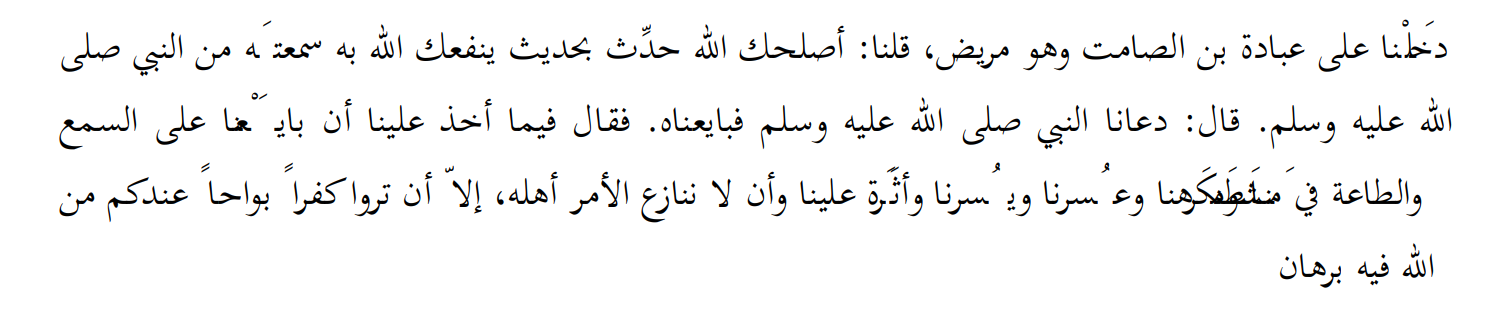
"ہم عبادہ بن صامت رضی اللہ عنہ کے گھر میں داخل ہوئے جبکہ وہ بیمار تھے، تو ہم نے کہا: اللہ آپ کو صحت دے، ہمیں کسی ایسی حدیث کی خبر دیں جو آپ نے نبی ﷺ سے سنی ہو جس سے اللہ سبحانہ و تعالیٰ آپ کو فائدہ پہنچائے۔ انہوں نے کہا: نبی ﷺ نے ہمیں دعوت دی اور ہم نے آپ ﷺ سے اپنی بیعت کی۔ اور جن شرائط پر آپ ﷺ نے ہم سے بیعت لی ان میں یہ بھی شامل تھا کہ ہم (احکامات کو) سنیں گے اور اطاعت کریں گے، خواہ ہم چست ہوں یا تھکے ہوئے ہوں، اور آسانی کے وقت میں بھی اور سختی کے وقت میں بھی، اور جب ہم (دوسروں کو اپنے پر) تر دیکھیں، اور ان لوگوں کی حاکمیت پر بحث نہ کریں جن کے پاس امانت (اختیار) ہو، یہ کہتے ہوئے کہ: جب تک کہ آپ ان پر کھلا کفر نہ دیکھ لیں جس پر آپ کے پاس اللہ کی طرف سے واضح دلیل ہو۔"
“We entered the house of ‘Ubadah bin as-Samit while he was ill and we said: May Allah make you healthy, inform us of a hadith you heard from the Prophet (saw) by which Allah (swt) may benefit you. He said: The Prophet (saw) invited us and we gave him our bay’ah (pledge of Allegiance). And among the conditions on which he took the pledge from us, was that we were to listen and obey (the orders) both at the time when we were active and when we were tired , and in the times of ease and hardship and when we see preference (for others over us), and not to dispute the authority of those who are entrusted with it saying: Unless you see open disbelief (kufr bawah) upon which you have a clear proof from Allah.”
خلیفہ کے لیے بیعت مسلمانوں کے ہاتھ میں ہے اور یہ ان کا حق ہے؛ یہی وہ لوگ ہیں جو بیعت دیتے ہیں، اور یہی ان کی بیعت ہے جو خلیفہ کے لیے خلافت کا معاہدہ طے کرتی ہے۔ بیعت ہاتھ ملانے سے یا تحریر کے ذریعے ہو سکتی ہے۔ عبداللہ بن دینارؒ نے روایت کی ہے کہ:
The bay’ah for the Khalifah is in the hands of the Muslims, and it is their right; it is they who give the bay’ah, and it is their bay’ah which makes the Khilafah contracted for a Khalifah. The bay’ah can be by shaking hand or by writing. ‘Abdullah bin Dinar narrated saying:
"میں نے ابن عمر کو دیکھا جہاں لوگ عبدالملک بن مروان کے گرد جمع تھے۔ انہوں نے لکھا: میں اللہ کے بندے، امیر المؤمنین عبدالملک کی بات سننے اور ان کی اطاعت کرنے پر اس حد تک راضی ہوں جتنی میری استطاعت ہے، جیسا کہ اللہ کی سنت اور اس کے نبی ﷺ کی سنت ہے۔"
“I witnessed bin ‘Umar where the people gathered around ‘Abdulmalik bin Marwan. He wrote: I agree to listen and obey to the slave of Allah, ‘Abdulmalik the Amir al-Mu’mineen, according to the Sunnah of Allah and the Sunnah of His Prophet as much as I am able.”
مزید یہ کہ بیعت کسی بھی ذریعے سے درست ہے۔ تاہم، بیعت ایک بالغ شخص کی طرف سے دی جانی چاہیے، اس لیے کسی بچے کی طرف سے بیعت دینا مناسب نہیں۔ ابو عقیل زہرہ بن معبد نے اپنے دادا عبداللہ بن ہشام سے روایت کی ہے—جنہوں نے نبی ﷺ کو دیکھا تھا—کہ ان کی والدہ زینب بنت حمید انہیں نبی ﷺ کے پاس لے گئیں اور کہا: اے اللہ کے نبی ﷺ، اس سے بیعت لے لیں۔ نبی ﷺ نے فرمایا:
Moreover, the bay’ah is correct by any means (waseelah). However, the bay’ah has to be given by the mature person, so it is improper to be given by the young. Abu Aqeel Zahra bin Ma‘bed reported from his grandfather ‘Abdullah bin Hisham--who witnessed the Prophet (saw)--that his mother Zaynab, the daughter of Hameed, took him to the Prophet (saw) and said: O Prophet of Allah, take a pledge from him. The Prophet (saw) said:
"وہ ایک بچہ تھا، آپ ﷺ نے اس کا سر مسح کیا اور اس کے لیے دعا کی۔"
“He is a child, wiped his head and made a du‘a for him.”
جہاں تک بیعت کے الفاظ کا تعلق ہے تو وہ کسی مخصوص الفاظ تک محدود نہیں ہیں۔ تاہم، ان میں خلیفہ کی جانب سے اللہ (سبحانہ و تعالیٰ) کی کتاب اور اس کے نبی ﷺ کی سنت کے مطابق عمل کرنا، اور تنگی و آسانی میں اطاعت کرنا، اور بیعت کرنے والے شخص کی طرف سے وہ سب کچھ جو پسندیدہ ہو یا ناپسندیدہ، شامل ہونا ضروری ہے۔ جب بیعت کرنے والا خلیفہ کو اپنی بیعت دے دے یا دیگر مسلمانوں کی بیعت کے ذریعے خلیفہ کے ساتھ خلافت کا معاہدہ طے پا جائے، تو بیعت بیعت کرنے والے کے گلے میں ایک امانت بن جاتی ہے اور اسے اسے واپس لینے کی اجازت نہیں ہے۔ یہ خلافت کے معاہدے کا ایک حق ہے جب تک کہ وہ اسے دے نہ دے، اور ایک بار جب وہ اسے دے دے تو اسے اس پر قائم رہنا چاہیے، اسے اس سے رجوع کرنے کی اجازت نہیں ہے۔ البخاری نے جابر بن عبداللہ (رضی اللہ عنہ) سے روایت کی ہے کہ ایک بدوی نے نبی ﷺ کو اسلام پر اپنی بیعت دی، پھر اسے ایک بیماری نے آ لیا تو اس نے نبی ﷺ سے کہا: "مجھے اپنی بیعت واپس لینے دیں" لیکن نبی ﷺ نے انکار کر دیا، اور وہ شخص چلا گیا۔ پھر نبی ﷺ نے فرمایا:
As for the words of the bay’ah they are not restricted to specific terms. However they must include acting according to the Book of Allah (swt) and the Sunnah of His Prophet (saw) by the Khalifah, and obedience in hardship and ease and obedience, and whatever pleases and displeases on the part of the person who gives the bay’ah (to the Khalifah). Whenever the one who pledges has given his bay’ah to the Khalifah or the Khilafah is contracted to the Khalifah by the bay’ah of other Muslims, then the bay’ah has become a trust on the neck of the one who gives the bay’ah and he is not allowed to retract it. It is a right for the contract of the Khilafah until he has given it, and once he has given it he must abide by it. He is not allowed to retract from it. Al-Bukhari narrated from Jabir bin ‘Abdullah (ra) that a Bedouin gave the Prophet (saw) his pledge on Islam, and an illness struck him so he said to the Prophet (saw): “Let me withdraw my bay’ah but the Prophet (saw) refused, and the man left. The Prophet (saw) then said:
"مدینہ ایک بھٹی کی مانند ہے، یہ ناپاک چیزوں کو نکال باہر کر دیتا ہے اور بہترین لوگوں کو چن لیتا ہے اور انہیں کامل بنا دیتا ہے۔"
“Medina is like a furnace, it expels out the impurities and selects the good ones and makes them perfect.”
اور نافع سے روایت ہے کہ انہوں نے کہا: ابن عمر (رضی اللہ عنہ) نے مجھ سے فرمایا کہ انہوں نے نبی کریم ﷺ کو یہ فرماتے ہوئے سنا:
And it is narrated from Nafi‘a who said: Ibn ‘Umar (ra) said to me that he heard the Prophet (saw) saying:
"جو شخص امیر کی اطاعت سے ہاتھ کھینچ لے گا، وہ قیامت کے دن اللہ کے حضور کھڑا ہونے پر (اپنے دفاع میں) کوئی حجت نہیں پائے گا۔"
“Whoever withdraws his hand from obedience (to the Amir) will find no argument (in his defense) when he stands before Allah on the Day of Resurrection.”
خلیفہ کی بیعت توڑنا اللہ (سبحانہ و تعالیٰ) کی اطاعت سے ہاتھ کھینچ لینے کے مترادف ہے۔ یہ اس صورت میں ہے اگر خلیفہ کے ساتھ اس کی بیعت ایک معاہدے کی بیعت ہو یا پھر اس خلیفہ کی اطاعت کی بیعت ہو جسے مسلمانوں نے تسلیم کر لیا ہو اور اسے اپنی بیعت دے دی ہو۔ تاہم، اگر اس نے شروع میں کسی خلیفہ کو اپنی بیعت دی ہو اور وہ مکمل نہ ہوئی ہو کیونکہ مجموعی طور پر مسلمانوں نے اسے خلیفہ کے طور پر تسلیم نہ کیا ہو، تو اسے اس بیعت سے دستبردار ہونے کا حق حاصل ہے۔ حدیث میں مذکور ممانعت خلیفہ کی بیعت سے دستبردار ہونے پر مرکوز ہے، نہ کہ اس شخص کی بیعت سے جس کے لیے خلافت مکمل نہ ہوئی ہو۔
To break the bay’ah of the Khalifah is withdrawing of one’s hand from the obedience of Allah (swt). This is the case if his bay’ah to the Khalifah is a bay’ah of contract or it is a bay’ah of obedience to a Khalifah whom the Muslims accepted and gave their bay’ah to. However, if he gave his bay’ah in the beginning to a Khalifah and it was not completed because the Muslims as a whole did not accept him as Khalifah, then he has the right to withdraw from that bay’ah. The prohibition mentioned in the hadith is focused on the withdrawal of a bay’ah to a Khalifah, not to a man for whom the Khilafah was not accomplished