১৪.২ ফিকহের বিকাশ
14.2 The Development Of Fiqh
ফিকহ হলো ইসলামী শাস্ত্রসমূহের মধ্যে অন্যতম গুরুত্বপূর্ণ একটি শাস্ত্র, যার সমাজের ওপর সবচেয়ে বড় প্রভাব রয়েছে। এটি ইসলামী সংস্কৃতির অন্যতম গুরুত্বপূর্ণ শাখা। কারণ ইসলামী সংস্কৃতি হলো কুরআন ও সুন্নাহ এবং কুরআন ও সুন্নাহ বোঝার জন্য যা কিছু নির্ভরযোগ্য হিসেবে গৃহীত ও প্রণীত হয়েছে তার সবকিছু। যদিও ইসলামী সংস্কৃতিতে আরবি ভাষার বিজ্ঞান, হাদীস ও তাফসীরের শাস্ত্রও অন্তর্ভুক্ত, তবুও এর থেকে যা সবচেয়ে সুস্পষ্টভাবে প্রকাশ পায় তা হলো জীবন সম্পর্কে দৃষ্টিভঙ্গি সংশ্লিষ্ট চিন্তাধারা এবং জীবনের সমস্যাসমূহের সমাধানকারী পথনির্দেশ। অন্য কথায়, তা প্রকাশ পায় আকীদা (বিশ্বাসসমূহ) ও শরীয়তের বিধানসমূহে, কারণ এগুলো জীবনের সমস্যা মোকাবিলার জন্য গৃহীত একটি ব্যবহারিক সংস্কৃতি, যা বেশিরভাগ ক্ষেত্রে বিশ্বাস সম্পর্কিত চিন্তা এবং সমাধান অর্থাৎ বিধানসমূহ ধারণ করে। ফিকহ হলো এই বিধানসমূহের জ্ঞান ছাড়া আর কিছুই নয়।
Fiqh is one of the most important Islamic disciplines having the greatest effect on society. It is one of the most important branches of the Islamic culture. That is because the Islamic culture is the Qur’ān and Sunnah and whatever is relied upon and laid down in order to understand the Qur’ān and Sunnah. Even though the Islamic culture includes the sciences of the Arabic language, hadīth and tafsīr, the most prominent thing that appears from it are the thoughts which relate to the viewpoint about life and the solutions which treat the problems of life. In other words, it appears in the beliefs (‘aqaid) and Sharī’ah rules because they are a practical culture adopted to face lifes problems which, in most cases, contains thoughts about beliefs and solutions i.e, the rules. Fiqh is nothing other than the knowledge of these rules.
ইসলামী সংস্কৃতি এবং শরীয়তের বিধিবিধান শেখার সূচনা হয়েছিল রাসূল ﷺ প্রেরিত হওয়ার সময় থেকে। রাসূল ﷺ ছিলেন শরীয়তের বিধিবিধানের একমাত্র উৎস, কারণ তাঁকে আল্লাহর দ্বীন মানুষকে শেখানোর জন্য প্রেরণ করা হয়েছিল। তিনি ﷺ বলেছেন:
The Islamic culture and the learning of Sharī’ah rules began from the time the Messenger was sent. The Messenger was the only reference point for the Sharī’ah rules because he was sent to teach people Allah’s deen. He said:
“হে রাসূল! আপনার প্রতিপালকের পক্ষ থেকে আপনার প্রতি যা অবতীর্ণ করা হয়েছে তা পৌঁছে দিন। আর যদি আপনি তা না করেন, তবে আপনি তাঁর বার্তা পৌঁছে দিলেন না।” ﷺ [TMQ Mā’idah: 67]
“O Messenger (saw)! Proclaim (the Message) which has been sent down to you from your Lord. And if you do not, then you have not conveyed His Message” [TMQ Mā’idah: 67]
তিনি বললেন:
He said:
"আর আমি আপনার প্রতি এই যিকির (উপদেশ) অবতীর্ণ করেছি, যাতে আপনি মানুষের জন্য তা স্পষ্টভাবে বর্ণনা করেন" — {আর আমি আপনার প্রতি এই যিকির (উপদেশ) অবতীর্ণ করেছি, যাতে আপনি মানুষের জন্য তা স্পষ্টভাবে বর্ণনা করেন} [TMQ Nahl: 44]
“And We have also sent down unto you (O Muhammad(saw)) the reminder and the advice (the Qur’ān), that you may explain clearly to them” [TMQ Nahl: 44]
ﷺ ছাড়া আর কোনো মুসলিমের এই অধিকার নেই যে সে স্বাধীনভাবে কোনো মত বা কোনো হুকুমের ব্যাপারে নিজের অভিমত পেশ করবে। রাসূলুল্লাহ ﷺ তাদের মাঝে উপস্থিত থাকার কারণে যেকোনো বিষয়ে তাঁর কাছে ফিরে যাওয়া তাদের জন্য সহজ ছিল, তবুও তাদের কারো জন্য কোনো ঘটনার ব্যাপারে নিজের ব্যক্তিগত মত দেওয়া বৈধ ছিল না। এ কারণেই যখন তারা কোনো ঘটনার মুখোমুখি হতো, অথবা কোনো বিবাদ দেখা দিত, কিংবা তাদের কারো মনে কোনো প্রশ্ন জাগত, তখন তারা রাসূলুল্লাহ ﷺ-এর কাছে ফিরে যেত। আর তিনি ﷺ মত দিতেন, তাদের বিবাদ মীমাংসা করতেন এবং তাদের প্রশ্নের উত্তর দিতেন, কখনো কুরআনের আয়াত দিয়ে, কখনো হাদীস দিয়ে। আর যে বর্ণনায় এসেছে যে, কিছু সাহাবী রাসূলুল্লাহ ﷺ-এর যুগে ইজতিহাদ করেছেন এবং নির্দিষ্ট কিছু বিবাদে নিজেদের ইজতিহাদ অনুযায়ী ফয়সালা দিয়েছেন, অথবা নির্দিষ্ট কিছু ঘটনার হুকুম নিজেদের ইজতিহাদের মাধ্যমে বের করেছেন, তাতে এই ইজতিহাদগুলো শরীয়তের হুকুমের উৎস হয়ে যায় না। বরং এগুলো রাসূলুল্লাহ ﷺ-এর আদেশ অনুযায়ী শরীয়তের একটি উপলব্ধি। এগুলো শরীয়তের প্রয়োগ, যা সেই মুজতাহিদগণ কুরআন ও সুন্নাহকে যেভাবে বুঝেছেন তার উপর নির্ভর করে। যে পরিস্থিতিতে এই ইজতিহাদগুলো সংঘটিত হয়েছে, তা থেকেই এ বিষয়টি প্রমাণিত হয়। বর্ণিত আছে যে, নবী ﷺ ‘আলী ইবনু আবী তালিব (রাযি.)-কে ইয়ামানে বিচারক হিসেবে পাঠিয়েছিলেন। তিনি ﷺ তাঁকে বলেছিলেন:
With the exception of the Messenger no Muslim has the right to independently put forward an opinion regarding any viewpoint or ruling. Due to the Messenger’s presence among them referring to him regarding anything they came across was easy, It was still not permitted for any of them to give his personal opinion regarding any event. That is why, when they came across an event or a dispute arose or one of them had an idea they would refer to the Messenger . And he would give an opinion, settle their disputes and answer their questions, sometimes with an ayah and sometimes with a hadīth. As for what has been reported that certain Sahabah exercised Ijtihād in the time of the Messenger and pronounced judgements according to their own Ijtihād in certain disputes or that they deduced the rule regarding certain events through their own Ijtihād. This does not make these Ijtihāds a source for Sharī’ah rules. Rather they constitute an understanding of the Sharī’ah in accordance with the order of the Messenger . They constitute the application of the Sharī’ah, relying on the Qur’ān and Sunnah as understood by those mujtahidin. This is demonstrated by the circumstance in which these Ijtihāds took place. It has been reported that the Prophet sent ‘Ali ibn Abi Talib to Yemen as a judge. He told him:
“আল্লাহ তোমার হৃদয়কে পথ দেখান এবং তোমার জিহ্বাকে দৃঢ় রাখুন। যখন দুই বিবাদী তোমার সামনে বসে, তখন প্রথমজনের কথা যেভাবে শুনেছ, দ্বিতীয়জনের কথাও সেভাবে না শোনা পর্যন্ত রায় দিয়ো না। এটাই অধিক উপযুক্ত, যাতে তোমার কাছে বিচার স্পষ্ট হয়ে ওঠে।” [আবু দাউদ কর্তৃক আলী ইবনু আবি তালিব-এর বর্ণনায় বর্ণিত]
“May Allah guide your heart and affirm your tongue. When two disputants sit before you, do not pronounce judgment until you have listened to the latter just as you did with the former. It is more proper ( for you to does this) so that the judgment becomes manifest to you” [Reported by Abu Dawud on the authority of ‘Ali Ibn Abi Talib
বর্ণিত হয়েছে যে, নবী ﷺ মু'আয ইবনু জাবাল-কে ইয়েমেনে পাঠালেন এবং তাঁকে বললেন:
It has been reported that the Prophet sent Mu’az ibn Jabal to Yemen and he said to him:
“আপনি যখন এমন কোনো বিচার-সিদ্ধান্তের মুখোমুখি হবেন যা আল্লাহর কিতাবে বা তাঁর রাসূলের সুন্নাহতে পাওয়া যায় না, তখন আপনি কী দিয়ে বিচার করবেন?” মু‘আয বললেন: “আমি আমার নিজস্ব ইজতিহাদ দ্বারা বিচার করব।” রাসূলুল্লাহ ﷺ বললেন: “সেই আল্লাহর প্রশংসা, যিনি আল্লাহর রাসূলের দূতকে এমন বিষয়ে তাওফীক দিয়েছেন যা আল্লাহ ও তাঁর রাসূল সন্তুষ্ট হন।” [Recorded by Abu Dawud]
“With what will you judge when you come upon a judgement which you do not find in the Book of Allah or the Sunnah of His Messenger. What judgment will you give? Mu’az said: ‘I will exercise my own Ijtihād The Messenger said: ’‘Praise be to Allah who has made the messenger of the Messenger of Allah to accord with what Allah and His Messenger are pleased with” [Recorded by Abu Dawud]
বর্ণিত আছে যে, কিছু লোক নিজেদের মধ্যে একটি কুঁড়েঘর নিয়ে বিবাদ করছিল, তাই তাদের মধ্যে বিচার করার জন্য হুযায়ফাকে পাঠানো হয়েছিল। বুখারী ও মুসলিম 'আমর ইবনুল 'আস (রাঃ) থেকে বর্ণনা করেছেন যে, তিনি নবী ﷺ-কে বলতে শুনেছেন:
It is reported that some people were disputing over a hut between themselves so Hudhayfa was sent to judge between them. Bukhari & Muslim report on the authority of ‘Amr bin al-‘Aas that he heard the prophet say:
“যদি বিচারক রায় দেন এবং ইজতিহাদ করেন ও সঠিক হন, তবে তিনি দুটি প্রতিদান পাবেন। আর যদি তিনি রায় দেন এবং ইজতিহাদ করেন, কিন্তু ভুল করেন, তবে তিনি একটি প্রতিদান পাবেন।”
“If the judge passes a judgment and makes ijtihaad and is right, he will have two rewards. If he passes a judgment and makes ijtihaad, and makes a mistake, he will have one reward”
এই সব বর্ণনা এবং এ ধরনের অন্যান্য দৃষ্টান্ত প্রমাণ করে যে, রাসূলুল্লাহ ﷺ-এর যুগে মুসলিমরা যে ইজতিহাদ করতেন, তা তাঁর নির্দেশ অনুযায়ীই ছিল। সুতরাং তিনিই ছিলেন তাঁদের উৎস। এভাবে রাসূলুল্লাহ ﷺ-এর যুগ ছিল এমন একটি সময়, যখন সমগ্র ইসলামি সংস্কৃতির উৎস বিদ্যমান ছিল। তাঁর নবুওয়াত লাভ থেকে মৃত্যু পর্যন্ত এই ধারা অব্যাহত ছিল, যা বাইশ বছরের বেশি এবং কয়েক মাস সময়ের মধ্যে সীমিত। এই সময়ের মধ্যেই সম্পূর্ণ কুরআন অবতীর্ণ হয় এবং মহান সুন্নাহ পূর্ণতা লাভ করে। ইসলামে চিন্তা, বিধান ও সংস্কৃতির উৎস হিসেবে এ দুটিই একমাত্র গ্রহণযোগ্য উৎস।
All of these reports and other such examples indicate that the Ijtihādat that the Muslims performed during the days of the Messenger were in accordance with his order. Therefore, he was their source. Thus, the time of the Messenger was a time in which the source of the entire Islamic culture existed. That continued from the time he was sent until his death, in a period of time not exceeding twenty two years and a few months in which the whole Qur’ān was revealed and the sublime Sunnah was completed. These are the only texts considered as the source of thoughts, rules and culture in Islam.
রাসূল ﷺ-এর ইন্তিকালের মাধ্যমে হিজরতের একাদশ বছরে সাহাবিগণের যুগ শুরু হয়। এটি তাফসীর এবং যেসব বিষয়ে সুস্পষ্ট কোনো নস (দলিল) ছিল না, সেসব বিষয়ে ইস্তিম্বাত (ইজতিহাদ ও অনুমানভিত্তিক সিদ্ধান্ত গ্রহণ)-এর দ্বার উন্মোচনের যুগ। সাহাবিগণ লক্ষ্য করলেন যে, কুরআন ও সুন্নাহর সব নস মানুষের মধ্যে ব্যাপকভাবে প্রচারিত ছিল না, যাতে প্রত্যেক ব্যক্তি তা সহজে পেতে পারে; কারণ কুরআনের আয়াতসমূহ বিশেষ পাতায় লিখিত ছিল, যা রাসূল ﷺ-এর ঘরে এবং কিছু সাহাবির ঘরে সংরক্ষিত ছিল, আর সুন্নাহ তখনও লিপিবদ্ধ হয়নি। তাঁরা আরও দেখলেন যে, কুরআন ও সুন্নাহর নসসমূহ কেবল সেসব ঘটনা ও বিষয়ের জন্য বিধান দিয়েছে যা বিধান অবতীর্ণের সময়ে সংঘটিত হয়েছিল। যেসব ঘটনা কেবল ঘটার সম্ভাবনা ছিল, তার জন্য বিধান দেওয়া হয়নি। মুসলিমদের মধ্যে এমন প্রয়োজন, ঘটনা ও বিষয় দেখা দিয়েছিল যা রাসূল ﷺ-এর সময়ে ঘটেনি, তাই পরবর্তীতে উদ্ভূত সমস্যাসমূহের বিধান জানানোর জন্য কোনো নস ছিল না। একইভাবে তাঁরা দেখলেন যে, প্রত্যেক মুসলিম নিজে কুরআন ও সুন্নাহর নসের দিকে ফিরে তা থেকে নির্দেশিত বিধান বুঝতে সক্ষম ছিল না, কারণ সাধারণ মানুষ ইসলামের বিধানসমূহ বুঝিয়ে দেওয়ার মতো কারও মাধ্যম ছাড়া নসসমূহ বুঝতে পারে না। সুতরাং তাঁরা উপলব্ধি করলেন যে, মুসলিমদের মধ্যে মহিমান্বিত কুরআন ও রাসূল ﷺ-এর হাদীসসমূহ প্রচার করা তাঁদের জন্য আবশ্যক। এজন্য তাঁরা কুরআন সংকলনের দায়িত্ব গ্রহণ করলেন এবং এই সংকলন থেকে অনেক কপি তৈরি করে মুসলিমদের মধ্যে প্রচার করলেন। তাঁরা সুন্নাহ বর্ণনার বিশ্বস্ততা এবং বর্ণনাকারীদের যাচাই-বাছাইয়ের ক্ষেত্রে আস্থা নিশ্চিত করার জন্য সতর্কতা অবলম্বন করলেন। তাঁরা আরও বুঝলেন যে, কুরআন ও সুন্নাহর নসসমূহের প্রয়োজনীয় ব্যাখ্যা ও বিশ্লেষণ মুসলিমদের সামনে তুলে ধরা তাঁদের জন্য আবশ্যক। তারপর তারা মানুষকে দ্বীন শেখানো শুরু করলেন। এরপর তারা এই মত গ্রহণ করলেন যে, তাদের উচিত মানুষের জীবনে ঘটে যাওয়া ঘটনা ও বিষয়গুলোর জন্য, যেগুলোর ক্ষেত্রে (স্পষ্ট) কোনো নস নেই, তাদেরকে শরয়ী সিদ্ধান্ত (ফতোয়া) প্রদান করা। এভাবে তারা ঘটে যাওয়া বিষয়গুলোর জন্য প্রয়োজনীয় বিধানসমূহ উদ্ভাবন করতে শুরু করলেন। এর ফলে তারা সর্বোত্তম পন্থায় দ্বীনের দায়িত্ব পালনের ভার নিজেদের কাঁধে তুলে নিলেন।
উমর ইতস্তত করলেন: একজন মানুষের হত্যার বিনিময়ে কি বহু মানুষকে হত্যা করা হবে? আলী তাঁকে বললেন: যদি একদল লোক একটি জবাই করা উটের চুরিতে অংশ নেয় এবং তা নিজেদের মধ্যে ভাগ করে নেয়, তবে তোমার মত কী? তাদের হাত কেটে দেবে? তিনি বললেন: হ্যাঁ। আলী বললেন: তাহলে বিষয়টি একই। অতঃপর উমর আলীর মতের ওপর আমল করলেন এবং তাঁর আমিলের কাছে লিখলেন: তাদের উভয়কেই হত্যা করো, কেননা সানআ'র পুরো জনগোষ্ঠী এতে অংশ নিলেও আমি তাদের সবাইকে হত্যা করতাম।
‘Umar hesitated: are many people to be killed for the murder of one person? ‘Ali said to him: What do you think if a group participated in the theft of a slaughtered camel such that they distributed it amongst themselves. Would you cut their hands? He said: Yes. Ali said: well it is the same thing. So Umar acted upon Ali’s opinion and wrote to his ‘Amil: ‘kill them both for if the whole population of San’aa participated I would have had them killed.
একইভাবে, যখন তাঁরা যৌথ অংশ (ভাগ) নিয়ে মতভেদ করেছিলেন, সেই বিষয়ে যখন এক নারী মারা গেলেন এবং স্বামী, মা, বৈমাত্রেয় (মায়ের দিক থেকে) ভাই এবং সহোদর ভাইদের রেখে গেলেন। ‘উমার স্বামীকে অর্ধেক, মাকে এক-ষষ্ঠাংশ, এবং বৈমাত্রেয় ভাইদের এক-তৃতীয়াংশ দিতেন। ফলে সহোদর ভাইদের জন্য কিছুই অবশিষ্ট থাকত না। তাঁকে বলা হলো: ধরুন, আমাদের পিতা যদি একটি গাধা হতেন, তবুও কি আমরা একই মায়ের সন্তান নই? অতঃপর তিনি তাঁর মত পরিবর্তন করলেন এবং তাদেরও অংশ দিলেন। তাঁরা (সাহাবিগণ) সেই মাসলাহা (কল্যাণ) সম্পর্কে অবগত হতেন, যার জন্য নির্দেশটি এসেছে, যদি তা নস (শরিয়তের পাঠ্য) থেকে বুঝা যেত। আরেকটি দৃষ্টান্ত হলো, যখন আল্লাহ বলেন:
Similarly when they disagreed about the question of joint share, when a woman died leaving a husband, mother, uterine brothers and full brothers. ‘Umar used to give the husband half, the mother a sixth, and the uterine brothers a third. So nothing remained for the full brothers. It was said to him: Suppose our father was a donkey. Are we not from one mother? So he changed his view and gave them a share. They used to acquaint themselves with the maslaha (benefit) for which the text came, if it was understood from the text. Another example is when Allah said:
“নিশ্চয়ই সদকাসমূহ (যাকাত) কেবল ফকীর (দরিদ্র), মিসকীন (অভাবগ্রস্ত) এবং যারা তা সংগ্রহের কাজে নিযুক্ত, তাদের জন্য; আর যাদের অন্তর ইসলামের প্রতি আকৃষ্ট করা উদ্দেশ্য, তাদের জন্য” [TMQ Tawba: 60]
“As-sadaqat (zakat) are only for the Fuqara (poor), and al-masakin (needy) and those employed to collect (the funds); and for to attract the hearts of those who have been inclined (towards Islam)” [TMQ Tawba: 60]
আল্লাহ এমন লোকদের জন্য যাদের হৃদয়কে (ইসলামের প্রতি) প্রশান্ত করা হয়েছে, যাকাতের খাত থেকে একটি ব্যয়ের ব্যবস্থা করেছেন। এটি প্রতিষ্ঠিত যে নবী ﷺ যাদের হৃদয় ইসলামের সাথে মিলিত হয়েছিল, তাদের অর্থ দিতেন। রাসূলুল্লাহ ﷺ-এর ইন্তেকালের পর ‘উমার সম্পর্কে বর্ণিত আছে যে, তিনি যাদের হৃদয় প্রশান্ত করা হয়েছে (আল-মু’আল্লাফাতু কুলূবুহুম) তাদেরকে অর্থ প্রদান নিষিদ্ধ করেছিলেন। তিনি তাদের বলেছিলেন:
So Allah made those whose hearts have to be a reconciled (towards Islâm) an expenditure from the sources of zakat. It has been established that the Prophet used to give money to people whose hearts had been reconciled with Islam. After the death of the Messenger it is narrated about ‘Umar that he forbade the payment of those whose hearts had been reconciled (al-mu’allaftu qulubuhum). He told them:
আল্লাহ ইসলামকে শক্তিশালী করেছেন, তাই ইসলামের তোমাদের কোনো প্রয়োজন নেই; হয় তোমরা ইসলাম আঁকড়ে ধরো, নতুবা তোমাদের ও আমাদের মাঝে থাকবে তলোয়ার।
‘Allah has made Islam strong and so Islam is in no need of you, either you stick to Islam or else between you and us is the sword.’
উমর (রাঃ)-এর মত ছিল যে, ইসলামের প্রতি হৃদয়সমূহকে আকৃষ্ট করার (তা'লীফুল কুলূব) বিধানটি রাষ্ট্র দুর্বল থাকার কারণে ছিল, কেননা 'তা'লীফুল কুলূব' (হৃদয়সমূহকে আকৃষ্ট করা) কথাটি এটিই নির্দেশ করে। কারণ, মানুষের প্রয়োজন না থাকলে কখন হৃদয়সমূহকে আকৃষ্ট করা হয়? উমর (রাঃ) এই মত গ্রহণ করেন যে, ইসলাম শক্তিশালী হওয়ার সঙ্গে সঙ্গে হৃদয় আকৃষ্ট করার প্রয়োজনও শেষ হয়ে যায়। হৃদয় আকৃষ্ট করার প্রয়োজন না থাকলে 'ইল্লত' (আইনগত কারণ) প্রযোজ্য হয় না, এবং এর ফলে 'হুকম' (বিধান)-ও প্রযোজ্য হয় না।
Umar was of the view that the reconcilings of hearts towards Islam was there because the state was weak because the expression, for the expression ‘reconciling hearts’ (ta’leeful al-qulub) indicates this. For when do you reconcile hearts except when you are in a state of need for them (the people) ? Umar took the opinion that the need to reconcile hearts ended when Islam became strong, without the need to reconcile hearts, the ‘illah (legal cause) does not apply and due to this the hukm also does not apply.
সাহাবিগণ যে বিষয়ে তাঁদের জানা ছিল না, সেসব বিষয়ে শরীয়তের নুসূস সম্পর্কে অনুসন্ধান করতেন এবং মানুষকে জিজ্ঞাসা করতেন। তাঁরা (আল্লাহ তাঁদের প্রতি সন্তুষ্ট হোন) হিজাযে একত্রিত হতেন এবং কুরআন ও সুন্নাহ নিয়ে আলোচনা করতেন। কোনো বিষয়ের হুকুম যদি তাঁরা কুরআন ও সুন্নাহতে না পেতেন, তখন তাঁরা মুসলিমদের জিজ্ঞাসা করতেন, তাঁদের মধ্যে কেউ কি জানেন যে, রাসূলুল্লাহ ﷺ সেই বিষয়ে কী ফয়সালা দিয়েছেন। এ কারণেই তাঁরা একে অপরের কাছে ফিরে যেতেন এবং বিষয়গুলো নিয়ে আলোচনা ও পরামর্শের জন্য একত্রিত হতেন, আর সে বিষয়ে মতামত দিতেন। আবু বকর ও উমার নিয়ম (হুকুম) উদ্ভাবন করতেন এবং মানুষের কাছে ফিরে যেতেন। আল-বাগাভী তাঁর *মাসাবিহুস সুন্নাহ*-তে বর্ণনা করেছেন:
The Sahabah used to investigate and ask the people about the Sharī’ah texts regarding matters they did not know and they (may Allah be pleased with them) used to be all gathered together in the Hijaz, discussing the Qur’ān and Sunnah. If they did not find a hukm in the Qur’ān and Sunnah for the issue they were looking for they would ask Muslims if any of them knew what the Messenger of Allah passed as a judgement for the issue. That is why they used to refer to each other and get together to discuss the issues and give an opinion for it. Abu Bakr and ‘Umar used to deduce rules and refer to the people. Al-Baghawi has narrated in his Masabih al-Sunnah:
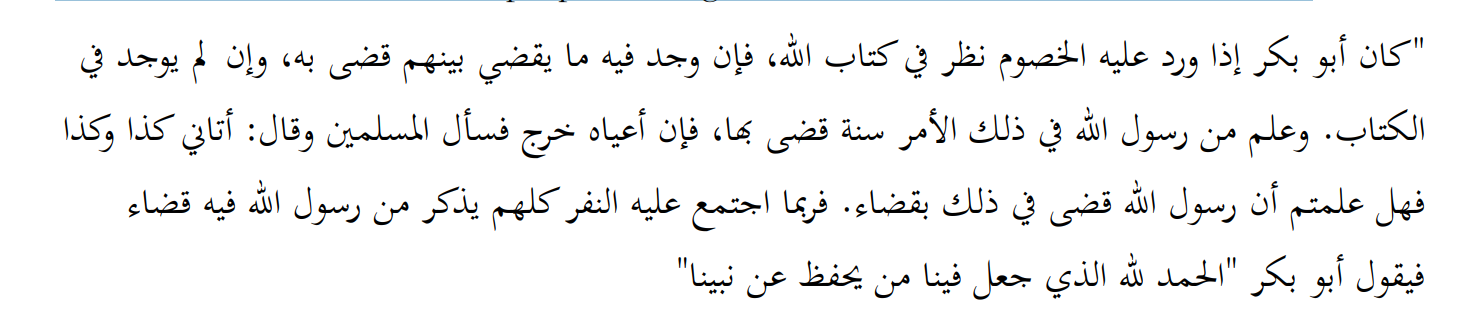
যখন আবু বকরের কাছে কোনো বিবাদ পেশ করা হতো, তিনি আল্লাহর কিতাব দেখতেন। সেখানে তাদের মধ্যে বিচার করার মতো কিছু পেলে সেই রায়ই দিতেন। যদি কুরআনে না পেতেন, আর সেই বিষয়ে রাসূলুল্লাহ ﷺ-এর কোনো সুন্নাহ জানা থাকত, তবে সেই অনুযায়ী বিচার করতেন। তাও না পেলে তিনি বাইরে গিয়ে মুসলিমদের জিজ্ঞেস করতেন, “আমার কাছে এমন এমন একটি বিষয় এসেছে, তোমরা কি এ বিষয়ে রাসূলুল্লাহ ﷺ-এর কোনো রায় জানো?” প্রায়ই পুরো দল একমত হয়ে রাসূলুল্লাহ ﷺ-এর একটি রায়ের কথা উল্লেখ করত। তখন আবু বকর বলতেন, “সমস্ত প্রশংসা আল্লাহর, যিনি আমাদের মধ্যে এমন লোক রেখেছেন যারা আমাদের নবী ﷺ-এর বিষয়ে (বিভিন্ন বিষয়) মুখস্থ রাখে।”
‘When a dispute was reported to Abu Bakr he used to look into the Book of Allah . If he found something to judge between them he gave that judgement and if it is not found in the Qur’ān and he knew a Sunnah from the Messenger of Allah regarding that matter he would give judgement by it. Failing that he would go out and ask the Muslims; such and such matter has come to me do you know of any judgement given by the Messenger of Allah pertaining to this?’ Probably the whole group would agree mentioning a judgment by the Messenger of Allah . Abu Bakr would say: ‘Praise be to Allah Who has made people amongst us memorise (issues) concerning our Prophet .
যখন তিনি রাসূলুল্লাহ ﷺ-এর কোনো সুন্নাহ খুঁজে পেতেন না, তখন তিনি লোকদের নেতৃস্থানীয় ব্যক্তিদের এবং তাদের মধ্যে সর্বোত্তম ব্যক্তিদের একত্র করতেন এবং তাদের সাথে পরামর্শ করতেন। তাদের মধ্যে কোনো বিষয়ে ঐকমত্য হলে তিনি সেই অনুযায়ী ফয়সালা দিতেন। বর্ণিত আছে যে, ‘উমার ফিকহে তাঁর জ্ঞান থাকা সত্ত্বেও সাহাবীদের সাথে পরামর্শ করতেন, এমনকি যখন কোনো ঘটনা তাঁর কাছে উপস্থাপন করা হতো, তিনি বলতেন: আমার জন্য ‘আলীকে ডাকো, যায়দকে ডাকো। তিনি তাদের সাথে পরামর্শ করতেন এবং তারা যে বিষয়ে একমত হতেন, তা দিয়েই বিবাদ মীমাংসা করতেন। সাহাবীগণ একে অপরের কাছে ফিরে যেতেন বলে তাদের মধ্যে মতভেদ ছিল বিরল, কারণ প্রত্যেক সাহাবী অন্য সাহাবীর কাছে নিজের দৃষ্টিভঙ্গি এবং তার উদ্ভাবিত দলিলসমূহ ব্যক্ত করতেন। তাদের মতামত সামগ্রিকভাবে সত্য ও সঠিক ছিল, এবং প্রত্যেকে অন্যের দিকে ফিরে যেতেন। যদিও কিছু বিধানের ক্ষেত্রে তাদের মতভেদ ছিল, তবুও তা ছিল বিরল, এবং তা ছিল তাদের উপলব্ধিগত পার্থক্য, উপলব্ধির পদ্ধতিগত পার্থক্য নয়।
If he failed to find a Sunnah of the Messenger of Allah he gathered the heads of people and the best amongst them and consulted them. If they had a consensus on a matter he would judge with that. It has been reported that ‘Umar used to consult the Sahabah despite his knowledge of fiqh to the extent that when an incident would be refered to him he would say: Call ‘Ali for me, call Zayd. He used to consult them and settle the dispute with whatever they were agreed upon. Due to the Sahabah’s reference to each other differences of opinion between them were rare because each Sahābi expressed to another Sahābi his own perspective and the evidences he educed. Their view on the whole was true and correct and each one referred to the other. And even though their views differed in certain rules but their differences were rare and it was in their understanding and not in the method of understanding.
যখন বিজয়াভিযান বিস্তৃত হলো, সাহাবীগণ বিভিন্ন শহরে ছড়িয়ে পড়লেন এবং তাঁদের পরস্পর সাক্ষাৎ করা কঠিন হয়ে গেল, তখন যখনই এমন কোনো ঘটনা ঘটত যার ব্যাপারে কোনো নস (সুস্পষ্ট দলিল) ছিল না, তখন প্রত্যেক সাহাবী নিজের মতামত দিতেন, সেটি অন্যদের কাছে প্রকাশ করতেন না এবং অন্যদের কাছে পরামর্শও চাইতেন না। কারণ শহরগুলো একে অপর থেকে দূরে থাকায় সাক্ষাৎ কঠিন ছিল, আর নিজ শহরে ঘটে যাওয়া ঘটনার উপর মতামত দেওয়া ও তার মাধ্যমে ফয়সালা করার প্রয়োজনও ছিল। প্রত্যেক মুসলিম শহরে একজন বা একাধিক সাহাবী ছিলেন। তাঁরাই ছিলেন বিধান জানার কেন্দ্রবিন্দু। তাঁরা এমন সব বিধান উদ্ভাবন করতেন যার ব্যাপারে কোনো নস ছিল না, এবং নস ব্যাখ্যা ও স্পষ্ট করার দায়িত্বও পালন করতেন, যেমন তাঁরা মানুষকে কুরআন ও সুন্নাহ শেখানোর দায়িত্ব নিয়েছিলেন। তখনও সুন্নাহ লিপিবদ্ধ করা হয়নি, তাই একই ঘটনার ব্যাপারে সাহাবীদের মতামত ভিন্ন হতো, এবং প্রত্যেকের কাছে তাঁর উদ্ভাবিত মতের পক্ষে দলিল থাকত, যার ভিত্তিতে তিনি ফতোয়া দিতেন। তবে এই সব মতামতই ছিল শরিয়তের বিধান এবং তাঁদের সকলের কাছেই গ্রহণযোগ্য ছিল, কারণ তাঁদের মতভেদ ছিল কেবল বোঝার ক্ষেত্রে। আর ইজতিহাদের পদ্ধতি ছিল এক: কুরআন ও হাদিসের নস বিবেচনা করা, দলিলগুলো পরীক্ষা করা, এবং নিশ্চিত করা যে স্বীকৃত মাসালিহ (কল্যাণ) কেবল সেগুলোই যেগুলো শরিয়ত নির্দেশ করেছে, এবং বিষয় ও মাসালিহকে কিয়াসের মাধ্যমে তুলনা করা। ইজতিহাদের পদ্ধতিতে এই ঐক্য বোঝার মতভেদকে কোনো প্রভাব ফেলতে দেয়নি। বরং এটি ফিকহের বৃদ্ধি ও বিস্তারের অন্যতম কারণ ছিল। তাঁদের ফতোয়াগুলো ঘটে যাওয়া ঘটনা ও বিষয়ের অনুসারে ছিল। তাঁদের মতভেদের পরিধি বিস্তৃত হয়নি, এবং তা ফুরু (ফিকহের শাখা-প্রশাখা) অতিক্রম করেনি। সাহাবীদের ফুরু-তে মতভেদ দুটি কারণে হয়েছিল।