২.১৫ ওহী অবতরণ
2.15 The Revelation
প্রত্যেক মুসলিমের ওহীর প্রতি বিশ্বাস স্থাপন করা আবশ্যক, কারণ এটি ঈমানের একটি মৌলিক বিষয়। তবে ওহীর প্রমাণ যুক্তিনির্ভর নয়; বরং তা সহীহ (বিশুদ্ধ) বর্ণনাসমূহের ভিত্তিতে গৃহীত হয়। ওহীর কোনো স্পর্শযোগ্য অনুভূতি বা বাস্তব অস্তিত্ব নেই বলে বিবেক তার সত্যতা যাচাই করতে পারে না। সুতরাং বিবেকের মাধ্যমে ওহীকে প্রমাণ করার যে কোনো প্রচেষ্টাই ভুল হবে, কারণ স্পর্শযোগ্য বাস্তবতা ছাড়া কোনো কিছু বিবেক দিয়ে প্রমাণ করা সম্ভব নয়।
Each and every Muslim must believe in revelation, as it is a fundamental aspect of belief. However, the evidence for revelation is not rational, rather it is accepted on the basis of authentic texts. Since revelation does not have a tangible sensation or reality, the mind cannot verify its validity. Therefore every attempt to prove revelation by means of the intellect will be incorrect, as it is not possible to use the mind to prove something without a tangible reality.
সুতরাং, যেমন আগে উল্লেখ করা হয়েছে, ওহী (প্রত্যাদেশ) প্রমাণের ভিত্তি বুদ্ধিবৃত্তিক নয়; বরং তা সহীহ (বিশুদ্ধ) বর্ণনার উপর প্রতিষ্ঠিত। কুরআনের সুস্পষ্ট বক্তব্য দ্বারা প্রমাণিত যে রাসূল মুহাম্মাদ ﷺ ওহী লাভ করেছিলেন। আল্লাহ বলেন,
Hence, as mentioned earlier, the evidence for revelation is not intellectual; rather it is established on the basis of authentic narrations. The Definite text of the Qur’ān verifies that the messenger Muhammad recieved revelation. Allah says,
একইভাবে আল্লাহ, যিনি মহাপরাক্রমশালী, প্রজ্ঞাময়, তিনি আপনার প্রতি এবং আপনার পূর্ববর্তীদের প্রতি ওহী প্রেরণ করেন। [TMQ Shura: 3]
"Likewise Allah, the Honourable, the all-wise, reveals to you and to those before you." [TMQ Shura: 3]
এভাবেই আমি আমার নির্দেশে আপনার প্রতি একটি প্রাণদায়ী বাণী অহী করেছি। [TMQ Shura:52]
"And likewise we have revealed to you an invigorate thing by our command." [TMQ Shura:52]
"আর তিনি নিজের খেয়াল-খুশিমতো কথা বলেন না। এটি তো কেবল ওহি, যা তাঁর প্রতি প্রত্যাদেশ করা হয়।" [TMQ Najm: 3]
"And he doesn't utter from his own desire. Indeed it is an inspired inspiration" [TMQ Najm: 3]
"নিশ্চয়ই, হে নবী! আমি আপনার প্রতি ওহী পাঠিয়েছি, যেমন নূহ ও তাঁর পরের নবীদের প্রতি ওহী পাঠিয়েছিলাম।" ﷺ [TMQ Nisa: 163]
"Undoubtedly, O prophet! We have sent revelation to you as we sent it to Noah and the prophets after him." [TMQ Nisa: 163]
"আর তোমার প্রতি যা ওহী করা হয় তুমি তার অনুসরণ করো, এবং আল্লাহ ফয়সালা না করা পর্যন্ত ধৈর্য ধারণ করো। আর তিনিই সর্বোত্তম ফয়সালাকারী।" [TMQ 10:109]
"And follow that which is revealed to you and have patience until Allah decrees and He is the best of judges." [TMQ 10:109]
রাসূলের উপর অবতীর্ণ ওহীর তিনটি অবস্থা ছিল, এবং তাঁর পূর্ববর্তী সকল নবী এই তিনটি অবস্থার মাধ্যমেই ওহী লাভ করেছেন, অন্য কোনো উপায়ে নয়। এই অবস্থাগুলো সবই সেই ওহীর অন্তর্ভুক্ত, যা আল্লাহ কুরআনে ব্যাখ্যা করেছেন। তিনি বলেন,
The revelation that descended on the messenger had three states, all prophets before him recieved the revelation through these only and not another. These states are all categorised under the revelation which Allah explains in the Qur’ān. He says,
"এবং কোনো মানুষের জন্য এটা শোভনীয় নয় যে আল্লাহ তার সাথে কথা বলবেন, তবে ওহীর মাধ্যমে, অথবা সে মহত্ত্বের পর্দার আড়ালে থাকবে, অথবা বার্তাবাহক পাঠিয়ে, আর তিনি যাকে ইচ্ছা ওহী প্রেরণ করবেন।" [TMQ Shura: 51]
"And it is not fit for any man that Allah should speak to him but through revelation, or that the man may be at the other side of the veil of grandeur, or by sending messengers and inspiring whom he wills." [TMQ Shura: 51]
অর্থাৎ, আল্লাহ মানুষের সঙ্গে কেবল তিনটি উপায়ে কথা বলেন: ওহীর মাধ্যমে, পর্দার আড়াল থেকে কথোপকথনের মাধ্যমে, অথবা কোনো বার্তাবাহক (রাসূল) প্রেরণের মাধ্যমে। রাসূলের ﷺ উপর যে ওহী নাযিল হতো, তার দুটি অবস্থা ছিল। একবার তাঁকে ﷺ জিজ্ঞেস করা হলো, "আপনার কাছে ওহী কীভাবে আসে?" তিনি ﷺ উত্তর দিলেন,
That is, Allah only communicates with man through inspiration, through verbal contact via a veil or by sending messengers. The revelation that descended upon the messenger had two states. He informed about them when he was once asked, "How does the revelation come to you?" He replied,
কখনো তা আসে ঘণ্টার ঝনঝনানি বা টুংটাং শব্দের মতো, যা আমার উপর সবচেয়ে কঠিন হয়, আর যখন তা আমাকে ছেড়ে যায়, আমি সবকিছু আত্মস্থ করে ফেলি। আর কখনো ফেরেশতা মানুষের আকৃতিতে আমার কাছে আসেন ও আমার সঙ্গে কথা বলেন, এবং কী বলা হচ্ছে তা আমি বুঝতে পারি। [Bukhari]
"Sometimes it comes like the clattering or the jingling of a bell which is severest on me and when it leaves me, I have absorbed everything. And sometimes the angel comes to me in a form of a man and speaks to me and I am aware of what is being said." [Bukhari]
এই দুই অবস্থা নিম্নরূপ: প্রথমত- ফেরেশতা নবীর কাছে ইশারার মাধ্যমে ওহী পাঠান, কোনো শব্দ বা ভাষা ব্যবহার না করেই। ওহী নবীর হৃদয়ে ঢেলে দেওয়া হয়, যেমন তিনি ﷺ বলেছেন,
These two states are as follows: Firstly- the angel inspires the prophet by indication and without using words or language. The revelation is inspired into the mind of the prophet , just as he said,
"রূহুল কুদুস (জিবরীল) আমার অন্তরে ইলহাম করেছেন যে, কোনো প্রাণ ততক্ষণ মৃত্যুবরণ করবে না যতক্ষণ না তার রিযিক ও তার আজল পূর্ণ হয়। অতএব, হে মানুষ, আল্লাহকে ভয় করো এবং উত্তমভাবে জীবিকা অন্বেষণ করো।" [Extraced by AlHakim]
"Ruh Al-Quds (Jibril) inspired in to me that no soul shall die until it has completed its Rizq and its Ajal. Therefore fear Allah O people and acquire the means to do good" [Extraced by AlHakim]
এবং রাসূলুল্লাহ ﷺ জাগ্রত ও ঘুমন্ত উভয় অবস্থায় আল্লাহর পক্ষ থেকে প্রাপ্ত দর্শন লাভ করতেন। তাঁর কাছে কিছু বিষয় জাগ্রত অবস্থায় ওহীরূপে প্রেরণ করা হতো, আবার তিনি ঘুমের মধ্যেও কিছু দর্শন লাভ করতেন, আর এসব দর্শনের সবই ছিল ওহী। মুমিনদের জননী আয়েশা (রাঃ) বলেছেন,
Also the messenger whilst dreaming had visions that he received from Allah both in the states of consciousness and sleep. Some of it was inspired to him whilst he was awake and he would have certain visions in his dreams all of which were revelation. As the mother of the believers, Aisha said,
প্রথমত, রাসূল ﷺ ঘুমের মধ্যে সত্য স্বপ্ন দেখতে শুরু করেন। তিনি যে স্বপ্নই দেখতেন, তা ছিল ভোরের আলোর মতো স্পষ্ট ও সত্য।
"Firstly, the messenger began seeing true visions in his sleep. Every vision he had was true as clear as the morning."
রাসূল ﷺ-ও অনুভব করতেন যে কোনো এক ধরনের ওহী আসতে যাচ্ছে, কিন্তু তা আসত না। আয়িশা (রাঃ) বর্ণনা করেন যে হারিস ইবনে হিশাম (রাঃ) জিজ্ঞেস করলেন, "হে আল্লাহর রাসূল! আপনার কাছে ওহী কীভাবে আসে?" রাসূল ﷺ বললেন,
The messenger would also feel that some form of revelation was about to come, but it didn't come. Aisha narrated that Harith ibn Hashim asked the messenger , "O messenger, how does the revelation come to you?" The messenger said,
কখনো তা আসে ঘণ্টার ঝনঝন শব্দের মতো, যা আমার উপর সবচেয়ে কঠিন হয়, আর যখন তা আমাকে ছেড়ে যায়, তখন আমি সবকিছু আত্মস্থ করে ফেলি। [Bukhari]
"Sometimes it comes like the clattering /jingling of a bell which is severest on me and when it leaves me, I have absorbed everything." [Bukhari]
এই সমস্ত প্রকার - অর্থাৎ ওহি, স্বপ্ন, কথা ছাড়া (প্রত্যক্ষ) ইলহাম এবং এর মতো সবকিছু - একই অবস্থার অন্তর্ভুক্ত, যা আল্লাহর এই বাণীর আওতায় পড়ে,
All these variations i.e. inspiration, dream, revelation without talk and everything similar constitute one state and fall within the saying of Allah ,
শুধুমাত্র ওহি [TMQ Shura: 51]
"Nothing but revelation" [TMQ Shura: 51]
ভাষাগতভাবে যখন "কাউকে ওহী করা" ক্রিয়াটি ব্যবহার করা হয়, তার অর্থ হলো ইঙ্গিত করা বা মাথা নেড়ে ইশারা করা। সুতরাং আল্লাহ তাঁর নিকট ওহী করেন এবং তাঁকে ইলহাম করেন। আল্লাহ বলেন,
Because linguistically when the verb "to reveal to someone" is used it means to indicate or shake ones head. Thus Allah reveals to him and inspires him. Allah says,
"আর তোমার প্রতিপালক মৌমাছিকে ওহী করলেন," [TMQ Nahl: 68]
"And your lord inspired the bee", [TMQ Nahl: 68]
এভাবে মৌমাছির প্রতি ওহী হলো: মৌমাছির হৃদয়ের মধ্যে থাকা ইলহাম ও সহজাত জ্ঞান।
Thus the inspiration to the bee is: the inspiration and the innate knowledge within the bee’s heart.
দ্বিতীয় অবস্থা হলো মৌখিক যোগাযোগের মাধ্যমে ফেরেশতার পক্ষ থেকে অনুপ্রাণিত ওহী। নবী ﷺ-এর কাছে নিশ্চিত প্রমাণের মাধ্যমে এটি যে ওহী এবং বার্তাবাহক যে ফেরেশতা, অর্থাৎ জিবরীল, তা জানার পর এই ওহী তাঁর কাছে মৌখিকভাবে পৌঁছানো হয়। আল্লাহ বলেন,
The second state is the revelation inspired by means of oral communication from the angel. It is transmitted orally to the prophet after he learns through decisive evidence that this is revelation and the message bearer is the angel, i.e. Jibril. Allah says,
বিশ্বস্ত আত্মা এটি নিয়ে অবতীর্ণ হয়েছেন। তোমার অন্তরে, যেন তুমি সতর্ক করতে পারো। [TMQ Shuara: 193]
"The trusted spirit has descended with it. On your heart that you may warn." [TMQ Shuara: 193]
অর্থাৎ, আল্লাহ জিবরীলকে পাঠান, যিনি রাসূলের সাথে কথা বলেন, এবং রাসূল একই সঙ্গে তাঁর কথাগুলো শোনেন ও সংরক্ষণ করেন। আয়িশা রাযিয়াল্লাহু আনহা বর্ণনা করেছেন যে নবী ﷺ বলেছেন,
In other words, Allah sends Jibril who speaks with the messenger who simultaneously both hears and preserves his words. Aisha narrated that the prophet said,
"আর কখনো কখনো ফেরেশতা আমার কাছে একজন মানুষের রূপে আসেন, তিনি আমার সঙ্গে কথা বলেন, আর আমি তাঁর কথাগুলো সচেতনভাবে বুঝতে পারি।" [Bukhari]
"And sometimes the angel comes to me as a man and he talks to me and I am conscious of what he is saying." [Bukhari]
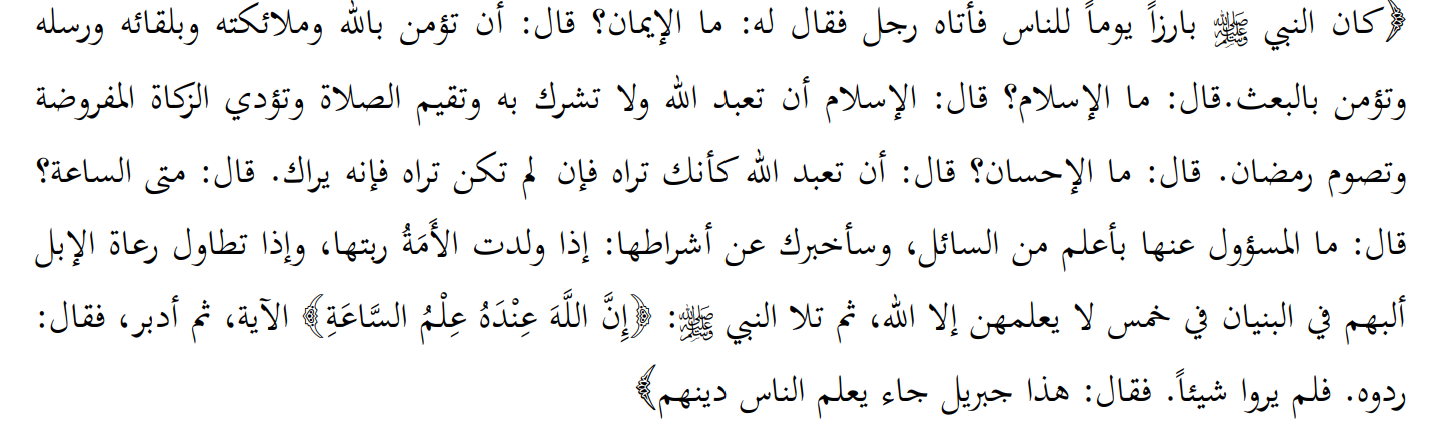
আবু হুরাইরা (রাঃ) থেকে বর্ণিত, একদিন নবী ﷺ লোকদের মাঝে ছিলেন, এমন সময় একজন ব্যক্তি এসে তাঁকে জিজ্ঞেস করল, "ঈমান কী?" তিনি ﷺ বললেন, "ঈমান হলো আল্লাহর প্রতি, তাঁর ফেরেশতাদের প্রতি, তাঁর সাথে সাক্ষাতের প্রতি, তাঁর রাসূলদের প্রতি এবং পুনরুত্থানের প্রতি বিশ্বাস স্থাপন করা।" সে জিজ্ঞেস করল, "ইসলাম কী?" তিনি ﷺ বললেন, "ইসলাম হলো, তুমি আল্লাহর ইবাদত করবে এবং তাঁর সাথে কোনো শিরক করবে না, সালাত কায়েম করবে, নির্ধারিত যাকাত আদায় করবে এবং রমযান মাসে সিয়াম পালন করবে।" সে জিজ্ঞেস করল, "ইহসান কী?" তিনি ﷺ বললেন, "তুমি আল্লাহর ইবাদত এমনভাবে করবে যেন তুমি তাঁকে দেখছ, আর যদি তুমি তাঁকে দেখতে না পাও, তবে নিশ্চয়ই তিনি তোমাকে দেখছেন।" সে বলল, "কিয়ামত কখন হবে?" তিনি ﷺ বললেন, "যে এ বিষয়ে জিজ্ঞাসিত, সে জিজ্ঞাসাকারীর চেয়ে বেশি জানে না। তবে আমি তোমাকে এর কিছু নিদর্শন বলে দিচ্ছি: যখন দাসী তার মনিবকে জন্ম দেবে এবং যখন নগ্নপদ, বস্ত্রহীন, দরিদ্র মেষপালকেরা উঁচু উঁচু অট্টালিকা নিয়ে গর্ব করবে। এটি সেই পাঁচটি বিষয়ের একটি, যা আল্লাহ ছাড়া কেউ জানে না।" এরপর নবী ﷺ এই আয়াত তিলাওয়াত করলেন: {নিশ্চয়ই আল্লাহর কাছেই কিয়ামতের জ্ঞান রয়েছে।} তারপর লোকটি ফিরে চলে গেল। নবী ﷺ সাহাবীদের বললেন, "তাকে ডাকো।" কিন্তু তাঁরা কিছুই দেখতে পেলেন না। তখন তিনি ﷺ বললেন, "ইনি ছিলেন জিবরীল, তিনি এসেছিলেন মানুষকে তাদের দ্বীন শিক্ষা দিতে।" [Bukhari]
Abu Hurairah narrated that the prophet was with the people one day when a person came and asked him, "What is Emaan?" He said, "It is the belief in Allah , his angels, in the meeting with him , his messengers and the resurrection." He asked, "What is Islam?" He said, "Islam is that you worship Allah and do not commit Shirk, establish the prayer, pay the enjoined Zakat and you fast in Ramadan." He said, "What is Ihsaan?" He said, "That you worship Allah as if you see him, and if you can not see him, surely he sees you." He said, "When is the hour?" He said, "The one questioned about it knows no better then the questioner. I will tell you of its signs. When the mother will give birth to her Master and when the shepherd will build tall buildings. It is one of the five things that no one will know them except Allah ." Then the prophet recited the Ayat, "Indeed Allah has the knowledge of the hour." Then the man turned and left. The prophet said to the Sahaba call him but they didn't see anything. He said, "This was Jibril, he came to teach people their Deen." [Bukhari]
হাদীসে এমন কিছু ঘটনার উল্লেখ আছে যেখানে জিবরীল (আলাইহিস সালাম) অবতরণ করে নবী ﷺ-এর সঙ্গে কথা বলতেন, আর তিনি তা শুনতেন। এটি রাসূলের জন্য ওহীর একটি রূপ ছিল, কারণ ফেরেশতা কথোপকথনের আকারে তাঁকে অর্থসমূহ জানিয়ে দিতেন। শব্দ ও অর্থ উভয়ের মাধ্যমে ওহী কেবল মহান কুরআনের জন্য সীমাবদ্ধ। আর অর্থের মাধ্যমে ওহীর ক্ষেত্রে রাসূল ﷺ নিজের ভাষায় তা প্রকাশ করতেন, অথবা প্রয়োগের মাধ্যমে, অর্থাৎ তাঁর কর্মের দ্বারা, কিংবা নীরবতার মাধ্যমে; আর এটিই সুন্নাহ।
There are a number of incidents mentioned in Ahadith in which Jibril descended and talked to the prophet and he would listen. This was a form of revelation for the messenger, as the angel would tell the messenger the meanings in the form of a conversation. The revelation by words and meaning is restricted to the Noble Qur’ān. As for revelation by meaning, the messenger would express this by using his own words, through application i.e. his actions, or by silence and this is the Sunnah.
হাদীসে কুদসী সুন্নাহ হিসেবে গণ্য হয়, কারণ এর অর্থ আল্লাহর পক্ষ থেকে প্রকাশিত হলেও এর শব্দাবলী নবী ﷺ-এর নিজের। হাদীসে কুদসীর শব্দাবলী আল্লাহর নয়, কেননা আল্লাহর শব্দাবলী শুধুমাত্র কুরআনের জন্য নির্দিষ্ট, আর এর প্রমাণ হলো কুরআনের অনুকরণহীনতা। যদিও সুন্নাহ ওহীর বিভিন্ন রূপে আসে, যেমন অন্তরে ইলহাম, স্বপ্ন এবং সরাসরি হৃদয়ে নিক্ষেপ, তেমনি তা জাগ্রত অবস্থায় এবং জিবরীল ও রাসূল ﷺ-এর মধ্যকার কথোপকথন হিসেবেও আসে।
The Hadith Qudsi is regarded as Sunnah because although its meaning is revealed from Allah its words are from the prophet . The words of the Hadith Qudsi are not from Allah because the words that are from Allah are specifically for the Qur’ān and this is proven by its inimitability. Although the Sunnah comes in the forms of inspiration, dream and is cast directly in the heart, it also comes both in wakefulness and as a dialogue between Jibril and the messenger .
কুরআন কেবল রাসূলের মাধ্যমেই অবতীর্ণ হয়েছে, কারণ এর শব্দগুলো আল্লাহর পক্ষ থেকে। কুরআনের অবতরণ সংক্রান্ত অসংখ্য আয়াত রয়েছে। আল্লাহ বলেন,
The Qur’ān is only revealed through the messenger because its words are from Allah . There are numerous ayats detailing the revelation of the Qur’ān. Allah says,
এবং আমি আপনার প্রতি আরবি ভাষায় কুরআন অবতীর্ণ করেছি। {আর আমি আপনার প্রতি আরবি ভাষায় কুরআন অবতীর্ণ করেছি} [TMQ Shura:7]
"And we have revealed the Quran to you in Arabic" [TMQ Shura:7]
"আর আমি আপনার প্রতি কিতাব থেকে যা ওহী করেছি, তা সত্য" — (হে মুহাম্মাদ ﷺ) [TMQ Fatir: 31]
" And what We have revealed to you (O Muhammad [saw]) of the Book, it is the (very) truth " [TMQ Fatir: 31]
এখানে যে বইটির কথা বলা হয়েছে, তা হলো আল-কুরআন, আর এখানে "মিন" (من) শব্দটি প্রতিনিধিত্ব বোঝানোর জন্য ব্যবহৃত হয়েছে।
The book referred to is the Qur’ān and “min” here is to indicate representation.
এই কুরআন আমার কাছে ওহী হিসেবে পাঠানো হয়েছে, যাতে এর মাধ্যমে আমি তোমাদেরকে এবং যাদের কাছে এটি পৌঁছাবে তাদেরকে সতর্ক করতে পারি। [TMQ An’aam: 6]
“This Qur'ân has been revealed to me that I may therewith warn you and whomsoever it may reach " [TMQ An’aam: 6]
আমি আপনার নিকট (মুহাম্মাদ ﷺ) এই কুরআনের মাধ্যমে ওহী প্রেরণ করে সর্বোত্তম কাহিনী বর্ণনা করছি। [TMQ Yoosuf: 3]
" We relate to you (Muhammad [sal-Allâhu 'alayhi wa sallam]) the best of stories through Our Revelations to you, of this Qur'ân" [TMQ Yoosuf: 3]
এবং তোমার প্রতিপালকের কিতাব (কুরআন) থেকে তোমার প্রতি যা ওহী করা হয়েছে তা তিলাওয়াত করো। তাঁর বাণীসমূহ কেউ পরিবর্তন করতে পারে না ﷺ। [TMQ alKahf: 27]
" And recite what has been revealed to you (O Muhammad PBUH) of the Book (the Qur'ân) of your Lord. None can change His Words, " [TMQ alKahf: 27]
এটি কুরআন। এ ছাড়াও আরও কিছু আয়াত রয়েছে, যেখানে সাধারণভাবে ওহির কথা বলা হয়েছে, যার মধ্যে সুন্নাহও অন্তর্ভুক্ত। যেমন, আল্লাহ বলেন,
It is the Qur’ān. There are other ayats as well, which mention the revelation in general including the Sunnah. For example, Allah says,
"যদি আমি হেদায়েতের উপর থাকি, তবে তা কেবল আমার প্রভুর ওহী আমার প্রতি অবতীর্ণ হওয়ার কারণে।" [TMQ As-saba: 50]
" If I remain guided, it is because of the Revelation of my Lord to me” [TMQ As-saba: 50]
আর তিনি বলেন,
And He says,
"নিশ্চয়ই আমি তোমার কাছে ওহী পাঠিয়েছি (হে মুহাম্মাদ ﷺ), যেমন আমি নূহ (আলাইহিস সালাম)-এর কাছে এবং তাঁর পরবর্তী নবীদের কাছে ওহী পাঠিয়েছিলাম।" [TMQ Nisa: 163]
" Verily, We have sent the Revelation to you (O Muhammad [saw]) as We sent the Revelation to Nûh (Noah) and the Prophets after him" [TMQ Nisa: 163]
আর তিনি বলেন,
And He says,
এবং তোমার প্রতিপালকের পক্ষ থেকে তোমার প্রতি যা ওহী করা হয়েছে তার অনুসরণ কর। নিশ্চয়ই আল্লাহ তোমরা যা কর সে বিষয়ে সম্যক অবগত। [TMQ Ahzaab: 2]
"And follow that which is revealed to you from your Lord. Verily, Allâh is Well-Acquainted with what you do" [TMQ Ahzaab: 2]
এই দুটি উল্লিখিত অবস্থার কথা গ্রন্থসমূহে আলোচিত হয়েছে। তৃতীয় অবস্থাটির কথা তাঁর এই বাণীতে উল্লেখ করা হয়েছে,
These two mentioned states have been discussed in the texts, The third state is mentioned in His saying,
অথবা পর্দার আড়াল থেকে [TMQ Shura: 51]
"Or from behind a veil” [TMQ Shura: 51]
এটাই মূসা (আঃ)-এর সাথে ঘটেছিল। এই আয়াতটি সেই ঘটনার প্রতি ইঙ্গিত করছে যখন আল্লাহ পর্দার আড়াল থেকে মূসার সাথে কথা বলেছিলেন। অর্থাৎ, যেমন পর্দানশীন ব্যক্তি কোনো গণ্যমান্য ব্যক্তি ও সম্ভ্রান্ত লোকদের সাথে কথা বলে। তিনি পর্দার আড়াল থেকে কথা বলেন, এবং যদিও অন্য ব্যক্তির কণ্ঠস্বর শোনা যায়, তাকে দেখা যায় না। আল্লাহ মূসার সাথে এভাবেই কথা বলেছিলেন।
This is what happened with Musa . This Ayat is indicating to the incident in which Allah spoke to Musa from behind a veil. That is, just as the veiled person speaks with some dignitaries and with people of distinction. He speaks from behind a veil and although one hears the other person’s voice, he does not see him. This is the manner in which Allah spoke with Musa .
এমন একটি ঘটনা নবী ﷺ-এর জীবনে শুধু একবারই ঘটেছিল, যা আল-ইসরা ওয়াল-মি‘রাজের সময়। এটি শুধু একটি সহীহ হাদীসেই উল্লেখ হয়নি, বরং সূরা আন-নাজম-এও এর ইঙ্গিত দেওয়া হয়েছে। আল্লাহ বলেন,
Such an incident only occurred once with the prophet during the al-Isra wal-Miraj, which has not only been mentioned in an authentic Hadith, but has also been indicated by Sura al-Najm. Allah says,
"এটি তো কেবল একটি প্রত্যাদেশ, যা অবতীর্ণ করা হয়েছে। তাঁকে শিক্ষা দিয়েছেন একজন মহাশক্তিশালী, {প্রবল শক্তির অধিকারী} [জিবরীল]। যিনি দৈহিক ও মানসিক সকল ত্রুটি থেকে মুক্ত। অতঃপর তিনি (জিবরীল) উঠে দাঁড়ালেন এবং স্থির হলেন। যখন তিনি [জিবরীল] দিগন্তের সর্বোচ্চ প্রান্তে ছিলেন, তখন তিনি [জিবরীল] নিকটবর্তী হলেন এবং আরও কাছে এলেন, এমনকি দুই ধনুকের দৈর্ঘ্যের দূরত্বে বা তার চেয়েও কাছে। অতঃপর (আল্লাহ) তাঁর বান্দার প্রতি [জিবরীল (আ.)-এর মাধ্যমে মুহাম্মাদ ﷺ-এর প্রতি] যা প্রত্যাদেশ করার ছিল, তা প্রত্যাদেশ করলেন।" [TMQ Najm: 4-10]
"It is only a Revelation revealed.He has been taught (this Qur'ân) by one mighty in power [Jibril].One free from any defect in body and mind then he (Jibrîl) rose and became stable.While he [Jibrîl)] was in the highest part of the horizon, Then he [Jibrîl] approached and came closer, And was at a distance of two bows' length or (even) nearer. So (Allâh) revealed to His slave [Muhammad [saw] through Jibrîl [as]] whatever He revealed." [TMQ Najm: 4-10]
ইসরা ওয়াল-মিরাজের এই ঘটনা ছাড়া, ওহী নবী ﷺ-এর কাছে ইলহাম (অন্তরে নিক্ষেপ) এবং একজন বার্তাবাহকের মাধ্যমে অবতীর্ণ হতো।
With the exception of this event i.e. al-Isra wal-Miraj, the revelation descended upon the prophet in the form of an inspiration and through a messenger.
সকল প্রকার ওহীই দলিল বা প্রমাণ। ফেরেশতা ও রাসূলের মধ্যে কথা, ইঙ্গিত বা আলাপের মাধ্যমে যে যোগাযোগ হয়, তা স্পষ্ট ওহী। অন্তরে ইলহাম এবং স্বপ্নও স্পষ্ট ওহী, এবং আল্লাহ যে নবীদের সঙ্গে কথা বলেন, তাও ওহীর একটি রূপ। এই ওহী একটি অকাট্য দলিল, কেননা তা সবচেয়ে বিশুদ্ধ ও সুনিশ্চিত বর্ণনায় এবং সুস্পষ্ট অর্থবোধক বক্তব্যে বর্ণিত হয়েছে।
All the types of revelation are forms of evidence. The communication between the angel and the messenger by talk or indication or conversation is a clear revelation. The inspiration and visions are clear revelations and Allah speaking to the prophets is also a form of revelation. This revelation is a categorical proof as it has been reported in the most authentic and definite texts of definite meaning.