২৬. মুমিনের কাফিরদের সাথে বন্ধুত্ব
26. The Believer's Befriending The Disbelievers
আল্লাহ (SWT) বলেছেন:
Allah (swt) said:
“মুমিনগণ যেন মুমিনদের পরিবর্তে কাফিরদেরকে বন্ধুরূপে গ্রহণ না করে, আর যে এরূপ করবে, আল্লাহর সাথে তার কোনো সম্পর্ক নেই, তবে যদি তোমরা তাদের পক্ষ থেকে কোনো আশঙ্কার আশঙ্কা করো (তবে ভিন্ন কথা)। আর আল্লাহ তোমাদেরকে নিজের সম্পর্কে সতর্ক করছেন, এবং আল্লাহর দিকেই প্রত্যাবর্তন।” [সূরা আলে ইমরান ৩:২৮]
“Let not the believers take the disbelievers as friends instead of believers, and whoever does that is not of Allah in anything except if you fear from them something to be feared. And Allah warns you against Himself and to Allah is the return” [TMQ 3:28].
Ya’qub ও Sahl এটিকে (taqiyyah) পড়েন, যা Al-Hasan ও Mujahid-এর কিরাআত, আর বাকিরা পড়েন (tuqat)। Al-Qamus Al-Muheet-এ বলা হয়েছে: ‘(At-tawqiyya) হলো (al-kalau) ও রক্ষা। আমি (taqa) কোনো কিছু থেকে আত্মরক্ষা করি, আমি (taqa) করেছি এবং (taqi) করি, (taqa) এবং সে (taqi) করে, (tiqa) যেমন (kisa), অর্থাৎ আমি তা থেকে ভয় পেয়েছি।’ আয়াতের এই বাক্যটি এর বিষয় নির্দিষ্ট করে দেয়, আর শব্দটির এই আভিধানিক অর্থ (taqiyyah) এই আয়াতে তার অর্থ নির্ধারণ করে, কারণ এর জন্য কোনো শরয়ি অর্থ প্রতিষ্ঠিত হয়নি। সুতরাং আয়াতটিকে তার আভিধানিক অর্থে ব্যাখ্যা করাই বাঞ্ছনীয়। এই ভিত্তিতেই আয়াতটি তার সাধারণ ও বিস্তারিত উভয় দিক থেকে বোঝা যায়। আর অবতরণের প্রেক্ষাপট সম্পর্কে যে হাদীসসমূহ এসেছে, তা যদি সহীহ প্রমাণিত হয়, তবে সেগুলো আয়াতে যা এসেছে তার খুঁটিনাটি বিষয়ে পথনির্দেশ করে, কিন্তু আয়াতের বিষয় কিংবা ভাষা ও শরীয়ত অনুযায়ী তার বাক্যসমূহের অর্থ পরিবর্তন করে না। আয়াতের বিষয়টি তার বাক্যে স্পষ্ট, যা হলো মু’মিনদের কাফিরদের সাথে বন্ধুত্ব স্থাপন করা, অর্থাৎ তাদেরকে বন্ধু হিসেবে গ্রহণ করা। আয়াতটির পাঠ হলো:
Ya’qub and Sahl recite it as (taqiyyah) which is the recitation of Al-Hasan and Mujahid, while the rest (recite it) as (tuqat). It is said in Al-Qamus Al-Muheet: ‘(At-tawqiyya) is (al-kalau) and protection. I do (taqa) something and I did (taqa) it and do (taqi) it (taqa) and he (taqi) it (tiqa) like (kisa) is I feared it.’ This text in the ayah specifies its subject and this linguistic meaning of the word (taqiyyah) specifies what this word means in this ayah in meaning since no Shari’ah meaning was established for it. So it specifies interpreting it with its linguistic meaning. Upon this basis alone is the ayah understood in its generality and details. As for what came in the ahadith of the circumstances of its revelation, if authenticated, guides to the details of what came in the ayah but would not change its subject neither the meaning of its sentences according to the language and Shar’a. The subject of the ayah is clear in its sentence which is believers befriending the disbelievers i.e. treating them as friends. The text is:
“বিশ্বাসীগণ যেন বিশ্বাসীদের বাদ দিয়ে অবিশ্বাসীদের বন্ধুরূপে গ্রহণ না করে” [TMQ 3:28]।
“Let not the believers take the disbelievers as friends instead of believers” [TMQ 3:28].
যদি কোনো আয়াত বা হাদীস কোনো নির্দিষ্ট বিষয় সম্পর্কে এসে থাকে, তবে তা সেই বিষয়ের সঙ্গেই নির্দিষ্ট এবং তার বাইরের কোনো কিছুকে অন্তর্ভুক্ত করে না। আলোচ্য বিষয় হলো মুমিনদের কাফিরদের সঙ্গে বন্ধুত্ব করা, যা নিষেধ করে সুস্পষ্টভাবে একটি আয়াত এসেছে। আর এ বিষয়ে এটিই একমাত্র আয়াত নয়; বরং এ সম্পর্কে আরও অসংখ্য আয়াত এসেছে, যেমন আল্লাহর এই বাণী:
If the ayah or ahadith came about a specific subject, then it is specific to this subject and does not include anything else. The issue is the issue of believers befriending disbelievers for which came the ayah decisively prohibiting it. Nor is this the only ayah upon this subject; there have come numerous ayahs like Allah’s statement:
“মুনাফিকদের সুসংবাদ দাও যে, তাদের জন্য রয়েছে যন্ত্রণাদায়ক শাস্তি। যারা মুমিনদের বাদ দিয়ে কাফিরদেরকে (আউলিয়া) বন্ধু বানায়।” [তাফসীরুল কুরআন ৪:১৩৮-১৩৯]
“Give tidings to the hypocrites that for them is a painful punishment. Those who take the disbelievers as (awliya) instead of believers” [TMQ 4:138-139].
এবং আল্লাহর বাণী:
And Allah’s statement:
“হে মুমিনগণ, মুমিনদের পরিবর্তে কাফিরদের (আওলিয়া) হিসেবে গ্রহণ করো না” [TMQ 4:144]
“O you who believe, do not take the disbelievers as (awliya) instead of disbelievers” [TMQ 4:144]
এবং তাঁর (SWT) বাণী:
And His (swt) statement:
"তুমি এমন কোনো জাতিকে খুঁজে পাবে না, যারা আল্লাহ ও শেষ দিবসে ঈমান রাখে, অথচ তারা আল্লাহ ও তাঁর রাসূল ﷺ-এর বিরোধিতাকারীদের ভালোবাসে।" [TMQ 58:22]
“You will not find a people who believe in Allah and the Day of Judgement loving those who oppose Allah and His Messenger” [TMQ 58:22]
তাঁর (SWT) বাণী
And His (swt) statement
“ইহুদি ও খ্রিস্টানদের (আওলিয়া) হিসেবে গ্রহণ করো না” [TMQ 5:51]
“Do not take the Jews and Christians as (awliya)” [TMQ 5:51]
এবং তাঁর বাণী:
And His statement:
“আমার শত্রু ও তোমার শত্রুকে (আওলিয়া) বন্ধুরূপে গ্রহণ করো না।” [TMQ 60:1]
“Do not take my enemy and your enemy as (awliya)” [TMQ 60:1]
বিষয়টি হলো মুমিনদের কাফিরদের সাথে বন্ধুত্ব করার বিষয়, আর আয়াতের বাকি অংশ এই বিষয়েরই বিস্তারিত বর্ণনা। কারণ আল্লাহ (সুবহানাহু ওয়া তাআলা) মুমিনদের কাফিরদের বন্ধু হিসেবে গ্রহণ করতে নিষেধ করেছেন, এবং এই নিষেধাজ্ঞাকে এমন সুস্পষ্ট দৃঢ়তার সাথে যুক্ত করেছেন যে, যে ব্যক্তি এমন করবে এবং কাফিরদের বন্ধু বানাবে, আল্লাহ তার থেকে দায়মুক্ত। এরপর তিনি এই সুস্পষ্ট নিষেধাজ্ঞা থেকে একটি অবস্থাকে ব্যতিক্রম করেছেন, তা হলো মুমিন যখন কাফিরদের পক্ষ থেকে ক্ষতির আশঙ্কা করে। সেক্ষেত্রে ক্ষতি প্রতিহত করার জন্য কাফিরদের সাথে বন্ধুত্ব করা জায়েয। এটি তখনই, যখন মুসলিম কাফিরদের কর্তৃত্বের অধীনে থাকে এবং নিজের বিষয়ে পরাভূত হয়, অর্থাৎ কাফিরের ভয়ই তার বন্ধুত্বের অনুমতি দেয়। যদি সেই ভয় দূর হয়ে যায়, তাহলে বন্ধুত্ব নিষিদ্ধ হয়ে যায়। সুতরাং এখানে বিষয়টি এমন নয় যে, বন্ধুত্ব প্রদর্শন করা হচ্ছে আর ভিতরে অন্য কিছু গোপন রাখা হচ্ছে; বরং বিষয়টি হলো, মুমিন যখন পরাভূত অবস্থায় কাফিরের ভয়ে থাকে, সেই অবস্থাকে মুমিনদের বন্ধুত্ব নিষিদ্ধ করার সাধারণ বিধান থেকে আলাদা করা। আয়াতের অর্থ হলো, মুমিনদের জন্য কাফিরদের নিজেদের বন্ধু হিসেবে গ্রহণ করার বিষয়ে সুস্পষ্ট নিষেধাজ্ঞা, অর্থাৎ তাদের কাছে সাহায্য চাওয়া, তাদের ওপর নির্ভর করা, তাদের সাথে বন্ধুত্ব স্থাপন করা এবং তাদের সাথে ভালোবাসার সম্পর্ক রাখা নিষিদ্ধ। তাই আয়াত মুমিনদের মুমিনদের বদলে কাফিরদের সাথে বন্ধুত্ব করতে নিষেধ করেছে, তারপর এর মধ্য থেকে একটি অবস্থাকে ব্যতিক্রম করেছে, যা হলো কাফিরদের কর্তৃত্বের অধীনে থাকাকালে তাদের পক্ষ থেকে ভয়ের অবস্থা। তখন তাদের ক্ষতি ও অনিষ্ট প্রতিরোধ করতে তাদের প্রতি ভালোবাসা প্রকাশ করা এবং তাদের সাথে বন্ধুত্ব করা জায়েয। অর্থাৎ তাদের শাসনের অধীনে থাকাকালে তাদের ভয়ের অবস্থায় তাদের বন্ধু হিসেবে গ্রহণ করা জায়েয। এ ছাড়া সম্পূর্ণরূপে তা জায়েয নয়। এই বিধান কেবল কাফিরদের সাথে মুমিনদের সম্পর্কের ক্ষেত্রেই প্রযোজ্য, কেননা আয়াতটি মক্কার মুশরিকদের সাথে বন্ধুত্বপূর্ণ সম্পর্ক রাখা মুমিনদের ঘটনা প্রসঙ্গে অবতীর্ণ হয়েছিল। এতে মদীনার অধিবাসীদের মক্কার মুশরিকদের সাথে বন্ধুত্ব করতে নিষেধ করা হয়েছিল, এবং সাধারণভাবে সকল মুমিনকেও নিষেধ করা হয়েছিল, তবে এর থেকে মক্কায় অবস্থানরত সেই মুমিনদের বাদ দেওয়া হয়েছিল, যারা তাদের বিষয়ে পরাজিত ছিল। কারণ তাদের কাছাকাছি থাকা কাফিরদের ক্ষতির ভয় ছিল, তাই তাদের বাদ দেওয়া হয়েছে। এটাই আয়াতের বিষয় এবং এটাই তার অর্থ, আর এর থেকে যে শরয়ী বিধান উদ্ভাবিত হয় তা হলো, মুমিনদের জন্য কাফিরদের সাথে সর্বপ্রকার বন্ধুত্ব নিষিদ্ধ, যেমন সাহায্য, সখ্যতা, সহযোগিতা ইত্যাদি, কারণ "আউলিয়া" শব্দটি আয়াতে সাধারণভাবে এসেছে, যা এর সকল অর্থকে অন্তর্ভুক্ত করে। আর কাফিররা মুসলিমদের উপর বিজয়ী হলে এবং মুসলিমরা তাদের বিষয়ে পরাজিত হলে, অর্থাৎ তাদের সহিংসতা ও ক্ষতির ভয় থাকলে, সেই অবস্থায় বন্ধুত্বের অনুমতি দেওয়া হয়েছে, ঠিক যেমন মক্কায় মুসলিমদের অবস্থা ছিল মুশরিকদের মাঝে। আয়াতে এর বাইরে আর কোনো অর্থ নেই এবং এই বিধান ছাড়া আর কোনো বিধানও এ থেকে উদ্ভাবিত হয় না। আর কেউ কেউ যে বলেন, "তাকিয়্যাহ" হলো কোনো মুসলিম যার থেকে ক্ষতির আশঙ্কা করে বা যার কাছে নিজের প্রকৃত অবস্থা ও অন্তরের বিষয় ধরা পড়ার ভয় করে, তার সামনে গোপন বিষয়ের বিপরীত প্রকাশ করা, সেই ব্যক্তি কাফির হোক বা মুমিন, এই কথাটি সম্পূর্ণ ভুল। আয়াত এর কোনো কিছুর প্রতি ইঙ্গিত করে না, কারণ "ইল্লা আন তাত্তাকূ মিনহুম" (তবে যদি তোমরা তাদের থেকে ভয় কর) এর অর্থ, অর্থাৎ তাদের থেকে ভয়ের মতো কোনো কিছুর আশঙ্কা করলে, এবং "আত্বকাইতু" এর অর্থ হলো আমি তার ভয় করেছি, আর "তুকাত" ও "তাকিয়্যাহ" একই অর্থবোধক। এটি মুমিনদের কাফিরদের সাথে বন্ধুত্ব করা থেকে নিষেধাজ্ঞার বাইরে থাকা অংশ, অর্থাৎ মুমিনদের বাদ দিয়ে যা বাদ দেওয়া হয়েছে, তাই এটি সেই বর্জিত বিষয়ের মধ্যেই নির্দিষ্ট।
"তুমি এমন কোনো জাতিকে পাবে না, যারা আল্লাহ ও শেষ দিবসে বিশ্বাস রাখে, অথচ যারা আল্লাহ ও তাঁর রাসূল ﷺ-এর বিরোধিতা করে, তাদেরকে ভালোবাসে।" [TMQ 58:22]
‘You will not find a people who believe in Allah and the Last Day loving those who oppose Allah and His Messenger’ [TMQ 58:22]
এবং তাঁর (SWT) বাণী:
And His (swt) statement:
“ইহুদি ও খ্রিস্টানদের বন্ধু হিসেবে গ্রহণ করো না।” [TMQ 5:51]
‘Do not take the Jews and Christians as friends’ [TMQ 5:51]
এবং তাঁর (SWT) বাণী:
And His (swt) statement:
"আমার শত্রু এবং তোমার শত্রুকে বন্ধু হিসেবে গ্রহণ করো না।" [TMQ 60:1]
‘Do not take my enemy and your enemy as friends.’ [TMQ 60:1]
এবং তাঁর (SWT) বাণী:
And His (swt) statement:
"আমার শত্রু এবং তোমার শত্রুকে বন্ধু হিসেবে গ্রহণ করো না।" [TMQ 60:1]
‘Do not take my enemy and your enemy as friends.’ [TMQ 60:1]
তাঁর (সুব.) বাণী:
His (swt) statement:
মুমিনদের পরিবর্তে [TMQ 28:53]
‘Instead of believers’ [TMQ 28:53]
এর অর্থ হলো, মুমিনদের সঙ্গে বন্ধুত্ব করা আবশ্যক, এবং এটি কাফিরদের সঙ্গে বন্ধুত্ব করা থেকে এবং মুমিনদের বিরুদ্ধে তাদের সাহায্য করা থেকে নিষেধাজ্ঞা। আরও বলা হয়েছে যে, এটি কাফিরদের প্রতি সদয় ও বন্ধুসুলভ আচরণ করা থেকে নিষেধাজ্ঞা। ইবনু আব্বাস (রাঃ) থেকে বর্ণিত আছে: "আওলিয়া" (বন্ধুরা) শব্দটি "ওয়ালিয়্যু" (বন্ধু)-এর বহুবচন, যিনি এমন ব্যক্তি যে তার কর্মে সন্তুষ্ট ব্যক্তিকে সাহায্য ও সমর্থন দ্বারা আদেশ করে, এবং এটি দুই প্রকারে ঘটে। প্রথমত, নির্ধারিত সমর্থক যে সমর্থন দেয়, এবং অন্যজন যাকে সমর্থন দেওয়া হয়। সুতরাং আল্লাহ (সুবহানাহু ওয়া তা'আলা)-র বাণী:
Means that friendship is obliged with believers, and this is a prohibition from befriending disbelievers and assisting them against believers. And it is said (that it is) a prohibition of treating the disbelievers with kindness and friendliness. It is narrated from ibn Abbas: "friends" (awliya) is the plural of "friend (waliyy) who is the one who commands the one pleased with his action with assistance and support, and it occurs in two ways. Firstly, the designated supporter with support and the other who is the supported. So His (swt) statement:
"আল্লাহ ঈমানদারদের বন্ধু" [সূরা বাকারা ২:257
‘Allah is the friend of those who believe’ [TMQ 2:257
অর্থাৎ তাদের সাহায্যকারী ও সমর্থক। আল্লাহর সাহায্যের মাধ্যমে, এবং বলা হয় যে, মু'মিন হলো আল্লাহর বন্ধু, অর্থাৎ যাকে আল্লাহর সাহায্য দ্বারা সহায়তা করা হয়। তাঁর বাণী: 'যে ব্যক্তি এমন করে' অর্থাৎ যে ব্যক্তি মু'মিনদের পরিবর্তে কাফিরদের বন্ধু বানায়, 'তবে সে আল্লাহর কোনো কিছুতে নেই' অর্থাৎ সে আল্লাহ (সুবহানাহু ওয়া তাআলা)-এর বন্ধুদের অন্তর্ভুক্ত নয় এবং আল্লাহ (সুবহানাহু ওয়া তাআলা) তার থেকে মুক্ত। আরও বলা হয়, সে কোনো দিক থেকেই আল্লাহর ওলায়াত (বন্ধুত্ব) এর অন্তর্ভুক্ত নয়। অতঃপর তিনি ব্যতিক্রম করে বললেন:
Means their helpers and supporters by His support, and it is said that the believer is the friend of Allah i.e. one assisted by His support. His statement: ‘whoever does that’ means whoever takes disbelievers as friends instead of believers ‘then he is not of Allah in anything’ i.e. he is not from the friends of Allah (swt) and Allah (swt) is absolved of him, and it is said he is not from the friendship (wilayah) of Allah in anything. Then He excluded and said:
ব্যতিক্রম হলো, যদি তোমরা তাদের পক্ষ থেকে কোনো ভয়ের আশঙ্কা কর।
‘except if you fear from them something to be feared’
ব্যতিক্রম এই যে, যদি কাফিররা জয়ী হয় এবং মুমিনরা পরাজিত হয়, আর মুমিন তাদের ভয় করে যদি সে তাদের সাথে তার সম্মতি প্রকাশ না করে বা তাদের সাহচর্য ভালোভাবে গ্রহণ না করে। সেই সময় তার জন্য জিহ্বার মাধ্যমে তাদের প্রতি ভালোবাসা প্রকাশ করা এবং তাদের আনুগত্য দেখানো বৈধ, তাদের থেকে তাকিয়্যাহ (আত্মরক্ষার সতর্কতা) হিসেবে এবং নিজের নিরাপত্তার জন্য, সেটাকে বিশ্বাস না করে। এই আয়াতে ইঙ্গিত রয়েছে যে, নিজের জীবনের আশঙ্কা থাকলে দ্বীনের ক্ষেত্রে তাকিয়্যাহ বৈধ। আমাদের সঙ্গীরা (শিয়া আলিমগণ) বলেন, প্রয়োজনের সময় সব বিষয়েই তা বৈধ, এবং প্রায়শই সৌহার্দ ও মীমাংসার নানা রূপে তা ওয়াজিব হয়ে যায়। তবে কোনো মুমিনকে হত্যার কাজে, কিংবা যা জানা আছে বা যা অধিক সম্ভাব্য বলে তিনি মনে করেন তাতে দ্বীনের ক্ষতি (ইসতিফসাদ) হয়, সেখানে তা বৈধ নয়। আল-মুফীদ বলেছেন, কখনো তা ওয়াজিব হয় এবং ফরয হয়ে যায়, আবার কখনো বৈধ থাকে এবং মুস্তাহাব হয়ে যায়। আর কখনো তা বাধ্যতামূলক নয় কিন্তু বৈধ, এবং কখনো তা ত্যাগ করার চেয়ে উত্তম হয়; আবার কখনো তা ত্যাগ করাই উত্তম হতে পারে, যদিও যে তা করে সে ক্ষমাপ্রাপ্ত ও অভিযোগমুক্ত থাকে। শেখ আবু জা'ফর আত-তূসী বলেছেন, বর্ণনাসমূহের প্রকাশ্য অর্থ ইঙ্গিত করে যে, জীবনের আশঙ্কার সময় তা ওয়াজিব, এবং বর্ণিত আছে যে, সেক্ষেত্রে স্পষ্টভাবে সত্য বলার ব্যাপারেও অনুমতি রয়েছে। আল-হাসান বর্ণনা করেছেন
means except that if the disbelievers are victorious and the believers defeated so the believer fears them if he does not show his agreement with them or make good his companionship with them. At that time, it is allowed for him to show his affection for them with his tongue and compliance to them as a precaution (taqiyyah) from them and protection for himself without believing that. In this ayah there is an indication that taqiyyah is permitted in the deen when there is fear over oneself and our companions say it is permitted in all matter at times of necessity and often it becomes obligatory for the variety of kindness and reconciliation, but it is not permitted from the actions in killing a believer or what is known or he considers most probable that it is spoiling (istifsad) in the deen. Al-Mufid said that it is obligatory at times and becomes fard, and it is permitted at times and becomes recommended. And it is permitted at time without obligation and it becomes at times better than leaving it; and it could at times be better to leave it even though its performer is excused and forgiven over it by leaving the blame over it. Sheikh Abu Ja’far At-Tusi said that the apparent meaning of the narrations indicate that it is obligatory during fear of one’s life, and it has been narrated that a dispensation in allowing speaking clearly the truth thereupon. Al-Hasan narrated
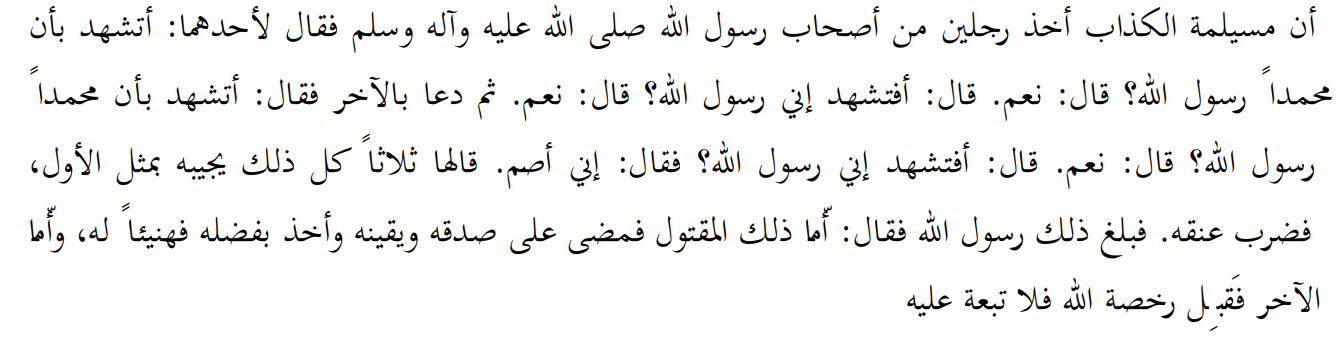
সেই মিথ্যাবাদী মুসাইলিমা রাসূলুল্লাহ ﷺ-এর দুজন সাহাবীকে ধরে আনল। সে তাদের একজনকে বলল: তুমি কি সাক্ষ্য দাও যে মুহাম্মাদ ﷺ আল্লাহর রাসূল? সে বলল: হ্যাঁ। সে বলল: তাহলে তুমি কি সাক্ষ্য দাও যে আমি আল্লাহর রাসূল? সে বলল: হ্যাঁ। এরপর সে অন্যজনকে ডেকে বলল: তুমি কি সাক্ষ্য দাও যে মুহাম্মাদ ﷺ আল্লাহর রাসূল? সে বলল: হ্যাঁ। তখন সে বলল: তাহলে তুমি কি সাক্ষ্য দাও যে আমি আল্লাহর রাসূল? সে বলল: আমি বধির (এ বিষয়ে)। সে এটি তিনবার বলল, আর প্রতিবারই সে প্রথমবারের মতোই উত্তর দিল, ফলে সে তার ঘাড় উড়িয়ে দিল। এই সংবাদ রাসূলুল্লাহ ﷺ-এর কাছে পৌঁছলে তিনি বললেন: যাকে হত্যা করা হলো, সে তার সত্যের প্রতি দৃঢ়তা ও বিশ্বাস পূর্ণ করেছে, এবং সে তার মর্যাদা গ্রহণ করেছে, সুতরাং তার জন্য কল্যাণ হোক। আর অন্যজন, সে আল্লাহর দেওয়া অবকাশ গ্রহণ করেছে, সুতরাং তার উপর কোনো দায় নেই।
‘That Musaylimah the liar took two men of the Sahabah of the Messenger of Allah (saw) and said to one of them: Do you bear witness that Muhammad is a Messenger of Allah? He said: Yes. He said: Then do you bear witness that I am a Messenger of Allah? He said: Yes. Then he called for the other and said: Do you bear witness that Muhammad is a Messenger of Allah? He said: Yes. Then he said: Then do you bear witness that I am a Messenger of Allah? He said: I am deaf (to that). He said it thrice each time answering him like the first so he struck off his neck. This was conveyed to the Messenger of Allah who said: As for the one killed, he executed his truth and conviction, and he took his virtue so may it be good for him. As for the other, he accepted the concession of Allah so there is no liability on him.’
সেই অনুযায়ী তাকিয়্যাহ একটি অব্যাহতি বা ছাড়, আর স্পষ্টভাবে সত্য বলা একটি সদ্গুণ।” (আত-তাবারসির বক্তব্য এখানে শেষ হলো।)
Accordingly taqiyyah is a dispensation and speaking clearly the truth is a virtue” (At-Tabarsi’s speech ends).
সেই অনুযায়ী দুই মুফাসসির, ইমাম আত-তাবারি ও আত-তাবারসি, যাঁরা দুটি ভিন্ন চিন্তাধারার অনুসারী, তাঁদের বক্তব্য থেকেই এটি প্রদর্শিত হয় যে আয়াতের অর্থ ব্যাখ্যায় তাঁদের ঐকমত্য রয়েছে, যেভাবে আয়াতটি এসেছে। আয়াতটি মুমিনদের জন্য কাফিরদের সাথে বন্ধুত্ব স্থাপনের নিষেধাজ্ঞা, আর এই নিষেধাজ্ঞা থেকে সেই অবস্থাকে বাদ দেওয়া হয়েছে যখন মুমিনরা কাফিরদের ক্ষতির আশঙ্কা করে। আত-তাবারির বক্তব্য দেখুন: “তবে যদি তোমরা তাদের থেকে কোনো আশঙ্কাজনক বিষয়ের (তুকাত) ভয় করো” (অর্থাৎ) “তবে যদি তোমরা তাদের কর্তৃত্বের মধ্যে থাকো এবং তাদের পক্ষ থেকে নিজেদের জীবনের ভয় করো, তখন তোমরা মুখে তাদের প্রতি বন্ধুত্ব প্রকাশ করো।” আর আত-তাবারসির বক্তব্য দেখুন: “অতঃপর তিনি ব্যতিক্রম করে বললেন: ‘তবে যদি তোমরা তাদের থেকে কোনো আশঙ্কাজনক বিষয়ের ভয় করো’, আর এর অর্থ হলো: তবে যদি কাফিররা বিজয়ী হয় এবং মুমিনরা পরাজিত হয়, ফলে মুমিন যদি তাদের সাথে একমত প্রকাশ না করে এবং তাদের সাথে বন্ধুত্ব ভালোভাবে বজায় না রাখে তবে সে ভয় পায়। সেই সময় তার জন্য মুখে তাদের প্রতি ভালোবাসা প্রকাশ করা এবং সতর্কতামূলক ও নিজের প্রাণ রক্ষার উদ্দেশ্যে তাদের অনুসরণ করা বৈধ।” দুই মুফাসসির এ বিষয়ে একমত যে আলোচ্য বিষয় হলো মুমিনদের কাফিরদের সাথে বন্ধুত্বের নিষেধাজ্ঞা থেকে ব্যতিক্রম করা, এবং তা এর মধ্যেই সীমাবদ্ধ। তবে আত-তাবারসি আলোচ্য বিষয়ের বাইরের একটি দিককে অনুসরণ করেছেন এবং আয়াতটিকে এমন প্রমাণ হিসেবে গণ্য করেছেন যে দীনের ক্ষেত্রে জীবন রক্ষার জন্য তাকিয়্যা বৈধ। অথচ আয়াতের বিষয়বস্তু হলো মুমিনদের কাফিরদের সাথে বন্ধুত্বের নিষেধাজ্ঞা, এবং ব্যতিক্রমের বিষয়টি হলো কাফিরদের বিজয়ের সময় মুমিনদের ভয়ের অবস্থা, যখন এই অবস্থায় বন্ধুত্ব অনুমোদিত হয়। এতে দীনের মধ্যে তাকিয়্যা নেই, এবং এটি জীবনের ভয়ের মধ্যেও সীমাবদ্ধ নয়, কারণ ব্যতিক্রমটি সাধারণ: “তবে যদি তোমরা তাদের থেকে কোনো আশঙ্কাজনক বিষয়ের ভয় করো” (অর্থাৎ) “তবে যদি তোমরা তাদের থেকে যে বিষয়ের ভয় করা হয় তার ভয় করো।” যামাখশারি তাঁর আল-কাশশাফে বলেছেন
Accordingly it is shown from the words of the two mufasireen, At-Tabari and At-Tabarsi, who are of two different schools of thought, their agreement upon explaining the meaning of the ayah as it came in that it is a prohibition for believers befriending disbelievers and excluding the situation of believers fearing the harm of the disbelievers from this prohibition. Look at the words of At Tabari: “except if you fear from them something to be feared (tuqat)’ (i.e.) except if you are in their authority and you fear them over your lives so you show them friendship with your tongues.” And look at the words of At-Tabarisi: “Then He excluded and said: ‘except if you fear from them something to be feared’ and the meaning is except if the disbelievers are victorious and believers defeated so the believer fears them if he does not show his agreement with them and does not make good his friendship with them. At that time it is allowed for him to show his love for them by his tongue and compliance to them as a precaution and in protection of his soul.” The two mufasireen agree that the subject is excluding the prohibition of believers befriending disbelievers and that it is limited to that. Except that At-Tabarisi followed upon that which is outside the subject and made the ayah an evidence that taqiyyah is permitted in the deen during for one’s life which is not present in the ayah since its subject is the prohibition of believers befriending disbelievers and excluding the situation of fear of the disbelievers when they defeat the Muslims in allowing their friendship in this situation. It is not taqiyyah in the deen nor is it specified to fear over life because the exclusion is general “except if you fear from them something to be feared” (i.e.) except if you fear from them what is to be feared from. Az-Zamakhshari said in Al Kashaf
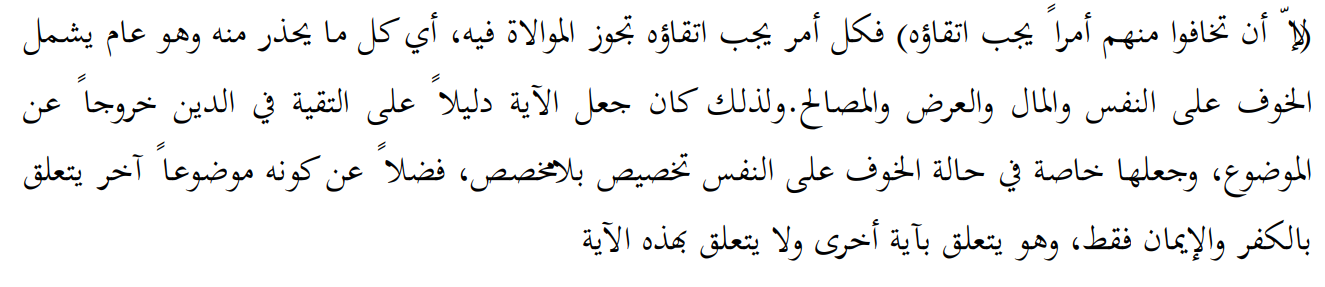
“Except if you fear from them a matter which requires protection from” — so any matter which must be protected from permits befriending them, i.e. all that you fear from them, which covers fear over life, wealth, honour and interests. Accordingly, making the ayah an evidence for (taqiyyah) in the deen outside the subject, and making it specific to the situation of fear over life, is specification without a specifying evidence. This is besides it being another subject relating to kufr and iman only, which is related to another ayah, and it is not related to this ayah. Bengali translation: “إِلَّا أَن تَتَّقُوا مِنْهُمْ تُقَاةً” — অর্থাৎ “তবে যদি তোমরা তাদের থেকে কোনো বিষয়ে আত্মরক্ষার প্রয়োজন অনুভব কর” — সুতরাং যে কোনো বিষয় থেকে আত্মরক্ষা করা প্রয়োজন, তা তাদের সাথে বন্ধুত্ব করাকে বৈধ করে, অর্থাৎ তোমরা তাদের থেকে যা কিছুর ভয় কর, যার মধ্যে জীবন, সম্পদ, সম্মান ও স্বার্থের ভয়ও অন্তর্ভুক্ত। সেই হিসেবে আয়াতটিকে বিষয়বস্তুর বাইরে দ্বীনের ক্ষেত্রে (তাকিয়্যাহ)-র প্রমাণ বানানো, এবং একে কেবল জীবনের ভয়ের অবস্থার সাথে সীমাবদ্ধ করা, এমন একটি সীমাবদ্ধকরণ যার পক্ষে কোনো সীমাবদ্ধকারী দলিল নেই। এ ছাড়াও এটি এমন একটি ভিন্ন বিষয়, যা কেবল কুফর ও ঈমানের সাথে সম্পর্কিত, এবং তা অন্য একটি আয়াতের সাথে সম্পর্কিত, এই আয়াতের সাথে নয়।
“Except if you fear from them a matter which requires protection from” so any matter which must be protected from permits befriending it i.e. all that you fear them which is general covering fear over life, wealth, honour and interests. Accordingly making the ayah an evidence for (taqiyyah) in the deen outside the subject, and making it specific in the situation of fear over life is specification without a specifying (evidence). This is besides it being another subject relating to kufr and iman only which is related to another ayah and it is not related to this ayah.
আত-তাবারসির এই উক্তি: “আমাদের সঙ্গীগণ বলেছেন (এটি) প্রয়োজনের সময় সকল বিষয়ে জায়েজ” — এরপর তিনি আল-মুফিদ থেকে যা উদ্ধৃত করেছেন, অর্থাৎ এটি ওয়াজিব হওয়া বা ওয়াজিব না হওয়া সম্পর্কে শেষ পর্যন্ত যা উল্লেখ করেছেন, তা এমন অমূর্ত কথা যার পক্ষে কোনো প্রমাণ নেই। আয়াতটি কোনোভাবেই এমন অর্থ নির্দেশ করে না, এমনকি আত-তাবারসির নিজের তাফসীর অনুযায়ীও নয়। তিনি কুরআন, সুন্নাহ বা সাহাবীদের ইজমা থেকেও অন্য কোনো প্রমাণ উপস্থিত করেননি। অতএব এটি প্রত্যাখ্যাত এবং বিবেচনার মর্যাদা থেকে বাদ পড়ে। আর এ কথাও বলা হয় না যে, যদি ভয়ের অবস্থায় কাফিরদের সঙ্গে বন্ধুত্ব জায়েজ হয়, তবে ক্ষমতাধর অত্যাচারী বা সীমালঙ্ঘনকারী শাসকের আনুগত্য করা আরও বেশি অগ্রগণ্য। এমন কথা বলা হয় না, কারণ যা অধিক অগ্রগণ্য সেটি বক্তব্যের অর্থ নয়, এবং এর সঙ্গে এর কোনো সম্পর্কের বিস্তারও নেই। এটি আল্লাহর এই বাণীর মতো নয়:
As for the statement of At-Tabarisi: “Our companions said (it is) permitted in all matters during necessity” then what he quotes from Al-Mufid of its being obligatory or not obligatory to the last of what he mentioned is abstract speech of any evidence. The ayah does not indicate this in any way even according to At-Tabarisi’s own tafsir, nor did he come with any other evidence neither from the Book or Sunnah or Ijma’a of the Sahabah, hence it is rejected and falls from the rank of consideration. Nor is it said that if befriending disbelievers in the situation of fear of them is allowed then compliance with the unjust or transgressor ruler with power is of greater precedent. This is not said because that which is of greater precedent is the sense of the speech and this is not from it nor is their any extention of any connection with it. It is not like Allah’s statement:
তাদের মধ্যে এমনও আছে যাকে যদি তুমি একটি দিনার আমানত রাখো, সে তা তোমাকে ফেরত দেবে না। [TMQ 3:75]
“Among them is one whom if you entrust him with a Dinar would not return it to you” [TMQ 3:75]
আর এটি আল্লাহর এই বাণীর মতোও নয়:
Nor is it like Allah’s statement:
“আর আহলে কিতাবদের মধ্যে এমন লোকও আছে যে, তুমি যদি তাকে একটি কিনতার (স্তূপীকৃত সম্পদ) আমানত রাখো, সে তা তোমাকে ফেরত দেবে।” [সূরা আলে ইমরান ৩:৭৫]
“And of the People of the Book is one whom if you entrusted with a qintar will return it to you” [TMQ 3:75].
এর কারণ হলো, অত্যাচারী ব্যক্তি কাফির বা কাফিরদের শ্রেণিভুক্ত নয়, এবং এই আয়াতে যে বন্ধুত্ব নিষিদ্ধ করা হয়েছে তা মুমিনদের পরিবর্তে তাদের সাথে বন্ধুত্ব করা। অত্যাচারী ও সীমালঙ্ঘনকারী শাসক, যার ক্ষমতা আছে, সে মুমিনদের অন্তর্ভুক্ত। তার থেকে সংঘটিত অত্যাচার বা তাকে আচ্ছন্নকারী সীমালঙ্ঘন তার থেকে ঈমানের বিশেষণকে নাকচ করে না। সুতরাং এই বিষয়টি বৃহত্তর নজিরের গবেষণায় প্রবেশ করে না, এবং সেই অনুযায়ী বৃহত্তর নজিরও এতে প্রযোজ্য হয় না যাতে তা সাক্ষ্য হিসেবে ব্যবহৃত হতে পারে।
This is because the transgressor is not from the category of the disbeliever or from their class, and because the friendship prohibited in this ayah is befriending instead of the believers. The unjust and transgressor ruler with power is among the believers injustice occurring from him or the transgression covering him does not negate the description of iman from him. Hence this subject does not enter in the research of greater precedent, so accordingly the greater precedent does not come into it such that it is used as a witness.
উপরন্তু, শক্তিশালী অত্যাচারী ও সীমালঙ্ঘনকারী শাসকের সাথে বন্ধুত্ব নিরাপদ অবস্থায় এবং ভয়ের অবস্থায়, উভয় ক্ষেত্রেই বৈধ, কেননা তিনি একজন মুমিন, এবং মুমিনদের সাথে বন্ধুত্ব অবশ্যই বৈধ, কারণ আল্লাহর বাণী: "মুমিনদের পরিবর্তে" -এ "মুমিনগণ" শব্দটি সাধারণ, যা সকল মুমিনকে অন্তর্ভুক্ত করে। অত্যাচারী বা সীমালঙ্ঘনকারী শাসকের সাথে, অথবা ফাসিক ও দুষ্কৃতিকারীদের সাথে বন্ধুত্ব নিষিদ্ধ করে এমন কোনো দলিল আসেনি; বরং কাফিরদের সাথে বন্ধুত্ব নিষিদ্ধ করার ব্যাপারেই দলিলসমূহ সুনির্দিষ্ট। তদুপরি, পাপকাজ ও জিহাদ ব্যতীত অন্য সকল ক্ষেত্রে অত্যাচারী শাসকের আনুগত্য করা ওয়াজিব, জিহাদে তাঁর পতাকাতলে যুদ্ধ করা ওয়াজিব, এবং সীমালঙ্ঘনকারী ইমামের পেছনে সালাত আদায় করা বৈধ; এগুলো তাঁদের বন্ধুত্ব বৈধ হওয়ার সবচেয়ে বড় প্রমাণ। যা নিষিদ্ধ তা হলো শাসকের অত্যাচার ও সীমালঙ্ঘনকারীর সীমালঙ্ঘনে সন্তুষ্ট হওয়া। সেই অনুযায়ী, কোনো মুমিন যখন শক্তিশালী অত্যাচারী বা সীমালঙ্ঘনকারী শাসক কিংবা প্রতিপক্ষের সামনে মতামত বা অনুরূপ কিছুতে, নিজের গোপন বিশ্বাসের বিপরীত প্রকাশ করে, তখন তাকিয়্যাহ প্রত্যাখ্যাত হয়, এবং এমন করা হারাম, কারণ এটি মুনাফিকী, আর সকল মুনাফিকী নিষিদ্ধ।
Moreover the befriending of the unjust and transgressor ruler with power is allowed in the situation of security and the situation of fear equally because he is a believer and befriending believers is definitely allowed because the word “believers” in His statement: “instead of believers” is general covering all believers. There did not come any text prohibiting befriending the unjust or transgressor ruler or befriending transgressors and the wicked (fujjar); rather the texts are specific in prohibiting the befriending of disbelievers. More than that, the obedience to the unjust ruler is obliged in other than sin and jihad is obliged under his banner and it is allowed to pray behind the Imam in prayer if he is a transgressor which are of the greatest indication regarding permitting their friendship. What is prohibited is the pleasure with the injustice of the ruler and the transgression of the transgressor. Accordingly taqiyyah is rejected when it is a believer showing opposite to what he hides in front of powerful unjust or transgressor ruler or opponent in the opinion or similar, and doing it is haram as it is hypocrisy and all hypocrisy is forbidden.
"ঈমানের উপর যার অন্তর অবিচল থাকে, সে ব্যতীত, যাকে বাধ্য করা হয়েছে" [TMQ 16:106]।
“Except the one who is compelled and his heart is content upon iman” [TMQ 16:106].
কিছু মুফাসসির এই আয়াতটিকে "তবে যদি তাদের পক্ষ থেকে তোমাদের কোনো ভয়ের আশঙ্কা হয়" আয়াতের সঙ্গে সংযুক্ত করেন এবং এর থেকে কুফরি প্রকাশ করা ও ঈমান গোপন রাখাকে বন্ধুত্বের পর্যায়ে গণ্য করেন এবং তাকে "তাকিয়্যাহ" নামে আখ্যায়িত করেন। আবার কেউ কেউ এর থেকে এই সিদ্ধান্ত নেন যে, কেবল জীবনের আশঙ্কা থাকলেই বন্ধুত্ব বৈধ, অন্য কোনো অবস্থায় নয়। এটি সুস্পষ্ট ভুল। কারণ "যাকে বাধ্য করা হয়েছে, আর তার অন্তর ঈমানের উপর অবিচল থাকে" আয়াতের বিষয় ও পরিস্থিতি ভিন্ন। সেখানে আলোচ্য বিষয় হলো ইসলাম ত্যাগ করা, এবং সেই অবস্থা হলো নিশ্চিত ও সুনিশ্চিত প্রাণনাশের ভয়, সম্ভাব্য নয়। আর "তবে যদি তাদের পক্ষ থেকে তোমাদের কোনো ভয়ের আশঙ্কা হয়" আয়াতের বিষয় হলো কাফিরদের সঙ্গে বন্ধুত্ব স্থাপন নিষিদ্ধ করা, তার সকল প্রকারে, এবং ক্ষতির আশঙ্কা থাকলে তা বৈধ করা হয়েছে, তা প্রাণের ভয় হোক, সম্পদের, সম্মানের বা যেকোনো ক্ষতির। অতএব এই দুই অবস্থা ও দুই বিষয় আলাদা, একটি অপরটির মধ্যে প্রবেশ করে না এবং অবস্থা ও বিষয়ের ভিন্নতার কারণে একটি অপরটির সঙ্গে সম্পর্কিত নয়। মুসলিম যখন তার বিষয়ে পরাজিত হয়ে কাফিরদের কর্তৃত্বের অধীনে থাকে, তখন তার জন্য আনুগত্য প্রদর্শনের উদ্দেশ্যে ইসলাম ত্যাগ করা জায়েয নয়; বরং তার উপর ওয়াজিব হলো হিজরত করা, যদি সে দ্বীনের বিধানসমূহ পালনে অক্ষম হয়। কিন্তু কাফিরদের সঙ্গে যে বন্ধুত্ব বৈধ, তা ভিন্ন বিষয়। তবে মুসলিমদের উপর যদি নিশ্চিত মৃত্যুর আশঙ্কা থাকে এবং তাকে কুফরিতে বাধ্য করা হয়, তখন তার জন্য কুফরি প্রকাশ করা ও ঈমান গোপন রাখা জায়েয। এ ছাড়া অন্য কোনো অবস্থায় তা জায়েয নয়, কারণ আয়াতের বক্তব্য তাই।
Some mufasireen link it with the ayah: “except if you fear from them something to be feared” and deduce from it the entering of showing kufr and hiding iman in the category of friendship and making it to enter what they call (taqiyyah), with some deducing from it that friendship is allowed in the situation of fearing for one’s life only but not in other (situations). This is pure error because the ayah: “except the one who is compelled and his heart is content upon iman” has a different situation and a different subject as its subject is apostasy from Islam in the situation where there exists fear of definite, confirmed killing not probable and the subject of the ayah: “except if you fear from them something to be feared” is prohibiting befriending disbelievers in all its types and excluding the permissibility of this befriending in the situation of there existing what is feared from whether it was fear over life, wealth, interest or any harm. It distinguishes between the two situations and two subjects such that one does not enter into the other nor are they linked with it due to the difference in situation and subject. When the Muslim is under the authority of disbelievers defeated over his matter before them, it is not permitted for him to apostatise from Islam as a show of compliance to them; rather it is obligatory upon him to emigrate if he is unable to perform the rules of his deen contrary to befriending them which is allowed. However if the Muslims fear over his life a confirmed death and he is forced upon kufr then it is permitted for him to show kufr and hide iman, and other than that it is not permitted because of the text of the ayah:
যে ব্যক্তি ঈমান আনার পর আল্লাহকে অস্বীকার করে — তবে যাকে বাধ্য করা হয়েছে এবং যার অন্তর ঈমানের উপর অটল রয়েছে, সে ব্যতীত — [সূরা আন-নাহল ১৬:১০৬]
“Whoever disbelieves in Allah after his iman except the one who is compelled and his heart is content upon iman.” [TMQ 16:106].
এখানে বিষয়টি হলো ঈমানের পর কুফরের বিষয়, অর্থাৎ ইসলাম থেকে মুরতাদ হওয়ার বিষয়, আর অবস্থাটি হলো মৃত্যুর ভয়ের অবস্থা। ফুকাহাগণ এটিকে "আল-ইকরাহ আল-মুলজি" (আশ্রয়-জনিত বাধ্যতা) বলেন, যা শরিয়তে সকল অবস্থায় বিবেচিত একমাত্র বাধ্যতা, যার কারণে বাধ্যপ্রাপ্ত ব্যক্তির উপর থেকে হুকুম তুলে নেওয়া হয়। শরিয়ত যে বাধ্যতাকে বাদ দিয়েছে, তা হলো আশ্রয়-জনিত বাধ্যতা, অর্থাৎ নিশ্চিত মৃত্যুর ভয়ের অবস্থা। আয়াতটি যাঁরা মৃত্যুর ভয়ে ইসলাম ত্যাগ করেছিলেন তাঁদের সম্পর্কে নাযিল হওয়ায় এই মত আরও শক্তিশালী হয়। বর্ণিত আছে যে, এই আয়াতটি আম্মার ইবনু ইয়াসির (রা.)-এর ব্যাপারে নাযিল হয়েছিল। ইমাম আত-তাবারি বলেন: "মুহাম্মাদ ইবনু সা'দ আমার কাছে বর্ণনা করেছেন, তিনি বলেন: আমার চাচা আমার কাছে বর্ণনা করেছেন, তিনি বলেন: আমার পিতা আমার কাছে তাঁর পিতা থেকে, তিনি ইবনু আব্বাস (রা.) থেকে বর্ণনা করেছেন যে আল্লাহর বাণী: 'যে ব্যক্তি তার ঈমানের পর আল্লাহর সাথে কুফরি করে, সে ব্যতীত যাকে বাধ্য করা হয়েছে আর তার অন্তর ঈমানের উপর স্থির থাকে'—আয়াতের শেষ পর্যন্ত। কারণ ছিল, মুশরিকরা আম্মার ইবনু ইয়াসিরকে প্রহার করে শাস্তি দিয়েছিল, তারপর তাঁকে ছেড়ে দিয়েছিল। ফলে তিনি রাসূলুল্লাহ ﷺ-এর কাছে ফিরে এলেন এবং কুরাইশদের কাছ থেকে যা ঘটেছে ও যা তিনি বলেছেন তা জানালেন। তখন আল্লাহ তাআলা তাঁর ওজরের উল্লেখ করে নাযিল করলেন: 'যে ব্যক্তি তার ঈমানের পর আল্লাহর সাথে কুফরি করে' ... 'মহা শাস্তি' পর্যন্ত। বাশর আমাদের কাছে বর্ণনা করেছেন, তিনি বলেন: ইয়াযিদ আমাদের কাছে বর্ণনা করেছেন, তিনি বলেন: সাঈদ আমাদের কাছে কাতাদা থেকে বর্ণনা করেছেন: 'যে ব্যক্তি তার ঈমানের পর আল্লাহর সাথে কুফরি করে, সে ব্যতীত যাকে বাধ্য করা হয়েছে আর তার অন্তর ঈমানের উপর স্থির থাকে' এবং তিনি বলেন: আমাদের কাছে উল্লেখ করা হয়েছে যে, এটি আম্মার ইবনু ইয়াসিরের ব্যাপারে নাযিল হয়েছিল, যাঁকে বনু আল-মুগীরা বন্দী করে মাইমূনের কূপে ডুবিয়ে রেখেছিল এবং বলেছিল: আল্লাহর সাথে কুফরি করো। তখন তিনি তাদের অনুসরণ করলেন, কিন্তু তাঁর অন্তর বাধ্য হয়েছিল। ফলে আল্লাহ নাযিল করলেন তাঁর বাণী: 'সে ব্যতীত যাকে বাধ্য করা হয়েছে আর তার অন্তর ঈমানের উপর স্থির থাকে।' এবং আত-তাবারী বলেন: ইবনু আবদিল আলা আমাদের কাছে বর্ণনা করেছেন এবং বলেছেন: মুহাম্মাদ ইবনু সাওর আমাদের কাছে বর্ণনা করেছেন, তিনি মু'আম্মার থেকে, তিনি আবদুল কারীম আল-জুযরী থেকে, তিনি আবু উবাইদ ইবনু মুহাম্মাদ ইবনু আম্মার ইবনু ইয়াসির থেকে বর্ণনা করেছেন, যিনি বলেছেন:
So the subject is the subject of kufr after iman i.e. the subject of apostasy from Islam, and the situation is the situation of fearing death. This is what the fuqaha term as alikrah almulji (compulsion of refuge) which is the only compulsion considered by the Shar’a in all situations in which the rule is lifted from the one compelled. The compulsion which the Shar’a excluded is the compulsion by refuge i.e. the situation of fearing definite death. This is strengthened in the ayah that was revealed about Muslims who apostatised fearing death. It was narrated that this ayah was revealed about Ammar bin Yasir. At-Tabari said: “Muhammad bin S’aad related to me and said: My paternal uncle related to me and said: My father related to me from his father from ibn Abbas that His statement: ‘Whoever disbelieves in Allah after his belief except the one who is compelled and his heart is content upon iman’ to the end of the ayah. This was because the polytheists struck Ammar bin Yasir and punished him then left him. So he returned to the Messenger of Allah (saw) and informed him about what he met with from Quraysh and what he said. So Allah (swt) revealed his mention of his excuse: ‘Whoever disbelieves in Allah after his iman’ until His statement ‘great punishment.’ Bashr related to us and said: Yazid related to us and said: Saeed related to us from Qatadah: ‘Whoever disbelieves in Allah after his belief except the one who is compelled and his heart is content upon iman’ and said: It was mentioned to us that it was revealed about Ammar bin Yasir whom Banu Al-Mughira captured and covered him in the well of Maymun and said: Disbelieve in Allah, so he followed them in that and his heart was compelled. So Allah (swt) revealed His statement: ‘except the one who is compelled and his heart is content upon iman.’ And At-Tabari said: Ibn Abd al-‘Ala related to us and said: Muhammad bin Thawr related to us from Mu’ammar from Abdulkareem Al-Juzri from Abu Ubayd bin Muhammad bin Ammar bin Yasir who said:
মুশরিকরা আম্মার বিন ইয়াসিরকে ধরে নিয়ে শাস্তি দিতে থাকল, যতক্ষণ না তিনি তাদের ইচ্ছামতো কিছু কথা বললেন। তিনি বিষয়টি নবী ﷺ-এর কাছে উল্লেখ করলেন। নবী ﷺ বললেন: তোমার অন্তর কেমন পেয়েছিলে? তিনি বললেন: ঈমানের উপর অটল ছিল। নবী ﷺ বললেন: যদি তারা আবার তা করে, তবে তুমিও আবার তা করবে।
The polytheists took Ammar bin Yasir and punished him until he said to them in some of what they wished. He mentioned that to the Prophet (saw) and the Prophet (saw) said: How did you find your heart? He said: Secured upon iman. The Prophet (saw) said: If they repeat, then you repeat.”
এই হাদীসসমূহ নির্দেশ করে যে আয়াতটির অবতরণের প্রেক্ষাপট হলো আম্মার (রাঃ)-এর ঘটনা, এবং এর বিষয়বস্তু হলো ইসলাম থেকে ধর্মত্যাগ। এর সঙ্গে সুনির্দিষ্ট পরিস্থিতি হলো হত্যার সুনিশ্চিত আশঙ্কা, যা একাই এটিকে শক্তিশালী করার জন্য যথেষ্ট, এবং এর সাথে ঐ আয়াতের কোনো সম্পর্ক নেই: “তবে যদি তোমরা তাদের থেকে কোনো আশঙ্কাজনক ভয়ের আশঙ্কা করো।” আয়াত: “তবে সেই ব্যক্তি ছাড়া যাকে বাধ্য করা হয়েছে এবং যার অন্তর ঈমানের উপর অবিচল” মক্কায় ঈমানের বিষয়ে অবতীর্ণ হয়েছিল, আর আয়াত: “তবে যদি তোমরা তাদের থেকে কোনো আশঙ্কাজনক ভয়ের আশঙ্কা করো” মাদানী, যা কাফিরদের সাথে বন্ধুত্ব স্থাপনে মুমিনদের নিষেধাজ্ঞা থেকে আশঙ্কাজনক ভয়ের পরিস্থিতিকে বাদ দেওয়ার বিষয়ে অবতীর্ণ হয়েছে। সুতরাং এই আয়াতটি ঐ বিষয়ে প্রযোজ্য নয়।
These ahadith indicate that the circumstance of revelation of the ayah is the incident of Ammar and its subject is apostasy from Islam. The situation specific to it is the definite fear of killing which alone is sufficient to strengthen that it has no relationship with the ayah: “except if you fear from them something to be feared.” The ayah: “except the one who is compelled and his heart is content upon iman” was revealed in Makkah on the subject of iman, and the ayah: “except if you fear from them something to be feared” is Madinan revealed on the subject of excluding the situation of fearing what is to be feared from the prohibition of believers befriending disbelievers. Accordingly this ayah is not applicable on that subject.
এখন বাকি রইল সেই ব্যক্তির বিধান যাকে নিশ্চিত হত্যার হুমকি দেওয়া হয়েছে: কুফর প্রকাশ করে ঈমান গোপন রেখে মৃত্যু থেকে নিরাপদ থাকা উত্তম, নাকি ঈমানের উপর অবিচল থেকে মৃত্যুবরণ করা উত্তম? উত্তর হলো, ঈমানের উপর অবিচল থেকে মৃত্যুবরণ করাই উত্তম, কারণ কুফর প্রকাশের অনুমতি একটি রুখসত (ছাড়) এবং কষ্ট দূর করার জন্য দেওয়া হয়েছে, আর ঈমান রক্ষা করা হলো আযীমত (মূল বিধান), সুতরাং সেটিই উত্তম। বর্ণনা করা হয়েছে
There remains the rule regarding the one threatened with confirmed killing: Is it more virtuous to show kufr and hide iman so as to be safe from death or is it better to persevere upon his iman even if it leads to death? The answer is that persevering to iman even if it leads to death is better because the permissibility of showing kufr is a dispensation and lifts difficulty, and preserving the iman is (‘azeemah) which is the principle therefore it is better. It is narrated

মুসাইলিমা দুজন লোককে ধরে আনল। একজনকে জিজ্ঞেস করল: মুহাম্মদ সম্পর্কে তুমি কী বলো? সে বলল: তিনি আল্লাহর রাসূল ﷺ। সে বলল: তাহলে আমার সম্পর্কে তুমি কী বলো? সে বলল: তুমিও। তখন সে তাকে ছেড়ে দিল। অপরজনকে সে জিজ্ঞেস করল: মুহাম্মদ সম্পর্কে তুমি কী বলো? সে বলল: তিনি আল্লাহর রাসূল ﷺ। সে বলল: তাহলে আমার সম্পর্কে তুমি কী বলো? সে বলল: আমি বধির। সে তিনবার এ কথা বলল এবং সে তার উত্তর পুনরাবৃত্তি করল, ফলে সে তাকে হত্যা করল। এ খবর আল্লাহর রাসূল ﷺ-এর কাছে পৌঁছলে তিনি বললেন: প্রথমজন আল্লাহর দেওয়া অবকাশ (সুযোগ) গ্রহণ করেছে। আর দ্বিতীয়জন সত্যকে প্রকাশ করেছে, সুতরাং তার উপর বরকত বর্ষিত হোক।
“That Musaylimah took two men and said to one of them: What do you say about Muhammad? He said: A Messenger of Allah. He said: Then what do you say of me? You as well. So he left him free. He said to the other: What do you say of Muhammad? He said: A Messenger of Allah. He said: Then what do you say of me? He said: I am dumb. He repeated it thrice and he repeated his answer, so he killed him. That reached the Messenger of Allah (saw) so he said: As for the first, he took the dispensation of Allah. As for the second, he exposed the truth so blessed be he.”
এটি স্পষ্টভাবে সেই ব্যক্তিকে অগ্রাধিকার দেয় যিনি ধৈর্য ধরেছেন এবং ঈমানের উপর অটল ছিলেন, সেই ব্যক্তির চেয়ে যিনি আল্লাহ (সুব্হানাহু ওয়া তাআলা)-এর রুখসত (অনুমতি) গ্রহণ করেছেন এবং নিশ্চিত হত্যার ভয়ে নিজের জীবনের আশঙ্কায় কুফর প্রকাশ করেছেন।
This is explicit in preferring the one who was patient and stuck to iman over the one who took the dispensation of Allah (swt) and showed kufr fearing for his life from a confirmed killing.
এটি সেই ব্যক্তি সম্পর্কে, যার কাছ থেকে কুফর চাওয়া হয়। আর যার কাছ থেকে তার চেয়ে কম কিছু চাওয়া হয়, যেমন ইসলামের দাওয়াত ত্যাগ করা অথবা কোনো গুনাহ করা বা এরূপ কিছু, তার জন্য এই আয়াত থেকে অনুমতি গ্রহণ করা হয় না। সেই অনুযায়ী এমনও বলা হয় না যে, যদি আল্লাহ মুসলিমের জন্য কুফর প্রদর্শনের অনুমতি দিয়ে থাকেন, তবে কুফরের চেয়ে কম যা, তা আরও বেশি অগ্রাধিকারযোগ্য। এমন কথা বলা হয় না, কারণ নাফরমানি কুফরের জাতের অন্তর্ভুক্ত নয়, তাই তা অগ্রাধিকারের ভিত্তিতে গবেষণায় প্রবেশ করে না। একইভাবে কুফর ও গুনাহের মধ্যে কিয়াসও করা হয় না, কারণ কিয়াস সংঘটিত হওয়ার জন্য যে কারণ (ইল্লত) প্রয়োজন, তা বিদ্যমান নেই। তবে যে ব্যক্তি নিশ্চিত হত্যার আশঙ্কায় নিজের জীবনের ভয় পায় এবং তার কাছ থেকে গুনাহ বা কুফরের চেয়ে কম কিছু চাওয়া হয়, তার জন্য নিজের জীবন রক্ষার্থে তা করা জায়েয এবং তার উপর কোনো গুনাহ নেই। এটি তাঁর ﷺ এই বাণীর কারণে:
This is regarding the one from whom kufr is demanded. As for the one from whom is sought less than that like leaving the Islamic da’wah or performing a sin or something similar; permissibility is not taken from this ayah. Accordingly it is not said that if Allah permitted the Muslim to show kufr, then what is lesser than kufr is of greater precedent. This is not said because disobedience is not from the species of kufr, so it does not enter the research by greater precedent. Similarly an analogy between kufr and sin is not performed since there does not exist a reason until analogy occurs. However as for the one who fears for his life over confirmed killing and it is sought from him sin or doing less than kufr, it is permitted for him to do so to save his life and there is no sin upon him. This is due to his (saw) statement:
আমার উম্মত থেকে ভুল, বিস্মৃতি এবং যা তাদের উপর জোরপূর্বক চাপানো হয়েছে, তা উঠিয়ে নেওয়া হয়েছে।
“Lifted from my Ummah is the mistake, forgetfulness and what is compelled upon it”
অর্থাৎ, দায় ও পাপ উঠে যায় এবং হুকুমও উঠে যায়, যার অর্থ হলো কাজটি করার অনুমতি। তবে এটি শুধুমাত্র একটি অবস্থার ক্ষেত্রে প্রযোজ্য, আর তা হলো নিশ্চিত ও সুনিশ্চিত হত্যার আশঙ্কার অবস্থা, যাকে ফকীহগণ "আল-ইকরাহ আল-মুলজি" (আশ্রয়ের দিকে বাধ্য করা জবরদস্তি) বলেছেন। এটিই হলো সেই একমাত্র জবরদস্তি, যা শরীয়ত সকল অবস্থায় বিবেচনা করে, এবং যার দ্বারা সংশ্লিষ্ট ব্যক্তি থেকে তালাক, বিবাহ, ব্যবসা ও অন্যান্য কাজ ও চুক্তির দায় উঠে যায়। তাঁর বক্তব্য "এবং যা তার উপর চাপানো হয়" দ্বারা উদ্দেশ্য হলো এই আল-ইকরাহ আল-মুলজি।
I.e. the blame and sin is lifted, and the rule is lifted, which means the permissibility of doing it. However (this is) only in one situation which is the situation of definite, confirmed killing which is what the fuqaha called alikrah almulji (compulsion by refuge) which is the only compulsion considered by the Shar’a in all conditions in which there is lifted from the one compelled like divorce, marriage, trade and other actions and contracts. His statement “and what is forced upon it” which is alikrah almulji (compulsion by refuge).