১৭. খিলাফত
17. The Khilafah
খিলাফত হলো সমগ্র বিশ্বের মুসলিমদের সাধারণ বা সামগ্রিক নেতৃত্ব, যার উদ্দেশ্য ইসলামী শরিয়াহর আইন প্রতিষ্ঠা করা এবং ইসলামের দাওয়াহ বিশ্বের কাছে পৌঁছে দেওয়া। এটি ইমামাহর সমতুল্য, কারণ ইমামাহ ও খিলাফত একই অর্থ বহন করে। বেশ কয়েকটি সহীহ হাদীসে এ দুটি শব্দ একই অর্থে উল্লেখ করা হয়েছে। কুরআন বা সুন্নাহ, অর্থাৎ শরিয়াহর এ দুটি মূল উৎসের কোনো শরয়ী নস-এ এই দুই শব্দের একটি কখনো অপরটি থেকে ভিন্ন কোনো অর্থে আসেনি, কারণ এ দুটিই শরিয়াহর একমাত্র উৎস। খিলাফত বা ইমামাহ শব্দটি ধরে রাখা আবশ্যক নয়, বরং আবশ্যক হলো এই শব্দের অর্থটি ধরে রাখা।
The Khilafah is the general or overall leadership for all the Muslims in the world in order to establish the laws of the Islamic Shari’ah and to carry the da’wa of Islam to the world. It is the same as the Imamah, as the Imamah and Khilafah have the same meaning. Several saheeh ahadith mention them with the same meaning. Neither of the two terms has ever come with any meaning different from the other in any Shari’ah text i.e. the Qur’an or the Sunnah, as these two (sources) are the only Shari’ah sources. It is not compulsory to hold to the term of Khilafah or Imamah, but rather it is compulsory to hold to the meaning of the term.
খিলাফত প্রতিষ্ঠা করা বিশ্বের সকল অঞ্চলের সকল মুসলিমের উপর একটি বাধ্যতামূলক দায়িত্ব। আল্লাহ (সুব.) মুসলিমদের উপর যে সকল দায়িত্ব অর্পণ করেছেন, অন্য যেকোনো দায়িত্ব পালনের মতোই এটি প্রতিষ্ঠা করাও অবশ্যম্ভাবী, যাতে কোনো বিকল্প বা শিথিলতার সুযোগ নেই। এটি পালনে অবহেলা করা সবচেয়ে গুরুতর গুনাহগুলোর একটি, যার জন্য আল্লাহ (সুব.) সবচেয়ে কঠোর শাস্তি দেন।
Establishing the Khilafah is an obligation upon all Muslims in all regions of the world. Establishing it, like the performing of any obligation that Allah (swt) obliged upon Muslims, is an inevitable matter without choice or leniency in it. Negligence in performing it is one of the worst sins for which Allah (swt) punishes with the strictest of the punishments.
মুসলিমদের সকলের উপর খিলাফত প্রতিষ্ঠার দলীল (যা আসে): কুরআন, সুন্নাহ এবং ইজমা আস-সাহাবা।
The evidence for establishing the Khilafah upon all Muslims (come from): The Qura'n, The Sunnah and Ijmaa as-Sahabah.
কুরআন সম্পর্কে বলা যায়, আল্লাহ (সুবহানাহু ওয়া তাআলা) রাসূল ﷺ-কে আদেশ করেছেন যেন তিনি মুসলিমদের মধ্যে তাঁর (সুবহানাহু ওয়া তাআলা) প্রতি যা অবতীর্ণ করেছেন তার মাধ্যমে বিচার করেন, আর তাঁর (সুবহানাহু ওয়া তাআলা) এই আদেশ তাঁর (ﷺ) প্রতি ছিল সুস্পষ্ট ও দৃঢ়ভাবে। আল্লাহ (সুবহানাহু ওয়া তাআলা) নবী ﷺ-কে সম্বোধন করে বলেছেন:
As for the Qura'n, Allah (swt) has ordered the Messenger (saw) to rule between Muslims by all that He (swt) revealed to him (saw), and His order (swt) to him was in a decisive manner. Allah (swt) addressed the Prophet (saw) saying:
এবং আল্লাহ যা নাযিল করেছেন তদনুযায়ী তাদের মাঝে বিচার করো, এবং তোমার কাছে যে সত্য এসেছে তা থেকে সরে গিয়ে তাদের খেয়াল-খুশির অনুসরণ করো না। [TMQ 5:48]
"And rule between them by that which Allah revealed to you, and do not follow their vain desires away from the truth which came to you" [TMQ 5:48]
এবং তিনি (সুবহানাহু ওয়া তাআলা) বলেছেন:
And He (swt) said:
"এবং আল্লাহ যা নাযিল করেছেন তদনুসারে তাদের মধ্যে বিচার করুন এবং তাদের খেয়াল-খুশির অনুসরণ করবেন না, আর সতর্ক থাকুন যেন তারা আল্লাহ আপনার প্রতি যা নাযিল করেছেন তার কিছু অংশ থেকেও আপনাকে বিচ্যুত করতে না পারে।" [TMQ 5:49]
"And rule between them by that which Allah revealed to you and do not follow their whims, and beware (be on the alert) that they may deviate you away from even some part of what Allah revealed to you" [TMQ 5:49]
আল্লাহ (SWT)-এর নবী ﷺ-এর প্রতি বাণী তাঁর উম্মতের প্রতিও বাণী, যদি না এমন কোনো দলিল থাকে যা সেই বাণীকে কেবল তাঁর ﷺ জন্য সীমাবদ্ধ করে। এই ক্ষেত্রে এমন কোনো দলিল নেই, সুতরাং সেই সম্বোধন সকল মুসলমানের প্রতি, হুকুম (বিধান) প্রতিষ্ঠার জন্য। খিলাফত প্রতিষ্ঠার অর্থ শাসন ও কর্তৃত্ব প্রতিষ্ঠা ছাড়া আর কিছু নয়। তদুপরি, আল্লাহ (SWT) মুসলমানদের উপর কর্তৃত্বশীলদের, অর্থাৎ শাসকের আনুগত্য করা বাধ্যতামূলক করেছেন, যা নির্দেশ করে যে মুসলমানদের উপর কর্তৃত্বশীল একজন থাকা বাধ্যতামূলক। আল্লাহ (SWT) বলেন:
The speech of Allah (swt) to the Prophet (saw) is a speech to his Ummah unless there is evidence which limits the speech to him (saw). In this case there is no such evidence, so the address is to all the Muslims to establish the rule (hukm). The establishment of the Khalifah does not mean other than the establishment of the rule and the authority. Moreover, Allah (swt) made it obligatory upon Muslims to obey those in authority i.e. the ruler, which indicates that the existence of the one in authority is obligatory upon Muslims. Allah (swt) said:
হে যারা ঈমান এনেছ! আল্লাহর আনুগত্য করো, রাসূলের আনুগত্য করো এবং তোমাদের মধ্যে যারা কর্তৃত্বের অধিকারী তাদেরও।ﷺ [TMQ 4:59]
"O you who believe obey Allah and obey the Messenger and those in authority amongst you" [TMQ 4:59]
আল্লাহ (সুবহানাহু ওয়া তাআলা) এমন কারো আনুগত্যের আদেশ দেন না, যে অস্তিত্বে নেই। এ থেকে প্রমাণিত হয় যে, কর্তৃত্বসম্পন্ন ব্যক্তির অস্তিত্ব বাধ্যতামূলক। যখন আল্লাহ (সুবহানাহু ওয়া তাআলা) কর্তৃত্বসম্পন্নদের আনুগত্যের আদেশ দেন, তখন তিনি তাদের প্রতিষ্ঠা করারই আদেশ দেন। শাসককে প্রতিষ্ঠা করার ফল হলো শরিয়তের বিধান (হুকমে শরঈ) প্রতিষ্ঠিত হওয়া, আর তা প্রতিষ্ঠা না করার ফল হবে শরিয়তের বিধান (হুকমে শরঈ) উপেক্ষিত হওয়া। সুতরাং তার অস্তিত্ব বাধ্যতামূলক, কারণ তা প্রতিষ্ঠা না করলে যে ফল দাঁড়ায় অর্থাৎ শরিয়তের বিধানের উপেক্ষা, তা নিষিদ্ধ বিষয়সমূহের অন্তর্ভুক্ত।
Allah (swt) does not order obedience to someone who does not exist. This indicates that the existence of the person in authority is obligatory. When Allah (swt) commands obedience to those in authority then He (swt) is commanding their establishment. The result of establishing the ruler is the establishment of the Shari’ah rule (hukm shar’i) and the failure to establish it will result in neglecting the Shari’ah rule (hukm shar’i). Thus his existence is obligatory as the result of the failure to establish it is will be from the prohibited matters i.e. the neglect of the Shari’ah rule (hukm shar’i).
সুন্নাহর ব্যাপারে, নাফি‘ বর্ণনা করেছেন যে তিনি বলেছেন: আবদুল্লাহ ইবনে ‘উমার আমাকে বলেছেন যে তিনি নবী ﷺ-কে বলতে শুনেছেন:
As for the Sunnah, Nafi‘ reported saying: Abdullah bin ‘Umar said to me that he heard the Prophet (saw) saying:
“যে ব্যক্তি আনুগত্য থেকে তার হাত সরিয়ে নেয়, সে কিয়ামতের দিন আল্লাহর সঙ্গে সাক্ষাৎ করবে এমন অবস্থায় যে, তার পক্ষে কোনো প্রমাণ থাকবে না, এবং যে ব্যক্তি এমন অবস্থায় মারা যায় যে তার ঘাড়ে কোনো বাইয়াত (বাই‘আহ) নেই, সে জাহিলিয়্যাতের মৃত্যুবরণ করে।”
“Whoever removes his hand from obedience will meet Allah on the Day of Resurrection without having any proof for him, and whoever dies without a pledge of allegiance (bay’ah) on his neck dies a death of ignorance (jahiliyyah).”
সুতরাং নবী (সাঃ) প্রত্যেক মুসলিমের ঘাড়ে একটি বাইয়াত থাকা বাধ্যতামূলক করেছেন, এবং বলেছেন যে যে ব্যক্তি ঘাড়ে বাইয়াত না রেখে মারা যায়, সে জাহিলিয়াতের মৃত্যুতে মারা গেল। বাইয়াত খলীফা ছাড়া অন্য কারও জন্য হতে পারে না। নবী (সাঃ) প্রত্যেক মুসলিমের ওপর একজন খলীফার প্রতি বাইয়াত ঘাড়ে রাখা বাধ্যতামূলক করেছেন, অথচ তিনি প্রত্যেক মুসলিমের ওপর খলীফার কাছে বাইয়াত দেওয়াকে বাধ্যতামূলক করেননি। কর্তব্য হলো প্রত্যেক যোগ্য মুসলিমের ঘাড়ে একটি বাইয়াত থাকা, অর্থাৎ এমন একজন খলীফার অস্তিত্ব থাকা যিনি সেই অনুযায়ী প্রত্যেক মুসলিমের ঘাড়ে বাইয়াত পাওয়ার যোগ্য। অতএব খলীফার উপস্থিতিই প্রত্যেক মুসলিমের ঘাড়ে বাইয়াত স্থাপন করে, সে মুসলিম তাঁর কাছে (ব্যক্তিগতভাবে) বাইয়াত দিয়েছে কি না, তা নির্বিশেষে। অতএব নবী (সাঃ)-এর এই হাদীস প্রমাণ করে যে খলীফা নিয়োগ করা ফরয, কিন্তু এটি এই প্রমাণ নয় যে বাইয়াত দেওয়া বাধ্যতামূলক। কারণ নবী (সাঃ) যা তিরস্কার করেছেন তা হলো কোনো মুসলিমের মৃত্যু পর্যন্ত ঘাড়ে বাইয়াতের অনুপস্থিতি, কিন্তু তিনি বাইয়াতের অনুপস্থিতিকে তিরস্কার করেননি। মুসলিম আল-আরাজ থেকে, তিনি আবূ হুরাইরাহ (রাঃ) থেকে, তিনি নবী (সাঃ) থেকে বর্ণনা করেছেন, তিনি বলেছেন:
So the Prophet (saw) made it compulsory upon every Muslim to have a bay’ah on his neck, and described that whoever dies without a bay’ah on his neck that he dies a death of jahiliyyah. The bay’ah cannot be for anyone except the Khalifah. The Prophet (saw) made it obligatory upon every Muslim to have on his neck a bay’ah to a Khalifah, yet he did not make it an obligation upon every Muslim to give bay’ah to a Khalifah. The duty is the existence of a bay’ah on the neck of every eligible Muslim i.e. the existence of a Khalifah who accordingly deserves a bay’ah upon the neck of every Muslim. So it is the presence of the Khalifah which places a bay’ah on the neck of every Muslim, whether the Muslim actually gave a bay’ah to him (in person) or not. Therefore, this hadith of the Prophet (saw) is evidence that the appointment of the Khalifah is an obligation and not a proof that giving the bay’ah is obligatory. This is so because what was rebuked by the Prophet (saw) was the absence of a bay’ah on the neck of a Muslim until he dies, but he did not rebuke the absence of the bay’ah. Muslim narrated from Al-’Araj from Abu Hurairah (ra) from the Prophet (saw) who said:
“নিশ্চয়ই ইমাম হলেন একটি ঢাল, যার পেছনে থেকে মানুষ যুদ্ধ করে এবং যার মাধ্যমে তারা নিজেদের রক্ষা করে।”
“Behold, the Imam is a shield from behind whom the people fight and by whom they protect themselves.”
এবং মুসলিম আবূ হাযিম থেকে বর্ণনা করেছেন, তিনি বলেছেন:
And Muslim reported from Abu Hazim who said:
“আমি পাঁচ বছর আবু হুরায়রা (রাঃ)-এর সঙ্গে ছিলাম এবং শুনেছি, তিনি নবী ﷺ থেকে বর্ণনা করছিলেন, যিনি বলেছেন: নবীগণ বনী ইসরাঈলের উপর শাসন করতেন। যখনই কোনো নবী মারা যেতেন, তাঁর স্থলে আরেকজন নবী আসতেন, কিন্তু আমার পরে কোনো নবী নেই। তবে খলীফাগণ থাকবেন এবং তাঁরা সংখ্যায় অনেক হবেন। তারা জিজ্ঞেস করলেন: তাহলে আপনি আমাদের কী আদেশ করেন? তিনি বললেন: তাঁদের একের পর এক বাইয়াত পূর্ণ করো এবং তাঁদের প্রাপ্য হক আদায় করো। নিশ্চয়ই আল্লাহ তাঁদেরকে যে দায়িত্ব অর্পণ করেছেন সে সম্পর্কে জিজ্ঞেস করবেন।”
“I accompanied Abu Hurairah for five years and heard him reporting from the Prophet who said: The Prophets ruled over the children of Israel. Whenever a Prophet died another Prophet succeeded him, but there will be no Prophet after me. There will be Khulafaa and they will number many. They asked: What then do you order us? He said: Fulfil the bay’ah to them one after the other and give them their due right. Surely Allah will ask them about what He entrusted them with.”
এবং ইবনু ‘আব্বাস (রা.) থেকে বর্ণিত, তিনি নবী ﷺ থেকে বর্ণনা করেন, তিনি বলেছেন:
And from bin ‘Abbas from the Prophet (saw) who said:
“যদি কেউ তার আমিরের মধ্যে এমন কিছু দেখে যা তাকে অসন্তুষ্ট করে, তবে সে যেন ধৈর্য ধারণ করে। কারণ, নিশ্চয়ই যে ব্যক্তি সুলতান (ইসলামের কর্তৃত্ব) থেকে এক হাত পরিমাণও বিচ্ছিন্ন হয় এবং সেই অবস্থায় মারা যায়, সে জাহিলিয়্যাতের মৃত্যুতে মারা গেল।”
“If anyone sees in his Amir something that displeases him let him remain patient. For, behold, he who separates himself from the sultan (authority of Islam) by even so much as a hand span and dies thereupon, has died a death of jahiliyyah”.
এই হাদীসসমূহে নবী (ﷺ) জানাচ্ছেন যে নেতারা মুসলমানদের বিষয়াদি পরিচালনা করবেন, আর এতে খলীফাকে একটি ঢাল, অর্থাৎ সুরক্ষাকবচ হিসেবে বর্ণনা করা হয়েছে। সুতরাং ইমামকে ঢাল হিসেবে বর্ণনা করা ইমামের উপস্থিতির উপকারিতার সংবাদ দেয়, আর তাই এটি কাজের আদেশ। কারণ আল্লাহ (SWT) ও রাসূল (ﷺ) যে সংবাদ দেন তা যদি ভর্ৎসনামূলক হয় তবে তা নিষেধের আদেশ, আর যদি প্রশংসামূলক হয় তবে তা কাজের আদেশ। যদি সেই আদিষ্ট কাজটি কোনো হুকমে শার‘ঈ (শরঈ বিধান) বাস্তবায়নের জন্য অপরিহার্য হয়, অথবা তা অবহেলা করলে কোনো হুকমে শার‘ঈ নষ্ট হয়, তবে এই আদেশটি সুনির্দিষ্ট ও বাধ্যতামূলক। এই হাদীসসমূহে আরও এই তথ্য রয়েছে যে যারা মুসলমানদের বিষয়াদি পরিচালনা করেন তারা খুলাফা, যা তাদের নিযুক্ত করার আদেশ নির্দেশ করে। এতে আরও রয়েছে মুসলমানদের কর্তৃত্ব থেকে বিচ্ছিন্ন হওয়ার নিষেধাজ্ঞা, যা মুসলমানদের নিজেদের জন্য একজন কর্তৃপক্ষ, অর্থাৎ শাসন ক্ষমতা নিযুক্ত করার বাধ্যবাধকতা নির্দেশ করে। তদুপরি, নবী (ﷺ) মুসলমানদের খলীফার আনুগত্য করতে এবং খলীফা হিসেবে তাঁর কর্তৃত্ব নিয়ে যারা বিবাদ করে তাদের সাথে যুদ্ধ করতে আদেশ দিয়েছেন, যা একজন খলীফা নিযুক্ত করার এবং তাঁর সাথে বিবাদকারীদের বিরুদ্ধে যুদ্ধ করে তাঁর খিলাফতকে রক্ষা করার আদেশ নির্দেশ করে। মুসলিম বর্ণনা করেছেন যে নবী (ﷺ) বলেছেন:
In these ahadith, the Prophet (saw) informs us that leaders will run the affairs of Muslims, and they include the description of the Khalifah as a shield i.e. a protection. So the description of the Imam as a shield is informative of the benefits of the presence of the Imam, thus it is a command for action. This is because if the information conveyed by Allah (swt) and the Prophet (saw) contained rebuke then it is a command of prohibition, and if it contained praise then it is a command for action. If the ordered action is necessary to implement a hukm shari’ (Shari’ah rule), or by its negligence a hukm shar‘i will be neglected, then this command is decisive. In these ahadith there is information also that those who run the affairs of Muslims are Khulafaa, which indicates an order to appoint them. They also include a prohibition for Muslims to separate from the authority, which indicates the obligation upon Muslims to appoint an authority for themselves i.e. ruling. Moreover, the Prophet (saw) ordered the Muslims to obey the Khalifah and to fight those who dispute his authority as Khalifah, which indicates an order to appoint a Khalifah and to protect his Khilafah by fighting against whosoever disputes with him. Muslim reported that the Prophet (saw) said:
যে ব্যক্তি কোনো ইমামের প্রতি বাইআত দিয়েছে, তাকে হাতের মুঠো ও হৃদয়ের ফল দিয়ে, সে যতটুকু সাধ্যে কুলায় তার আনুগত্য করবে। আর যদি অন্য কেউ এসে তার সঙ্গে বিবাদ করে, তবে তোমাদের উচিত সেই ব্যক্তির গর্দান উড়িয়ে দেওয়া।
“He who pledged allegiance to an Imam giving him the clasp of his hand and the fruit of his heart shall obey him as long as he can, and if another comes to dispute with him you have to strike the neck of that man.”
সুতরাং ইমামের আনুগত্যের আদেশ তাঁকে প্রতিষ্ঠা করার আদেশ, আর যারা তাঁর সাথে বিবাদ করে তাদের বিরুদ্ধে যুদ্ধের আদেশ এই প্রমাণ বহন করে যে একজন খলিফার উপস্থিতি বজায় রাখার ক্ষেত্রে এই আদেশ নিশ্চিতকারী।
So the command to obey the Imam is an order to establish him, and the command to fight those who dispute with him is evidence that this command is decisive in maintaining the presence of one Khalifah.
সাহাবিগণের (রা) ইজমা’ হলো, নবী (সা) এর ওফাতের পর একজন খলীফা বা উত্তরসূরি নিযুক্ত করা আবশ্যক, এবং তাঁরা সকলে এ বিষয়ে একমত ছিলেন যে আবু বকর (রা), তারপর ‘উমর (রা), তারপর ‘উসমান (রা)-এর মৃত্যুর পর প্রত্যেকের স্থলাভিষিক্ত নিযুক্ত করতে হবে। খলীফা প্রতিষ্ঠার ব্যাপারে সাহাবিগণের (রা) ইজমা’ সুস্পষ্টভাবে প্রকাশ পেয়েছে, যখন নবী (সা) এর ইন্তেকালের পর তাঁরা তাঁর দাফনে বিলম্ব করেন এবং তাঁর স্থলাভিষিক্ত নিয়োগে ব্যস্ত থাকেন, অথচ মৃত ব্যক্তির দাফন করা ফরয এবং দাফনের দায়িত্বপ্রাপ্তদের দাফন সম্পন্ন না করে অন্য কাজে লিপ্ত হওয়া হারাম। সাহাবিগণ (রা) নবী (সা) এর দাফনের প্রস্তুতিতে লিপ্ত থাকতে বাধ্য ছিলেন, কিন্তু তাঁদের কেউ কেউ দাফনের পরিবর্তে একজন খলীফা নিয়োগে ব্যস্ত হলেন, আর অন্যরা এই ব্যস্ততায় নীরব থেকে দুই রাত দাফনে বিলম্ব হওয়াকে সমর্থন করলেন, যদিও তাঁরা এই বিলম্ব প্রত্যাখ্যান করতে এবং নবী (সা) কে দাফন করতে সক্ষম ছিলেন। সুতরাং এটি ছিল মৃতকে দাফন করার চেয়ে খলীফা নিয়োগে ব্যস্ত হওয়ার ব্যাপারে ইজমা’। এটি বৈধ হতে পারত না, যদি না খলীফা নিয়োগ মৃতের দাফনের চেয়ে অধিক আবশ্যক হতো। এ ছাড়া, সকল সাহাবি (রা) তাঁদের জীবদ্দশায় খলীফা নিয়োগের আবশ্যকতার ব্যাপারে একমত ছিলেন। যদিও তাঁরা খলীফা হিসেবে কাকে নির্বাচন করা হবে সে বিষয়ে মতভেদ করেছিলেন, তবু তাঁরা কখনো খলীফা নিয়োগের ব্যাপারে মতভেদ করেননি, না নবী (সা) এর ইন্তেকালের সময়, না খুলাফায়ে রাশিদীনের কারও ইন্তেকালের সময়। অতএব, সাহাবিগণের ইজমা’ খলীফা নিয়োগ আবশ্যক হওয়ার একটি সুস্পষ্ট ও শক্তিশালী প্রমাণ।
As for the Ijma’a of the Sahabah (ra) they all agreed upon the necessity to establish a successor or Khalifah to the Prophet (saw) after his death, and they all agreed to appoint a successor to Abu Bakr, then to ‘Umar, then to ‘Uthman, after the death of each one of them. The Ijma’a of the Sahabah (ra) to establish a Khalifah manifested itself emphatically when they delayed the burial of the Prophet (saw) after his death while engaged in appointing a successor to him, despite the fact that the burial of the dead person is fard, and that it is haram upon those who are supposed to prepare for his burial to engage themselves in anything else until they complete the burial. The Sahabah (ra) were obliged to engage themselves in preparing the burial of the Prophet (saw), instead some of them engaged themselves in appointing a Khalifah rather than carrying out the burial, and some others kept silent on this engagement and participated in delaying the burial for two nights despite their ability to deny the delay and their ability to bury the Prophet (saw). So this was an Ijma’a to engage themselves in appointing a Khalifah rather than to bury the dead. This could not be legitimate unless the appointment of a Khalifah is more obligatory than the burial of the dead. Also, all the Sahabah (ra) agreed throughout their lives upon the obligation of appointing a Khalifah. Although they disagreed upon the person to be elected as a Khalifah, they never disagreed upon the appointment of a Khalifah, neither when the Prophet (saw) died, nor when any of the Khulafaa ar-Rashidun died. Therefore the Ijma’a of the Sahabah is clear and strong evidence that the appointment of a Khalifah is obligatory.
“যা ব্যতীত কোনো ওয়াজিব (আবশ্যক কর্তব্য) পূর্ণ করা সম্ভব নয়, তা নিজেও ওয়াজিব।”
‘What is necessary to accomplish a wajib (duty) is itself a wajib’
এই ঐশী মূলনীতি অনুযায়ী খিলাফত প্রতিষ্ঠাও তেমনি বাধ্যতামূলক।
So the establishment of a Khalifah is also compulsory according to this divine principle.
সুতরাং এই দলিলসমূহ থেকে স্পষ্ট যে, মুসলমানদের মধ্যে শাসন ও কর্তৃত্ব প্রতিষ্ঠা করা ফরজ, এবং এটাও স্পষ্ট যে, শাসন ও কর্তৃত্বের দায়িত্ব গ্রহণকারী একজন খলিফা নিয়োগ দেওয়া মুসলমানদের উপর বাধ্যতামূলক, যাতে শরিয়তের বিধানসমূহ বাস্তবায়িত হয়, কেবল শাসন ও কর্তৃত্বের জন্যই নয়। 'আওফ ইবনু মালিকের সূত্রে মুসলিম যে হাদিস বর্ণনা করেছেন, নবী ﷺ-এর সেই কথার প্রতি মনোযোগ দাও:
Therefore, it is clear from these evidences that the establishment of the rule and the authority amongst Muslims is fard, and it is also clear that the appointment of a Khalifah who takes the charge of the rule and the authority is compulsory upon Muslims in order to implement the Shari’ah rules and not merely for the sake of rule and authority in themselves. Reflect upon what Muslim narrated of his saying (saw) via ‘Awf bin Malik:
“তোমাদের ইমাম (নেতা)-দের মধ্যে সর্বোত্তম হলো তারা, যাদেরকে তোমরা ভালোবাসো আর তারাও তোমাদেরকে ভালোবাসে, যারা তোমাদের জন্য দোয়া করে আর তোমরাও তাদের জন্য দোয়া করো; আর তোমাদের ইমামদের মধ্যে নিকৃষ্টতম হলো তারা, যাদেরকে তোমরা ঘৃণা করো আর তারাও তোমাদেরকে ঘৃণা করে, তোমরা তাদের অভিশাপ দাও আর তারাও তোমাদের অভিশাপ দেয়। রাসূলুল্লাহ ﷺ-কে জিজ্ঞেস করা হলো: আমরা কি তাদের বিরুদ্ধে তলোয়ার নিয়ে দাঁড়াব না? তিনি বললেন: না, যতক্ষণ পর্যন্ত তারা তোমাদের মধ্যে সালাত (অর্থাৎ ইসলাম) কায়েম রাখে।”
“The best of your Imams (leaders) are those whom you love and they love you, who pray for you and you pray for them; and the worst of your Imams are those whom you hate and they hate you and you curse them and they curse you. The Messenger of Allah (saw) was asked: Should we not face them with the swords? He said: No, not as long as they establish salat (meaning Islam) among you.”
এই হাদীসটি ভালো ও মন্দ শাসকদের সম্পর্কে স্পষ্ট বার্তা দেয়, এবং যতক্ষণ তারা দীন কায়েম রাখে ততক্ষণ তাদের বিরুদ্ধে তলোয়ার নিয়ে রুখে দাঁড়ানো নিষিদ্ধ, কারণ সালাত কায়েম করা দীন বজায় রাখা ও সেই অনুযায়ী শাসন করার নির্দেশক।
This hadith is clear in informing about the good and bad leaders, and clear in prohibiting confronting them with the sword as long as they establish the deen, since establishing the salat (prayer) indicates upholding of the deen and ruling by it.
মুসলিমদের উপর খিলাফতের নিয়োগ দেওয়া, যিনি ইসলামের বিধানসমূহ প্রতিষ্ঠা করেন এবং ইসলামের দাওয়াত পৌঁছে দেন, এটি শরী'আহর সহীহ দলীলসমূহে নিশ্চিতভাবে প্রমাণিত একটি বিষয়, যাতে কোনো সন্দেহ নেই। তদুপরি, এটি একটি অবশ্যপালনীয় দায়িত্ব, কারণ আল্লাহ (SWT) মুসলিমদের উপর ইসলামের শাসন প্রতিষ্ঠা করা এবং মুসলিমদের সম্মান রক্ষা করা ফরজ করেছেন। তবে এই দায়িত্বটি সামষ্টিক (ফরযে কিফায়াহ)। সুতরাং উম্মাহর কিছু লোক যদি এটি সম্পন্ন করে, তবে ফরজ আদায় হয়ে যায় এবং বাকি উম্মাহ থেকে দায়িত্ব রহিত হয়ে যায়। আর যদি উম্মাহর একটি অংশ এই ফরজ বাস্তবায়নে অক্ষম হয়, যদিও তারা এমন কাজ করে যা এটি প্রতিষ্ঠা করে, তবে দায়িত্ব সকল মুসলিমের উপর থেকে যায়, এবং যতদিন মুসলিমদের কোনো খলীফা না থাকে, ততদিন এই ফরজ প্রতিটি মুসলিমের উপর বর্তমান থাকে।
So the obligation upon Muslims to appoint the Khalifah who establishes the laws of Islam and conveys its call is a matter which has no doubt with regard to its certainty in the sound texts of Shari’ah. Moreover, it is an obligatory duty due to the fact that Allah (swt) made it fard upon Muslims to establish the rule of Islam and to protect the honour of Muslims. However, this duty is a collective one, so if some people of the Ummah accomplished it, the fard is fulfilled and thus responsibility drops from the rest of the Ummah. And if part of the Ummah was unable to achieve the fard, though they carried out the actions which establish it, then the responsibility remains upon all the Muslims, and the fard remains upon every Muslim as long as Muslims are without a Khalifah.
মুসলিমদের জন্য একজন খলিফা প্রতিষ্ঠা না করা মহাপাপের অন্তর্ভুক্ত, কেননা এটি ইসলামের সেই অন্যতম গুরুত্বপূর্ণ ফরজ থেকে বিরত থাকা, যার উপর দ্বীনের বাস্তবায়ন নির্ভরশীল; বরং জীবনের রণক্ষেত্রে ইসলামের অস্তিত্বই এর উপর নির্ভর করে। সুতরাং সকল মুসলিম সমষ্টিগতভাবে সব মুসলিমের জন্য একজন খলিফা প্রতিষ্ঠা থেকে বিরত থেকে মহাপাপ করে। আর যদি তারা সকলে একমত হয়ে খলিফা ছাড়া থাকতে সম্মত হয়, তবে এই পাপ জনবসতিপূর্ণ সকল অঞ্চলের (অর্থাৎ সমগ্র বিশ্বের) সকল মুসলিমের উপর বর্তাবে। তবে যদি কিছু মুসলিম খলিফা প্রতিষ্ঠার কাজে লেগে যায় এবং অন্যরা না করে, তাহলে যারা খলিফা প্রতিষ্ঠার কাজ শুরু করেছে তাদের কাঁধ থেকে পাপ সরে যাবে, যদিও খলিফা নিযুক্ত না হওয়া পর্যন্ত ফরজটি তাদের উপরও থেকে যায়। (এর কারণ হলো) ফরজ প্রতিষ্ঠার কাজে আত্মনিয়োগ করলে তার যথাসময়ে প্রতিষ্ঠায় বিলম্বের পাপ এবং প্রতিষ্ঠা না করার পাপ দূর হয়ে যায়, কারণ ব্যক্তি এটি প্রতিষ্ঠার জন্য কাজ করছে এবং যা তাকে এটি প্রতিষ্ঠা থেকে বাধা দিচ্ছে তা সে অপছন্দ করছে।
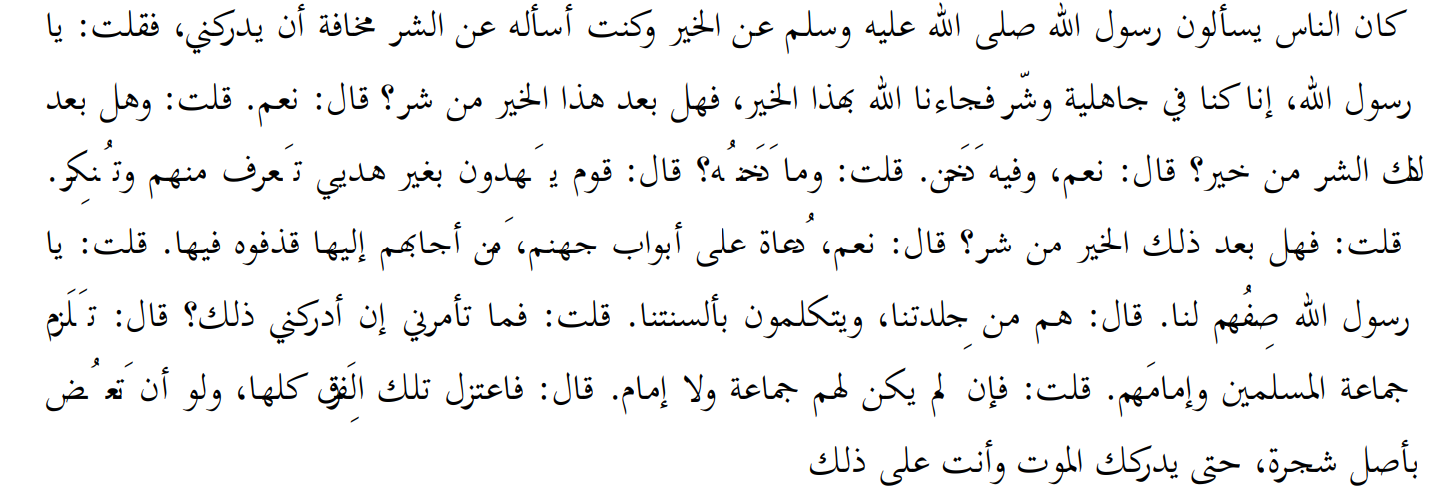
“মানুষ আল্লাহর নবী ﷺ-কে কল্যাণ সম্পর্কে জিজ্ঞাসা করত, আর আমি তাঁকে অকল্যাণ সম্পর্কে জিজ্ঞাসা করতাম, এই ভয়ে যে তা আমাকে আক্রান্ত করতে পারে। তাই আমি বললাম: হে আল্লাহর নবী! আমরা জাহিলিয়াত ও বিপর্যয়ের যুগে ছিলাম, অতঃপর আল্লাহ আমাদের কাছে এই কল্যাণ নিয়ে এসেছেন। তবে এই কল্যাণের পর কি কোনো বিপর্যয় আসবে? তিনি ﷺ বললেন: হ্যাঁ। আমি বললাম: সেই বিপর্যয়ের পর কি আবার কোনো কল্যাণ আসবে? তিনি বললেন: হ্যাঁ, এবং তার মধ্যে ধোঁয়া (দুখান) থাকবে। আমি বললাম: তার ধোঁয়া কী? তিনি বললেন: এমন লোক, যারা পথ দেখাবে কিন্তু আমার হিদায়াতের উপর থাকবে না। তুমি তাদের কিছু লোককে চিনবে এবং কিছু লোককে অস্বীকার করবে। আমি বললাম: সেই কল্যাণের পর কি আবার কোনো বিপর্যয় আসবে? তিনি বললেন: হ্যাঁ, এমন আহ্বানকারী (দাঈ) থাকবে, যারা জাহান্নামের দরজায় দাঁড়িয়ে আহ্বান জানাবে। যে তাদের আহ্বানে সাড়া দেবে, তারা তাকে সেখানে (জাহান্নামে) নিক্ষেপ করবে। আমি বললাম: হে আল্লাহর নবী! তাদের আমাদের কাছে বর্ণনা করুন। তিনি বললেন: তারা আমাদের নিজেদের চামড়ার (আমাদের নিজেদের জাতির) এবং আমাদের ভাষায় কথা বলবে। আমি বললাম: যদি আমি সেই (বিষয়ের) সম্মুখীন হই, তবে আপনি আমাকে কী করার আদেশ দেন? তিনি বললেন: মুসলিমদের জামা‘আত এবং তাদের ইমামকে আঁকড়ে ধরো। আমি বললাম: যদি মুসলিমদের কোনো জামা‘আত ও কোনো ইমাম না থাকে? তিনি বললেন: তাহলে সেই সমস্ত দল থেকে পৃথক থাকো, যদিও তোমাকে গাছের শিকড় কামড়ে ধরে থাকতে হয়, যতক্ষণ না এই অবস্থায় তোমার মৃত্যু আসে।”
“The people used to ask the Prophet of Allah (saw) about the good and I used to ask him about the bad in fear that it might catch me. So I said: O Prophet of Allah! We were in times of jahiliyyah and mischief then Allah brought us this good, so is there any mischief after this good? He (saw) said: Yes. I said: Will there be any good after that mischief? He said: Yes, and it has smoke (dukhan). I said: What is its smoke? He said: People guiding but not on my guidance. You recognise some (from them) and deny some. I said: Will there be any mischief after that good? He said: Yes, callers (du’at) who invite at the doors of Hellfire. They throw him into it (hell) whoever accepted their invitation. I said: O Prophet of Allah, describe them to us. He said: They are of our own skin (of our people) and talk our language. I said: What do you order me to do if that (matter) caught me? He said: Adhere to the jama‘ah of Muslims and their Imam. I said: What if the Muslims have no jama‘ah nor an Imam? He said: Then separate from all those groups, even if you (have to) bite the root of a tree till death comes to you as such.”
এই হাদীসটি তার বক্তব্যে স্পষ্ট যে নবী (সা.) মুসলিমদেরকে মুসলিমদের জামা'আতকে আঁকড়ে ধরতে এবং তাদের ইমামের অনুসরণ করতে আদেশ করেছেন, এবং জাহান্নামের দরজার দিকে আহ্বানকারীদের ত্যাগ করতে বলেছেন। প্রশ্নকারী তাঁকে জিজ্ঞেস করলেন, যখন মুসলিমদের কোনো ইমাম ও কোনো জামা'আত থাকবে না, তখন জাহান্নামের দরজায় আহ্বানকারীদের সম্পর্কে তাঁর কী করণীয়? তখন নবী (সা.) তাকে এসব দল থেকে সম্পূর্ণ পৃথক থাকার আদেশ দেন, মুসলিমদের থেকে বিচ্ছিন্ন না হতে এবং একজন ইমাম প্রতিষ্ঠার কাজ থেকে বিরত না থাকতে বলেন। সুতরাং তাঁর আদেশ স্পষ্ট: "সেই সব দল থেকে পৃথক থাকো।" তিনি তাদের থেকে বিচ্ছিন্ন থাকার উপর এতটাই গুরুত্ব দিয়েছেন যে, মৃত্যু আসা পর্যন্ত গাছের গুঁড়ি আঁকড়ে থাকতে হলেও তাদের থেকে দূরে থাকতে বলেছেন। এর অর্থ হলো তোমার দীনকে আঁকড়ে ধরো এবং জাহান্নামের দরজায় থাকা পথভ্রষ্টকারী আহ্বানকারীদের থেকে দূরে থাকো। এই হাদীসে খিলাফত প্রতিষ্ঠার কাজ ছেড়ে দেওয়ার কোনো অজুহাত বা অনুমতি (কারও জন্য) নেই; বরং এটি কেবল দীনকে আঁকড়ে ধরার এবং জাহান্নামের দরজার আহ্বানকারীদের ত্যাগ করার আদেশের মধ্যে সীমাবদ্ধ, আর খিলাফত প্রতিষ্ঠার চেষ্টা না করলে তার উপর গুনাহ থেকে যাবে। অতএব পথভ্রষ্ট দলসমূহ থেকে দূরে থাকার আদেশ দেওয়া হয়েছে, যাতে পথভ্রষ্টতার আহ্বানকারীদের হাত থেকে দীনকে রক্ষা করা যায়, এমনকি যদি গাছের শিকড় কামড়ে ধরে থাকতেও হয়; কিন্তু মুসলিম সমাজ থেকে নিজেকে দূরে সরিয়ে রাখা এবং দীনের বিধান প্রতিষ্ঠা ও মুসলিমদের জন্য একজন ইমাম প্রতিষ্ঠার কাজ পরিত্যাগ করা যাবে না।
This hadith is clear in its expression that the Prophet (saw) ordered the Muslims to adhere to the jama‘ah of Muslims and to adhere to their Imam, and to leave those who invite people to the doors of hell. The questioner asked him what he has should do in relation to those callers at the doors of Hellfire in the situation wherein the Muslims have no Imam and no jama‘ah; thereupon the Prophet (saw) ordered him to separate from all these groups, not to disassociate himself from the Muslims nor to abstain from the action for establishing an Imam. So his order is clear “Separate from all those groups”, and he emphasised the separation from those groups even to the extent that his isolation from them would make him clench to the trunk of a tree until death comes to him. Its meaning is to adhere to your deen and keep away from the misguiding callers who are at the doors of Hellfire. In this hadith there is no excuse or permission (for anybody) to abandon the work for establishing a Khalifah, it is, rather, confined to the command of adhering to the deen and abandoning the callers at the doors of hell, and the sin will remain on him if he does not work to establish a Khalifah. So he is ordered to abandon the misguiding groups in order to save his deen from the callers of the misguidance, even if he had to bite the root of a tree, but not to distance himself from the Muslim community and abandon the work for establishing the laws of the deen and establishing an Imam for Muslims.
আবু সাঈদ আল-খুদরী (রাঃ) থেকে বর্ণিত, তিনি বলেন, আল-বুখারী যা বর্ণনা করেছেন তার একটি উদাহরণ হলো:
Another example is what al-Bukhari narrated from Abu Said al-Khudri, who said:
আল্লাহর রাসূল ﷺ বলেছেন: এমন একটি সময় আসবে যখন একজন মুসলিমের সর্বোত্তম সম্পদ হবে সেসব ভেড়া, যেগুলো নিয়ে সে পাহাড়ের চূড়ায় ও বৃষ্টিপাতের স্থানে (উপত্যকায়) চলে যাবে, যাতে ফিতনা থেকে নিজের দ্বীন নিয়ে পালিয়ে বাঁচতে পারে।
“The Messenger of Allah (saw) said: A time will come that the best property of a Muslim will be sheep which he will take on the top of mountains and the places of rainfall (valleys) so as to flee with his religion from afflictions (fitan)”
এর অর্থ এই নয় যে, মুসলিম সমাজ থেকে নিজেকে বিচ্ছিন্ন করে নিতে হবে, দ্বীনের বিধানসমূহ পালন ছেড়ে দিতে হবে, এবং পৃথিবীতে কোনো খিলাফত না থাকা অবস্থায় মুসলমানদের জন্য একটি খিলাফত প্রতিষ্ঠার চেষ্টা পরিত্যাগ করতে হবে। এতে কেবল এটুকুই ব্যাখ্যা করা হয়েছে যে, বিপদ-মুসিবতের সময় একজন মুসলিমের সর্বোত্তম সম্পদ কী। এটি মানুষ থেকে পৃথক হওয়া কিংবা জনসমাজ থেকে বিচ্ছিন্ন থাকাকে উৎসাহিত করে না।
This does not mean that one should isolate oneself from the Muslim community, abandon practising the laws of the deen and establishing a Khalifah for Muslims when there is no Khilafah on earth. All that it contains is an explanation of what is the best wealth of the Muslim at the times of affliction; it does not encourage separation from the Muslims and isolation from the people.
অতএব, এই পৃথিবীর কোনো মুসলিমের এমন কোনো অজুহাত নেই যে সে আল্লাহ (সুবহানাহু ওয়া তাআলা)-র আদেশকৃত দ্বীন প্রতিষ্ঠার দায়িত্ব পরিত্যাগ করবে। সেই দায়িত্ব হলো একজন খলীফা প্রতিষ্ঠা করা মুসলিমদের জন্য, যখন পৃথিবীতে কোনো খিলাফত নেই, যখন আল্লাহর হুদূদ (শাস্তিসমূহ) কার্যকর করার, আল্লাহর পবিত্র বিষয়সমূহ রক্ষা করার মতো কেউ নেই, এবং দ্বীনের বিধানসমূহ বাস্তবায়ন করার এবং মুসলিম উম্মাহকে "লা ইলাহা ইল্লাল্লাহ, মুহাম্মাদুর রাসূলুল্লাহ" -এর পতাকাতলে ঐক্যবদ্ধ করার মতো কেউ নেই। এই দায়িত্বের কাজ পরিত্যাগ করার কোনো অনুমতি ইসলামে নেই, যতক্ষণ না তা প্রকৃতপক্ষে সম্পন্ন হয়।
Accordingly, no Muslim on the face of this earth has an excuse to abandon the duty of establishing the deen which Allah (swt) has ordered, that is, the establishment of a Khalifah for Muslims when there is no Khilafah on the earth, when there is no one to implement the punishments (hudood) of Allah (swt) to protect the sanctities of Allah (swt), and no one to implement the laws of the deen and unify the Muslim community under the banner of La ilaha illa Allah, Muhammad ur-Rasul Allah. There is no permission in Islam to abandon the work for this duty until it is indeed completed.