২০. জিহাদ
20. Jihad
জিহাদ হলো আল্লাহ (সুবহানাহু ওয়া তাআলা)-র পথে যুদ্ধে সরাসরি নিজের প্রচেষ্টা ব্যয় করা, অথবা সম্পদ, মতামত, সংখ্যা বৃদ্ধি বা অন্য কোনো উপায়ে তাকে সহায়তা করা। আল্লাহর বাণীকে উঁচু করার উদ্দেশ্যে যে যুদ্ধ করা হয়, তাই জিহাদ। আর আল্লাহ (সুবহানাহু ওয়া তাআলা)-র পথে কথার মাধ্যমে জিহাদ, তা জিহাদ হবে যদি সেই কথা সরাসরি যুদ্ধের সঙ্গে সম্পর্কিত হয়। যদি তা সরাসরি যুদ্ধের সঙ্গে সম্পর্কিত না হয়, তবে তা শরয়ী জিহাদ নয়, যদিও তাতে কষ্ট থাকে এবং যদিও তার ফলাফল আল্লাহর বাণীকে উঁচু করতে উপকারী হয়। কারণ শরীয়তে জিহাদ শুধুমাত্র যুদ্ধের জন্য নির্দিষ্ট, তাই এর মধ্যে সেই সবকিছুই অন্তর্ভুক্ত হবে যা সরাসরি যুদ্ধের সঙ্গে সম্পর্কিত। মতামত ও লেখালেখিও একই বিধানের অন্তর্গত; এগুলো জিহাদ হবে যদি তা আল্লাহর পথে যুদ্ধের সঙ্গে সরাসরি সম্পর্কিত হয়, যেমন সেনাবাহিনীর প্রতি সরাসরি যুদ্ধের জন্য উৎসাহ দেওয়ার বক্তব্য, অথবা শত্রুদের বিরুদ্ধে যুদ্ধে উদ্বুদ্ধকারী কথা। অন্যথায় তা জিহাদ নয়। রাজনৈতিক সংগ্রাম এবং শাসকদের সমালোচনা করাকেও জিহাদ বলা হয় না, যদিও এগুলোর প্রতিদান অনেক বড় এবং মুসলিমদের জন্য এদের উপকারিতা বিশাল। বিষয়টি কষ্ট বা উপকারিতার নয়, বরং এই শব্দের সেই শরয়ী অর্থ, যা নিয়ে এটি এসেছে। শরীয়তের অর্থে জিহাদ হলো যুদ্ধ এবং যুদ্ধের সঙ্গে সম্পর্কিত সবকিছু, যেমন মতামত, বক্তব্য, লেখা, কৌশল ও অন্যান্য বিষয়।
Jihad is expending (one’s) effort in fighting in the way of Allah (swt) directly or assisting by wealth or opinion or increasing numbers or other than that. The fighting to raise the word of Allah is jihad. As for jihad by speaking in the path of Allah (swt), this is jihad if the speech relates directly to fighting in the way of Allah. If it does not relate directly to it, it is not Shar’i jihad even if it involves difficulty and even if the results benefit in raising the word of Allah (swt). This is because jihad in Shar’a is specific to fighting, so there enters within it everything related directly to fighting. Similar to the opinion is writing and speaking; they are jihad if they are related directly to fighting in the way of Allah (swt) like the speech to the army to encourage it to fight directly or words inciting fighting the enemies. If not, this is not (jihad). Neither political struggle nor rebuking the rulers is termed jihad though their reward is high and their benefit to the Muslims great. The issue is neither difficulty nor the benefit, but rather it is the Shar’i meaning with which it came for this word. The Shari’ah meaning is fighting and all that it relates to from opinion, speech, writing, strategy and other things.
জিহাদের কারণ জিযিয়া নয়, যদিও তারা জিযিয়া প্রদানে সম্মত হলে আমরা তাদের সাথে যুদ্ধ বন্ধ করি। বরং জিহাদের কারণ হলো, যাদের বিরুদ্ধে আমরা যুদ্ধ করি তারা কাফির, যারা দাওয়াত প্রত্যাখ্যান করেছে। আল্লাহ (সুবহানাহু ওয়া তা'আলা) বলেন:
The cause of jihad is not jizyah even though we stop (fighting) them when they accept the jizyah. Rather, the cause of jihad is that those whom we fight are disbelievers (kuffar) who rejected the da’wah. Allah (swt) said:
“যারা আল্লাহ ও আখিরাত দিবসের প্রতি ঈমান আনে না, আল্লাহ ও তাঁর রাসূল যা হারাম করেছেন তা হারাম মনে করে না, এবং সত্য দীনকে নিজেদের দীন হিসেবে গ্রহণ করে না—আহলে কিতাবদের মধ্য থেকে তাদের সঙ্গে যুদ্ধ করো, যতক্ষণ না তারা অপমানিত অবস্থায় হাতে নিজেরা জিযিয়া প্রদান করে।” [সূরা আত-তাওবা ৯:২৯]
Fight those who do not believe in Allah nor the Last Day, nor forbid what Allah and His Messenger have forbidden, nor follow the deen of truth among the People of the Book until they pay the jizyah from their hands while they are humiliated” [TMQ 9:29].
আল্লাহর সাথে কুফরের গুণ থাকার কারণে তাদের সাথে যুদ্ধ করার আদেশ দেওয়া হয়েছে, অর্থাৎ তারা আল্লাহ ও শেষ দিবসের প্রতি ঈমান আনে না, এজন্য তাদের সাথে যুদ্ধ করো। সুতরাং এই বিবরণটি একটি সীমাবদ্ধতা, এবং এই পর্যায়ে এটি একটি কারণে পরিণত হয়। অতএব যুদ্ধের কারণ হলো কুফর। এটি অন্য একটি আয়াতেও এসেছে:
The command to fight them is (due to) their attribute of disbelief i.e. fight them because they do not believe in Allah and the Last Day etc. So this description is a restriction and at this point it becomes a cause. So the cause of fighting is disbelief. It came in another ayah:
“হে মুমিনগণ, তোমাদের কাছাকাছি (ভৌগোলিকভাবে নিকটবর্তী) কাফিরদের সাথে যুদ্ধ করো এবং তারা যেন তোমাদের মধ্যে কঠোরতা অনুভব করে।” [TMQ 9:123]
“O you who believe, fight those who encircle you (close to you geographically) of the disbelievers and let them find harshness in you” [TMQ 9:123]
তাহলে তাদের সাথে যুদ্ধের নির্দেশ কুফরের গুণের কারণেই। এমন আরও অনেক আয়াত রয়েছে, যেমন:
So the command to fight them is due to the attribute of disbelief. There are many similar ayat such as:
“শয়তানের বন্ধুদের বিরুদ্ধে লড়াই করো” [TMQ 4:76]
“Fight the allies of Satan” [TMQ 4:76]
এবং
And
“কুফরের নেতৃবর্গের বিরুদ্ধে যুদ্ধ করো” [TMQ 9:12]
“Fight the leaders of disbelief” [TMQ 9:12]
এবং
And
"মুশরিকদের বিরুদ্ধে সবাই মিলে যুদ্ধ করো" [TMQ 9:36]
“Fight the polytheists altogether” [TMQ 9:36]
এই সব আয়াত জিহাদের আদেশ দেয় একটি নির্দিষ্ট গুণের কারণে, যা যুদ্ধের কারণ, অর্থাৎ কুফর। আর জিযইয়াহ প্রদানকে কুরআন লাঞ্ছনার সঙ্গে যুক্ত করেছে, যা যুদ্ধ বন্ধ করার কারণ, যুদ্ধ শুরু করার কারণ নয়। এ থেকে বোঝা যায় যে জিহাদের কারণ হলো কুফর। আমরা যাদের বিরুদ্ধে যুদ্ধ করি তারা যদি দাওয়াত গ্রহণ করে, তবে তারা মুসলিম হয়ে যায়; আর যদি ইসলাম গ্রহণ করতে অস্বীকার করে, কিন্তু জিযইয়াহ দিতে এবং ইসলামের শাসন মেনে নিতে সম্মত হয়, তবে তাদের থেকে তা গ্রহণ করা হবে এবং তাদের সঙ্গে যুদ্ধ করা হবে না, কারণ তাদের ইসলাম গ্রহণে বাধ্য করা জায়েয নয়। যতক্ষণ তারা এর শাসন মেনে নিতে ও জিযইয়াহ প্রদান করতে সম্মত থাকে, ততক্ষণ তারা ইসলাম গ্রহণ না করলেও দাওয়াতের কাছে আত্মসমর্পণ করেছে। সুতরাং তারা ইসলামের শাসন মেনে নেওয়ার ও জিযইয়াহ দেওয়ার পর তাদের বিরুদ্ধে যুদ্ধ করা জায়েয নয়। তবে যদি তারা জিযইয়াহ দিতে সম্মত হয় কিন্তু ইসলামের শাসন মেনে নিতে অস্বীকার করে, তবে তাদের থেকে তা গ্রহণ করা জায়েয নয়, কারণ যুদ্ধের কারণ, অর্থাৎ তারা কাফির এবং দাওয়াত গ্রহণে অস্বীকারকারী, তা বিদ্যমান থাকে; ফলে তাদের বিরুদ্ধে যুদ্ধ করা ফরয থেকে যায়, এবং এই ফরয মুসলিমদের ঘাড় থেকে রহিত হয়নি। আর যে জরুরি চুক্তিতে খলিফা তাদের থেকে জিযইয়াহ গ্রহণ করেন, অথচ তাদেরকে কুফরী ব্যবস্থার অধীনে নিজেদের শাসন করতে ছেড়ে দেন, তার কারণ হলো এর জন্য বাহ্যিক ও অভ্যন্তরীণ পরিস্থিতির অনুকূলতার অভাব; শরীয়াহ এই জরুরি অবস্থায় প্রয়োজনের সময় এর জন্য ছাড় দিয়েছে, তাই এর উপর কিয়াস করা হয় না। অতএব জিহাদের কারণ এই যে, আমরা যাদের বিরুদ্ধে যুদ্ধ করি তারা এমন কাফির যারা দাওয়াত গ্রহণে অস্বীকার করেছে, এবং জিহাদের আর কোনো কারণ নেই। আর জিযইয়াহ ও লাঞ্ছনা যুদ্ধ বন্ধ করার কারণ হওয়ার বিষয়টি কেবল অ-মুশরিক আরবদের ক্ষেত্রে প্রযোজ্য। পক্ষান্তরে মুশরিক আরবদের ক্ষেত্রে ইসলাম অথবা যুদ্ধ ছাড়া আর কিছু গ্রহণ করা হয় না, আল্লাহর এই বাণীর কারণে:
All these ayat command the fighting due to a specific attribute which is the cause of fighting i.e. disbelief. As for the payment of jizyah, the Qur’an combined it with humiliation as the cause of stopping the fighting not the cause of fighting. From here it is understood that the cause of jihad is disbelief. If those whom we fight accept the da’wah they become Muslims; if they refuse to accept Islam (but) accept to pay the jizyah and be ruled by Islam, it is accepted from them and they are not fought as it is not permitted to force them to accept Islam. As long as they accept to be ruled by it and pay the jizyah, they have submitted to the da’wah even if they have not accepted Islam. Accordingly, it is not allowed to fight them after they accept to be ruled by it and pay the jizyah. However, if they accept to pay the jizyah but refuse to be ruled by Islam, it is not allowed to accept this from them because the cause of fighting which is that they are disbelievers who have refused to accept the da’wah remains standing so fighting them remains obligatory, an obligation which has not fallen from the Muslims’ necks. As for the emergency treaties in which the Khalifah accepts from them the jizyah while leaving them to rule themselves by the system of disbelief, due to the absence of compliance of the external and internal circumstances for it, the Shar’a gave concession to this emergency situation in the situations of necessity so no analogy is done upon it. Therefore the cause of jihad is that those whom we fight are disbelievers who refused to accept the da’wah and there is no other cause for jihad. As for jizyah together with humiliation being a cause to stop fighting, this is only with non polytheist Arabs. As for polytheist Arabs, it is not accepted from them except Islam or fighting due to Allah’s statement:
“তোমরা তাদের সঙ্গে যুদ্ধ করবে, অথবা তারা ইসলাম গ্রহণ করবে” [TMQ 48:16]।
“You will fight them or they will become Muslims” [TMQ 48:16].
জিহাদ কুরআন ও হাদীসের স্পষ্ট বক্তব্যের ভিত্তিতে ফরয। আল্লাহ (SWT) বলেন:
Jihad is obligatory by the explicit text of the Qur’an and Hadith. Allah (swt) said:
“তাদের সাথে যুদ্ধ করো যতক্ষণ না ফিতনা থাকে না এবং দ্বীন কেবল আল্লাহর জন্য হয়ে যায়।” [TMQ 8:39]
“Fight them so that there remains no (fitnah) and the deen becomes only for Allah” [TMQ 8:39]
আর তিনি (সুবহানাহু ওয়া তা'আলা) বলেন:
And He (swt) said:
“যারা আল্লাহ ও শেষ দিবসে বিশ্বাস করে না, আল্লাহ ও তাঁর রাসূল যা হারাম করেছেন তা হারাম মনে করে না, এবং সত্য দ্বীনকে গ্রহণ করে না—আহলে কিতাবদের মধ্য থেকে তাদের বিরুদ্ধে যুদ্ধ করো, যতক্ষণ না তারা অপমানিত অবস্থায় হাত দিয়ে জিযিয়া প্রদান করে।” [TMQ 9: 29 ]
“Fight those who don’t believe in Allah nor the Last Day, nor forbid what Allah and His Messenger have forbidden, nor follow the deen of truth among the People of the Book until they pay the jizyah from their hands while they are humiliated” [TMQ 9: 29 ]
এবং আল্লাহ (SWT) বলেন:
And Allah (swt) said:
“যদি তোমরা (জিহাদের জন্য) বের না হও, তবে তিনি তোমাদেরকে যন্ত্রণাদায়ক শাস্তি দেবেন।” [TMQ 9: 39]
“If you do not go out (for jihad), He will punish you with a painful punishment” [TMQ 9: 39]
আর তিনি (সুবহানাহু ওয়া তা'আলা) বলেন:
And He (swt) said:
“হে মুমিনগণ, তোমাদের আশেপাশের কাফেরদের সাথে লড়াই করো, এবং তারা যেন তোমাদের মধ্যে কঠোরতা দেখতে পায়।” [TMQ 9: 123]
“O you who believe, fight those who encircle you of the disbelievers and let them find harshness in you” [TMQ 9: 123].
আনাস (রাঃ) থেকে বর্ণিত, তিনি বলেন: “আল্লাহর রাসূল ﷺ বলেছেন:
It is narrated from Anas (ra) who said: “The Messenger of Allah (saw) said:
“মুশরিকদের বিরুদ্ধে তোমাদের সম্পদ, তোমাদের হাত ও তোমাদের জিহ্বা দিয়ে জিহাদ করো” (বর্ণনা করেছেন আন-নাসায়ী)।
“Fight the polytheists with your wealth, your hands and your tongues” (narrated by An-Nisai).
আনাস (রা.) থেকে বর্ণিত, নবী ﷺ বলেছেন:
Also from Anas that the Prophet (saw) said:
“নিশ্চয়ই! আল্লাহর পথে যুদ্ধের উদ্দেশ্যে ভোরে বা সন্ধ্যায় বের হওয়া দুনিয়া ও তার মধ্যে যা কিছু আছে তার চেয়েও উত্তম।” (বর্ণনায় আল-বুখারী)।
“Verily! Setting out in the early morning or in the evening in order to fight in Allah's way is better than the world and what it contains.” (narrated by Al-Bukhari).
তিনি আরও বর্ণনা করেন যে তিনি বলেছেন ﷺ:
He also narrated that he (saw) said:
“আমাকে মানুষের সাথে যুদ্ধ করার আদেশ দেওয়া হয়েছে, যতক্ষণ না তারা বলে ‘লা ইলাহা ইল্লাল্লাহ’”ﷺ
“I was commanded to fight the people until they say ‘There is no god but Allah”
ইমাম আহমাদ ও আবু দাউদ আনাস (রা.) থেকে বর্ণনা করেন, তিনি বলেন: আল্লাহর রাসূল ﷺ বলেছেন:
Imam Ahmad and Abu Dawud narrated from Anas who said: The Messenger of Allah (saw) said:
“…জিহাদ অবিরাম চলতে থাকবে, যেদিন থেকে আল্লাহ আমাকে নবী হিসেবে প্রেরণ করেছেন, সেদিন থেকে শুরু করে যেদিন আমার উম্মতের শেষ ব্যক্তি দাজ্জালের সাথে যুদ্ধ করবে। কোনো অত্যাচারী শাসকের অত্যাচার, কিংবা কোনো ন্যায়পরায়ণ (শাসকের) ন্যায়বিচার, একে বাতিল করতে পারবে না।”
“…jihad will be performed continuously since the day Allah sent me as a prophet until the day the last member of my community will fight with the Dajjal (Antichrist). The tyranny of any tyrant and the justice of any just (ruler) will not invalidate it.”
জায়েদ বিন খালিদ (রা.) থেকে বর্ণিত, তিনি বলেন: রাসূলুল্লাহ ﷺ বলেছেন:
It has been narrated from Zayd bin Khalid who said: The Messenger of Allah (saw) said:
“যে ব্যক্তি আল্লাহর পথে কোনো যোদ্ধাকে প্রস্তুত করে, সে-ও যুদ্ধ করেছে; আর যে ব্যক্তি তার পরে তার পরিবারের দেখাশোনা উত্তমভাবে (খায়র) করে, সে-ও যুদ্ধ করেছে।” (আহমাদ কর্তৃক বর্ণিত)
“Whoever prepares a warrior in the way of Allah has (also) fought, and whoever takes care of his family in goodness (khayr) after him has (also) fought” (narrated by Ahmad).
“বলা হলো: হে আল্লাহর রাসূল, মানুষের মধ্যে কে শ্রেষ্ঠ? আল্লাহর রাসূল ﷺ বললেন: ‘সেই মুমিন, যে আল্লাহর পথে তার জান ও মাল দিয়ে জিহাদ করে।’” (বর্ণনায় আল-বুখারী)
“It was said: O Messenger of Allah, which of the people is better? The Messenger of Allah (saw) said: ‘A believer who does jihad in the way of Allah by his body and wealth” (narrated by Al-Bukhari).
এবং তিনি ﷺ বললেন:
And he (saw) said:
যে ব্যক্তি যুদ্ধ না করে, কিংবা যুদ্ধের কথা মনে না রেখে মৃত্যুবরণ করে, সে নিফাকের একটি শাখার উপর মৃত্যুবরণ করল।
“Whoever dies without fighting or his soul thinking of fighting has died upon a branch of hypocrisy.”
আবূ আওফা (রা.) থেকে বর্ণিত, রাসূলুল্লাহ ﷺ বলেছেন:
It has been narrated from Abi Awfa (ra) that the Messenger of Allah (saw) said:
“জেনে রাখো, জান্নাত তলোয়ারের ছায়ার নিচে।” (আল-বুখারী কর্তৃক বর্ণিত)।
“Know that paradise is beneath the shade of swords” (narrated by Al-Bukhari).
আবু হুরায়রা (রা.) থেকে বর্ণিত, তিনি বলেন:
It is narrated from Abu Hurayra (ra) who said:

আল্লাহর রাসূলের একজন সাহাবী এক উপত্যকা অতিক্রম করছিলেন, যেখানে মিষ্টি পানির নদী বয়ে যাচ্ছিল। তিনি এর সৌন্দর্যে মুগ্ধ হলেন এবং বললেন: আমি যদি মানুষ থেকে আলাদা হয়ে এই উপত্যকায় থেকে যাই? কিন্তু আমি রাসূলুল্লাহ ﷺ-এর কাছ থেকে অনুমতি না নিয়ে তা কখনো করব না। তিনি বিষয়টি রাসূলুল্লাহ ﷺ-এর কাছে উল্লেখ করলেন, আর রাসূলুল্লাহ ﷺ বললেন: তুমি এমনটি করো না, কারণ আল্লাহর পথে তোমাদের কারো দাঁড়িয়ে থাকা তার ঘরে সত্তর বছর নামায পড়ার চেয়ে উত্তম। (আত-তিরমিযী কর্তৃক বর্ণিত)
“One of the Sahabah of the Messenger of Allah (saw) passed by a ravine with rivers of sweet water in it and was astounded by its beauty, so he said: What if I separated from the people and stayed in this ravine? But I will never do it until I seek permission from the Messenger of Allah (saw) so he mentioned that to the Messenger of Allah who said: Do not do (so) for the standing of one of you in the way of Allah is better than his praying in his house for seventy years” (narrated by At-Tirmidhi).
জিহাদ আক্রমণাত্মকভাবে ফরযে কিফায়া, আর যে শত্রু মুসলিমদের উপর আক্রমণ করে তার বিরুদ্ধে তা ফরযে আইন, এবং বাকি সবার জন্য তা ফরযে কিফায়া। শত্রুকে বিতাড়িত না করা এবং ইসলামী ভূমিকে তাদের নোংরামি থেকে মুক্ত না করা পর্যন্ত এই দায়িত্ব রহিত হয় না। আক্রমণাত্মকভাবে জিহাদ ফরযে কিফায়া হওয়ার অর্থ হলো, শত্রু আমাদের আক্রমণ না করলেও আমরা তাদের বিরুদ্ধে যুদ্ধ শুরু করব। যদি কোনো যুগে কোনো মুসলিম আক্রমণাত্মক যুদ্ধ না করে, তবে তারা এটি ত্যাগ করার কারণে গুনাহগার হবে। যদি মিসরের মানুষ আক্রমণাত্মক জিহাদ করে, তবে তার দায়িত্ব ইন্দোনেশিয়ার মানুষের উপর থেকে রহিত হয়ে যায়, কারণ মুসলিমদের দ্বারা সশস্ত্র কাফিরদের বিরুদ্ধে বাস্তবে যুদ্ধ সংঘটিত হচ্ছে, ফলে জিহাদের দায়িত্ব আদায় হয়ে গেছে। তবে যদি মুসলিম ও কাফিরদের মধ্যে যুদ্ধ শুরু হয়, কিন্তু কেবল মিসরের মানুষের যুদ্ধের মাধ্যমে কিফায়া আদায় না হয়, তবে মিসর ও ইরাকের মানুষের কাজের মাধ্যমে ভারত ও ইন্দোনেশিয়ার মানুষের উপর থেকে দায়িত্ব রহিত হয় না। বরং নিকটবর্তী মুসলিমদের উপর এটি ওয়াজিব, তারপর শত্রুর নিকটবর্তী অন্যদের উপর, যতক্ষণ না কিফায়া আদায় হয়। যদি সকল মুসলিমের অংশগ্রহণ ছাড়া কিফায়া আদায় না হয়, তবে শত্রুকে পরাভূত করা পর্যন্ত সকল মুসলিমের উপর জিহাদ ওয়াজিব হয়ে যায়। খলীফা যদি অগ্রসর হওয়ার নির্দেশ না দিয়ে থাকেন, তবেই জিহাদ ফরযে কিফায়া থাকে; আর যাকে খলীফা অংশগ্রহণের নির্দেশ দিয়েছেন, তার উপর আল্লাহর এই বাণীর কারণে জিহাদ ওয়াজিব হয়ে গেছে:
Jihad is an obligation of sufficiency (fard kifayah) offensively, and an individual obligation (fard ‘ayn) against the enemy who attacks them while being a obligation of sufficiency upon the rest. The obligation does not fall until the enemy is expelled and the Islamic land liberated from their filth. The meaning of jihad being an obligation of sufficiency offensively is that we start fighting the enemy even if they do not start (fighting) us. If no Muslim performs the fighting offensively at any period then they will be sinful for leaving it. If the people of Egypt perform the offensive jihad then (its obligation) falls from the people of Indonesia, as there exists practical fighting by Muslims against belligerent disbelievers therefore the obligation of jihad has occurred. However if fighting broke out between Muslims and disbelievers but the sufficiency (kifayah) has not occurred by the people of Egypt fighting the disbelievers alone, then its obligation does not fall from the people of India and Indonesia by the performance of the people of Egypt and Iraq. Rather it is obligatory upon the nearest (Muslim) then the nearest to the enemy until sufficiency occurs; if sufficiency does not occur except with all the Muslims, then jihad becomes obligatory upon all the Muslims until the enemy is subdued. Jihad is an obligation of sufficiency (fard kifayah) if the Khalifah has not told him to advance; as for the one whom the Khalifah has told him to take part, then jihad has become obligatory upon him due to Allah’s statement:
“হে ঈমানদারগণ, তোমাদের কী হলো যে, যখন তোমাদের বলা হয়, ‘আল্লাহর পথে বেরিয়ে পড়ো’, তখন তোমরা মাটির সঙ্গে আটকে থাকো?”
“O you who believe, what is wrong with you that when it is said: ‘Go forth in the way of Allah’ you hold firm to the earth”
তাঁর (সা.) এই বাণী:
And his (saw) statement:
“এবং যখন তোমাদের আগে বাড়ার আহ্বান জানানো হয়, তখন আগে বাড়ো।” (বুখারী ও মুসলিম কর্তৃক বর্ণিত)
“And if you are asked to advance, then advance.” (Narrated by Bukhari & Muslim)
ইসলামী রাষ্ট্রে জিহাদে "কিফায়া" (যথেষ্ট হওয়া)-র অর্থ হলো, জিহাদের জন্য এমন একদল মানুষ দাঁড়িয়ে যাওয়া যাদের যুদ্ধ যথেষ্ট হয়; তারা হোক এমন এক সেনাবাহিনী যাদের জন্য উমর (রা)-এর যুগের মতো দাওয়াওয়ীন (সামরিক নথিপত্র ও হিসাবের খাতা) থাকে, অথবা তারা হোক এমন লোক যারা আবু বকর (রা)-এর যুগের মতো স্বেচ্ছায় নিজেদেরকে জিহাদের জন্য প্রস্তুত করেছিল। এক্ষেত্রে কোনো পার্থক্য নেই, চাই তারা প্রথম শ্রেণির হোক, পরবর্তী শ্রেণির হোক, কিংবা উভয়ের সমন্বয় হোক; শর্ত হলো, শত্রু তাদেরকে লক্ষ্যবস্তু বানালে তারা প্রতিরোধ করতে সক্ষম হবে। এমন হলে তাদের উপর কিফায়ার দায়িত্ব বর্তায়। আর যদি তারা প্রতিরোধে অক্ষম হয়, তবে খলীফা অন্যদেরকে জিহাদের জন্য প্রস্তুত করবেন, এভাবে চলতে থাকবে। আক্রমণাত্মক জিহাদ মানে এই নয় যে, আমরা সরাসরি শত্রুর সাথে যুদ্ধ শুরু করব; বরং প্রথমে আমাদেরকে তাদেরকে ইসলামের দিকে আহ্বান করতে হবে।
The meaning of the sufficiency in jihad in the Islamic State is that there arise for jihad a people whose fighting is sufficient; whether they are an army for whom there are books of accounts (dawawin) for this as was the case in the time of Umar (ra), or they had prepared themselves for jihad freely as was the case in the time of Abu Bakr (ra). It is the same whether the first ones or the latter ones or both of them together such that if the enemy targets them they are able to defend so it is a obligation of sufficiency upon them. If they are unable to defend, then the Khalifah prepares others for jihad and so on. Offensive jihad does not mean that we initiate fighting the enemy directly; rather we must first call them to Islam.
মুসলমানদের জন্য সেই লোকদের সঙ্গে যুদ্ধ করা জায়েয নয়, যাদের কাছে ইসলামের দাওয়াত পৌঁছায়নি; বরং কাফিরদের প্রথমে ইসলামের দিকে আহ্বান জানাতে হবে। যদি তারা প্রত্যাখ্যান করে, তবে তাদের জিযইয়া প্রদানের আহ্বান জানানো হবে; আর যদি তারাও প্রত্যাখ্যান করে, তবে আমরা তাদের সঙ্গে যুদ্ধ করব। মুসলিম সুলাইমান ইবনু বুরাইদাহ থেকে, তিনি তাঁর পিতা থেকে বর্ণনা করেছেন:
If is not allowed for Muslims to fight those whom the Islamic da’wah has not reached; rather, the disbelievers must first be called to Islam. If they reject, then they are asked to pay the jizyah; and if they reject, we fight them. Muslim narrated from Sulayman bin Buraydah from his father:
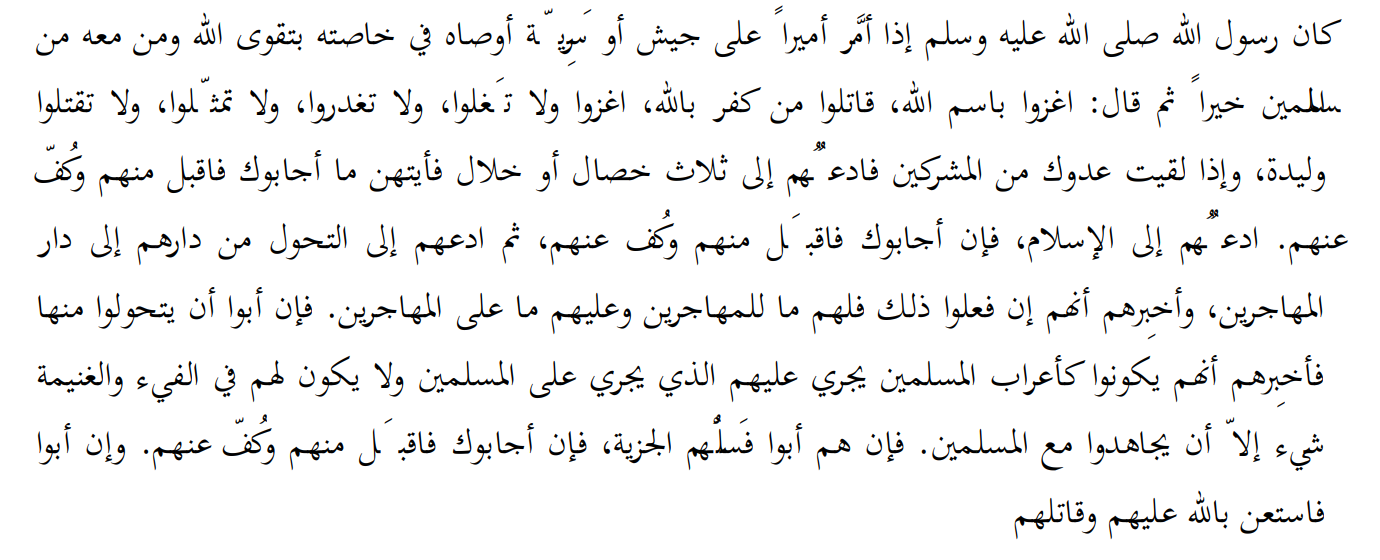
যখনই তিনি কোনো ব্যক্তিকে একটি সামরিক বাহিনীর নেতৃত্বে নিয়োগ করতেন, আল্লাহর রাসূল ﷺ তাকে বিশেষভাবে আল্লাহকে ভয় করতে এবং তার সঙ্গী মুসলিমদের সঙ্গে উত্তম আচরণ করতে উপদেশ দিতেন। তিনি ﷺ বলতেন: ‘আল্লাহর নামে এবং আল্লাহর পথে যুদ্ধ করো। যারা আল্লাহকে অস্বীকার করে তাদের বিরুদ্ধে যুদ্ধ করো। যুদ্ধ করো, তবে বিশ্বাসঘাতকতা করো না, যুদ্ধলব্ধ সম্পদ থেকে চুরি করো না, বিকৃত করো না এবং শিশুদের হত্যা করো না। যখন তুমি মুশরিকদের মধ্য থেকে তোমার শত্রুর মুখোমুখি হবে, তখন তাদেরকে তিনটি বিষয়ের একটির দিকে আহ্বান করো। তাদের মধ্যে যেটিতে তারা সাড়া দেয়, তা তাদের কাছ থেকে গ্রহণ করো এবং তাদের সঙ্গে যুদ্ধ থেকে বিরত থাকো। তাদেরকে ইসলাম গ্রহণের আহ্বান জানাও; যদি তারা সাড়া দেয়, তবে তাদের কাছ থেকে তা গ্রহণ করো এবং তাদের সঙ্গে যুদ্ধ থেকে বিরত থাকো। এরপর তাদেরকে তাদের দেশ ত্যাগ করে মুহাজিরদের দেশে চলে আসতে আহ্বান করো। তাদেরকে বলো যে, যদি তারা তা করে, তবে মুহাজিরদের যে অধিকার ও দায়িত্ব রয়েছে, তাদেরও তা থাকবে। যদি তারা অস্বীকার করে, তবে তাদেরকে বলো যে, তারা মুসলিম বেদুইনদের মতো হবে (যারা মরুভূমিতে বাস করে), তারা আল্লাহর সেই বিধানের অধীন হবে যা মুমিনদের জন্য প্রযোজ্য। কিন্তু মুসলিমদের সঙ্গে যুদ্ধে অংশ না নিলে তারা ‘ফাই’ বা যুদ্ধলব্ধ সম্পদের কোনো অংশ পাবে না। যদি তারা ইসলাম গ্রহণে অস্বীকৃতি জানায়, তবে তাদেরকে জিযিয়া (কর) প্রদানের আহ্বান জানাও। যদি তারা তা করে, তবে তাদের কাছ থেকে তা গ্রহণ করো এবং তাদের সঙ্গে যুদ্ধ থেকে বিরত থাকো। কিন্তু যদি তারা অস্বীকার করে, তবে তাদের বিরুদ্ধে আল্লাহর সাহায্য প্রার্থনা করো এবং তাদের সঙ্গে যুদ্ধ করো।’
“Whenever he appointed a man to lead a military detachment, the Messenger of Allah (saw) would advise him especially to fear Allah and treat the Muslims with him well. He (saw) said: ‘Fight in the Name of Allah and in the cause of Allah. Fight those how disbelieve in Allah. Fight but do not be treacherous, do not steal from the spoils of war, do not mutilate and do not kill children. When you meet your enemy from among the polytheists, call them to one of three things. Whichever of them they respond to, accept it from them and refrain from fighting them. Invite them to accept Islam, and if they respond then accept it from them and refrain from fighting them. Then invite them to leave their land and move to the land of the polytheists. Tell them that if they do that, then they will have the same rights and duties as the polytheists. If they refuse, then tell them that they will be like the Muslim Bedouins (who live in the desert), subject to the same rulings of Allah as the believers. But they will have no share of Fay’ or war spoils, unless they fight alongside the Muslims. If they refuse to enter Islam, then ask them to pay the Poll-tax. If they do that, then accept it from them and refrain from fighting them. But if they refuse, then seek the help of Allah against them and fight them”
ইবনে আব্বাস (রা) থেকে বর্ণিত:
And from ibn Abbas (ra):
“রাসূলুল্লাহ ﷺ কখনো যুদ্ধ করেননি, যতক্ষণ না তিনি তাদেরকে আহ্বান জানাতেন।” (আহমাদ কর্তৃক বর্ণিত)
“The Messenger of Allah (saw) never fought except that he invited them” (Narrated by Ahmad).
এবং ফারওয়া ইবনু মুসাইক থেকে বর্ণিত, তিনি বলেন:
And from Furwat bin Maseek who said:
আমি আল্লাহর রাসূল ﷺ-কে বললাম, আমার জাতির যারা অগ্রসর হয়ে আসবে তাদের বিরুদ্ধে, আর যারা পালিয়ে যাবে তাদের বিরুদ্ধেও কি আমি যুদ্ধ করব? তিনি বললেন: হ্যাঁ। আমি যখন ফিরে যাওয়ার জন্য ঘুরলাম, তিনি আমাকে ডাকলেন এবং বললেন: তাদেরকে ইসলামের দিকে আহ্বান না করা পর্যন্ত তাদের সাথে যুদ্ধ করো না।
“I said to the Messenger of Allah, should I fight with those of my people advancing (against) those of them fleeing? He said: Yes. When I turned (to go), he called me and said: Do not fight them until you invite them to Islam.”