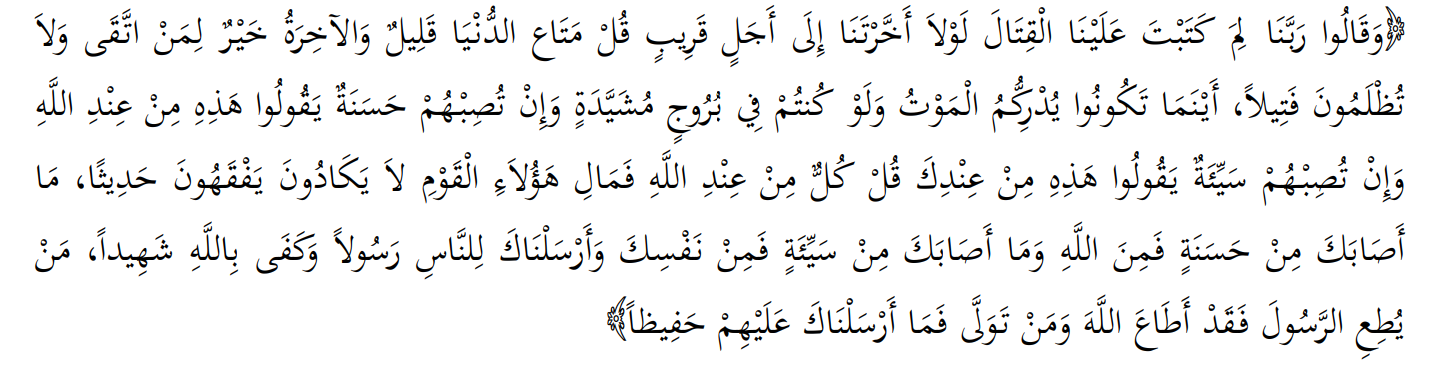
সুতরাং এখানে বিষয় হলো তাদের উপর যা আপতিত হয়, তারা যা করে তা নয়। অতএব এর সঙ্গে আল-কাদা ওয়াল-কাদার অধ্যয়নের কোনো সম্পর্ক নেই।
So the subject is what befalls them and not what they are doing. Thus it has nothing to do with the study of al-qadā’ wa‘l-qadar.
সুতরাং, উপরে উল্লিখিত বিষয়গুলোর সঙ্গে আল-কাযা ওয়াল কাদার (তাকদীর) অধ্যয়নের কোনো সম্পর্ক নেই; এগুলো এর অর্থের অন্তর্ভুক্ত নয় এবং উপরে উল্লিখিত কোনো কিছুর সঙ্গেই এর কোনো সম্পর্ক নেই। বরং আল-কাযা ওয়াল-কাদার একটি অর্থ হিসেবে গ্রিক দর্শন থেকে এসেছে, যা মু'তাযিলারা বহন করে এনেছিল এবং এ বিষয়ে তারা একটি মত প্রদান করেছিল। আহলুস সুন্নাহ ও জাবরিয়্যাগণ তাদের খণ্ডন করেন, এবং আহলুস সুন্নাহ জাবরিয়্যাদেরও খণ্ডন করেন। আলোচনা একই অর্থের মধ্যে সীমাবদ্ধ ছিল এবং একই ভিত্তির উপর দাঁড়িয়ে ছিল। অতএব, বিষয়টি এমন একটি অর্থ/ধারণা, যা গ্রিক দর্শন থেকে এসেছে এবং মুসলিম ও গ্রিক দর্শনে সজ্জিত কাফিরদের মধ্যে যে বিতর্ক হতো, সেখানে এটি সামনে এসে পড়ে। এটি এমন একটি অর্থ যার সম্পর্ক ‘আকীদার সঙ্গে, তাই এই অর্থ সম্পর্কে ইসলামের মতামত তুলে ধরাই কাম্য। মু'তাযিলারা একটি মত দেয়, জাবরিয়্যারা তাদের খণ্ডন করে আরেকটি মত দেয়। আহলুস সুন্নাহ তাদের সবাইকে খণ্ডন করে একটি মত দেয় এবং বলে যে এটি তৃতীয় একটি মত, যা উক্ত দুই মতের মধ্য থেকেই বেরিয়ে এসেছে; তারা একে ‘মল ও রক্তের মাঝখান থেকে বের হওয়া, পান করতে মিষ্ট বিশুদ্ধ দুধ’ বলে বর্ণনা করেছেন।
Therefore, all that has been mentioned above has nothing to do with the study of al-qadā’ wa‘l qadar; they do not come under its meaning and have no relation whatsoever with what has been mentioned above. Rather, al-qadā’ wa‘l-qadar as a meaning has come from Greek philosophy which was transmitted by the Mu'tazilah who gave an opinion with regards to it. Ahl al-Sunnah and the Jabriyyah refuted them and Ahl al-Sunnah (also) made a refutation of the Jabriyyah. The discussion was confined to the same meaning and preceded upon the same premise. Thus the issue is a meaning/sense that came from Greek philosophy and it came to the fore in the debate which used to take place between the Muslims and the kuffar who used to be armed with the Greek philosophy. It is a meaning which has a relevance to the ‘aqīdah (creed), thus what is desired is to give Islam's opinion regarding this meaning. The Mu'tazilah gave an opinion and the Jabriyyah refuted them and gave another opinion. Ahl al-Sunnah refuted all of them and gave an opinion, and said about it that it is a third opinion which has come out from the two opinions and they described it as ‘the pure milk, sweet to drink, that comes out from between excrement and blood’.
অতএব, গ্রিক দর্শন থেকে আসা আলোচ্য বিষয়টি পরিচিত হয়ে ওঠে, এবং যেহেতু এটি আকীদার (বিশ্বাসের) সঙ্গে সম্পর্কিত, সেহেতু মুসলিমের এ বিষয়ে তার বিশ্বাস কী তা স্পষ্ট জানা আবশ্যক। মুসলিমরা প্রকৃতপক্ষে এ বিষয়ে নিজেদের মত ব্যক্ত করেছেন এবং তিনটি চিন্তাধারার উদ্ভব হয়। সুতরাং আল-কাযা ওয়াল-কদর সম্পর্কিত বিষয়কে আভিধানিক ও শরী‘আতের দৃষ্টিতে আল-কাযা বা আল-কদর শব্দের যে অর্থ এসেছে, তার সঙ্গে সম্পর্কিত করা জায়েয নয়। আবার কেবল ধারণা, কল্পনা বা অনুমানের ভিত্তিতে আল-কাযা বা আল-কদরের জন্য কোনো অর্থ কল্পনা করা বা নির্ধারণ করাও জায়েয নয়। যেমন বলা যে, আল-কাযা হলো কেবল সার্বজনীন বিষয়ের উপর সার্বজনীন ফয়সালা, আর আল-কদর হলো আংশিক বিষয় ও তার খুঁটিনাটির উপর সার্বজনীন ফয়সালা; অথবা বলা যে, আল-কদর হলো বিষয়াদির জন্য চিরন্তন পরিকল্পনা, আর আল-কাযা হলো সেই পূর্বনির্ধারণ ও পরিকল্পনা অনুযায়ী বাস্তবায়ন ও সৃষ্টি। প্রকৃতপক্ষে এটি জায়েয নয়, কারণ এটি নিছক কল্পনা, অনুমান এবং নির্দিষ্ট ভাষাগত ও শরয়ী শব্দাবলিকে এমনভাবে প্রয়োগ করার ব্যর্থ প্রচেষ্টা, যেখানে সেগুলো প্রযোজ্য নয়; বরং সেগুলো সাধারণ অর্থ নির্দেশ করে। তাই প্রমাণ ছাড়া এই দুই শব্দকে এই নির্দিষ্ট অর্থে সীমাবদ্ধ করা হবে একটি স্বেচ্ছাচারী কাজ।
Therefore, the subject of discussion, which came from the Greek philosophy, became known, and since it is related to the ‘aqīdah (creed), the Muslim must be clear as to what his belief is regarding this subject. The Muslims did actually state their opinion and three schools of thought arose. Thus it is not allowed to refer the issue of al-qadā’ wa‘l-qadar to what has come of the meaning of al-qadā’ or al-qadar, linguistically and in the Sharī’ah, nor is it allowed to imagine or conceive for al-qadā’ or ‘al-qadar any meaning from mere supposition, conception or imagination, and to say, for example, that al-qadā’ is the universal judgement on only the universals and al qadar is the universal judgement on the partial aspects and its details, or to say that al-qadar is the eternal plan for things and al-qadā’ is the execution and creation according to that predetermination and plan. Indeed, this is not allowed because this is mere imagination, assumption and a failed attempt of applying certain linguistic and shar’i expressions because they do not apply to it, they rather indicate general meanings; . It would then be an arbitrary action to restrict the two words to these specific meanings without evidence.
একইভাবে, আল-কাদা ওয়াল-কাদার-কে আল্লাহর গোপন বিষয়গুলোর একটি গোপন বিষয় বলে দাবি করা এবং এ বিষয়ে আলোচনা করতে নিষেধ করা জায়েজ নয়। কারণ এমন কোনো শার'ঈ দলিল নেই যা বলে যে এটি আল্লাহর গোপন বিষয়গুলোর একটি, তদুপরি এই বিষয়টি ইন্দ্রিয়গ্রাহ্য, যার সম্পর্কে একটি মতামত দিতে হয়; সুতরাং কীভাবে বলা যায় যে এটি অধ্যয়ন করা যাবে না?! উপরন্তু, এটি একটি যৌক্তিক অনুসন্ধান এবং এমন একটি বিষয় যা বুদ্ধির দ্বারা অধ্যয়ন করা হয় এমন বাস্তবতার সাথে সম্পর্কিত, যা ইন্দ্রিয়গ্রাহ্য; এবং যেহেতু এটি আল্লাহর প্রতি ঈমানের সাথে সম্পর্কিত। সুতরাং আল-কাদা ওয়াল-কাদার, যেভাবে আলোচ্য বিষয় হিসেবে স্থাপন করা হয়েছে এবং যা আকীদার অংশ হয়ে গেছে, তা অবশ্যই অধ্যয়ন করতে হবে।
Similarly, it is not allowed to claim al-qadā’ wa‘l-qadar is a secret from amongst the secrets of Allah and that we have been forbidden to discuss it, because there is no shar’i text to say that it is one of the secrets of Allah , not to mention the fact that the subject matter is sensorially perceivable, for which an opinion must be given, so how can it be said that it cannot to be studied?! In addition to the fact that it is a rational inquiry and a subject which relates to matters that are studied by the intellect as a reality that is sensorially-perceivable; and since it relates to the imān in Allah . Thus, al-qadā’ wa‘l-qadar, in the meaning placed as the subject matter and which became part of the ‘aqīdah (creed) must be studied.
আল-কাযা ওয়াল-কাদার (al-qadā’ wa‘l-qadar), অর্থাৎ আল-কাযা ওয়াল-কাদারের বিষয়টি হলো বান্দাদের কর্ম এবং বস্তুসমূহের গুণাবলির বিষয়। কারণ এখানে যে বিষয়টি উল্লেখ করা হচ্ছে তা হলো বান্দার কর্ম এবং এসব কর্ম থেকে যা উদ্ভূত হয়, অর্থাৎ বান্দা বস্তুসমূহে যে গুণাবলি সৃষ্টি করে: এগুলো কি আল্লাহ ﷻ-এর সৃষ্টি? তিনিই কি এগুলো সৃষ্টি করেছেন এবং অস্তিত্বে এনেছেন? নাকি বান্দা? বান্দা কি এগুলো সৃষ্টি করে অস্তিত্বে এনেছে?
মু'তাযিলারা সবাই বলেছে যে, বান্দাই তার নিজের কর্মের স্রষ্টা: সে-ই কর্মটি সৃষ্টি করে এবং অস্তিত্বে আনে। গুণাবলির ব্যাপারে তারা মতভেদ করেছে। তাদের কেউ কেউ বলেছে, মানুষের দ্বারা সৃষ্ট সকল গুণাবলির স্রষ্টা বান্দা নিজেই এবং সে-ই এগুলো অস্তিত্বে আনে। অন্যরা গুণাবলির মধ্যে পার্থক্য করেছে। তাদের মধ্যে কেউ কেউ বলেছে, বস্তুসমূহে যেসব গুণ বান্দার দ্বারা সৃষ্ট হয়, সেগুলো বান্দা কর্তৃক সৃষ্ট ও অস্তিত্বপ্রাপ্ত, আর কিছু গুণ বস্তুতে আল্লাহ কর্তৃক সৃষ্ট ও তাঁর দ্বারা অস্তিত্বপ্রাপ্ত।
আর জাবরিয়্যাহরা বলেছে, আল্লাহ ﷻ মানুষের সকল কর্ম এবং মানুষের দ্বারা বস্তুতে সৃষ্ট সকল গুণাবলি সৃষ্টি করেন। তিনিই এগুলো অস্তিত্বে আনেন; সৃষ্টি ও গঠনের ক্ষেত্রে, কিংবা বস্তুতে গুণ সৃষ্টির ক্ষেত্রে বান্দার কোনো ভূমিকা নেই।
আহলুস সুন্নাহ বলেছেন, বান্দার কর্ম এবং বান্দা কর্তৃক বস্তুতে সৃষ্ট গুণাবলি আল্লাহ ﷻ-ই সৃষ্টি করেন। কিন্তু তাঁরা বলেছেন, আল্লাহ ﷻ এগুলো সৃষ্টি করেন যখন বান্দার সামর্থ্য ও ইচ্ছা থাকে, তবে বান্দার নিজের সামর্থ্য ও ইচ্ছায় নয়। অর্থাৎ বান্দা কর্মটি সম্পাদন করে এবং বান্দাই গুণটি সৃষ্টি করে, আর আল্লাহ তা সৃষ্টি করেন বান্দার সামর্থ্য ও ইচ্ছার উপস্থিতিতে।
The question of al-qadā’ wa‘l-qadar, or in other words, the issue of al-qadā’ wa‘l-qadar, is the actions of the servants and the attributes of things. This is because the issue mentioned is the actions of the servant and what arises from these actions, that is, the attributes brought about by the servant in things: are they the creation of Allah ? Is He the one who has created them and brought them into being? Or is it the servant? Is the servant the one who created them and brought them into being? The Mu'tazilah, all of them, said that the servant is the one who creates his own actions: he is the one who creates the action and brings it into being. They differed about the attributes. Some of them said that the servant is the one who creates all of the attributes that are caused by man and he is the one who brings them into existence. Others differentiated between the attributes. Some of these made them as being created in things by the servant and brought into existence by him and part of them made them as being created in things by Allah and brought into existence by Him. As for the Jabriyyah, they said that Allah creates all the actions of man as well as all the attributes caused by man in things. He is the one who brings them into existence; the servant has nothing to do with the creation and formation of the action or in causing the attribute in the thing. Ahl us-Sunnah said that the actions of the servant and the attributes caused in things by the servant are created by Allah . But they said that Allah creates them while the servant performs the action and the servant causes the attribute. So Allah creates them when the servant has the ability and will and not by his own ability and will.
এটাই হলো আল-কাযা ওয়াল-কাদার বিষয়টি, এবং এ বিষয়ে যে মতামতগুলো প্রদান করা হয়েছে তার একটি সারসংক্ষেপ। যে ব্যক্তি এসব মতামত যাচাই করবেন, তাকে অবশ্যই সেই ভিত্তি জানতে হবে যার উপর আলোচনাটি গড়ে উঠেছে, যাতে আলোচনা একটি সাধারণ ভিত্তির উপর হয়। তখন ফলাফল আলোচনার ভিত্তির দাবি অনুযায়ীই হবে, এবং তা ভুল হবে না। আল-কাযা ওয়াল-কাদারের আলোচনার ভিত্তি এই নয় যে বান্দার কাজটি সৃষ্টি করেছে সে নাকি আল্লাহ সৃষ্টি করেছেন, কিংবা আল্লাহর ইচ্ছা, যা বান্দার কাজের উপর নির্ভরশীল, তাই এই ইচ্ছার সাথে কাজটির অস্তিত্ব থাকতেই হবে, কিংবা আল্লাহর ইলম, অর্থাৎ তিনি জানেন যে বান্দা অমুক কাজ করবে, অথবা তাঁর ইলম বান্দাকে পরিব্যাপ্ত করে, অথবা বান্দার এই কাজটি লাওহে মাহফূযে লিখিত আছে, তাই তাকে লিখিত অনুযায়ী কাজ করতেই হবে। প্রকৃতপক্ষে, আলোচনার ভিত্তি অবশ্যই এগুলোর কোনোটিই নয়, কারণ পুরস্কার ও শাস্তির দৃষ্টিকোণ থেকে এগুলোর সাথে বিষয়টির কোনো সম্পর্ক নেই। এগুলোর সম্পর্ক বিষয়টির সাথে শূন্য থেকে সৃষ্টি, ইচ্ছার সকল সম্ভাবনার সাথে সংযোগ, সবকিছু সম্পর্কে পরিব্যাপ্ত ইলম এবং লাওহে মাহফূযের দৃষ্টিকোণ থেকে। এটি একটি কাজের পুরস্কার ও শাস্তির বিষয় থেকে সম্পূর্ণ ভিন্ন।
আল-কাযা ওয়াল-কাদারের প্রশ্নটি যার ভিত্তির উপর গড়ে উঠেছে, তা হলো একটি কাজের পুরস্কার ও শাস্তির বিষয়। অর্থাৎ, মানুষ কি ভালো বা মন্দ কোনো কাজ সম্পাদন করতে বাধ্য, নাকি তার কোনো ইচ্ছাধীনতা আছে? এবং মানুষের কি কাজ সম্পাদনের ইচ্ছাধীনতা আছে, নাকি তার কোনো ইচ্ছাধীনতাই নেই? যে ব্যক্তি বান্দাদের কর্মসমূহ পর্যবেক্ষণ ও বিশ্লেষণ করে, সে দেখতে পায় যে মানুষ দুটি পরিধির মধ্যে বাস করে: একটি সেই পরিধি যার ওপর সে কর্তৃত্ব রাখে, অর্থাৎ তার আচরণের গণ্ডির ভেতরে বিদ্যমান সেই পরিধি, যেখানে তার কর্মসমূহ সম্পূর্ণরূপে তার নিজের ইচ্ছায় সংঘটিত হয়; অপরটি তাকে নিয়ন্ত্রণ করে, সে তার আওতার ভেতরে অবস্থান করে, এবং তার ভেতরে যে কর্মসমূহ ঘটে, তা তার থেকে উৎসারিত হোক বা তার ওপর আপতিত হোক, তা তার ইচ্ছা ছাড়াই ঘটে।
This is the issue - the issue of al-qadā’ wa‘l-qadar – and this is a summary of the opinions that have been opined about it. Anyone who scrutinises these views must know the basis on which the discussion has been built such that the discussion is on a common basis. Thus the outcome will be as required by the basis of the discussion and it will not be an incorrect one. The basis of the discussion in al-qadā’ wa‘l-qadar is not the action of the servant in terms of whether he created the action or Allah created it, nor is it the will of Allah in that His will is conditional on the action of the servant so it must exist with this will, nor is it the Knowledge of Allah in terms of Him knowing that the servant will do such and such an action or that His Knowledge encompasses the servant, or that this action of the servant is written in the Lawh al-Mahfūdh so he must act according to what has been written. Indeed, the basis of the discussion is definitely none of these things, because they have no relation to the subject from the perspective of reward and punishment; they are related to the question from the perspective of formation from nothing, the connection of the will to all possibilities, the all-encompassing Knowledge of all things and the Lawh al-Mahfūdh. This is quite different from the subject of the reward and punishment for an action.The topic of discussion on whose basis the question of al-qadā’ wa‘l qadar is built is the issue of reward and punishment for an action, that is, is man obliged to perform an action, good or evil, or does he have a choice? And, does man have the choice to perform an action, or does he have no choice? The person who scrutinises the actions of the servants sees that man lives within two spheres: one which he dominates, the sphere that is present within the region of his conduct, and within which his actions happen absolutely by his choice; the other (sphere) dominates him; he exists within its domain, and the actions that occur within it, whether they originate from him or fall upon him, occur without his choice.
সুতরাং যেসব কর্ম মানুষের উপর প্রভাবশালী ক্ষেত্রের মধ্যে পড়ে, সেগুলোতে কিংবা সেগুলোর অস্তিত্বে মানুষের কোনো ইচ্ছাধীনতা নেই। এগুলো দুই প্রকার: এক প্রকার হলো, যা বিশ্বজগতের নিয়মের দাবি; আর অন্য প্রকার, যা বিশ্বজাগতিক নিয়ম দ্বারা আবশ্যক নয়, যদিও সংঘটিত সব কিছুই এ নিয়মগুলো থেকে উৎসারিত নাও হতে পারে। যেসব কর্ম বিশ্বজগতের নিয়ম দ্বারা আবশ্যক, মানুষ সেগুলোর কাছে সম্পূর্ণরূপে আত্মসমর্পণ করে; সে বাধ্যবাধকতাবশত সেগুলো অনুযায়ী কাজ করে, কারণ সে বিশ্ব ও জীবনের সঙ্গে চলে, যা একটি নির্দিষ্ট বিধানের অধীন, যা পরিবর্তিত হয় না। ফলে এই ক্ষেত্রে মানুষের কর্মগুলো তার ইচ্ছা ছাড়াই ঘটে, সে এসব কর্মে বাধ্য হয় এবং তার কোনো ইচ্ছাধীনতা থাকে না। সে তার ইচ্ছা ছাড়াই এই জীবনে আসে এবং ইচ্ছা ছাড়াই এ থেকে চলে যায়; সে শুধু নিজের শরীর ব্যবহার করে উড়তে পারে না, নিজের স্বাভাবিক আকৃতিতে পানির উপর হাঁটতে পারে না, নিজের চোখের রং, মাথার আকৃতি বা শরীরের আয়তন নিজে বেছে নিতে পারে না। বস্তুত, এসবই আল্লাহ সৃষ্টি করেছেন, সৃষ্ট মানুষের কোনো প্রভাব বা সম্পর্ক ছাড়াই; কারণ আল্লাহ বিশ্বজগতের নিয়মসমূহ সৃষ্টি করেছেন, সেগুলো দ্বারা বিশ্বকে নিয়ন্ত্রিত করেছেন এবং বিশ্বকে সেগুলো অনুযায়ী কার্য সম্পাদন করিয়েছেন, পরিবর্তনের কোনো ক্ষমতা ছাড়াই। আর দ্বিতীয় প্রকার হলো সেসব কর্ম যা মানুষের নিয়ন্ত্রণের বাইরে ঘটে, যা সে এড়াতে পারে না এবং যেগুলো বিশ্বজগতের নিয়মের সঙ্গে সম্পর্কিত নয়; এগুলো হলো সেসব কর্ম যা অনিচ্ছাকৃতভাবে তার দ্বারা বা তার উপর ঘটে এবং যা সে এড়াতে পারে না, যেমন কেউ কোনো মানুষের উপর পড়ে গিয়ে তাকে হত্যা করে ফেলল, অথবা কেউ একটি পাখির দিকে গুলি ছুঁড়ল আর অনিচ্ছাকৃতভাবে একজন মানুষকে আঘাত করে হত্যা করল, অথবা কোনো গাড়ি, ট্রেন বা বিমান দুর্ঘটনাগ্রস্ত হলো, যাতে ঘটনাগুলো এড়ানোর কোনো সুযোগ ছিল না এবং ফলস্বরূপ যাত্রীরা মারা গেল। এসব উদাহরণই হলো সেসব কর্ম যা একজন মানুষ থেকে বা তার উপর ঘটেছে; যদিও এগুলো বিশ্বজগতের নিয়মে আবদ্ধ, তবু তার ইচ্ছা ছাড়া এবং তার নিয়ন্ত্রণের ক্ষমতার বাইরে ঘটেছে, এবং এগুলো মানুষের উপর প্রভাবশালী ক্ষেত্রের মধ্যেই পড়ে। যে সমস্ত কর্ম মানুষের আওতাধীন ক্ষেত্রের বাইরে ঘটে, সেগুলোকে কাযা বলা হয়, কারণ আল্লাহ একাই সেগুলো নির্ধারণ করেছেন এবং বান্দাকে সেসব কর্মে ইচ্ছার স্বাধীনতা দেননি; সেগুলোর ব্যাপারে তার কোনো পছন্দ নেই। তাই এসব কর্মের জন্য মানুষকে জবাবদিহি করা হয় না, যদিও মানুষের দৃষ্টিতে এগুলোতে কল্যাণ বা অকল্যাণ, কিংবা পছন্দ বা অপছন্দের কিছু থাকুক না কেন; অর্থাৎ মানুষের কাছে সেগুলো ভালো হোক বা মন্দ, তাতে কিছু যায় আসে না। এসব কর্মের ভালো-মন্দ একমাত্র আল্লাহই জানেন, কারণ মানুষের সেগুলোর ওপর কোনো প্রভাব নেই; সে এগুলো জানে না, কীভাবে এগুলো অস্তিত্বে আসে তাও জানে না, এবং এগুলো এড়িয়ে যাওয়া বা ঘটানোর ক্ষমতা তার সম্পূর্ণ নেই। তাই এগুলোর জন্য কোনো প্রতিদান বা শাস্তিও নেই। এটিই কাযা, আর এজন্য বলা হয় যে কর্মটি কাযার মাধ্যমে ঘটেছে। এই কাযার প্রতি ঈমান আনা মানুষের কর্তব্য, এবং এই কাযা মহিমান্বিত ও সুউচ্চ আল্লাহর পক্ষ থেকে, এ কথাও বিশ্বাস করা তার কর্তব্য।
Thus, the actions that fall within the sphere that dominates man, man has no choice in them or in their existence; they are of two types: a type which is a requirement of the laws of the universe, and a type not necessitated by the universal laws, even though all the things (that occur) may not emanate from these laws. As for the actions necessitated by the laws of the universe, man submits to them totally; he acts according to them as a matter of compulsion, because he moves with the Universe and Life, which are subjected to a specific regulation, which does not change. Subsequently, man's actions in this sphere occur without his will, he is forced in these actions and has no choice. He came to this life without his will and he will leave it without his will; he cannot fly merely by the use of his own body, nor can he walk in his natural form on water, nor choose for himself the colour of his eyes, the shape of his head or the size of his body. Indeed, it was Allah who created all of this without any influence or relation from the created man, because Allah created the laws of the Universe, made them regulate the universe and made the universe act according to them without having the ability to change. As for the second type, they are actions which happen beyond man's control, which he cannot avoid and which are not related to the laws of the universe; they are the actions which occur either unintentionally through him or upon him and which he cannot avoid, such as if someone falls on a person and thus kills him, or if someone shoots at a bird and unintentionally hits a person and kills him, or if a car, train or plane should crash, without any possibility to avoid the incidents, and as a result the passengers die. All these examples are actions which occurred from a man or upon him - though they are bound by the laws of the universe - they happened without his will and outside his ability to control them, and they are within the sphere that dominates man. All the actions which occur within the sphere that dominates man are termed qadā, because Allah alone has decreed them, and has not given the servant the freedom of will in such actions; he has no choice with regards to them. Therefore man is not reckoned on these actions, whether, with respect to man, there is benefit or harm in them or like or dislike, that is, regardless of whether they are, according to man, good or bad; Allah alone knows the good and bad in these actions, because man has no influence on them; he does not know them or how they are brought into existence, and he is absolutely unable to avoid and bring them about. Therefore there is no reward or punishment for them. Thus this is qadā’, and it is therefore said that the action happened by qadā’. It is upon man to have imān in this qadā’ and that this qadā’ is from Allah , the Glorified and Exalted.
যে কাজগুলো মানুষের আধিপত্যের ক্ষেত্রে ঘটে, সেগুলো এমন এক ক্ষেত্র যেখানে সে তার বেছে নেওয়া ব্যবস্থা অনুযায়ী ইচ্ছাকৃতভাবে এগিয়ে চলে, তা আল্লাহর শরীয়াহ হোক বা অন্য কোনো ব্যবস্থা। এই ক্ষেত্রে মানুষের নিজের ইচ্ছায় সম্পাদিত বা তার সাথে সম্পৃক্ত কাজগুলো ঘটে। যেমন, সে যখন খুশি হাঁটে, খায়, পান করে ও ভ্রমণ করে; তেমনি যখন খুশি এসবের কোনোটি থেকে বিরত থাকে। সে যখন ইচ্ছা করে আগুনে পোড়ায় ও ছুরি দিয়ে কাটে, আর নিজের প্রজনন, মালিকানা ও ক্ষুধার প্রবৃত্তি যেভাবে চায় সেভাবে মেটায়। এসবের সবকিছুই সে তার নিজের পছন্দে করে বা পরিহার করে। অতএব, এই ক্ষেত্রে ঘটা কাজের জন্য মানুষ দায়ী। সুতরাং যে কাজ পুরস্কারযোগ্য তার জন্য সে পুরস্কৃত হয় এবং যে কাজ শাস্তিযোগ্য তার জন্য সে শাস্তি পায়। এই কাজগুলোর সাথে কাযা (কাযা') বা কাযার কোনো সম্পর্ক নেই, কারণ মানুষই নিজের ইচ্ছা ও পছন্দে এগুলো গ্রহণ করে। সুতরাং ইচ্ছাকৃত কাজগুলো আল-কাযার আওতায় পড়ে না।
As for the actions that occur in the sphere that man dominates, it is the sphere in which he proceeds with choice according to the system he chooses, whether it is the Sharī’ah of Allah or any other. This sphere is the one in which actions carried out by man or involving him occur by his will. Thus he walks, eats, drinks and travels anytime he likes; likewise he refrains from doing any of these things whenever he likes; he also burns with fire and cuts with a knife when he chooses, and he satisfies his instincts of procreation, ownership and hunger as he likes. All this he performs or abstains from, by his choice. Therefore, man is accountable on actions which occur within this sphere. Thus, he is rewarded for the action deserving reward and is punished for the action deserving punishment. These actions have nothing to do with qadā’ nor does it have anything to do with them because man is the one who undertook them with his own will and choice. Therefore, actions of choice do not come under al-qadā’.
কাদার সম্পর্কে বলা যায় যে এটি সেই কর্মসমূহের সঙ্গে সম্পর্কিত, তা মানুষের আয়ত্তাধীন ক্ষেত্রে ঘটুক বা যে ক্ষেত্র তার ওপর আধিপত্য করে সেখানে ঘটুক; যা বিশ্বজগৎ, মানুষ ও জীবনের বস্তুসমূহের মাধ্যমে বস্তুসমূহ থেকে বা তাদের ওপর ঘটে এবং একটি প্রভাব সৃষ্টি করে, অর্থাৎ কর্ম থেকে কোনো ফল উৎপন্ন হয়। সুতরাং মানুষ বস্তুসমূহের মধ্যে গুণাবলির দিক থেকে যে প্রক্রিয়া ঘটায়, তা কি মানুষ সৃষ্টি করে, নাকি আল্লাহ সৃষ্টি করেন, যেমন তিনি স্বয়ং বস্তুসমূহ সৃষ্টি করেছেন? যে ব্যক্তি এই বিষয়টি গভীরভাবে পর্যালোচনা করবে, সে দেখতে পাবে যে বস্তুসমূহের মধ্যে যে বিষয়গুলো ঘটানো হয় তা বস্তুসমূহেরই গুণাবলির অন্তর্ভুক্ত, মানুষের কর্মের অন্তর্ভুক্ত নয়। এর প্রমাণ এই যে, মানুষ কেবল সেই বস্তুসমূহেই এই প্রভাবসমূহ গঠন করতে পারে যেগুলোর গুণাবলির মধ্যে সেই গুণটি বিদ্যমান। আর যে বস্তুসমূহের গুণাবলির মধ্যে (সংশ্লিষ্ট) গুণটি নেই, সেখানে মানুষ যা চায় তা ঘটাতে সক্ষম হয় না। অতএব এই বিষয়গুলো মানুষের কর্ম নয়, বরং বস্তুসমূহেরই গুণাবলি।
As for al-qadar, it relates to the actions, whether they occur in the sphere which man dominates or in the sphere which dominates him, which occur from or on things through the matter of the universe, man and life, and cause an effect, that is, something results from the action; so this mechanism that man causes in things in terms of attributes, is it created by man or by Allah just as He has created the things themself. The one who scrutinises this issue will find that these matters which are caused in things are from the attributes of the things, not from the action of man, as evidenced by the fact that man is not able to form them (i.e these effects) except in the things which possess the (relevant) attribute amongst its attributes. As for the things which do not have the (relevant) attribute amongst their attributes, man is not able to cause in them what he wants. Therefore these matters are not from the actions of man but from the attributes of the things.
এভাবে, আল্লাহ বস্তুসমূহ সৃষ্টি করেছেন এবং সেগুলোর মধ্যে গুণাবলি নির্ধারণ (قدّر) করেছেন, এমনভাবে যে, তা থেকে তিনি যা নির্ধারণ করেছেন তা ছাড়া অন্য কিছু উদ্ভূত হওয়া সম্ভব নয়। যেমন, খেজুরের বীজের মধ্যে তিনি খেজুর গাছ জন্মানোর গুণ নির্ধারণ করেছেন, আপেল গাছ নয়; আর মানুষের শুক্রকীটে মানুষ উৎপন্ন হওয়ার গুণ নির্ধারণ করেছেন, অন্য কোনো প্রাণী নয়। আল্লাহ বস্তুসমূহে নির্দিষ্ট গুণাবলি সৃষ্টি করেছেন; যেমন, আগুনে দহনের গুণ, কাঠে আগুন ধরার গুণ, এবং ছুরিতে কাটার গুণ সৃষ্টি করেছেন। তিনি বিশ্বজগতের নিয়ম অনুযায়ী এই গুণাবলিকে বস্তুসমূহের অবিচ্ছেদ্য ও স্থায়ী অংশ করেছেন। যখন দেখা যায় যে, গুণাবলি আর বিদ্যমান নেই, তার অর্থ আল্লাহ সেগুলো ছিনিয়ে নিয়েছেন, এবং এমন ঘটনা অস্বাভাবিক; তা কেবল নবীদের জন্য মুজিজা হিসেবে ঘটে।
তেমনিভাবে, আল্লাহ বস্তুর জন্য যেমন গুণাবলি সৃষ্টি করেছেন, তেমনি মানুষের মধ্যে সহজাত প্রবৃত্তি ও জৈবিক চাহিদা সৃষ্টি করেছেন, এবং যেমন বস্তুতে গুণাবলি সৃষ্টি করেছেন, তেমনি সহজাত প্রবৃত্তি ও জৈবিক চাহিদাতেও নির্দিষ্ট গুণাবলি সৃষ্টি করেছেন। সুতরাং প্রজনন-প্রবৃত্তিতে তিনি যৌন আকর্ষণ সৃষ্টি করেছেন, এবং জৈবিক চাহিদায় ক্ষুধার গুণ সৃষ্টি করেছেন। তিনি বিশ্বজগতের নিয়ম অনুযায়ী এই গুণাবলিকে সেগুলোর সঙ্গে সংযুক্ত রেখেছেন। আল্লাহ বস্তু, সহজাত প্রবৃত্তি ও জৈবিক চাহিদায় যে নির্দিষ্ট গুণাবলি সৃষ্টি করেছেন, সেগুলোকে আল-কাদর বলা হয়, কারণ আল্লাহ একাই বস্তু, প্রবৃত্তি ও জৈবিক চাহিদা সৃষ্টি করেছেন এবং সেগুলোর মধ্যে তাদের গুণাবলি নির্ধারণ করেছেন। এইভাবে যখন মানুষের মধ্যে যৌন কামনা জাগে, যখন সে চোখ খুলে কোনো কিছু দেখে, এবং যখন পাথর উপরের দিকে ছুড়লে উপরে ওঠে আর নিচের দিকে ছুড়লে নিচে নামে — এ সবকিছুই মানুষের কাজের দ্বারা নয়, বরং আল্লাহর কাজের দ্বারা হয়। অর্থাৎ বস্তুসমূহের প্রকৃতিই এমন যে, আল্লাহ সেগুলো সৃষ্টি করেছেন এবং সেগুলোতে নির্দিষ্ট গুণাবলী দান করেছেন। সুতরাং এই গুণাবলী আল্লাহর পক্ষ থেকে, মানুষের পক্ষ থেকে নয়; এতে মানুষের কোনো হাত নেই, এবং সে কোনোভাবেই এগুলোর উপর প্রভাব ফেলতে পারে না। এটাই হলো আল-কাদার। আর এভাবেও বলা হয় যে, তাকদীর ও কাযা-কাদারের বিষয়ে আল-কাদার হলো সেই গুণাবলী, যেগুলো মানুষ বস্তুসমূহের মধ্যে ঘটায়। মানুষের উপর ঈমান আনা আবশ্যক যে, এসব বস্তুতে গুণাবলী নির্ধারণকারী হলেন আল্লাহ।
Thus, Allah has created the things and set [qaddara] in them attributes in a manner that nothing else is possible to come from them except what He has set in them, such as setting in the date pit (the attribute) of growing date palm from it and not apple, and such the human sperm to result in humans not any other animal. Allah has created specific attributes in things, for example, He created in fire the attribute of burning, in wood the attribute of catching fire, and in the knife the attribute of cutting. He made the attributes an essential and perpetual part of the objects in accordance with the Laws of the Universe. When it appears that the attributes are no longer present, it means Allah has stripped them off, and such an event would be unusual; it only happens to the prophets as a miracle for them. Likewise, in the manner that Allah created attributes for the objects, He created in man instincts and organic needs and, as He created attributes in objects, He created in the instincts and organic needs specific attributes. Hence, in the procreational instinct Allah created the sexual inclination, and in the organic needs He created the attribute of hunger. He made these attributes adhere to them according to the laws of the universe. The particular attributes that Allah the Exlated has created in objects, instincts and organic needs are called al-qadar, because Allah alone created the things, instincts and organic needs and determined in them their attributes. Thus when the sexual desire occurs in man, when he sees upon opening his eyes and when the stone goes up when thrown upwards and down when thrown downward, all of this is not by man’s action, rather it is by the action of Allah ; meaning that it is from the nature of the things to be so, that is, Allah created them and created particular attributes in them, thus they (the attributes) are from Allah and are not from man; man has nothing to do with them, nor can he effect them in any way. This is al-qadar, and it is thus said that al-qadar in the subject of al-qadā’ wa‘l-qadar is the attributes of the things which man causes in them. It is upon man to have imān in that the one who determined the attributes in these things is Allah .
সুতরাং আল-কাযা ওয়াল-কাদর হলো সেসব কর্ম, যা মানুষের উপর কর্তৃত্বশীল ক্ষেত্রে ঘটে, তা মহাবিশ্বের নিয়মের অপরিহার্য দাবি হোক বা না হোক, এবং তা তার থেকে সংঘটিত হোক বা তার উপর আপতিত হোক, আর সেসব গুণাবলি যা বস্তুসমূহে ফল সৃষ্টি করে। আল-কাযা ওয়াল-কাদর-এর প্রতি ঈমানের অর্থ, তার ভালো ও মন্দ উভয়ই আল্লাহর পক্ষ থেকে, এই বিশ্বাস রাখা যে, যেসব কর্ম তার থেকে সংঘটিত হয় অথবা তার উপর আপতিত হয়, তার ইচ্ছার বিরুদ্ধে, এবং সে তা দূর করার ক্ষমতা রাখে না, আর যেসব গুণাবলি মানুষ বস্তুর মধ্যে সৃষ্টি করে তা আল্লাহর পক্ষ থেকে, বান্দার পক্ষ থেকে নয় এবং সেগুলোর সঙ্গে তার কোনো সম্পর্ক নেই। অতএব, যেসব কর্মে মানুষের ইচ্ছাধীন পছন্দ রয়েছে, সেগুলো আল-কাযা ওয়াল-কাদর-এর আলোচ্য বিষয় থেকে বাদ পড়ে, কারণ এসব কর্ম মানুষের থেকে বা তার উপর তার নিজের পছন্দেই সংঘটিত হয়। আল্লাহ যখন মানুষ সৃষ্টি করেছেন এবং বস্তুসমূহের গুণাবলি, সহজাত প্রবৃত্তি ও দৈহিক চাহিদা সৃষ্টি করেছেন, আর মানুষের মধ্যে পার্থক্যকারী বিবেক সৃষ্টি করেছেন, তখন তিনি তাকে কর্ম সম্পাদন করা বা তা থেকে বিরত থাকার স্বাধীনতা দিয়েছেন এবং তাকে তা করতে বা না করতে বাধ্য করেননি। আর তিনি বস্তুর গুণাবলিতে বা সহজাত প্রবৃত্তি ও দৈহিক চাহিদায় এমন কিছু রাখেননি যা মানুষকে কোনো কর্ম করতে বা না করতে বাধ্য করে। অতএব আল্লাহর দেওয়া পার্থক্যকারী বিবেকের মাধ্যমেই মানুষের কর্ম করা বা তা থেকে বিরত থাকার ইচ্ছা রয়েছে, এবং তিনি (সুবহানাহু ওয়া তাআলা) (সুস্থ) বিবেককে দায়বদ্ধতার মানদণ্ড বানিয়েছেন। সুতরাং ভালো কাজের জন্য তিনি মানুষের জন্য পুরস্কার নির্ধারণ করেছেন, কারণ তার বিবেক আল্লাহর আদেশ পালন করা এবং তাঁর নিষেধ থেকে বিরত থাকা বেছে নিয়েছে; এবং মন্দ কাজের জন্য তিনি শাস্তিও নির্ধারণ করেছেন, কারণ তার বিবেক আল্লাহর আদেশের অবাধ্যতা করা এবং তিনি যা নিষেধ করেছেন তা করা বেছে নিয়েছে। অতএব এসব কর্মের জন্য তার হিসাব সত্য ও ন্যায়সঙ্গত, কারণ মানুষের কর্ম সম্পাদনের ইচ্ছাধীন পছন্দ রয়েছে এবং সে তা করতে বাধ্য নয়; আর এই বিষয়ের সঙ্গে আল-কাযা ওয়াল-কাদর-এর কোনো সম্পর্ক নেই, এটি মানুষের নিজের ইচ্ছায় তার কর্ম সম্পাদনের প্রশ্ন। সেই কারণে মানুষ যা উপার্জন করে, সে বিষয়ে তাকে জবাবদিহি করতে হবে।
Hence al-qadā’ wa‘l-qadar are the actions which occur in the sphere that dominates man, irrespective of whether they are a requirement of the Laws of the Universe or not, or if they emanate from him or fall upon him, and the attributes which results in the objects. The meaning of imān in al-qadā’ wa‘l-qadar, both the good and the bad thereof being from Allah , is (having) imān in that the actions which occur from him or upon him against his will, and he has no power to drive them away, and the attributes which man causes in the object are from Allah and are not from the servant, nor does he have anything to do with them. Thus the actions with regards to which man has a choice are excluded from the subject of al-qadā’ wa‘l-qadar, because these actions occur from man or upon him by his choice, and because when Allah created man and created the attributes in the objects and in the instincts and the organic needs, and created in man the distinguishing intellect, He gave him the choice to carry out the action, or abstain from it, and He did not oblige him to do or not do it. Nor did He make in the attributes of things, or in the instincts and organic needs anything that obliges man to do or not to do the action. Therefore man has the choice to carry out the action or abstain from it by way of the distinguishing mind that Allah bestowed him with, and He made the (sound) intellect the criteria of the accountabilty. Therefore He set for man reward for doing good, because his mind chose to carry out the orders of Allah and abstain from his prohibitions, and He also set for him punishment for doing bad, because his mind chose to disobey the the orders of Allah and commit what He had prohibited. So his accounting on such actions is true and just, because man has the choice to carry out the actions and is not compelled to do so; and al qadā’ wa‘l-qadar has nothing to do with this matter, it is a question of the man himself doing his action by choice. Therefore man is accountable for what he earns,