उसने कहा कि यह आयत अल्लाह के रसूल ﷺ के बारे में उतरी थी, जब आप ﷺ अपने चाचा अबू तालिब को इस्लाम की ओर लाने का प्रयास कर रहे थे। फिर सहाबा के बाद ताबिऊन आए, जिन्होंने सहाबा से जो कुछ भी उल्लेख हुआ था, उसे इसी प्रकार नक़ल किया। ताबिऊन में कुछ ऐसे थे जिन्होंने क़ुरआन-ए-करीम की आयतों की व्याख्या की या अवतरण के कारण बताए, चाहे वह तफ़सीर में उनका अपना इज्तिहाद हो या (दूसरे अधिकारियों से) सुनकर। ताबिऊन के बाद उलमा आए और उन्होंने तफ़सीर को विस्तार दिया और यहूदियों व ईसाइयों से रिवायतें नक़ल कीं। मुफ़स्सिरीन हर युग और पीढ़ी में एक के बाद एक आते रहे, जिन्होंने हर युग में पहले की बातों पर विस्तार करते हुए क़ुरआन की व्याख्या की और तफ़सीर को फैलाया। मुफ़स्सिरीन आयतों पर ध्यान देने लगे ताकि उनसे अहकाम निकालें और इख़्तियार (स्वतंत्र इरादा) और जब्र (पूर्वनिर्धारित नियति) के संदर्भ में अपने मतों की व्याख्या करें। उन्होंने अपने झुकाव के अनुसार विधि (तश्रीअ), इल्मुल कलाम, बलाग़त (अलंकार-शास्त्र), सर्फ़ (रूपविज्ञान) और नहव (व्याकरण) आदि के आधार पर अपने मतों को सिद्ध करने वाली आयतों की व्याख्या करना शुरू किया। सहाबा के समय से लेकर अब तक के विभिन्न युगों की तफ़सीरों का अध्ययन करने से स्पष्ट होता है कि हर युग में क़ुरआन की तफ़सीर पर उस समय की विद्वत्तापूर्ण गतिविधियों का प्रभाव रहा है; उसने उस समय के विचारों, सिद्धांतों और मतों की तस्वीर प्रस्तुत की। समय के मतों, विचारों और नियमों के प्रभाव से मुक्त तफ़सीरें बहुत कम ही रही हैं।
that he said the verse had been revealed concerning the Messenger of Allah when he tried to win over his uncle Abu Talib to Islam. Then came the Tabi'un after the Sahabah who reported everything the Sahabah mentioned in this manner. From among the Tabi'un there were those who explained the verses of the Noble Qur’ān or stated the cause of revelation, either as their own Ijtihād in tafsīr or by hearing it from (other authorities). After the Tabi'un the 'Ulama came and expanded the tafsīr and quoted reports from the Jews and Christians. The mufassirun succeeded one after another in every age and generation, who explained the Qur’ān and expanded the tafsīr in each age on what had come before. The mufassirun began to give their attention to the verses to deduce rulings from them and explain their schools of thought in terms of freewill (ikhtiyar) and predestination (jabr). And they began to explain verses proving their opinions according to their inclinations in legislation, scholasticism ('ilm al-Kalam), rhetorics (balaagha), declension (sarf) and grammar etc. What is apparent from an examination of the tafaseers through the different ages since the time of the Sahabah until now is that the tafsīr of the Qur’ān in every age was influenced by the scholarly movement of the time, it presented a picture which reflected the views, theories and schools of thought of the time. Seldom were there tafsīrs that were free from the influence of opinions, thoughts and rules of the time.
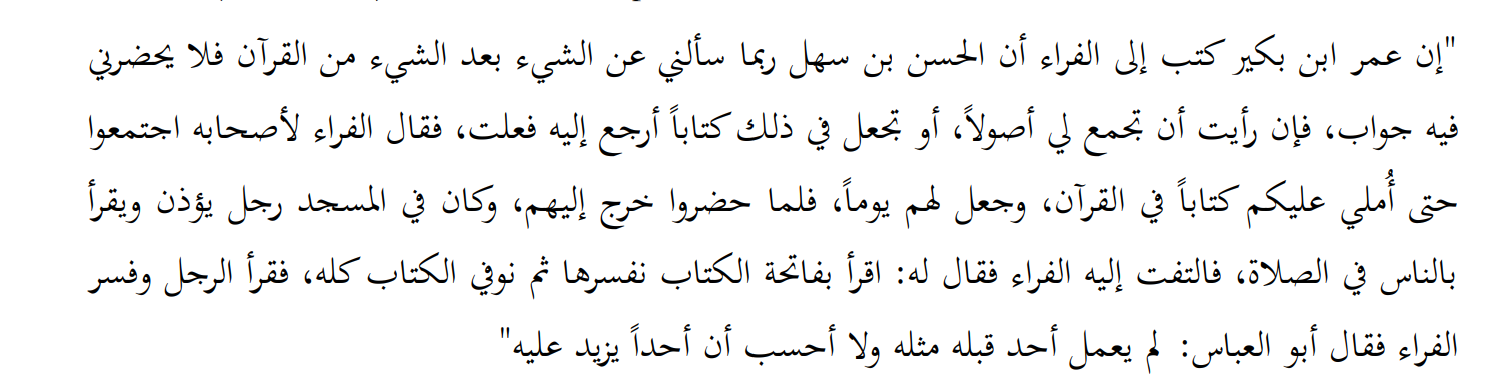
However, all of these tafsīrs were not compiled in books from the first day mufassirūn came into existence, i.e., from the time of the Ṣaḥābah. Rather, they changed from situation to situation through the ages. In the beginning, tafsīr used to be a part of ḥadīth and one of its chapters. Ḥadīth was the all-encompassing subject which included all the Islamic disciplines. So the transmitter of a ḥadīth, just as he would narrate a ḥadīth containing a legal ruling, would also narrate a ḥadīth which contained the tafsīr of a Qur’ānic verse. Then writers, at the beginning of the ʿAbbāsid era and towards the end of the Umayyad era, i.e., at the beginning of the second century Hijrī, began to bring together all the similar and relevant aḥādīth under one topic and separate them from other topics. Thus, disciplines such as tafsīr and fiqh, which ḥadīth contained, were separated from one another. What resulted from these sciences is what resulted in terms of ḥadīth, Sīrah, jurisprudence and tafsīr. Thus, the science of tafsīr came into existence and became an independent science studied on its own. However, the tafsīrs did not take any organised form, in that the verses of the Qur’ān were not mentioned in an ordered manner, like the arrangement found in the muṣḥaf, and then followed by their tafsīr. Rather, the tafsīrs narrated were scattered here and there, being tafsīr of miscellaneous verses, as was the case with ḥadīth. This situation continued until tafsīr became separated from ḥadīth and began to stand as a science in its own right. Tafsīr was then written for each āyah of the Qur’ān or part of an āyah, arranging these verses according to the order in the muṣḥaf. The first to undertake the tafsīr of the Qur’ān, quoting āyah after āyah and explaining them one after another, was al-Farrāʾ (d. 207 AH). Ibn al-Nadīm reports in his book al-Fihrist that:
However, all of these tafsīrs were not compiled in books from the first day mufassirun came to exist i.e, from the time of the Sahabah. Rather, they changed from situation to situation through the ages. In the beginning, the tafsīr used to be a part of the hadīth and one of its chapters. The hadīth was the all-extensive topic which encompassed all the Islamic disciplines. So the transmitter of a hadīth just as he would narrate a hadīth containing a legal ruling he would also narrate a hadīth which contained the tafsīr of a Qur’ānic verse. Then writers, in the beginning of the Abbasid era and towards the end of the Umayyad era i.e, in the beginning of the second century hijri, began to bring together all the similar and relevant ahadīth under a topic and separate them from other topics. So the disciplines such as tafsīr and fiqh which the hadīth contains were separated from each other. What resulted from the sciences is what resulted in terms of hadīth, Sīrah, jurisprudence and tafsīr. Thus, the science of tafsīr came to exist and it became an independent science which was studied on its own. However, the tafsīrs did not take any organised form, in that verses of Qur’ān were not mentioned in an ordered manner like the arrangement found in the mushaf (Qur’ān) and then followed by their tafsīr. Rather the tafsīrs narrated were scattered here and there. They were tafsīr for miscellaneous verses as was the case with the hadīth. This situation continued until the tafsīr became separated from the hadīth and began to stand up as a science in its own right. Tafsīr was written for each ayah of the Qur’ān or part of an ayah, arranging these verses according to the order in mushaf. The first one to undertake the tafsīr of the Qur’ān quoting ayah after ayah and explain them one after another was al-Farra' (d.207 A.H.). Ibn al-Nadim reports in his book alFihirst that: