14.2 फ़िक़्ह का विकास
14.2 The Development Of Fiqh
फ़िक़्ह इस्लामी ज्ञान-शाखाओं में से एक अत्यंत महत्वपूर्ण शाखा है, जिसका समाज पर सबसे अधिक प्रभाव पड़ता है। यह इस्लामी संस्कृति की सबसे महत्वपूर्ण शाखाओं में से एक है। इसका कारण यह है कि इस्लामी संस्कृति कुरआन और सुन्नत है, तथा वह सब कुछ है जिस पर भरोसा किया जाता है और जिसे कुरआन और सुन्नत को समझने के लिए निर्धारित किया गया है। यद्यपि इस्लामी संस्कृति में अरबी भाषा, हदीस और तफ़सीर के विज्ञान भी शामिल हैं, फिर भी इससे उभरकर सबसे प्रमुख रूप से सामने आने वाली चीज़ें वे विचार हैं जो जीवन के दृष्टिकोण से संबंधित हैं, और वे समाधान जो जीवन की समस्याओं का उपचार करते हैं। दूसरे शब्दों में, यह आस्थाओं (अक़ाइद) और शरीअत के आदेशों में प्रकट होती है, क्योंकि ये एक व्यावहारिक संस्कृति हैं, जिसे जीवन की समस्याओं का सामना करने के लिए अपनाया गया है, और जो अधिकतर मामलों में आस्थाओं के बारे में विचारों और समाधानों यानी आदेशों को समाहित करती है। फ़िक़्ह इन्हीं आदेशों का ज्ञान है, और इसके सिवा कुछ नहीं।
Fiqh is one of the most important Islamic disciplines having the greatest effect on society. It is one of the most important branches of the Islamic culture. That is because the Islamic culture is the Qur’ān and Sunnah and whatever is relied upon and laid down in order to understand the Qur’ān and Sunnah. Even though the Islamic culture includes the sciences of the Arabic language, hadīth and tafsīr, the most prominent thing that appears from it are the thoughts which relate to the viewpoint about life and the solutions which treat the problems of life. In other words, it appears in the beliefs (‘aqaid) and Sharī’ah rules because they are a practical culture adopted to face lifes problems which, in most cases, contains thoughts about beliefs and solutions i.e, the rules. Fiqh is nothing other than the knowledge of these rules.
इस्लामी संस्कृति और शरीअत के हुक्मों का ज्ञान उसी समय से शुरू हुआ जब से रसूलुल्लाह ﷺ को भेजा गया। रसूलुल्लाह ﷺ ही शरीअत के हुक्मों का एकमात्र स्रोत थे, क्योंकि उन्हें लोगों को अल्लाह के दीन की शिक्षा देने के लिए भेजा गया था। उन्होंने फ़रमाया:
The Islamic culture and the learning of Sharī’ah rules began from the time the Messenger was sent. The Messenger was the only reference point for the Sharī’ah rules because he was sent to teach people Allah’s deen. He said:
हे रसूल! जो कुछ आपके रब की ओर से आप पर उतारा गया है, उसे पहुँचा दीजिए। और यदि आपने ऐसा नहीं किया, तो आपने उसका संदेश नहीं पहुँचाया। [TMQ Mā’idah: 67]
“O Messenger (saw)! Proclaim (the Message) which has been sent down to you from your Lord. And if you do not, then you have not conveyed His Message” [TMQ Mā’idah: 67]
उन्होंने कहा:
He said:
"और हमने तुम्हारी ओर (ऐ मुहम्मद ﷺ) यह याद-दिहानी और नसीहत (क़ुरआन) भी उतारी, ताकि तुम लोगों के लिए उसे खोलकर बयान कर दो।" [TMQ Nahl: 44]
“And We have also sent down unto you (O Muhammad(saw)) the reminder and the advice (the Qur’ān), that you may explain clearly to them” [TMQ Nahl: 44]
मुसलमानों में से किसी को भी रसूल ﷺ के सिवा किसी दृष्टिकोण या हुक्म के बारे में स्वतंत्र रूप से अपनी राय पेश करने का अधिकार नहीं था। रसूल ﷺ के उनके बीच मौजूद होने के कारण किसी भी बात के बारे में उनकी ओर रुजूअ करना आसान था, फिर भी उनमें से किसी के लिए भी किसी घटना के बारे में अपनी व्यक्तिगत राय देना जायज़ नहीं था। इसीलिए जब वे किसी घटना से दो-चार होते, या कोई विवाद पैदा होता, या उनमें से किसी के मन में कोई विचार आता, तो वे रसूल ﷺ की ओर रुजूअ करते। और आप ﷺ उस पर राय देते, उनके विवादों का फ़ैसला करते और उनके सवालों के जवाब देते, कभी आयत के ज़रिए और कभी हदीस के ज़रिए। रही वह बात जो रिवायत की गई है कि कुछ सहाबा ने रसूल ﷺ के ज़माने में इज्तिहाद किया और कुछ विवादों में अपने इज्तिहाद के अनुसार फ़ैसले सुनाए, या कुछ घटनाओं के हुक्म अपने इज्तिहाद से निकाले, तो इन इज्तिहादों का शरीअत के अहकाम का स्रोत होना सिद्ध नहीं होता। बल्कि ये रसूल ﷺ के आदेश के अनुसार शरीअत की समझ हैं। ये कुरआन और सुन्नत पर आधारित, उन मुज्तहिदीन द्वारा समझी गई शरीअत का अमल हैं। इस बात की पुष्टि उन परिस्थितियों से होती है जिनमें ये इज्तिहाद हुए। रिवायत है कि नबी ﷺ ने अली इब्न अबी तालिब को न्यायाधीश बनाकर यमन भेजा। आप ﷺ ने उनसे कहा:
With the exception of the Messenger no Muslim has the right to independently put forward an opinion regarding any viewpoint or ruling. Due to the Messenger’s presence among them referring to him regarding anything they came across was easy, It was still not permitted for any of them to give his personal opinion regarding any event. That is why, when they came across an event or a dispute arose or one of them had an idea they would refer to the Messenger . And he would give an opinion, settle their disputes and answer their questions, sometimes with an ayah and sometimes with a hadīth. As for what has been reported that certain Sahabah exercised Ijtihād in the time of the Messenger and pronounced judgements according to their own Ijtihād in certain disputes or that they deduced the rule regarding certain events through their own Ijtihād. This does not make these Ijtihāds a source for Sharī’ah rules. Rather they constitute an understanding of the Sharī’ah in accordance with the order of the Messenger . They constitute the application of the Sharī’ah, relying on the Qur’ān and Sunnah as understood by those mujtahidin. This is demonstrated by the circumstance in which these Ijtihāds took place. It has been reported that the Prophet sent ‘Ali ibn Abi Talib to Yemen as a judge. He told him:
"अल्लाह तुम्हारे दिल को हिदायत दे और तुम्हारी ज़बान को दृढ़ रखे। जब दो झगड़ने वाले तुम्हारे सामने बैठें, तो तुम फ़ैसला न सुनाओ जब तक तुम दूसरे की बात भी उसी तरह न सुन लो जैसे पहले की सुनी। यह ज़्यादा उचित है, ताकि फ़ैसला तुम पर स्पष्ट हो जाए।" [इसे अबू दाऊद ने अली इब्न अबी तालिब से रिवायत किया है।]
“May Allah guide your heart and affirm your tongue. When two disputants sit before you, do not pronounce judgment until you have listened to the latter just as you did with the former. It is more proper ( for you to does this) so that the judgment becomes manifest to you” [Reported by Abu Dawud on the authority of ‘Ali Ibn Abi Talib
ऐसा वर्णन किया गया है कि नबी ﷺ ने मुआज़ बिन जबल को यमन भेजा और उनसे फ़रमाया:
It has been reported that the Prophet sent Mu’az ibn Jabal to Yemen and he said to him:
"आप किस आधार पर फ़ैसला करेंगे, जब आपके सामने ऐसा कोई मामला आएगा जिसका हुक्म आपको अल्लाह की किताब में न मिले और न अल्लाह के रसूल की सुन्नत में?" मुआज़ ने कहा: "मैं अपनी राय से इज्तिहाद करूँगा।" तो रसूल ﷺ ने फ़रमाया: "उस अल्लाह की हम्द है जिसने अल्लाह के रसूल के कासिद को वही बात तौफ़ीक़ दी जिससे अल्लाह और उसका रसूल राज़ी हैं।" [Recorded by Abu Dawud]
“With what will you judge when you come upon a judgement which you do not find in the Book of Allah or the Sunnah of His Messenger. What judgment will you give? Mu’az said: ‘I will exercise my own Ijtihād The Messenger said: ’‘Praise be to Allah who has made the messenger of the Messenger of Allah to accord with what Allah and His Messenger are pleased with” [Recorded by Abu Dawud]
रिवायत है कि कुछ लोग आपस में एक झोपड़ी के बारे में झगड़ रहे थे, तो उनके बीच फ़ैसला करने के लिए हुज़ैफ़ा को भेजा गया। बुख़ारी और मुस्लिम ने 'अम्र बिन अल-'आस से रिवायत किया है कि उन्होंने नबी ﷺ को यह फ़रमाते हुए सुना:
It is reported that some people were disputing over a hut between themselves so Hudhayfa was sent to judge between them. Bukhari & Muslim report on the authority of ‘Amr bin al-‘Aas that he heard the prophet say:
"अगर क़ाज़ी फ़ैसला सुनाता है और इज्तिहाद करता है और सही होता है, तो उसे दो सवाब मिलेंगे। अगर वह फ़ैसला सुनाता है और इज्तिहाद करता है, और ग़लती करता है, तो उसे एक सवाब मिलेगा।"
“If the judge passes a judgment and makes ijtihaad and is right, he will have two rewards. If he passes a judgment and makes ijtihaad, and makes a mistake, he will have one reward”
इन सभी रिवायतों और ऐसे ही अन्य उदाहरणों से यह स्पष्ट होता है कि रसूलुल्लाह ﷺ के ज़माने में मुसलमानों द्वारा किए गए इजतिहादात आपके आदेश के अनुसार थे। इसलिए आप ﷺ ही उनके स्रोत थे। अतः रसूलुल्लाह ﷺ का ज़माना वह समय था जिसमें समस्त इस्लामी संस्कृति का स्रोत मौजूद था। यह सिलसिला आपके नबी बनाए जाने से लेकर आपकी वफ़ात तक जारी रहा, और यह अवधि बाईस वर्ष और कुछ महीनों से अधिक नहीं थी, जिसमें पूरा क़ुरआन नाज़िल हुआ और उत्कृष्ट सुन्नत मुकम्मल हुई। इस्लाम में विचारों, नियमों और संस्कृति का स्रोत केवल यही ग्रंथ (पाठ) माने जाते हैं।
All of these reports and other such examples indicate that the Ijtihādat that the Muslims performed during the days of the Messenger were in accordance with his order. Therefore, he was their source. Thus, the time of the Messenger was a time in which the source of the entire Islamic culture existed. That continued from the time he was sent until his death, in a period of time not exceeding twenty two years and a few months in which the whole Qur’ān was revealed and the sublime Sunnah was completed. These are the only texts considered as the source of thoughts, rules and culture in Islam.
रसूल ﷺ की वफ़ात के साथ हिजरत के ग्यारहवें वर्ष में सहाबा का दौर शुरू हुआ। यह तफ़्सीर और उन मामलों में इस्तिंबात (अनुमान व निष्कर्ष निकालने) के दरवाज़े खुलने का दौर है, जिनके लिए कोई स्पष्ट नस (पाठ) मौजूद नहीं थी। सहाबा ने देखा कि कुरआन और सुन्नत के सभी पाठ लोगों में इतने व्यापक रूप से फैले हुए नहीं थे कि हर व्यक्ति उन तक पहुँच सके। कुरआन की आयतें विशेष पत्रों पर लिखी गई थीं, जो रसूल ﷺ के घर में और कुछ सहाबा के घरों में सुरक्षित थीं, और सुन्नत अभी लिखी नहीं गई थी। उन्होंने पाया कि कुरआन और सुन्नत के पाठ उन घटनाओं और मामलों के लिए अहकाम (नियम) बताते हैं जो नियम बनाए जाने के समय घटित हो रहे थे। जिन घटनाओं और मामलों के केवल घटित होने की संभावना थी, उनके लिए अहकाम नहीं बनाए गए थे। मुसलमानों के बीच ऐसी ज़रूरतें, घटनाएँ और मामले पैदा हुए जो रसूल ﷺ के समय में घटित नहीं हुए थे, और बाद में पैदा होने वाली समस्याओं के लिए ऐसे पाठ मौजूद नहीं थे जो उनका हुक्म बताते। इसी प्रकार उन्होंने देखा कि हर मुसलमान इस योग्य नहीं कि वह स्वयं कुरआन और सुन्नत के पाठों की ओर लौटकर उनसे संकेतित हुक्म को समझ सके, क्योंकि आम लोग उन पाठों को केवल उस व्यक्ति के माध्यम से ही समझ सकते हैं जो उन्हें इस्लाम के अहकाम समझाए। इसलिए उन्होंने अनुभव किया कि उन पर यह अनिवार्य है कि वे सम्मानित कुरआन और रसूल ﷺ की हदीसों को मुसलमानों में फैलाएँ। अतः उन्होंने कुरआन को एकत्र करने की ज़िम्मेदारी उठाई और इस संकलन से अनेक प्रतियाँ बनाकर मुसलमानों में वितरित कीं, तथा सुन्नत की रिवायत की विश्वसनीयता और रावियों की जाँच में भरोसे को सुनिश्चित करने के लिए सावधानियाँ बरतीं। उन्होंने यह भी समझा कि उन पर यह अनिवार्य है कि वे मुसलमानों के सामने कुरआन और सुन्नत के पाठों का आवश्यक स्पष्टीकरण और व्याख्या प्रस्तुत करें। फिर उन्होंने लोगों को दीन सिखाना शुरू किया, फिर उन्होंने यह दृष्टिकोण अपनाया कि उन्हें उन घटनाओं और मामलों के लिए फ़तवे देने चाहिए जो उनके साथ पेश आते हैं और जिनके बारे में कोई (स्पष्ट) नस मौजूद नहीं थी। इस प्रकार वे उन पेश आने वाले मामलों के लिए आवश्यक हुक्म निकालने लगे। इसी के कारण उन्होंने दीन की ज़िम्मेदारी सर्वोत्तम रीति से निभाई।
उमर झिझके: क्या एक व्यक्ति की हत्या के बदले बहुत से लोगों को मारा जाए? अली ने उनसे कहा: आप क्या कहते हैं, यदि कुछ लोग मिलकर एक कटे हुए ऊँट की चोरी में शामिल हों और उसे आपस में बाँट लें, तो क्या आप उनके हाथ काटेंगे? उन्होंने कहा: हाँ। अली ने कहा: तो यह भी वैसी ही बात है। फिर उमर ने अली की राय पर अमल किया और अपने 'आमिल को लिखा: दोनों को मार डालो, क्योंकि यदि सनआ की पूरी आबादी भी इसमें शामिल होती तो मैं उन सबको मरवा देता।
‘Umar hesitated: are many people to be killed for the murder of one person? ‘Ali said to him: What do you think if a group participated in the theft of a slaughtered camel such that they distributed it amongst themselves. Would you cut their hands? He said: Yes. Ali said: well it is the same thing. So Umar acted upon Ali’s opinion and wrote to his ‘Amil: ‘kill them both for if the whole population of San’aa participated I would have had them killed.
इसी प्रकार, जब उन्होंने संयुक्त हिस्से (अल-मुशरकह) के मसले में मतभेद किया, जब एक स्त्री का निधन हुआ और उसने पति, माँ, सगे (माँ-जाये) भाइयों और सहोदर (पिता-जाये भाइयों) को छोड़ा। ‘उमर पति को आधा, माँ को छठा हिस्सा और माँ-जाये भाइयों को एक तिहाई दिया करते थे। इस प्रकार सहोदर भाइयों के लिए कुछ भी शेष नहीं रहता था। उनसे कहा गया: मान लीजिए हमारा बाप एक गधा था। क्या हम एक ही माँ से नहीं हैं? तब उन्होंने अपनी राय बदल दी और उन्हें भी हिस्सा दिया। वे उस मस्लहत (हित) को पहचानने की कोशिश करते थे जिसके लिए नस (पाठ) आया था, यदि वह नस से समझ में आ जाती थी। एक और उदाहरण वह है जब अल्लाह ने फ़रमाया:
Similarly when they disagreed about the question of joint share, when a woman died leaving a husband, mother, uterine brothers and full brothers. ‘Umar used to give the husband half, the mother a sixth, and the uterine brothers a third. So nothing remained for the full brothers. It was said to him: Suppose our father was a donkey. Are we not from one mother? So he changed his view and gave them a share. They used to acquaint themselves with the maslaha (benefit) for which the text came, if it was understood from the text. Another example is when Allah said:
सदक़ात (ज़कात) केवल फ़ुक़रा (गरीबों) के लिए हैं, और मसाकीन (ज़रूरतमंदों) के लिए, और उन लोगों के लिए जो उसे वसूल करने पर नियुक्त हों; और उन लोगों के दिलों को आकर्षित करने के लिए जिनका झुकाव (इस्लाम की ओर) किया गया हो। [TMQ Tawba: 60]
“As-sadaqat (zakat) are only for the Fuqara (poor), and al-masakin (needy) and those employed to collect (the funds); and for to attract the hearts of those who have been inclined (towards Islam)” [TMQ Tawba: 60]
अल्लाह ने उन लोगों को, जिनके दिलों को इस्लाम की ओर आकर्षित करना है, ज़कात के मदों में से एक ख़र्च बनाया। यह सिद्ध है कि नबी ﷺ उन लोगों को धन दिया करते थे जिनके दिल इस्लाम से मिला दिए गए थे। रसूल ﷺ की वफ़ात के बाद 'उमर के बारे में रिवायत है कि उन्होंने उन लोगों को (धन) देना मना कर दिया जिनके दिल मिला दिए गए थे (al-mu’allaftu qulubuhum)। उन्होंने उनसे कहा:
So Allah made those whose hearts have to be a reconciled (towards Islâm) an expenditure from the sources of zakat. It has been established that the Prophet used to give money to people whose hearts had been reconciled with Islam. After the death of the Messenger it is narrated about ‘Umar that he forbade the payment of those whose hearts had been reconciled (al-mu’allaftu qulubuhum). He told them:
अल्लाह ने इस्लाम को मज़बूत बनाया है, इसलिए इस्लाम को तुम्हारी कोई ज़रूरत नहीं। या तो तुम इस्लाम पर क़ायम रहो, वरना तुम्हारे और हमारे बीच तलवार है।
‘Allah has made Islam strong and so Islam is in no need of you, either you stick to Islam or else between you and us is the sword.’
उमर का मत था कि इस्लाम की ओर दिलों को जीतने (ता'लीफ़ अल-क़ुलूब) का कारण यह था कि राज्य कमज़ोर था, क्योंकि 'ता'लीफ़ अल-क़ुलूब' शब्द इसी बात की ओर संकेत करता है। दिलों को जीता कब जाता है, सिवाय तब जब लोगों की उनकी ज़रूरत हो? उमर ने यह राय ली कि दिलों को जीतने की ज़रूरत तब ख़त्म हो गई जब इस्लाम मज़बूत हो गया, और दिलों को जीतने की ज़रूरत न रहने पर 'इल्लत' (क़ानूनी कारण) लागू नहीं होती, और इसी कारण हुक्म भी लागू नहीं होता।
Umar was of the view that the reconcilings of hearts towards Islam was there because the state was weak because the expression, for the expression ‘reconciling hearts’ (ta’leeful al-qulub) indicates this. For when do you reconcile hearts except when you are in a state of need for them (the people) ? Umar took the opinion that the need to reconcile hearts ended when Islam became strong, without the need to reconcile hearts, the ‘illah (legal cause) does not apply and due to this the hukm also does not apply.
सहाबा किराम (अल्लाह उनसे राज़ी हो) शरीअत के नुसूस के बारे में उन मामलों के लिए तहक़ीक़ करते और लोगों से पूछते जिनका उन्हें इल्म नहीं होता था, और वे (अल्लाह उनसे राज़ी हो) हिजाज़ में इकट्ठा होकर क़ुरआन और सुन्नत पर चर्चा किया करते थे। जिस मसले के लिए वे तलाश कर रहे होते उसका हुक्म अगर क़ुरआन और सुन्नत में न मिलता तो वे मुसलमानों से पूछते कि क्या उनमें से किसी को मालूम है कि रसूलुल्लाह ﷺ ने उस मसले पर क्या फ़ैसला फ़रमाया था। इसीलिए वे एक-दूसरे की तरफ़ रुजू करते और मसलों पर बातचीत करने के लिए जमा होते और उनके बारे में राय देते। अबू बक्र और उमर अहकाम का इस्तंबात करते और लोगों की तरफ़ रुजू करते थे। अल-बग़वी ने अपनी किताब मसाबीह अस-सुन्नह में इसे रिवायत किया है।
The Sahabah used to investigate and ask the people about the Sharī’ah texts regarding matters they did not know and they (may Allah be pleased with them) used to be all gathered together in the Hijaz, discussing the Qur’ān and Sunnah. If they did not find a hukm in the Qur’ān and Sunnah for the issue they were looking for they would ask Muslims if any of them knew what the Messenger of Allah passed as a judgement for the issue. That is why they used to refer to each other and get together to discuss the issues and give an opinion for it. Abu Bakr and ‘Umar used to deduce rules and refer to the people. Al-Baghawi has narrated in his Masabih al-Sunnah:
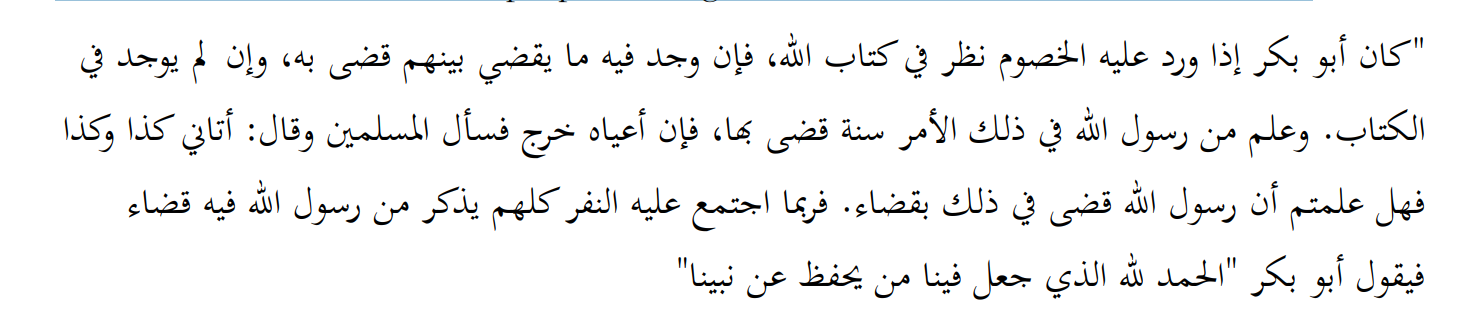
जब कोई विवाद अबू बक्र के पास लाया जाता, तो वे अल्लाह की किताब की ओर देखते थे। यदि उन्हें उनके बीच फ़ैसला करने के लिए कुछ मिल जाता, तो वे वही फ़ैसला सुनाते। और यदि वह क़ुरआन में न मिलता और उन्हें उस मामले में अल्लाह के रसूल ﷺ की कोई सुन्नत पता होती, तो वे उसी से फ़ैसला करते। उसके न होने पर वे बाहर जाकर मुसलमानों से पूछते: "मेरे पास ऐसा-ऐसा मामला आया है, क्या तुम्हें इस बारे में अल्लाह के रसूल ﷺ का कोई फ़ैसला मालूम है?" अक्सर पूरा समूह सहमत होता कि अल्लाह के रसूल ﷺ ने उस पर फ़ैसला दिया था। तब अबू बक्र कहते: "अल्लाह की स्तुति है जिसने हमारे बीच ऐसे लोग बनाए जो हमारे नबी ﷺ से जुड़ी बातों को याद रखते हैं।"
‘When a dispute was reported to Abu Bakr he used to look into the Book of Allah . If he found something to judge between them he gave that judgement and if it is not found in the Qur’ān and he knew a Sunnah from the Messenger of Allah regarding that matter he would give judgement by it. Failing that he would go out and ask the Muslims; such and such matter has come to me do you know of any judgement given by the Messenger of Allah pertaining to this?’ Probably the whole group would agree mentioning a judgment by the Messenger of Allah . Abu Bakr would say: ‘Praise be to Allah Who has made people amongst us memorise (issues) concerning our Prophet .
अगर उन्हें रसूलुल्लाह ﷺ की कोई सुन्नत नहीं मिलती थी, तो वे लोगों के सरदारों और उनमें से सबसे अच्छे लोगों को इकट्ठा करते और उनसे सलाह-मशवरा करते। यदि किसी मामले पर उनकी सर्वसम्मति हो जाती तो वे उसी के अनुसार फ़ैसला करते। वर्णित है कि ‘उमर फ़िक़्ह के अपने ज्ञान के बावजूद सहाबा से सलाह लिया करते थे, यहाँ तक कि जब कोई घटना उनके सामने लाई जाती तो वे कहते: मेरे लिए ‘अली को बुलाओ, ज़ैद को बुलाओ। वे उनसे सलाह लेते और विवाद का निपटारा उसी पर करते जिस पर वे सहमत हो जाते। सहाबा के एक-दूसरे की ओर रुजू करने के कारण उनके बीच मतभेद कम ही होते थे, क्योंकि हर सहाबी दूसरे सहाबी के सामने अपना दृष्टिकोण और अपने निकाले हुए प्रमाण रखता था। उनका कुल मिलाकर मत सत्य और सही होता था और हर एक दूसरे की ओर रुजू करता था। और यद्यपि कुछ नियमों में उनकी राएँ भिन्न होती थीं, फिर भी उनके मतभेद बहुत कम थे और वे समझ के स्तर पर थे, समझने के तरीक़े में नहीं।
If he failed to find a Sunnah of the Messenger of Allah he gathered the heads of people and the best amongst them and consulted them. If they had a consensus on a matter he would judge with that. It has been reported that ‘Umar used to consult the Sahabah despite his knowledge of fiqh to the extent that when an incident would be refered to him he would say: Call ‘Ali for me, call Zayd. He used to consult them and settle the dispute with whatever they were agreed upon. Due to the Sahabah’s reference to each other differences of opinion between them were rare because each Sahābi expressed to another Sahābi his own perspective and the evidences he educed. Their view on the whole was true and correct and each one referred to the other. And even though their views differed in certain rules but their differences were rare and it was in their understanding and not in the method of understanding.
जब विजय-अभियानों का विस्तार हुआ और सहाबा विभिन्न शहरों में बिखर गए, और इन सहाबा के लिए आपस में मिलना कठिन हो गया, तो जब भी कोई ऐसी घटना घटती जिसके बारे में कोई नस (स्पष्ट पाठ) नहीं था, तब हर सहाबी अपनी राय दे देते थे, बिना उसे दूसरों के सामने रखे या दूसरों की ओर लौटे, क्योंकि शहर एक-दूसरे से दूर थे, और साथ ही इसलिए कि उस शहर में घटित घटना पर निर्णय देना आवश्यक था। हर मुस्लिम शहर में एक या अधिक सहाबा मौजूद थे। वे फतवों के संदर्भ-बिंदु थे। वे ऐसे नियम निकालते थे जिनके बारे में कोई नस नहीं थी, और वे नस की व्याख्या और स्पष्टीकरण का काम भी संभालते थे, जैसे उन्होंने लोगों को कुरआन और सुन्नत सिखाने की ज़िम्मेदारी ली थी। सुन्नत अभी लिखी नहीं गई थी, इसलिए एक ही घटना पर सहाबा की रायें अलग-अलग होती थीं, और हर एक के पास अपनी निकाली हुई राय का प्रमाण होता था, जिसके आधार पर वे फतवे देते थे। फिर भी, ये सभी रायें शरीअत के नियम थीं और सभी को स्वीकार्य थीं, क्योंकि उनका मतभेद केवल समझ में था। जहाँ तक उनकी इज्तिहाद की पद्धति का सवाल है, वह एक ही थी: कुरआन और हदीस के पाठ पर विचार करना, उन पाठों की जाँच करना, यह सुनिश्चित करना कि मान्य मसलहतें (हित) वही हों जिन्हें केवल शरीअत इंगित करती है, और मसलों तथा मसलहतों पर क़ियास (तुलना) करना। इज्तिहाद की पद्धति की एकता ने समझ के अंतर को कोई प्रभाव डालने नहीं दिया। इसके विपरीत, यह फिक़्ह के विकास और विस्तार के कारणों में से एक था। उनके फतवे घटित होने वाली घटनाओं और मसलों के अनुसार होते थे। उनके मतभेद का दायरा न तो विस्तृत होता था और न ही फुरूअ (फिक़्ह की शाखाओं) से आगे बढ़ता था। सहाबा का फुरूअ में मतभेद दो कारणों से था: