यह हदीस अच्छे और बुरे शासकों के बारे में स्पष्ट जानकारी देती है, और जब तक वे दीन को क़ायम रखते हैं, तब तक उनके विरुद्ध तलवार उठाने से स्पष्ट रूप से मना करती है, क्योंकि नमाज़ क़ायम करना दीन को क़ायम रखने और उसके अनुसार शासन करने का संकेत है।
This hadith is clear in informing about the good and bad leaders, and clear in prohibiting confronting them with the sword as long as they establish the deen, since establishing the salat (prayer) indicates upholding of the deen and ruling by it.
मुसलमानों पर ख़लीफ़ा नियुक्त करने का दायित्व, जो इस्लाम के क़ानून लागू करता है और उसकी दावत को आगे पहुँचाता है, शरीअत के सहीह नुसूस में अपनी अनिवार्यता के संबंध में किसी संदेह से परे एक निश्चित विषय है। इसके अलावा, यह एक वाजिब कर्तव्य है, क्योंकि अल्लाह (SWT) ने मुसलमानों पर इस्लाम का शासन स्थापित करने और मुसलमानों की इज़्ज़त की रक्षा करने को फ़र्ज़ किया है। फिर भी, यह कर्तव्य सामूहिक है, इसलिए यदि उम्मत के कुछ लोग इसे पूरा कर दें तो फ़र्ज़ अदा हो जाता है और शेष उम्मत से ज़िम्मेदारी साक़ित हो जाती है। और यदि उम्मत का कोई हिस्सा इस फ़र्ज़ को पूरा करने में असमर्थ रहे, यद्यपि वे उन कार्यों को अंजाम देते हैं जो इसे स्थापित करते हैं, तो ज़िम्मेदारी सभी मुसलमानों पर बनी रहती है, और जब तक मुसलमान बिना ख़लीफ़ा के हैं, तब तक यह फ़र्ज़ हर मुसलमान पर बना रहता है।
So the obligation upon Muslims to appoint the Khalifah who establishes the laws of Islam and conveys its call is a matter which has no doubt with regard to its certainty in the sound texts of Shari’ah. Moreover, it is an obligatory duty due to the fact that Allah (swt) made it fard upon Muslims to establish the rule of Islam and to protect the honour of Muslims. However, this duty is a collective one, so if some people of the Ummah accomplished it, the fard is fulfilled and thus responsibility drops from the rest of the Ummah. And if part of the Ummah was unable to achieve the fard, though they carried out the actions which establish it, then the responsibility remains upon all the Muslims, and the fard remains upon every Muslim as long as Muslims are without a Khalifah.
मुसलमानों के लिए ख़लीफ़ा स्थापित न करने से रुकना सबसे बड़े गुनाहों में से है, क्योंकि यह इस्लाम के सबसे महत्वपूर्ण फ़र्ज़ों में से एक को अंजाम देने से परहेज़ करना है, जिस पर दीन का लागू होना निर्भर करता है; बल्कि जीवन के रणक्षेत्र में स्वयं इस्लाम का अस्तित्व भी इसी पर निर्भर है। अतः सभी मुसलमान सामूहिक रूप से, सब मुसलमानों के लिए ख़लीफ़ा स्थापित करने से रुककर, बड़ा गुनाह करते हैं। और यदि वे सब इस पर सहमत हो जाएँ कि बिना ख़लीफ़ा के रहें, तो यह गुनाह आबाद सभी क्षेत्रों (पूरी दुनिया) के सभी मुसलमानों पर पड़ेगा। किंतु यदि मुसलमानों में से कुछ लोग ख़लीफ़ा स्थापित करने के काम में लग जाएँ और दूसरे न लगें, तो गुनाह उन लोगों के कंधों से उतर जाएगा जिन्होंने ख़लीफ़ा स्थापित करने का काम शुरू किया, हालाँकि यह फ़र्ज़ उन पर तब तक बना रहता है जब तक ख़लीफ़ा नियुक्त न हो जाए। (ऐसा) इसलिए है क्योंकि फ़र्ज़ को स्थापित करने के काम में लगना, उसे उसके उचित समय पर स्थापित करने में होने वाली देरी और उसके स्थापित न होने के गुनाह को दूर कर देता है, क्योंकि व्यक्ति उसे स्थापित करने के लिए काम कर रहा है और उस चीज़ से घृणा करता है जो उसे स्थापित करने से रोकती है।
To refrain from establishing a Khalifah for the Muslims is among the greatest sins because it is abstaining from carrying out among the most important obligations of Islam upon which the implementation of the deen depends; nay even the very existence of Islam in the battlefield of life depends upon it as well. So Muslims as a whole commit a great sin by refraining from establishing a Khalifah for all Muslims. And if they all agreed to remain without a Khalifah the sin would befall all Muslims in all inhabited regions (entire world). However, if some of the Muslims embarked on working to establish a Khalifah and the others did not, the sin will drop from the shoulders of those who started to work to establish the Khalifah though the fard remains upon them until the Khalifah is appointed. (This is so) because the involvement in establishing the fard removes the sin for the delay in establishing it in its proper time, and for its non-establishment, due to one’s work to establish it and his hatred of that which prevents him from establishing it.
जो लोग फ़र्ज़ की स्थापना के कार्य में संलग्न नहीं थे, उन पर ख़लीफ़ा के चले जाने के बाद तीन दिन बीत जाने और नए ख़लीफ़ा की नियुक्ति होने तक गुनाह बाक़ी रहेगा, क्योंकि अल्लाह (سبحانه وتعالى) ने उन्हें एक ऐसा फ़र्ज़ सौंपा था जिसे उन्होंने पूरा नहीं किया और न ही उस कार्य में लगे जो उसकी पूर्ति के लिए ज़रूरी था। इसलिए वे गुनाह के हक़दार हैं और इस दुनिया तथा आख़िरत में अल्लाह (سبحانه وتعالى) की सज़ा के हक़दार हैं। ख़िलाफ़त की स्थापना से रुके रहने, या शरीअत के अनुसार ख़िलाफ़त स्थापित करने वाले कार्य न करने के कारण उनका गुनाह का हक़दार होना स्पष्ट है, क्योंकि जब कोई मुसलमान अपने ऊपर लागू किसी भी कर्तव्य की अनदेखी करता है तो वह अल्लाह (سبحانه وتعالى) की सज़ा का हक़दार होता है, विशेषकर वह अनिवार्य कर्तव्य जिस पर दूसरे सभी कर्तव्य लागू होते हैं, दीन के नियम स्थापित होते हैं, इस्लाम का झंडा ऊँचा होता है और इस्लामी भूमि तथा पूरी दुनिया में अल्लाह (سبحانه وتعالى) का कलिमा सर्वोच्च होता है।
As for those who were not engaged in the work to establish the fard, the sin will remain on them after three days have passed from the departure of the Khalifah until the appointment of a new Khalifah, because Allah (swt) has entrusted them with a fard which they did not carry out nor engage themselves in the work which is required for its completion. Therefore, they are deserving of sin and deserve the punishment of Allah (swt) in this life and the hereafter. Their deserving of sin due to their refraining from establishing the Khalifah, or performing the actions which (according to Shari’ah) establish the Khalifah, is explicitly clear in that a Muslim deserves the punishment of Allah (swt) when he ignores any of the duties enjoined upon him, particularly the obligation by which the other obligations are implemented, the rules of the deen are established, the cause of Islam is raised high and the word of Allah (swt) becomes exalted in the Islamic lands and the rest of the world.
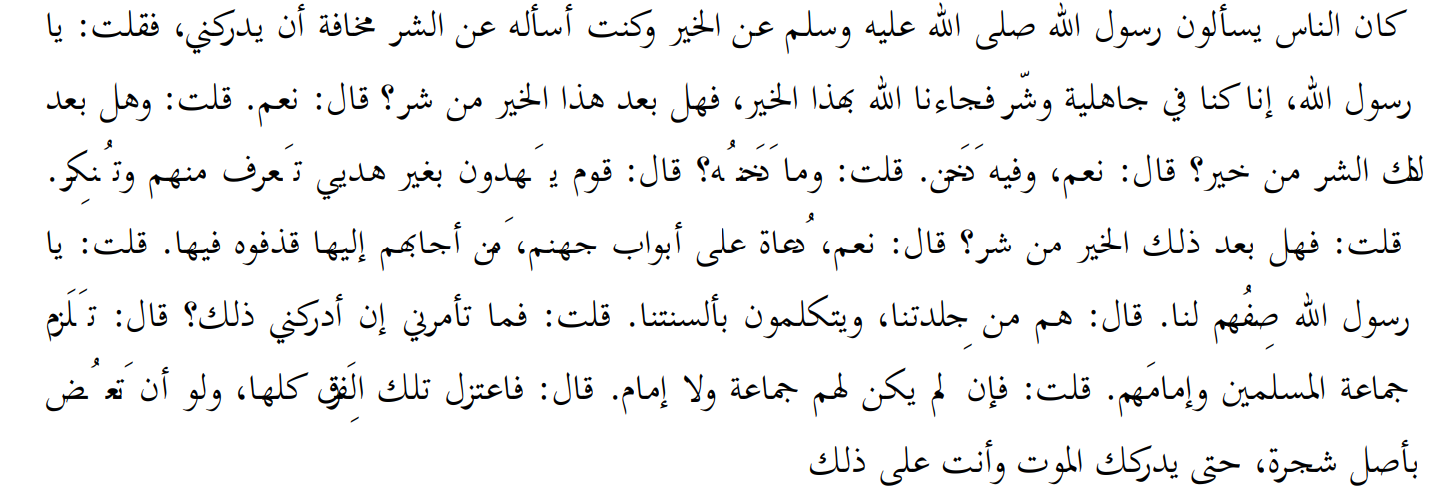
जहाँ तक उन कुछ अहादीस का सवाल है जिनमें लोगों से अलग-थलग रहने और केवल दीन के व्यक्तिगत इबादत वाले मामलों तक खुद को सीमित रखने की बात आई है, तो ये अहादीस ख़िलाफ़त स्थापित करने से परहेज़ करने, या इस परहेज़ के कारण लगने वाले गुनाह को हटाने के लिए सबूत के तौर पर उपयोगी नहीं हैं। जो कोई इन अहादीस का ध्यान से अध्ययन करेगा, वह पाएगा कि ये दीन पर अमल करने के मामले से संबंधित हैं, न कि मुसलमानों के लिए ख़लीफ़ा स्थापित करने से रुकने की इजाज़त से। उदाहरण के लिए, इमाम अल-बुख़ारी ने बिस्र बिन उबैदुल्लाह अल-हज़रमी से रिवायत किया कि उन्होंने अबू इदरीस अल-ख़ौलानी को कहते सुना कि उन्होंने हुज़ैफ़ा बिन अल-यमान को कहते सुना,
As for what came in some of the ahadith regarding isolation from the people, and restricting oneself to adhering only to matters of personal worship of the matters of the deen, these ahadith are not suitable as evidence to refrain from establishing a Khalifah nor removing the sin due to this abstention. Whoever studies these ahadith carefully will find them related to the matter of adhering to the deen rather than permission to refrain from establishing a Khalifah for Muslims. For example, Al-Bukhari narrated about Bisr bin Ubaydullah al-Hadhrami that he heard Abu Idrees al-Khoolani say that he heard Hudhayfah bin al-Yaman saying: