21.1 La mentira en la guerra
21.1 Lying In War
Toda mentira es definitivamente haram por un texto coránico explícito, y su prohibición está entre las normas conocidas de la religión por necesidad, sin distinción de si es en beneficio de los musulmanes o de los intereses de la religión, o en contra de ello. Los textos llegaron prohibiéndola de manera general, absoluta y sin condicionamiento alguno. Allah (SWT) dijo:
All lying is definitely haram due to a definite Qur’anic text, and its prohibition is among the rules known from the deen by necessity, without distinction as to whether it is for the benefit of Muslims or the interests of the deen or opposite to that. The texts came forbidding it generally, absolutely and without reasoning. Allah (swt) said:
«Ciertamente, quienes inventan mentiras son aquellos que no creen en las aleyas de Allah» [TMQ 16:105]
“Verily those who fabricate lies are those who disbelieve in the ayat of Allah” [TMQ 16:105]
Y Allah (SWT) dijo:
And Allah (swt) said:
"Entonces, invoquemos (nabtahil) y hagamos recaer la maldición de Allah sobre el mentiroso" [TMQ 3:61].
“Then let us invoke (nabtahil) and make the curse of Allah upon the liar” [TMQ 3:61].
Esta decisión, su carácter absoluto y su generalidad no pueden ser razonados, restringidos ni especificados sino mediante otro texto, y la mente no tiene más cabida que comprender el texto y nada más. En el Sahih no llegó ningún texto que dé razón alguna o restricción, ya sea en el Libro o en la Sunnah. En cuanto a la especificación del texto, llegó un texto al respecto que excluyó de la prohibición de mentir determinadas cosas, las cuales fueron las únicas especificadas; no está permitido excederse de ellas en modo alguno. Nada queda excluido de la prohibición de mentir salvo lo que fue especificado por evidencia de lo mencionado en los hadices, a saber: la situación de guerra, la mujer y la reconciliación entre dos personas, debido al texto sobre ellas. Ahmad, Muslim y Abu Dawud narraron de Umm Kulthum bint 'Uqbah, quien dijo:
This decision, its absoluteness and generality cannot be reasoned, restricted or specified except by another text, and there is no entry for the mind except to understand the text and nothing else. There did not come in the Sahih any text which gives any reasoning or restriction, whether in the Book or Sunnah. As for specifying the text, there came a text regarding it which excluded from the forbidding of lying specific things which alone were specified; it is not allowed to exceed them in any case whatsoever. Nothing is excluded from the forbidding of lying except what was specified by evidence of the mentioned in the ahadith namely: the situation of war, to the woman and reconciling between two due to the text about them. Ahmad, Muslim and Abu Dawud narrated from Umm Kulthum bint ‘Uqbah who said:
"No oí al Profeta ﷺ permitir nada en lo que la gente dice mentiras, excepto en tres casos: en la guerra, en reconciliar a las personas, y en el relato del hombre con su esposa y el hadiz de la mujer con su esposo."
“I did not hear the Prophet (saw) giving permission in anything over which the people say (lies) except in three: in war, reconciling between people, and the story of the man to his wife and the hadith of the woman to her husband.”
De Asma bint Yazid, quien dijo: El Mensajero de Allah ﷺ dijo:
From Asma bint Yazid who said: The Messenger of Allah (saw) said:
«¡Oh gente, qué les ha llevado a seguir la mentira como las polillas siguen al fuego! Toda mentira del hijo de Adán es haram, excepto en tres situaciones: el hombre que miente a su esposa para complacerla, el hombre que miente en la guerra, pues la guerra es engaño, y el hombre que miente entre musulmanes para reconciliarlos».
“O you people, what has carried to you follow lying like the moths following fire? All lying from the son of Adam is haram except in three situations: the man lying to his wife to please her, the man lying in war as war is deceit and the man lying between Muslims to reconcile between them.”
Estos tres son de los excluidos de la prohibición de mentir por un texto auténtico, por lo que mentir no está permitido en nada más que eso, pues nada queda excluido de la generalidad del texto salvo lo que la evidencia especifica únicamente. La expresión "en la guerra", que aparece en el hadiz, tiene un solo significado y no más, que es la situación de guerra activa en lo que respecta a la guerra; por tanto, mentir está absolutamente no permitido salvo en la situación de guerra. En cuanto a lo que se ha autenticado del Profeta ﷺ
These three are of those excluded from the forbidding of lying by an authentic text, so lying is not allowed in other than that as nothing is excluded from the generality of the text except what the evidence specifies alone. The word “in war” which came in the hadith has only one meaning and no more which is the situation of active war in the matter of war, so lying is absolutely not allowed except in the situation of war. As for what is authenticated from the Prophet (saw)
«Que cuando tenía intención de hacer la guerra, la ocultaba en otra dirección»
“That when he intended war, he would conceal in other than that”;
El significado es que, cuando tenía la intención de un asunto, no lo mostraba; por ejemplo, cuando tenía la intención de combatir en dirección al este, preguntaba por un asunto en dirección al oeste, para que quien le oyera y le viera pensara que tenía la intención de dirigirse al oeste. En cuanto a que dijera claramente que tenía la intención de ir al oeste cuando su intención verdadera era el este, eso nunca ocurrió. Por tanto, esto no es informar en contra de la realidad, sino más bien un doble sentido (tawriyya). Además, entra en la guerra activa y en el asunto de la guerra, pues se trata de ir al campo de batalla para combatir activamente al enemigo, por lo que es un engaño, el cual se encuentra en su dicho ﷺ:
The meaning is that when he intended a matter he would not show it, such as when he intended to fight towards the direction of the east he would ask about a matter in the direction of the west so that the one who heard and saw him would think that he intended the direction of the west. As for his saying clearly of his intending the west whereas his (true) intention was the east, this never occurred. So this is not informing contrary to the reality but was rather double- entendre (tawriyya). Moreover, it enters into active war, and the matter of war, since it is going to the battlefield to fight the enemy actively so it is deceit which came in his (saw) statement:
«La guerra es engaño» (narrado por Muslim)
“War is deceit” (narrated by Muslim)
En cuanto a lo narrado por Jabir de que el Mensajero de Allah ﷺ dijo:
As for what was narrated by Jabir that the Messenger of Allah (saw) said:

«¿Quién se encargará de Ka‘b bin Al-Ashraf, pues ha ofendido a Allah y a Su Mensajero?». Muhammad bin Maslamah dijo: «¿Quieres que lo mate, oh Mensajero de Allah?». Él dijo: «Sí». Dijo: «Entonces permíteme decir mentiras». Dijo: «Te lo permito». Así que se acercó a él y le dijo: «En verdad, este hombre —es decir, el Profeta ﷺ— nos ha puesto a prueba y nos ha pedido sadaqah». Dijo: «Por Allah, nosotros también lo hemos seguido, y nos desagrada dejarlo hasta ver adónde llegará su asunto». Dijo: «No dejó de hablarle hasta que tuvo la oportunidad de dominarlo y lo mató».
“Who will deal with K’ab bin Al-Ashraf for he has annoyed Allah and His Messenger? Muhammad bin Maslamah: Would you like for me to kill him, O Messenger of Allah? He said: Yes. He said: Then give me permission to tell (lies). He said: I have done so. He said: So he reached him and said: Verily this one i.e. the Prophet (saw)—has put us to task and has asked us for sadaqah. He said: By Allah similarly we have followed him and we dislike leaving him until we see where his matter will reach: He said: He did not stop talking to him until he had a chance to overpower him and killed him.”
Esto también se daba en situación de guerra. Aunque las palabras del hadiz indican que lo que dijo Muhammad bin Maslamah era verdad y no mentira, pues fue solo una alusión, Muhammad bin Maslamah pidió permiso para decir todo y se le permitió. Así, dentro de ello entra el permiso para mentir de manera explícita y figurada, y entra en la situación de guerra. En cuanto a lo que narraron Ahmad y An-Nasa'i del relato de Al-Hayyay bin 'Ilat, en su petición de permiso para decir sobre él lo que quisiera en beneficio suyo al rescatar sus bienes de la gente de La Meca, el Profeta ﷺ le dio permiso, y él informó a la gente de La Meca que Jaybar había derrotado a los musulmanes; esto también entra en la situación de guerra, porque la gente de La Meca estaba en una situación de guerra activa con los musulmanes. Al-Hayyay bin 'Ilat era musulmán y se dirigía hacia los enemigos incrédulos que se encontraban en situación de guerra activa, así que mentir contra ellos estaba permitido. El permiso para mentir no se limita al campo de batalla ni a los combatientes; más bien, se permite a los musulmanes mentir contra sus enemigos, los incrédulos, si se encuentran en situación de guerra activa con ellos. En cuanto a lo que extrajo At-Tabarani en Al-Awsat:
This was also in the situation of war. Even if the words of the hadith state that the words which Muhammad bin Maslamah said were true, not false, as it was only allusion but Muhammad bin Maslamah asked permission to say everything and it was permitted to him. So it enters within it the permission to lie explicitly and metaphorically, and it enters into the situation of war. As for what Ahmad and An-Nisai narrated from the tale of Al-Hajjaj bin ‘Ilat in his seeking permission to say about him whatever he wished for his benefit in rescuing his property from the people of Makkah. The Prophet (saw) gave him permission and he informed the people of Makkah that Khayber had defeated the Muslims; this also enters into the situation of war because the people of Makkah were in a situation of active war with the Muslims. Al-Hajjaj bin ‘Ilat was from the Muslims and he was going to the enemy disbelievers who were in the situation of active war, so lying was allowed against them. The permission of lying is not restricted to the battlefield nor to fighters; rather it is allowed for the Muslims to lie against their enemies, the disbelievers, if they are in the situation of active war with them. As for was extracted by At-Tabarani in Al-Awsat:
«Toda mentira es pecaminosa, excepto aquella mediante la cual un musulmán obtiene un beneficio o con la que defiende su religión».
“All lying is sinful except that by which a Muslim benefits or by which he defends his deen”
Por favor, envíe el texto en inglés que desea que traduzca. Mencionó "Al-Bazzar" y "con las palabras", pero el texto no llegó a incluirse en su mensaje.
This is in Al-Bazzar with the words:
«Se escribe como pecado la mentira, excepto aquella mediante la cual un musulmán obtiene un beneficio o con la que defiende a otro».
“Lying is written except that by which a Muslim benefits or by which he defends it”,
Se dijo en Maŷma' al-Zawā'id: En su cadena están Rushdayn y Abdurrahman bin Ziyad bin An'am, y ambos son débiles, por lo que es un hadiz débil que se rechaza y no se usa como prueba. Por tanto, no es apropiado como evidencia.
It was said in Majmu’ Al-Zawaid: In its chain is Rushdayn and Abdurrahman bin Ziyad bin An’am, and both are weak so it is a weak hadith which is rejected and not used as a proof. So it is not suitable as evidence.
Por consiguiente, toda mentira es haram y no está permitida salvo en tres asuntos: en la guerra, en la reconciliación entre las personas, y en el relato del hombre a su esposa y el relato de la mujer a su esposo. Todo lo demás es definitivamente haram, pues la prohibición de mentir vino de forma general en el Corán, abarcando toda mentira; luego vino el hadiz especificándola en otros casos que no sean la guerra, la reconciliación entre las personas, y el relato del hombre a su esposa y el relato de la mujer a su esposo. Excluyó estos tres de la prohibición, por lo que solo ellos están permitidos y todo lo demás es haram. Particularmente, puesto que el hadiz restringió la permisibilidad a tres y dijo:
Accordingly all lying is haram and not allowed except in three (matters): in war, reconciling between people, and the story of the man to his wife and the story of the woman to her husband. Everything else is definitely haram as the forbiddance of lying came generally in the Qur’an covering all lying, then the hadith came specifying it in other than war, reconciling between people, and the story of the man to his wife and the story of the woman to her husband. It excluded these three from the forbidding so they alone are allowed and everything else is haram. Particularly since the hadith restricted the permissibility to three and said:
"Toda mentira del hijo de Adán es haram, excepto en tres situaciones."
“All lying from the son of Adam is haram except in three situations”
Y
And
«No oí al Profeta ﷺ dar permiso en nada de lo que dicen las personas excepto en tres: la guerra…»
“I did not hear the Prophet giving permission in anything of what the people say except in three: war…”
Etc. Esta restricción significa que todo lo demás es haram. Todos los ahadiz que llegaron se refieren a la situación de guerra activa; todos los ahadiz distintos de estos son débiles y no se usan como prueba (s)
Etc. This restriction means all other is haram. All the ahadith which came are in the situation of active war; all ahadith other than them are weak and are not used as proof (s)
Sobre el disimulo o doble sentido (tawriya) fuera de la guerra: si el oyente entiende lo contrario de la realidad, de modo que la palabra no indica la realidad sino otra cosa, ya sea en el uso lingüístico o en el uso técnico habitual entre el hablante y el oyente, se trata de mentira, lo cual no está permitido. Tal es el caso de un grupo específico que da una definición técnica a una palabra y luego la dice a alguien que no conoce esa definición técnica, o cuando es una definición técnica para el hablante pero el oyente no la conoce. Todo esto es mentira, y no está permitido. Incluso si fuera un disimulo o doble sentido por parte del hablante, pero el oyente entiende de la palabra lo contrario de la realidad, no se considera del tipo de doble sentido (tawriya) y no está permitido. En cambio, cuando de la palabra se entiende tanto la realidad como otra cosa, esto pertenece a la especie de la elocuencia (balagha). Es verdad y no mentira, como cuando se dice al bizco: «¡Ojalá sus dos ojos fueran iguales», lo cual es apropiado como invocación a favor o en contra de él. El disimulo consiste en que la palabra tiene dos significados, uno cercano y otro lejano; el hablante pretende el significado lejano, mientras el oyente lo entiende como el significado cercano. En esta situación, aunque el oyente entienda algo contrario a lo que el hablante pretende, no entiende nada contrario a la realidad indicada por la frase. El Profeta ﷺ utilizó el disimulo. En Sahih Al-Bukhari se narra que Anas bin Malik (ra) dijo:
As for dissimulation/double entendre in other than war, if the listener understands it contrary to the reality such as where the word does not indicate the reality and something else linguistically or in technical usage generally with the speaker and listener, it is lying which is not allowed. Such as where a specific group gives a technical definition for a word and then say it to someone who does not know this technical definition or where it is a technical definition for a speaker but the listener does not know it, all of this is lying which is not allowed. Even if it were dissimulation/double entendre by the speaker but the listener understands from the word the opposite to the reality, so it is not considered from the type of double entendre (tawriyya) and is not allowed. As for where it is understood from the word is the reality and something else, this is from the species of eloquence (balagha). It is truth and not lying like their saying to the squint eyed: ‘If only both his eyes were equal’, it is suitable as an invocation for or against him. Dissimulation is that the word has two meanings, one which is near and the other remote; the speaker intends the remote meaning while the listener understands (it as) the near meaning. In this situation, even though the listener understands contrary to what the speaker intends nevertheless he does not understand contrary to the reality indicated by the sentence. The Prophet (saw) used dissimulation. In Sahih Al-Bukhari that Anas bin Malik (ra) said:
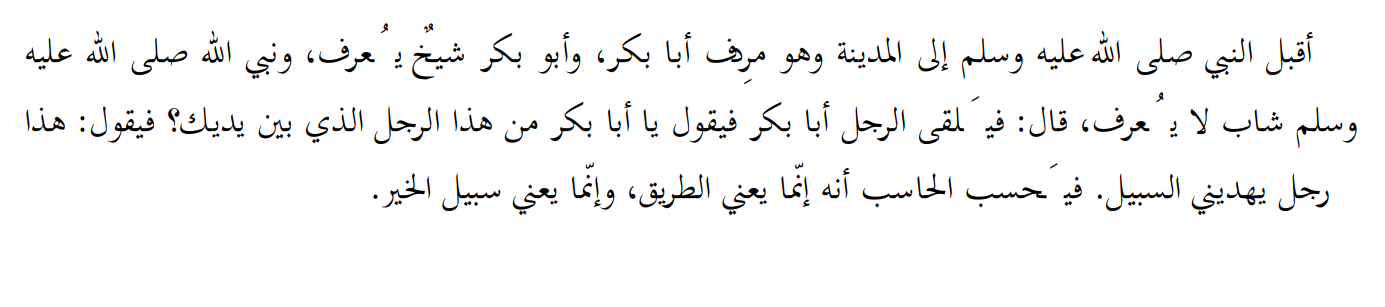
El Profeta de Allah ﷺ se dirigió a Medina y le seguía Abu Bakr. Abu Bakr era un anciano bien conocido, mientras que el Profeta de Allah ﷺ era un joven desconocido. Dijo: Un hombre se encontró con Abu Bakr y le dijo: ¡Oh, Abu Bakr!, ¿quién es este hombre que va delante de ti? Él respondió: Este hombre me está mostrando el camino. Dijo: Un pensador creería que se refería al camino de la carretera, pero él se refería al camino hacia la bondad.
“The Prophet of Allah (saw) headed for Madinah and he was followed by Abu Bakr. Abu Bakr was a well known old man and the Prophet of Allah (saw) was an unknown youth. He said: A man met Abu Bakr saying: O Abu Bakr, who is this man before you? He said: This man is showing me the way. He said: A thinker would think that he meant the road whereas he meant the road to goodness.”