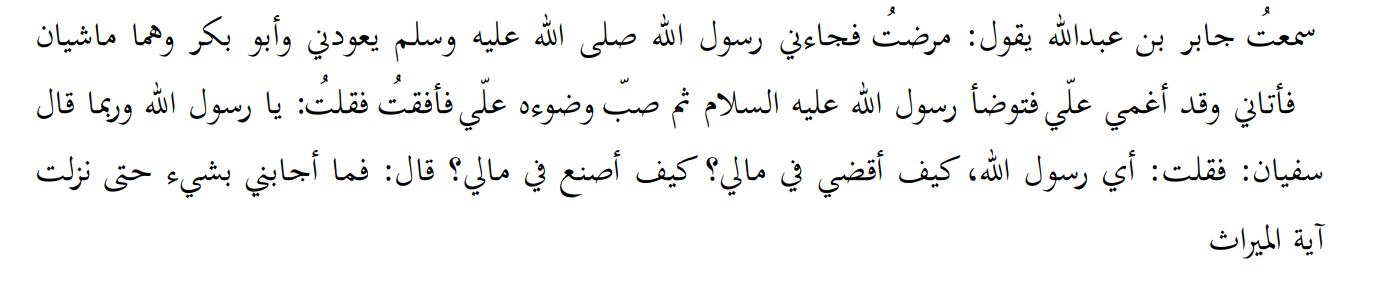
Tirmidhi a rapporté ce hadith qui montre clairement que l'imam peut se tromper, oublier et commettre des péchés. Malgré cela, le Messager ﷺ a ordonné de continuer à lui obéir tant qu'il gouverne par l'Islam, qu'une mécréance manifeste n'est pas survenue de sa part et qu'il n'a pas ordonné le péché. Après les propos du Messager ﷺ concernant les Khulafaa, selon lesquels il y en aura certains que les musulmans n'aimeront pas, alors qu'il a pourtant ordonné l'obéissance, existe-t-il après cela une quelconque possibilité de dire que le calife doit être infaillible et que ce qui est permis aux êtres humains ne lui est pas permis ? Cela relève de la réalité du calife en ce qui concerne l'absence de la condition d'infaillibilité, voire même l'absence de permission d'en faire une condition. Cependant, ceux qui ont affirmé qu'il est requis que le calife soit infaillible ont présenté des preuves pour leur avis, nous devons donc examiner et clarifier ce qu'elles contiennent. Ces preuves sont résumées en quatre arguments :
Tirmidhi narrated this hadith which is clear that the Imam can err, forget and sin. Despite that, the Messenger (saw) commanded to continue obeying him as long as he rules by Islam and clear disbelief has not occurred from him and he has not commanded with sin. After the news of the Messenger (saw) about the Khulafaa that there will be some which the Muslims will dislike yet he commanded obedience, is there after that any possibility of saying that the Khalifah must be infallible and that it is not permitted from him what is permitted from human beings? This is from the reality of the Khalifah in relation to the absence of the condition of infallibility, rather even the absence of permission to even make it a condition. However, those who said it is required that the Khalifah be infallible have presented evidences for their view, so we must examine and clarify what is within them. These evidences are summarised in four evidences:
1. L'imam ﷺ occupe la position du Messager ﷺ dans la préservation de la charia, sa transmission et son enseignement, la supervision des affaires des citoyens, l'établissement de la justice parmi eux, l'assistance aux opprimés, l'établissement des peines légales (Hudud) et des peines discrétionnaires (ta’zeer) et la mise en œuvre de l'Islam selon la voie de la charia. Par conséquent, il est inévitable qu'il soit infaillible et pur de tout mal, grand ou petit, qu'il soit survenu délibérément ou par oubli, du début de sa vie jusqu'à la fin.
1. The Imam stands in the position of the Messenger in preserving the Shari’ah , conveying and teaching it, supervising the citizens’ affairs, establishing justice among them, assisting the oppressed, establishing the mandatory Islamic punishments (hudood) and discretionary punishments (ta’zeer) and implementing Islam in the Shari’ah way. Therefore it is inevitable that he be infallible and pure from all evil, large or small, whether they occurred deliberately or through forgetfulness, from the beginning of his life to the end.
2. Si le péché est possible pour l'imam, il nécessiterait un imam infaillible pour l'empêcher de commettre des péchés et de commettre des erreurs. Et s'il est permis au second de commettre des erreurs et de commettre des péchés, alors il nécessiterait un autre imam infaillible pour l'en empêcher, et cela continuerait de cette manière jusqu'à ce que la question se termine par un imam infaillible contre lequel il n'est pas possible de commettre des péchés ou des erreurs. Par conséquent, il doit y avoir un imam infaillible.
2. If sin is possible from the Imam, it will require an infallible Imam to prevent him from committing sins and erring. And if it is permitted for the second to err and perform sins, then it would require another infallible Imam to prevent this from him, and it would continue in this manner until the matter ends with an infallible Imam against whom it is not possible to commit sins or errors. Therefore there must be an infallible Imam.
3. L'imam est un poste divin destiné à protéger la règle de la charia révélée avec l'objectif d'être suivie et appliquée, et non une règle des hommes. La charia n'est pas non plus une loi ou une constitution parmi les constitutions de gouvernement (ordinaires) avec lesquelles il serait possible de jouer. Ainsi, le Seigneur des gens, dont l'affaire est glorifiée, n'enverrait un dirigeant sur les gens qu'un être infaillible, de sorte que les gens soient sereins avec lui et que les règles émanant de lui soient véritablement les règles d'Allah (SWT) sans qu'aucun doute ne puisse s'y glisser, ce qui empêcherait de les appliquer ou de les suivre. Cela n'est possible qu'avec l'infaillibilité du dirigeant supervisant la préservation de la charia, car la personne faillible, en raison de la possibilité de péché et d'erreur, ne peut être une source de confiance, et on ne peut être certain que ce à quoi elle conduit les gens est la règle d'Allah (SWT) dans ce qui est indéfini pour les gens. L'objectif n'est pas son établissement pour préserver certaines règles (tout en) ne (préservant) pas d'autres (règles), mais plutôt tout ce qui est venu du Prophète ﷺ. Ainsi, il doit y avoir quelqu'un qui connaisse toutes les règles et un protecteur pour toutes celles-ci afin d'agir conformément à elles tant qu'il y aura un monde ; s'il y avait nomination de quelqu'un qui ne connaissait (que) certaines des règles, ou sur qui le péché et l'erreur sont possibles, sa nomination serait contraire à l'objectif de la responsabilité, c'est-à-dire l'obéissance et l'application de tout ce avec quoi la charia est venue, ce qui est connu pour subsister jusqu'au Jour du Jugement. Puisque la contradiction de l'objectif est impossible de la part du Sage (SWT), alors la nomination de quelqu'un de faillible ou ne connaissant que certaines des règles est impossible.
3. The Imam is a divine post to protect the Shari’ah rule revealed with the objective to be followed and acted upon, not a rule of the people. Nor is the Shari’ah a law and constitution among the (normal) constitutions of government possible to be played with. So the Lord of the people whose matter is glorified would not entrust a ruler over the people except one who is infallible such that the people are at ease with him and the rules from him upon their truly being the rules of Allah (swt) without any doubt entering into it which would prevent acting upon or following them. This is not possible except with the infallibility of the ruler supervising the Shari’ah’s preservation as the fallible person due to the possibility of sin and error upon him cannot be depended upon nor can one be definite that what he leads the people to is the rule of Allah (swt) in that which is indefinite before the people. The objective is not his establishment to preserve some of the rules (while) not (preserving) other (rules), but rather all that came from the Prophet (saw) Thus there must be someone who knows all the rules and a protector for all of them to act according to them as long as there is a world; were there to be appointed one who knew (only) some of the rules, or upon whom sin and error is possible, his appointment would be contrary to the objective of responsibility i.e. obedience to and acting upon all that the Shari’ah came with which is known to remain until the Day of Judgement. Since contradiction of the objective is impossible from the All-Wise (swt), then appointing one who is fallible or knowing only some of the rules is impossible.
4. Les textes sont venus indiquer l'obligation que le calife soit infaillible. Il existe des versets (Ayah) coraniques qui sont venus l'annoncer, ce qui est clair à partir de trois versets (Ayah).
4. The texts came indicating the obligation that the Khalifah be infallible. There are Qur’anic ayat which came announcing this which is clear from three ayat.
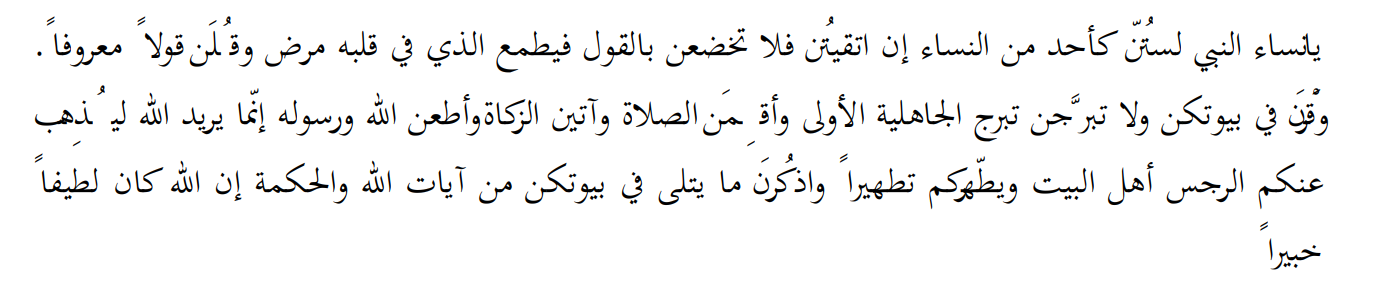
a) Allah (SWT) dit :
a) Allah (swt) says: