21.1 Le mensonge en guerre
21.1 Lying In War
Tout mensonge est certainement illicite (Haram) en raison d'un texte coranique certain, et sa prohibition fait partie des règles connues de la religion (Deen) par nécessité, sans distinction quant au fait qu'il soit pour le bien des musulmans, pour les intérêts de la religion (Deen) ou le contraire. Les textes sont venus l'interdire de manière générale, absolue et sans motif. Allah (SWT) a dit :
All lying is definitely haram due to a definite Qur’anic text, and its prohibition is among the rules known from the deen by necessity, without distinction as to whether it is for the benefit of Muslims or the interests of the deen or opposite to that. The texts came forbidding it generally, absolutely and without reasoning. Allah (swt) said:
« Certes, ceux qui forgent des mensonges sont ceux qui ne croient pas aux versets (Ayah) d'Allah » [TMQ 16:105]
“Verily those who fabricate lies are those who disbelieve in the ayat of Allah” [TMQ 16:105]
Et Allah (SWT) a dit :
And Allah (swt) said:
« Puis invoquons (nabtahil) et que la malédiction d'Allah soit sur le menteur » [TMQ 3:61].
“Then let us invoke (nabtahil) and make the curse of Allah upon the liar” [TMQ 3:61].
Cette décision, par son caractère absolu et général, ne peut être raisonnée, restreinte ou spécifiée que par un autre texte, et l'esprit n'a pas d'autre place que celle de comprendre le texte et rien d'autre. Il n'est parvenu dans le Sahih aucun texte qui apporte un raisonnement ou une restriction, que ce soit dans le Livre ou la sunna. Quant à la spécification du texte, un texte est parvenu à ce sujet qui a exclu de l'interdiction de mentir des choses spécifiques qui ont été seules spécifiées ; il n'est permis de ne pas les dépasser en aucun cas que ce soit. Rien n'est exclu de l'interdiction de mentir, sauf ce qui a été spécifié par la preuve des éléments mentionnés dans les hadith, à savoir : la situation de guerre, envers la femme et pour la réconciliation entre deux personnes, en raison du texte les concernant. Ahmad, Muslim et Abu Dawud ont rapporté d'Umm Kulthum bint ‘Uqbah qui a dit :
This decision, its absoluteness and generality cannot be reasoned, restricted or specified except by another text, and there is no entry for the mind except to understand the text and nothing else. There did not come in the Sahih any text which gives any reasoning or restriction, whether in the Book or Sunnah. As for specifying the text, there came a text regarding it which excluded from the forbidding of lying specific things which alone were specified; it is not allowed to exceed them in any case whatsoever. Nothing is excluded from the forbidding of lying except what was specified by evidence of the mentioned in the ahadith namely: the situation of war, to the woman and reconciling between two due to the text about them. Ahmad, Muslim and Abu Dawud narrated from Umm Kulthum bint ‘Uqbah who said:
« Je n'ai pas entendu le Prophète ﷺ donner la permission de mentir sur quoi que ce soit, sauf dans trois cas : lors de la guerre, pour réconcilier entre les gens, et dans le récit de l'homme envers sa femme et le hadith de la femme envers son mari. »
“I did not hear the Prophet (saw) giving permission in anything over which the people say (lies) except in three: in war, reconciling between people, and the story of the man to his wife and the hadith of the woman to her husband.”
D'après Asma bint Yazid qui a dit : Le Messager d'Allah ﷺ a dit :
From Asma bint Yazid who said: The Messenger of Allah (saw) said:
« Ô gens, qu'est-ce qui vous a poussés à suivre le mensonge comme les papillons suivent le feu ? Tout mensonge de la part du fils d'Adam est illicite (Haram) sauf dans trois situations : l'homme qui ment à sa femme pour lui plaire, l'homme qui ment en guerre car la guerre est tromperie, et l'homme qui ment entre les Musulmans pour réconcilier entre eux. »
“O you people, what has carried to you follow lying like the moths following fire? All lying from the son of Adam is haram except in three situations: the man lying to his wife to please her, the man lying in war as war is deceit and the man lying between Muslims to reconcile between them.”
Ces trois cas font partie de ceux qui sont exclus de l'interdiction de mentir par un texte authentique, ainsi le mensonge n'est pas autorisé en dehors de cela, car rien n'est exclu de la généralité du texte, sauf ce que la preuve spécifie seule. L'expression « en guerre » qui figure dans le hadith n'a qu'un seul sens et pas plus, à savoir la situation de guerre active dans le domaine de la guerre, ainsi le mensonge n'est absolument pas autorisé sauf dans la situation de guerre. Quant à ce qui est authentifié du Prophète ﷺ
These three are of those excluded from the forbidding of lying by an authentic text, so lying is not allowed in other than that as nothing is excluded from the generality of the text except what the evidence specifies alone. The word “in war” which came in the hadith has only one meaning and no more which is the situation of active war in the matter of war, so lying is absolutely not allowed except in the situation of war. As for what is authenticated from the Prophet (saw)
« Que lorsqu'il avait l'intention de faire la guerre, il se cachait sous une autre apparence » ;
“That when he intended war, he would conceal in other than that”;
Cela signifie que lorsqu'il avait l'intention d'une chose, il ne le montrait pas ; par exemple, lorsqu'il avait l'intention de combattre vers l'est, il demandait quelque chose concernant la direction de l'ouest afin que celui qui l'entendait et le voyait pense qu'il avait l'intention de se diriger vers l'ouest. Quant au fait de dire clairement qu'il avait l'intention de l'ouest alors que son intention (réelle) était l'est, cela ne s'est jamais produit. Ainsi, il ne s'agit pas d'informer contrairement à la réalité, mais il s'agissait plutôt d'un double sens (tawriyya). De plus, cela entre dans le cadre de la guerre active et des affaires de guerre, puisqu'il se rend sur le champ de bataille pour combattre l'ennemi activement ; il s'agit donc de la ruse qui figure dans sa parole ﷺ :
The meaning is that when he intended a matter he would not show it, such as when he intended to fight towards the direction of the east he would ask about a matter in the direction of the west so that the one who heard and saw him would think that he intended the direction of the west. As for his saying clearly of his intending the west whereas his (true) intention was the east, this never occurred. So this is not informing contrary to the reality but was rather double- entendre (tawriyya). Moreover, it enters into active war, and the matter of war, since it is going to the battlefield to fight the enemy actively so it is deceit which came in his (saw) statement:
« La guerre est tromperie » (rapporté par Muslim)
“War is deceit” (narrated by Muslim)
Quant à ce qui a été rapporté par Jabir, le Messager d'Allah ﷺ a dit :
As for what was narrated by Jabir that the Messenger of Allah (saw) said:

« Qui s'occupera de K’ab bin Al-Ashraf, car il a offensé Allah et Son Messager ﷺ ? Muhammad bin Maslamah dit : Souhaitez-vous que je le tue, ô Messager d'Allah ﷺ ? Il dit : Oui. Il dit : Donnez-moi alors la permission de dire (des mensonges). Il dit : Je l'ai fait. Il dit : Ainsi, il l'atteignit et dit : En vérité, celui-ci, c'est-à-dire le Prophète ﷺ, nous a mis à l'épreuve et nous a demandé de l'aumône (Sadaqah). Il dit : Par Allah, de la même manière nous l'avons suivi et nous n'aimons pas l'abandonner avant de voir où en arrivera son affaire : Il dit : Il ne cessa de lui parler jusqu'à ce qu'il eût l'occasion de le dominer et de le tuer. »
“Who will deal with K’ab bin Al-Ashraf for he has annoyed Allah and His Messenger? Muhammad bin Maslamah: Would you like for me to kill him, O Messenger of Allah? He said: Yes. He said: Then give me permission to tell (lies). He said: I have done so. He said: So he reached him and said: Verily this one i.e. the Prophet (saw)—has put us to task and has asked us for sadaqah. He said: By Allah similarly we have followed him and we dislike leaving him until we see where his matter will reach: He said: He did not stop talking to him until he had a chance to overpower him and killed him.”
Cela s'appliquait également en situation de guerre. Même si les termes du hadith indiquent que les paroles prononcées par Muhammad bin Maslamah étaient vraies et non fausses, car il ne s'agissait que d'une allusion, Muhammad bin Maslamah avait demandé la permission de tout dire et cela lui avait été permis. Ainsi, cela inclut la permission de mentir de manière explicite ou métaphorique, et cela s'inscrit dans le cadre de la guerre. Quant à ce qu'Ahmad et An-Nisai ont rapporté de l'histoire d'Al-Hajjaj bin ‘Ilat, concernant sa demande de permission pour dire de lui ce qu'il souhaitait afin de récupérer ses biens auprès des gens de Makkah : le Prophète ﷺ lui avait donné la permission, et il informa les gens de Makkah que Khayber avait vaincu les musulmans ; cela entre également dans le cadre de la guerre car les gens de Makkah étaient en situation de guerre active contre les musulmans. Al-Hajjaj bin ‘Ilat faisait partie des musulmans et il se rendait vers les mécréants ennemis qui étaient en situation de guerre active, le mensonge était donc autorisé à leur égard. La permission de mentir n'est pas restreinte au champ de bataille ni aux combattants ; elle est plutôt autorisée pour les musulmans de mentir à leurs ennemis, les mécréants, s'ils sont en situation de guerre active avec eux. Quant à ce qui a été extrait par At-Tabarani dans Al-Awsat :
This was also in the situation of war. Even if the words of the hadith state that the words which Muhammad bin Maslamah said were true, not false, as it was only allusion but Muhammad bin Maslamah asked permission to say everything and it was permitted to him. So it enters within it the permission to lie explicitly and metaphorically, and it enters into the situation of war. As for what Ahmad and An-Nisai narrated from the tale of Al-Hajjaj bin ‘Ilat in his seeking permission to say about him whatever he wished for his benefit in rescuing his property from the people of Makkah. The Prophet (saw) gave him permission and he informed the people of Makkah that Khayber had defeated the Muslims; this also enters into the situation of war because the people of Makkah were in a situation of active war with the Muslims. Al-Hajjaj bin ‘Ilat was from the Muslims and he was going to the enemy disbelievers who were in the situation of active war, so lying was allowed against them. The permission of lying is not restricted to the battlefield nor to fighters; rather it is allowed for the Muslims to lie against their enemies, the disbelievers, if they are in the situation of active war with them. As for was extracted by At-Tabarani in Al-Awsat:
« Tout mensonge est péché, sauf celui par lequel un musulman en tire profit ou celui par lequel il défend sa religion (Deen) »
“All lying is sinful except that by which a Muslim benefits or by which he defends his deen”
Ceci se trouve dans Al-Bazzar avec les mots :
This is in Al-Bazzar with the words:
« Le mensonge est consigné, sauf celui par lequel un musulman en tire profit ou celui par lequel il le défend »,
“Lying is written except that by which a Muslim benefits or by which he defends it”,
Il a été dit dans Majmu’ Al-Zawaid : Dans sa chaîne de transmission se trouvent Rushdayn et Abdurrahman bin Ziyad bin An’am, et tous deux sont faibles ; c'est donc un hadith faible qui est rejeté et qui n'est pas utilisé comme preuve. Il n'est donc pas approprié comme preuve.
It was said in Majmu’ Al-Zawaid: In its chain is Rushdayn and Abdurrahman bin Ziyad bin An’am, and both are weak so it is a weak hadith which is rejected and not used as a proof. So it is not suitable as evidence.
En conséquence, tout mensonge est illicite (Haram) et n'est pas autorisé, sauf dans trois (domaines) : la guerre, la réconciliation entre les gens, et le récit de l'homme à sa femme et le récit de la femme à son mari. Tout le reste est certainement illicite (Haram), car l'interdiction du mensonge est venue de manière générale dans le Coran, couvrant tout mensonge, puis le hadith est venu en spécifiant les exceptions en dehors de la guerre, de la réconciliation entre les gens, et du récit de l'homme à sa femme et du récit de la femme à son mari. Il a exclu ces trois cas de l'interdiction, de sorte qu'ils sont les seuls autorisés et que tout le reste est illicite (Haram). Particulièrement puisque le hadith a restreint la permission à trois cas et a dit :
Accordingly all lying is haram and not allowed except in three (matters): in war, reconciling between people, and the story of the man to his wife and the story of the woman to her husband. Everything else is definitely haram as the forbiddance of lying came generally in the Qur’an covering all lying, then the hadith came specifying it in other than war, reconciling between people, and the story of the man to his wife and the story of the woman to her husband. It excluded these three from the forbidding so they alone are allowed and everything else is haram. Particularly since the hadith restricted the permissibility to three and said:
« Tout mensonge de la part du fils d'Adam est illicite (Haram) sauf dans trois situations »
“All lying from the son of Adam is haram except in three situations”
Et
And
« Je n'ai pas entendu le Prophète ﷺ donner de permission pour quoi que ce soit de ce que disent les gens, sauf pour trois choses : la guerre... »
“I did not hear the Prophet giving permission in anything of what the people say except in three: war…”
Etc. Cette restriction signifie que tout le reste est illicite (Haram). Tous les hadiths qui ont été rapportés se situent dans une situation de guerre active ; tous les hadiths autres que ceux-là sont faibles et ne sont pas utilisés comme preuves.
Etc. This restriction means all other is haram. All the ahadith which came are in the situation of active war; all ahadith other than them are weak and are not used as proof (s)
Quant à la dissimulation/double entente en dehors de la guerre, si l'auditeur comprend le mot contrairement à la réalité, par exemple lorsque le mot n'indique pas la réalité mais autre chose linguistiquement ou dans un usage technique général entre l'interlocuteur et l'auditeur, il s'agit d'un mensonge qui n'est pas autorisé. Par exemple, lorsqu'un groupe spécifique donne une définition technique à un mot et l'emploie ensuite auprès de quelqu'un qui ne connaît pas cette définition technique, ou lorsqu'il s'agit d'une définition technique pour celui qui parle mais que l'auditeur ne la connaît pas, tout cela est un mensonge qui n'est pas autorisé. Même s'il s'agit d'une dissimulation/double entente de la part de celui qui parle mais que l'auditeur comprend du mot l'opposé de la réalité, cela n'est pas considéré comme étant du type de la double entente (tawriyya) et n'est pas autorisé. Quant au cas où l'on comprend du mot la réalité et autre chose, cela relève de la catégorie de l'éloquence (balagha). C'est la vérité et non un mensonge, comme lorsqu'ils disent à celui qui louche : « Si seulement ses deux yeux étaient égaux », ce qui est approprié comme invocation en sa faveur ou contre lui. La dissimulation consiste à ce que le mot ait deux sens, l'un proche et l'autre éloigné ; celui qui parle entend le sens éloigné tandis que l'auditeur comprend le sens proche. Dans cette situation, même si l'auditeur comprend contrairement à ce que celui qui parle entend, il ne comprend pas néanmoins contrairement à la réalité indiquée par la phrase. Le Prophète ﷺ a utilisé la dissimulation. Dans Sahih Al-Bukhari, Anas bin Malik (qu'Allah l'agrée) a dit :
As for dissimulation/double entendre in other than war, if the listener understands it contrary to the reality such as where the word does not indicate the reality and something else linguistically or in technical usage generally with the speaker and listener, it is lying which is not allowed. Such as where a specific group gives a technical definition for a word and then say it to someone who does not know this technical definition or where it is a technical definition for a speaker but the listener does not know it, all of this is lying which is not allowed. Even if it were dissimulation/double entendre by the speaker but the listener understands from the word the opposite to the reality, so it is not considered from the type of double entendre (tawriyya) and is not allowed. As for where it is understood from the word is the reality and something else, this is from the species of eloquence (balagha). It is truth and not lying like their saying to the squint eyed: ‘If only both his eyes were equal’, it is suitable as an invocation for or against him. Dissimulation is that the word has two meanings, one which is near and the other remote; the speaker intends the remote meaning while the listener understands (it as) the near meaning. In this situation, even though the listener understands contrary to what the speaker intends nevertheless he does not understand contrary to the reality indicated by the sentence. The Prophet (saw) used dissimulation. In Sahih Al-Bukhari that Anas bin Malik (ra) said:
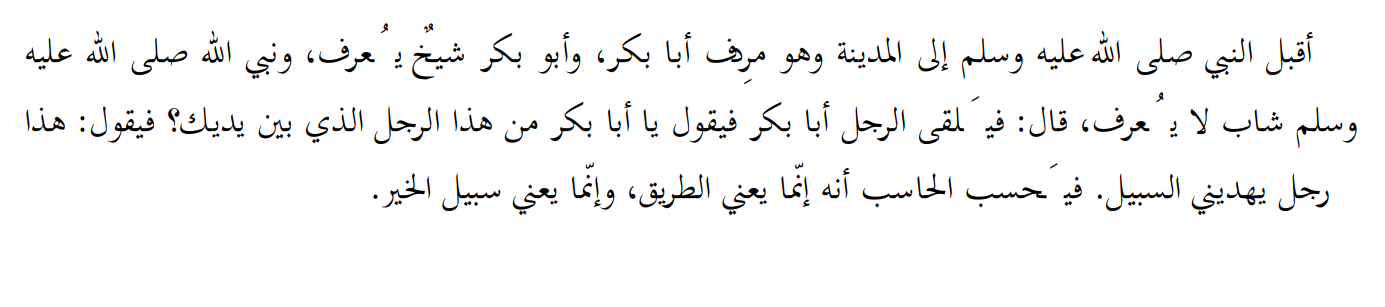
« Le Prophète d'Allah ﷺ se dirigea vers Madinah et il fut suivi par Abu Bakr. Abu Bakr était un vieil homme bien connu et le Prophète d'Allah ﷺ était un jeune homme inconnu. Il a dit : Un homme rencontra Abu Bakr en disant : Ô Abu Bakr, qui est cet homme devant toi ? Il répondit : Cet homme me montre le chemin. Il a dit : Un penseur croirait qu'il parlait de la route, alors qu'il parlait du chemin vers le bien. »
“The Prophet of Allah (saw) headed for Madinah and he was followed by Abu Bakr. Abu Bakr was a well known old man and the Prophet of Allah (saw) was an unknown youth. He said: A man met Abu Bakr saying: O Abu Bakr, who is this man before you? He said: This man is showing me the way. He said: A thinker would think that he meant the road whereas he meant the road to goodness.”