18 イスラム国家は人間の国家であり、神権政治国家ではない。
18 The Islamic State Is A Human State And Not A Theocratic State.
イスラム国とは、カリフ制(ヒラーファ)であり、その統治者が統治と権限のあらゆる権能を備え、例外なくすべての規定を採用する地位のことである。それは、世界中のすべてのムスリムに対する全般的な指導権であり、ムスリムがイスラムのシャリーアのすべての規定を、それがもたらした思想と制定した規定に則って実施し、イスラムを世界に伝え、人々にイスラムを知らせ、それに招き、アッラーの道におけるジハードによってイスラムのダアワを世界に広めるものである。それはまた、イマーム制および信仰者たちの指導権としても知られている。それは神的な役割ではなく人間的な役割であり、人間の上にイスラムの宗教を実施し、人々の間にそれを広めるために存在する。預言者職(ヌブッワ)とは明確に異なる。預言者職および使徒職は、アッラー(SWT)から啓示の手段を通じてシャリーアを授けられ、それを人々に伝えることを意味するものであり、その実施に注意を払うことは含まない。アッラー(SWT)は次のように仰せである。
The Islamic State is the Khilafah as it is the position in which the one who supervises it possesses all the competence of ruling and authority, and adopts all the rules without exception. It is the general leadership over all Muslims in the world to implement all the Islamic Shar’a rules, by the thoughts it came with and the rules it legislated, and to carry the Islamic da’wah to the world, by informing them of Islam, calling them to it and jihad in the way of Allah. It is also known as the Imamah and the leadership over the believers. It is a human role not a divine one, which exists to implement the deen of Islam over human beings and to spread it among them. It is definitely not the Prophethood as the Prophethood and Messengership conotates to the Prophet or the Messenger the Shar’a from Allah (saw) via the means of revelation to deliver it to the people without paying attention to his implementing it. Allah (swt) says:
{ところで使徒の義務は明白な伝達のみである } Note: The original is a Qur'an verse fragment; its translation is rendered in braces as per the instruction for Qur'anic text, and no ﷺ is added since it appears inside a verse with no name of the Prophet. [TMQ 24:54]
"There is nothing upon the Messenger except the clear conveyance " [TMQ 24:54]
そして:
And:
まことに、伝達することがあなたの務めです。 [TMQ 3:20]
"Verily it is upon you the conveyance " [TMQ 3:20]
そして:
And:
「使徒の義務は(明らかに)伝えることだけである」
"There is nothing upon the Messenger except the conveyance" [TMQ 5:99].
これはカリフ制とは異なります。カリフ制とは、人々に対するアッラーのシャリーアの実施のことです。預言者(ﷺ)や使徒(ﷺ)が、アッラーから啓示された律法を実施することは、預言者や使徒となるための条件ではありません。預言者や使徒となるための条件は、アッラーがその者に律法を啓示し、それを伝えるよう命じることです。ムーサー(アレイヒッサラーム)、イーサー(アレイヒッサラーム)、イブラーヒーム(アレイヒッサラーム)は預言者であり使徒でしたが、彼らは自らがもたらしたシャリーアを実施せず、統治者でもありませんでした。したがって、預言者性と使徒性の地位はカリフ制の地位ではありません。預言者性は、アッラーが御心のままに与える神聖な地位であるのに対し、カリフ制は、ムスリムたちが自分たちの中から誰を統治者とするかを誓約によって定める人間的な地位です。我らの主ムハンマド(ﷺ)は、もたらされたシャリーアを実施した統治者でした。したがって彼は預言者性と使徒性を担うと同時に、イスラームの規定を確立する上でムスリムたちの指導者の地位も担っていました。アッラーは、彼に伝達を命じられたのと同じように、統治することも彼に命じられました。アッラーは彼にこう仰せられました。
This is different from the Khilafah which is the implementation of Allah’s Shar’a upon human beings. It is not a condition upon the Prophet (saw) or Messenger (saw) to implement what Allah (swt) revealed to him in order to be a Messenger, rather the condition to become a Messenger or Prophet is that Allah reveals a Shar’a to him and commands him to convey it. Musa (as), Isa (as) and Ibrahim (as) were Prophets and Messengers though they did not implement the Shariah they came with nor were they rulers. Therefore the post of Prophethood and Messengership is not the post of Khilafah. Prophethood is a divine post which Allah gives to whomever He wills, while the Khilafah is a human post in which the Muslims pledge whomever they wish over them from among the Muslims. Our master Muhammad (saw) was a ruler who implemented the Shari’ah he came with, so he would be in charge of the Prophethood and Messengership while at the same time he would be in charge of the post of leadership of the Muslims in establishing the Islamic rules. Allah (swt) commanded him to rule just like He commanded him to convey the message as He said to him:
「アッラーが啓示されたものによって、彼らの間を裁きなさい」 [TMQ 5:47]
"Rule between them by what Allah revealed" [TMQ 5:47]
そして:
And:
「まことに、われらは真理をもってこの啓典をあなたに下した。それはアッラーがあなたに示された通りに、人々の間を裁くためである」 [TMQ 4:105]
"Verily we revealed the Book to you in Truth so that you rule between the people by what Allah showed you" [TMQ 4:105]
このように、アッラーが彼に仰せられたとおりに:
Just like He (swt) said to him:
「使徒よ、あなたの主からあなたに下されたものを伝えなさい」 [TMQ 5:67]
"O Messenger, convey what has been revealed to you from your Lord "[TMQ 5:67]
そして:
And:
「この『クルアーン』は、私に啓示されたものです。それによってあなたがたと、それが伝えられるすべての人々に警告するためです。」 [TMQ 6:19]
"This Qur’an has been revealed to me so that I warn you and whoever it is conveyed to" [TMQ 6:19]
そして:
And:
「衣に身を包む者よ。立ち上がって警告せよ」(ティムザー:74:1)
"O you enshrouded in a cloak. Stand up and warn" [TMQ 74:1].
ただし、彼がアッラーのお言葉を言葉によって伝える役目を負っていた場合は別である。
Except that when he was in charge of conveying the message by speech like conveying Allah’s saying:
アッラーは商取引を許可し、リバー(利息)を禁じられました。 [TMQ 2:275]
Allah has permitted trade and forbidden riba" [TMQ 2:275]
または、フダイビーヤの和議のような行動においては、彼は伝達において断固としており、その行動を実行するよう断固として命じた。また、啓示がもたらされたものと異なることを助言された場合、彼は相談することなく、あらゆる意見を退けた。そして、まだ啓示が下されていない規定について尋ねられた場合、彼は啓示が下されるまで沈黙し、答えなかった。一方、行動を起こそうとするときには人々に相談し、自分の意見と異なる場合であっても、専門家の意見や多数派の意見に従って行動した。また、人々の間で裁定を下すときには、自分の裁定が現実に合致していると断言するような断固たる態度はとらず、むしろ聞いた証拠に基づいて裁いているのだと述べた。バラーア章が啓示されたとき、彼ﷺはアリー・ブン・アビー・ターリブ(ra)に、アブー・バクル(ra)のもとへ行くよう命じ、ハッジの期間中に人々へ「バラーア」、すなわち責任免除を宣言するよう命じた。そこで彼はアラファで人々にそれを読み聞かせ、伝え終えるまで人々の間を回った。彼ﷺがフダイビーヤの和議を結んだとき、彼はすべてのサハーバ(ra)の意見を退け、それがアッラー(swt)からの啓示であるとして、自らの意見を彼らに押し通した。ジャービルが彼ﷺに「私は自分の財産についてどのように裁定すべきでしょうか」と尋ねたとき、彼ﷺは規定とともに啓示が下されるまで答えなかった。ブハーリーは、イブン・アル=ムンカディルを経由して次のように伝えている。彼は言った:
or by action like the Treaty of Hudaybiyya, he would be decisive in conveying and command decisively to undertake the action; nor would he consult but would rather reject all opinion if he was advised anything different from what the revelation came with. And when he was asked of a rule for which no revelation had descended yet, he would keep silent and not reply until the revelation descended. Whereas when he would undertake an action he would consult people and act according to the opinion of experts or the opinion of the majority even where it differed from his opinion, and when he would judge between people he would not be decisive saying that what he judged with conformed with the reality rather he was judging according to what he heard of the evidence. When Surah Bara’ah was revealed, he (saw) commanded Ali bin Abi Talib (ra) to go meet Abu Bakr and commanded him to announce inculpability “Bara’ah to the people during the Hajj period. So he read it to them Arafah and went around to the people until he had conveyed it. When he signed the Treaty of Hudaybiyya he rejected the opinion of all the Sahabah (ra) and compelled his opinion upon them as it was revelation from Allah (swt). When Jabir asked him: “How should I judge over my wealth?", He did not answer him until the revelation descended with the rule. Al-Bukhari narrated via bin al-Munkadir who said:
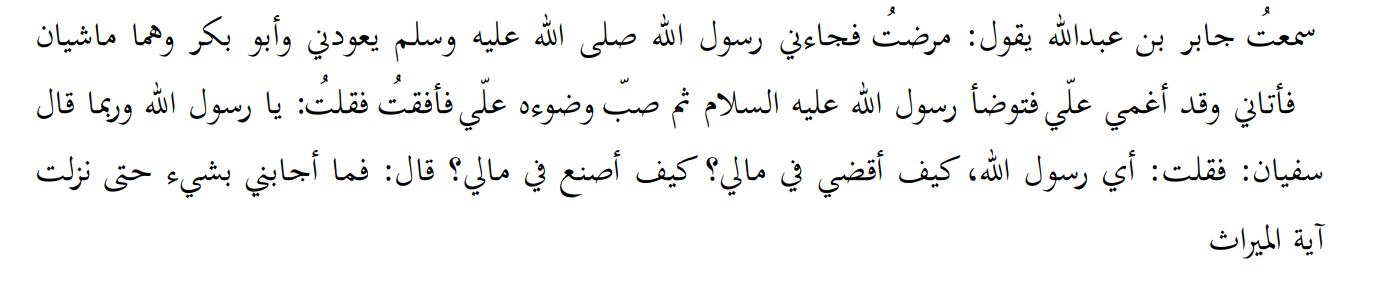
「私はジャービル・ブン・アブドゥッラーが次のように言うのを聞いた。『私が病気になったとき、アッラーの使徒ﷺがアブー・バクルと共に歩いて見舞いに来られた。彼らは私が意識を失っているところを見つけた。アッラーの使徒ﷺはウドゥーをされ、その後私に水を注がれた。私は意識を取り戻し、アッラーの使徒ﷺに言った。「アッラーの使徒よ、私は自分の財産についてどのように判断すればよいのでしょうか。私は自分の財産をどうすればよいのでしょうか。」すると、相続の節が啓示されるまで、アッラーの使徒ﷺは私に一言も答えられなかった。』」
“I heard Jabir bin Abdullah saying: I was ill so the Messenger of Allah (saw) came to visit me together with Abu Bakr walking. They found me when I was unconscious. The Messenger of Allah (saw) made wudhu then poured some water upon me. I woke up and said to the Messenger of Allah (saw): O Messenger of Allah, how should I judge over my wealth? What should I do with my wealth? He said: He did not answer me at all until the ayah of inheritance was revealed.”
これは預言者としての使命と使徒としての重責、そして人々への伝達を担う立場においてのことであり、統治の重責を担う場合には、彼は異なる振る舞いをしました。ウフドの戦いにおいて、彼はムスリムたちをモスクに集め、マディーナの内部で戦うか外部で戦うかについて協議しました。多数派の意見は外で戦うことでしたが、使徒の意見は内で戦うことでした。彼は多数派の意見に従い、マディーナの外へ出て戦いました。同様に、人々の間で裁きを行う際にも、彼は他者の正当な権利に反して自分に裁かせることがないよう、人々に警告していました。アル=ブハーリーは、ウンム・サラマを通じて、アッラーの使徒ﷺが自宅の戸口で争いの声を聞き、彼らのもとへ行って次のように言ったと伝えています。
This was in the undertaking of the burden of Prophethood and Messengership and conveying to the people, whereas in undertaking the burden of rule he would behave differently. In Uhud he collected the Muslims in the mosque, consulted over whether to fight inside Madinah or outside; the opinion of the majority was to fight outside while the Messenger’s opinion was to fight inside. He acted upon the majority opinion, left and fought outside Madinah. Similarly when he judged between people, he would warn them from causing him to judge for them against someone else’s due right. Al-Bukhari narrated from Umm Salamah about the Messenger of Allah (saw) that he heard a dispute at the door of his house so he went to them and said:
「私はただの人間にすぎない。訴訟を抱えた者たちが私のもとにやって来る。あなたがたのうちの誰かは、もう一方よりも弁舌が巧みで(自分の主張を述べるのが上手で)、そのため私はその者が正直だと考え、その者に有利な判決を下すかもしれない。もし私が、ある者に有利な判決を下したために、その者が不当にムスリムの権利を奪うことになったならば、その者が取るものは火の一片にほかならない。取るか、それとも残すかは、その者次第である。」ﷺ
“I am only a human being, and litigants with cases of dispute come to me, and someone of you may happen to be more eloquent (in presenting his case) than the other, whereby I may consider that he is truthful and pass a judgment in his favor. If ever I pass a judgment in favor of somebody whereby he takes a Muslim's right unjustly, then whatever he takes is nothing but a piece of Fire, and it is up to him to take or leave.”
同様に彼は、預言者ﷺが次のように言ったと、彼から伝えています。
Similarly he narrated from him that he (saw) said:
「まことに私は、血であれ財産であれ、私が彼に対して犯した不正について、誰一人として私に要求することのない状態で、アッラー、アッザ・ワ・ジャッル(尊く、偉大なるお方)にお会いしたいのです。」
“Verily I wish to meet Allah ‘azza wa jalla without anyone seeking from me an injustice I committed against him, whether in blood or money.”
これは、彼が二つの役割を担うことを示している。すなわち、預言者であり使徒であるという地位と、啓示された Allah(swt) のシャリーアを確立するにあたって、この世でムスリムを導く指導者という地位である。彼は、それぞれの役割が求めるものに応じて振る舞い方を変え、一方を他方とは異なる形で行った。彼は統治者としての立場で人々から忠誠の誓いを受け、それを女性からも男性からも受けたが、まだ思春期に達していない幼い子供からは受けなかった。これは、その誓いが預言者であることに対するものではなく、統治に対するものであったことを強調している。ここから、メッセージの伝達やその責務の遂行に関わるいかなることについても、Allah(swt) が彼を咎めたことは決してなかったことがわかる。むしろ、人々が彼に応じなかったことで彼が心を煩わされないように求められた。メッセージを担う責務は伝達することだけであり、伝える以外に彼の義務はなかったからである。Allah(swt) は次のように仰せである。
This goes to indicate that he would undertake two roles: the position of Prophethood and Messengership, and the position of leading the Muslims in this world in establishing the Shari’ah of Allah (swt) which was revealed to him. He would dispose in undertaking each role according to what it required, so he would conduct one differently from the other. He took the pledge of the people in ruling, taking it from both women and men but not from young children who had not yet reached puberty, which emphasises that it was a pledge upon ruling not upon Prophethood. From here we find we find that Allah (swt) never censured him in anything to do with conveying the message or undertaking its burden, rather he would request him not to be troubled due to people’s failure to respond to him as the undertaking of the burden of the message was conveying alone; so there was no duty upon him except to convey. Allah (swt) said:
「彼らのために(無駄に)嘆息して、あなた方の魂を消耗させてはならない」 [TMQ 35:8]
"Let not your souls go out in (vainly) sighing for them" [TMQ 35:8]
そして:
And:
「彼らが企んでいることで悲しんではならない」 [TMQ 16:27]
"Do not grieve over what they are plotting" [TMQ 16:27]
そして:
And:
「あなたの責務は伝達することのみです」[TMQ 42:48]
"The only (duty) upon you is conveying" [TMQ 42:48].
しかし、アッラー(SWT)は、既に彼に啓示され、既に伝えられていた諸規定を実施する際に彼が行った行為、すなわち統治の重責を担ったことについて、彼を戒められた。アッラー(SWT)は、より善いことに反することを行ったことについて彼を戒められた。アッラー(SWT)はこう仰せになった。
However Allah (swt) censured him over his undertaking of the burden of ruling in the actions he performed in implementing rules previously revealed to him and already conveyed. Allah (swt) censured him over doing something contrary to what was better. Allah (swt) said:
「預言者にとって、地上で大きな殺戮を行うまでは捕虜を持つことは相応しくない」 [TMQ 8:67]
"It is not for a Prophet to have captives of war until he made great slaughter in the world" [TMQ 8:67]
そして:
And:
「アッラーがあなたを赦されますように。なぜ彼らに許可を与えたのか。」[TMQ 9:43]
"Allah forgive you! Why did you grant them permission?" [TMQ 9:43].
これらすべてから明らかなのは、イスラム教徒を統治する指導者の役割が預言者であることの役割とは異なるということである。ここから明らかになるのは、世界中のすべてのイスラム教徒に対する全般的な指導権であるカリフ制は、神的な地位ではなく人間の地位であるということだ。それは預言者ﷺが担っていた役割であり、預言者ﷺはそれを去るにあたり、ムスリムの一人がその役を引き継ぐよう義務づけた。その者は、統治においては預言者ﷺの後継者(ハリーファ)として預言者ﷺの地位に立つが、預言者としての地位には立たない。カリフ制とは、イスラム法を実施し、メッセージを伝えるためにムスリムを導く点において預言者ﷺの後継となるものであり、啓示を受けたり、アッラーから法(シャリーア)を授かったりする点においてではない。
All this is clear that the role of leading Muslims in the rule was different from the role of Prophethood. From this it becomes clear that the Khilafah, which is the general leadership over all Muslims in the world, is a human post not a divine one. Since it is a role which the Messenger (saw) used to be in charge of and he left it while obliging that a Muslim should take it over for him so that he takes the place of the Messenger of Allah (saw) and be his Khalifah in ruling but not in Prophethood. It is a Khilafah to the Messenger in leading the Muslims to implement the Islamic rules and conveying the message not in receiving revelation or taking a Shari’ah from Allah.
預言者(saw)の無謬性は、統治者であったことから生じるのではなく、預言者であることから生じるものである。なぜなら、無謬性は、彼らが自ら統治し、シャリーアによって人々を治めて実施したか、あるいはシャリーアを伝えるにとどまり、それによって統治したり実施したりすることがなかったかにかかわらず、すべての預言者と使徒にとって必須の属性だからである。我らの主ムーサー(as)、我らの主イーサー(as)、我らの主イブラーヒーム(as)は、我らの主ムハンマド(saw)が無謬であったのと同様に無謬であった。無謬性は預言者としての地位と使命に関するものであり、統治に関するものではないからである。 統治の重責を担っている間も彼(saw)が禁じられた行為を一切行わず、義務となる行為を一切怠らなかったことは、統治者としての地位に関してではなく、預言者と使徒としての地位に関して無謬であったことに由来する。したがって、彼(saw)が統治の任に就いたことは無謬性の属性を必要としなかったが、実際には預言者と使徒であることによって無謬であった。したがって、彼(saw)は人間として人間を治める者としての立場で統治の任に就いたのである。クルアーンは、彼(saw)が人間であることを明確に述べて下った。アッラー(swt)は仰せられた。
As for the Messenger (saw)’s infallibility, it comes from his being a Prophet not from his being a ruler. This is because infallibility is an obligatory attribute for all Prophets and Messengers, irrespective of whether they themselves were the ones to rule over people by their Shari’ah and implement it or whether they were merely restricted to conveying it without ruling with it or implementing it. Our master Musa (as), our master Isa (as) and our master Ibrahim (as) were infallible just like our master Muhammad (saw) was infallible as the infallibility is for Prophethood and the Message not the rule. As for his (saw) not doing any haram action during his undertaking the burden of ruling nor leaving any obligatory action, this came from his being infallible in relation to Prophethood and the Message not in relation to his being a ruler. So his (saw) undertaking the rule did not require his being characterised with infallibility, but practically he was infallible due to his being a Prophet and Messenger. Accordingly, he would undertake the rule in his description as a human being ruling over human beings. The Qur’an has come explicitly stating that he is a human being. Allah (swt) said:
「言いなさい。『本当に私は、あなたがたと同じ人間にすぎない』」 [TMQ 18:110]
"Say: Verily I am only a human similar to you" [TMQ 18:110]
それから、彼を人類の他のすべての人々と区別するものとして、次のように明らかにしました。
Then it clarified distinguishing him from the rest of humanity (by saying):
「『それは私に啓示されたものである』」[TMQ 6:50]。
"It has been revealed to me" [TMQ 6:50].
人間と他の人類との違いは、啓示を受けること、すなわち預言者であることにあります。それ以外においては、彼も他の人々と同じ人間です。したがって統治の面では、他の人々と同じ人間であり、彼の後にカリフとなる者も、疑いなく他の人々と同じ人間であるはずです。なぜなら、その者は預言者性や使命においてではなく、統治においてムハンマド ﷺ のカリフとなるのだからです。ゆえに、無謬性はその条件にはなりません。無謬性を必要とするのは預言者性だけであり、カリフの職務はそのような事柄には当たらないからです。彼は統治者にすぎず、それ以外の何者でもありません。ゆえに、その職務を担う者に無謬性を求める余地はありません。実際、その職務を引き受ける者に無謬性を求めることは許されません。無謬性は預言者に限られ、預言者以外には許されないものだからです。ムハンマド ﷺ には、伝達のために無謬性が必要とされていました。つまり必要とされるのは伝達における無謬性であり、禁じられた行為を決して行わないという無謬性はそこから自然に導かれます。伝達における無謬性は、禁じられた行為をしないという無謬性なしには完全たりえないからです。無謬性を必要とするのは伝達という事柄なのです。
The distinction from the rest of humanity is that he is revealed to i.e. in the Prophethood. Apart from that he is a human like the rest of mankind. So he is in the rule a human like other people so whoever becomes Khalifah after him would doubtless be a human being like the rest of the people since he is his Khalifah in the rule not in Prophethood or the Message. Therefore infallibility is not a condition for it since it is not one of the matters which require infallibility which is only required for Prophethood. He is a ruler, nothing else, so there is no place for requiring infallibility for those who are in charge of it. In fact, it is not allowed to require infallibility for the one undertaking it as infallibility is restricted to Prophets and it is not allowed for other than Prophets as its existence for the Prophet and Messenger (saw) is required for conveyance. So it is infallibility in conveyance and its acquirement in never performing a haram naturally follows the infallibility in conveyance as the infallibility in the latter cannot be complete save with the infallibility from performing haram. The matter which requires it is the conveyance, The Islamic Personality Vol 2 95
問題は人々の信仰や不信仰、行為における誤りの有無ではありません。それが求められるのは、ただメッセージの伝達という事柄です。これは、彼がアッラー(SWT)から無謬とされていなければ、メッセージを隠したり、そこに付け加えたり減らしたりすること、アッラーに対して、アッラーが仰らなかったことを言って偽ること、あるいは誤りを犯して、伝えるよう命じられたものとは別のものを伝えることが可能になってしまうからです。これらすべては、アッラー(SWT)からのメッセージであるという点で否定され、信じられるべき使徒であるという点でも否定されます。したがって、使徒はメッセージの伝達において無謬であると特徴づけられることが不可欠であり、ハラームを犯すことからの無謬性も自然にこれに伴います。 このため、預言者がハラームを犯すことからの無謬性について、学者たちの見解は分かれました。ある者は、預言者は大罪(カバーイル)からのみ無謬であり、小罪(サghaーイル)は彼にあり得ると述べました。また別の者は、大罪と小罪の双方から無謬であると述べました。彼らは、その行為が伝達の完遂に伴うものかどうかによって、このように述べたのです。もし伝達の完遂がそれらの行為に伴うものであれば、伝達の無謬性がそれらを包含し、預言者はそれらから無謬となります。なぜなら、伝達は彼がそれらから無謬であることなしには完遂されないからです。一方、伝達の完遂がそれらの行為に伴わないのであれば、無謬性はそれらを包含せず、預言者はそれらから無謬ではありません。なぜなら、伝達はそれなしに成し遂げられるからです。 したがって、ムスリムの間で、使徒(ﷺ)が、より良いことに反する行為を犯すことについて無謬ではないという点に相違はありません。なぜなら、メッセージの伝達はそれらに依存しないからです。このように、無謬性は伝達に特有のものであり、ゆえに預言者と使徒以外には存在せず、彼ら以外の誰にも不可能なのです。
not the people’s belief or non-belief or the error in actions or its absence; rather the matter requiring it is the conveyance of the message, nothing else. This is because were he not made infallible from Allah (swt), it would be possible for him to conceal the message, add to or reduce in it, lie against Allah (by saying) what He had not said or made a mistake and convey other than what he had been commanded to convey. All this is negated in a message from Allah (swt) and negated in his being a Messenger who must be believed. Therefore it is inevitable that the Messenger be characterised with infallibility in conveying the message, so the infallibility from committing haram naturally comes due to this. Due to this, the scholars differed in respect to the infallibility of Prophets from committing haram; some said he is infallible from committing the greater sins (kabair) only and the small sins (saghair) are acceptable from him, while some said he is infallible from committing both greater and smaller sins. They said this according to whether the actions are consequent upon the completion of the conveyance or not. If the fulfilment of the conveyance is consequent upon them, then the infallibility in conveyance covers them such that the Prophet becomes infallible from (committing) them as the conveyance is not completed save with his being infallible from them. Whereas if the completion in conveyance is not consequent upon them, then the infallibility does not cover them so he is not infallible from them as the conveyance is accomplished without it. Accordingly there is no difference among the Muslims that the Messenger (saw) is not infallible in committing actions which are contrary to what is better, as the conveyance of the message is not dependant upon them. Thus the infallibility is specific to conveyance and therefore it does not exist except for Prophets and Messengers nor is it possible in anyone other than them.
確かに、無謬性(インマ:罪や誤りからの保護)の根拠は理性的なものであり、テキスト上のものではない。なぜなら、預言者であれ使徒であれ他の誰であれ、無謬性の存在を示す明確な文言が、クルアーンにもハディースにも示されていないからである。アッラーの次の言葉について言えば、
Verily the evidence for infallibility is rational not textual as there has not come any Shari’ah texts, whether a clear text in the Qur’an or Hadith, upon the existence of infallibility for anyone whether the Prophets, the Messengers or others. As for Allah’s statement:
「まことに、アッラーは、あなたがた、家の人々から不浄(リジス)を取り除き、あなたがたを完全に清めることだけを望んでおられる」[クルアーン 33:33]、
"Verily, Allah only intends to remove filth (rijs) from you, the family of the house, and purify you completely" [TMQ 33:33],
その意味は、アッラーが、あなたがたから疑いと非難を取り除こうとしておられるということです。この節は三つの節のうちの一つです。アッラー(SWT)はこう仰せられました。
Its meaning is that He intends to remove from you any doubt and accusation. This ayah is a piece among three ayat. Allah (swt) said:
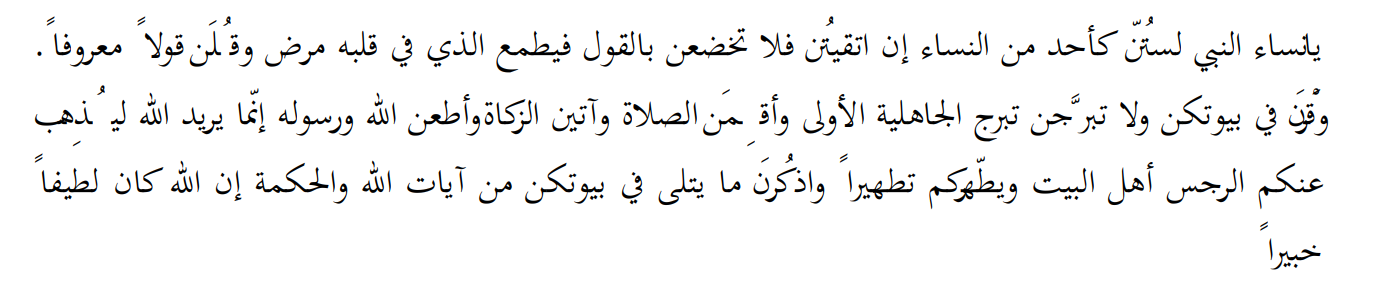
「預言者の妻たちよ、あなたがたは他の女性たちとは違います。もしアッラーを畏れるなら、心に病のある者が欲望を抱くことのないよう、言葉つきを柔らかくせず、正しい言葉を語りなさい。そして家に静かにとどまり、かつての無明時代のような派手な装いを見せびらかしてはなりません。礼拝を確立し、ザカートを納め、アッラーとその使徒に従いなさい。まことにアッラーは、家族であるあなたがたから穢れを取り除き、完全に清めることを望まれるだけなのです。ですから、あなたがたの家で読誦されるアッラーの印と英知を心に留めなさい。まことにアッラーは優しく、全てを知られるお方です」[TMQ 33:32-34]。
"O wives of the Prophet, you are not like any other woman. If you fear (Allah) then be not too complaisant of speech lest one in whose heart is a disease should be moved with desire but speak a speech (that is) just. And stay quietly in your houses and make not a dazzling display like that of the former times of ignorance, and establish prayer and give the zakat and obey Allah and His Messenger. Verily Allah only wishes to remove filth from you, O family of the house, and purify you completely. And remember what is recited in your homes of the signs of Allah and the Wisdom. Verily Allah is Courteous, All-Knowing" [TMQ 33:32-34].
この節と無謬性(インマー)との間には、いかなる意味でも関係がありません。「あなたがたから不浄を取り除き」というアッラーのお言葉から、あなたがたを無謬にすることを理解することはできません。むしろ、不浄を取り除くとは、あらゆる汚れを取り除くことであり、ここで言う不浄は比喩的な意味での不浄、すなわち疑念と猜疑を指しています。その前にある二つの節の文脈で、そのことは明らかです。ここでの浄化とは、疑念と猜疑からの清めです。不浄という語の意味には、物質的な汚れ、比喩的な汚れ、そして罰も含まれており、それらの意味はクルアーンの中で実際にそのように用いられています。アッラー(SWT)は次のように仰せられました。
There is no relationship between this ayah and infallibility in any way whatsoever. It is not possible to understand from His statement “to remove filth from you” i.e. to make you infallible. Rather the removing of filth is the removing of all dirt and the meaning here is metaphorical filth i.e. doubt and suspicion as is explicitly clear in the sentences before this sentence in the two ayat. The purification here is cleansing from doubt and suspicion because the meaning(s) of the word filth is material filth, metaphorical filth and even punishment as it has come in the Qur’an with these meanings. Allah (swt) said:
偶像の汚れから離れなさい [TMQ 22:30]
"Avoid the filth of the idols" [TMQ 22:30]
そして:
And:
同様に、アッラーは信じない者たちの上に汚れを定められる[TMQ 6:125]。
"Similarly does Allah ordain the filth upon those who do not believe" [TMQ 6:125].
これら二つのアーヤにおいて、「穢れ」は比喩的な穢れです。そしてアッラー(SWT)は仰いました。
In these two ayat, filth is metaphorical filth. And Allah (swt) said:
または豚肉、それは実に不浄なものだからである [TMQ 22:30]
"Or the meat of pig for verily it is filth" [TMQ 22:30]
つまり、儀式的な不浄とは身体的な汚れを意味します。そしてアッラーは(SWT)こう仰いました。
i.e. ritual impurity meaning physical filth. And Allah (swt) said:
このように、アッラーは信じない者たちに怒りを置かれる。[TMQ 6:125]
"Thus Allâh puts the wrath on those who believe not" [TMQ 6:125].
そのため、アッラーの御言葉「あなたがたから汚れを取り除く」における「汚れ」は、比喩的な汚れ、すなわち疑念を意味する。また、「あなたがたを完全に清める」という御言葉について言えば、「yutahirukum(あなたがたを清める)」という語も「タフヒール(清め)」という語も、言語においても、クルアーンにおいても、ハディースにおいても、無謬性という意味で用いられたことは決してない。言語においては、「タハーラ(清める)」「タテール(浄化)」は、あるものから不浄を取り除くことを意味する。女性が生理から清らかである場合は「ターヒル(清らかな)」、不浄や欠陥から清らかである場合は「ターヒラ(清らかな)」と言い、シャリーアにおける「タハーラ(清める)」は、ハダス(小さな不浄)を取り除くことである。預言者ﷺはこう言われた。
So His statement in the ayah “to remove the filth from you” means to remove metaphorical filth i.e. suspicion. As for His saying: “And purify you completely” verily the word yutahirukum (to purify you) and the word purification never came with the meaning of infallibility, neither in the language, Qur’an or the Hadith. In the language, to purify (tahara) something purification (tatheera) means to remove impurity from it, and the woman is pure (tahir) from menstruation and (tahira) from impurity and defects, and (tahara) in the Shar’a is removing the (hadath). He (saw) said:
アッラーは清め(タハーラ)なしの礼拝をお受けにならない。
“Allah does not accept prayer without purity (tuhur)”
そして、これはクルアーンにおいてもこの意味で示されています。アッラー(SWT)はこう仰っています。
And it has come in the Qur’an with this meaning. Allah (swt) said:
「そして、あなたの衣服を清めなさい」 [TMQ 74:4]
"And purify your garment" [TMQ 74:4]
そして:
And:
「それによって身を清めるための水」 [TMQ 8:11]
"Water so that you may be purified by it" [TMQ 8:11]
そして:
And:
彼女たちが身を清めるまで、彼女たちに近づいてはならない。 [TMQ 2:222]
Do not approach them until they purify themselves [TMQ 2:222]
「あなたを選び、あなたを清めた」[TMQ 3:42
"Chose you and purified you" [TMQ 3:42
すなわち、過ちから。また:
i.e. from faults and also:
「もし(ジュヌブ)であるなら、身を清めなさい」 [TMQ 5:6]
"And if you are (junub) then purify yourselves" [TMQ 5:6]
すなわち不浄からの清めです。信者の清めもまた、アッラー(SWT)が次のように仰せられたときに示されました。
I.e from the impurity. The purification of the believers also came when Allah (swt) said:
{اللَّهُ لِيَجْعَلَ عَلَيْكُم مِّنْ حَرَجٍ وَلَٰكِن يُرِيدُ لِيُطَهِّرَكُمْ وَلِيُتِمَّ نِعْمَتَهُ عَلَيْكُمْ} [TMQ 5:6] Japanese translation (the Qur'an text in braces is left as in the original, so the Arabic is quoted directly): 「アッラーは、あなたがたに困難(ハラジュ)をお望みにならない。むしろ、あなたがたを清めることと、あなたがたへの恵みを完成させることをお望みなのである」{5:6}
"Allah does not wish to make difficulty (haraj) for you but rather He wishes to purify you and complete His blessing upon you" [TMQ 5:6].
これらの文章はすべて、そのアーヤの意味は、アッラー(SWT)が彼らを疑いや猜疑から清められたことであり、無謬性(イスマ)を意味するものではないと明記している。したがって、そのアーヤは無謬性を示すものではない。
All these texts specify that the meaning of the ayah is that Allah (swt) cleansed them from doubt and suspicion, and negates that its meaning is infallibility hence the ayah does not indicate infallibility.
したがって、誰にとっても無謬性が存在するという文証はなく、それを支持するのは理性的な証明のみである。預言者であり使徒であるという立場は、彼が無謬であることを要求するため、理性は、預言者であり使徒であるムハンマドにとって、伝達における無謬性が存在することを命じる。そうでなければ彼は預言者または使徒となり得ないからである。理性は、アッラー(SWT)からの伝達の責任を与えられていない者は人間であるがゆえに無謬であることは許されず、アッラー(SWT)が創造された本性(フィトラ)には誤りと忘却が生じることが含まれている、と命じる。そして、アッラー(SWT)からの使命を与えられていない限り、彼が無謬であることを要求するものは何もない。もし彼が無謬であると主張するならば、それはアッラーからの使命を負っていることを意味するが、それは、アッラーの使徒ムハンマドﷺの後に預言者は存在しないため許されない。アッラー(SWT)は次のように仰せられた:
Therefore there is no textual evidence for the existence of infallibility for anyone; there is only rational proof for it. The mind is what compels that there be infallibility in conveyance for the Prophet and Messenger as his being a Prophet and Messenger requires that he be infallible otherwise he cannot be a Prophet or Messenger. The mind is the one which compels that one not given the responsibility to convey a message from Allah (swt) is not allowed to be infallible as he is a human being, and his nature (fitra) with which Allah (swt) created him is that error and forgetfulness occur in him. And as long as he is not given responsibility with a message from Allah (swt), this means there is nothing which requires that he be infallible. If it is claimed that he is infallible, then this means that he is responsible with a message from Allah which is not permitted since there is no Prophet after Muhammad, the Messenger of Allah (saw). Allah (swt) said:
しかし、彼はアッラーの使徒であり、預言者たちの封印です」[TMQ 33:40]。
" But he is the Messenger of Allah and seal of the Prophets" [TMQ 33:40].
無謬性を主張することは、使徒性を主張することに等しい。使徒はアッラーから(メッセージを)伝える者であり、人間としての属性ゆえに、アッラーからの伝達において誤りや迷いに陥る可能性を内に秘めている。アッラーのメッセージを誤りや変更から守るためには、使徒が誤りと迷いから無謬でなければならない。この理由だけで、無謬性は使徒の属性であり、それだけが無謬性を必要とする。無謬性を彼以外の者に対して主張しながら、無謬性を必要とする唯一の事柄がアッラーからのメッセージの伝達であることを知っているならば、それは、無謬性を必要とするものとその原因、すなわちメッセージの伝達を、この別の人物にも主張することに等しい。つまり、アッラー(SWT)からのメッセージを伝える責任が彼にあると主張することになる。したがって、カリフに無謬性を求めることは許されない。無謬性を求めることは、彼にアッラー(SWT)からのメッセージを伝える責任があり、それゆえに無謬であることを要求することになるからであり、これは許されないのである。
Claiming infallibility means claiming Messengership since the Messenger is a conveyor from Allah, and there is within him due to his attributes as a human being the potential of error and misguidance in conveying from Allah, protecting the message of Allah from error and change in the conveyance requires that the Messenger be infallible from error and misguidance. For this reason alone, infallibility is an attribute of the Messenger and it alone requires infallibility. If it is claimed for anyone other than him while being known that the only matter requiring it is conveying the message from Allah then it is equivalent to claiming for this other person what requires infallibility and its cause i.e. conveying the message. Thus it would be claiming that he is responsible to convey a message from Allah (swt). Therefore it is not allowed to require infallibility for the Khalifah as requiring it means that he is responsible to convey a message from Allah (swt) thus requiring him to be infallible, and this is not permitted.
このことから、カリフは人間であり、誤ることもあれば正しいこともあるということが明らかになります。また、預言者でも使徒でもない以上、他のどの人間にも起こりうる怠慢や忘却、偽り、背信、罪といったことが彼にも起こりうるのです。使徒ﷺは、イマームが誤ることがありうると伝え、不正や罪などによって人々に憎まれ呪われるようなことが彼に起こりうるとも伝えられました。さらに、明白な不信仰が彼に生じることさえあると伝えておられます。ムスリムは次のように伝えています。ズハイル・ブン・ハルブが私に伝えた。シャバーバが私たちに伝えた。ワルカが私に伝えた。アブー・ザイヤードから、アル=アラジから、アブー・フライラから、預言者ﷺが次のように言われたと伝えられた。
This makes it clear that the Khalifah is a human being who can make a mistake or be correct, and it is allowed to occur from him what occurs from any human being of neglect and forgetfulness, falsehood, treachery, sins as he is a human being and not a Prophet or Messenger. The Messenger (saw) informed that it is possible for the Imam to err, and he informed that it may occur from him what may cause people the hate him and curse him due to injustice, sins etc. He even informed that clear disbelief may occur from him. Muslim narrated: Zuhayr bin Harb related to me that Shababa related to us that Warqa related to me from Aby Zayyad from Al- ‘Araj from Abu Hurayray from the Prophet (saw) who said:
まことに、イマームは盾であり、その背後で戦い、その庇護のもとに守られる。もし彼がアッラーの畏れ(タクワー)をもって命じ、正義を行うならば、その報酬は彼のものとなる。もし彼がそれ以外のことを命じるならば、その責めは彼に帰する。
“Verily the Imam is a shield from behind whom they fight and by whom they are protected. If he commanded with the fear (taqwa) of Allah ‘azza wa jalla and does justice then there is reward for that for him. If he commands with other than that, then there is the same against him.”
これは、イマームが無謬ではなく、アッラーへの畏れ以外のことを命じる可能性があるということを意味します。ムスリムも次のように伝えています。ウスマーン・ブン・アビー・シャイバが私たちに伝えた。ジャリールが、アル=アマシュから、ザイド・ブン・ワフハブから、アブドゥッラーから伝えた。彼は言った。「アッラーの使徒ﷺは次のように言われた。」
This means that the Imam is not infallible and it is possible for him to command other than the fear of Allah. Muslim also narrated: Uthman bin Abi Sheeba related to us that Jareer related to us from Al-‘Amash from Zayd bin Wahhab from Abdullah who said: The Messenger of Allah (saw) said:
「まことに、私の後には、あなたがたが認めがたいような(身びいきによる)優遇や、受け入れがたい事柄が起こるであろう。」人々は言った。「アッラーの使徒よ、そのような事態に遭遇した者に、何を命じられますか。」預言者ﷺは言われた。「あなたがたに課せられた務めを果たし、あなたがたの権利についてはアッラーに求めなさい。」
“Verily there will be after me some improper preferences and matters which you will reject. They said: O Messenger of Allah, what would you command anyone of us when that reaches him? He said: Fulfill the rights due from you and ask Allah (for) what is due to you.”
ムスリム伝承によれば、イスハーク・ブン・イブラーヒーム・アル=ハンダリーがわれわれに伝えた。イーサー・ブン・ユーヌスがわれわれに伝えたところによると、アル=アウザーイーがズィヤード・ブン・ヤズィード・ブン・ジャービルから伝え、ズィヤード・ブン・ヤズィードはズワイク・ブン・ハイヤーンから、ズワイク・ブン・ハイヤーンはムスリム・ブン・クルタから、ムスリム・ブン・クルタはアウフ・ブン・マーリクから伝えた。アウフ・ブン・マーリクは、アッラーの使徒ﷺが次のように言われたと伝えている。
Muslim narrated: Ishaq bin Ibrahim Al-Handhalee related to us that Isa bin Yunus informed us that Al-Awza’i related to us from Zayd bin Yazid bin Jabir from Zareeq bin Hayyan from Muslim bin Qurta from ‘Awf bin Malik from the Messenger of Allah (saw) who said:
「あなたがたの支配者のうち最も良い者は、あなたがたが愛し、あなたがたを愛する者であり、あなたがたのために神の祝福を祈り、あなたがたもその者のために神の祝福を祈る者である。そしてあなたがたの支配者のうち最も悪い者は、あなたがたが憎み、あなたがたを憎む者であり、あなたがたが呪い、あなたがたを呪う者である。」そこで(その場にいた者たちが)尋ねた。「剣をもって彼らを打倒すべきではないのですか。」すると預言者ﷺは言われた。「いいや、彼らがあなたがたの間で礼拝を確立している限りはだめである。もしあなたがたが彼らの中に何か忌むべきものを見いだしたなら、その統治を憎むべきであるが、彼らへの服従から身を引いてはならない。」
“The best of your rulers are those whom you love and who love you, who invoke God's blessings upon you and you invoke His blessings upon them. And the worst of your rulers are those whom you hate and who hate you and whom you curse and who curse you. It was asked (by those present): Shouldn't we overthrow them with the help of the sword? He said: No, as long as they establish prayer among you. If you then find anything detestable in them. You should hate their administration, but do not withdraw yourselves from their obedience.”
アル=ブハーリーはこう伝えている。「イスマーイールが私たちに伝えた。イブン・ワフブが私に伝えた。アムルから、ブカイルから、ブスル・ブン・サイードから、ジュナーダ・ブン・アビー・ウマイヤから伝わったところによると、彼はこう述べた。我々はウバーダ・ブン・アッ=サーミトのもとを訪ねた。彼は病気であった。我々は言った。アッラーがあなたを快復させてくださいますように。アッラーがあなたを助けてくださるような、あなたがムハンマド﷿から聞いた『ハディース』を我々に伝えてください。彼は言った」 Note: the Prophet's honorific is written as ﷺ per your rules, so the final rendering is: アル=ブハーリーはこう伝えている。「イスマーイールが私たちに伝えた。イブン・ワフブが私に伝えた。アムルから、ブカイルから、ブスル・ブン・サイードから、ジュナーダ・ブン・アビー・ウマイヤから伝わったところによると、彼はこう述べた。我々はウバーダ・ブン・アッ=サーミトのもとを訪ねた。彼は病気であった。我々は言った。アッラーがあなたを快復させてくださいますように。アッラーがあなたを助けてくださるような、あなたがムハンマドﷺから聞いたハディースを我々に伝えてください。彼は言った」
Al-Bukhari narrated: “Ismail related to us that Bin Wahhab related to me from Amru from Bukayr from Busr bin Said from Junada bin Abu Umayyah who said: We entered to ‘Ubadah bin As-Samit who was ill and we said: May Allah improve you. Relate to us a hadith which you heard from the Prophet by which Allah will help you. He said:
預言者(saw)が我々を呼ばれたので、我々は彼に忠誠の誓い(バイア)を捧げた。そして彼は、我々から取った誓いの中で、我々が好むことと嫌うこと、困難な時と楽な時、そして他者が我々より優先される時にも、耳を傾け従うこと、また権威を持つ者たちと統治について争わないことを、我々が彼に誓ったと言われた。(彼は言われた):ただし、あなた方がアッラーからの明確な証拠(スルターン)を持つ、明白な不信仰(クフル・バワー)を目にするのであれば別である。
“The Prophet (saw) called us so we gave him a pledge. So he said in what we took from us that we pledged him to hear and obey in what attracts us and what we hate, in hardship and ease, and when others are preferred over us and that we do not dispute the rule with those in authority (He said): Unless you see clear disbelief (kufr bawah) upon which you have from Allah a clear proof (sultan).”
そして、アーイシャが次のように言ったと伝えられています。「アッラーの使徒ﷺ(SWT)はこう言われました:
And from Aisha who said: “The Messenger of Allah (saw) said:
「可能な限りムスリムから法的刑罰を遠ざけよ。もし彼に逃げ道があるなら、その道に任せておけ。なぜなら、イマームが赦しにおいて過ちを犯す方が、刑罰において過ちを犯すよりも良いからである。」
" Avert the legal penalties from the Muslims as much as possible, if he has a way out then leave him to his way, for if the Imam makes a mistake in forgiving it would be better than making mistake in punishment.”
ティルミディーがこのハディースを伝えており、そこから明らかなのは、イマームも誤り、忘れ、罪を犯しうるということである。それにもかかわらず、預言者(ﷺ)は、イスラームによって統治し、明白な不信仰が彼から生じず、罪を命じていない限り、彼に従い続けるよう命じられた。預言者(ﷺ)が、ムスリムが嫌う者たちがカリフの中に現れることを告げた後でも、なお服従を命じられたのである。では、その後になお、カリフは無謬でなければならず、人間に許されることが彼には許されない、と言う余地があるだろうか。これは、無謬性の条件が欠けていること、いやむしろ、それを条件とすることすら許されていないことという、カリフの実態からの帰結である。しかし、カリフは無謬でなければならないと主張する者たちは、自らの見解の証拠を提示しているので、その中にあるものを検討し、明らかにしなければならない。これらの証拠は四つの証拠に要約される。
Tirmidhi narrated this hadith which is clear that the Imam can err, forget and sin. Despite that, the Messenger (saw) commanded to continue obeying him as long as he rules by Islam and clear disbelief has not occurred from him and he has not commanded with sin. After the news of the Messenger (saw) about the Khulafaa that there will be some which the Muslims will dislike yet he commanded obedience, is there after that any possibility of saying that the Khalifah must be infallible and that it is not permitted from him what is permitted from human beings? This is from the reality of the Khalifah in relation to the absence of the condition of infallibility, rather even the absence of permission to even make it a condition. However, those who said it is required that the Khalifah be infallible have presented evidences for their view, so we must examine and clarify what is within them. These evidences are summarised in four evidences:
1. イマームは、シャリーアの保持、その伝達と教授、民の諸事の監督、民の間での正義の確立、虐げられた者への支援、義務的なイスラーム刑罰(フドゥード)と裁量刑(タアズィール)の執行、そしてシャリーアに則したイスラームの実施において、使徒の立場に立つ。したがって、彼が生涯の始まりから終わりまで、故意であれ忘却によるものであれ、大小を問わずあらゆる悪から無謬であり清浄であることは不可避である。
1. The Imam stands in the position of the Messenger in preserving the Shari’ah , conveying and teaching it, supervising the citizens’ affairs, establishing justice among them, assisting the oppressed, establishing the mandatory Islamic punishments (hudood) and discretionary punishments (ta’zeer) and implementing Islam in the Shari’ah way. Therefore it is inevitable that he be infallible and pure from all evil, large or small, whether they occurred deliberately or through forgetfulness, from the beginning of his life to the end.
2. もしイマームが罪を犯すことがあり得るなら、彼が罪を犯し誤ることを防ぐために、無謬のイマームが必要になるだろう。そして、二人目が誤ったり罪を犯したりすることが許されるなら、今度はそれを防ぐためにさらに別の無謬のイマームが必要になり、このようにして、罪や誤りを犯すことが不可能な無謬のイマームに行き着くまで続くことになる。したがって、無謬のイマームは必ず存在しなければならない。
2. If sin is possible from the Imam, it will require an infallible Imam to prevent him from committing sins and erring. And if it is permitted for the second to err and perform sins, then it would require another infallible Imam to prevent this from him, and it would continue in this manner until the matter ends with an infallible Imam against whom it is not possible to commit sins or errors. Therefore there must be an infallible Imam.
3. イマームは、従うべき、また実践されるべきものとして啓示されたシャリーアの規定を守護するための神聖な地位であり、人々の規則ではない。また、シャリーアは、政府の通常の憲法の中の一つの法律や憲法として、もてあそばれうるものでもない。したがって、そのことが崇められる人々の主は、無謬の者以外を人々の統治者として任命されることはないであろう。それは、人々がその者と共にあって安心し、その者からの規則が、疑いが差し挟まれて従うことや実践することを妨げることなく、アッラー(スブハーナhu wa ta‘ālā)の規則であると確信できるようにするためである。これは、シャリーアの保全を監督する統治者が無謬である場合にしか不可能である。罪や誤りの可能性がある者は、頼りにすることができず、その者が人々を導く先が、人々にとって不確かなことにおいて、アッラー(swt)の規則であると確信することもできないからである。目的は、一部の規則を保全し、他の規則を保全しないような者を立てることではなく、預言者(ﷺ)からもたらされたすべてのものを保全することである。したがって、世界が続く限り、すべての規則を知り、そのすべてを守護する者が存在しなければならない。もし、一部の規則しか知らない者、あるいは罪や誤りの可能性がある者が任命されるならば、その任命は、責任、すなわちシャリーアがもたらしたすべてに服従し、実践するという目的に反することになる。審判の日まで存続することが知られているものである。目的への矛盾は全知の主(swt)にはあり得ないのだから、誤りうる者、あるいは一部の規則しか知らない者を任命することはあり得ない。
「私の約束は不義を行う者には及ばない」 [TMQ 2:124]
"My promise does not include the oppressors" [TMQ 2:124]
アッラー(SWT)のこの御言葉は、シャリーアを守護する無謬のイマームを置くことの義務の証拠である。この節はスーラ・アル=バカラにある。アッラー(SWT)は次のように仰せになった。
The statement from Allah (swt) is an evidence upon the obligation of an infallible Imam who is a protector of Shari’ah. This ayah is in Surah Al-Baqarah. Allah (swt) said:
「そして、イブラーヒームが主によっていくつかの言葉で試みられ、彼がそれを成し遂げたとき、主は仰せられた。「わたしはあなたを人びとの指導者とする」。彼は言った。「わたしの子孫からもお願いします」。主は仰せられた。「わたしの契約は不義を行う者には及ばない」。」[TMQ 2:124]
"And when Ibrahim was tested by his Lord with certain words which he fulfilled. He said: I will make you an Imam for the people. He said: And of my offspring? He said: My promise will not reach the oppressors" [TMQ 2:124].
「彼を導師とする」という言葉は、その直後の節が示す意味から、彼を指導者(イマーム)とすることを意味している。イブラーヒームがアッラーのこの御言葉を聞いたとき、
The words making him are those making him an Imam as the ayah coming after this ayah give sense to. When Ibrahim heard Allah’s statement:
「本当に、わたしはあなたを人々のためのイマームとしよう」 [TMQ 2:124]
"Verily I will make you an Imam for the people" [TMQ 2:124]
そして、この尊い地位の偉大さを見て、彼は自分の子孫もそれにあずかることを望んだ。そこでアッラー(SWT)は仰せられた。
And saw the greatness of this honourable post; he hoped that his descendants would have a share of it. So Allah (swt) said:
「わたしの約束は不義を行う者には及ばない」[TMQ 2:124]
"My promise does not reach the oppressors" [TMQ 2:124].
その意味は、この地位は欠点のある者、あるいは不正によって汚れる者には与えられない、ということです。これは、その人が自分自身に対して、あるいは他人に対して不正を行ったかどうか、たとえそれが人生のほんの短い間であったとしても、という点よりも広い意味を持ちます。むしろ、この地位は人生において一度も不正を行わなかった者に与えられるのです。
Its meaning is that this post will not be given to someone who is blemished or will become stained with injustice, which is more general than whether this one is unjust to his own soul or someone else even if only for a short time in his life. Rather it is given to someone who does not do any injustice in his life.
b) アッラーは(SWT)こう仰せられた:
b) Allah (swt) said:
「真理へ導く者は、自ら導かれなければ導けない者よりも従われるにふさわしいのではないか。」(TMQ 10:35)
"Is the one guided to the Truth of more right to be followed or the one who does not guide unless he is guided?" [TMQ 10:35].
これは、イマームが真理へと導く存在であり無謬であることが義務であることの証拠である。誤りを犯しうる者は真理へと導くことはできず、たまたま真理に到達することはあり得るものの、という意味である。
This is an evidence for the obligation of the infallibility of the Imam as he guides to the truth, and the one from whom an error is possible does not guide to it though it may happen that he achieves the truth.
c) アッラーはこう仰せられた:
c) Allah (swt) said:
「アッラーに従い、使徒に従い、またあなたがた の中の権限を持つ者に従いなさい」[TMQ 4:59]
"Obey Allah and obey the Messenger and those in authority among you" [TMQ 4:59].
このアーヤは、権威ある者、すなわちイマームの無謬性の証拠である。なぜなら、アッラー(SWT)は権威ある者への服従を、特定の対象や期間を限定せずに無条件に命じられたからである。これは、服従される者が無謬であることを必要とする。なぜなら、誤りを犯しうる者は罪や過ちを命じうるからである。もし、その者が罪を犯している状態で服従が義務となり、同時にそれが禁じられているとすれば、栄光ある主が対立する、あるいは矛盾する事柄を同時に命じられたことになるが、それは不可能である。したがって、服従される者は無謬でなければならない。 また、アッラー(SWT)は権威ある者への服従を、預言者ﷺへの服従と結びつけられた。預言者ﷺへの服従はアッラー(SWT)への服従と結びついており、そこには崇高さが求められる。ここで言う権威ある者とは、無謬のイマームたちである。 以上が、イマームの無謬性を条件とする者たちの論拠である。これらの各々に対する応答は、以下に要約される。
This ayah is an evidence for the infallibility of those in authority i.e. infallibility of the Imam, because Allah (swt) commanded the obedience of those in authority in an unrestricted manner without specifying the obedience for a specific or period. This requires that the obeyed one is infallible as a fallible one can command with sin and error. If his obedience was obliged while this is (his) situation though it is forbidden, this obliges that the Lord whose matter is glorified has commanded to combine two opposites or contradictory matters which is impossible. The obeyed one must be infallible. Also, Allah (swt) linked obedience to those in authority with obedience to the Messenger (saw) whose obedience is linked to His (swt) obedience which requires exaltation. Those meant in authority here are the infallible Imams. These are the evidences of those who say that it is a condition that the Imam be infallible. The response to each one of this is summarised in the following:
まず第一に、カリフはイスラーム法を実施することによって統治においてメッセンジャーの地位を継ぐのであり、アッラーから啓示を伝えることによってではない。彼は統治においてムハンマド ﷺ のカリフであり、アッラー(SWT)からの伝達においてではない。統治の職務は、理性によっても法によっても無謬性を要求しないため、彼に無謬性が求められるわけではない。確かに、カリフに求められる資質がいくつかある。それは、イスラーム教徒であること、男性であること、自由人であること(奴隷でないこと)、成人していること(思春期に達していること)、正気であること、公正であること、そして能力があることである。これらの資質はそれぞれ、イスラーム法がもたらした証拠に基づいて求められている。しかし、これらの条件を求めることは、カリフがそれらに反することから無謬であることを意味しない。むしろ、この職位に就く者は、任命される時点でこれらの資質を備えている義務があるということであり、それを失うことから免れているという意味ではない。彼がそれらを失う可能性はあり、その場合、彼は罷免されるに値するか、あるいはカリフの地位を去ることになる(すなわち、もはやカリフではなくなる)。カリフにこれらの資質を求めることは、証人にその特性としての公正さを求めて証言を受け入れるようなものであり、その公正さに反することから証人が無謬であることを求めるわけではない。したがって、カリフが統治においてムハンマド ﷺ の地位に立つことは、彼が無謬でなければならない証拠にはならない。ムスリムによるイスラーム法の伝達については、それはアッラー(SWT)からの伝達ではない。むしろそれは、人類に da'wah(イスラームへの招き)を伝え、イスラームの思想とその法を教えるために、アッラー(SWT)がムスリムに求めた務めを果たすことであり、それ以外の意味になることは決してない。それはアッラー(SWT)からの伝達ではなく、ムハンマド ﷺ がもたらした責務の一つであり、ムハンマド ﷺ のアッラーからの伝達とは同じものではない。ゆえに、それは無謬性を要求せず、その遂行は他のイスラーム法上の義務を果たすことと同様である。 カリフは、カリフとしての立場においてそれを義務とされているわけではない。むしろ、シャリーアを知るすべてのムスリムに義務である。カリフは、ムスリムとしての立場においてシャリーアを伝えるよう命じられている。もしカリフが学者であれば、それは学者としての立場においてである。なぜなら、伝達は、自らが知っている範囲においてシャリーアに通じたムスリムに義務だからである。無謬性は、伝える者に義務づけられるものではなく、伝達の条件でもない。一方、カリフとしての立場でイスラームのダアワを担うことは、カリフに義務づけられている。これは、権威を手中に収めた統治者としての立場で彼に義務づけられているのである。彼はそれを、特定の方法、すなわちジハードを通じて担うことを義務づけられており、ジハードは無謬性を必要としない。むしろ、無謬性を求める余地はまったくないのである。
Firstly: The Khalifah takes the place of the Messenger in rule by implementing the Shari’ah not conveying it from Allah (swt); he is his (saw) Khalifah in rule not in conveying from Allah (swt). This does not require from him that he be infallible as the office of rule does not require infallibility, whether rationally or by Shari’ah. True, there are some attributes required for the Khalifah which are: Islam, being a man, being free (not a slave), maturity (i.e. having attained puberty), sanity, uprightness and ability. Each one of these attributes has been required based upon evidence(s) the Shari’ah came with. However, requiring these conditions does not mean that the Khalifah is infallible from contradicting them; rather they mean that the one who is in charge of this post is obliged to have these attributes when he is appointed to it not that he is infallible from losing them. It is possible for him to lose them upon which either he deserves removal or he leaves the Khilafah (i.e. he no longer remains the Khalifah). Requiring these attributes from the Khalifah is like requiring justice from the witness in relation to his description with it in order to accept his testimony; this does not mean requiring him to be infallible from contradicting it. Therefore the Khalifah’s standing in the Prophet’s place in rule is not evidence that he must be infallible. As for conveying the Shari’ah by the Muslims, it is not conveying it from Allah (swt). Rather it is performing what Allah (swt) demanded from the Muslims to carry the da’wah to mankind, to teach them the thoughts of Islam and its laws and it cannot ever mean anything other than that. It is not conveyance from Allah (swt); rather it is one of the responsibilities which the Messenger (saw) came with and it is not like the conveyance of the Messenger (saw) from Allah (swt). Therefore it does not require infallibility; performing it is like performing the other Shari’ah responsibilities. It is not obliged upon the Khalifah in his capacity as Khalifah; rather it is obligatory upon every Muslim who knows the Shari’ah. The Khalifah is commanded to convey the Shari’ah in his capacity as a Muslim; this is in his capacity as a scholar if he is one, as conveying is obligatory upon the Muslim knowledgeable in the Shari’ah in what he knows. Infallibility is not obligatory upon the conveyors nor is it a condition for them. As for carrying the Islamic da’wah obliged upon the Khalifah in his capacity as Khalifah, this is obliged upon him in his capacity as a ruler in whose hands is the authority. It is obliged upon him to carry it via a specific method i.e. jihad, which does not require infallibility. Rather there is no place for requiring it.
「まことに、あなたがたの上には支配者が立てられるであろう。あなたがたは(その者たちの行いの中で)ある事は認め、ある事は否定するであろう。その者たちの悪(ムンカル)を嫌う者は罪がなく、それを否定する者は安全である。しかし、それを喜び、従う者はその限りではない。」人々は言った。「アッラーの使徒よ、われわれは彼らと戦うべきではないのですか。」預言者ﷺは言われた。「いや、彼らが礼拝を行っている限りは、だめだ。」
“Verily there will be appointed rulers over you. You will recognise (some of what they do) and deny (some of what they do). Whoever dislikes (the munkar from them) will be guiltless, and whoever denies it will be safe; but whoever is pleased and follows (will not be guiltless or safe). They said: O Messenger of Allah, should we not fight them? He said: No, not as long as they prayed.”
このことによって、シャリーアは、カリフが罪を犯すことを防ぐ方法を明らかにした。それは、カリフを防ぐ別の指導者の存在によるのではなく、ウンマがそれを行うのである。カリフは別のカリフを防ぐのではなく、統治権をめぐって彼と戦うか、彼に従って総督またはワーリーとなり、カリフではなくなるか、反乱のために彼と戦うのだから、統治とは何かを理解せず、その像を持たない者が、カリフは別のカリフが罪を犯すことを防ぐ必要がある、と言うのである。では、あるカリフが別のカリフの罪を防ぐというようなことを、どうして想像できようか。
Through this the Shar’a clarified the method to prevent the Khalifah form committing sins. It is not via the existence of an Imam who prevents him but rather the Ummah does that. The one who says that the Khalifah requires another Khalifah to prevent him from committing sins does not understand what ruling means and he does not have a vision of it because the Khalifah does not prevent another Khalifah but rather he fights him over for the rule. Or he follows him, thereby becoming a governor or Wali not the Khalifah, or he fights him for rebellion. So how can one imagine that a Khalifah prevents another Khalifah from committing sins?
第三に、イマーマは神的な地位ではなく、人間的な地位である。イマーマが存在するのは、シャリーアの規定を守るためではなく、アッラー(SWT)が我らの師ムハンマド ﷺ に啓示されたシャリーアを実施するためである。シャリーアの保護について言えば、アッラー(SWT)がクルアーンを守ることを保証されるとき、まさにそれと同様にシャリーアを守ることも保証されているのである。アッラー(SWT)は次のように仰せられた。
Thirdly: The Imamah is not a divine post but a human one. It does not exist to protect the Shari’ah rule but rather to implement the Shari’ah which Allah (swt) revealed to our master Muhammad (saw). As for the protection of the Shari’ah, verily Allah (swt) guarantees to protect it when He (swt) guarantees to protect the Qur’an. Allah (swt) said:
「まことに、我々がこの教えを啓示し、我々がその守護者である」[TMQ 15:9]。
"Verily We revealed the Remembrance and We will be its protector" [TMQ 15:9].
カリフを擁立する目的は、預言者(saw)がもたらしたすべてのものを守るために彼を任命し、そのためにすべての規定を知り、それらすべての守護者となることが彼に義務づけられている、というわけではない。むしろ彼を擁立する目的は、クルアーンとスンナの規定を確立すること、すなわちイスラームを実施し、その da'wah を世界に伝えることであり、彼にすべての規定を知り、そのすべてを守ることを要求するものではない。したがって、彼が無謬であることは求められず、それゆえ彼を任命することが、任命された目的と必ずしも矛盾するわけではない。 人々が彼を信頼し、疑いなく、行動や従うことを妨げるような形で、彼からすべての規定をアッラー(SWT)の規定として受け取るという点については、それはカリフが無謬であるか否かから生じるものではない。むしろそれは規定そのものの証拠から生じる。もしそれがシャリーアの証拠であり、シャリーアの推論によって導き出されたものであれば、人々はその規定がシャリーアの規定であると信頼し、この状況では、カリフが誰であるかを顧みることなく、また彼自身がその導き出された規定と異なる見解を持っていたとしても、それに従い行動することを妨げる疑いは生じないであろう。なぜなら、推論における意見の相違によって、ある規定がムジュタヒドの前では正当で、別のムジュタヒドの前では不当になるわけではないからである。むしろ、シャリーアの証拠のうち、規定を導き出す者の前に、たとえ不明瞭な証拠(shubha daleel)であっても存在し、そうした種類の推論が言語学的・シャリーア的知識に照らして可能である限り、それはすべてのムスリムにとってシャリーアの規定なのである。 一方、彼が過ちや罪を犯す可能性があるために、彼への信頼が失われ、彼の導くものがアッラー(SWT)の法であるかどうか確信できないという点については、ここで問題となるのは「規定と統治者」の問題である。すなわち、彼が統治し、到達する規定と、統治し到達する統治者との問題なのである。 求められている信頼は、統治者がアッラー(swt)の法に到達しているかどうか、あるいはそれによって統治しているかどうかにはかかわりません。考慮されるのは、彼が統治し採用している規則が、イスラームの法であるかどうかという点のみです。それは、規則を与える人物が無謬であるかどうかとは関係がありません。人々がその規則を疑念を差し挟むことなく全面的に信頼し、それに従い実行することを可能にするものは、規則そのものが正当であるかどうかについての彼らの考慮です。それは、人々が規則を受け取るカリフが無謬であるかどうかには依存しません。
The objective in establishing the Khalifah is not that he is appointed to protect all that the Prophet (saw) came with such that it is said that it is obligatory for him to know all the rules and be a protector for all of them. Rather the objective in establishing him is to establish the rules of the Book and Sunnah i.e. to implement Islam and carry its da’wah to the world which does not require from him to know all the rules and protect all of them. Therefore it is not required for him to be infallible so accordingly appointing him does not neccesarily mean contradicting the objective for which he was appointed. As for the people’s trust in him such that they take all rules from him as the rules of Allah (swt) in reality without any doubt which prevents acting upon and following them, this does not come from the Khalifah being infallible or fallible. Rather it comes from the evidence of the rule itself; if it is a Shari’ah evidence and has been deduced by a Shari’ah deduction, the people will trust that this rule is a Shari’ah rule and no doubt will enter into them in this situation preventing them from acting upon and following it without looking to who the Khalifah is, even if he himself differs from the rule they deduced. This is because a difference of opinion in deduction does not make a rule legitimate before a mujtahid and illegitimate before another. Rather it is a Shari’ah rule before all Muslims as long as there is (even) obscure evidence (shubha daleel) from the Shari’ah evidence before the deducer of the rule and it is possible according to the linguistic and Shari’ah knowledge's that one can deduce this type of deduction. As for his being fallible due to the possibility of sin and error upon him leading to lack of trust in him, and that one is not definite that what he leads to is the law of Allah (swt), the issue here is one of the rule and the ruler i.e. the rule he rules by and arrives at and the ruler who rules and arrives at. The trust sought is not whether the ruler arrives at Allah’s (swt) law or whether he rules by it or not. The consideration is only in the rule which he rules by and adopts in relation to it being an Islamic law or not. It is not in relation to the person who gives it as to whether he is infallible or not. That which makes the people implicitly trust the rule so as to prevent doubt entering into it which would prevent them from acting upon or following it is their consideration of the rule itself as to whether it is legitimate or not. It does not depend on whether the Khalifah from whom they take the rule is infallible or not.
「わたしの契約は不義を行う者には及ばない」[TMQ 2:124]
"My promise does not cover the oppressors" [TMQ 2:124],
その中の「イマーム」という語は、カリフ制や統治権を意味するものではありません。「イマーム」という語は、栄光あるクルアーンの中で多くの節に現れています。アッラー(SWT)は仰いました:
The word Imam therein does not mean the Khilafah or the rule. The word Imam came in the Glorious Qur'an in many ayat. Allah (swt) said:
そして、その前にはムーサー(アleiヘ・サラーム)の書がイマームであり慈悲であった。 Note on rendering: the original's "(as)" is an abbreviated honorific for Musa, which per the rules I should render as a written-out honorific in Japanese rather than keep as "(as)". Since the instruction is to translate faithfully, the closing honorific is rendered in Japanese form as "(彼に平安あれ)" to match the text's style. Correction to the above, given the rules: そして、その前にはムーサー(彼に平安あれ)の書がイマームであり慈悲であった。 [TMQ 11:17]
"And before him the book of Musa (as an) Imam and mercy" [TMQ 11:17]
そして:
And:
「また、こう言う者たち:『主よ、私たちに妻と子孫から目の喜びを授け、私たちを敬虔な者たちの指導者としてください』」[TMQ 25:74]
"And those who say: O our Lord, grant for us from our wives and our offspring the comfort of our eyes and make us Imams for the pious" [TMQ 25:74].
「これら二つのアーヤートにおけるイマームという語の意味は、導き手である。」イマーム・アル=ブハーリーは言った。「アッラーの言葉(SWT):」
The meaning of the word Imam in these two ayat is a guide. Imam Al-Bukhari said: “The statement of Allah (swt):
「また、私たちを主の畏れを持つ者たちの指導者としてください」[TMQ 25:74]。
"And make us Imams for the pious" [TMQ 25:74].
彼は言った:「私たちの前の者に従い、私たちの後の者に従われる指導者たち」。アッラーの御言葉にある「イマーム」という語は、
He said: Leaders who follow those before us and are followed by those after us.” The word Imam in Allah’s statement:
「主がイブラーヒーム(アブラハム)を幾つかの言葉によって試された時、彼はそれを成し遂げた。主は仰せられた。『私はあなたを人々の指導者とする』。彼は言った。『では、私の子孫からも[指導者を]』。主は仰せられた。『私の契約は不義を行う者には及ばない』。」(クルアーン 2:124)
"And when Ibrahim was tested by his Lord with some words which he fulfilled. He said: I make you an Imam for the people. He said: And my descendants? He said: My promise does not cover the oppressors" [TMQ 2:124 ].
この箇所の意味は預言者性と模範であり、その後に続くアーヤートがカアバ、イスマーイールの民、そしてイブラーヒームに預言者性が授けられたことについて論じているため、意味は次のようになります。「わたしはあなたを、人々が見習うイマームとし、人々が従う預言者とした」。ここでのイマームという語がカリフの座や統治を意味することはありえません。特にイブラーヒームは統治を担ったことも支配者だったこともなく、預言者であり使徒であったからです。そこでアッラーはイブラーヒームが子孫にも自分と同じ地位を授けてくださるよう願った時、この模範と預言者性という地位は不義を行う者には与えられない、と仰いました。したがって、このアーヤートにはカリフの無謬性を示す根拠はありません。さらに、不義を行う者の反対の意味は、無謬な人ではなく信頼できる人です。ですから、不義を行わない者とは無謬であることを意味するのではなく、不義の欠如、すなわち公正さによって特徴づけられた者を意味します。次に、二つ目の典拠である次のアーヤートについて述べます。
The meaning here is Prophethood and example as the ayat which are after it discuss about the Ka’abah, the people of Ismail then the granting of Prophethood to Ibrahim so the meaning becomes: We made you an Imam whom the people imitate and a Prophet whom people follow. It is not possible that the word Imam here means the Khilafah or rule, especially since Ibrahim was never in charge of the rule nor was he a ruler but was a Prophet and Messenger. So Allah (swt) said to him that this post which is the example and Prophethood is not for oppressors when he requested from Him (swt) to ordain for his descendants what He ordained for him. So there is no evidence in the ayah for the infallibility of the Khalifah. Moreover, the opposite meaning for the word oppressors is trustworthy not infallible persons. So those who are not oppressors does not mean that they are infallible; rather it means those who are characterised with the absence of oppression which is justice. As for the second text which is the ayah:
「真理へと導く者は」[TMQ 10:35]、
"Is the one guided to the Truth" [TMQ 10:35],
その意味は、そして「アッラーこそが最もよくご存じである」とのことです。すなわち、導きに従っている者、つまり使徒(SWT)は、従われるにふさわしいのか、それとも導かれない限り自ら導くことのできない迷っている者は従われるにふさわしいのか。この主題全体は導きと導き手に従うことであり、支配やカリフ制とは何の関係もない。イマームは人々を統治し、その務めは統治であって導きではない。彼は迷った者や不従順な者を罰し、不信仰者と戦う。ここで「導き手」という語は使徒以外には用いられていない。この意味はカリフには当てはまらず、この節とカリフの無謬性との間にも何の関係もない。統治は導きなのか、それともシャリーアの施行なのか。
Its meaning and Allah (swt) knows best is: Is the one who is following the guidance i.e. the Messenger (swt) more worthy to be followed or the one who is misguided nor does he guide except if another guides him. The whole subject is guidance and following the guide, and it has no relationship with the rule or Khilafah. The Imam rules the people and his duty is ruling not guidance; he punishes the misguided and disobedient persons, and fights the disbelievers. The word guide is not used here except for the Messenger. The meaning does not apply upon the Khalifah, and there is no relationship between this ayah and Khalifah’s infallibility. Is the rule guidance or the implementation of the Shari’ah ?
I don't see a third text in our conversation. Could you paste the ayah (the text you'd like translated) here, and I'll translate it into Japanese?
As for the third text which is the ayah:
「信仰する者よ、アッラーに従い、使徒に従い、また、あなたがたの中の権威ある者に従え」(コーラン 4:59)
"Obey Allah and obey the Messenger and those in authority among you" [TMQ 4:59],
それは、権威ある者に従うことを命じる規定であり、それをアッラー(SWT)への服従と使徒(ﷺ)への服従と結びつけています。これは、その規定が、アッラー(SWT)と使徒(ﷺ)への服従の規定と同じであり、それ以外ではないことの証拠です。一般的にはこの節の中で実践されてきましたが、他のアーヤートや数多くのハディースによって限定されています。罪や不信仰以外の事柄における服従に関するそれらのアーヤートとハディースによって限定され、さらにそれにとどまらず、イマームと戦うことを命じるまでに至りました。限定するアーヤートとハディースは、この点について明白です。アッラー(SWT)はこう仰せられました:
It is the command to obey those in authority, and linking this with obedience to Allah (swt) and obedience to the Messenger (saw). It is evidence that its rule is like the rule of obeying Him (swt) and obeying the Messenger (saw), nothing else. It came in practice generally within the ayah; it is, however, specified by other ayat and numerous ahadith. It was specified by those ayat and ahadith related to obedience in other than sin and other than disbelief; and it did not stop there but rather commanded fighting the Imam. The specifying ayat and ahadith are explicit upon this. Allah (swt) said:
「私たちを念じることを忘れさせた者に従ってはならない」 [TMQ 18:28]
"Do not obey the one whose heart we have made forget our remembrance" [TMQ 18:28]
そして:
And:
「不信仰者に従ってはならない」 [TMQ 25:52]
"Do not obey the disbelievers" [TMQ 25:52]
そして:
And:
嘘つきに従ってはならない [TMQ 68:8]
"Do not obey the liars" [TMQ 68:8]
そして:
And:
「どうか、卑劣な誓いを乱発する者each(それぞれ)に従ってはならない」 Note on the translation: 「each」 here is a typo or stray word in the source, but I have kept it as written in the original text so as not to alter it. [TMQ 68:10]
"Do not obey each despicable swearer" [TMQ 68:10]
そして:
And:
「彼らのうち罪を犯す者や不信仰な者に従ってはならない」 [TMQ 76:24]
"Do not obey among them the sinful or the disbeliever" [TMQ 76:24]
預言者(ﷺ)への語りかけは、それが彼に固有のものであり、彼の特権の一つであるという証拠が示されない限り、彼のウンマへの語りかけである。ここでは、それが彼に固有のものであるという証拠は示されていないので、これは彼のウンマへの語りかけである。アル=ブハーリーは、ナーフィウから、アブドゥッラー(ra)から、預言者(ﷺ)が次のように言ったと伝えている。
The speech to the Messenger (saw) is the speech to his Ummah as long as there came no evidence that it is specific for him and among his specificities; no evidence came here that it is specific for him so it is a speech to his Ummah. Al-Bukhari narrated from Nafi’ from Abdullah (ra) from the Prophet (saw) who said:
イスラーム教徒は、好むことと好まないことのいずれについても、聞き従うことと服従することが義務である。ただし罪を犯すよう命じられた場合は別であり、その場合には聞き従うことも服従することもない。
“To hear and to obey is obligatory upon the Muslim person in what he likes and dislikes except if he is commanded with a sin. If he is commanded with a sin, there is no hearing or obedience.”
そして彼(ﷺ)は、ムスリムが伝えたハディースに従い、カリフや指導者に従うことについてこう仰いました。
And he (saw) said in the matter of obeying the Khalifahs and leaders according to what Muslim narrated:
「彼らは言った。『我々は彼らと戦うべきではないのか』。彼は言った。『彼らが礼拝している限りは、そうではない』」
“They said: Should we not fight them? He said: Not as long as they prayed.”
彼はまた次のように伝えている:
He also narrated:
「「アッラーの使徒よ、剣で彼らに立ち向かうべきではないのでしょうか」と言われた。預言者ﷺは言われた。「彼らがあなたがたの間で拝礼を確立している限りはだめだ」。」そして「……ただし、明白な不信仰を目にした場合は別である」。
“It was said: O Messenger of Allah, should we not confront them with the sword? He said: Not as long as they establish the prayer over you?” and: “…except if you see clear disbelief.”
また、アル=ブハーリーとムスリムが伝えている。
And Al-Bukhari and Muslim narrated:
「誰であれ嫌悪する者は罪がなく、誰であれ拒絶する者は安全である。しかし、(それに)従う者は、罪がなくも安全でもない」(ムスリム収録)
“Whoever dislikes (then he) is guiltless and whoever rejects (then he) is safe, but whoever follows (is neither guiltless nor safe)” (Reported by Muslim)
これらのアーヤートとハディースは、罪や不信仰に当たらない事柄についてのみ、カリフへの服従を specify(限定)している。したがって、誤りうる者が罪や過ちを命じうるという言明は成り立たない。そのため、カリフへの服従を義務とすることは、アッラー(SWT)が相反する二つの事柄を同時に命じたことを必然的に意味する、という主張には至らない。なぜなら、アッラーは罪や不信仰以外のことにおいて服従を命じ、罪や不信仰においては服従しないことを命じ、そして罪を禁じておられるのであり、相反する事柄の結合は存在しないからである。したがって、この件においてアッラー(SWT)の命令に矛盾はない。このことから、この章句は無謬性の要件の証拠として適さず、それによる推論は成立しないことが明らかになる。
These ayat and ahadith specify the obedience to the Khalifah for other than sin or disbelief. Therefore the statement does not come that the fallible can command with sin and error such that if his obedience is obliged this would necessarily mean that Allah (swt) has commanded the joining between two contradictory matters by commanding obedience to the Khalifah and prohibiting sins. This statement does not come because there does not exist the joining between two contradictory matters as He commands obedience in other that sin and disbelief, commands with non-obedience in sin and disbelief, and commands the prohibition of sins. So there is no contradiction in His commands (swt) in this issue. This clarifies that this ayah is not suitable as evidence upon the requirement of infallibility so such deduction by it fails.
これらは無謬性を要求する者たちの証拠である。それぞれが推論の水準から外れており、証拠としてふさわしくない。したがって、カリフに無謬であることは要求されず、むしろそれを含意することは許されないことが明らかになる。また、カリフ制は神的な地位ではなく人間的な地位である。よって、イスラーム国家は人間の国家であり、神権政治国家ではない。
These are the evidences of those stating (the requirement) of infallibility. Each one of them has fallen from the rank of deduction and is not suitable as proof. Therefore from this it is clarified that it is not required from the Khalifah that he be infallible rather it is not allowed to entail this and that the Khilafah is a human post not a divine one. Thus the Islamic State is a human state and not a Theocratic state.