戦時における嘘
21.1 Lying In War
あらゆる嘘が明確なクルアーン(コーラン)の本文に基づいて禁じられていることは確かであり、その禁止は、それがムスリムの利益や宗教の利益のためであるか、あるいはそれに反するためであるかを問わず、宗教の中で必然的に知られている規定の一つです。本文は、それを一般的に、絶対的に、理由を付さずに禁じています。アッラー(SWT)は次のように仰いました。
All lying is definitely haram due to a definite Qur’anic text, and its prohibition is among the rules known from the deen by necessity, without distinction as to whether it is for the benefit of Muslims or the interests of the deen or opposite to that. The texts came forbidding it generally, absolutely and without reasoning. Allah (swt) said:
「まことに、嘘をでっち上げる者とは、アッラーの御印(アーヤート)を信じない者である」 [TMQ 16:105]
“Verily those who fabricate lies are those who disbelieve in the ayat of Allah” [TMQ 16:105]
そしてアッラーは(SWT)こう仰せられた:
And Allah (swt) said:
「それでは、われわれが(ナブタヒル)祈り、嘘をつく者の上にアッラーの呪いがあるように祈ろう」[TMQ 3:61]。
“Then let us invoke (nabtahil) and make the curse of Allah upon the liar” [TMQ 3:61].
この判断、その絶対性と一般性は、別の文言によらなければ理性によって理由づけられることも制限されることも特定されることもなく、精神が入る余地は文言を理解することのほかにない。サヒーフの中には、啓典にもスンナにも、いかなる理由づけも制限も与える文言は現れていない。文言の特定について言えば、嘘を禁じることから除外される特定の事柄について文言が現れ、それだけが特定された。いかなる場合であっても、それらを超えることは許されない。嘘の禁止から除外されるのは、ハディースに言及された証拠によって特定されたものだけである。すなわち、戦争の状況、女性に対する場合、そして二人の間を取り持つ場合であり、それらに関する文言による。アフマド、ムスリム、アブー・ダーウードは、ウンム・クルスーム・ビント・ウクバから伝えた。彼女は言った。
This decision, its absoluteness and generality cannot be reasoned, restricted or specified except by another text, and there is no entry for the mind except to understand the text and nothing else. There did not come in the Sahih any text which gives any reasoning or restriction, whether in the Book or Sunnah. As for specifying the text, there came a text regarding it which excluded from the forbidding of lying specific things which alone were specified; it is not allowed to exceed them in any case whatsoever. Nothing is excluded from the forbidding of lying except what was specified by evidence of the mentioned in the ahadith namely: the situation of war, to the woman and reconciling between two due to the text about them. Ahmad, Muslim and Abu Dawud narrated from Umm Kulthum bint ‘Uqbah who said:
「私は、人々が(嘘を)言うことのうち、三つを除いて、預言者ﷺが許可を与えられたのを聞いたことがない。その三つとは、戦争において、人々の間を和解させることにおいて、そして男が妻に語る話と、女が夫に語る話である。」
“I did not hear the Prophet (saw) giving permission in anything over which the people say (lies) except in three: in war, reconciling between people, and the story of the man to his wife and the hadith of the woman to her husband.”
アスマ・ビント・ヤズィードが語った。預言者ﷺは言われた。
From Asma bint Yazid who said: The Messenger of Allah (saw) said:
「人々よ、なぜ蛾が火に群がるように、嘘を追いかけるのか。アダムの子孫の嘘はすべてハラーム(禁止)である。ただし三つの場合は例外である。妻を喜ばせるために夫が妻に嘘をつく場合、戦争は欺きであるため戦争において嘘をつく場合、そしてムスリムの間を和解させるためにムスリムの間で嘘をつく場合である。」
“O you people, what has carried to you follow lying like the moths following fire? All lying from the son of Adam is haram except in three situations: the man lying to his wife to please her, the man lying in war as war is deceit and the man lying between Muslims to reconcile between them.”
これら三つは、真正な伝承によって嘘を禁じる規定から除外されたものの一つである。したがって、それ以外の場合に嘘が許されることはない。なぜなら、その規定の一般性から除外されるのは、証拠が単独で明示するものだけだからである。伝承に出てくる「戦争において」という語句は、ただ一つの意味しか持たず、それ以上ではない。すなわち、戦争の事柄において実際に戦闘が行われている状況である。ゆえに、戦争の状況を除き、嘘は一切許されない。預言者ムハンマドﷺから伝えられているものについては、
These three are of those excluded from the forbidding of lying by an authentic text, so lying is not allowed in other than that as nothing is excluded from the generality of the text except what the evidence specifies alone. The word “in war” which came in the hadith has only one meaning and no more which is the situation of active war in the matter of war, so lying is absolutely not allowed except in the situation of war. As for what is authenticated from the Prophet (saw)
「戦いを企てるときは、別の方向を装うのが常であった」
“That when he intended war, he would conceal in other than that”;
その意味は、彼(ﷺ)が何かを企図したとき、それを表に出さなかったということです。例えば東の方角へ戦いに向かおうとしていた時には、西の方角についての問題を尋ねて、それを聞き見た者が彼は西の方角を目指していると思うようにしたのです。また、西へ向かうと明言しながら実際の意図は東であった、ということは決してありませんでした。したがってこれは現実に反することを伝えたのではなく、むしろタウリヤ(二重の意味を持たせる言い回し)でした。さらに、これは積極的な戦闘、戦争の問題に入ります。敵に対して積極的に戦うために戦場へ向かうのですから、これは欺き(ハルブ)であり、それは彼(ﷺ)の言葉の中に現れたものです。
The meaning is that when he intended a matter he would not show it, such as when he intended to fight towards the direction of the east he would ask about a matter in the direction of the west so that the one who heard and saw him would think that he intended the direction of the west. As for his saying clearly of his intending the west whereas his (true) intention was the east, this never occurred. So this is not informing contrary to the reality but was rather double- entendre (tawriyya). Moreover, it enters into active war, and the matter of war, since it is going to the battlefield to fight the enemy actively so it is deceit which came in his (saw) statement:
「戦争とは欺瞞である」(ムスリムによって伝えられた)
“War is deceit” (narrated by Muslim)
ジャービルが伝えた、預言者ﷺが次のように仰った、という伝承について、(SWT) Note on the translation: the source has "the Messenger of Allah (saw)", so the honorific is written once as ﷺ after the mention of the Prophet, and the abbreviated "(saw)" was replaced accordingly. The "(SWT)" was kept as is.
As for what was narrated by Jabir that the Messenger of Allah (saw) said:

「誰がカアブ・ビン・アル=アシュラフを始末してくれるのか。彼はアッラーとその使徒を苦しめたのだから」 ムハンマド・ビン・マスラマ:「アッラーの使徒よ、私が彼を殺すことをお望みですか」。預言者ﷺは言われた:「そうだ」。彼は言った:「では、私に(偽りを言う)許可をください」。預言者ﷺは言われた:「許可する」。 そこで彼はカアブのもとへ行き、こう言った:「実にこの人物、すなわち預言者ﷺは、我々に重い負担をかけ、我々に施しを求めている」。彼は言った:「アッラーに誓って、我々も彼に従ってしまった。彼を見捨てたくはない。彼のことがどこへ行き着くのかを見るまでは」。彼はカアブに話し続け、ついに彼を不意に制圧する機会を得て、彼を殺した。
“Who will deal with K’ab bin Al-Ashraf for he has annoyed Allah and His Messenger? Muhammad bin Maslamah: Would you like for me to kill him, O Messenger of Allah? He said: Yes. He said: Then give me permission to tell (lies). He said: I have done so. He said: So he reached him and said: Verily this one i.e. the Prophet (saw)—has put us to task and has asked us for sadaqah. He said: By Allah similarly we have followed him and we dislike leaving him until we see where his matter will reach: He said: He did not stop talking to him until he had a chance to overpower him and killed him.”
これは戦争の状況においてもそうである。ハディースの言葉では、ムハンマド・ビン・マスラマが言ったことは偽りではなく真実であったとされ、それは暗示にすぎなかったが、ムハンマド・ビン・マスラマはあらゆることを言う許可を求め、それが彼に許されたのである。したがって、そこには明示的にも比喩的にも嘘をつくことの許可が含まれており、それは戦争の状況にも及ぶ。 また、アフマドとアン=ナサーイーがアル=ハッジャージュ・ビン・イラートの話として伝えたものについては、彼がマッカの人々から自分の財産を取り戻すために、自分の利益になるよう彼について言いたいことを言う許可を求めた。預言者ﷺは彼に許可を与え、彼はマッカの人々に、ハイバルがムスリムに勝利したと伝えた。これもまた戦争の状況に及ぶ。なぜなら、マッカの人々はムスリムと現に交戦状態にあったからである。アル=ハッジャージュ・ビン・イラートはムスリムの一人であり、現に交戦状態にある敵である不信仰者たちのもとへ行こうとしていたので、彼らに対して嘘をつくことが許された。 嘘をつくことの許可は戦場や戦闘員に限定されない。むしろ、ムスリムが敵である不信仰者と現に交戦状態にあるならば、その敵に対して嘘をつくことは許されているのである。 アッ=タバラーニーが『アル=アウサート』で伝えたものについては、
This was also in the situation of war. Even if the words of the hadith state that the words which Muhammad bin Maslamah said were true, not false, as it was only allusion but Muhammad bin Maslamah asked permission to say everything and it was permitted to him. So it enters within it the permission to lie explicitly and metaphorically, and it enters into the situation of war. As for what Ahmad and An-Nisai narrated from the tale of Al-Hajjaj bin ‘Ilat in his seeking permission to say about him whatever he wished for his benefit in rescuing his property from the people of Makkah. The Prophet (saw) gave him permission and he informed the people of Makkah that Khayber had defeated the Muslims; this also enters into the situation of war because the people of Makkah were in a situation of active war with the Muslims. Al-Hajjaj bin ‘Ilat was from the Muslims and he was going to the enemy disbelievers who were in the situation of active war, so lying was allowed against them. The permission of lying is not restricted to the battlefield nor to fighters; rather it is allowed for the Muslims to lie against their enemies, the disbelievers, if they are in the situation of active war with them. As for was extracted by At-Tabarani in Al-Awsat:
「嘘は、それによってムスリムが利益を得る場合、またはそれによって自らの宗教を守る場合を除き、すべて罪である」
“All lying is sinful except that by which a Muslim benefits or by which he defends his deen”
ご注意ください。元のメッセージには翻訳すべき本文がなく、「This is in Al-Bazzar with the words:」という一文だけが書かれています。この文を日本語に訳すと次のとおりです。 「これはアル=バッザールに、次の言葉とともに収録されています:」
This is in Al-Bazzar with the words:
「嘘をつくことは、イスラム教徒がそれによって利益を得る場合、またはそれによって身を守る場合を除いて、書き記されている」
“Lying is written except that by which a Muslim benefits or by which he defends it”,
「マジュマウ・アル=ザワーイド」にはこう述べられている。「その伝承経路にはルシュダインと、アブドゥッラフマーン・ブン・ズィヤード・ブン・アナムがいるが、両者とも弱い(ダイーフ)。したがって、これは弱い(ダイーフ)ハディースであり、退けられ、論拠として用いられない。ゆえに証拠として適さない。」
It was said in Majmu’ Al-Zawaid: In its chain is Rushdayn and Abdurrahman bin Ziyad bin An’am, and both are weak so it is a weak hadith which is rejected and not used as a proof. So it is not suitable as evidence.
したがって、あらゆる嘘は禁じられており(ハラーム)、次の三つの場合を除いて許されない。すなわち、戦争における場合、人々の間を仲直りさせる場合、そして夫が妻に、また妻が夫に語る場合である。それ以外のすべては明確に禁じられている。というのも、嘘を禁じる定めはクルアーンに一般的な形で示され、あらゆる嘘を対象としていたところ、その後ハディースが、戦争、人々の間の和解、そして夫が妻に、妻が夫に語る話という三つ以外の場合について限定を加えたからである。ハディースはこの三つを禁止の対象から除外したので、この三つだけが許され、それ以外はすべて禁じられている。特に、ハディースが許容を三つに限定して次のように述べていることからもそうである。
Accordingly all lying is haram and not allowed except in three (matters): in war, reconciling between people, and the story of the man to his wife and the story of the woman to her husband. Everything else is definitely haram as the forbiddance of lying came generally in the Qur’an covering all lying, then the hadith came specifying it in other than war, reconciling between people, and the story of the man to his wife and the story of the woman to her husband. It excluded these three from the forbidding so they alone are allowed and everything else is haram. Particularly since the hadith restricted the permissibility to three and said:
「アーダムの子の嘘はすべて禁じられているが、三つの場合は例外である」
“All lying from the son of Adam is haram except in three situations”
そして
And
「私は預言者ﷺが、人々が言うことの中で三つのこと以外に許可を与えたのを聞いたことがない。すなわち、戦争……」
“I did not hear the Prophet giving permission in anything of what the people say except in three: war…”
「等」。この制限は、それ以外のすべてが禁止(ハラーム)であることを意味する。伝えられている色々なハディースはすべて実際の戦闘状況に関するものであり、それ以外のハディースはすべて弱いものであって、根拠として用いられることはない(SWT)。
Etc. This restriction means all other is haram. All the ahadith which came are in the situation of active war; all ahadith other than them are weak and are not used as proof (s)
戦争以外の場面における偽装・二重の意味(タウリヤ)について。聞き手がその言葉を現実とは反対に理解し、その言葉が現実を示さず、言語的あるいは話し手と聞き手の間で一般に用いられる専門的な意味として別のものを指している場合、それは嘘であり許されない。例えば、ある特定の集団がある言葉に専門的な定義を与えたうえで、その専門的定義を知らない者に対してその言葉を述べる場合、あるいはそれが話し手にとっては専門的な定義であるのに聞き手がそれを知らない場合、これらはすべて嘘であり許されない。たとえ話し手にとって偽装・二重の意味であったとしても、聞き手がその言葉から現実と反対のことを理解するなら、それは二重の意味(タウリヤ)の類とはみなされず、許されない。一方、言葉から理解されるものが現実であり、かつ別の意味でもある場合は、これは雄弁術(バラーガ)の一種である。それは真実であり嘘ではない。例えば、斜視の人に対して「彼の両目が等しければよかったのに」と言うのがそれにあたり、その人に対する祈願としても、あるいは不利益を願う言葉としても適切である。偽装とは、ある言葉が二つの意味を持ち、一方は近いもの、他方は遠いものであり、話し手は遠い意味を意図しているのに対し、聞き手は近い意味として理解する場合である。この状況では、聞き手は話し手の意図とは異なって理解しているものの、文が示す現実に反して理解しているわけではない。預言者(ﷺ)も偽装を用いた。サヒーフ・アル=ブハーリーには、アナス・ブン・マーリク(ra)が次のように述べたと伝えられている。
As for dissimulation/double entendre in other than war, if the listener understands it contrary to the reality such as where the word does not indicate the reality and something else linguistically or in technical usage generally with the speaker and listener, it is lying which is not allowed. Such as where a specific group gives a technical definition for a word and then say it to someone who does not know this technical definition or where it is a technical definition for a speaker but the listener does not know it, all of this is lying which is not allowed. Even if it were dissimulation/double entendre by the speaker but the listener understands from the word the opposite to the reality, so it is not considered from the type of double entendre (tawriyya) and is not allowed. As for where it is understood from the word is the reality and something else, this is from the species of eloquence (balagha). It is truth and not lying like their saying to the squint eyed: ‘If only both his eyes were equal’, it is suitable as an invocation for or against him. Dissimulation is that the word has two meanings, one which is near and the other remote; the speaker intends the remote meaning while the listener understands (it as) the near meaning. In this situation, even though the listener understands contrary to what the speaker intends nevertheless he does not understand contrary to the reality indicated by the sentence. The Prophet (saw) used dissimulation. In Sahih Al-Bukhari that Anas bin Malik (ra) said:
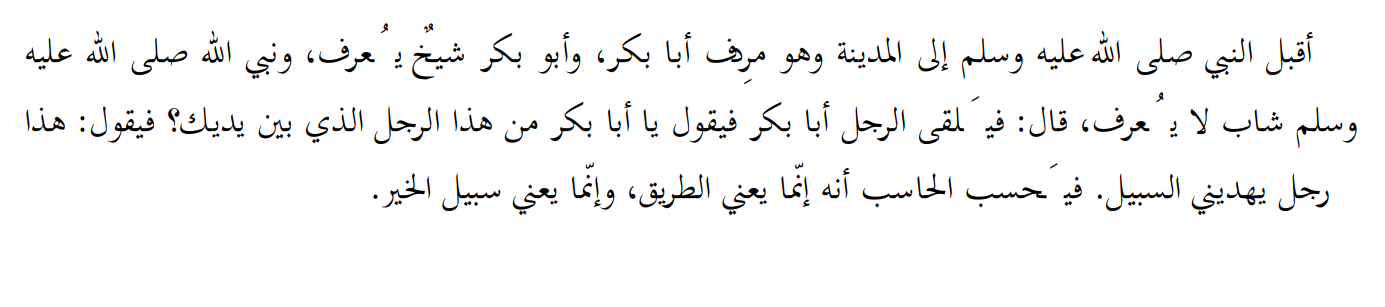
アッラーの預言者ﷺはマディーナへ向かわれ、アブー・バクルがその後に続いた。アブー・バクルは広く知られた年配の男性であり、アッラーの預言者ﷺは無名の若者であった。ある男がアブー・バクルに出会い、こう言った。「アブー・バクルよ、あなたの前にいるこの人は誰ですか」。彼は言った。「この人は私に道を示しているのです」。彼は言った。「考える人は、それが道のことだと思うだろうが、彼が意味していたのは善への道であった」。
“The Prophet of Allah (saw) headed for Madinah and he was followed by Abu Bakr. Abu Bakr was a well known old man and the Prophet of Allah (saw) was an unknown youth. He said: A man met Abu Bakr saying: O Abu Bakr, who is this man before you? He said: This man is showing me the way. He said: A thinker would think that he meant the road whereas he meant the road to goodness.”