21.6 緊急時の条約
21.6 Emergency Treaties
ムスリムは、本来許されないことであっても、必要性がそれを強いるような厳しい状況に陥ることがある。イスラーム国家も、内部的あるいは外部的な危機に陥り、それによって、直接的にダアワの伝達やアッラー(SWT)の道における戦いには結びつかないものの、将来ダアワを伝える条件を整えたり、ダアワを停止させるという害悪を防いだり、ムスリムの存在を守ったりすることに資する条約を結ぶことを余儀なくされることがある。このような種類の条約は必要性によって結ばれることが求められるため、カリフがそれらを結ぶことは許され、それらはムスリムに対して履行される。こうした条約は、法学者(ファキーフ)たちが明確に述べた二つの状況において生じるが、それは次のとおりである。
Muslims can fall into severe situations which compel them to matters which are not allowed but the necessity obliges it. The Islamic State can fall into internal or external crises which compel it to contract treaties which do not lead directly to conveying the da’wah or fighting in the way of Allah (swt) but they facilitate creating conditions which will enable conveying it in the future or prevent the evil of stopping the da’wah or preserve the entity of the Muslims. Necessity compels these types of treaties to be contracted therefore it is allowed for the Khalifah to contract them and they are executed upon Muslims. These treaties occur in two situations which the jurisprudents (fuqaha) stated clearly, and they are:
第一の状況:もし戦争当事者の一部の人々が、特定の年数にわたってムスリムに休戦条約を求め、その条件として戦争当事者が毎年一定額のハラージュを納め、彼らの土地においてイスラムの諸規定を適用しないこととする場合、これは不信仰に同意することになるため、行ってはならない。ただし、国家が抑圧を防ぐことができず、この条約がムスリムにとって利益であると判断した場合には、その時点で必要に迫られたものとして締結が許される。この状況においては、彼らがこの条約によってイスラムの諸規定に拘束されるわけではなく、イスラムの諸規定に従わない限り戦争当事者の立場から離れないため、イスラム国家が彼らを支援または援助する義務はムスリムにはない。預言者ムハンマド ﷺ は、シャームの国境地帯のタブークにいたとき、ユハンナ・ビン・ルバアと条約を結んだ。彼はユハンナをその支配地域に、その宗教のまま残し、ムスリムの旗印とその統治の下には入らせなかった。この期限付きの条約は、この国の安全をイスラム国家が保障することを意味する。ムスリムのうちこの国に入る者は、個人の保護としてではなく、条約の保護のもとに入るのであり、その者がこの国の人々に敵対することは許されない。この国の市民でムスリムの地に入る者は、条約の保護のもとに入るのであり、条約以外の新たな保護を必要とせず、ムスリムの誰も彼に敵対することは許されない。商人が、武器や軍需物資など戦争に用いられる道具およびそれに類するものを除き、この国に商品を運ぶことは妨げられない。彼らはムスリムと条約を結んでいても戦争当事者だからである。
The first situation: If some people of the people of war seek a treaty from the Muslims for specific years on condition that the people of war give kharaj every year for a specified amount and that the Islamic rules are not executed upon them in their lands; this is not done as it is consenting upon disbelief unless the State is not able to prevent oppression and sees in this treaty good for Muslims, then at this point it is allowed to contract it out of necessity. In this situation there is no assistance or support for them from the Islamic State because they are not compelled by this treaty with the Islamic rules and do not depart from being people of war when they do not obey the rules of Islam. So undertaking support for them is not obliged upon the Muslims. The Messenger of Allah (saw) made a treaty with Yuhanna bin Rub’ah while he was at Tabuk in the boundaries of Bilad AsSham. He left him in his zone upon his religion, and he did not enter under the banner of Muslims and their rule. This treaty of limited period makes the security of this State guaranteed by the Islamic State. Whoever enters it from the Muslims enters it with the security of the treaty and not an individual security, and it is not allowed for him to oppose its people. Whoever enters the Muslim lands from the citizens of this land enters with the security of the treaty and does not require a new security other than the treaty, nor is anyone from the Muslims allowed to oppose him. Traders are not prevented from carrying merchandise to this State except tools used in war like weapons and war materials and what is similar to this because they are people of war even if the Muslims have a treaty with them.
第二の状況:これは、ムスリムが自分たちについて沈黙してもらう見返りとして敵に金銭を支払う第一の状況とは逆のものである。ファキーフ(法学者)たちは、敵がムスリムを包囲し、ムスリムが毎年一定額を不信仰者に支払うことを条件に、特定の年数にわたる休戦を要求した場合、そこに屈辱と卑屈さがあるため、ムスリムにとって、やむを得ない場合を除き、カリフがそれに応じることは正しくないと述べている。これは、ムスリムが自分たちの絶滅を恐れ、カリフがこの休戦に利益があると判断する場合である。この時点では、伝えられている事例に基づき、それには何の問題もない。
The second situation: This is opposite to the first situation wherein the Muslims pay money to their enemy in return for their silence regarding them. The fuqaha mentioned that if the enemy sieges the Muslims and require a treaty for specified years on condition that the Muslims pay the disbelievers a specific amount every year, it is not correct for the Khalifah to comply to them upon that due to the contemptibility and humiliation therein for Muslims except under necessity. This is (when) the Muslims fear extermination for themselves, and the Khalifah views there is good in this truce. At this point, there is no harm in that due to what was narrated
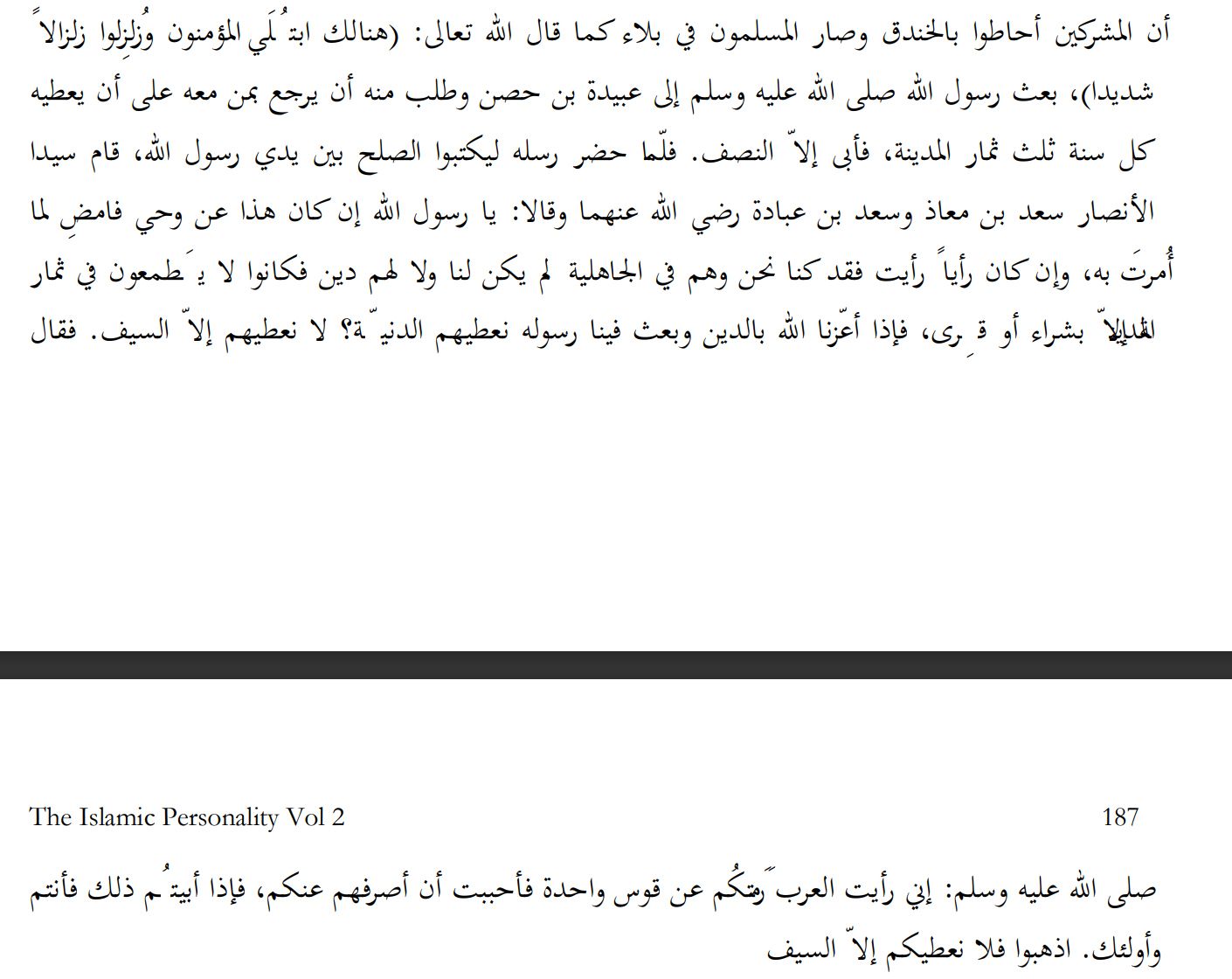
「多神教徒たちが塹壕を取り囲み、ムスリムたちは、アッラー(スブハーナhu wa ta'ala)が仰せられたように、試練の中にあった。『そこで信者たちは試され、激しく揺さぶられた』[TMQ 33:11]。 アッラーの使徒ﷺは、ウアイナ・ビン・ハスンのもとに使者を送り、彼らの仲間を連れて戻るよう求めた。その代わりに、マディーナの果実の三分の一を与えるという条件であった。しかし彼は、半分でなければ応じなかった。彼の使者たちが使徒ﷺの前で協定を書き記そうとしたとき、アンサールの二人の指導者、サアド・ビン・ウバーダとサアド・ビン・ムアーズ(ラ)が立ち上がり、こう言った。「アッラーの使徒よ、これが啓示によるものならば、命じられたことを実行してください。しかし、もしご自身が考えられた意見にすぎないのであれば、我々はジャーヒリーヤの時代にいました。そのとき、彼らも我々も宗教を持っていませんでした。それでも彼らはマディーナの果実を、購入するか、もてなしを受けるかでしか食べることができませんでした。ところが今、アッラーが我々を宗教によって尊び、その使徒ﷺを我々のもとに遣わされたのに、我々が卑しい状態にあるかのように、この現世の財を彼らに与えるべきでしょうか。否、我々は剣以外は与えません。」 すると使徒ﷺは言われた。「私は、アラブの人々が一つの弓から矢を射かけているのを見た。だから私は、彼らがあなたがたから離れるように仕向けたいと望んだのだ。もしあなたがたがそれを拒むなら、あなたがたと彼らとの間のことである。立ち去れ、我々は剣以外に何もあなたがたに与えないのだから!」」
“That the polytheists surrounded the trench and Muslims were in trial like Allah (swt) said: ‘Therein the believers were tested and shaken with a severe shaking’ [TMQ 33:11].The Messenger of Allah (saw) sent to ‘Uyaynah bin Hasan and requested that he return with those together with him upon giving him a third of the fruits of Madinah but he refused except a half. When his messengers appeared to write the truce in front of the Messenger of Allah, the two chiefs of the Ansar, S'aad bin ‘Ubadah and S'aad bin Mu’adh (ra) stood and they said: ‘O Messenger of Allah, if this is from revelation then execute what you are commanded with but if it is an opinion which you considered, then they and we were in jahiliyyah when neither they nor we had a religion yet they did not eat of the fruits of Madinah except through purchase or hospitality. So when Allah honoured us with the deen and sent His Messenger among us, should we give them this dunya while being contemptible? No, we will not give them except the sword. So he (saw) said: ‘I saw the Arabs shooting from one bow so I liked to divert them from you. If you reject that, then it is you and those. Go away for we will not give you except the sword!’”
これは、預言者ムハンマド ﷺ が、ムスリムたちの弱さを察知したことから、最初は和睦に傾いたことを示しています。サアド・ブン・ウバーダ(ra)とサアド・ブン・ムアーズ(ra)の発言によってムスリムたちに力があることを見て取ったとき、預言者 ﷺ はその考えを退けました。これは、害が及ぶ危険がある場合には、不信仰者に金銭を支払って条約を結ぶことに問題はないことを示しています。もし彼らがムスリムを征服すれば、すべての財産と家族を捕虜(サバーヤー)として奪うことになるため、ムスリムとその家族、財産を守るために一部の財産を支払う方が、より卑しむべきではなく、より有益だからです。
This indicates that the Messenger of Allah (saw) initially inclined to the truce due to what he sensed of the Muslims’ weakness. When he saw the strength in them due to what S'aad bin ‘Ubadah and S'aad bin Mu’adh (ra) said, he refrained from that which indicates that there is no harm from contracting a treaty with disbelievers paying them money when there is danger of harm. This is because if they conquered Muslims they would take all the wealth and the families as captives (sabaya), so paying some wealth to safeguard Muslims and their families and wealth is less contemptible and more beneficial.